Feeds:
Posts
Comments

Posts Tagged ‘Crackling’

Pork is great value and this recipe will feed many people. Serve with roast potatoes and veg. To make sure you get good crackling, leave the pork, skin-side up, on a plate in the fridge for a day to dry out.

Wine Suggestion: An indulgence we know, but it was a roast dinner with friends; Domaine Jamet’s Condrieu Vernillon. A fairly new wine to this domaine, but one that echos the wonderful reds by being expressive and textural, with a vibrant core of freshness and savouriness.

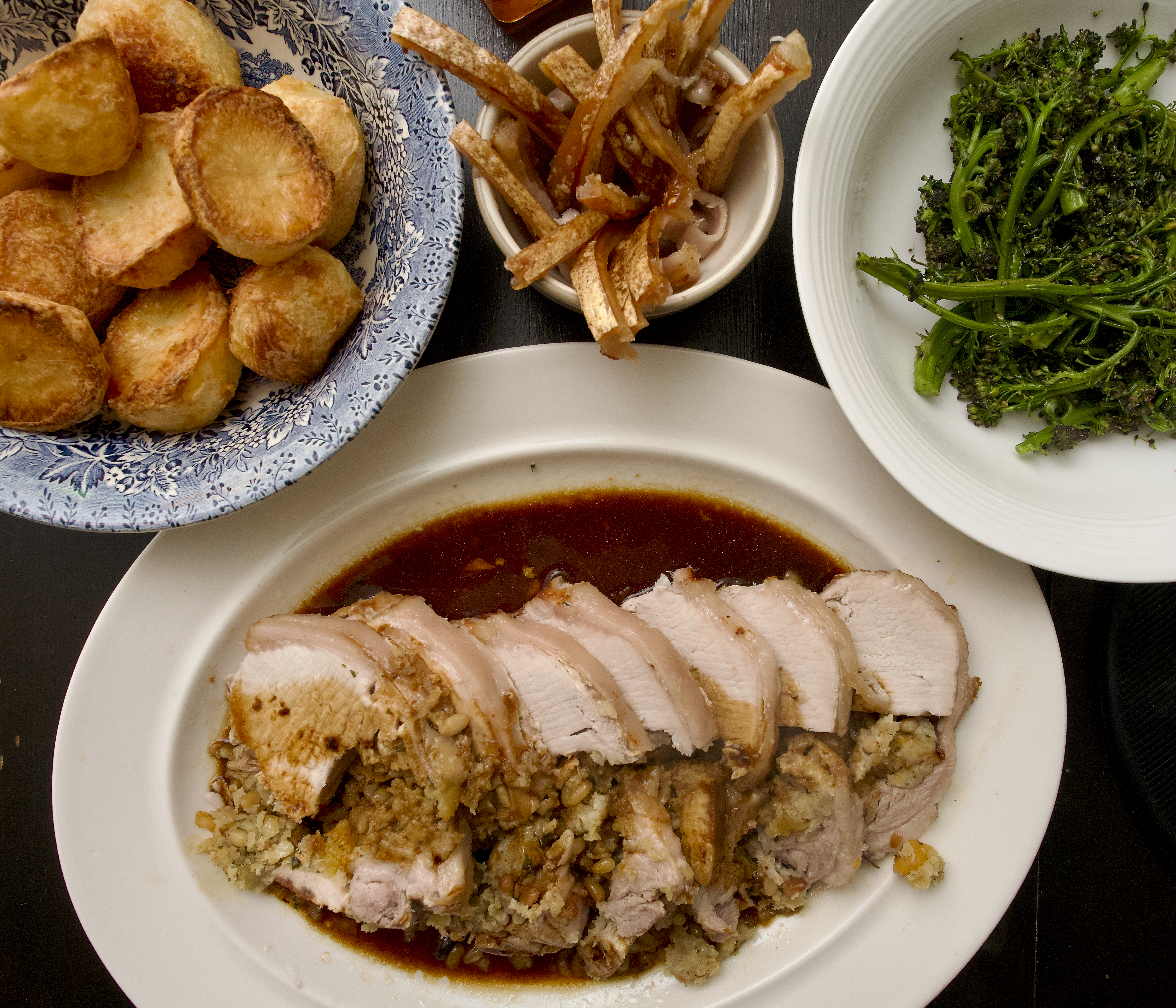
Roast pork with apricot and pine nut stuffing – serves 6 to 8

  • 75g butter
  • 1 onion, finely chopped
  • 1 clove of garlic, crushed
  • 50g pine nuts
  • 175g day-old, fresh white breadcrumbs
  • 50g dried apricots, roughly chopped
  • 1 tbsp roughly choppd parsley
  • 1 tsp fresh thyme leaves
  • 1.75kg boneless pork loin, skin scored at 5mm intervals, tell your butcher you plan to stuff it
  • 2 tbsp olive oil

FOR THE GRAVY:

  • 1 tbsp plain flour
  • 3 tbsp ruby red port or red wine
  • 1 tbsp clear honey
  • 4 whole cloves
  • 600ml beef stock

Remove the pork from the fridge about an hour before you plan to put it into the oven.

Make the stuffing by melting the butter in a large frying pan, then add the onion and garlic and cook for a few minutes until softened but not coloured.

Meanwhile, toast the pine nuts in a separate dry fring pan, watch them carefull so they don’t burn.

Stir the breadcrumbs into the onion mixture with the apricots, parsley and thyme, then stir in the toasted pine nuts and season. Remove from the heat and leave to cool.

Heat the oven to 200C/400F/Gas 6.

When the stuffing is cooled, place the pork skin-side down on a board. Spoon the cooled stuffing along the centre, roll up the joint and tie with string at intervals to secure.

Put the pork into a large roasting tin and pat the skin dry with kitchen paper. Rub the skin with olive oil and plenty of sea salt. Cover with foil and roast for 20 minutes. Reduce the heat to 180C/350F/Gas 4 and roast for another 15 minutes. Remove the foil and cook for another hour and 15 minutes or until the pork is tender and you have crispy crackling (if the crackling hasn’t crisped by the time the pork is cooked you can remove and snip it into strips with scissors and crisp it under the grill).

Transfer the pork to a warm serving plate and rest for about 15 minutes while you make the gravy.

Pour most of the fat from the roasting tin and put over a gentle heat. Stir in the flour and cook for 2 minutes, stirring. Slowly pour in the port and then add the honey and cloves, stirring to combine. Gradually add the stock, stirring continuously until it comes to the boil. Reduce the heat and simmer for 10 minutes until reduced and thickened, stirring occasionally. Season to taste.

Cut the string from the pork and cut through the fat just underneath the crackling. Remove and cut into pieces (you will have to eat a few), then carve the pork into thick slices.

Serve the pork on a platter with lots of roast potatoes, gravy and veg.

(Original recipe from Neven Maguire’s Cookery Collection, Poolbeg Press Ltd., 2005.)

Read Full Post »

We don’t make a roast dinner every week but we do like one occasionally, especially in the brighter months when you can lighten them up a bit with some spring veg. Ask your butcher to score the pork skin for you, then leave it uncovered in the fridge overnight to dry out the skin, which will help with the crispy crackling.

Wine suggestion: Quite often we have an oaky white with roast pork but tonight we had a notion for red and a 6 year old Olga Raffault Chinon Les Pucasses which was just hitting it’s stride and will be drinking nicely for another 10 years we think. Deep , complex and brooding and yet the limestone soils give it an immediate freshness and vivacity.

Roast pork belly with herbs & new potatoes – serves 4

  • 3-4 tsp fennel seeds
  • 1.5kg thick end of pork belly, bone in, skin completely dry (see above)
  • 300g new potatoes
  • a few sprigs of mint, leaves picked and finely chopped, stalks reserved
  • a knob of butter
  • 2 tbsp extra virgin olive oil
  • a small bunch of parsley, leaves picked and finely chopped
  • a small bunch of chives, finely chopped
  • 2 handfuls of peas or broad bean tops if available (we didn’t have these but we served with some double podded broad beans instead)
  • juice of ½ lemon

Heat the oven to 220C/425F/Gas 7.

Toast the fennel seeds in a small pan until fragrant, then tip into a pestle and mortar and coarsely grind. Score the skin and fat (but not the flesh) of the pork with a sharp knife if your butcher hasn’t done this for you already.

Put the pork into a roasting tray and rub allover with the crushed fennel seeds and some salt.

Put the pork into the oven for 30 minutes to crisp up the skin, then reduce the heat to 160C/315F/Gas 2-3. Add half a glass of water to the tray and roast for a further 2 hours, until crispy and tender. You will need to keep checking the water and ensuring that the pan doesn’t dry out.

While the pork is roasting, halve the potatoes if they’re big and put into a saucepan with the mint stalks. Cover with salty water and simmer until just tender, then drain and return to the pan, discarding the mint stalks. Add the butter and 1 tbsp of the olive oil, season with salt and pepper, then set aside.

Remove the cooked pork from the oven and allow to rest for 15-20 minutes. Add the chopped herbs to the potatoes and stir gently to coat, then spoon onto a warm platter. Slice the pork and arrange on the platter with the potatoes, then skim the fat from the juices in the roasting tin and spoon the juices over the pork and potatoes,.

If you have pea or bean tops, put them into a bowl and dress with the 1 tbsp of olive oil and the lemon juice, and season with salt and pepper. Scatter these over the pork and serve. (We dressed our broad beans with some olive oil and lemon and served these alongside instead).

(Original recipe from Gather by Gill Meller, Quadrille, 2016.)

Read Full Post »

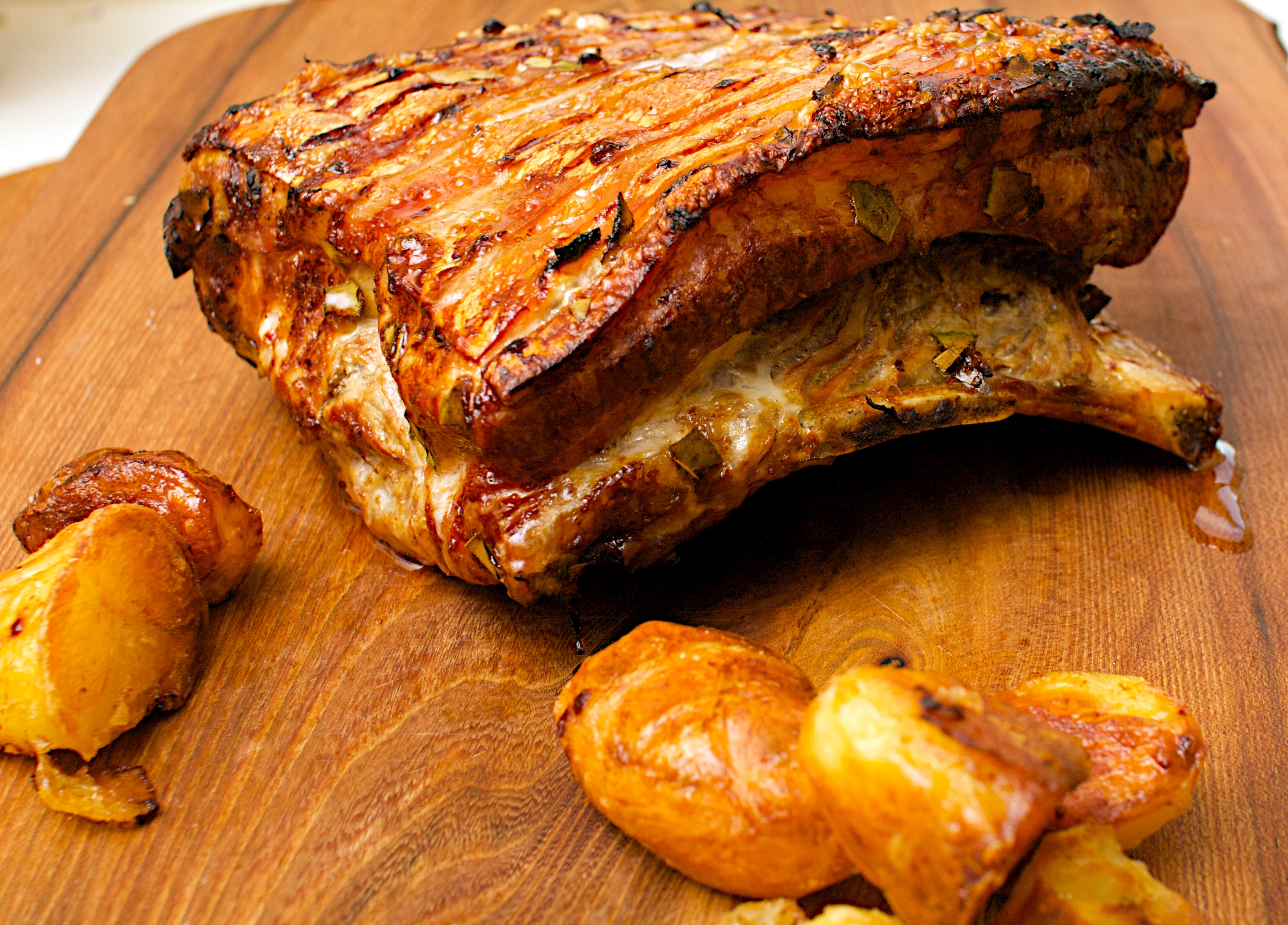
Totally worth the effort and time, this just melted in the mouth. The roast potatoes done under the roasting pork belly worked a real treat and had that heavenly combination of meltingly fluffy and soft centres and a chewy-crunchy crust.

Roast pork – to feed 4-6

  • 1.8kg belly pork, skin on
  • about 8 dried bay leaves
  • 3-4 fat cloves of garlic
  • olive oil
  • 1kg potatoes
  • glass of white wine

Use a very sharp knife to score the skin. You need to go through the fat under the skin but don’t cut into the meat. This will give you delicious strips of crackling.

Crumble the bay leaves into tiny pieces, squash the garlic with the back of a knife, then mash to two together with a pestle and mortar. Add plenty of salt and black pepper. Add enough oil to make a spreadable paste. Place the pork skin side down and massage the paste into it, pushing it into every crevice. Leave the meat in a cool place for an hour or so to soak up the flavours.

Peel the potatoes, cut them into large chunks and drop them into salted boiling water. Cook until they are just tender, then drain and tip into a roasting tin. Shake them about to rough up the edges.

Preheat the oven to 200ºC/Gas 6. You need to cook the pork directly on the bars above the potatoes. Pour a bit of oil on the potatoes to prevent them from sticking, add a wine glass of water and toss, then put the roasting tin on the lower shelf. Put the pork directly on the top shelf, skin side down. Cook for an hour, turning the potatoes once. Check the pork for any pinkness and if necessary cook a little longer (it will probably take an hour and a half in total).

Turn the oven up to 250ºC/Gas 9. Turn the pork skin side up and continue to cook until the skin is puffed up and crispy. Take the meat from the oven and leave to rest. Take the potatoes out when they are really brown and sticky. Remove the potatoes form the roasting tin and pour in a glass of white wine. Bring to the boil on the hob, stirring well to get all the tasty bits from the bottom of the tin.

Cut the meat into thick chunks and serve with the potatoes, gravy and green salad or apple sauce.

Wine Suggestion: Go for a good-quality, full-bodied Chardonnay. We tried the Atarangi Craighall Chardonnay from New Zealand.

(Original recipe from Nigel Slater’s Appetite, Fourth Estate, 2000.)

We had leftovers the next day in a crusty bread roll … yum 🙂

Read Full Post »