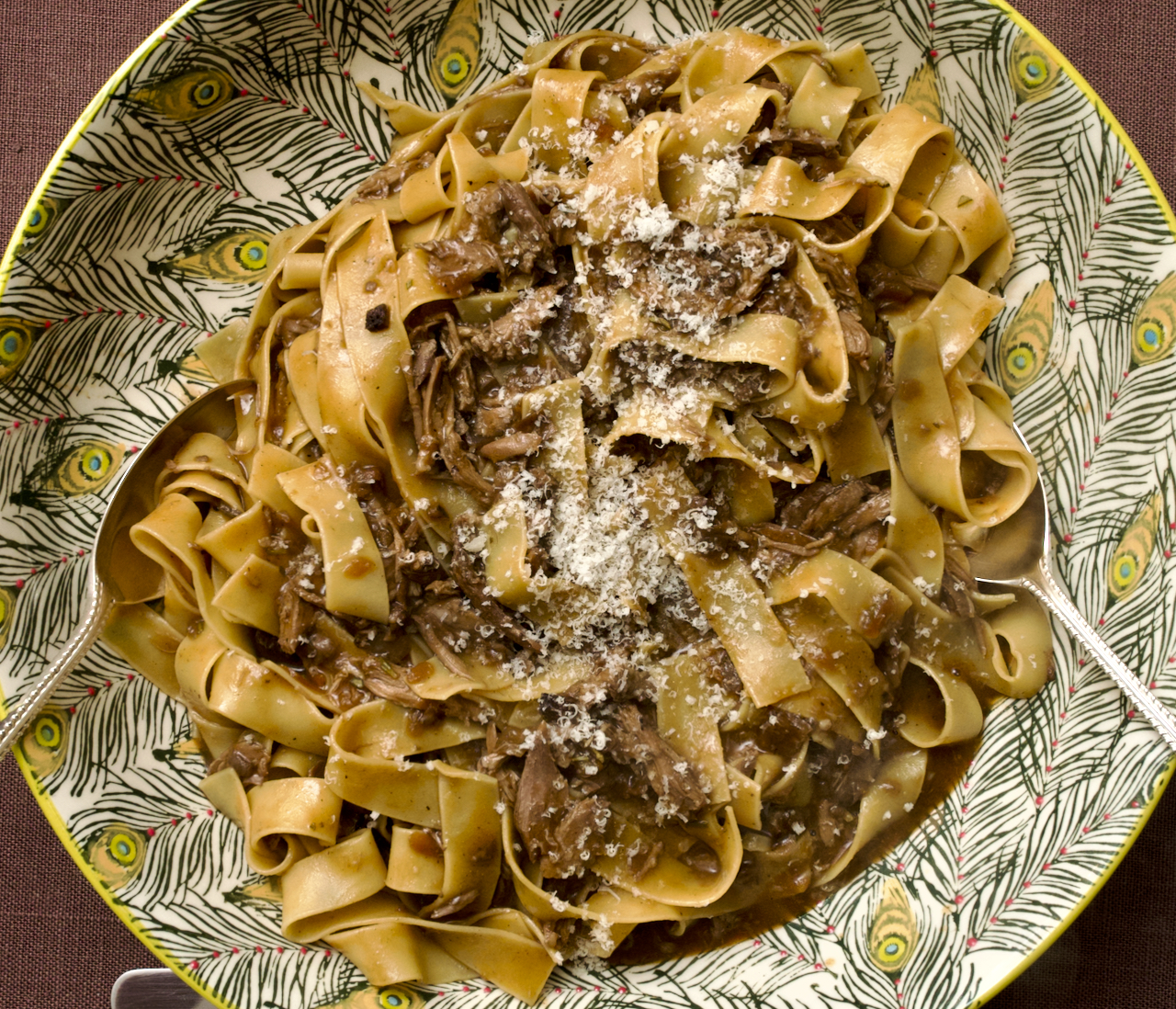
This is a delicious and rich sauce but it requires duck marylands (the thigh and the leg together) which are not easy to find here. We asked our butcher to portion up some whole ducks for us. Duck breasts are not suitable so do try and get the marylands for this.
Wine Suggestion: A good Tuscan red is a good match to cut through the richness and proteins in this dish. A good dollop for acidity and freshness helps lighten plus tannins to balance. For us tonight a new find, Ridolfi Rosso di Montalcino. Elegant and vibrant with loads of energy, layered subtle fruit and energetic structure. Pure joy.
Duck ragu pappardelle – serves 4
- 20g dried porcini mushrooms
- 1.5 litres low-salt chicken stock (it needs to be low-salt as you will reduce it – we made a light stock with two regular chicken stockpots mixed with 1.5 litres of water and that worked fine).
- 1 tbsp olive oil
- 4 duck marylands (the thigh and leg together)
- 1 onion, roughly chopped
- 1 celery stalk, coarsely grated
- 1 small carrot, coarsely grated
- 6 cloves of garlic, crushed
- 375ml red wine
- 195g tomato passata
- ½ cinnamon stick
- 2 star anise
- 2 bay leaves
- ½ tsp black pepper
- 1½ tbsp roughly chopped fresh rosemary
- 1 tbsp plain flour
- 15g unsalted butter, softened
- 400g pappardelle pasta
- freshly grated Parmesan, to serve
Put the porcini mushrooms into a small bowl. Pour the stock into a large frying pan and place over a high heat. Bring to the boil, then scoop out 125ml and pour it over the porcini. Leave the porcini to soak for 30 minutes. Lower the heat under the stock to medium-high and reduce to 750ml – this should take about 8 minutes but wise to check now again how much you have with a measuring jug.
Squeeze the excess liquid out of the porcini with your hands and reserve all the liquid. Chop the porcini into tiny pieces, then set aside. Add the soaking liquid to the reduced chicken stock.
Heat the oil in a large casserole over a high heat. Place the duck, skin-side down and cook until golden brown. Turn and brown the flesh side and the sides as well, then transfer to a bowl and set aside.
Pour away all but 3 tbsp of the duck fat, then add the onion, celery, carrot and garlic and cook for 8 minutes until soft but not browned. Add the wine and simmer for 5 minutes to reduce by half. Add the passata, cinnamon, star anise, bay leaves, pepper and stock. Stir everything together.
Submerge the duck in the liquid and bring to a simmer, then reduce the heat to low. Simmer very gently for 1½, uncovered, checking regularly to ensure the duck stays submerged or at least that the meaty part is in the liquid. After the first hour, add the rosemary and chopped porcini.
Transfer the cooked duck to a bowl and cover loosely with foil. When cool enough to handle, remove the skin and shred the duck flesh with your hands. Discard the skin and bones.
Mix the flour and butter together in a small bowl to make a smooth paste. Stir the mixture into the pot, then simmer for 3 minutes to thicken slightly. Add the duck, then taste and season only if needed. Remove the bay leaf, cinnamon stick and star anise. Keep the ragu warm while you cook the pasta.
Cook the pasta in lots of salty boiling water according to the timings on the pack. Just before draining, scoop out a large mug of the pasta water. Drain the pasta and add to the warm ragu with a splash of the pasta cooking water. Over a medium heat, toss the pasta with two spatulas unil the sauce thickens and coats the pasta. You can add a bit more water if it’s too thick.
Serve in warm bowls with lots of grated Parmesan.
(Original recipe from Recipetin Eats Tonight by Nagi Maehashi, Pan Macmillan, 2024.)

 Jono & Jules do food & wine