Feeds:
Posts
Comments

Posts Tagged ‘Sunday roast’

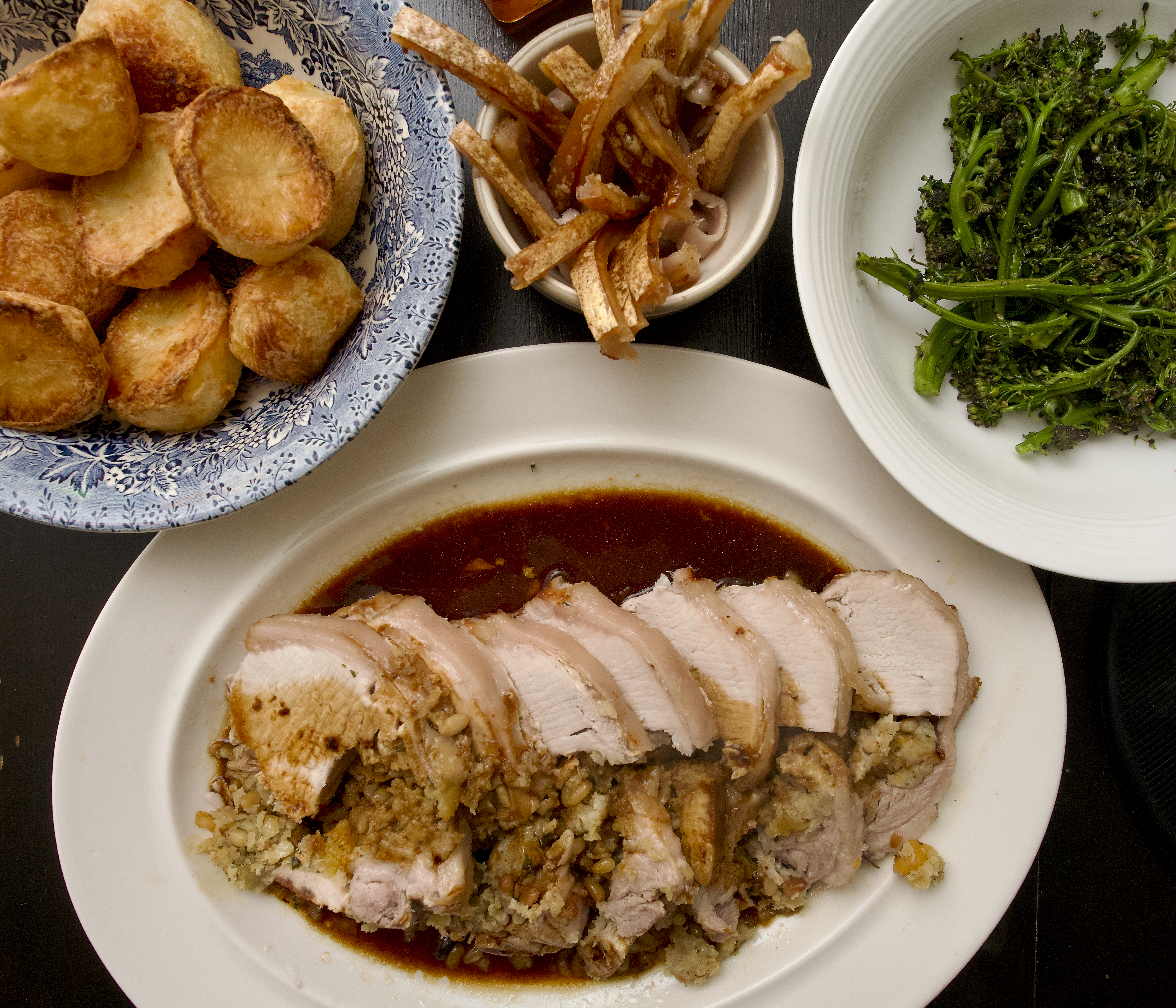
Pork is great value and this recipe will feed many people. Serve with roast potatoes and veg. To make sure you get good crackling, leave the pork, skin-side up, on a plate in the fridge for a day to dry out.

Wine Suggestion: An indulgence we know, but it was a roast dinner with friends; Domaine Jamet’s Condrieu Vernillon. A fairly new wine to this domaine, but one that echos the wonderful reds by being expressive and textural, with a vibrant core of freshness and savouriness.

Roast pork with apricot and pine nut stuffing – serves 6 to 8

  • 75g butter
  • 1 onion, finely chopped
  • 1 clove of garlic, crushed
  • 50g pine nuts
  • 175g day-old, fresh white breadcrumbs
  • 50g dried apricots, roughly chopped
  • 1 tbsp roughly choppd parsley
  • 1 tsp fresh thyme leaves
  • 1.75kg boneless pork loin, skin scored at 5mm intervals, tell your butcher you plan to stuff it
  • 2 tbsp olive oil

FOR THE GRAVY:

  • 1 tbsp plain flour
  • 3 tbsp ruby red port or red wine
  • 1 tbsp clear honey
  • 4 whole cloves
  • 600ml beef stock

Remove the pork from the fridge about an hour before you plan to put it into the oven.

Make the stuffing by melting the butter in a large frying pan, then add the onion and garlic and cook for a few minutes until softened but not coloured.

Meanwhile, toast the pine nuts in a separate dry fring pan, watch them carefull so they don’t burn.

Stir the breadcrumbs into the onion mixture with the apricots, parsley and thyme, then stir in the toasted pine nuts and season. Remove from the heat and leave to cool.

Heat the oven to 200C/400F/Gas 6.

When the stuffing is cooled, place the pork skin-side down on a board. Spoon the cooled stuffing along the centre, roll up the joint and tie with string at intervals to secure.

Put the pork into a large roasting tin and pat the skin dry with kitchen paper. Rub the skin with olive oil and plenty of sea salt. Cover with foil and roast for 20 minutes. Reduce the heat to 180C/350F/Gas 4 and roast for another 15 minutes. Remove the foil and cook for another hour and 15 minutes or until the pork is tender and you have crispy crackling (if the crackling hasn’t crisped by the time the pork is cooked you can remove and snip it into strips with scissors and crisp it under the grill).

Transfer the pork to a warm serving plate and rest for about 15 minutes while you make the gravy.

Pour most of the fat from the roasting tin and put over a gentle heat. Stir in the flour and cook for 2 minutes, stirring. Slowly pour in the port and then add the honey and cloves, stirring to combine. Gradually add the stock, stirring continuously until it comes to the boil. Reduce the heat and simmer for 10 minutes until reduced and thickened, stirring occasionally. Season to taste.

Cut the string from the pork and cut through the fat just underneath the crackling. Remove and cut into pieces (you will have to eat a few), then carve the pork into thick slices.

Serve the pork on a platter with lots of roast potatoes, gravy and veg.

(Original recipe from Neven Maguire’s Cookery Collection, Poolbeg Press Ltd., 2005.)
Read Full Post »

This roast is relatively simple because all the effort is at the start. Choose some handy sides, like some roasted carrots and potatoes which can cook while the meat rests.

Wine Suggestion: A classic match with Bordeaux, or similar from around the world. Tonight a very youthful Château Puygueraud, from the Côtes de Francs which we pulled from our cellar (under the bed) to check progress. Many years ahead of it, but tonight was a joy nonetheless.

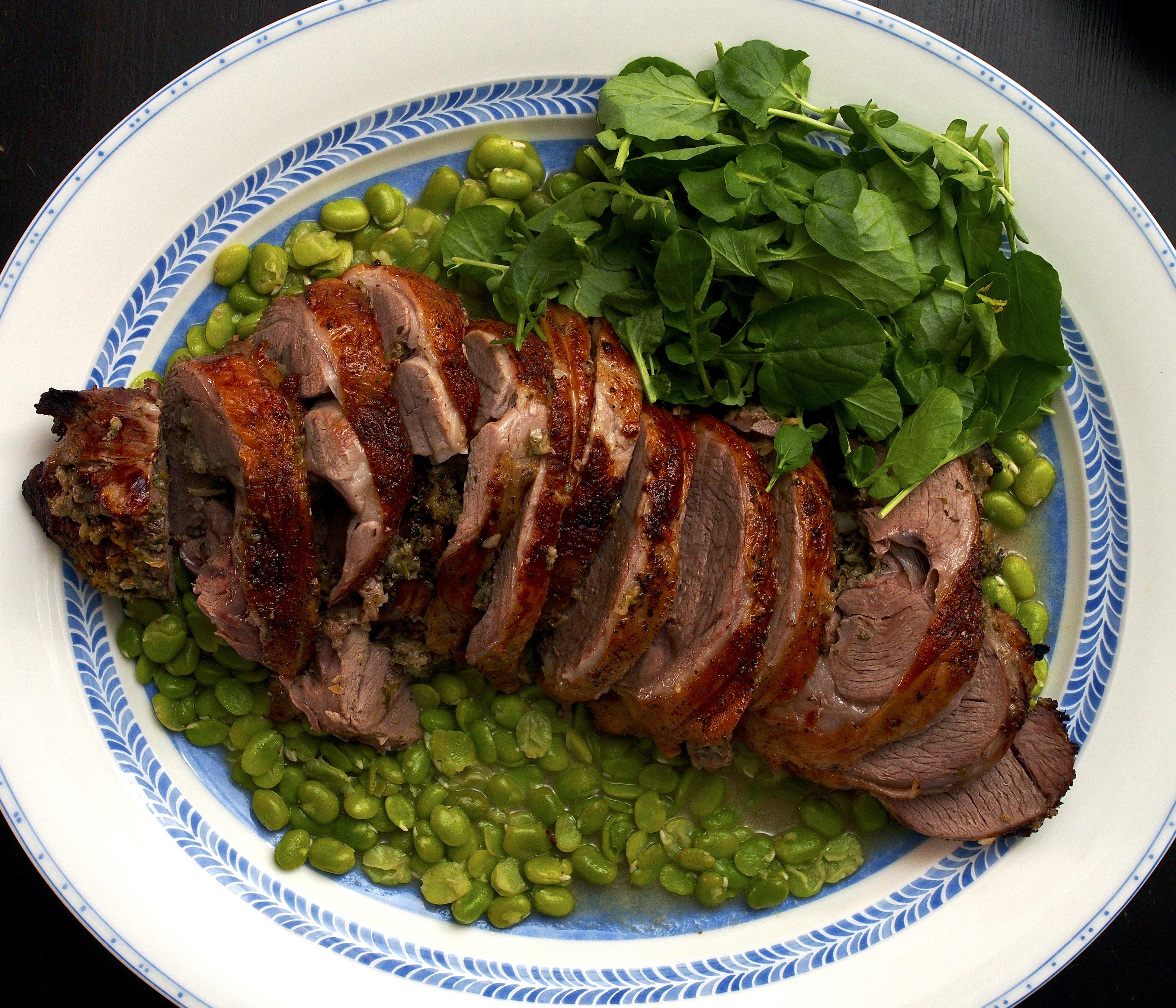
Rolled leg of lamb with salsa verde stuffing – serves 4

  • 1.5kg leg of lamb, bone removed and butterflied (ask your butcher to do this for you)
  • 200ml white wine
  • 3 sprigs of rosemary
  • 3 cloves of garlic, bashed
  • 1 onion, roughly chopped
  • 2 bay leaves
  • 50ml olive oil, plus 2 tbsp extra
  • 200ml chicken stock
  • 400g broad beans, double podded (blanch for 2 minutes in boiling water and they will easily pop out of their skins)
  • a handful of watercress, to serve

FOR THE STUFFING:

  • a large bunch of flat-leaf parsley, including stalks
  • a small bunch of mint, leaves picked
  • 6 brown anchovies
  • 4 tbsp capers, drained
  • 1 lemon, zested and juiced
  • 1 tbsp white wine vinegar
  • 2 long shallots, finely chopped
  • 25g panko breadcrumbs

Put the lamb, skin-side down, on a chopping board. Make slashes all over the meat with a sharp knife but be careful not to cut the whole way through. Season all over.

Transfer the lamb to a large sealable food bag or container, scored-side down. Pour over the wine, then add the rosemary, garlic, onion, bay and 50ml of olive oil. Seal the bag and massage the marinade into the meat. Chill for 24 hours but bring out of the fridge at least an hour before cooking.

Make the stuffing while the meat is coming up to room temperature.

Put the parsley, mint, anchovies and capers into a food processor and pulse until finely chopped (you can also do this by hand), then tip into a bowl and stir in the lemon zest and juice, the vinegar and shallots. Season well. Spoon 3 tbsp of the salsa verde into a small bowl. Add the panko breadcrumbs to the larger bowl of salsa verde and stir 2 tbsp of olive oil into the smaller one – set the smaller one aside to serve later.

Take the lamb out of the marinade, then add about 50ml of the marinade to the large bowl of stuffing to soak into the breadcrumbs and bind the mixture (you might not need as much as 50ml). Keep any remaining marinade for later.

Heat the oven to 200C/180C fan/gas 6.

Pat the lamb dry with kitchen paper and lay on a chopping board, skin-side down. Spread the stuffing over the meat in an even layer. Start from one of the short sides and fold the meat over the stuffing, rolling and tucking it in to seal. Tie in about 6 places with kitchen string to hold it together. Transfer to a roasting tin and drizzle with olive oil. Roast for 1 hour – 1 hour and 20 minutes or until 60-65C on a meat thermometer for medium or 70C for well done. If you don’t have a meat thermometer insert a metal skewer into the centre and if it comes out hot, the meat is ready. Cover loosely with foil and set aside to rest for 30 minutes.

Put the reserved marinade into a saucepan with the stock and simmer for 5 minutes. Discard any rosemary, garlic, onion and bay, then add the broad beans and simmer for 4-6 minutes or until the stock has reduced. Transfer the beans and juice to a warm serving platter and serve along with the lamb, the reserved salsa verde and some watercress.

(Original recipe by Anna Glover in Olive Magazine, April 2022.)

Read Full Post »

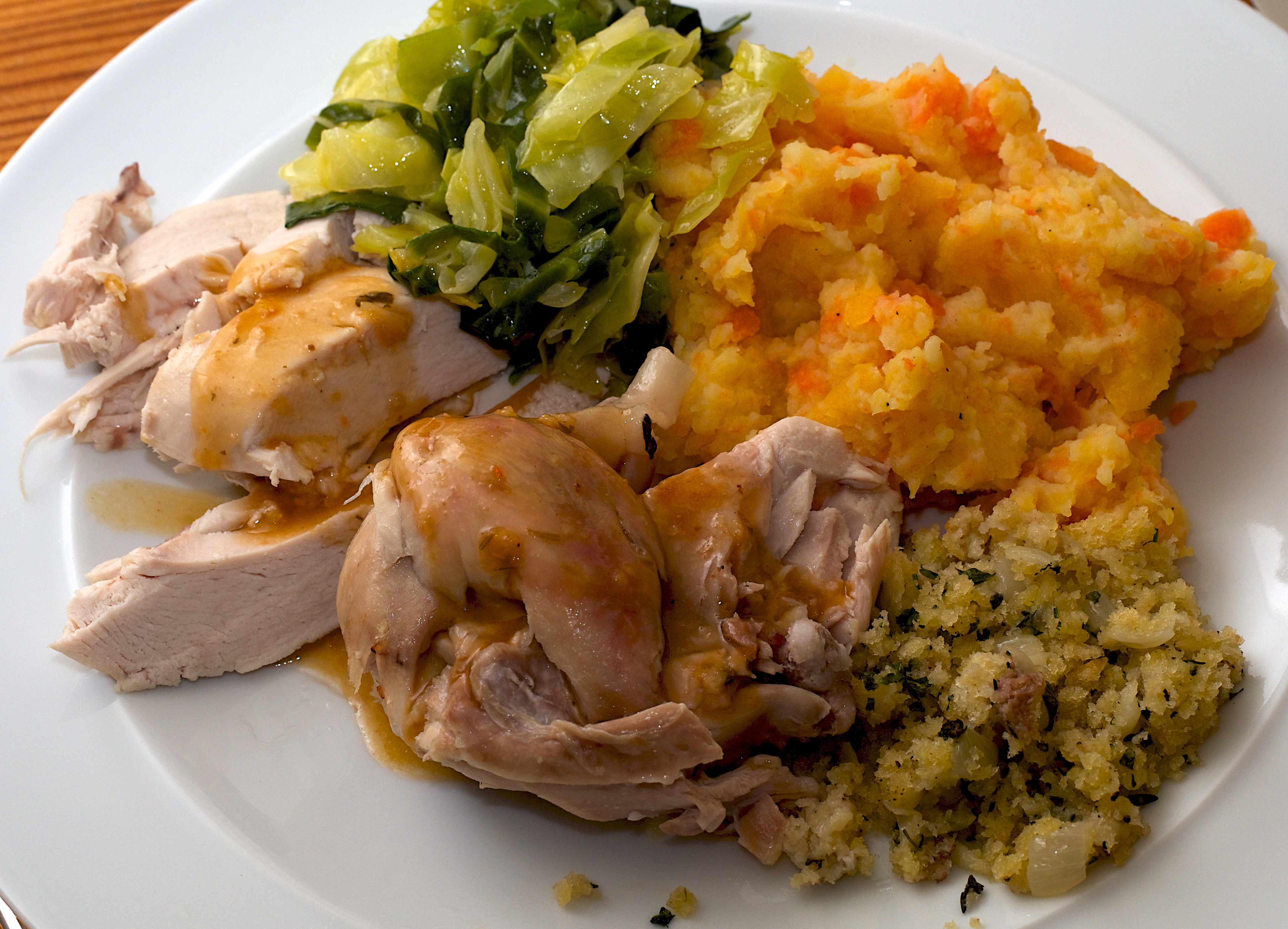
This roast chicken was inspired by Darina Allen, who had a new method for keeping the Chicken skin moist – using butter soaked muslin. It works excellently so we’re converts to this technique!

Traditional Roast Chicken with Stuffing and Gravy – to serve 4

  • 1 chicken
  • chicken stock

FOR THE STUFFING: 

  • 45g butter
  • 75g chopped onion
  • 75-100g soft white breadcrumbs
  • 2 tbsp finely chopped fresh herbs (we used parsley and thyme)
  • a little soft butter

Preheat the oven to 180ºC/350°F/gas 4.

Make the stuffing: sweat the onions gently in the butter until soft, then take off the heat and stir in the breadcrumbs, herbs and some seasoning. Leave to cool.

Season the inside of the chicken, then half-fill with the cold stuffing. Put the rest of the stuffing into the neck end.

Weight the chicken and calculate the cooking time (15 minutes per 450g and 15 minutes over).

Melt 4 tsp butter and soak a large piece of muslin in the melted butter, cover the chicken completely with the muslin and roast for the calculated time. You can take the muslin off for the last 10 minutes if you want the skin really brown.

Check that the juices are running clear when pierced with a skewer, then leave to rest.

To make the gravy: spoon off any surplus fat from the roasting tin. De-glaze the pan juices with the stock and use a whisk to to stir and scrape the caramelised bits from the bottom of the tin. Boil it up well, season and thicken if you like (we like it runny).

Serve with greens and mash.

Wine Suggestion: Oaked white wines go well with roast chicken with Chardonnay being the obvious pick. We were a little extravagant and had a superb Chardonnay / Auxerrois blend from Zind-Humbrecht in Alsace. It’s a Vin de Table as Chardonnay is not an authorised grape for the region and as the wine is all about texture, minerality and structure , pushing the boundaries a lot, you could argue it is controversial on tasting as well; we thought it superb and thought provoking. As it opened up in the glass over the meal it worked better and better, matching flavours, complimenting them and adding nuances. The wine: Zind Z010 (obviously 2010 vintage, but Vin de Table wines are not allowed to say anything about vintage or region on the label).

Read Full Post »