Feeds:
Posts
Comments

Archive for October, 2013

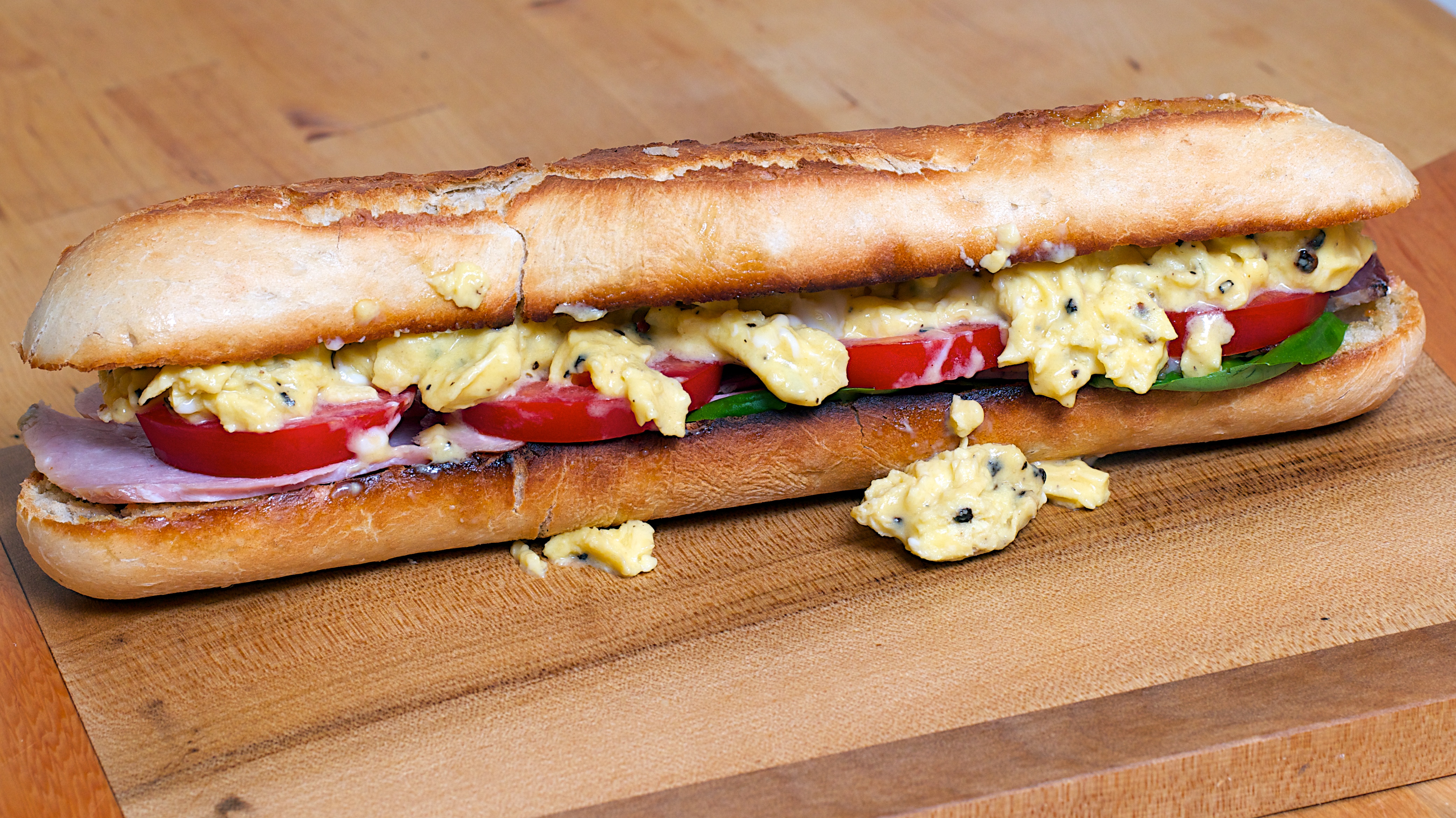
This was no effort at all to whip up on a Saturday for brunch. We were a bit concerned when we saw the quantity of peppercorns, but they work superbly and give much less heat than expected.

Peppercorn Eggs & Ham Baguette – to serve 4

  • large baguette, cut in 4 and sliced in half
  • good quality olive oil
  • 1 clove garlic, peeled
  • 55g unsalted butter
  • 8-12 large eggs
  • 1 tbsp black peppercorns, cracked in a mortar
  • a handful of basil leaves
  • 4 slices of good quality ham or prosciutto
  • 2 large tomatoes, cored and sliced

Scoop out the dough from the slices of baguette to make room for the filling. Pour olive oil over each slice and rub with the garlic clove. Put the slices on a tray and toast under a grill on both sides.

Meanwhile, melt the butter in a frying pan and whisk the eggs. Add the cracked peppercorns and tip the mixture into the pan. Tumble and push the eggs around the pan with a flat wooden spatula (think half scramble, half omelette).

Remove when still soft as they will continue to cook, and season with a little salt. Put a few basil leaves on the base of 4 baguette slices, then add the ham, the tomato and finally the egg, finishing with the top pieces of baguette.

(Original recipe from Tamasin’s Kitchen Bible by Tamasin Day-Lewis, Weidenfeld & Nicolson, 2005.)
Read Full Post »
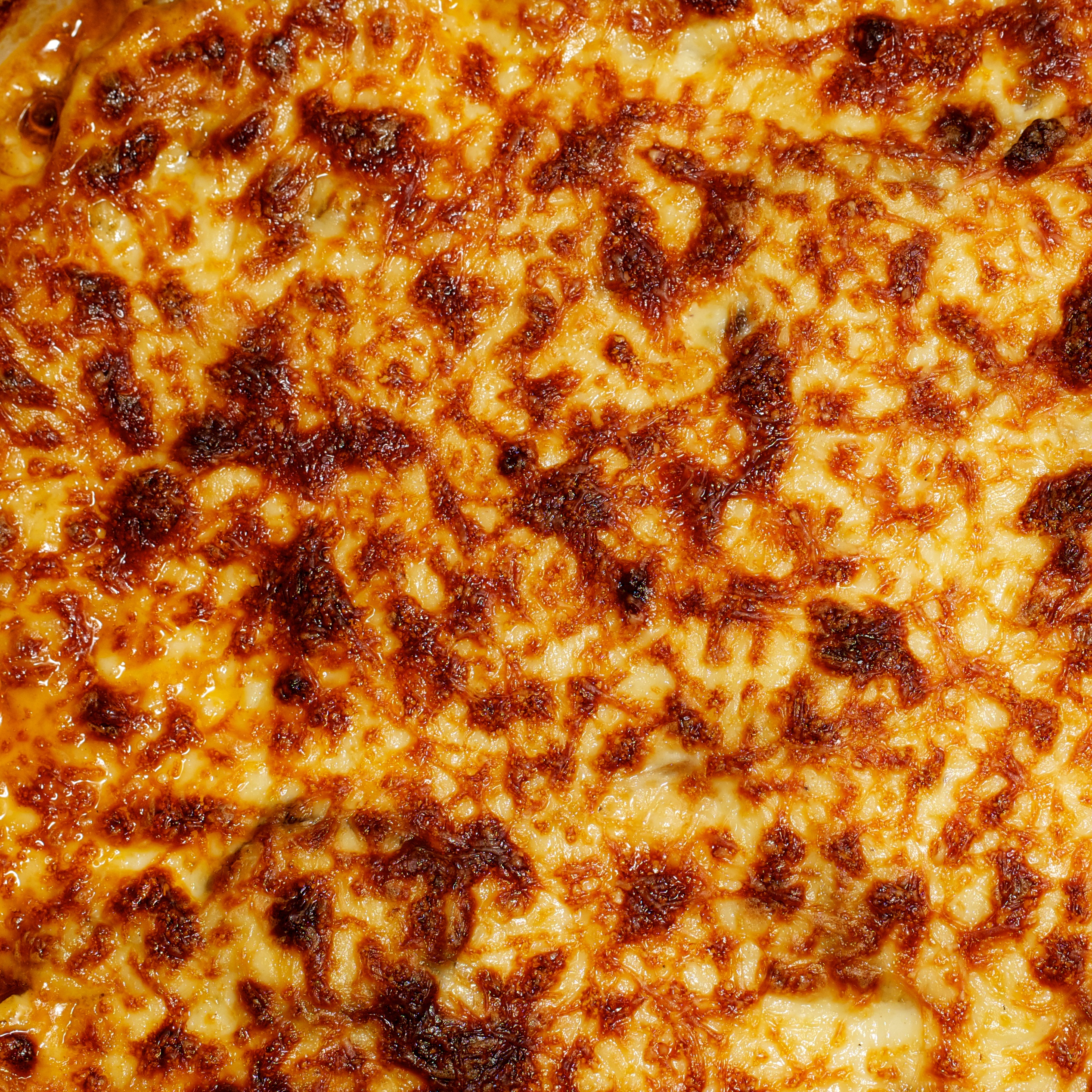
Moussaka

This is a really lovely moussaka which rates as one of our “comfort” dishes. We especially like roasting the aubergines in the oven rather than frying them which always seems to require vats of oil. The combination is a classic and is not difficult, but it does take a little time to bring together. It is always well worth it.

Wine Suggestion:  We’ve been inspired to drink wines from the Eastern Mediterranean with this and have found that top Lebanese wines, like Chateau Massaya, with their bramble and plum fruits plus velvety spices work very well indeed.

Moussaka – to serve 6

  • 3 aubergines, sliced 1cm thick
  • olive oil
  • 2 onions, chopped
  • 2 cloves of garlic, chopped
  • 1½ lb (675g) lamb mince
  • 1 tsp cinnamon
  • 1 tomato, skinned, seeded and chopped
  • 2-3 tbsp tomato purée
  • a bunch of flat-leaf parsley, chopped
  • a few tbsp dry white wine
  • Parmesan (optional)

FOR THE BÉCHAMEL 

  • 1 pint (600ml) full-cream milk
  • 1 onion, peeled and stuck with a couple of cloves
  •  bay leaf
  • 2oz (55g) unsalted butter
  • 1 heaped tbsp plain flour
  • nutmeg

Preheat the oven to 180ºC/350ºF/Gas 4.

Brush the aubergine slices with olive oil on both sides then put on a baking tray in a single layer and roast until soft. You will either need to do this in batches or on two trays. They should take between 10 and 20 minutes but don’t let them get too brown.

Meanwhile, heat 2 tbsp olive oil in a heavy-bottomed frying pan and sauté the onions until soft and golden. Add the garlic and continue to sauté for another few minutes, then add the mince and fry for 5-10 minutes or until well browned. Season and add the cinnamon, then add the chopped tomato, tomato purée and chopped parsley. Stir well, add the wine and simmer for 15 minutes or until most of the wine has been absorbed.

While the meat is simmering make the béchamel. Put the onion, bay leaf and milk in a small pan and bring slowly to the boil. Take the pan off the heat and leave to infuse for 20-30 minutes with the lid on and reheat just before starting the sauce.

Melt the butter over a gentle heat in a small pan. Just as the butter starts to foam, add the flour and stir gently for a few seconds. You want a thin bubbling base – if the butter hasn’t amalgamated with the flour, add a tiny bit more. Bubble for a couple of minutes or until it turns a pale biscuit colour. Add about half a cup of the hot milk and whisk hard until the mixture becomes thick. Add more milk and repeat – it will take longer to thicken each time.

Cook the sauce more slowly and stir with a wooden spoon – add more milk until you get the right consistency. You want the sauce to be thick but not solid. Cook gently for 20 minutes, stirring often. Season and grate in a little nutmeg about half way through.

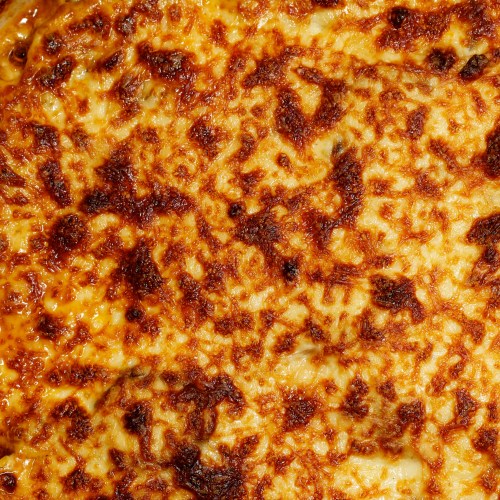
When the sauce is ready put alternate layers of aubergine and meat sauce in a deep baking dish or roasting tin, staring and ending with a layer of aubergines. Pour a thick layer of béchamel over the top; you might not need it all. Sprinkle over some grated Parmesan if you like then bake in the oven for about 45 minutes or until brown on top.

(Original recipe from Tamasin’s Kitchen Bible by Tamasin Day-Lewis, Weidenfeld & Nicolson, 2005.)

Read Full Post »

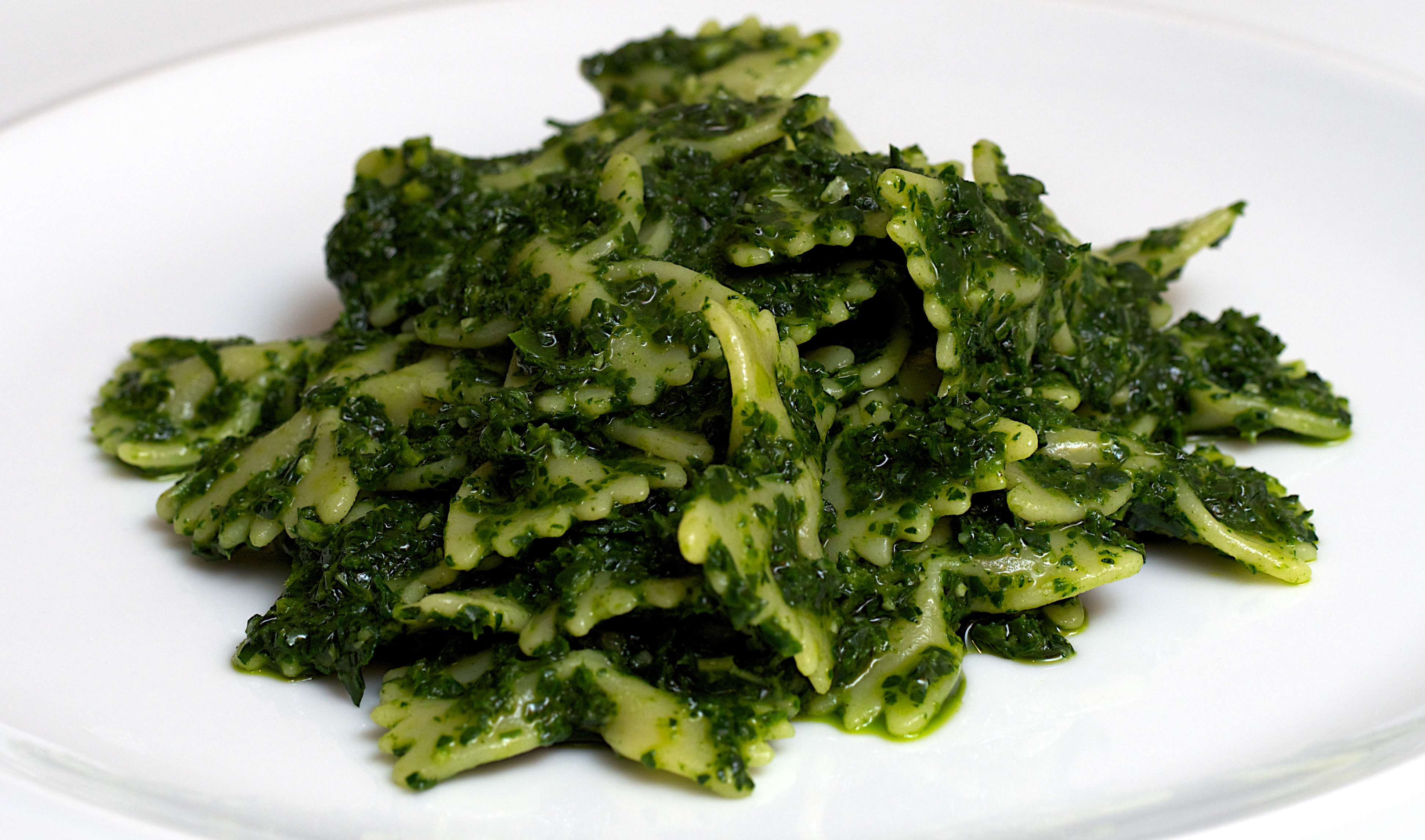
This works really well as a starter portion for 6 people. Make sure you use top quality fresh extra virgin olive oil from the most recent vintage. We buy fresh olive oil made by the Tuscan wineries Capezzana and Selvepiana. They’re not cheap but they taste fabulous when only the best olive oil will do.

Wine Suggestion: The iron rich Cavolo Nero requires something minerally and iron rich too, but you need to avoid wines with too much weight. We’d suggest trying the Gulfi Cerasuolo di Vittoria, a red from Sicily that is a blend of Frappatto and Nero d’Avola which combines an earthiness and power with a joyful fruit and fresh acidity giving the wine personality and depth without excess weight.

Farfalle al Cavolo Nero con Olio Nuovo – serves 6

  • 1.1kg cavolo nero leaves
  • sea salt and black pepper
  • 4 garlic cloves, peeled
  • 250ml extra virgin olive oil (see comment above)
  • 250g farfalle
  • Parmesan

Remove the stalks from the cavolo nero but keep the leaves whole. Blanch the leaves in a generous amount of boiling salted water along with 2 of the garlic cloves for just a few minutes. Put the blanched garlic and cavolo nero in a food processor and pulse to a coarse purée. In the last few seconds, pour in around 75ml of the oil to make a fairly liquid purée.

Crush the rest of the garlic with 1 tsp sea salt and stir into the purée with another 75ml of oil. Season to taste.

Cook the the farfalle in plenty of salted water, then drain. Add the pasta to the purée and stir until evenly coated. Pour in the remaining olive oil and serve with some grated Parmesan.

(Original recipe from The River Café by Rose Gray and Ruth Rogers, Ebury Press, 1995.)

Read Full Post »

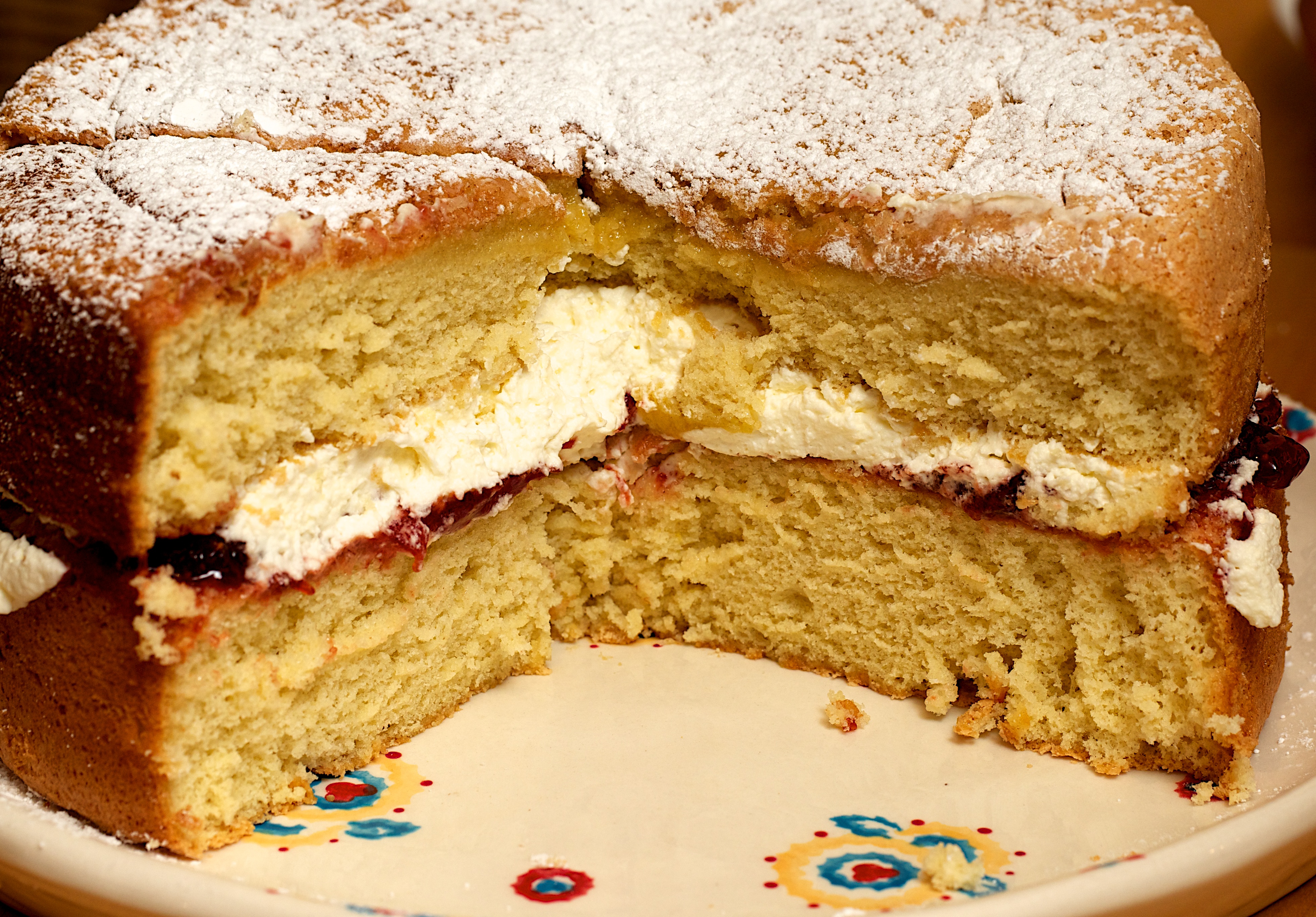
Aussie Sponge

Jono has inherited this recipe for a never-fail Sponge Cake from his Nan and Mum in Australia. We’ll call it an Aussie Sponge as it’s not the usual Victoria Sponge. Very moreish and can be decorated in many ways. We just added some of our Strawberry and Pimm’s Jam, a bit of cream and a dusting of icing sugar. The cake lasted only 5 minutes (we had some help).

Aussie Sponge 

  • 4 eggs – separated
  • scant 250ml of castor sugar
  • 250ml self raising flour – sifted 3 times
  • 1 tbsp hot water

Beat the egg whites until very stiff, then slowly beat in the castor sugar.

Beat in the egg yolks, one at a time, taking care not to over beat.

Fold in the sifted flour with a fork, then fold in the hot water.

Divide the mixture between two sandwich tins and bake for 12-15 minutes or until the cake is lightly coloured and the sides spring back from the edges of the tin. Turn out onto a clean tea towel and cool.

Read Full Post »

Ginger Beer

For the last 33 weeks we have been posting very misleading wine suggestions as we’ve had very little wine at all. Instead we’ve have had to imagine what we would have liked to drink with the dishes if one of us didn’t have to abstain for 9 months. Instead we’ve a new found affection for soft drinks, including this Ginger Beer.

Ginger Beer 

  • 140g fresh ginger
  • 4 tbsp muscovado sugar
  • 2-3 lemons
  • 1 litre soda or sparkling mineral water
  • fresh mint sprigs

Grate the ginger using the coarse side of the grater. Catch the ginger with  all its juice in a bowl and sprinkle in the sugar.

Remove the rind from 2 of the lemons with a vegetable peeler, then add to the bowl and bash everything together with the end of a rolling pin for a few seconds. Squeeze the juice from all 3 lemons and add most of it to the bowl.

Allow the ginger beer to sit for 10 minutes, then taste and adjust with more sugar or lemon juice if necessary. Pour the ginger beer through a coarse sieve into a large jug and serve with plenty of ice and mint sprigs.

(Original recipe from Jamie Oliver)

Read Full Post »

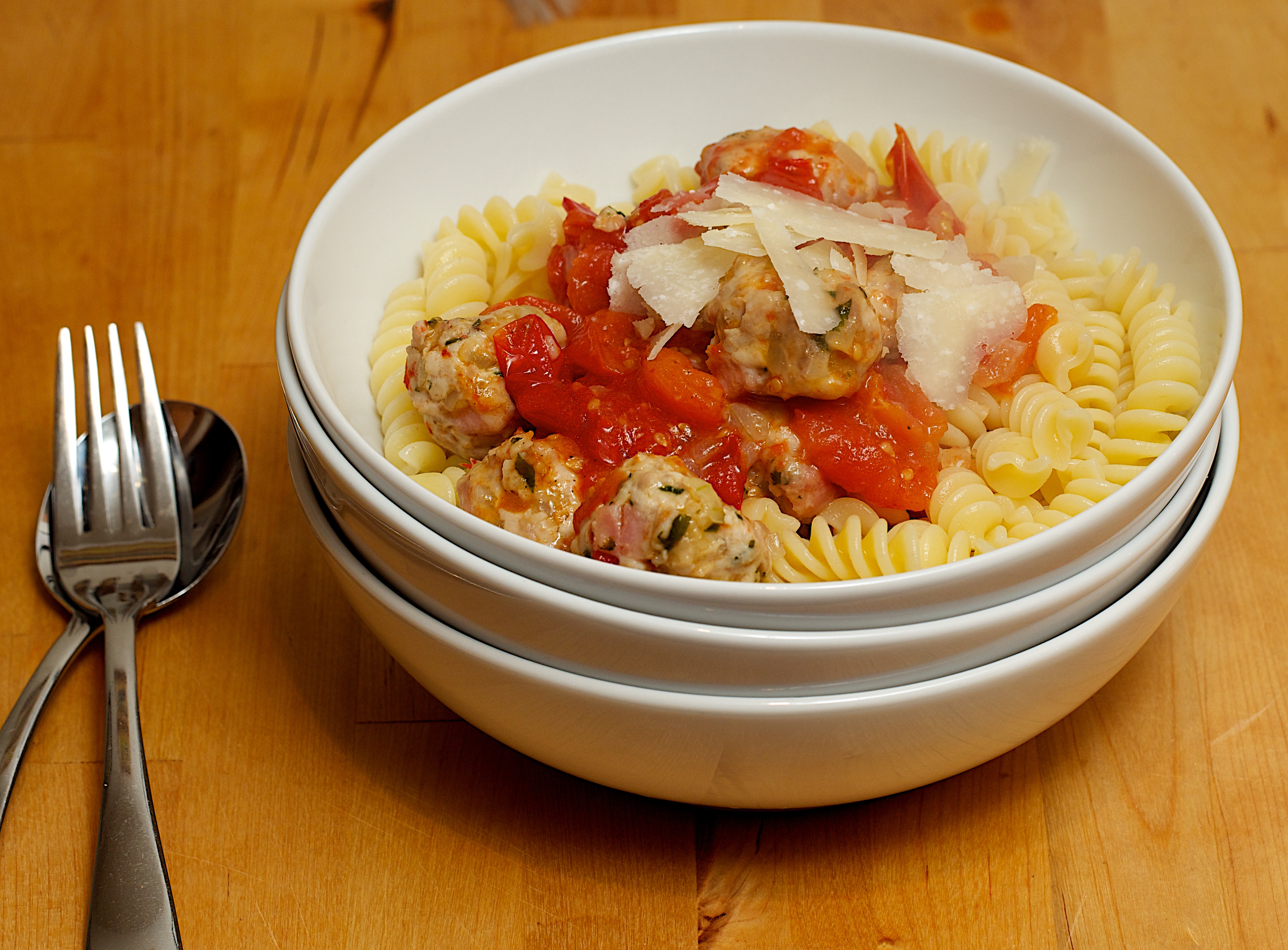
We found these to be a surprisingly tasty alternative to traditional spaghetti and meatballs. We loved these for their freshness and verve; it really hit the spot for a weeknight dinner. It was also usefully quick and easy as well as being very cost effective.

Wine Suggestion: try some of Italy’s thoroughly modern whites that are being rejuvenated and reinvented. If you can find a good Pecorino from the Marche you’ll be in for a treat. We had a glass of Umani Ronchi’s Vellodoro which had good freshness of fruit and terrific depth of minerality and nutty savouriness; showing what can be done with a forgotten grape variety when love and attention are given.

Spicy Chicken Meatballs – to serve 4

  • 3 tbsp olive oil
  • 1 small onion, finely chopped
  • 2 cloves of garlic, crushed
  • ½ tsp ground coriander
  • 1 red chilli, thinly sliced
  • 500g chicken mince
  • 3 tbsp fresh breadcrumbs
  • 50g pancetta, chopped
  • 2 tbsp flat-leaf parsley, chopped
  • 500g cherry tomatoes, halved
  • 125ml chicken stock
  • 500g fusilli  pasta, cooked, to serve
  • Parmesan

Preheat the oven to 200ºC/400ºF/Gas 6. Heat 1 tbsp of the oil in a saucepan over medium-high heat. Add the onion and garlic and cook for 5 minutes, or until softened. Add the coriander and chilli and cook for another minute.

Put the chicken in a bowl with the breadcrumbs, pancetta, parsley and some salt. Add the spiced onion and mix well with your hands. Refrigerate for 30 minutes, then wet your hands with cold water and roll the mixture into small meatballs.

Put the cherry tomatoes on a baking tray lined with baking paper, drizzle with 1 tbsp olive oil and season. Put the meatballs on another lined tray and drizzle with the remaining oil. Roast the tomatoes and meatballs for 15-20 minute, or until the meatballs are golden and the tomatoes are starting to burst.

Put the stock and tomatoes in a saucepan and add the meatballs. Simmer for 5 minutes and season.

Serve with the cooked pasta and some Parmesan shavings.

(Original recipe from Bill Granger Every Day, Murdoch Books, 2006)

Read Full Post »

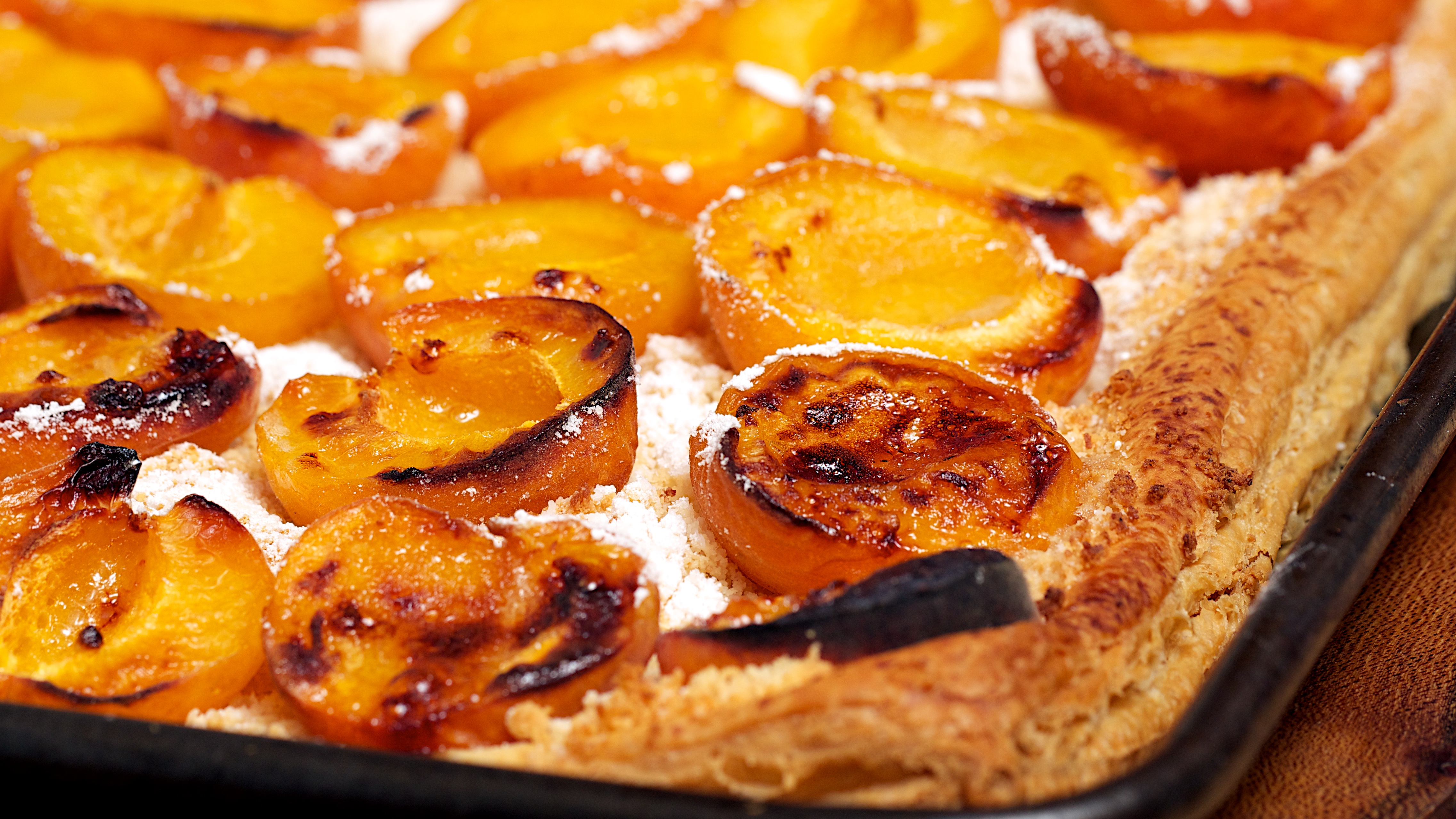
We had an abundance of perfectly ripe apricots a while back and whipped this up to celebrate. Baking fruit on top of puff pastry, with some ground almonds and a dusting of sugar is dead easy plus it brings out all the flavours and enhances the deliciousness.

Wine Suggestion: we think that these flavours go well with southern French botrytised wines, especially from Semillon and Sauvignon. Don’t go all out with a top named Sauternes Chateau as  these will be too concentrated and rich, rather find smaller Chateau, second wines or little appellations like Cérons. Look for a purity of fruit and balance of freshness, but a lightness of being and not too rich.

Apricot Tart – to serve 8

  • one pack of ready-rolled puff pastry
  • 50g ground almonds
  • 900g ripe apricots, halved and stoned
  • 2 tbsp icing sugar
  • maple syrup and cream to serve

Preheat oven to 220°C/Gas 7/Fan 200°C.

Unroll the pastry onto a slightly damp baking tray and sprinkle over the almonds. Arrange the apricots on top, tightly packed and right up to the edges of the pastry.

Dust with the icing sugar and bake for 20-25 minutes or until the sugar has started to caramelise.

Serve hot or warm with a drizzle of maple syrup and some cream if you like.

(Original recipe from BBC Good Food)

Read Full Post »