Feeds:
Posts
Comments

Archive for August, 2026

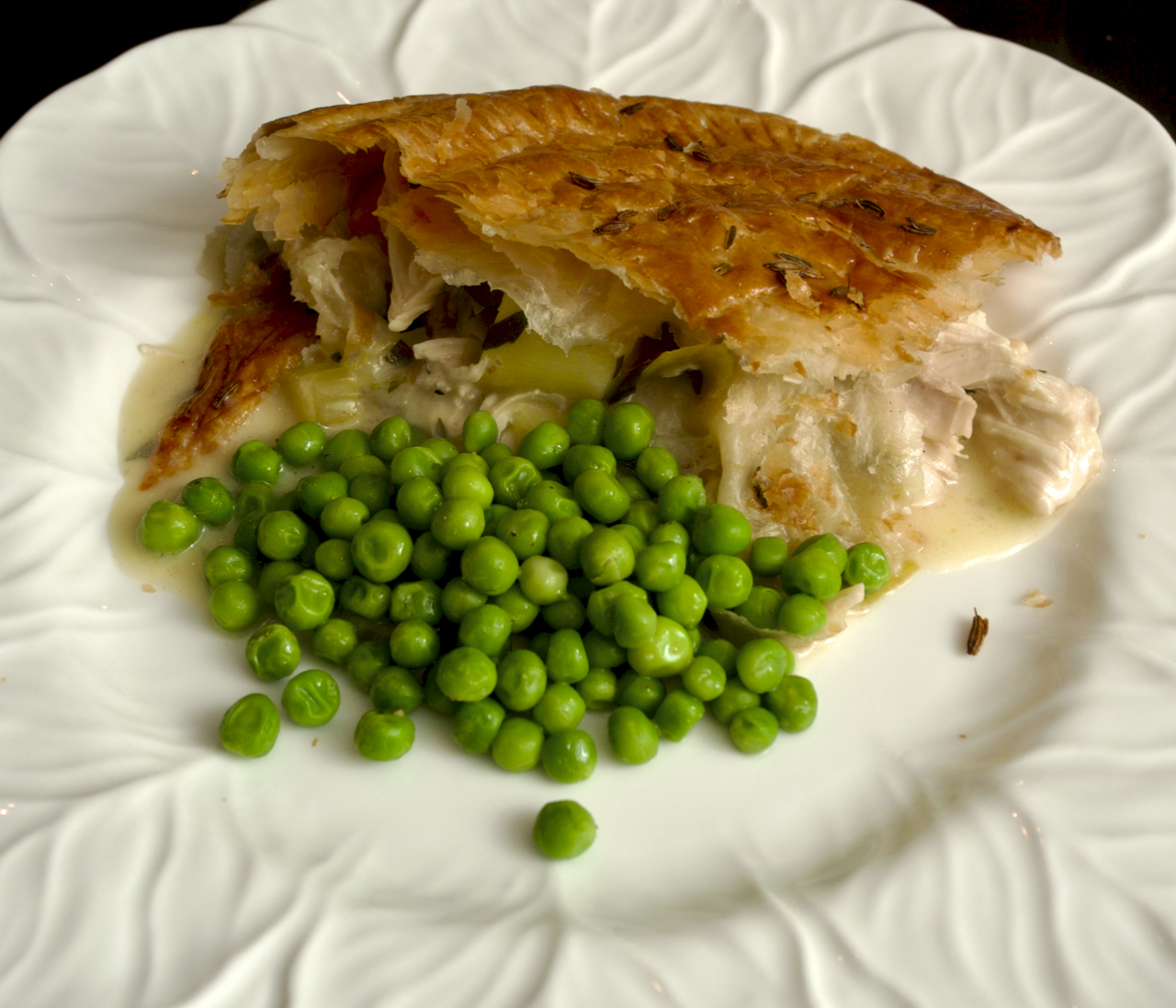
With our tarragon growing like mad in the garden and nerw season leeks at the farm shop we felt like cooking a proper chicken pie. This gorgeous recipe delivers two golden, puff-pastry-topped pies — one for now, and one to freeze for a no-fuss dinner down the line. It’s everything you want from a comforting pie: tender poached chicken, sweet leeks, smoky bacon, and a luxuriously creamy tarragon-spiked sauce.

Wine Suggestion: as usual with chicken pies we opened a chardonnay, in this case a little gem from Patrick Javillier in Meursault, Burgundy; their Bourgonge Côte d’Or Cuvée de Forgets. One of two different Bourgogne Blancs they make, this one richer and fuller, but remaining elegant and expressive and quite Meursault like with a creaminess and toastiness.

Chicken, leek & tarragon pie – serves 8 (makes 2 pies, each serves 4)

TO POACH THE CHICKEN:

  • 1 free-range chicken, cut in half lengthways (your butcher will do this for you but it is quite easy to do with strong scissors)
  • olive oil
  • 1 brown onion, roughly chopped
  • 2 celery sticks, roughly chopped
  • 1 carrot, roughly chopped
  • 3 bay leaves

FOR THE PIE:

  • 3 celery sticks, halved and sliced
  • 3 large leeks, chopped into 2cm rounds
  • 6 rashers of top-quality smoked streaky bacon, remove any rind and cut into chunks
  • 30g butter
  • 600ml poaching broth from the chicken
  • 50g plain flour
  • 150ml white wine
  • 200ml double cream
  • 1 heaped tbsp Dijon mustard
  • 20g fresh tarragon, finely chopped
  • 1 egg
  • 2 sheets of all-butter puff pastry
  • fennel seeds (optional)

Season the chicken halves generously and leave aside for an hour to come to room temperature.

Get a heavy-based pot that will fit both pieces of chicken (otherwise you can do this in two batches). Drizzle in some olive oil and place over a fairly high heat. When the oil is hot, fry the chicien pieces on both sides until golden brown and caramelised all over.

When the chicken is browned, add the chopped veg and the bay leaf. Top up with water so that the chicken is just covered. Season generously with salt and bring up to a very gentle simmer with the lid on for 30 minutes, or until the chicken is just cooked through – as always a thermometer is your best friend here.

Remove the chicken from the pot and set aside to cool (keep the cooking liquid in the pot). When the chicken is cool enough to handle, strip the chicken from the carcass and put into a bowl. Put the bones, skin and gristle back into the pot with the poaching liquid. Put this back on the heat and simmer to extract all the flavour from the bones while you continue with the recipe.

Place the bacon in a large pan with th butter and fry to render out the fat. Add the celery, leeks and a ladleful of the chicken stock, then cover with a lid and cook until tender.

Strain the chicken stock now and measure out 600ml. Taste and seaon with salt if needed.

Add the flour to the leeks and mix well, cooking for a few minutes, then pour in the wine and mix again, it will look pretty awful at this stage but don’t worry. Add the chicken stock, a ladleful at a time, stirring until it is completely absorbed. When you have added all 600ml, turn the heat off and pour in the cream. Add the cooked chicken meat, mustard and finely chopped tarragon. Mix well and taste and adjust the seasoning if needed.

Fill a pie dish with half the mixture (we then freeze the rest in another dish, ready to cover with pastry when needed).

Heat the oven to 200C.

Whisk an egg and brush the edges of the pie dish. Place a pastry sheet on top and crimp the edges but leave a generous overhang. You can decorate with any extra bits. Brush the top with more egg wash, then sprinkle over the fennel seeds (if using) and season with salt and pepper. Pierce a hole in the middle so the steam can escape, then bake for about 30 minutes or until the top is golden brown and puffed.

(Original recipe from The Farm Table by Julius Roberts, Ebury Press, 2023.)
Read Full Post »

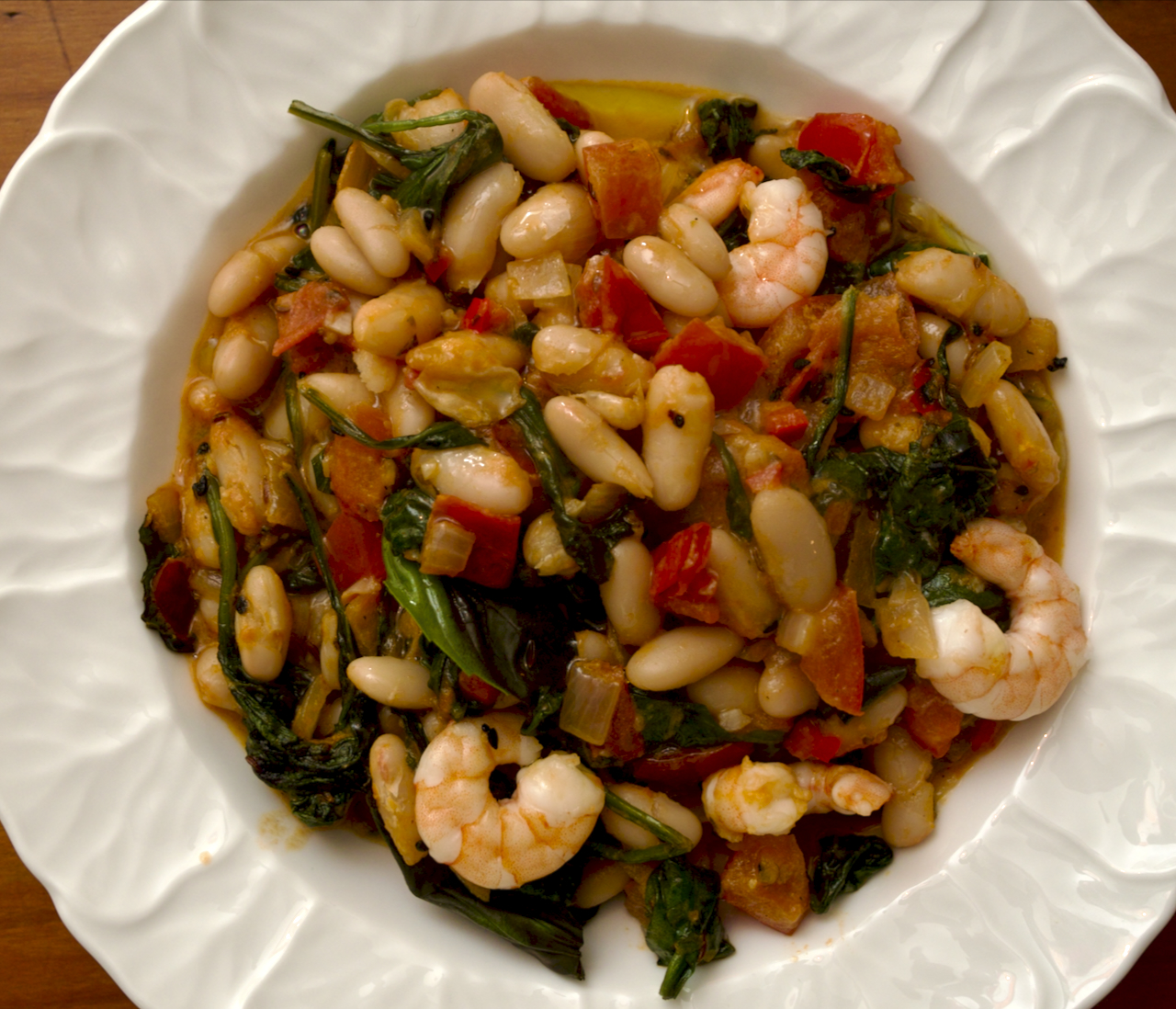
We’re trying to up our intake of beans and pulses. This is a nice healthy dish and it’s easy to make so perfect for busy weeknights.

Prawn saganaki with beans – serves 4

  • 4 tbsp extra virgin olive oil
  • 1 large white onion, diced
  • 5 cloves of garlic, finely chopped
  • 2 red chillies, finely chopped
  • 2 tsp caraway seeds
  • 2 tsp nigella seeds
  • 2 tsp dried oregano
  • 500g ripe tomatoes, roughly chopped
  • 2 tbsp tomato purée
  • 2 tbsp honey
  • 50g feta cheese
  • 200g swiss chard or spinach, roughly chopped
  • 20g basil, roughly chopped plus a few extra to garnish
  • 400g tin white beans, drained and rinsed
  • 200g jumbo prawns, peeled and deveined

Heat the oil in a flameproof casserole over a medium heat, add the onion and cook for 5 minutes or until soft and translucent, then add the garlic, chilli and seasoning, and cook for 2 minutes.

Add the caraway and nigella seeds with the oregano and stir into the onions for 1 minute, then add the tomatoes, tomato purée, honey and feta. Cover and cook for 12 minutes or until the tomatoes have broken down and the feta has melted into the sauce. Add a splash of water to stop it sticking if needed.

Meanwhile, preaheat the grill to high.

Uncover the pan and stir so that all the ingredients combine with the sauce, then add the green leaves and basil, reserving a few basil leaves to garnish, and stir for 2-3 minutes or until the greens have wilted.

Add the beans to the sauce and put the prawns on top. Simmer for 2 minutes then transfer to the hot grill for 4 minutes to cook the prawns and brown the top of the dish.

Garnish witht the reserved basil leaves.

(Orignal recipe from The Doctor’s Kitchen App)

Read Full Post »

This is melt-in-the-mouth cooking as it starts low and slow for about an hour before a final char over the flames.

Set up your barbecue for both indirect and direct cooking. We used a kamado with deflector plates, but you could also use a kettle barbecue with a small fire in the middle and the indirect cooking around the outside.

Wine suggestion: We often enjoy juicy wines with a lot of barbecue dishes, but because we’re a little obsessed with Northern Spain at the moment we opened a fuller bodied red from Rias Baixas, the Attis Espadeiro. Full bodied and elegantly smooth tannins, a super example of this little known grape.

Chicken drumsticks with za’atar, chopped salad & tahini dressing – serves 4 to 6

  • 1kg chicken drumsticks
  • 2 tbsp olive oil
  • 4 tbsp za’atar

FOR THE DRESSING:

  • 75g tahini
  • 75ml cold water
  • juice of half a lemon
  • 1 clove of garlic, crushed

FOR THE SALAD:

  • 400g cherry tomatoes, diced
  • 1 cucumber, diced
  • 4 scallions, diced
  • 200g radishes, diced
  • 3-4 tbsp extra virgin olive oil
  • juice of half a lemon

Cut a few deep slashes in each drumstick, then sprinkle with about 3 tbsp of za’atar, the olive oil and a little salt. Toss to coat, then cover and leave in the fridge for up to 48 hours.

To cook you need a barbecue prepped with a small central fire (see intro). Arrange the drumsticks around the fire so they cook indirectly. Shut the lid and cook for an hour, rotating the chicken occasionally.

To make the dressing, put everything into a bowl and whisk until smooth. Season to taste with salt and pepper.

For the salad, mix the tomatoes, cucumber, scallions and radishes. Stir through the olive oil and lemon juice and season with salt and black pepper. Spoon onto a platter and set aside.

Once the chicken has been cooking for an hour, move it over the high heat in the centre and cook for another 10 minutes, turning often, until crispy and browned.

Place the chicken on top of the salad and drizzle over the dressing. Finish with a sprinkling more za’atar and drizzle with your best olive oil.

(Original recipe from How to BBQ by Genevieve Taylor, Penguin: Random House, 2026.)

Read Full Post »