Feeds:
Posts
Comments

Posts Tagged ‘Gravy’

You freeze the stuffing here before rolling up with the the lamb and tying with string – genius! Pretty much a one pot-dish then and you can easily get your beans ready in advance and re-heat with the garlic to serve.

Wine Suggestion: The combination of lamb, nuts and mushrooms lends itself to a good old-vine northern Rhône Syrah like Domain Coursodon’s Olivaie, a St Joseph from one of the best vineyards in this appellation. We opened one 5 years old and it had come together nicely with a rich and velvety texture, hints of plum, raspberries and olives on the nose and a charming length and balance.

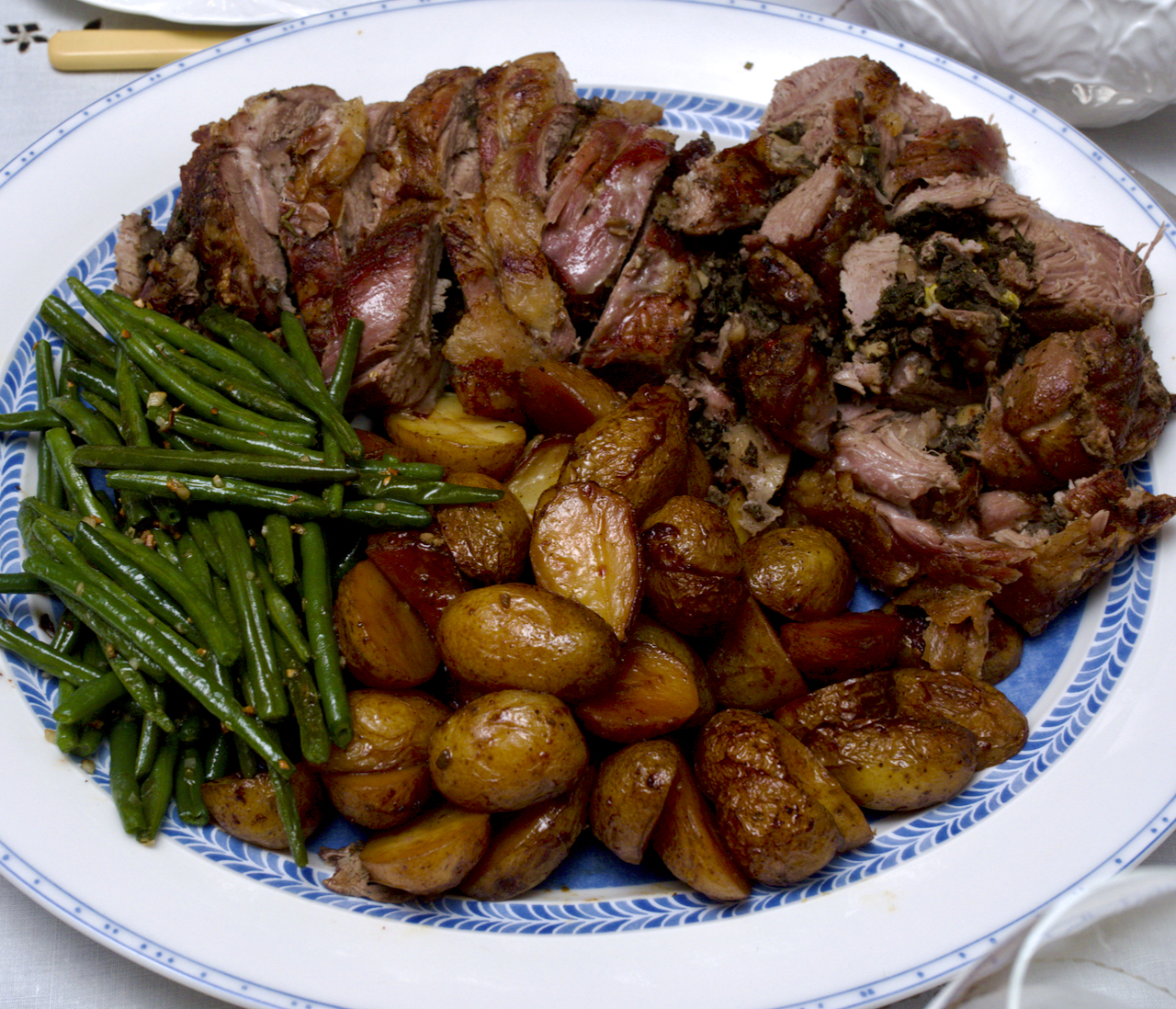
Lamb shoulder with potatoes and garlicky green beans – serves 4 with leftovers

  • 1.5kg boneless lamb shoulder
  • 1½ tsp fine sea salt
  • 1 tsp freshly ground black pepper
  • 2 tsp extra virgin olive oil

FOR THE STUFFING:

  • 1 tbsp unsalted butter
  • 2 shallots, finely chopped
  • 3 cloves of garlic, crushed
  • 300g button mushrooms
  • 100g baby spinach, roughly chopped
  • 3 tbsp skinned hazelnuts
  • 3 tbsp pistachios (plus some extra chopped to serve)
  • 1½ tbsp finely chopped parsley
  • 1½ tsp finely chopped rosemary
  • 1 tbsp lemon zest

FOR THE POTATOES:

  • 1kg baby potatoes, halved or quartered if large
  • 1 tbsp extra virgin olive oil

FOR THE GRAVY:

  • 2 tbsp flour
  • 375ml beef stock
  • ¼ tsp dark soy sauce

FOR THE GREEN BEANS:

  • 500 green beans, trimmed
  • 2 tsp fine sea salt
  • 2 tbsp olive oil
  • 4 cloves of garlic, crushed

You need to make the stuffing first and it can be done well in advance and needs to go in the freezer for at least 3 hours.

Heat the oven to 180C/160C fan, then roast the hazelnuts for 8 minutes. Leave them to cool, then roughly chop.

Put the mushrooms in a food processor and whizz until finely chopped.

Melt the butter in a frying pan over a high heat. Add the shallots, garlic and mushrooms and cook for 5 minutes or until any liquid produced by the mushrooms has gone. Add the spinach and stir until just wilted.

Transfer the mushroom mixture to a bowl and allow to cool for 20 minutes, then stir in the remaining stuffing ingredients and season with salt and pepper.

Pile the stuffing onto a piece of cling film, then shape into a long log (about the length of a 30cm ruler). Roll up tightly with the cling film then put into the freezer for at least 3 hours (this can be done a couple of days in advance).

Take your lamb shoulder and place fat-side down . Cover with cling film and use a rolling pin to pound it into a rectangle (roughly 40cm x 22cm) and try to make it as even thickness as possible.

Sprinkle the lamb with salt and pepper, then unwrap the frozen stuffing and roll it up tightly with the lamb, finishing with the seam down.

Secure the lamb with kitchen string every 2cm (ours looked pretty terrible at this point but don’t fear, it will look perfect when cut out at the end).

Heat the oven to 220C/200C fan.

Rub the lamb roll with the olive oil and sprinkle over some salt and pepper.

Toss the potatoe with salt, pepper, and olive oil in a large roasting pan, then place the stuffed lamb on top.

Roast for 30 minutes, then turn the heat down to 160C/140C fan and cook for 2½ hours, or until the meat can be pulled apart easily with a fork.

When the lamb is close to ready, cook the beans. Bring a large saucepan of water to the boil with 1 tsp of salt. Add the beans and cook for 4 minutes, then drain and rinse under the cold tap and drain well.

Remove the lamb and potatoes and loosely cover with foil, while you make the gravy.

Discard all but 3 tbsp of the fat from the pan, you can add a bit of butter if there isn’t enough fat.

Put the roasting tin on the hob over a medium heat. When the fat is hot, stir in the flour for 1 minute.

Keep stirring while you slowly add the stock. Add the soy sauce and stir continuously until it thickens to a gravy-like consistency. Taste and season to taste.

Finish your green beans by heating the oil in a large frying pan over a medium heat. Add the green beans and garlic and stir for 2 minutes until the garlic is cooked and the beans warmed through. Season with salt and pepper.

Remove the string from the lamb and cut into thick slices.

Serve the lamb on a platter with the gravy, potatoes and garlicky green beans.

(Original recipe from recipetineats)
Read Full Post »

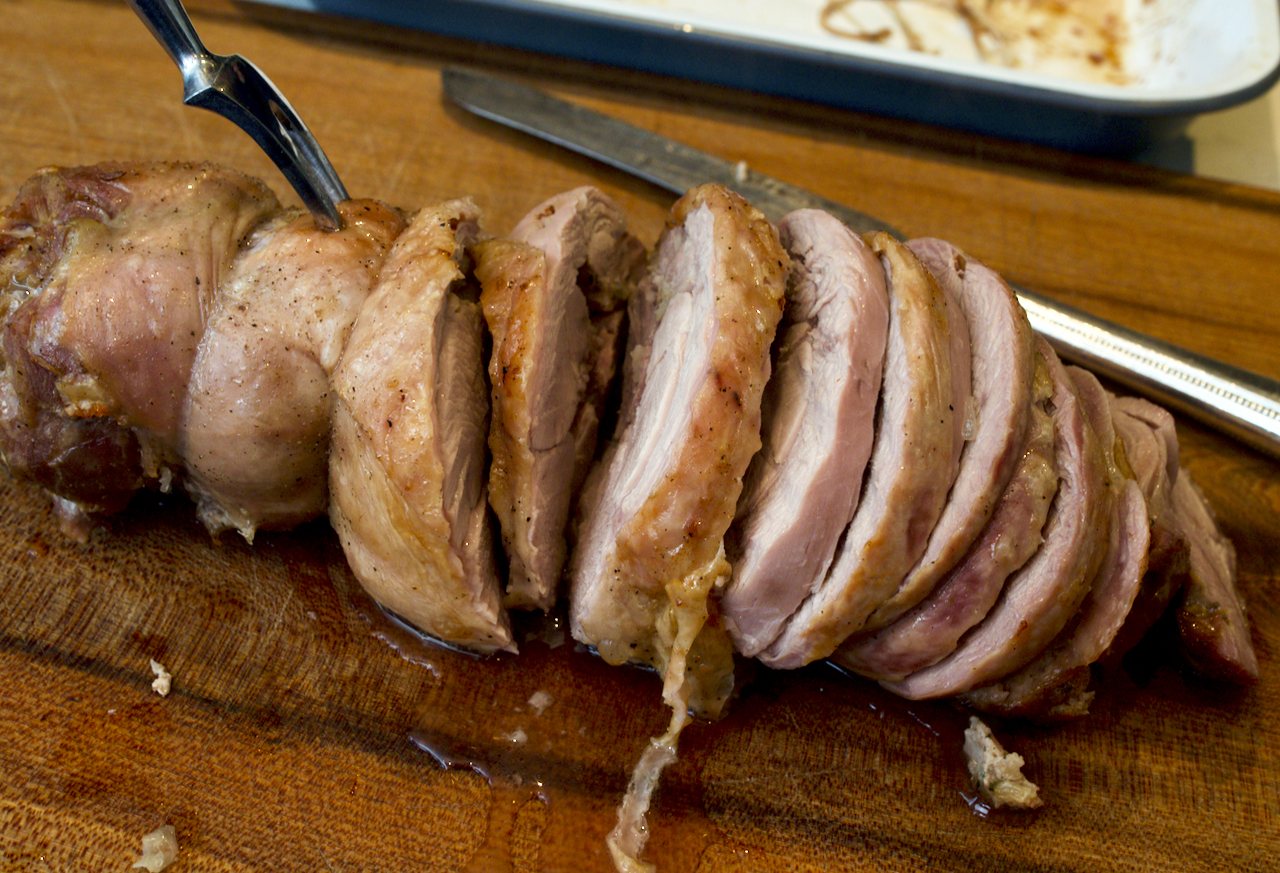
Not sure why we didn’t think of this before. A boned, brined, stuffed, and rolled, turkey leg with delicious gravy that can be completely prepped in advance. Juicy, tasty and easy, even if it does take a bit of time in the prep. It’s a no-brainer!

Ask your butcher to bone the turkey legs for you and keep the bones to make the gravy.

Wine Suggestion: Classic Christmas dinner fare, an oaked white like Rustenberg’s Five Soldiers Chardonnay and a Rhône red like Les Pallières Racines Gigondas made by the Bruniers of Vieux Télégraphe Chateuneud-du-Papes. Pushing the boat out a bit with standard bearers but we thought it was worth it.

Stuffed turkey leg – serves 4 to 6 (generously and easily halved)

  • 2 boned turkey legs

FOR THE BRINE:

  • 140g table salt
  • ½ tsp white peppercorns
  • ½ tsp coriander seeds
  • ½ tsp fennel seeds
  • 6 sprigs of thyme
  • 2 bay leaves

FOR THE STUFFING:

  • 50g butter
  • 1 onion, finely diced
  • 1 clove of garlic, finely grated
  • 200g sausage meat
  • a bunch of sage, half the leaves finely chopped (keep the rest for the gravy)
  • ½ tsp dried oregano

FOR THE GRAVY:

  • turkey bones (or chicken bones)
  • 2 tbsp vegetable oil
  • 2 onions, peeled and cut into chunks
  • 2 cloves of garlic, peeled
  • 2 carrots, cut into chunks
  • ½ bunch of thyme
  • 2 bay leaves
  • 150ml white wine
  • 100ml dry sherry
  • 1 litre good quality chicken stock
  • 1 tsp Marmite
  • 1 tbsp cornflour

To make the brine, put all of the ingredients into a medium-large saucepan, with 500ml water. Place over a hight heat and bring to the boil to dissolve the salt, then remove from the heat and add 1.5 litres of cold water. Leave to cool.

Put the cooked brine into a large bowl and add the turkey legs. Leave to brine for two hours but no more.

Meanwhile, make the gravy. Heat the oven to 220C/200C fan/gas 7.

Put the bones into a large rosting tray and place in the oven. Turn the oven down immediately to 200C/180C/gas 6 and roast for 20-25 minutes until golden.

While the bones are roasting, heat a large saucepan over a high heat. Add the vegetable oil, when it almost smokes, add the onions, garlic, carrots, thyme and bay leaves and brown well for 15 minutes, stirring often. Add the white wine and sherry and reduce to a syrup, then add the stock, roasted bones, and the unchopped sage. Add the Marmite and plenty of black pepper and simmer gently for 1 hour. Pass through a fine sieve into a clean saucepan and simmer gently for 20 minutes. Mix the cornflour with 2 tbsp of cold water and whisk it into the gravy. Simmer for another 10 minutes. Taste and adjust the seasoning if you need. It should be super tasty.

Meanwhile, make the stuffing. Melt the butter in a medium frying pan, add the onion, garlic and a generous pinch of salt and cook for 10-15 minutes or until soft. Transfer to a large bowl and mix in the sausage meat, finely chopped sage, oregano and some black pepper.

Put a large piece of foil on top of the the work surface and lay one of the boned legs on top, skin-side up. Rub the the skin with salt and pepper. Turn it over and place half the stuffing on the flesh side. Smooth it out with a spoon but leave a good 3cm gap at the end you are going to roll towards. Roll the leg tightly and secure it with kitchen string – don’t worry too much about what it looks like at this stage (ours had a hole and the stuffing was bursting out the side – no matter!). Repeat with the second leg. Put the leg into a roasting tray and roast in the hot oven for 25 minutes. Remove the foil and roast for another 30-35 minutes, until the skin is golden and the juices run clear (a meat thermometer is very useful here). Remove from the oven and leave to rest, covered loosely with foil, for 10-15 minutes. Add the roasting juice to the gravy and then carve and serve.

(Original recipe from Marcus Everyday by Marcus Everyday, HarperCollinsPublishers, 2019.)

Read Full Post »

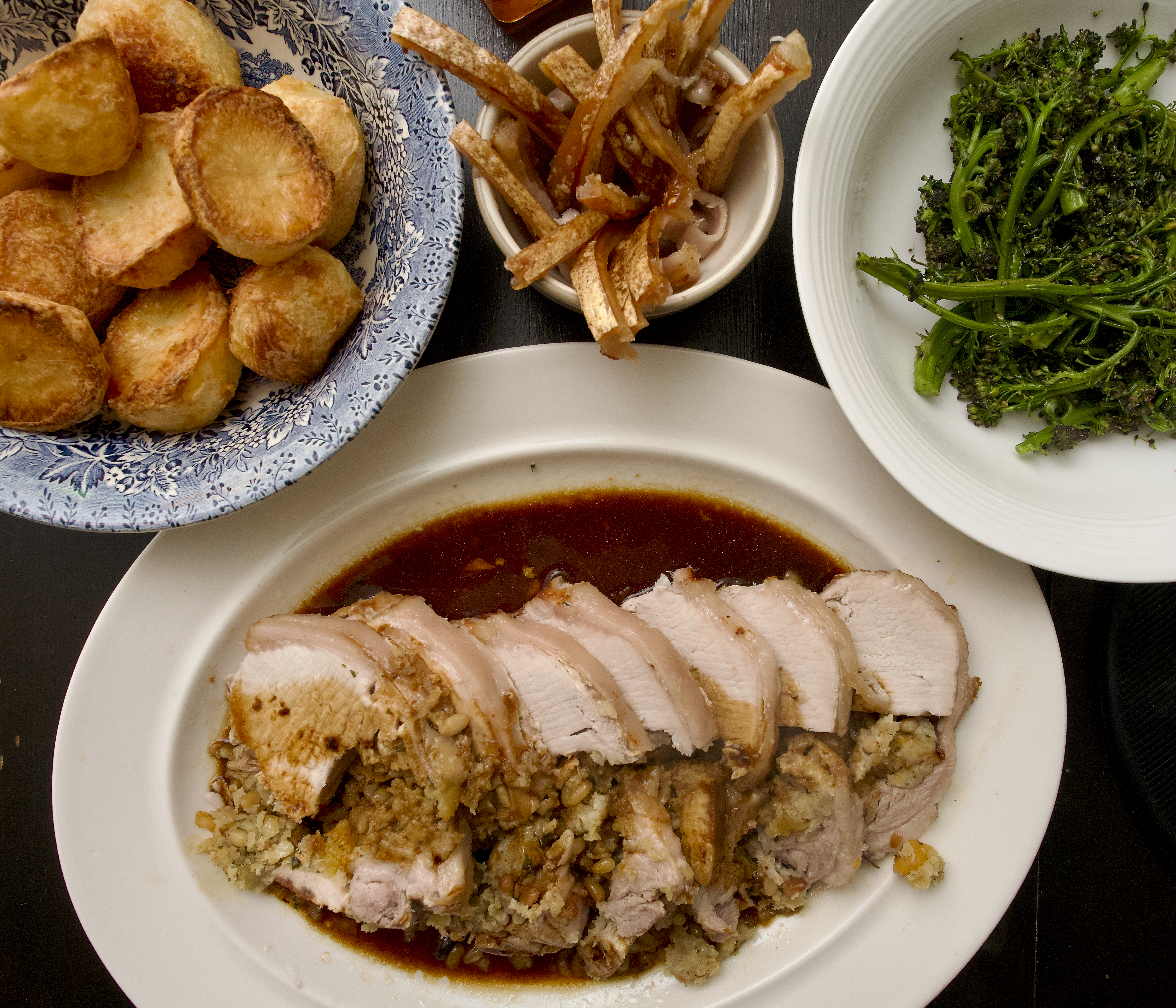
Pork is great value and this recipe will feed many people. Serve with roast potatoes and veg. To make sure you get good crackling, leave the pork, skin-side up, on a plate in the fridge for a day to dry out.

Wine Suggestion: An indulgence we know, but it was a roast dinner with friends; Domaine Jamet’s Condrieu Vernillon. A fairly new wine to this domaine, but one that echos the wonderful reds by being expressive and textural, with a vibrant core of freshness and savouriness.

Roast pork with apricot and pine nut stuffing – serves 6 to 8

  • 75g butter
  • 1 onion, finely chopped
  • 1 clove of garlic, crushed
  • 50g pine nuts
  • 175g day-old, fresh white breadcrumbs
  • 50g dried apricots, roughly chopped
  • 1 tbsp roughly choppd parsley
  • 1 tsp fresh thyme leaves
  • 1.75kg boneless pork loin, skin scored at 5mm intervals, tell your butcher you plan to stuff it
  • 2 tbsp olive oil

FOR THE GRAVY:

  • 1 tbsp plain flour
  • 3 tbsp ruby red port or red wine
  • 1 tbsp clear honey
  • 4 whole cloves
  • 600ml beef stock

Remove the pork from the fridge about an hour before you plan to put it into the oven.

Make the stuffing by melting the butter in a large frying pan, then add the onion and garlic and cook for a few minutes until softened but not coloured.

Meanwhile, toast the pine nuts in a separate dry fring pan, watch them carefull so they don’t burn.

Stir the breadcrumbs into the onion mixture with the apricots, parsley and thyme, then stir in the toasted pine nuts and season. Remove from the heat and leave to cool.

Heat the oven to 200C/400F/Gas 6.

When the stuffing is cooled, place the pork skin-side down on a board. Spoon the cooled stuffing along the centre, roll up the joint and tie with string at intervals to secure.

Put the pork into a large roasting tin and pat the skin dry with kitchen paper. Rub the skin with olive oil and plenty of sea salt. Cover with foil and roast for 20 minutes. Reduce the heat to 180C/350F/Gas 4 and roast for another 15 minutes. Remove the foil and cook for another hour and 15 minutes or until the pork is tender and you have crispy crackling (if the crackling hasn’t crisped by the time the pork is cooked you can remove and snip it into strips with scissors and crisp it under the grill).

Transfer the pork to a warm serving plate and rest for about 15 minutes while you make the gravy.

Pour most of the fat from the roasting tin and put over a gentle heat. Stir in the flour and cook for 2 minutes, stirring. Slowly pour in the port and then add the honey and cloves, stirring to combine. Gradually add the stock, stirring continuously until it comes to the boil. Reduce the heat and simmer for 10 minutes until reduced and thickened, stirring occasionally. Season to taste.

Cut the string from the pork and cut through the fat just underneath the crackling. Remove and cut into pieces (you will have to eat a few), then carve the pork into thick slices.

Serve the pork on a platter with lots of roast potatoes, gravy and veg.

(Original recipe from Neven Maguire’s Cookery Collection, Poolbeg Press Ltd., 2005.)

Read Full Post »

We’re starting to switch to more autumnal dishes. This is thoroughly traditional in style and will put a bit of warmth in your belly. The best side for all pies is peas to which we added a few glazed carrots. Comfort food for cold weather.

Wine Suggestion: We’ve gone a bit mad for Portuguese reds the past while and for this it was no different as we opened, and enjoyed the Herdade do Sobroso Red. From the Alentejo this is an Aragonez, Alicante Bouschet, Cabernet Sauvignon and Syrah blend, having the joy of having a rich core, alongside an elegance and freshness that sits very nicely with the sausages and gravy.

Sausage & Mash Pie – serves 4

  • 1 tbsp sunflower oil
  • 8 large pork sausages
  • 25g butter
  • 2 onions, finely sliced
  • a pinch of golden caster sugar
  • 2 tbsp plain flour
  • 1 tbsp tomato purée
  • 1 tbsp red wine vinegar
  • 500ml beef stock
  • frozen peas, cooked to serve

FOR THE MASH:

  • 1.25kg floury potatoes, such as Maris Piper or Roosters, peeled and cut into large chunks
  • 150ml whole milk
  • 25g butter
  • 25g mature cheddar, coarsely grated

Heat the oil in a large frying pan and gently cook the sausages over a medium-high heat for 10-12 minutes or until browned on all sides. Transfer to a plate and set aside.

Add the butter to the pan and heat until sizzling, then add the onions and sugar and cook for 8-10 minutes or until golden. Scatter over the flour and stir to make a paste, then add the tomato purée and cook for a minute. Add the vinegar, then pour in the stock and bring to the boil. Reduce the heat to a simmer. Tip any juices from the sausages into the pan, then slice the sausages into chunky pieces and add these too. Simmer for 5 minutes or until you have a rich and glossy gravy. Tip the mixture into a large baking dish.

Meanwhile, put the potatoes into a pan of cold salted water and bring to the boil. Reduce the heat and simmer for 10-12 minutes or until just cooked. Drain and leave to steam dry for a minute. Pour the milk into the pan and bring to a simmer, then tip in the drained potatoes and butter, and mash. Season to taste.

Top the sausages with the mash, starting at the edge and working into the middle, careful not to leave any gaps or the gravy will bubble through. Use a fork to scrape lines along the surface and sprinkle with the cheese.

Heat the oven to 200C/180C fan/gas 6.

Bake for 35-40 minutes or until browned. Remove the oven and allow to rest for 5 minutes before serving with the peas.

(Original recipe from BBC Good Food)

Read Full Post »

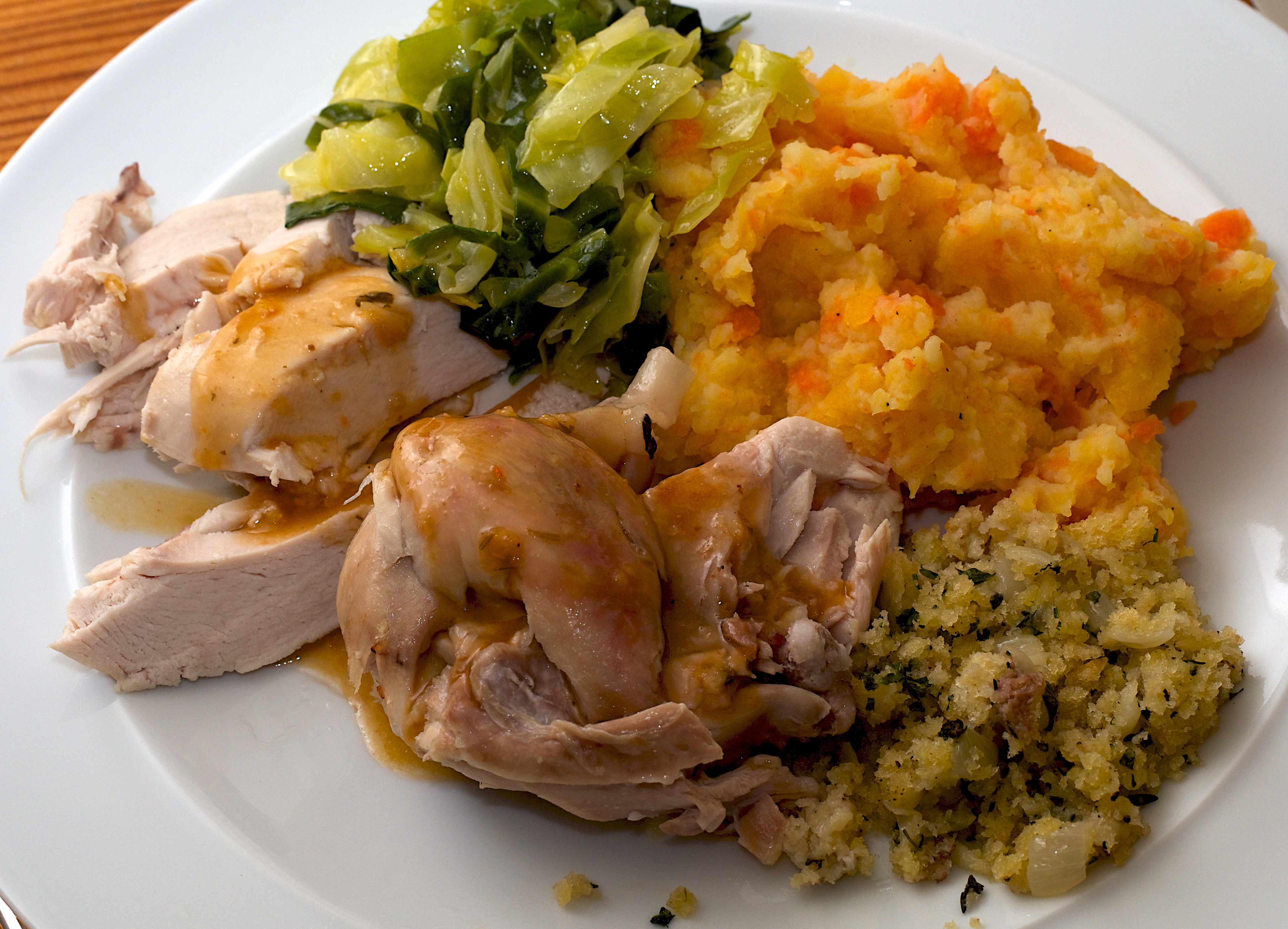
This roast chicken was inspired by Darina Allen, who had a new method for keeping the Chicken skin moist – using butter soaked muslin. It works excellently so we’re converts to this technique!

Traditional Roast Chicken with Stuffing and Gravy – to serve 4

  • 1 chicken
  • chicken stock

FOR THE STUFFING: 

  • 45g butter
  • 75g chopped onion
  • 75-100g soft white breadcrumbs
  • 2 tbsp finely chopped fresh herbs (we used parsley and thyme)
  • a little soft butter

Preheat the oven to 180ºC/350°F/gas 4.

Make the stuffing: sweat the onions gently in the butter until soft, then take off the heat and stir in the breadcrumbs, herbs and some seasoning. Leave to cool.

Season the inside of the chicken, then half-fill with the cold stuffing. Put the rest of the stuffing into the neck end.

Weight the chicken and calculate the cooking time (15 minutes per 450g and 15 minutes over).

Melt 4 tsp butter and soak a large piece of muslin in the melted butter, cover the chicken completely with the muslin and roast for the calculated time. You can take the muslin off for the last 10 minutes if you want the skin really brown.

Check that the juices are running clear when pierced with a skewer, then leave to rest.

To make the gravy: spoon off any surplus fat from the roasting tin. De-glaze the pan juices with the stock and use a whisk to to stir and scrape the caramelised bits from the bottom of the tin. Boil it up well, season and thicken if you like (we like it runny).

Serve with greens and mash.

Wine Suggestion: Oaked white wines go well with roast chicken with Chardonnay being the obvious pick. We were a little extravagant and had a superb Chardonnay / Auxerrois blend from Zind-Humbrecht in Alsace. It’s a Vin de Table as Chardonnay is not an authorised grape for the region and as the wine is all about texture, minerality and structure , pushing the boundaries a lot, you could argue it is controversial on tasting as well; we thought it superb and thought provoking. As it opened up in the glass over the meal it worked better and better, matching flavours, complimenting them and adding nuances. The wine: Zind Z010 (obviously 2010 vintage, but Vin de Table wines are not allowed to say anything about vintage or region on the label).

Read Full Post »