Feeds:
Posts
Comments

Posts Tagged ‘Pork fillet’

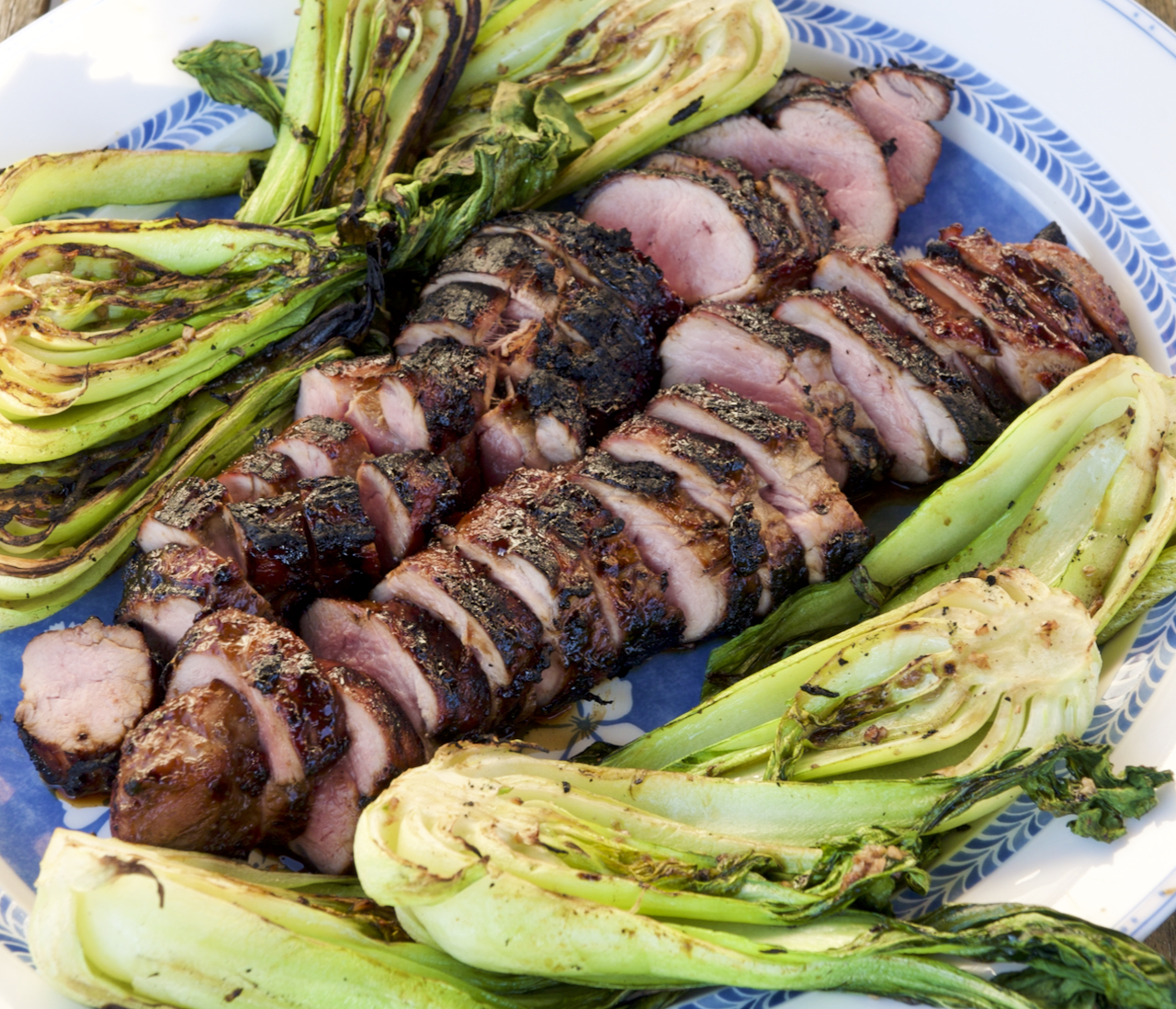
A Chinese classic that couldn’t be easier to master, this char siu pork delivers glossy, caramelized perfection. Sweet, smoky and full of flavour, it’s a guaranteed barbecue winner! Don’t skip the crisp, garlicky pak choi on the side – it’s the fresh balance that really makes this dish.

Wine suggestion: We made this dish during Grenache Month and opened what turned out to be a fantastic pairing: Edetaria’s via Edetana Red , a red blend from Terra Alta, Catalonia, made with Garnatxa Fina and Garnatxa Peluda—two local Garnacha clones known for their balance of freshness and complexity. The wine’s soft spice, red fruit, and smooth texture echoed the sweet-savory glaze of the char siu pork beautifully. Its vibrant acidity brought out the juiciness in the meat, while the subtle earthy and herbal notes in the wine complemented the five-spice and caramelized edges of the pork. If you’re looking for a bottle that can handle bold flavors while adding its own depth, this one’s a winner.

Char Siu Pork – serves 4

  • 2 pork tenderloin fillets, trimmed

FOR THE MARINADE:

  • 1 tbsp vegetable oil
  • 2 cloves of garlic, finely grated
  • 2.5cm piece of ginger, finely grated
  • 2 tsp sesame oil
  • 3 tbsp runny honey
  • 2 tbsp soft light brown sugar
  • 4 tbsp hoisin sauce
  • 1 tbsp oyster sauce
  • 1 tbsp light soy sauce
  • ½ tbsp dark soy sauce
  • 1 tsp Chinese 5-spice powder
  • ½ tsp white pepper

FOR THE PAK CHOI:

  • 4 pak choi, halved lengthways
  • 2 cloves of garlic, finely chopped
  • 3 tbsp light soy sauce
  • 2 tbsp olive oil
  • ½ tsp white pepper

To make the marinade, heat the oil in a saucepan, then add the garlic and ginger and cook for 2 minutes. Add the sesame oil, honey, sugar, hoisin, oyster and soy sauces, 5-spice powder and pepper. Mix well and cook until slightly thickened. Remove from the heat and leave to cool completely.

Put the pork into a large dish. Add the sauce and massage well so it is really well coated. Cover and leave to marinate in the fridge for at least a couple of hours or ideally overnight.

Get your barbecue ready to cook on over direct heat and indirect heat.

Lay the pak choi, cut side up, on a tray. Mix the garlic, soy, olive oil and white pepper together in a small bowl, then spoon over the pak choi.

Remove the pork from the pork from the marinade, reserving the marinade left in the dish. Put the pork over the hottest part of the barbecue and cook for 6 to 8 minutes, turning ofetn and basting with the marinade.

When the pork is cooked, transfer to a tray and leave to rest for 5 minutes.

Meanwhile, transfer the pak choi to the barbecue over indirect heat – with the stems towards the direct heat as they take longer to cook. Cook, turning often and basting with the soy marinade for a few minutes or until charred and tender. Spray with a little water as it cooks to stop it from drying out.

Slice the pork and serve on a platter with the pak choi.

(Original recipe from The BBQ Book by Tom Kerridge, Bloomsbury: Absolute, 2025.)
Read Full Post »

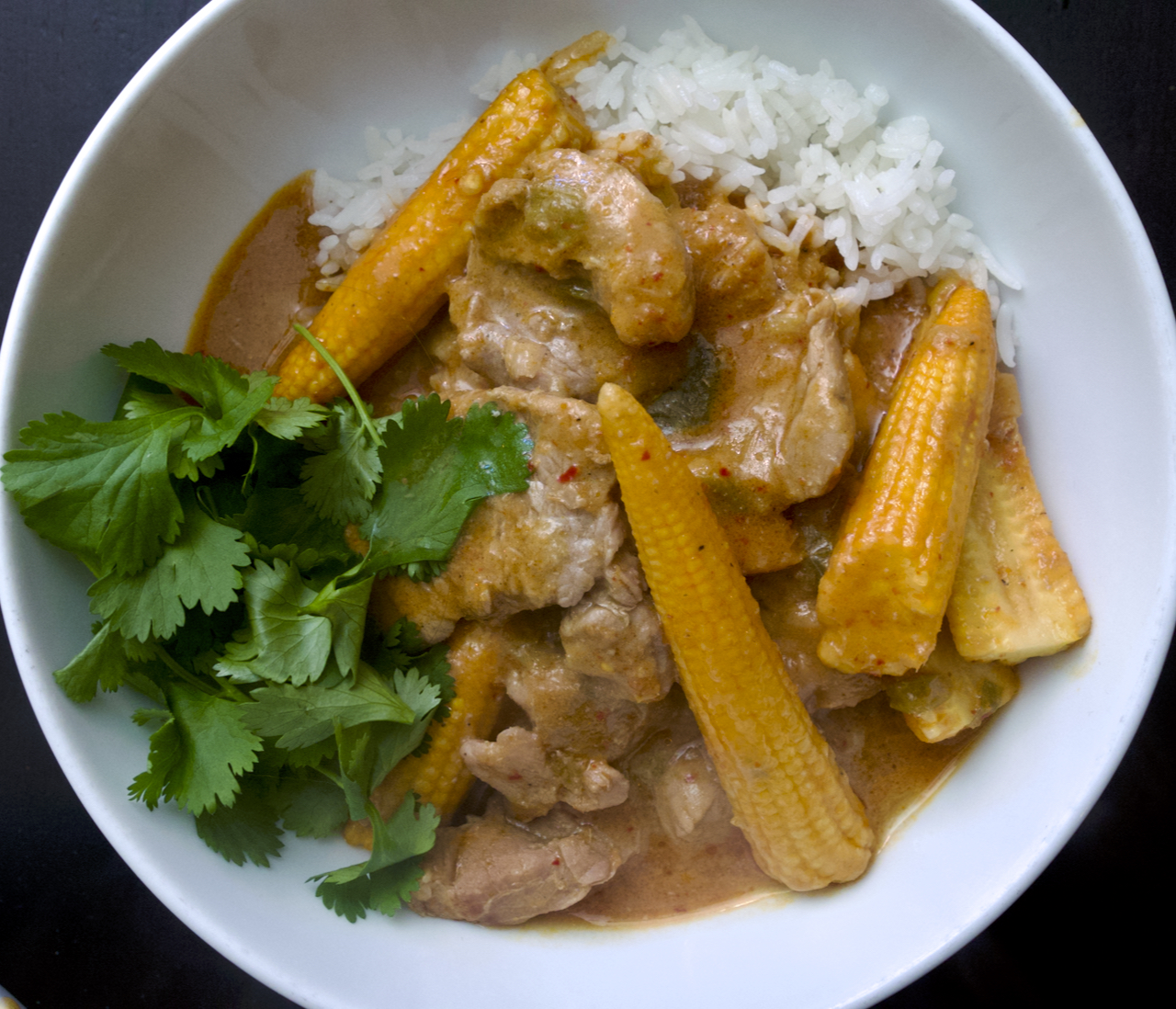
Peanut butter makes the best sauces, and here it makes a very simple dish taste delicious.

Wine Suggestion: Think of peanuts as legumes (which they technically are) and matching with wine gets a bit easier. With the gentle heat of the curry a touch of fruitiness doesn’t go astray either. Something like the Pinot Gris from Forrest Estate in Marlborough which combines a wonderful array of citrus and apple freshness, textured minerality plus a rich and exotic peach, pear and honeysuckle roundness.

Thai Pork & Peanut Curry – serves 4

  • 1 tbsp vegetable oil
  • a bunch of scallions, sliced
  • a small bunch of coriander, stalks finely chopped and leaves picked
  • 1 large pork fillet (tenderloin), sliced
  • 4 tbsp Thai red curry paste
  • 4 tbsp smooth peanut butter
  • 1 tbsp soft brown sugar
  • 1 tbsp soy sauce
  • 400ml tin coconut milk
  • 200g pack of baby corn
  • juice of 1 lime
  • steamed jasmine rice, to serve

Heat the vegetable oil in a large saucepan, then add the scallions and coriander stalks and cook for 1 minute. Add the pork slices and cook for 5 minutes until sealed and starting to brown.

Stir in the curry paste and peanut butter and mix well, then add the sugar, soy and coconut milk, plus ½ can of water. Mix well, then cover and leave to simmer for 15 minutes, stirring occasionally.

Remove the lid, add the baby corn and increase the heat. Bubble for a few minutes or until the corn is cooked and the sauce has thickened slightlly. Stir in the lime juice and check the seasoning. Serve with the coriander leaves and steamed jasmine rice.

(Original recipe from BBC Good Food)

Read Full Post »


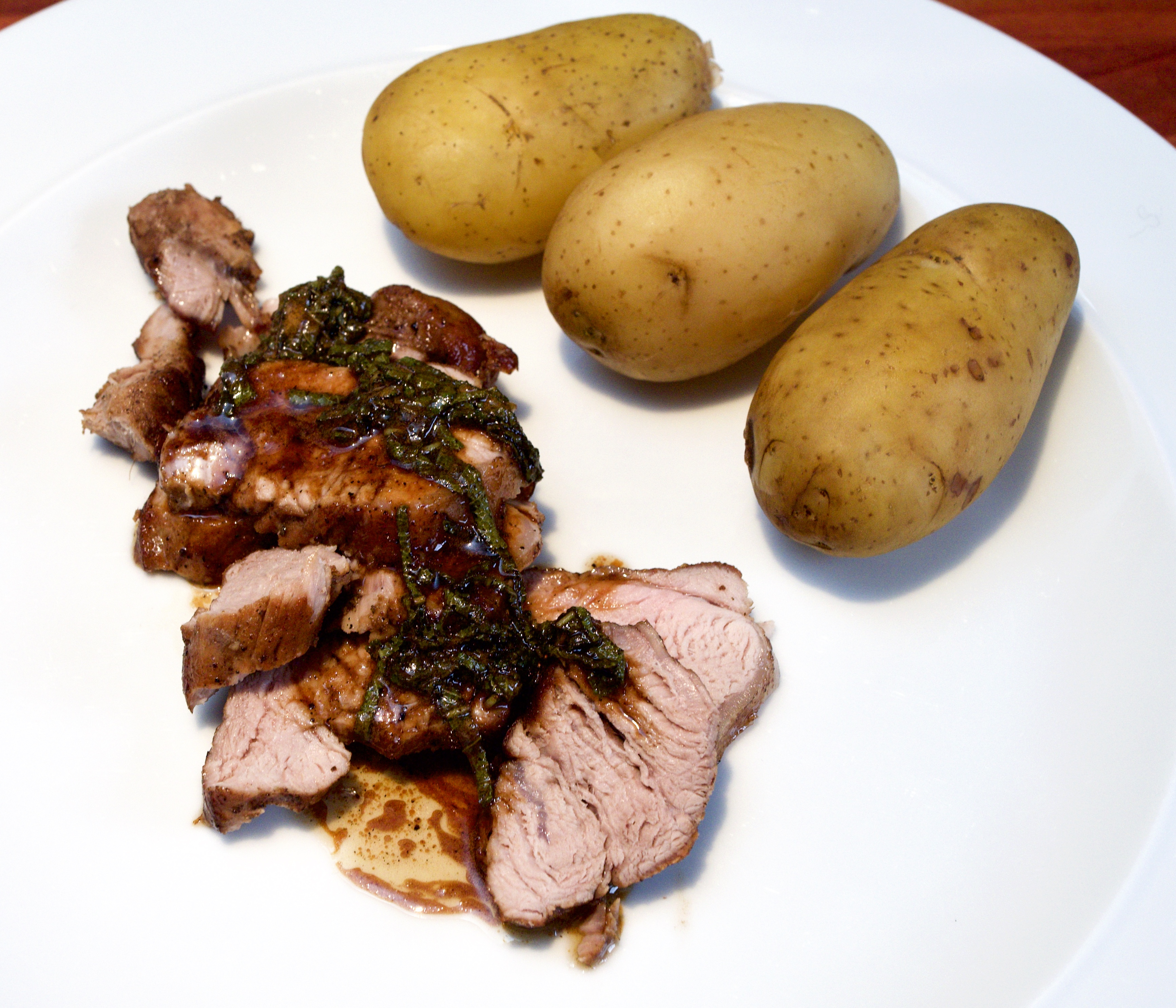
Pork tenderloin with madeira & sage

We cooked this just before we went on holidays and were determined not to buy any ingredients that needed used up. We have a huge sage bush in the garden that we definitely under-utilize and there are always bottles of all sorts of beverages lurking in the back of our cupboards. Madeira lasts forever, even when opened which is very useful.

Wine Suggestion: The madeira sauce with the sage is richer than you may expect and we find it works with juicy Côtes du Rhône reds, especially with a good dollop of Grenache. We had an uncomplicated Reserve des Armoiries which was juicy and had hints of Southern French spices made without oak; complimentary and almost celebratory of our impending holiday with its joyful fruit.

Pork tenderloin with madeira and sage – serves 4

  • butter
  • 1 pork tenderloin c. 400g
  • 100ml madeira
  • a small bunch of sage, leaves picked and chopped

Heat the oven to 220C/Fan 200C/Gas 7.

Heat a knob of butter and a splash of olive oil in an ovenproof frying pan. Season the pork and brown really well on all sides to form a crust. Add the madeira then transfer to the oven and cook for 15-20 minutes.

Remove the meat from the pan, cover with foil and leave aside to rest for 10 minutes. Meanwhile, reduce the pan juices with another knob of butter on a low heat, and season.

To serve, cut the pork into thick slices, then dress with the pan juices and lots of chopped sage.

(Original recipe by Alex Szrok in BBC Olive Magazine, May 2016.)

Read Full Post »

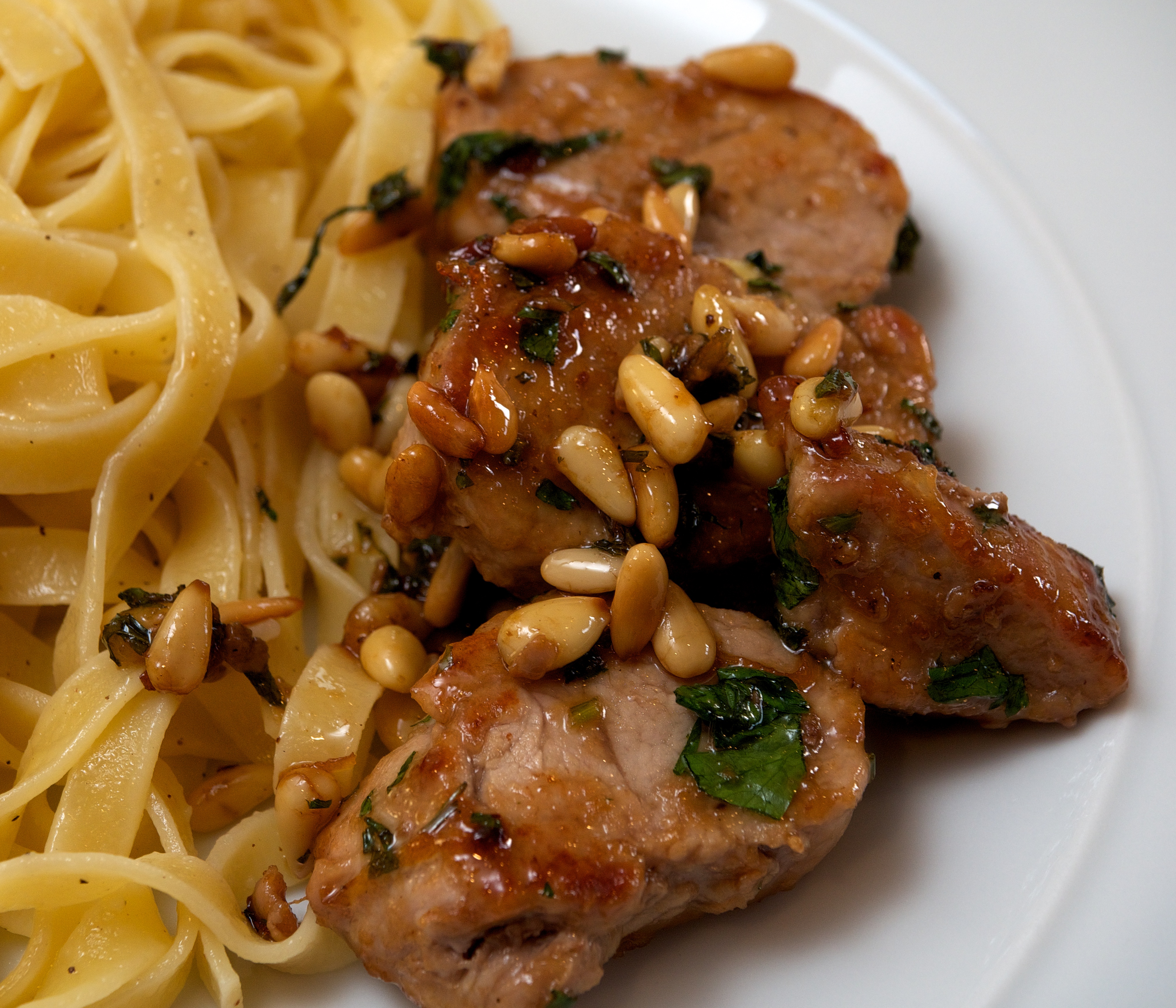
Pork with lemon and pinenuts

This was easy to whip up and a really tasty midweek meal.

Wine Suggestion: We’d suggest a crisp light white wine to go with this dish and thought the Dog Point Sauvignon Blanc from Marlborough, New Zealand worked exceptionally well. The Dog Point has a  great depth of flavour while maintaining a real elegance and layers of fine minerality, unlike quite a few other wines from this region which we find unsubtle so we highly suggest seeking out a good example. Other wines that would work would be good Sancerre or Cheverny blanc from the Loire.

Pork with Pine Nuts, Parsley & Lemon – serves 4

  • 500g pork fillet
  • large handful of flat leaf parsley, coarsely chopped
  • seasoned flour
  • 25g pine nuts
  • grated zest of ½ lemon and juice of a whole lemon
  • 1 tbsp clear honey

Cut the pork into 2cm thick slices. Toss in seasoned flour to coat very lightly and shake of the excess.

Heat 1 tbsp of olive oil in a large frying pan and fry the pork in a single layer for a few minutes on each side or until browned. Remove from the pan and keep warm.

Add another tablespoon of oil to the pan and fry the pine nuts until lightly browned. Stir in the lemon zest, juice and honey. Bubble and stir briefly to make a sauce.

Return the pork to the pan and add the parsley. Continue to cook for another few minutes to heat through.

Serve with buttered papperdelle or tagliatelle.

(Original recipe by Mary Cadogan in BBC Good Food Magazine, April 2001.)


Read Full Post »