Feeds:
Posts
Comments

Archive for June, 2011

This was another of our heathy weeknight ideas – some of which turn out surprisingly well and others that turn out a bit bland and boring (we don’t blog the bland ones). This was great, though beware of wasabi fumes coming down your nose, a sensation we quite like but mightn’t be for everyone. The cucumber salad was a real hit too – salty, sweet, hot and sour. Felt like a bit of a treat in fact.

Wasabi salmon with cucumber salad – to serve 2

  • 2 salmon fillets, c. 125g each
  • 1 tbsp wasabi paste
  • half a cucumber
  • 1 small red chilli, cut into rings
  • 2 tbsp rice wine vinegar
  • 1tsp golden caster sugar
  • 1tsp salt
  • 2 tsp poppyseeds
  • steamed rice to serve

Rub the salmon all over with a tiny bit of oil and then the wasabi paste.

Split the cucumber in half lengthways and discard the seeds. Cut into large diagonal chunks and put in a bowl. Add the chilli, rice vinegar, salt, sugar, poppyseeds and a bit of pepper. Mix well until the salt and sugar have dissolved. There will be quite a lot of liquid but don’t worry and don’t be tempted to leave out the salt as it is essential for the hot, sour, salty, sweet balance.

Preheat your grill and grill the fish for 5-6 minutes or until is turned a nice colour on top and is just cooked through (no need to turn it over).

Serve with the cucumber salad and steamed rice. The salad dressing is nice drizzled over the fish too.

(Original recipe from BBC Good Food)

Read Full Post »

Until very recently we had terrible trouble finding skinless, boneless chicken thighs but lately we’ve got them in M&S, Tesco and Sainsbury’s. They are really cheap and much tastier than chicken breasts that can dry out easily. We now have a freezer full of them (just in case they become illusive again) so expect plenty more ideas for chicken thighs here over the next while. All this dish requires is minimal chopping, bung it all in the one pan and bake – perfect for a weeknight (and it’s really healthy too!).

Chicken bake – serves 2

  • about 4 boneless, skinless chicken thighs
  • 6 new or salad potatoes, halved
  • 1/2 a lemon, cut into wedges
  • 6 cloves of garlic, skins left on
  • 1 red pepper, siced
  • a few thyme sprigs
  • 2 tbsp olive oil
  • 25g pitted black olives
  • 250g cherry tomatoes

Heat the oven to 200C/180F/gas 6.

Put the chicken, potatoes, lemon, garlic, pepper and thyme onto a large baking tray. Drizzle the oil over and season. Then roast for 30 minutes.

Add the olives and tomatoes and roast for another 10 minutes or until the chicken and potatoes are browned and cooked through.

We served this with a rocket salad.

Read Full Post »

Easy BBQ Kebabs

We were very tired on Sunday (after our big dinner party the night before) so these kebabs were about as much as we could muster. They are easy to do for a crowd too if you’re planning a summer barbecue. It’s a bit of a cheat as we use a bought honey and mustard marinade (ours was from Marks & Spencer).

BBQ Honey & Mustard Chicken Kebabs – serves 4 

  • 4 chicken breasts, cut into chunks
  • 12 rashers of streaky bacon
  • 1 yellow, 1 red and 1 orange pepper, cut into chunks
  • 2 red onions, cut into wedges
  • 1 bottle of honey & mustard marinade (M&S do a good one)

Stretch the bacon rashers with the back of a knife and cut each slice into 3 pieces. Wrap the pieces of bacon around the lumps of chicken.

Thread the peppers, onions, and chicken onto skewers (metal ones are best – if you have wooden ones you need to soak them for 20 minutes so they don’t burn on the barbecue).

Brush the marinade over the kebabs and leave for 20 minutes or so.

Cook the kebabs on a barbecue until the chicken is cooked through.

Serve with potatoes and coleslaw.

Read Full Post »

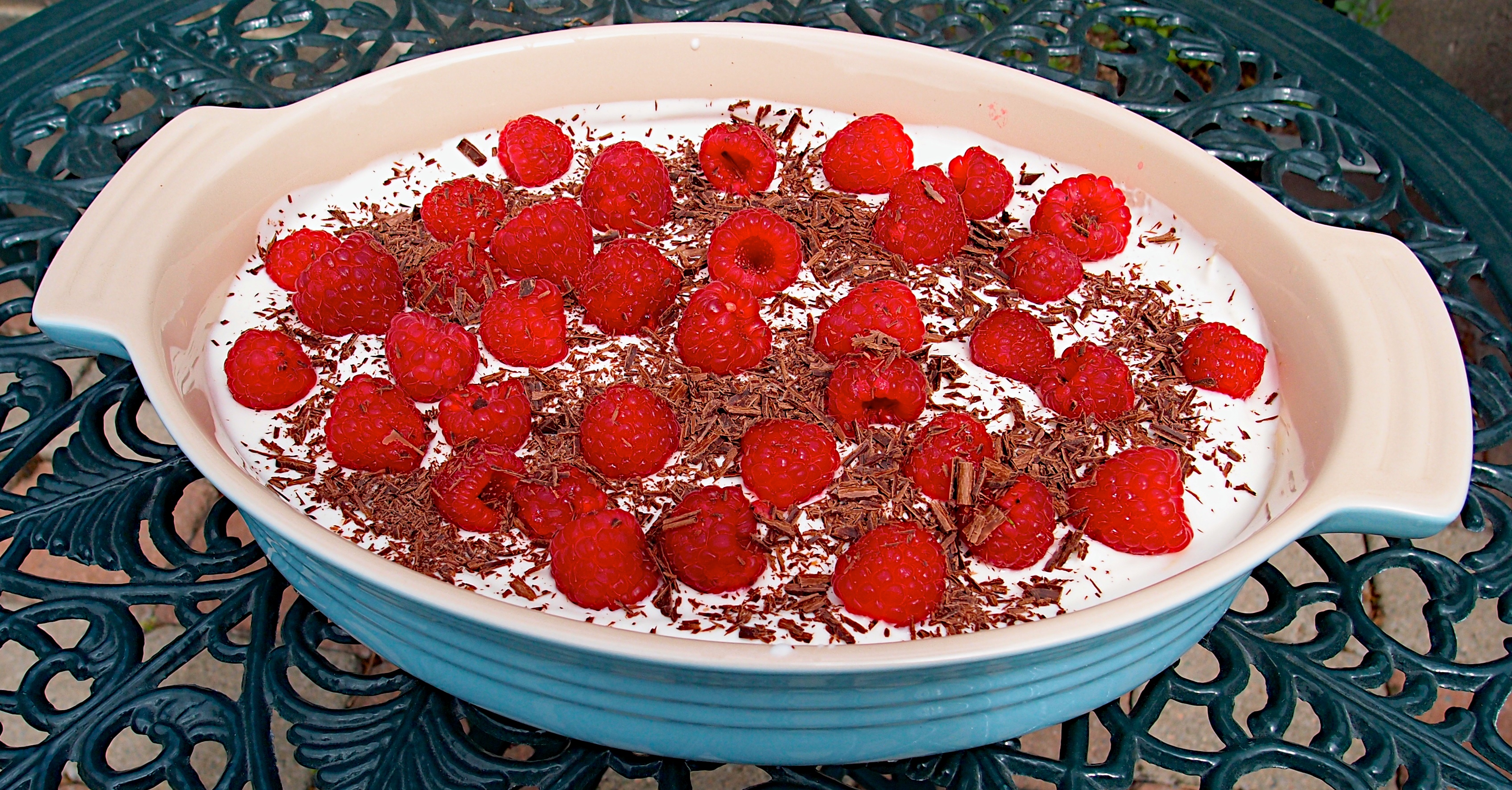
Jamie Oliver's 30 Minute TrifleWe are not known for making desserts … as we never really eat them. Last night we entertained 8 of our friends who all want a mention on our blog (Aisling, Niall, Thaiba, Simon, Nicola, Dave, Tim & Michael). We decided to do something easy to pull out of the fridge when ready. We’d seen this recipe earlier in Jamie’s 30 minute meals and because we had some Limoncello we gave it a go. Result: simple preparation and can be made earlier in the day. It was light and had just the right amount of alcohol tang to be refreshing at the end of the meal, and as all the plates were empty, well enjoyed.

Limoncello Trifle (to serve 6, we made 2)

  • 3 oranges
  • 75ml Limoncello
  • 100g sponge fingers
  • 250g marscapone
  • 2 heaped tablespoons icing sugar
  • 100ml semi-skimmed milk
  • 1 lemon
  • 1 teaspoon of vanilla extract
  • 1 punnet of seasonal fruit, we used raspberries
  • bar of good quality dark chocolate

In a good sized serving dish (it will need to fit a single layer of your sponge fingers) squeeze the juice from the oranges. Stir in the Limoncello and taste to check sweetness and alcohol; adjust if necessary. Layer the sponge fingers in the serving dish – they will absorb all the juice.

Put the marscapone and icing sugar into a separate bowl with the milk. Zest the lemon and add to the marscapone and squeeze in the juice of half the lemon. Add the vanilla extract and whisk well. Spread this mixture over the sponge fingers, top with the berries and shave chocolate over the top. Refrigerate until you are ready to eat.

We used Carlo Pellegrino Limoncello from Sicily as it has a good balance of freshness and acidity making it not too sweet and sickly. Also good served from ice cold from the freezer.

Read Full Post »

Reserve du Reverend, Corbières 2009, €9.95 from Mitchell & Son, Dublin

Jules and I regularly drink wines from the south of France, we find them reliable and usually good value; the Reserve du Reverend is no exception.

Corbières is the largest appellation in the Languedoc, southern France. As such it has the advantage of good, warm weather and plenty of sunshine. It also has cooling breezes sweeping up from the Mediterranean into the Pyrenees. This breeze helps keep the grapes from getting too hot and then becoming jammy and alcoholic.

Like many wines from this area the Reserve du Reverend is a blend of Carignan, Grenache and Syrah; these grapes give a juiciness without any hard edges. The joy here is the balance of brambly, dark berried fruit and the easy, velvety and slightly herbal spices. A wine that doesn’t try to be any more than enjoyable and drinkable. Because it succeeds at this there is a big cheers from me.

A wine that is as easy to drink on its own, or with rustic French fare: grilled meats, roast duck, lamb or ratatouille.

After a long week at work and on a rainy Friday night in the middle of our Irish summer it was good to get home, cook a simple pasta and open something uncomplicated but well made, balanced and enjoyable.

Read Full Post »

We came across this while searching for inspiration on how to use some courgettes and feta cheese that had been lurking in the fridge since the weekend. It was really tasty, very quick and cheap to make (even if you don’t happen to have any courgettes and feta in the fridge). All we had to buy today was some salad leaves and ciabatta bread to go with it. Perfect summer fare for a weeknight.

Courgette & bean bake with feta – to serve 4 (easy to half)

  • 2 tbsp olive oil
  • 4 courgettes, halved lengthways and sliced into half moons
  • 2 garlic cloves, crushed
  • 2 tbsp chopped oregano
  • 3 ripe tomatoes, chopped
  • 2 x 410g tins cannellini beans, rinsed and drained
  • 200g pack feta
  • crusty bread and salad to serve
  1. Heat half the oil in a large frying pan over a medium heat. Fry the courgettes for 5 minutes or until golden. Stir in the garlic and half of the oregano and cook for 30 seconds before gently folding in the tomatoes and beans. Heat through for about 4 minutes. Season to taste, then heat the grill to medium.
  2. Transfer to an ovenproof serving dish. Crumble over the feta, drizzle with the remaining oil, then grill for 5 minutes until the cheese has turned golden brown. Sprinkle with the rest of the oregano and serve with crusty bread and salad.
Wine Suggestion: Stick to the summer theme with a glass of rosé – we recommend the 2010 Chateau de L’Engarran from the Languedoc (€13.95 from Mitchell & Son). Perfectly dry and fresh; a great accompaniment to food.
(Original recipe from BBC Good Food Magazine, June 2009).

Read Full Post »

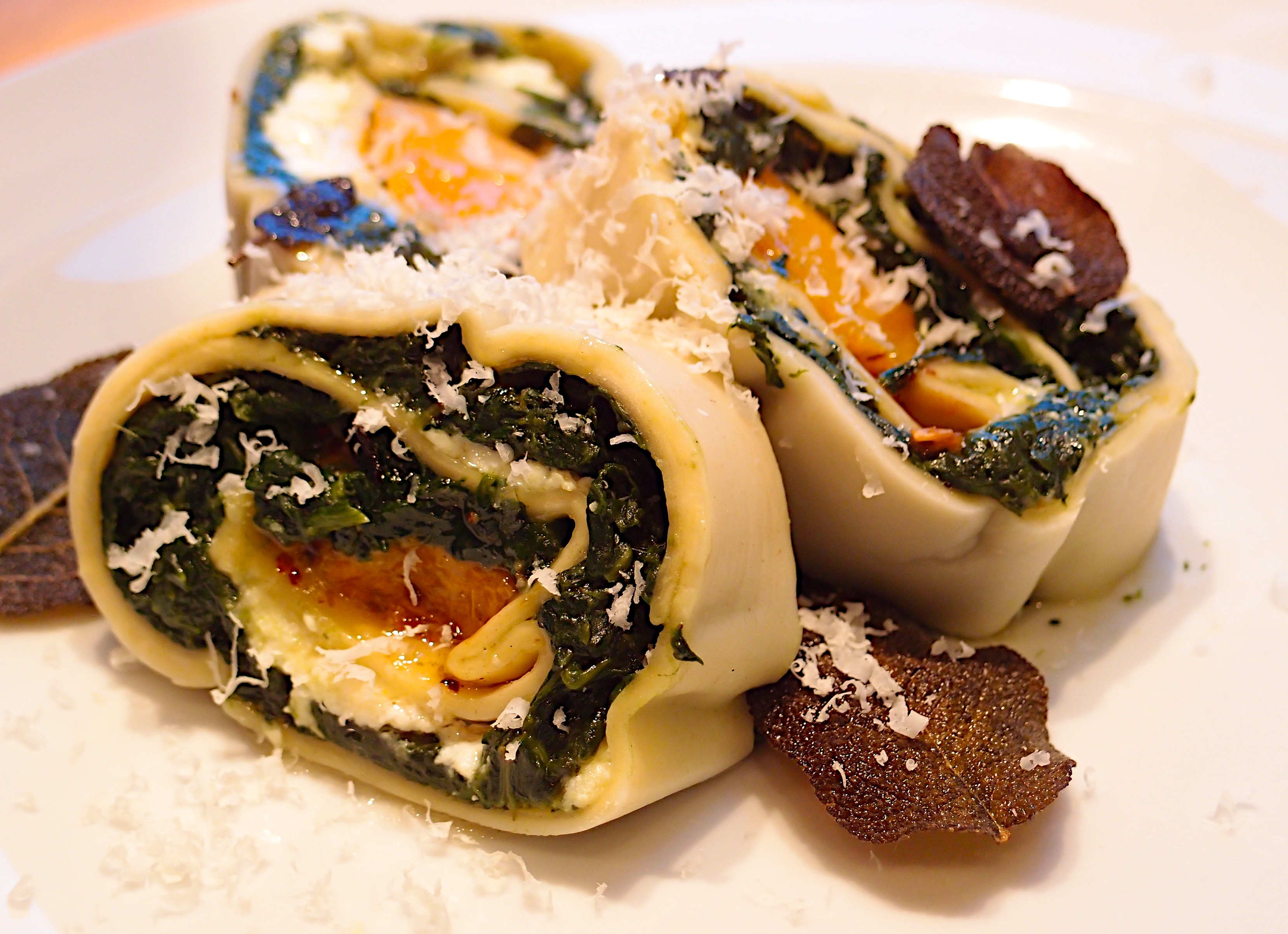
Jamie Oliver recommends you practice this recipe before serving for a crowd and we agree. We cooked this about a year ago for our friends Rob and Megan and while the flavours and presentation were great we made the pasta just a bit too thick. Second time around we slimmed down the pasta, with the help of our new pasta machine and it improved dramatically, but we miscalculated the width so had to trim the rotolo after rolling. So Jono’s tips for success:

  • You need a fish kettle;
  • make the pasta very thin, but not quite as thin as usual (we used setting 6 instead of 8). Jamie says the thickness of a beer mat, but make it a fraction thinner than this;
  • measure the width of your rotolo against the fish kettle before constructing it – allow a little of pasta at the edge to keep it sealed nicely; and
  • this takes ages, but it’s really worth it, tastes great and looks super impressive.

First you need to make some fresh pasta so here’s a recipe for that:

  • 600g type 00 flour
  • 6 eggs or 12 yolks (the 12 yolks makes a richer, more yellow pasta)
Put the flour on a board, make a well in the centre and crack the eggs into the well. Use a fork to beat the eggs until smooth. Mix the eggs with the flour as much as possible so it’s not too sticky and start to knead. It’s actually quite hard to knead pasta dough but keep at it for about 10 minutes and it will come together and form a smooth, silky and elastic dough. Cover with cling film and rest for an hour.
Rotolo di zucca e ricota (Rotolo of spinach and ricotta)
  • 455g fresh egg pasta dough (see above)
  • half a butternut squash, deseeded
  • olive oil
  • 1 tsp coriander seeds
  • 1 tsp fennel seeds
  • half a dried red chilli or half a tsp of chilli flakes
  • a handful of fresh marjoram or oregano
  • 2 cloves of garlic, peeled and finely sliced
  • 800g spinach, washed
  • 250g unsalted butter
  • a third of a nutmeg, grated
  • 150g ricotta cheese, crumbled
  • 55g freshly grated Parmesan
  • 20 fresh sage leaves
  1. Preheat the oven to 220C/425F/gas 7. Chop the squash into big chunks and rub them with a little olive oil. Bash coriander seeds, fennel seeds and chilli in a mortar and pestle with a good pinch of salt and pepper. Dust this over the squash and put into a snug fitting roasting dish or tray. Cover with a piece of damp greaseproof paper and roast for 30 minutes. Take off the paper and continue to roast for another 15-20 minutes or until golden.
  2. Heat a large pan and add a little olive oil, the marjoram or oregano and the garlic. Toss around for 20 seconds before adding the spinach. Keep moving the spinach and add a couple of knobs of butter and the nutmeg after a minute or two. Cook until the moisture has cooked away, then season to taste and leave to cool.
  3. Roll the pasta using a pasta machine into long thin strips (see tip above). Stick the strips together using a little water. Keep it in a rectangular shape but trim off as you need. Lay onto a  clean tea towel (remember to measure the long side against your kettle).
  4. Spoon a line of squash along the long edge of the sheet. Sprinkle the spinach over the rest of the sheet leaving the top 5cm clear. Crumble the ricotta over the spinach and sprinkle over the Parmesan. Brush the clear edge of the pasta with a little water then use the near edge of the tea towel to roll the pasta up and away from you. Roll up in the tea towel and tie firmly at the end with kitchen string. Tie a few bits of string round the middle too to keep the shape and tie an extra bit of string at one end so it can hang out of the kettle and act as a handle.
  5. Fill the fish kettle with boiling salted water. Lower the rotolo in and use the fish kettle rack on top to keep it submerged. Simmer for at least 25 minutes.
  6. While the rotolo is cooking you need to clarify some butter. Put the remainder of the butter into an ovenproof dish and put in a low oven (about 80C/170F) for about 10 minutes or until clear and melted. The milky whey will have sunk to the bottom, discard any white bits from the top and spoon out the clear butter. Discard the whey. You’ll have too much but the leftovers can be used for roast potatoes another day.
  7. Put 3 tbsp of clarified butter into a small pan and heat it up. Add a sage leaf and if it fries nicely add the rest of the leaves and fry until they start to crisp. Keep to one side.
  8. Carefully remove the rotolo from the pan, remove the string, unroll the tea towel and slice it up. A couple of slices per portion. Scatter sage leaves and drizzle with the sage flavoured butter and grate some Parmesan over. Serve with a leafy salad.
(Original recipe from Jamie’s Italy)

Read Full Post »

It’s another wintery dish made a bit more seasonal by the minty summer vegetables on the side. Yes it’s another very wet and chilly day in Ireland. Rather than get down about it we have turned it into an opportunity and spent all day indoors cooking. We got this recipe from Silver Spoon (the Italian cooking bible)  hence the Italian translation above. Perfect for feeding a crowd as easy to prep in advance and the only last minute work is to steam the veg and carve the meat.

Shoulder of Lamb à la Boulangère – to serve 6

  • 25g butter, plus a bit extra for greasing
  • 1 kg potatoes, thinly sliced
  • 1 tbsp chopped thyme
  • 500g onions, thinly sliced
  • 2 garlic cloves, thinly sliced
  • 1 kg boneless shoulder of lamb
  • 500ml meat or veg stock
  1. Preheat the oven to 200C/400F/Gas 6. Grease a large ovenproof dish with butter. Make a layer of potatoes on the base of the dish, season with salt and pepper, sprinkle with a little thyme and cover with a layer of onions and garlic.  Continue making layers until all these ingredients have been used.
  2. Make a few incisions in the lamb with a little knife, put it on top of the vegetables and season. Pour the stock into the dish, dot the lamb with butter and roast, basting the potatoes now and then, for 30 minutes.
  3. Remove the dish from the oven and cover with a sheet of foil, then put it back in the oven for 40-45 minutes. Leave the meat to stand with the cover on for 10 minutes before serving.
  4. Serve with some steamed greens (we used fresh peas and asparagus) with some mint and a drizzle of olive oil.
Wine suggestion: Lamb has traditional matches like Rioja and Bordeaux, so we chose a bottle of Sarget de Gruaud -Larose from St. Julien in Bordeaux and from the classic 2004 vintage. It worked a treat with delightful blackcurrant aromas and flavours overlaid with sophisticated cedar and other sweet spices. As it is more medium bodied, despite powerful flavours it didn’t overwhelm the food and complimented it superbly.


Read Full Post »

Yes we do know that it’s June but our weather has been much more suitable for stew than salad in the last few weeks – it’s freezing! If we weren’t so stingy we’d turn the heating back on. As central heating in June is against our principles we’ve had to resort to stew instead. It’s kind of a summery stew as it’s full of spinach which is in season now and is also very good for you.

Hopefully we’ve convinced you that it’s ok to eat stew in June.

Spanish chickpea, chorizo & spinach stew – to feed 4

  • 3-4 tbsp extra virgin olive oil
  • 1 onion, chopped
  • 1 carrot, finely diced
  • 1 celery stick, finely diced
  • few sprigs of thyme
  • 2 bay leaves
  • 2 cloves of garlic, finely chopped
  • 200g chorizo, diced
  • 1/4 tsp cinnamon
  • 1 tsp hot smoked paprika (it’s more common to find the sweet (dulce) one here so just add a bit of chilli powder as well)
  • 2 tins of chickpeas, rinsed and drained
  • 1-2 tbsp Sherry vinegar
  • 400g spinach leaves, washed and drained
  1. Heat the oil in a big pan, then gently fry the onion for 3-4 minutes until it starts to soften. Stir in the carrot, celery, thyme and bay leaves. Season and cook for 2-3 minutes, stirring now and then. Add the garlic, chorizo, cinnamon and smoked paprika. Fry gently until the vegetables soften and the chorizo starts to crisp up and release its oils.
  2. Stir in the chickpeas, vinegar and 150ml of water, then bring to a simmer for 1-2 minutes until the chickpeas have heated up. Add the spinach, then stir through the chickpeas until it wilts a bit – it will all fit in just be patient!
  3. Season and serve with some crusty bread to mop up juice.
Wine Suggestion: A spanish red would be good – try a Joven (young), fruity Rioja or  do like the Spanish and have a glass of Sherry.
(Original recipe by Thomasina Myers for BBC Good Food)

Read Full Post »

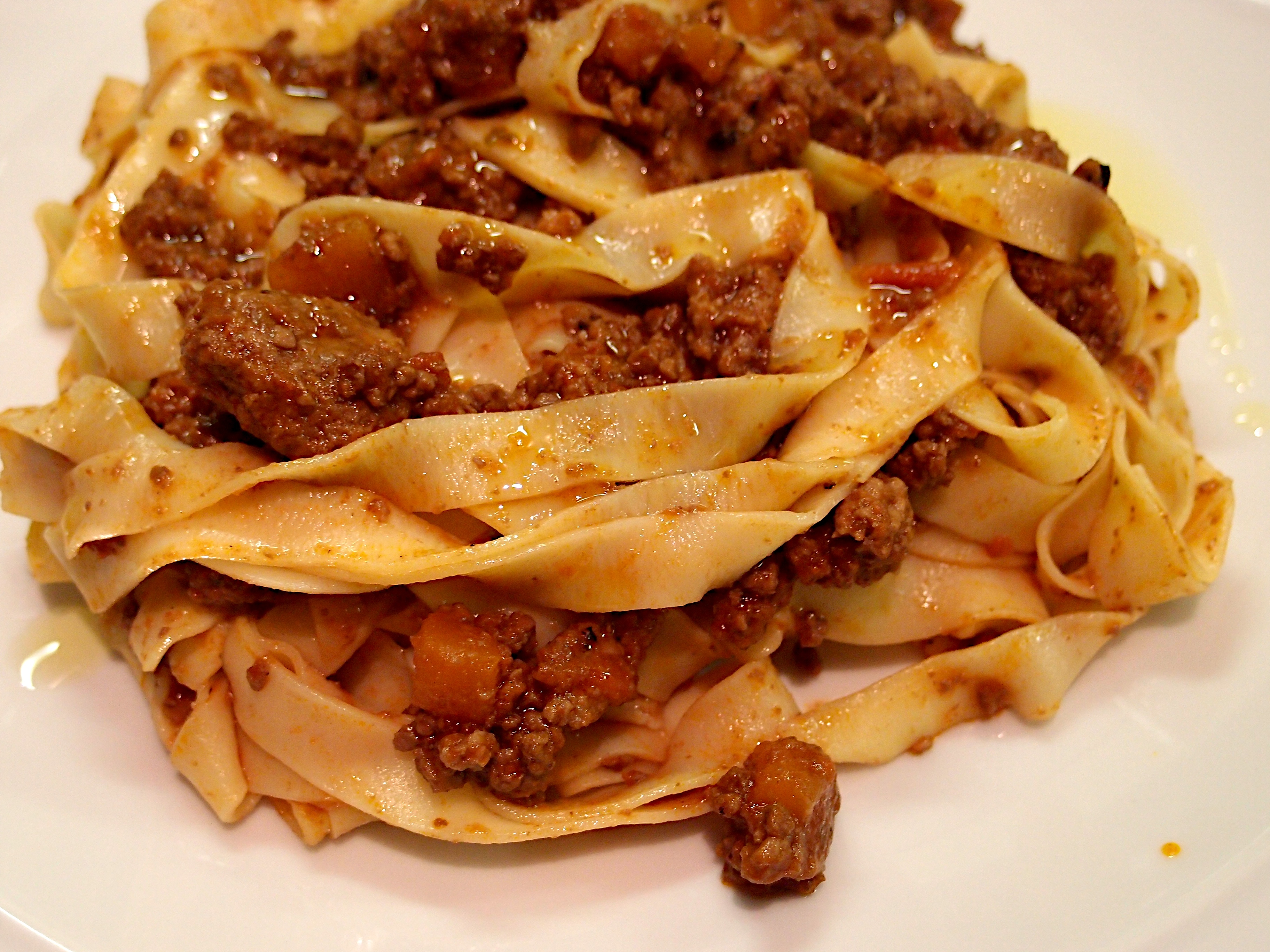
Italians don’t serve Bolognese with spaghetti or make a really runny tomato sauce like us Irish, so we went to our Italian experts for guidance: Giorgio Locatteli came up trumps. Jono also got to practice his new pasta trick which he’s somewhat obsessed with.

Ragù alla bolognese – serves 8 generously (but don’t divide the recipe, just make the lot and freeze it in small tubs -ready meals!)

  • 2 kg of minced beef neck (you may need to order this – chump will do if you can’t get it)
  • 5 tbsp olive oil
  • 2 carrots, finely chopped
  • 1 celery stick, finely chopped
  • 2 onions, finely chopped
  • a large sprig of rosemary and one of sage, tied together
  • 2 cloves of garlic
  • a bottle of red wine
  • 1 tbsp of tomato paste
  • 1 litre of tomato passata
Take the meat out of the fridge and let it come to room temperature, spread  it out on a tray. This will make it sear rather than boil when you put it in the pan.
Heat the oil in a wide bottomed saucepan and add vegetables, herbs and whole garlic cloves and sweat over a high heat for 5-8 minutes without colouring – you need to keep stirring.
Season the meat with salt and pepper and add it to the vegetables making sure it covers the base of the saucepan. Don’t touch it for 5-6 minutes so it seals underneath and heats through. Careful your vegetables don’t burn – you can add a bit more oil if you need to.
Stir the meat and veg every few minutes for about 10-12 minutes until it starts to stick to the bottom of the pan.
Now add the wine and let it reduce to almost nothing. Add the tomato paste and cook for a couple of minutes – keep stirring.
Add the passata with one litre of water, bring to the boil, then turn down to a simmer and cook for an hour and a half. Add a bit of water now and again if necessary, until you have a thick sauce. (You could also cook it in the oven at 120C if you prefer).
When you’re ready to serve, heat the ragù, cook your pasta (preferably pappardelle, tagliatelle, or short pasta) and drain, reserving the cooking water. Add the pasta to the ragu and toss well – add some cooking water if you need to loosen the sauce a bit.
Serve with freshly grated pecorino.
(Original recipe from Giorgio Locatelli’s ‘Made in Italy: Food & Stories’)

Read Full Post »

We’re mad for prawns these day; mostly because we have a huge bag in the freezer. We’re also mad for avocados; but that’s because they are in season and taste yum at the minute! We even managed to eat this on the patio just before another big, rainy cloud came over. We love summers in Ireland; we might not get the weather but at least we can get summery produce.

Prawn, grapefruit and avocado salad – to serve 4 on the patio (weather permitting)

  • a medium rustic-style loaf, torn into big chunks
  • 1 tbsp olive oil
  • 2 large pink grapefruit
  • 2 avocados
  • 4 little gem lettuces
  • 200g cooked large prawns
  • 3 tbsp Thai sweet chilli sauce
Heat the oven to 220C/Fan 200C/Gas 7. Put the bread chunks onto a baking tray, drizzle with 2 tsp of oil and rub in with your hands. Season and bake for 10 minutes until they are crispy and golden.
Cut the peel and pith off one of the grapefruits and slice into segments. Throw these in your salad bowl.
Squeeze the juice from the other grapefruit into a separate small bowl.
Peel, stone and slice the avocados and separate the lettuce leaves. Add these to the grapefruit segments along with the prawns.
Whisk the sweet chilli sauce and remaining tsp of oil into the grapefruit juice and season.
Cool the croutons for a few minutes before tossing with the rest of the salad and drizzling over the sweet chilli dressing.
Dada!

Read Full Post »

We cooked this for a veggie dinner party and it was really tasty. There’s a lot of stages involved so leave yourself plenty of time. We cooked it in the morning and reheated it on the hob while we steamed the rice and that worked well. You might want to ease up on the chilli depending on your audience – it’s quite hot.

Spicy aubergine stew – to feed 6 generously

  • 1 kg aubergines
  • 3 medium onions
  • 2 tbsp groundnut oil
  • 8 green cardamom pods
  • 2 tbsp coriander seeds
  • 2 tsp black peppercorns
  • 4 big garlic cloves
  • a thumb-sized piece of ginger
  • 2 rounded tsp turmeric
  • 10 medium-sized tomatoes, peeled and seeded
  • 500ml vegetable stock
  • 2 x 400ml tins coconut milk
  • 4 finely chopped red chillies (or less if you like it milder)
  • a small bunch of mint
  • a bigger handful of coriander
Cut the aubergines into big chunks and tip them into a colander, put it in the sink and sprinkle sea salt all over. Leave them for a minimum of half an hour.
Crush the cardamom pods with the flat blade of a knife and shake out the little seeds into a mortar. Add the coriander seeds and the peppercorns and grind them to a coarse powder.
Peel and roughly chop the onions, then cook them in a very large pan over a moderate heat until they are soft and translucent.
Thinly slice the garlic. Peel the ginger and cut it into thin matchsticks. Stir the garlic and ginger into the onions with the turmeric and ground spices. Add the tomatoes.
Rinse the aubergine of their salt and pat dry. Grill them on a ridged cast-iron pan until they start to soften and have griddle marks all over. This will take many batches. Add them to the onions, then pour in the stock and bring to the boil.
Add the coconut milk, chillies and some salt and simmer for 45 minutes. The aubergines should be very soft but not falling apart.
Lift out the aubergines, tomatoes and some of the onion with a draining spoon. Reduce the rest of the sauce by boiling hard for 5 minutes. Now ladle most, but not all, of the sauce into a blender and whizz until smooth and thick (watch you don’t scald yourself – we used a stick blender in a separate pot).
Return the vegetables and sauce to the original pot, then chop the fresh herbs and stir them in with a final seasoning of salt and pepper.
Serve with steamed rice.
(Original recipe from Nigel Slater’s Tender Volume 1)

Read Full Post »

It’s avocado season and we have a big bag of prawns in the freezer. This is one of two prawn and avocado salads we’ve tried in the last few days. The seasoned pistachios make this one a bit special. We loved it.

Avocado and prawn salad (Insalata di avocado e gamberetti)

  • 50g pistachio nuts, shelled and chopped
  • 2 avocados
  • juice of a lemon
  • 200g cooked peeled prawns
  • olive oil
  • salt and white pepper
Mix the pistachios with a pinch of pepper in a bowl.
Peel, half and stone the avocados. Slice them thinly and drizzle with the lemon juice.
Put the avocado in a salad bowl, add the prawns and stir gently.
Sprinkle the pistachios over, season lightly with salt, drizzle with oil and serve.
Wine Suggestion: Try a dry Gasgogny rose (ours was Domaine de Pellehaut from Mitchell & Son on offer for €7.95. Bargain!)
(Original recipe from ‘Recipes from an Italian Summer’ published by Phaidon)

Read Full Post »