Feeds:
Posts
Comments

Archive for January, 2012

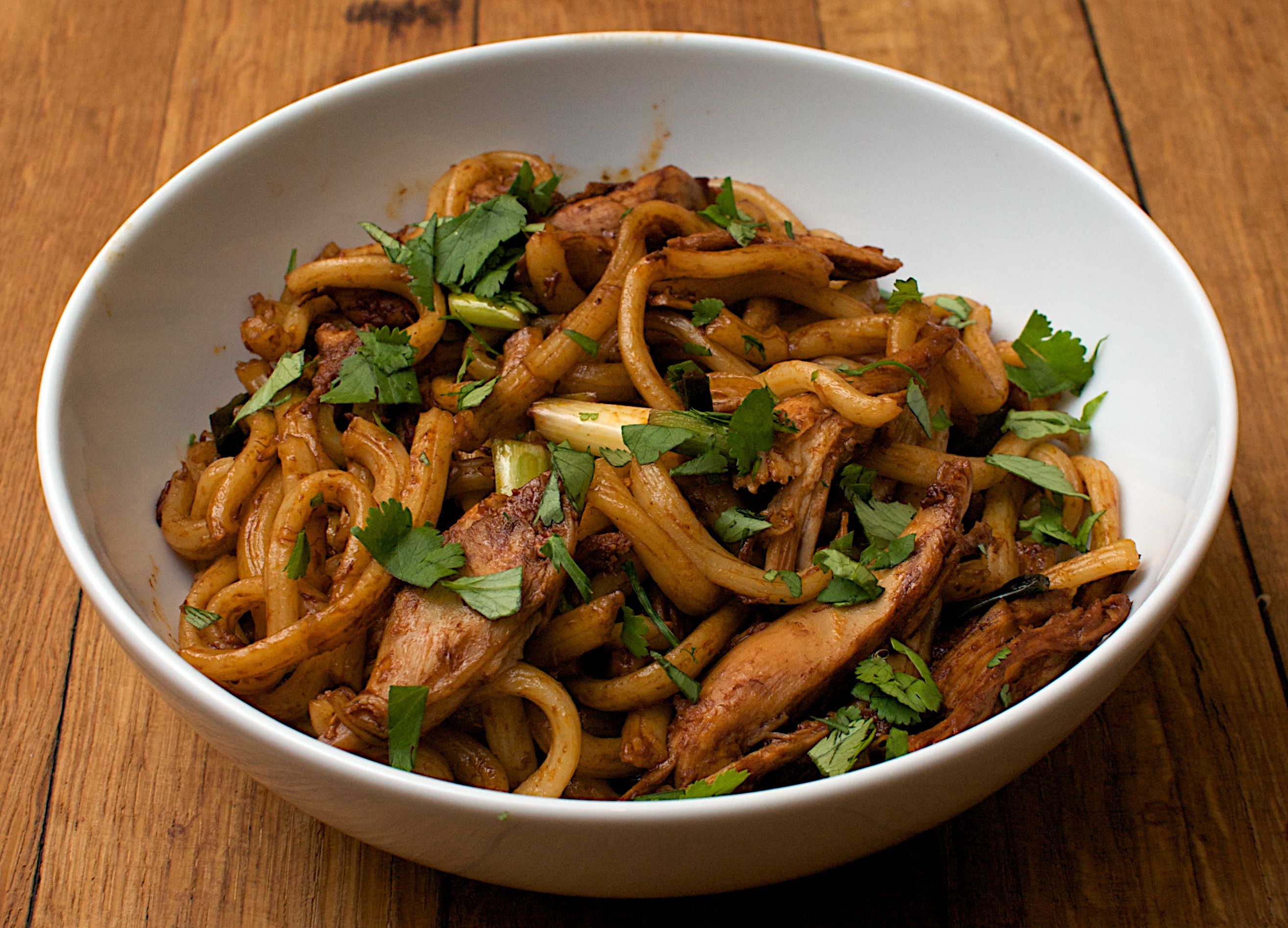
If you’ve heard of Jamie’s 30 minute meals, well this is one of Jono and Jules’ 10 minute meals!

We have finally used the last of our Christmas turkey from the freezer – we draw the line at eating turkey leftovers in February. If you’ve eaten all your turkey already you can easily substitute some cooked chicken or prawns instead.

Sweet and sour noodle stir-fry (with turkey, chicken or prawns) – to serve 2 

  • 1 tbsp tomato purée
  • 2 tbsp soy sauce
  • 2 tbsp white wine vinegar
  • 1 tbsp caster sugar
  • a pinch of chilli flakes
  • 1 tbsp sunflower oil
  • 4 scallions, roughly chopped
  • 200g cooked turkey/chicken/prawns, chopped
  • 2 x 150g packs straight to wok thick udon noodles
  • 2 tbsp roughly chopped coriander

Mix the tomato purée, soy sauce, white wine vinegar, caster sugar and chilli flakes in a small bowl. Heat the oil in a wok or a big frying pan. Add the scallions and garlic and stir-fry for 30 seconds. Add the turkey, chicken or prawns along with the noodles and stir to separate the noodles. Stir in the sauce and add a couple of tablespoons of water to thin the sauce a bit. Cover and cook for a couple of minutes or until everything is heated through. Sprinkle the coriander over before serving.

Wine Suggestion: Don’t have a top-quality Meursault as we found this didn’t really work – which was absolutely no fault of the wine! A better match would be a white wine with a little bit of sugar in it to complement the spicy flavours in the dish. Something like some Pinot Gris would work well (look for the sweetness indicators on the label if it comes from Alsace which is a great region for this grape).

(Original recipe from Sainsbury’s Magazine, January 2008.)

Read Full Post »

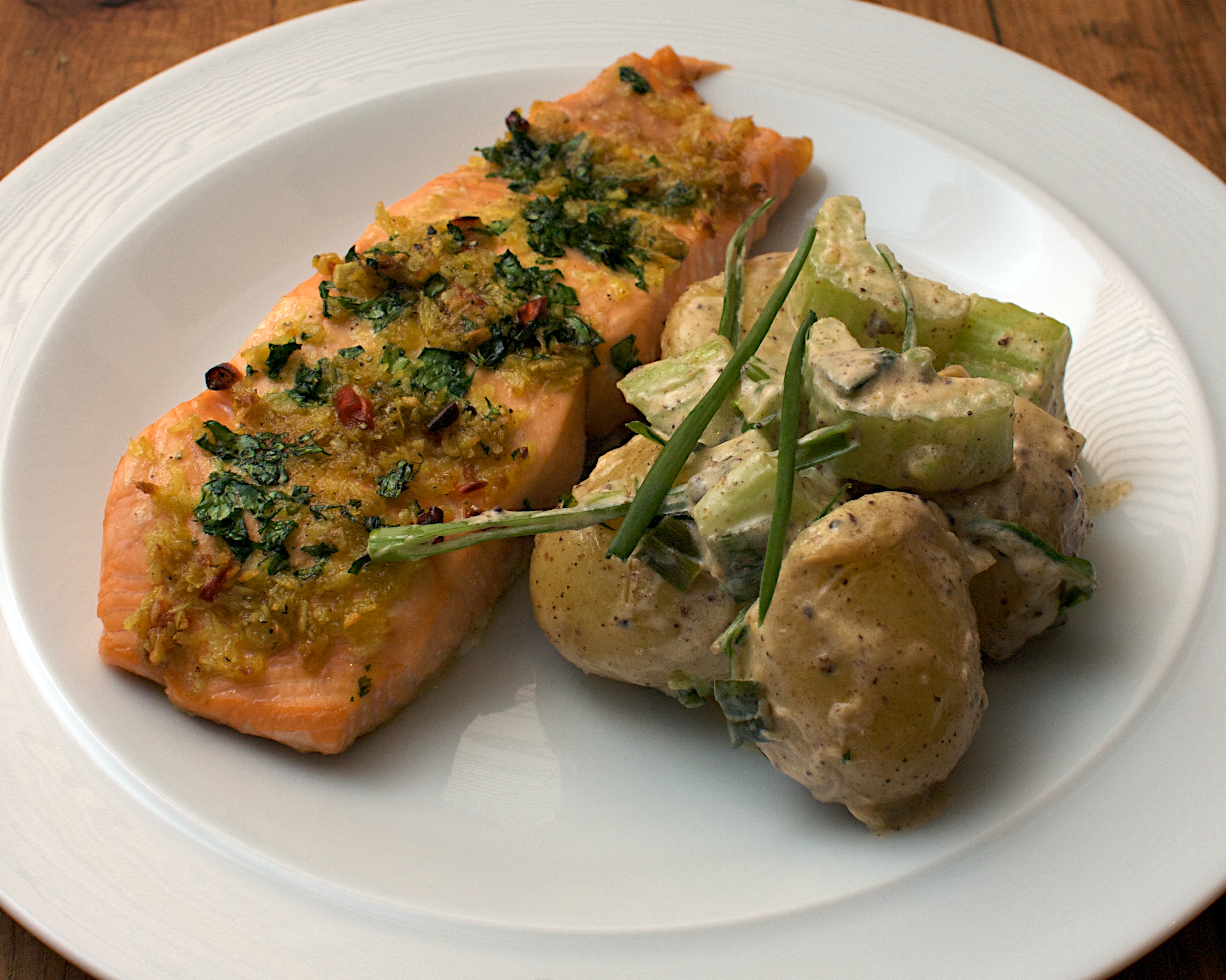
This is lovely and healthy too. We served it with the potato salad in the post below. The recipe serves eight so it would be really easy for a dinner party but was also really easy to adapt to feed just two.

Roast spiced salmon with coconut crumbs – to serve 8 (or divide it up to serve less)

  • 50g butter
  • 8 green cardamom pods, seeds removed and finely crushed
  • 3 tbsp desiccated coconut
  • 1 red chilli, seeded and finely chopped
  • 1 tbsp grated fresh root ginger
  • 2 garlic cloves, finely chopped
  • 1 tsp ground coriander
  • generous pinch of ground turmeric
  • 8 slim boneless skinless salmon fillets
  • 2 tbsp finely chopped fresh coriander

Melt the butter in a medium pan, add the cardamom and coconut and keep stirring for a few minutes or until the coconut starts to toast and smell divine. Stir in the chilli, ginger, garlic, ground coriander and turmeric. Cook for another minute and then leave to cool.

Arrange the salmon in a single layer but not touching, in 1 large or 2 smaller buttered ovenproof dishes. Scatter the coriander over and spread the coconut mixture on top. You can cover the salmon with cling film and stick it in the fridge for up to a day. Take it out of the fridge about an hour before you want to cook it.

Turn the oven to 200C/gas 6/fan 180C. Roast the salmon for 13-15 minutes or until cooked, but still moist.

Wine Suggestion: We had a Gruner Veltliner from Austria which tends to be a little bit spicy and so complements a dish like this. A little residual sugar never goes amiss when there is chilli in the food either.

(Original recipe from BBC Good Food)

Read Full Post »

This is scrummy! Like a potato salad but nice and light as it’s mostly low-fat yogurt rather than mayo. We served it with some spicy fish but it would also be great for a barbecue or a party. A dish we’ll definitely be repeating.

Potato salad with curried mayo – to serve 8

  • 1.25 kg salad potatoes, halved if big
  • bunch of scallions
  • 1 tbsp sunflower or groundnut oil
  • 1 tsp black mustard seeds, plus extra to serve
  • 1 tbsp Madras curry paste (or whatever you have)
  • 200g low-fat natural yogurt
  • 4 tbsp mayonnaise
  • 4 sticks celery, thickly sliced

Cook the potatoes in boiling salted water for about 15 minutes or until tender. Drain and cool for 5-10 minutes.

Meanwhile, slice the white bulb end of the scallions and keep the green parts. Heat the oil in a deep saucepan, add the mustard seeds and cook until they start to pop and hop around. Add the chopped scallion and curry paste. Cook, stirring all the time, for a couple of minutes.

Tip the mixture into a big bowl and stir in the yogurt and mayonnaise with lots of salt and black pepper. You can leave the potato skins on or off.

Chop all but 2 of the green onion stems and add to the dressing along with the potatoes and celery and carefully mix it all together.

Pile the potatoes into a serving dish. Cut the leftover scallion stems into long shreds and scatter them over the salad with the mustard seeds.

(Original recipe from BBC Good Food)

Read Full Post »

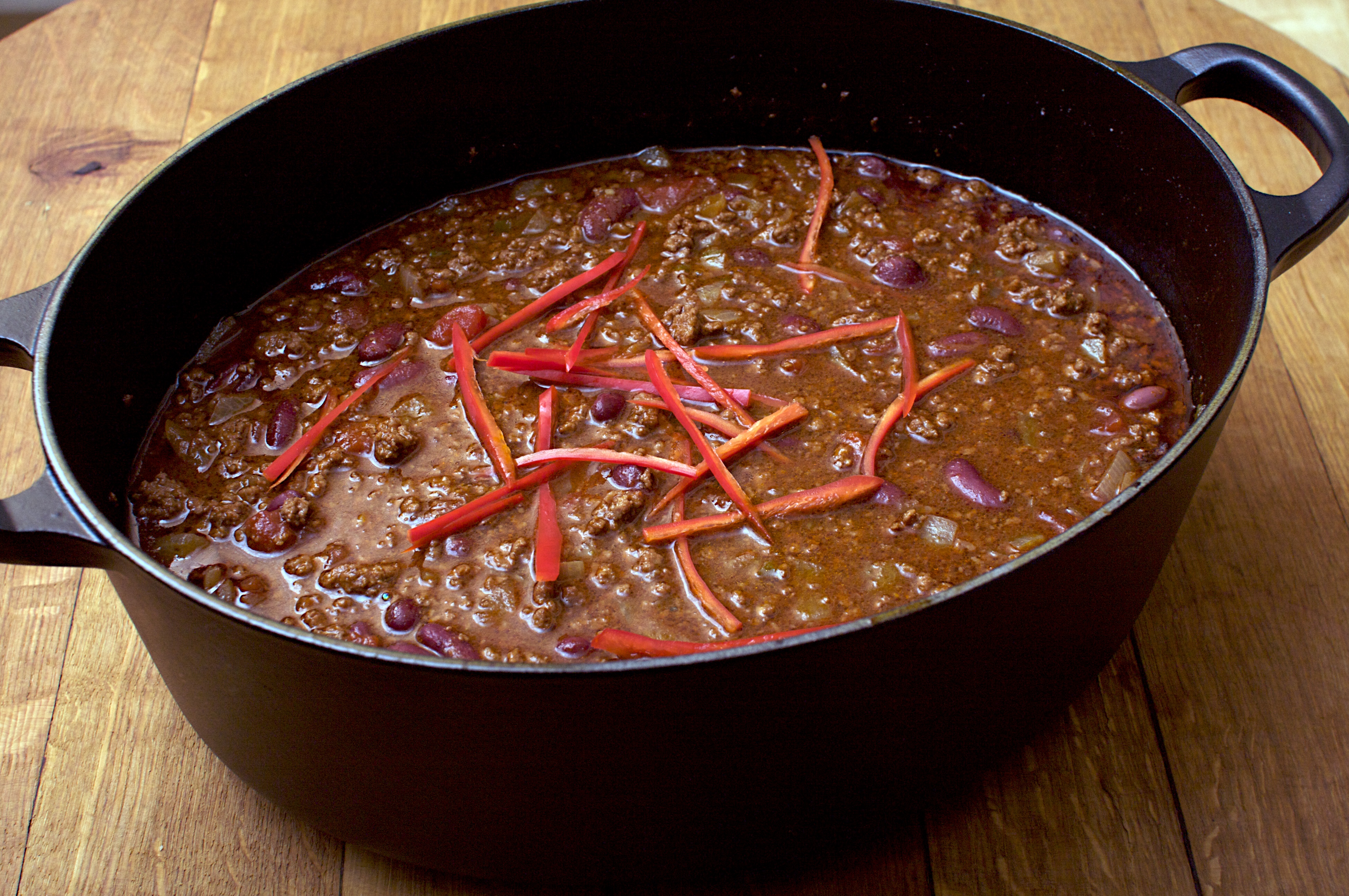
A good chilli recipe

This tastes as nice as ever and serves a lot of people, what more can we say … Serve with baked potatoes, cheese, sour cream, mashed avocado, tortilla chips, rice or any combination of these. Try and make it a day in advance if you have time – it’s even better on day two.

Chilli – serves 6-8

  • 125ml olive oil
  • 1 onion, finely chopped
  • 2 star anise
  • 2 garlic cloves, finely chopped
  • 1 green chilli, deseeded and finely chopped
  • 1kg mince beef
  • 2 tbsp tomato paste
  • 3 tsp ground cumin
  • 1 tsp chilli powder
  • 2 tsp smoked paprika
  • 350ml red wine
  • 1 tbsp Worcestershire sauce
  • 375ml beef stock
  • 400g tin chopped tomatoes
  • 400g tin red kidney beans, rinsed and drained
  • 1 long red chilli, seeds removed and finely shredded

Preheat the oven to 170ºC.

Heat the oil in a large flameproof casserole over a medium heat. Add the onion and star anise and cook, stirring, for 3-4 minutes or until soft. Add the garlic and green chilli and cook for about 30 seconds or until you can smell them. Add the beef and cook, breaking up the lumps with a spoon, for about 5 minutes or until is is browned. Add the tomato paste and spices and cook for another couple of minutes. Pour in the wine, bring to a simmer, then cook for about 6 minutes or until the wine has reduced by half. Add the Worcestershire sauce, stock and tomato, then season well. Bring to the boil then cover with a lid and transfer to the oven. Bake for an hour or until the chilli is reduced and thick.

Stir in the kidney beans and top with shredded chilli to serve.

Wine Suggestion: Something youthful with some juicy fruit that won’t get clobbered by the chilli. We went for an 07 Manium Bierzo from Spain, suggested by Chris from The Corkscrew on Chatham Street, which was an excellent choice and good value at €14.95.

(Original recipe from Delicious: Simply the Best by Valli Little, Harper Collins, 2011.)

Read Full Post »

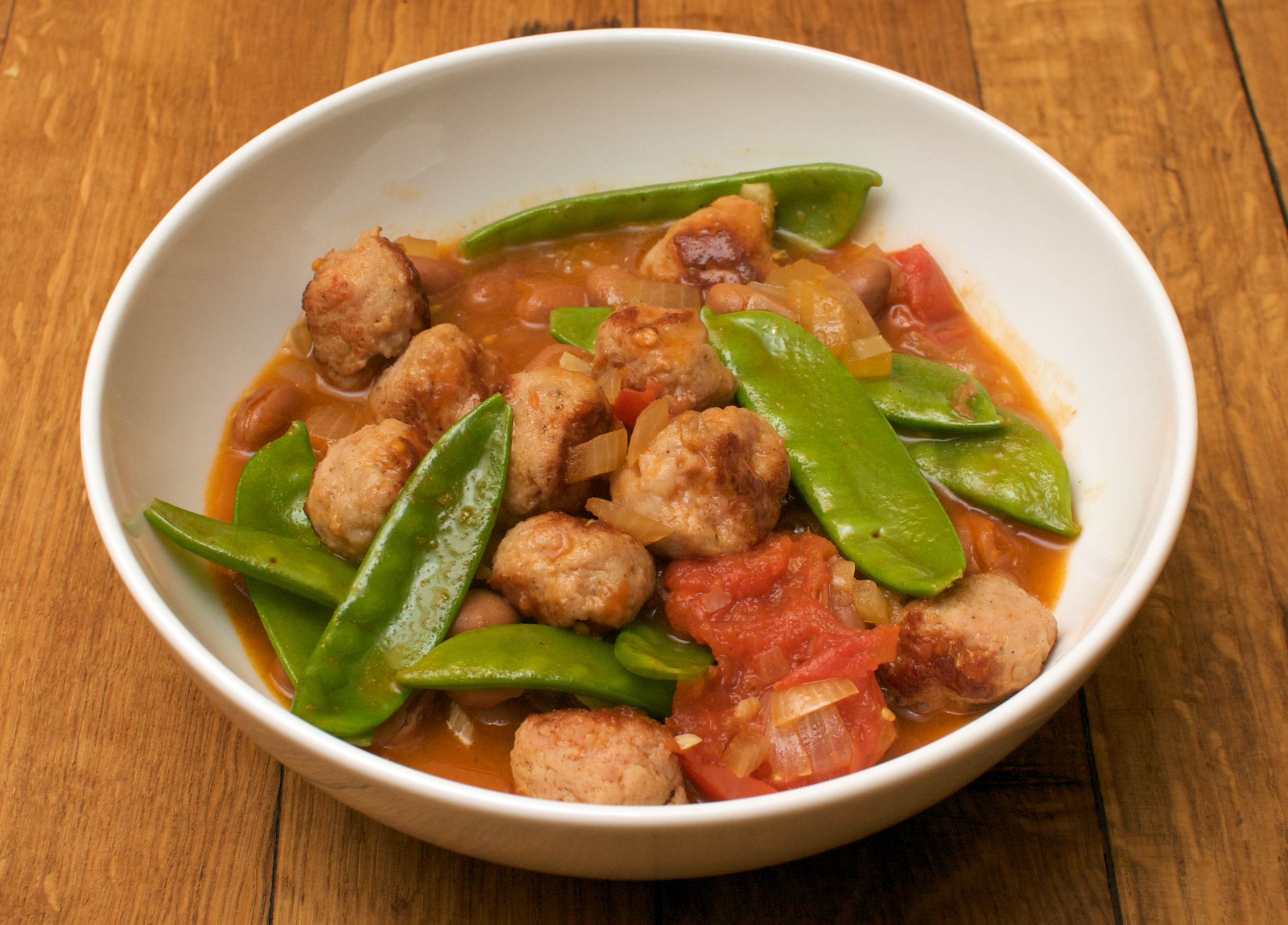
Great mid-week comfort food; rich and delicious and easy to make. We had all these ingredients in the fridge or freezer too so it made our dinner really cheap. This was so delicious that if we’d have made a larger amount Jono probably would have scoffed that too! Using good ingredients helps as we had two lovely Toulouse sausages in the freezer and good quality cherry tomatoes in a tin in the cupboard. These lifted the richness and depth of flavour.

Italian Stew with borlotti beans and sausage – serves 2

  • 2 Italian-style sausages (we used Toulouse which worked just as well)
  • 1 onion, chopped
  • 1 clove garlic, chopped
  • 1/2 tsp fennel seeds
  • pinch of chilli flakes
  • 400g tin cherry tomatoes
  • 300ml stock
  • 400g tin borlotti beans, drained and rinsed
  • 100g green beans or sugar snaps
Remove the skins from the sausages and roll the meat into little balls. Heat then brush a frying pan with oil and brown the meatballs until golden and any oil is released.

Remove meatballs and add the onion, garlic, fennel seeds and chilli flakes to the pan. Season and cook for 5 minutes.

Add the tin of cherry tomatoes and 300ml stock. Bring to the boil and then add the meatballs and borlotti beans. Cook for 10 minutes.

Now add the green beans or sugar snaps and cook for a further 5 minutes (until the greens are just tender).

Serve in bowls.

Wine suggestion: Great with a warm, but not heavy red. A Nero d’Avola or other southern Italian would work really well, but so would a cooler climate, New World shiraz or cabernet, particularly if it has a little bit of age to mellow out the tannins. Avoid the jammy, higher alcohol reds as these would overwhelm the dish.

(Original recipe from BBC Good Food)

Read Full Post »

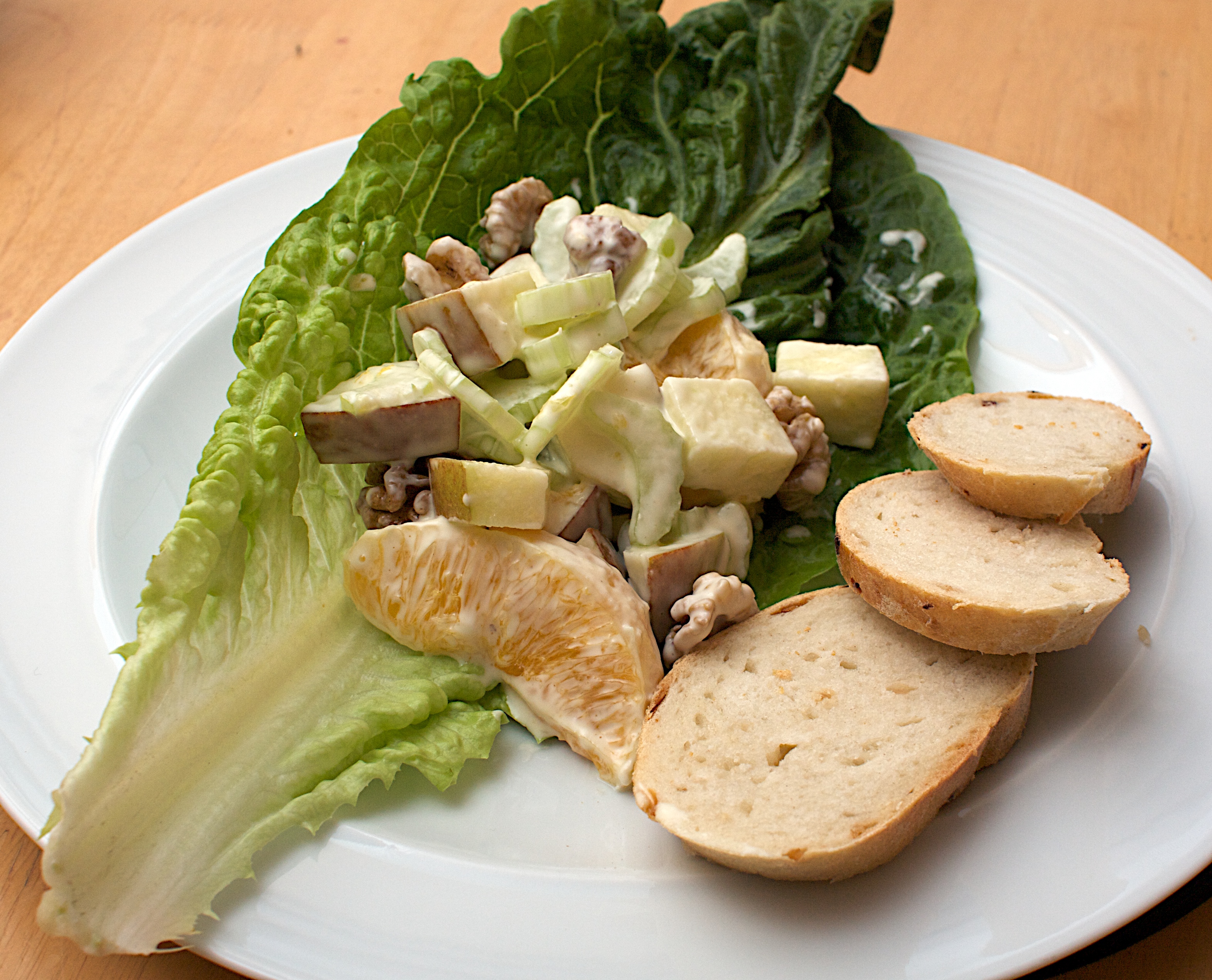
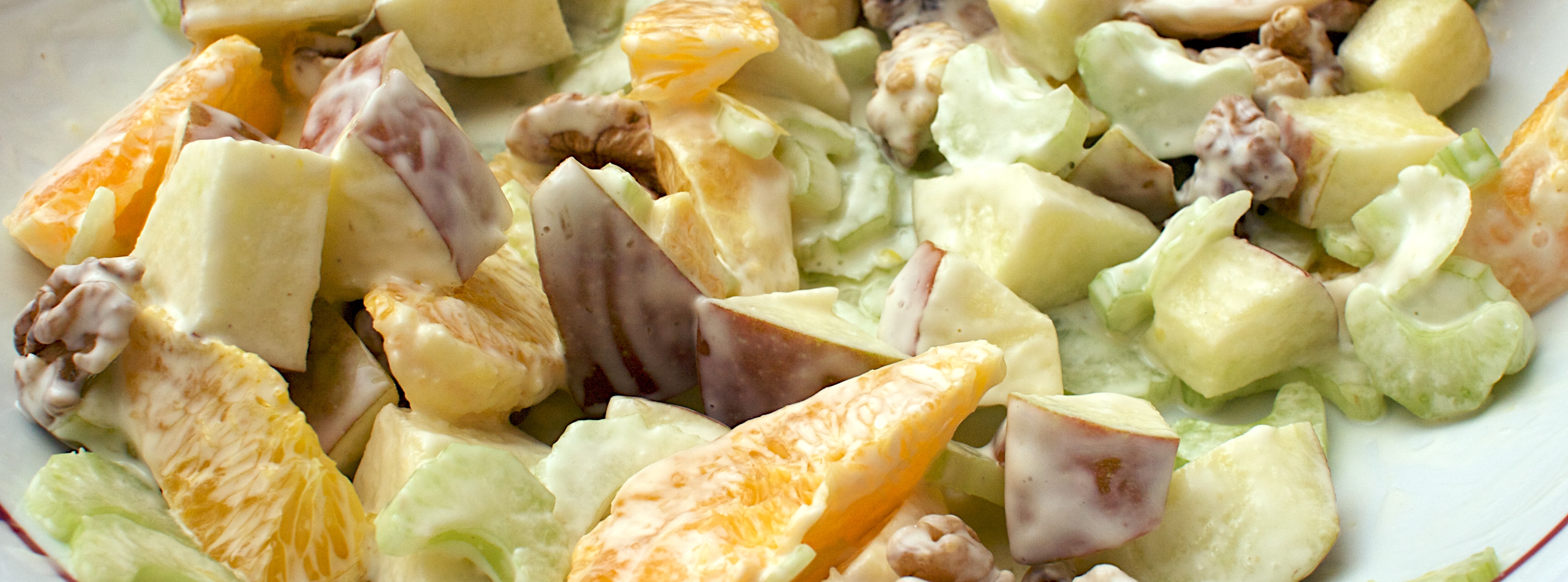
Remember this? It made a fab lunch with some bacon and onion bread and lettuce.

Waldorf Salad – a big bowl

  • 1 apple, cut into bite-size chunks
  • 1 large orange, cut into segments
  • 2 sticks celery, chopped
  • a handful of walnuts
  • mayonnaise

Throw all of the above into a big bowl and give it a stir! Serve in a cos lettuce leaf with some nice bread.

Read Full Post »

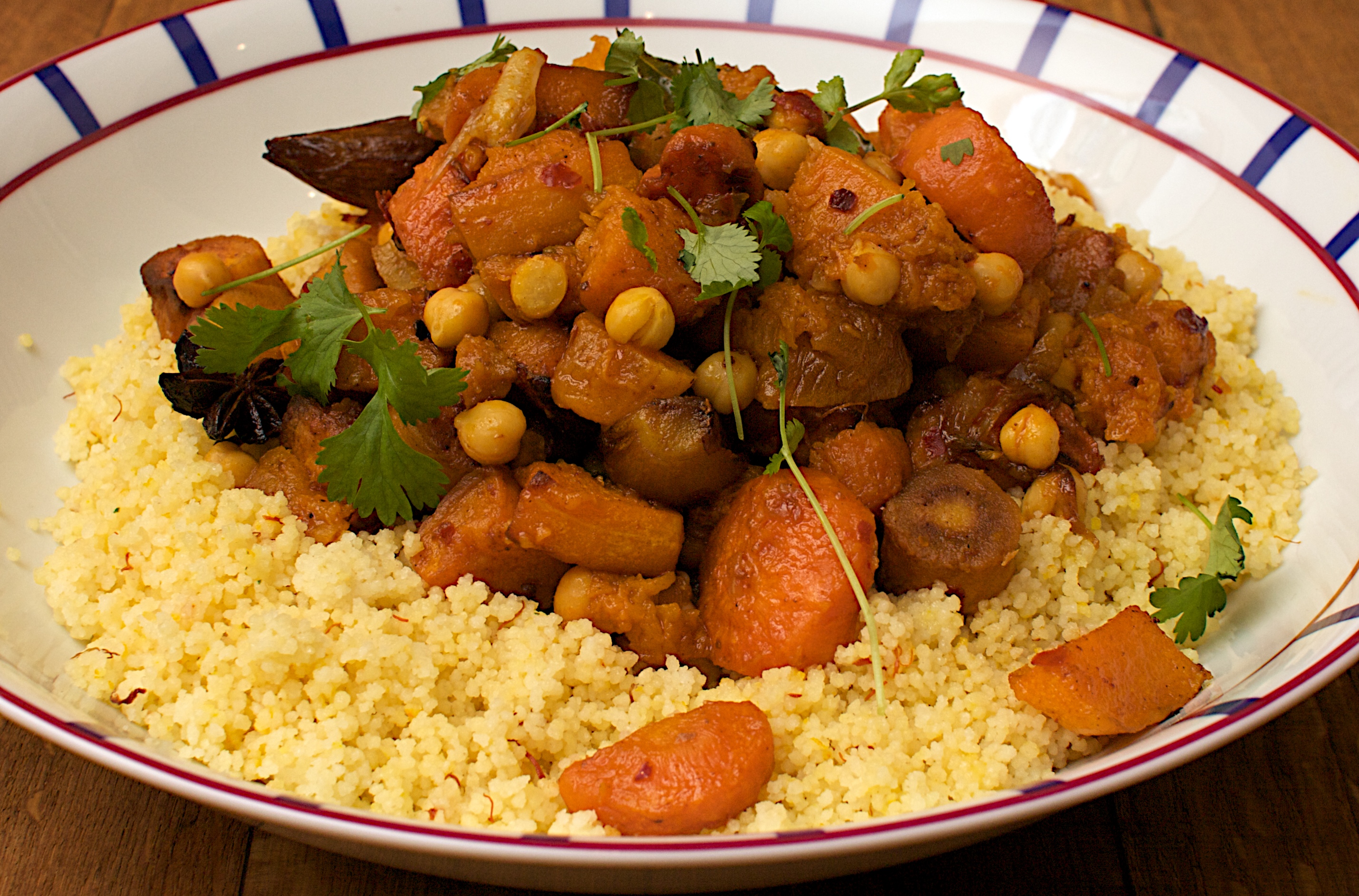
Another fantastic vegetarian recipe by Yotam Ottolenghi with fabulous flavours and interesting textures. This was so good we made it twice in one week.

The ultimate winter couscous – to serve 4

  • 2 medium carrots, peeled and cut into 2 cm chunks
  • 2 medium parsnips, peeled and cut into 2cm chunks
  • 8 shallots, peeled
  • 2 cinnamon sticks
  • 4 star anise
  • 3 bay leaves
  • 5 tbsp olive oil
  • 1/2 tsp ground ginger
  • 1/4 tsp ground turmeric
  • 1/4 tsp hot paprika
  • 1/4 tsp chilli flakes
  • 300g pumpkin or butternut squash, peeled and cut into 2 cm chunks
  • 75g dried apricots, roughly chopped
  • 200g chickpeas (tinned are fine)
  • 350ml water
  • 170g couscous
  • large pinch saffron threads
  • 260ml boiling vegetable stock
  • 20g butter, cut into pieces
  • 25g harissa paste
  • 25g preserved lemon skin, finely chopped
  • 30g coriander
  • salt

Preheat the oven to 190ºC/Gas Mark 5. Put the carrots, parsnips and shallots in a large ovenproof dish. Add the cinnamon sticks, star anise, bay leaves, 4 tbsp of the oil, 3/4 tsp salt and all the other spices and mix well. Put in the oven and cook for 15 minutes.

Add the pumpkin, stir and return to the oven. Cook for another 35 minutes or until the vegetables are soft but still have a bit of a bite. Add the apricots and the chickpeas and water. Put it back into the oven for another 10 minutes or until hot.

About 15 minutes before the vegetables are done, put the couscous in a large heatproof bowl with the last tablespoon of olive oil, the saffron and 1/2 tsp of salt. Pour the boiling stock over the couscous. Cover the bowl with cling film and leave for about 10 minutes. Then add the butter and fluff with a fork until it has melted in. Cover again and keep warm until the vegetables are ready.

To serve, spoon the couscous into a deep plate or bowl. Stir the harissa and preserved lemon into the vegetables; season with salt if necessary. Spoon the vegetables onto the centre of the couscous and finish with lots of coriander.

Wine Suggestion: While spices are usually hard to pair with wine, the aromatic quality of this dish would work well with a good, off-dry Pinot Gris from Alsace (the good producers put a handy sweetness scale on the side of their bottles). Alternately a juicy grenache with softer, ripe tannins and a velvety spice  would taste good too if you’d like a red. Try to find a grenache based Priorat from Spain if you want to push the boat out a bit!

(Original recipe from Yotam Ottolenghi’s Plenty, Ebury Press 2010.)

Read Full Post »

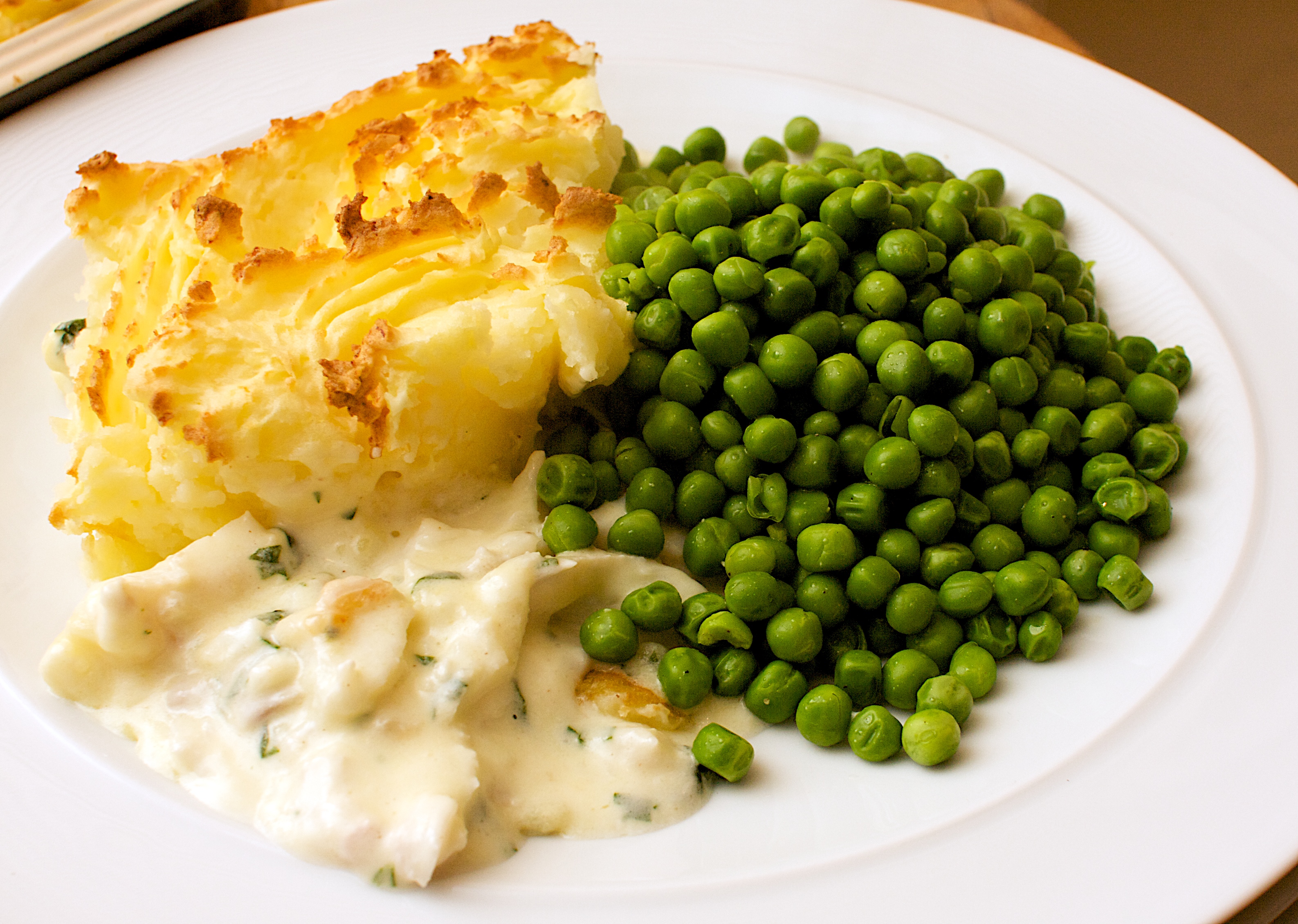
Fantastic Fish Pie

Sometimes the less complicated recipes are the best. Our fish pies usually have all sorts of stuff inside but this white fish, egg and parsley sauce combo was delicious. Perfect comfort food.

Fish Pie – to serve 4 

  • 1 small onion, thickly sliced
  • 2 cloves
  • 1 bay leaf
  • 600ml milk
  • 300ml double cream
  • 450g unskinned cod or haddock fillet
  • 225g undyed smoke cod or haddock fillet
  • 4 eggs
  • 100g butter
  • 45g plain flour
  • 5 tbsp chopped flat-leaf parsley
  • freshly grated nutmeg
  • 1.25kg floury potatoes, peeled
  • 1 egg yolk
  • salt and freshly ground white pepper

Push the cloves into a couple of the onion slices. Put the onion into a large pan with a bay leaf, 450ml of the milk, all of the cream, and fish. Bring just to a boil and them simmer gently for 8 minutes. Lift the fish out with a slotted spoon and strain the cooking liquid into a jug. When the fish is cool enough to handle, break it into big flakes, discarding the skin and any bones. Sprinkle the fish over the base of a shallow 1.75 litre ovenproof dish.

Hard-boil the eggs for 8 minutes, then drain and leave to cool in cold water (so you don’t get ugly black rings). Peel and cut into chunky slices and arrange then on top of the fish.

Melt 50g of the butter in a pan, add the flour and cook for 1 minute. Take the pan off the heat and gradually stir in the reserved liquid. Return it to the heat and bring to the boil slowly, stirring all the time. Leave it to simmer gently for 10 minutes to thicken and cook out the flour. Remove from the heat again, stir in the parsley and season with nutmeg, salt and white pepper. Pour the sauce over the fish and leave to cool. Chill in the fridge for 1 hour.

Boil the potatoes until tender. Drain, mash and add the rest of the butter and the egg yolk. Season with salt and white pepper and beat in enough of the milk to form a soft mash that you can spread.

Pre-heat the oven to 200ºC/400ºF/Gas 6. Spoon the potato over the filling and mark the surface with a fork. Bake for 35-40 minutes, until piping hot and golden brown.

Wine Suggestion: keep it simple and try a dry and minerally Muscadet. There are some great examples of Muscadet around at the moment and for not much money so it’s worth a try with any other seafood too.

(Original recipe from Rick Stein’s Seafood, BBC Books, 2001.)

Read Full Post »

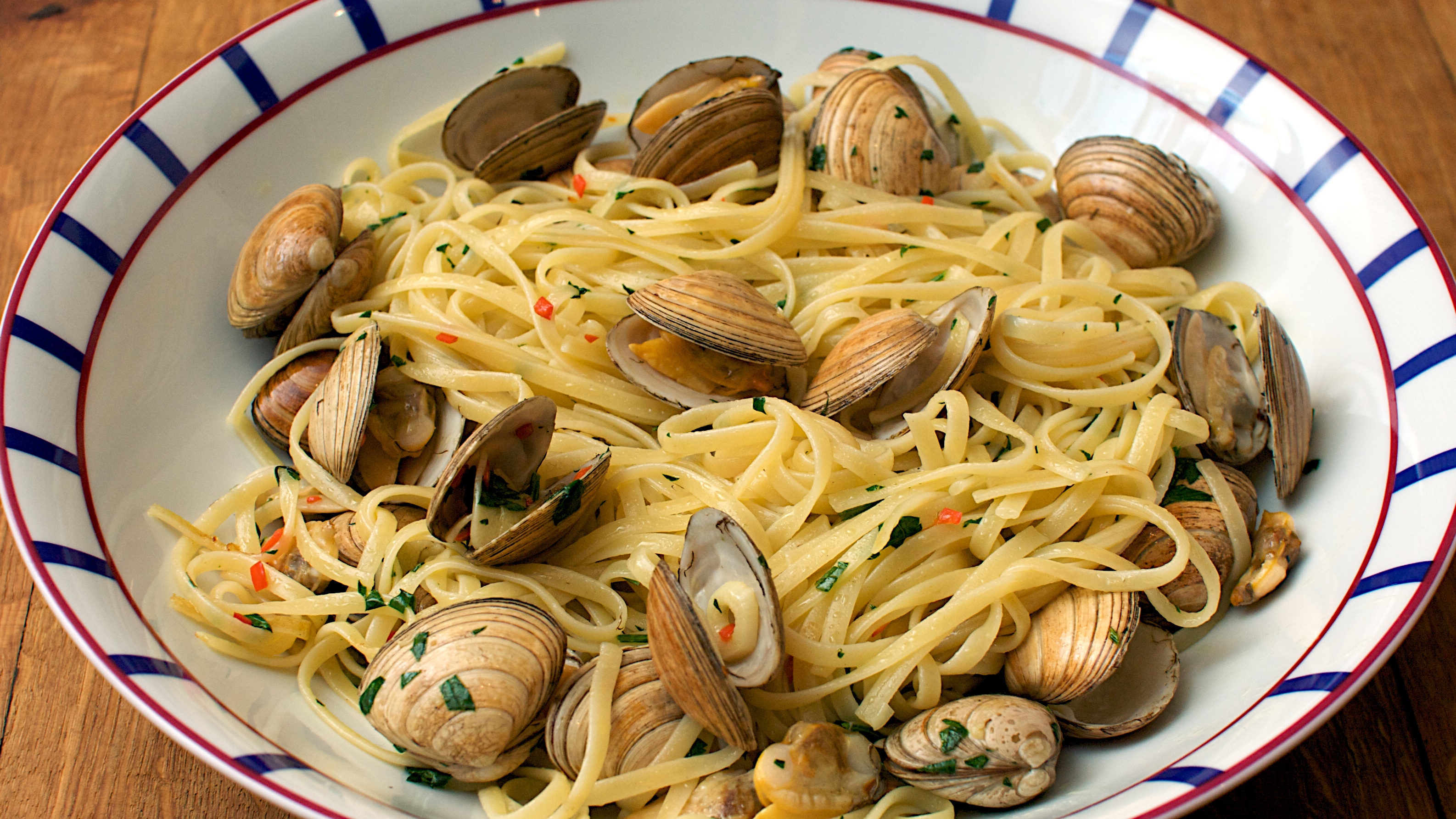
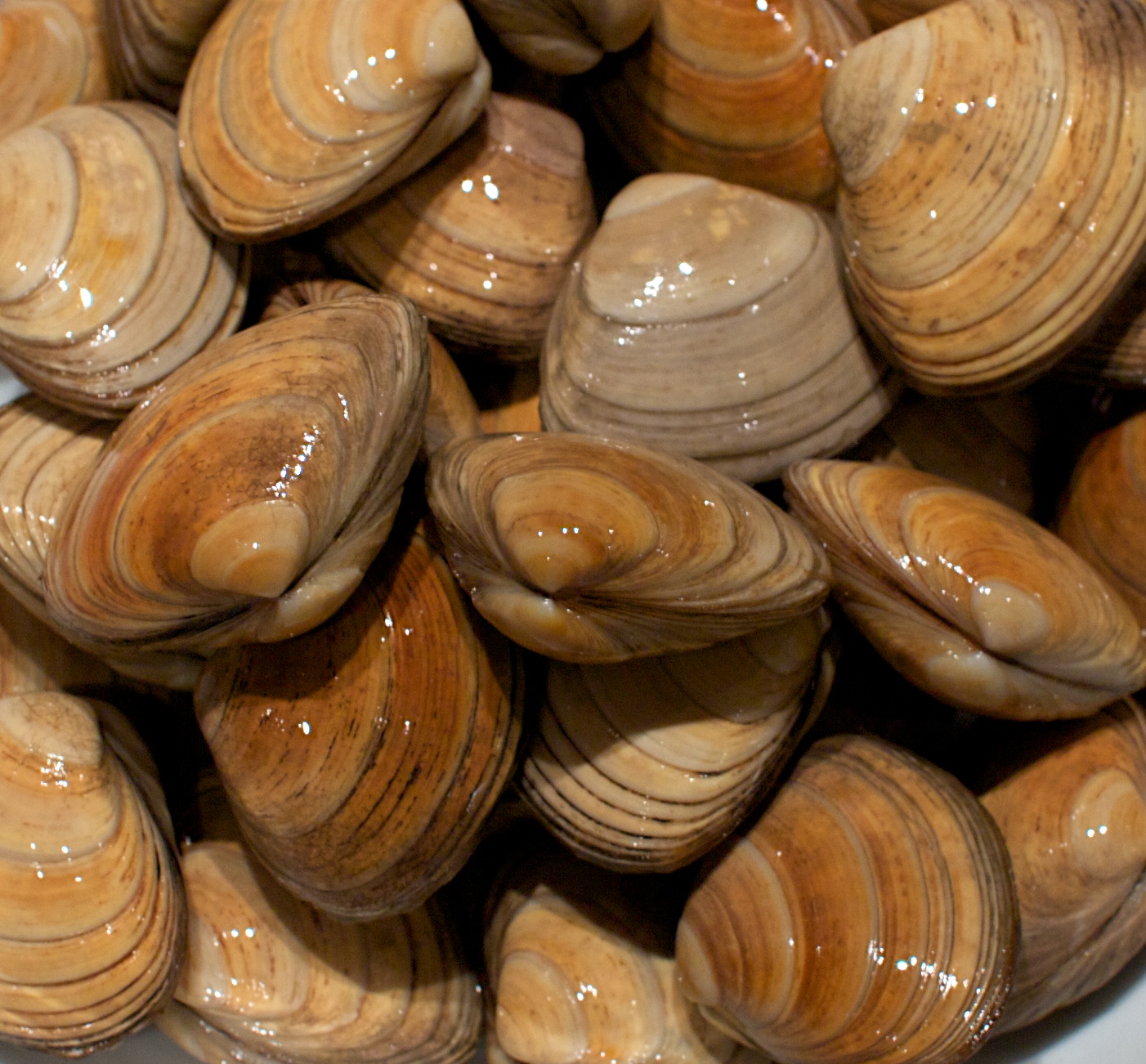
It’s shellfish season so grab some clams and make some vongole! Obey the chilli quantities – we didn’t and burnt the lips off ourselves!

Linguine alle vongole (clams with linguine, garlic, parsley and white wine) – to serve 4

  • 350g dried linguine
  • 50ml extra virgin olive oil
  • 4 garlic cloves, thinly sliced
  • 1/2 a medium-hot red Dutch chilli, seeded and finely chopped
  • 3 tbsp chopped flat-leaf parsley
  • 900g small clams, washed
  • 2 tbsp dry white wine

Cook the linguine in a large pan of well-salted boiling water for just 5 minutes.

Meanwhile, heat the olive oil, garlic and chilli in a small pan until the garlic starts to sizzle. Reduce the heat and cook gently for a couple of minutes to soften the garlic. Add the parsley and take off the heat.

Drain the pasta. Put the empty pan back onto a high heat and add the clams, the white wine and the par-cooked linguine. Cover and cook over a high heat, shaking occasionally, for about 3 minutes or until the clams have opened.

Take the lid off the pan and add the olive oil mixture. Simmer for another couple of minutes, if necessary, until the linguine is tender.

Wine Suggestion: Because it is Italian, we’ll stick to form and suggest either a herbally Inzolia from Sicily, or a more nutty Verdicchio. You need something light and fresh with a little minerality. Muscadet would also work a treat.

(Original recipe from Rick Stein’s Seafood, BBC Books, 2001.)

Read Full Post »

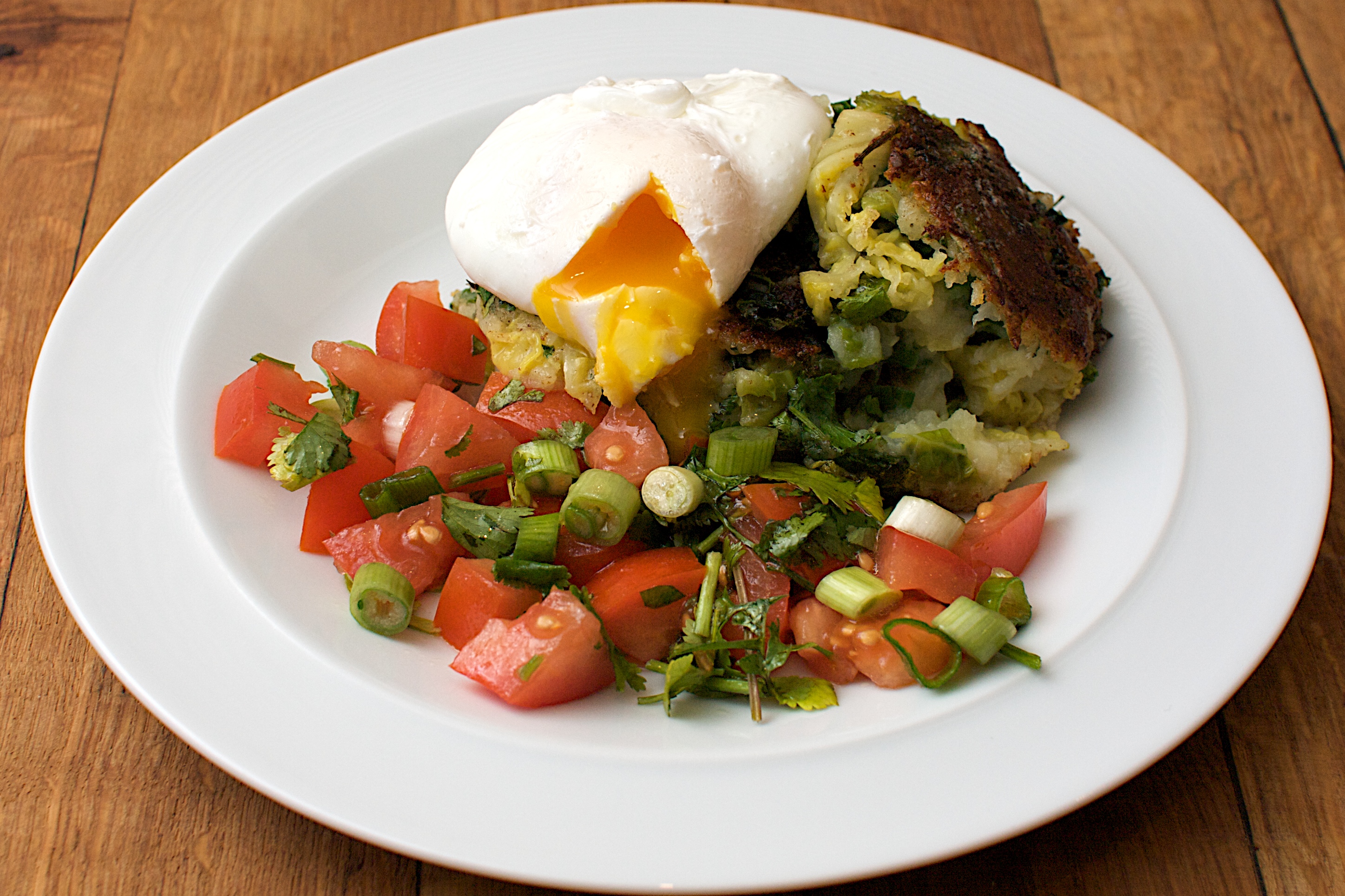
This is a doddle of a weeknight meal and handily uses up the sort of leftovers and bits and pieces we often have in the fridge i.e. leftover mash, half a cabbage, scallions, coriander…

Bubble & Squeak Cakes with Tomato Salsa – to serve 2

  • 1 bunch of scallions, sliced
  • butter
  • 200g potatoes, peeled, cooked and roughly mashed
  • 100g of shredded and cooked cabbage, greens or brussels sprouts
  • small bunch of coriander, chopped
  • 2 tomatoes, diced
  • olive oil
  • 1 tbsp red wine vinegar
  • 2 poached eggs

Cook half the scallions in a bit of butter until soft, then mix with the potatoes, cabbage and half the coriander. Season really well and form into 4 small cakes.

Make the salsa by mixing together the rest of the coriander and scallions and the tomatoes, with 1tbsp olive oil and the vinegar.

Fry the cakes in a bit more butter for about 5 minutes each side, on not too high a heat, until nice and crispy. Top with a poached egg and serve with the salsa on the side.

Wine Suggestion: Go for something light and fresh e.g. a Vermentino from Italy or a Gascogny white blend.

Read Full Post »

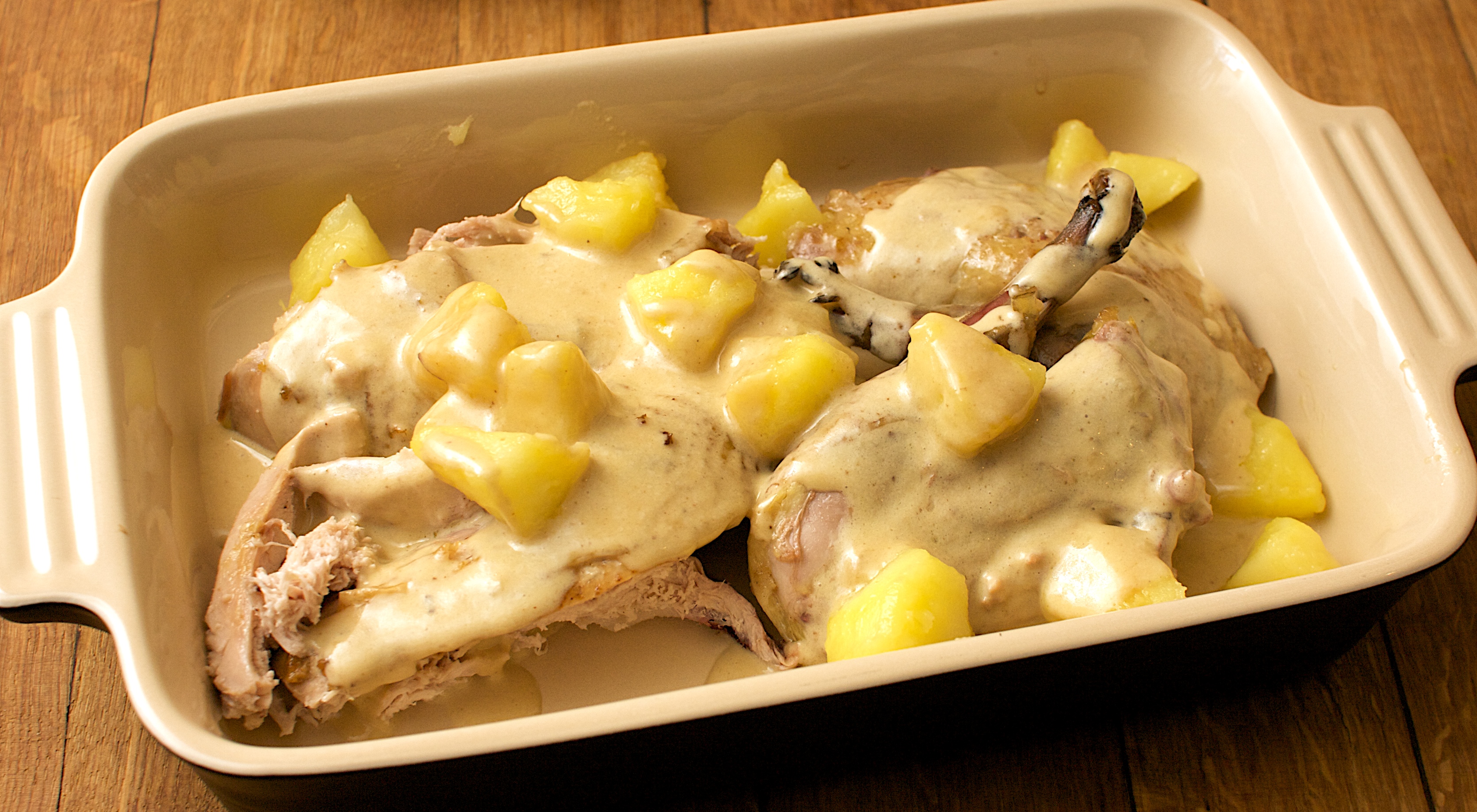
We made this as a Sunday night dinner for two and it is rich and packed full of flavour. Pheasant is appropriately in season in Ireland at the moment, as are apples, so a perfect choice.

Roast Pheasant with Apple and Calvados – to serve 2-3

  • 1 plump young pheasant, about 725-900g
  • 10g butter
  • 4-5 tbsp Calvados
  • 225ml cream or 125ml cream and 125ml chicken stock
  • 25g butter
  • 2 desserts apples

Preheat the oven to 180ºC/350ºF/gas 4.

Heat a casserole, just large enough to fit the pheasant. Season the cavity and spread the 10g of butter over the breast and leg. Place breast-side down in the casserole and allow to brown over a gentle heat, then turn over and season. Cover with a tight lid and cook for 40-45 minutes in the oven.

To check if it is cooked, poke a fork between the leg and the breast, the juices should be completely clear with no pink.Transfer to a serving dish and keep warm.

Carefully strain and de-grease the casserole juices. Bring to the boil, add the Calvados and carefully light with a match. Shake the pan and when the flames have gone out, add the cream (or stock and cream). Reduce by boiling until the sauce thickens, stirring now and then, taste for seasoning.

Peel, core and dice the apples and fry in the 25g of butter until golden. Carve the pheasant and arrange on a hot serving dish or on individual plates. Cover with the sauce and serve with the apple. We also had some colcannon on the side.

Wine Suggestion: You need a powerful and earthy red, balanced with good acidity for this dish. We drank a 2005 Cornu Corton-Bressandes Grand Cru 2005 on the inspiration of one of Jono’s customers who was looking for an opinion; we heartily endorse it as it had the depth and personality to stand up to the rich and powerful flavours with it’s own power, depth and freshness. Superb. Burgundy and game work really well.

(Original recipe from Darina Allen’s Ballymaloe Cookery Course, Kyle Cathie Limited, 2001.)

Read Full Post »

Eggs and hot salsa – we could eat this any time of day!

Huevos rancheros – to serve 2

  • 1 onion, finely chopped
  • 1 red pepper, finely chopped
  • 1 red chilli, finely chopped
  • 1 clove of garlic, crushed
  • 1/2 tsp dried or fresh oregano
  • 2 eggs
  • tortilla or pitta bread to serve

Heat 1 tbsp of olive oil in a frying pan with a lid and gently fry the onions, peppers, chilli, garlic and oregano for about 5 minutes or until softened. Add the tomatoes and continue cooking for another 5 minutes (if it starts to look dry add a splash of water). Season well and make 2 hollows in the mixture, break in the eggs, cover and cook on a low heat for about 5 minutes or until the eggs are set. Traditionally served with tortillas but we had warm pitta bread. (Too early for a wine suggestion!)

(Original recipe from BBC Good Food)

Read Full Post »

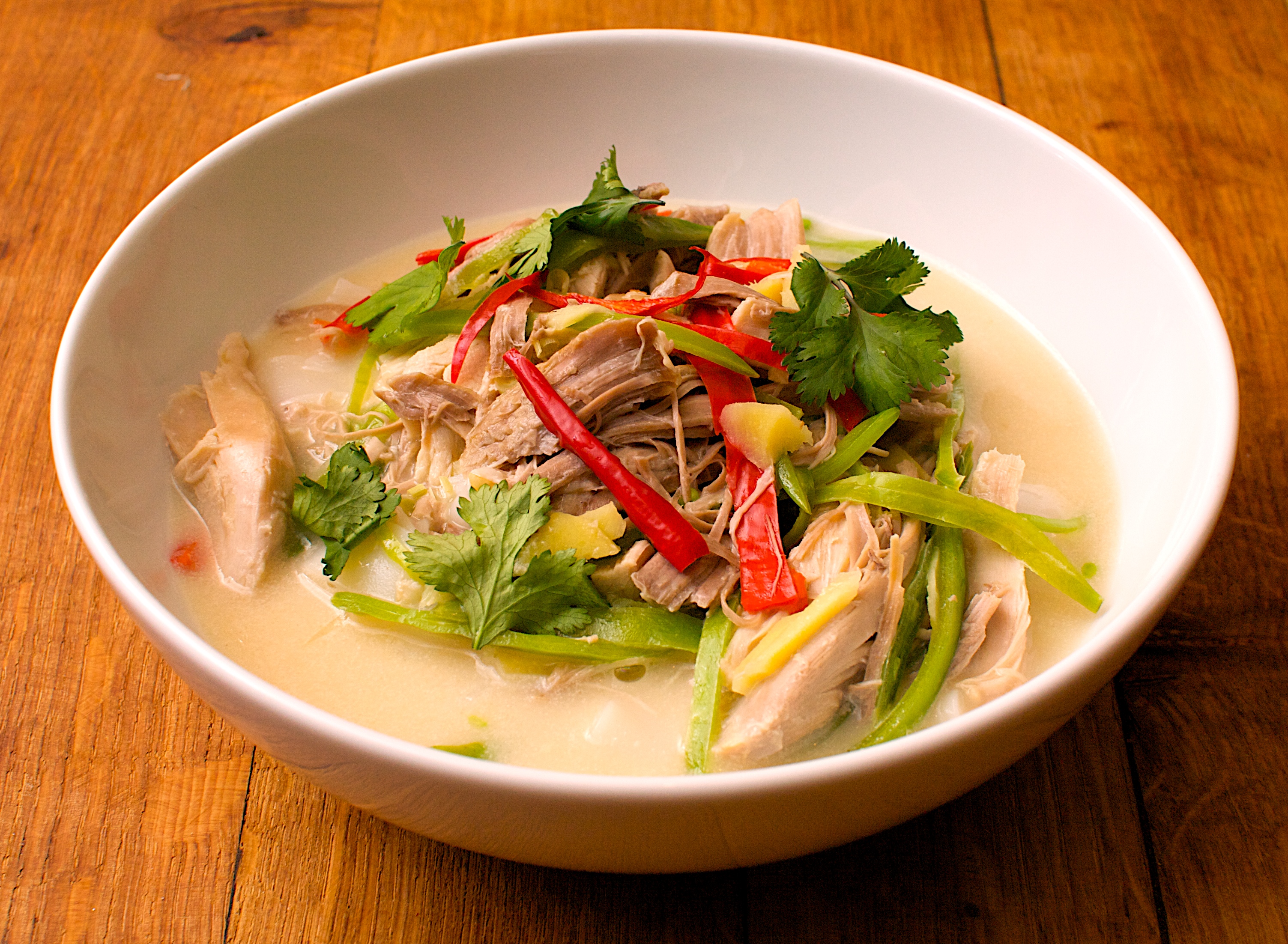
So we’ve started on our stock of turkey leftovers from the freezer. Last year we made a clear Vietnamese broth so this year we thought we’d try a creamy coconut tom ka gai to ring the changes. This is delicious!

Turkey tom ka gai – to serve 2

  • 50g flat rice noodles
  • 1 x 400ml tin half-fat coconut milk
  • 300ml chicken stock
  • a small chunk of ginger, shredded
  • 1 stalk lemongrass, discard the woody outer leaves and chop
  • 1 red chilli, shredded
  • 200g cooked turkey
  • 50g mangetout, shredded
  • 1 lime, juiced
  • 1 tsp brown sugar
  • 1 tbsp fish sauce
  • a handful of coriander leaves

Cook the noodles according to the pack, then drain and rinse with cold water. Bring the coconut milk and stock to a simmer, add the ginger, lemongrass and half the chilli and simmer for a few minutes. Add the turkey and mangetout and simmer for another couple of minutes to heat through. Stir in the lime, sugar and fish sauce, divide the noodles between two warm bowls, ladle over the soup, then scatter the rest of the chilli and coriander over the top.

Wine Suggestion: This works superbly with a good Riesling from the Mosel which combines a sweetness, pure fruit flavours, acidity to balance and a lovely lightness to both the alcohol and body … you want to match the chilli with sweetness and complement the clear and defined flavours of the soup without overwhelming it! Our choice of the evening is the Max Richter (the maker) Wehlener Sonnenuhr (the vineyard) Riesling (the grape) Spätlese (the ripeness at harvest) from the Mosel in Germany. The German naming system may seem impenetrable and intimidating but don’t be put off, the wines are usually fantastic, as long as you spend a bit more than the big brands!

(Original recipe from BBC Good Food)

Read Full Post »

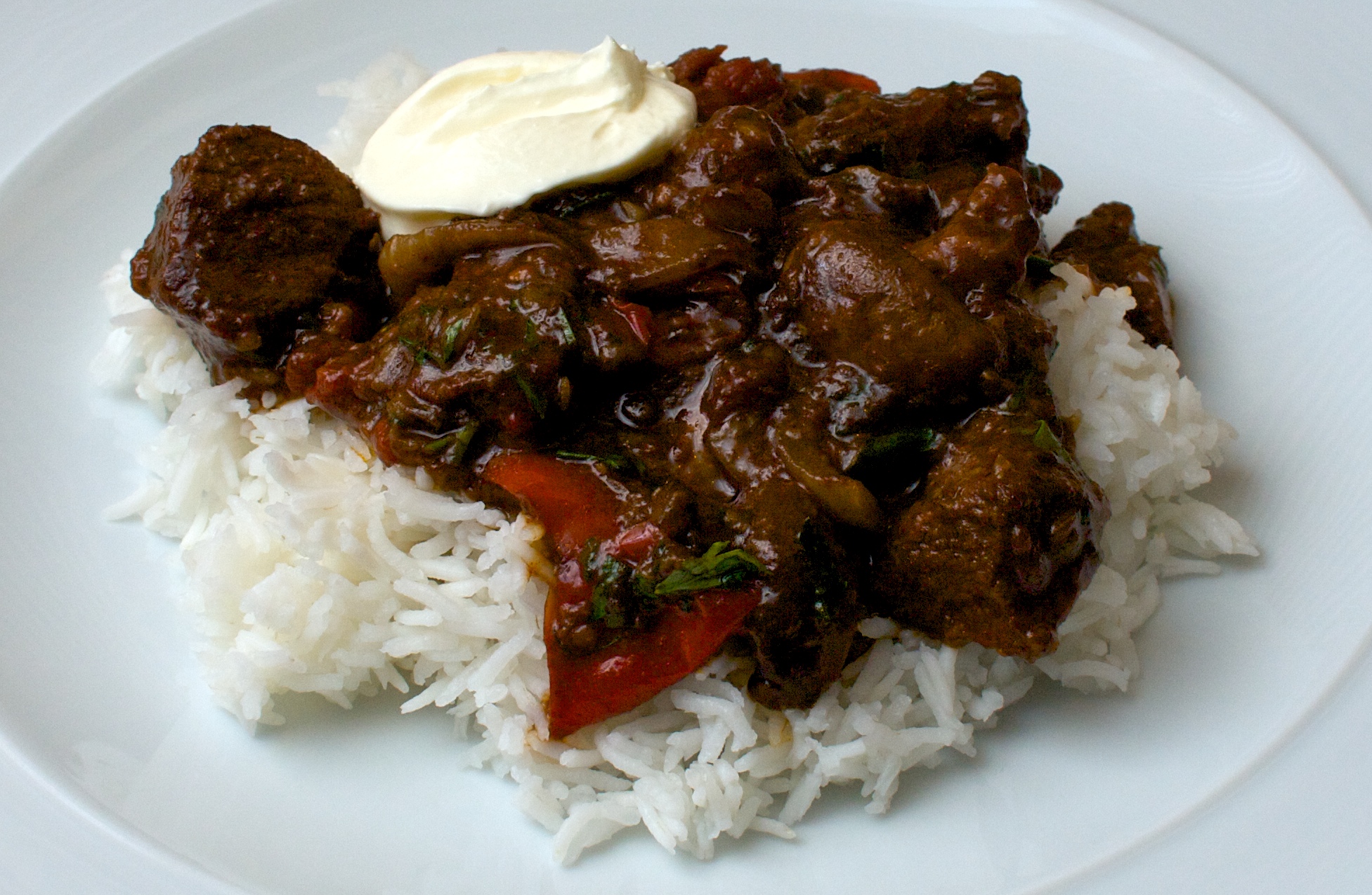
Beef Paprikash

Jono went to Hungary a year and a half ago and picked some authentic Hungarian paprika. If you’re not planning a trip to Hungary you should be able to pick up some online – it makes a real difference to dishes like this.  We like the hot variety though the sweet version will work well too. Whatever you do don’t use the smoked version which will be much too strong for this dish! This takes a few hours but only a few minutes work.

Beef Parikash – to serve 4

  • 500g braising beef , cut into large chunks
  • 1 tbsp flour, seasoned really well
  • 1 large onion, halved and sliced
  • 2 garlic cloves, crushed
  • 250g chestnut mushrooms, halved
  • 1 red pepper, sliced
  • 1 tbsp paprika (see introduction)
  • 2 tsp caraway seeds
  • 1 x 400g tin chopped tomatoes
  • 300ml beef stock
  • a small bunch of parsley, chopped
  • basmati rice and soured cream to serve

Heat the oven to 180C/160C fan/gas 4. Toss the beef with the flour and brown in 1 tbsp oil in a large ovenproof dish with a lid.

Scoop out the meat, then add the onions and cook until soft and browned at the edges. Add the garlic, mushrooms and pepper and cook for 5 minutes until softened.

Return the beef to the dish and add the spices, tomatoes and beef stock. Bring to a simmer, put on the lid and transfer to the oven and cook for about 2 hours. Check near the end of the cooking time  – the beef should be really tender and the sauce thickened – if not cook for another half hour.

Stir in the parsley and serve with rice and soured cream.

Wine Suggestion: Something rich, red and spicy would be good here. We had a Sierra Cantabria Colección Privada, 2007 from O’Brien’s, courtesy of our friend Thonya – thanks chick 😉

(Original recipe from BBC Good Food)

Read Full Post »

If you have access to an Asia market or Indian grocer then they will sell poppadoms (they look like packets of very fine wafers) that are much superior to the already puffed ones you get in ordinary supermarkets. You can fry them in oil or just cook them in a microwave for 60 seconds.

Cucumber & Mint Raita – to serve 4

This is really light and refreshing and would also work well with a barbecue or on baked potatoes. Measure the mint so it doesn’t overpower the dish.

  • 200g cucumber
  • 400g thick plain yogurt
  • 8g mint leaves, shredded
  • 3/4 tsp roasted cumin powder (You can make this by roasting cumin seeds in a small dry pan for about 40 seconds, stirring constantly, until they darken, then grind to a fine powder)

Grate the cucumber on coarse side of a grater. Squeeze out the excess water and put it in a large bowl.

Add the rest of the ingredients and season to taste with salt and black pepper. Stir well and serve cold.

(Original recipe from Anjum Anand’s I ♥ Curry, Quadrille, 2010.)

Bengali-style Tomato Chutney – makes about 350ml

This is great with poppadoms or served alongside a curry. It keeps for several months in the fridge and would also be nice with burgers, chicken, lamb or even in your sandwiches!

  • 2tbsp oil
  • 1/2 tsp whole cumin seeds
  • 1/2 tsp whole brown or yellow mustard seeds
  • 1/4 tsp whole fennel seeds
  • 475ml tomato passata
  • 1 1/2 tsp peeled and very finely grated ginger
  • 175ml cider vinegar
  • 200g caster sugar
  • 3/4 tsp red pepper flakes
  • 1 1/4 tsp salt
  • 2 tbsp sultanas

Pour the oil into a heavy-based, medium stainless-steel pan and put over a medium-high heat. When hot add the cumin and mustard seeds. As soon as they start to pop add the fennel seeds. A few seconds later, put in the tomato passata, ginger, vinegar, sugar, pepper flakes and salt. Stir and bring to a simmer, then lower the heat and simmer, uncovered, for about 50 minutes, stir now and again. Add the sultanas and cook for another 10 minute by which time it should be thick and look glazed.

Spoon into a steralised jar, leave to cool, screw on the lid and keep in the fridge.

(Original recipe from Madhur Jaffrey’s Curry Easy, Ebury Press, 2010.)

Read Full Post »

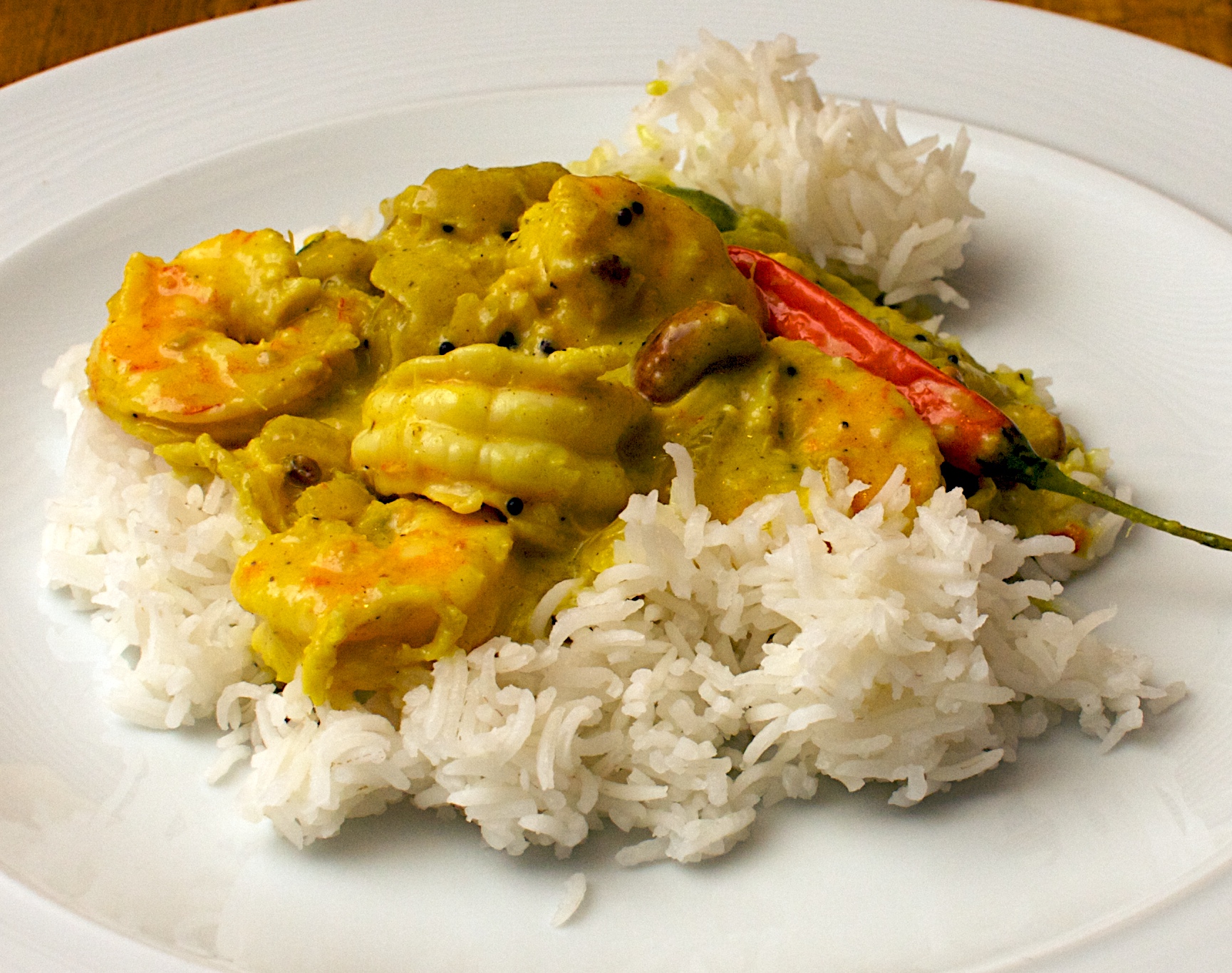
A really nice, mild prawn curry (if you don’t chew the chillies) and one we’ll do again as it was so tasty. Serve with some plain basmati rice.

Prawn and Cashew Nut Curry – to serve 4

  • 30g peeled fresh root ginger, roughly chopped
  • 6 fat garlic cloves, halved
  • 5 tbsp vegetable oil
  • 60g raw cashew nuts
  • scant 1/2 tsp fenugreek seeds
  • scant 1 tsp mustard seeds
  • 1 onion, sliced
  • 1 rounded tbsp ground coriander
  • 3/4 tsp turmeric
  • generous 3/4-1 tsp ground black pepper
  • 1 tsp ground cumin
  • 4-6 red or green chillies, or to taste, leave them whole or slit them for more heat
  • 400ml creamy coconut milk
  • 2 tbsp white wine vinegar
  • 350g large raw prawns shelled, deveined and rinsed

Blend the ginger and garlic to a fine paste, adding a bit of water to help (we used a stick blender). Heat 1 tsp of the oil in a non-stick saucepan; add the nuts and stir-fry until golden. Remove with a slotted spoon, toss in little salt and set aside.

Add the remaining oil to the pan and when hot add the fenugreek and mustard seeds. Let them pop for a minute and add the onion when they start to calm down, cook gently until soft. Add the ginger and garlic paste and cook until any excess moisture is gone, then reduce the heat to low and stir for a couple of minutes until the garlic smells cooked.

Add the spices and chillies, some salt and a splash of water. When the water has dried up add 250ml of the thinner part of the coconut milk (skim off the creamier stuff at the top of the can and keep for later), 100ml water and the vinegar.

Bring to a boil and simmer for 10 minutes. Taste and adjust seasoning – if the garlic still tastes raw then leave for another 5 minutes before checking again.

Add the prawns and cook until opaque; about 3 minutes should do it. Stir in the remaining, thicker coconut milk and the nuts.

Wine Suggestion: Indian food is notoriously difficult to pair wine with, a Pinot Blanc or Pinot Gris should give nice pure fruit with not too high acidity and it should match the aromatic flavours in the curry – maybe avoid the whole chillies!

(Original recipe from Anjum Anand’s I ♥ Curry, Quadrille, 2010.)

Read Full Post »