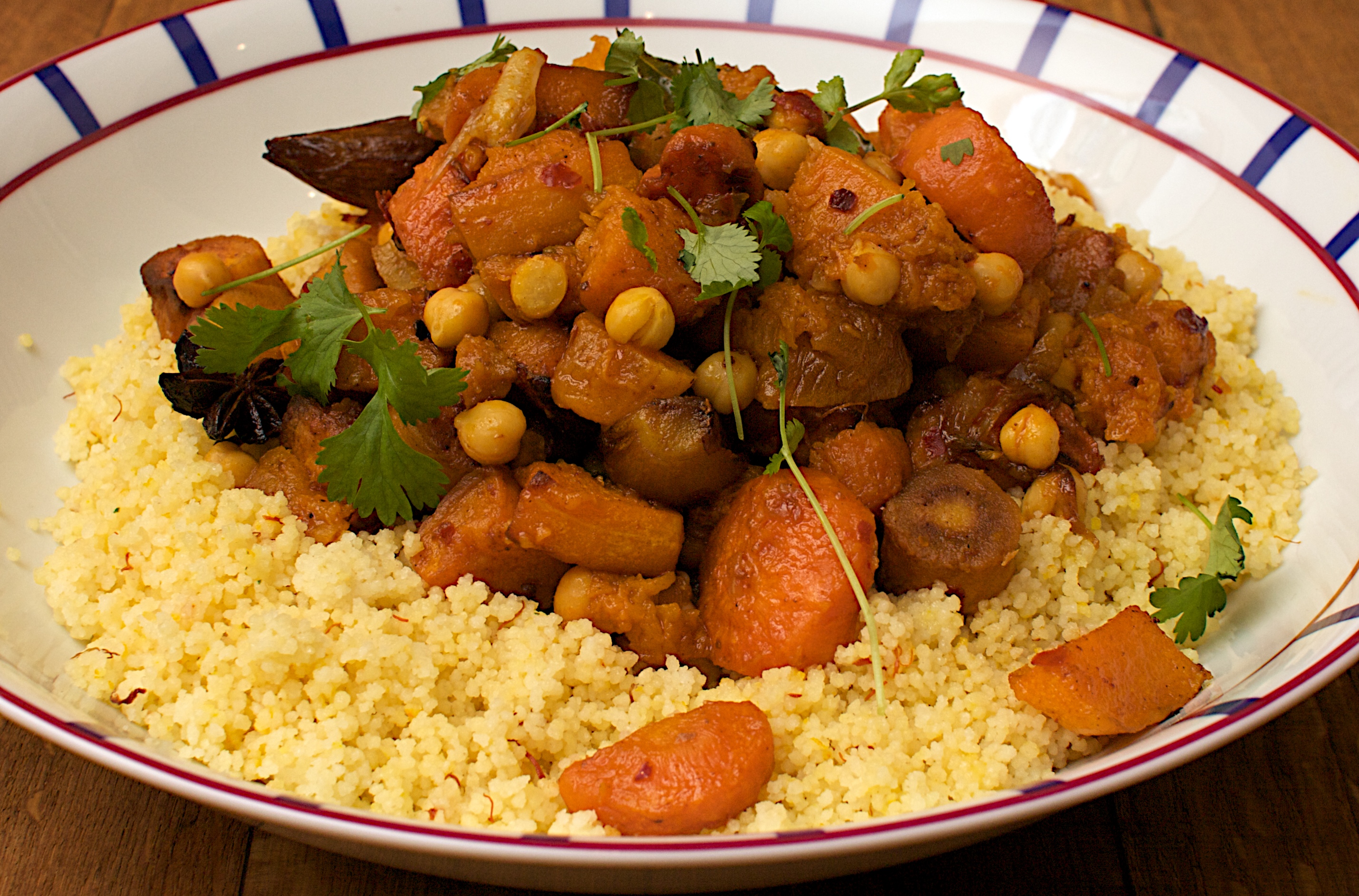
Another fantastic vegetarian recipe by Yotam Ottolenghi with fabulous flavours and interesting textures. This was so good we made it twice in one week.
The ultimate winter couscous – to serve 4
- 2 medium carrots, peeled and cut into 2 cm chunks
- 2 medium parsnips, peeled and cut into 2cm chunks
- 8 shallots, peeled
- 2 cinnamon sticks
- 4 star anise
- 3 bay leaves
- 5 tbsp olive oil
- 1/2 tsp ground ginger
- 1/4 tsp ground turmeric
- 1/4 tsp hot paprika
- 1/4 tsp chilli flakes
- 300g pumpkin or butternut squash, peeled and cut into 2 cm chunks
- 75g dried apricots, roughly chopped
- 200g chickpeas (tinned are fine)
- 350ml water
- 170g couscous
- large pinch saffron threads
- 260ml boiling vegetable stock
- 20g butter, cut into pieces
- 25g harissa paste
- 25g preserved lemon skin, finely chopped
- 30g coriander
- salt
Preheat the oven to 190ºC/Gas Mark 5. Put the carrots, parsnips and shallots in a large ovenproof dish. Add the cinnamon sticks, star anise, bay leaves, 4 tbsp of the oil, 3/4 tsp salt and all the other spices and mix well. Put in the oven and cook for 15 minutes.
Add the pumpkin, stir and return to the oven. Cook for another 35 minutes or until the vegetables are soft but still have a bit of a bite. Add the apricots and the chickpeas and water. Put it back into the oven for another 10 minutes or until hot.
About 15 minutes before the vegetables are done, put the couscous in a large heatproof bowl with the last tablespoon of olive oil, the saffron and 1/2 tsp of salt. Pour the boiling stock over the couscous. Cover the bowl with cling film and leave for about 10 minutes. Then add the butter and fluff with a fork until it has melted in. Cover again and keep warm until the vegetables are ready.
To serve, spoon the couscous into a deep plate or bowl. Stir the harissa and preserved lemon into the vegetables; season with salt if necessary. Spoon the vegetables onto the centre of the couscous and finish with lots of coriander.
Wine Suggestion: While spices are usually hard to pair with wine, the aromatic quality of this dish would work well with a good, off-dry Pinot Gris from Alsace (the good producers put a handy sweetness scale on the side of their bottles). Alternately a juicy grenache with softer, ripe tannins and a velvety spice would taste good too if you’d like a red. Try to find a grenache based Priorat from Spain if you want to push the boat out a bit!

(Original recipe from Yotam Ottolenghi’s Plenty, Ebury Press 2010.)

 Jono & Jules do food & wine
Mmm that looks fantastic! Don’t forget the vegan tag.