Feeds:
Posts
Comments

Archive for February, 2014

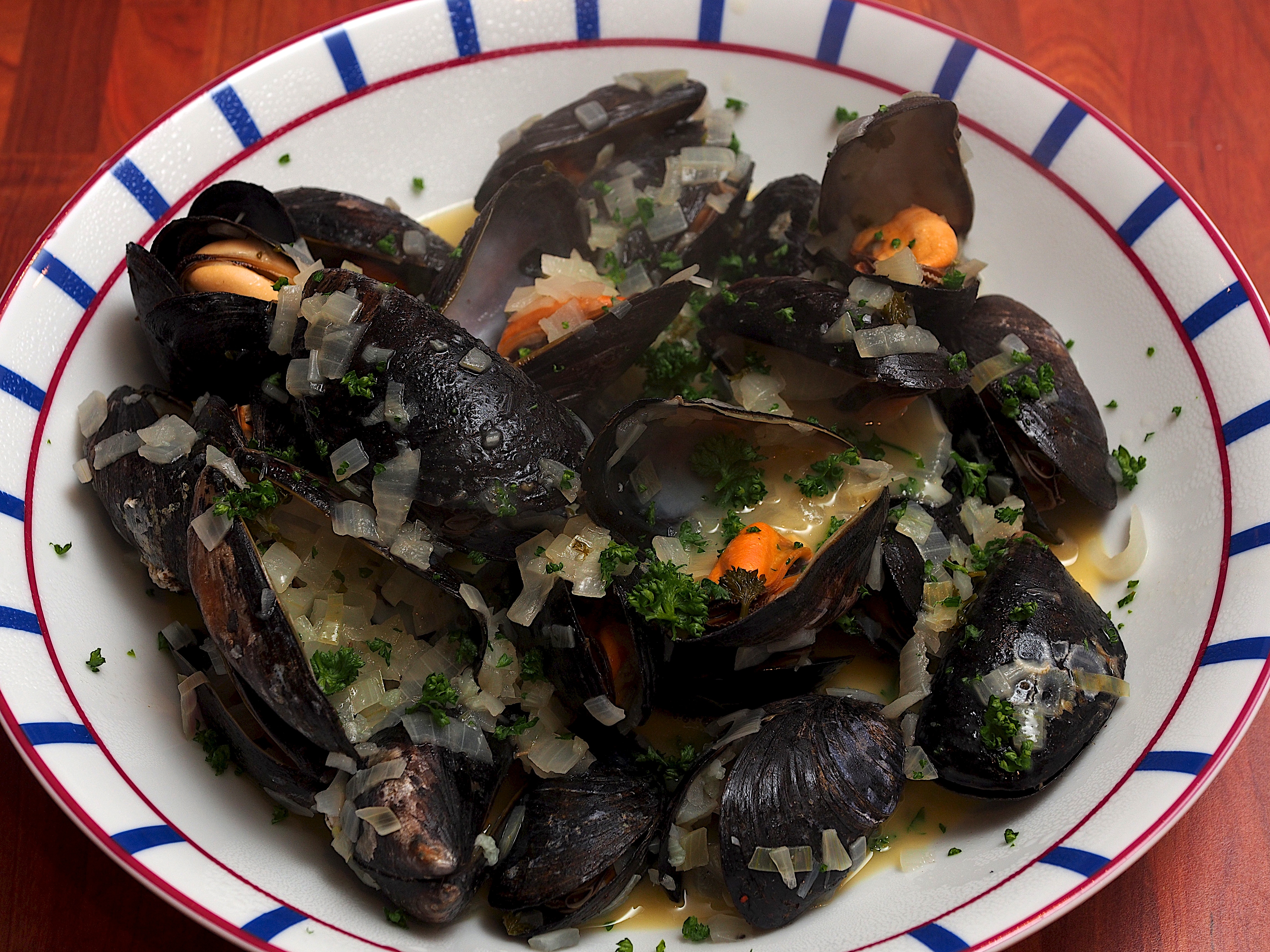
Moules Marinière

We love this Normandy classic and have been known to make Moules Marinières as an impromptu supper served with some skinny fries or crusty bread. No other dish is as reminiscent of holidays in France and mussels are also very cheap. What could be better? 

Wine Suggestion: You can’t go wrong with a good old Muscadet here. Just the thing to complement the dish and shouldn’t blow the budget. Unfortunately Muscadet has had a few good quality but low quantity vintages so it may be a bit more scarce than usual. 

Moules Marinière – to serve 4

  • 2kg mussels
  • 1 onion, finely chopped
  • 2 shallots, finely chopped
  • 2 garlic cloves, crushed
  • a small handful of parsley, roughly chopped
  •  50g butter, chilled
  • 150ml water
  • 150ml dry white wine

Melt half the butter in a large saucepan, add the onion and shallots and sweat for about 10 minutes or until soft. Add the garlic and cook for 1 minute, then add the water, wine and half the parsley and simmer for 5-10 minute. 

Add the mussels, cover the pan quickly with a tight lid and cook over a high heat for 5 minutes, giving the pan a good shake occasionally. Check if the mussels are open, if most of them are still closed, cover and cook for another minute or two, or until opened. 

Drain the mussels in a colander over a bowl to catch the liquid and discard any that haven’t opened. Cover the mussels with a pan lid to keep them warm. Pour the mussel liquid back into the pan and boil until it has a strong concentrated flavour. Reduce the heat. 

Cut up the remaining butter into small pieces and whisk into the sauce, piece by piece. Taste and season. 

Transfer the mussels to a serving bowl, pour over the sauce and sprinkle with the remaining parsley. 

(Original recipe from Leiths: How to Cook, Quadrille, 2013.)
Read Full Post »

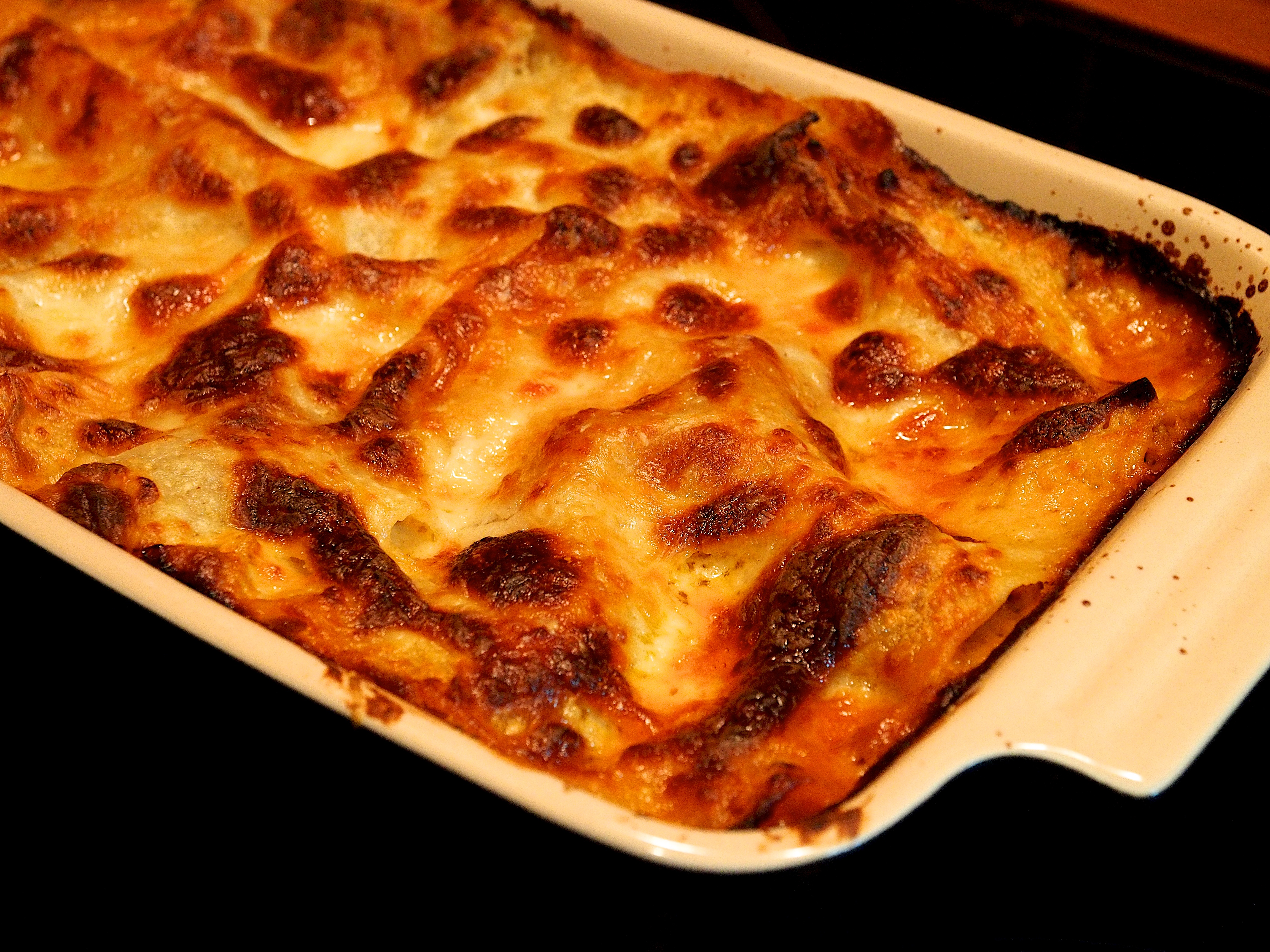
This recipe comes in two parts, with the first an easy to make a Bolognese Ragù which tastes good but is not really exciting or flavour-packed like we like. When created into a lasagne, however, it really sings with a perfect balance of flavour.

The recipe takes a while, but is actually quite easy, especially if you make the ragù the day before. We made two lasagne this time which served eight people over two days amply. Alternately, make a big tray of it for a larger crowd.

Ragù – serves 6-8

  • 3 tbsp olive oil
  • 1 large onion, finely diced
  • 3 cloves of garlic, crushed
  • 3 sticks of celery, finely diced
  • 1 leek, finely diced
  • 1 kg minced beef/pork (or half and half)
  • 1 bay leaf
  • 2 x 400g tins chopped tomatoes
  • 2 tbsp tomato purée
  • 200ml white or red wine
  • 2-3 tbsp sugar

Preheat the oven to 150ºC/300°F/Gas mark 2.

Put a large ovenproof casserole on a medium heat and heat the olive oil. Tip in the onion, garlic, celery and leek. Season with salt and pepper and cook for 8-10 minutes or until softened. Turn the heat to high, add the meat and stir to break up, cooking until there are no longer any pink bits.

Add the bay leaf with the chopped tomatoes, tomato purée, wine and sugar, and bring to the boil. Cover with a lid and cook for about 1 hour in the oven. Season to taste.

Lasagne – serves 6-8

  • 1 quantity of cooked ragù
  • 12-16 sheets of pre-cooked dried lasagne
  • 100g Cheddar cheese, grated
  • 50g Parmesan, grated

FOR THE CHEESE SAUCE 

  • 70g butter
  • 70g plain flour
  • 1 litre milk
  • 200g Cheddar cheese, grated
  • 1 tsp Dijon mustard

Preheat the oven to 180°C/350°F/Gas mark 4.

First make the cheese sauce. Melt the butter in a saucepan over a medium heat, then whisk in the flour and cook, stirring often, for 1 minute. Gradually pour in the milk and bring to the boil, whisking continuously until the sauce is thickened. Remove from the heat and whisk in the cheese and mustard, seasoning with salt and pepper, then set aside.

Put a thin layer of ragù in the bottom of an ovenproof dish (20 x 30cm), cover with a layer of the cheese sauce, then add lasagne sheets to cover, in a single layer. Repeat this process, finishing with a layer of pasta topped with cheese sauce only.

Sprinkle over both cheeses and bake in the oven for 45-50 minutes or until golden brown and bubbling.

(Original recipe from Rachel’s Everyday Kitchen by Rachel Allen, HarperCollins, 2013.)

Read Full Post »

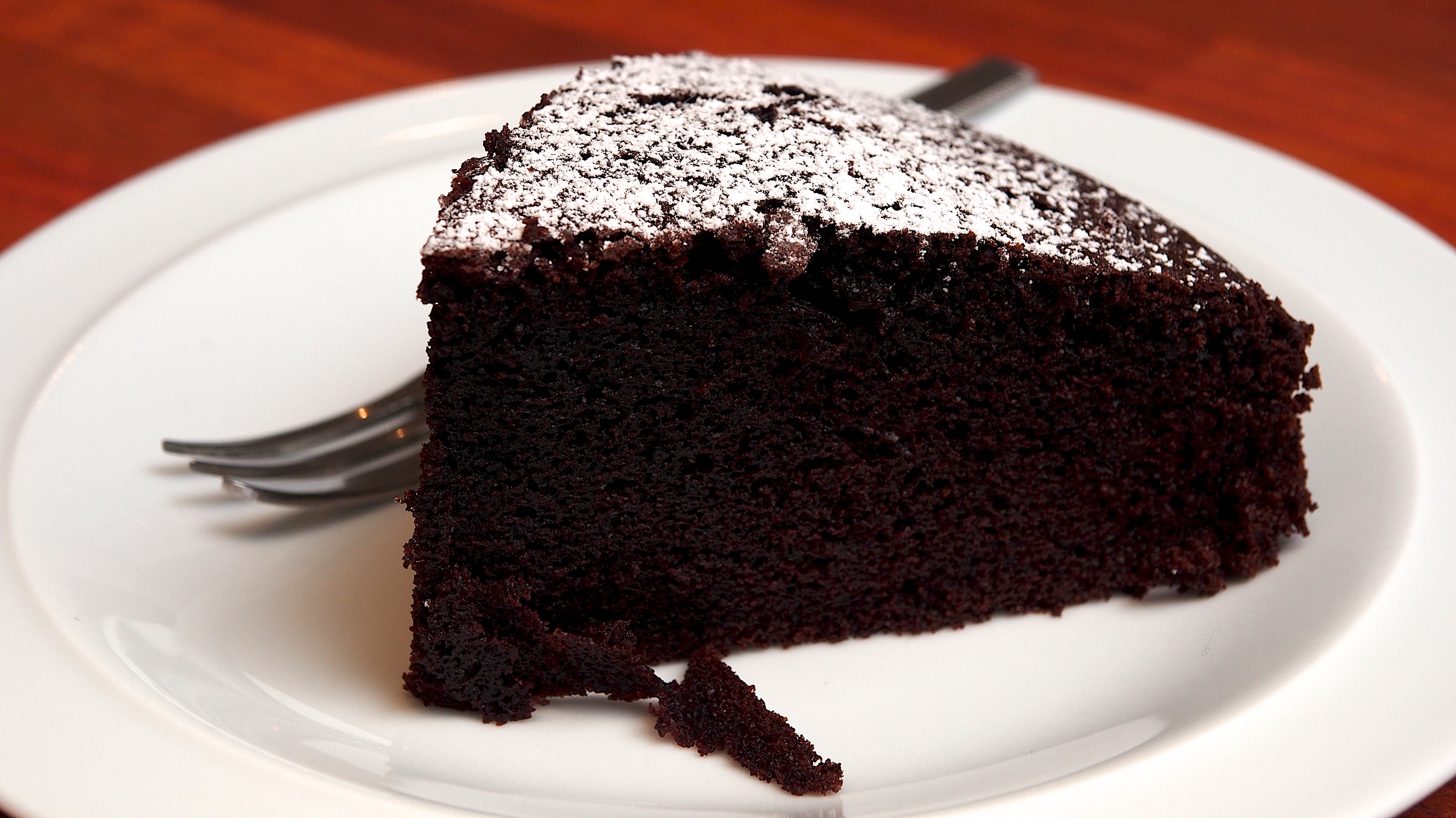
We gave each other a food mixer for Christmas and hence have baked more cakes in the last month than we’ve made in all our years of blogging. This one can be mixed up really quickly and can be made wheat-free for our coeliac friends with no adverse affect. We made this example with wheat; the wheat-free version which substitutes nuts (ground almonds) for the flour is  more squidgy and dessert-like.

Chocolate Olive Oil Cake 

  • 150ml olive oil (not extra virgin), plus extra for greasing
  • 50g good quality cocoa powder
  • 125ml boiling water
  • 2tsp vanilla extract
  • 125g plain flour (OR 150g ground almonds)
  • ½ tsp bicarbonate of soda
  • a pinch of salt
  • 200g caster sugar
  • 3 large eggs

Preheat the oven to 170ºC/Gas 3/325ºF.

Grease a 22 or 23cm springform tin with a little olive oil and line the base with baking parchment.

Sift the cocoa powder into a bowl and whisk in the boiling water to give a smooth paste. Whisk in the vanilla extract and set aside to cool a little.

In another bowl, combine the flour (or ground almonds) with the bicarbonate of soda and a pinch of salt.

Put the sugar, olive oil and eggs into the bowl of a freestanding mixer with the paddle attachment (or use whatever bowl and whisk you have) and beat vigorously for about 3 minutes until you have a pale yellow and thickened cream.

Turn down the speed a little and add the cocoa mixture. When this is mixed in, add the flour (or ground almond) mixture.

Scrape down and stir a little with a spatula, then pour into the prepared tin. Bake for 40-45 minutes or until the sides are set and the very centre still looks slightly damp. A skewer inserted into the cake should come out mostly clean.

Cool on a wire rack, still in the tin, for 10 minutes before easing the sides gently away with a metal spatula and springing out of the tin. Leave to cool completely and serve with cream and berries or eat while still warm with ice-cream.

(Original recipe from Nigella.com)

Read Full Post »

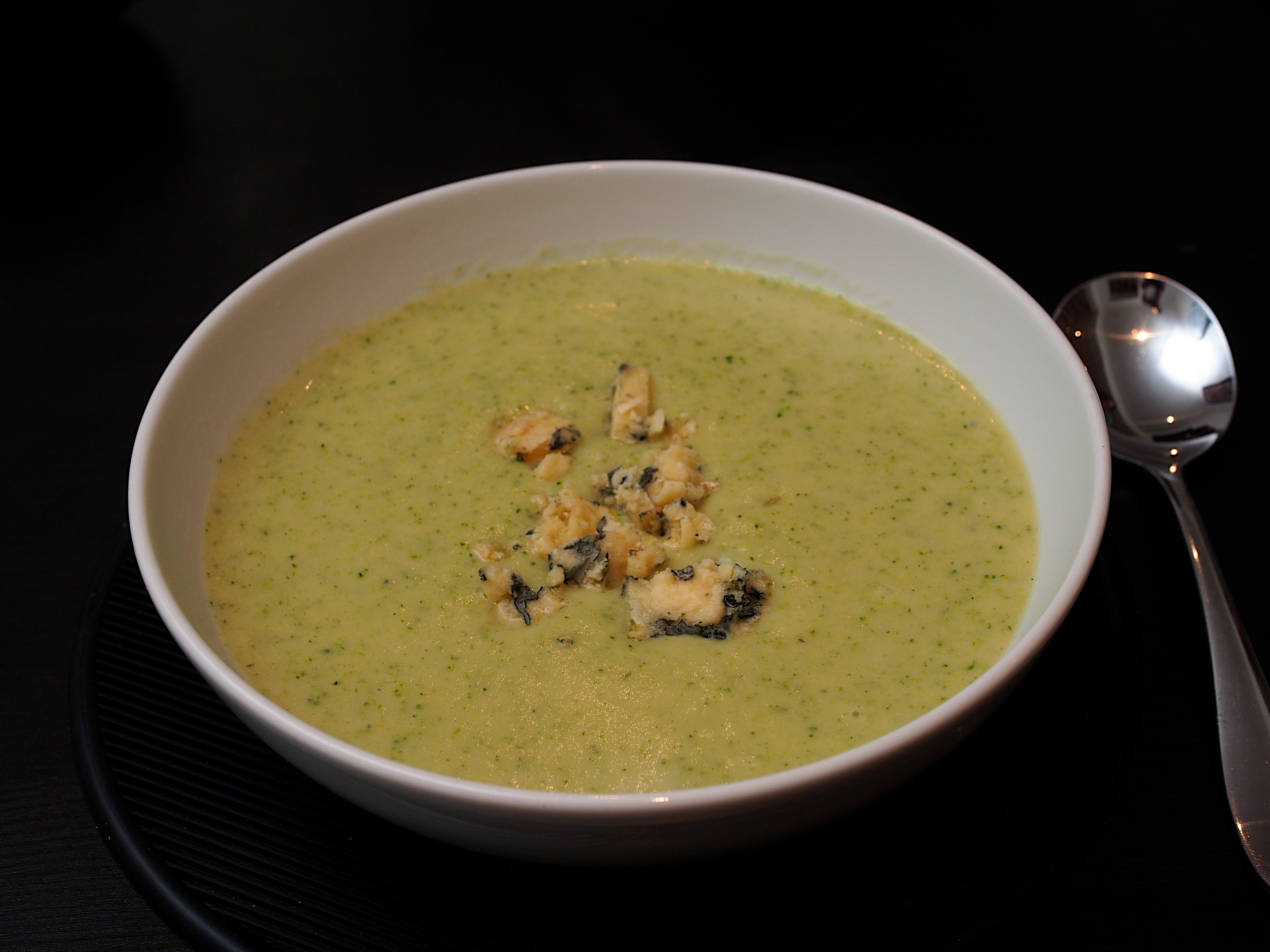
We love cheese after dinner but it seems a bit indulgent during the week and therefore we inevitably end up with chunks of cheese lurking in the back of the fridge. We try our best not to waste any food but something as expensive and delicious as cheese (particularly the cheese pantry stuff as opposed to the supermarket plastic-wrapped kind) is even more of a travesty to not use. That’s when recipes like this one are perfect for a mid-week treat without having to indulge in a two-course evening meal.

Broccoli & Stilton Soup – to serve 4

  • 2 tbsp flavourless oil
  • 1 onion, finely chopped
  • 1 stick of celery, sliced
  • 1 leek, sliced
  • 1 medium potato, diced
  • a knob of butter
  • 1 litre of good chicken or vegetable stock
  • 1 head of broccoli, roughly chopped (including stalks)
  • 140g Stilton (or other blue cheese), crumbled

Heat the oil in a large saucepan and cook the onions until soft but not coloured. Add a splash of water if they start to catch.

Add the celery, leek, potato and butter. Stir until the butter melts, then cover with a lid and sweat for 5 minutes.

Pour in stock and add any chunks of broccoli stalk. Cook for 10-15 minutes or until the vegetables are soft.

Add the remaining broccoli and cook for another 5 minutes. Whizz until smooth, then stir in the stilton. Season with black pepper (you are unlikely to need salt) and serve.

(Original recipe from BBC Good Food)

Read Full Post »

This is a classic French side dish which remarkably improves steamed carrots and we find impresses guests too despite being easy to cook.

Vichy carrots – serves 4

  • 6-8 carrots
  • 15g butter
  • small pinch of salt
  • 1 tsp caster sugar
  • few mint sprigs
  • few parsley sprigs
  • black pepper

Peel the carrots and cut into batons.

Put the butter, salt and sugar in a saucepan and heat gently. Stir in the carrots and add enough water to come halfway up.

Increase the heat to medium and partially cover. Simmer until the carrots are tender and most of the water has evaporated.

Turn down the heat and remove the lid. Reduce the remaining liquid to a glaze, stirring to ensure the carrots are evenly coated and don’t stick.

Finely chop the mint and parsley – you need about a ¼ tsp of each. Season with pepper, stir in the herbs and serve.

(Original recipe from Leiths How to Cook, Quadrille Publishing Limited, 2013)

Read Full Post »