Feeds:
Posts
Comments

Archive for October, 2023

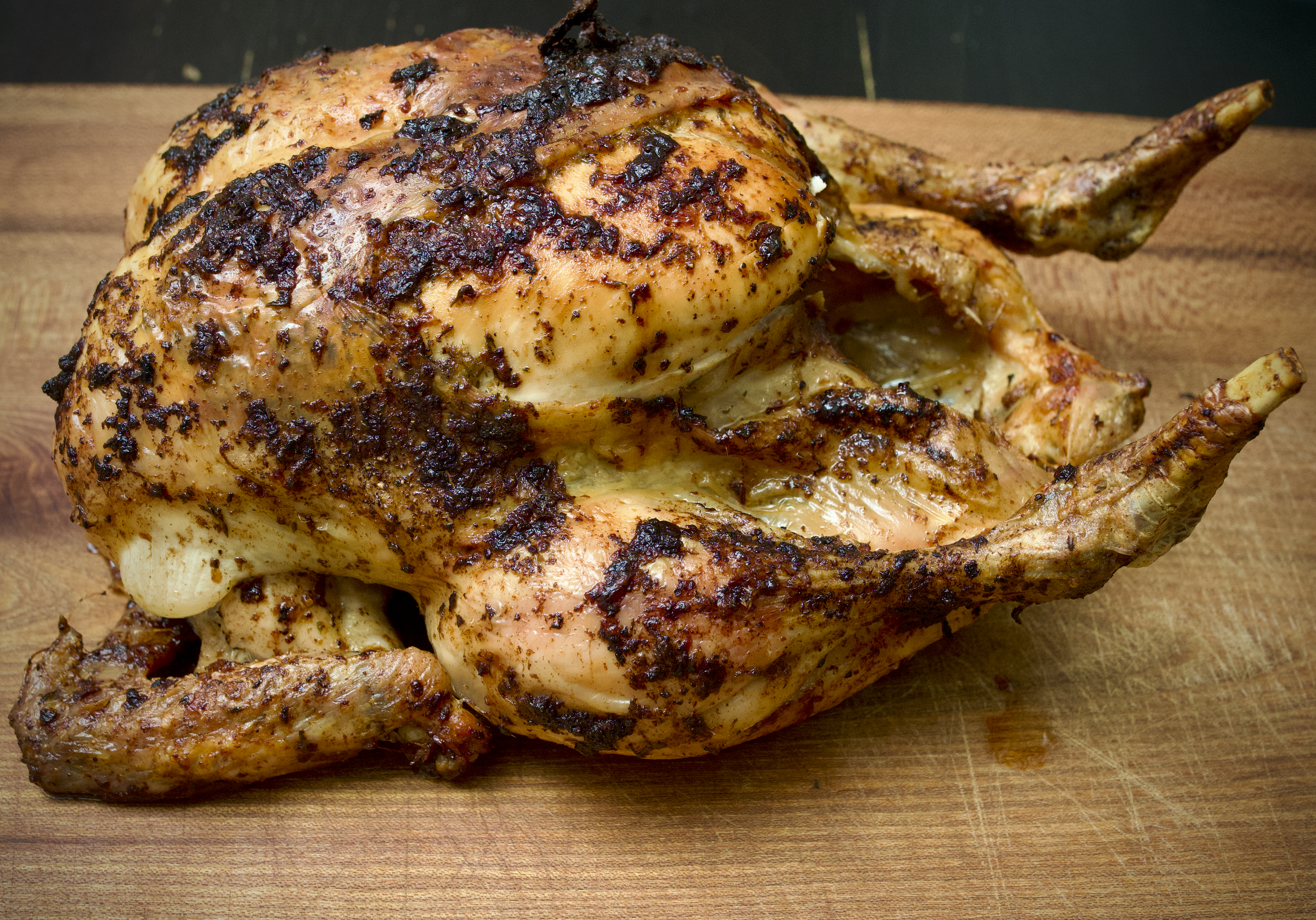
It’s the classic roast chicken but this time with fresh and preserved lemon. Yummy!

Wine Suggestion: We have a bit of a thing for dry Loire Chenin Blanc and were fortunate to visit Jacky Blot from Domaine de la Taille aux Loups earlier this year. Although he passed away not long after our visit, being able to taste the results of his work in a glass really keeps his memory alive. We opened a bottle of his Vin de France “Clos de la Bretonniere” with this dinner and were transported back to the tasting room and the couple of hours we spent with Jacky. A vibrantly dry Vouvray with tension and tautness in abundance and layers of minerally fruit, it paired beautifully with the roast chicken. Salut Jacky!

Roast chicken with preserved lemon – serves 4

  • 70g butter, softened
  • 3 tbsp thyme leaves
  • 3 cloves of garlic, crushed
  • 1 small preserved lemon, pips discarded and flesh and skin roughly chopped
  • 1 lemon, zest finely grated, plus 1½ tbsp of juice
  • 1 whole chicken

Heat the oven to 190C fan.

Put the butter, thyme, garlic, preserved lemon, lemon zest, ¼ tsp of salt and plenty of black pepper in a food proessor and blitz to combine.

Loosen the chicken skin over the breasts (careful not to tear it) and spread most of the butter mixture underneath. Spread the rest over the legs.

Put the chicken into a roasting tin and drizzle with the lemon juice and sprinkle over ½ tsp of salt and plenty of black pepper.

Roast the chicken for 20 minutes per 500g plus an extra 10 minutes, until the skin is golden brown and the juices run clear. Baste every 20 minutes as it cooks.

Remove from the oven and leave to rest for 10 minutes before serving.

(Original recipe from Ottolenghi Simple by Yotam Ottolenghi, Tara Wigley and Esme Howarth, Ebury Press, 2018.)
Read Full Post »

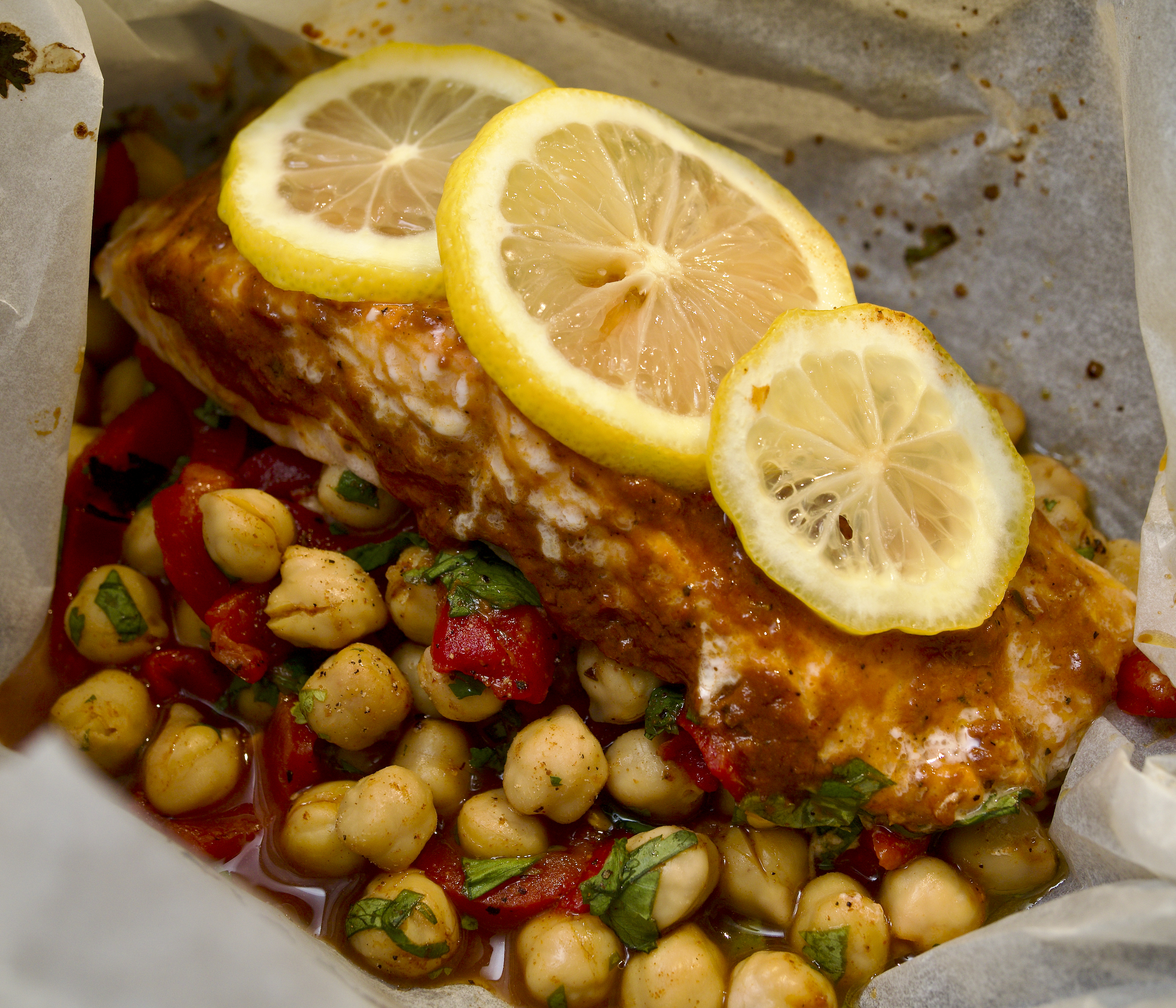
This is very much a weeknight dish but it’s suprisingly good. Baking in a bag means very few dishes to wash which always helps. Serve with a green salad.

Wine Suggestion: try to find a good Vermentino with a medium body, not the richer ones with higher alcohol like you sometimes find from Sardinia and similar. A favoured one at the moment is Domaine Ventenac’s “les Dissidents” Cassandre from Cabardes in southern France.

Baked salmon with harissa and chickpeas – serves 2

  • 1 unwaxed lemon
  • 1 x 400g tin chickpeas, drained and rinsed
  • 1 tsp smoked paprika
  • 1 tsp clear honey
  • 3 tsp harissa paste
  • 150g roasted red peppers from a jar, sliced
  • 15g coriander, roughly chopped
  • 2 salmon fillets, skinned
  • 1 tsp olive oil

Heat the oven to 190C/170C fan/gas 5.

Tear off 2 large sheets of baking paper.

Halve the lemon and cut one half into thin slices.

Toss the drained chickpeas with the smoked paprika, honey, 1 tsp of the harissa paste, the peppers, most of the coriander and seasoning, then divide this between the two sheets of paper.

Season the salmon and spread each piece with 1 tsp of harissa, then place on top of the chickpeas and drizzle with the olive oil. Place the lemon slices on top, then fold over the edges to seal the parcels.

Put the parcels onto a baking tray and bake for 15 minutes or until the salmon is cooked. Open the parcels and scatter over the rest of the coriander, then serve with some salad on the side.

(Original recipe by Tom Mitchell-Dawson in Sainsbury’s Magazine, September 2023.)

Read Full Post »

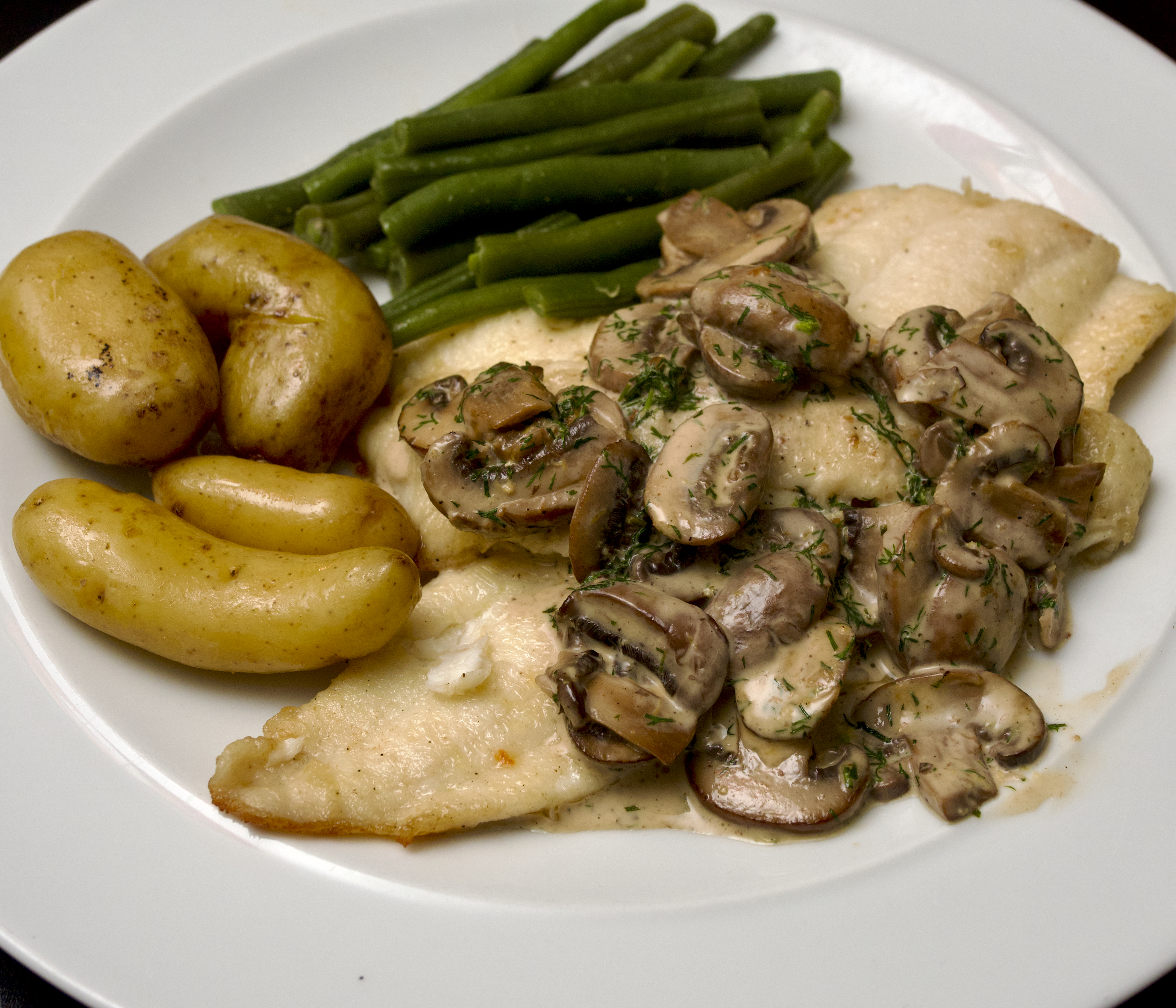
We are still a bit apprehensive when cooking fish and shy away from the simple methods that require last minute cooking. We shouldn’t do this as they tend to be the dishes that show the fish at its best. We managed to conquer this one anyhow.

Wine Suggestion: Served with Domaine Rochette Morgon Régnié Cuvée des Braves, a red fruited Beaujolais from this sensitive and thoughtful family making wine in a Cru that is often overlooked. I say… expand your horizons beyond Morgon and Fleurie! Rich, powerful, and aromatically exquisite.

Plaice with Creamy Mushroom Sauce – serves 4

  • 8 skinless, single plaice fillets (or 4 double fillets which you need to half lengthways)
  • 45g plain flour
  • 2 tbsp olive oil
  • 15g butter

FOR THE SAUCE:

  • 20g butter
  • 200g small chestnut mushrooms, thinly sliced
  • 1 clove of garlic, crushed
  • 120ml dry white wine
  • 170ml double cream
  • finely grated zest of 1 lemon
  • juice of ½ a lemon
  • 2 tbsp chopped dill

Pat the fish dry with kitchen paper. Sprinkle the flour onto a plate and season well with salt and pepper. Coat both sides of the fish fillets in the flour.

Heat 1 tbsp of the oil with the butter in a large non-stick frying pan over a medium-high heat. Add 4 of the fish fillets and fry for 1½ minutes-2 minutes or until golden. Gently turn and fry for another 1½-2 minutes on the other side. Careful not to let the butter brown. Transfer the fillets to a serving platter, cover with foil and keep warm while you cook the rest.

To make the sauce, melt the butter in the same frying pan. Add the mushrooms and fry over a medium-high heat for a few minutes, then add the garlic and fry for another minute or so. Pour in the wine, stir and bring to the boil. Simmer for a couple of minutes, then pour in the cream. Simmer, stirring, until the sauce thickens.

Stir in the lemon zest and juice, season with salt and pepper and add the dill. Spoon the sauce over and around the fish and serve with a few extra dill sprigs if you like.

(Original recipe from Mary Berry Cooks the Perfect, Penguin Random House Group, 2014.)

Read Full Post »

The sauce here is fairly spicy but well-tempered by the fishcakes and lots of white rice and some yoghurt if you like. The depth of flavour and balance is superb. You can cook the sauce and prep the kofta mixture in advance.

Wine Suggestion: this works with Grenache – Tempranillo blends, especially if they’re fruit forward and low/no oak like Jesus Romero’s Rubus from rural Aragon. We love this as it’s real hands-off winemaking at it’s best, capturing the essence and energy of the fruit in the vineyard.

Fish koftas in chilli and tomato sauce – serves 4

FOR THE KOFTAS:

  • 500g firm white fish without skin and bones, we used hake
  • 4 scallions, finely sliced
  • 10g dill, roughly choped, plus extra picked fronds to serve
  • 1 green chilli, deseeded and finely chopped
  • 1½ tsp finely grated lemon zest
  • 1 egg, beaten
  • 30g panko breadcrumbs
  • 3 tbsp olive oil

FOR THE TOMATO SAUCE:

  • 15g dried ancho chillies, stems removed
  • 2 tsp caraway seeds, toasted and roughly crushed
  • 1 tbsp cumin seeds, toasted and roughly crushed
  • 6 cloves of garlic, peeled
  • 1 onion, roughly chopped
  • 60m olive oil
  • 1 green chilli, halved and seeds removed
  • 1 tbsp tomato purée
  • 3-4 plum tomatoes, roughly grated and skins discarded
  • 300ml chicken stock or vegetable stock
  • 2 tsp caster sugar
  • 25g fresh coriander, roughly chopped

Make the sauce first. Put the dried chillies into a bowl and cover with lots of boiling water. Leave to soak for 20 minutes, then drain and discard the liquid and the seeds. Roughly chop the chillies and put them into a food processor with two-thirds of the caraway and cumin seeds, the garlic, the onion and 2 tbsp of the oil. Whizz until you have a coarse paste.

Heat 2 tbsp olive oil in a large sauté pan, then add the chilli paste, green chilli and tomato purée. Cook for 7 minutes, stirring frequently, until soft and fragrant. Add the tomatoes, stock, 200ml water, sugar, half the coriander, 1¼ tsp of salt and a good grind of pepper and bring to the boil. Lower the heat and simmer for 15 minutes, then keep warm until needed (or cool and re-heat later).

Meanwhile, make the koftas. Finely chop the fish into ½-1cm pieces. Put them into a large bowl with the scallions, dill, chilli, lemon zest, egg, panko, the rest of the coriander, the remaining caraway and cumin, 1 tsp of salt and plenty of black pepper and mix well to combine. Form into 12 round fish cakes, pressing to compact them so they don’t fall apart.

Heat 1½ tbsp of oil in a large frying pan over a medium-high heat. Add half the koftas and cook for 2½ minutes on each side, or until golden. Transfer to a plate, then repeat with the rest of the koftas.

Bring the sauce to a simmer. Add the koftas, then turn the heat to medium low and cook for 10 minutes. Leave to sit for 5 minutes, then serve with the extra dill.

(Original recipe from Ottolenghi Test Kitchen, Shelf Love by Noor Murad & Yotam Ottolenghi, Ebury Press, 2021.)

Read Full Post »

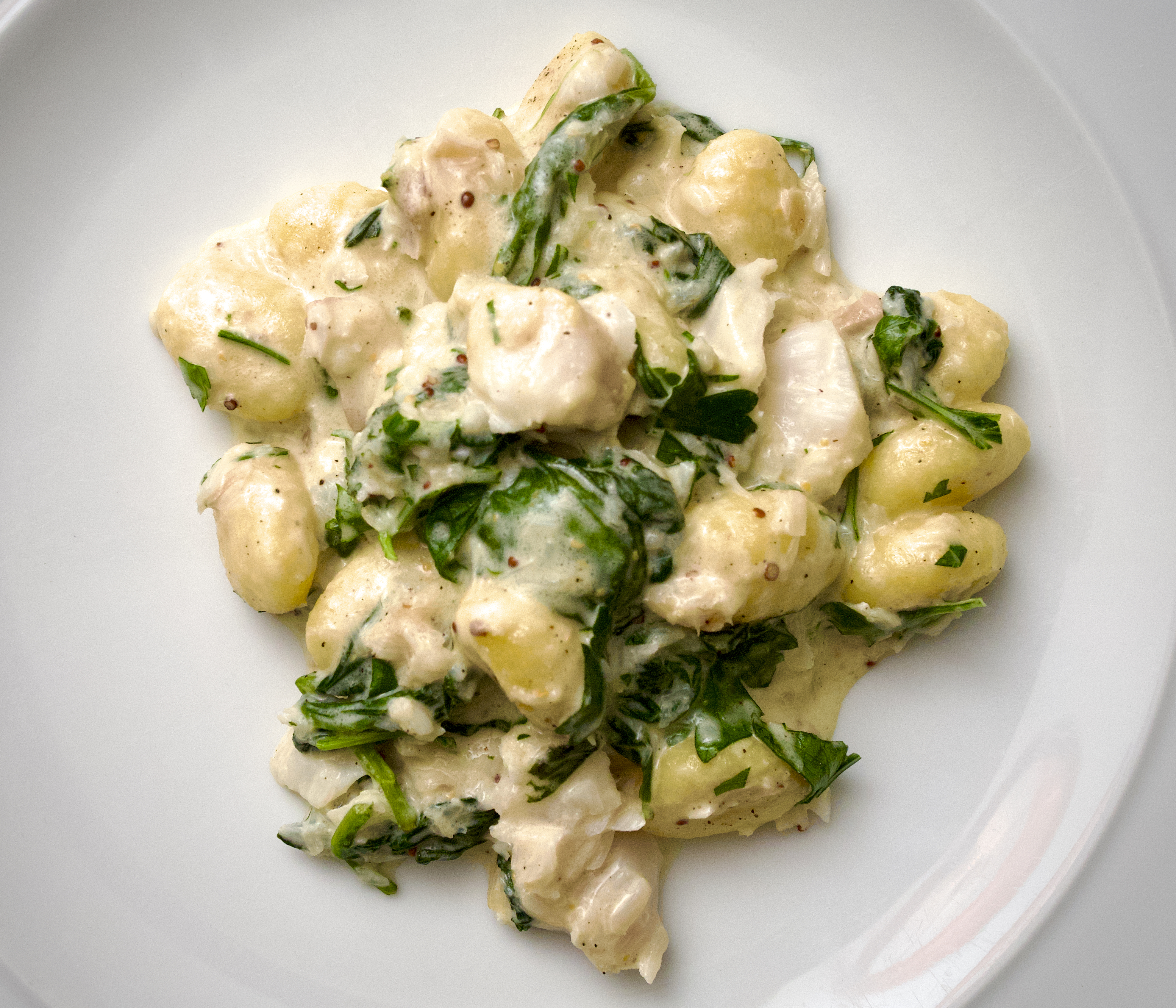
We had planned to cook this outside on a fire pit until Jono lit a blazing inferno and scared us off. It was the excitement of being outside after a year of rain! A simple dish and such a treat.

Wine Suggestion: We just think smoked haddock and a good, oaked Chardonnay are a match, with some of the best value and superb quality coming from the new world. Tonight was Neudorf’s Tiritiri Chardonnay which was elegant and rounded, with a supreme balance, hints of smoky oak and layers of texture, nuts and finishing fresh and vibrant. Under-rated and such a treat.

Smoked haddock and spinach gnocchi – serves 2

  • 100ml double cream
  • a few big handfuls of young spinach, roughly chopped
  • 200g skinless smoked haddock fillet, cut into bitesize pieces
  • 200g fresh gnocchi (from the fridge section)
  • 1 tsp grainy mustard
  • 25g mature cheddar cheese, grated
  • a handful of flat-leaf parsley, leaves picked and chopped

Put a large, deep frying pan over a medium-high heat.

Pour the cream into the pan with a few tablespoons of water. Add the spinach and fish and cook for a minute or two. Add the gnocchi, mustard and cheese and stir gently. Add a bit more water if the sauce is too thick.

When everything is heated through, remove the pan from the heat and add plenty of black pepper. Sprinkle with the chopped parsley to serve.

(Original recipe from Outside by Gill Meller, Quadrille, 2022.)

Read Full Post »

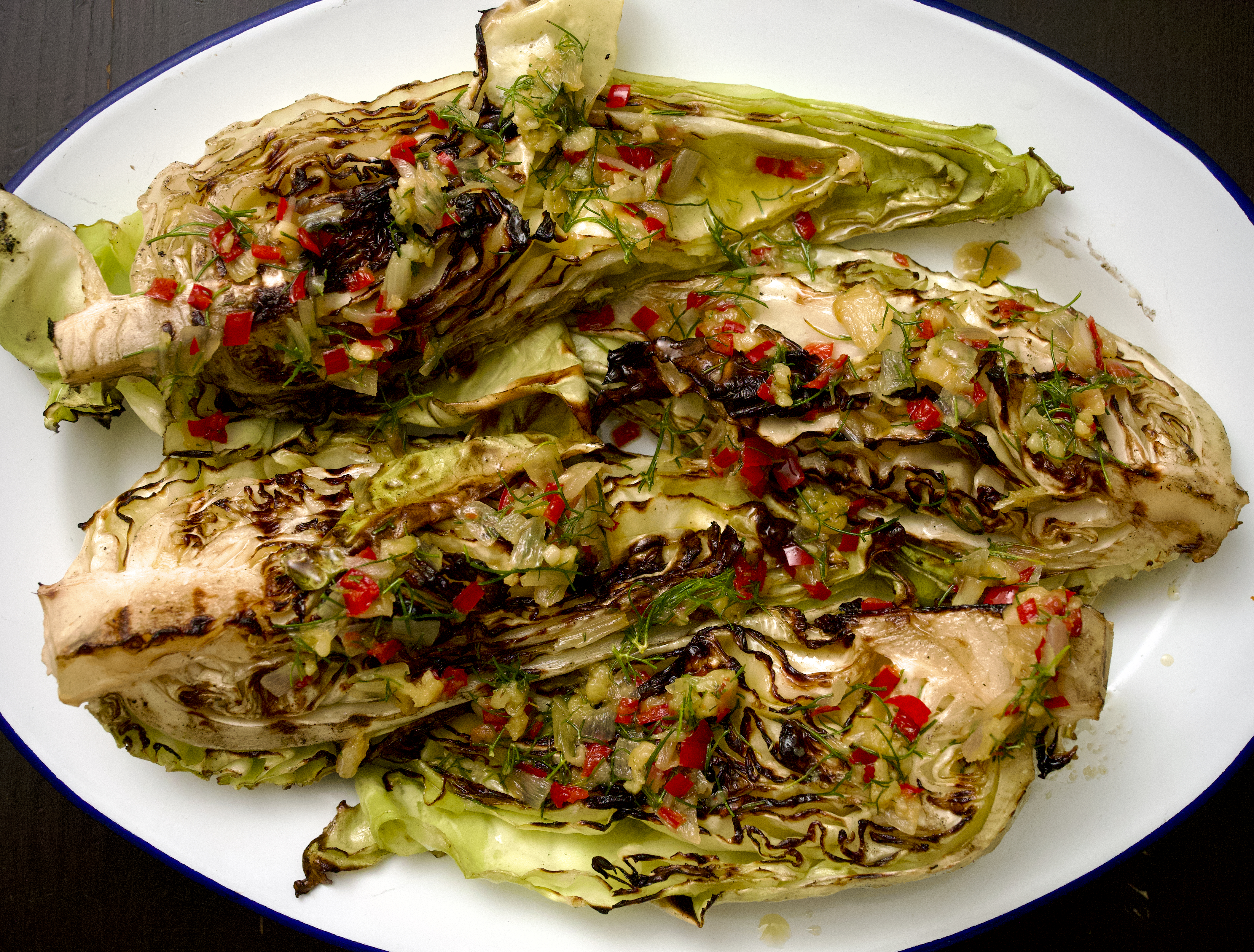
Typing this recipe to the sound of lashing rain and howling wind but better weather is coming and you might be inspired to barbecue a cabbage. You will be very glad you did.

Barbecued cabbage with chilli and garlic butter – serves 2 as a side

  • 1 pointed/hispi cabbage, cut into 4 wedges
  • 2 tbsp olive oil

FOR THE DRESSING:

  • 1 long shallot, peeled and finely chopped
  • 1 red chilli, halved, desseded and finely sliced
  • 3 cloves of garlic, peeled and crushed
  • 50g butter
  • ½ tsp flaky sea salt
  • a small bunch of dill, fronds roughly chopped

Brush the cut surfaces of the cabbage wedges with the olive oil, then set them cut-side down on a very hot barbecue to char for about 4 minutes. Turn to char the other cut surface for 4 minutes, then set the wedges on the rounded sides for a final 4 minutes. Remove to a platter and sprinkle with flaky sea salt.

Meanwhile, combine the shallots, chilli and garlic with the butter and put over a low heat to melt the butter and lightly cook the vegetables. Cook for about 12-14 minutes or until the shallots are soft and translucent. Remove from the heat and mix in the salt and chopped dill. Pour the butter dressing over the warm cabbage and serve.

(Original recipe from Chasing Smoke: Cooking Over Fire Around the Levant by Sarit Packer and Itamar Srulovich, Pavilion, 2021.)

Read Full Post »

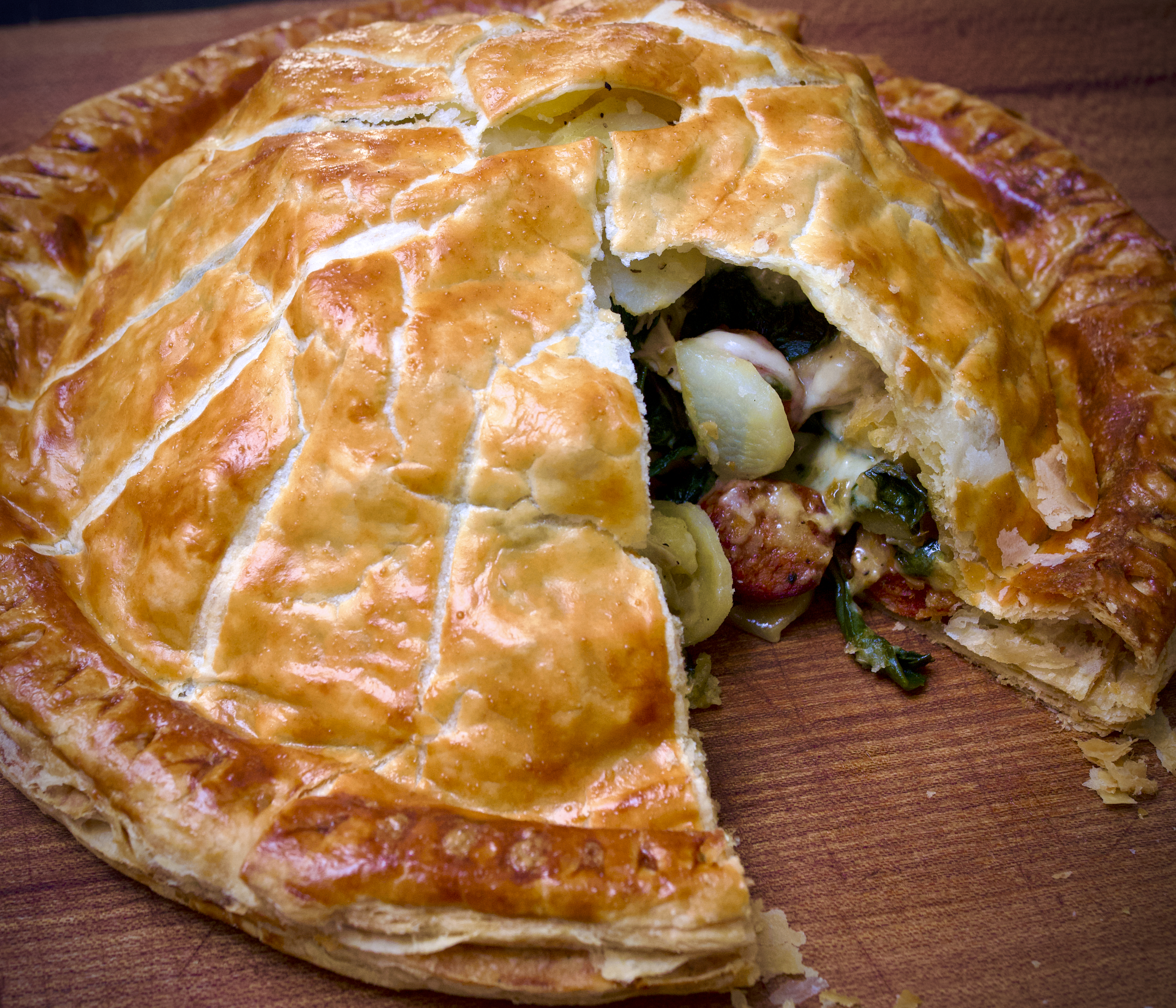
There are a few bits to this but it’s not complicated – trust the process and start the night before, dinner will be easy tomorrow. Serve with a green salad.

Wine Suggestion: We think this dish works really well with a fruit forward, medium bodied red like a Grenache. We’re particularly enamoured at the moment by Jesus Romero’s Rubus, a Garnacha Tempranillo blend made with minimal intervention. Good grapes that ferment themselves in tank, then left to settle for a few months and bottled with a touch of sulphur to keep it stable. Pure brambly red fruits with a purple fruited core, gentle spices and tannins and an easy, but complex nonetheless, finish.

Chicken, chorizo & spinach pie – serves 6

  • 1 tbsp olive oil
  • 125g cooking chorizo or chorizo ring, skin removed and chopped
  • 2 onions, thinly sliced
  • 3 cloves of garlic, crushed
  • 250g baby spinach
  • 200g leftover roast chicken, shredded
  • 4 tbsp crème fraîche
  • 500g Maris Piper or similar potatoes
  • 2 x 320g sheets ready-rolled puff pastry
  • plain flour, for dusting
  • 125g mature cheddar cheese, grated
  • 1 egg, beaten

Make the filling first. Heat the olive oil in a large pan over a medium heat and cook the chorizo for a few minutes or until the oil is released. Add the onions, season and cook for 10 minutes or until soft and starting to caramelise.

Add the garlic and cook for a couple of minutes, then add the spinach in batches, stirring until wilted. Remove the pan from the heat and add the chicken and crème fraîche. Season to taste, then tip into a bowl and leave to cool, then chill in the fridge.

Peel the potatoes and thinly slice. Boil in salted water for about 5 minutes or until tender. Use a slotted spoon to remove the potato slices from the water and set onto a cloth-lined tray to dry and cool.

Unroll one of the pastry sheets on a floured surface and roll out to make a square shape, transfer to a lined baking sheet and cut out a 28cm diameter circle (a dinner plate will help with this). Chill in the freezer for 5 minutes to firm up.

Season the potatoes and lay a quarter of them onto the pastry circle, leaving a 2.5cm border around the edge. Next add a thrid of the chicken and chorizo mixture, then a third of the cheese. Repeat these layers, gradually forming a dome shape and finishing with a layer of potatoes.

Brush beaten egg all around the border.

Next, roll out the second sheet of pastry and drape over the top. Smooth over the filling and press the edges together to seal, then trim off the excess pastry and crimp the border. Brush with the egg and chill again – you can cook the pie at this stage or you can leave it in the fridge until tomorrow.

Heat the oven to 200C/Fan 180C/Gas 6.

When the oven is heated, brush the pie again with the remaining egg and score gently down the sides with a sharp knife. Cut a small hole in the top to let out the steam.

Bake for 15 minutes, then reduce the temperature to 180C/Fan 160C/Gas 4 and bake for a further 40 minutes or until golden brown and piping hot throughout (especially important if you’ve had it in the fridge for a long time). Rest for about 5 minutes before slicing.

(Original recipe by Tom Mitchell-Dawson in Sainsbury’s Magazine, September 2023.)

Read Full Post »