Feeds:
Posts
Comments

Archive for March, 2024

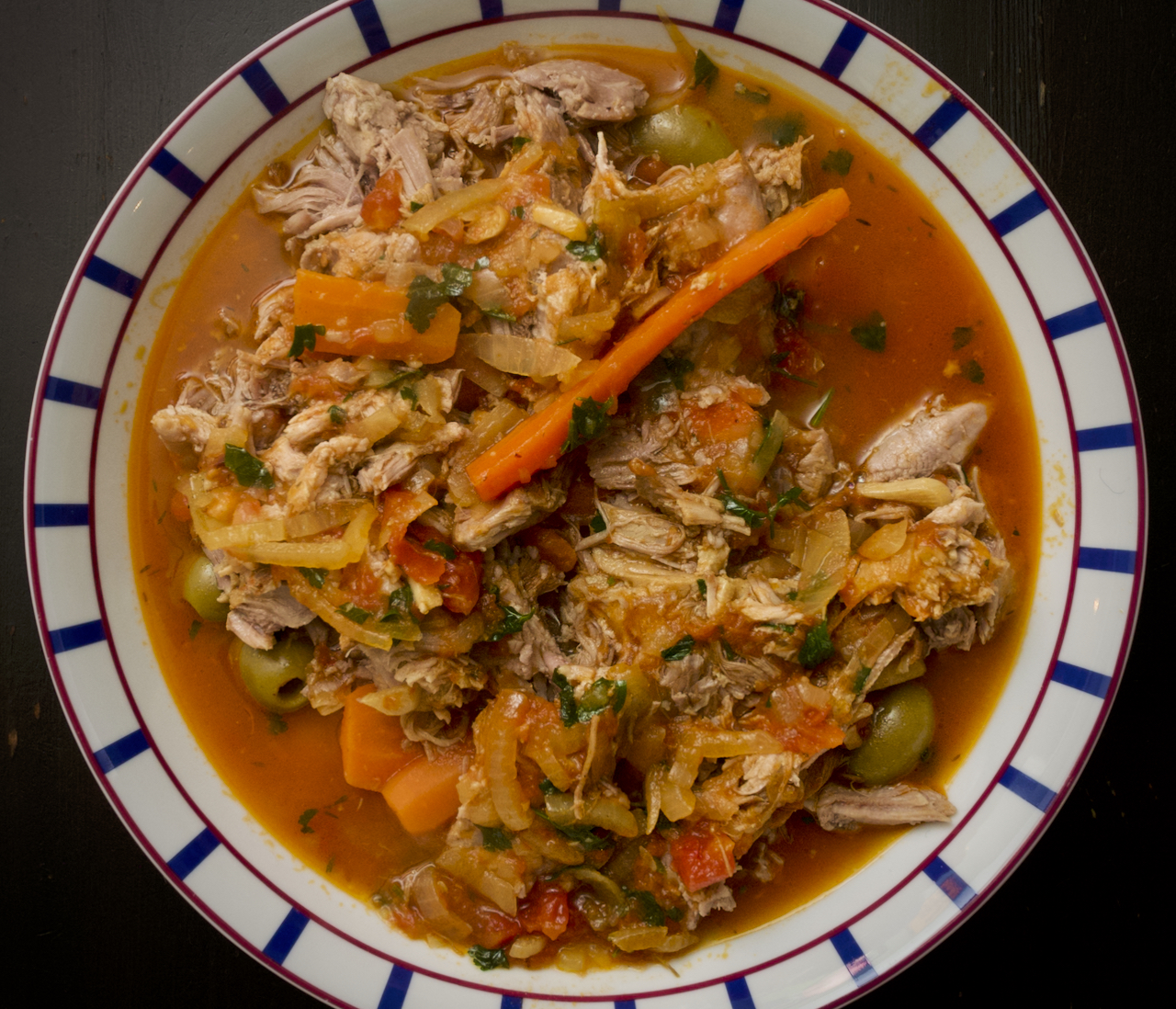
We don’t subscribe to much on Substack but we make an exception for Debora Robertson. Debora writes about life in France and recommends a dinner party dish with an easy starter (usually shop-bought) every week. We’re always happy to see her next post and we highly recommend her recipe for pork estouffade – a French pork cassrole with honey and carrots. Minimal effort and great to share. Serve with mashed potatoes and cabbage.

Wine Suggestion: From Marjorie Gallet’s superlative Roc des Anges is her “Llum“, an insightful and crystalline Grenache Gris & Macabeu blend that sings with ripe stonefruit flavours and a minerally, salty backbone. Just perfect with a little richness and aromatic flavours from this dish.

Pork estouffade – serves 6

  • 1.6-1.8kg boned and rolled joint of pork, with some fat on and skin/rind removed
  • 3 tbsp olive oil
  • 2 onions, thinly sliced
  • 3 bay leaves
  • 2 sprigs of thyme
  • 6 cloves of garlic, halved, remove any green bits and thinly sliced
  • 1 x 400g tin chopped tomatoes
  • 1 tbsp Dijon mustard
  • 1 tbsp honey
  • 1 tsp paprika
  • 1 bottle white wine
  • a pinch of saffron strands, soaked in a splash of warm water
  • 4 medium carrots, peeled and halved lengthways
  • 80g pitted green olives
  • 1 unwaxed orange – you will need to peel a strip of zest and then juice
  • about 10g of parsley leaves and fine stalks, roughly chopped

Pat the pork dry with kitchen paper and season all over with salt and pepper.

Warm the olive oil in a large heavy casserole ove a medium-high heat. Brown the pork all over – about 10 minutes, then remove to a plate and lower the heat.

Add the onions, bay leaves and thyme and sauté gently, stirring occasionally, until very soft and translucent but without browning, about 15 minutes.

Add the garlic to the pan and stir for a minute, then add the tomatoes, mustard, honey, and paprika and stir well. Pour in the wine, saffron and soaking water and simmer for 10 minutes.

Return the pork to the pan, along with any juices. Cover and simmer very gently for 2½ hours, turning the pork every 30 minutes. Add the carrot, olives, orange zest and juice. Taste and season if needed, then simmer very gently, uncovered, for another hour – check occasionally that the pork hasn’t stuck. The dish is ready when the pork is very tender and the sauce has thickened.

Remove from the heat and leave to cool for 10 minutes, then stir in the parsley. Remove the string form the pork and carve it into thick slices. Serve with some sauce, the carrots, mashed potatoes and cabbage.

(Original recipe from Lickedspoon with Debora Robertson, Substack, 6 Jan 2024)

Read Full Post »

A recipe from Ixta Belfrage’s excellent book, Mezcla. Pinapple has developed a bad reputation in savoury dishes but we love it … including on pizzas sometimes. Serve some steamed white rice on the side.

Wine Suggestion: we’re having an Italian moment, so chose the La Pruina Salice Salentino to go with this dish. A blend of Negroamaro and Malvasia Negra it had a suprising elegance and didn’t overwhelm the flavours despite an obvious juiciness to the fruit. Balanced and surprisingly medium bodied; we’ll be revisitng this wine again.

Chicken with pineapple and ‘nduja – serves 4

  • 4 chicken thighs, at room temperature
  • 4 cloves of garlic, crushed
  • 1 medium onion, halved and very thinly sliced, ideally with a mandoline if you have one
  • 300g fresh pineapple, peeled, cut into rounds, then quartered and hard core removed
  • 4 tangerines or 2 oranges, squeezed to give 100g of juice
  • 100g chicken stock
  • 2 tbsp double cream
  • 5g coriander
  • 1 lime, cut into wedges

FOR THE ‘NDUJA AND CHIPOTLE PASTE:

  • 50g ‘nduja paste
  • 2 tbsp olive oil
  • 2 tsp tomato purée
  • ½ tsp chipotle flakes
  • ½ tsp paprika
  • ¾ tsp fine salt
  • 20 twists of black pepper

Heat the oven to 200C/180C fan.

Put the ingredients for the ‘nduja and chipotle paste into a large bowl and mix together. Add the chicken thighs, garlic, and about ¾ of the onion and mix together well. Tip everything into a large oven-proof cast-iron frying pan or a baking dish. Make sure the chicken is skin-side up on top of the onions and garlic.

Add the pineapple to the mixing bowl and toss in any leftover paste, then arrange around the chicken.

Pour the orange juice around the chicken but make sure you don’t pour it over the chicken skin, then bake for 20 minutes. Remove from the oven and pour in the chicken stock – again avoiding the chicken skin. Put back into the oven for another 20-25 minutes, or until the chicken is cooked through and the skin is browned and crispy.

Rest the dish for 5-10 minutes, then drizzle over the cream. Toss the coriander with the rest of the sliced onion and a little oil and salt, then sprinkle over the top. Serve with lime wedges.

(Original recipe from Mezlca by Ixta Belfrage, Ebury Press, 2022.)

Read Full Post »

Salmon is very popular in our house and we particulary like this recipe with a delicious barbery butter.

Wine Suggestion: we like dry Rosé with barberry dishes and chose the Quinta de la Rosa Rosé this time as it has great depth and poise alongside the refreshing red berried flavours.

Salmon with barberry butter – serves 4

  • olive oil
  • 4 salmon fillets, skinned

FOR THE BARBERRY BUTTER:

  • 75g softened butter
  • 2 tbsp dried barberries, finely chopped
  • 1 tsp pul biber
  • 1 tsp garlic granules
  • 1 tsp clear honey

Put the ingredients for the barberry butter into a bowl with plenty of salt and black pepper and mix well.

Heat a large frying pan over a medium-high heat and add a little olive oil. Season the salmon fillets on the skinned side, then put skinned-side down into the pan. Cook for a couple of minutes, then turn over and add the butter. When the butter has melted, start basting the salmon. You need to go quite quickly so the butter doesn’t burn. Keep basting for a couple of minutes or until the salmon is just cooked through.

Serve and spoon the butter over.

(Original recipe from Flavour by Sabrina Ghayour, Aster*, 2023.)

Read Full Post »

We often buy little jars of peas when we’re on holidays in France. This recipe requires peas from a jar which have a distinct and lovely flavour that compliments the other ingredients. Delicious!

Wine Suggestion: Umani Ronchi’s Pecorino Vellodoro is a taste of spring from the Abruzzo region of Italy; floral & fruity with a lovely dry, refreshing minerality.

Tagliatelle with peas & prosciutto – serves 2

  • 3 sliced of prosciutto, torn into small pieces
  • 75g butter
  • 1 shallot, finely diced
  • 1 x 400g tin or jar of petits pois
  • 250g fresh tagliatelle
  • 35g Parmesan, finely grated, plus extra to serve

Heat a non-stick frying over a medium heat, then add the prosciutto and cook until crispy. Remove the prosciutto from the pan and set aside.

Add 50g of the butter to the pan and allow to melt, then add the shallot and cook for 5 minutes or until soft. Add the peas, including their liquid, and cook for about 5 minutes or until reduced by half. Add the cooked prosciutto, then season, and remove from the heat and set aside.

Bring a large pan of salty water to the boil and cook the tagliatelle for 2-3 minutes. Put the frying pan back on the heat and transfer the taliatelle to the pan with tongs. Add an extra ladle of pasta cooking water and the rest of the butter. Add the Parmesan and toss everything together for a couple of minutes, until warmed through – you may need to add a little more of the pasta water.

Serve in warm bowls, sprinkled with more Parmesan and some black pepper.

(Original recipe from The Italian Deli Cookbook by Theo Randall, Quadrille, 2021.)

Read Full Post »

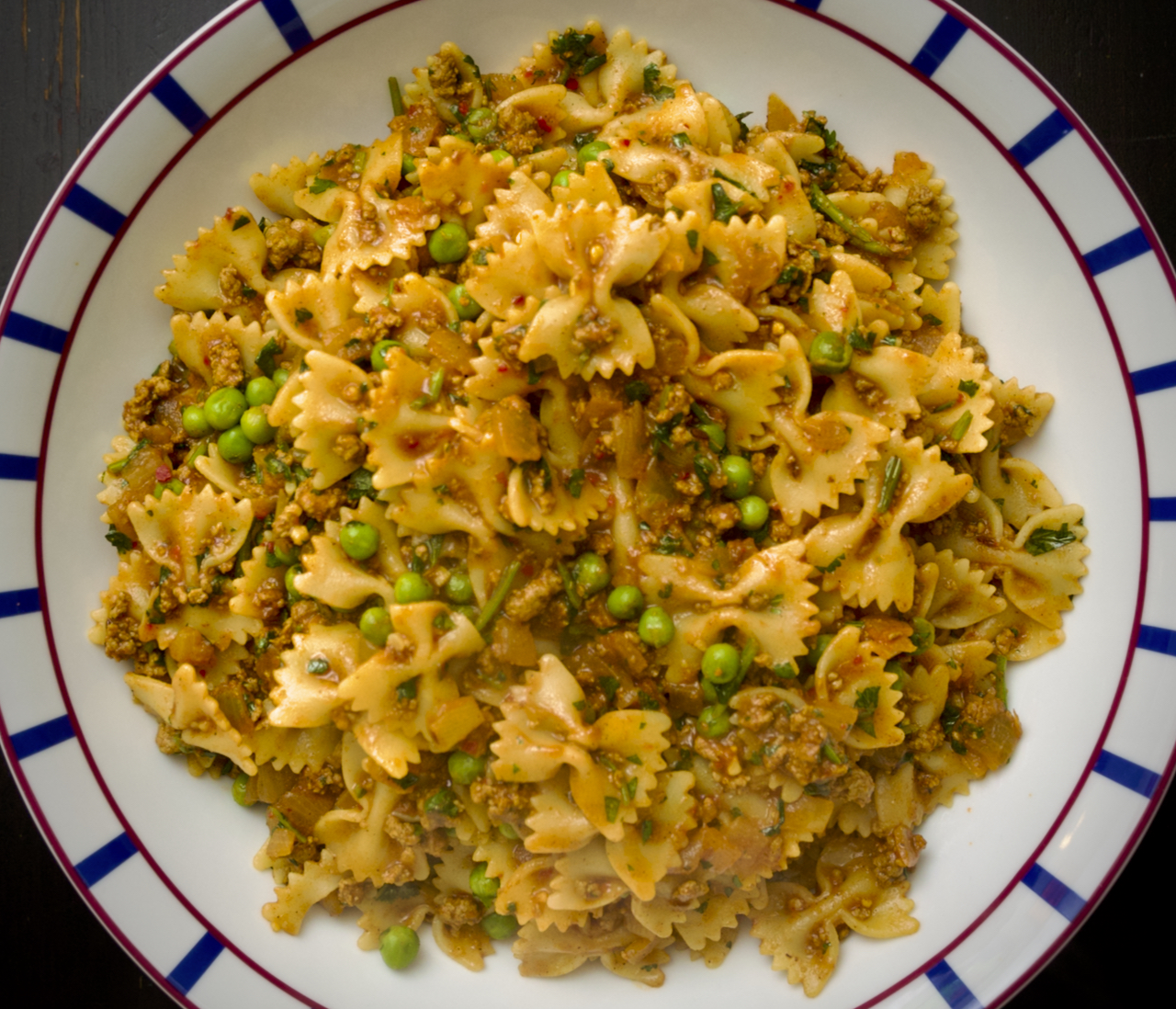
Big flavours in this pasta dish by Sabrina Ghayour – modelled on a samosa which is no bad thing.

Wine Suggestion: we are on a bit of a Grenache kick at the moment and really revelling on the subtleties and various expressions this grape can give … alongside it working with a variety of dishes, especially with warm spices at the core. Tonight we opened the Paradou Grenache from Chateau Pesquie, which comes from Provençal vineyards and is joyously youthful, fruit forward and balanced with a fresh acidity.

Samosa Pasta – serves 3 to 4

  • vegetable oil
  • 1 large onion, finely chopped
  • 250g beef mince
  • 1 heaped tsp garlic granules
  • 1 tsp cumin seeds
  • 1 tsp ground cinnamon
  • 1 tsp ground turmeric
  • 1 tsp chilli flakes
  • 3 tbsp tomato purée
  • 200ml warm water
  • 3 handfuls of frozen peas
  • 250g farfalle pasta
  • 15g coriander, leaves picked and roughly chopped

Warm some vegetable oil in a large frying pan, then fry the onions with a pinch of salt until soft and starting to colour. Add the beef mince and break it up with a wooden spoon, then add the garlic granules, all the spices, the tomato purée and plenty of black pepper. Stir-fry the mince for a few minutes, then pour in the warm water and stir-fry again until mostly evaporated. Stir in the peas, then turn off the heat.

Cook the pasta in lots of salty water. When it’s cooked scoop out the pasta with a slotted spoon and add to the beef mixture over a medium-high heat. You can add a little more pasta water if needed. Season to taste, then stir in the coriander and serve.

(Original recipe from Flavour by Sabrina Ghayour, Aster, 2023.)

Read Full Post »