Feeds:
Posts
Comments

Archive for the ‘Beef’ Category

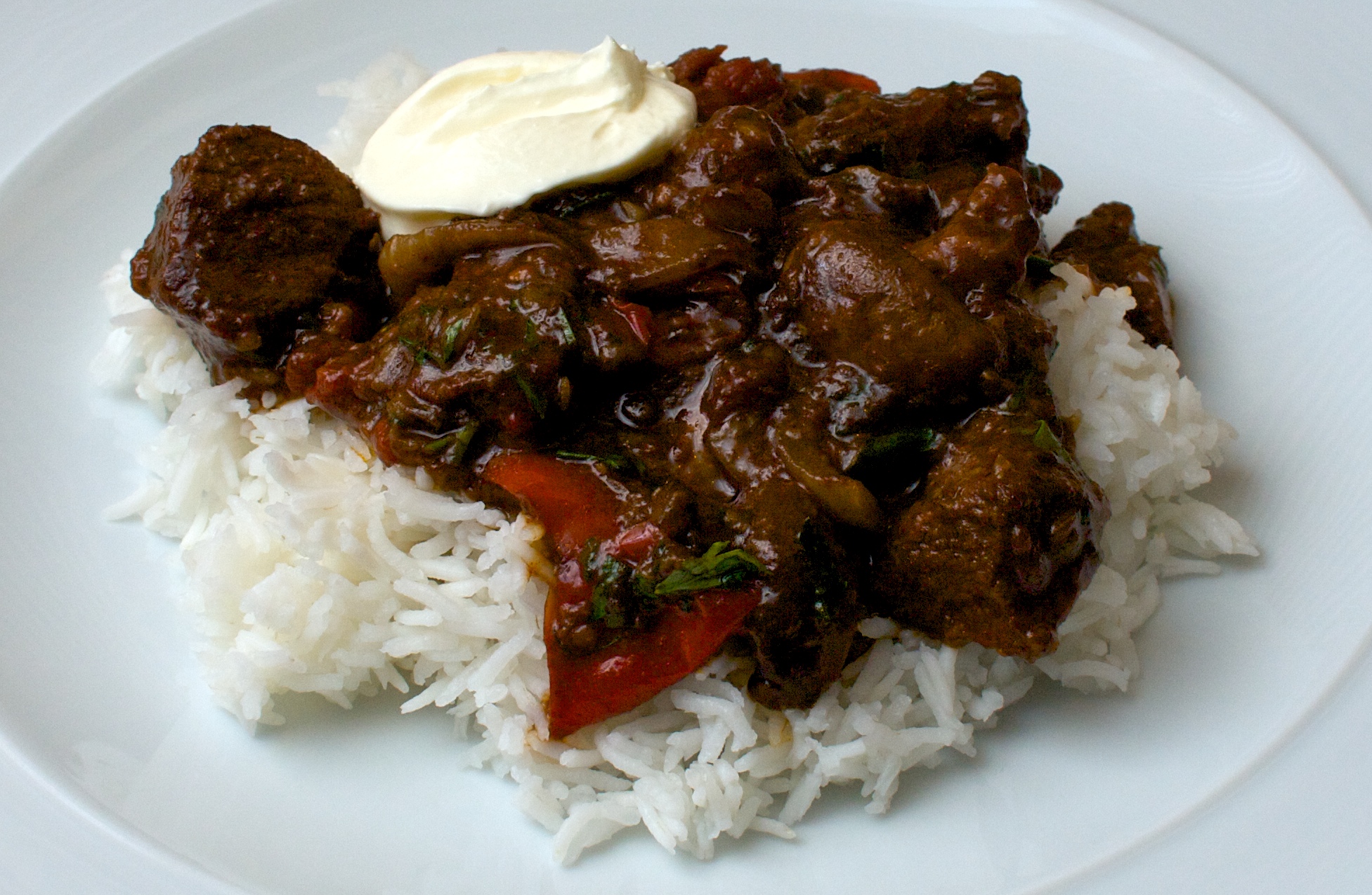
Beef Paprikash

Jono went to Hungary a year and a half ago and picked some authentic Hungarian paprika. If you’re not planning a trip to Hungary you should be able to pick up some online – it makes a real difference to dishes like this.  We like the hot variety though the sweet version will work well too. Whatever you do don’t use the smoked version which will be much too strong for this dish! This takes a few hours but only a few minutes work.

Beef Parikash – to serve 4

  • 500g braising beef , cut into large chunks
  • 1 tbsp flour, seasoned really well
  • 1 large onion, halved and sliced
  • 2 garlic cloves, crushed
  • 250g chestnut mushrooms, halved
  • 1 red pepper, sliced
  • 1 tbsp paprika (see introduction)
  • 2 tsp caraway seeds
  • 1 x 400g tin chopped tomatoes
  • 300ml beef stock
  • a small bunch of parsley, chopped
  • basmati rice and soured cream to serve

Heat the oven to 180C/160C fan/gas 4. Toss the beef with the flour and brown in 1 tbsp oil in a large ovenproof dish with a lid.

Scoop out the meat, then add the onions and cook until soft and browned at the edges. Add the garlic, mushrooms and pepper and cook for 5 minutes until softened.

Return the beef to the dish and add the spices, tomatoes and beef stock. Bring to a simmer, put on the lid and transfer to the oven and cook for about 2 hours. Check near the end of the cooking time  – the beef should be really tender and the sauce thickened – if not cook for another half hour.

Stir in the parsley and serve with rice and soured cream.

Wine Suggestion: Something rich, red and spicy would be good here. We had a Sierra Cantabria Colección Privada, 2007 from O’Brien’s, courtesy of our friend Thonya – thanks chick 😉

(Original recipe from BBC Good Food)

Read Full Post »

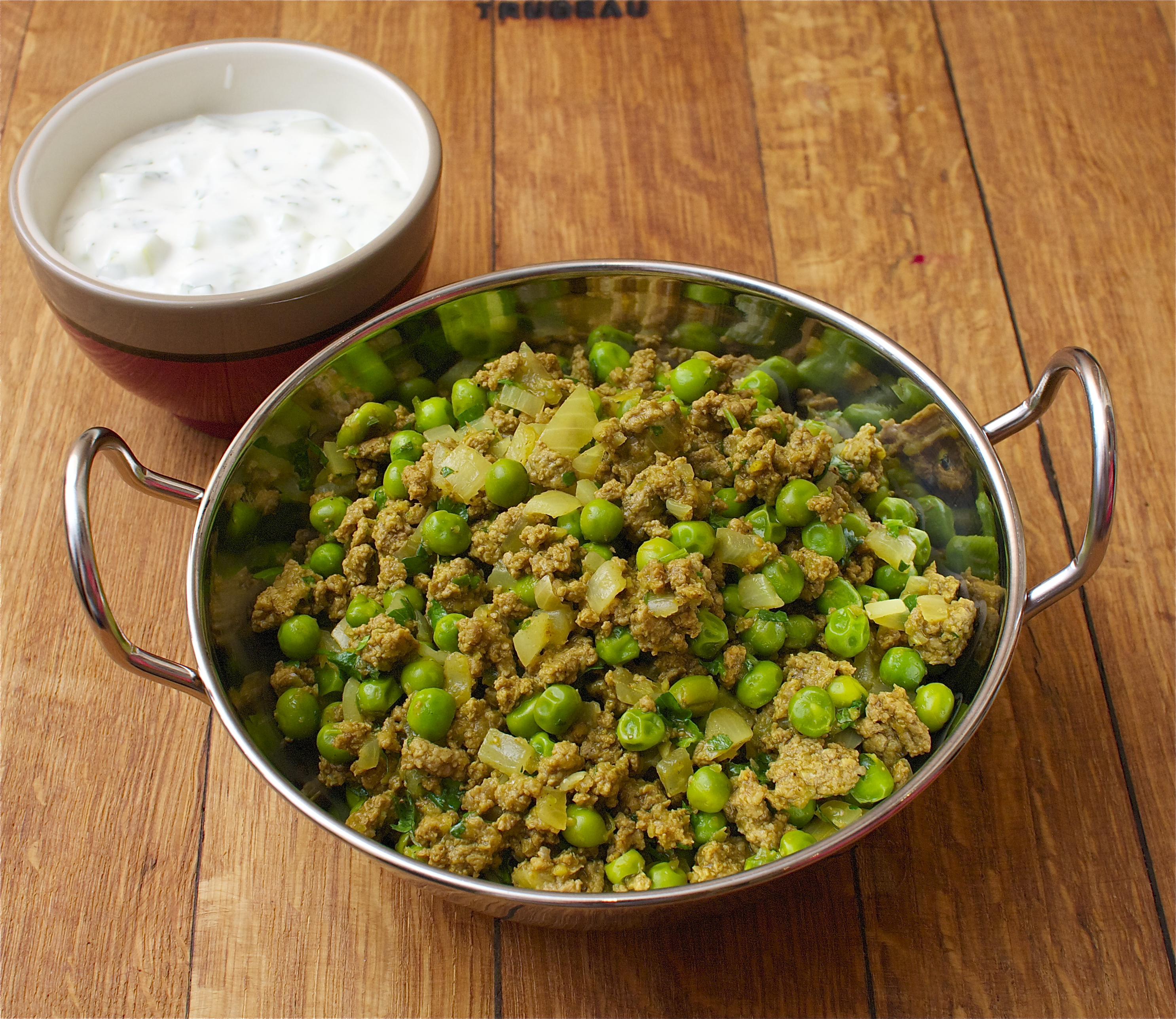
This was surprisingly delicious and flavoursome; the curry paste really adds a good depth yet it is still light and wholesome. A Keema curry is one that uses mince which we’ve not really done. After this recipe we’ll certainly try a few others.

Keema curry & raita – to serve 4

  • 1 onion, chopped
  • 400g beef mince
  • 340g frozen peas
  • handful fresh coriander, chopped
FOR THE PASTE
  • 1 green chilli, chopped
  • 2 garlic cloves, chopped
  • thumb-sized piece ginger, chopped
  • 1/2 tsp each turmeric and ground coriander
  • 1 tbsp curry powder
FOR THE RAITA
  • 200g fat-free natural yogurt
  • 100g cucumber, peeled, deseeded and diced
  • handful fresh mint, chopped
Whizz the paste ingredients together in a blender or food processsor – you might need a splash of water.

Cook the onion in a splash of water for about 5 minutes until softened. Stir in the mince and cook for another 5 minutes to brown. Add the paste, cook for a minute, then pour in 100ml water. Bring to the boil and simmer for 5 minutes.

Meanwhile, mix the raita ingredients together and season. When the mince is cooked, season and stir through the coriander. Serve with the raita and some brown rice.

Wine suggestion: You don’t want something with too much acidity here but it still needs a bit of easy fruit. Try a Pinot Blanc from Alsace.

(Original recipe from BBC Good Food)

Read Full Post »

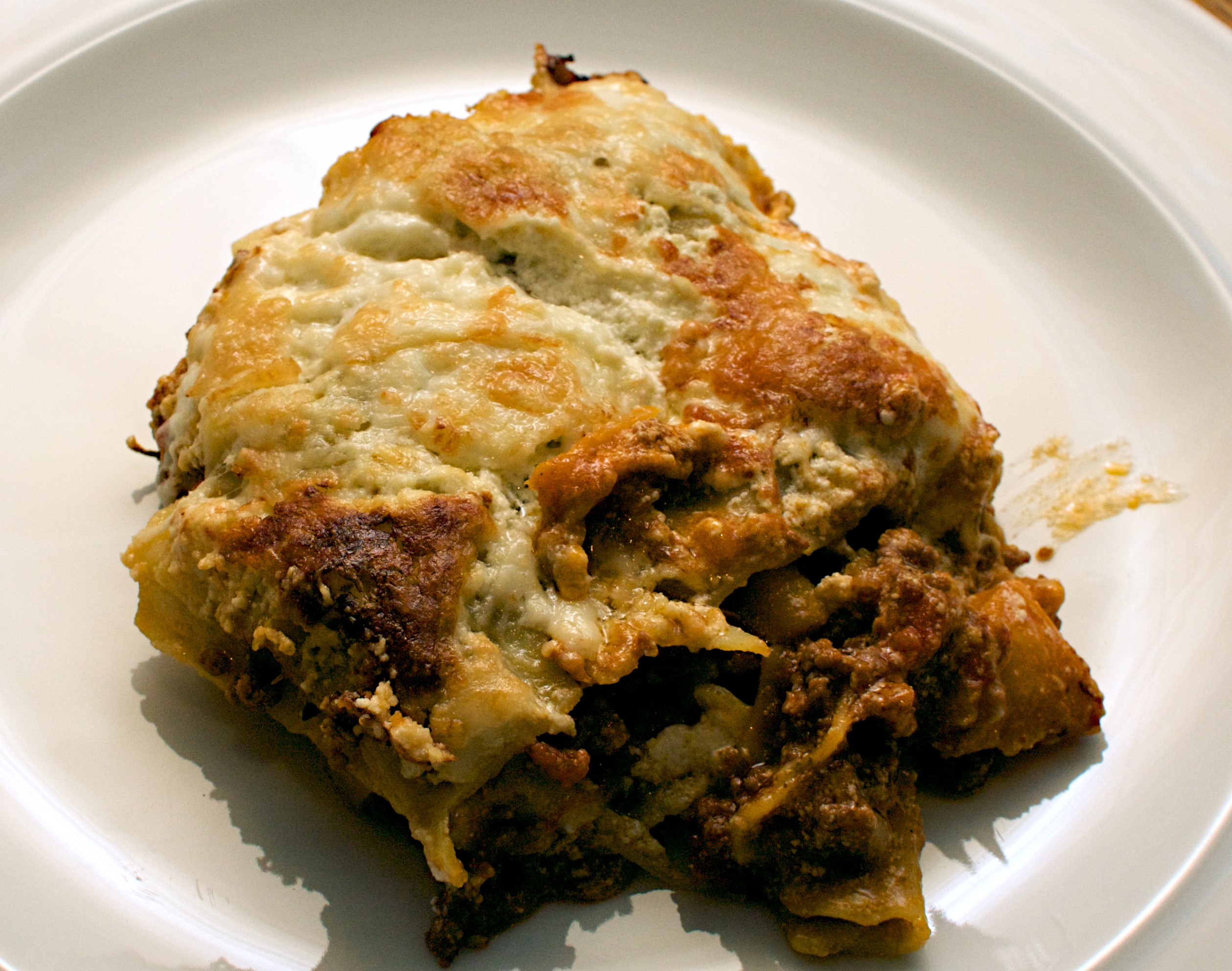
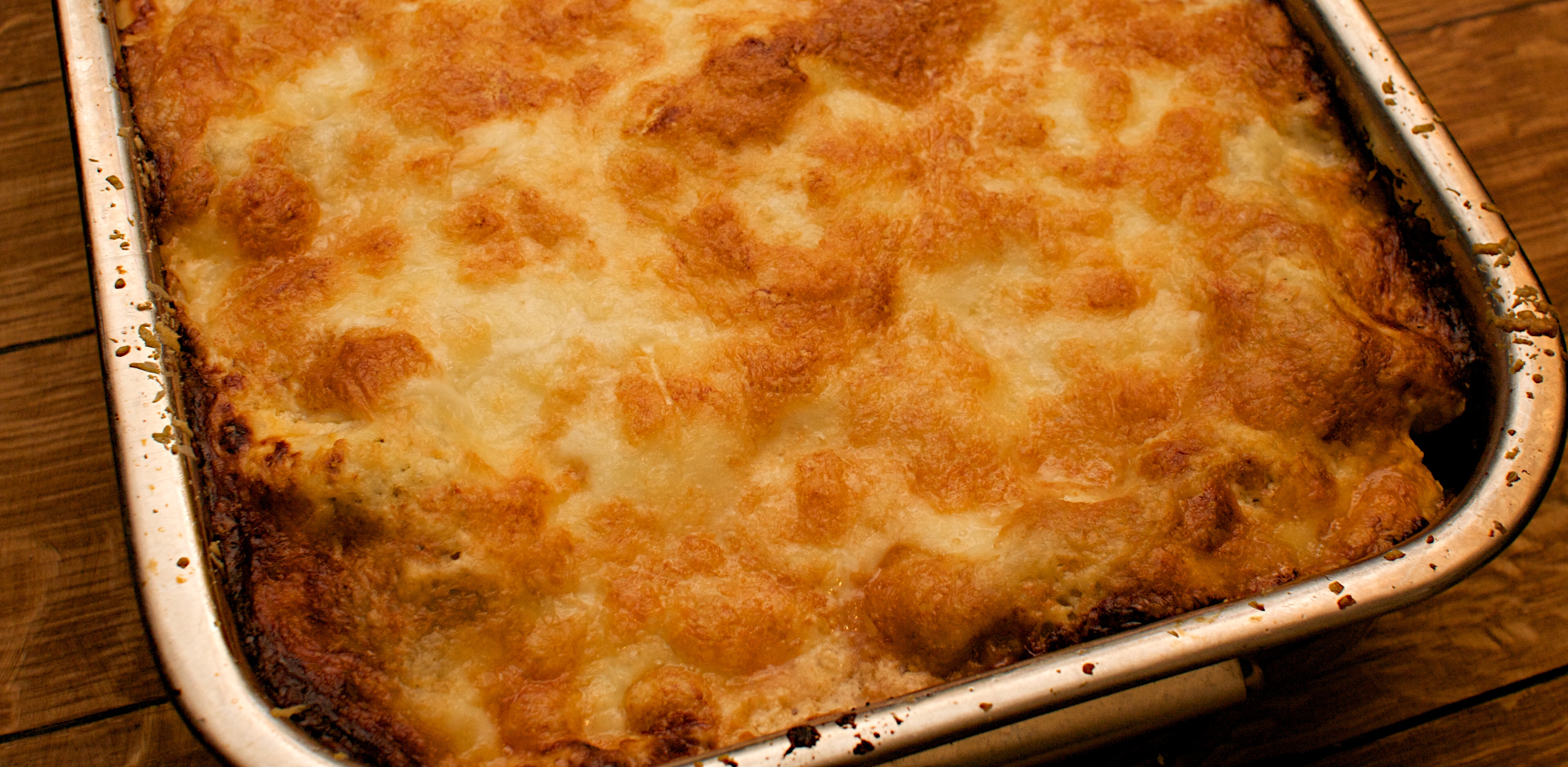
This is our classic party dish – so popular that we have to fight to get a taste when we serve it in a buffet! We’ve just made it this weekend for our friends Nicola and Dave’s housewarming. Just to make sure we got some ourselves we made a little extra for the next day. So for all our friends that have asked … here’s the recipe 🙂

Simple Baked Lasagne – serves 6 but easily doubled (which can easily serve 20 or more strangely enough …)

  • 4 rashers pancetta or smoked bacon, finely sliced
  • pinch cinnamon
  • 1 onion, finely chopped
  • 1 carrot, finely chopped
  • 2 cloves garlic, finely chopped
  • 2 generous handfuls of whole, fresh herbs (use your own mix of sage, oregano, rosemary and thyme)
  • 400g shin of beef, or skirt, coarsely minced
  • 200g pork belly, skin removed & coarsely minced
  • 2 x 400g tins good-quality plum tomatoes
  • 250ml red wine
  • 2 bay leaves
  • 1 butternut squash, halved, deseeded and roughly sliced
  • 1 tbsp coriander seeds, bashed in a mortar & pestle
  • 1 dried red chilli, also bashed
  • 400g dried, ready to cook lasagne sheets
  • 400g mozzarella

For the white sauce:

  • 1 x 250ml tubs of crème fraîche
  • 3 anchovies, finely chopped
  • 2 handfuls freshly grated parmesan
  • a little milk

Preheat oven to 180C / 350F / Gas 4

If you are making a double quantity you may want to cook the meat sauce in two quantities as it will be easier to manage unless you have a very large casserole pot. You can also make the meat sauce in advance which makes entertaining easy –  a simple assembly and cook on the night!

In a large casserole pan slowly fry the pancetta or bacon and the cinnamon until golden, add the onion, carrot, garlic and herbs and about 4 tablespoons of olive oil. Once mixed together add the beef and pork and brown for about 5 minutes. Add the tinned tomatoes, wine and bay leaves and then bring to the boil. Wet some grease-proof paper and place it on top of the pan and then place a lid on top of this as well to complete the seal. Cook in the preheated oven for 2 hours.

While this is cooking rub the butternut squash with olive oil and sprinkle with salt, pepper and the bashed coriander seeds and chilli. Place on a baking tray and roast in the oven for the last 45 minutes of cooking the sauce. When you remove the sauce check that the squash is cooked and slightly caramelising; if not leave in oven until done.

When sauce is done season and put to one side. Mix together crème fraîche, anchovies, a handful of parmesan and season with salt and pepper. Slowly add enough milk while mixing until the sauce becomes loose and smooth. Don’t make it too runny!

Turn oven up to 200C / 400F / Gas 6. To assemble lasagne rub a large dish, or deep tray with olive oil, lay some sheets of lasagne over the bottom (and drape over the sides too if you are using fresh lasagne). Add a layer of meat, a little white sauce, a sprinkle of parmesan and then top with another layer of lasagne sheets. Make a complete layer with the butternut, topping it again with lasagne sheets. Repeat the meat, white sauce and parmesan layers. Finish with a layer of pasta covered in white sauce. Tear over the mozzarella and sprinkle with parmesan.

Cook for 30-35 minutes and until golden. Watch the hordes descend.

[Inspired by Jamie Oliver: Jamie’s dinners, Penguin 2006]

Read Full Post »

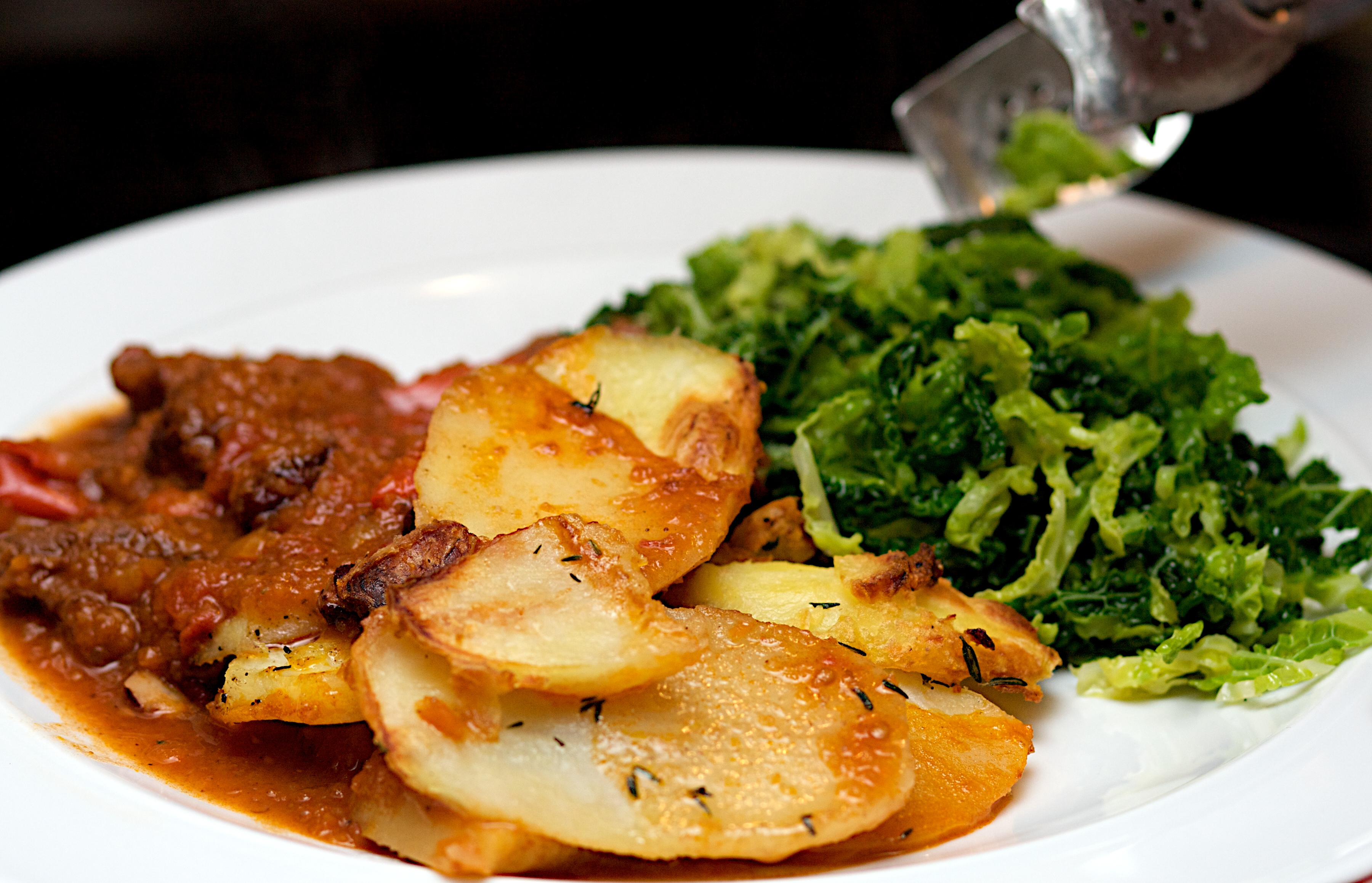
This is the  first recipe we’ve tried from Rick Stein’s Spain. Unusually made with white wine, this beef stew is a bit lighter but still rich and full-flavoured. Leftovers are particularly good the next day too. It takes a while to cook but is really easy and there are very few ingredients needed.

Rick says the Spanish serve this with patatas fritas but in an attempt to be not quite so unhealthy we did some roasted slices of potato instead.

Beef in White Wine, Oviedo-Style (Carne gobernada) – to serve 6

  • 1.5kg chuck or blade steak
  • 7 tbsp olive oil
  • 600g onions, chopped into 1cm pieces
  • 10 garlic cloves, crushed
  • 6 fresh bay leaves
  • 300ml dry white wine
  • 300g small carrots, cut into 5 cm lengths
  • salt and pepper
Trim the meat and cut it into bite-sized chunks. Season well with salt and pepper.

Heat 2 tbsp of the olive oil in a large flameproof casserole and fry the beef in batches until nicely browned. Set aside on a plate.

Add the rest of the olive oil and the onions, garlic, bay leaves and a half tsp of salt to the pan, then cook very gently for about 30 minutes or until the onions are soft and golden.

Add the beef back to the pan, add the wine, bring to the boil and season with another half tsp of salt and some pepper. Cover and leave to simmer gently for 2 hours, stir it now and again.

Add the carrots, cover again and cook for another 30 minutes or until the wine and meat juice have combined to make a rich sauce and meet is really tender. Adjust the seasoning and serve with some potatoes.

(Original recipe from Rick Stein’s Spain, published by

Wine Suggestion: Despite being a stew this dish is not heavy, so avoid big, full-fruited wines when trying to pick something to match this. We went around to O’Briens to find a medium bodied Spanish with not too much oak and really struggled as nothing really matched this brief. Our choice in the end was a Sierra Cantabria Crianza from Rioja which went well, but it would have been better with a Mencia from Bierzo or even a Doa from Portugal where the acidity is naturally a little higher and the use of oak normally much less dominant. You could also search for a joven or roble made from tempranillo and/or garnacha where the  wine is younger, fruitier and made for early drinking – just like the Spanish like it!

Read Full Post »

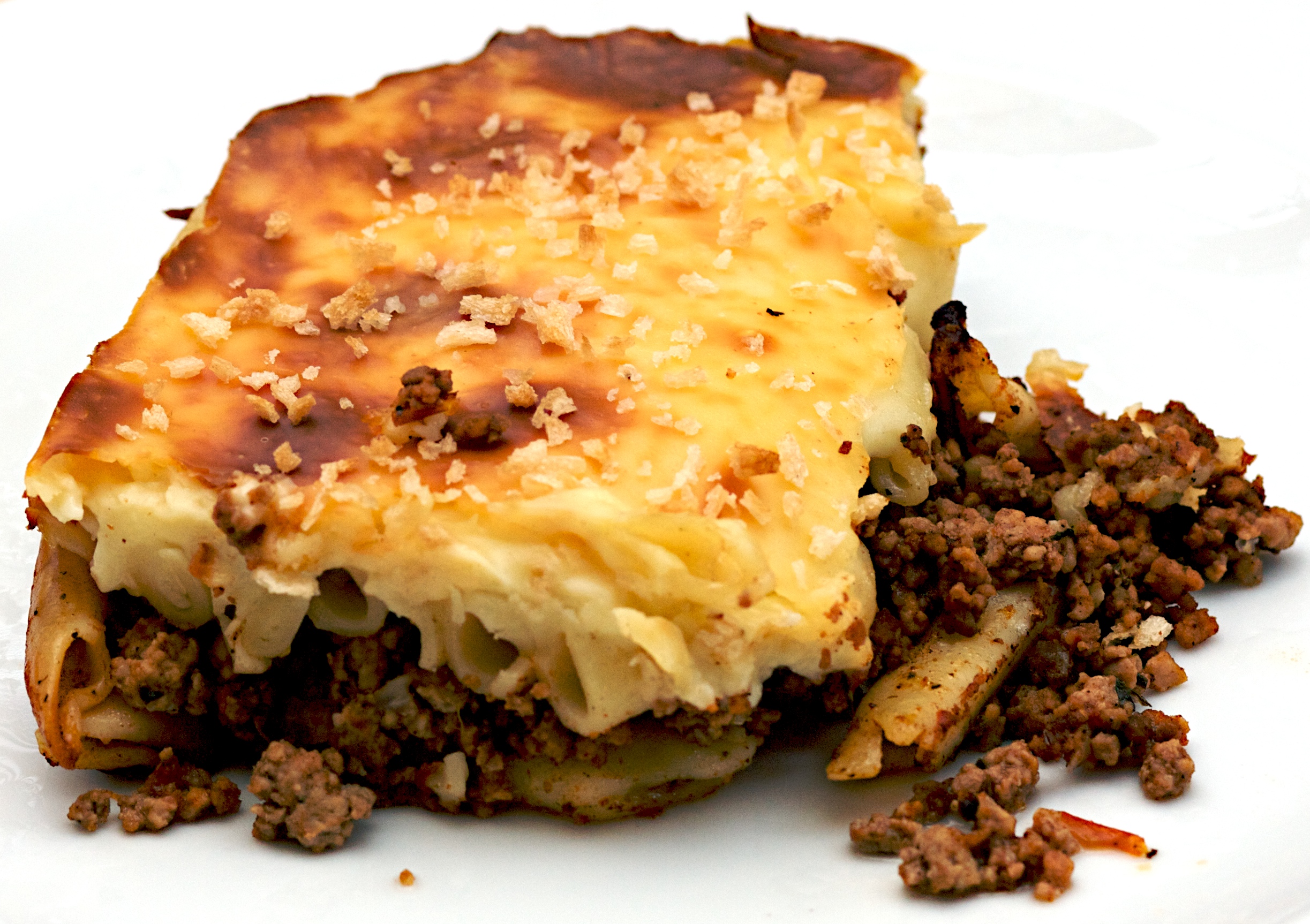
Cypriot PastitsioThe warmth of the cinnamon and the dried mint turns this pasta bake into something distinctively Cypriot rather than Italian. Serve it with a big Greek salad on the side for a stress-free dinner party. The Pastitsio takes a while to make but you can have all assembled in advance, ready to stick in the oven when your guests arrive. It is also best served warm, or even at room temperature, so you don’t need to worry if you get behind making your salad!

Tessa recommends a dish of dimensions very similar (and no bigger) than this: 35cm long, 24cm wide and 6cm deep. We used a big roasting tin.

Pastitsio – to serve 10

  • 4 tbsp olive oil
  • 1 large onion, chopped
  • 2 tbsp chopped parsley
  • 2 garlic cloves, chopped
  • 850g minced pork and beef
  • 1 bay leaf
  • 1 tsp ground cinnamon
  • 125 ml white wine
  • 400g tinned tomatoes, chopped
  • 450g short pasta (we used penne)
  • about 30g butter
  • 1/2 tsp dried mint
  • 1 tbsp breadcrumbs
Bechamel sauce
  • 120g butter
  • 125g plain flour
  • 1 litre warm milk
  • a little freshly grated nutmeg
Heat the oil in a large non-stick saucepan and fry the onion until soft and golden. Add the parsley and garlic and cook for a few second before adding the meat. Fry for a few minutes until all the moisture has gone and the mince is starting to brown. Season and add the bay leaf and cinnamon. When it starts to fry and brown, add the wine and cook until evaporated. Add the tomatoes and a cup of water and cook over a medium to low heat for 10-15 minutes. The meat shouldn’t be too dry. Take off the heat.

Preheat the oven to 180°C (350°F/Gas 4). Cook the pasta in boiling salted water for 2 minutes less than what it says on the packet. Drain and put in a bowl. Mix in the butter and crumble in the dried mint. Stir well and spoon half over the base of a large ovenproof dish. Pour the meat mixture over the top to evenly cover the pasta, then add the rest of the pasta over the top. Press down with a wooden spoon to make it quite compact. Set aside while you make the béchamel sauce.

Melt the butter in a saucepan. Stir in the flour and cook for a few minutes, stirring all the time, then start adding the warm milk. Work quickly, stirring while adding ladlefuls of milk as each one is absorbed. When the sauce is smooth and not too stiff, add salt, pepper and a grating of nutmeg. Keep cooking even after it comes to the boil, for about 5 minutes, stirring all the time. You should have a very thick and smooth sauce. Pour this over the pasta and meat in the dish. Sprinkle the breadcrumbs over the top and bake for 30-40 minutes until the top is golden. Let it cool for a bit before you serve or it will run everywhere.

(Original recipe from Falling Cloudberries by Tessa Kiros, published by Murdoch Books, 2004.)

Read Full Post »

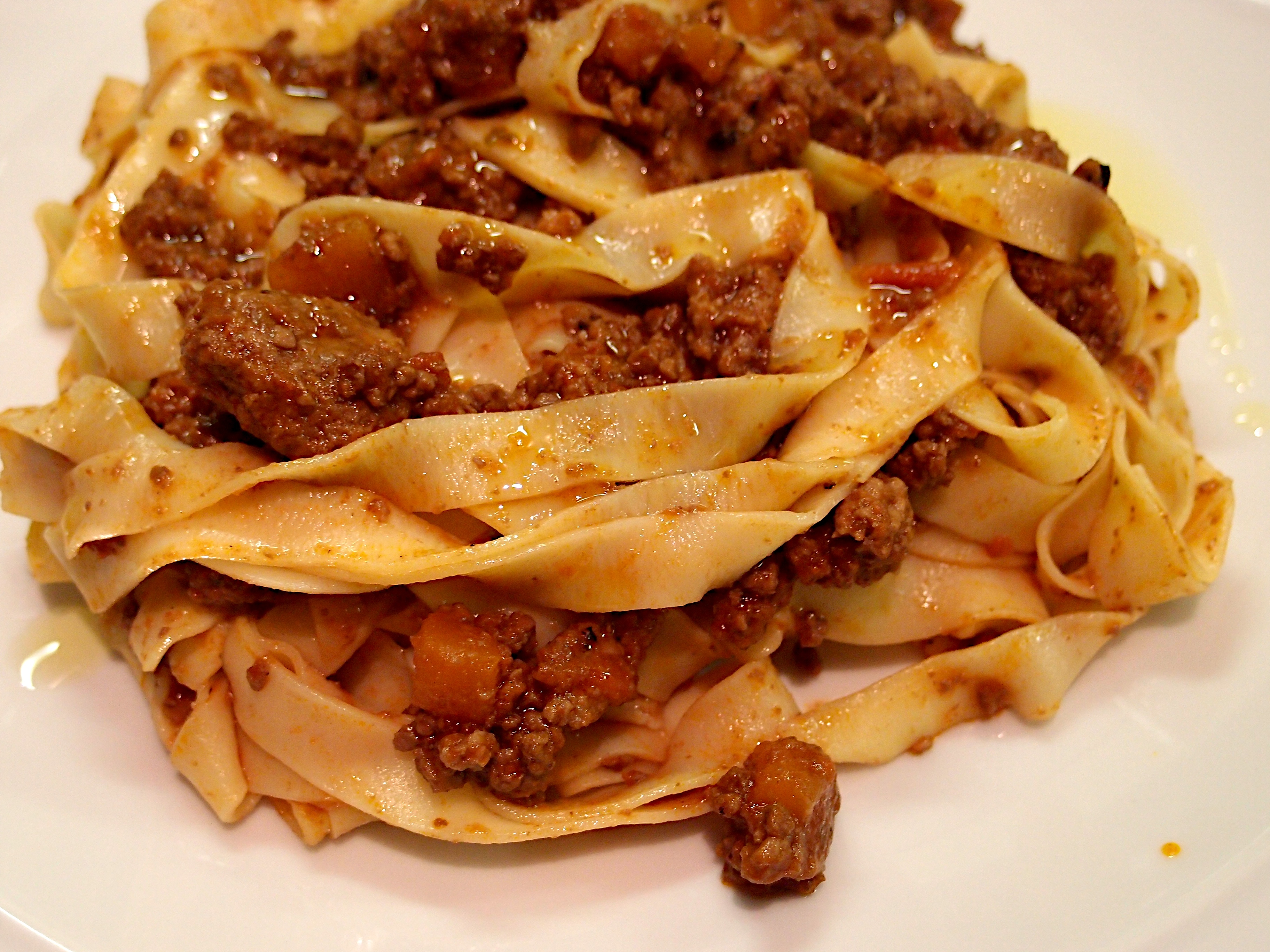
Italians don’t serve Bolognese with spaghetti or make a really runny tomato sauce like us Irish, so we went to our Italian experts for guidance: Giorgio Locatteli came up trumps. Jono also got to practice his new pasta trick which he’s somewhat obsessed with.

Ragù alla bolognese – serves 8 generously (but don’t divide the recipe, just make the lot and freeze it in small tubs -ready meals!)

  • 2 kg of minced beef neck (you may need to order this – chump will do if you can’t get it)
  • 5 tbsp olive oil
  • 2 carrots, finely chopped
  • 1 celery stick, finely chopped
  • 2 onions, finely chopped
  • a large sprig of rosemary and one of sage, tied together
  • 2 cloves of garlic
  • a bottle of red wine
  • 1 tbsp of tomato paste
  • 1 litre of tomato passata
Take the meat out of the fridge and let it come to room temperature, spread  it out on a tray. This will make it sear rather than boil when you put it in the pan.
Heat the oil in a wide bottomed saucepan and add vegetables, herbs and whole garlic cloves and sweat over a high heat for 5-8 minutes without colouring – you need to keep stirring.
Season the meat with salt and pepper and add it to the vegetables making sure it covers the base of the saucepan. Don’t touch it for 5-6 minutes so it seals underneath and heats through. Careful your vegetables don’t burn – you can add a bit more oil if you need to.
Stir the meat and veg every few minutes for about 10-12 minutes until it starts to stick to the bottom of the pan.
Now add the wine and let it reduce to almost nothing. Add the tomato paste and cook for a couple of minutes – keep stirring.
Add the passata with one litre of water, bring to the boil, then turn down to a simmer and cook for an hour and a half. Add a bit of water now and again if necessary, until you have a thick sauce. (You could also cook it in the oven at 120C if you prefer).
When you’re ready to serve, heat the ragù, cook your pasta (preferably pappardelle, tagliatelle, or short pasta) and drain, reserving the cooking water. Add the pasta to the ragu and toss well – add some cooking water if you need to loosen the sauce a bit.
Serve with freshly grated pecorino.
(Original recipe from Giorgio Locatelli’s ‘Made in Italy: Food & Stories’)

Read Full Post »

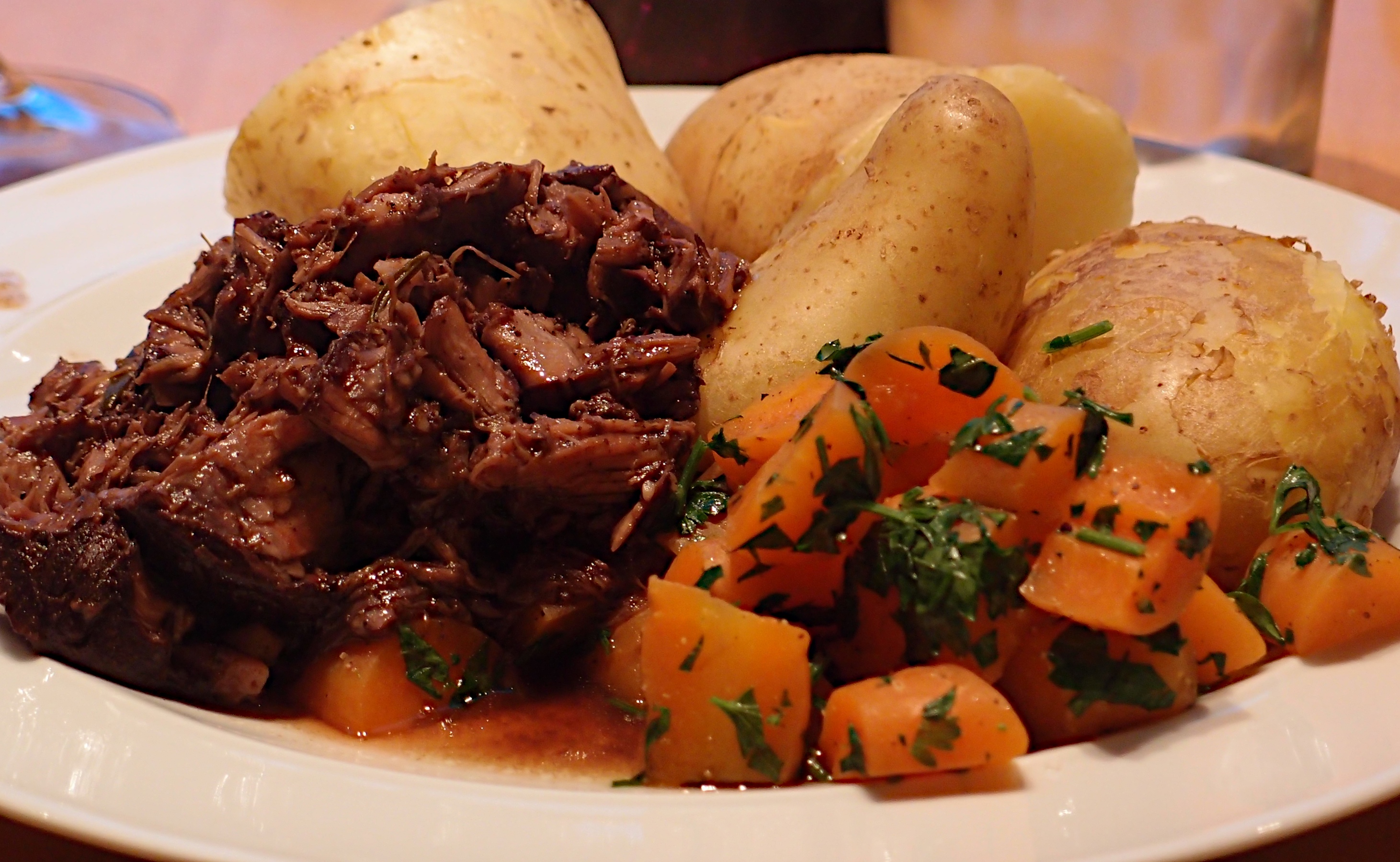
I would like to point out that the plate above is Jono’s and not mine – he’s much greedier than me.

If you don’t like Italian food you might want to ignore us for the next while as we’re somewhat smitten.

We tasted a few stews in Italy, peppery and otherwise, and they were fantastic. Jono’s had his eye on this recipe for ages too so we got on to Tom O’Connor in Glasthule, our butcher, who rose to the challenge as always.

You can use beef or veal shin for this recipe (we used veal). Jamie suggests buying the whole bone, slicing the meat off, and adding the bone to the stew. We got it osso bucco style which worked brilliantly.


There is a shocking amount of black pepper and garlic in this recipe. You hardly notice the garlic by the time it’s cooked but the pepper is fierce. Jamie recommends 4 tablespoons of fresh ground black pepper. I think we’ll try two next time which might be safer for a crowd.

This is a really easy dish to cook but it takes 6 hours in the oven (or overnight if you like) so be prepared. This gives intense flavour and makes the meat melt – you can literally lift the bones out and carve the meat with a spoon.

Peposo (the famous hunter’s peppery beef stew) – serves 10

  • 2.5 kg beef or veal shin on the bone (see advice above)
  • 20 cloves of garlic, peeled
  • 4 heaped tbsp freshly ground black pepper (we’ll go for 2 tbsp next time we think)
  • 5 sprigs fresh rosemary
  • 2 bottles of Chianti (we just used a decent fruity red wine from Gascony cause that’s what we had)
  • 2 bay leaves
If your meat is in one piece, slice the meat off the bone in big chunky slabs (keep the bone). If it is osso bucco style leave it as it is.
Heat the oven to 150C/300F/Gas 2.
Put a layer of sliced meat in the bottom of your biggest casserole, cover with some garlic cloves and sprinkle with a tbsp of pepper and a little salt.
Add 2 sprigs of rosemary and repeat with another layer of meat. Keep going like this until your ingredients are used up and you have a full pot.
Pour the wine over the top, add any left over bones and the bay leaves. Top up with water if necessary to cover the meat.
Bring to the boil and cover tightly with double thick foil and the lid.
Cook in the oven for 6 hours (or overnight at 140C/275F/Gas1).
When it’s done, skim off any fat, remove the bones, bay leaves and rosemary twigs.
Serve on toast (hunter style) or with some new potatoes and carrots (Jono and Jules’ style).
It’s good!

(Original recipe from Jamie’s Italy).

Wine Suggestion: An Italian red with a good dollop of Sangiovese for tannin and fresh acidity. We drank some Col d’Orcia Brunello di Montalcino which matched the spiciness and had majestic fruit. Perfect

Read Full Post »

Steaming hot in the casserole … this is so tasty and shows you how flavours can intensify with slow cooking. This has very few ingredients, but the three and a half hours cooking makes the flavours burst on your tongue and the beef melt (we carved it perfectly with a blunt knife). We’ll definitely be doing this again. The recipe come from the French answer to Delia: “I know how to cook” which is published by Phaidon and celebrates the tradition of cooking rather than the celebrity and glamour: tasty dish after dish using simple ingredients. Classic French cookery for the home cook rather than the chef.

Boeuf au riz (Beef with rice) – serves 6

  • 30g butter
  • 900g stewing beef, in one piece
  • 100g onion, chopped
  • 1 bouquet garni (we raided the herb garden and bundled up some rosemary, thyme, bay, parsley and oregano)
  • 750ml stock
  • 250g long grain rice

Heat the butter on medium-high heat in a heavy-based casserole.

Add the beef and brown all over.

Add the onion and bouquet garni and season generously with pepper and a little salt.

Pour in the stock, cover and cook on a low heat for 3 hours.

Rinse the rice well and add to the casserole and cook for another 30 minutes.

That’s it – enjoy!

Wine suggestion: A full-bodied Pinot Noir from Hawkes Bay in New Zealand (or somewhere else in the New World). Ours was from Morton Estate which you can pick up in Mitchell’s (say hi to Jono while you’re there).

Read Full Post »

A really big thanks to our neighbour Nigel for giving us these lovely steaks; we hope the BBQ smells were good for you too!

So the other bits we did were cheesy mushrooms from Jamie’s 30 minute meals and some home-made oven chips which are way better than the ones you buy in a bag.

Jamie’s Cheesy Mushrooms – for 4

  • 4 large flat Portobello mushrooms (about 250g in total)
  • 2 cloves garlic
  • 1/2 a red chilli
  • 2 sprigs flat-leaf parsley
  • 1/2 a lemon
  • 70g mature Cheddar cheese

Trim the mushroom stalks and put them in a small earthenware dish so they fit pretty snug.

Crush 1/2 a garlic clove over each mushroom.

Finely chop the chilli and parsley and divide between the mushrooms.

Grate over the zest of half a lemon and drizzle well with olive oil and season.

Cut the cheese into 4 chunks and put 1 on each mushroom.

Grill on the top shelf for 9-10 minutes or until golden.

N.B. We couldn’t find Portobello mushrooms today so we used field mushrooms instead. They were nowhere near cooked in this time so we stuck them on the BBQ for 5 minutes to finish them off. If you can only find field mushrooms it might be best to cook the bottoms of them on the BBQ or griddle pan or even a frying pan first before finishing with the other ingredients under the grill.

Oven chips

Heat your oven to as hot as it goes.

Cut your potatoes into 1 cm thick slices and then cut the slices into chips about 1cm thick.

Cook the chips in boiling water for 3 minutes and drain really well.

Spread the chips out on a baking tray and drizzle with vegetable or groundnut oil and season.  Make sure all the chips are coated with oil but you don’t need to use very much.

Cook in the oven for 15-20 minutes.

Wine Suggestion: We had an Argentinian Malbec – perfect with steak!

Read Full Post »

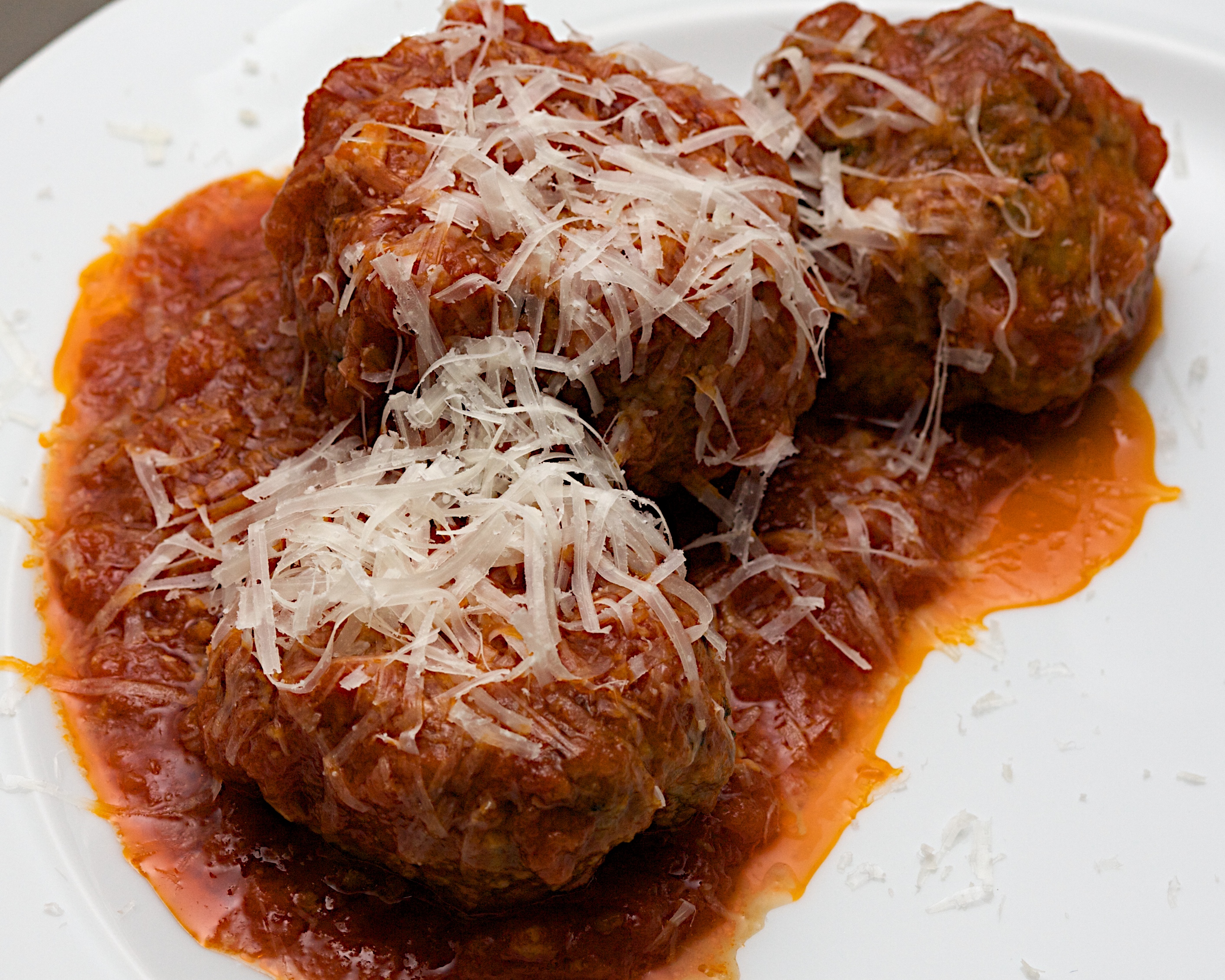
This comes from a cookbook (The Frankies Spuntino) that was a very thoughtful birthday present for Jules from my sister Claire: an authentic Italian hangout in New York. We’d never heard of it, so it was a great treat to be introduced to something new. The two Frankie’s have gone back to their roots to produce real home cooking like their mothers and grand-mothers made in Italy and this is a great read as well as a useful addition to our recipe inventory. A Spuntino is a snack or a place to eat them, so this is about flavour and comfort rather than cheffy complications – we like it!

Warning – you will need to start this recipe the day before; it is not something you’ll have time to whip up after work as it takes at least 4 hours for the big pot of sauce alone. It is well worth it and the leftover sauce is exceptionally useful for so many extra dishes, plus it is a darn sight better than those jars of tomato sauces with celebrities on the front that you buy at the shops. Julie made the sauce while I was at work on Saturday and then we made the meatballs together on Sunday.

Frankies Spuntino’s very useful tomato sauce – makes heaps!

  • 1 x US cup (237ml) good quality olive oil
  • 13 cloves garlic
  • 4 x 800g tins of Italian tomatoes (go to a good deli to get them – we got ours in Roy Fox’s)
  • Large pinch of chilli flakes
  • 2 tsps fine sea salt

Put oil and garlic into a large deep saucepan and cook over a medium-low heat for about 10 minutes, giving the odd stir, until he garlic is deep golden with streaks of brown, and fragrant. If it starts to smell bitter or is colouring too quickly take if off the heat and turn the heat down.

While the garlic is on, pour the tomatoes into a bowl (you’ll need a big one) and crush them with your hands. Discard the stem end and any basil leaves in the can.

When the garlic is done, add the chilli flakes and cook them for 30 seconds or so, to infuse the spice into the oil. Throw in the tomatoes and salt and give it a good stir. Turn the heat up to medium and bring the sauce up to a gentle simmer. Leave it there for 4 hours – stirring now and again.

Check for salt at the end. You can now cook the sauce with meat (as below), leave it covered in the fridge for at least 4 days or freeze for a few months. If you are cooking the meatballs cook them in the entire quantity of sauce and then keep the leftover sauce for later – it gives it a great flavour – though remember you did this when your veggie friends come over!

Meatballs to serve 6 (if there is less than 6 people still make the whole batch as they keep in the fridge and can be frozen)

This recipe uses American cup measures so we’ve given you a rough equivalent – I don’t think you need to be too fussy for this recipe

  • 4 slices bread
  • 2 lbs minced beef
  • 3 garlic cloves, crushed
  • 1/4 cup (or about 60ml) finely chopped flat-leaf parsley
  • 1/4 cup grated Pecorino cheese plus about a cup (237ml) for serving
  • 1/4 cup raisins
  • 1/4 cup pinenuts
  • 1 1/2 tsps fine sea salt
  • 15 turns white pepper
  • 4 large eggs
  • 1/2 cup (120ml) dried breadcrumbs
  • Tomato sauce (see above)

Heat the oven to 160C/325F. Put the fresh bread in a bowl, cover with water, and let it soak for a minute or so. Pour off the water and wring out the bread, then crumble and tear it into pieces.

Combine the bread with all the remaining ingredients, except the tomato sauce, in the order listed. Add the dried breadcrumbs last to adjust for wetness: the mixture should be moist wet, not sloppy wet (our mixture was sloppy wet so we added more dried breadcrumbs).

Shape the meat mixture into biggish meatballs and space them evenly on a baking tray. Bake for 25 to 30 minutes. The meatballs will be firm but still juicy and gently yielding when cooked through.

At this point you can cool the meatballs and leave them in the fridge for a couple of days or freeze them for later.

Meanwhile, heat the tomato sauce in a saute pan large enough to take the meatballs easily.

Put the meatballs into the sauce and turn the heat up a little bit. Simmer for half an hour or so until they soak up a bit of sauce. They don’t get better the longer you leave them so don’t abandon them altogether.

Serve 3 meatballs per person in plenty of red sauce , and cover each portion with a load of grated Pecorino.

Save the leftover sauce and use it anytime tomato sauce is required eg pizza, pasta, lasagne, etc.

Yum yum!

Wine suggestion: something red and Italian is the obvious choice and will give you the right amount of acidity to balance the tomato sauce – nothing too fancy!


Read Full Post »
Over the last few years we’ve celebrated New Years by staying in and cooking something really nice and drinking a special bottle of wine; just the two of us! We then go out on New Year’s day to have a big lunch with friends. This year we cooked a rib of beef on the bone: in reality this is a roast beef for 2 people. Perfect with the quality of the beef really shining (we bought some well hung, organic beef from our butcher Tom) because the cooking is so simple.

Jamie’s Ultimate rib of beef with rosemary and garlic roast potatoes – to serve 2

For the potatoes:

  • 600g waxy potatoes, peeled and cut into 1 inch cubes
  • a sprig of rosemary
  • olive oil, or duck or goose fat
  • 5 cloves of garlic, skin on and smashed

For the beef:

  • 3 cloves of garlic, unpeeled
  • zest and juice of  1 lemon
  • a small bunch of rosemary tied together to make a little brush
  • olive oil
  • 1 x 1.2kg rib of beef

Put the garlic, lemon zest and tip of rosemary brush in a pestle and mortar, add a glug of olive oil and bash together. Use the brush to rub half of this marinade over your steak and leave for at least an hour.

Preheat oven to 220C/425F/Gas 7.

Put potatoes cubes in a big pot of cold salted water and bring to the boil. Drain immediately in a colander and return to dry pot to dry out.

Crush rosemary leaves and add to a roasting tray with the potatoes, crushed garlic cloves and some oil. Season and toss together until well coated. Put in the oven for 25 minutes or until golden and crispy – give them a shake every now and again.

Heat ovenproof griddle pan on the hob until white hot. Season the steak really well and fry it in the pan without moving for a couple of minutes. Turn it over, baste it with the leftover marinade and put it in the oven for 20 minutes. Turn the steak over every 5 minutes and continue to baste with the marinade. This should cook it to medium. When cooked squeeze over some lemon juice and rest for 5 minutes.

Carve and serve with the roasties – delicious!

Wine Suggestion: treat yourself to a really good Bordeaux.

Read Full Post »

Chilli hotpot

Here’s a good tasty winter dish for those of you who can still face cooking after all the Christmas entertaining. Indeed if you still have some entertaining to do this is a great prepare ahead recipe which all cooks in one dish so no need for separate sides other than some steamed greens. We did not prepare ahead and so our guests ended up eating rather late…hopefully they felt it was worth the wait!

Don’t be put off by the long list of instructions and ingredients – it’s all very straightforward and you will probably have most of the ingredients in the cupboard already.

Cottage chilli hotpot to feed 6 (generously)

  • 800g braising steak, cubed
  • 2 tbsp plain flour, well seasoned
  • 4 tbsp olive oil
  • 300 ml red wine
  • 2 red onions, cut into chunks
  • 2 carrots, cut into chunks
  • 4 garlic cloves, skin removed
  • 2 red peppers, cut into chunks
  • 1 red chilli, deseeded and sliced
  • few thyme sprigs, plus 1 tbsp leaves
  • 1 bay leaf
  • 1 tsp each ground cumin and coriander
  • 1/2 tsp each cinnamon and chilli flakes
  • 2 x 400g tins chopped tomatoes
  • 2 tsp caster or granulated sugar
  • 250ml beef stock
  • 400g tin kidney beans, drained
  • 1 kg potatoes e.g. Maris Piper
  • knob of butter

Toss the beef in the flour, then brown half in a pan, using 1 tbsp oil. Remove to a bowl when browned. Add 100ml wine to the pan and scrape all the sticky bits off the bottom of the pan. Reduce a little before pouring over the cooked beef. Wipe the pan and repeat with the rest of the beef and another 100ml wine.

Finely chop the onions, carrots and garlic in a food processor.

Add 2 tbsp oil to the pan and tip in the chopped veg, peppers, fresh chilli, thyme sprigs and bay. Fry for 10 mins. Tip in the spices, cook for 1 min, then add the rest of the wine and reduce by half. Add the tomatoes, sugar, beef, winey juices and stock, season, then simmer for 1 1/2 – 2 hrs until the meat is really soft. Stir in the beans and allow to cool.

Peel and slice the potatoes about 5mm thick, then boil for 5 mins. Drain, then tip back into the pan. Add the butter and thyme leaves, season, then toss to coat (be gentle so you don’t break them up too much). Tip the chilli into a big dish, then layer the potatoes on top. Dot with butter. You can now leave it and bake it later on or heat the oven to 200C/180C fan/gas 6 and bake for 50 mins – 1 hr, until the sauce is bubbling and potatoes golden.

We served this with buttered savoy cabbage – you could also have some soured cream if you like.

Find the original recipe on the BBC Good Food Website.

Read Full Post »

Greek Feast – Stifado

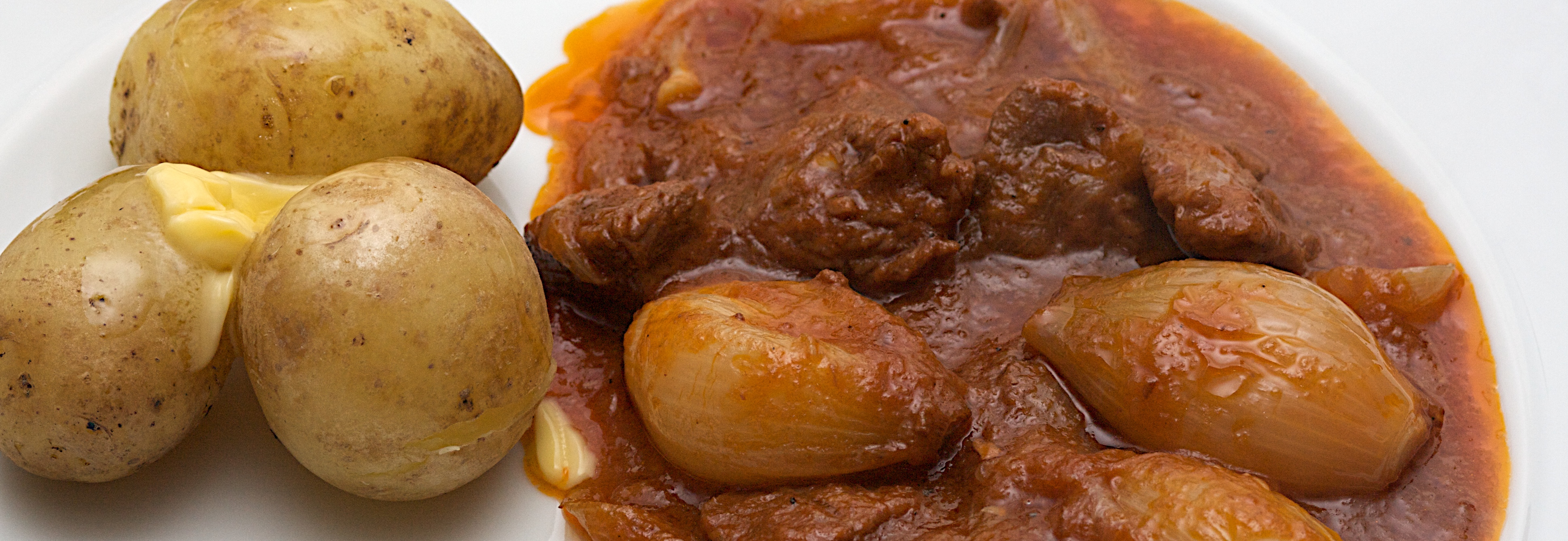
This was so easy and super tasty. All the prep can be done before your friends arrive and then it just simmers away and makes the house smell lovely. Serve with steamed potatoes.

Warning: The meat is supposed to be marinated for 24-48 hours – I only realised this on Saturday afternoon so mine was marinated for about 5 hours – still was fab.

Moshari stifado (Veal Stifado but we used beef) – Serves 6

  • Make a marinade from: 120ml olive oil, 250ml dry red wine, 2 tablespoons red wine vinegar, 3 bay leaves, 20 black peppercorns, 10 allspice berries, 4 garlic cloves.
  • Add 1kg stewing beef pieces, turn to coat, cover and let marinate in the refrigerator, turning occasionally, for 1 to 2 days.
  • Blanch 2kg small pearl onions or shallots in boiling water for 1 minute, drain and peel.
  • Heat 250ml olive oil in a large heavy pan over a medium heat. Add onions in batches and cook each batch for 8 – 10 minutes until lightly browned all over. Remove each batch with a slotted spoon.
  • Remove meat from marinade and strain liquid into bowl – reserve the flavourings
  • Add meat to pan used to cook the onion and cook for about 8 minutes until lightly browned all over.
  • Pour in reserved marinade and season with salt & pepper. Add 2 of the bay leaves, 6 of the peppercorns and 6 of the allspice berries.
  • Add 750ml puréed fresh or canned tomatoes (we used pasatta). Cover, bring to boil then reduce heat and simmer for about 30 minutes.
  • Add the onions and 3 of the reserved garlic cloves. Recover and simmer for 1.5 hours until meat and onions are tender and the sauce is very thick.
  • If the sauce has not reduced enough, remove meat and onions with a slotted spoon and then boil the sauce rapidly. Stir meat and onions back in before serving.

Julie

Read Full Post »

« Newer Posts