Feeds:
Posts
Comments

Archive for the ‘Italian’ Category

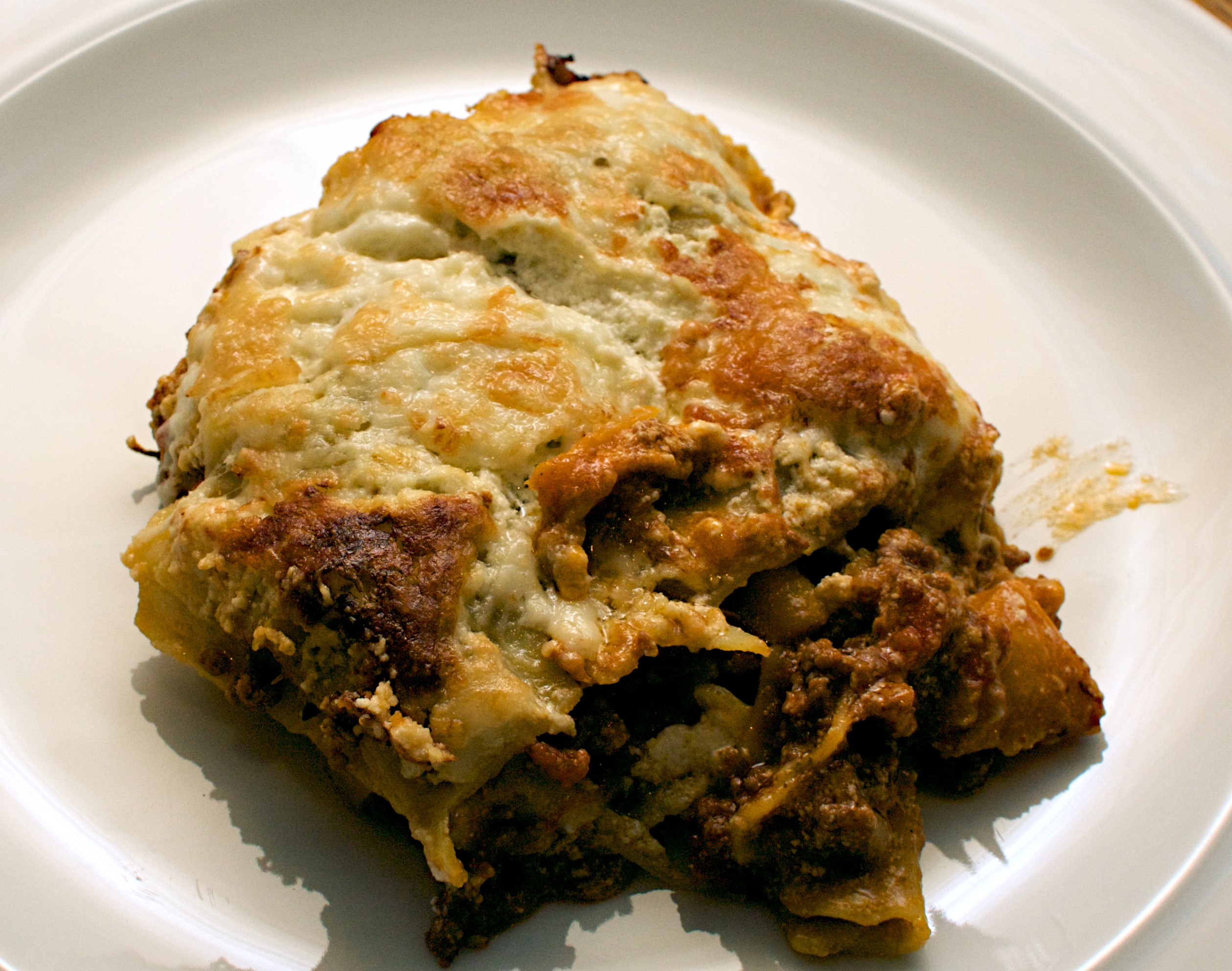
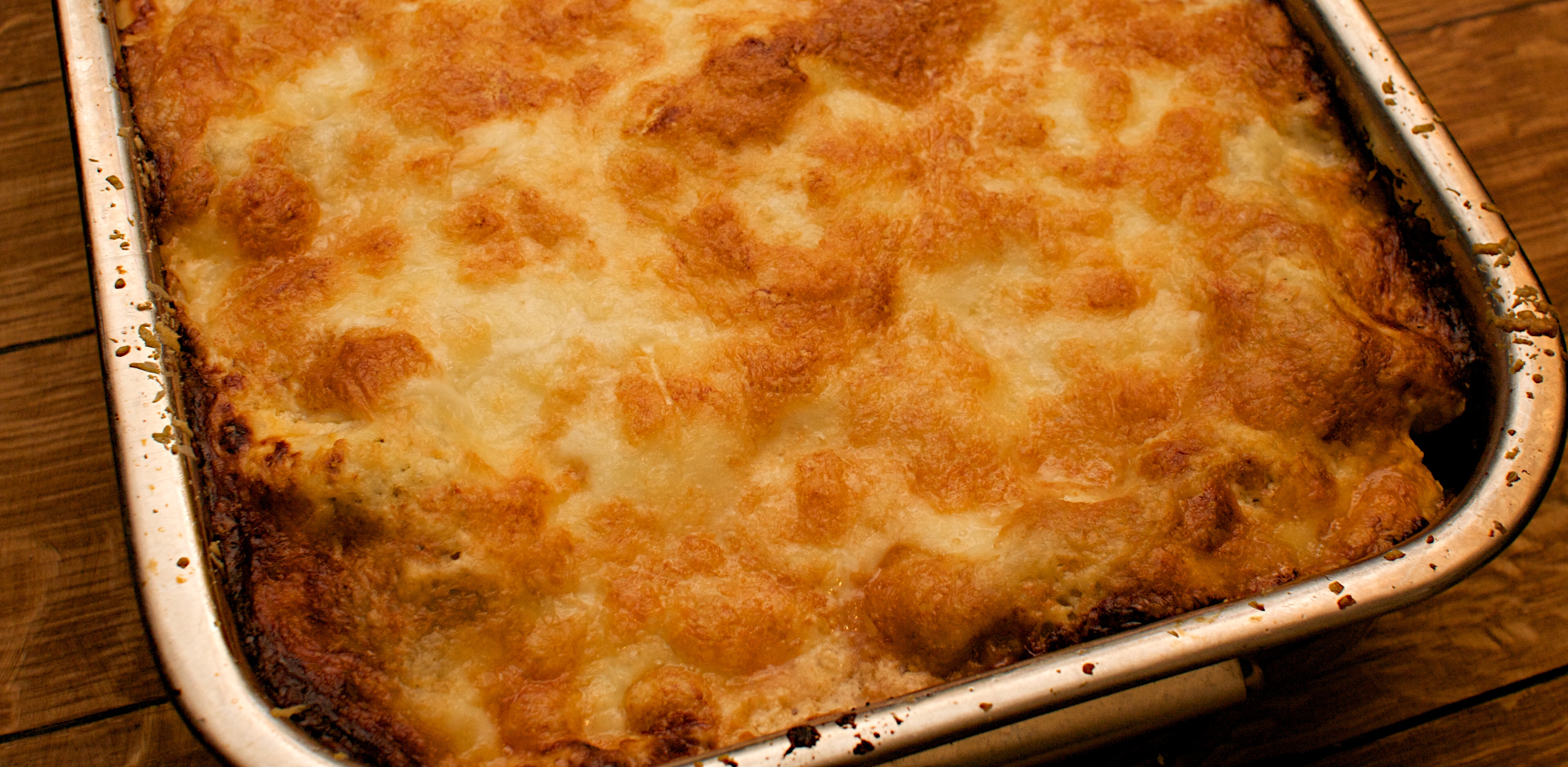
This is our classic party dish – so popular that we have to fight to get a taste when we serve it in a buffet! We’ve just made it this weekend for our friends Nicola and Dave’s housewarming. Just to make sure we got some ourselves we made a little extra for the next day. So for all our friends that have asked … here’s the recipe 🙂

Simple Baked Lasagne – serves 6 but easily doubled (which can easily serve 20 or more strangely enough …)

  • 4 rashers pancetta or smoked bacon, finely sliced
  • pinch cinnamon
  • 1 onion, finely chopped
  • 1 carrot, finely chopped
  • 2 cloves garlic, finely chopped
  • 2 generous handfuls of whole, fresh herbs (use your own mix of sage, oregano, rosemary and thyme)
  • 400g shin of beef, or skirt, coarsely minced
  • 200g pork belly, skin removed & coarsely minced
  • 2 x 400g tins good-quality plum tomatoes
  • 250ml red wine
  • 2 bay leaves
  • 1 butternut squash, halved, deseeded and roughly sliced
  • 1 tbsp coriander seeds, bashed in a mortar & pestle
  • 1 dried red chilli, also bashed
  • 400g dried, ready to cook lasagne sheets
  • 400g mozzarella

For the white sauce:

  • 1 x 250ml tubs of crème fraĂ®che
  • 3 anchovies, finely chopped
  • 2 handfuls freshly grated parmesan
  • a little milk

Preheat oven to 180C / 350F / Gas 4

If you are making a double quantity you may want to cook the meat sauce in two quantities as it will be easier to manage unless you have a very large casserole pot. You can also make the meat sauce in advance which makes entertaining easy –  a simple assembly and cook on the night!

In a large casserole pan slowly fry the pancetta or bacon and the cinnamon until golden, add the onion, carrot, garlic and herbs and about 4 tablespoons of olive oil. Once mixed together add the beef and pork and brown for about 5 minutes. Add the tinned tomatoes, wine and bay leaves and then bring to the boil. Wet some grease-proof paper and place it on top of the pan and then place a lid on top of this as well to complete the seal. Cook in the preheated oven for 2 hours.

While this is cooking rub the butternut squash with olive oil and sprinkle with salt, pepper and the bashed coriander seeds and chilli. Place on a baking tray and roast in the oven for the last 45 minutes of cooking the sauce. When you remove the sauce check that the squash is cooked and slightly caramelising; if not leave in oven until done.

When sauce is done season and put to one side. Mix together crème fraĂ®che, anchovies, a handful of parmesan and season with salt and pepper. Slowly add enough milk while mixing until the sauce becomes loose and smooth. Don’t make it too runny!

Turn oven up to 200C / 400F / Gas 6. To assemble lasagne rub a large dish, or deep tray with olive oil, lay some sheets of lasagne over the bottom (and drape over the sides too if you are using fresh lasagne). Add a layer of meat, a little white sauce, a sprinkle of parmesan and then top with another layer of lasagne sheets. Make a complete layer with the butternut, topping it again with lasagne sheets. Repeat the meat, white sauce and parmesan layers. Finish with a layer of pasta covered in white sauce. Tear over the mozzarella and sprinkle with parmesan.

Cook for 30-35 minutes and until golden. Watch the hordes descend.

[Inspired by Jamie Oliver: Jamie’s dinners, Penguin 2006]
Read Full Post »

We’ve been looking out for Anna Del Conte’s Gastronomy of Italy for some time now. This is a book in serious need of reprinting – a true Italian bible. The recipe’s are straightforward and authentic and there is an excellent section on the regions of Italy. We snapped this up when at last a second-hand copy became available on Amazon and suggest you do the same if you get the chance.

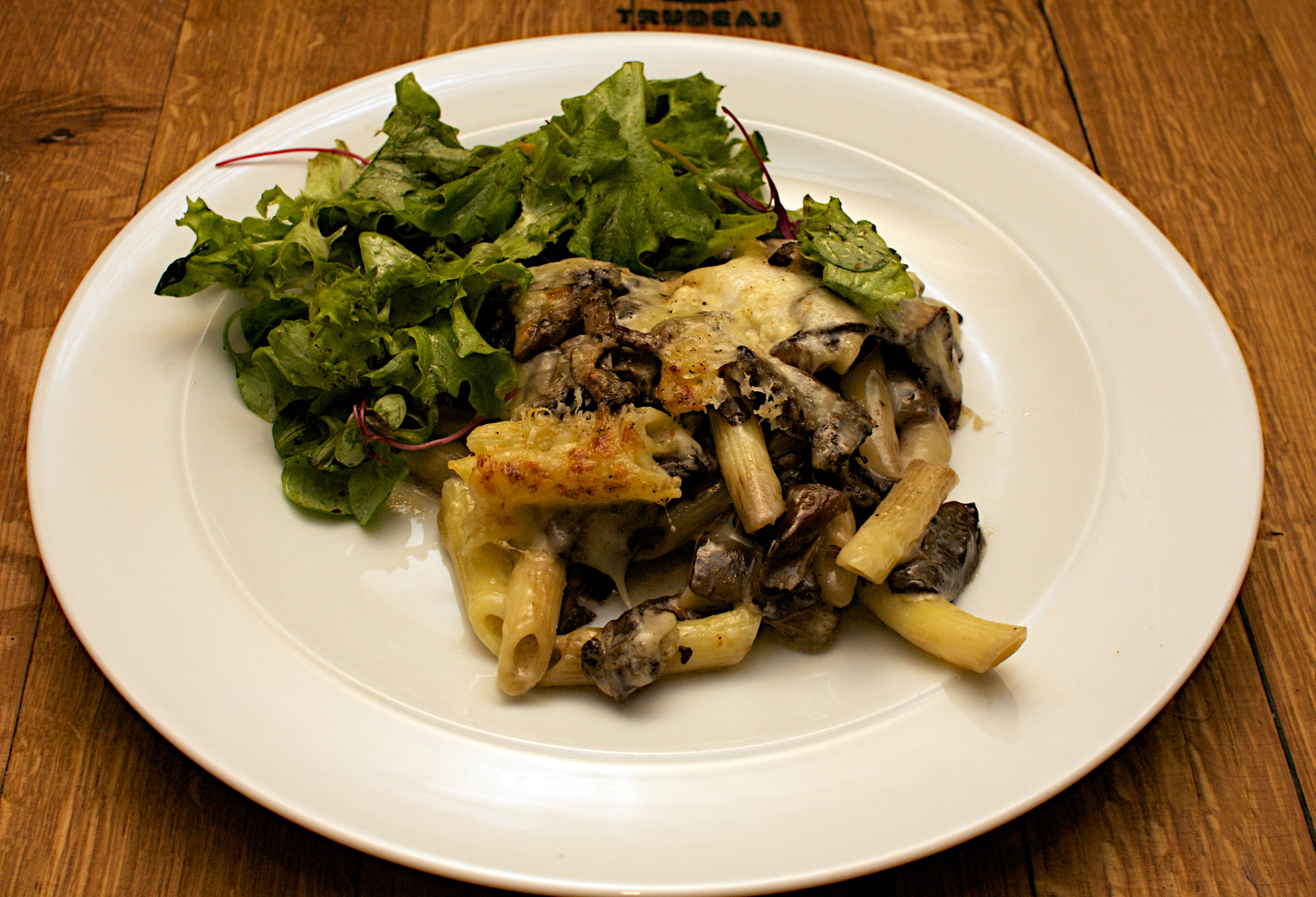
This is a really nice dish for autumm – a bit like macaroni cheese but with mushrooms. There is no place for calorie counting here!

Baked Penne with Cheese and Mushrooms – to serve 4

  • 20g dried porcini, soaked, drained and chopped
  • 500g fresh mushrooms, thinly sliced
  • 1 garlic clove
  • 50g unsalted butter
  • 300g penne
  • butter for the dish
  • 150g Bel Paese cheese, thinly sliced (we couldn’t find Bel Paese so substituted Taleggio)
  • 150g fontina cheese, thinly sliced
  • 75g freshly grated Parmesan
  • 200ml double cream

Heat the oven to 200ºC/400°F/Gas Mark 6. Sauté the porcini and fresh mushrooms with the whole garlic clove in 25g of the butter over a high heat. Add salt and pepper, lower the heat and cook for 3 minutes. Throw away the garlic.

Cook the pasta according to the pack. Drain and dress with the remaining butter.

Butter an ovenproof dish and cover the bottom with layer of pasta. Spread about a quarter of the mushrooms and sliced cheese over the pasta and sprinkle with 1 tablespoon of the Parmesan. Add another layer of pasta and cover with mushrooms and cheese. Repeat this until all the ingredients are used, finishing with a cheese layer. Pour over the cream and season with salt and pepper.

Cover with foil and bake for 10 minutes. Remove the foil and bake for another 10 minutes, or until a light crust has formed on the top. Settle for 5 minutes before serving with a green salad.

Wine Suggestion: We drank a Pinot Noir from the Russian River Valley  in California that our friend Jen kindly brought back from her holidays. There are some great wines being made here that we rarely see outside the US so it was a treat and a really good match for the dish. If you haven’t been travelling we’d suggest finding a pinot noir with juicy, ripe fruit balanced by a lightness of touch – avoid anything too alcoholic or jammy which will overwhelm the food. If you find a nice “earthy” pinot from Hawkes Bay in New Zealand or Burgundy then you’re on the right track.

Read Full Post »

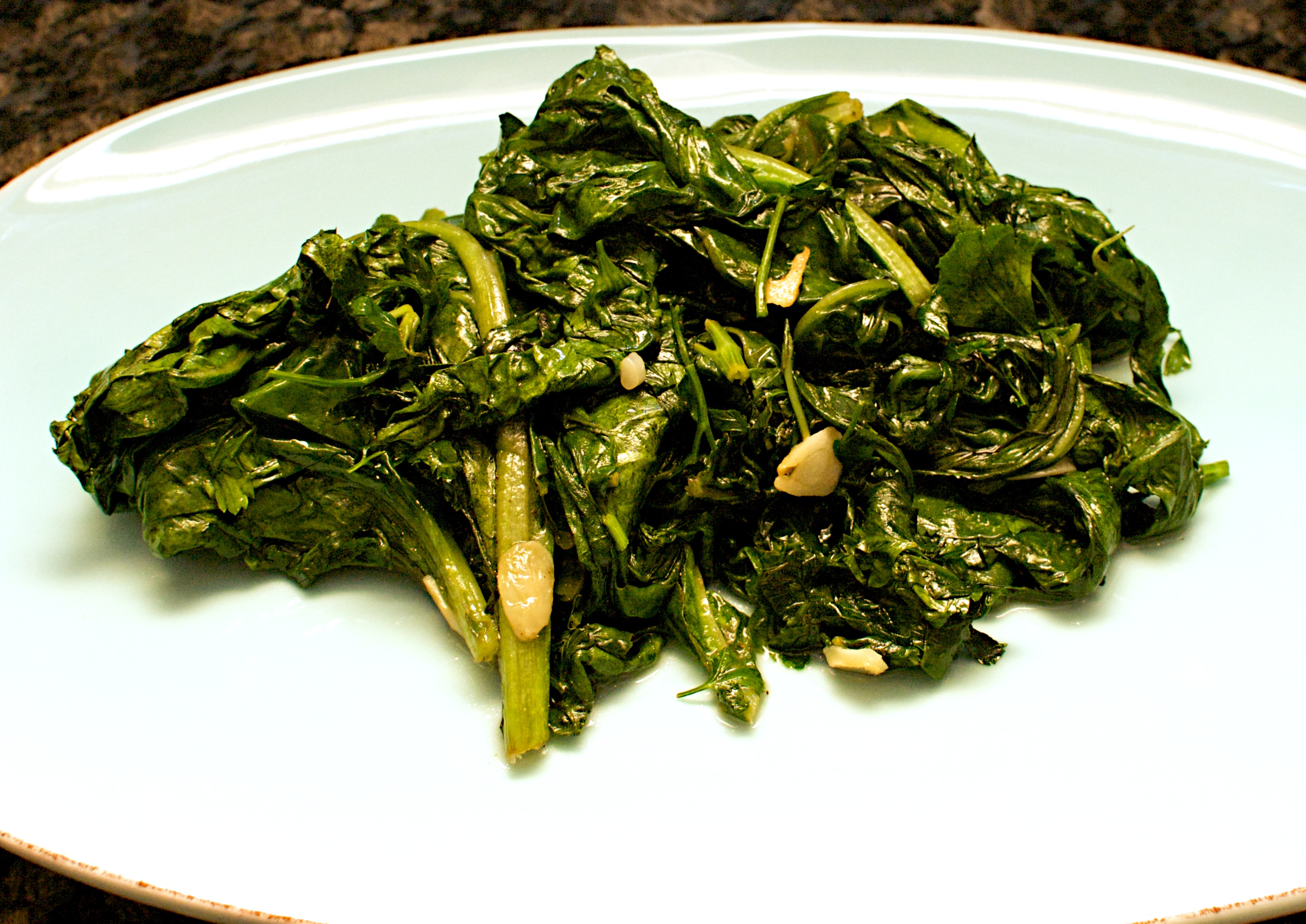
A very useful recipe, especially as you can use whatever greens you happen to have e.g. baby cabbage leaves, Swiss chard, salad leaves like cos or gem or a bag of spinach, watercress and rocket. The rules of play are to blanch the more robust leaves first and then wilt them down in a pan with salad leaves, herbs and garlic until soft. We used a big bag of spinach and some herbs and it was a really good accompaniment for the leg of lamb below.

Ricetta tipica per verdure verdi (Italian style greens) – to serve 4 as a side dish

  • 6 big handfuls of mixed greens, leaves and herbs (see above)
  • olive oil
  • 2 cloves of garlic, sliced
  • juice of 1 lemon
Blanch the cabbage leaves and chard in salted boiling water for a couple of minutes, then drain and leave to cool for a bit. Heat a few glugs of olive oil in a large frying pan and add the sliced garlic. As soon as it starts to colour; add the salad leaves then the cabbage and chard. Cook on a medium heat for 4-5 minutes, moving around the pan with tongs, then add herbs and cook for another minute. Take off the heat and season carefully with salt and pepper, some olive oil and enough lemon juice to give it a kick.
(Original recipe from Jamie’s Italy by Jamie Oliver, Penguin Group, 2005).

Read Full Post »

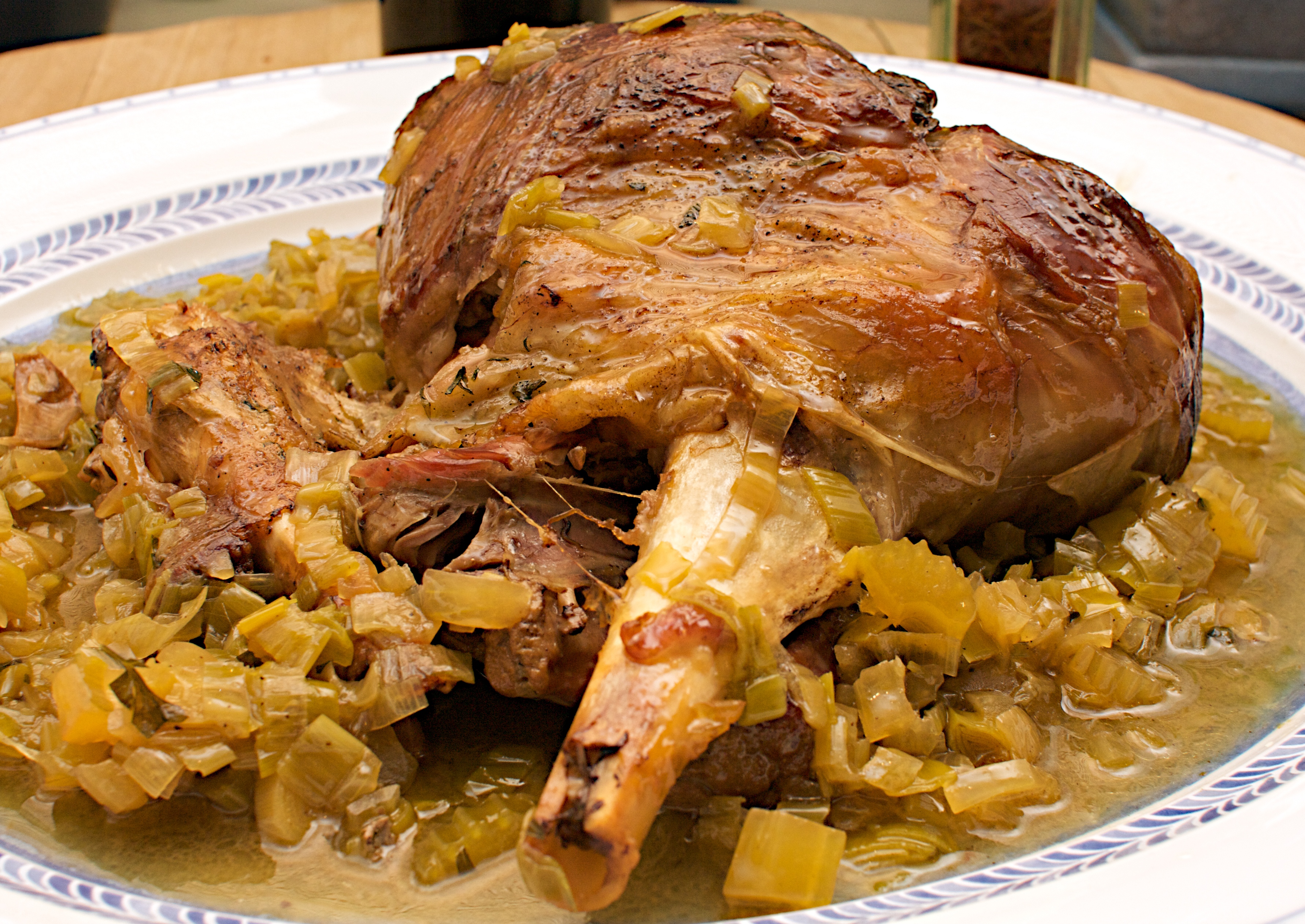
This is the easiest Sunday roast you’ll ever make. It takes minutes to prepare and then all you have to do is wait 5 hours while it becomes meltingly tender in the oven. No carving required as you can easily pull the meat apart with a spoon. Delicious!

Leg of Lamb à la PĂ©rigourdine – to serve 6

  • 3 tbsp olive oil
  • 20g butter
  • 2kg leg of lamb, skinned
  • 2 tbsp brandy
  • 6 garlic cloves
  • 1 onion, chopped
  • 1 leek, trimmed and chopped
  • 1 fresh thyme sprig, chopped
  • 1 celery stick, chopped
  • 1 clove
  • 1 bottle dry white wine
Preheat the oven to 150°C/300°F/Gas Mark 2.

Heat the oil and butter in a roasting tin, add the lamb and turn until browned all over.

Add the brandy, heat for a few seconds, then ignite and cover with a big saucepan lid or baking tray to extinguish the flames.

Put the garlic around the lamb, add the onion, leek, thyme, parsley, celery and clove, season with salt and pepper and pour in the wine.

Cover tightly and roast for 5 hours. Carefully transfer to a warm serving dish, throw away the garlic and serve with the gravy.

Serve with some nice greens.

Wine Suggestion: Stick to something Italian with a bit of acidity and tannin – either a Sangiovese or a Cabernet Sauvignon would work well. We drank a Rosso Di Montalcino which was lovely.

(Original recipe from Silver Spoon, Phaidon 2005).

Read Full Post »

Woohoo it’s mushroom season at last. Cold weather has its virtues. We always think of risotto as a bit of weekend thing but it’s so quick and easy we’ve vowed to make every night a potential risotto night in future. The perfect mid-week treat.

Red wine  & mushroom risotto – to serve 4

  • olive oil
  • 50g butter
  • 1 red onion, chopped
  • 400g chestnut mushrooms (we used large field mushrooms)
  • 300g risotto rice
  • 350ml dry red wine
  • 750ml chicken stock
  • 3 tbsp grated Parmesan

Heat 2 tbsp olive oil and half the butter in a large, heavy pan. Fry the onions until nearly soft. Add the mushrooms and cook until golden. Add the rice, stir to coat with the oil and butter, and cook for a minute.

Add half the wine and let it bubble, stirring. Add the rest of the wine to the stock and heat gently. When the first lot of wine has been absorbed start adding the remaining stock and wine mix, a ladle at a time, stirring all the time. Make sure each ladle has been absorbed before you add the next. Continue adding liquid until  the rice is tender but still has a bite. Add the remaining butter and the parmesan, cover and let it sit for 5 minutes before serving.

Wine Suggestion: We found this recipe in BBC Olive Magazine (October 2011) in an article by Victoria Moore, drinks expert, who highly recommends a Barbera to go with this on account of it’s high acidity and hence palate-cleansing effects. It also complements the earthy mushroom flavours. We’d agree with that!

Read Full Post »

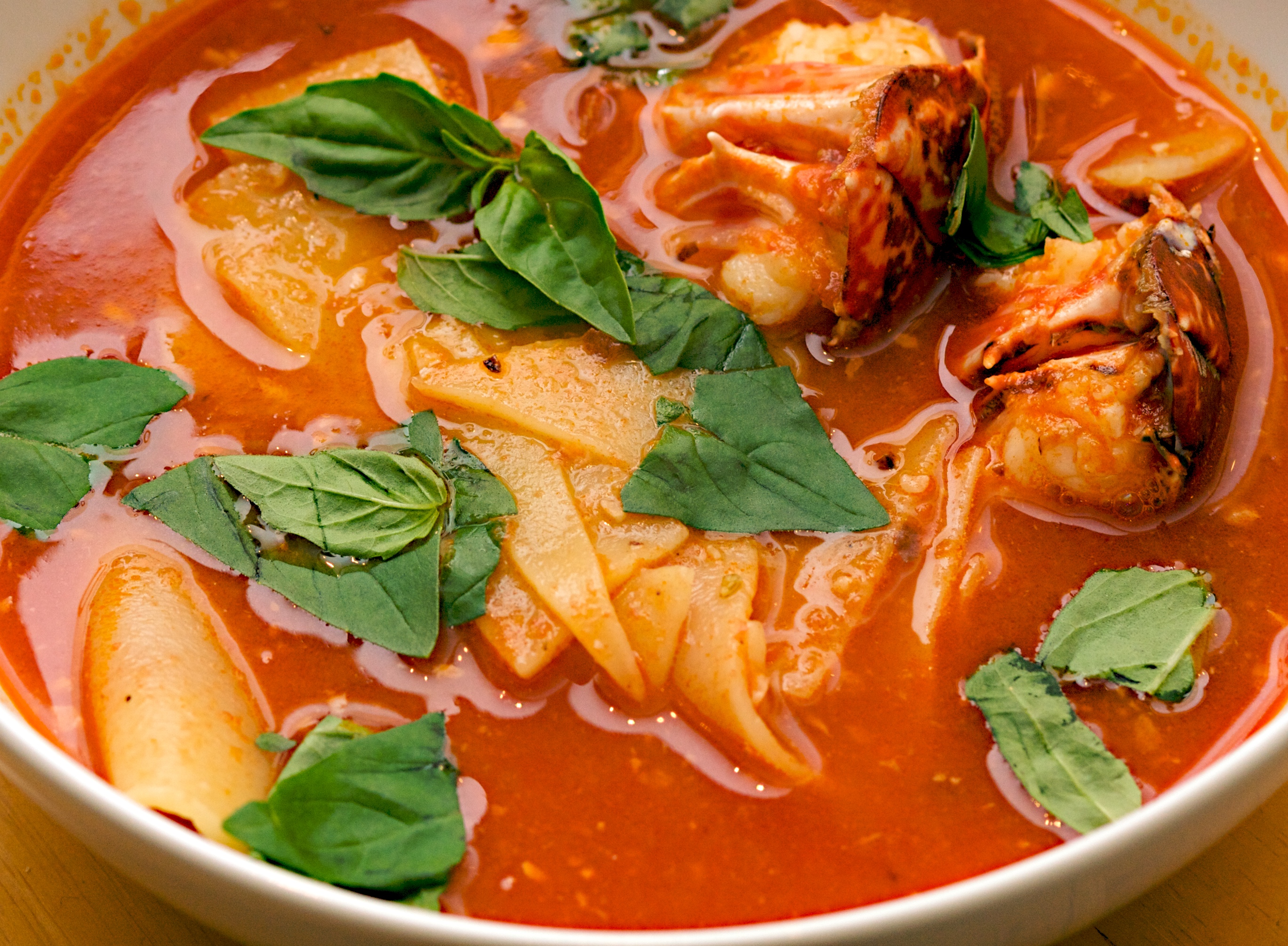
We got a surprise call from our great friend Ben who had some live lobsters which he was terrified of. He’s now got over this and is an expert lobster stabber and we got the benefit of two live lobsters too. I made this years ago before I met Jules and have always promised to cook it if two live lobsters arrive on our doorstep, so happy Friday night Jules! This recipe feeds 4 people – we had no problem finding 2 volunteers to help us eat it.

Il miglior brodo siciliano di aragosta – the best Sicilian  lobster broth – to serve 4

  • 150g dried lasagne sheets, smashed up
  • 2 x 1kg live lobsters
  • extra virgin olive oil
  • 1 large white onion, finely chopped
  • 6 cloves of garlic, peeled and finely chopped
  • 1 large carrot, peeled and finely chopped
  • 1 cinnamon stick
  • 1 tsp chilli flakes or 1 or 2 small dried red chillies, crumbled
  • 1 tsp fennel seeds, smashed
  • 1/2 a bottle of Sicilian white wine – you can substitute any white wine
  • 850ml passata or 3 x 400g tins plum tomatoes, liquidized
  • a large handful of whole almonds, skins on
  • a small handful of fresh basil leaves
First you’re going to have to kill the lobsters. The best way to do this – and the fairest way for the lobster – is to get a large sharp knife, place the tip on the little crown on the head and chop straight down between its eyes. Be brave! Once you’ve killed your lobsters you need to twist and pull the head away from the tail. Put the tails and claws aside for now. Open the heads and discard the little grey stomach sack which will be near the eyes. Then just cut the head up into little pieces, keeping all the brown meat and other stuff.

Put a large pot on a very gentle heat. When hot, pour a good glug of olive oil in along with all the head pieces and lobster legs. You can turn the heat up a bit now. Add your onions, garlic, carrots, cinnamon stick, chillies and fennel seeds. Continue frying this for about 15 minutes – keep moving it around in the pot – so the onions take on a bit of colour but careful they don’t burn. If the pan gets too hot just splash in a bit of water.

Add your white wine and boil hard for 5 minutes before adding the passata and the same quantity of water. Bring back to the boil, then reduce the heat and simmer for about 20 or 30 minutes. Now put a colander on top of another large pot and pass the soup through it. Press down on the shells with the back of a ladle and let them drip for 5 minutes to make sure you get all the flavour out of them. You can now throw the shells away. Put the soup back on the heat to simmer. It should look like tomato soup – if you think it looks to thick you can add a little water.

Slice the lobster tails across, through the shell and the meat, into 2.5cm slices and put these into the broth. Crack open the claws and pick out all the meat and add this to the broth too. Continue to simmer for 8 more minutes. Meanwhile, cook the pasta in salted boiling water, then drain and toss into the soup for 4-5 minutes.

Chop the almonds very finely and stir into the soup. Taste and season if needed. Divide between 4 bowls, tear over some basil leaves and drizzle with some extra virgin olive oil.

Wine Suggestions: as this is such a rich dish you need to pair it with a wine that is a little more robust and full-bodied. For whites there are a couple of options: stay local and choose Sicilian wines like Inzolia or Grillo which have weight and a herbal minerality. The other option is to look at a classic Chardonnay with a bit of oak for structure. Try to pick one that has a little bit of acidity for freshness too. This was the option we went for and it worked a treat. For red, do the opposite and look for a fruity, but lighter style of wine like an easy and inexpensive Pinot Noir or Grenache – you want to avoid too much tannin and weight which would overwhelm the sweet, delicate lobster.

(Original recipe by Jamie Oliver in Jamie’s Italy)

Read Full Post »

Irish SaladThis caprese salad is made from all Irish ingredients – even the mozzarella (fellow Dubliners can pick some up in Fallon & Byrne). Perfect for what will probably be one of our last sunny lunches for this year.

Caprese di Mozzarella – serves 2

  • mozzarella cheese
  • 2-3 tomatoes, sliced
  • basil leaves
  • olive oil
  • salt
Drain the cheese and cut into thin slices. Arrange the tomato and mozzarella slices in concentric rings on a nice plate. Sprinkle with basil leaves, drizzle with olive oil and season with salt (salt is a necessity here!).

Read Full Post »

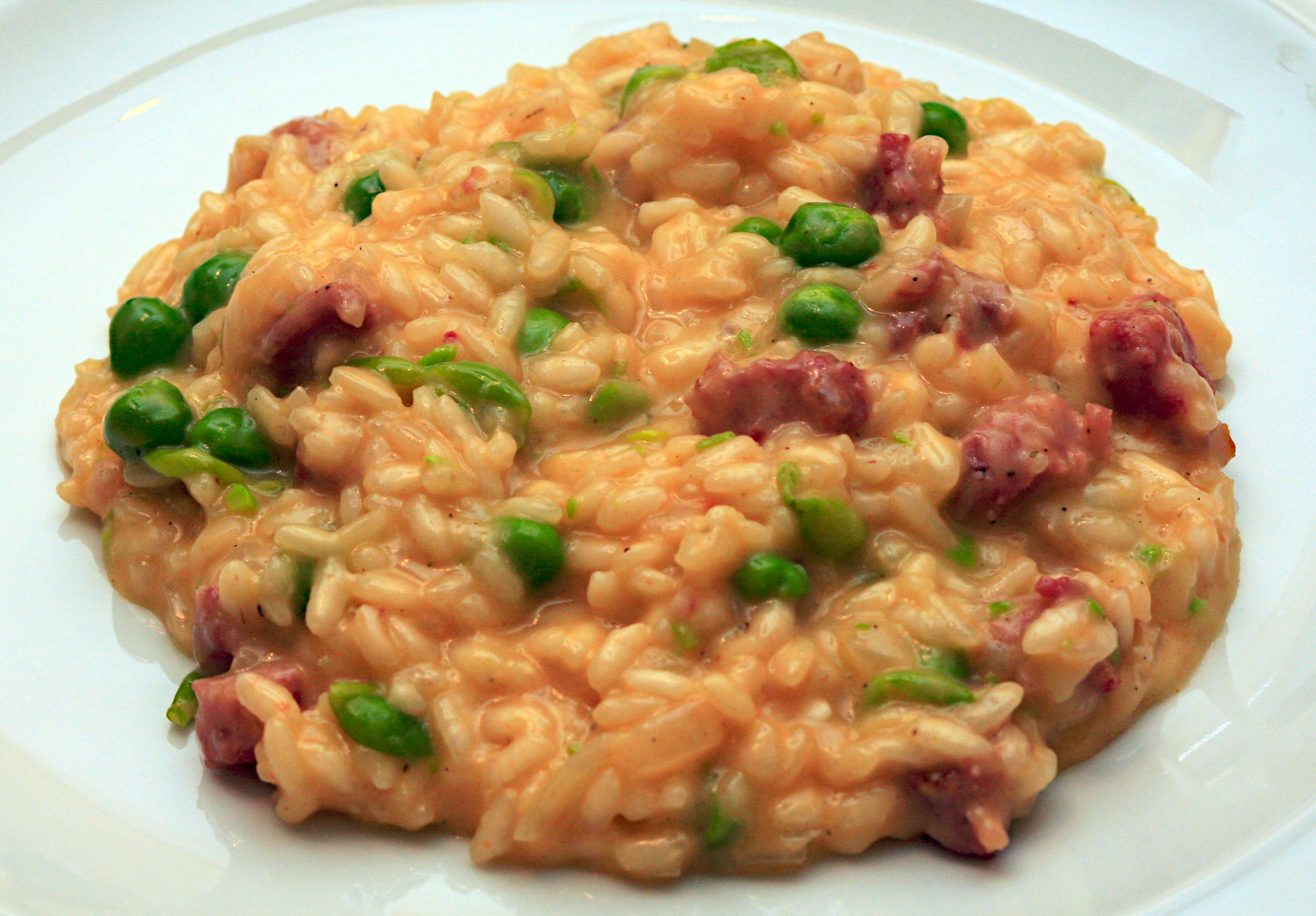
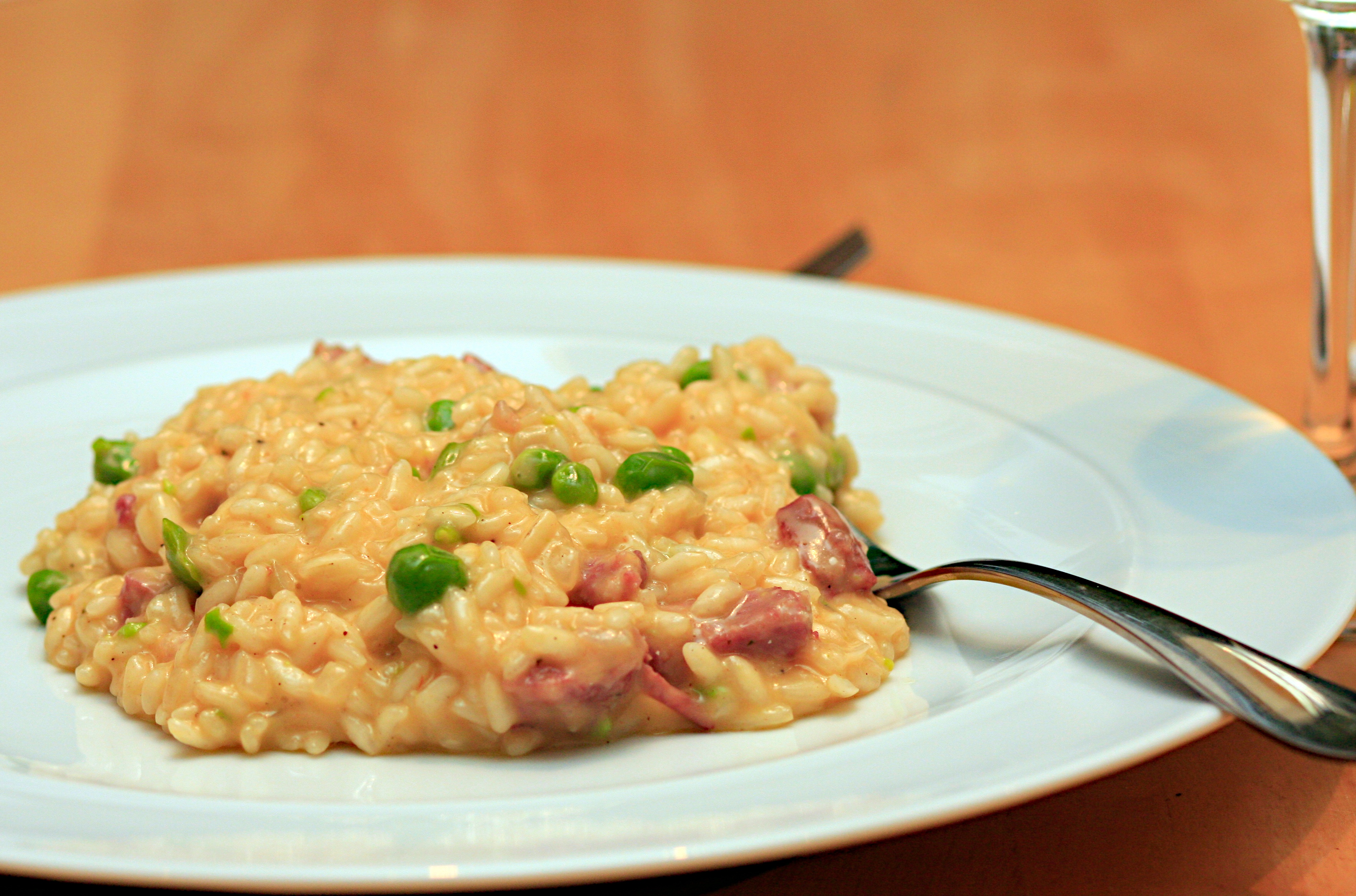
Giorgio Locatelli is a great inspiration when it comes to our Italian cooking and he hasn’t disappointed with this recipe either; fully flavoured and rich, yet fresh and exceptionally easy to eat … Jono kept on creeping back to attack the leftovers! We used some Italian sausages from Sicily that we convinced a local Italian restaurant to sell us but you can use whatever sausage you like as long as they are good quality. Georgio uses another Italian sausage called Luganica which he says are small and peppery so you could try seeking these out too.

Risotto con luganica e piselli – to serve 4

  • 150g freshly podded peas
  • 2 good pork sausages (see tips above)
  • 2.5 litres of good chicken stock
  • 50g butter
  • 1 onion, chopped very finely
  • 400g superfino carnaroli – we used regular carnaroli which worked fine
  • 125ml dry white wine
  • 2 tbsp tomato passata
For the mantecatura:
  • 75g cold butter, cut into small dice
  • 100g finely grated Parmesan
Blanch the peas in boiling salted water for a couple of minutes and drain. Crush one-third of them with a fork to make a coarse purée.

Chop the sausages into small pieces. Sauté half the chopped sausages in a pan until they are crispy and brown and set aside.

Bring your pot of stock to the boil and then turn it down so it is just simmering.

Melt the butter in a heavy-based pot and add the onion and the other half of the sausages (that you didn’t sautĂ©). Cook gently until the onion is softened but hasn’t changed colour – about 5 minutes.

Add the rice and stir around so it gets coated in butter. Make sure all the grains are warm, before adding the wine. Let the wine evaporate totally until the onion and rice are dry.

Start adding the stock, a ladleful at a time, stirring continuously as you do so. Add the tomato passata along with the first ladeful. When each addition of stock has almost evaporated, add the next ladleful.

Carry on like this for about 15-17 minutes, continually adding stock as above. After about 12-14 minutes add, add the peas and the sausages that you sautĂ©d earlier. Slow up on the stock when you get near the end so the rice doesn’t become too wet and soupy or it will get too sloppy when you add the butter and Parmesan at the end.

Turn the heat down and rest the risotto for a minute, then, for the mantecatura, use a wooden spoon to vigorously beat in the cold diced butter and finally the Parmesan, making sure you shake the pan hard while you beat. Season to taste and serve.

(Original recipe from Made in Italy: Food and Stories by Georgio Locatelli, published by Fourth Estate 2006)

Wine Suggestion: We suggest you serve the rest of the white that you used in the recipe. We went for a Falanghina made by Catello Ducale in Campania, the heel of Italy. The risotto is rich so you want a white wine that ‘s  reasonably full bodied and full of fruit, but maintaining freshness  which southern Italian whites like this often bring. Alternately you could try a fruity and medium bodied red with some acidity, again an Italian blend with some sangiovese would work a treat.

Read Full Post »

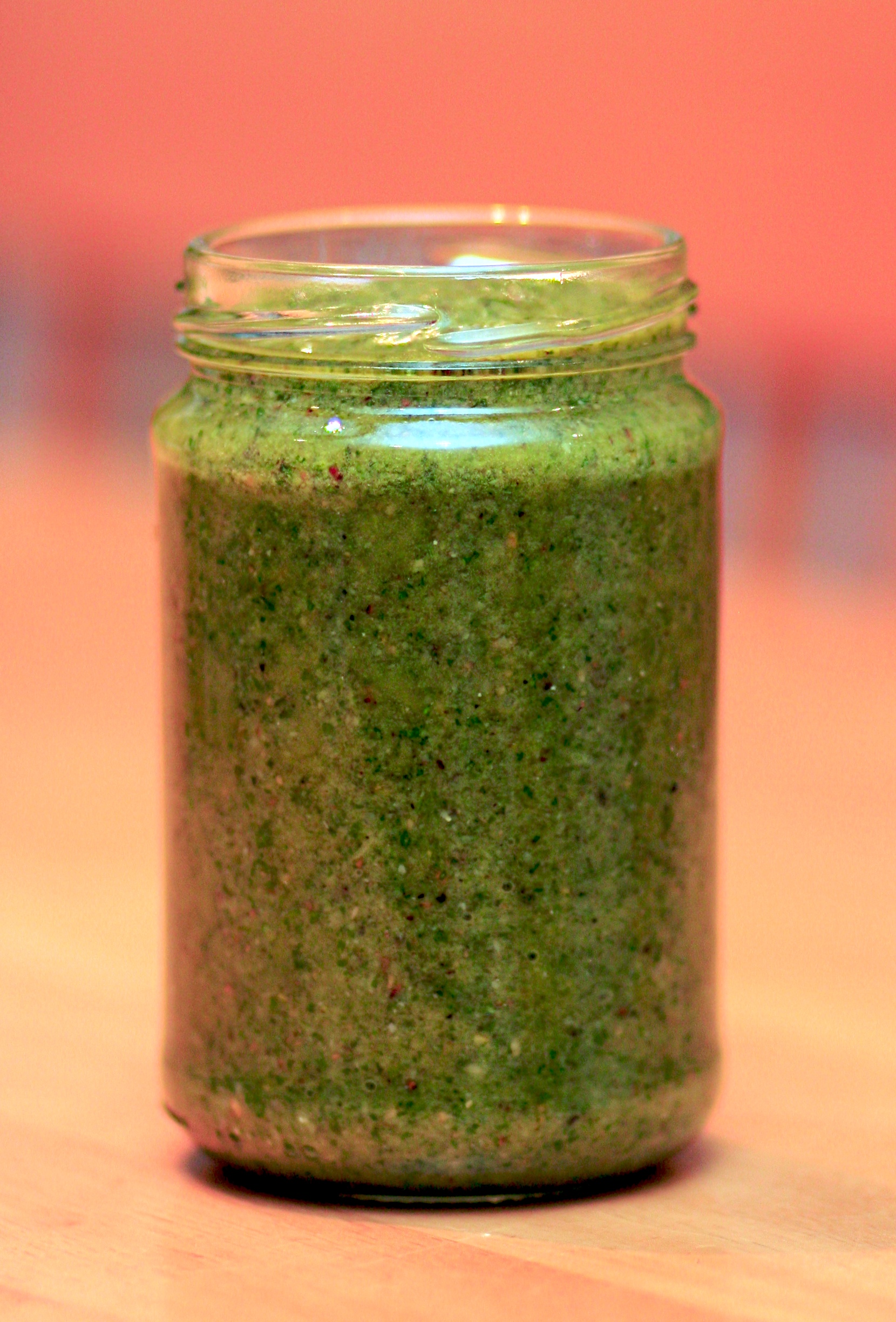
Our kitchen window was bursting with basil plants and sort of like “the Day of the Triffids” as they were out of control and growing like mad despite the neglect after being away for a week. So if like us you have some basil on your windowsill then make pesto – those leaves aren’t going to last forever! This makes about 250ml and will keep in the fridge for a couple of weeks. You can expect some pesto recipes from us to follow.

Pesto – about 250ml

  • 50g pine nuts
  • large bunch basil
  • 50g parmesan
  • 150ml olive oil, plus a bit extra for storing
  • 2 garlic cloves
Heat a small frying pan over a low heat. Cook the pine nuts until golden, shaking the pan. Keep an eye on them as they burn easily and very quickly.Put the toasted pine nuts into a food processor along with the rest of the ingredients and process until smooth, then taste and season.

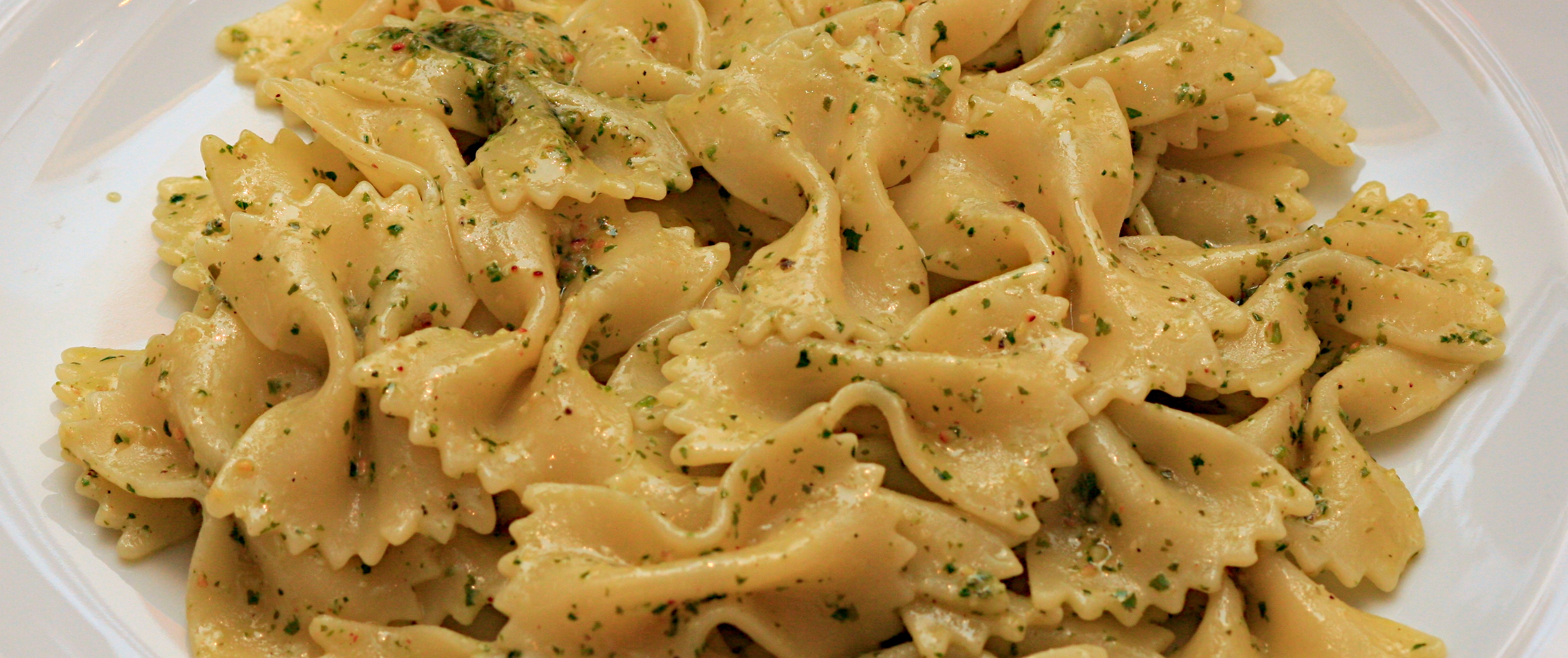
Pour into a jar and cover with a little bit of extra oil and store in the fridge. Keeps for around 2 weeks – ready for instant dinners like the one below.

Read Full Post »

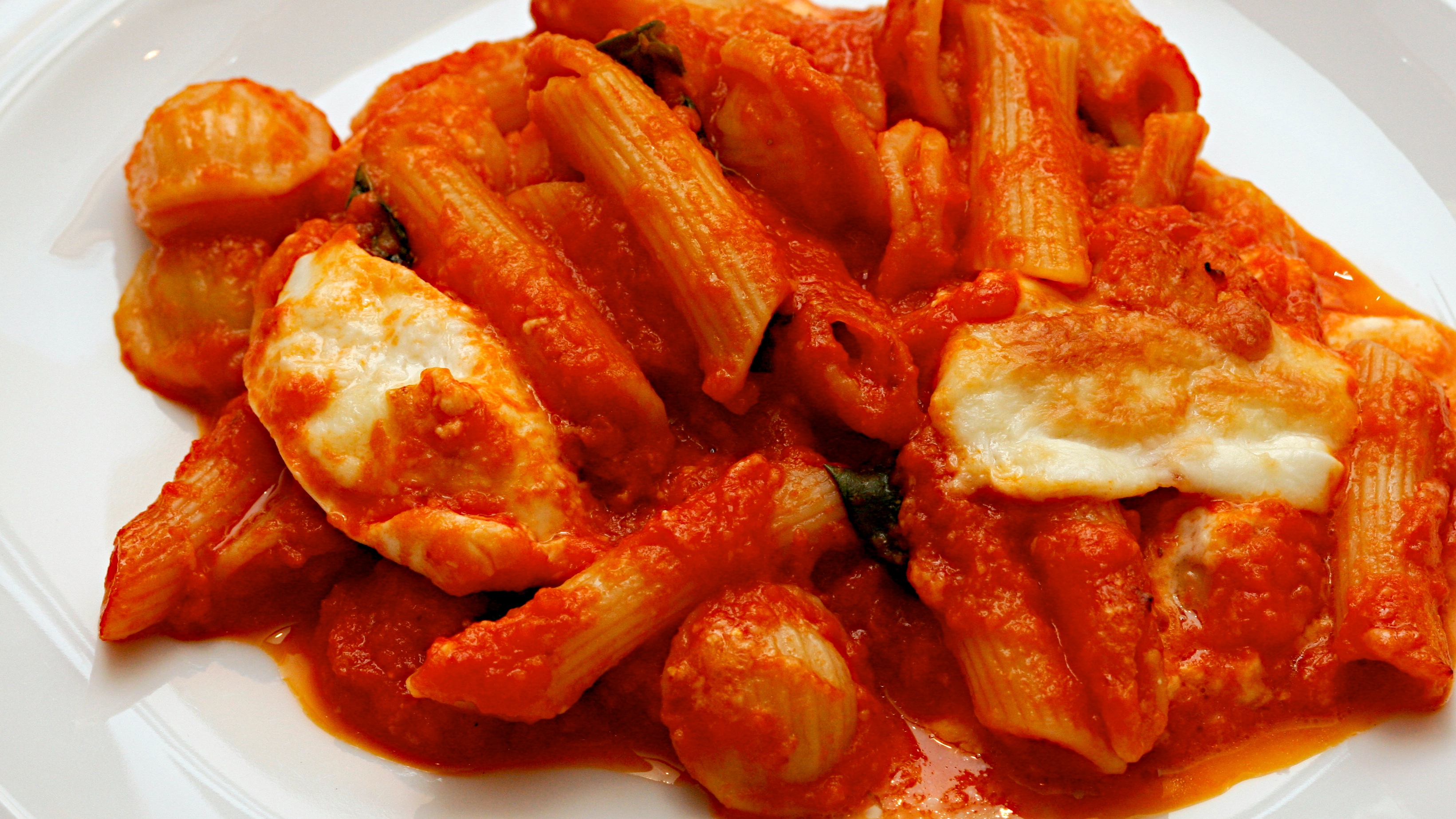
Otherwise known as “Jamie’s Pasta Bake”; a simple, tasty dish that can be easily doubled for parties. Delicious hot for dinner with some garlic toasts and also cold the next day for lunch.

The recipe suggests using orecchiette but any pasta shapes will do so it’s a great way to use up all the packets lying around the cupboard.

Baked pasta with tomatoes and mozzarella (serves 4 generously)

  • 1 onion, peeled and finely chopped (white onions are suggested but any other onion lying to hand will do)
  • 2 cloves garlic, peeled and finely sliced
  • 1 to 2 dried chillies, crumbled
  • 3 x 400g tins of good quality plum tomatoes
  • large handful of basil, torn
  • 1 tablespoon red wine vinegar
  • 400g short, any shaped dried pasta, preferably orecchiette
  • 4 very big handfuls of freshly grated parmesan
  • 3 x 150g balls of mozzarella, sliced
Preheat oven to 200C / 400F / Gas 6.

Heat a saucepan on Medium-low heat and a couple of glugs of olive oil, onion, garlic and chill. Slowly fry for 10 minutes until softened but not coloured.

Add tinned tomatoes and a small glass of water and bring to a boil. Simmer for 20 minutes. Wizz sauce until smooth add basil leaves, red wine vinegar and season.

Boil a large pot of salted water and cook the pasta shapes according to packet instructions. Drain and then toss with half the tomato sauce and a handful of parmesan.

Rub a little olive oil in a baking tray and layer a third of the pasta in the bottom. Follow by a layer of tomato sauce a handful of parmesan and 1 mozzarella ball. Repeat two more times and until ingredients are used up. Make sure that there is a good layer of cheese on the top.

Cook in oven for 15 minutes or until golden and bubbling.

Original recipe: Jamie’s Italy

Wine suggestions: This will work equally well with a nutty, dry white like a Verdicchio or Greco di Tufo or  a mid-weight red like Barbera, Montepulciano d’Abbruzzo or a fruity Chianti. You don’t need to get too complex as this is a very social dish so it suits a social and easy style of wine.

Read Full Post »

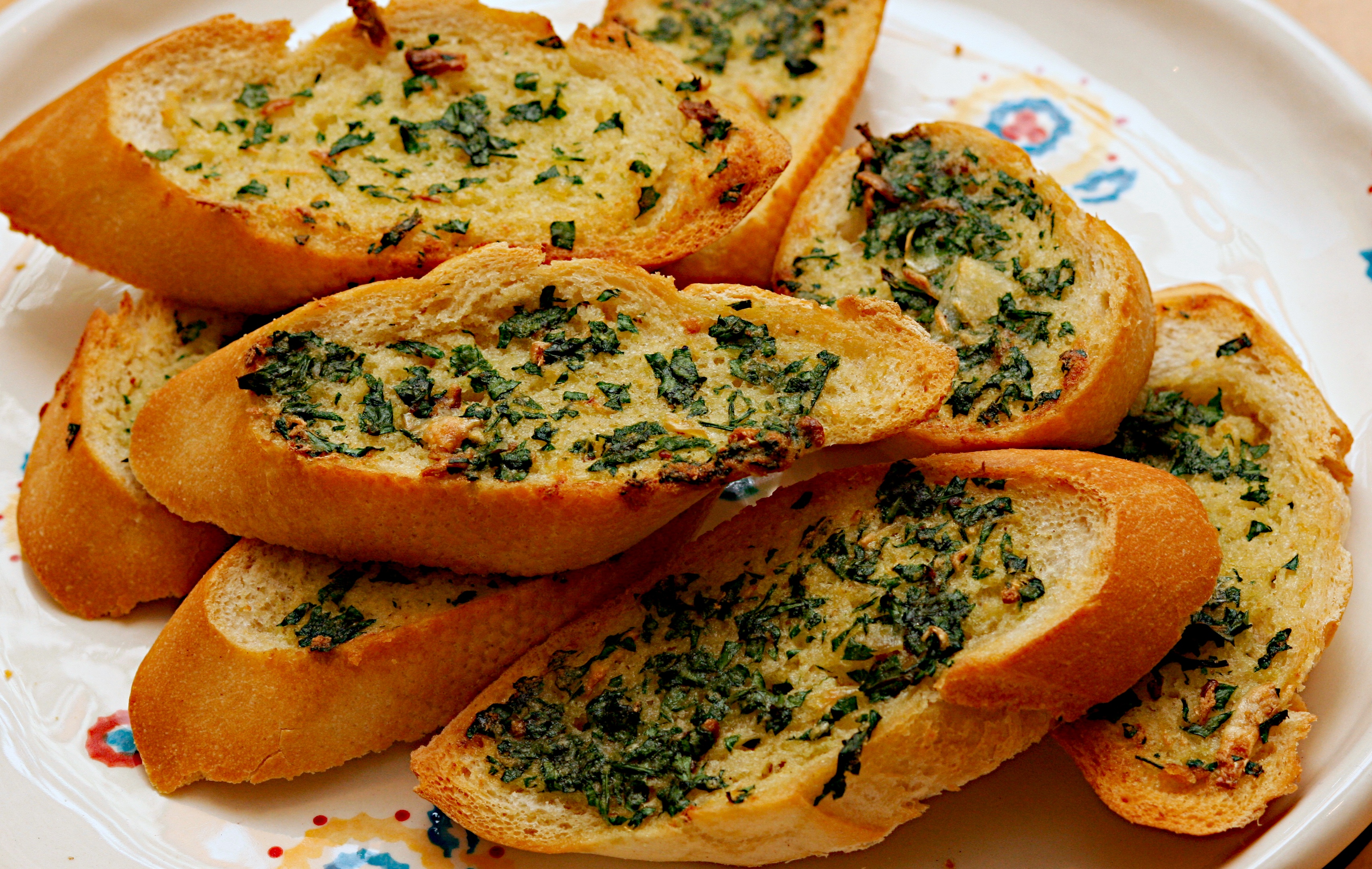
We love garlic bread but often the garlic is too raw and over-powering and it doesn’t love us back. For these toasts we roasted the garlic first before making the butter which gives a more subtle flavour.

You can make the garlic butter in advance.

Garlic Toasts (serves 4, easily multiplied for larger quantities)

  • 3 fat Garlic Cloves, peeled
  • 1 tablespoon Olive Oil
  • 1 tablespoon butter
  • 1/2 tablespoon Flat-leaf Parsley, chopped
  • 4 slices of Crostini, or a demi-baguette, sliced diagonally
Preheat oven to 180C/350F/Gas 4.
Put garlic and olive oil in a small roasting tin and season with salt and ground black pepper. Cover with foil and roast for 20 minutes.
When cooked and golden, remove from oven, cool slightly and then mash the garlic cloves in a small bowl with a fork. Add the butter and parsley and mix thoroughly.
Put bread on baking tray, spread with the garlic butter and bake until crisp (roughly 5-10 minutes).
We served this with Jamie Oliver’s Pasta Bake to great effect.
Original recipe: Bill Granger’s “Every Day”, Murdoch Books

Read Full Post »

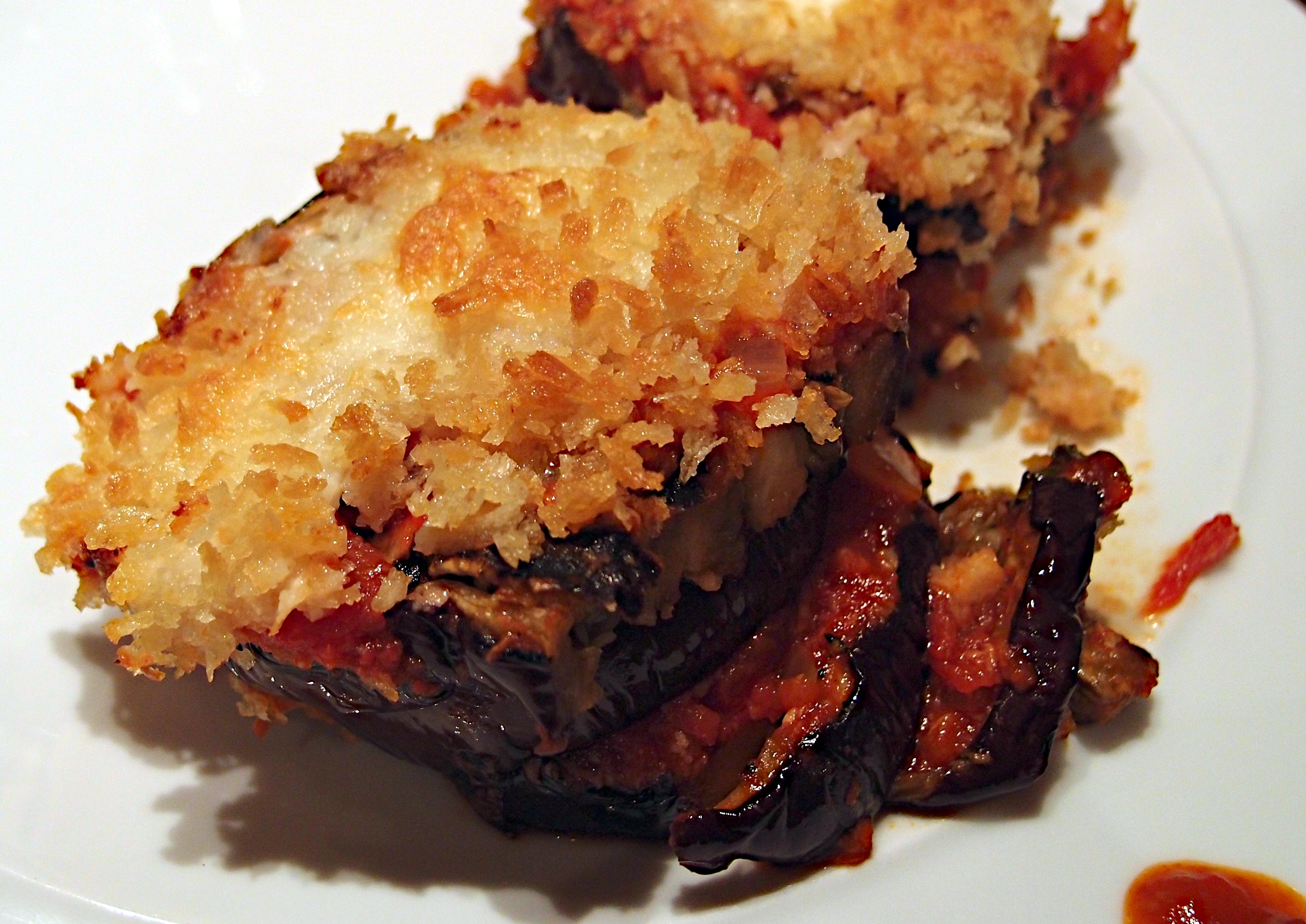
I think Jamie’s Italy might be our favourite Jamie book – it’s without a doubt the one we’ve cooked the most out of. This is a super way to use up aubergines which are bang in season at the moment. Jamie says this is a side dish but we served it as a main with some garlic bread and next time we’ll serve a green salad too. The revelation for us was to barbecue (or grill) the aubergines to avoid the oiliness you so often get with this dish.

Jamie’s Aubergine Parmigiana – to serve 6 as a side dish or 4 as a main

  • 3 large firm aubergines
  • olive oil
  • 1 onion, finely chopped
  • 1 clove of garlic, finely sliced
  • 1 heaped tsp dried oregano
  • 2 x 400g tins of good-quality plum tomatoes
  • a little wine vinegar
  • a large handful of basil
  • 4 large handfuls of freshly grated Parmesan
  • 2 handfuls of dried breadcrumbs (we used Panko)
  • a little fresh oregano, leaves chopped
  • 1 x 150g ball of buffalo mozzarella
Slice the aubergine into 1cm thick slices and set aside. Get the barbecue (or griddle pan) really hot. Meanwhile put some olive oil into a large pan and put onto a medium heat. Add the onion, garlic and dried oregano and cook for 10 minutes, until the onion is soft and the garlic has started to colour. Break up the tomatoes and add to the onion, garlic and oregano. Give it all a stir and cover and simmer slowly for 15 minutes.

Meanwhile, barbecue the aubergines until lightly charred, in batches. When the tomato sauce is reduced, season it carefully with salt, pepper and a tiny bit of wine vinegar, and add the basil.

Put a small layer of tomato sauce is an earthenware dish, then a thin scattering of Parmesan, followed by a single layer of aubergines. Repeat until the ingredients are used, finishing with a little sauce and a good sprinkle of Parmesan. Tear the mozzarella over the top and scatter over the breadcrumbs. Bake the dish at 190°C/375°F/gas 5 for half an hour until golden and bubbling.

Nice!

(Original recipe from Jamie’s Italy published by Penguin Group, 2005)

Wine suggestion: a great way to match food and wine is to look at where the food comes from … in this case Northern Italy so a nice Barbera d’Asti would work a treat.

Read Full Post »

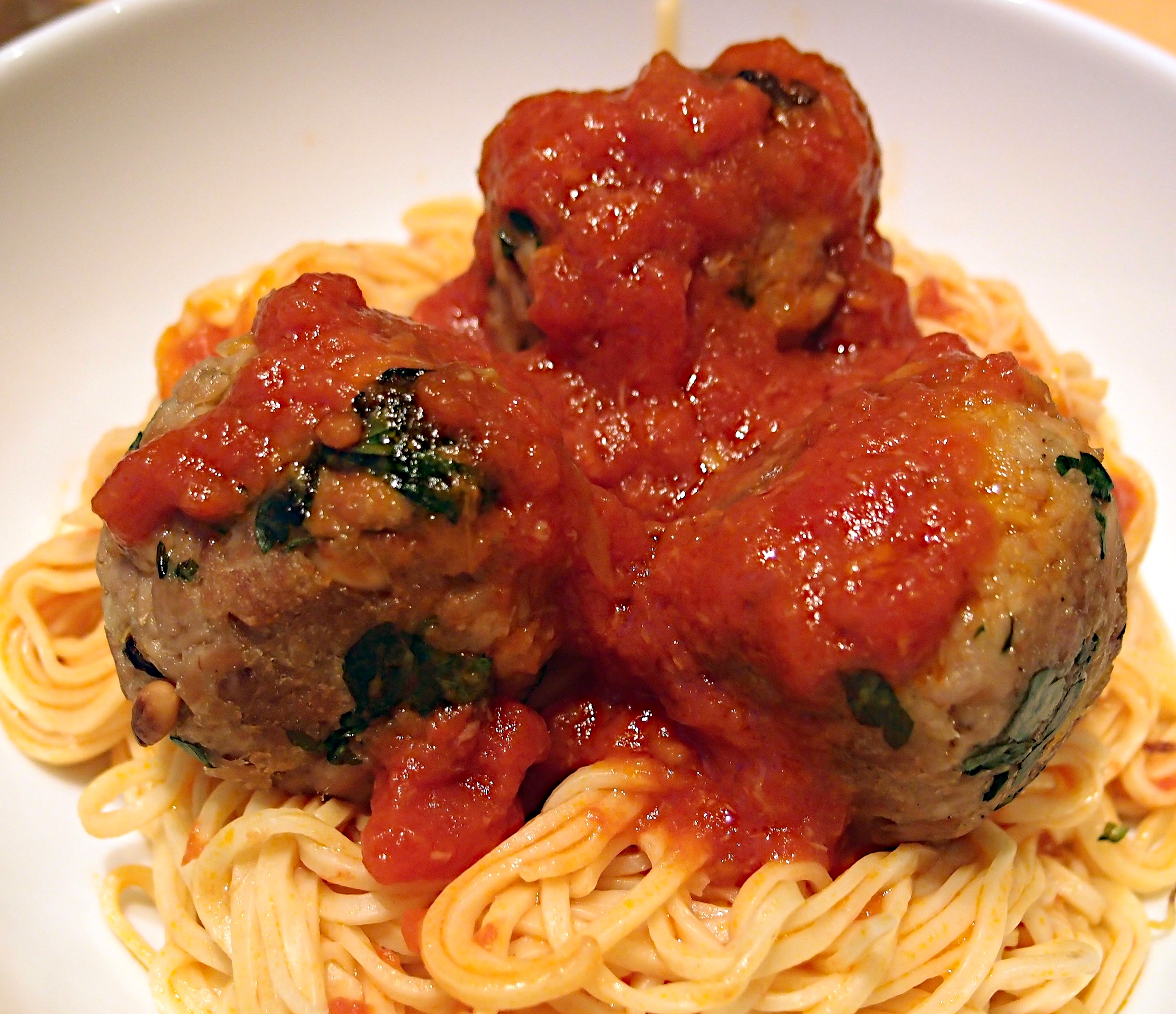
Well this was a pleasant surprise! We only made it cause it was super cheap and low fat but we will definitely be doing it again. This costs less than €2 a head and it is gorgeous! We don’t buy tomato pasta sauce because this one is so fabulous, super cheap, easy and freezes. We usually have some pasta dough in the freezer that needs used too so the picture has fresh tagliarini – so for us it cost the price of a tin of tuna.  Still  we don’t think you’ll be disappointed if you use shop bought sauce and dried spaghetti either.

Italian Tuna Balls – to serve 4  (easy to double or halve)

  • 2 x 160g cans tuna in oil, drained (reserve a bit of the oil)
  • small handful pine nuts
  • finely grated zest 1 lemon
  • small handful parsley, roughly chopped
  • 50g fresh breadcrumbs
  • 1 egg, beaten
  • 400g spaghetti
  • 500g jar tomato pasta sauce

Flake the tuna into a bowl, then add the pine nuts, lemon zest, parsley, breadcrumbs and egg. Season and mix with your hands until really well combined. Roll the mix into 12 walnut-size balls. Put a large saucepan of water on to boil, then cook the spaghetti according to the pack.

Heat a little of the tuna oil in a large non-stick frying pan, then fry the tuna balls for 5 minutes or until completely golden all over. Drain on kitchen paper. Heat the tomato sauce, then toss with the pasta and tuna balls.

(Original recipe from BBC Good Food)

Read Full Post »

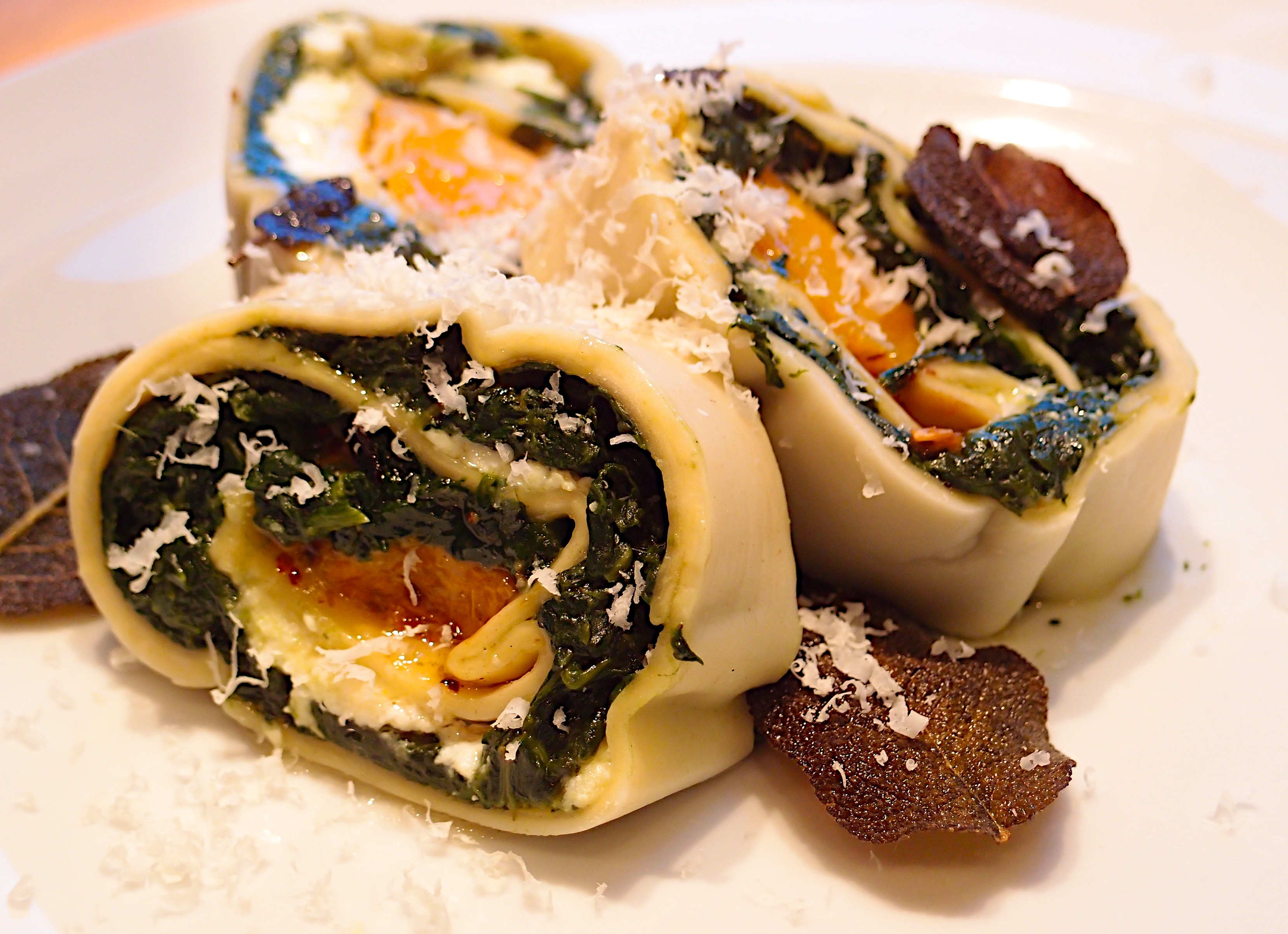
Jamie Oliver recommends you practice this recipe before serving for a crowd and we agree. We cooked this about a year ago for our friends Rob and Megan and while the flavours and presentation were great we made the pasta just a bit too thick. Second time around we slimmed down the pasta, with the help of our new pasta machine and it improved dramatically, but we miscalculated the width so had to trim the rotolo after rolling. So Jono’s tips for success:

  • You need a fish kettle;
  • make the pasta very thin, but not quite as thin as usual (we used setting 6 instead of 8). Jamie says the thickness of a beer mat, but make it a fraction thinner than this;
  • measure the width of your rotolo against the fish kettle before constructing it – allow a little of pasta at the edge to keep it sealed nicely; and
  • this takes ages, but it’s really worth it, tastes great and looks super impressive.

First you need to make some fresh pasta so here’s a recipe for that:

  • 600g type 00 flour
  • 6 eggs or 12 yolks (the 12 yolks makes a richer, more yellow pasta)
Put the flour on a board, make a well in the centre and crack the eggs into the well. Use a fork to beat the eggs until smooth. Mix the eggs with the flour as much as possible so it’s not too sticky and start to knead. It’s actually quite hard to knead pasta dough but keep at it for about 10 minutes and it will come together and form a smooth, silky and elastic dough. Cover with cling film and rest for an hour.
Rotolo di zucca e ricota (Rotolo of spinach and ricotta)
  • 455g fresh egg pasta dough (see above)
  • half a butternut squash, deseeded
  • olive oil
  • 1 tsp coriander seeds
  • 1 tsp fennel seeds
  • half a dried red chilli or half a tsp of chilli flakes
  • a handful of fresh marjoram or oregano
  • 2 cloves of garlic, peeled and finely sliced
  • 800g spinach, washed
  • 250g unsalted butter
  • a third of a nutmeg, grated
  • 150g ricotta cheese, crumbled
  • 55g freshly grated Parmesan
  • 20 fresh sage leaves
  1. Preheat the oven to 220C/425F/gas 7. Chop the squash into big chunks and rub them with a little olive oil. Bash coriander seeds, fennel seeds and chilli in a mortar and pestle with a good pinch of salt and pepper. Dust this over the squash and put into a snug fitting roasting dish or tray. Cover with a piece of damp greaseproof paper and roast for 30 minutes. Take off the paper and continue to roast for another 15-20 minutes or until golden.
  2. Heat a large pan and add a little olive oil, the marjoram or oregano and the garlic. Toss around for 20 seconds before adding the spinach. Keep moving the spinach and add a couple of knobs of butter and the nutmeg after a minute or two. Cook until the moisture has cooked away, then season to taste and leave to cool.
  3. Roll the pasta using a pasta machine into long thin strips (see tip above). Stick the strips together using a little water. Keep it in a rectangular shape but trim off as you need. Lay onto a  clean tea towel (remember to measure the long side against your kettle).
  4. Spoon a line of squash along the long edge of the sheet. Sprinkle the spinach over the rest of the sheet leaving the top 5cm clear. Crumble the ricotta over the spinach and sprinkle over the Parmesan. Brush the clear edge of the pasta with a little water then use the near edge of the tea towel to roll the pasta up and away from you. Roll up in the tea towel and tie firmly at the end with kitchen string. Tie a few bits of string round the middle too to keep the shape and tie an extra bit of string at one end so it can hang out of the kettle and act as a handle.
  5. Fill the fish kettle with boiling salted water. Lower the rotolo in and use the fish kettle rack on top to keep it submerged. Simmer for at least 25 minutes.
  6. While the rotolo is cooking you need to clarify some butter. Put the remainder of the butter into an ovenproof dish and put in a low oven (about 80C/170F) for about 10 minutes or until clear and melted. The milky whey will have sunk to the bottom, discard any white bits from the top and spoon out the clear butter. Discard the whey. You’ll have too much but the leftovers can be used for roast potatoes another day.
  7. Put 3 tbsp of clarified butter into a small pan and heat it up. Add a sage leaf and if it fries nicely add the rest of the leaves and fry until they start to crisp. Keep to one side.
  8. Carefully remove the rotolo from the pan, remove the string, unroll the tea towel and slice it up. A couple of slices per portion. Scatter sage leaves and drizzle with the sage flavoured butter and grate some Parmesan over. Serve with a leafy salad.
(Original recipe from Jamie’s Italy)

Read Full Post »

« Newer Posts