Feeds:
Posts
Comments

Archive for the ‘Pork’ Category

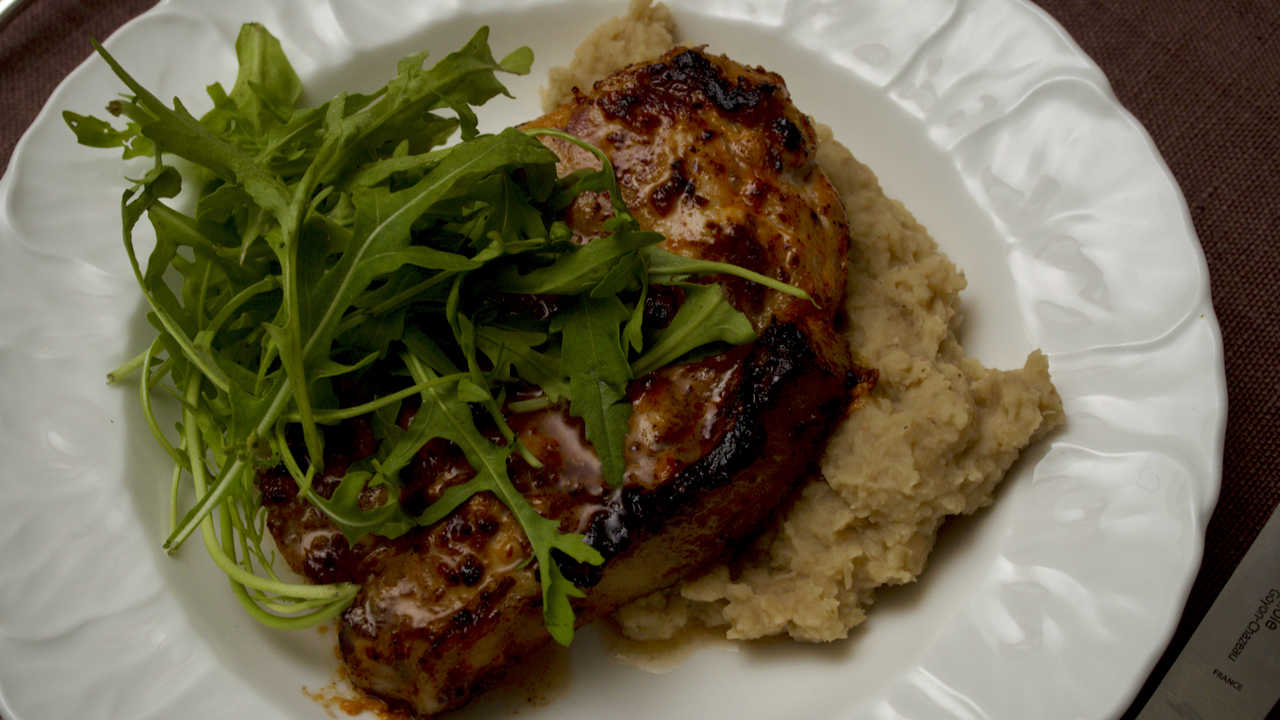
We’re loving The Bold Bean Company range of jarred beans. This simple butter bean mash is super tasty and would make a great side to almost anything. In fact our daughter has demanded this mash with other things since – a miracle in itself!

Wine Suggestion: This demands a fuller bodied white, but we didn’t feel like an oaky style so went with Podere Guardia Grande’s Saldenya, which is an unoaked Vermentino from an old vineyard in Sardinia that runs down to the sea. Fresh and dare we say it, salty, but with a plushness and weight of sunshine. A joy on its own as we cooked and then a good match with the dinner.

Pork chops with butter bean mash – serves 4

  • 50g mayonnaise
  • 1 tbsp lemon juice
  • 2 tsp tomato purée
  • 1 tsp pul biber
  • 1 tsp freshly ground black pepper
  • 4 pork chops
  • 1 tbsp olive oil
  • 1 clove of garlic, thinly sliced
  • 1 large jar of good quality butter beans
  • 1 tsp ground cumin
  • rocket, to serve

Get a barbecue ready for direct grilling.

Mix the mayonnaise, lemon juice, tomato purée, pul biber, black pepper and a good pinch of salt, together in a large bowl. Add the pork chops and toss to coat in the marinade.

Cook the pork chops on a hot barbecue for 3-4 minutes on each side or until charred and tender.

Meanwhile, heat the oil in a pan over a medium heat. Add the garlic and cook for a minutes, then add the drained butter beans, 70ml of just boiled water, the cumin and plenty of salt and pepper. Stir to combine then mash to whatever consistency you like.

To serve, divide the mash between plates, top with a pork chop and a handful of rocket leaves. Drizzle over any tasty juices over the top.

(Original recipe by John-Gregory Smith in Olive Magazine, July 2022.)

Read Full Post »

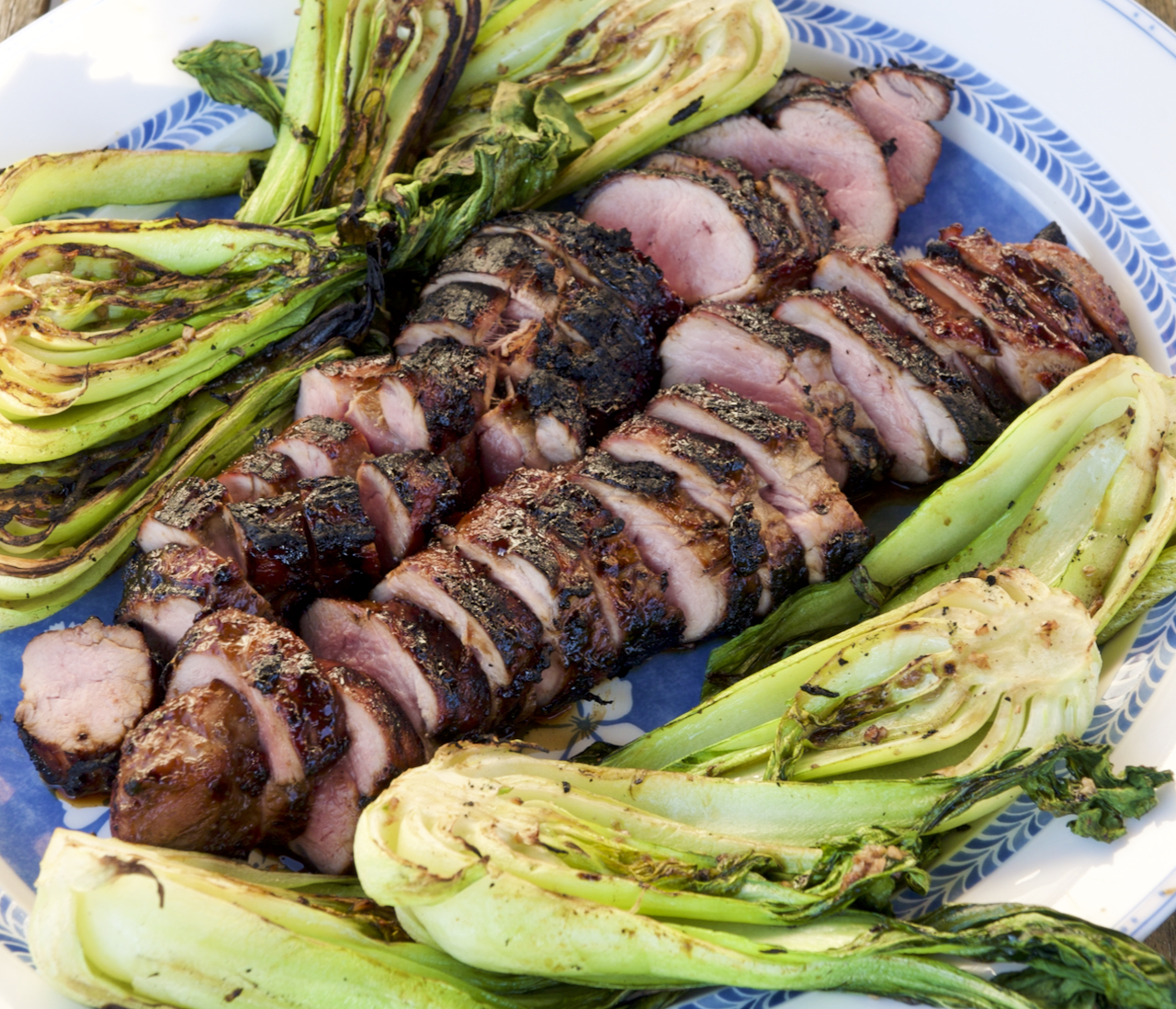
A Chinese classic that couldn’t be easier to master, this char siu pork delivers glossy, caramelized perfection. Sweet, smoky and full of flavour, it’s a guaranteed barbecue winner! Don’t skip the crisp, garlicky pak choi on the side – it’s the fresh balance that really makes this dish.

Wine suggestion: We made this dish during Grenache Month and opened what turned out to be a fantastic pairing: Edetaria’s via Edetana Red , a red blend from Terra Alta, Catalonia, made with Garnatxa Fina and Garnatxa Peluda—two local Garnacha clones known for their balance of freshness and complexity. The wine’s soft spice, red fruit, and smooth texture echoed the sweet-savory glaze of the char siu pork beautifully. Its vibrant acidity brought out the juiciness in the meat, while the subtle earthy and herbal notes in the wine complemented the five-spice and caramelized edges of the pork. If you’re looking for a bottle that can handle bold flavors while adding its own depth, this one’s a winner.

Char Siu Pork – serves 4

  • 2 pork tenderloin fillets, trimmed

FOR THE MARINADE:

  • 1 tbsp vegetable oil
  • 2 cloves of garlic, finely grated
  • 2.5cm piece of ginger, finely grated
  • 2 tsp sesame oil
  • 3 tbsp runny honey
  • 2 tbsp soft light brown sugar
  • 4 tbsp hoisin sauce
  • 1 tbsp oyster sauce
  • 1 tbsp light soy sauce
  • ½ tbsp dark soy sauce
  • 1 tsp Chinese 5-spice powder
  • ½ tsp white pepper

FOR THE PAK CHOI:

  • 4 pak choi, halved lengthways
  • 2 cloves of garlic, finely chopped
  • 3 tbsp light soy sauce
  • 2 tbsp olive oil
  • ½ tsp white pepper

To make the marinade, heat the oil in a saucepan, then add the garlic and ginger and cook for 2 minutes. Add the sesame oil, honey, sugar, hoisin, oyster and soy sauces, 5-spice powder and pepper. Mix well and cook until slightly thickened. Remove from the heat and leave to cool completely.

Put the pork into a large dish. Add the sauce and massage well so it is really well coated. Cover and leave to marinate in the fridge for at least a couple of hours or ideally overnight.

Get your barbecue ready to cook on over direct heat and indirect heat.

Lay the pak choi, cut side up, on a tray. Mix the garlic, soy, olive oil and white pepper together in a small bowl, then spoon over the pak choi.

Remove the pork from the pork from the marinade, reserving the marinade left in the dish. Put the pork over the hottest part of the barbecue and cook for 6 to 8 minutes, turning ofetn and basting with the marinade.

When the pork is cooked, transfer to a tray and leave to rest for 5 minutes.

Meanwhile, transfer the pak choi to the barbecue over indirect heat – with the stems towards the direct heat as they take longer to cook. Cook, turning often and basting with the soy marinade for a few minutes or until charred and tender. Spray with a little water as it cooks to stop it from drying out.

Slice the pork and serve on a platter with the pak choi.

(Original recipe from The BBQ Book by Tom Kerridge, Bloomsbury: Absolute, 2025.)

Read Full Post »

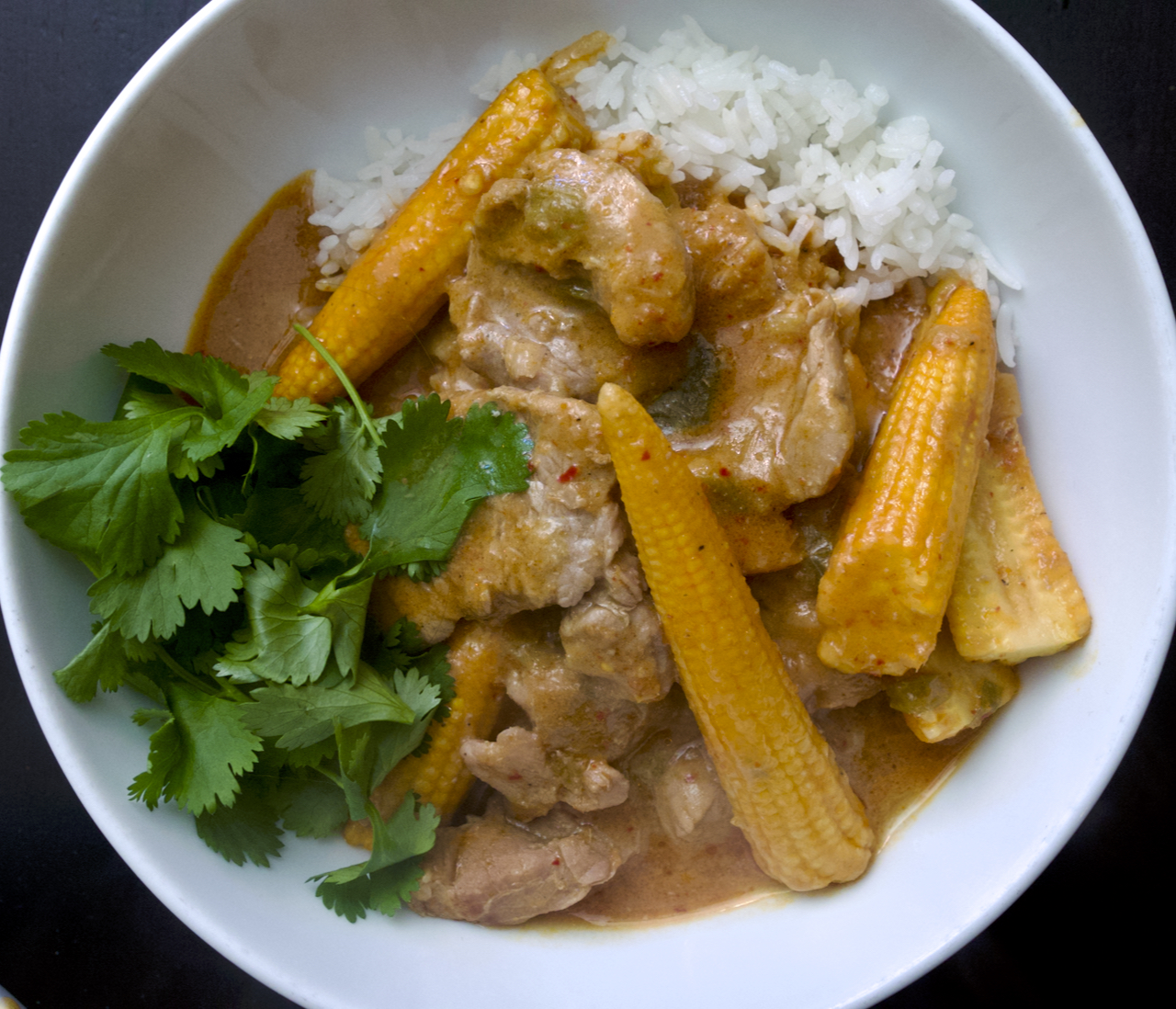
Peanut butter makes the best sauces, and here it makes a very simple dish taste delicious.

Wine Suggestion: Think of peanuts as legumes (which they technically are) and matching with wine gets a bit easier. With the gentle heat of the curry a touch of fruitiness doesn’t go astray either. Something like the Pinot Gris from Forrest Estate in Marlborough which combines a wonderful array of citrus and apple freshness, textured minerality plus a rich and exotic peach, pear and honeysuckle roundness.

Thai Pork & Peanut Curry – serves 4

  • 1 tbsp vegetable oil
  • a bunch of scallions, sliced
  • a small bunch of coriander, stalks finely chopped and leaves picked
  • 1 large pork fillet (tenderloin), sliced
  • 4 tbsp Thai red curry paste
  • 4 tbsp smooth peanut butter
  • 1 tbsp soft brown sugar
  • 1 tbsp soy sauce
  • 400ml tin coconut milk
  • 200g pack of baby corn
  • juice of 1 lime
  • steamed jasmine rice, to serve

Heat the vegetable oil in a large saucepan, then add the scallions and coriander stalks and cook for 1 minute. Add the pork slices and cook for 5 minutes until sealed and starting to brown.

Stir in the curry paste and peanut butter and mix well, then add the sugar, soy and coconut milk, plus ½ can of water. Mix well, then cover and leave to simmer for 15 minutes, stirring occasionally.

Remove the lid, add the baby corn and increase the heat. Bubble for a few minutes or until the corn is cooked and the sauce has thickened slightlly. Stir in the lime juice and check the seasoning. Serve with the coriander leaves and steamed jasmine rice.

(Original recipe from BBC Good Food)

Read Full Post »

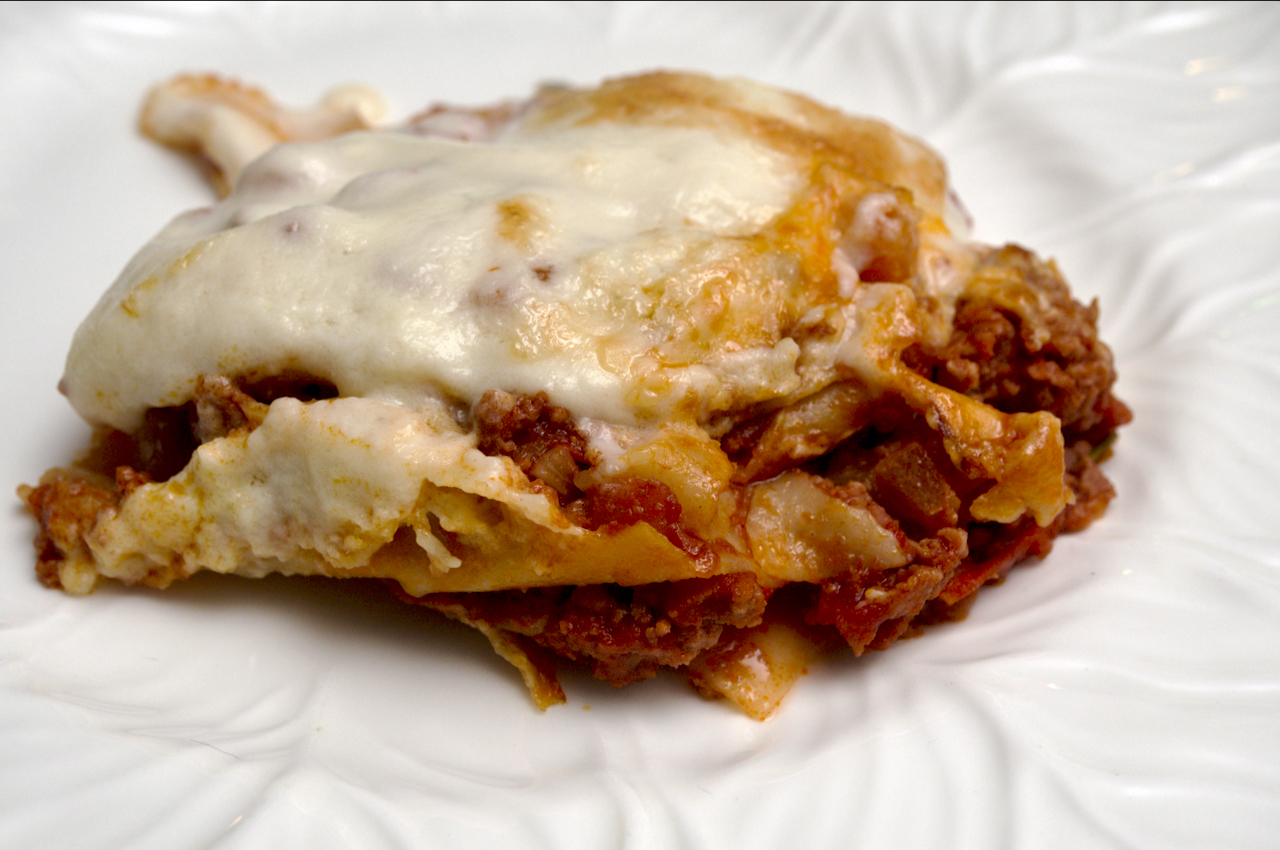
Just a reminder that a big lasagne is a very good thing to have. We sometimes divide it up into smaller dishes and freeze some to finish off cooking another day.

Wine Suggestion: Our personal prejudice here is for Sangiovese every time with Lasagne, though we know this is not the only grape that works. That said we couldn’t go past the Boscarelli “Prugnolo” Rosso di Montepulciano which comes from a lovely hilltop DO in Tuscany.

Lasagne – serves 8

  • 350-400g fresh lasagne sheets
  • nutmeg
  • 1 ball of mozzarella, torn

FOR THE RAGU:

  • 2-3 tbsp oil
  • 1 onion, finely chopped
  • 2 carrots, finely chopped
  • 2 celery stalks, finely chopped
  • 2 cloves of garlic, finely chopped
  • 4 rashers of smoked streaky bacon, finely chopped
  • 500g beef mince
  • 500g pork mince
  • 175ml red wine
  • 750ml beef stock/chicken stock
  • 2 tbsp tomato purée
  • 2 x 400g tins chopped tomatoes
  • 1 bay leaf
  • a sprig of rosemary

FOR THE BECHAMEL:

  • 70g butter
  • 70g plain flour
  • 1 litre whole milk
  • 1 bay leaf
  • 100g Parmesan, freshly grated

Start with the ragu. You need to heat the oil in a large wide pan, then add the onions, carrots, celery and garlic and fry gently until softend but not coloured.

Add the bacon, beef and pork and continue frying until the meat has changed colour.

Pour in the red wine and increase the heat so that it comes to the boil. Reduce the heat again and add the stock, tomato purée and tinned tomatoes. Season with salt and pepper and add the bay and rosemary. Leave to cook now over a medium-low heat for about 1½ hours or until you have a rich sauce.

Meanwhile, make the bechamel. Melt the butter in a large pan over a medium heat, add the flour and stir to make a paste. Cook for a minute, then take the pan off the heat and gradually whisk in the milk until you have a smooth sauce. Add the bay leaf, then return the pan to the heat and bring the boil, stirring constantly. Keep cooking until you have a smooth and thick sauce. Remove the bay leaf and stir in two-thirds of the grated Parmesan and season to taste.

Heat the oven to 180C/Fan 160C.

You will need a deep lasagne dish – about 20 x 30 cm.

Put a large spoonful of the ragu in the bottom of the lasagne dish and add a layer of lasagne sheets. Top with a layer of ragu and a drizzle of bechamel (not a full layer or you will run out), then another layer of lasagne sheets. Keep going like this until you have used up all the ingredients, finishing with a good layer of bechamel. Grate over a little nutmeg, then add the torn mozzarella and the rest of the Parmesan.

Bake for 45-50 minutes or until bubbling and golden brown. Allow to sit for 5-10 minutes when it comes out of the oven so it’s easier to cut. Serve with a green salad and garlic bread if you like.

(Original recipe from Rick Stein’s Food Stories, BBC Books, Penguin: Random House, 2024.)

Read Full Post »

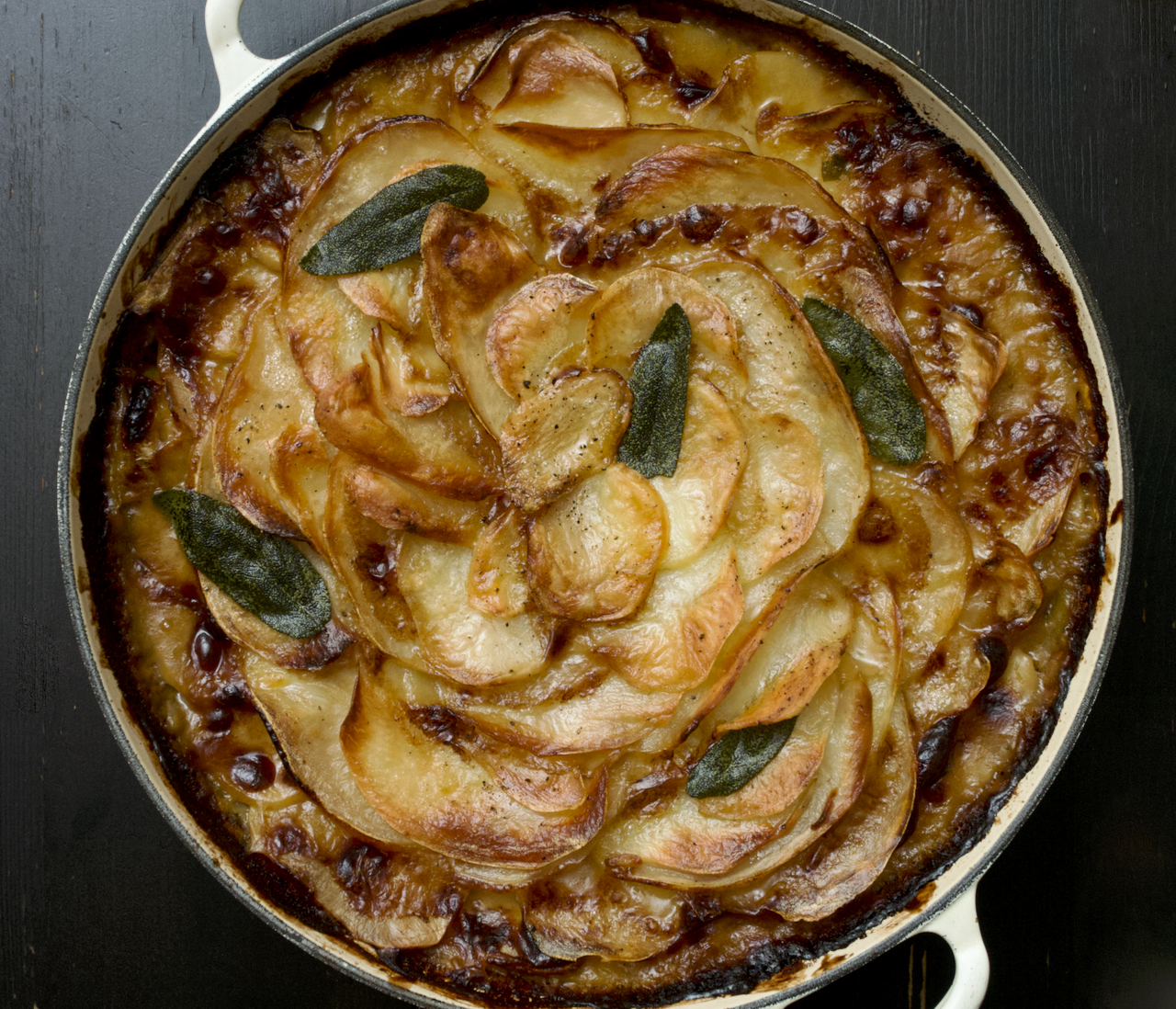
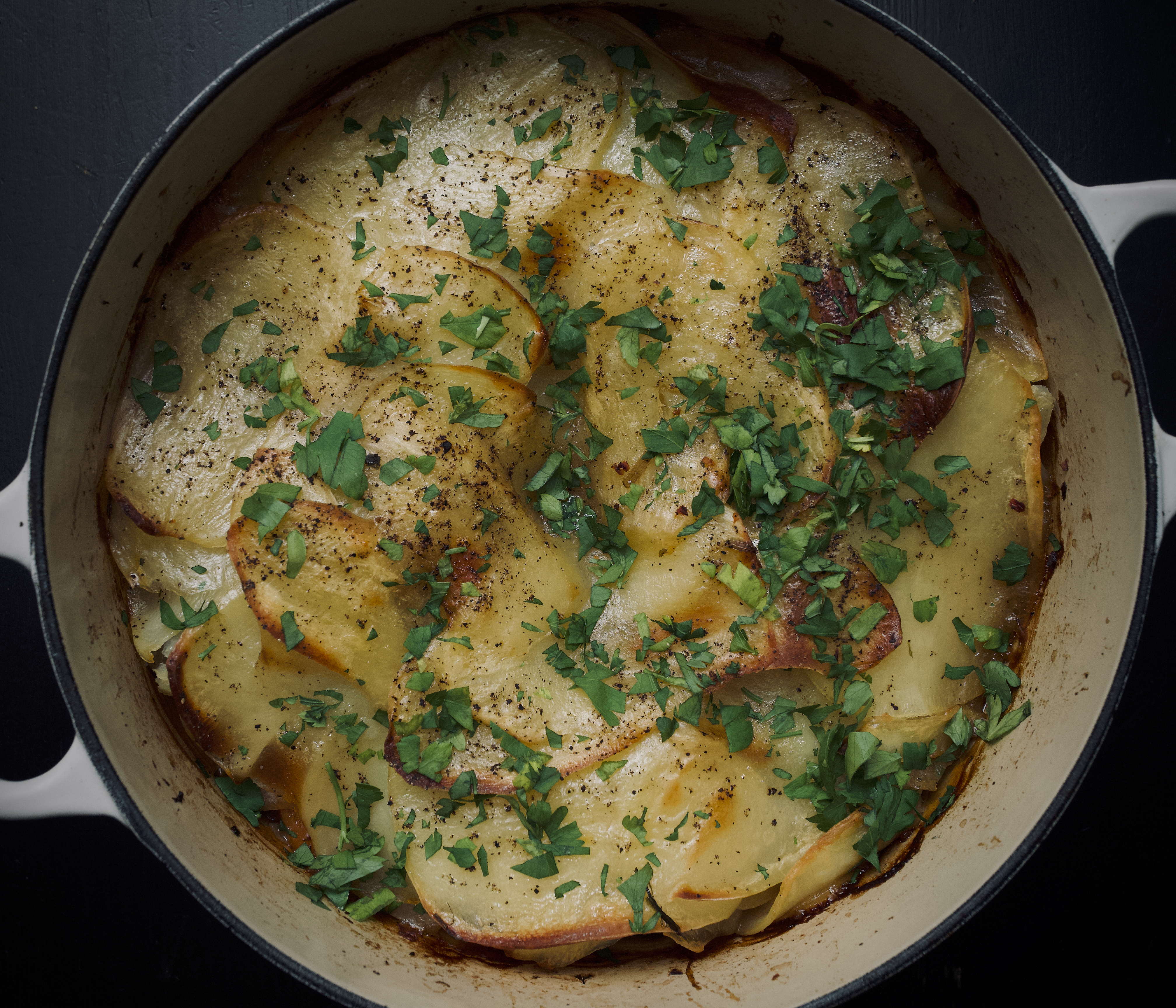
There is a bit of effort in this, but you can prep the pork well in advance ready to bake when you need it. Lovely autumnal flavours.

Wine suggestion: Thanks to the generosity of our friend David we found that Chateauneuf du Pape is a great match for this dish, but we couldn’t agree whether we preferred Bosquet les Papes “Chante le Merle”, or the Vieux Télégraphe le Crau. A tough decision, poor us!

Pork & Cider Hotpot – serves 6

  • 4 tbsp olive oil, plus a bit extra
  • 1kg diced pork shoulder
  • 20g butter, cubed, plus a bit extra
  • 4 leeks, trimmed and thickly sliced
  • 4 cloves of garlic, crushed
  • 3 tbsp plain flour
  • 500ml dry cider
  • 400ml chicken stock
  • 2 bay leaves
  • ½ small bunch of parsley, finely chopped
  • small bunch of sage, leaves picked, 5 left whole and the rest chopped
  • 200ml single cream
  • 800g Maris Piper potatoes

Heat 2 tbsp of the oil in a deep casserole dish, then fry the pork pieces over a medium-high heat in batches until browned all over, then transfer to a plate.

Add another tbsp of oil to the pan with a little butter and fry half the leeks with a pinch of salt for 10 minutes until tender. Add the garlic, fry for a minute, then stir in the flour.

Gradually add the cider, stirring to scrape any crusty bits off the bottom. Add the stock, bay leaves and pork, then simmer, partially covered with a lid for 1-1½ hours until the meat is just tender. You can make up to this point a day in advance.

Heat the oven to 200C/180C fan/gas 6.

Simmer the pork uncovered for a few minutes to reduce the sauce if you need, if there is too much liquid the potatoes will sink. Stir in the parsley, chopped sage, remaining leeks, and the cream, then season well. Transfer to a wide ovenproof frying pan or casserole if you have one.

Peel the potatoes and slice into 2mm thick slices – a mandoline is best for this. Arrange the potato slices in circles over the pie, then dot over the cubed butter. Bake for 1-1½ hours or until the potatoes are cooked. Brush the sage leaves with a little oil and tuck them in for the last 10 minutes. Allow to rest for 10 minutes before serving.

(Original recipe from BBC Good Food)

Read Full Post »

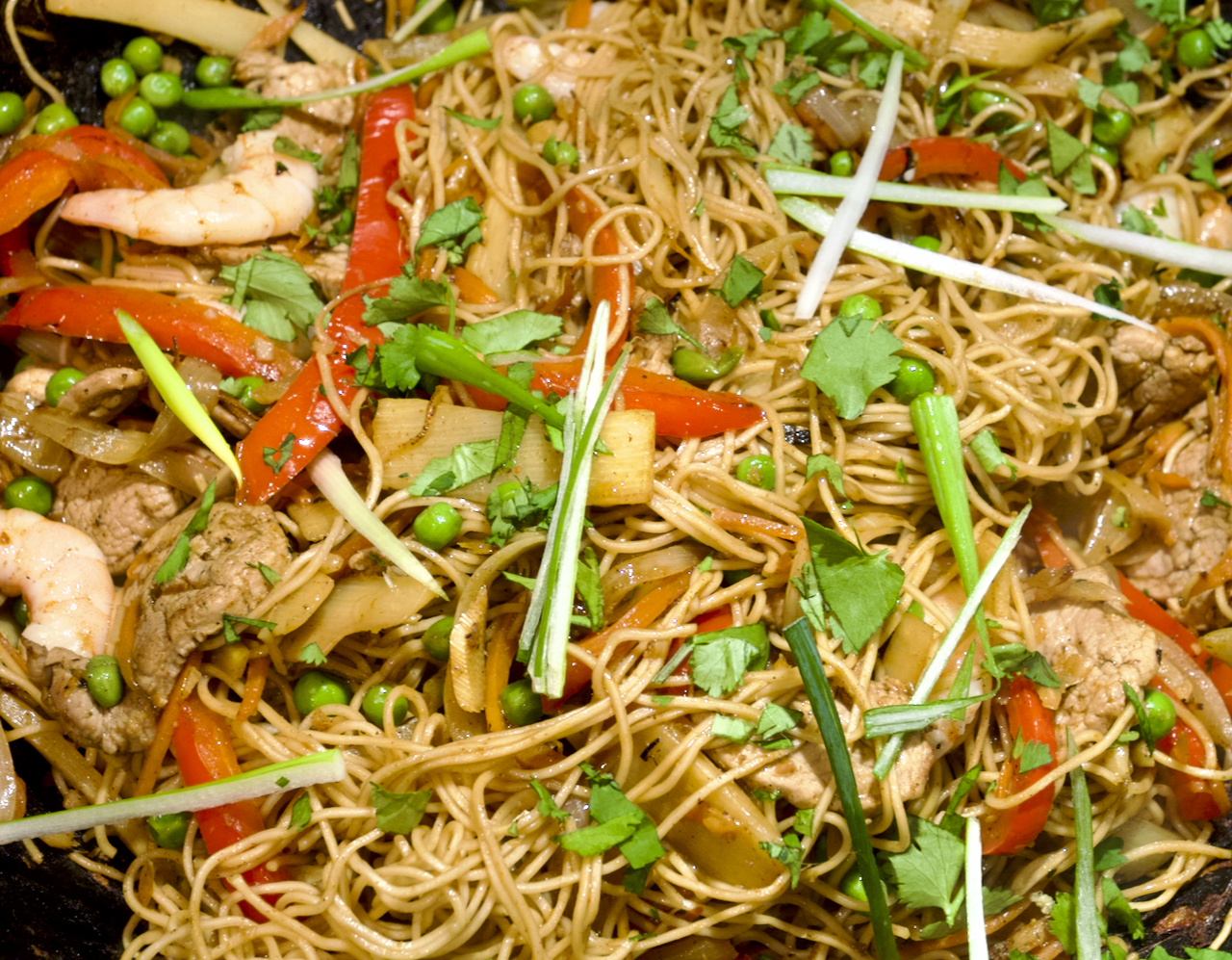
Made to satisfy our daughter’s constant craving for noodles … and much bettter than the packets she tries to make us buy. We recommend you prep everything before you start cooking.

Wine Suggestion: we think dry Pinot Gris is great with loads Asian foods and this is no different. From Nelson in NZ, Neudorf’s Tiritiri Pinot Gris is a charmer. Great fruit and lovely texture with gentle spices mean this combination is a winner.

Singapore Noodles – serves 4

  • 200g fine egg noodles or rice noodles
  • 2 tbsp veg oil
  • 1 onion, sliced into thin wedges
  • 1 carrot, cut into fine matchsticks (use a mandonline if you have one)
  • 1 red pepper, thinly sliced
  • 2 cloves of garlic, finely chopped
  • 10g fresh root ginger, finely chopped
  • 200g pork fillet, finely sliced
  • 225g tin bamboo shoots, drained
  • 100g frozen peas, defrosted
  • 1 tsp Chinese 5-spice powder
  • 2 tsp mild curry powder
  • 2 tbsl light soy sauce
  • 1 tbsp rice wine
  • 1 tbsp rice wine vinegar
  • 140g cooked shelled prawns

To garnish:

  • 1 tsp sesame oil
  • 2 scallions, finely shredded
  • 1 green or red chilli, finely sliced
  • chopped fresh coriander
  • soy sauce, to serve

Cover the noodles with freshly boiled water and leave to stand for a minute, then drain and set aside.

Heat the oil in a large work. Add the onion, carrot and red pepper and stir-fry over a high heat until they’re starting to brown. Add the garlic, ginger and pork and continue to stir-fry until the pork is coloured on all sides. Tip in the bamboo shoots, peas, spices, soy sauce, rice wine and rice wine vinegar, then add the noodles and stir to combine (chopsticks are good for separating the noodles). Leave to cook for a couple of minutes until hot, then stir in the prawns and allow to heat through. Serve with the sesame oil, scallions, chilli and coriander over the top. We like ours with extra soy sauce.

(Original recipe from The Hairy Bikers’ One Pot Wonders by Si King & Dave Myers, Seven Dials, 2019.)

Read Full Post »

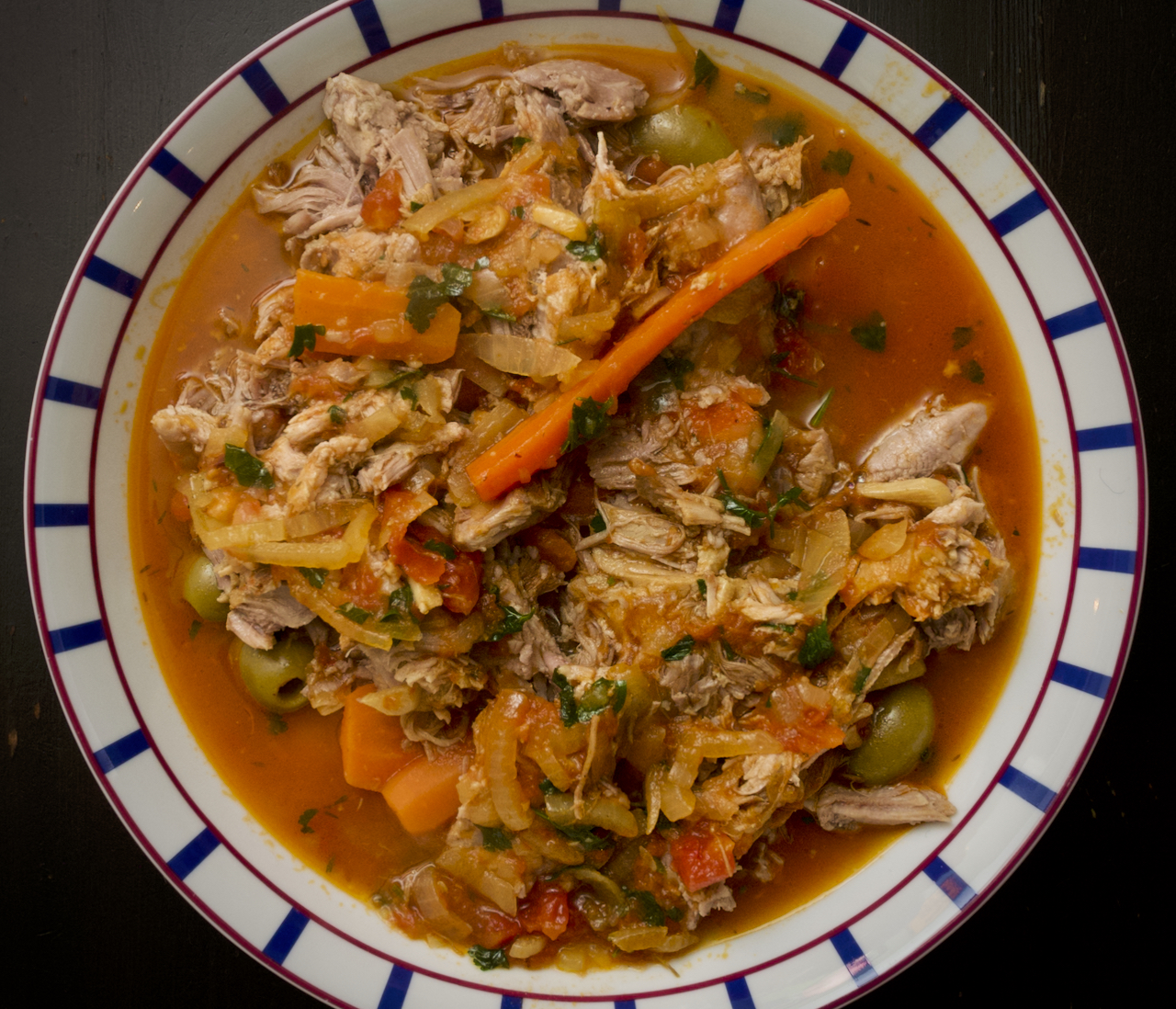
We don’t subscribe to much on Substack but we make an exception for Debora Robertson. Debora writes about life in France and recommends a dinner party dish with an easy starter (usually shop-bought) every week. We’re always happy to see her next post and we highly recommend her recipe for pork estouffade – a French pork cassrole with honey and carrots. Minimal effort and great to share. Serve with mashed potatoes and cabbage.

Wine Suggestion: From Marjorie Gallet’s superlative Roc des Anges is her “Llum“, an insightful and crystalline Grenache Gris & Macabeu blend that sings with ripe stonefruit flavours and a minerally, salty backbone. Just perfect with a little richness and aromatic flavours from this dish.

Pork estouffade – serves 6

  • 1.6-1.8kg boned and rolled joint of pork, with some fat on and skin/rind removed
  • 3 tbsp olive oil
  • 2 onions, thinly sliced
  • 3 bay leaves
  • 2 sprigs of thyme
  • 6 cloves of garlic, halved, remove any green bits and thinly sliced
  • 1 x 400g tin chopped tomatoes
  • 1 tbsp Dijon mustard
  • 1 tbsp honey
  • 1 tsp paprika
  • 1 bottle white wine
  • a pinch of saffron strands, soaked in a splash of warm water
  • 4 medium carrots, peeled and halved lengthways
  • 80g pitted green olives
  • 1 unwaxed orange – you will need to peel a strip of zest and then juice
  • about 10g of parsley leaves and fine stalks, roughly chopped

Pat the pork dry with kitchen paper and season all over with salt and pepper.

Warm the olive oil in a large heavy casserole ove a medium-high heat. Brown the pork all over – about 10 minutes, then remove to a plate and lower the heat.

Add the onions, bay leaves and thyme and sauté gently, stirring occasionally, until very soft and translucent but without browning, about 15 minutes.

Add the garlic to the pan and stir for a minute, then add the tomatoes, mustard, honey, and paprika and stir well. Pour in the wine, saffron and soaking water and simmer for 10 minutes.

Return the pork to the pan, along with any juices. Cover and simmer very gently for 2½ hours, turning the pork every 30 minutes. Add the carrot, olives, orange zest and juice. Taste and season if needed, then simmer very gently, uncovered, for another hour – check occasionally that the pork hasn’t stuck. The dish is ready when the pork is very tender and the sauce has thickened.

Remove from the heat and leave to cool for 10 minutes, then stir in the parsley. Remove the string form the pork and carve it into thick slices. Serve with some sauce, the carrots, mashed potatoes and cabbage.

(Original recipe from Lickedspoon with Debora Robertson, Substack, 6 Jan 2024)

Read Full Post »

We can see why this is eaten in across the world in Swedish furniture stores: it’s light, homely, and a total child-pleaser (sans sprouts for some).

Wine Suggestion: we love a creamy white to go with this dish; that means a touch of oak and if possible a little battonage to bring structure and a toasty, creamy texture. A little left field, we chose the Dominio de Tares Godello from old vine Godello, wild fermented in oak. With a lemony core layered with pears and stonefruit this has hints of white flowers, brioche and a gentle toasty/nutty character.

Swedish Meatballs – serves 4

  • 1 onion, peeled and grated (use a box grater)
  • 2 slices soft white bread, crusts removed and cut into 1cm cubes
  • a splash of milk
  • 300g beef mince
  • 300g pork mince
  • 1 egg
  • a little freshly grated nutmeg
  • ¼ tsp ground allspice
  • ¼  tsp black pepper
  • ¾ tsp cooking salt
  • 1 tbsp rapeseed oil

CREAMY GRAVY:

  • 50g unsalted butter
  • 3 tbsp plain flour
  • 500ml beef stock
  • 125ml double cream

TO SERVE:

  • finely chopped chives (only if you have them)
  • lingonberry jam or cranberry sauce (also not essential)

Put the grated onion into a large mixing bowl. Add the bread and mix well – if the bread doesn’t turn soggy you can add a splash of milk. Set aside for a minute, then add the rest of the meatball ingredients, except the oil. Mix well with your hands to combine.

Roll the mixture into about 25-30 meatballs.

Heat the oil in a deep frying pan over a medium-high heat. Brown the meatballs in batches – they should be nicely browned all over but not cooked through. Set aside.

Lower the heat to medium.

Melt the butter in the meatball pan and wait until it foams. Add the flour and stir for a minute, then gradually add the beef stock, stirring constantly until you have a smooth sauce.

Turn the heat up slightly and bring the sauce to a simmer. Add the meatballs and any juices on the plate. Cook for 8-10 minutes or until the liquid has thickened to a thin gravy. Stir in the cream and simmer for a couple of minutes, then remove from the heat.

Sprinkle the meatballs with chives if you like and serve with creamy mash and some greans. Ligonberry or cranberry optional.

(Original recipe from Recipetin Eats Dinner by Nagi Maehashi, Pan Macmillan, 2022.)

Read Full Post »

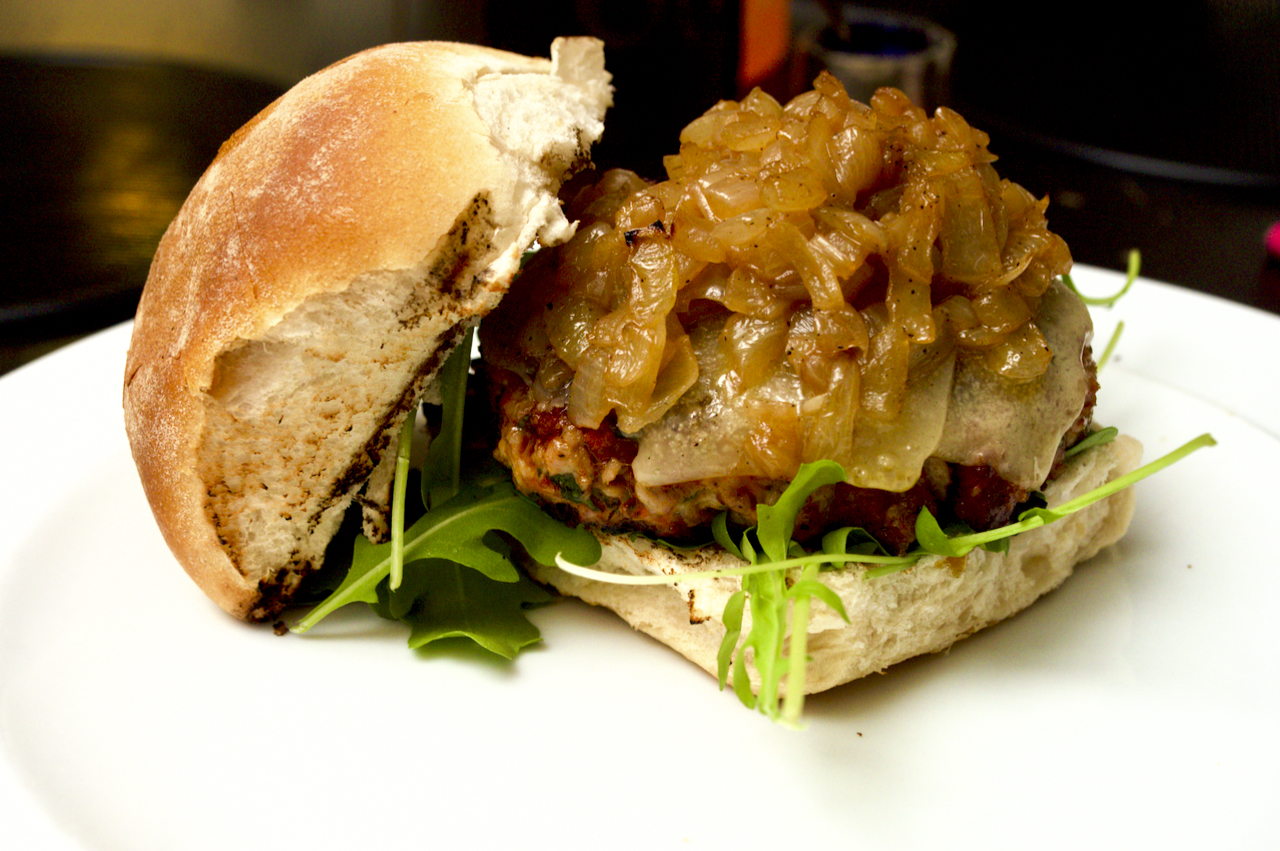
It’s getting colder but we’re determined to keep barbecueing anyway. These burgers are worth making for the onions alone, and the burger is something else too!

Wine Suggestion: a lighter, fruit forward red with a bit of tannin structure. We love some of the still wines from the Douro in Portugal and Quinta de la Rosa’s DouRosa red is a gem. Just 12.5%abv but full of flavour and with lovely depth, length and fine tannins.

Pork & chorizo burgers with sherry onions & manchego – serves 4

  • 500g pork mince
  • 250g fresh chorizo, skinned and finely diced
  • 2 cloves of garlic, crushed
  • a handful of flat-leaf parsley, chopped
  • 1 tsp smoked paprika
  • 1 tbsp olive oil
  • 25g butter
  • 2 large onions, sliced
  • 75ml dry sherry e.g. Oloroso
  • 175g manchego cheese, sliced
  • 4 x burger buns
  • rocket, to serve

Put the pork, chorizo, garlic, parsley, and paprika into a large bowl. Season with a salt (not too much) and plenty of black pepper then pound with your hands until well combined. Shape into 4 balls, then press these down to make burgers about 1 cm thick. Put the burgers into the fridge until you’re ready to cook them.

Next, make the onions. Put a large deep saucepan over a low heat and add the oil and butter. When the butter has melted, tip in the onions and a little salt and pepper. Cook very gently for at least 30 minutes, stirring occasionally. Pour in the sherry and allow to reduce for another 15 minutes or so.

Light your barbecue and if you have one put a fireproof hot plate or frying pan on to warm up (if you cook the burgers on a hot plate you won’t lose any bits through the grill). When it is really hot, add the burgers and press down with a fish slice. Cook for a couple of minutes, then turn and grill the other side for a minute before turning again. Top with the manchego slices and a good spoon of onions, then shut the lid and cook for another couple of minutes.

Lightly toast the burger buns, and add a handful of rocket to each. Add a burger and serve.

(Original recipe from Seared by Genevieve Taylor, Quadrille, 2022.)

Read Full Post »

We’re having problems with our website at the moment which is why we haven’t been posting. We’ve a temporary fix in place and will hopefully get back to normal very soon. Not least because all the things we’ve been cooking will be out of season by the time we get around to posting them!

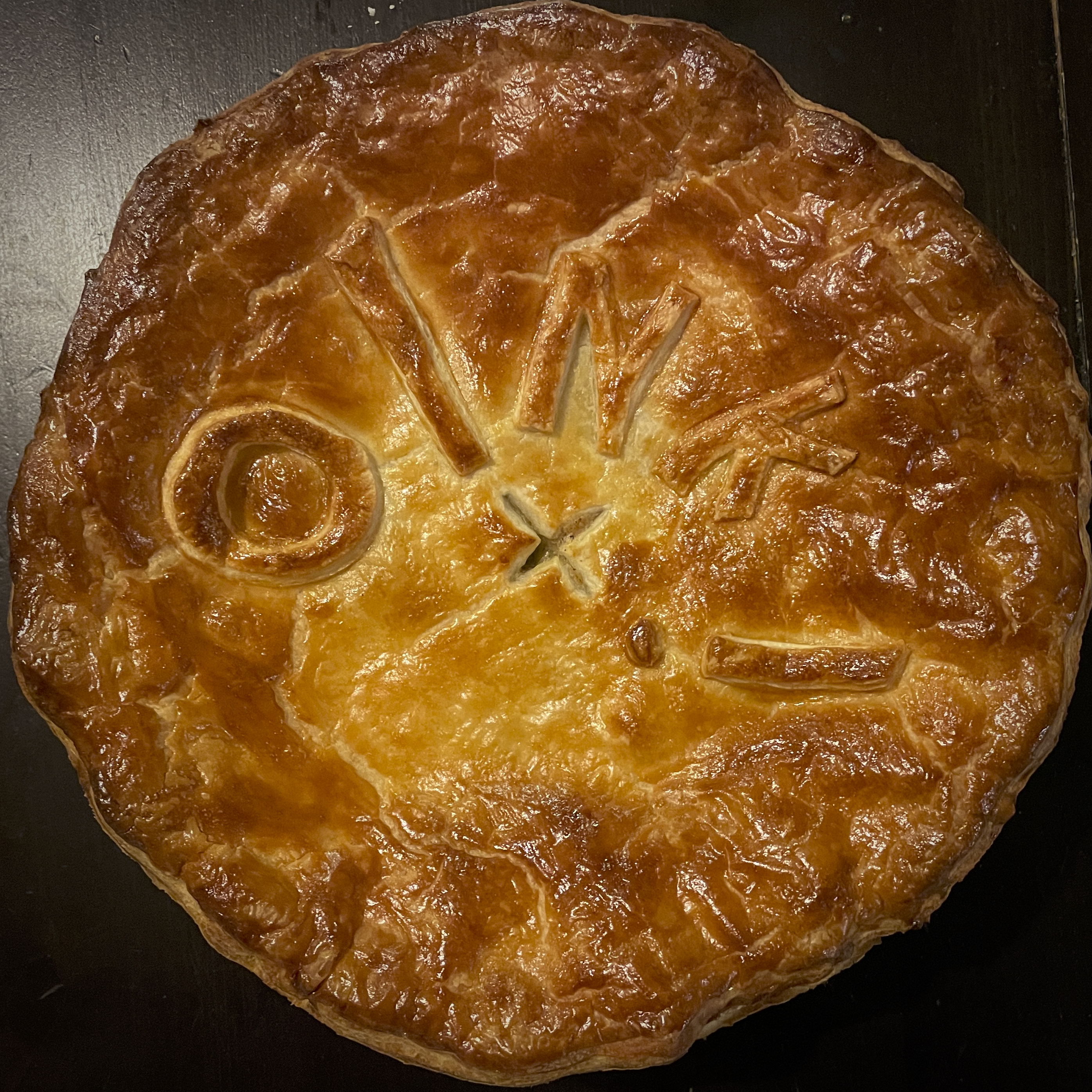
Make the base for this earlier in the day and bake when guests arive. We served with champ, buttered brussels sprouts and roasted carrots. You make quite a bit of roux and only use a bit, but its a very handy thing to have in the fridge at this time of year to thicken gravies and sauces.

Wine Suggestion: Pork and mushrooms often make us think of Nebbiolo, especially when there’s a rich sauce to cut through too. From a very traditional, but expressive winemaker Pira Luigi’s Serralunga Barolo is a classical expression of this famous region. They make some amazing Cru’s as well which always need time to evolve, but this cuvée we find is always more open in youth. Full-bodied and aromatic with tar and roses, the earthiness and truffle on the palate hold the balance between the full tannins and fresh acidity. It finishes long and regal as hoped.

Pork and mushroom pie – serves 4

FOR THE ROUX:

  • 100g butter
  • 100g plain flour

FOR THE PIE FILLING:

  • 25g butter
  • 2 onions, chopped
  • 1 tsp ground cumin
  • 1 tsp ground coriander
  • 700g shoulder or leg pork, cut into 2cm cubes
  • 250ml chicken stock
  • 1 tbsp olive oil
  • 300g chestnut mushrooms, sliced
  • 250ml cream
  • 1 tbsp chopped parsley

FOR THE TOPPING:

  • 300g puff pastry, rolled to 5mm
  • 1 egg, beaten

Make the roux first by melting the butter over a medium heat, then add the flour. Cook, stirring, for 2 minutes, then pour into a small bowl. Keep in the fridge once cooled.

Preheat the oven to 160C, Gas 3.

Melt the butter for the pie filling in a medium casserole. Add the onions and season, then cover and sweat on a low heat for 5 minutes. Turn up the heat, then add the spices and the pork. Toss for a few minutes to colour the pork, then add the stock. Cover and cook in the oven for 45 to 50 minutes or until tender.

While the pork is cooking, heat the oil in a large frying pan, then add the mushrooms and fry until lightly coloured. Add the mushrooms to the pork after 30 minutes.

When the pork is cooked, remove the pork and mushrooms from the dish with a slotted spoon and set aside. Add the cream to the pot and boil with the lid off for a few minutes. Slowly whisk in about 2 tbsp of the roux to thicken the sauce, adding in small pieces while the mixture is boiling. Add the chopped parsley, then return the pork and mushrooms to the pan. Season and transfer to a large pie dish.

Heat the oven to 230C, Gas 8.

Cover the dish with the pastry and make a hole in the centre to let out steam. You can decorate the top if you like with the excess pastry. Have fun doing this if you like we did.

Brush with the beaten egg, then cook in the oven for 10 minutes. Turn the heat town to 190C/Gas 5 and cook for a further 20 minutes or until golden brown.

Serve immediately with lots of veg.

(Original recipe from Rachel’s Food for Living by Rachel Allen, Collins, 2007.)

Read Full Post »

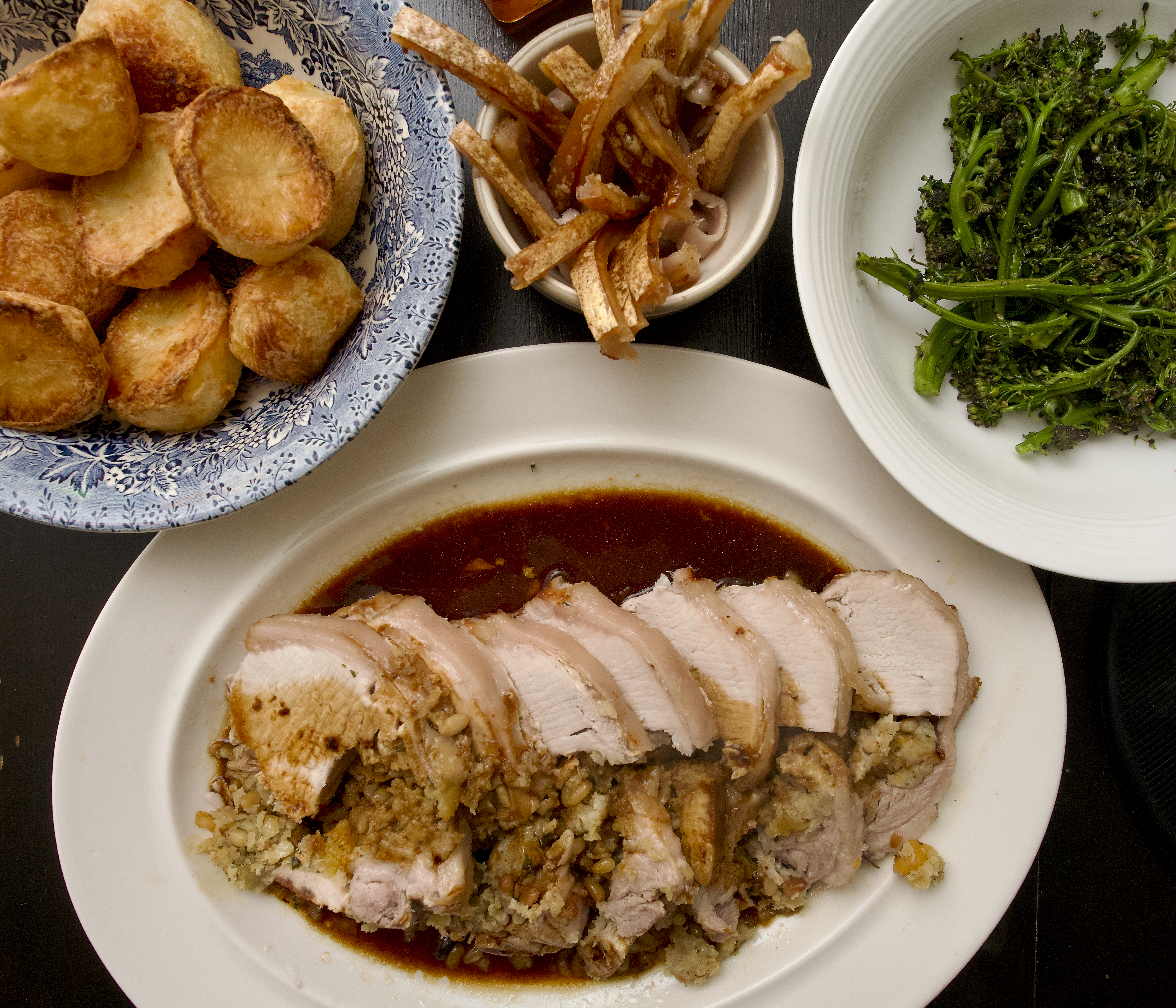
Pork is great value and this recipe will feed many people. Serve with roast potatoes and veg. To make sure you get good crackling, leave the pork, skin-side up, on a plate in the fridge for a day to dry out.

Wine Suggestion: An indulgence we know, but it was a roast dinner with friends; Domaine Jamet’s Condrieu Vernillon. A fairly new wine to this domaine, but one that echos the wonderful reds by being expressive and textural, with a vibrant core of freshness and savouriness.

Roast pork with apricot and pine nut stuffing – serves 6 to 8

  • 75g butter
  • 1 onion, finely chopped
  • 1 clove of garlic, crushed
  • 50g pine nuts
  • 175g day-old, fresh white breadcrumbs
  • 50g dried apricots, roughly chopped
  • 1 tbsp roughly choppd parsley
  • 1 tsp fresh thyme leaves
  • 1.75kg boneless pork loin, skin scored at 5mm intervals, tell your butcher you plan to stuff it
  • 2 tbsp olive oil

FOR THE GRAVY:

  • 1 tbsp plain flour
  • 3 tbsp ruby red port or red wine
  • 1 tbsp clear honey
  • 4 whole cloves
  • 600ml beef stock

Remove the pork from the fridge about an hour before you plan to put it into the oven.

Make the stuffing by melting the butter in a large frying pan, then add the onion and garlic and cook for a few minutes until softened but not coloured.

Meanwhile, toast the pine nuts in a separate dry fring pan, watch them carefull so they don’t burn.

Stir the breadcrumbs into the onion mixture with the apricots, parsley and thyme, then stir in the toasted pine nuts and season. Remove from the heat and leave to cool.

Heat the oven to 200C/400F/Gas 6.

When the stuffing is cooled, place the pork skin-side down on a board. Spoon the cooled stuffing along the centre, roll up the joint and tie with string at intervals to secure.

Put the pork into a large roasting tin and pat the skin dry with kitchen paper. Rub the skin with olive oil and plenty of sea salt. Cover with foil and roast for 20 minutes. Reduce the heat to 180C/350F/Gas 4 and roast for another 15 minutes. Remove the foil and cook for another hour and 15 minutes or until the pork is tender and you have crispy crackling (if the crackling hasn’t crisped by the time the pork is cooked you can remove and snip it into strips with scissors and crisp it under the grill).

Transfer the pork to a warm serving plate and rest for about 15 minutes while you make the gravy.

Pour most of the fat from the roasting tin and put over a gentle heat. Stir in the flour and cook for 2 minutes, stirring. Slowly pour in the port and then add the honey and cloves, stirring to combine. Gradually add the stock, stirring continuously until it comes to the boil. Reduce the heat and simmer for 10 minutes until reduced and thickened, stirring occasionally. Season to taste.

Cut the string from the pork and cut through the fat just underneath the crackling. Remove and cut into pieces (you will have to eat a few), then carve the pork into thick slices.

Serve the pork on a platter with lots of roast potatoes, gravy and veg.

(Original recipe from Neven Maguire’s Cookery Collection, Poolbeg Press Ltd., 2005.)

Read Full Post »

After such a long, cool and wet Spring we are finally having sunny weather in Ireland and so we’re cooking anything over fire … on sticks … and lots of salads. Long may it last!

Wine Suggestion: If you’re having this as a starter we’d highly recommend a good, dry Oloroso like the Bodegas Hidalgo Oloroso Faraon which is nutty, smokey, round and honeyed on the nose, but with an enveloping roundness and richness on the palet, despite being bone dry. Very savoury and great with food.

Pork and Asparagus Kebabs – serves 4

  • 500g pork fillet, cut across the grain into ½ cm thick slices
  • 1 clove of garlic, finely chopped
  • 1-2 tsp smoked paprika
  • 3 tbsp olive oil
  • 250g asparagus, woody ends snapped off and cut into thirds (don’t buy the very skinny stuff for this as it will be difficult to thread onto the skewers)
  • 1 bunch of scallions, sliced into thirds

Put the pork into a large bowl, then add the garlic, smoked paprika, olive oil and sherry vinegar, then stir well to coat. Cover and put into the fridge for an hour or two, then stir in the asparagus and scallions to coat in the marinade.

Thread pieces of pork, aspargus and scallion onto skewers.

Prepare your barbecue for direct cooking, then place the skewers directly over the heat and cook for about 10 minutes, turning a couple of times to ensure they brown and cook through.

(Original recipe from Foolproof BBQ by Genevieve Taylor, Hardie Grant: Quadrille, 2021.)

Read Full Post »

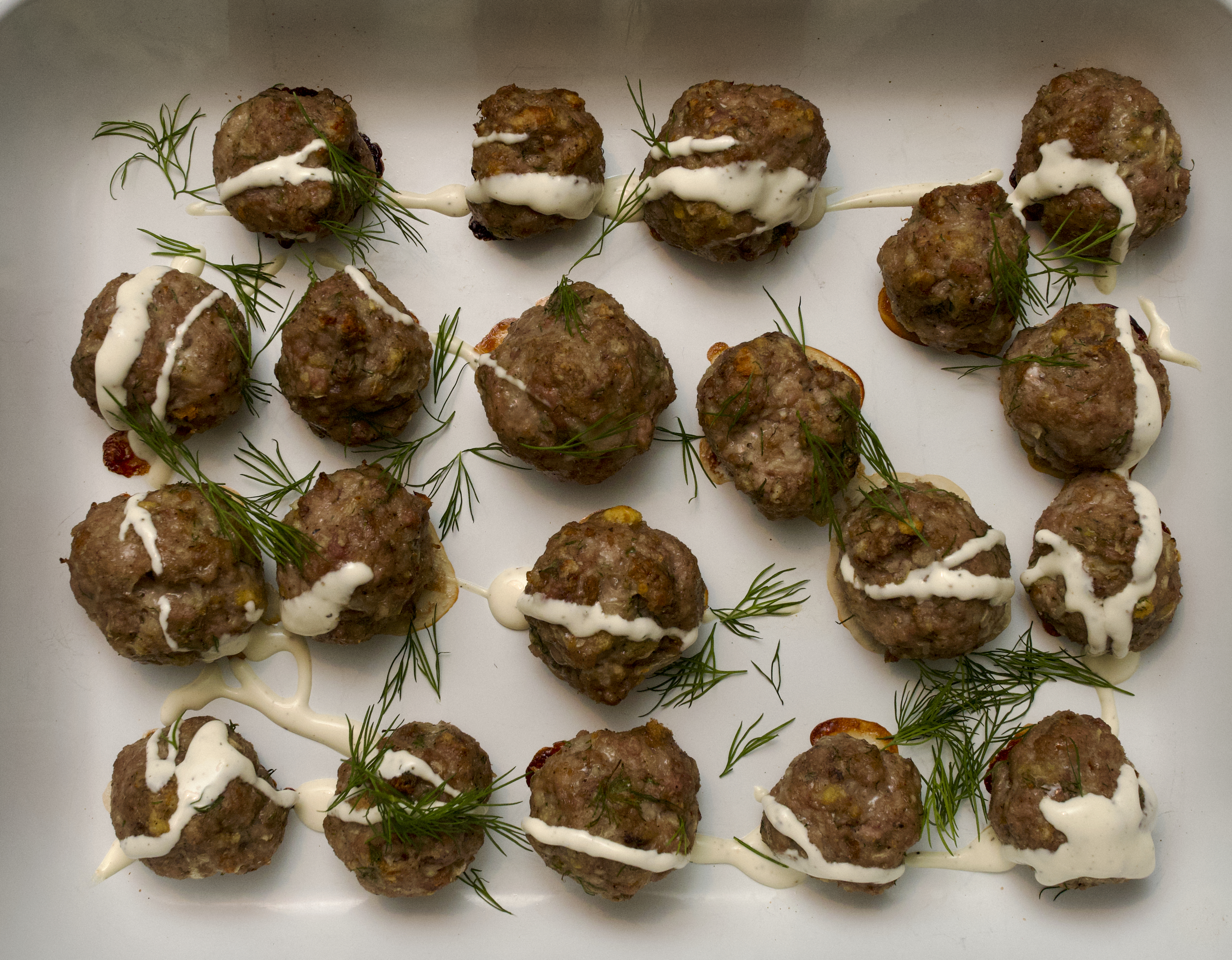
Inspired by an extra cucumber in the veg drawer. A lovely meal for mid-week with crusty bread.

Wine Suggestion: Wines from the hills in South Western France are very underrated, especially when made by insightful provocative winemakers. The Domaine Coustarret Jurançon Sec is 100% Gros Manseng and has a great balance between a sappy, salty backbone overlayed with orange zest and fresh stonefruit flavours. Well worth seeking out.

Scandi baked meatballs with pickled cucumber salad – serves 4

  • 400g pork mince
  • 1 egg yolk
  • ½ tsp allspice
  • 100g breadcrumbs
  • 1 small onion, grated
  • a handful of dill, finely chopped, plus extra to serve
  • 1 tsp freshly ground white pepper
  • 4 tbsp sour cream, seasoned
  • crusty bread, to serve

FOR THE PICKLED CUCUMBER SALAD:

  • 2 tbsp white wine vinegar
  • 1 tbsp caster sugar
  • ½ cucumber, peeled and cut into half moons
  • 1 tsp yellow mustard seeds
  • a handful of parsley, chopped

Heat the oven to 200C/180C fan/gas 6.

Start with the pickled cucumber salad. Put the vinegar and sugar into a small saucepan and heat until the sugar has dissolved, then set aside to cool. Put the cucumber into a bowl, then pour over the cooled vinegar and add the mustard seeds. Stir and set aside.

Put the pork mince, egg yolk, allspice, breadcrumbs, grated onion, dill and white pepper, into a bowl. Season well, then mix with your hands until well combined. Form into 20 meatballs and set them into a large baking dish.

Put the meatballs into the hot oven for 20 minutes or until golden and cooked through. Drizzle with the sour cream and scatter over the reserved dill. Serve with the cucumber salad and crusty bread.

(Original recipe by Janine Ratcliffe in Olive Magazine, April 2017.)

Read Full Post »

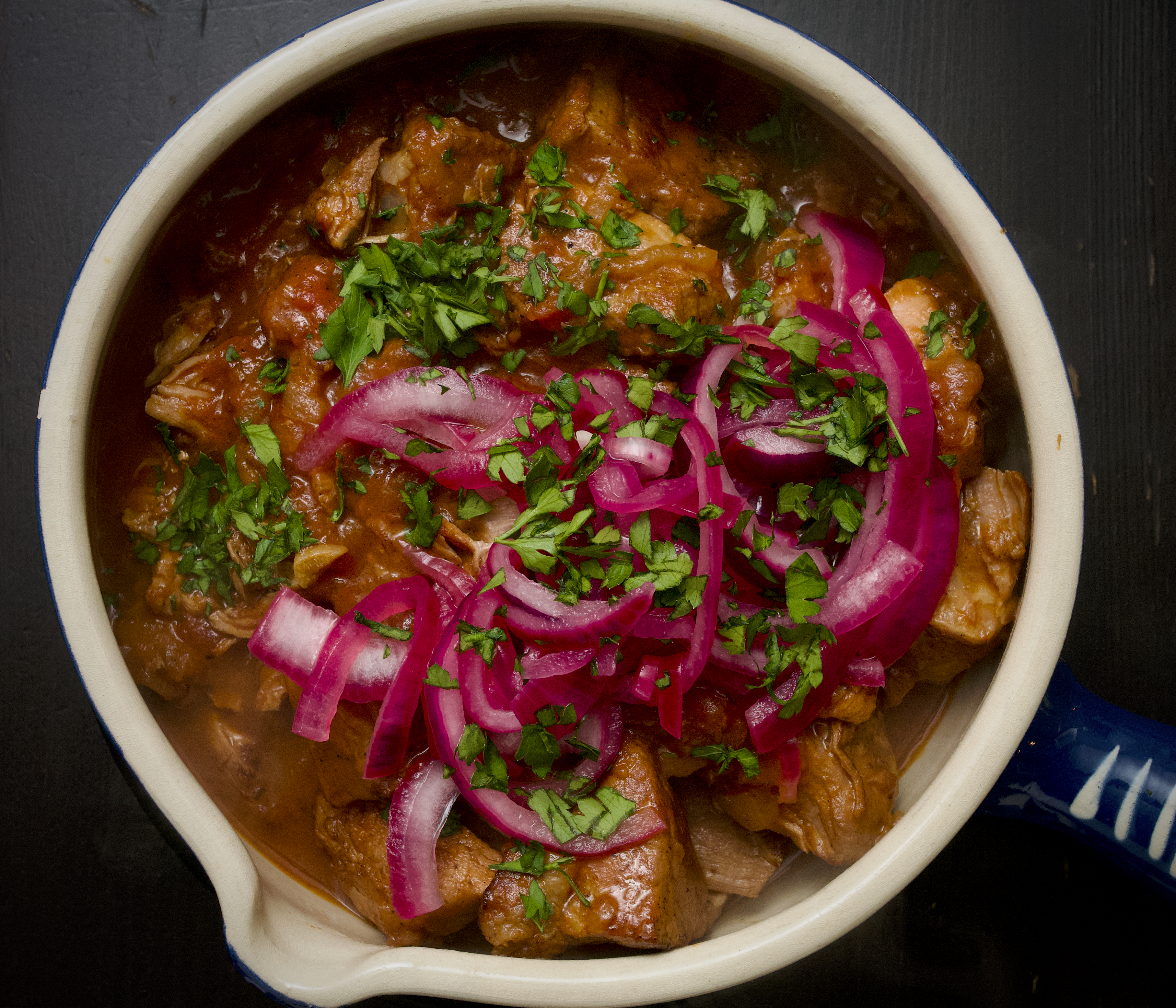
This is an Iberico pork dish inspired by José Pizarro. We did not have any Iberico and substituted Tamworth free-range pork from our butchers instead. This is not quite the same but the dish was still lovely, but of course use Iberico if you can find it.

Wine Suggestion: A dish that begs for a Spanish Garnacha.

Pork shoulder in tomato & sherry sauce with lemony couscous – serves 6

  • 2 tbsp olive oil
  • 1.5kg shoulder of pork (or Iberico pork), cut into 5cm chunks
  • 2 red onions, finely sliced
  • 3 cloves of garlic, finely sliced
  • 2 tsp coriander seeds, lightly crushed
  • 1 tbsp tomato purée
  • 150ml oloroso sherry
  • 1 x 400g tin chopped tomatoes
  • 400ml chicken stock

FOR THE COUSCOUS:

  • 1 red onion, finely sliced
  • juice of 1 lemon
  • 250g couscous
  • 3 tbsp extra virgin olive oil
  • 450ml chicken stock
  • a large handful of flat-leaf parsley, chopped, plus extra to serve
  • 2 preserved lemons, skin finely sliced and pulp discarded
  • ½ cucumber, peeled, deseeded and finely diced
  • 30g toasted flaked almonds

Heat the oven to 160C/140C fan/gas 3.

Season the pork with salt and pepper, then heat the olive oil in a large casserole and fry the pork in batches until well browned on all sides.

Reduce the heat to medium-low, then add the onions to the dish and fry gently for 10 minutes, then add the garlic and coriander seeds and fry for another 5 minutes.

Add the tomato purée and sherry and bubble for 1 minute, then return the pork to the pan and add the tomatoes and stock. Season and bring to a simmer, then cover and transfer to the oven. Cook for 2½-3 hours or until the meat is really tender.

Meanwhile, prepare the couscous. Put the onion into a heatproof bowl, then pour over boiling water from the kettle and leave to sit for 30 seconds. Drain and cool under running water. Tip the onion back into the bowl and squeeze over the lemon juice and season with salt. Set aside.

Put the couscous into a flat dish and stir in the olive oil and a good pinch of salt, then pour over the chicken stock. Stir and cover with clingfilm, then leave to steam for 10 minutes. Remove the cover and fluff the couscous up with a fork. Add the rest of the ingredients and stir to combine.

Serve the pork with the couscous, the pickled onion and its juices, and some extra parsley.

(Original recipe from The Spanish Home Kitchen by José Pizarro, Hardie Grant, 2022.)

Read Full Post »

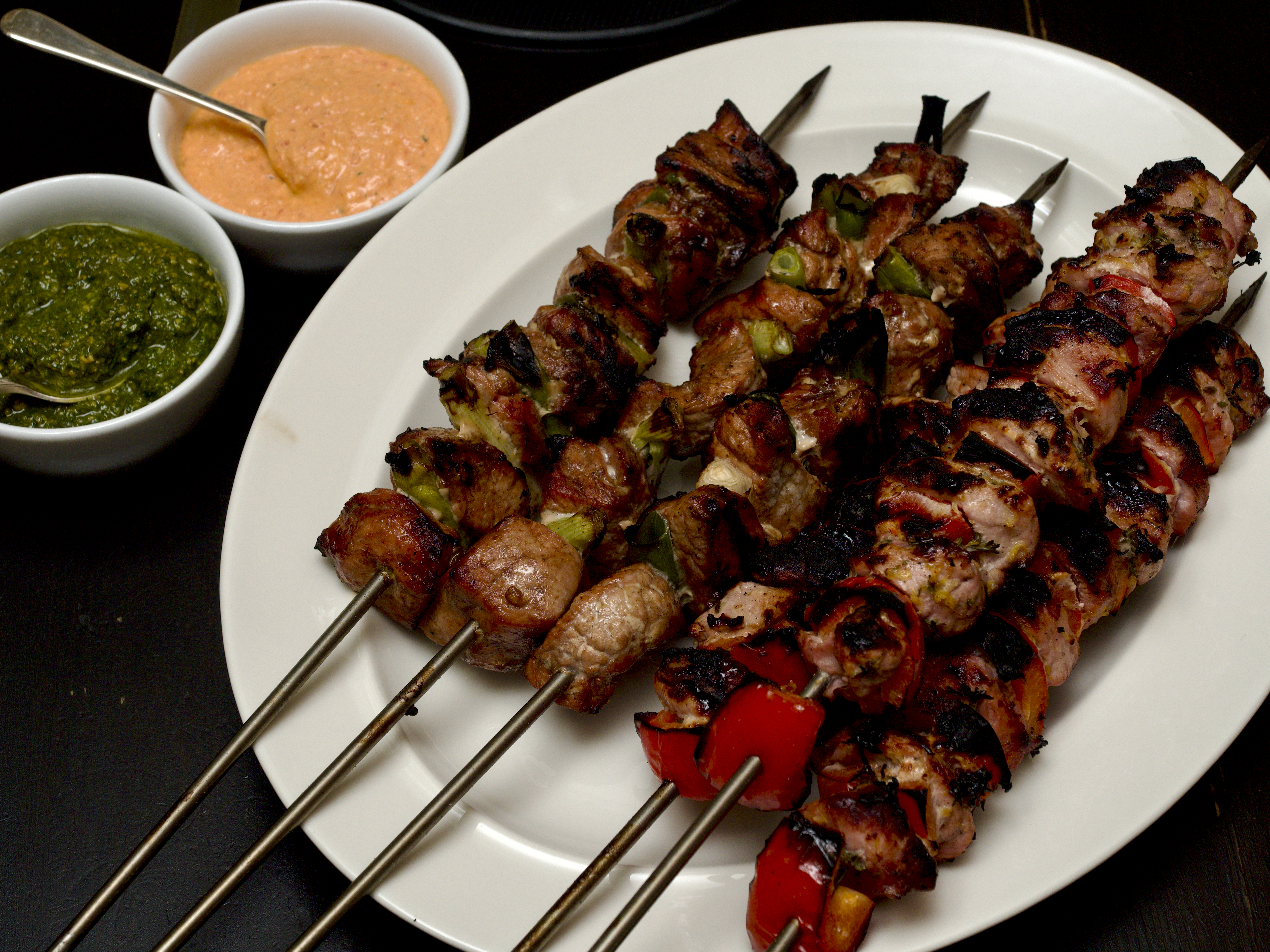
Two kebabs for the barbecue with their respective sauces. We couldn’t decide which one to do, so we halved each recipe and made both. A meat probe is great for checking that barbecued meat is cooked – you are looking for 63C for medium or 71C for well done. You can buy a good-quality pesto if you don’t want to make your own.

Lemony pork kebabs with feta & pepper sauce, makes 6-8 kebabs

  • zest and juice of 2 lemons
  • 4 tbsp olive oil
  • 2 cloves of garlic, crushed
  • a handful of thyme sprigs, roughly chopped
  • 1.2kg pork leg, diced
  • 2 red peppers, diced

FOR THE FETA AND RED PEPPER SAUCE:

  • 2 red peppers
  • 200g feta
  • ½-1 tsp chilli flakes
  • 3 tbsp olive oil

Mix the lemon zest and juice, olive oil, garlic and thyme together. Sesaon with salt and pepper, then add the pork and stir well. Cover and refrigerate for 12-24 hours.

When ready to cook get a barbecue ready for both direct and indirect cooking.

Put the whole peppers for the sauce directly over the fire and char the skins all over until blackened. Transfer to a bowl and cover with cling film, then leave for a few minutes or until cool enough to handle. Rub off the skin and discard the stems and seeds. Put the pepper flesh into a food processor with the feta, chilli flakes and olive oil, season, then blend to a purée. Transfer into a bowl and set aside.

Thread the pork and pepper pieces onto skewers. Set onto the barbecue, slightly away from the fire so they cook over a medium heat for 15-20 minutes.

Serve with the feta and red pepper sauce.

Balsamic pork kebabs with pesto dressing, makes 8 kebabs

  • 4 tbsp balsamic vinegar
  • 3 tbsp olive oil
  • 1 tbsp brown sugar
  • 3 cloves of garlic, crushed
  • 1 tsp smoked paprika
  • 1.2kg pork leg, diced
  • a bunch of scallions, cut into 4cm lengths

FOR THE PESTO (or use good-quality shop-bought pesto)

  • 50g pine nuts, toasted
  • 30g basil, leaves and stems, roughly torn
  • 40g Parmesan, grated
  • 6 tbsp olive oil
  • juice of ½ lemon
  • 1 clove of garlic, crushed

Mix the balsamic, olive oil, brown sugar, garlic and smoked paprika together in a bowl. Season with salt and pepper, then stir in the pork pieces. Cover and put into the fridge for 12-24 hours.

To make the pesto, tip the pine nuts, basil, Parmesan, olive oil, lemon juice, garlic and a little salt into a food processor and blend to a purée. Scrape the pesto into a bowl and set aside.

When ready to cook get the barbecue prepped for direct and indirect cooking.

Thread the pork and scallions on to skewers. Set onto the barbecue, slightly away from the fire so they cook over a medium heat for 15-20 minutes.

Serve with the pesto on the side.

(Original recipes from Seared by Genevieve Taylor, Hardie Grant: Quadrille, 2022).

Read Full Post »

We’ve never tried Dublin coddle, mainly because it tends to be served with anaemic sausages. In this recipe by Neven Maguire you brown them; a far more sensible approach altogether.

Wine Suggestion: This dish works perfectly with a Grenache blend. For us this time, a current favourite as they’re drinking so well, Romain Roche’s Côtes du Rhône. So well balanced and smooth, but with a warmth of sunshine and gentle, velvety spices.

Dublin Coddle – serves 4 to 6

  • 1 tbsp rapeseed oil
  • top-quality pork sausages – 2 per person
  • 2 onions, sliced
  • 150g dry-cured bacon lardons
  • 1 tbsp plain flour
  • 2 tsp fresh thyme leaves
  • 4 carrots, sliced
  • 750g potatoes, peeled and thinly sliced (use a mandoline if you’ve got one)
  • 2 tsp Worcestershire sauce
  • 400ml chicken stock
  • 15g butter
  • 1 tbsp chopped fresh flat-leaf parsley

Preheat the oven to 180C/350F/Gas 4.

Heat half the oil in a large casserole dish and brown the sausages on all sides. Transfer to a board and cut each sausage into three chunky pieces, then set aside.

Add the rest of the oil to the pan and sauté the onions and bacon for 6-8 minutes, until lightly golden. Stir in the flour and thyme and cook, stirring, for another minute. Add the sausages, carrots and half of the potatoes. Season generously, then shake to get everything even in the dish.

Turn off the heat and arrange the rest of the potatoes on top. Stir the Worcestershire sauce into the stock, then pour over the potatoes. Dot with the butter and season.

Cover the casserole with a lid and bake for 1 hour, then remove the lid and cook for another 30 minutes or until the topping is tender and golden brown. Scatter over the parsley to serve.

(Original recipe from More Midweek Meals by Neven Maguire, Gill Books, 2022.)

Read Full Post »

These are a nice spin on regular sausage roll. Great for a snack with some ketchup.

Sausage rolls with barberries & dill – makes 16

  • 370g ready-rolled puff pastry
  • 1 egg, beaten
  • 1 tbsp sesame seeds

FOR THE FILLING:

  • 350g sausagemeat
  • 3 scallions, finely sliced
  • 15g dill, finely chopped
  • 2 tbsp dried barberries
  • 1 tsp dried oregano
  • 1 tsp garlic granules
  • 1 tsp pul biber chilli flakes

Preheat the oven to 220C/200C fan/Gas 7.

Line a large baking tray with baking paper.

Put all of the filling ingredients into a large bowl. Season generously with maldon salt and black pepper, then mix with your hands for a couple of minutes until evenly combined.

Divide the puff pastry sheet in two, lengthways.

Divide the sausage mixture in two, then form two long sausages, almost the same length as the pastry strips. Place a sausage in the middle of each piece of pastry. Brush one edge of the pastry with egg, then fold the pastry edges over to enclose the sausage. The beaten egg will help to seal them.

Turn the rolls over so the seam is underneath, then cut each roll into 8 pieces.

Transfer to the baking tray and brush the tops with the beaten egg. Sprinkle with the sesame seeds, then bake in the hot oven for 22-25 minutes or until well browned. Leave to cool for a few minutes before serving with some ketchup if you like.

(Original recipe from Persiana Everyday by Sabrina Ghayour, Aster, 2022.)

Read Full Post »

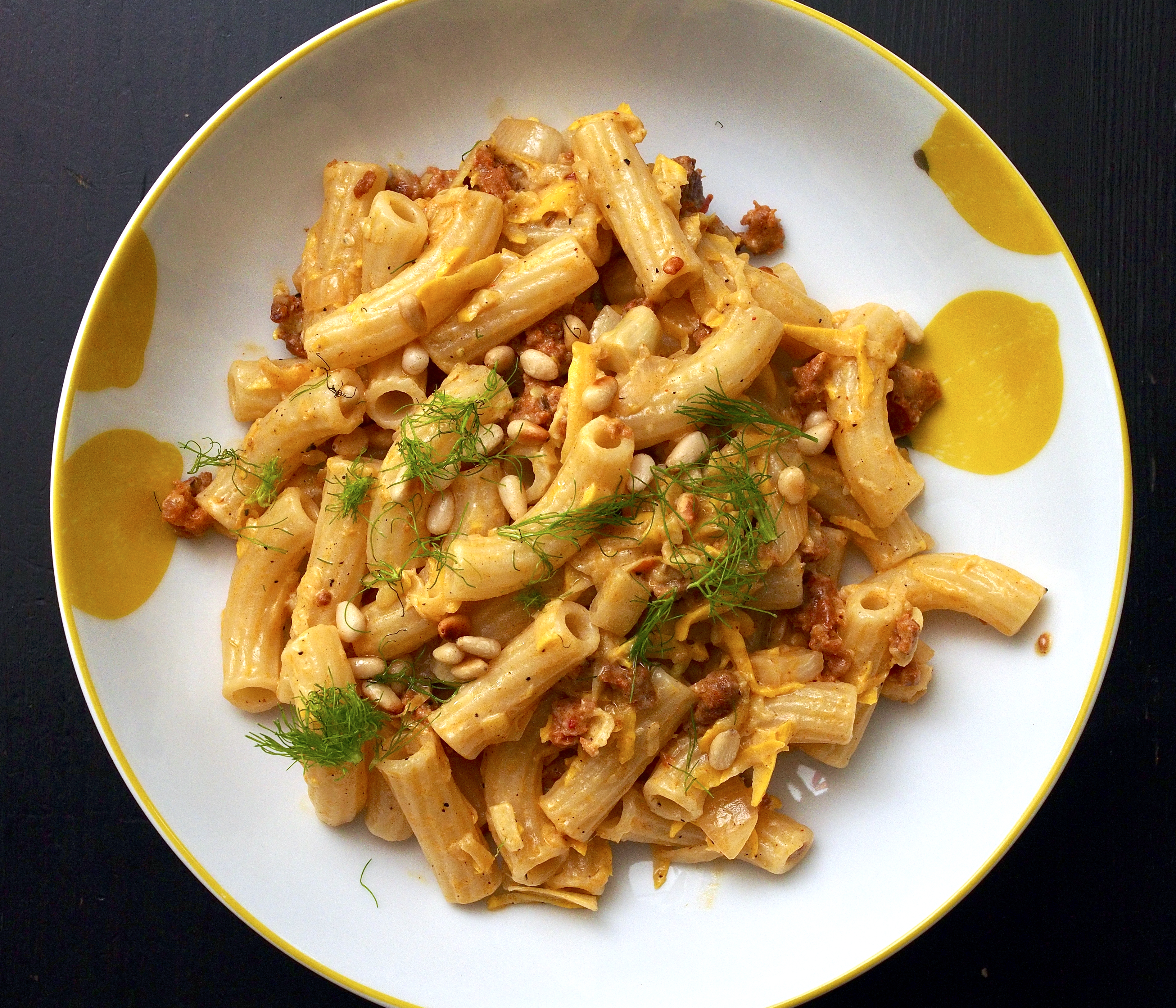
A nice pasta with unusual flavours. Use good-quality Italian sausages for this if you can find them.

Wine Suggestion: As this dish is full-flavoured we’d suggest a full flavoured white like Cline Cellars Sonoma Coast Chardonnay, which has a wonderful Californian ripeness combined with a core of fresh minerality and zing from the cooling breezes and fog coming through the Petaluma Gap each day. The subtle oak gives a lovely texture which helps matching this dish too.

Pasta with fennel, sausage and courgette – serves 4

  • 3 good-quality pork sausages (we like Italian sausages)
  • 1 tsp olive oil
  • ½ small fennel bulb, trim off any green bits and chop finey, reserve any fronds to garnish
  • ½ onion, diced
  • 2 big cloves of garlic, finely chopped
  • 200g rigatoni pasta
  • zest and juice of a lemon
  • 100g mascarpone
  • 1 medium-large courgete, grated
  • 1 tbsp toasted pine nuts
  • grated Parmesan (to serve)

Take the skins off the sausages and crumble them into small chunks. Heat the oil in a large frying pan, then fry the sausages until browned and crispy, breaking the lumps up with a wooden spoon. Scoop out with a slotted spoon and set aside.

Add the fennel, onion and garlic to the sausage fat in the pan and cook for about 10 minutes, or until softened but not coloured. You can add a splash of water if it starts to stick.

Bring a large pan of salty water to the boil, add the pasta and cook according to the timings on the pack. Drain but reserve a mugful of the cooking water.

Return the frying pan to the heat and stir in the lemon zest, lemon juice, mascarpone, grated courgette and a splash of pasta cooking water. Bubble for 2 minutes, then stir in the cooked pasta and sausages. Season, then serve garnished with fennel fronds, pine nuts and Parmesan.

(Original recipe from BBC Good Food)

Read Full Post »

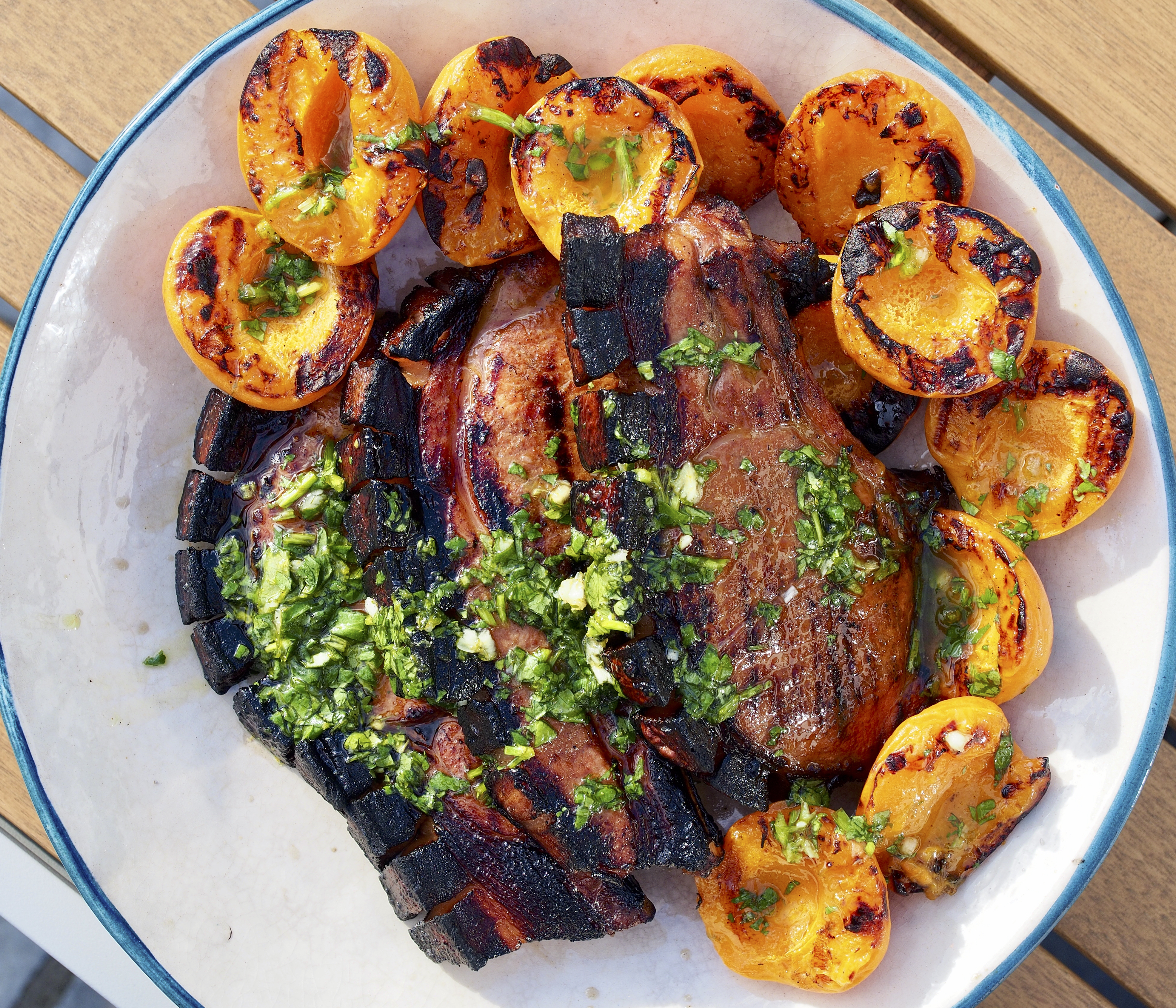
Apricots are good value now and will only be around for a short time but you could also use a tin of apricots for this when they’re no longer available. You will need to brine the pork the day before you want to cook but it’s a very simple process so don’t let that put you off and the result is worth the effort.

Wine Suggestion: It’s very humid and warm in Dublin, though with very little sunshine this summer, so we’re drinking more whites and Rosé. Tonight was no different with a Grenache Blanc – Grenache Gris blend from 100 year old vines; the Domaine of the Bee Field of the Bee. Capturing the southern French sunshine this feels like stepping back in time with hints of garrigue and wild herbs, while keeping a view on the future with a vibrant freshness and purity.

Barbecued pork with apricots – serves 4

  • 50g sea salt flakes
  • 2 tbsp brown sugar
  • 3 tbsp treacle
  • 4 large pork chops
  • 6 ripe apricots, halved

FOR THE SAUCE:

  • 100ml extra virgin olive oil
  • zest and juice of 1 lime
  • a big handful of coriander, leaves and stalks finely chopped
  • 1 garlic clove, crushed
  • 1-2 tsp honey

Make the brine by pouring 250ml of boiling water into a jug, then adding the salt, sugar and treacle and stirring until dissolved. Top up with cold water to get 500ml, then leave to cool completely.

Cut a few slashes through the fat on each pork chop. Place them into a freezer bag and pour over the cold brine. Tie the bag tightly and leave in the fridge for 24 hours.

Make the sauce by putting the oil, lime zest and juice, coriander and garlic to a bowl and whisk together well. Season and add the honey to taste. Set aside.

Get the barbecue hot.

Drizzle a little oil over the cut sides of the apricots. Drain the pork and discard the brine, then pat dry with paper towels. Drizzle a little oil over these too.

Grill the pork and apricots on the barbecue, turning often. Serve the pork with the apricots alongside and the sauce drizzled over.

(Original recipe from Seared by Genevieve Taylor, Quadrille, 2022.)

Read Full Post »

Pork ribeyes are a bit of revelation for us but they’re excellent on the barbecue and also good value. You cook them low and slow first, then a fast sear at the end. This will give you tender meat with a good browned crust on the outside. You will need a meat thermometer – they’re not expensive and an essential piece of equipment for cooking outside. You also want to start this the day ahead so you can season the meat the whole way through.

Wine Suggestion: We were treated to a gem from the cellar of our friends David & Joyce. The Domaine Tempier Bandol 2006 was at it’s absolute peak. Fresh as a daisy with velvety layers of plums and sloes and a deep, earthy bass note with touches of leather, tobacco and gentle spices. The forceful tannins from the Mourvèdre tamed by time into a silky texture allowing the fruit to emerge.

Barbecued pork ribeye steaks with mushrooms & tarragon sauce – serves 4 generously

  • 4 pork ribeye steaks, about 300g each
  • 1 tbsp flaked sea salt
  • 10g dried mushrooms
  • 1 tbsp olive oil
  • 25g butter
  • 300g chestnut mushrooms, sliced
  • 2 cloves of garlic, crushed
  • 175ml white wine
  • 300ml double cream
  • 20g fresh tarragon leaves, picked and chopped

Sprinkle the pork steaks all over with the salt and place on a rack over a tray. Leave uncovered in the fridge for 24 hours (or for as long as you’ve got).

When ready to cook you need to set up the barbecue for both direct and indirect heating. This means piling up the charcoal on just one side. You can then put the meat on the opposite side (without charcoal underneath) and cover with the lid to cook indirect – this will cook the meat slowly. When you want to finish over a high heat, you transfer the meat to the other side.

Put the dried mushrooms into a bowl and pour over enough boiling water to just cover. Leave to soak until soft, then finely chop the mushrooms and return to the soaking liquid. Set aside.

Put the pork steaks on the opposite side to the charcoal and allow them to cook gently for 30-40 minutes. You want the internal temperature to reach 50C.

Meanwhile, make the sauce. Heat the oil and butter in a heavy-based frying pan and add the fresh mushrooms. Fry until soft, then add the garlic and fry for a few minutes. Add the wine and the dried mushrooms along with their soaking liquid. Allow to bubble until the liquid is almost completely reduced, then add the cream, tarragon and seasoning. Allow to heat through, then cover with a lid and set aside.

Remove the steaks to a plate and, if you need to, add a bit more charcoal to the barbecue to get it super hot again. Then sear the steaks over a really high heat, with the lid off, turning them every 30 seconds until really well browned. Keep cooking like this on the internal temperature ahas reached 63C for medium or 71C for well done.

Warm the sauce a little if you need, then serve the steaks with the sauce poured over. Potatoes and green veg are good on the side.

(Original recipe from Seared by Genevieve Taylor, Quadrille, 2022.)

Read Full Post »

Older Posts »