Feeds:
Posts
Comments

Posts Tagged ‘Beef’

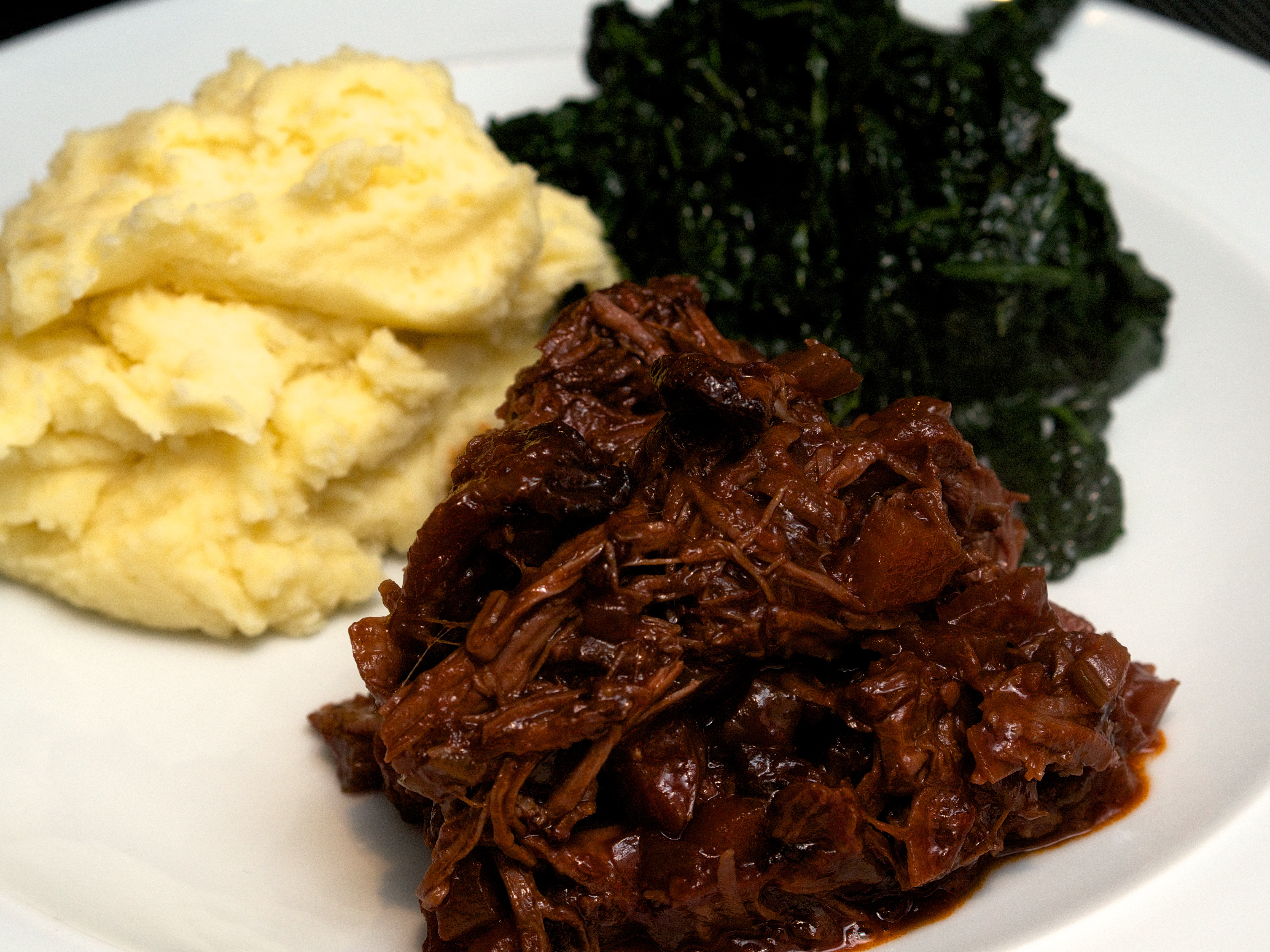
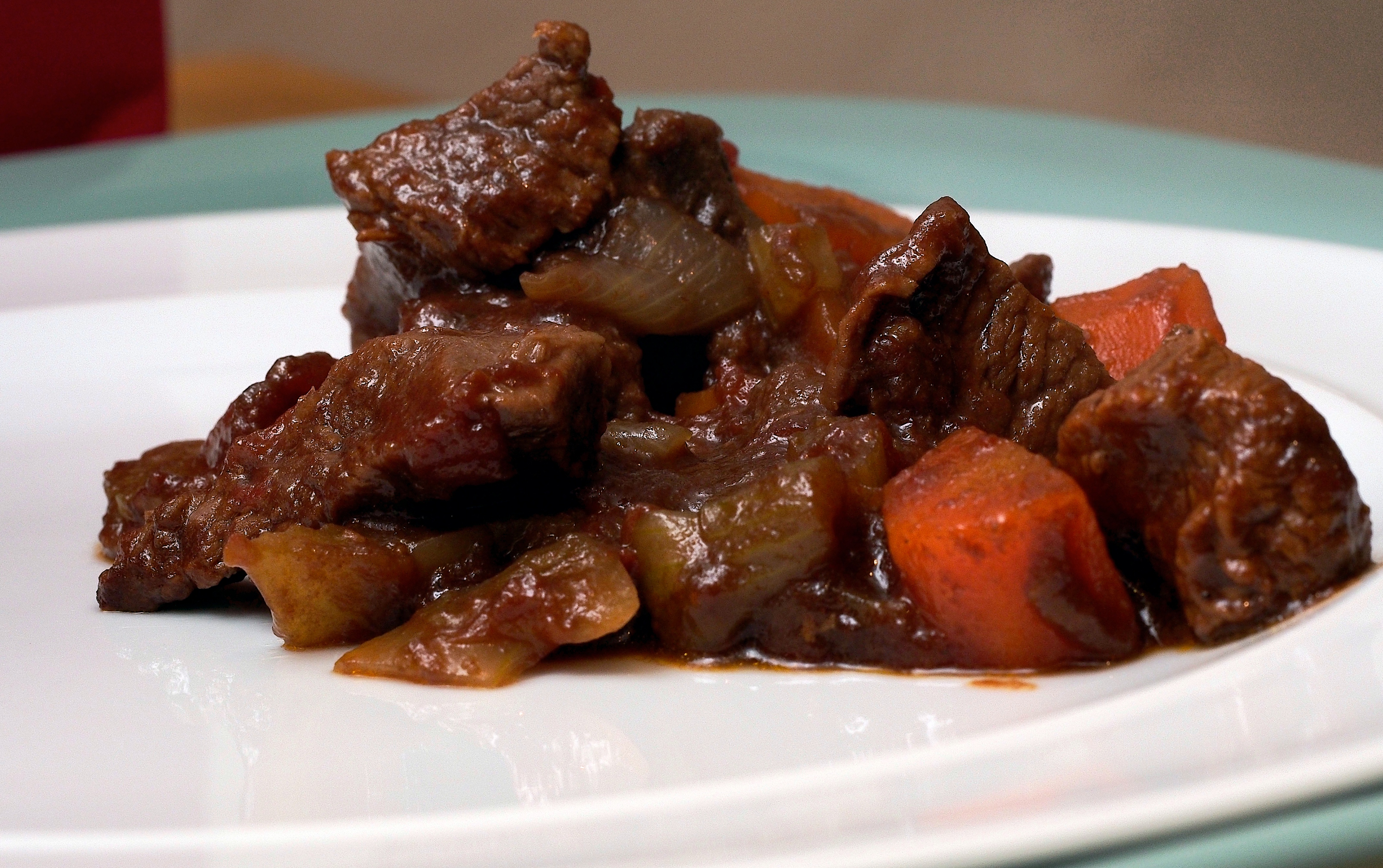
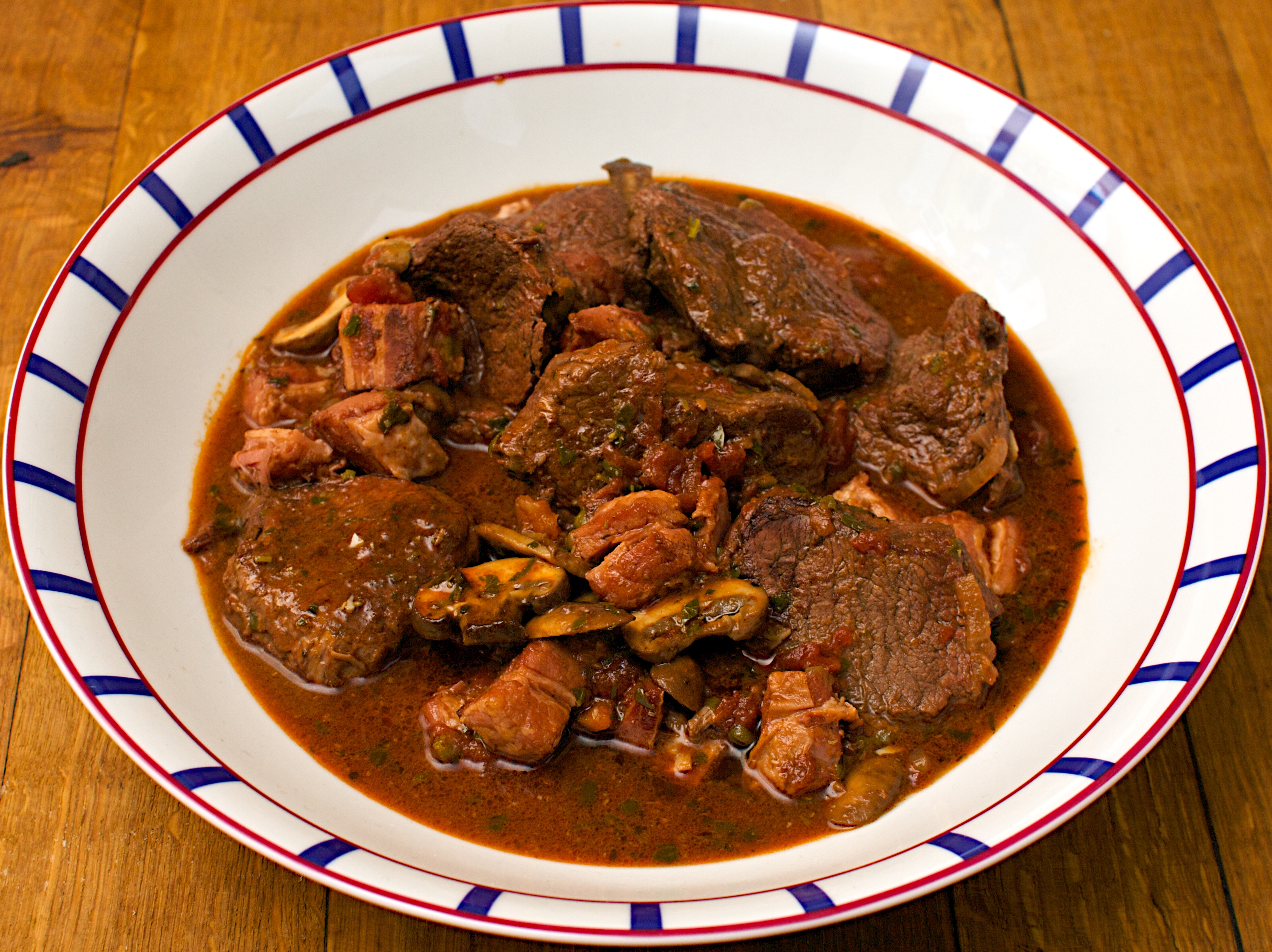
Daube of Beef

Daube of Beef

This dish was traditionally cooked in a glazed clay pot. However these have successfully been replaced by cast-iron casseroles, like our favourite oval shaped one from le Creuset. It keeps the heat stable which makes it perfect for the long and slow cooking required for this dish. Very like our Chianti Beef recipe but with a few French touches.

Wine Suggestion: with a nod to the French origins of this dish we’d suggest a good Gigondas from the Rhone to match. With rich brambly fruit, good spicy tannins and a touch of elegant leathery development the Grapillon d’Or Gigondas was immensely enjoyed last time we cooked this, but other GSM (Grenache-Syrah-Mourvedre) blends from around the world would work well too.

Daube of Beef – serves 6

  • 1.2kg shin of beef, cut into large pieces
  • 4 tbsp plain flour, well seasoned
  • oil for frying
  • 200g smoked bacon lardons
  • 2 onions, diced
  • 2 celery sticks, sliced thickly on a diagonal
  • 4 carrots, sliced thickly on a diagonal
  • 4 cloves of garlic, crushed
  • 750ml red wine
  • 2 tbsp tomato purée
  • 2 cloves, ground
  • 2 bay leaves
  • 2 strips of orange peel
  • flat-leaf parsley, to serve

Heat the oven to 150ºC/Fan 130ºC/Gas 2.

Toss the beef in the seasoned flour (we shake them together in a large freezer bag).

Heat 2 tbsp of oil in a large non-stick frying pan and brown the beef in batches before transferring with a slotted spoon to a large casserole dish with a lid. Add the bacon to the frying pan and cook until brown and crispy, then scoop out and add to the casserole with the beef. Cook the onions until golden and caramelised then add these to the beef. Finally fry the carrot and celery until just starting to colour. Add the garlic and cook for a minute then add to the beef. Add a splash of wine to the frying pan to deglaze, stirring to scrape any crusty bits from the bottom of the pan, then tip into the casserole. Add the rest of the wine to the casserole and bring to a simmer. Stir in the tomato purée, cloves, bay leaves and orange peel.

Transfer the casserole to the oven and cook for 2½ hours or until the meat is very tender – leave the lid off for a while at the end if you want the sauce to thicken to bit. Scatter with the parsley to finish.

(Original recipe by Lulu Grimes in BBC Olive Magazine, September, 2012).
 

Read Full Post »

Thai-styled stir-fried minced beef

A tasty mid-week supper full of zip, flavour and freshness. This is low in calories and a very easy way to perk up minced beef.

Thai-style stir-fried minced beef – serves 4

  • 100g broccoli florets, cut very small
  • 2 tbsp sunflower oil
  • bunch of scallions, finely chopped
  • 2 garlic cloves, crushed
  • 3cm piece of fresh root ginger, finely chopped
  • 1 tbsp finely chopped coriander stalks, plus a handful of coriander leaves, roughly chopped
  • 1 red chilli, deseeded and finely chopped
  • 400g minced beef
  • 1 tbsp fish sauce
  • 2 tbsp soy sauce
  • 1 tbsp lime juice
  • 1 tsp caster sugar
  • steamed rice, to serve

Bring a large pan of salted water to the boil and blanch the broccoli florets for 1 minutes, then drain and refresh under cold water.

Heat the oil in a wok or deep frying pan. Add the scallions, garlic, ginger, coriander stalks, and chilli, and fry for a couple of minutes or until starting to colour.

Add the beef and continue to fry over a  high heat until it is well browned.

Add the broccoli, fish sauce, soy sauce, lime and sugar. Mix well and continue to cook for another couple of minutes or until the broccoli is hot. Stir in the coriander leaves and serve immediately with some steamed rice.

(Original recipe from Family Kitchen Cookbook by Caroline Bretherton, DK, 2013.)

Read Full Post »

Beef shin braised in Chianti

Take a shin of beef and braise it for hours in a bottle of Chianti until it can be carved with a spoon … what’s not to like!

Wine Suggestion: the obvious choice is Chianti but given the richness and depth in the food make sure it is one with a bit of depth; younger, or more basic Chianti is just too light. We tried one by Tenuta Sant’Alfonso which comes from a specific vineyard with clay-rich soils which was opulent and fuller structured. It had licorice, dark cherry and mocha flavours which was a great match.

Tuscan slow-cooked shin of beef with Chianti – serves 6

  • 1kg beef shin, off the bone
  • olive oil
  • 2 large onions, finely chopped
  • 3 sticks celery, finely chopped
  • 1 carrot, finely sliced
  • 6 fat garlic cloves, finely chopped
  • 750ml Chianti or other robust red wine
  • 4 tbsp tomato purée
  • 4 bay leaves
  • 150ml beef stock

Heat the oven to 180C/fan 160C/gas 4.

Season the meat, then brown in a large casserole with a little olive oil.

Remove the meat and cook the onions, celery, carrot and garlic until softened, adding a bit more oil if needed.

Pour in the wine and bring to the boil before adding the tomato purée, bay leaves & beef stock.

Return the beef to the pan and bring to a simmer.

Cover with a lid and cook in the oven for 4 hours or until the meat falls apart.

When ready, pull the meat into chunks and stir through the sauces.

Serve with mash or fresh pappardelle pasta.

(Original recipe from BBC Olive Magazine, September 2015.)

Read Full Post »

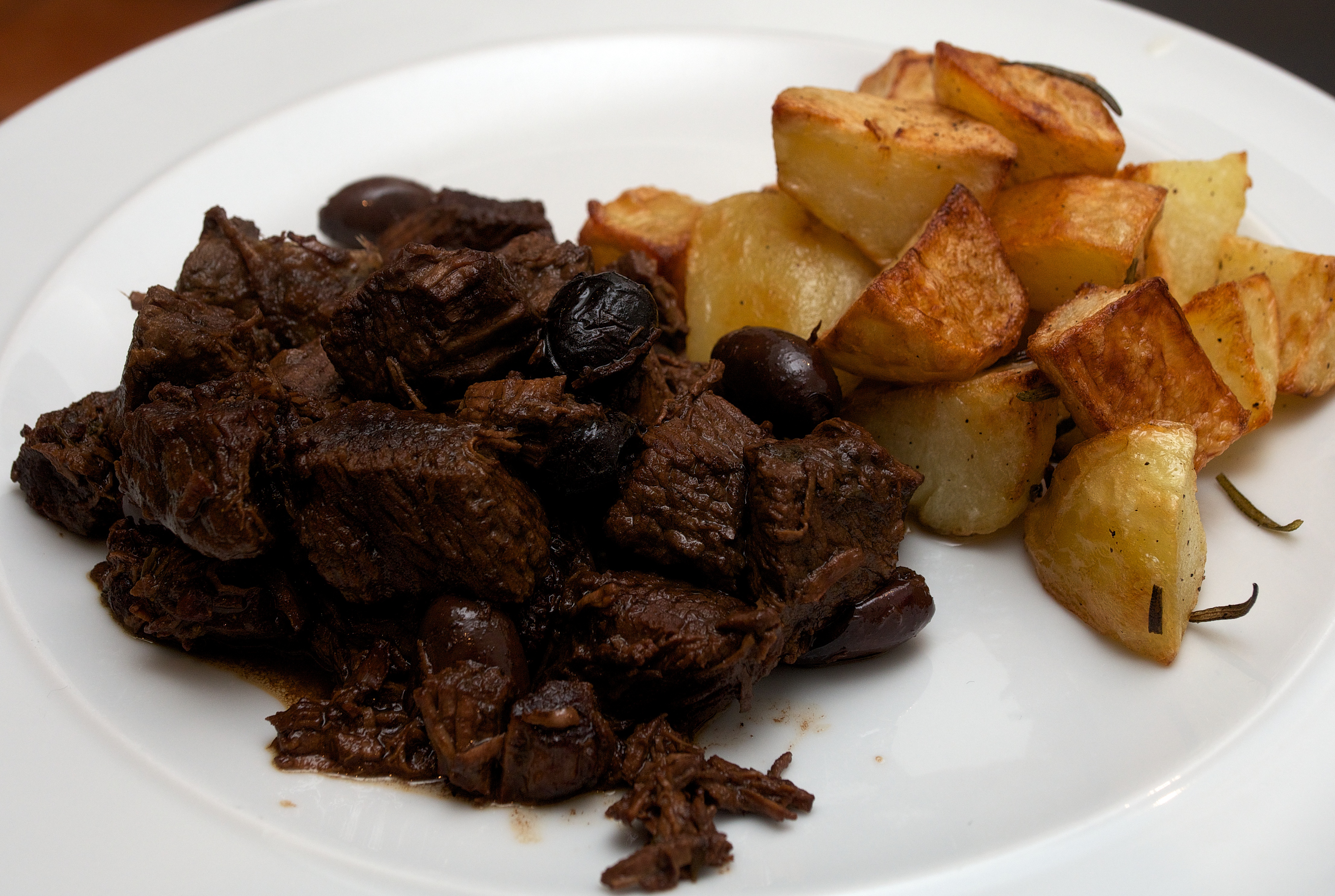
Bœuf à la Gardiane


Another classic from Elizabeth David, this stew originates in the Gard region of France and is very simple but full of flavour. Elizabeth suggests serving it with rice (a la Camargue) but it also worked well with roast potatoes and rosemary. There won’t be a lot of sauce as it is almost all absorbed by the meat as it cooks but this part of the charm; intensely flavoured, tender beef.

Wine suggestion: This dish would go well with any of the local red wines of the Gard and surrounding southern-French regions (Rhone, Languedoc, etc). Any combination of Grenache, Carignan, Cinsault, Mourvedre and Syrah will work, particularly if they come from older, lower yielding vines and a sensitive hand in the winery. We drank a VdP La Clape from Domaine de Boède, Le Pavillon which is a great value combination of Cinsault and Syrah and which stood up to the flavours and adding it’s own character.

Bœuf à la gardiane – serves 4-5

  • 1kg top rump of beef, cut into small neat cubes approximately 2.5cm square
  • butter and olive oil
  • 4 tbsp brandy
  • 1 large glass of full-bodied red wine
  • bouquet garni of thyme, parsley, a little strip of orange peel and a whole garlic clove crushed with the back of a knife but left whole (tie together with thread)
  • 175g stoned black olives

Heat the butter and oil in a heavy based casserole dish and brown the beef in batches.

Warm the brandy in a soup ladle, pour over the meat, then carefully set alight. Shake the pan carefully until the flames go out.

Add the red wine and bubble for 30 seconds before seasoning with a little salt and pepper. Add the bouquet garni, turn the heat down as low as possible and cover the pan with at least two layers of greaseproof paper or foil and the lid.

Cook as gently as possible for about 3½ hours. Ten minutes before the end, remove the bouquet garni and add the olives.

Season to taste and serve.

(Original recipe from At Elizabeth David’s Table: Her very best everyday recipes, compiled by Jill Norman, Penguin, 2010.)

Read Full Post »

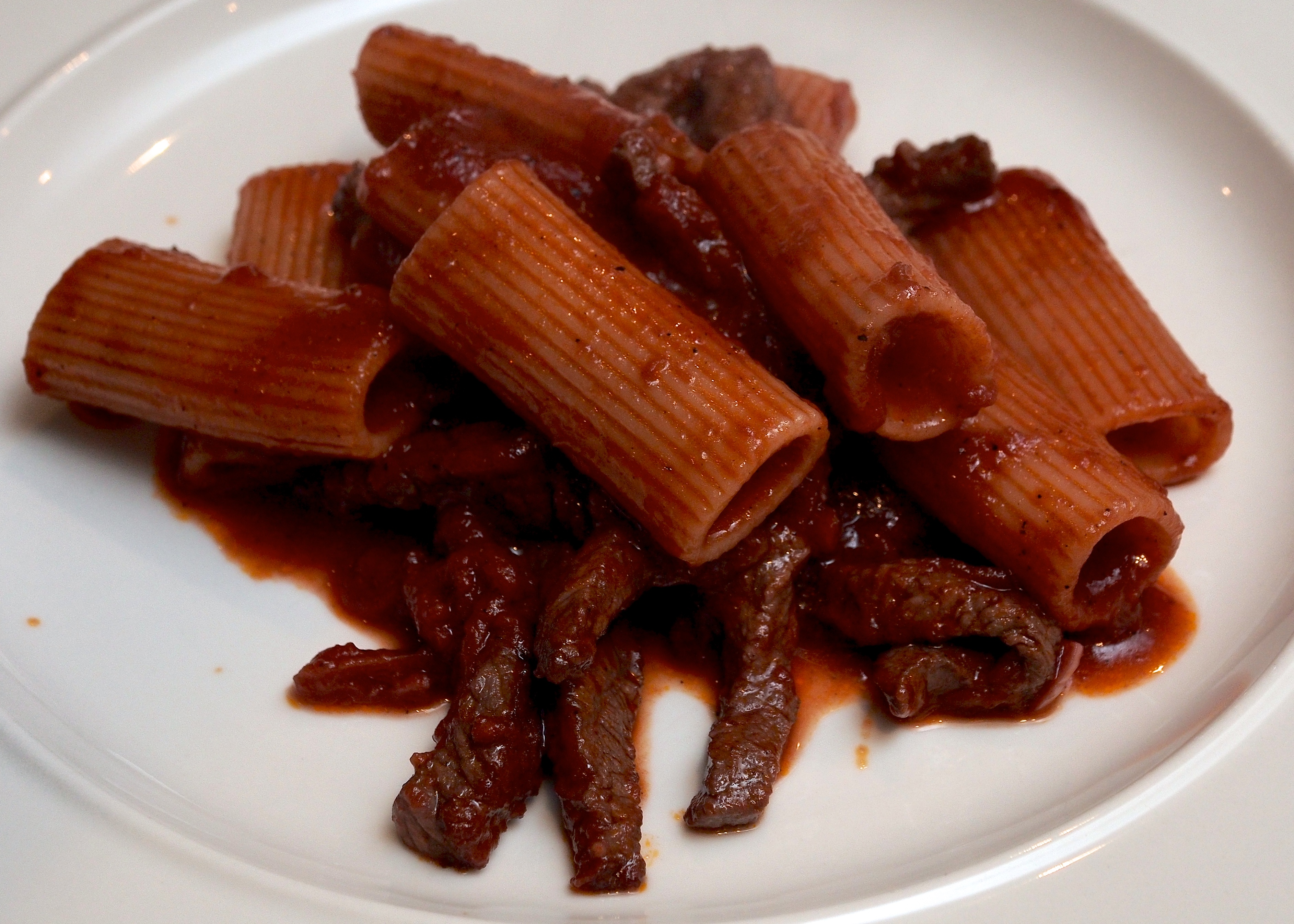
Chianti Beef


The technique used to cook the meat is quite clever as the amount of beef is small and is only quickly, flash fried which keeps the juiciness, adds the caramelisation flavours and gives great depth to the whole dish. It’s an expensive cut but the quantity required is so small that it won’t break the bank. It’s hard to believe a dish with so much flavour takes such a short time to prepare.

Wine Suggestion: we drank one of our favourite Tuscan wines: the Selvapiana Chianti Rufina which is refined and elegant and complements the beef fillet and provides a foil to the rustic black pepper background in this dish.

Rigatoni, tomato, beef and red wine – serves 4

  • 320g rigatoni
  • 200g beef fillet
  • 4 garlic cloves, sliced
  • 50g Parmesan, grated
  • 100g unsalted butter
  • 600g top quality tinned tomatoes
  • 350ml Chianti wine
  • 1tbsp ground black pepper
  • 3tbsp extra virgin olive oil

Trim the beef fillet and cut across into 5mm slices. Cut the slices into 1cm strips.

Heat the butter in a thick-bottomed pan, add the garlic and fry gently until brown. Add the tomatoes and season. Cook over a high heat for 5 minutes, stirring to break up the tomatoes, then add half the red wine. Continue to cook on quite a high heat, adding more wine as the sauce reduces. Cook for 15 minutes in total, using up all the wine, then stir in the pepper.

Heat the olive oil in a frying pan until very hot. Add the beef pieces and fry very briefly, just to brown each piece on both sides. Stir the beef into the sauce with any juices from the pan.

Cook the rigatoni in boiling salted until al dente. Drain and add to the sauce.

Serve with the Parmesan.

(Original recipe from Italian Two Easy: Simple Recipes from the London River Cafe by Rose Gray and Ruth Rogers, Random House, 2006.)

Read Full Post »

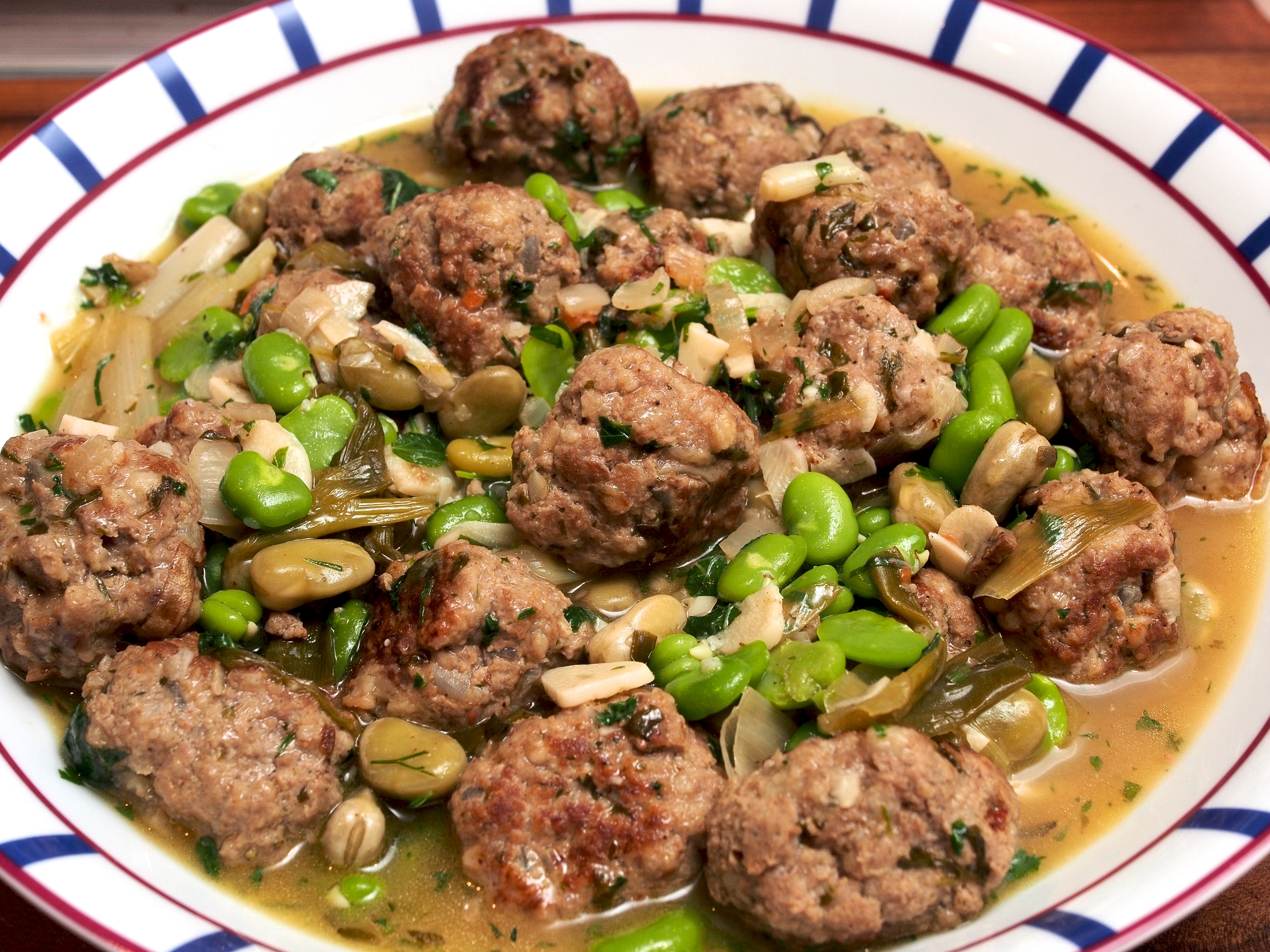
Meatballs with Broad Beans & Lemon

Delicious meatballs with a real summery feel. Use fresh broad beans if you can get them but frozen will work just as well. You can prepare this dish in advance and just reheat before serving.

Wine Suggestion: The trick with this dish is to make sure the wine is medium bodied so a lighter red with ripe (not dry) tannins would work a treat. An easy and uncomplicated shiraz cabernet blend from Australia or a nice Pinot Noir would work a treat. Alternately a medium bodied white like a good Verdicchio is a great option too. We drank the Umani Ronchi Casal di Serra Verdicchio which matched the dish perfectly with good depth of fruit and a great minerality which  allowed the food and wine to shine equally.

Beef Meatballs with Broad Beans & Lemon – serves 4

  • 4½ tbsp olive oil
  • 350g broad beans, fresh or frozen
  • 4 whole thyme sprigs
  • 6 garlic cloves, sliced
  • 8 spring onions, cut at an angle into 2cm lengths
  • 2½ tbsp lemon juice
  • 500ml chicken stock
  • salt and black pepper

MEATBALLS:

  • 300g minced beef
  • 150g minced lamb
  • 1 medium onion, finely chopped
  • 120g breadcrumbs
  • 2 tbsp each chopped flat-leaf parsley, mint, dill and coriander; plus ½ tbsp extra of each to finish
  • 2 large garlic cloves, crushed
  • 1 tbsp baharat spice mix (apparently you can buy this or you can use the recipe below*)
  • 1 tbsp ground cumin
  • 2 tsp capers, chopped
  • 1 egg, beaten

Put all the meatball ingredients into a large bowl. Add ¾ tsp of salt and lots of black pepper and mix well with your hands. Form into ping-pong sized balls (you should get about 20).

Heat 1 tbsp of the olive oil in a very large frying pan with a lid. Sear half the meatballs over a medium heat, turning until browned all over, about 5 minutes. Remove, add another ½ tbsp olive oil to the pan and cook the other batch of meatballs. Remove from the pan and wipe clean.

While the meatballs are cooking, put the broad beans into a pot of salted boiling water and blanch for 2 minutes. Drain and refresh under cold water. Remove the skins from half the broad beans.

Heat the rest of the olive oil in the pan you seared the meatballs in. Add the thyme, garlic and spring onion and sauté over a medium heat for about 3 minutes. Add the unshelled broad beans, 1½ tbsp of the lemon juice, 80ml of the stock, ¼ tsp of salt and lots of black pepper. The beans should be almost covered with liquid. Cover the pan and cook over a low heat for 10 minutes.

Return the meatballs to the pan. Add the rest of the stock, cover the pan and simmer gently for 25 minutes. Taste and adjust the seasoning. If the sauce is very runny you can remove the lid and reduce a bit. The meatballs will soak up a lot of the juice so make sure you have plenty of sauce left. You can leave the meatballs off the heat now until ready to serve.

Just before serving, reheat the meatballs and add a little water, if needed, to get enough sauce. Add the rest of the herbs and tablespoon of lemon juice, the shelled broad beans and stir very gently.

Serve with basmati rice.

*Baharat Spice Mix – 1 tsp black peppercorns, 1 tsp coriander seeds, 1 small cinnamon stick – roughly chopped, ½ tsp whole cloves, ½ tsp ground allspice, 2 tsp cumin seeds, 1tsp cardamom pods, ½ a whole nutmeg grated. Blend all the spices in a grinder or pestle and mortar until you have a fine powder. Store in an airtight jar.

(Original recipe from Jerusalem by Yotam Ottolenghi and Sami Tamimi, Ebury Press, 2012.)

Read Full Post »

Stir-fried Beef with black bean and chilli

This comes from a new discovery: Every Grain of Rice by Fuschia Dunlop. We’ve been looking for a Chinese cookbook for some time and this comes up trumps. This beef dish tasted authentic and delicious.

Don’t be tempted to substitute the Laoganma black bean sauce with the more common black bean sauce, widely available in supermarkets, which is something completely different. Laoganma black bean sauce is a relish made from fermented black beans and dried chillies in oil. You can find it in any good Asian supermarket (where you will also find the Shaoxing wine and potato flour).

Stir-fried beef with black bean and chilli – serves 2

  • 300g lean beef steak, cut into 1cm thick strips
  • ¼ red pepper
  • ¼ green pepper
  • about 40g coriander
  • 3 tbsp cooking oil
  • 2½ tbsp Laoganma black bean sauce
  • salt
  • 1 tsp sesame oil

For the marinade: 

  • ½ tsp dark soy sauce
  • 1 tsp light soy sauce
  • 1 tsp Shaoxing wine
  • 1½ tsp potato flour

Stir the marinade ingredients with 2 tsp water, add to the meat and set aside.

Cut the peppers into strips similar in size to the beef and coarsely chop the coriander.

Heat the oil in a seasoned wok over a high heat. When the pan is smoking hot, add the beef and stir-fry until the strips begin to separate out. Tip in the peppers and keep stir-frying until the beef is almost cooked.

Add the black bean sauce and stir, then add some salt to taste. When everything is hot and fragrant, stir in the coriander.

Take off the heat and add the sesame oil before serving with some plain white rice.

(Original recipe from Every Grain of Rice by Fuchsia Dunlop, Bloomsbury, 2012.)


Read Full Post »

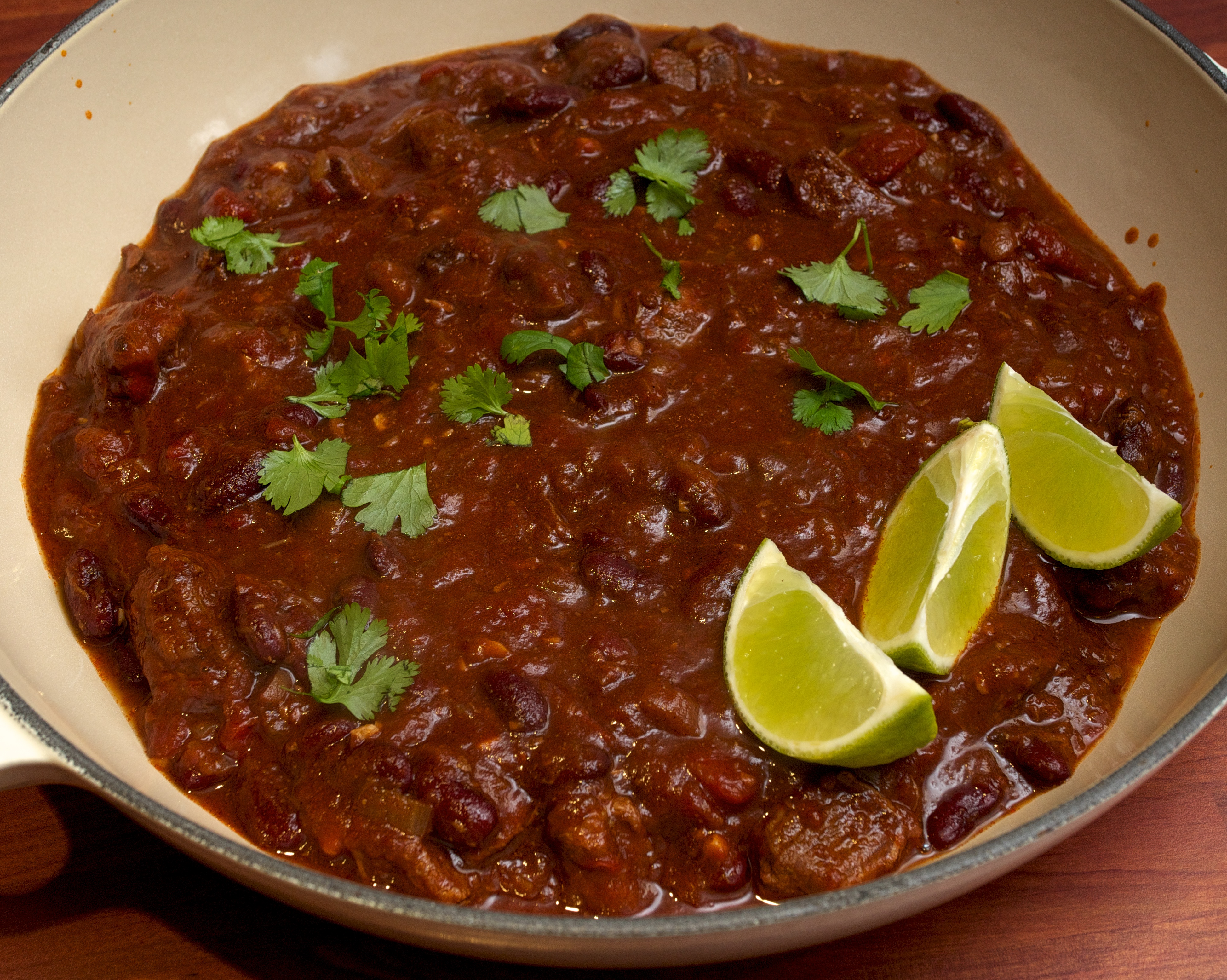
Easy Chunky Chilli

This recipe uses a couple of cheat ingredients (kidney beans in chilli sauce and chipotle paste) with great results – very little effort but tonnes of flavour!

Wine Suggestion: We’d go for something juicy, fruity and red. Perhaps a Spanish Garnacha or a lighter Zinfandel where the tannins aren’t too high and dry and won’t conflict with the heat in the chilli.

Easy Chunky Chilli – to serve 4

  • olive oil
  • 400g diced stewing beef
  • 1 onion, finely chopped
  • 2 garlic cloves, finely chopped
  • 1½ tsp ground cumin
  • 1-2 tbsp chipotle paste (depending on how spicy you like it)
  • 400g can kidney beans in chilli sauce
  • 400g can chopped tomatoes
  • 1 lime, zested and cut into wedges
  • handful of coriander leaves
  • rice, to serve

Heat a couple of tablespoons of oil in a large pan and cook the beef pieces until browned all over. Remove with a slotted spoon and set aside.

Add the onion to the pan and cook until softened. Add the garlic, cumin and chipotle paste and cook for one minute.

Sieve the kidney beans but reserve the sauce. Add this sauce, along with the tomatoes and a can full of water, to the pan. Stir well and return the meat to the pan. Bring to a simmer, then cook covered for about 2 hours or until the beef is tender (you can also bake in the oven for 3 hours at 160C/140C fan/gas 3).

Add the kidney beans and lime zest, season and warm through. Serve with the coriander leaves, lime wedges and rice.

(Original recipe from BBC Good Food)

Read Full Post »

This is a doddle to whip up after work and it’s not a bad chilli for very little effort. Serve in warmed tortillas with some rocket and sour cream or in a baked potato.

Cheat’s Chilli – to serve 4

  • 500g minced beef
  • 350g jar of tomato and chilli sauce (we use our own tomato sauce which we always have a supply of in the freezer)
  • 400g tin of red kidney beans

Fry the mince in a non-stick pan until well browned. Pour in the sauce, then fill the empty jar about a third full of water and rinse out into the pan. Bring to the boil then simmer for about 15 minutes, stirring occasionally.

Drain and rinse the beans before adding to the meat and heat through for about 5 minutes or until the beans are hot and the sauce is thick.


Read Full Post »

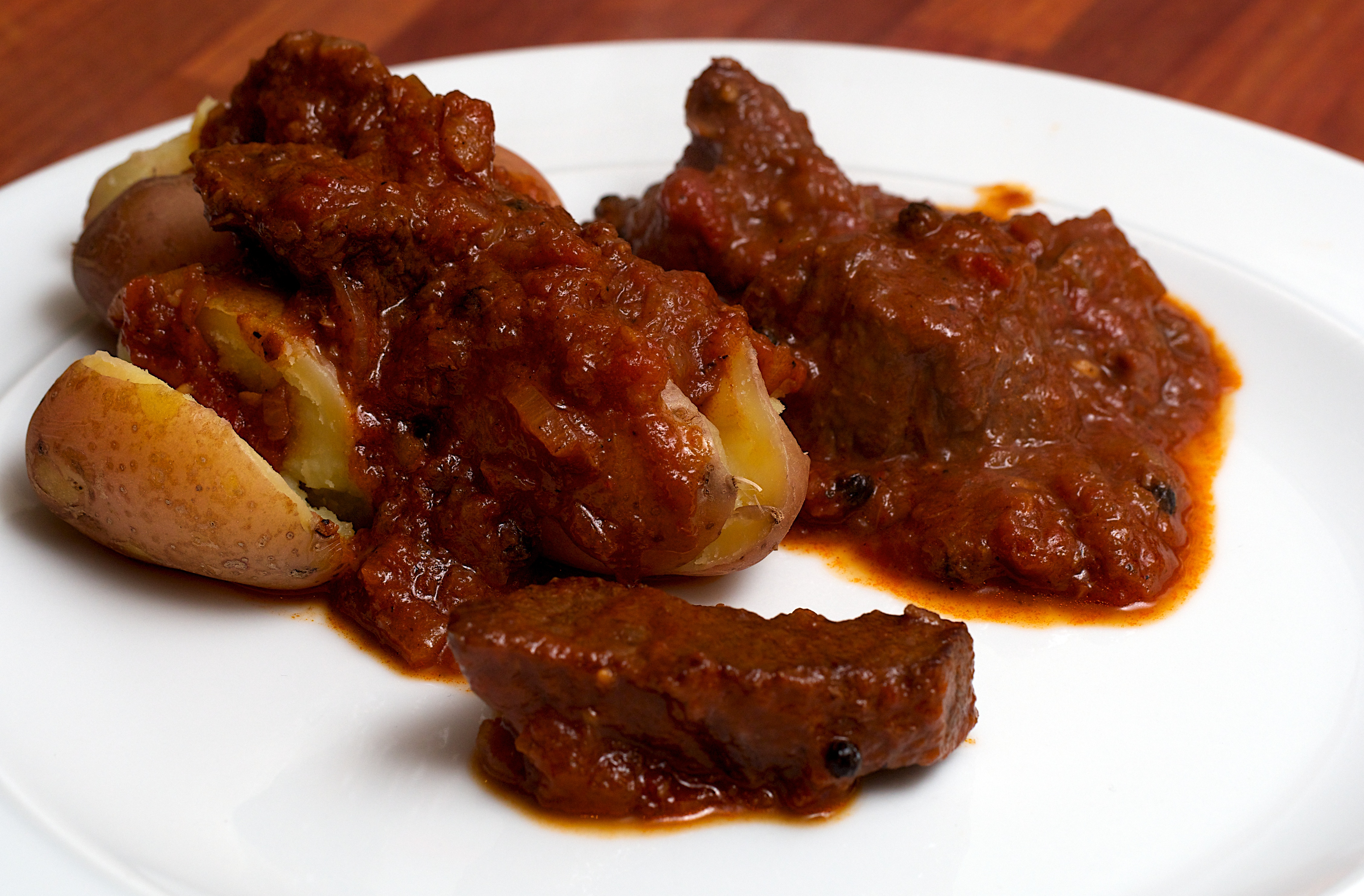
An easy version of Peposo which works a treat and reheats perfectly. The peppercorns are very much the star of the show rather than the seasoning.

Wine Suggestion:  Regional foods are generally complemented by the wines of the same region so go for a good Tuscan wine that will be able to stand up to this rich stew. We had a Morisfarms Mandriolo from the Maremma.

Hunter’s Stew – to serve 4-6

  • 4 tbsp olive oil
  • 1kg stewing steak, in big chunks
  • 3 onions, sliced
  • 4 garlic cloves, crushed
  • 2 tbsp black peppercorns
  • 2 tsp ground black pepper
  • 2 bay leaves
  • 250ml red wine
  • 1 x 400g tin tomatoes
  • 1 whole tube of tomato purée

In a large saucepan, with a tight fitting lid, heat the olive oil and brown the beef well.

Season with plenty of salt, then add the onions, garlic, and peppercorns and cook for another 5-10 minutes, or until the onions are soft and reduced.

Add the remaining ingredients, cover with a lid and cook very gently for about 2 hours, stirring regularly.

Check the seasoning after 90 minutes and add a bit of water if necessary. If it is too liquid you can remove the lid for the last 20-30 minutes.

Allow to cool slightly before serving with potatoes or polenta.

(Original recipe by Domini Kemp in THE IRISH TIMES Magazine, September 21, 2013.)

Read Full Post »

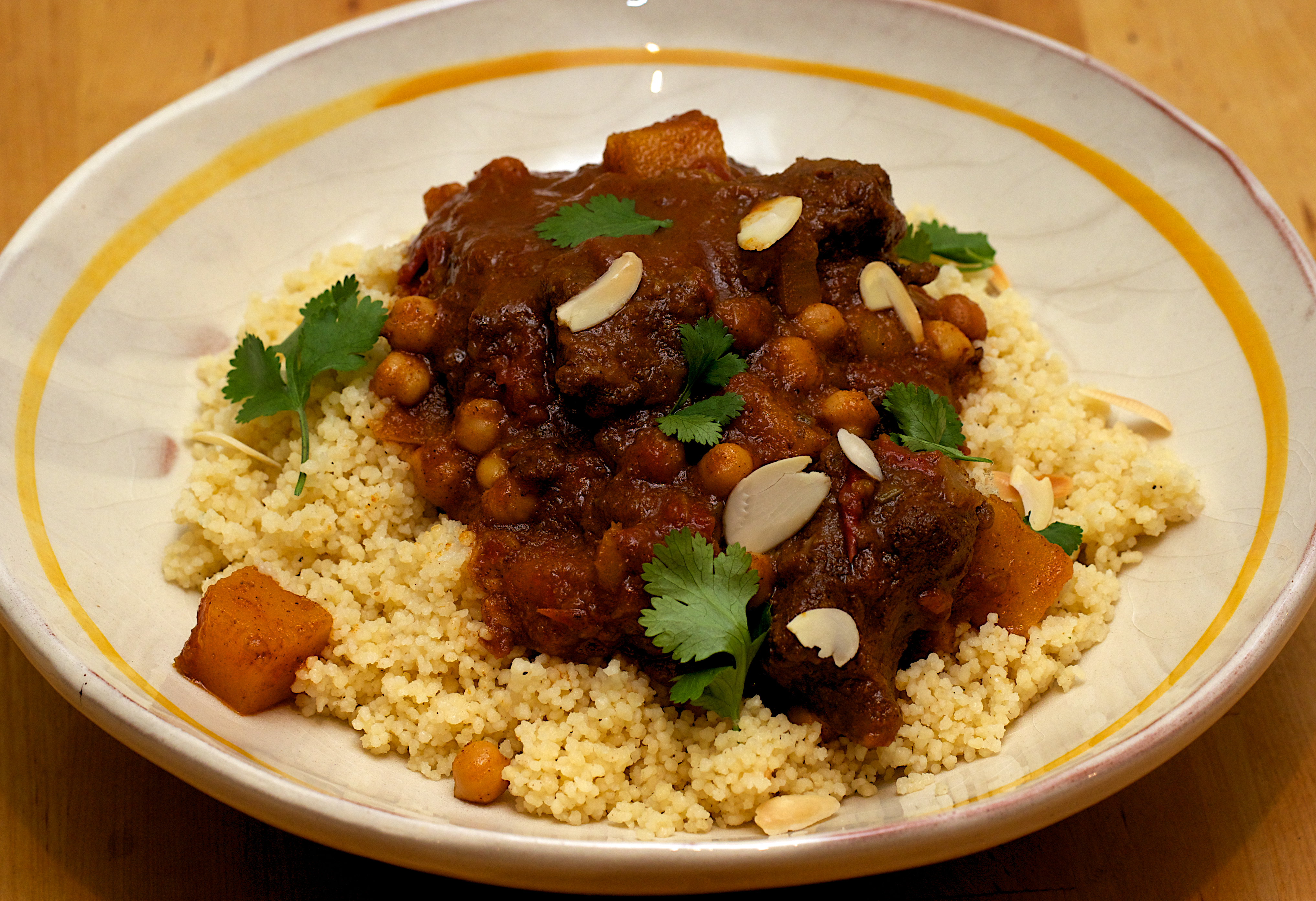
Beef Tagine

The quintessential Moroccan dish, which you don’t actually need a funny shaped pot for. We cooked this back in April when it looked like Spring, and the prospect of lighter dishes, was never going to arrive. Serve with lots of couscous (or bread if you want to be more authentic).

Beef Tagine – serves 4-6

  • 600g stewing beef
  • 1 onion, finely chopped
  • small bunch of coriander
  • 1 tin of chopped tomatoes
  • 1 tin of chickpeas
  • 800ml vegetable stock
  • 1 small squash
  • 100g prunes, stoned and roughly chopped
  • 2 tbsp flaked almonds, toasted

FOR THE SPICE RUB: 

  • sea salt and black pepper
  • 1 tbsp ras el hanout spice mix
  • 1 tbsp ground cumin
  • 1 tbsp ground cinnamon
  • 1 tbsp ground ginger
  • 1 tbsp sweet paprika

Mix the spice rub ingredients together in a small bowl. Put the beef into a large bowl, massage it with the spice rub, then cover and leave in the fridge overnight (or for as long as you have).

Heat some olive oil in a heavy-based casserole and fry the meat over a medium heat for 5 minutes. Add the onion and coriander stalks and fry for another 5 minutes. Add the chickpeas and tomatoes, then pour in 400ml of stock and stir. Bring to the boil, cover and reduce to a simmer for 1½ hours.

Add the squash, prunes and remaining stock and continue to cook for another 1½ hours. You might need to add a splash of water if it starts to dry.

If the tagine looks to runny you can simmer for 5-10 minutes with the lid off to thicken. Taste and season with salt if needed. Serve scattered with the coriander leaves and toasted almonds.

Wine Suggestion: A youthful and vibrant red Rioja would do the trick here: find either a joven or crianza with lots of primary fruit. Our pick was the Paco Garcia Seis 2012 – vibrant and youthful with juicy dark fruit and an attractive inkiness. The tannins were perfectly ripe and complimented the beef and the juicy fruit and spice in the wine worked with the spices in the dish. Yum

(Original recipe from Jamie Does by Jamie Oliver, Penguin Books Ltd., 2010.)

Read Full Post »

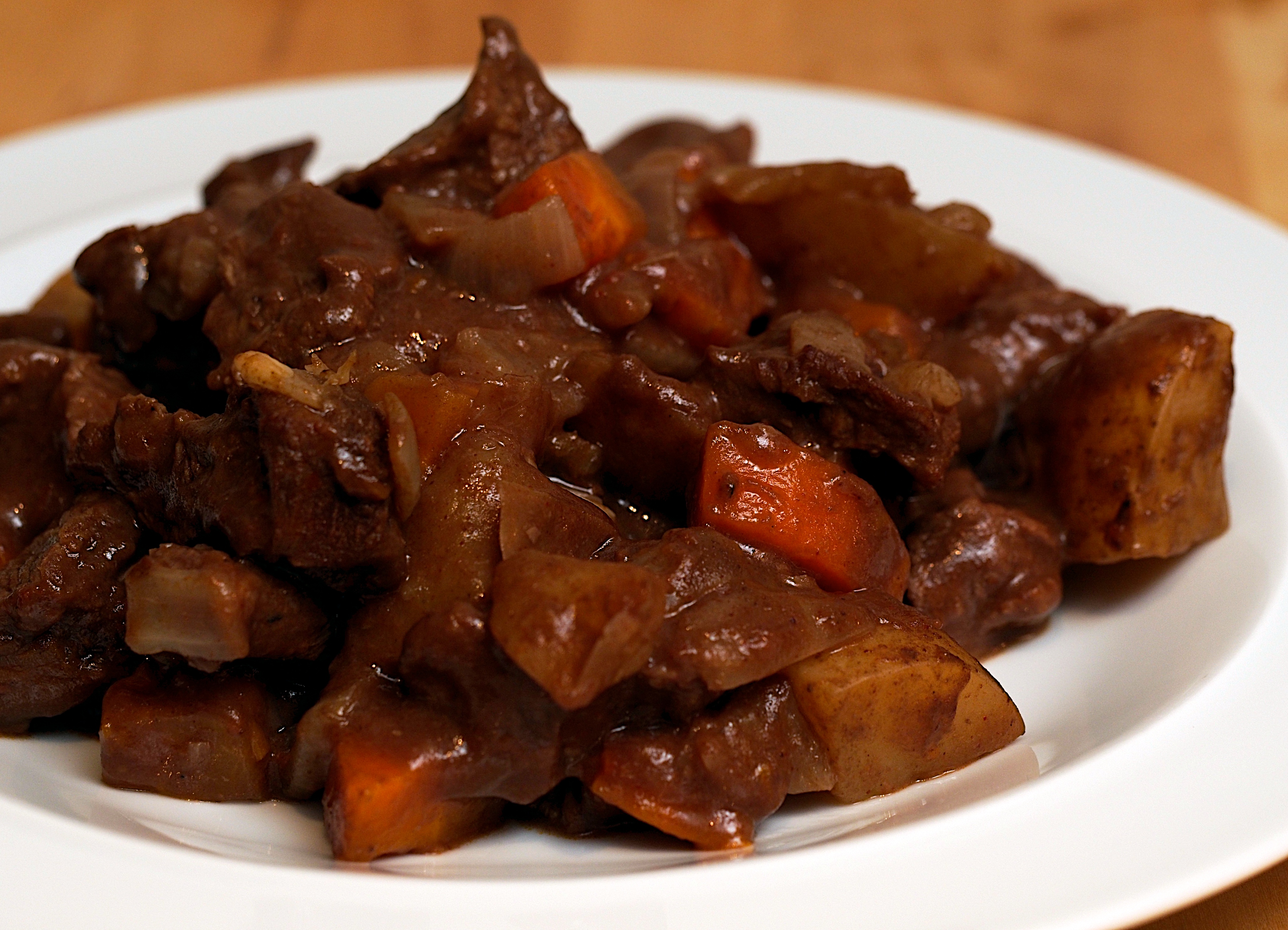
A simple thing to make, and always well enjoyed. It’s a bit difficult to take nice pictures of brown dishes – we’ll have to work on it. This is an absolute doddle to make and a very appropriate dish for the 17th March!

St Patrick’s Day Beef & Guinness Stew – serves 4-6 

  • 2 sticks of celery
  • 2 medium onions
  • 2 carrots
  • 2 tbsp olive oil
  • 1 heaped tbsp plain flour
  • 1 x 400g tin of chopped tomatoes
  • 3 bay leaves
  • 500-750g diced stewing beef
  • 500ml Guinness

Preheat the oven to 160ºC Fan/180°C/gas 4.

Roughly chop the celery, onions and carrots.

Heat the olive oil in a large casserole on a medium heat. Add all the vegetables and bay leaves and fry for about 10 minutes.

Add the meat, flour, Guinness and tinned tomatoes. Stir and season well with salt and black pepper. Bring to the boil, put a lid on the casserole and cook in the oven for approximately 3 hours or until the meat is meltingly tender.

Check about half an hour before the end of the cooking time and add a splash of water if it looks a bit dry. Season to taste again before serving with potatoes in the proper Irish fashion.

Wine Suggestion: Something equally hearty, perhaps an Australian Shiraz, or if you’re going really in for the Irish theme you could try a wine called Sásta by Niepoort. This wine, from the Douro in Portugal, sports a great label depicting a drunken Saint Patrick chasing the snakes out of Ireland (available from The Wicklow Wine Company or Mitchell & Son).

(Original recipe from Jamie’s Ministry of Food by Jamie Oliver, Penguin 2008.)

Read Full Post »

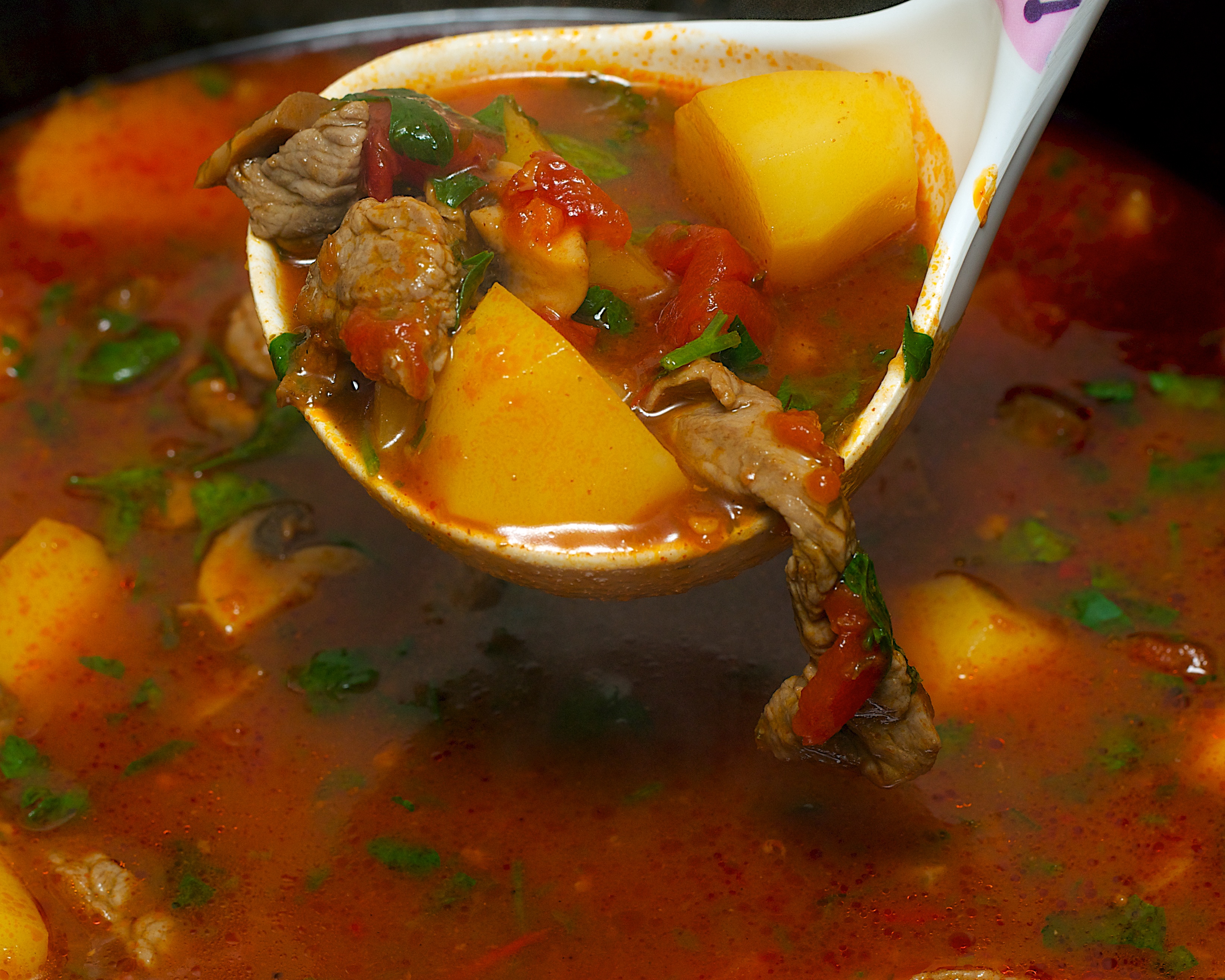
A mid-week creation that satisfies on flavour without any excess in calories or expense. Very like the Hungarian style of Goulash – much more soup like than a stew, so use a spoon to eat this!

Easy Goulash – to serve 4

  • 1tbsp vegetable oil 
  • 300g stir-fry strips, or minute steak cut into strips
  • 100g chestnut mushrooms, quartered
  • 2 tsp paprika
  • 500g potatoes, peeled and cut into smallish chunks
  • 600ml hot beef stock
  • 500g jar tomato-based cooking sauce
  • handful of parsley, chopped
  • natural yoghurt – to serve

Heat half the oil in a non-stick pan and fry the beef for a couple of minutes. Do this in batches so the beef fries rather than stews. Remove the meat from the pan, add a the rest of the oil and fry the mushrooms for a few minutes or until they start to brown.

Sprinkle the paprika into the pan and fry briefly, then add potatoes, stock and tomato sauce. Cover and simmer for about 20 minutes or until the potato chunks are tender. Add the beef back to the pan to warm through. Stir in the parsley and serve with some natural yogurt (if you’re not trying to keep this under 300 calories).

Wine Suggestion: We had a good Rioja Crianza with this and found the juicy fruit and flavours really matched the rich tomatoes and paprika well (well we would have if it hadn’t been a fast day on our diet!)

(Original recipe from BBC Good Food)


Read Full Post »

This really is the easiest beef stew ever and can be made successfully by anyone. It’s also very tasty and great for feeding a crowd. Just fling everything together and chuck it in the oven.

The Easiest Ever Beef Stew – to serve 6

  • 1.5g stewing steak, cut into chunks
  • 60g plain flour
  • 2 tsp good-quality paprika
  • 400g tin of tomatoes
  • 1 glass of wine (red or white will do)
  • 2 onions, chopped
  • 2 cloves garlic, sliced
  • 1 stick celery, finely sliced
  • 3 carrots, peeled and cut into chunks
  • 3 potatoes, cut into chunks

Heat the oven to 180ºC.

Put the flour and paprika into a large plastic bag. Add the beef and shake to coat.

Put the beef into a cast-iron casserole.

Whizz the tomatoes and their juice in a food processor, or roughly crush with a wooden spoon, and add to the meat.

Add all of the other ingredients and stir.

Press a piece of baking paper over the stew and cover the casserole with a lid.

Cook in the oven for 2 hours. Taste for seasoning. Check if the meet is tender and cook for a bit longer if necessary.

Wine Suggestion: A rustic red is all that’s needed here and you may as well finish the bottle you opened for this recipe. Something from the Languedoc should fit the bill.

(Original recipe from The Cook’s Companion by Stephanie Alexander, Penguin Books, 2004.)

Read Full Post »

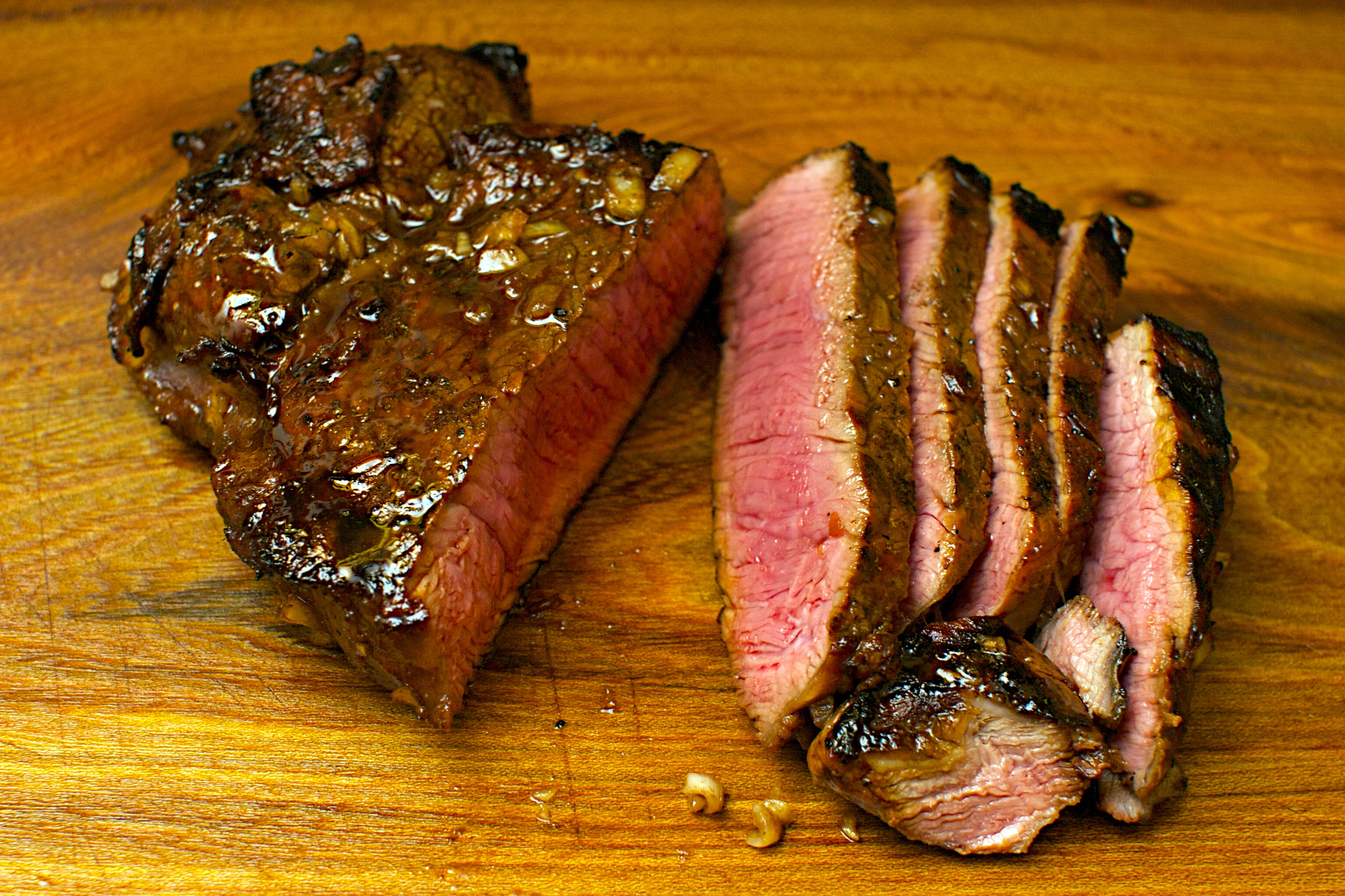
Our new favourite way to cook steak. This is delicious and there’s no need to splash out on an expensive cut. We’ve been using rump steak but it will also work really well with skirt steak if you can find it. You’ll need to cook skirt for a bit longer though.

Barbecued balsamic beef – to serve 4

  • 600g thick piece of rump steak
  • 2 shallots, very finely chopped
  • 2 tbsp balsamic vinegar, plus a little extra

Put the beef in a wide shallow dish and rub it all over with the shallots and balsamic vinegar. Season and leave to marinate for 20 minutes.

Make sure your barbecue or grill is really hot before starting to cook.

Barbecue (or grill) the beef for 3-4 minutes on each side, depending on how thick it is. Take off the barbecue and cover with foil for 5 minutes, then slice thinly across the grain and serve with the meat juices.

Add a drizzle of olive oil and balsamic vinegar if you like.

Serve with potatoes roasted with rosemary and garlic.

Wine Suggestion: Try a Tuscan red from Bolgheri or the Maremma which will give you a nice juiciness but still maintain the depth of structure and tannin needed to work with the steak.

Read Full Post »

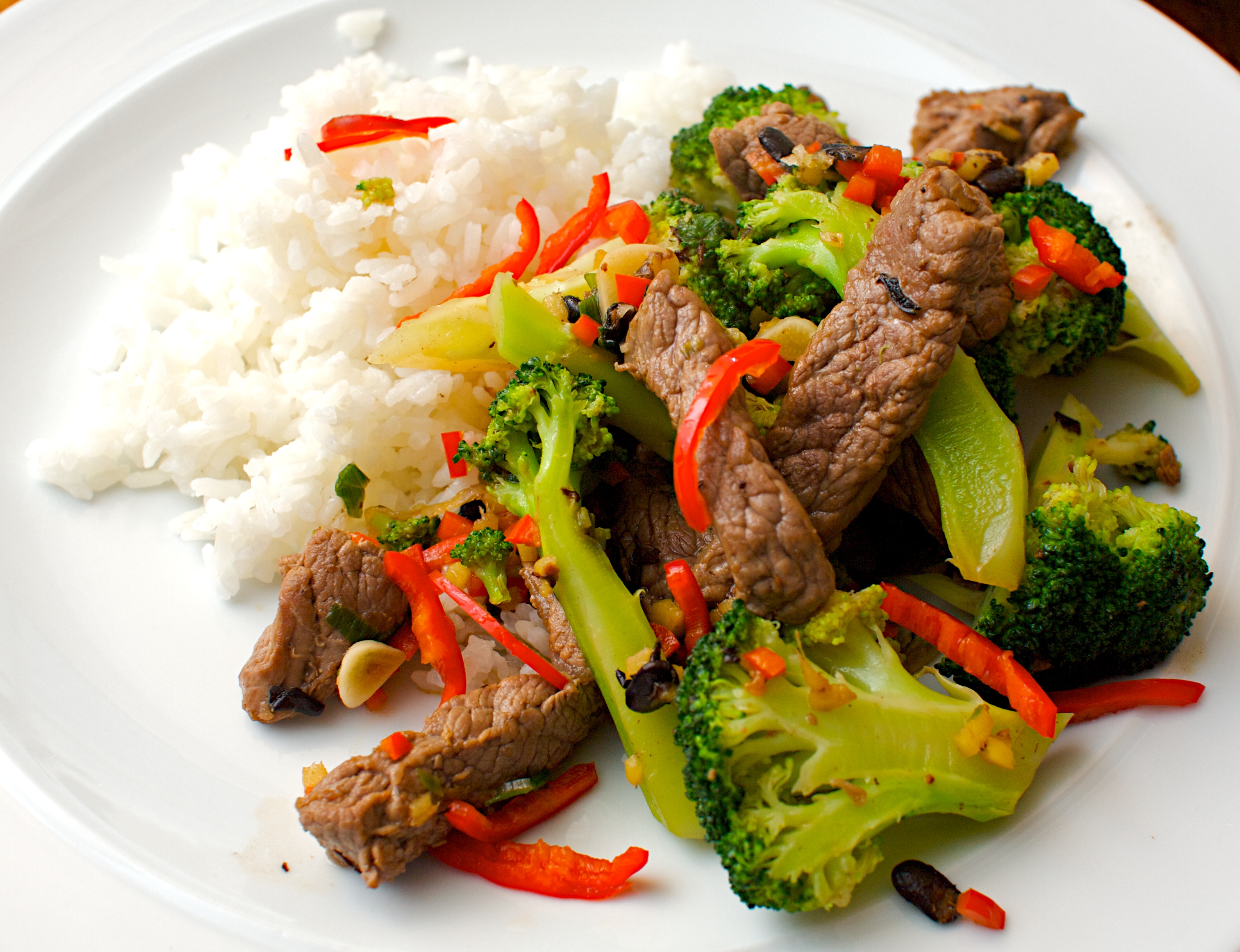
Gok Wan has reinvigorated our enjoyment of Chinese food. This is not the black-bean sauce we have been used to getting in restaurants and manages to be both light and have great depth with very distinctive Chinese flavours and aromas. Don’t be tempted to omit the pickled chilli as it really makes the dish.

Warning: this is nothing like the gloopy stuff you get from the Chinese take-away. Just so you know.

Beef in Fragrant Black Bean Sauce – to serve 2

  • 250g broccoli, cut into small florets
  • 3 tsp sesame oil
  • 1 tbsp groundnut oil
  • a 2cm pice of fresh ginger, peeled and finely chopped
  • 2/3 cloves of garlic, thinly sliced
  • 1 scallion, finely chopped
  • 1 tbsp fermented black beans, soaked for 5 minutes in warm water and drained
  • 250 sirloin steak, fat removed and sliced into strips
  • 1 fresh red chilli, deseeded and finely chopped
  • ground white pepper
  • 1 tbsp Shaoxing rice wine or dry sherry
  • light soy sauce, to taste

FOR THE QUICK PICKLED CHILLI

  • 1 red chilli, sliced into long diagonal strips
  • 2 tbsp rice wine vinegar
  • 1-2 tsp caster sugar

Firs make the pickled chilli by putting the strips of chilli into a bowl and cover with rice vinegar. Sprinkle with the caster sugar and leave to soak.

Blanch the broccoli in salted water for 2 minutes, then drain and season with a drizzle of sesame oil and some salt.

Heat a wok over a high heat and add a good splash of oil. Add the ginger, garlic and scallion and stir-fry for about 10 seconds, just to soften the garlic. Add the black beans and cook for 20 seconds more.

Add the steak and cook for 2-3 minutes, or until sealed on all sides. Add the chilli, blanched broccoli and some salt and white pepper, along with the Shaoxing rice wine, 1 tsp of soy sauce and 1 tbsp water. Toss together, then taste and adjust the seasoning if necessary.

Drain the pickled chilli and serve with the beef and some rice.

(Original recipe from Gok Cooks Chinese, Penguin, 2012.)


Read Full Post »

Daube de Boeuf Provençale

This is really rich winter stew which is great for a dinner party as you can make it in advance and just re-heat it and cook some veg to serve. You will need to start marinading the beef the night before. The anchovies act like a seasoning and really enhance the flavours of the dish, rather than adding any fishy flavours, so don’t leave them out.

Beef Provençale – to serve 8

  • 1.3kg lean stewing beef (like topside or chuck)

FOR THE MARINADE:

  • 2 tbsp olive oil
  • 300ml dry white or red wine
  • 1 tsp salt
  • ½ tsp pepper
  • ½ tsp thyme or sage
  • 1 bay leaf
  • 2 garlic cloves, peeled and crushed
  • 110g carrots, thinly sliced
  • 110g onions, thinly sliced
  • 450g streaky bacon cut into 1cm lardons
  • 1 x 400g tin chopped tomatoes
  • 150ml beef stock
  • 175g sliced mushrooms
  • 10 anchovy fillets
  • 2 tbsp capers
  • 3 tbsp white or red wine vinegar
  • 2 tbsp chopped flat-leaf parsley
  • 2 cloves garlic, crushed

Cut the beef into large very large chunks, about 8cm. Mix the marinade ingredients in a large casserole. Add the meat, cover and marinade overnight in the fridge or somewhere cool. Remove the meat to a plate and strain the marinade, reserving both the liquid and the vegetables.

Heat the oil in a frying pan, cook the bacon lardons until crisp, add to the casserole. Dry the meat with kitchen paper and seal in the hot pan, then add to the bacon along with the marinated vegetables and tinned tomatoes.

De-glaze the frying pan with the marinade and beef stock, then add to the casserole. Bring to the boil and simmer very gently either for about 1½ – 2 hours. Alternatively you can cook bring to a simmer and then transfer to a preheated oven 170ºC/gas 3.

Meanwhile sauté the sliced mushrooms on a hot pan and set aside.

When the meat is really soft and tender, liquidise the anchovies with the capers, parsley, wine vinegar and garlic. Add to the casserole along with the mushrooms. Simmer gently for another 8-10 minutes. Taste and season if necessary (you probably won’t need salt).

Serve with mash and green veg.

Wine Suggestion: We shared a bottle of “le Carignator” by Jean-Marie Rimbert from the St Chinian area of southern France with some friends and it was perfect; juicy fruit with depth, personality, subtle Garrigue spices and real interest. We think it is worth seeking out if you can as it is rare to get 100% Carignan in a wine,  which is a shame as this wine proves. Jules found it in Bubble Brothers in Cork and gave it to Jono for Valentines.

(Original recipe from Darina Allen’s Ballymaloe Cookery Course, Kyle Cathie Limited, 2001.)

Read Full Post »

We’ve made Jamie Oliver’s take on this classic but this version is much superior. Peposo is a Tuscan beef and peppercorn stew. We also cooked polenta to serve this time which is a superb accompaniment and takes about the same time to cook as the stew. Don’t be put off by the massive quantities of peppercorns, they soften and give a warming rather than fiery spice kick.

Peposo – to serve 4 

  • 80ml extra virgin olive oil
  • 1 kg braising beef, shin, flank or cheek, cut into 4 cm chunks
  • 1 medium onion, diced
  • 3 garlic cloves, chopped
  • 25g whole black peppercorns
  • 15g coarsely ground black pepper
  • 1 bay leaf
  • 250ml red wine
  • 1kg tinned tomatoes
Heat the oil in a heavy casserole. Season the beef well with salt, and brown well over a medium heat for about 15 minutes. Only turn it when the bits touching the pan have gone really brown.

Add the onion and garlic and garlic and cook for another 10 minutes or until they are well softened.

Add the whole and ground black pepper and the bay leaf and fry for another minute before adding the wine and tomatoes. Taste for seasoning and bring to a simmer, then reduce the heat to very low and cook, covered, for 1½ hours or until the meat is really tender – check again for salt when it’s ready.

Serve right away with the polenta below or with some bread and cannellini beans or roast potatoes.  Or you can refrigerate and reheat when you need it. Leftovers make a good sauce for pasta.

Wet Polenta with Parmesan – to serve 4

This takes ages to make so if you get it on just after your Peposo it should be ready at about the same time. This recipe uses coarse yellow polenta, don’t be tempted by the easy-cook stuff as it is not the same.

  • 1 litre water
  • 1 tsp fine sea salt
  • 200g coarse yellow polenta
  • 100g Parmesan, freshly grated
  • 50g butter

Bring the water to the boil with the salt. Add the polenta in a steady stream, stirring like mad with a wooden spoon or whisk to avoid lumps. Simmer for 90 minutes, stirring often with a wooden spoon, until thick and luscious. You should almost be able to stand the spoon in it, but add water if you actually can at any stage during the cooking. When you like the texture, stir in the cheese and butter.

Leftovers can be reheated by stirring over a low heat with a little water.

Wine Suggestion: Regional foods are generally complemented by the wines of the same region so go for a really good Chianti that will be able to stand up to this rich stew. We had a Felsina Chianti Classico which was delicious.

(Both recipes came from the Bocca Cookbook by Jacob Kenedy, Bloomsbury, 2011.)

Read Full Post »

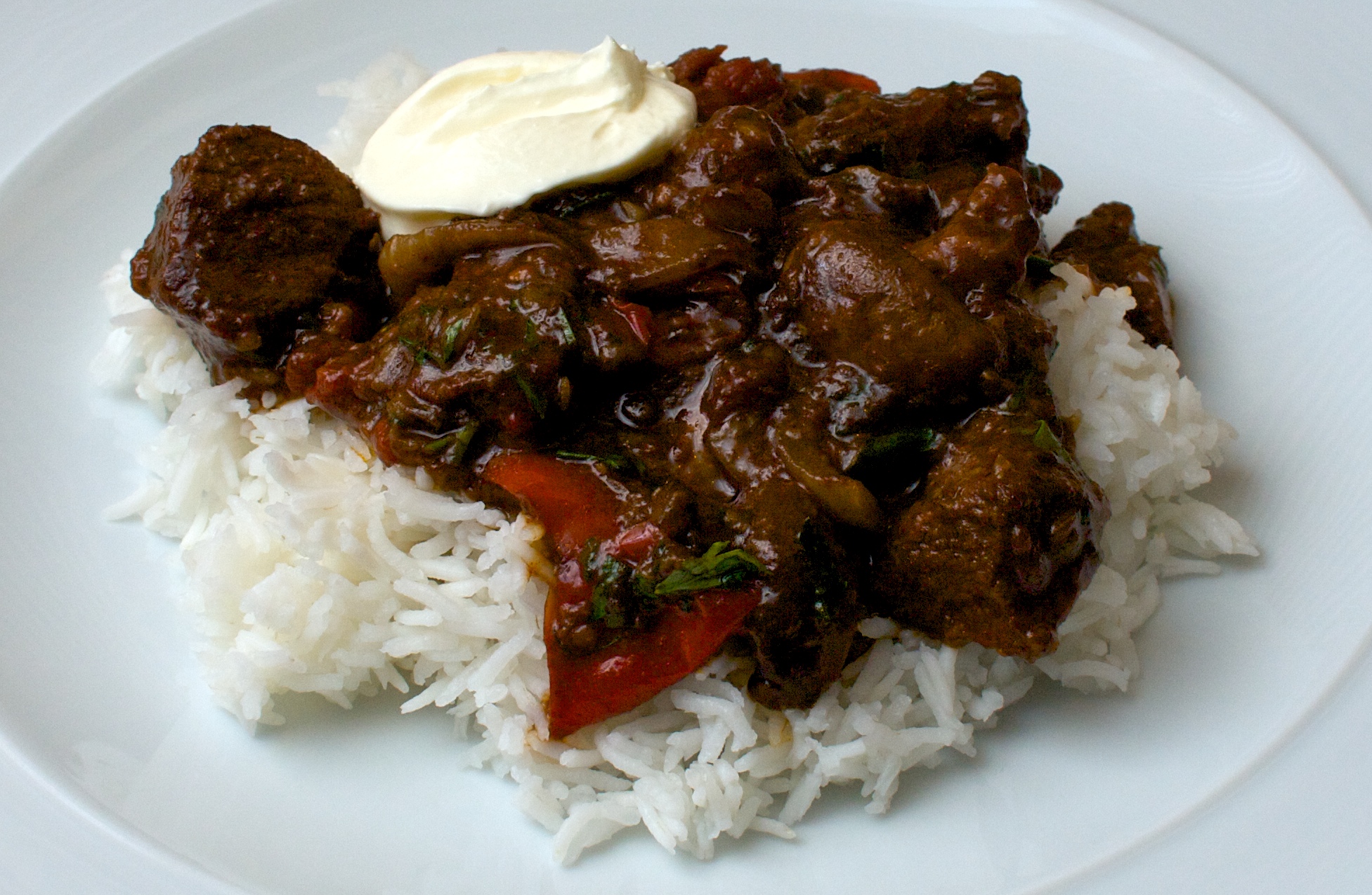
Beef Paprikash

Jono went to Hungary a year and a half ago and picked some authentic Hungarian paprika. If you’re not planning a trip to Hungary you should be able to pick up some online – it makes a real difference to dishes like this.  We like the hot variety though the sweet version will work well too. Whatever you do don’t use the smoked version which will be much too strong for this dish! This takes a few hours but only a few minutes work.

Beef Parikash – to serve 4

  • 500g braising beef , cut into large chunks
  • 1 tbsp flour, seasoned really well
  • 1 large onion, halved and sliced
  • 2 garlic cloves, crushed
  • 250g chestnut mushrooms, halved
  • 1 red pepper, sliced
  • 1 tbsp paprika (see introduction)
  • 2 tsp caraway seeds
  • 1 x 400g tin chopped tomatoes
  • 300ml beef stock
  • a small bunch of parsley, chopped
  • basmati rice and soured cream to serve

Heat the oven to 180C/160C fan/gas 4. Toss the beef with the flour and brown in 1 tbsp oil in a large ovenproof dish with a lid.

Scoop out the meat, then add the onions and cook until soft and browned at the edges. Add the garlic, mushrooms and pepper and cook for 5 minutes until softened.

Return the beef to the dish and add the spices, tomatoes and beef stock. Bring to a simmer, put on the lid and transfer to the oven and cook for about 2 hours. Check near the end of the cooking time  – the beef should be really tender and the sauce thickened – if not cook for another half hour.

Stir in the parsley and serve with rice and soured cream.

Wine Suggestion: Something rich, red and spicy would be good here. We had a Sierra Cantabria Colección Privada, 2007 from O’Brien’s, courtesy of our friend Thonya – thanks chick 😉

(Original recipe from BBC Good Food)

Read Full Post »

This is the  first recipe we’ve tried from Rick Stein’s Spain. Unusually made with white wine, this beef stew is a bit lighter but still rich and full-flavoured. Leftovers are particularly good the next day too. It takes a while to cook but is really easy and there are very few ingredients needed.

Rick says the Spanish serve this with patatas fritas but in an attempt to be not quite so unhealthy we did some roasted slices of potato instead.

Beef in White Wine, Oviedo-Style (Carne gobernada) – to serve 6

  • 1.5kg chuck or blade steak
  • 7 tbsp olive oil
  • 600g onions, chopped into 1cm pieces
  • 10 garlic cloves, crushed
  • 6 fresh bay leaves
  • 300ml dry white wine
  • 300g small carrots, cut into 5 cm lengths
  • salt and pepper
Trim the meat and cut it into bite-sized chunks. Season well with salt and pepper.

Heat 2 tbsp of the olive oil in a large flameproof casserole and fry the beef in batches until nicely browned. Set aside on a plate.

Add the rest of the olive oil and the onions, garlic, bay leaves and a half tsp of salt to the pan, then cook very gently for about 30 minutes or until the onions are soft and golden.

Add the beef back to the pan, add the wine, bring to the boil and season with another half tsp of salt and some pepper. Cover and leave to simmer gently for 2 hours, stir it now and again.

Add the carrots, cover again and cook for another 30 minutes or until the wine and meat juice have combined to make a rich sauce and meet is really tender. Adjust the seasoning and serve with some potatoes.

(Original recipe from Rick Stein’s Spain, published by

Wine Suggestion: Despite being a stew this dish is not heavy, so avoid big, full-fruited wines when trying to pick something to match this. We went around to O’Briens to find a medium bodied Spanish with not too much oak and really struggled as nothing really matched this brief. Our choice in the end was a Sierra Cantabria Crianza from Rioja which went well, but it would have been better with a Mencia from Bierzo or even a Doa from Portugal where the acidity is naturally a little higher and the use of oak normally much less dominant. You could also search for a joven or roble made from tempranillo and/or garnacha where the  wine is younger, fruitier and made for early drinking – just like the Spanish like it!

Read Full Post »

« Newer Posts - Older Posts »