Feeds:
Posts
Comments

Posts Tagged ‘Food’

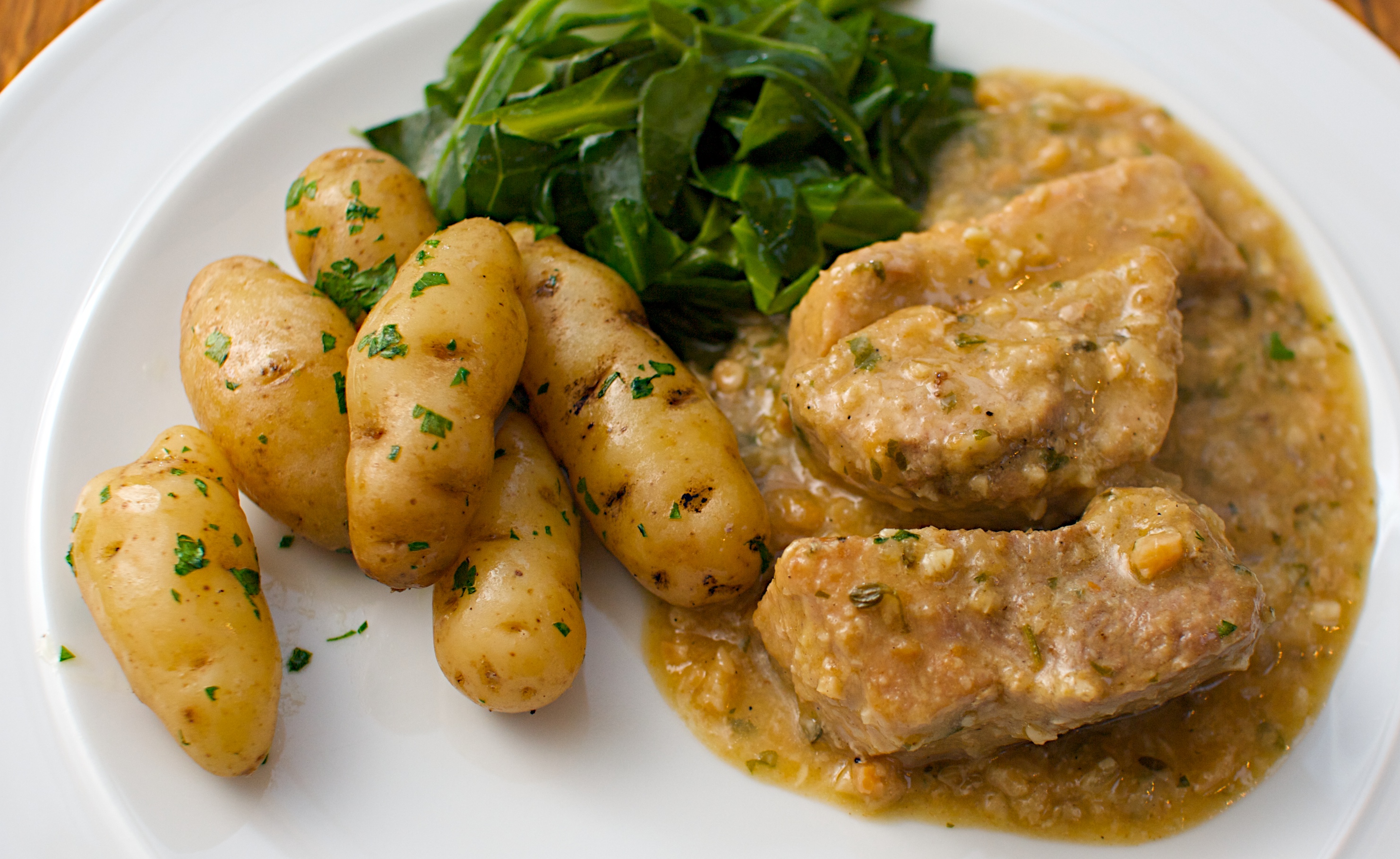
Inspired by the food of Valencia this dish has a bit of wholesome soul-food about it, while maintaining a vibrant taste of Spain with the Pimenton and garlic. The pork becomes tender and just melts with flavour. We served it with tasty new potatoes and some tender-heart cabbage quickly fried with a little butter.

Pork in an Almond Sauce – Carne en salsa de almendras, serves 4

  • 5 tbsp olive oil
  • 8 garlic cloves, 4 chopped and 4 peeled and left whole
  • 15g slice of fresh white bread, crustless
  • 1kg piece of rindless, shoulder of pork
  • plain flour, for dusting
  • 1 large onion, finely chopped
  • 1/2 tsp pimenton dulce / smoked, sweet Spanish paprika
  • 1 large sprig of thyme, leaves picked
  • 2 fresh bay leaves
  • 200ml dry white wine
  • 200ml chicken stock
  • 75g blanched almonds, toasted
  • 1tbsp  flat parsley

Heat 2 tablespoons of the olive oil in a large shallow flame-proof casserole dish. Add the 4 whole garlic cloves and the slice of bread and fry over a medium heat for 2 minutes, turning one, until golden. Lift out and leave to drain and cool.

Cut pork into 2.5cm/1 inch slices and then into 75-100g pieces. You want them to be quite large. Season well then dust them in the flour. Add another 2 tablespoons of olive oil to the pan and add the pieces of pork to seal and only lightly colour. Remove to a plate and set aside.

Add the remaining oil to the pan with the onion, chopped garlic, pimenton dulce, thyme and bay leaves and cook gently for 10 minutes until onions are soft and sweet but not browned. Add the wine and stock and bring to the boil, rubbing the base of the pan to release any bits and pieces.

Return the pork to the pan, lower the heat  and season well. Cover and simmer gently for 1.5 hours or until the meat is meltingly tender.

Spoon about 16 tablespoons of the sauce into a liquidiser or food processor and add the fried bread, fried garlic cloves, almonds and parsley leaves. Blend to a smooth paste (this is called a picada in Spain). Stir the picada back into the pan, taste and adjust for seasoning, cover then cook for a further 5 minutes which will allow the sauce to thicken.

Wine suggestion: You could try an oaked, white Rioja particularly if you can find one with a bit of age, or alternately a dry Amontillado sherry. Both have good texture and a savouriness which works well and touches of nut and saltiness in the palate that will complement the flavours without overwhelming them

(Original recipe from Rick Stein’s Spain, BBC Books, 2011.)
Read Full Post »

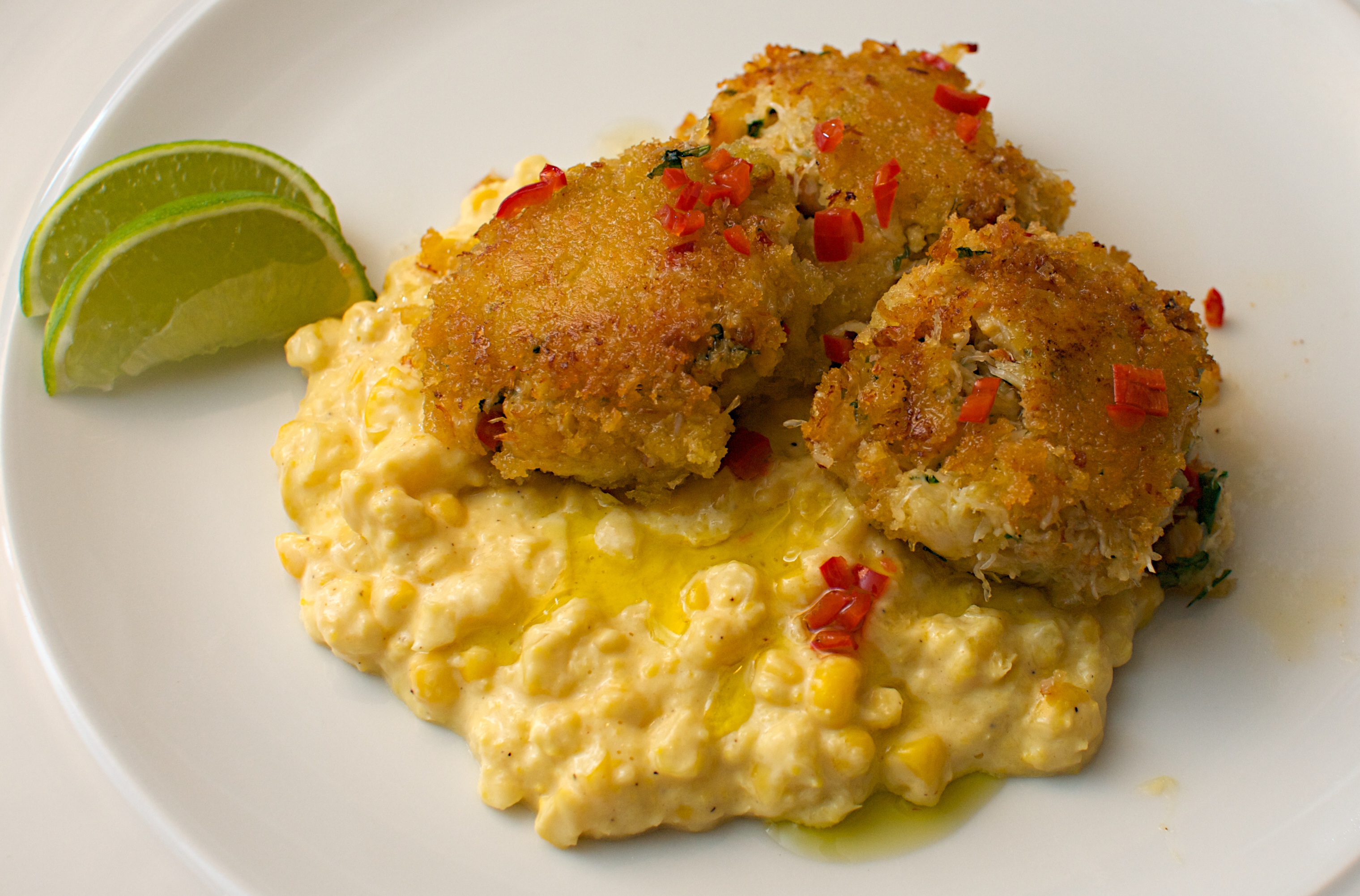
These are unusual little crab cakes with a side dish of sweet, fresh corn purée. It’s corn season at the moment in Ireland so make them while it’s still available.

Crab cakes with corn purée and chilli oil – to serve 4 as a starter (makes 8 little cakes)

  • 250g fresh picked white crab meat
  • 1 red chilli, deseeded and finely diced
  • 1 tbsp finely chopped coriander leaves
  • 100ml top-quality mayonnaise
  • squeeze of lime or lemon juice
  • 50g fresh white breadcrumbs
  • 150g unsalted butter

For the chilli oil:

  • 1 red chilli, deseeded and finely chopped
  • 80ml extra virgin olive oil

For the corn purée:

  • 3 fresh corn cobs
  • 120ml water
  • 40g unsalted butter
  • 2 tsp sugar
  • 50ml crème fraîche
  • 1tsp Tabasco
  • lime wedges (to serve)

Put the crab into a bowl, add the chilli and coriander and mix with a fork. Stir in the mayonnaise. Add a squeeze of lime or lemon juice and season with salt. Make 8 little crab cakes from the mixture and place on a tray. Chill for 30 minutes.

Spread the breadcrumbs evenly on a board and roll the cakes to coat generously. Cover and refrigerate until ready to cook.

Make the chilli oil by putting the chopped chilli in a small bowl, add a good pinch of salt and add the olive oil. Stir and leave to infuse.

For the corn purée, cut the kernels from the cobs. Put the kernals into a saucepan, add the water, butter and sugar, and season generously with salt and pepper. Cover and cook on a gentle heat until the corn is tender, about 20-25 minutes, then drain, but keep the cooking liquor.

Transfer half the corn to a bowl with a slotted spoon. Tip the rest into a blender or food processor and blend until smooth. Pass through a really fine sieve to make sure you have a really smooth purée; it it’s too thick you can add a bit of the reserved cooking liquor to loosen. Stir in the rest of the corn, the crème fraîche, and the Tabasco. Check the seasoning and keep warm.

To cook the crab cakes, heat the butter in a wide non-stick pan over a medium-low heat. When the oil has warmed, gently transfer the crab cakes into the pan and cook for a couple of minutes on each side or until golden and crispy. Remove with a slotted spoon and drain on kitchen paper.

Serve the crab cakes hot with the corn purée. Serve with the chilli oil and lime wedges.

Wine Suggestion: This is a relatively rich dish so needs to be paired with a wine that has a bit of weight to it. Try and find a Chardonnay that is not too heavy on the oak and from a cooler climate, such as a Pouilly-Fuissé, or one from the Macedon Ranges in Australia.

(Original recipe from Skye Gyngell’s My favourite ingredients, Quadrille Publishing Limited, 2008.)

Read Full Post »

This is a great antipasti plate to serve with some cured meats, crusty bread and good olive oil.

Roasted Peppers with Capers – to serve 4 as an antipasti plate

  • 2 red peppers
  • 2 yellow peppers
  • Extra virgin olive oil
  • 3 tbsp Marjoram leaves
  • 6 tbsp salted capers
  • 2 tbsp red wine vinegar

Preheat the oven to 200C.

Brush the peppers with olive oil and roast on a baking tray in the oven for about 30 minutes, turning once. Put the peppers in a bowl, cover with cling film and leave to cool. Peel and remove the seeds when the peppers are cool enough to handle.

Chop the marjoram. Rinse and chop the capers, and mix with the vinegar.

Lay the peppers on a serving dish and season. Sprinkle with the vinegar and capers, scatter over the marjoram, and drizzle with olive oil.

(Original recipe from Rose Gray and Ruth Rogers’ Italian Two Easy, Clarkson Potter, 2006.)

Read Full Post »

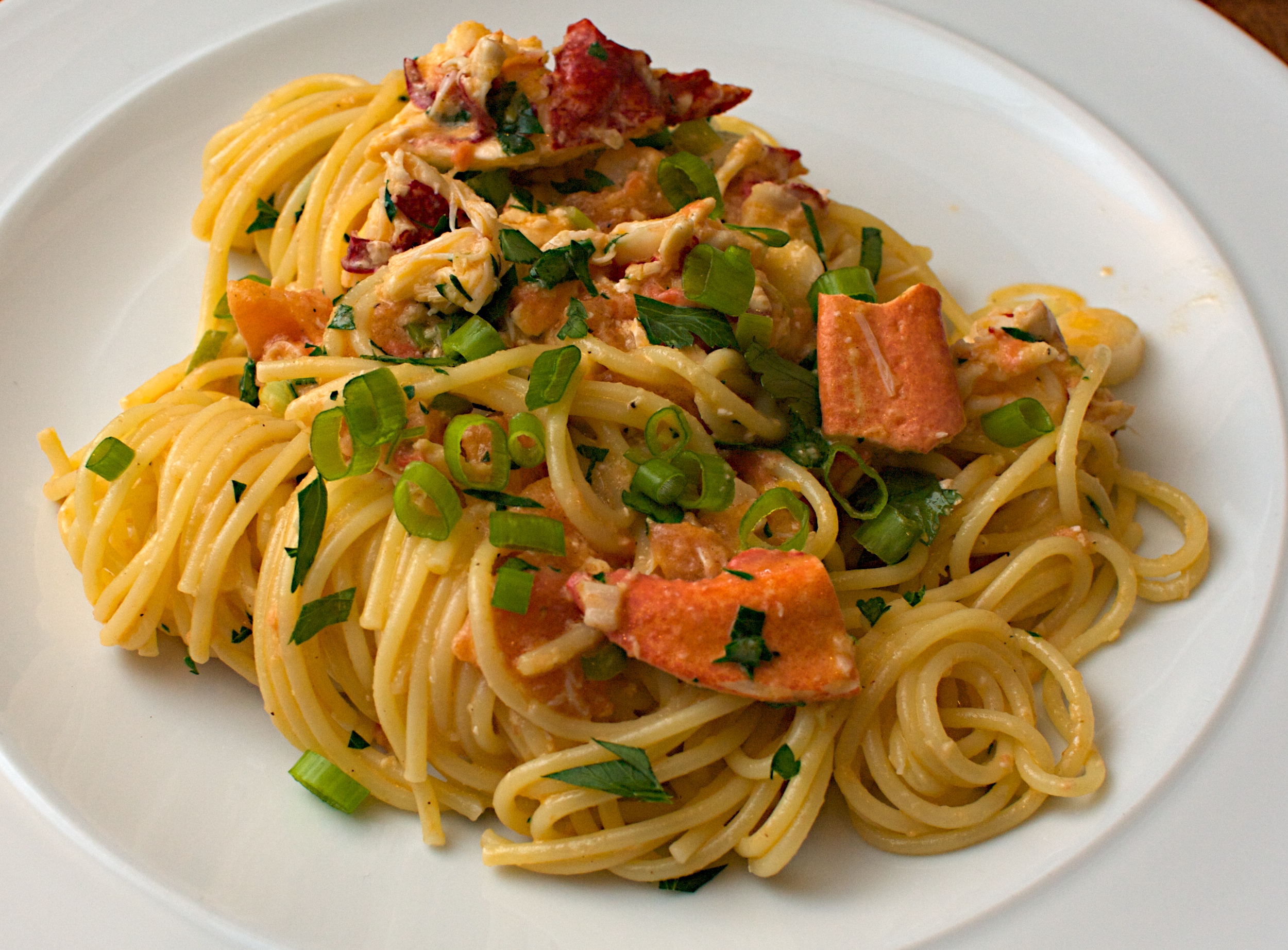
Lobster Spaghetti

Lobsters are really plentiful at the moment which makes the prices really low… woohoo!

Lobster Spaghetti – to serve 2 generously

  • 500g vine-ripened tomatoes
  • 1 cooked lobster
  • 100ml extra virgin olive oil
  • 2 garlic cloves, finely chopped
  • 5cm piece fresh ginger, finely grated
  • 50ml dry white wine
  • 60ml double cream
  • finely grated zest of half a lemon
  • 1 tbsp lemon juice
  • 4 scallions, thinly sliced
  • 2 tbsp finely chopped flat-leaf parsley
  • 250g spaghetti

Cut a small cross in the base of each tomato and put in a bowl. Pour over boiling water to cover and leave for 1 minute, then drain and refresh in cold water. Peel the tomatoes, then scoop out the seeds and roughly chop.

Cut the lobster in half, then scoop out all the meat and cut into bit-sized chunks.

Heat the oil in a frying pan over a medium heat. Add the garlic and cook, stirring for about 30 seconds. Add the ginger and white wine and cook for another few minutes until most the wine has evaporated. Add the tomato, season well and cook, stirring occasionally, until the tomato breaks down into the sauce. Reduce the heat to low, then add the lobster meat, cream, lemon zest and juice, and most of the scallions, stirring to warm through. Take the sauce off the heat, then stir in most of the parsley and season.

Meanwhile, cook the spaghetti until al dente, then drain.

Toss the pasta with the lobster sauce and divide among bowls. Garnish with the rest of the scallions and parsley, then serve.

Wine Suggestion: Go for a rosé but make sure it has a bit of body. A Provencal rosé would be good or if you can find it a Cerasuolo di Vittoria from Sicily.

Read Full Post »

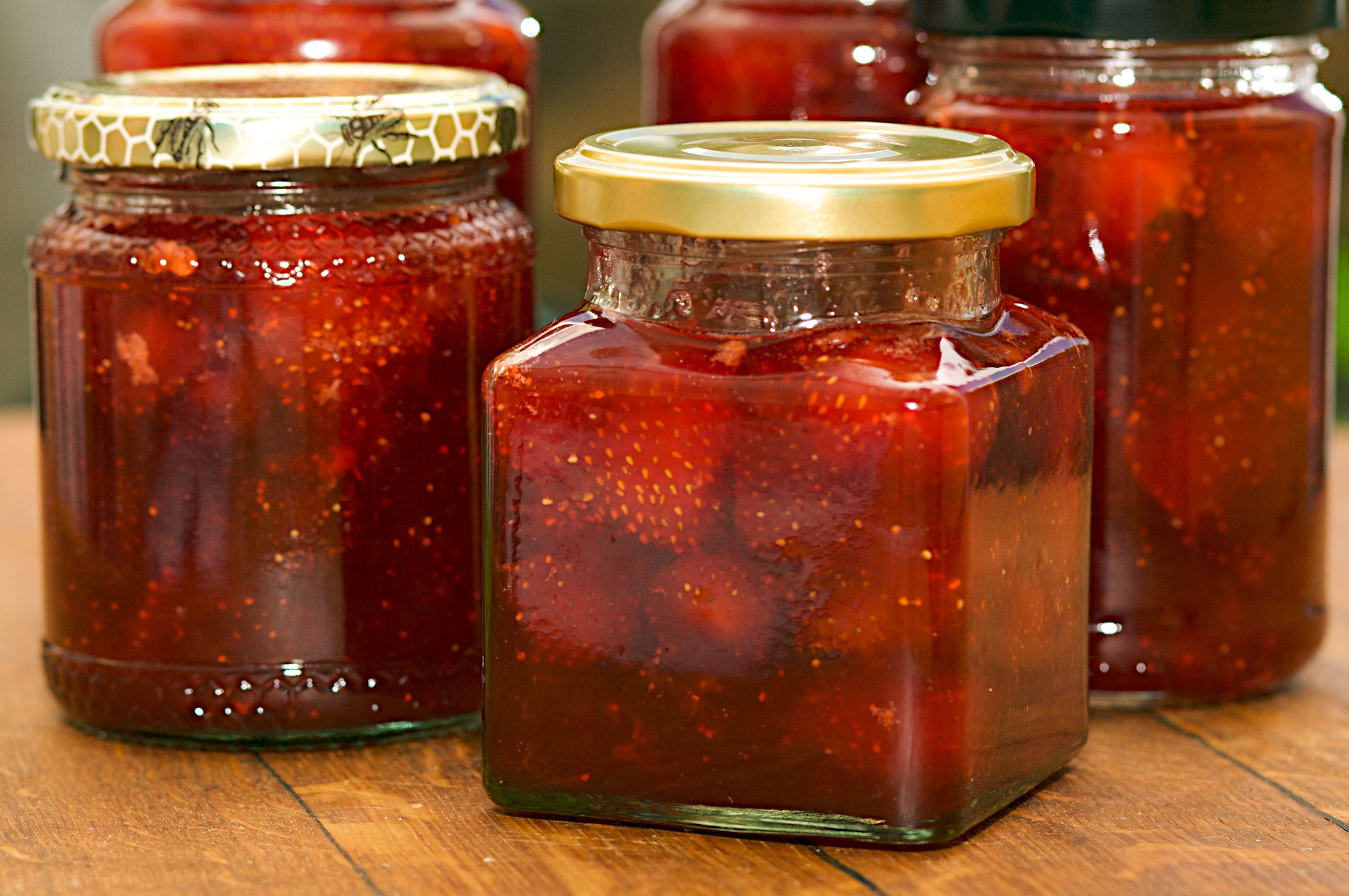
We were recently donated a preserving pan (thanks Uncle Graeme) and this was our first ever attempt at jam-making. If only we’d realised how easy it was before and so much better than shop-bought. We’re already on our second jar and it’s a great gift to give to friends.

Soft-set Strawberry and Pimm’s Jam – makes 5 450g jars 

  • 1.5kg strawberries, hulled and halved if large
  • 1kg jam sugar
  • juice of 2 lemons
  • juice of 1 orange
  • 3 tbsp Pimm’s No. 1

Put a few saucers in the freezer (you’ll need them later to check if the jam is ready). Put the strawberries into a preserving pan (or the biggest saucepan you have), then roughly mash the strawberries with a potato masher. Stir in the sugar and put the pan over a very low heat. Stir now and then until the sugar has dissolved and there is lots of red syrup in the pan. Be careful not to let it boil. Stir in the orange and lemon juices when the sugar crystals have dissolved.

Turn up the heat and let the jam come to a foaming fast boil (if you have a jam thermometer it should read 105C). After 10 minutes, put a tsp of the jam onto one of the frozen saucers, then push your finger through the jam. If the jam wrinkles, it is ready. If not, leave for another couple of minutes and test again. Leave the jam to cool for 30 minutes, skim off the scum, and add the Pimm’s. Ladle into sterilised jars.

(Original recipe from BBC Good Food)

Read Full Post »

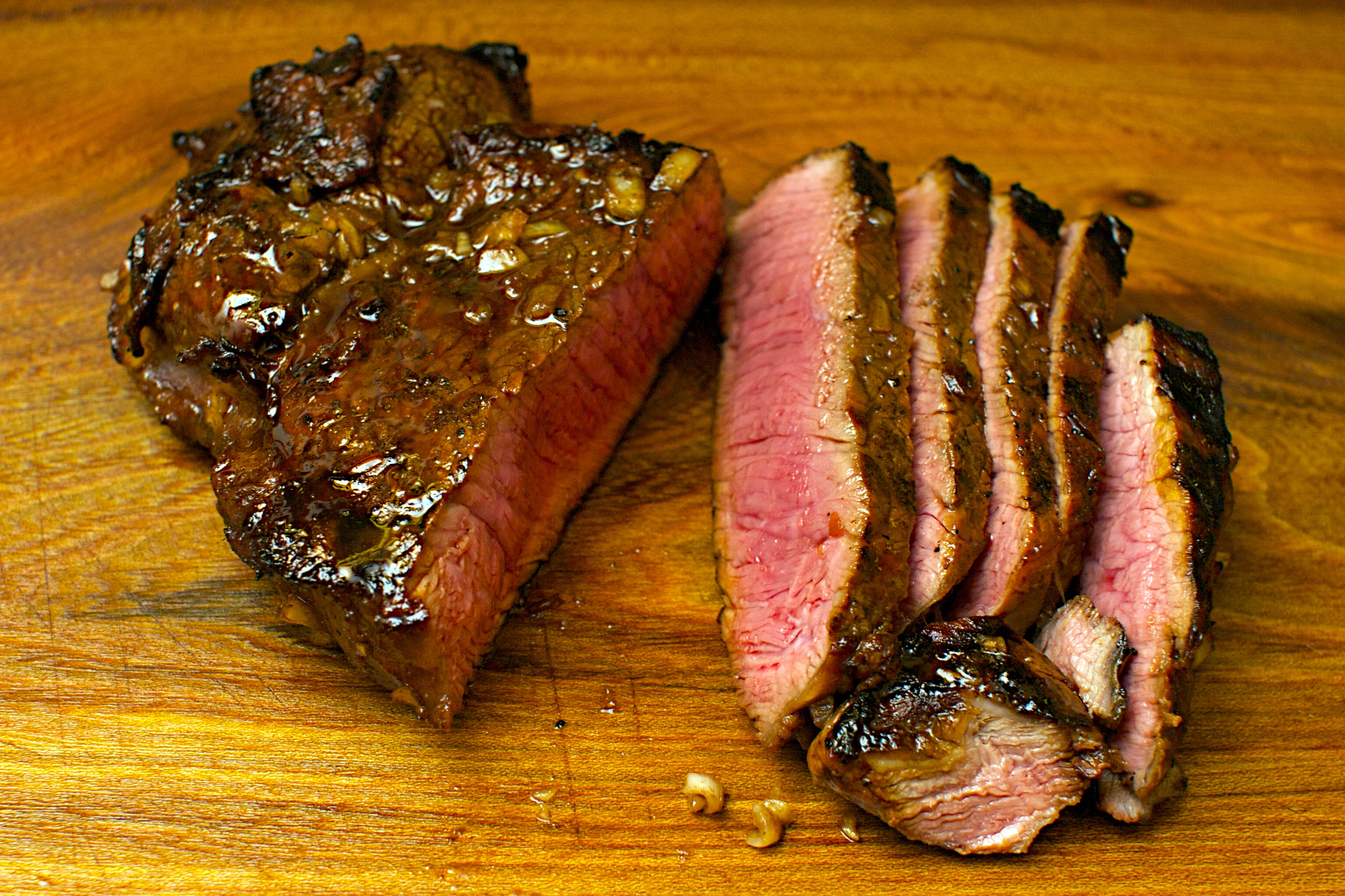
Our new favourite way to cook steak. This is delicious and there’s no need to splash out on an expensive cut. We’ve been using rump steak but it will also work really well with skirt steak if you can find it. You’ll need to cook skirt for a bit longer though.

Barbecued balsamic beef – to serve 4

  • 600g thick piece of rump steak
  • 2 shallots, very finely chopped
  • 2 tbsp balsamic vinegar, plus a little extra

Put the beef in a wide shallow dish and rub it all over with the shallots and balsamic vinegar. Season and leave to marinate for 20 minutes.

Make sure your barbecue or grill is really hot before starting to cook.

Barbecue (or grill) the beef for 3-4 minutes on each side, depending on how thick it is. Take off the barbecue and cover with foil for 5 minutes, then slice thinly across the grain and serve with the meat juices.

Add a drizzle of olive oil and balsamic vinegar if you like.

Serve with potatoes roasted with rosemary and garlic.

Wine Suggestion: Try a Tuscan red from Bolgheri or the Maremma which will give you a nice juiciness but still maintain the depth of structure and tannin needed to work with the steak.

Read Full Post »

A fresh weeknight meal that’s ready in 15 minutes.

Lemon, pecorino and pine nut tagliatelle – to serve 2

  • 150g tagliatelle
  • 1 lemon, juiced and zested
  • 2 tbsp pine nuts, toasted
  • 2tbsp finely grated pecorino or parmesan
  • olive oil
  • a small bunch of flat-leaf parsley, chopped

Cook the tagliatelle. Mix the lemon juice and zest, pine nuts, pecorino, 2 tbsp olive oil and parsley and season really well. Drain the tagliatelle, reserving two tablespoons of the pasta cooking water. Tip everything into a bowl (including the water) and toss.

Wine Suggestion: Go for a light Italian white such as a Friulano or Verdicchio.

Read Full Post »

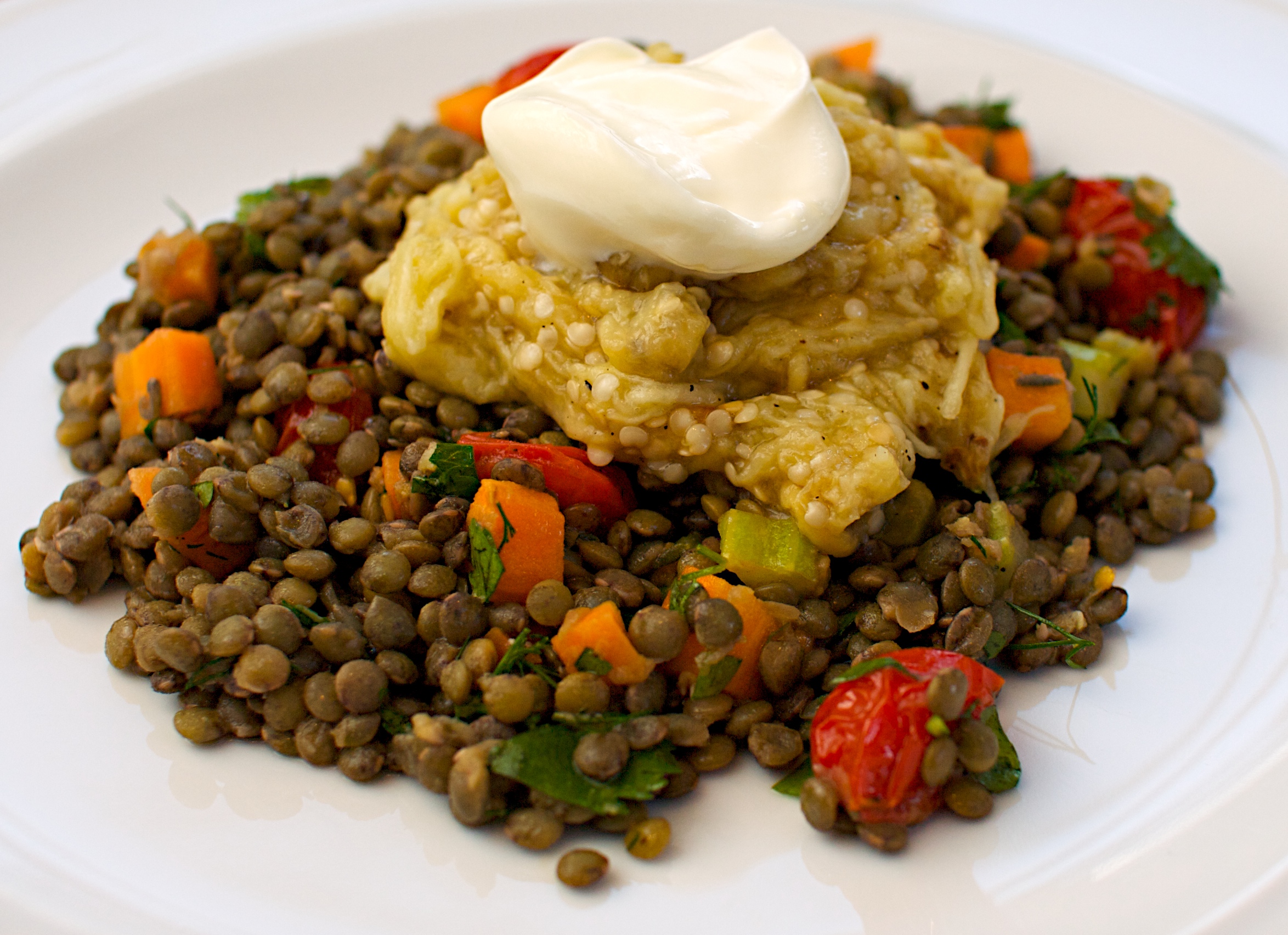
A delicious main course salad by Yotam Ottolenghi.

Lentils with Grilled Aubergine – to serve 4

  • 2 medium aubergines
  • 2 tbsp good-quality red wine vinegar
  • 200g Puy lentils, rinsed
  • 3 small carrots, peeled
  • 2 celery sticks
  • 1 bay leaf
  • 3 thyme sprigs
  • ½ white onion
  • 3 tbsp olive oil
  • 12 cherry tomatoes, halved
  • 1/3 tsp brown sugar
  • 1 tbsp  each roughly chopped parsley, coriander and dill
  • 2 tbsp crème fraîche (or natural yogurt)
  • sea salt and black pepper

If you have a gas hob, you can put the aubergines directly on two moderate flames and roast for 12-15 minutes, turning often, until the flesh is soft  and the skin is burnt all over. You should protect the area around the hob with foil beforehand. Alternatively you can put the aubergines on a foil-lined baking tray and put under a hot grill for 1 hour, turning a few times. The aubergines need to completely deflate and the skin should burn and break. Make sure you pierce the aubergines in a few places with a sharp knife to avoid explosions!

Heat the oven to 140ºC/Gas Mark 1. Cut the aubergines open and scoop the flesh out into a colander, avoiding the black skin. Leave to drain for at least 15 minutes and then season with plenty of salt and pepper and ½ tbsp of the vinegar.

While the aubergines are grilling, put the lentils in a medium saucepan. Cut one carrot and half a celery stick into large chunks and throw them in. Add the bay leaf, thyme and onion, cover with lots of water and bring to the boil. Simmer on a low heat for up to 25 minutes, or until the lentils are tender, skimming away the froth occasionally. Drain in a sieve. Remove and discard the carrot, celery, bay leaf, thyme and onion and transfer the lentils to a large bowl. Add the rest of the vinegar, 2 tbsp of the olive oil and lots of salt and pepper; stir and set aside somewhere warm.

Chop the remaining carrot and celery into 1cm dice and mix with the tomatoes, the remaining oil, the sugar and some salt. Spread in an ovenproof dish and cook in the oven for about 20 minutes, or until the carrot is tender but still firm.

Add the cooked vegetables to the warm lentils, followed by the chopped herbs and stir gently. Adjust the seasoning. Spoon the lentils onto plates. Pile some aubergine onto each portion and top with a dollop of crème fraÎche. Finish with a drizzle of olive oil.

Wine Suggestion: The lentils and aubergine have an earthy flavour which would be complemented by a juicy Grenache or Zinfandel based wine. Try and find one that’s not too heavy though as big flavours could overwhelm this dish.

(Original recipe from Yotam Ottolenghi’s Plenty, Ebury Press, 2010.)


Read Full Post »

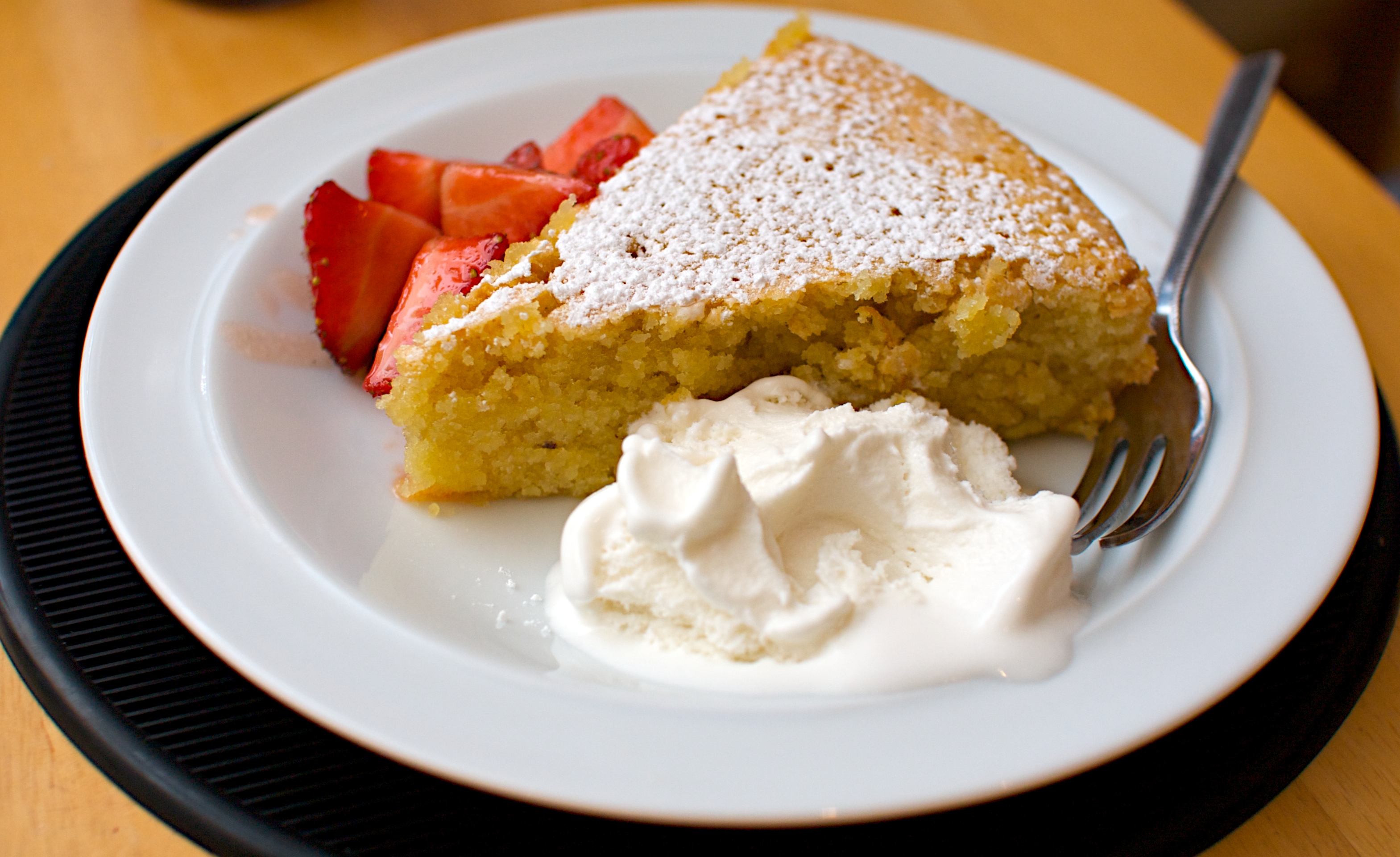
We’re really getting into desserts these days. I think we might have made two in the one month! We’re not really dessert people but lots of are friends are so we’ve been making an effort. This is a Spanish cake which is flavoured with orange and almond and is traditionally marked with the shape of a cross on the top. You don’t have to serve it with the strawberries but they work really well.

Tarta de Santiago with Strawberries & Sherry Vinegar – 8-10 slices 

  • a little butter, for greasing
  • 6 medium eggs
  • 300g caster sugar
  • 300g ground almonds
  • zest of 3 lemons
  • icing sugar, for dusting

For the strawberries: 

  • 250g strawberries, hulled and halved or quartered lengthways
  • 75g caster sugar
  • 50ml Sherry vinegar
  • vanilla ice cream, to serve

Mix the strawberries in a bowl with the sugar and vinegar, cover and leave to marinade in the fridge for about 2 hours.

Heat the oven to 160C/140C fan/gas 3. Butter and line a 22cm springform tin with baking parchment. Use an electric whisk to mix the eggs and sugar until pale and thick. Gently fold in the almonds and zest with a metal spoon.

Pour the mixture into the tin and bake for 50 minutes – it should be golden and a skewer pushed into the centre of the cake should come away clean. Take the cake out of the oven and cover with a clean tea towel to cool it down, so it doesn’t dry out. Dust with icing sugar and serve with the strawberries and ice cream.

Wine Suggestion: Try a rich Olorosso, a dark sherry from Spain, which has a warm nuttiness to complement the almond flavour in the cake.

(Original recipe by José Pizarro in BBC Good Food Magazine, August 2012.)

Read Full Post »

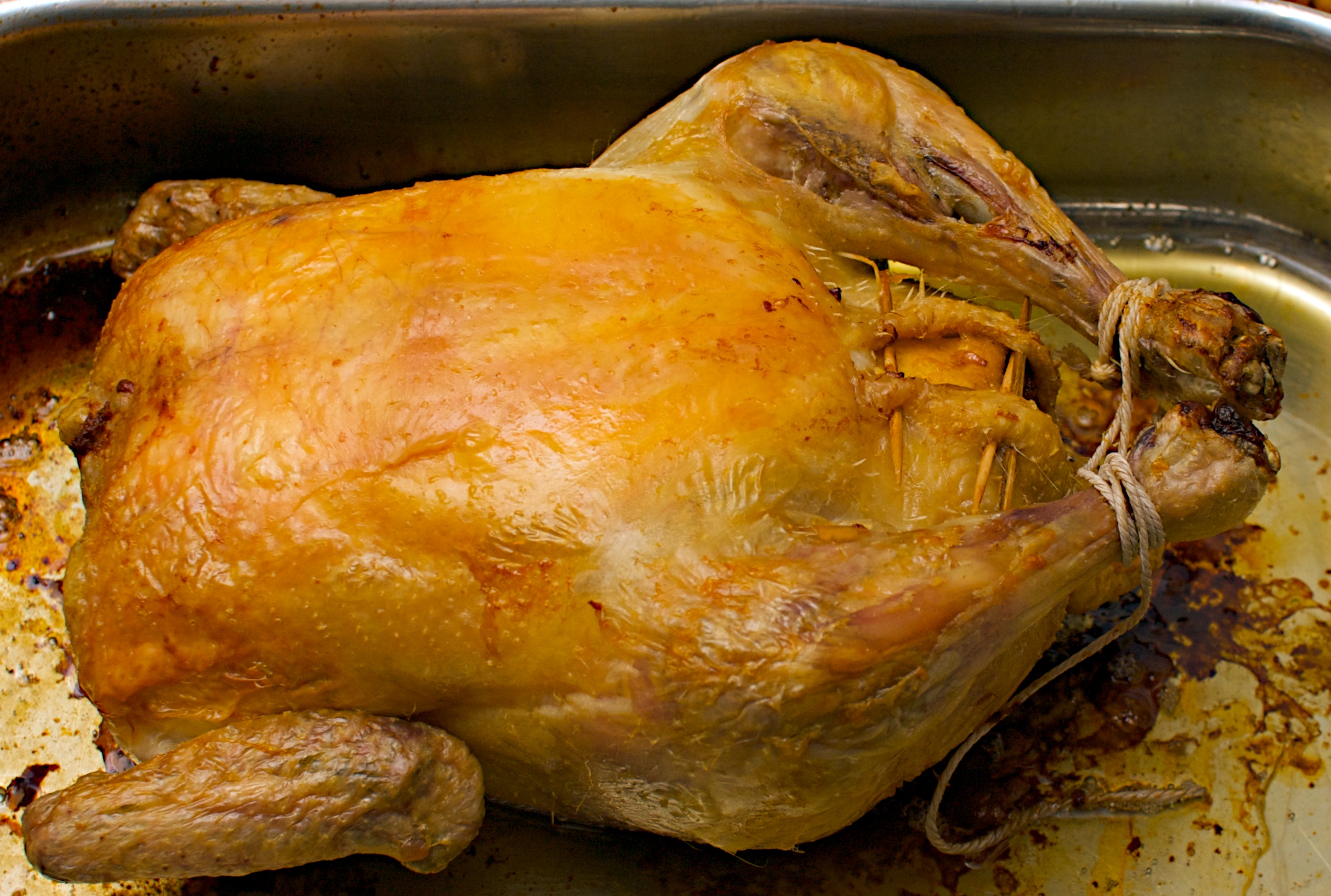
We got the inspiration from Marcella Hazan and the result is a really juicy roast. Literally chicken with two lemons.

“No fat to cook with, no basting to do, no stuffing to prepare, no condiments except salt and pepper.”

Roast Chicken with Lemons – to serve 4

  • 1.35-1.8kg chicken
  • salt
  • freshly ground black pepper
  • 2 small lemons

Preheat the oven to 180C/350F/gas 4.

Sprinkle a generous amount of salt and black pepper on the chicken, rubbing it with your fingers over the whole body and inside the cavity.

Wash the lemons in cold water and dry with a tea towel. Soften the lemons by rolling back and forth across a counter with the palm of your hand. Pierce the lemons at least 20 times each with a cocktail stick.

Put both lemons inside the cavity of the chicken and close the opening with cocktail sticks. Tie the legs together at the knuckle ends with string but leave in their natural position rather than pulling them tight.

Put the chicken in a roasting tin, breast-side down. Place in the upper third of the hot oven. After 30 minutes, turn the chicken over to have the breast side up, try not to puncture the skin.

Cook for another 30-35 minutes, then increase the heat to 200C/400F/gas 6, and cook for an additional 20 minutes. Calculate between 20 and 25 minutes total cooking time for each 500g.

Serve the chicken as soon as it comes out of the oven, there is no need to rest. Carve the chicken and serve with the juices that run out.

Wine Suggestion: We invariably go for a Chardonnay with roast chicken. Try a fuller bodied style from Australia or California where really top-notch Chardonnays are being made at the moment.

Read Full Post »

We could have eaten buckets of this, it was so tasty! Locally grown corn cobs usually hit the shops in September but as the seasons seem to be all out this year, we’ll have to wait and see. To remove the corn form the cobs you need to tear off the husks, then run a knife downwards to remove the kernels – easy!

Stir-fried corn with chilli, ginger, garlic and parsley – to serve 2 as a side dish 

  • fresh corn kernels (one corn cob per person)
  • 2 tbsp olive oil
  • 1 tbsp if chopped ginger
  • 1 tsp of chopped chilli
  • a handful of chopped parsley
  • 1-2 tbsp soy sauce

Get your wok nice and hot. Heat the oil, then add the corn and stir-fry along with the ginger and chopped chilli.

When the corn is almost cooked, add the parsley and soy sauce and toss through.

Tastes really good with roast chicken and potatoes!

(Original recipe from Jamie Oliver’s Jamie’s Dinners, Penguin 2004.)

Read Full Post »

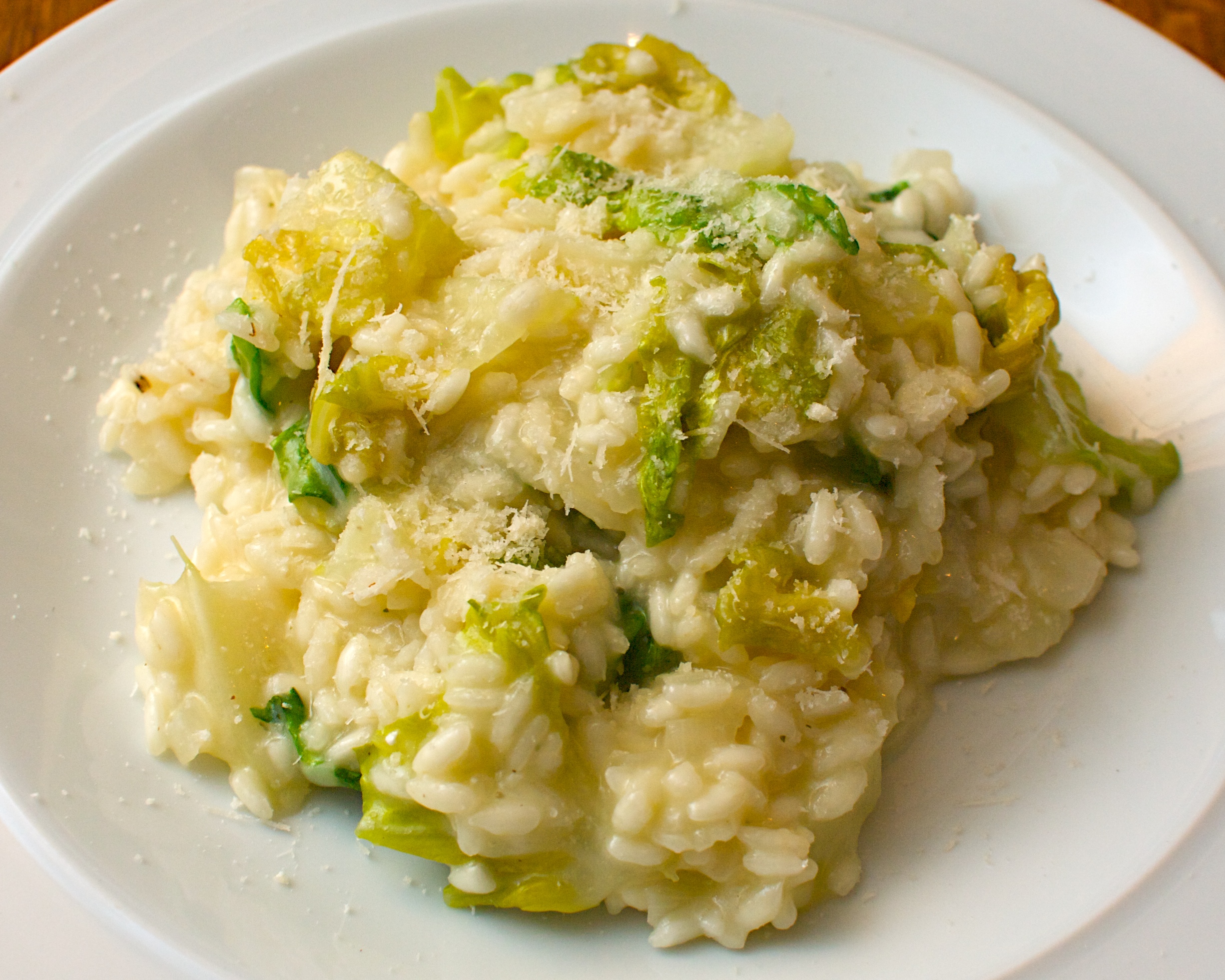
Who says lettuce is just for salad? An unusual contrast of flavours and textures which works exceptionally well.

Little Gem Lettuce Risotto – to serve 4

  • butter
  • 1 onion, finely chopped
  • 2 garlic cloves, finely chopped
  • 350g risotto rice (carnaroli or arborio)
  • 1 large glass of white wine
  • 1.5 litres vegetable stock, kept hot
  • 50g Parmesan, grated
  • 2 little gem lettuces, torn into small pieces

Melt a knob of butter in a large saucepan, add the onion and garlic and cook until soft and translucent.

Add the rice and stir to coat with the butter. Add the wine and stir until evaporated.

Add the stock gradually, a ladle at a time, until the rice is cooked but still has a bit of bite – you probably won’t need all of the stock.

Add the cheese and lettuce, stirring to gently wilt the lettuce leaves. Serve with some extra cheese.

Drink with: a glass of sparkling Spanish Cava. We had a bottle open and it was a great match!

(Original recipe from BBC Good Food)

Read Full Post »

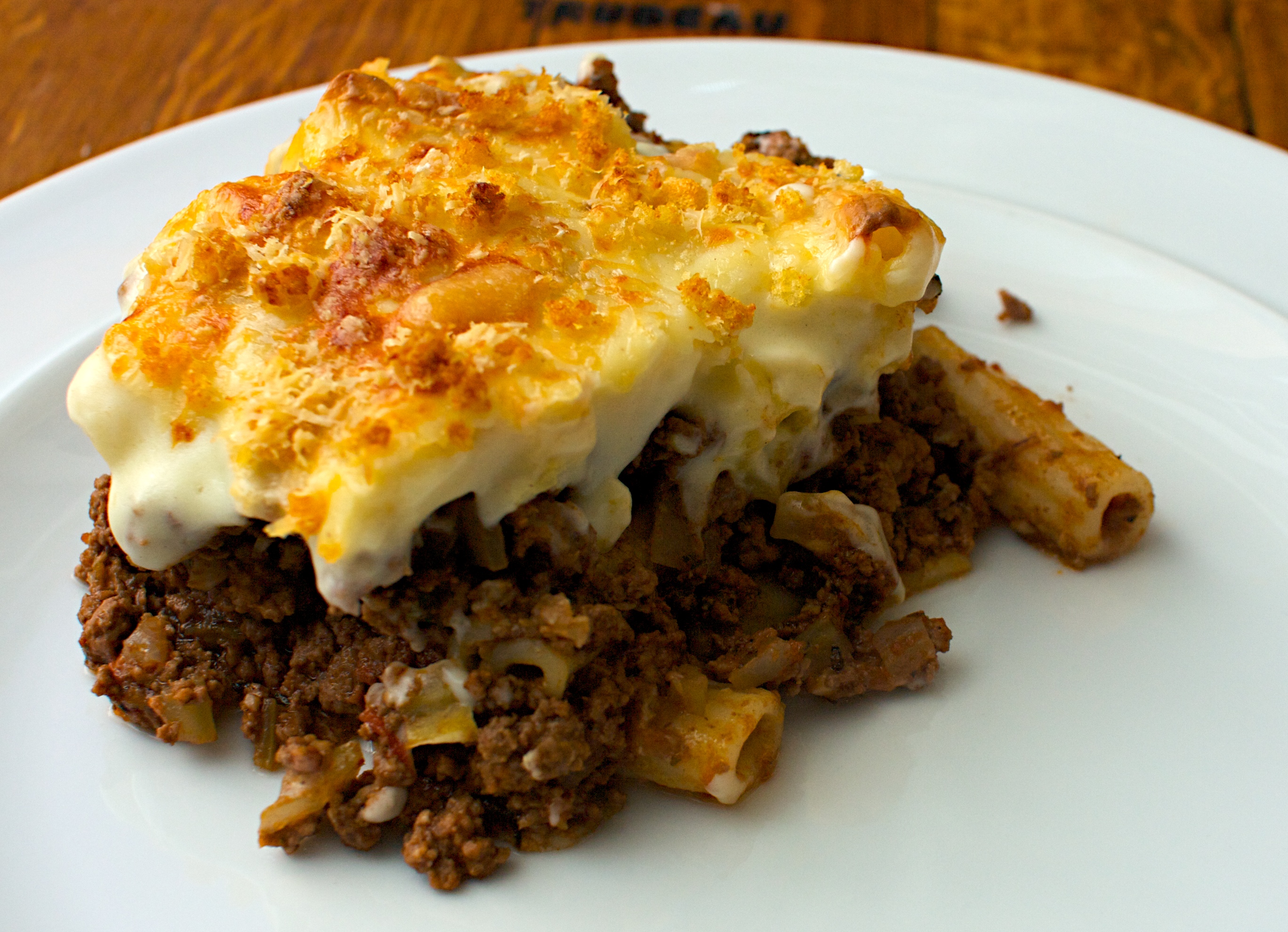
This is a bit like lasagne but easier to make and you can have it all done in advance, ready to throw in the oven when your guests arrive.

Pastitsio (beef and macaroni pie with cinnamon, red wine and cheese) –  generously serves 8-10

  • 500g pasta tubes (we used big macaroni or rigatoni would be good)
  • 2 eggs, lightly beaten
  • 50g finely grated Parmesan
  • 2 tbsp melted butter
  • 10g fresh white breadcrumbs

FOR THE WHITE SAUCE:

  • 115g butter
  • 115g plain flour
  • 1.2 litres full-cream milk
  • ½ tsp freshly grated nutmeg

FOR THE MEAT SAUCE

  • 4 tbsp olive oil
  • 1 medium onion, finely chopped
  • 4 garlic cloves, finely chopped
  • 2 celery sticks, finely chopped
  • 1 kg lean minced beef
  • 200ml red wine
  • 400g chopped tomatoes
  • 2 tbsp tomato purée
  • 10cm piece cinnamon stick
  • ¼ tsp ground cloves
  • 1 tbsp dried oregano
  • 2 tbsp fresh chopped oregano
  • 3 fresh bay leaves

For the meat sauce, heat the oil in a large pan, add the onion, garlic, and celery, and fry until starting to brown. Add the mince and fry over a high heat for about 4 minutes, breaking up the lumps. Add the red wine, tomatoes, tomato purée, cinnamon stick, ground cloves, dried and fresh oregano, bay leaves, 100ml water, 1½ tsp salt and some black pepper, and simmer for about 30-40 minutes, stirring occasionally, until the sauce has thickened but is still nice and moist. Throw away the cinnamon stick and bay leaves.

Bring a large saucepan of water to the boil and add plenty of salt. Cook the pasta for a minute less than it says on the pack (as it will cook a bit more in the oven). Drain well, transfer to a large bowl and leave to cool a little.

For the white sauce, melt the butter in a non-stick saucepan, add the flour and cook, stirring, over a medium heat, for 1 minute. Gradually beat in the milk, then bring to the boil, stirring, lower the heat and leave to simmer for 5-7 minute, stirring occasionally. Season with nutmeg and some salt and pepper.

Stir 250ml (about one-fifth) of the white sauce into the warm pasta with the beaten eggs and half the grated cheese. Keep the rest of the sauce warm over a low heat, stirring now and then and adding a bit more milk if it gets too thick.

Use the melted butter to grease a large, ovenproof dish (about 23 x 33 cm across and 7 cm deep) or baking tray. Spread one-third of the pasta over the base of the dish and cover with half the meat sauce. Add another third of the pasta, then the rest of the meat sauce, then cover with a final layer of pasta. Spoon the rest of the white sauce over. Mix the remaining cheese with the breadcrumbs and sprinkle this over the top.

The dish is now ready for the oven. When you’re ready, bake it in a preheated oven at 180ºC/Gas Mark 4 for 40 minutes or until bubbling hot and nicely browned.

Serve with some salad.

Drink with: a glass of good Bordeaux but from a warmer vintage, like the atypical 2003. One of our guests kindly brought an ’03 Domaine de Chevalier.

(Original recipe from Rick Stein’s Mediterranean Escapes, BBC Books, 2007.)

Read Full Post »

This is easy peasy and looks so impressive.

Strawberry and Mascarpone Tart – to serve 8

  • 1 large egg
  • 1 tbsp caster sugar
  • 250g mascarpone cheese
  • 2 drops vanilla extract
  • 250g strawberries

For the crumb base:

  • 75g butter
  • 250g almond, orange or sweet oat biscuits (or digestives will do!)

You need a rectangular tart tin with a removable bottom. We used a long thin one 12cm x 34cm.

For the crumb base, melt the butter in a small saucepan. Crush the biscuits to a coarse powder in a food processor (or bash them in a bag with a rolling pin). Mix the crumbs with the butter, then spoon into the tart tin and smooth them into into the corners and up the sides. Press firmly but don’t try not to compact them too much. Stick the base in the fridge until it has set.

To make the filling, separate the egg, put the yolk in a bowl with the sugar and beat for a few seconds to mix. Beat in the mascarpone until you have a custard-coloured cream. Stir in a few drops of vanilla extract. With a clean whisk and a clean bowl, beat the egg white until it stands stiff, then fold it into the creamed mascarpone.

Spoon the mascarpone into base. Hull the strawberries, slice them thinly and arrange them on the top. Put the tart back in the fridge but remove it about 20 minutes before serving.

Drink with: a glass of Moscato d’Asti –  lightly sparkling and deliciously sweet and fruity.

(Original recipe from Nigel Slater: the kitchen diaries, Fourth Estate, 2005.)

Read Full Post »

A tasty and filling summer soup. We couldn’t get Wensleydale so used Lavistown, a similarly crumbly Irish variety as recommended by Darius at the cheese counter.

Red pepper and Wensleydale soup – to serve 2

  • olive oil
  • 1 onion, roughly chopped
  • 1 clove garlic, crushed
  • 1 red pepper, roughly chopped
  • 1 400g tin chopped tomatoes
  • 1 tbsp tomato purée
  • 200ml vegetable stock
  • 100g Wensleydale (or other crumbly cheese), crumbled
  • a handful of basil, torn

Heat 1 tbsp oil in a non-stick pan. Cook the onion, garlic and pepper on a gentle heat until soft. Add the tomatoes, purée and stock then bring to a simmer.

Cook for 20 minutes then blend but leave a bit of texture. Reheat with a splash more stock or water if necessary to thin it a bit. Stir in most of the cheese and basil and serve with a bit more cheese and basil sprinkled over the top.

(Original recipe from BBC Good Food)

Read Full Post »

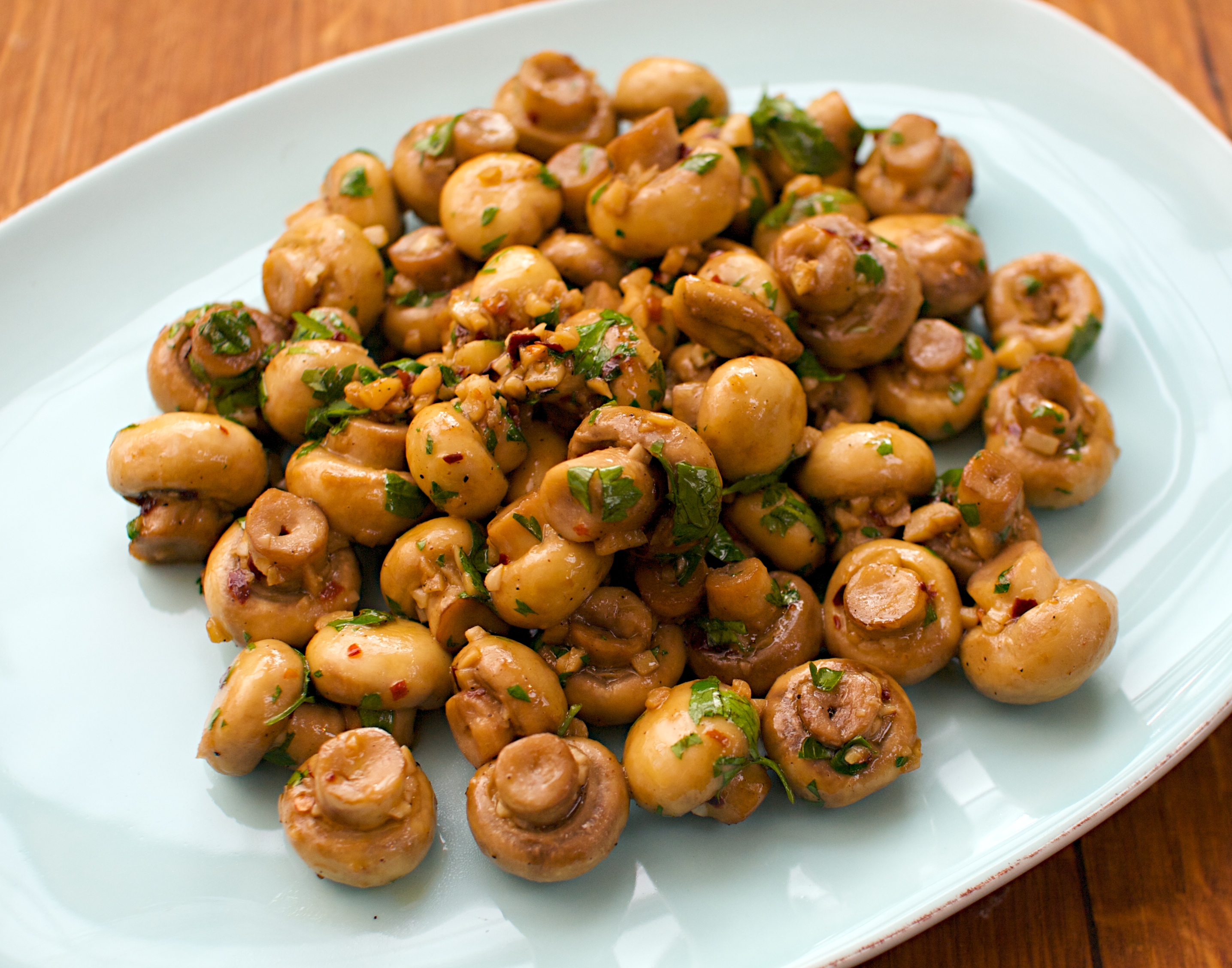
A classic Spanish tapa dish. Don’t fork out for fancy mushrooms as ordinary button ones work perfectly here, taking on the flavours of the garlic, oil and white wine.

Champiñones al ajillo – to serve 4 as a tapa 

  • 250g button mushrooms, halved or quartered depending on what size they are
  • 4 tbsp extra virgin olive oil
  • 4-5 garlic cloves, peeled and chopped
  • ½ tsp chilli flakes (optional)
  • 4 tbsp dry white wine or 1 tbsp lemon juice
  • 2 tbsp chopped flat-leaf parsley

Heat the olive oil in a large frying pan and sauté the mushrooms with the garlic and chilli over a medium-high heat. Add some salt and pepper as the mushrooms are cooking. The mushrooms will soak up all of the oil first and then release it again with their juices. Add the white wine or lemon juice, lower the heat and cook, uncovered, until the mushrooms are really soft, the juices have almost evaporated and the oil is sizzling through. This should take 15-20 minutes in total.

Stir in the parsley and serve with crusty bread to mop up the juices.

Drink with: a glass of rich and nutty Amontillado sherry.

Read Full Post »

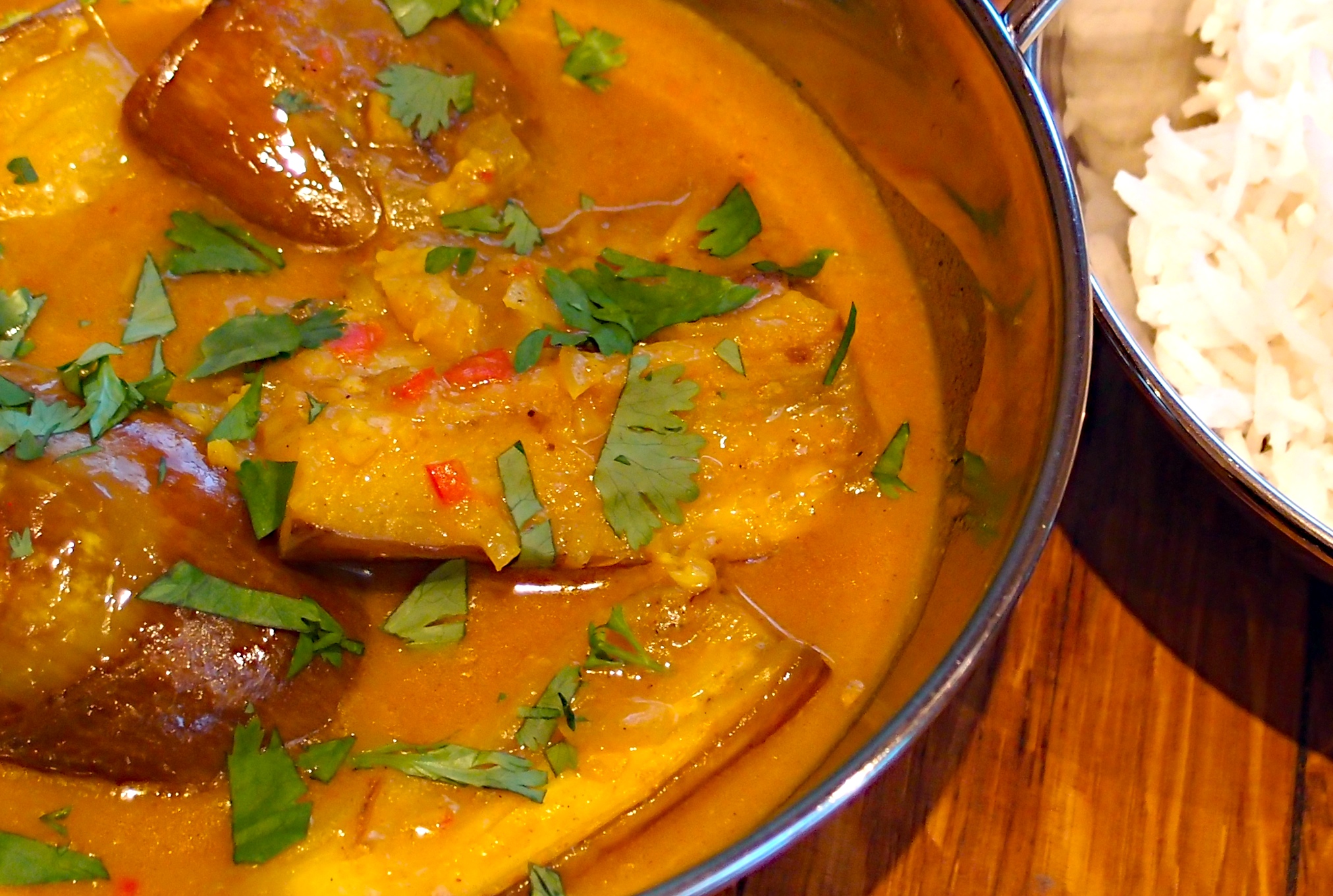
This is a really straightforward curry and we are glad to say it didn’t disappoint. The aubergine melts in the mouth and the spices are lovely and fresh as well as warming and comforting. Also takes no time at all to make.

Aubergine Curry with Lemongrass & Coconut Milk – serves 4

  • 3 large chillies, deseeded and chopped
  • 6 garlic cloves, roughly chopped
  • knob of fresh ginger, peeled and chopped
  • 2 lemongrass stalks, peeled and chopped
  • 2 tbsn ground turmeric
  • 1 tsp chilli powder
  • 2-3 aubergine (approx 600g) quartered lengthways then halved
  • 1 tbsp olive oil
  • 1 tbsp sugar
  • 6 shallots, finely chopped
  • 1 tbsp Fish Sauce (nam pla)
  • 400ml can coconut milk
  • 400ml vegetable stock
  • small bunch coriander, roughly chopped

Pulse  to a coarse paste chillies, garlic, ginger and lemongrass in a food processor. Set aside

Mix the turmeric and chilli powder together and rub it all over the aubergine wedges. Don’t worry if it look like a lot of spices – it works!

Heat olive oil in frying pan and brown aubergine in batches, setting the aubergine aside when done. Add the paste, sugar and shallots to pan and cook for a few minutes until the shallots and garlic soften.

Return aubergine to pan. Add fish sauce, coconut milk and stock, mix well and bring to the boil. Reduce heat and cook gently for about 15 minutes and until aubergine is tender but not mushy. Season and sprinkle coriander on top.

Serve hot with steamed rice.

Drink with: a aged Clare Valley riesling (at least 5 or six years old) or a fruity young Mosel Riesling.

Read Full Post »

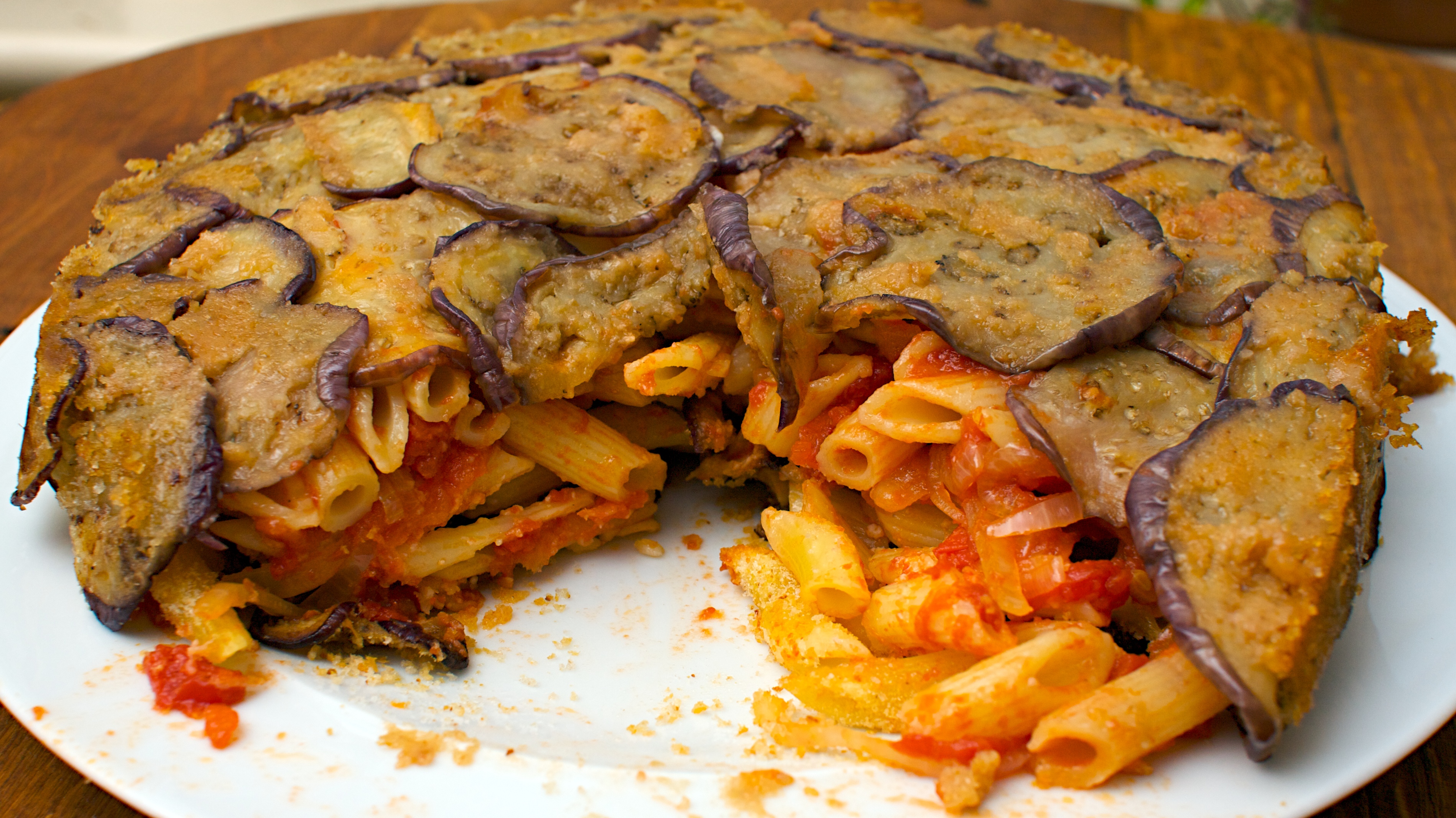
One of those memorable dishes that combines flavours and textures to capture the Sicilian sun and bring it to a grey and wet Dublin summer evening; magic.

Timballo di Maccheroni (Baked Pasta with Aubergine) – serves 6

  • 3 Aubergine, see if you can get the round, pale violet ones for authenticity
  • sea salt
  • 2 tablespoons unsalted butter
  • 5 tablespoons breadcrumbs
  • 1 medium onion, thinly sliced
  • 1 garlic clove, crushed
  • 1 x 400g tin of chopped tomatoes
  • 400g rigatoni, or penne rigate
  • 60g caciocavallo, or pecorino cheese, grated

Thinly slice the Aubergine, sprinkle with salt and leave to drain in a colander for at least 2 hours. Squeeze lightly to get rid of excess liquid.

Preheat oven to 180C / 350F / Gas 4.

Grease a round cake tin with the unsalted butter; we used one that was 23cm wide and 3.5cm deep. put in 2 tablespoons of breadcrumbs and shake and turn the dish so that that they stick to the butter and line the dish.

Heat about 6mm of olive oil in a deep frying pan and sauté the aubergine slices in batches until lightly coloured. Lift out and drain on kitchen paper. Using about three quarters of the aubergine cover the base and sides of the breadcrumbed tin. Make sure that you overlap the slices so that there are no gaps.

Heat a tablespoon of olive oil in a pan and cook the onion and garlic over a medium heat until soft, but not coloured. Add the tin of tomatoes and season with salt. Cover with a lid and simmer over a low heat for 10 minutes.

While this is cooking bring a pan of water to the boil, salt well and cook the pasta for 3 minutes less than the packet instructions, so that it is still al dente. Reserve some cooking water and then drain the pasta.

Spoon a layer of the pasta into the aubergine lined tin followed by tomato sauce, a layer of the aubergine and a layer of grated cheese. Repeat with the remaining pasta, tomato sauce, and a final layer of aubergine. Finish with the remaining breadcrumbs to form a coating on the top. Bake in the preheated oven for about 25 minutes and until golden.

Let stand for about 10 minutes. This will allow the dish to firm up.

Put a plate over the top of the tin and holding both the plate and dish firmly, turn both over together so that the Timballo turns out onto the plate. Serve in wedges.

Serve with: a southern Italian red like Nero d’Avola or Negroamaro, both of which have a satisfying earthiness but aren’t too heavy for the flavours in this dish.

NB. if you’d like to make your own breadcrumbs, which is both easy and satisfying, then remove the crusts from stale bread, slice and put it on a baking tray in an oven at 80C for an hour to dry out. Either grate and sieve the dried bread (which gives a more random and authentic look) or blitz in a blender.

(Original recipe from Georgio Locatelli: Made in Sicily, Fourth Estate, 2011.)

Read Full Post »

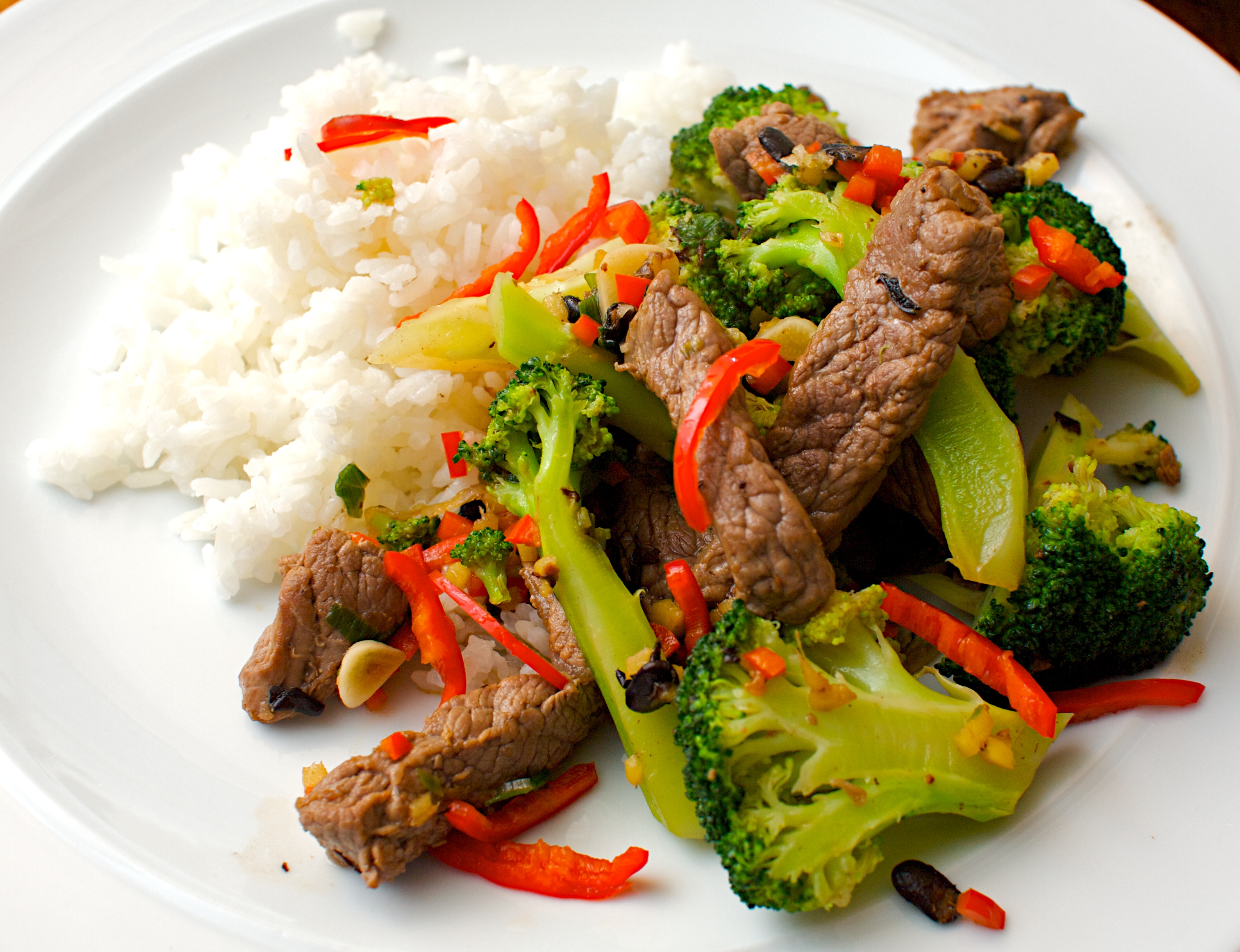
Gok Wan has reinvigorated our enjoyment of Chinese food. This is not the black-bean sauce we have been used to getting in restaurants and manages to be both light and have great depth with very distinctive Chinese flavours and aromas. Don’t be tempted to omit the pickled chilli as it really makes the dish.

Warning: this is nothing like the gloopy stuff you get from the Chinese take-away. Just so you know.

Beef in Fragrant Black Bean Sauce – to serve 2

  • 250g broccoli, cut into small florets
  • 3 tsp sesame oil
  • 1 tbsp groundnut oil
  • a 2cm pice of fresh ginger, peeled and finely chopped
  • 2/3 cloves of garlic, thinly sliced
  • 1 scallion, finely chopped
  • 1 tbsp fermented black beans, soaked for 5 minutes in warm water and drained
  • 250 sirloin steak, fat removed and sliced into strips
  • 1 fresh red chilli, deseeded and finely chopped
  • ground white pepper
  • 1 tbsp Shaoxing rice wine or dry sherry
  • light soy sauce, to taste

FOR THE QUICK PICKLED CHILLI

  • 1 red chilli, sliced into long diagonal strips
  • 2 tbsp rice wine vinegar
  • 1-2 tsp caster sugar

Firs make the pickled chilli by putting the strips of chilli into a bowl and cover with rice vinegar. Sprinkle with the caster sugar and leave to soak.

Blanch the broccoli in salted water for 2 minutes, then drain and season with a drizzle of sesame oil and some salt.

Heat a wok over a high heat and add a good splash of oil. Add the ginger, garlic and scallion and stir-fry for about 10 seconds, just to soften the garlic. Add the black beans and cook for 20 seconds more.

Add the steak and cook for 2-3 minutes, or until sealed on all sides. Add the chilli, blanched broccoli and some salt and white pepper, along with the Shaoxing rice wine, 1 tsp of soy sauce and 1 tbsp water. Toss together, then taste and adjust the seasoning if necessary.

Drain the pickled chilli and serve with the beef and some rice.

(Original recipe from Gok Cooks Chinese, Penguin, 2012.)


Read Full Post »

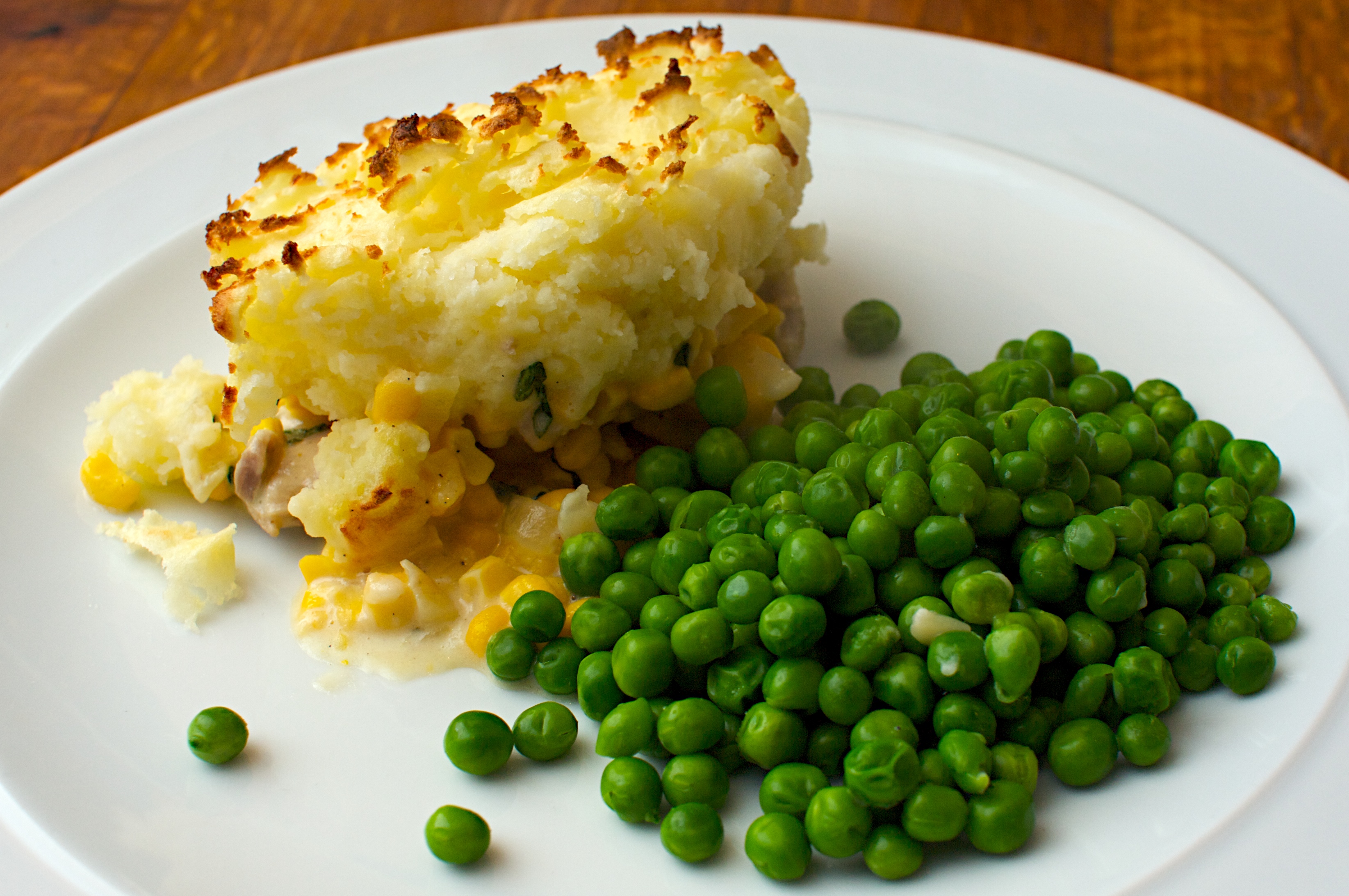
One of those recipes that work because of their simplicity. The flavours all work together so there is no need to mess with them.

Easy Chicken & Corn Pie – to serve 4

  • 1 onion, sliced
  • 400g chicken thighs, cut into bite-size pieces
  • 1 tbsp vegetable oil
  • 150ml chicken stock
  • 325g can sweetcorn, drained
  • 6 tbsp crème fraîche
  • handful of parsey or basil, chopped
  • 750g potatoes, cuts into chunks

Fry the onion and chicken in the oil for 5-10 minutes or until the onion is soft and the chicken golden. Pour over the stock, bring to the boil, then simmer for 20 minutes or until the chicken is cooked. Add the corn, half of the crème fraîche,  the herbs and some seasoning.

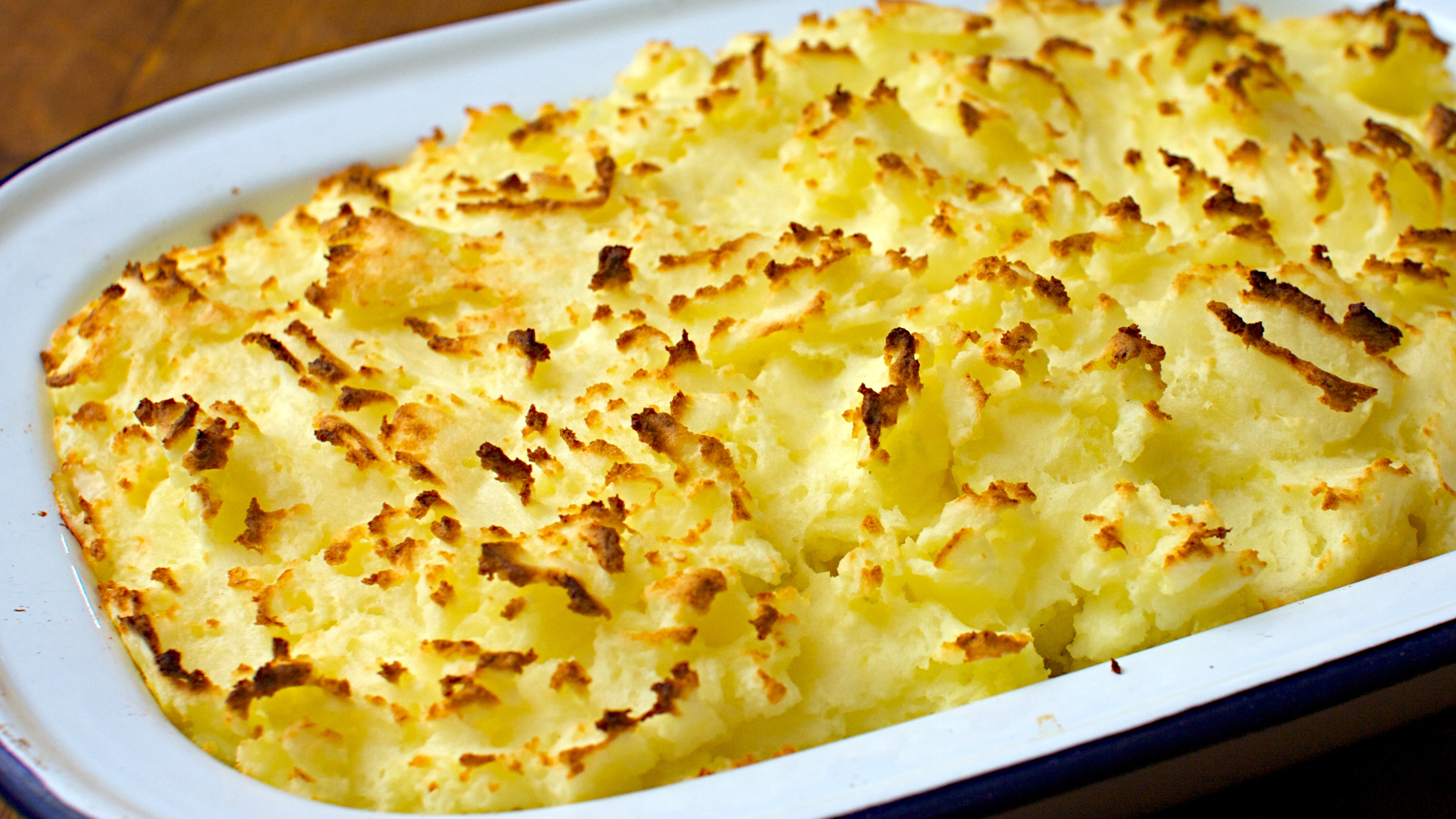
Meanwhile, boil potatoes until soft, then drain and mash with the rest of the crème fraîche and some salt and pepper. Pour the chicken into a pie dish and top with the mash. Put the dish on a baking tray and put under the grill until golden.

Drink with: a glass of full-bodied, oaked Chardonnay.

(Original recipe from BBC Good Food)

Read Full Post »

« Newer Posts - Older Posts »