Feeds:
Posts
Comments

Posts Tagged ‘'nduja’

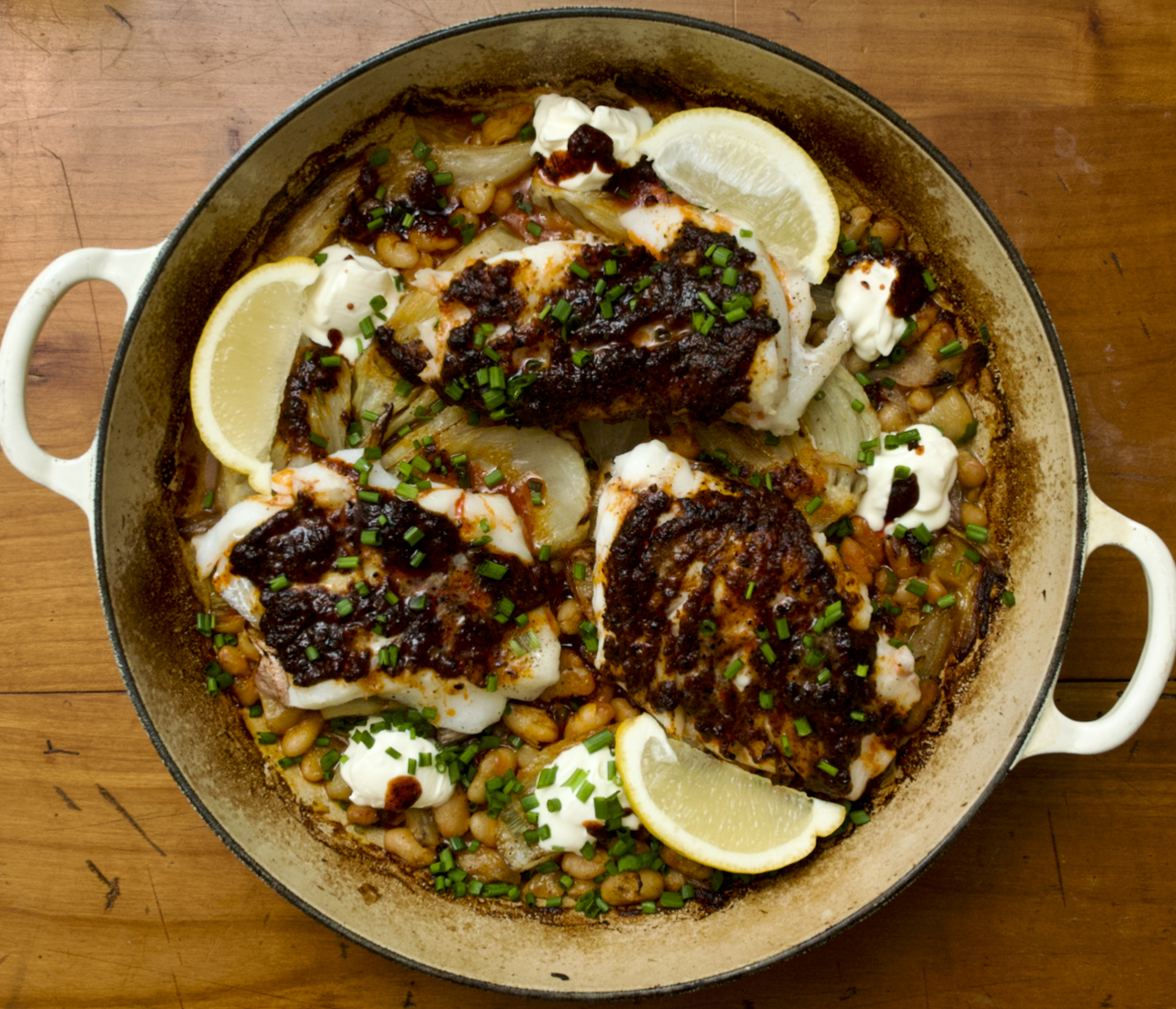
There are all sorts of good things going on in this dish from Ottolenghi Comfort. The beans turn lovely and creamy, the fennel is soft and sort of caramelised and the smoky ‘nduja butter is delicious. Highly recommended!

Wine Suggestion:

Braised fennel and cod with beans and ‘nduja butter – serves 4

  • 60ml olive oil
  • 2-3 large fennel bulbs, halved and cut into wedges
  • 3 banana shallots, quartered lengthwise and peeled
  • 1 head of garlic, unpeeled and halved widthways
  • 1 x 400g tin of cannellini beans (or black-eyed beans – we couldn’t get these this time)
  • 150ml chicken stock
  • 125ml dry white wine (or dry vermouth if you have it)
  • 4 skinless cod fillets (or haddock or hake)
  • 50g crème fraîche
  • 5g chives, finely chopped
  • lemon wedges, to serve

FOR THE ‘NDUJA BUTTER:

  • 45g unsalted butter
  • 25g ‘nduja paste (we used an Irish one from Corndale Farm in Limavady)
  • ¾ tsp Urfa chilli flakes
  • ¾ tsp chipotle chilli flakes
  • ½ tsp smoked paprika

Heat the oven to 220C fan.

You need a shallow casserole dish with a lid. Cut out a piece of baking paper into a circle roughly a cm less than the width of your dish.

Put the olive oil into the casserole and put over a medium-high heat. Add the fennel, shallots and garlic and sauté for about 6 minutes, or until the veg starts to catch a little.

Add the beans, stock, wine, 1 tsp of salt and a generous amount of black pepper. Stir gently and bring to a simmer, then place the paper on top, cover with the lid and bake in to the hot oven for 30 minutes or until the vegetables are soft. Remove the parchment and return to the oven without the lid (you can add a splash more stock or water if it looks a bit dry). Bake for another 10-15 minutes, until the vegetables have browned here and there.

Meanwhile, combine all the ingredients for the ‘nduja butter in a small saucepan and put over a medium-low heat. Bring to a gentle simmer, breaking the ‘nduja up with the back of a spoon to incorporate with the butter, then remove from the heat.

Season the fish very lightly with salt and some pepper. Drizzle 1½ tsp of the ‘nduja butter over each fish fillet and reserve the rest. Take the pan out of the oven and place the fish on top. Return to the oven, uncovered, for 7-10 minutes or until the fish is just cooked.

Remove from the oven and allow to rest for 5 minutes, then dollop on the crème fraîche, drizzle with the rest of the ‘nduja buttter and sprinkle with the chives. Serve with the lemon wedges for squeezing over.

(Original recipe from Ottolenghi Comfort by Yotam Ottolenghi, Helen Goh, Verena Lochmuller & Tara Wigley, Ebury Press, 2024.)

Read Full Post »

A recipe from Ixta Belfrage’s excellent book, Mezcla. Pinapple has developed a bad reputation in savoury dishes but we love it … including on pizzas sometimes. Serve some steamed white rice on the side.

Wine Suggestion: we’re having an Italian moment, so chose the La Pruina Salice Salentino to go with this dish. A blend of Negroamaro and Malvasia Negra it had a suprising elegance and didn’t overwhelm the flavours despite an obvious juiciness to the fruit. Balanced and surprisingly medium bodied; we’ll be revisitng this wine again.

Chicken with pineapple and ‘nduja – serves 4

  • 4 chicken thighs, at room temperature
  • 4 cloves of garlic, crushed
  • 1 medium onion, halved and very thinly sliced, ideally with a mandoline if you have one
  • 300g fresh pineapple, peeled, cut into rounds, then quartered and hard core removed
  • 4 tangerines or 2 oranges, squeezed to give 100g of juice
  • 100g chicken stock
  • 2 tbsp double cream
  • 5g coriander
  • 1 lime, cut into wedges

FOR THE ‘NDUJA AND CHIPOTLE PASTE:

  • 50g ‘nduja paste
  • 2 tbsp olive oil
  • 2 tsp tomato purée
  • ½ tsp chipotle flakes
  • ½ tsp paprika
  • ¾ tsp fine salt
  • 20 twists of black pepper

Heat the oven to 200C/180C fan.

Put the ingredients for the ‘nduja and chipotle paste into a large bowl and mix together. Add the chicken thighs, garlic, and about ¾ of the onion and mix together well. Tip everything into a large oven-proof cast-iron frying pan or a baking dish. Make sure the chicken is skin-side up on top of the onions and garlic.

Add the pineapple to the mixing bowl and toss in any leftover paste, then arrange around the chicken.

Pour the orange juice around the chicken but make sure you don’t pour it over the chicken skin, then bake for 20 minutes. Remove from the oven and pour in the chicken stock – again avoiding the chicken skin. Put back into the oven for another 20-25 minutes, or until the chicken is cooked through and the skin is browned and crispy.

Rest the dish for 5-10 minutes, then drizzle over the cream. Toss the coriander with the rest of the sliced onion and a little oil and salt, then sprinkle over the top. Serve with lime wedges.

(Original recipe from Mezlca by Ixta Belfrage, Ebury Press, 2022.)

Read Full Post »

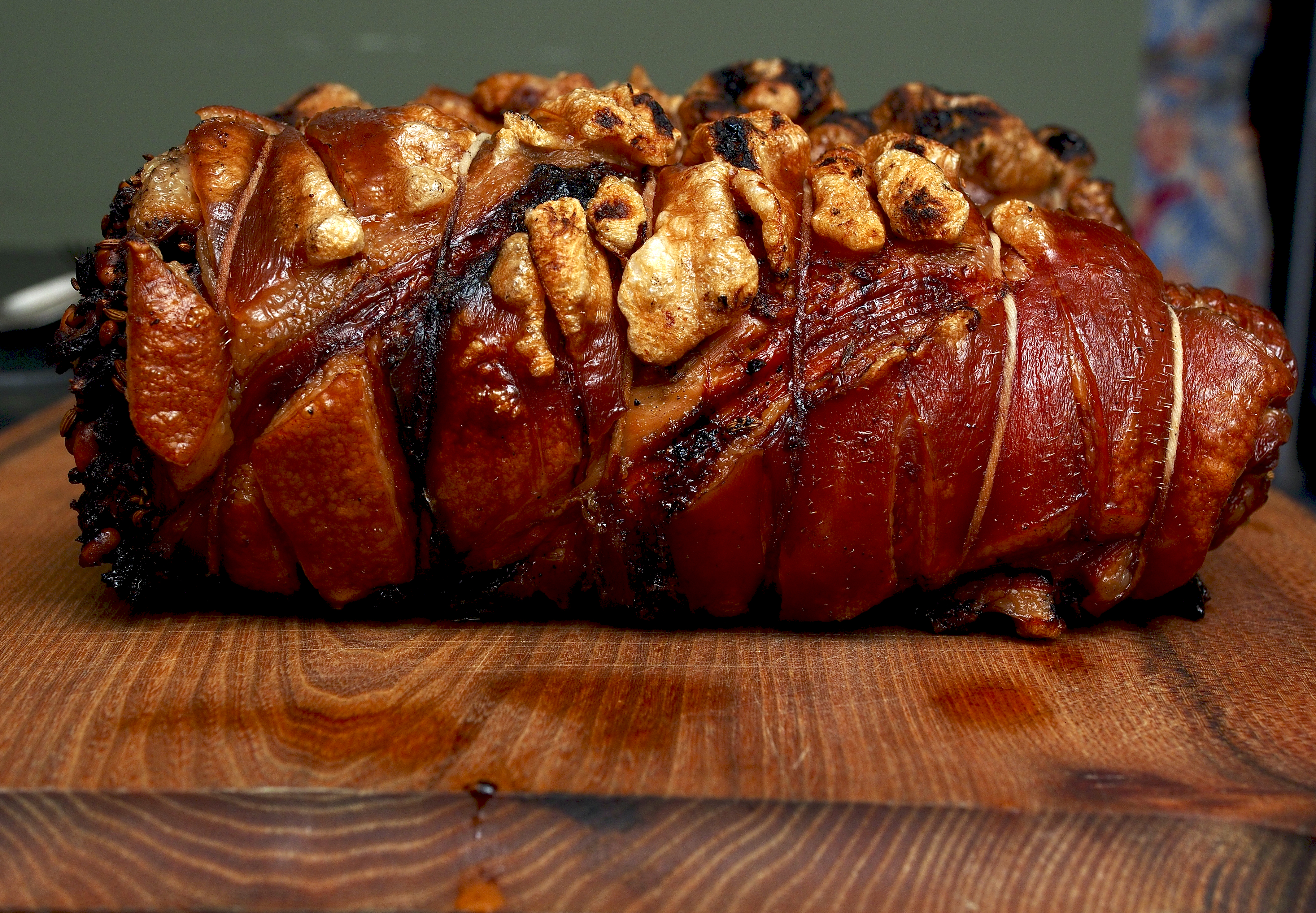
You need to start this the day before but it’s surprisingly easy and the results are amazing. A great barbecue dish to serve a crowd and most of the work is done beforehand. Ours was too big to fit in the oven so we sliced it into two which made it much more manageable.

Wine Suggestion: Quite often we’d suggest a wine with good acidity to cut through the richness of this dish, and we wouldn’t be wrong, with a number od Chardonnays coming to mind. However, instead of cutting through the richness we tried accentuating it and playing with the phenolics (white wine tannins) and drank Jean-Michel Gerin’s La Champine Viognier from the Northern Rhône valley. Grown on vineyards above Condrieu this is accessible and yet still heady, slightly oily and rich with stone fruit flavours and character. It always pays to think outside the box every now and again.

Fennel and ‘Nduja Spiced Porchetta – serves 6 to 8

  • 3kg belly of pork, boned and skin scored and butterflied, your butcher will do this for you

FOR THE SEASONING:

  • 3 tsp salt
  • 50g fennel seeds
  • 25g cracked black pepper
  • 10 sage leaves

FOR THE STUFFING:

  • 2 tbsp vegetable oil
  • 2 onions, chopped
  • ½ fennel bulb, finely chopped
  • 3 garlic cloves, coarsely chopped
  • 100g pine nuts, toasted
  • 100g pitted green olives, sliced
  • 175g ‘nduja

Make the sfuffing first as you need to leave it to cool. Heat the oil in a large frying pan and fry the onions and fennel for about 10 minutes or until softened and golden brown, add the garlic after about 5 minutes. Stir in the pine nuts, olives and ‘nduja and warm through briefly. Spoon onto a tray and leave to cool.

Lay the pork skin side down on a board and open up flat.

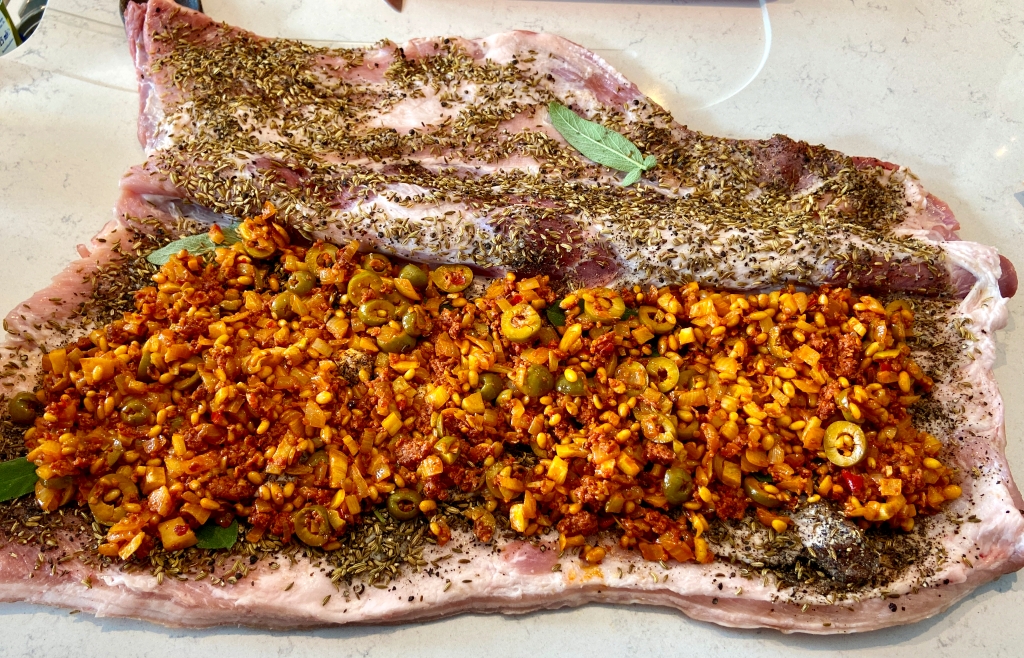
To make the seasoning, mix the the salt, fennel seeds and cracked pepper together in a bowl. Sprinkle the rub evenly over the pork and scatter the sage leaves on top. Fold the belly over to enclose the seasoning, then cover and chill for an hour in the fridge.

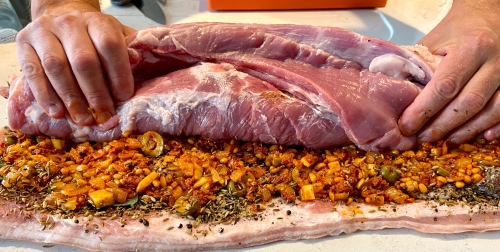
Lay the pork belly back onto the board and open up to expose the seasoning. Spread the stuffing evenly over the surface, leaving a border at the edges.

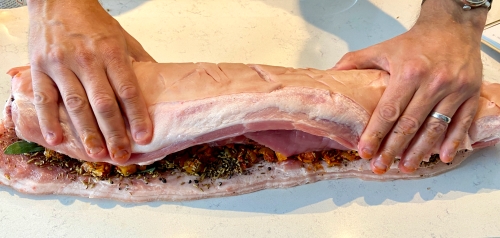
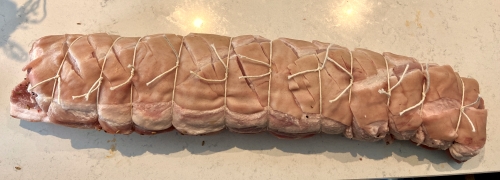
Roll the meat up tightly and tie with kitchen string at 4cm intervals, starting in the middle. You need to tie it firmly but careful not to squeeze out the stuffing. Put onto a tray and leave overnight in the fridge. If your pork is too big you can carefully slice through the middle to give two pieces.

The next day, take the pork out the fridge at least 1 hour before you want to start cooking.

Preheat the oven to 160C/Fan 140C/Gas 3.

Put the pork onto a baking tray and cook in the oven for 3½ hours.

Near the end of the cooking time, get your barbecue on and get it ready to cook on. Transfer the pork to the barbecue and cook for another hour. Roll it over onto the fat side at the end to crisp up the crackling. Transfer to a platter and leave to rest for 15-20 minutes, then carve into thick slices.

(Original recipe from Outdoor Cooking by Tom Kerridge, Bloomsbury Absolute, 2021.)

Read Full Post »