Feeds:
Posts
Comments

Archive for October, 2012

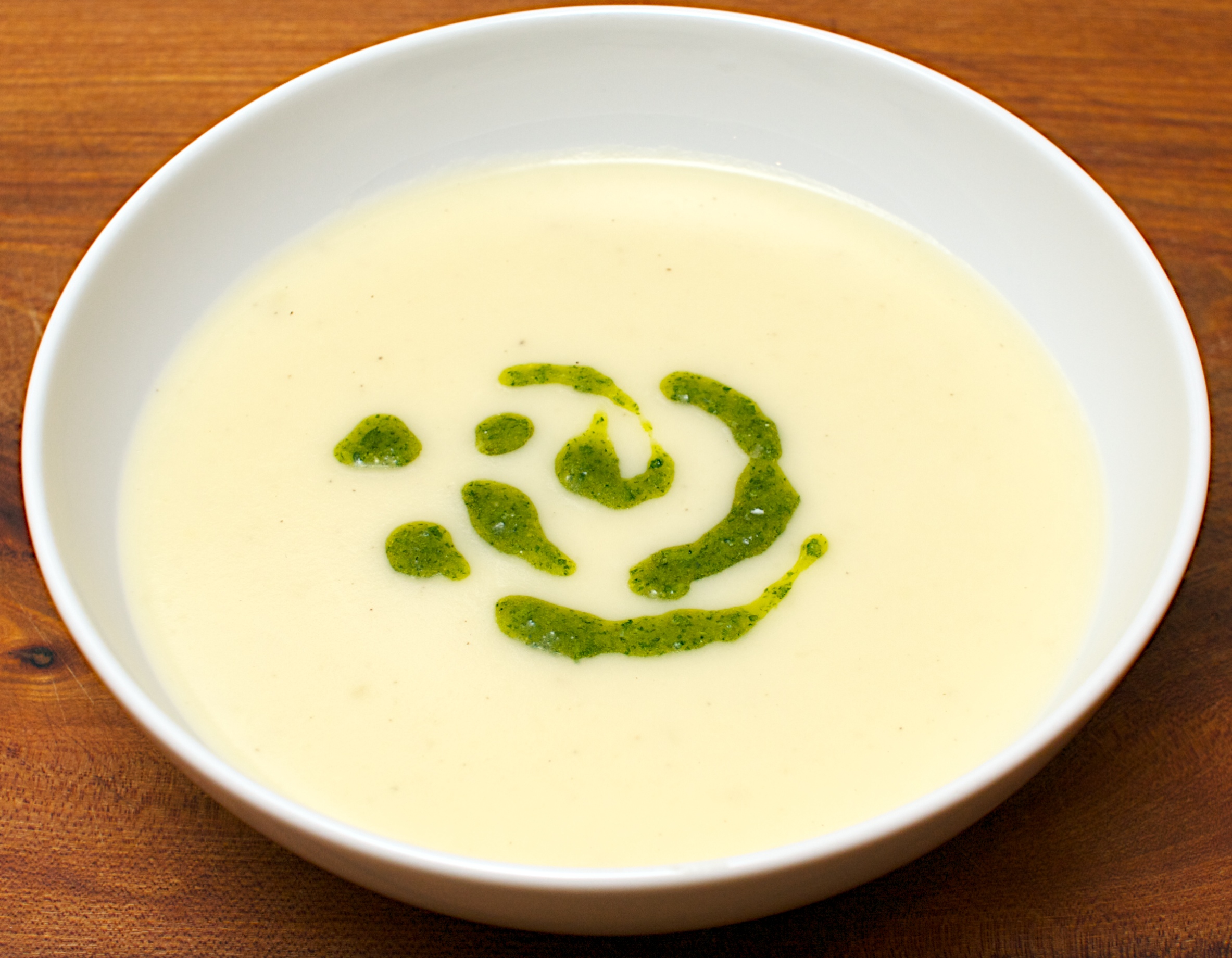
This is a good soup for the dark nights. The parsley pesto will keep in the fridge for up to a month (put in a sterilised jar and cover with some olive oil) and makes a great pasta sauce.

Potato Soup with Parsley Pesto – to serve 6

  • 50g butter
  • 900g potatoes, peeled and chopped
  • 1 large onion, diced
  • 850ml chicken or vegetable stock
  • 225ml milk (or half milk and half cream if you have it)

For the parsley pesto: 

  • small bunch of parsley, leaves chopped
  • 25g freshly grated Parmesan
  • 25g pine nuts
  • 2 garlic cloves, crushed
  • 100ml extra virgin olive oil

Melt the butter in a heavy saucepan. Add the potatoes and onion, toss until well coated and season. Cover and sweat on a gentle heat for 10 minutes. Pour in the stock and cook until the vegetables are soft, about 15-20 minutes.

Put all of the pesto ingredients in a food processor and whizz until evenly chopped and smooth. Add the oil and a pinch of salt.

Liquidise the soup until smooth, then add the milk. Adjust the seasoning and serve with some parsley pesto drizzled over the top.

(Original recipe by Rachel Allen in BBC Good Food Magazine, October, 2006.)

Read Full Post »

This is a fabulous recipe for left-over roast chicken and it’s even worth roasting a bird especially (though we cheated with a shop-bought rotisserie one). You can make a decent chicken stock by pouring water over the carcass and simmering it with a carrot, bay leaf and onion for half an hour.

Creamy Roast Chicken Risotto – to serve 2

  • 1 medium onion, peeled and finely chopped
  • 50g butter
  • small bunch of thyme leaves
  • 250g arborio rice
  • 1 litre hot chicken stock
  • 350g leftover roast chicken, torn into bite-size chunks
  • 100g crème fraîche
  • a handful of chopped parsley
  • Parmesan, grated

Melt the butter in a heavy, shallow pan and cook the onion gently until soft but not coloured. Stir in the thyme leaves and the rice and stir until the rice is glistening. Add a little of the hot stock and bring slowly to the boil. Turn the heat down and gradually add the stock, a ladleful at a time, stirring. Stir in the roast chicken as you add the last ladleful of stock.

After about 20 minutes the rice should be tender but with a little bite to it. Stir in the crème fraîche and parsley, then some seasoning. Leave to rest for 5 minutes before serving with a little Parmesan grated over.

Wine Suggestion: A glass of Vintage Champagne if you’re feeling extravagant or  a good Maconnais white, like Pouilly-Fuisse or possibly even something from Roussillon like a Limoux… the choices are endless but don’t go too dry you need a bit of fruitiness here to help with the richness of the dish and a bit of body too otherwise the wine will be overwhelmed.

(Original recipe from Nigel Slater’s Real Food, Fourth Estate, 1998.)

Read Full Post »

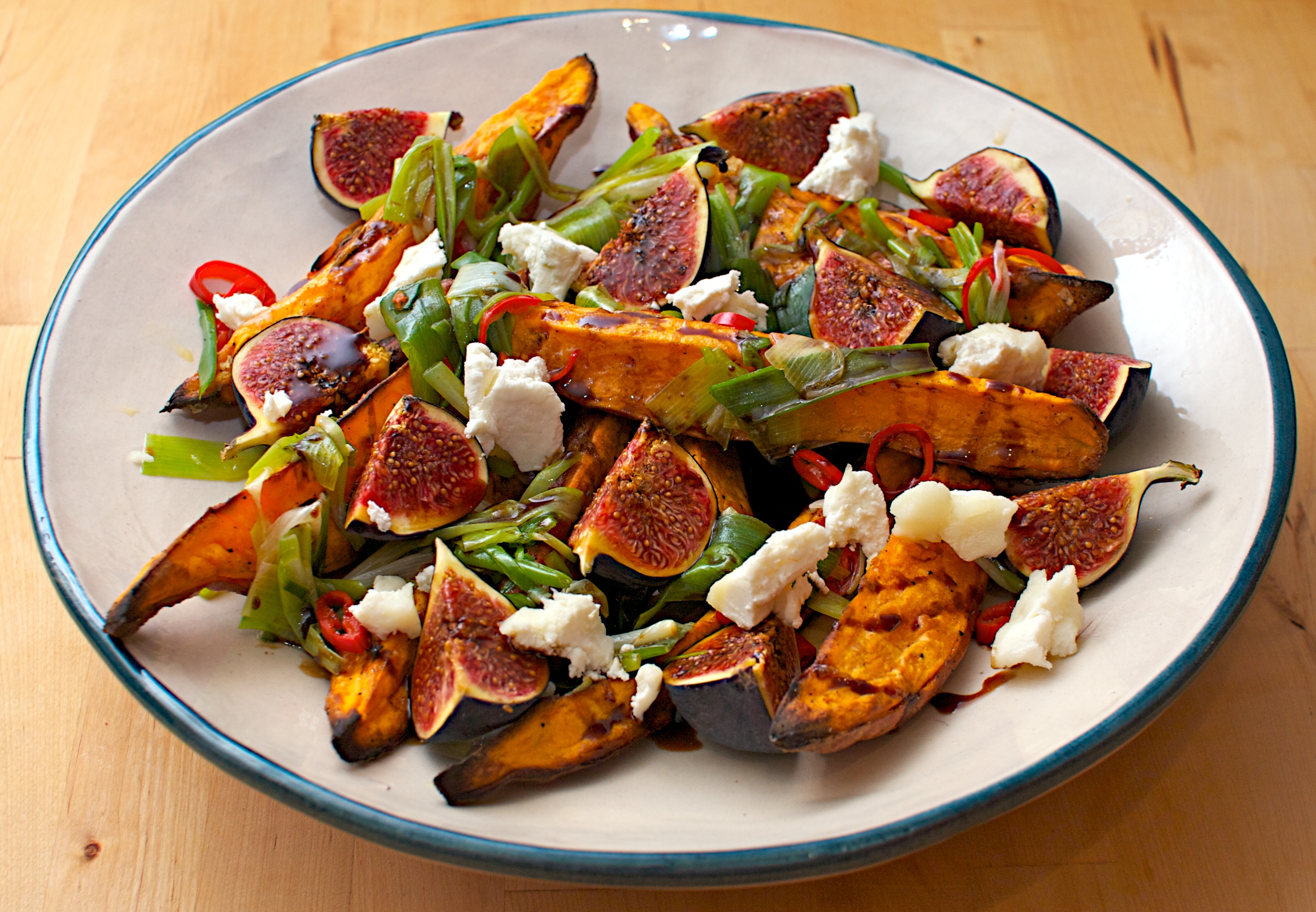
Our first recipe from Jerusalem by Yotam Ottolenghi and Sami Tamimi and also the very first recipe in this fabulous new book. We have a short window of opportunity at the moment when fresh figs are going cheap so we’re eating them with almost everything. This makes a great sharing plate.

Roasted sweet potatoes & fresh figs – to serve 4 

  • 4 small sweet potatoes
  • 5 tbsp olive oil
  • 40ml balsamic vinegar (it doesn’t have to be top quality)
  • 20g caster sugar
  • 12 scallions, halved lengthways and cut into 4cm lengths
  • 1 red chilli, thinly sliced
  • 6 ripe fresh figs, quartered
  • 150g soft goat’s cheese

Preheat the oven to 240ºC/220ºC Fan/Gas Mark 9.

Wash the sweet potatoes, halve them lengthways and cut each half into 3 long wedges. Mix with 3 tbsp of the olive oil, 2 tsp of sea salt and some black pepper. Place the wedges on a baking sheet, skin-side down, and bake for about 25 minutes, until soft but not mushy. Remove from the oven and leave to cool.

Make a balsamic reduction by putting the balsamic vinegar and sugar into a small saucepan, bring to the boil, then reduce the heat and simmer for 2-4 minutes or until it thickens. Take the pan off the heat when the vinegar is still “runnier than honey” as it will continue to thicken as it cools. Stir in a drop of water before serving if it becomes too thick to drizzle.

Arrange the sweet potatoes on a large plate. Heat the rest of the oil in a medium saucepan and add the scallions and chilli. Fry on a medium heat for 4-5 minutes, stirring, and then spoon the oil, onions and chilli over the sweet potatoes. Dot the figs among the wedges and then drizzle over the balsamic reduction. Serve at room temperature with the goat’s cheese crumbled over.

(Original recipe from Jerusalem by Yotam Ottolenghi & Sami Tamimi, Ebury Publishing, 2012.)

Read Full Post »

Tom Yam Gai

We highly recommended this hot, sour and fragrant soup for head colds and other ailments. It probably won’t cure you but it will make you feel better for a short while.

Tom yam gai – to serve 2

  • 1 skinless chicken breast
  • 1 litre fresh chicken stock
  • 4 scallions, finely chopped
  • 2 cloves of garlic, peeled and finely chopped
  • 1 stalk of lemongrass, chopped into short lengths and slightly crushed
  • 3 small red chillies, seeded and thinly sliced
  • 4 lime leaves
  • 1 tbsp nam pla (Thai fish sauce)
  • 1 tsp sugar
  • 1 tbsp fresh lime juice
  • 1 tbsp chopped coriander leaves

Bring the chicken breast to the boil in the stock, then turn the heat down to simmer. Cook for about 10 minutes or until the chicken is cooked, then remove, shred and set aside.

Add the scallions, garlic, lemongrass, chillies and lime leaves to the broth and simmer gently for 10 minutes. Add the fish sauce, sugar and shredded chicken and keep cooking for another 3-4 minutes. Stir in the lime juice and adjust the seasoning. Make sure the soup is piping hot and stir in the coriander just before serving.

(Original recipe from Nigel Slater’s Real Food, Fourth Estate, 1998.)

Read Full Post »

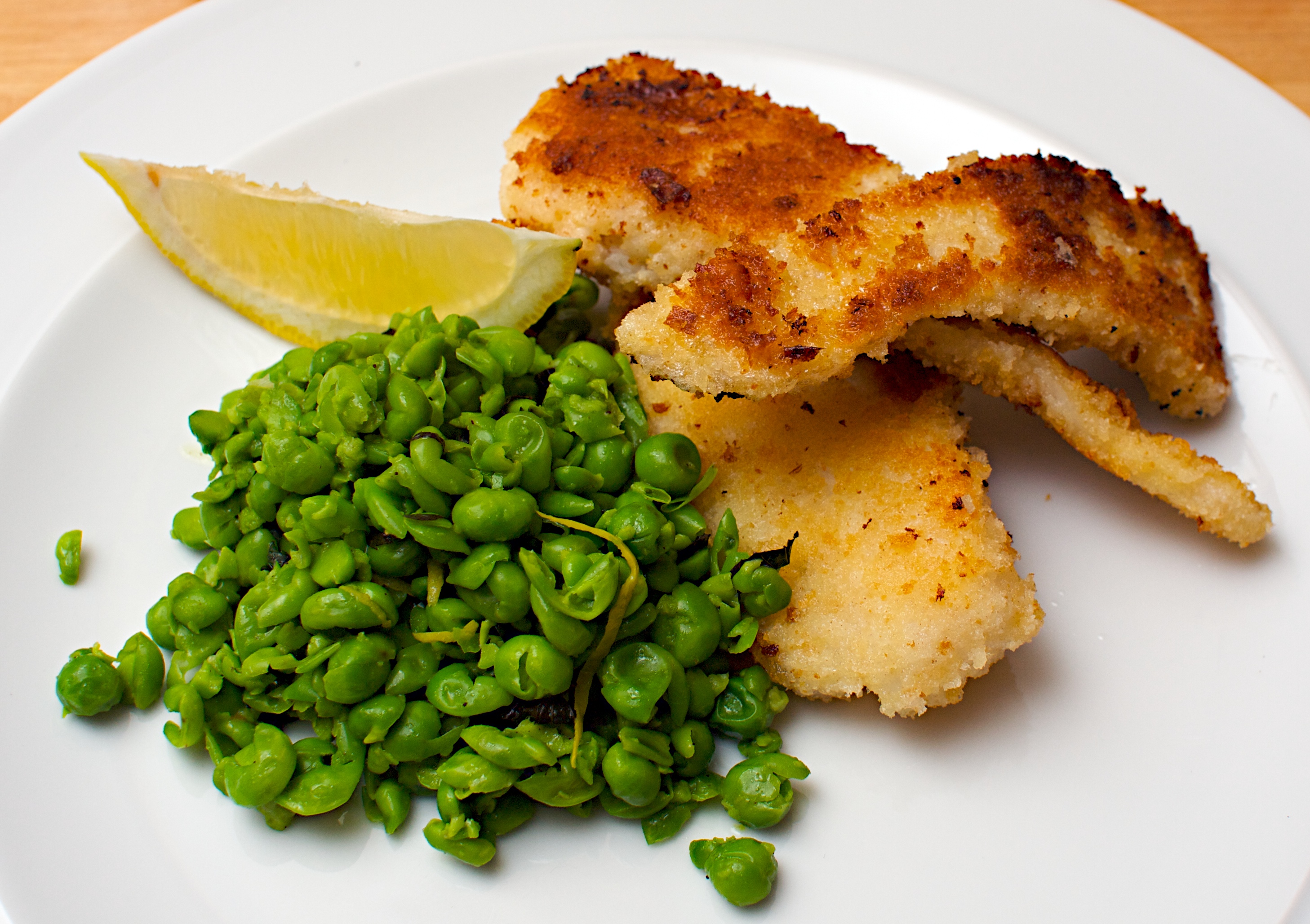
These are super-simple and a hundred times better than the frozen variety. You can use any firm, skinless, white fish – we used hake.

Home-made fish fingers with mushy peas – to serve 4

  • 600g firm, skinless white fish
  • 50g plain flour, seasoned
  • 1 large egg, lightly whisked
  • 200g fine fresh breadcrumbs
  • 2 tbsp vegetable oil
  • 400g frozen peas
  • knob of butter
  • zest 1 lemon, then cut into wedges
  • mint

Cut the fish into 12 fingers, about 3cm thick. Put the seasoned flour, egg, and breadcrumbs into three separate bowls. Dust the fish pieces in the flour first, then coat with the egg and finally a good coating of breadcrumbs. Put on a plate and chill for 15 minutes before cooking.

Heat the oil in a large frying pan. Fry the fish fingers for about 8 minutes or until golden and cooked through. Meanwhile, cook the peas in a small pan of boiling water until really tender, about 4 minutes. Drain then tip into a bowl with the butter, zest and mint and roughly mash. Season and keep warm.

Serve the fish fingers with a dollop of peas and some lemon wedges.

Wine Suggestion: Try a light Sauvignon Blanc, such as from the Touraine in France’s Loire Valley, which should be fresh and fruity with a slight grassiness.

(Original recipe from BBC Good Food)

Read Full Post »

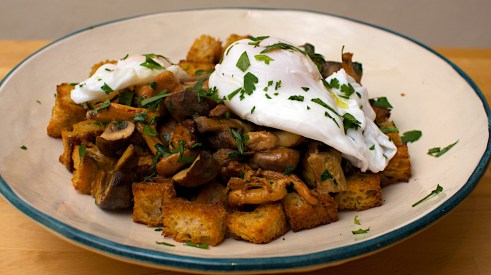
We could get depressed in Ireland with the rain, cold wind and dark evenings but we don’t cause we’ve got mushrooms! Woohoo!

Feel free to substitute a hen’s egg or omit the egg altogether if you prefer.

Mushroom ragout with poached duck egg – to serve 4

  • 15g dried porcini mushrooms
  • 600g mixed fresh mushrooms
  • 350g sourdough bread, crusts removed
  • 100ml olive oil
  • 2 garlic cloves, crushed
  • 1 medium onion, sliced
  • 1 medium carrot, peeled and sliced
  • 3 celery sticks, sliced
  • 120ml white wine
  • 3 thyme sprigs
  • 4 duck’s eggs
  • vinegar for poaching
  • 100g soured cream
  • 4 tbsp mixed chopped tarragon and parsley
  • truffle oil (or olive oil)

First soak the dried porcini in 200ml of water for 30 minutes. Remove any dirt from the mushrooms with either a brush or a damp piece of kitchen paper (don’t wash them).  Cut up some of the larger mushrooms so you have a mixture of large chunks and whole mushrooms. Preheat the oven to 200C/Gas Mark 6.

Cut the bread into 2.4cm cubes. Toss with 2 tbsp of the olive oil, the garlic and some salt. Spread on a baking tray and toast in the oven for 15 minutes, or until brown.

Pour 1 tbsp of olive oil into a heavy pan and heat well. Add some of the fresh mushrooms and leave for a couple of minutes, without stirring. Make sure the mushrooms are not touching each other. Turn them over when they have lightly browned and cook for another minute. Remove from the pan and continue adding more batches, adding more oil when needed. When all of the mushrooms have been browned, add a further tbsp of oil and throw in the onion, carrot and celery. Sauté on a medium heat for 5 minutes, without browning. Add the wine and let it bubble away for a minute.

Lift the porcini out of the liquid and squeeze to get rid of the excess liquid. Add the soaking liquor to the pan, leaving behind any grit. Add 400ml of water, the thyme and some salt, then simmer gently for about 20 minutes, or until the liquid has reduced to about 200ml. Strain this stock and discard the vegetables; return the stock to the pan and set aside.

To poach the eggs you need to fill a shallow saucepan with enough water for a whole egg to cook in. Add a splash of vinegar and bring to a fast boil. Carefully break an egg into a small cup and gently pour into the boiling water. Immediately take the pan off the heat and set it aside. After 6 minutes the egg should be poached perfectly. Lift it out of the pan and into a bowl of warm water. When all the eggs are done, dry them on kitchen paper.

While you poach the final egg, heat up the stock and add all the mushrooms, the soured cream, most of the chopped herbs (reserving some for garnish) and seasoning to taste. As soon as the mushrooms are hot, place some croutons on each dish and top with mushrooms. Add an egg, the remaining herbs and a drizzle of truffle oil and some black pepper.

Wine Suggestion: If you want a wine with this go for a chilled young Beaujolais Villages which will have a nice fruitiness and a complementary earthiness to match the mushrooms.

(Original recipe from Yotam Ottolenghi’s Plenty, Ebury Press, 2010).

Read Full Post »
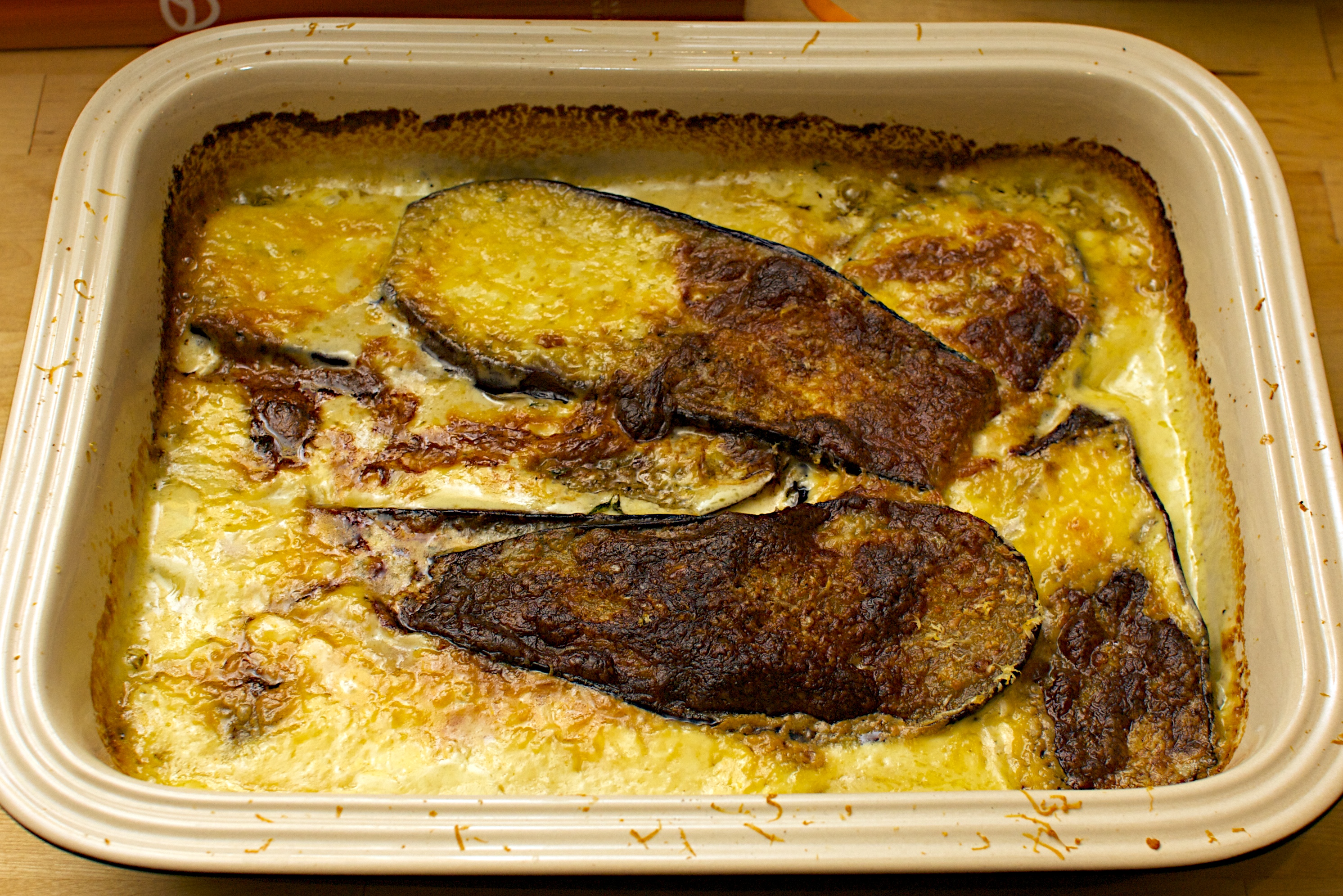
This is a really rich and delicious side dish though you could also serve it as a veggie main with some rice. We went for lamb steaks.

Creamy baked aubergines – to serve 2 as a main or 4 as a side

  • 1 very large or 2 small aubergines
  • 1 medium onion
  • olive oil
  • 2 cloves garlic
  • a few sprigs of thyme
  • 400ml whipping or double cream
  • Parmesan

Cut the aubergines into long thin slices. Put the slices in a colander and sprinkle with salt. Leave for half an hour or more, until they have gone a bit floppy, then rinse and dry.

Peel and thinly slice the onion, then cook is some olive oil until softened, but not coloured. Peel and slice the garlic and add to the onion as it cooks. Put the onions and garlic in a shallow baking dish. Add a bit more oil to the pan and add the aubergine. Cook until golden, but not brown, on both sides. Drain well on kitchen paper so the dish doesn’t end up too oily.

Lay the aubergine slices in the baking dish on top of the onion, seasoning with salt, pepper and thyme leaves as you go. Pour the cream over the top, scatter over a couple of spoonfuls of grated Parmesan and bake at 180C/Gas 4 for 35-45 minutes, until bubbling and turning brown.

(Original recipe from Nigel Slater’s Tender Volume 1, Fourth Estate 2009.)

Read Full Post »

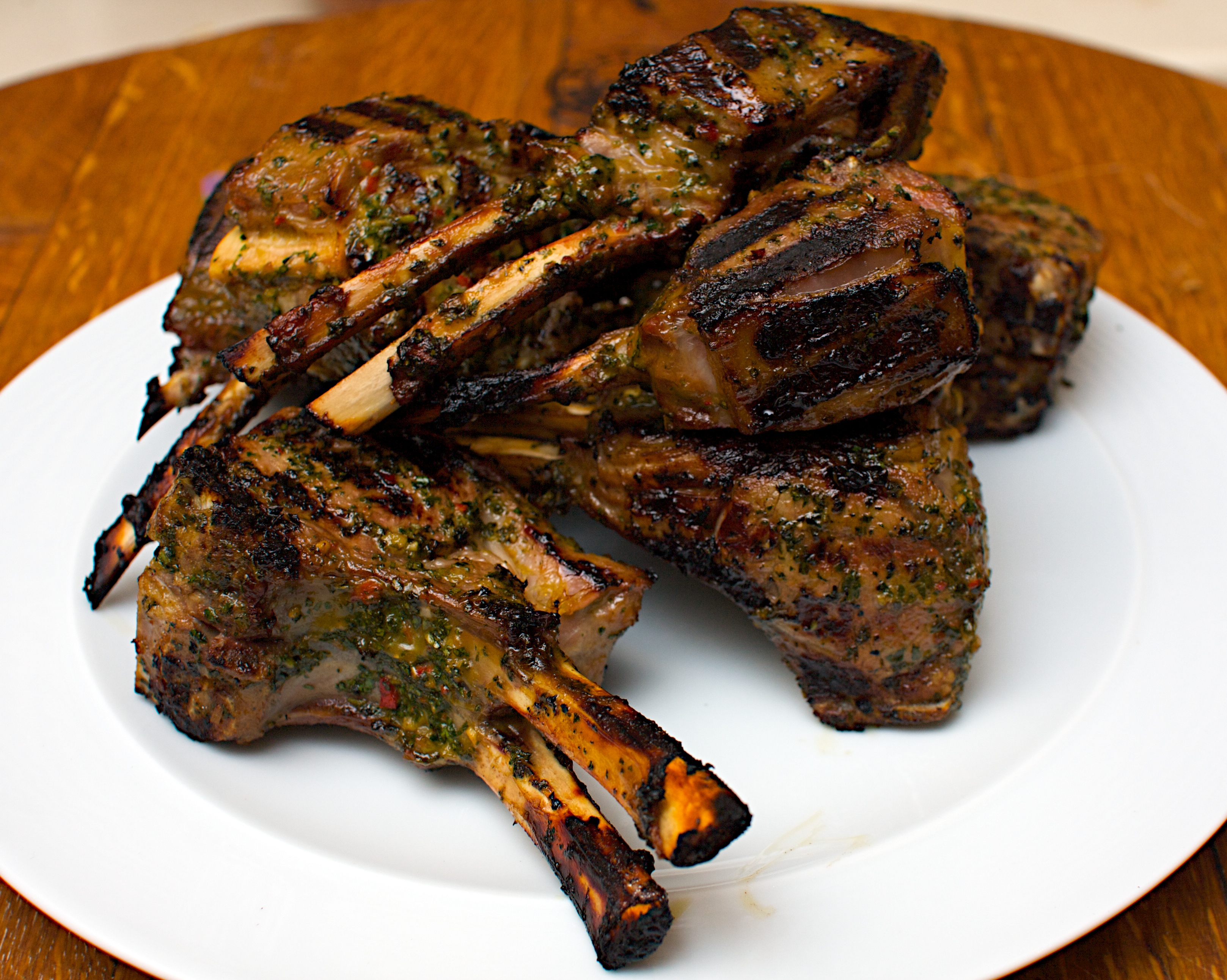
This marinade is absolutely delicious – ginger, chillies, loads of herbs, soy sauce, honey etc. We loved it! You need to start a day in advance.

Marinated rack of lamb with coriander and honey – to serve 4

  • 1kg rack of lamb, French trimmed
  • 20g flat leaf parsley
  • 30g mint
  • 30g coriander
  • 4 garlic cloves, peeled
  • 15g ginger, peeled and sliced
  • 3 chillies, seeded
  • ½ tsp salt
  • 50ml lemon juice
  • 60ml soy sauce
  • 120ml sunflower oil
  • 3 tbsp honey
  • 2 tbsp red wine vinegar
  • 4 tbsp water

Trim most of the fat from the lamb, leaving an even layer to keep it moist and tasty. Separate the rack into portions of 2/3 cutlets and put in a non-metal container.

Blitz everything else together in a food processor, then pour over the lamb. Refrigerate overnight.

Heat the oven to 200ºC/Gas Mark 6. Heat up a heavy cast iron griddle or a barbecue. Lift the meat out of the marinade, shaking off the excess. Sear well on all sides, then transfer to a baking tray and cook in the oven for about 15 minutes, depending how big your racks are and how you like your meat cooked.

Meanwhile, heat the marinade in a small saucepan and simmer for 5 minutes. Serve the cutlets with the sauce on the side.

Wine Suggestion: Try a very young, lighter style Cotes du Rhone, or a Cotes du Ventoux. The less aggressive tannins and soft plum and possibly blueberry (depending on how young) fruit flavours with the herbal twist of southern France should work perfectly with the lamb and herbs.

(Original recipe from Ottolenghi: The Cookbook, Ebury Press, 2008.)

Read Full Post »

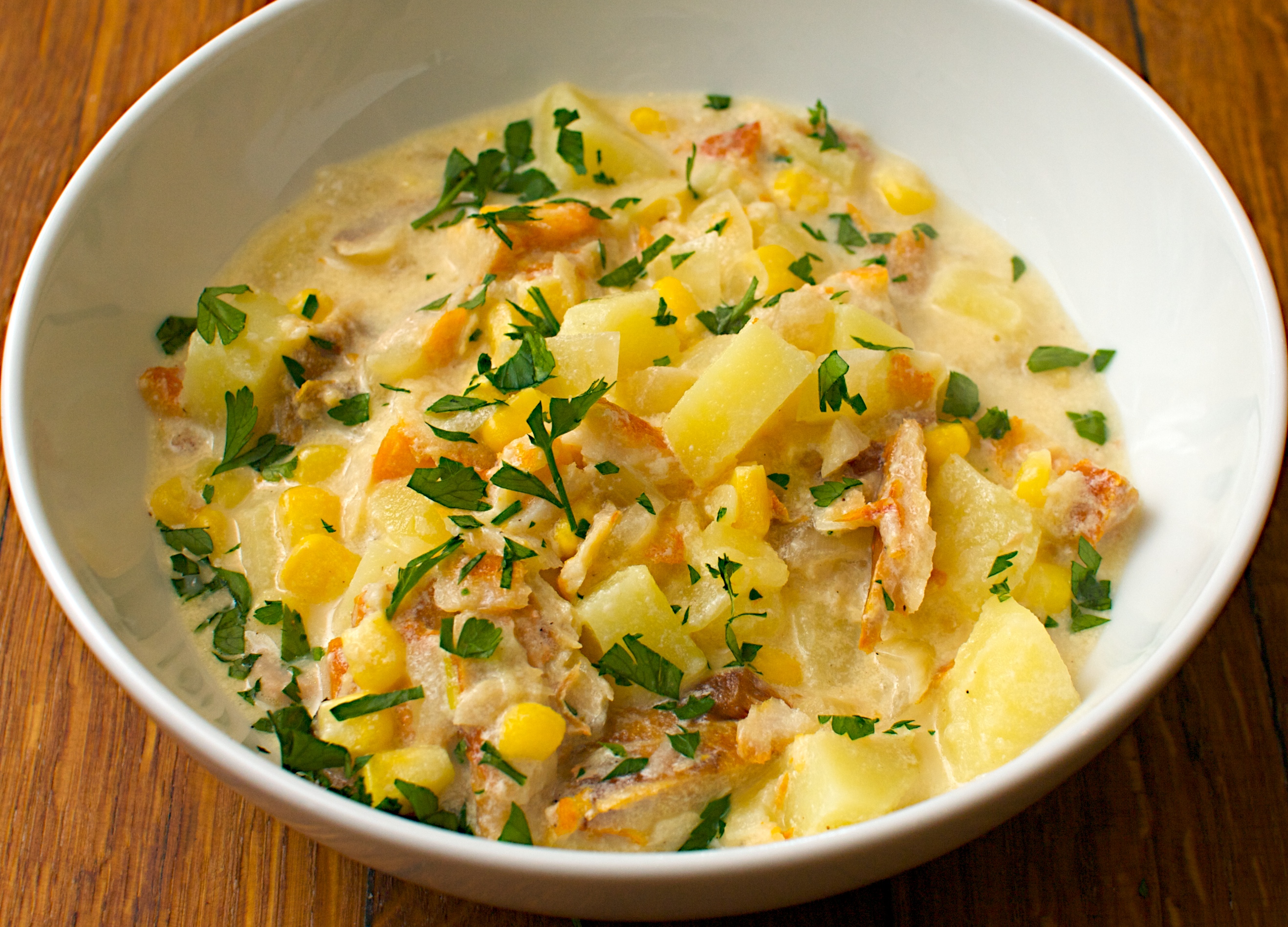
Sweetcorn season is coming to an end but there is still time to make this tasty main course soup.

Sweetcorn & Haddock Chowder – to serve 4

  • 25g butter
  • 1 onion, chopped
  • 8 slices of smoked streaky bacon, chopped
  • 3 medium potatoes, diced
  • 1 litre vegetable stock
  • 2 corn cobs, kernels sliced off
  • 500g skinless smoked haddock, cut into small chunks
  • 5 tbsp double cream
  • handful of parsley, chopped

Melt the butter in a large pot. Fry the onion and bacon for about 5 minutes or until soft. Add the potatoes and cook for another couple of minutes, then pour in the stock and simmer until the potatoes are just tender (about 8 minutes).

Add the corn kernels and smoked haddock. Cook for another few minutes before adding the cream and some black pepper. Add salt if necessary but remember the fish is pretty salty, then stir through the parsley. Serve with crusty bread.

Wine Suggestion: We’ve been having a bit of a debate about this as many white wines could be intimidated or even clash with the smoked fish. We suggest going for a white wine that’s a bit more fruity than what you might pair with an unsmoked fish. Think a Riserva level Pinot Grigio rather than a Muscadet and you should have a treat.

Read Full Post »