Feeds:
Posts
Comments

Archive for July, 2013

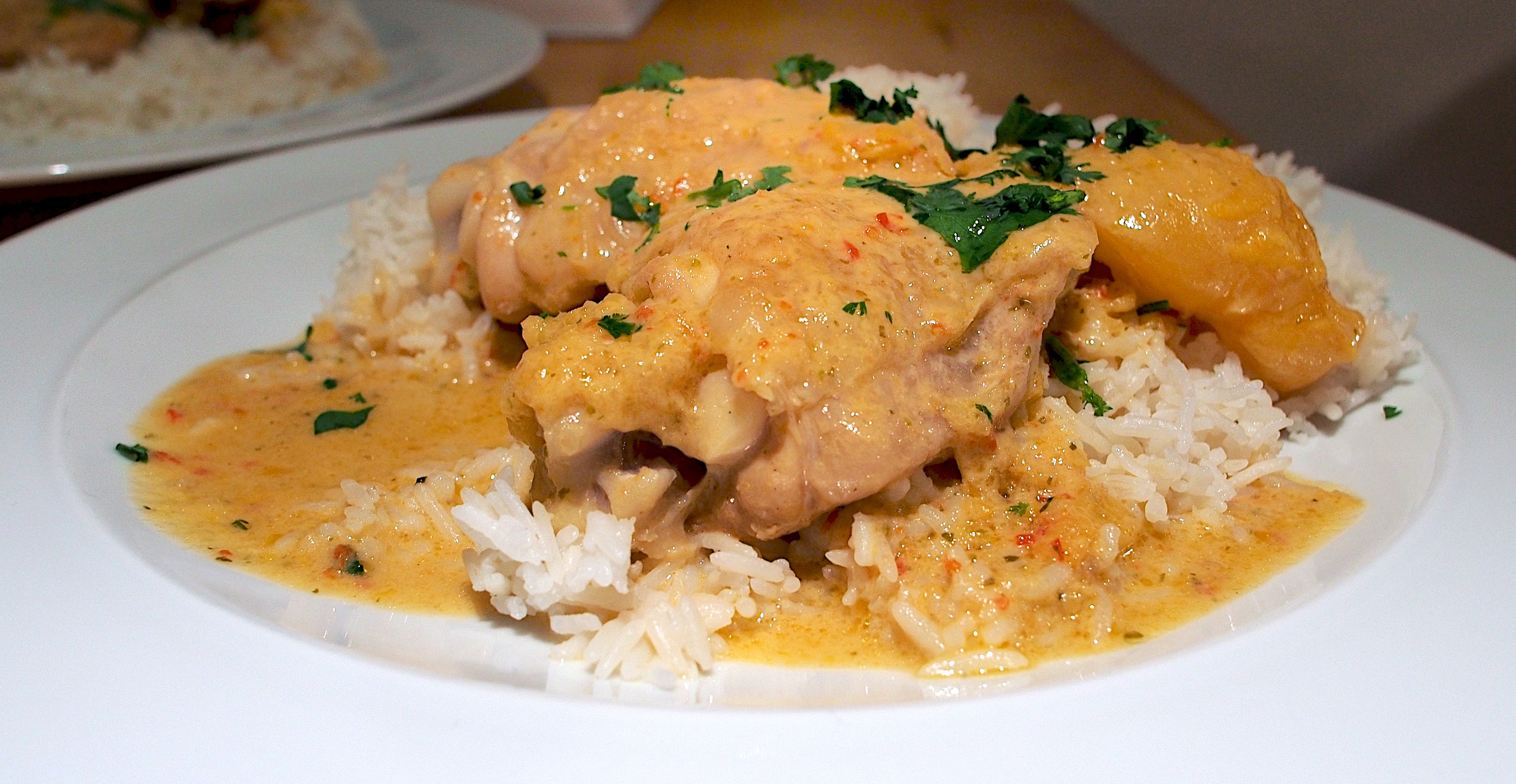
This is creamy, salty and tangy with little jewels of soft juicy apricots. Definitely the best cookers of the soft summer fruits.

You will have too much spice paste but it will keep (covered with a film of oil) in the fridge for a week.

Wine Suggestion:  A Pinot Gris will give you hints of sweetness to complement the heat from the chillies and enough weight to balance the rich coconut milk. It will also be slightly aromatic to match the lime and coriander on the nose.

Chicken with apricots and coconut milk – to serve 4

  • 3 short stalks lemongrass
  • 50g ginger
  • 2 small hot red chillies
  • 2 cloves garlic, peeled
  • a bunch of coriander
  • 2 limes, zested and juiced
  • 1 tbsp groundnut oil, plus extra for the paste
  • 200g tomatoes, roughly chopped
  • 1 tbsp fish sauce
  • 2 tbsp dark soy sauce
  • 8 chicken thighs
  • 8 apricots, halved and stoned
  • 400ml tin coconut milk

Peel the outer leaves of the lemongrass and discard. Cut into short lengths and put into a food processor. Peel the ginger, slice into thin pieces and add to the lemongrass. Chop the chillies and add to the ginger with the garlic and roughly chopped stems and half the leaves of the coriander. Add the lime zest, then chop everything to a coarse paste, adding a little oil. Add the tomatoes, fish sauce and soy sauce and continue to blitz.

Warm the oil in a deep pan over a high-ish heat and brown the chicken pieces lightly. Lift the chicken out and pour away most of the oil, leaving about a tablespoon.

Add half the spice paste and fry over a low to moderate heat for a couple of minutes or until fragrant, then return the chicken to the pan. Pour in the coconut milk and leave to simmer gently over a low heat for 10 minutes.

Add the apricots and cook for another 10 minutes or until soft.

Check that the chicken is cooked, then add the lime juice and the remaining coriander, roughly chopped. Season to taste with salt and serve with rice.

(Original recipe from Nigel Slater’s The Kitchen Diaries II, Fourth Estate, 2012.)
Read Full Post »

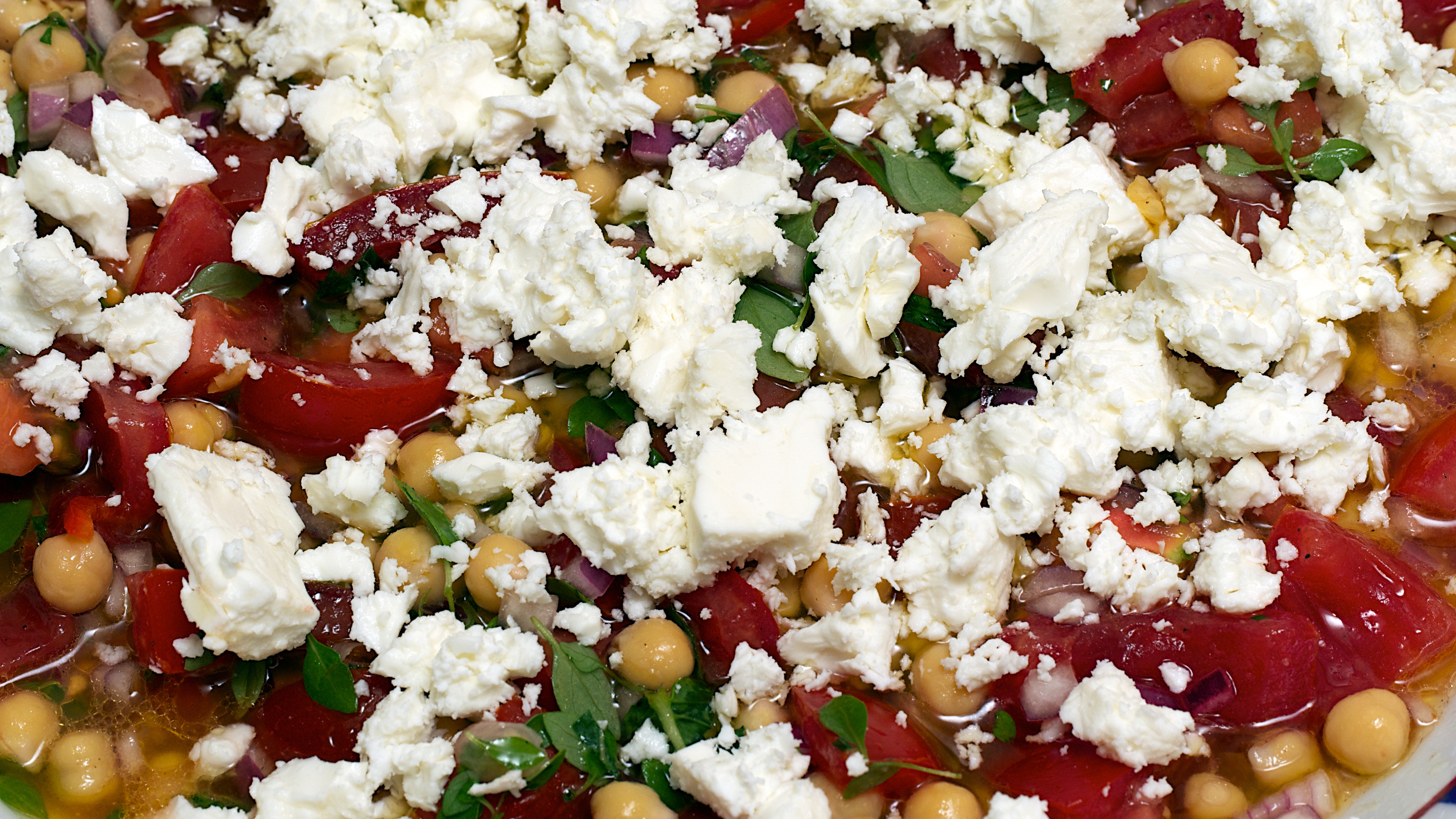
We’ve eaten this as a side salad, and on it’s own with crusty bread –  a summery meal in its own right! As always the quality of the tomatoes will really make this dish sing.

You should assemble most of this dish a bit in advance to allow the flavours to develop, then add the herbs and feta cheese just before serving.

Wine Suggestion: Try to find a youthful Italian red that echo’s the sunshine of this dish. We drank a Dolcetto d’Alba from Pira Luigi that had a joy and vitality, but reds from the Marche, Abruzzo and other central Italian regions should be a delight too. If you’re pushing the boat out go for a Rosso di Montalcino.

Summer Chickpea Salad – to serve 4

  • 1 small red onion, finely sliced
  • 1-2 small red chillies, deseeded and finely sliced
  • 2 handfuls of ripe tomatoes, roughly chopped
  • 2 lemons
  • extra virgin olive oil
  • 1 x 410g tin of chickpeas, drained
  • a handful of fresh mint, chopped
  • a handful of  basil, finely torn
  • 200g feta cheese

Mix the tomatoes (including any juice) with the onion and chillies in a large bowl. Dress with the juice of 1½ lemons and lots of good olive oil. Season to taste.

Heat the chickpeas in a pan, then add almost all of them to the bowl. Mush up the remaining chickpeas before adding them as well. Allow to marinate for a while at room temperature.

Add the herbs and check the seasoning just before serving – you can add a bit more lemon juice if necessary. Put the salad in a serving dish and crumble the feta cheese over the top.

(Original recipe from Jamie’s Dinners by Jamie Oliver, Penguin Books, 2004.)

Read Full Post »

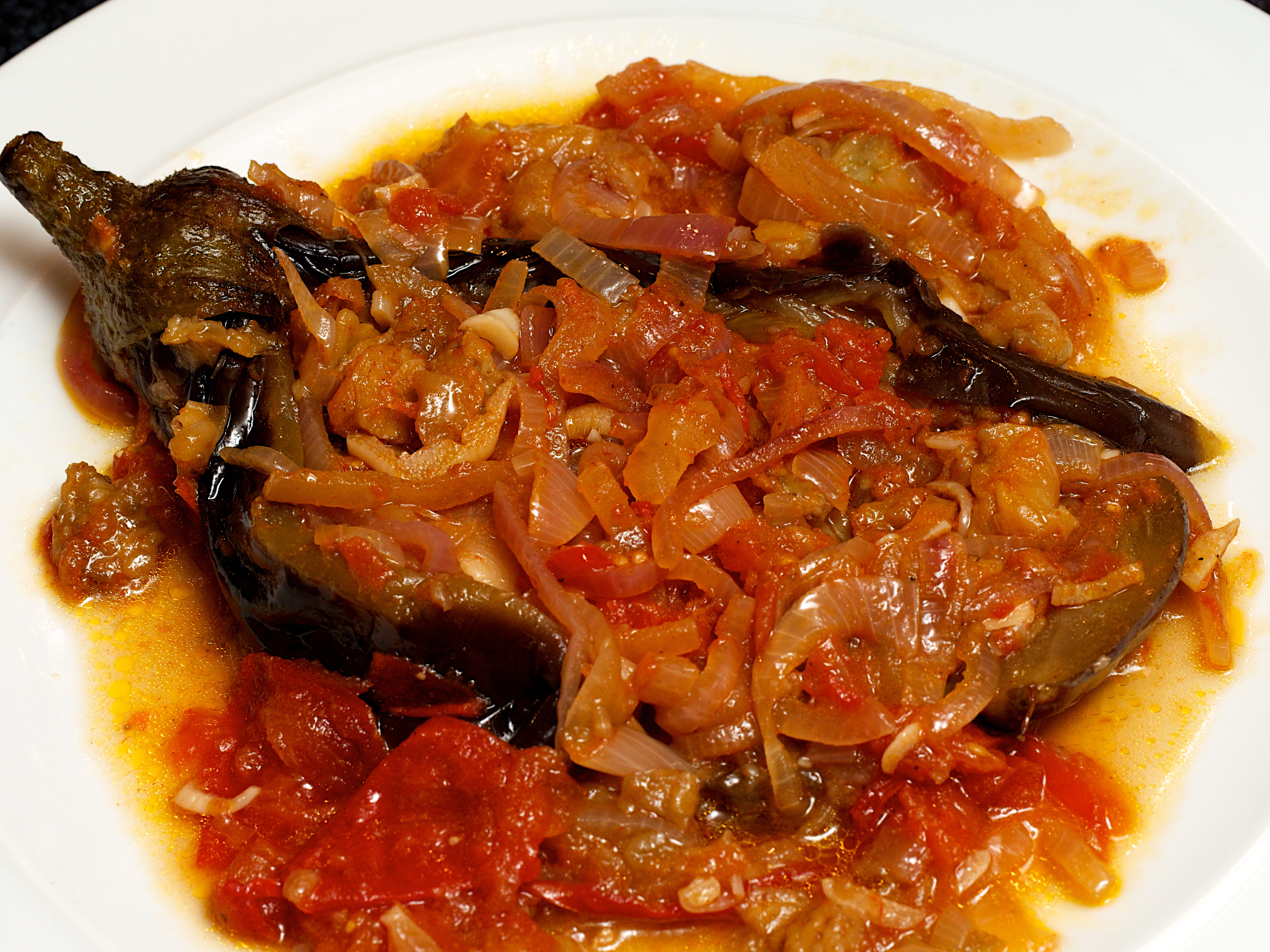
This is not the most attractive dish in the world and we definitely didn’t do the best job of cutting the aubergines. It nonetheless tasted delicious and we’re sure to do it again.

Wine Suggestion: We’d recommend finding a juicy red from Spain. Look out for well made wines from the smaller and lesser known areas as these offer great value; this dish doesn’t need a refined and suave wine, some rusticity is good. We tried  a juicy and smooth Tempranillo called Biberius from the Ribera del Duero and thoroughly enjoyed it!

‘Swooning Imam’ Stuffed Aubergines – serves 2

  • 2 large aubergines
  • 4-6 garlic cloves, finely sliced
  • 2 red onions, finely sliced
  • 3-4 tomatoes, finely sliced
  • 1 tsp paprika
  • 1 tsp brown sugar
  • 1 tbsp lemon juice
  • about 5 tbsp extra virgin olive oil
  • fresh mint, shredded

Leave the stem on the aubergines, score the skin and peel it away in thick stripes. Cut down the length of each one (without cutting completely in half) and scoop out the seedy bits. Chop these and set aside. Sprinkle the cavities with salt, and leave to drain on kitchen paper for half an hour, then wipe dry.

Heat a good splash of oil in a frying pan. Add the aubergines and fry for about 7 minutes, until lightly browned and softened. Remove from the pan and leave to drain.

Add some more oil to the pan and fry the onions, garlic and with the reserved seedy bits of the aubergine. After about 5 minutes, add the tomatoes, paprika, sugar and lemon juice, stir well and season.

Put the aubergines into a deep frying pan with a lid. Stuff the cavities with the onion mixture and drizzle the rest over the top. Add the rest of the olive oil and 100ml cold water, then put on the heat. Bring to the boil, then turn the heat to low, cover and leave to cook for about 45 minutes or until completely tender.

Serve warm or at room temperature with the mint sprinkled over the top and serve with crusty bread.

(Original recipe from Veggiestan: a vegetable lover’s tour of the middle east by Sally Butcher (Pavillon) and published in The Guardian.)

Read Full Post »

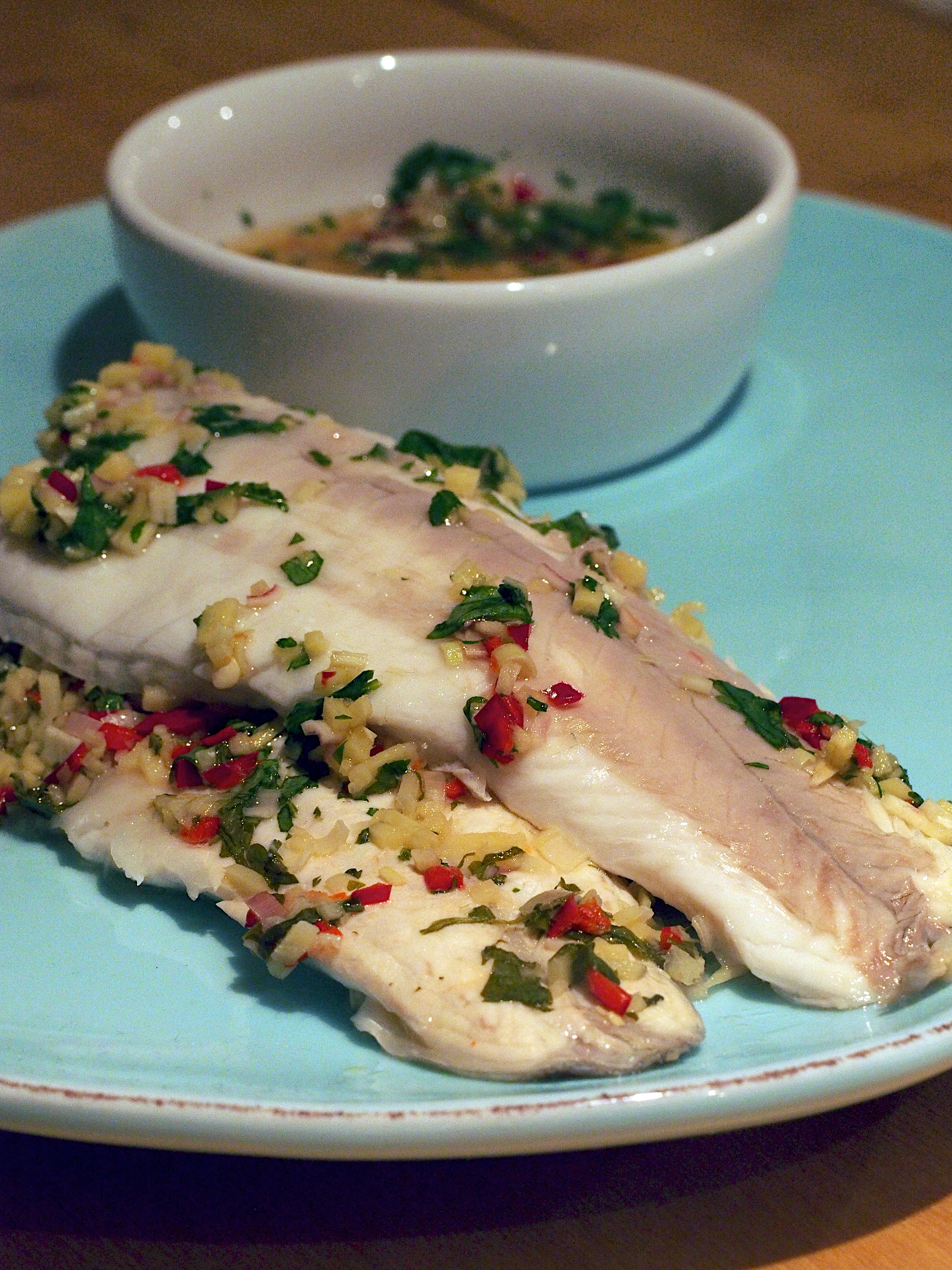
This is a really simple fish dish that was a delight to eat; it tastes delicious and is also very healthy. Trout or snapper would also work well if you prefer. The skin was left behind in the tinfoil when we went to serve it which was fine by us (it’s crispy skin or no skin as far as we’re concerned).

Wine Suggestion: this dish begs for a charming Riesling from Germany – look out for ones that are a drier style but without the weight of a Grosses Gewachs (great growth). If you can find one of the estate QbA’s from Helmut Dönnhoff in the Nähe or Johannes Leitz from the Rhinegau you can’t go wrong.

Thai Baked Fish – to serve 4

  • 4 seabass fillets, about 200g each
  • 1 stalk lemongrass, finely chopped
  • small knob ginger, peeled and finely chopped
  • 1 red chilli, seeded and finely chopped
  • 1 garlic clove, finely chopped
  • 1 tbsp fish sauce
  • juice of 2 limes
  • 1 tsp golden caster sugar
  • handful coriander, roughly chopped

Heat the oven to 200C/fan 180C/gas 6.

Take 2 large sheets of tinfoil. Place one fish fillet, skin-side down, in the centre of each sheet.

Make a sauce using the remaining ingredients. Spoon half the sauce of the fillets on the tinfoil and set the rest aside.

Sandwich the other 2 fish fillets on top, skin-side up, then tightly seal the foil to create 2 pouches. Bake in the oven for 12-15 minutes (depending how big your fish are). Serve with the rest of the sauce.

(Original recipe by Gizzi Erskine for BBC Good Food Magazine, June 2005).)

Read Full Post »

This is one of our favourite pasta sauces. Bucatini (long spaghetti-like tubes) is traditionally used but penne works well too and tends to be easier to find at the shops. Makes a great Friday night supper with a matching glass of something equally red and Italian.

The recipe below makes 6 little portions that you might serve as a first course. You will need to adjust accordingly if you’re serving it as a main meal – we half the quantities below to serve the two of us.

Wine Suggestion: An Italian Sangiovese is the obvious match which complements the acidity in this tomato-based sauce. We drank a Rocca delle Macie Chianti; an excellent match.

Penne all’ Amatriciana – serves 6 

  • 250g pancetta, cut into matchsticks
  • 2 tbsp olive oil
  • 2 dried chillies, crumbled
  • 2 red onions, peeled and finely chopped
  • 150ml red wine
  • 2 x 400g tins peeled plum tomatoes, drained if very liquid (look for Italian brands)
  • 2 tbsp rosemary
  • 250g penne
  • 100g Parmesan, grated
  • A handful of fresh oregano (don’t panic if you don’t have this)

Put the pancetta, oil and chillies into a large saucepan, heat and fry until the pancetta becomes crisp.

Add the onions and rosemary and keep frying until they have also turned light brown and crisp.

Add the red wine and let it reduce before adding the tomatoes, then season with the oregano and some black pepper.

Bring to the boil, lower the heat and simmer for at least 45 minutes, until thick and almost dry. Check for seasoning.

Cook the penne in a generous amount of boiling salted water, then drain. Add to the sauce, mix and serve with Parmesan.

(Original recipe from The River Café Cookbook by Ruth Rogers and Rose Gray, Ebury Press, 1995.)

Read Full Post »

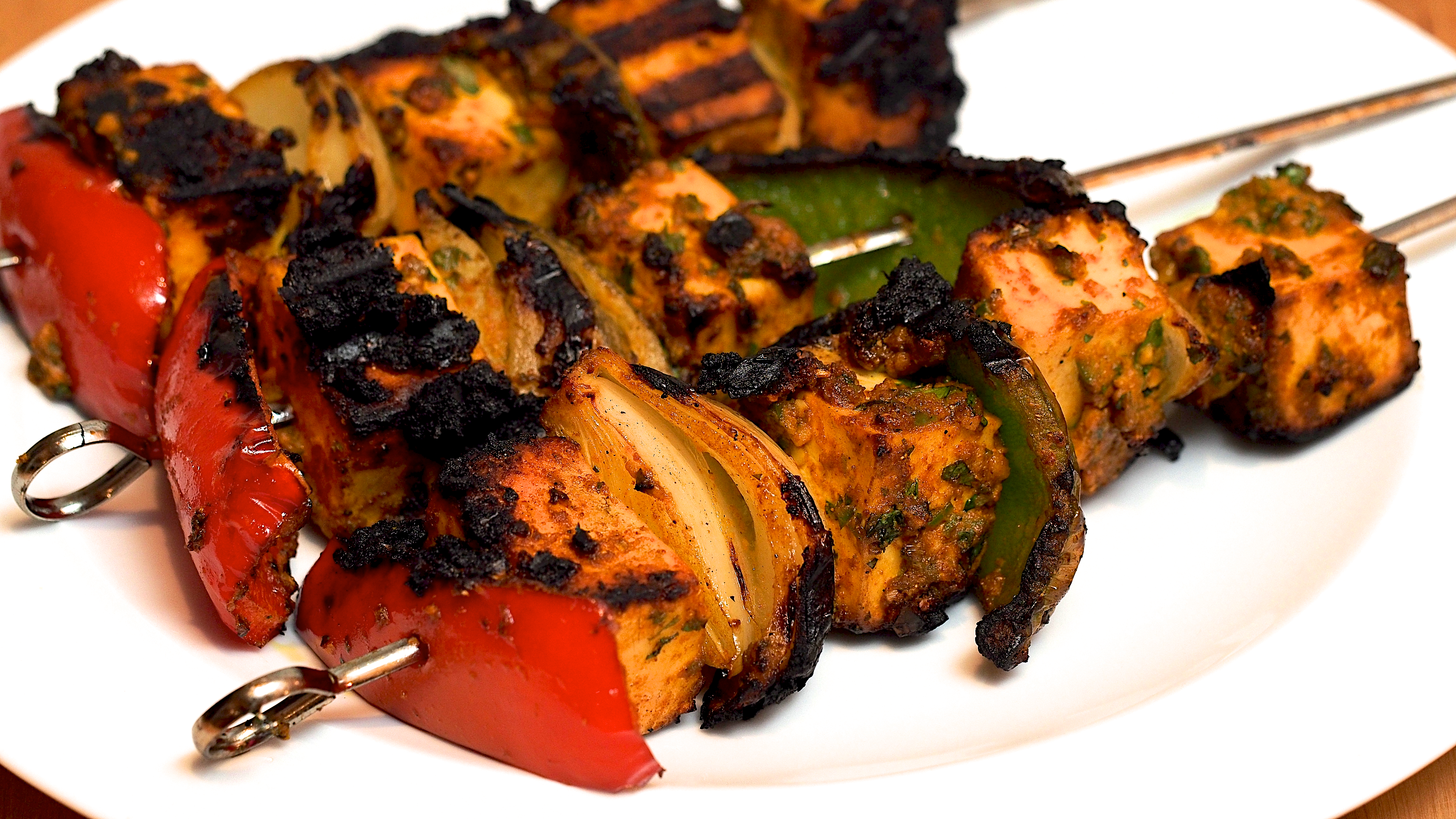
We recently acquired a recipe book called Prashad: Indian Vegetarian Cooking (thanks Mum). You might remember Prashad as Gordon Ramsay’s best restaurant runner-up on TV a couple of years ago. This is the first recipe we tried from the book and is guaranteed to make your veggie friends happy at your next summer barbecue. Vegetarians often get a bum deal at barbecues, palmed off with a few peppers and onions skewered on a stick. These should right all your past wrong-doings.

Paneer is an Indian unsalted white cheese with a crumbly texture and mild taste that  goes really well with strong flavours and marinades. You can buy it in supermarkets as well as specialist Asian shops.

These are very easy to make but you need to marinade the night before!

Drinks Suggestion: We enjoyed this with both a lager and a citrus-laden Blonde Ale; fresh and summery.

Paneer Tikka – makes 6 skewers 

  • 2 x 250 blocks of paneer cheese
  • 1 medium red pepper,cut into 6 chunky pieces
  • 1 medium green pepper, cut into 6 chunky pieces
  • 1 medium onion, cut into 6 wedges
  • 2 lemons, quartered to serve

MARINADE: 

  • 2-3 green chillies, seeds left in
  • 4-8 garlic cloves
  • 2 handfuls of fresh coriander, chopped fine
  • 2 tsp ground coriander
  • 2 tsp garam masala 
  • 1½ tsp salt
  • 1 tsp trumeric
  • 2 tbsp plain live yogurt
  • 100ml sunflower oil

Finely chop the chillies and garlic then tip into a large bowl and add the other marinade ingredients.

Cut each block of cheese into 9 equal-sized cubes and add to the marinade along with the pepper and onion pieces. Stir to coat, then cover and leave in the fridge overnight.

Thread 6 skewers with 3 pieces of cheese seperated by pieces of pepper and onion. Cook the skewers over a hot barbecue for 20 minutes, until slightly charred, turning every 4-5 minutes.

Serve with the lemon quarters, a green salad and some cucumber and yogurt dip.

(Original recipe from Kaushy Patel’s Prashad: Indian Vegetarian Cooking, Saltyard Books 2012.)

Read Full Post »

Situated at 100m above sea level in the Spanish Pyrenees is a remarkable vineyard set up by Miguel Torres’  long-serving technical director, Raül Bobet. Ekam is Riesling fermented in ancient, gravity fed, granite vessels carved into the rock and this has a profound effect on this wine. The aromas have a striking grapefruit and kerosene character which follows onto the palate which combines the fruit flavours with a multi-layered texture of stones, minerality and a touch of smokiness. This is a wine that refuses to be a wall-flower but at the same time is precise, pleasurable and engaging.

Ekam balances bold dryness and a good weight with concentrated fruit, mostly grapefruit, and a very long length. At 5 years of age on tasting this wine is still youthful and vibrant. It doesn’t seem to carry much (if any) residual sugar and relies on depth and personality.  The over-riding character is the grapefruit and minerality with the fruit is always to the forefront.

This is a wine we’d want to taste over the next few decades just to see it develop and unlock it’s potential. Well worth seeking out.

Read Full Post »

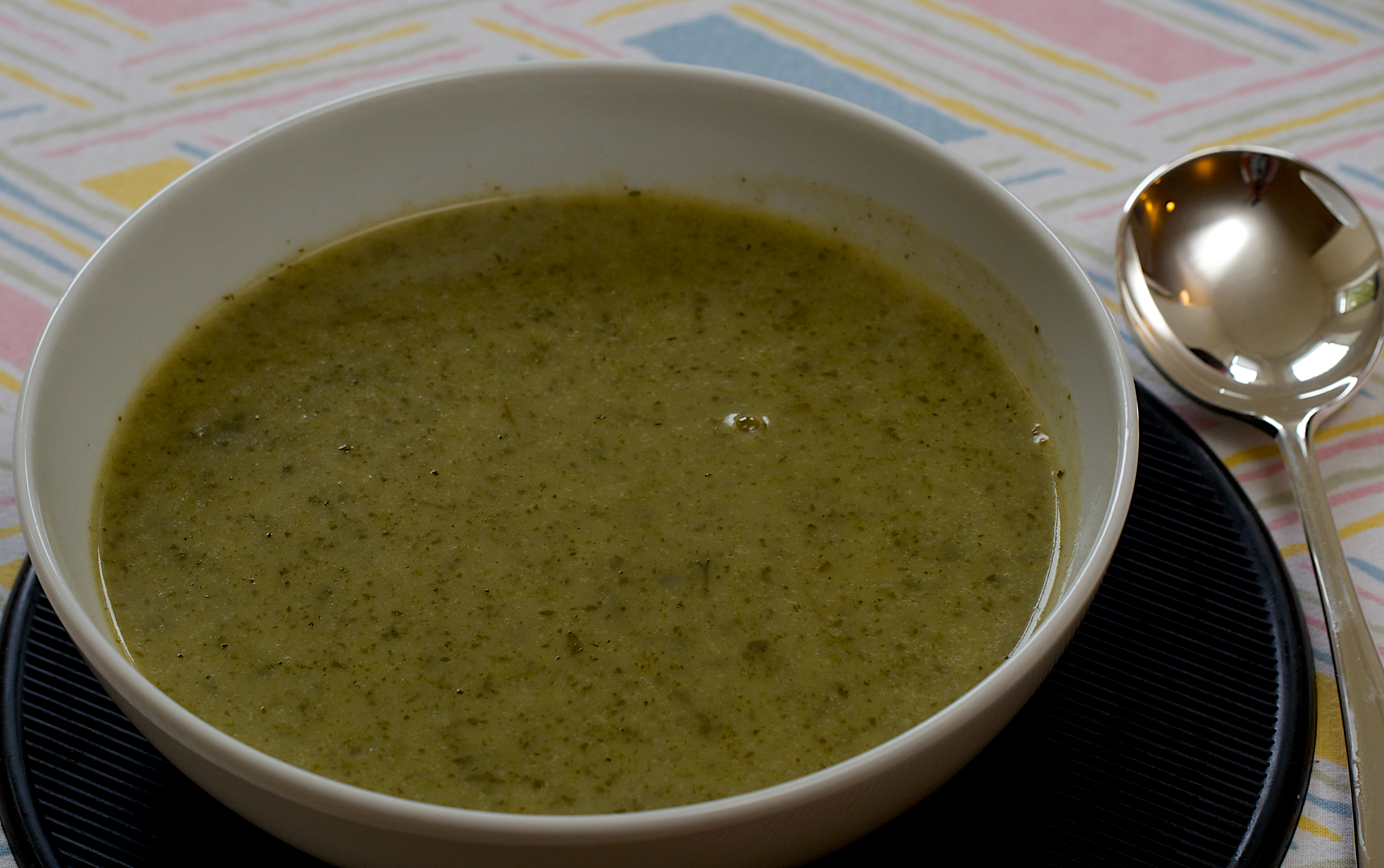
This is a real gardeners’ delight as chervil grows well, but doesn’t travel well, so its best cooked soon after picking. We love the hint of aniseed it brings to the flavours and have to thank Rai and Linda for their allotment which allowed us to make this soup!

Chervil & Potato Soup – to serve 4

  • 50g butter
  • 1 onion, finely chopped
  • 450g fresh chervil (or you can use other soft herbs like parsley, sorrel or marjoram)
  • 1 large floury potato, peeled, diced and rinsed
  • 1.1 litres boiling vegetable stock

Melt the butter and soften the onion without browning.

Stir in the herbs, a generous pinch of salt and some pepper, cover and sweat for a few minutes.

Add the potato and 275ml of the boiling stock. Cover and simmer for 5 minutes, then add the rest of the liquid. Continue to simmer until the potato is soft enough for you to mash into the soup. Taste for seasoning and serve.

(Original recipe from Lindsey Bareham’s A Celebration of Soup, Penguin Books, 1993.)

Read Full Post »