Feeds:
Posts
Comments

Archive for May, 2023

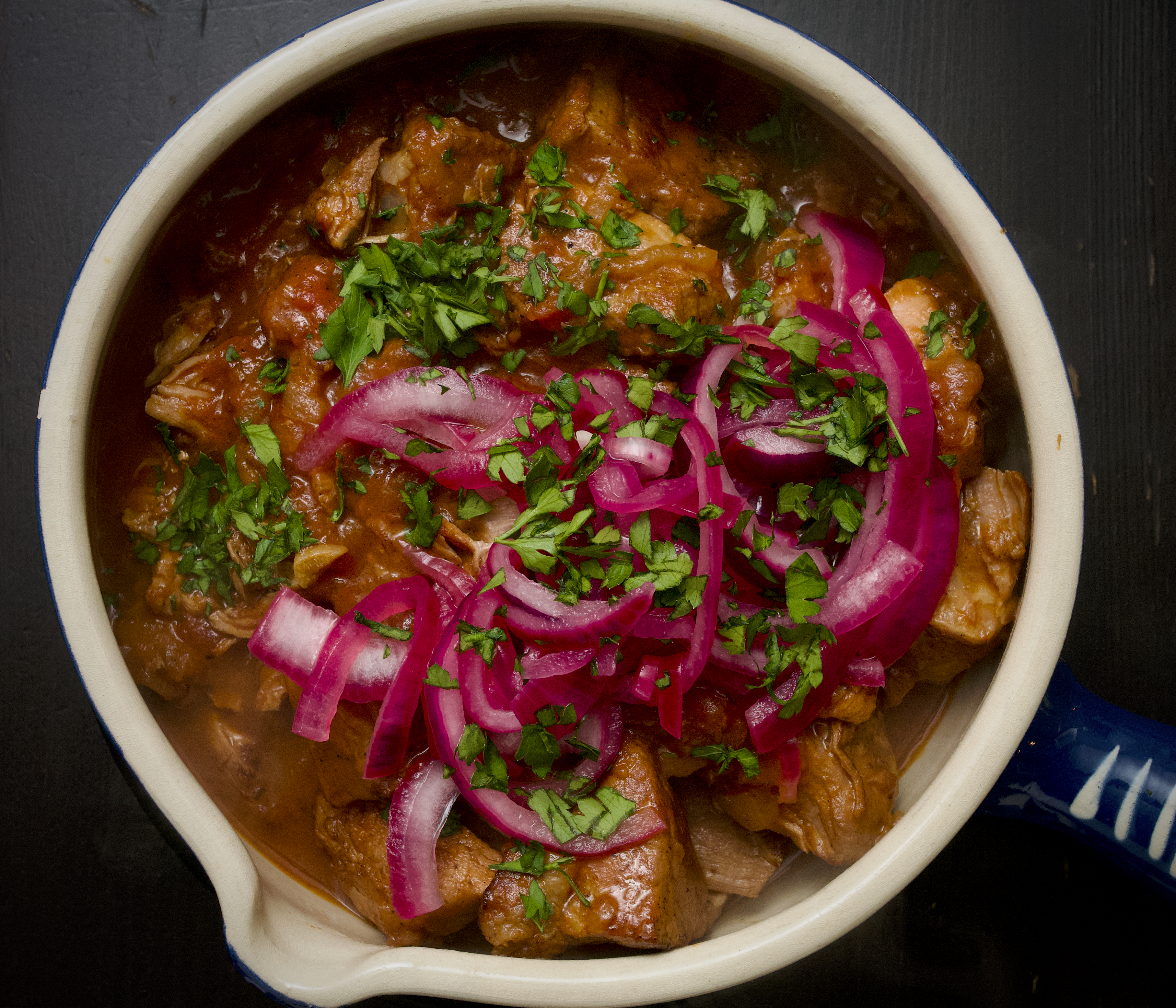
This is an Iberico pork dish inspired by José Pizarro. We did not have any Iberico and substituted Tamworth free-range pork from our butchers instead. This is not quite the same but the dish was still lovely, but of course use Iberico if you can find it.

Wine Suggestion: A dish that begs for a Spanish Garnacha.

Pork shoulder in tomato & sherry sauce with lemony couscous – serves 6

  • 2 tbsp olive oil
  • 1.5kg shoulder of pork (or Iberico pork), cut into 5cm chunks
  • 2 red onions, finely sliced
  • 3 cloves of garlic, finely sliced
  • 2 tsp coriander seeds, lightly crushed
  • 1 tbsp tomato purée
  • 150ml oloroso sherry
  • 1 x 400g tin chopped tomatoes
  • 400ml chicken stock

FOR THE COUSCOUS:

  • 1 red onion, finely sliced
  • juice of 1 lemon
  • 250g couscous
  • 3 tbsp extra virgin olive oil
  • 450ml chicken stock
  • a large handful of flat-leaf parsley, chopped, plus extra to serve
  • 2 preserved lemons, skin finely sliced and pulp discarded
  • ½ cucumber, peeled, deseeded and finely diced
  • 30g toasted flaked almonds

Heat the oven to 160C/140C fan/gas 3.

Season the pork with salt and pepper, then heat the olive oil in a large casserole and fry the pork in batches until well browned on all sides.

Reduce the heat to medium-low, then add the onions to the dish and fry gently for 10 minutes, then add the garlic and coriander seeds and fry for another 5 minutes.

Add the tomato purée and sherry and bubble for 1 minute, then return the pork to the pan and add the tomatoes and stock. Season and bring to a simmer, then cover and transfer to the oven. Cook for 2½-3 hours or until the meat is really tender.

Meanwhile, prepare the couscous. Put the onion into a heatproof bowl, then pour over boiling water from the kettle and leave to sit for 30 seconds. Drain and cool under running water. Tip the onion back into the bowl and squeeze over the lemon juice and season with salt. Set aside.

Put the couscous into a flat dish and stir in the olive oil and a good pinch of salt, then pour over the chicken stock. Stir and cover with clingfilm, then leave to steam for 10 minutes. Remove the cover and fluff the couscous up with a fork. Add the rest of the ingredients and stir to combine.

Serve the pork with the couscous, the pickled onion and its juices, and some extra parsley.

(Original recipe from The Spanish Home Kitchen by José Pizarro, Hardie Grant, 2022.)
Read Full Post »

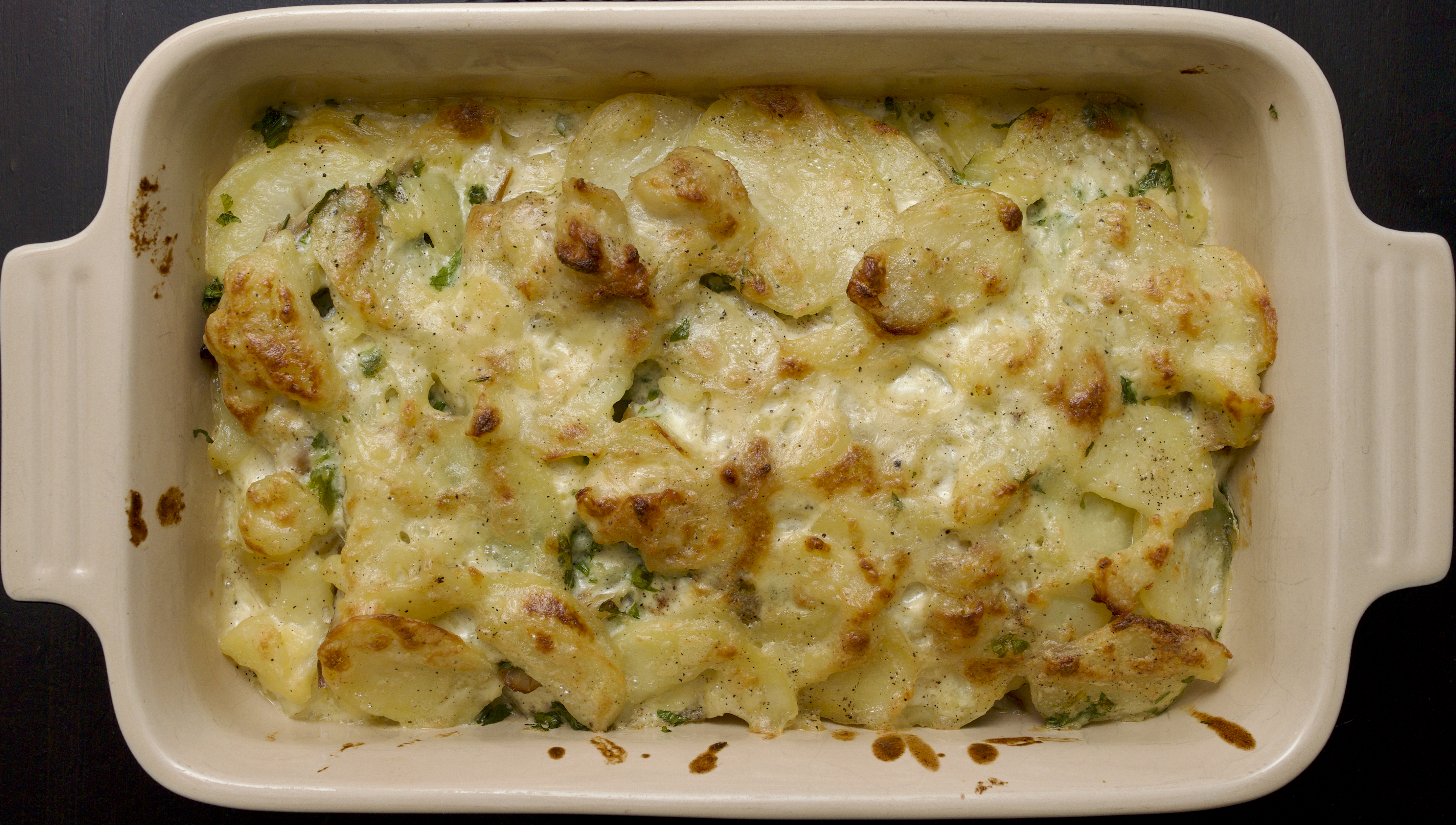
Who doesn’t love a dauphinoise? This one is extra special with some smoked mackerel and is a meal in itself with some green salad on the side.

Wine Suggestion: Chardonnay is not commonly found in the Loire, but there are gems to be found, especially around the appellation of Cheverny where it is brilliantly blended with Sauvignon Blanc. Tonight an outlier from Touraine, Domaine Bellevue’s IGP Chardonnay. Classic crisp red apple flavours with layers of tropical and citrus notes; good body but without any flabby weight. Perfect for fish and dairy combination

Smoked mackerel dauphinoise – serves 4

  • 900g potatoes
  • 250ml milk
  • 250ml double cream
  • a small clove of garlic, crushed
  • freshly grated nutmeg
  • 225g smoked mackerel, skin and bones removed and flaked into chunky pieces
  • a small handful of chopped flat-leaf parsley

Heat the oven to 200C/400F/Gas 6.

Peel the potatoes and slice very thinly, a mandoline is the best job for this but watch your fingers. Dry the potatoes slices with a clean cloth, then spread out and season with salt and black pepper, mixing with your hands.

Pour the milk into a saucepan, add the potatoes and bring to the boil. Cover, then reduce the heat and simmer gently for 10 minutes.

Add the cream, garlic and a generous grating of nutmeg and continue simmering for another 20 minutes. Stir occasionally to prevent the potatoes sticking to the pan. As soon as the potatoes are cooked, remove them with a slotted spoon and put a layer into a large ovenproof dish. Sprinkle over the mackerel and parsley, then cover with the rest of the potatoes. Pour the creamy liquid over the top. Put some water into the base of a large roasting tin and set the potato dish into the tin, the water should come about half-way up the sides. Bake the dish in the oven for 10 to 20 minutes or until the top is golden and bubbling.

(Original recipe from Darina Allen’s Ballymaloe Cookery Course, Kyle Cathie Limited, 2001.)

Read Full Post »

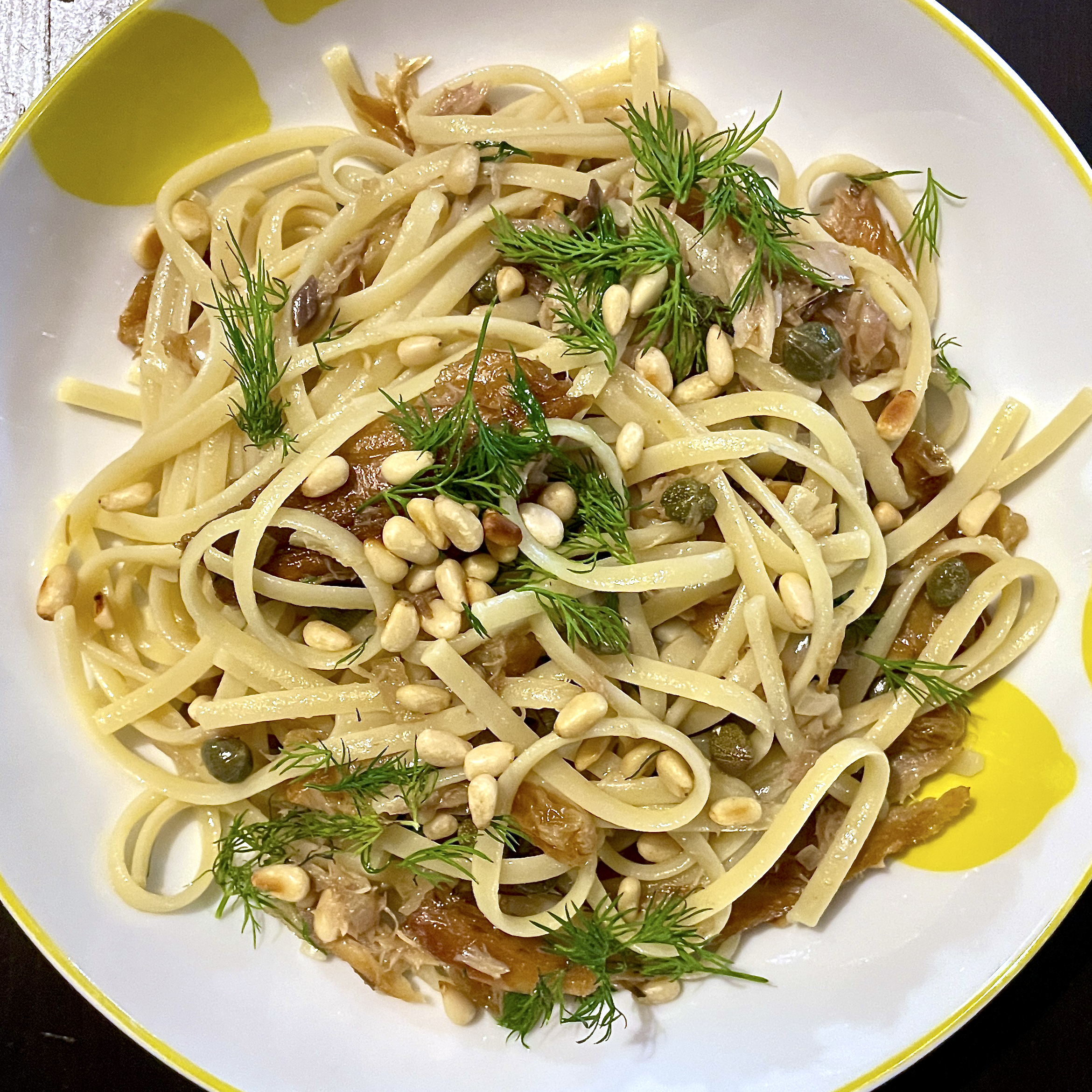
A Nigella creation that is in no way authentic and makes no apologies. Anything with mackerel goes in this house.

Wine Suggestion: Quite an exceptional wine was chosen to match with this: Sartarelli’s Balciana. From a low-yielding vineyard Verdicchio in the Marche, this is hand harvested picking only the grapes of utmost ripeness at the very end of the season. This means the picking team goes out many times picking individual grapes and bunches that meet the required levels of ripeness. It makes quite an extraordinary dry wine that has a richness of almost a sweet wine, alongside textured layers of savoury nuttiness and salty minerality. Named best white wine in Italy many times, and we understand why. We chose this as the combinations of sweet, savoury, fresh and sour flavours in the dish need a wine with substance and depth.

Pasta with mackerel, Marsala and pine nuts – serves 2

  • 50g golden sultanas
  • 200g linguine
  • 2 tbsp olive oil
  • 1 long shallot, finely chopped
  • 60ml Marsala
  • 2 smoked makerel fillets, skinned and flaked
  • 2 tbsp drained capers
  • a few drops of red wine vinegar
  • a handful of dill, torn into fronds
  • 25g toasted pine nuts

Bring a large pan of water to the boil for the pasta. Put the sultanas into a small bowl and cover with hot water from a boiled kettle.

Add lots of salt to the boiling water, then cook the linguine until al dente.

Warm the olive oil in a frying pan and cook the shallot for a couple of minutes until softened.

Add the Marsala and let it bubble, then add the mackerel, sultanas (squeeze the water out of them with your hands first), the capers and a few drops of vinegar. Remove from the heat once the mackerel is warm. There should be barely any liquid left.

Reserve a cupful of pasta cooking water before draining. Return the pasta to the pan, then tip in the mackerel, half the dill and half the pine nuts and a tbsp of pasta water. Toss gently to combine, then taste and add another few drops of vinegar if you like.

Divide between warm bowls and finish with the remaining dill and pine nuts.

(Original recipe from Nigellissima, Chatto & Windus, 2012.)

Read Full Post »

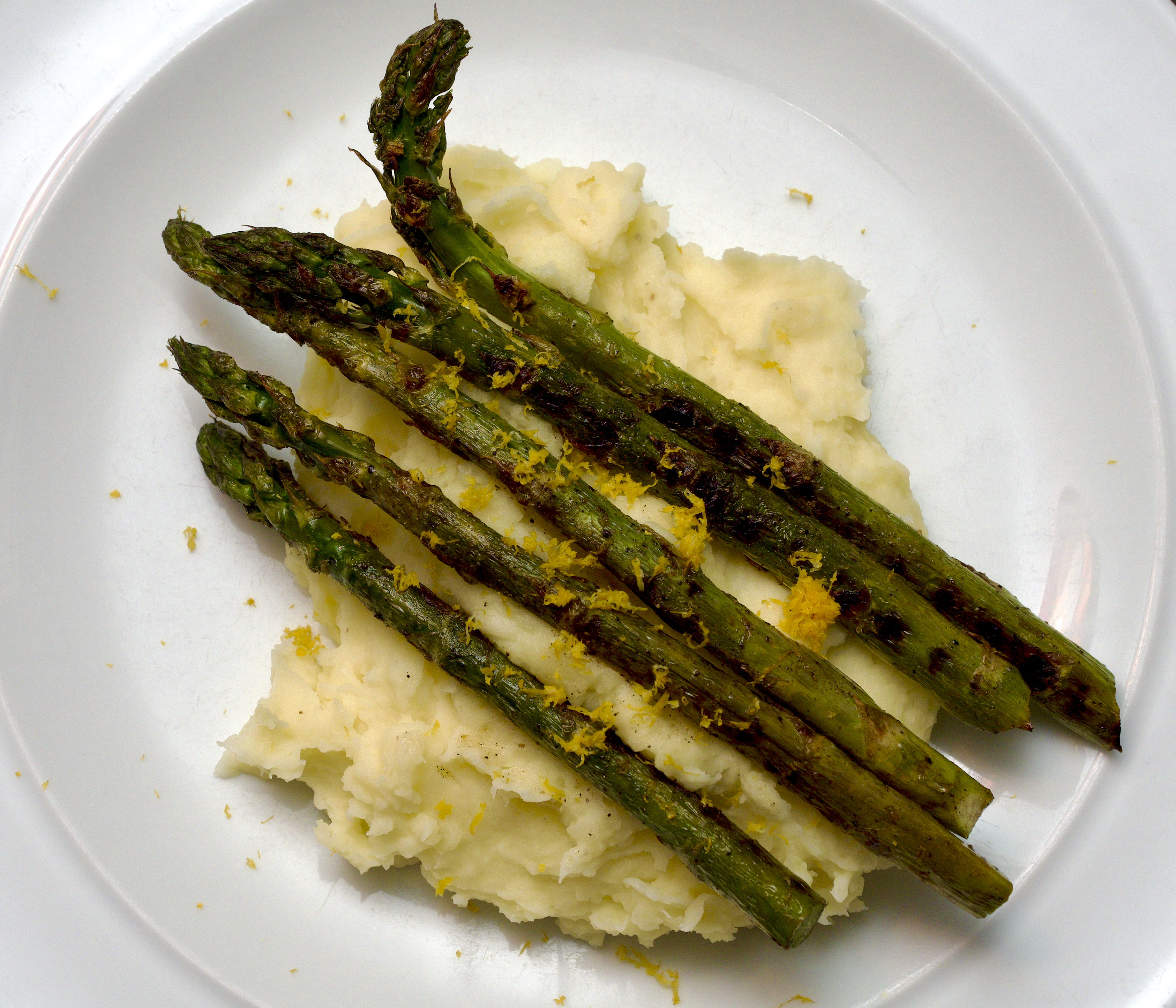
When asparagus arrives we have it with everything and if there’s nothing else with buttery mash.

Wine Suggestion: We know asparagus can clash with many wine grapes, but we enjoyed this with a glass of the Rustenberg Chardonnay, because it just goes so well with the buttery mash.

Asparagus & mash – serves 2

  • 850g potatoes, a good variety for mashing, peeled and cut into even-sized pieces
  • 300ml full cream milk
  • 1 lemon, juiced, plus 1tsp grated zest
  • lots of butter
  • 250g asparagus

Cook the potatoes in boiling salty water for about 20 minutes or until tender, then drain.

Warm the milk in a small saucepan, then set aside.

Put the potatoes into a food mixer with a flat paddle beater. Slowly beat the potatoes, adding the warm milk and lemon juice, until you have a smooth mash, then beat in plenty of butter.

Brush the asparagus with olive oil, then cook for 3-4 minutes on a griddle pan, turning to colour on all sides.

Taste the mash and season with white pepper and salt if needed. Divide the mash between two plates, top with the asparagus and scatter over the lemon zest.

(Original recipe from A Cook’s Book by Nigel Slater, 4th Estate, 2021.)

Read Full Post »

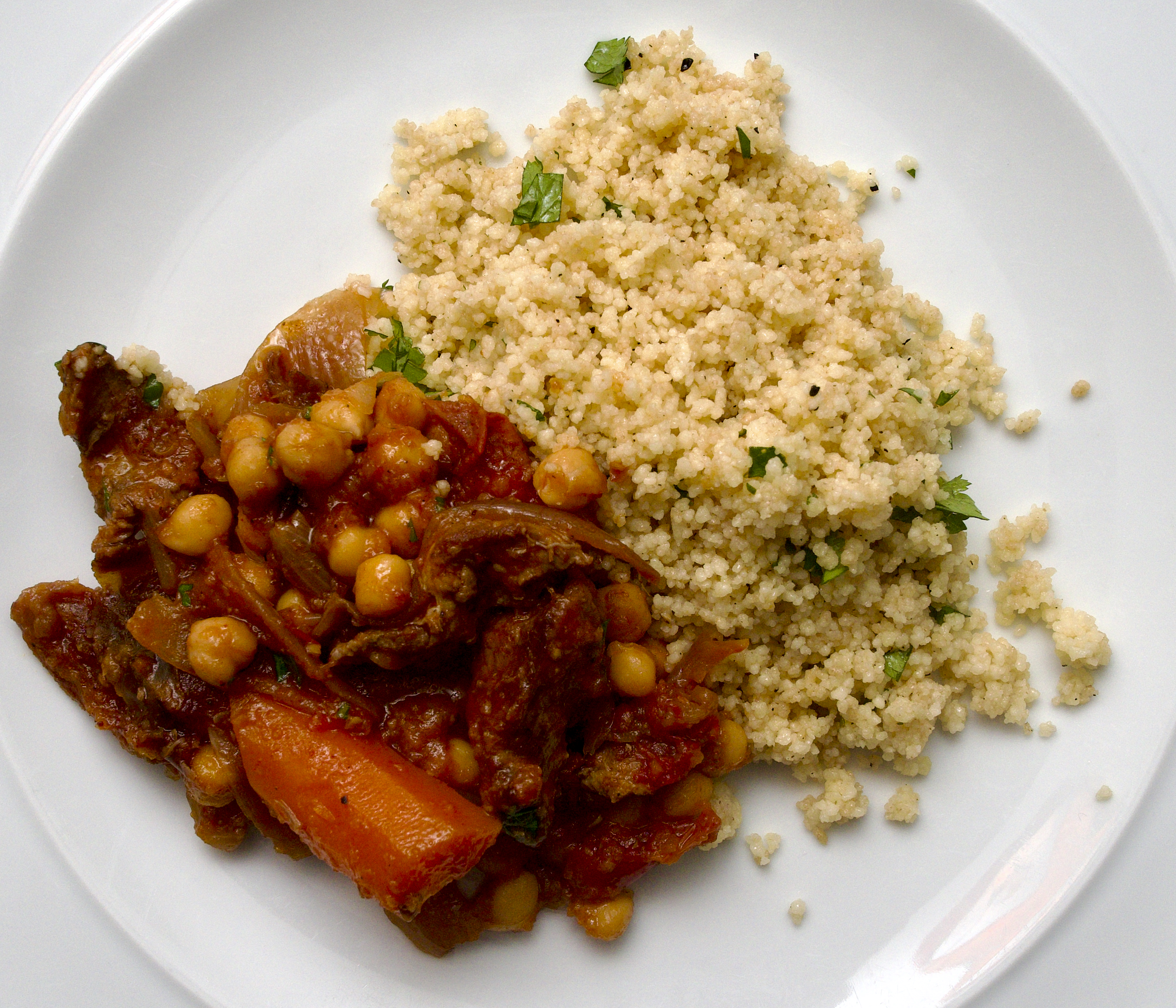
This is delicious and you can prep it all in advance. If you like you can cook for the initial 1 hour and 15 minutes earlier in the day, then bring back to a simmer before adding the chickpeas and dates and putting back into the oven for the final 40 minutes.

Wine Suggestion: We think juicy, but elegant Shiraz from the Clare Valley is hard to beat with lamb and warm spices so we opened Killikanoon’s Killerman’s Run Shiraz and enjoyed the delightful plum and sloe flavours with the elegant spicy tannins adding their own to the dish.

Lamb and chickpea tagine – serves 6

  • 1 tbsp olive oil
  • 750g lamb neck, cut into chunks and seasoned well
  • 4 carrots, peeled and cut into chunky pieces
  • 1 red onion, cut into wedges
  • 400ml chicken stock, plus extra to make the couscous
  • 400g tin cherry tomatoes
  • 1 cinnamon stick
  • 8 medjool dates, pitted and halved
  • 660g jar chickpeas, drained and rinsed
  • 300g couscous
  • 50g butter, diced
  • a large bunch of coriander, leaves picked and stems reserved for the spice paste

FOR THE SPICE PASTE:

  • 1 small red onion, roughly chopped
  • 3 cloves of garlic, roughly chopped
  • a walnut-sized piece of ginger, roughly chopped
  • 2 tsp ground cumin
  • 2 tsp paprika
  • 4 cloves, ground
  • 4 allspice berries, ground
  • 2 tsp mild chilli powder
  • 1 lemon, zested and juiced
  • 2 tbsp olive oil
  • a large bunch of coriander stalks, reserve the leaves to add at the end

Heat the oven to 190C/fan 170C/gas 5.

Put all of ingredients for the spice paste into a small food processor and whizz to a paste.

Heat the olive oil in a large, heavy casserole and brown the lamb in batches until well browned all over. Remove with a slotted spoon and set aside.

Add the spice paste to the casserole and cook for a few minutes, until fragrant. Add the carrots, red onion, chicken stock, tinned tomatoes and cinnamon stick. Then stir in the browned lamb. Bring to a simmer, then cover with a lid and cook in the oven for 1 hour 15 minutes.

Stir in the dates and chickpeas and return to the oven for a further 40 minutes.

To make the couscous, put the couscous into a heatproof bowl and add the diced butter and some seasoning. Add enough just-boiled stock to cover, then cover the bowl with a plate or cling film and leave to steam for about 10 minutes. Fork through to separate the grains then stir some chopped coriander leaves. Scatter the rest of the chopped coriander leaves over the lamb and chickpeas before serving.

(Original recipe by Janine Ratcliffe, in Olive Magazine, January 2020.)

Read Full Post »

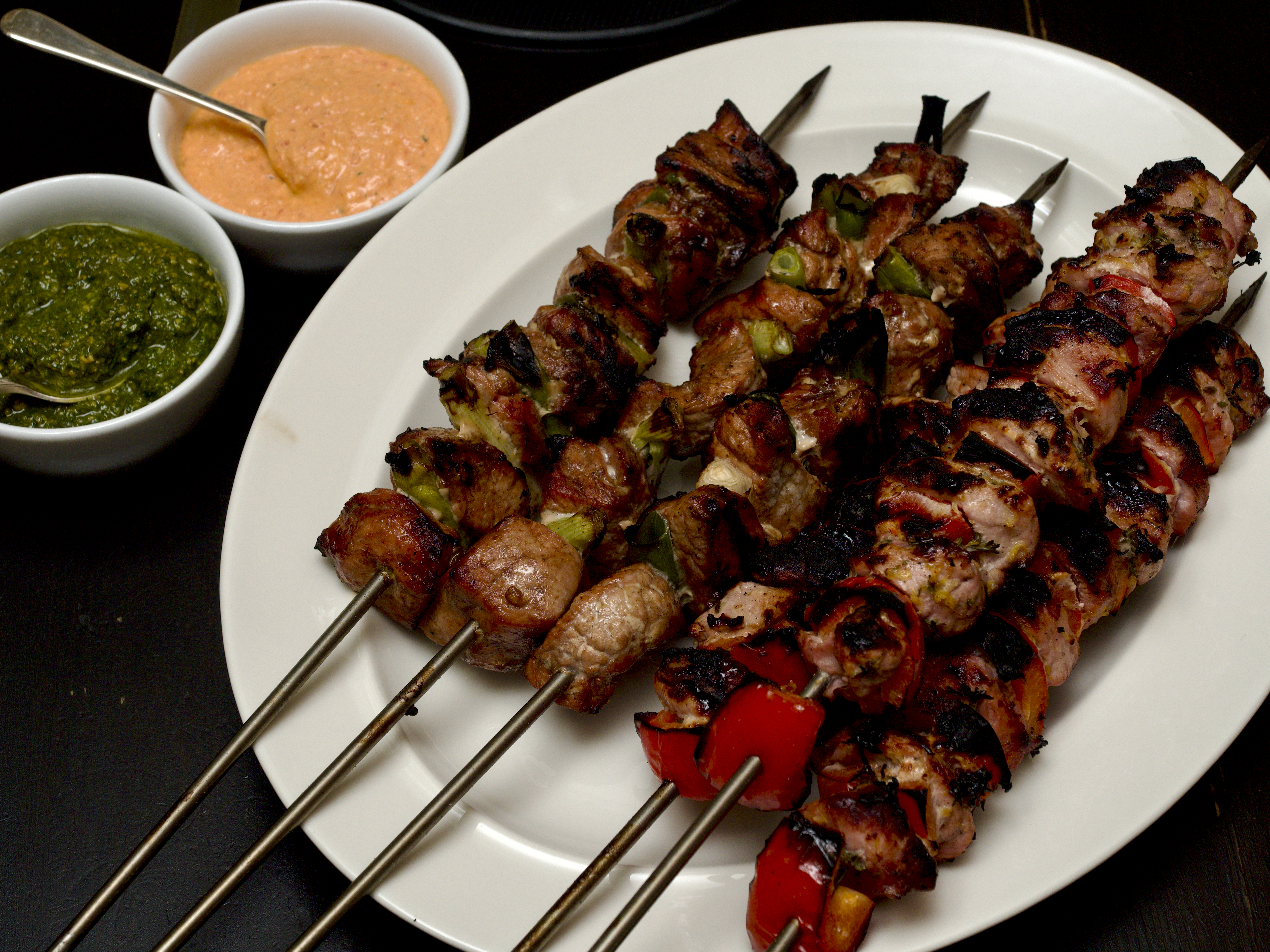
Two kebabs for the barbecue with their respective sauces. We couldn’t decide which one to do, so we halved each recipe and made both. A meat probe is great for checking that barbecued meat is cooked – you are looking for 63C for medium or 71C for well done. You can buy a good-quality pesto if you don’t want to make your own.

Lemony pork kebabs with feta & pepper sauce, makes 6-8 kebabs

  • zest and juice of 2 lemons
  • 4 tbsp olive oil
  • 2 cloves of garlic, crushed
  • a handful of thyme sprigs, roughly chopped
  • 1.2kg pork leg, diced
  • 2 red peppers, diced

FOR THE FETA AND RED PEPPER SAUCE:

  • 2 red peppers
  • 200g feta
  • ½-1 tsp chilli flakes
  • 3 tbsp olive oil

Mix the lemon zest and juice, olive oil, garlic and thyme together. Sesaon with salt and pepper, then add the pork and stir well. Cover and refrigerate for 12-24 hours.

When ready to cook get a barbecue ready for both direct and indirect cooking.

Put the whole peppers for the sauce directly over the fire and char the skins all over until blackened. Transfer to a bowl and cover with cling film, then leave for a few minutes or until cool enough to handle. Rub off the skin and discard the stems and seeds. Put the pepper flesh into a food processor with the feta, chilli flakes and olive oil, season, then blend to a purée. Transfer into a bowl and set aside.

Thread the pork and pepper pieces onto skewers. Set onto the barbecue, slightly away from the fire so they cook over a medium heat for 15-20 minutes.

Serve with the feta and red pepper sauce.

Balsamic pork kebabs with pesto dressing, makes 8 kebabs

  • 4 tbsp balsamic vinegar
  • 3 tbsp olive oil
  • 1 tbsp brown sugar
  • 3 cloves of garlic, crushed
  • 1 tsp smoked paprika
  • 1.2kg pork leg, diced
  • a bunch of scallions, cut into 4cm lengths

FOR THE PESTO (or use good-quality shop-bought pesto)

  • 50g pine nuts, toasted
  • 30g basil, leaves and stems, roughly torn
  • 40g Parmesan, grated
  • 6 tbsp olive oil
  • juice of ½ lemon
  • 1 clove of garlic, crushed

Mix the balsamic, olive oil, brown sugar, garlic and smoked paprika together in a bowl. Season with salt and pepper, then stir in the pork pieces. Cover and put into the fridge for 12-24 hours.

To make the pesto, tip the pine nuts, basil, Parmesan, olive oil, lemon juice, garlic and a little salt into a food processor and blend to a purée. Scrape the pesto into a bowl and set aside.

When ready to cook get the barbecue prepped for direct and indirect cooking.

Thread the pork and scallions on to skewers. Set onto the barbecue, slightly away from the fire so they cook over a medium heat for 15-20 minutes.

Serve with the pesto on the side.

(Original recipes from Seared by Genevieve Taylor, Hardie Grant: Quadrille, 2022).

Read Full Post »

This is a long recipe but it’s not difficult and quite nice and methodical. You can make the fishcakes earlier in the day and cook when you’re ready if you like. You will get big fishcakes full of chunky pieces of fish. Serve with green salad.

Wine Suggestion: a top-notch Muscadet, like Jérémie Huchet’s, very special Clos des Montys. Finely toned and vibrant with citrus and grapefruit on the palate; both dry and salty, and creamy at the same time. It’s a little edgy, but we like that. Wines like this bring out the flavours of the sea and celebrate the three fish in this dish.

Fishcakes with parsley sauce – serves 6

  • 600g Maris Piper potatoes, cut into chunks
  • 250g thick unskinned cod fillet
  • 250g thick unkinned salmon fillet
  • 100g unskinned smoked haddock fillet
  • 500ml full-fat milk
  • 1 bay leaf
  • grated zest of ½ lemon
  • 6 scallions, finely sliced
  • 25g plain flour
  • 2 eggs
  • 100g fresh white breadcrumbs
  • 75ml vegetable oil
  • lemon wedges, to serve

FOR THE PARSLEY SAUCE:

  • 25g butter
  • 25g plain flour
  • reserved milk from cooking the fish
  • 25g curly parsley, finely chopped

Put the potatoes into cold salted water, bring to the boil, then simmer for 12 to 15 minutes or until tender, then drain and mash. Season with salt and white pepper, then spread the potatoes out over a plate to cool.

Put the fish pieces into a large saucepan with the milk and bay leaf. Season with a little salt and peppper. Cover with a lid and gently bring to a simmer, then remove from the heat and set aside for 10 minutes to finish cooking.

Remove the fish from the milk and set onto a plate. Pour the milk into a jug as you will need this for the parsley sauce later. Remove the skin from the fish and break it into chunky pieces, discarding any bones, then leave to cool completely.

When the potato has cooled, transfer it to a large bowl and stir in the lemon zest and scallions. Gently stir in the fish with a wooden spoon, trying not to break it up too much.

Divid the mixture into 6 balls. Flatten the balls into cakes, about 3cm thick, and place on a lined baking tray. Put the tray into the fridge for 45 minutes or into the freezer for 20 to firm up.

Sprinkle the flour over a plate. Beat the eggs together in a shallow bowl. Spread half the breadcrumbs over another plate. Now take each fishcake and coat in the flour, shaking off any excess, then into the egg, allowing excess to drip off and finally into the breadcrumnbs to coat. Place on a lined baking tray. When you have coated 3 fishcakes put the rest of the breadcrumbs onto the plate for the rest. The fishcakes will keep in the fridge for 24 hours at this stage.

Heat the oven to 200/C/180C fan.

Heat the oil in a large frying pan, then place 3 fishcakes into the pan and fry for about 3 minutes on each side. Put onto a baking tray while you fry the rest.

Put the fishcakes into the hot oven for 10 minutes to finish cooking. Test with a skewer to make sure they are hot right through to the middle.

To make the parsley sauce, melt the butter in a small pan, then stir in the flour. Cook for a minute, then gradually add the reserved milk, stirring continually until you have a smooth sauce. Allow to simmer, then cook gently for a few minutes until thickened, then season. Remove from the heat and stir in the chopped parsley.

Serve the fishcakes with the sauce and some lemon wedges. A green salad works well on the side.

(Original recipe from The Hairy Bikers’ British Classice by Si King and Dave Myers, Seven Dials, 2018.)

Read Full Post »

A great starter dish from Persiana Everyday by Sabrina Ghayour. The sun came out so we could sit outside for a relaxed Saturday lunch, and this takes very little time to put together which was perfect.

Wine Suggestion: The much under-rated varietal, Chenin Blanc is our pick. A dry version like Adi Badenhorst’s Secateurs and it’s stonefruit and apple flavours over a flinty core stands up to the baked halloumi and bacon with aplomb.

Halloumi, bacon, date & apple salad – serves 4 as a starter

  • 250g block of halloumi
  • 8 smoked streaky bacon rashers
  • 4 large Medjool dates, pitted and halved

FOR THE SALAD:

  • 2 tbsp olive oil
  • 1 tbsp red wine vinegar
  • 1 tbsp clear honey
  • 1 tsp ground cinnamon
  • 1 tsp water
  • a small bag of mixed salad leaves
  • 1 apple, cored and sliced

Preheat the oven to 240C.

Line a large baking tray with baking paper.

Cut the block of halloumi in half lengthways, then cut each half into 4 rectangular fingers.

Lay a piece of bacon on a board, put a piece of halloumi at the end and top with half a date, then roll up tightly to form a neat bundle. Repeat to make 8 rolls.

Roast the halloumi in the oven for 10-12 minutes or until the bacon is very crispy.

Meanwhile, put the olive oil, red wine vinegar, honey, cinnimon and water into a small bowl and whisk to combine. Spread the salad leaves over a platter, drizzle with the dressing and scatter over the apple slices.

Put the hot halloumi and bacon rolls on top of the salad leaves and serve.

(Original recipe from Persian Everyday by Sabrina Ghayour, Aster, 2022.)

Read Full Post »