Peanut butter makes the best sauces, and here it makes a very simple dish taste delicious.
Wine Suggestion: Think of peanuts as legumes (which they technically are) and matching with wine gets a bit easier. With the gentle heat of the curry a touch of fruitiness doesn’t go astray either. Something like the Pinot Gris from Forrest Estate in Marlborough which combines a wonderful array of citrus and apple freshness, textured minerality plus a rich and exotic peach, pear and honeysuckle roundness.
Thai Pork & Peanut Curry – serves 4
1 tbsp vegetable oil
a bunch of scallions, sliced
a small bunch of coriander, stalks finely chopped and leaves picked
1 large pork fillet (tenderloin), sliced
4 tbsp Thai red curry paste
4 tbsp smooth peanut butter
1 tbsp soft brown sugar
1 tbsp soy sauce
400ml tin coconut milk
200g pack of baby corn
juice of 1 lime
steamed jasmine rice, to serve
Heat the vegetable oil in a large saucepan, then add the scallions and coriander stalks and cook for 1 minute. Add the pork slices and cook for 5 minutes until sealed and starting to brown.
Stir in the curry paste and peanut butter and mix well, then add the sugar, soy and coconut milk, plus ½ can of water. Mix well, then cover and leave to simmer for 15 minutes, stirring occasionally.
Remove the lid, add the baby corn and increase the heat. Bubble for a few minutes or until the corn is cooked and the sauce has thickened slightlly. Stir in the lime juice and check the seasoning. Serve with the coriander leaves and steamed jasmine rice.
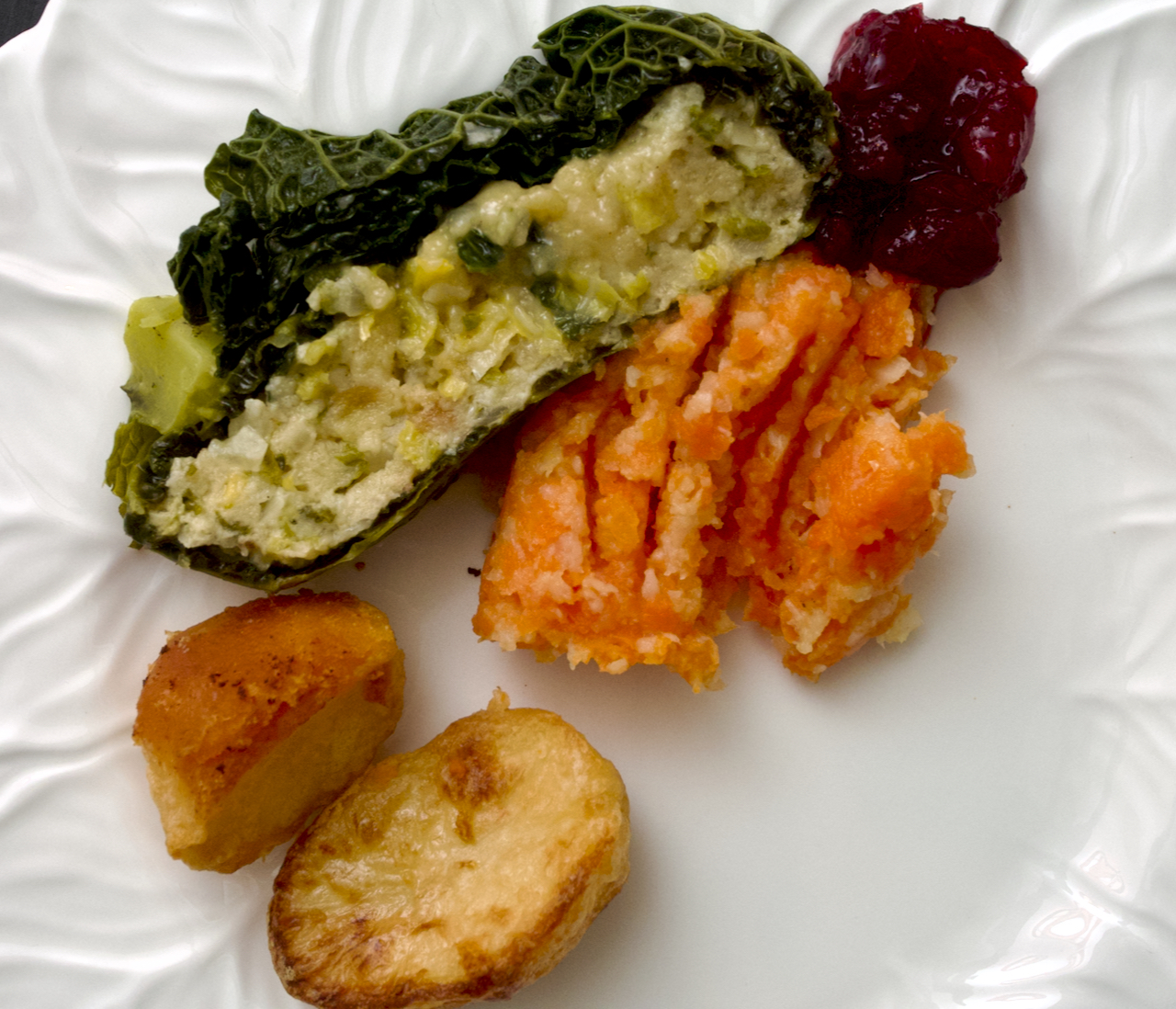
This is a handy veggie recipe to have up your sleeve. It works perfectly with all the sides you would typically serve with a roast dinner and it would also be nice as a side dish. Even better you can have it all prepped in advance and you can freeze it.
Wine Suggestion: Perfect with an oaked white like Oliver Leflaive’s Bourgogne Blanc Les Setilles, which has real class despite it’s lowly level within the Burgundy classification system.
Stuffed cabbage – makes 2 and each serves 4 to 6
1 Savoy cabbage
160g butter
50ml extra virgin olive oil
3 onions, finely chopped
4 cloves of garlic, crushed
200g Cheddar cheese, finely grated
200g Parmesan, finely grated
180g breadcrumbs
4 eggs, lightly beaten
nutmeg
vegetable stock
Remove 8 of the outer leaves from the cabbage and simmer for 5-10 minutes until softened, then drain and set aside.
Melt the butter and oil together in a large pan over a medium-low heat. Add the onions and garlic with 1tsp salt and cook for 20 minutes, stirring regularly, until softened.
Cut the cabbage into quarters and discard the tough core. Shred it very finely, then add to the pan and cook for another 10 minutes or so, until soft and wilted.
Turn the heat off, then mix both cheeses into the cabbage until melted. Add the breadcrumbs and eggs and stir well to combine. Season with salt and pepper and a little grated nutmeg.
Divide the filling in half. Take 4 of the cooked cabbage leaves and lie them down in a rough circle so they are slightly overlapping. Spoon half the filling on top in a rough rectangle shape, then wrap the leaves around to enclose. Tie it in multiple places along it’s length to hold it together, then tie it again along the length. Repeat with the rest of the cabbage leaves and stuffing. You can now store these in the fridge until your’re ready to cook them or freeze for another day.
To cook, bring a large pot of vegetable stock to the boil. Carefully lower one stuffed cabbage into the stock and simmer gently for 30-40 minutes. Carefully lift out of the pan and leave to rest for 10 minutes before carving into slices.
(Original recipe from Stagioni by Olivia Cavalli, Pavilion, 2022.)
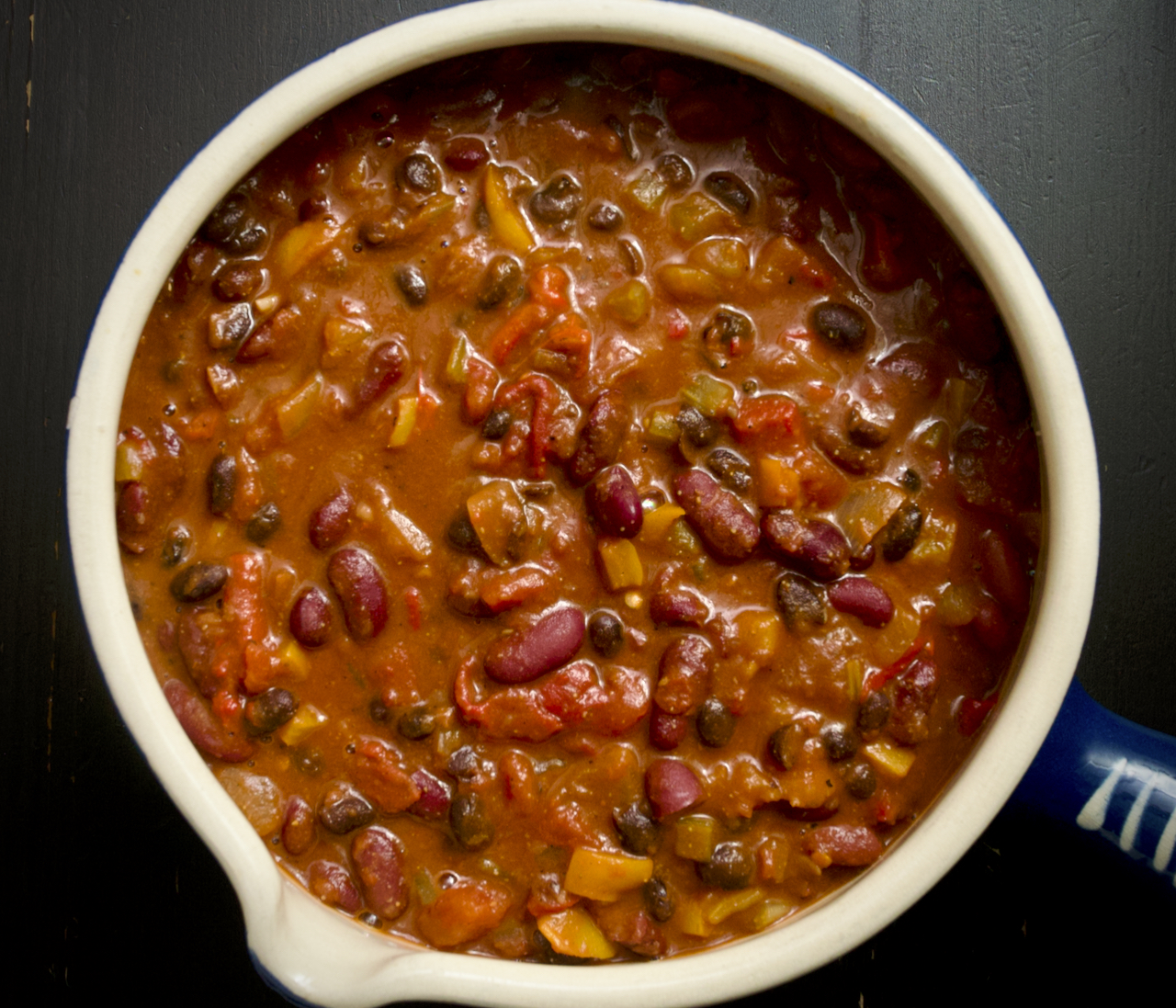
This makes a big batch and it freezes well. Serve with rice, tortilla chips, sour cream, avocado and lime wedges.
Wine Suggestion: We like the textures and juiciness of a good Côtes du Rhône, like Domaine Romain Roche’s Cairanne which is a blend of Grenache and Syrah plus a herbal, earthy touch of Carignan that works well with the earthy beans
Bean chilli – serves 6 to 8
2 tbsp vegetable oil
2 onions, finely chopped
4 cloves of garlic, finely chopped
2 yellow peppers, deseeded and roughly chopped
2 roasted peppers from a jar, drained and roughly chopped
15g coriander, stalks finely chopped and leaves kept to serve
2 tbsp ground cumin
1 tsp ground coriander
¼ tsp ground cinnamon
2 tsp dried oregano
1 tbsp light brown soft sugar
1-2 tbsp chipotle paste
400g tin of black beans
400g tin of kidney beans
400g tin of cannellini beans
400g tin chopped tomatoes
300ml vegetable stock
Heat the oil in a large casserole or a deep pan over a medium-low heat. Add the onion with a pinch of salt and cook for 10-12 minutes. Add the garlic and peppers and cook for a further 5 minutes.
Stir in the coriander stalks, spices, oregano, sugar and chipotle paste. Cook for 5 minutes more, then pour in the beans with their liquid, the tomatoes and the stock. Season well and bring to a simmer.
Leave the chilli on a gentle simmer for about an hour or until it has thickened and reduced. Taste for seasoning before serving with rice, tortilla chips, avocado, sour cream, lime wedges, and the coriander leaves.
(Original recipe from BBC Good Food Magazine, January 2024.)
These little savoury diamonds are perfect with aperitifs.
Cheese & tapenade puffs – makes 28-32
1 x 320g ready-rolled puff pastry sheet
2 tbsp black olive tapenade
55g mature Cheddar, grated
1 egg, beaten
55g Parmesan, grated
Place the puff pastry sheet on a lightly floured work surface.
Spread the tapenade over one half of the pastry. Sprinkle the Cheddar cheese over the tapenade then fold the other side of the pastry over to encase the tapenade.
Dust the top of the pastry with a little flour then reroll to the oringal size and shape. Brush the surface with beaten egg and sprinkle over the Parmesan. Very gently roll the rolling pin over the top just to press the cheese into the pastry. Transfer to a tray lined with baking paper and chill in the fridge for 30 minutes.
Heat the oven to 200C/180C/Gas 6.
Line 2 baking sheets with non-stick baking paper.
Trim the edges of the rectangle to make it neat, if needed, then divide the pastry into 4 strips vertically. Remove a small triangle from each end, then slice each strip into 6-7 diamond shapes. Chill in the fridge again for just 10 minutes.
Put the diamonds the prepared baking sheets and bake in the hot oven vor about 15 minutes, or until golden brown . Leave to cool slightly on a wire rack and serve warm.
(Original recipe from Mary’s Foolproof Dinners by Mary Berry, Penguin: Random House UK, 2024.)
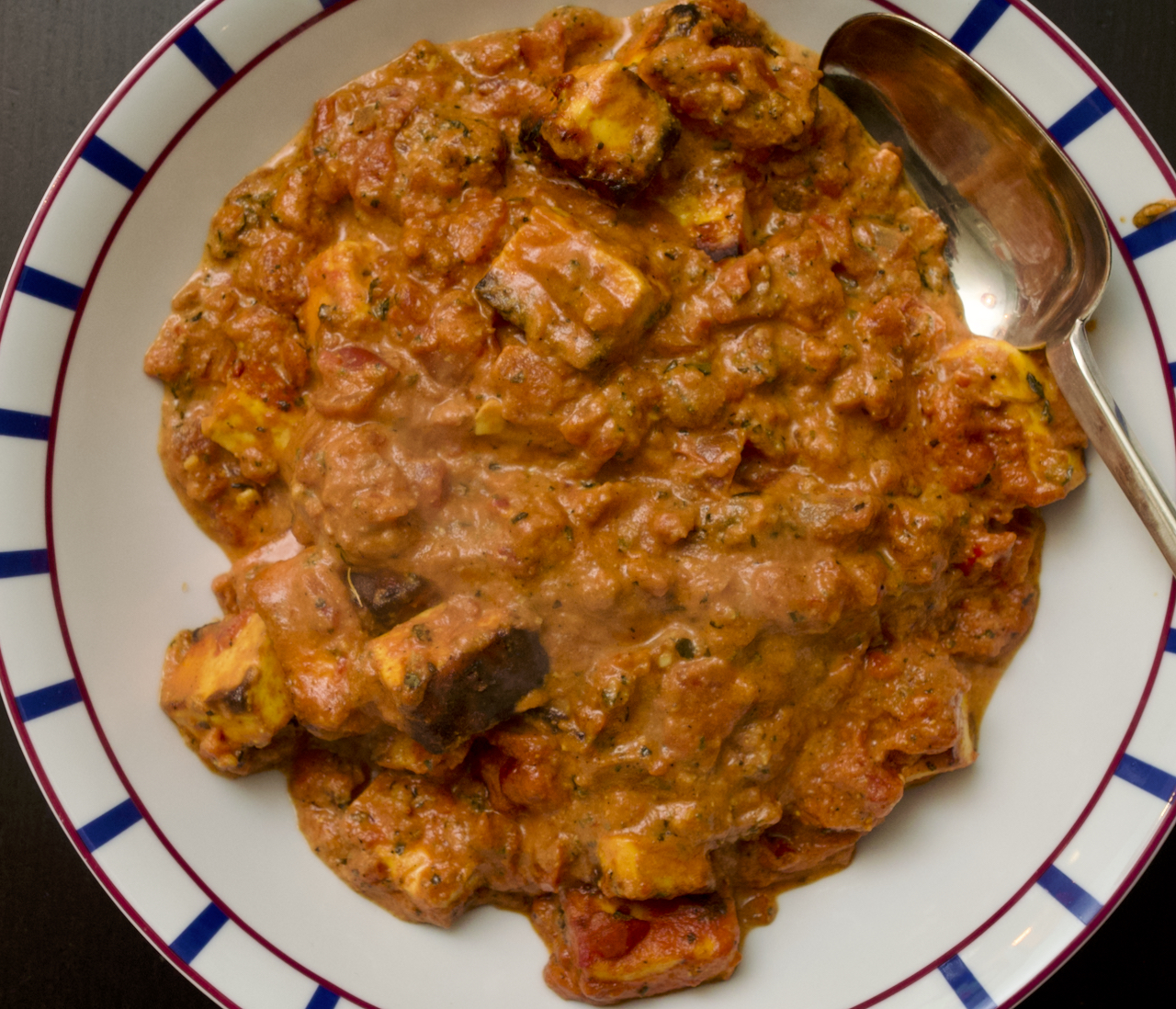
This is baked in the oven and couldn’t be easier to make. Serve with naan breads.
Butter Paneer – serves 4
FOR THE PANEER:
rapeseed oil
600g hard paneer, cut into large cubes
6 cloves of garlic, crushed
2cm x 2cm ginger, finely grated
1 tsp Kashmiri chilli powder
½ tbsp lemon juice
¾ tsp salt
½ tsp ground turmeric
5 tbsp Greek yoghurt
FOR THE BUTTER SAUCE:
1 tsp Kashmiri chilli powder
1 tsp garam masala
1 tsp ground cumin
½ tsp ground cardamom
¾ tsp salt
2 tbsp runny honey
2 x 400g tins finely chopped tomatoes
150ml double cream
1½ tbsp kasoori methi
a slab of butter
Preheat the oven to 200C fan/ 220C/ gas 7.
Line a large, deep baking tray with non-stick baking paper and brush it lightly with oil.
Put the panneer cubes into a large bowl and add half the garlic, half the ginger, the chilli powder, lemon, salt, turmeric and yoghurt. Mix well to coat the paneer, then tip into the lined tray.
Bake the panner in the oven for 25 minutes or until it’s starting to blacken at the edges.
Take the tray out of the oven and stir in 3 tbsp of oil and the rest of the garlic and ginger, then add the spices for the sauce, the salt and the honey. Stir to mix well, then add the tomatoes, making sure the paneer is completely covered. Return to the oven for another 30 minutes.
Remove the tray from the oven and stir through the cream, crumble over the kasoori methi, then stir again and put back in the oven for another 10 minutes. Remove the tray from the oven and stir in the butter. Serve with hot naan breads.
(Original recipe from Dinner by Meera Sodha, Penguin: Fig Tree, 2024.)
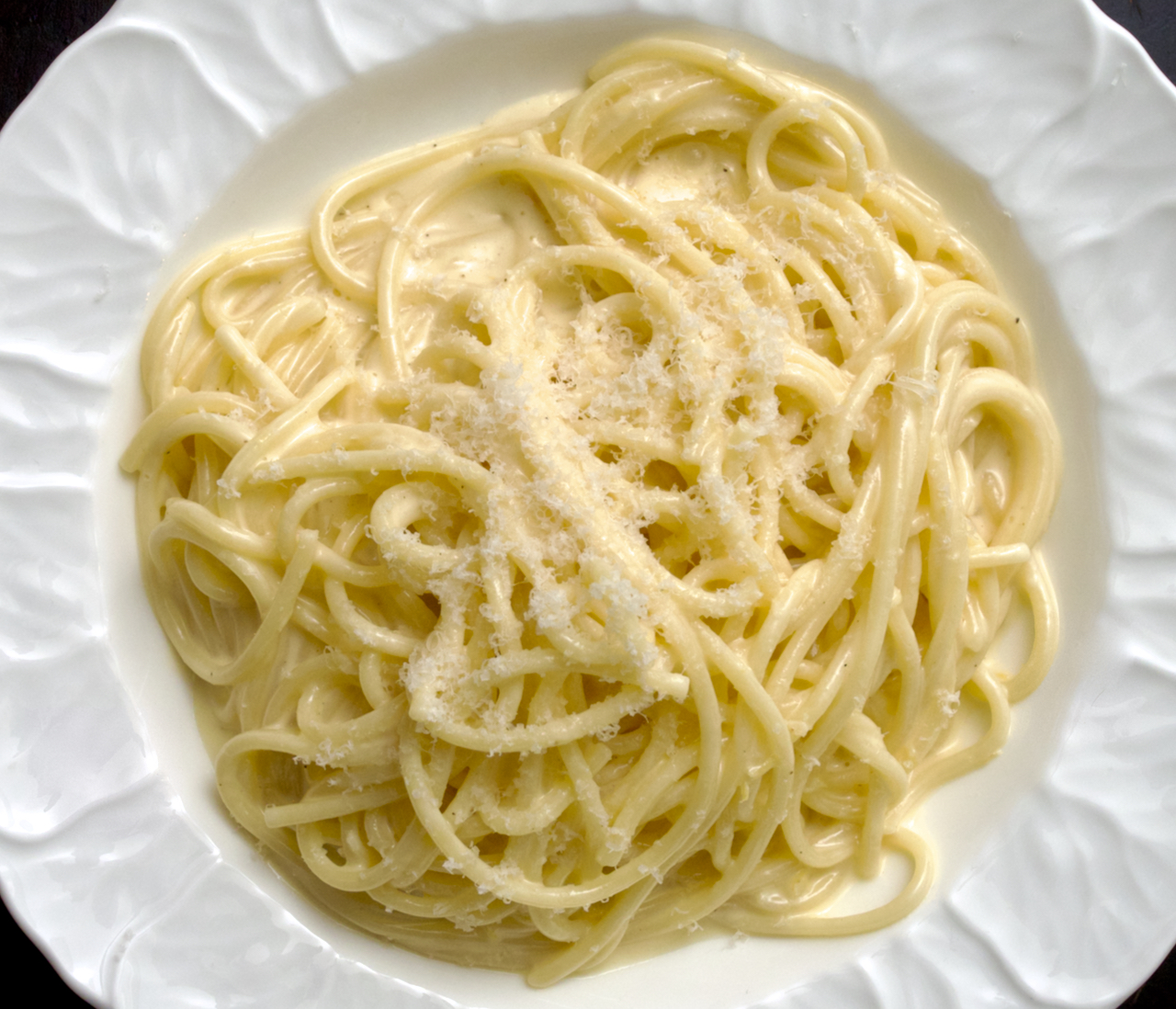
This is very rich and delicious so you can serve it in slightly smaller portions. The cooking time is a bit longer than our usual lemon spaghetti but it’s worth it for the flavour and silky texture. Perfect for an indulgent lunch at the weekend.
Wine Suggestion: An oaky white like the Dominio de Tares Old Vine Godello which is fermented with wild yeasts and aged in oak barrels. This makes it more complex, savoury and gtreat with rich, velvety foods like this.
Spaghetti al Limone – serves 6
225ml cream
2 unwaxed lemons (zest of 2 and juice of 1)
100g butter
500g spaghetti
150g grated Parmesan cheese, plus extra to serve
Put the cream and the lemon zest into a large heavy-based saucepan and bring to the boil. Lower the heat and simmer for 2 minutes.
Now start adding the butter, about 1 tbsp at a time while stirring continuously. Wait for 30-45 seconds before adding the next tbsp of butter – it should be completely melted before you add any more. Keep going until you have used all the butter and you have a rich sauce. Set aside.
Cook the spaghetti in lots of salty water until al dente. Scoop out a mugful of the pasta water before draining.
Add half the pasta water to the cream sauce and bring to a simmer. Season generously with salt and pepper.
Turn the heat back down to low, then add the cooked spaghetti and toss to coat. Add the Parmesan, 1 tbsp at a time, as you did with the butter and waiting 30-45 seconds between each addition. Stir continuously and add another splash of pasta water if it starts to get stiff. Keep going until all the Parmesan has been added, then pour in the lemon juice and toss once more.
Serve in warm pasta bowls and top with a little extra Parmesan.
(Original recipe from Avoca at Home, Penguin Random House, 2022.)
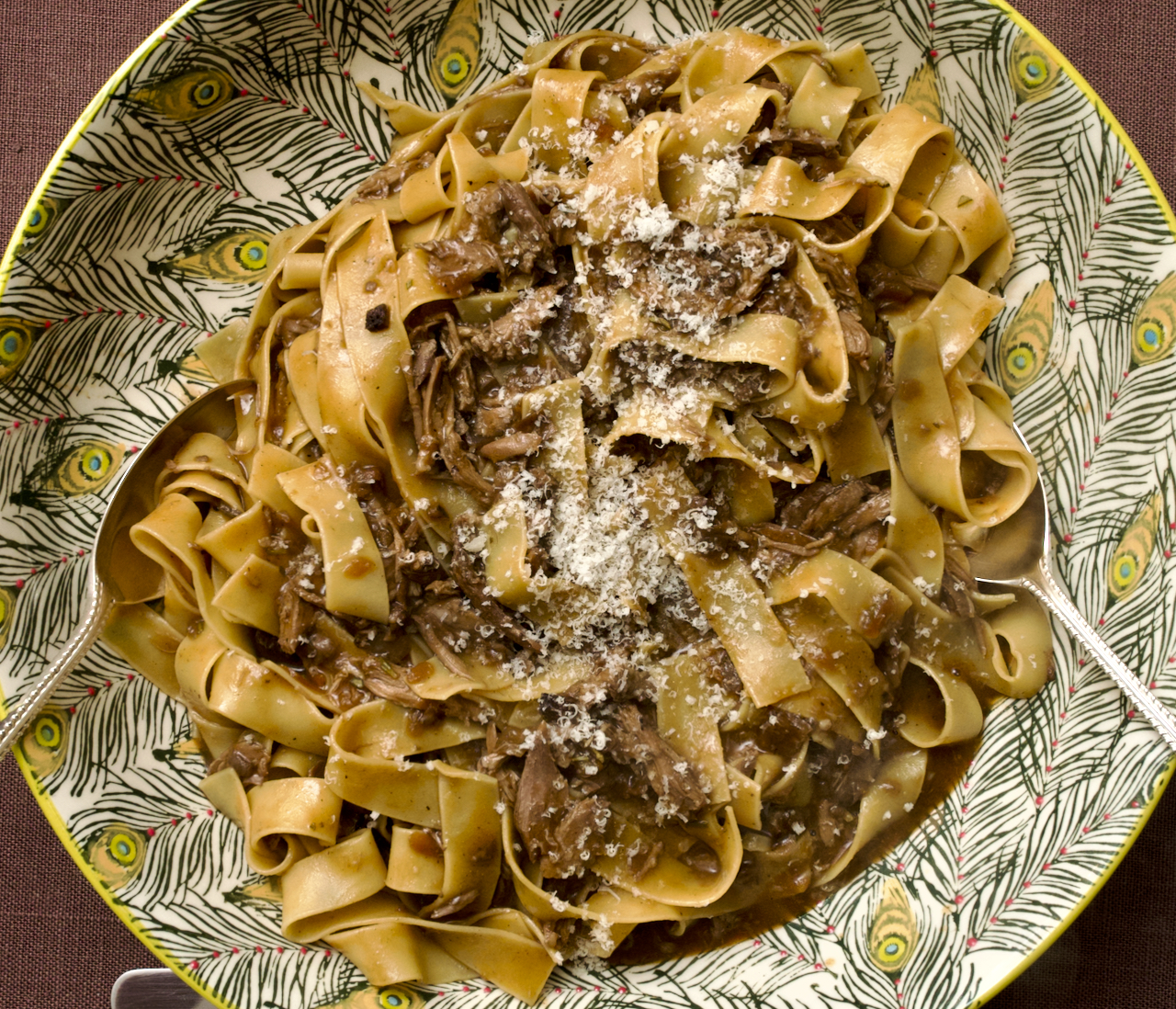
This is a delicious and rich sauce but it requires duck marylands (the thigh and the leg together) which are not easy to find here. We asked our butcher to portion up some whole ducks for us. Duck breasts are not suitable so do try and get the marylands for this.
Wine Suggestion: A good Tuscan red is a good match to cut through the richness and proteins in this dish. A good dollop for acidity and freshness helps lighten plus tannins to balance. For us tonight a new find, Ridolfi Rosso di Montalcino. Elegant and vibrant with loads of energy, layered subtle fruit and energetic structure. Pure joy.
Duck ragu pappardelle – serves 4
20g dried porcini mushrooms
1.5 litres low-salt chicken stock (it needs to be low-salt as you will reduce it – we made a light stock with two regular chicken stockpots mixed with 1.5 litres of water and that worked fine).
1 tbsp olive oil
4 duck marylands (the thigh and leg together)
1 onion, roughly chopped
1 celery stalk, coarsely grated
1 small carrot, coarsely grated
6 cloves of garlic, crushed
375ml red wine
195g tomato passata
½ cinnamon stick
2 star anise
2 bay leaves
½ tsp black pepper
1½ tbsp roughly chopped fresh rosemary
1 tbsp plain flour
15g unsalted butter, softened
400g pappardelle pasta
freshly grated Parmesan, to serve
Put the porcini mushrooms into a small bowl. Pour the stock into a large frying pan and place over a high heat. Bring to the boil, then scoop out 125ml and pour it over the porcini. Leave the porcini to soak for 30 minutes. Lower the heat under the stock to medium-high and reduce to 750ml – this should take about 8 minutes but wise to check now again how much you have with a measuring jug.
Squeeze the excess liquid out of the porcini with your hands and reserve all the liquid. Chop the porcini into tiny pieces, then set aside. Add the soaking liquid to the reduced chicken stock.
Heat the oil in a large casserole over a high heat. Place the duck, skin-side down and cook until golden brown. Turn and brown the flesh side and the sides as well, then transfer to a bowl and set aside.
Pour away all but 3 tbsp of the duck fat, then add the onion, celery, carrot and garlic and cook for 8 minutes until soft but not browned. Add the wine and simmer for 5 minutes to reduce by half. Add the passata, cinnamon, star anise, bay leaves, pepper and stock. Stir everything together.
Submerge the duck in the liquid and bring to a simmer, then reduce the heat to low. Simmer very gently for 1½, uncovered, checking regularly to ensure the duck stays submerged or at least that the meaty part is in the liquid. After the first hour, add the rosemary and chopped porcini.
Transfer the cooked duck to a bowl and cover loosely with foil. When cool enough to handle, remove the skin and shred the duck flesh with your hands. Discard the skin and bones.
Mix the flour and butter together in a small bowl to make a smooth paste. Stir the mixture into the pot, then simmer for 3 minutes to thicken slightly. Add the duck, then taste and season only if needed. Remove the bay leaf, cinnamon stick and star anise. Keep the ragu warm while you cook the pasta.
Cook the pasta in lots of salty boiling water according to the timings on the pack. Just before draining, scoop out a large mug of the pasta water. Drain the pasta and add to the warm ragu with a splash of the pasta cooking water. Over a medium heat, toss the pasta with two spatulas unil the sauce thickens and coats the pasta. You can add a bit more water if it’s too thick.
Serve in warm bowls with lots of grated Parmesan.
(Original recipe from Recipetin Eats Tonight by Nagi Maehashi, Pan Macmillan, 2024.)



 Jono & Jules do food & wine