Feeds:
Posts
Comments

Archive for the ‘Beef’ Category

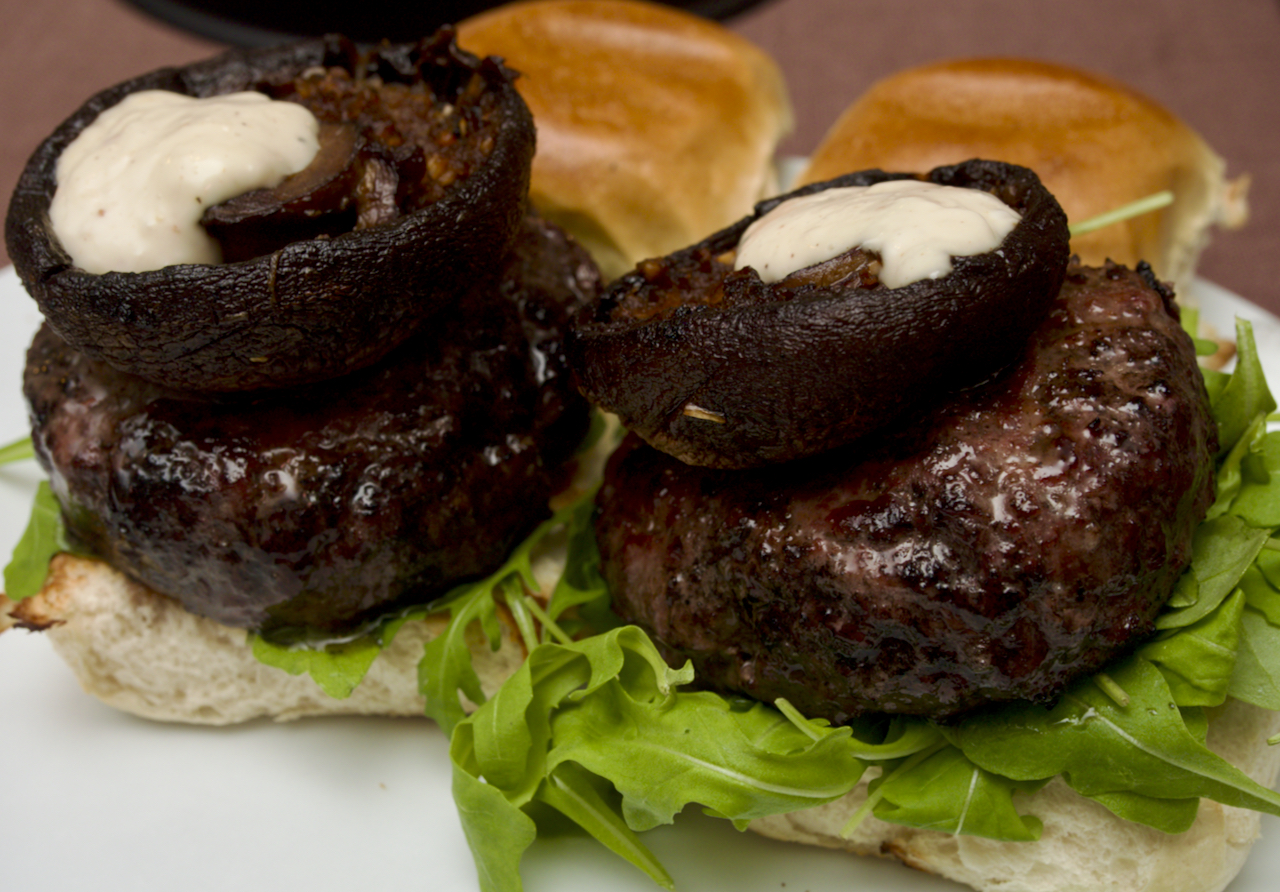
These tasty mushrooms with horseradish mayo are a great addition to a regular barbecued burger. They’re fully of umami savouriness. Make your own burgers, or buy some from a good butcher.

Wine Suggestion: We really enjoy these flavours with a good Pinot Noir with a few years of age, but they’ve got so expensive which is why we opened Dominio de Tares Baltos. A Mencia from Bierzo, north western Spain, this is a wine we’ve enjoyed over the years and think it’s getting better each vintage. Deep and savoury, but with an intrinsic freshness. Our bottle was quite young, but we suspect this will be super with an extra 3-5 years cellaring too.

Burgers with mushrooms and horseradish mayonnaise – serves 4

  • 2 tbsp soy sauce
  • 1 tbsp sesame oil
  • 25g root ginger, grated
  • 1 clove of garlic, finely chopped
  • 2 large portobello mushrooms
  • 4 good-quality shop-bought or home-made beef burgers
  • 4 burger buns, to serve
  • a large handful of rocket leaves, to serve

FOR THE HORSERADISH MAYONNAISE:

  • 2-3 tbsp mayonnaise
  • 2-3 tsp hot horseradish sauce

Mix the soy sauce, sesame oil, ginger and garlic together in a bowl. Set the mushrooms on a plate, stem side up, and pour over the marinade. Set aside for 30 minutes to 1 hour.

Mix the mayonnaise and hot horseradish sauce together in a bowl and season to taste.

Get your barbecue ready for both direct and indirect cooking.

Place the mushrooms, stem-side up, over the direct heat and cook for 10-15 minutes, or until softened and coloured. Move them to the indirect heat, keeping them stem side up.

Put the burgers over the direct heat, lift the mushrooms with tongs and pour any juices over the burgers as they cook. Keep the mushrooms over the indirect heat but turn them over so they are stem side down. Close the barbecue lid and allow the burgers to cook for 3-4 mintues, then flip them over and cook for the same time on the other side. They should be 71C when cooked through.

Quickly toast the buns, then place a few rocket leaves on the bun base and top with a burger. Cut the mushrooms into slices and divide between the burgers, finishing with some horseradish mayonnaise and the bun lid.

(Original recipe from Foolproof BBQ by Genevieve Taylor, Hardie Grant: Quadrille, 2021.)
Read Full Post »

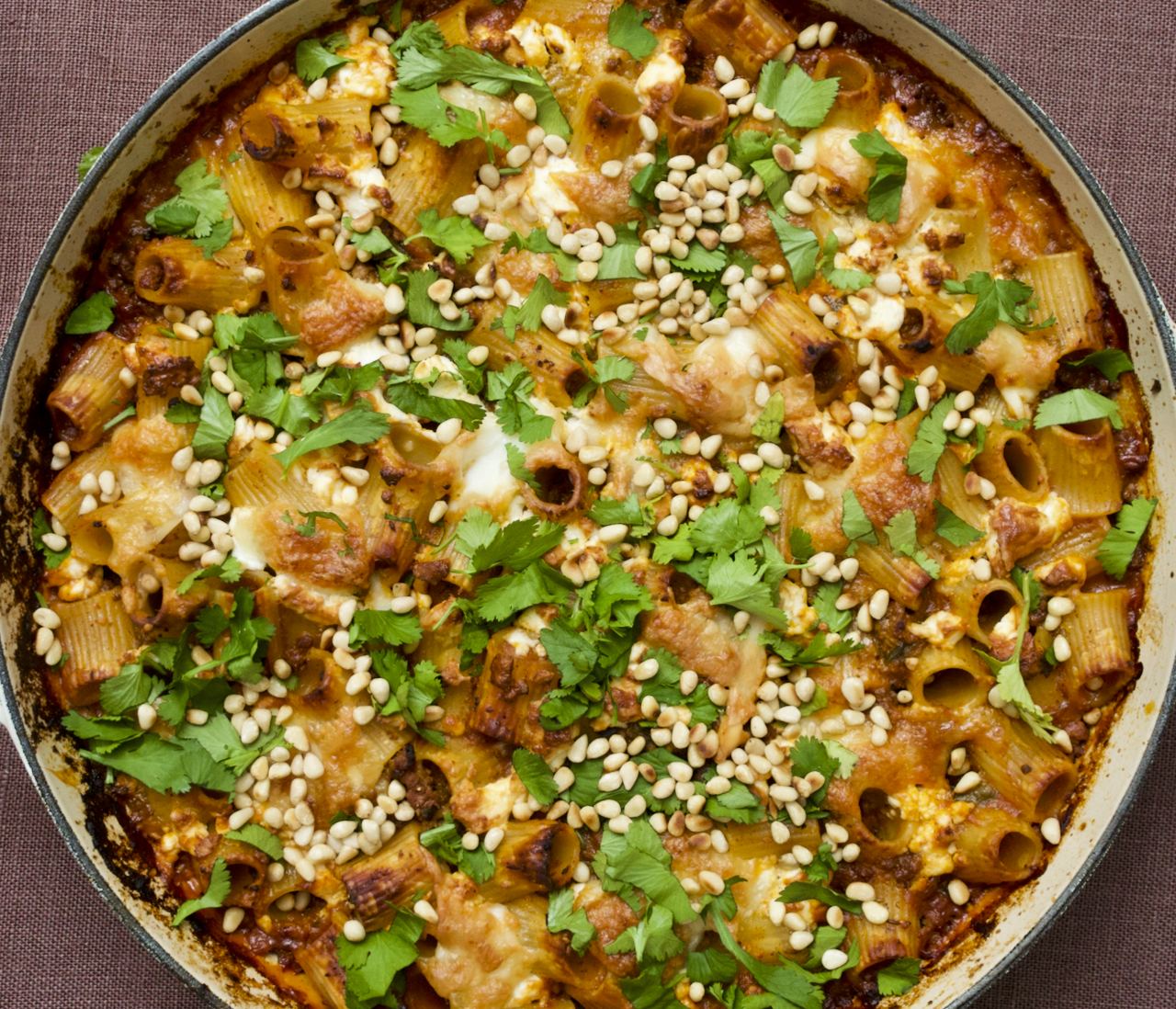
We’re loving Lugma by Noor Murad and this pasta bake is a definate crowd pleaser.

Wine Suggestion: It was a toss up between a rich white and a warm, ripe red like the Condado de Haza Crianza from Ribera de Duero which we ended up pairing with this dish. Rich and deep from the sunshine in Spain, but with an elegance and freshness plus warm spices that make this a great combo.

Middle Eastern Pasta Bake – serves 4 to 6

FOR THE RAGU:

  • 2 tbsp olive oil
  • 1 onion, finely chopped
  • 1 carrot, peeled and finely chopped
  • 1 green pepper, finely chopped
  • 4 garlic cloves, finely chopped
  • 300g beef mince
  • 300g lamb mince
  • 2 cinnamon sticks
  • 3 fresh bay leaves
  • 1 black dried lime, pierced a couple of times with a sharp knife
  • 2 red chillies, pierced a couple of times with a sharp knife
  • seeds from 15 cardamom pods, finely crushed with a pestle and mortar
  • 1 tbsp cumin seeds, finely crushed with a pestle and mortar
  • 2 tsp coriander seeds, finely crushed with a pestle and mortar
  • 1 tsp Aleppo chilli flakes
  • 1½ tsp dried oregano
  • 1½ tbsp tomato purée
  • 1 chicken stock cube
  • 400g tin plum tomatoes, puréed
  • 150ml full-fat milk
  • 20g coriander, roughly chopped

FOR THE PASTA BAKE:

  • 300g rigatoni pasta
  • 125g feta, rouglhy crumbled
  • 125g buffalo mozzarella, roughly torn
  • 25g pine nuts, well toasted
  • 10g coriander, leaves and soft stems roughly chopped

Make the sauce first by heating the olive oil in a large, deep sauté pan over a medium-high heat. Add the onion, carrot and pepper and cook for about 5 minutes. Add the garlic and cook for 2 more minutes. Stir in the beef and lamb mince and cook for 10 minutes, breaking the mince up with a wooden spoon so it is finely crumbled. Allow the liquid to cook off and the mince will start to brown. Stir in the cinnamon sticks, bay leaves, dried lime, chillies, spices, oregano, tomato purée, stock cube, 1 tsp of salt and plenty of black pepper. Fry for a couple of minutes until fragrant, then pour in the puréed tomatoes and 300ml of water. Bring to a simmer then reduce the heat to the lowest setting and cover with a lid. Leave to cook for 2 hours, stirring every 25 minutes. You should end up with a thick and rich sauce.

Pour in the milk, cover and cook for another 25 minutes. Set aside to cool a bit, then pick out and discard the cinnamon sticks and bay leaves. Remove the dried lime, squeezing any juice into the sauce. Add the chopped coriander. You can now use the sauce or stick it in the fridge or freezer until ready to use.

Heat the oven to 200C fan.

Bring a large pan of water to the boil and add 2 tsp of salt. Cook the pasta in the water until al dente. Remove 130ml of the pasta water before draining in a colander.

You will need a baking dish about 23 x 33cm. Add the drained pasta, the ragu and the reserved pasta cooking water and mix to combine. Pick out the whole chillies and lay over the top, then sprinkle over the feta and mozzarella. Bake for 30 minutes or until browned and crispy.

Sprinkle over the pine nuts and fresh coriander, then serve.

(Original recipe from Lugma by Noor Murad, Quadrille, 2025.)

Read Full Post »

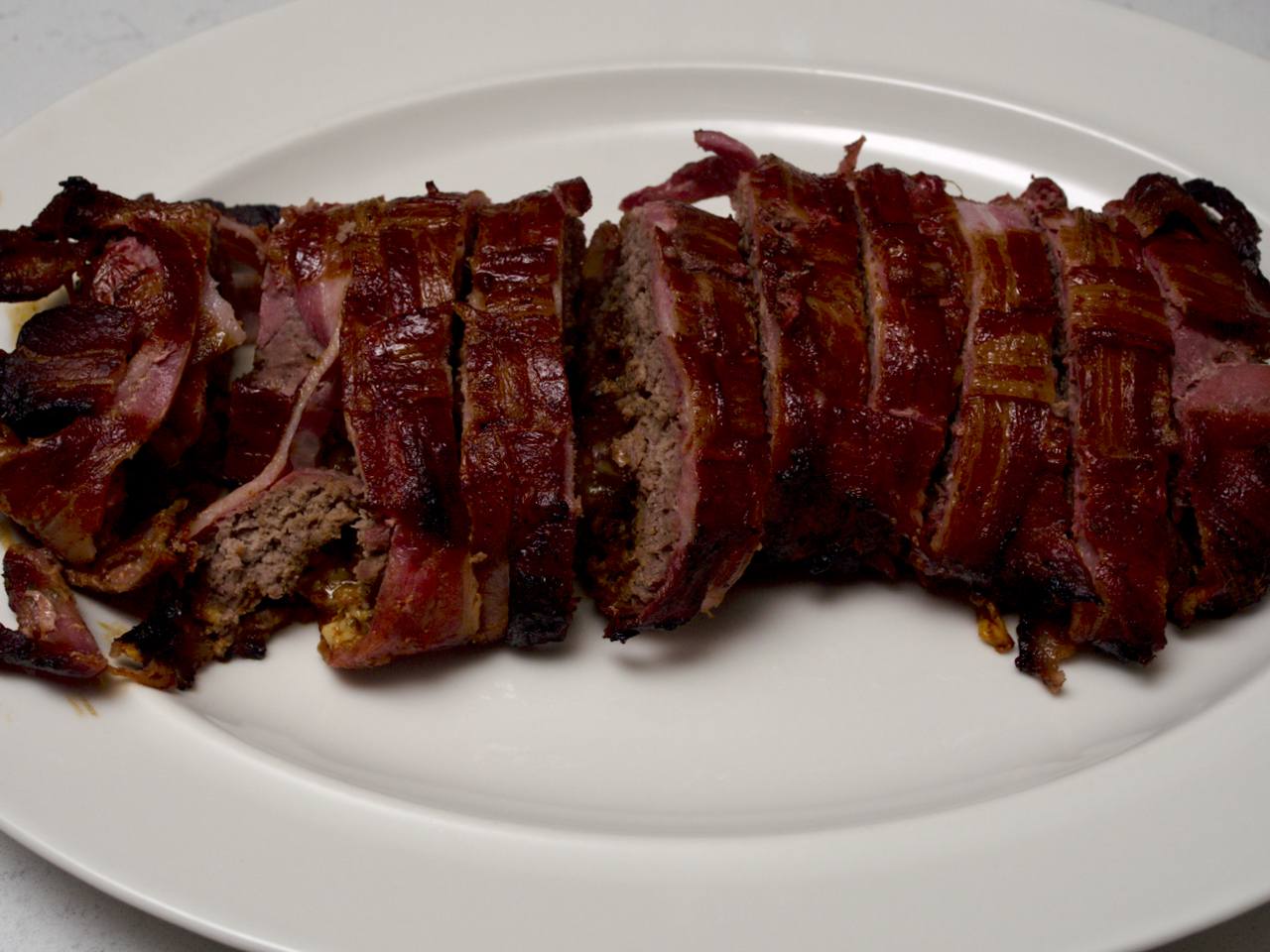
Here is something a bit different for the barbecue. It’s a meatloaf stuffed with cheese and tomato chutney and wrapped in a bacon lattice. Serve in slices with salads and sides.

Wine Suggestion: a lovely, juicy red is what we like with this. Roc des Anges “Segna de Cor” a blend of Grenache, Carignan and Syrah fits this bill with good deal of panache. It’s a wine that reflects the unique soils of Roussillon, but with a layer of brambly, juicy fruits on top.

Barbecued meatloaf – serves 4 to 6

  • 16 slices smoked streaky bacon
  • 400g beef mince
  • 2 tbsp barbecue spice rub (we used Pitt Bros Charr’d Rub)
  • 100g mature cheddar, grated
  • 3 tbsp spicy tomato relish (we used Ballymaloe)

You need to get your barbecue prepared for indirect cooking so you can cook the meatloaf away from the direct heat of the fire.

Start by making the bacon lattice to wrap the meatloaf. Line up 8 slices of bacon vertically on a flat baking sheet. From left to right, fold every other slice in half upwards. Lay a slice horizontally across the centre of the vertical slices. Unfold the vertical slices back over the horizontal one then fold up the other set of vertical slices. Lay over another horizontal slice and unfold the foleded ones. Repeat until you have a neat lattice.

Place the beef mince over the bacon in an even layer. Sprinkle over the barbecue rub and season with salt and pepper. Scatter the cheese in a line down the centre, then spoon over the relish.

Roll the meatloaf up as tightly as you can into a neat, fat sausage. Place the meatloaf on the barbecue, seam side down, away from the fire. Cover with the lid and cook gently for 35 to 40 minutes, turning with tongs a few times so it browns all over. The meatloaf is cooked when a probe reads 65-70C.

Rest the meatloaf for a few minutes, then carve into thick slices.

(Original recipe from Foolproof BBQ by Genevieve Taylor, Hardie Grant: Quadrille, 2021.)
Read Full Post »

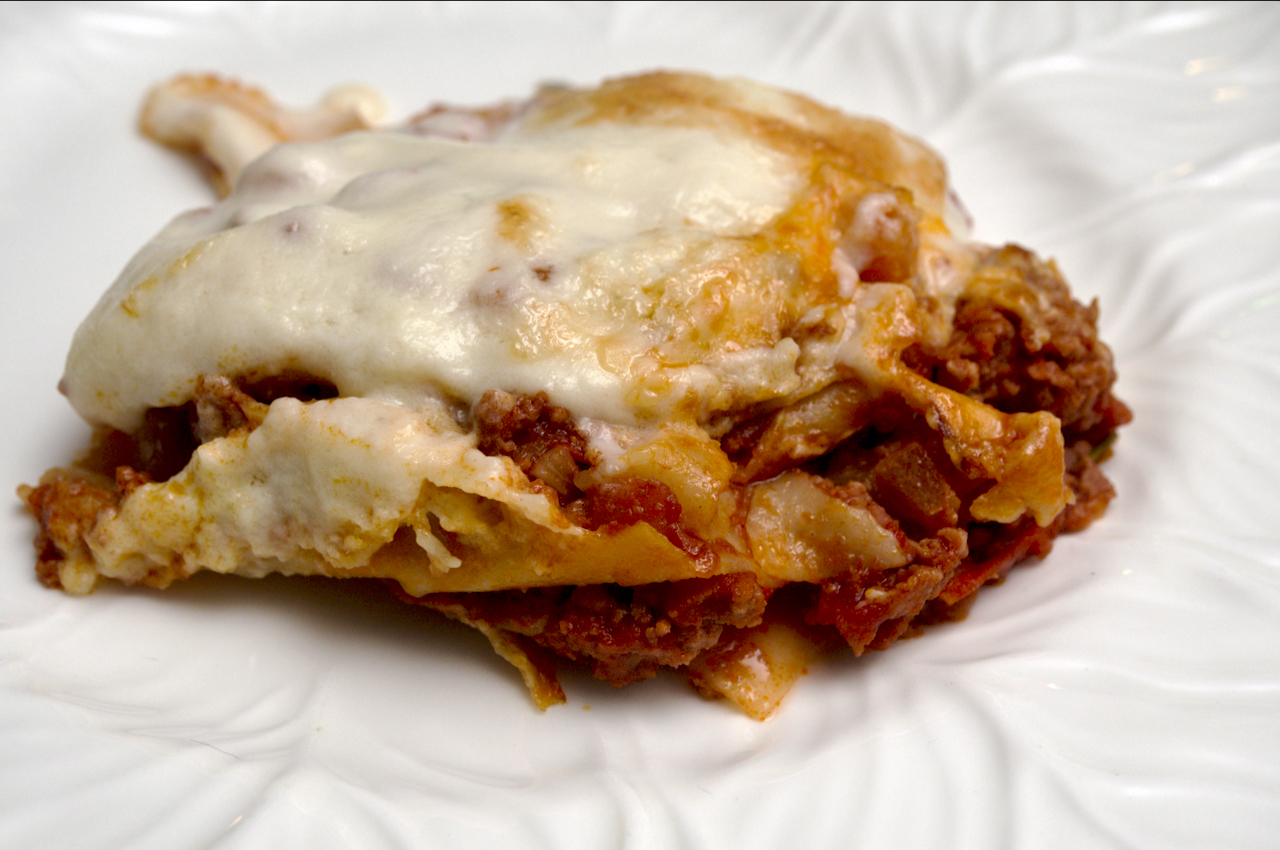
Just a reminder that a big lasagne is a very good thing to have. We sometimes divide it up into smaller dishes and freeze some to finish off cooking another day.

Wine Suggestion: Our personal prejudice here is for Sangiovese every time with Lasagne, though we know this is not the only grape that works. That said we couldn’t go past the Boscarelli “Prugnolo” Rosso di Montepulciano which comes from a lovely hilltop DO in Tuscany.

Lasagne – serves 8

  • 350-400g fresh lasagne sheets
  • nutmeg
  • 1 ball of mozzarella, torn

FOR THE RAGU:

  • 2-3 tbsp oil
  • 1 onion, finely chopped
  • 2 carrots, finely chopped
  • 2 celery stalks, finely chopped
  • 2 cloves of garlic, finely chopped
  • 4 rashers of smoked streaky bacon, finely chopped
  • 500g beef mince
  • 500g pork mince
  • 175ml red wine
  • 750ml beef stock/chicken stock
  • 2 tbsp tomato purée
  • 2 x 400g tins chopped tomatoes
  • 1 bay leaf
  • a sprig of rosemary

FOR THE BECHAMEL:

  • 70g butter
  • 70g plain flour
  • 1 litre whole milk
  • 1 bay leaf
  • 100g Parmesan, freshly grated

Start with the ragu. You need to heat the oil in a large wide pan, then add the onions, carrots, celery and garlic and fry gently until softend but not coloured.

Add the bacon, beef and pork and continue frying until the meat has changed colour.

Pour in the red wine and increase the heat so that it comes to the boil. Reduce the heat again and add the stock, tomato purée and tinned tomatoes. Season with salt and pepper and add the bay and rosemary. Leave to cook now over a medium-low heat for about 1½ hours or until you have a rich sauce.

Meanwhile, make the bechamel. Melt the butter in a large pan over a medium heat, add the flour and stir to make a paste. Cook for a minute, then take the pan off the heat and gradually whisk in the milk until you have a smooth sauce. Add the bay leaf, then return the pan to the heat and bring the boil, stirring constantly. Keep cooking until you have a smooth and thick sauce. Remove the bay leaf and stir in two-thirds of the grated Parmesan and season to taste.

Heat the oven to 180C/Fan 160C.

You will need a deep lasagne dish – about 20 x 30 cm.

Put a large spoonful of the ragu in the bottom of the lasagne dish and add a layer of lasagne sheets. Top with a layer of ragu and a drizzle of bechamel (not a full layer or you will run out), then another layer of lasagne sheets. Keep going like this until you have used up all the ingredients, finishing with a good layer of bechamel. Grate over a little nutmeg, then add the torn mozzarella and the rest of the Parmesan.

Bake for 45-50 minutes or until bubbling and golden brown. Allow to sit for 5-10 minutes when it comes out of the oven so it’s easier to cut. Serve with a green salad and garlic bread if you like.

(Original recipe from Rick Stein’s Food Stories, BBC Books, Penguin: Random House, 2024.)

Read Full Post »

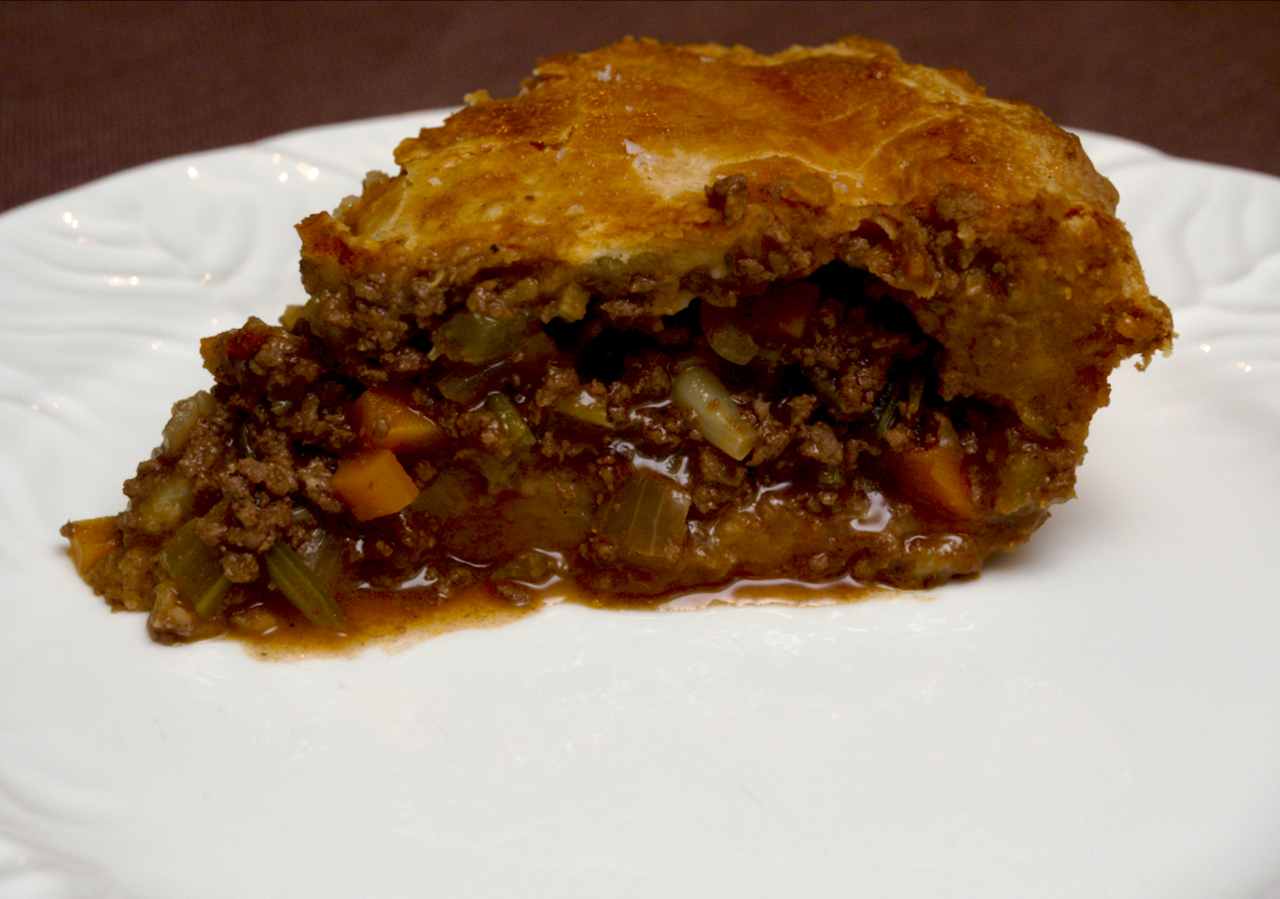
Mince Pie

We’re still mildly terrified of pastry after all these years. This pastry behaved reasonably well for something so short (ie light and crumbly) and it helps that it’s not rolled out too thin.

Wine Suggestion: A good Côtes du Rhône blend if your feeling like a French style, though tonight we had a notion for Italian and ended up with La Pruina Salice Salentino, which is a Negroamaro-Black Malvasia blend. What we like about these wines is their ability, despite being closer to the equator and generally warmer vineyards is to have a great balance of fruit, velvety tannins and freshness. Fuller bodied but in good hands like this, not heavy or clumsy. Dark brambly fruits and generous tannins make it a match.

Mince pie – serves 6 to 8

For the pastry:

  • 650g plain flour, plus extra to dust
  • 1 tsp sea salt
  • 125g lard, diced, plus extra to grease (this is surprisingly difficult to get in Ireland, we found some in a Polski shop)
  • 100ml iced cold water
  • 1 large egg, plus extra beaten egg to glaze

For the filling:

  • 2 tbsp olive oil
  • 30g lard, plus extra to grease the dish
  • 2 large onions, diced
  • 2 large carrots, diced
  • 3 celery stalks, diced
  • 3 garlic cloves, finely chopped
  • 800g beef mince
  • 3 tbsp tomato purée
  • 3 tbsp plain flour
  • 200ml red wine
  • a few sprigs of thyme and rosemary, tied together
  • 500ml beef stock
  • 2 tsp marmite
  • 2 tbsp worcestershire sauce

Start by making the pastry. Put the flour into a large bowl with the salt, lard and butter. Rub the the lard and butter into the flour using your fingertips, until it looks like breadcrumbs. Add the beaten egg and cold water and mix to combine and form a soft dough (add a little bit more water if you need to bring it together). Shape into a ball, then flatten to a large disc and wrap in cling film. Chill in the fridge for at least an hour.

Next make the filling. Heat half the olive oil and lard in a large casserole over a medium-high heat. When it starts to foam, add the onions and carrots and cook for about 5 minutes. Add the celery and garlic and cook for another 4 minutes or until the veg have softened. Scoop the vegetables out onto a plate and set aside.

Add the rest of the olive oil and lard to the same pan. When hot, add the mince and cook over a high heat until well browned, breaking it up with a wooden spoon. Stir in the tomato purée and cook for a couple of minutes, then add the flour, and cook, stirring, for another 2 minutes. Return the vegetables to the pan and mix everything together.

Pour the wine into the meat mixture, bring to a simmer and bubble until reduced by half. Add the thyme and rosemary, then pour in the stock and return to a simmer. Lower the heat and cook gently for 30 minutes, stirring now and then. Add the marmite and worcestershire sauce, stir well and season with salt and pepper. Remove from the heat and leave to cool.

Heat the oven to 200C/Fan 180C.

Grease the base of a 26cm round shallow sauté pan or casserole with a little lard.

Divide the chiled pastry into 2 pieces: one-third and two-thirds. Dust the work surface with flour and roll out the larger piece to a 32cm round. Lift into the greased pan and press into the corners of the pan, leaving any excess pastry hanging over the edge. Spoon the chilled filling into the case.

Now roll out the remaining pastry to a 28 cm circle. Brush the pastry case edges with beaten egg, then lift the circle of pastry over the filling and press the edges together to seal. Trim off any excess pastry at this point and crimp the edges.

Make a cross in the centre to allow the steam to escape. Brush the pie well with beaten egg and sprinkle with a little sea salt.

Bake in the oven for 45 mintues or until a deep golden brown and the filling is piping hot. Leave to stand for a few minutes before serving.

(Original recipe from Tom Kerridge Cooks Britain, Bloomsbury, 2024.)

Read Full Post »

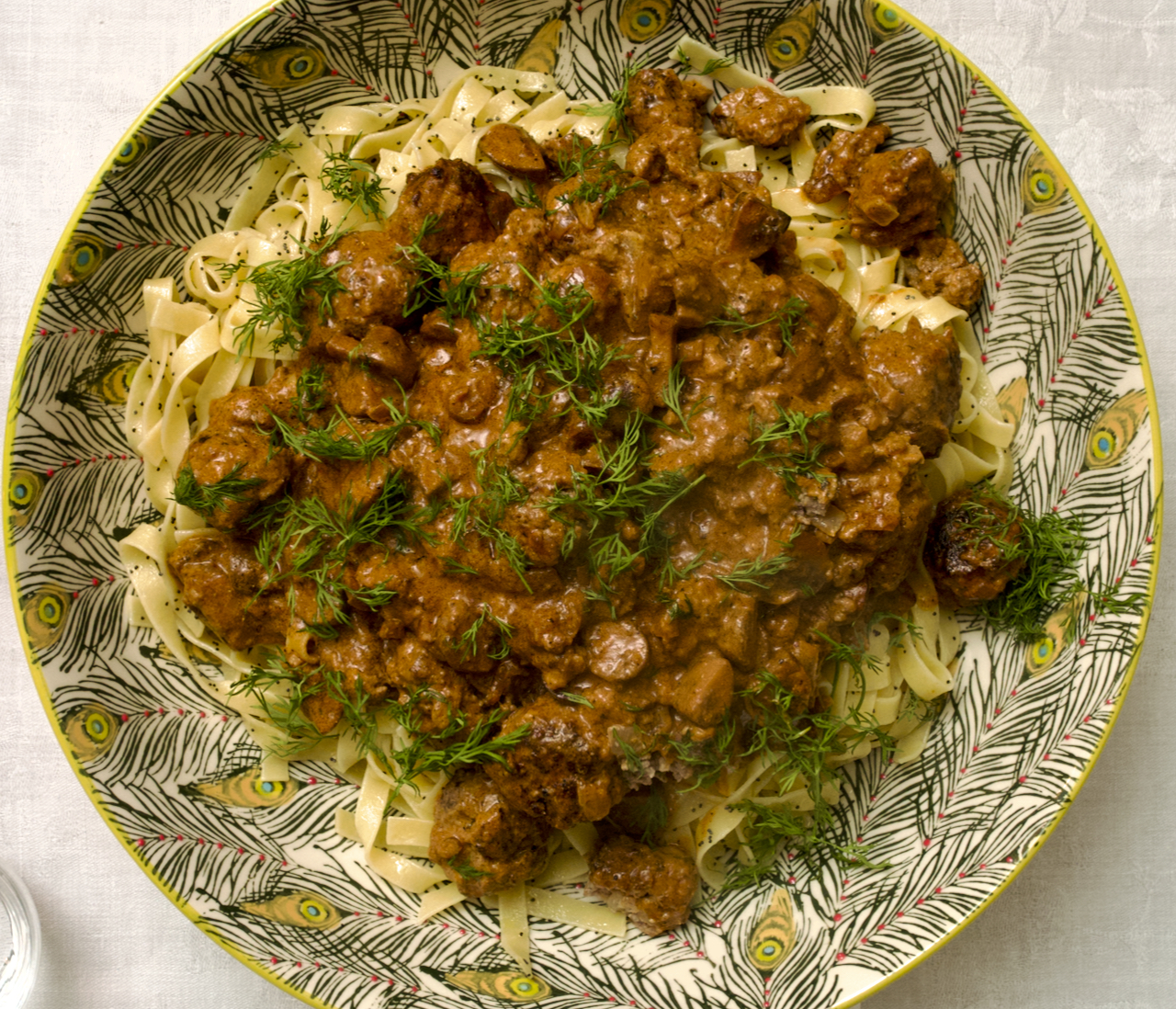
This is nice twist on a retro dish. Delicious!

Wine suggestion: this almost demands an oaked white and given the time of year we thought Patrick Javillier’s Bourgogne Cuvée des Forgets, from the vineyards near Meursault would match with equal amounts of richness, buttery toastiness and a fresh, minerally core. Sometimes nothing can beat a good, deftly handled, oaked Chardonnay.

Meatball Stroganoff – serves 6

  • 500g dried tagliatelle
  • 50g unsalted butter
  • 2 tsp poppy seeds

FOR THE MEATBALLS:

  • 70g slightly stale bread, crusts removed and roughly torn
  • 100ml milk
  • 1 tbsp olive oil
  • 1 onion, finely chopped
  • 2 cloves of garlic, crushed
  • 500g beef mince
  • 2 tsp Dijon mustard
  • 1 egg
  • 5g dill, chopped
  • 1 tsp finely grated lemon zest
  • 60ml olive oil, for frying the meatballs

FOR THE SAUCE:

  • 3 banana shallots, thinly sliced
  • 3 garlic cloves, crushed
  • 50g unsalted butter
  • 400g small chestnut mushrooms, quartered
  • 3 tbsp cognac
  • 1½ tsp hot smoked paprika
  • 1½ tbsp tomato purée
  • 1 tbsp Dijon mustard
  • 1 tbsp Worcestershire sauce
  • 650ml beef stock
  • 150g sour cream

TO SERVE:

  • dill pickles, roughly chopped
  • a handful of dill, roughly chopped

Put the bread in the milk in a large bowl and set aside to soak for about 5 minutes.

Put the oil in a frying pan and place over a medium heat. Add the onion and cook for 8-10 minutes, stirring occasionally, until soft. Add the garlic and cook for a minute, then scrape into a bowl. Allow the onions to cool a little, then add them to the bowl with the soaked bread, along with the remaining meatball ingredients, apart from the oil for frying the meatballs. Season with 1 tsp of salt and some black pepper. Mix together well with your hands, then make 26 meatballs (they should be about 30g each). Cover and keep the mixture in the fridge until ready to cook.

Put 2 tbsp of the oil into a large sauté pan and place over a medium-high heat. When the oil is hot, add half the meatballs and cook for 8 minutes, until nicely browned and just cooked, shake the pan gently to turn them. Transfer to a plate and cook the rest of the meatballs in another 2 tbsp of oil. Set aside.

In the same pan that you fried the meatballs, add the shallots and cook for 5-7 minutes, stirring occasionally, until starting to caramelise. Add the garlic, cook for a minute, then scrape into a bowl.

Add half the butter to the pan, then add half the mushrooms, ¼ tsp of salt and cook for 6 minutes, until well browned and there is no liquid. Tip into the bowl with the shallots and repeat with the remaining mushrooms and butter, adding another ¼ tsp of salt.

Tip the mushrooms and shallots back into the pan and bring to a simmer. Add the cognac and let it bubble for a few seconds, then add the paprika, tomato purée, mustard, Worcestershire sauce and beef stock. Bring to the boil, then simmer for 15 minutes or until reduced by a third. Add the sour cream, meatballs, ½ tsp of salt and some pepper and simmer for 5 minutes.

Meanwhile, cook the pasta in lots of salty water, then drain and return to the pot, then add the butter and poppy seeds. Toss gently to melt the butter, then divide between six bowl and spoon the meatballs sauce on top. Garnish with chopped pickles and dill.

(Original recipe from Ottolenghi Comfort by Yotam Ottolenghi, Helen Goh, Verena Lochmuller & Tara Wigley, Ebury Press, 2024. )

Read Full Post »

A main course salad with warm elements cooked over charcoal and a delicious dressing. Like everything it tastes best eaten outside.

Wine Suggestion: A current favourite is Bodega Jesus Romero’s Rubus, a Garnacha-Tempranillo blend from the mountain slopes in Aragon, Spain, that despite it’s depth of flavour has a real energy and vibrancy.

Steak, piquillo pepper and asparagus salad – serves 4

  • 2 ribeye steaks (about 500g in total)
  • 1 tbsp olive oil
  • 16 asparagus spears
  • 2 baby gem lettuces, leaves seperated
  • 100g roasted piquillo peppers, sliced – good quality Spanish brands like El Navarrico will make a difference here
  • 2 tbsp capers
  • 30g flaked almonds, toasted

FOR THE DRESSING:

  • 1 clove of garlic, grated
  • 2-3 sprigs of marjoram or oregano, leaves picked
  • 2 tbsp PX sherry vinegar
  • 3-4 tbsp extra virgin olive oil

Take the steaks out of the fridge about an hour before you want to cook them.

Get your barbecue hot and ready to cook on – if you don’t want to barbecue you can cook the asparagus and steak on a griddle pan.

Season the steaks and rub all over with oil.

Sear the steaks for a few minutes on each side on a hot barbecue, then set aside to rest.

Toss the asparagus spears in oil and cook on the barbecue until charred. Tip into a serving bowl.

Add the lettuce leaves, piquillo peppers and capers to the bowl with the asparagus.

Combine all of the dressing ingredients and season well.

Slice the steaks and arrange on top of the salad, then drizzle all over with the dressing and scatter over the toasted almonds.

(Original recipe from The Spanish Home Kitchen by José Pizarro, Hardie Grant Books, 2022.)

Read Full Post »

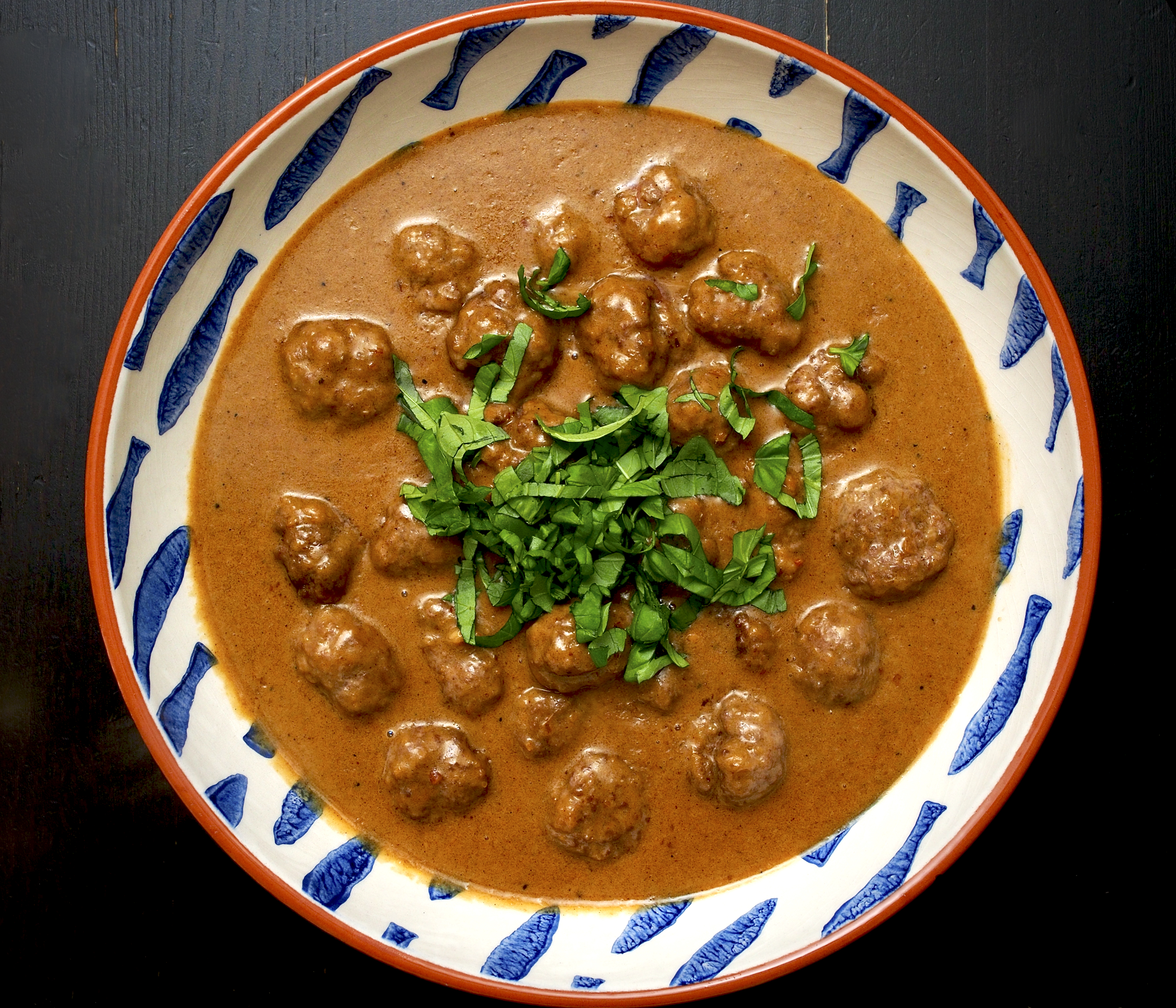
We can see why this is eaten in across the world in Swedish furniture stores: it’s light, homely, and a total child-pleaser (sans sprouts for some).

Wine Suggestion: we love a creamy white to go with this dish; that means a touch of oak and if possible a little battonage to bring structure and a toasty, creamy texture. A little left field, we chose the Dominio de Tares Godello from old vine Godello, wild fermented in oak. With a lemony core layered with pears and stonefruit this has hints of white flowers, brioche and a gentle toasty/nutty character.

Swedish Meatballs – serves 4

  • 1 onion, peeled and grated (use a box grater)
  • 2 slices soft white bread, crusts removed and cut into 1cm cubes
  • a splash of milk
  • 300g beef mince
  • 300g pork mince
  • 1 egg
  • a little freshly grated nutmeg
  • ¼ tsp ground allspice
  • ¼  tsp black pepper
  • ¾ tsp cooking salt
  • 1 tbsp rapeseed oil

CREAMY GRAVY:

  • 50g unsalted butter
  • 3 tbsp plain flour
  • 500ml beef stock
  • 125ml double cream

TO SERVE:

  • finely chopped chives (only if you have them)
  • lingonberry jam or cranberry sauce (also not essential)

Put the grated onion into a large mixing bowl. Add the bread and mix well – if the bread doesn’t turn soggy you can add a splash of milk. Set aside for a minute, then add the rest of the meatball ingredients, except the oil. Mix well with your hands to combine.

Roll the mixture into about 25-30 meatballs.

Heat the oil in a deep frying pan over a medium-high heat. Brown the meatballs in batches – they should be nicely browned all over but not cooked through. Set aside.

Lower the heat to medium.

Melt the butter in the meatball pan and wait until it foams. Add the flour and stir for a minute, then gradually add the beef stock, stirring constantly until you have a smooth sauce.

Turn the heat up slightly and bring the sauce to a simmer. Add the meatballs and any juices on the plate. Cook for 8-10 minutes or until the liquid has thickened to a thin gravy. Stir in the cream and simmer for a couple of minutes, then remove from the heat.

Sprinkle the meatballs with chives if you like and serve with creamy mash and some greans. Ligonberry or cranberry optional.

(Original recipe from Recipetin Eats Dinner by Nagi Maehashi, Pan Macmillan, 2022.)

Read Full Post »

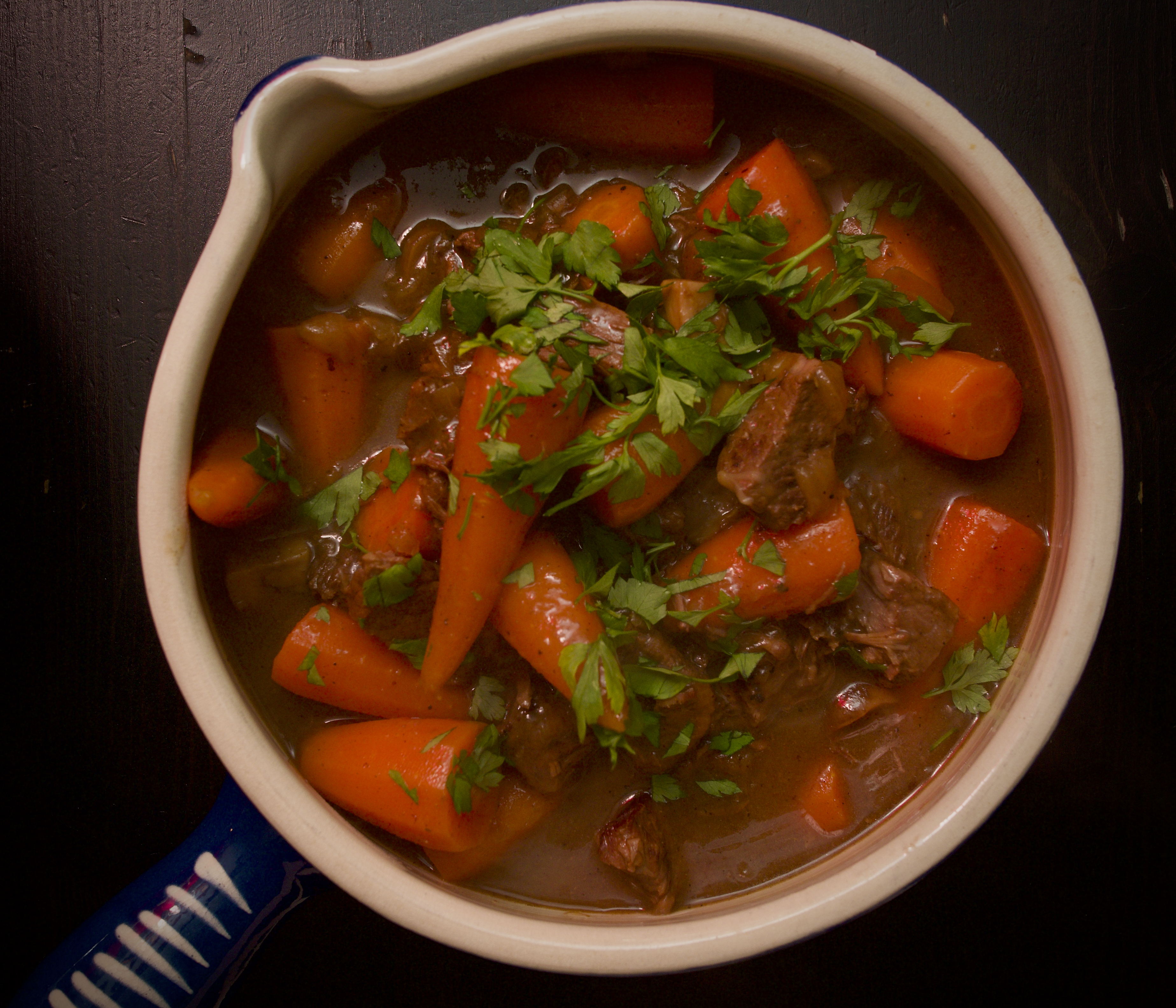
A good make-ahead dish for a crowd, subtley spiced with curry powder and Dijon mustard. We served it with dauphinoise potatoes and green veg. The Chantenay carrots look nice if you can find them, but if not just cut some regular carrots into chunky pieces. We’ve made this dish quite a few times now, and everytime prior to this have forgotten to take a photo. Reliably tasty every time, the shin really adds extra depth of flavour and creates a glossy sauce so is worth seeking out if you can

Wine Suggestion: A good Côtes du Rhône red, like our new find from Domaine Roche in Cairanne.

Mustard spiced beef – serves 6

  • 1tbsp sunflower oil
  • 900g beef shin, cut into 2 cm pieces
  • 2 large onions, chopped
  • 150g chestnut mushrooms, quartered
  • 1 tbsp Dijon mustard
  • 2 tsp medium curry powder
  • 1 tbsp muscovado sugar
  • 2 tbsp Worcestershire sauce
  • 25g plain flour
  • 600ml beef stock
  • 450g Chantenay carrots
  • a handful of flatleaf parsley, chopped, to serve

Heat the oven to 160C/140C fan/Gas 3.

Pat the beef pieces dry with kitchen paper and season well with salt and black pepper. Heat the oil in a large casserole dish and brown the beef in batches and remove with a slotted spoon.

Add the onions and mushrooms to the pan and cook for a few minutes until starting to soften.

Put the mustard, curry powder, sugar, Worcestershire sauce, and flour into a bowl and add 75ml of the stock. Whisk until smooth.

Add the rest of the stock to the pan and bring to the boil. Spoon about half the hot stock into the mustard mixture and whisk until smooth, then pour the mixture back into the pan, whisking over a high heat until thickened.

Return the meat to the pan. Bring to the boil, cover with a lid, and put into the oven for 2-2½ until the meat is tender.

Meanwhile, cook the carrots in boiling salted water for a few minutes or until just tender. Drain and refresh in cold water and set aside.

When ready to serve, bring the casserole to the boil on the hob and taste for seasoning. Add the carrots and boil for a few minutes to ensure they are heated through. Sprinkle with the chopped parsley, and serve.

(Original recipe from Mary Berry Cooks up a Feast with Lucy Young, DK: Penguin Random House, 2010.)

Read Full Post »

A delicious steak recipe from Mezcla by Ixta Belfrage. Ixta fries the steak in a pan over a high heat, we used a barbecue – fabulous flavours either way. You will need to grind about 3 black limes to get enough for the marinade and the butter.

Wine Suggestion: Thanks to our friends Tim & Mick, who’ve been travelling recently, we had an excellent Öküzgözü from Turkey which was regal, refined, and a delightful surprise. We wish we could remember the name of the winery as we forgot to take a picture and the bottle recycling was done the next day before we remembered! Full of black cherry, raspberry, and dark mulberry flavours; this was complex and had layers of dark chocolate, licorice, leather, tobacco, cloves, and something slightly herbal and minty, but we couldn’t put our finger on what.

Bavette steak with black lime & maple butter – serves 4

  • 500g bavette steak, cut into 3 equal pieces
  • 300g ripe tomatoes
  • ½ red onion
  • 1 lemon, cut into wedges, to serve

FOR THE MARINADE:

  • 1 tsp fine salt
  • 3 tbsp olive oil
  • 1 tsp Urfa chili flakes (we used a mixture of smoked paprika and aleppo pepper)
  • 1½ tsp ground black lime
  • about 50 twists of black pepper

FOR THE SOY AND MAPLE BUTTER:

  • 40g ghee or unsalted butter
  • 1 tbsp soy sauce or tamari
  • 2½ tsp maple syrup
  • ½ a small clove of garlic, finely grated
  • ¾ tsp ground black lime
  • ¾ tsp Urfa chilli flakes (see above)

Pat the steak dry and put into a large bowl. Add all the marinade ingredients and rub into the steaks. Leave aside for 10 minutes or up to 1 hour (you can do this further ahead and leave in the fridge but make sure you bring them back to room temperature before cooking).

Get your barbecue very hot, then sear the steaks for 2 minutes on each side, you want them dark brown on the outside but rare in the middle. Transfer to a warm plate and rest for 8 minutes, turning over halfway.

While the steaks are resting, slice the tomatoes and onions and arrange on a platter. Sprinkle with ½ tsp flaked salt.

Melt the ghee in a small saucepan over a medium heat. When it is melted and hot, remove from the heat and stir in the soy sauce, maple syrup, garlic, black lime and chilli flakes.

Slice the bavette against the grain and arrange over the onions and tomatoes. Sprinkle with some sea salt, then spoon over the soy and maple butter and serve with the lemon wedges on the side.

(Original recipe from Mezcla by Ixta Belfrage, Ebury Press, 2022.)

Read Full Post »

This is a great barbecue dish and you can prep the meat well in advance ready to cook when you need. You will probably need to order the bavette steak from your butcher and ask them to butterfly it so you end up with a large rectangle. The recipe comes from the best barbecue book we know which is Seared – the ultimate guide to barbecuing meat – by Genevieve Taylor.

Wine Suggestion: a big, bold, juicy red like a Rhône, Argentinian Malbec, or as tonight’s choice, Kilikanoon’s superlative Killermans Run GSM from the Clare Valley. Exhuberant fruit alongside refined, fresh tannins; a real class act.

Stuffed bavette steak – serves 4 to 6

  • 1kg bavette steak, butterflied (see above)
  • 80g prosciutto
  • 60g ‘nduja
  • 60g Parmesan, grated
  • 30g basil leaves, torn
  • 2 tbsp capers
  • 1 tbsp olive oil

FOR THE TOMATO SALAD

  • 750g mixed tomatoes
  • a bunch of basil leaves, torn
  • 3-4 tbsp good balsamic vinegar
  • 3-4 tbsp extra virgin olive oil

Lay the bavette out flat on a board. Turn the steak so that the grain runs horizontally – this is important as you want to be cutting across the grain when serving.

Lay the slices of prosicutto over the steak, then dot with the ‘nduja. Sprinkle over the Parmesan, basil and capers and season generously with black pepper.

Start with the side closest to you and roll the steak up tightly to form a cylinder. Tie it in a good few places with lengths of string to keep it tight. Season the outside of the steak with salt, then place on a rack over a tray and refrigerate until ready to cook. Do this at least 2 hours and no longer than 24 hours in advance.

When you’re ready to cook, get the barbecue going with two strips of fire down either side and the vents fully open. The barbecue needs to be hot, about 220-240C, with a section for indirect heat down the middle.

Put the steak, seam side down, in the centre of the barbecue and cover with the lid. Cook over indirect heat (i.e. over the bit with no coals underneath) for about 30 minutes or until a meat thermometer reaches 40C in the centre. Now move the bavettte direclty over the coals and sear over a high heat, turning every few minutes for about 15 minutes. The steak will be medium when about 56C in the centre.

Slice the tomatoes and spread over a large serving platter, then sprinkle over the torn basil. Drizzle with balsamic and olive oil and sesaon with salt and pepper. Carve the bavette into slices and lay down the centre of the dish.

(Original recipe from Seared by Genevieve Taylor, Quadrille, 2022.)

Read Full Post »

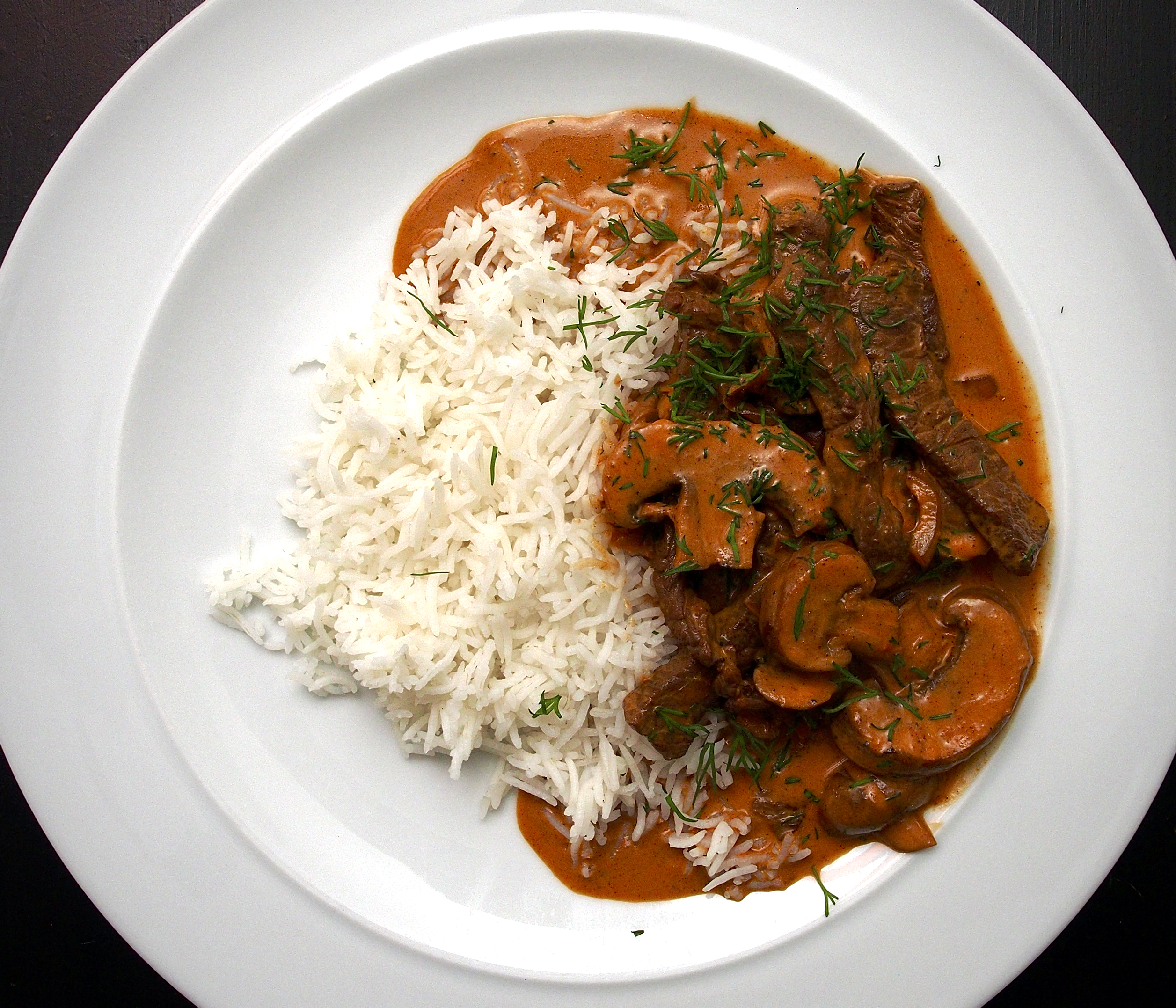
Jules’ Mum makes this all the time and serves it with home-made chips. We almost always cook it when we’re camping in France as it all cooks in the one pan and you can easily find all the ingredients. This one is different from our usual with the addition of paprika and dill, it’s very nice served with some plain white rice.

Wine Suggestion: We think this works best with a rich, full-bodied red. For us a treat from the ancient wine world, though a relatively young winery run by some young, passionate Syrians, the Bargylus, Grand Vin de Syrie 2014. Something to be celebrated due to the sheer class of this Syrah, Cabernet Sauvignon and Merlot blend, and mourned due to all the problems now in this part of the world. Superbly integrated tannins and layered fruit and spice; almost hedonistic in it’s velvetiness. You can taste some heat, but in a very good way with no evidence of alcohol. Mature but maintaining it’s freshness. We just wish this was more easily available for everyone to try.

Beef stroganoff – serves 4

  • 30g butter
  • 600g beef rump steak, thinly sliced
  • 1 medium onion, thinly sliced
  • 2 clove of garlic, crushed
  • 1 tsp sweet paprika
  • 400g chestnut mushrooms, thickly sliced
  • 2 tbsp tomato purée
  • 2 tbsp red wine
  • 1 tbsp lemon juice
  • 300g double cream
  • 1 tbsp coarsely chopped dill, plus a bit extra to garnish

Season the meat with salt and pepper.

Heat 15g of butter in a large frying pan over a high heat and lightly brown the meat. Do this in batches and don’t overcrowd the pan, remove each batch to a plate and set aside.

Heat another 15g of butter in the same pan and add the onion and garlic. Cook over a gentle heat for about 4 minutes, or until softened. Add the paprika, mushrooms and tomato purée and cook for another few minutes, stirring.

Return the meat to the pan with any juices from the plate. Add the wine and lemon juice and bring to a simmer. Cover with a lid and simmer gently for 5-7 minute or until the meat is tender. Add the cream and dill and cook, stirring constantly, until heated through. We turn the heat off the second the sauce begins to simmer, don’t take it any further in case the cream splits. Season to taste with salt and pepper and serve with steamed rice. Garnish with a little more chopped dill.

(Original recipe from Rick Stein at Home, BBC Books, 2021.)

Read Full Post »

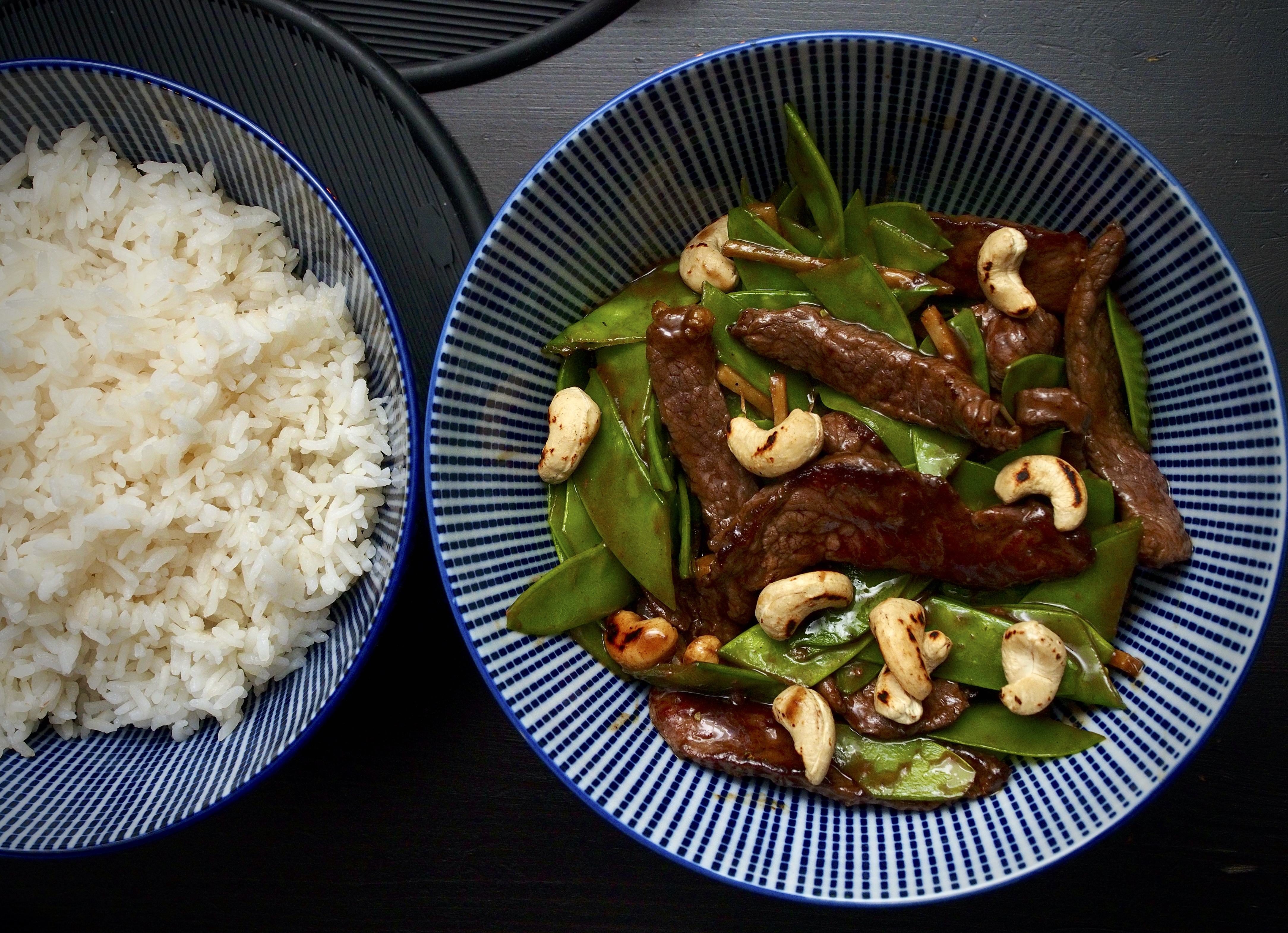
Chinese New Year was on a Tuesday this year and we had to squeeze our Chinese food in between homework, swimming lessons etc. If that is you, then this recipe is for you. As ever you need to prep everything before you start cooking. We served with rice but noodles would be good too.

Beef with mangetout & cashews – serves 4

  • 50g unsalted cashews
  • 1 tsp cornflour
  • 1 ½ tbsp low-salt soy sauce
  • 4 tbsp oyster sauce
  • 1 tbsp rice vinegar
  • 1 tbsp honey
  • 1 tbsp vegetable oil
  • 280g rump steak, thinly sliced
  • a thumb-sized piece of ginger, cut into matchsticks
  • 2 cloves of garlic, crushed
  • 200g mangetout, halved

Toast the cashews in a dry wok or frying pan, until browned, then set aside.

Mix the cornflour and soy sauce together to make a paste, then add the oyster sauce, rice vinegar and honey.

Heat your wok until very hot. Add the oil and swirl around to cover the base and sides. Use tongs to place the steak pieces into the wok in a single layer. Cook, without turning for 30 seconds – 1 minute, or until a dark crust starts to form. Add the ginger and garlic and toss everything together, then add the mangetout and the sauce. Cook for another 30 seconds – 1 minute or until the beef is just cooked through and the sauce is glossy. Sprinkle over the cashews and serve.

(Original recipe from BBC Good Food)

Read Full Post »

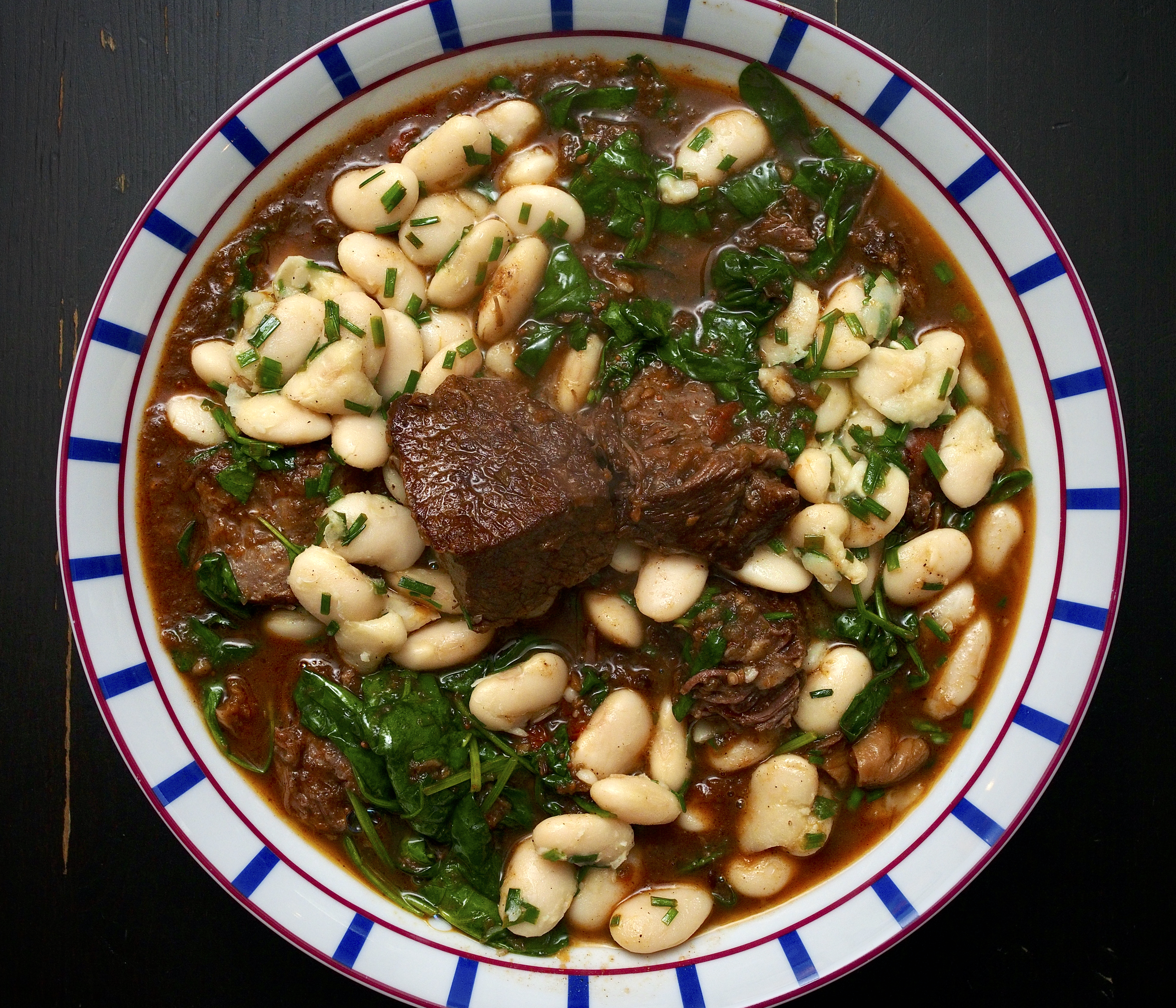
Your butcher should be able to get you beef short ribs if you ask, and the trick is slow-cooking. All that fat will ensure they become meltingly tender and the meat will literally fall off the bones. This dish takes a while to cook but there’s not much effort required and the result is worth it.

Wine Suggestion: This dish requires a serious, powerful red with a good structure. Tonight we had a youthful 3 year old Chateau Puygueraud from the Côtes de Francs, Bordeaux. A merlot, cabernet franc, malbec blend it was appropriate but all judged it too young and a little forceful. However a Domaine des Roches Neuves ‘Marginale’, Saumur-Champigny from 2015 brought by our friends proved to be the wine match we were looking for. Cabernet Franc from the Loire this cuvée showed the class of being the best selection of the best vineyards in a powerful, great vintage. All parts integrated but still in it’s infancy. A good match tonight, and we are all sad we don’t have any more in our cellars to see this in 10 years time too.

Braised beef short ribs with butter beans & figs – serves 4

  • 2 onions, roughy chopped
  • 6 cloves of garlic, peeled
  • 4cm piece of ginger, peeled and roughly chopped
  • 2 green chillies, roughly chopped, no need to discard the seeds
  • 6 beef short ribs (about 1.5kg),trim off any big pieces of fat at the edges but don’t worry about being too particular with the rest, it all renders down into the rich sauce
  • 60ml olive oil
  • 4 whole star anise
  • 10 cardamom pods, roughly bashed open with a pestle and mortar
  • 1½ tbsp tomato purée
  • 2 tsp ground allspice
  • 2 tsp ground cumin
  • 5-6 large plum tomatoes, two-thirds roughly chopped and the rest roughly grated and skin discarded
  • 100g soft dried figs, roughly chopped into 1½ cm pieces
  • 700g jar butter beans, drained
  • 30g chives, very finely chopped
  • 1½ tbsp lemon juice
  • 300g regular spinach, discard the stems and roughly tear the leaves

Heat the oven to 165C fan.

Put the onions, garlic, ginger and chillies into a food processor and pulse until finely chopped.

Dry the short ribs with kitchen paper and season with salt and pepper. Put 2 tbsp of oil into a large ovenproof saucepan and turn the heat to medium-high. Fry the ribs in batches until well coloured on all sides, then remove and set aside.

Add the onion mixture to the pan along with the star anise and cardamom, and cook for 5 minutes to soften, stirring now and then. Add the tomato purée, ground spices, chopped tomatoes (don’t add the grated ones yet), 1½ tsp of salt and plenty of black pepper and cook for another 4 minutes or until the tomatoes start to soften.

Add the short ribs and 1.1 litres of water, bring to the boil, then cover and put into the oven for 3 hours, stirring a few times.

Add the figs and cook for another half hour, or until softened. The meat should now be very tender.

Meanwhile, put the butterbeans into a saucepan with a pinch of salt and cover with water. Bring to the boil and simmer for about 15 minutes, then drain. Stir in the chives, 2 tbsp of oil, the lemon juice and plenty of pepper.

When the beef is ready, take the ribs from the pan and pull the meat off the bones. Discard the bones and set the beef aside.

Heat the sauce and stir in the spinach, it should wilt in a few minutes, then add the grated tomato and remove from the heat.

Spoon the sauce over a large platter and top with beans and beef.

(Original recipe from OTK Shelf Love by Noor Murad & Yotam Ottolenghi, Ebury Press, 2021.)

Read Full Post »

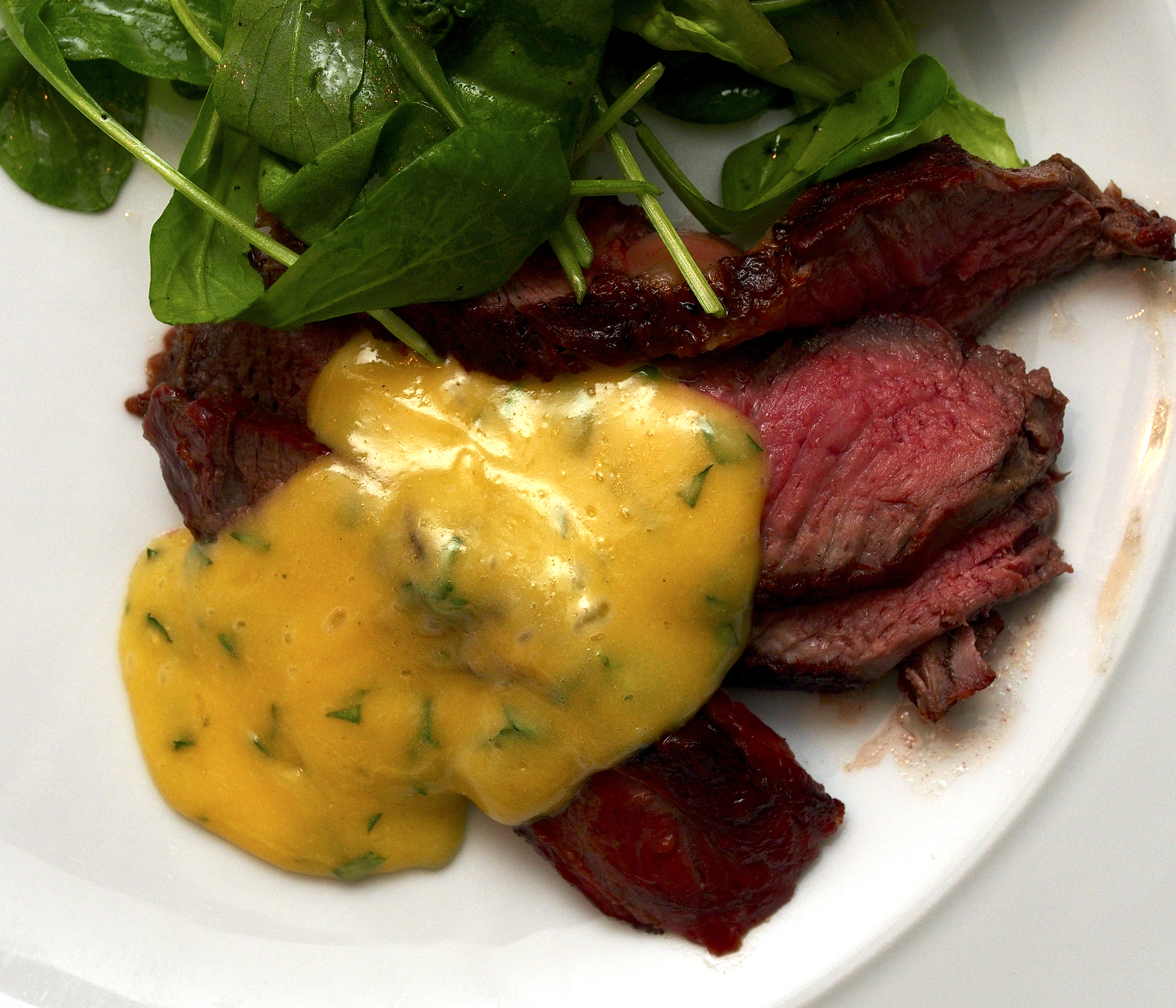
Sometimes we get a notion for steak and chips, so pull out the barbecue and crank up the oven. Béarnaise sauce is the perfect companion, not particularly hard, it just needs a little attention and you must never let it get too hot.

Wine suggestion: Another Greek classic, the Thymiopoulos Naoussa Xinomavro which plays a nice balance of being effortless and ethereal alongside a deep core of powerful, elegant tannins.

Béarnaise Sauce

  • 1 small shallot, finely chopped
  • 3 tbsp tarragon vinegar
  • 6 black peppercorns
  • 3-4 bushy tarragon sprigs
  • 2 egg yolks
  • ½ tsp Dijon mustard
  • 150g butter, cut into small dice

Heat the vinegar, tarragon, peppercorns and shallot in a small pan. Bring to the boil and reduce until there is about 1 tbsp left, then strain and set aside.

Put a bowl over a pan of just-simmering water and make sure it isn’t touching the water. Add the egg yolks and mustard, then whisk in the reduced vinegar. Slowly add the butter, a cube at a time, whisking each time until smooth. You can turn the heat off about half way through. We like to stir-through a little chopped tarragon at the end but it’s up to yourself. Keep warm over a pan of warm water while you cook your steak.

Read Full Post »

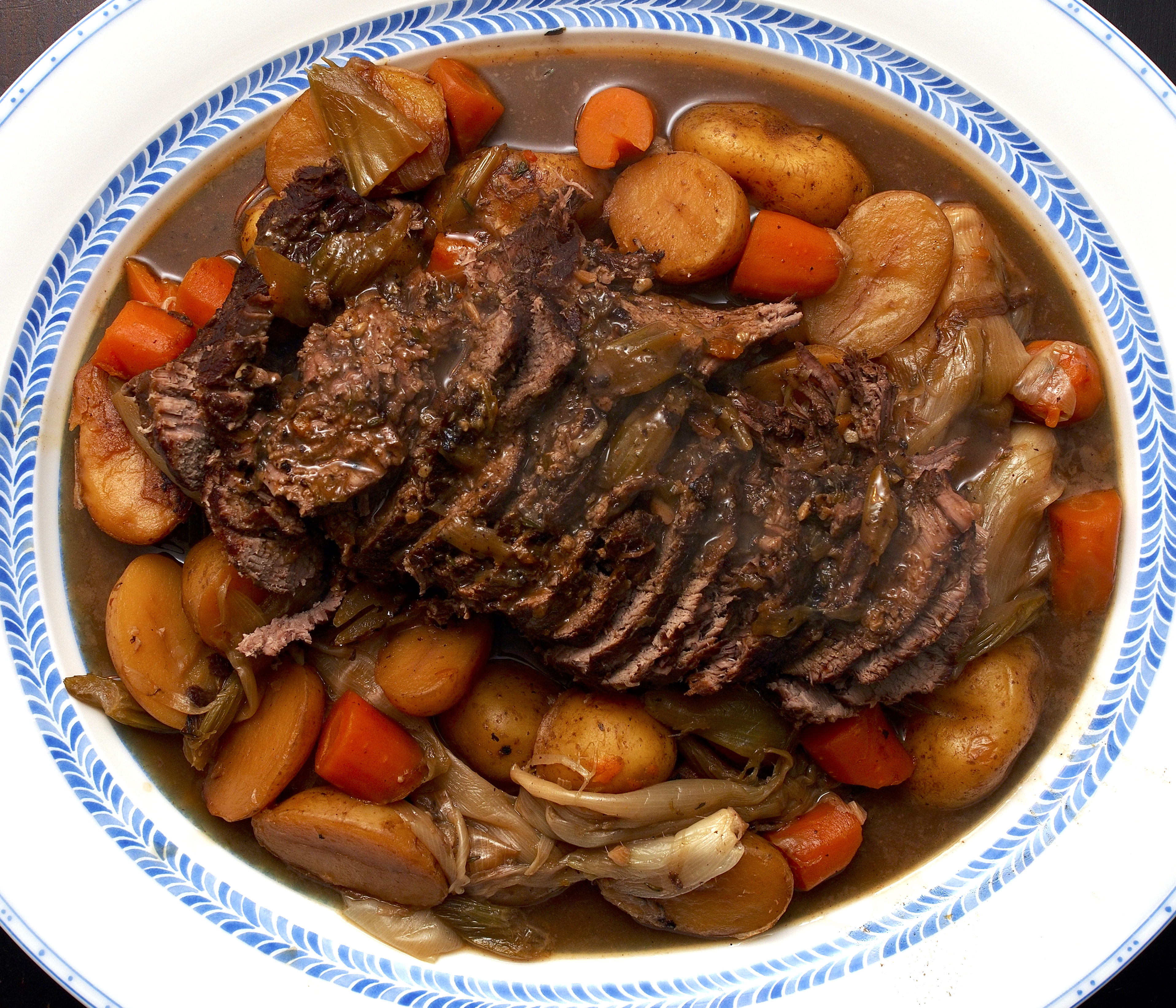
We don’t cook roast beef too often, because we’re lucky enough to have good friends who do! However we liked the look of this one as it all cooks in one pot and so thought we’d give it a go. It’s a very forgiving dish to cook – easy to get right and with loads of veg cooked in the same dish. Some greens on the side is all you need.

Wine Suggestion: A good, honest Bordeaux blend is what works here. For us it was the Chateau Monconseil Gazin from Blaye which always over-delivers in panache and lovely fruit for the value pricing.

Pot-roast beef – serves 4

  • 2 tbsp olive oil
  • 12 shallots, peeled
  • 2 celery sticks, roughly chopped
  • 2 large carrots, cut into chunks
  • 400g baby potatoes, halved
  • 2 tsp mustard powder
  • 1kg silverside or beef topside, extra fat removed
  • 4 cloves of garlic, finely chopped
  • 1 sprig of thyme
  • 2 bay leaves
  • 150ml red wine
  • 600ml beef stock
  • 2 tsp butter
  • 2 tsp plain flour
  • 1-2 tsp redcurrant jelly

Preheat the oven to 160C/Fan 140C/Gas 3.

Heat the oil in a large flameproof casserole dish with a lid. Add the shallots, celery, carrots and potatoes. Cook over a high heat until everything is starting to brown, then remove from the dish with a slotted spoon and set aside.

Mix the mustard powder with salt and pepper, then use this to dust the beef. Add the beef to the casserole and brown on all sides, you can add a little more oil if needed.

Arrange the browned vegetables around the beef, then add the garlic, thyme and bay leaves. Pour in the wine and bring to the boil and allow to bubble for a few minutes, then add the stock and bring to the boil again.

Cover the dish with the lid and place in the oven to 2 hours, turning the beef over halfway through. Remove the beef from the oven and check that it’s tender, then transfer the beef and vegetables to a warm platter and cover loosely with foil.

Knead the butter and flour together to make a paste, then whisk this into the cooking liquid, a little at a time, until thickened. Taste for seasoning, then stir in the redcurrant jelly, to taste. Serve the gravy with the meat and vegetables.

(Original recipe from The Hairy Bikers’ One Pot Wonders by Si King & Dave Myers, Seven Dials 2019.)

Read Full Post »

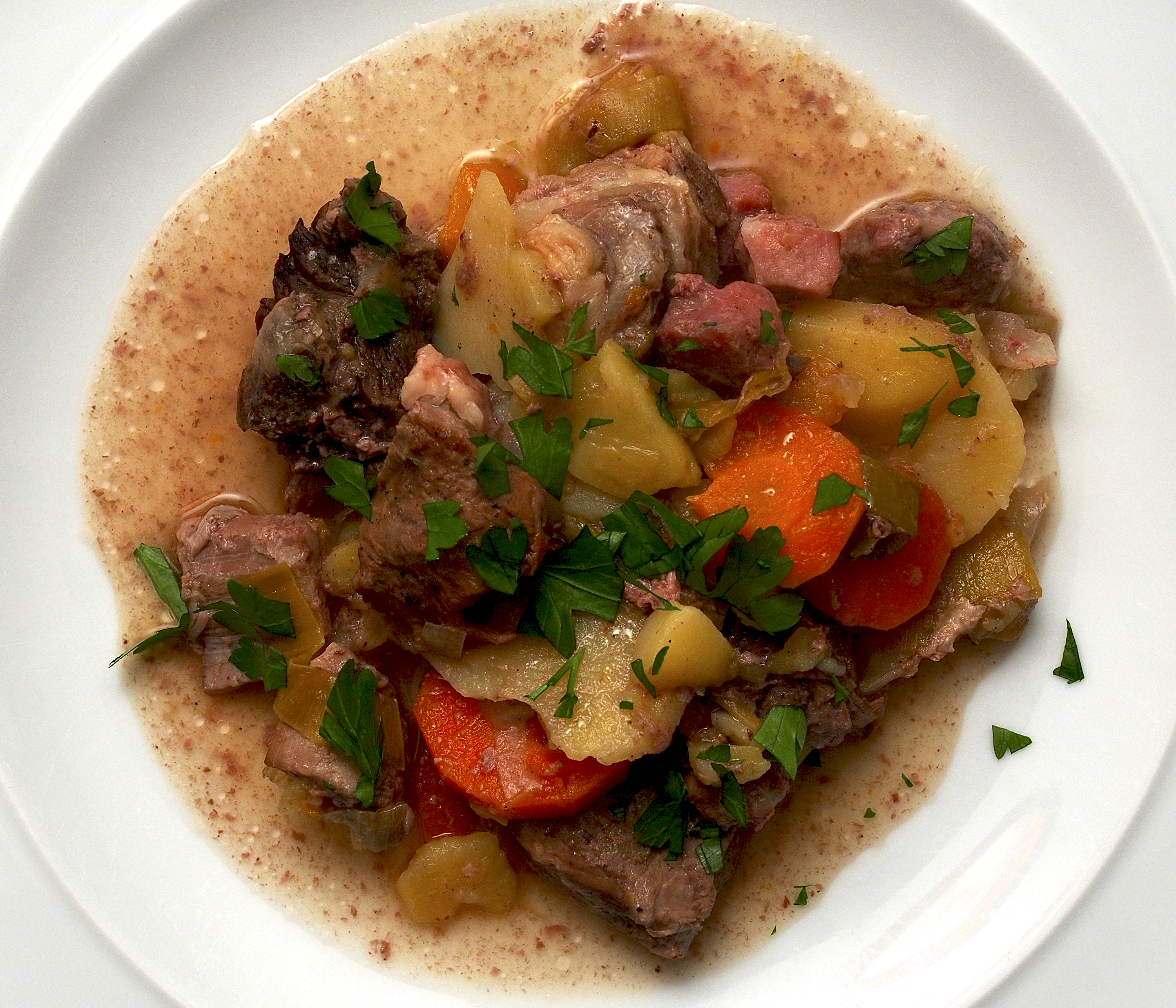
We were initially attracted to this as it is marinated in Riesling, a favoured grape in our house, plus the unusual combination of three meats plus bacon. Classically country French in style, this has no airs or graces in appearance, but is jam packed full of flavour and richness. It serves loads of people and we’d suggest having a side of greens. Also, like many other long cooked stews this tastes great the following day and freezes well.

Wine Suggestion: Courtesy of a very generous friend who came to dinner, we were treated to a delightful comparison of two old bottles of Rene Rostaing’s Côte Rôtie: the La Landonne and Côte Blonde. Both an excellent match to the dish and lovely wines. The Côte Blond was the favoured bottle, but both showed very well. We’d recommend searching for a good Syrah if something of this calibre doesn’t come to hand. Thanks David for these bottles!

Alsatian beef, lamb and pork stew – serves 8-10

  • 750g boneless pork belly, cut into 4cm cubes
  • 750g boneless lamb shoulder, cut into 4cm cubes
  • 750g chuck steak, cut into 4cm cubes
  • 2 onions, sliced
  • 250g carrots, sliced
  • 2 leeks, cut in half lengthways, washed and sliced
  • 500ml Sylvaner or Riesling white wine
  • 2 kg potatoes, sliced into 5mm thick rounds
  • 100g unsmoked bacon, cut into 1cm pieces
  • 250ml beef stock
  • a handful of flatleaf parsley, roughly chopped, to garnish

Place all of the meat (but not the bacon), onions, carrots and leeks in a large non-metallic bowl and pour over the wine. Cover and leave in the fridge overnight.

Heat the oven to 190C/Fan 170C.

Arrange a quarter of the sliced potatoes over the base of a very large casserole dish.

Drain the meat and veg in a colander over a bowl and reserve the liquid.

Scatter some veg over the potatoes, then add som bacon pieces and chunks of meat. Season with salt and black pepper, then add another layer of potato, more veg, bacon, meat and seasoning. Keep layering like this and finsih with a final layer of potatoes. Don’t be tempted to hold back on the salt as the dish needs liberal seasoning (about 2tsp in total).

Pour over the reserved marinade juices and beef stock, then cover the casserole with a tight lid and put in the oven.

Bake for about 3 hours or until the meat is tender. Garnish with chopped parsley and serve.

(Original recipe from Rick Stein’s Secret France, BBC Books, 2019.)

Read Full Post »

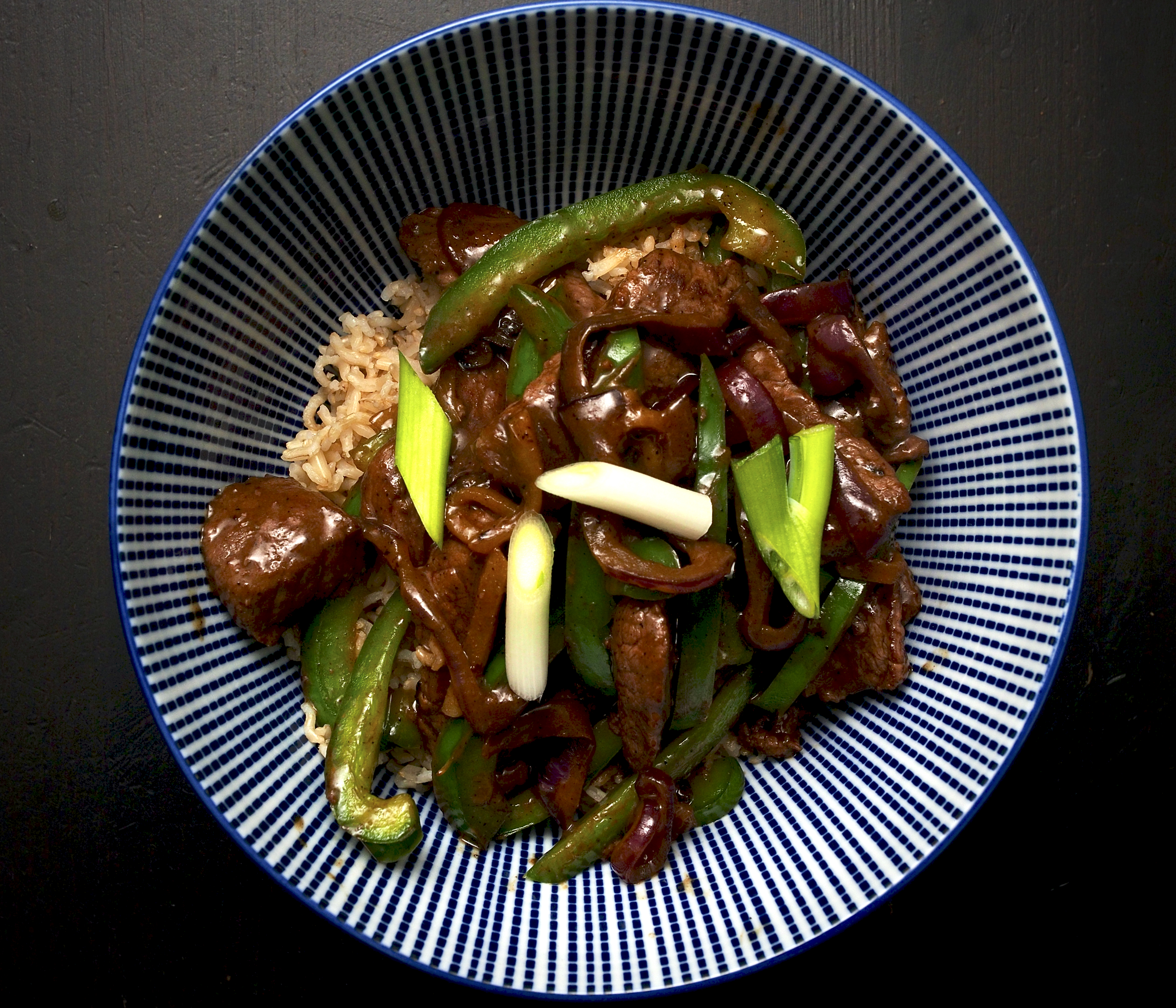
This is a tasty weeknight option, and healthy too. We used just green peppers but a green and a red would look nice. Serve over brown rice.

Wine Suggestion: This dish needs a savoury wine balanced by youthful, juicy fruit like Martin Korrell’s Weisser Burgunder (Pinot Blanc). Joyfully frivolous and deep at the same time.

Black pepper beef stir-fry – serves 2 (generously)

  • 300g rump steak, trimmed of fat and sliced thinly, about 5mm
  • vegetable oil
  • 1 red onion, finely sliced
  • 2 cloves of garlic, finely sliced
  • 5cm piece of ginger, julienned
  • 1 red pepper, thinly sliced
  • 1 green pepper, thinly sliced
  • 1 tsp cornflour
  • 2 tbsp oyster sauce
  • 1 tbsp soy sauce
  • 2 tbsp shaoxing wine
  • ½ tsp ground black pepper

FOR THE MARINADE:

  • 1 tsp cornflour
  • 1 tsp soy sauce
  • 1 tsp sesame oil
  • ½ tsp coarsely ground black pepper

TO SERVE:

  • steamed brown basmati
  • 2 scallions, green part only, finely sliced

Combine all of the marinade ingredients together in a bowl and season with a good pinch of sea salt. Add the steak and toss to coat in the marinade, then leave aside for a few minutes.

Put your wok over a high heat until smoking hot. Add a splash of vegetable oil followed by half the beef. Stir-fry quickly for 1-2 minute, then remove to a plate. Add another splash of oil if you need, then repeat with the rest of the meat.

Put the wok back over a high heat. Add the onion and cook for a couple of minutes, then add the garlic and ginger and stir-fry for 1 minute. Add the peppers and continue to cook for a few more minutes.

Mix the cornflour to a paste with 2 tbsp water.

Add the oyster and soy sauces, shaoxing wine and black pepper to the wok and stir. Return the beef to the wok with any pan juices, then stir in the cornflour paste and stir-fry for another minute or until the sauce is thickened and the beef warmed through.

Divide the rice between warm bowls, top with the stir-fry and scatter with the scallions.

(Original recipe from Lose Weight & Get Fit by Tom Kerridge, Bloomsbury, 2019.)

Read Full Post »

This couldn’t be easier and it’s perfect for a Friday night. We used the curry paste from this recipe but you can use a good quality shop-bought version either. Serve with sticky rice and salad.

Wine Suggestion: we often turn to aromatic wines for Thai food and for this dish was no different as we chose the Korrell Slice of Paradise Riesling. A dry Riesling from the Nahe in Germany this is the youthful cuvée from the more regal Paradies vineyard Martin Korrell makes. Standing up to the earthy and rich peanuts and cutting through the rich coconut milk this is always a joy to drink, let alone pair with food. Light and refreshing, and yet powerful enough to work with meat and complex flavours – we love the versatility this lends.

Panang Beef Balls – serves 4

  • 500g beef mince
  • 60g plain flour
  • 3 tbsp vegetable oi
  • 2 tbsp red curry paste
  • 400ml coconut milk
  • 1 ½ tbsp fish sauce
  • 2 tbsp crunchy peanut butter
  • 1 tbsp sugar
  • 2 tbsp chopped basil or mint, to garnish

Roll the beef mince into small round balls, about 2.5 cm.

Roll the balls in flour and dust of the excess.

Heat the oil in a wok and fry the meatballs until brown, keep tilting the pan so they brown evenly. Remove and set aside on kitchen paper.

Add the curry paste to the wok and stir-fry for a few minutes over a low heat.

Stir in the coconut milk, the fish sauce, peanut butter and sugar. Taste the sauce and add extra fish sauce or sugar if needed.

Put the beef balls back into the sauce and simmer for 5 minutes or until cooked through. Garnish with chopped basil.

(Original recipe from Thai Cooking Class by Sami Anuntra Miller & Patricia Lake.)

Read Full Post »

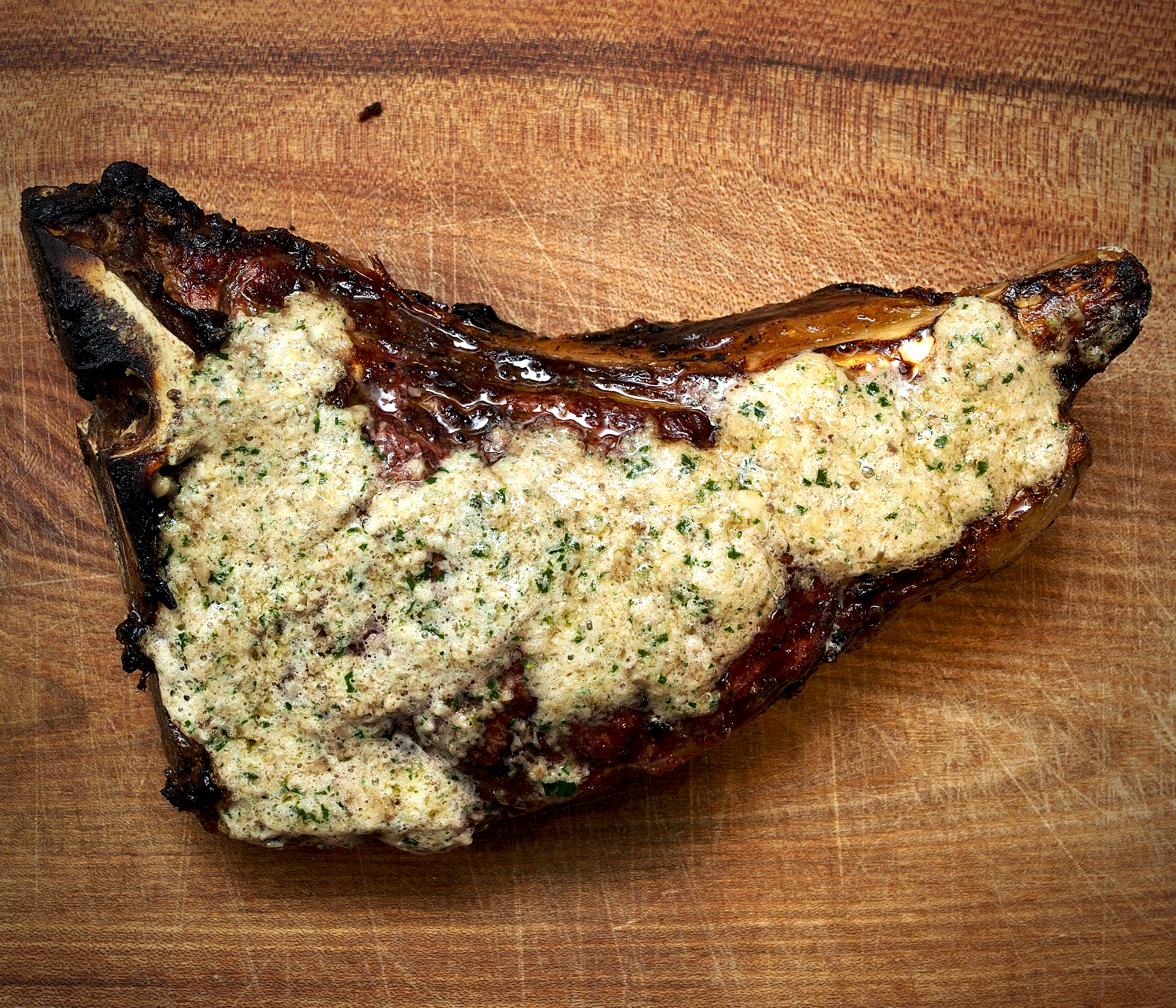
For our wedding anniversary this year we barbecued a whole rib of beef on the bone: consider it a super-rib eye steak. With the bone attached this is much harder to do completely on the barbecue (but not impossible). There is also an easier way if you finish the steak in the oven, which helps to to control the doneness while still getting the lovely barbecue char and flavours.

Wine Suggestion: Given the occasion we opened a bottle of Domaine de Chevalier Rouge 2009 from Pessac Leognan. A great vintage with fleshy fruit that at 12 years of age was singing very expressively. Super elegant and refined fruits, perfumed with that slight pencil edge that characterises the appellation and silky tannins that were both powerful and gentle in equal measure. Definitely powerful enough to stand next to the robust steak and then elevate the sum to another level. Well worth cellaring.

Rib of beef with wild mushroom butter – serves 2

  • 1 tbsp olive oil
  • 50g mixed wild mushrooms, roughly chopped
  • 1 shallot, finely diced
  • 1 clove of garlic, crushed
  • 1 tbsp Madeira
  • 1 tbsp cream
  • 1 tsp chopped flat-leaf parsley
  • ½ tsp chopped thyme
  • 1 tsp white truffle oil (optional)
  • 100g butter, diced and softened
  • 1 rib of beef on the bone

First, make the butter. Heat the olive oil in a frying pan and add the mushrooms with the shallots and garlic. Cook gently for 5 minutes or until cooked through but not coloured.

Add the Madeira, cream and herbs to the pan and cook for 3 minutes or until the liquid has evaporated. Season to taste and stir in the truffle oil if using. Leave to cool completely.

Put the butter and cooled mushroom mixture into a food processor and purée until smooth. Scrape out onto a piece of non-stick baking paper, then roll into a cylinder, twisting the ends to secure. Chill for at least 2 hours, until hardened.

Pre-heat the oven to 200C/400F.

Take your steak out of the fridge for at least 30 minutes to come up to room temperature. Season at this stage too.

Cook over the direct heat on your barbecue for 8-10 minutes, turning to make sure all sides are well browned with a little charring.

Place the barbecued steak onto a preheated ovenproof pan, and put it in the oven for 15-20 minutes and until done to your liking.

We used a meat thermometer to judge doneness and removed the steak at 55C. While we like our steaks on the rare side we find that medium-rare to medium works best when cooking a rib on the bone. This ensures all the juicy fats are rendered properly. If you’d like it a little rarer cook to 52C. Remember that the steak keeps on cooking while resting too.

When your steak is cooked to your liking, remove it from the oven and sit it on a rack set over a tray. Cut the butter into slices and arrange on top of the steak. Set aside to rest for 15-20 minutes before carving the steak from the bone and slicing. Serve with the buttery mushrooms spooned over.

(Original recipe from Neven Maguire’s Complete Family Cookbook, Gill Books, 2016.)

Read Full Post »

Older Posts »