Feeds:
Posts
Comments

Archive for the ‘Lamb’ Category

Lamb shoulder kebabs

These lamb kebabs from The Saffron Tales by Yasmin Khan are fabulous cooked over hot coals. Ask your butcher for lamb neck, it’s cheap and really tasty. Good served with saffron rice, herby salad and yoghurt with cucumber and mint. They were also good stuffed into some warm flatbreads with a radish and broad bean salad (see pic below).

Wine Suggestion: We chose the Poggio ai Ginepri which is a Cabernet, Syrah & Merlot blend from Bolgheri in Tuscany. The classic Bordeaux blend with the infusion of Syrah creates a balance of power and juiciness that works with the BBQ smokiness and the moist lamb with a good earthy spice that compliments the herbs and spices in the marinade.

Dr Asaf’s Juicy Lamb Kebabs – serves 4

  • 4 tbsp natural yoghurt
  • 1 small onion, finely grated
  • 1 garlic clove, crushed
  • ½ tsp oregano
  • 1 tbsp olive oil
  • ¾ tsp sumac, plus extra to garnish
  • a generous pinch of cayenne pepper
  • 1¼ tsp sea salt
  • 1 tsp black pepper
  • 800g lamb neck fillet, cut into 2.5 cubes
  • 4 tomatoes, halved

Mix the yoghurt, onion, garlic, oregano, oil, sumac, salt and pepper together in a large bowl. Stir in the lamb pieces until well coated then cover with cling film and leave to marinade in the fridge for 2-3 hours. Don’t skip this as it will make the meat nice and tender.

Preheat the barbecue. Thread the lamb onto metal or wooden skewers (wooden ones need to be soaked for about 20 minutes before using). Cook the lamb kebabs and the tomato halves on the barbecue for 5-7 minutes or until cooked through.

Rest the meat for a few minutes and sprinkle with some more sumac before serving.

(Original recipe from The Saffron Tales by Yasmin Khan, Bloomsbury, 2016.)

Lamb kebabs with radish salad

Read Full Post »

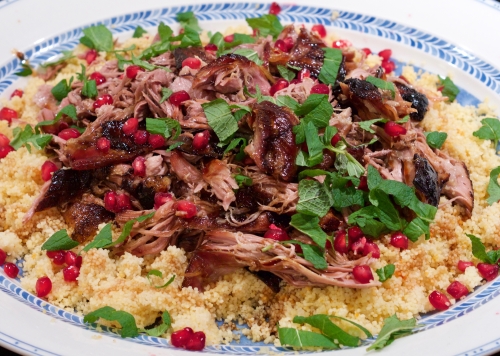
Pomegranate & slow cooked lamb couscous

This makes such a lovely weekend dish and looks really attractive served on a large platter in the middle of the table. It requires a few hours in the oven but is hardly any work at all and uses just a few ingredients.

Wine Suggestion: this dish cries out for a Moorish influenced wine and nothing quite achieves this more than a Spanish Tempranillo. Our choice of the evening was the Carmelo Rodero Ribera del Duero Crianza which is juicy, powerful and also manages to achieve a perfumed elegance with exotic eastern spice hints.

Pomegranate & slow cooked lamb couscous – serves 6

  • 2kg lamb shoulder (or get your butcher to give you a forequarter if the lambs are small)
  • 1 onion, sliced
  • 1 tbsp pomegranate molasses, plus extra to serve
  • 300g couscous
  • butter
  • 1 tsp harissa
  • a small bunch of mint, leaves roughly chopped
  • seeds from 1 pomegranate

Heat the oven to 190C/fan 170C/gas 5.

Put the lamb into a roasting tin with the fatty side facing up. Scatter the onion around the lamb. Score the lamb with a sharp knife and rub in the pomegranate molasses with your hands. Season well. Add 2 mugs of water to the tin, then cover with foil and roast for 4 hours. Rest for 15 minutes before pulling chunks of the lamb off the bone with 2 forks.

While the lamb is resting, put the couscous into a large bowl with a large knob of butter, the harissa and seasoning, then add enough boiling water to just cover. Cover the bowl with cling film and leave for 5 minutes before fluffing the grains gently with a fork. Put the couscous onto a platter and arrange the shredded lamb on top. Pour off any fat from the roasting tin and pour the juices over the lamb and couscous plus a little more molasses. Scatter with the mint and pomegranate seeds.

(Original recipe by Lulu Grimes IN: BBC Olive Magazine, February 2014.)

Read Full Post »

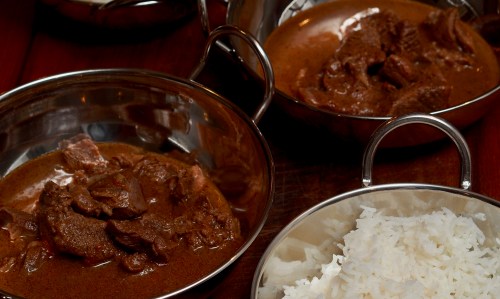
Howrah Express

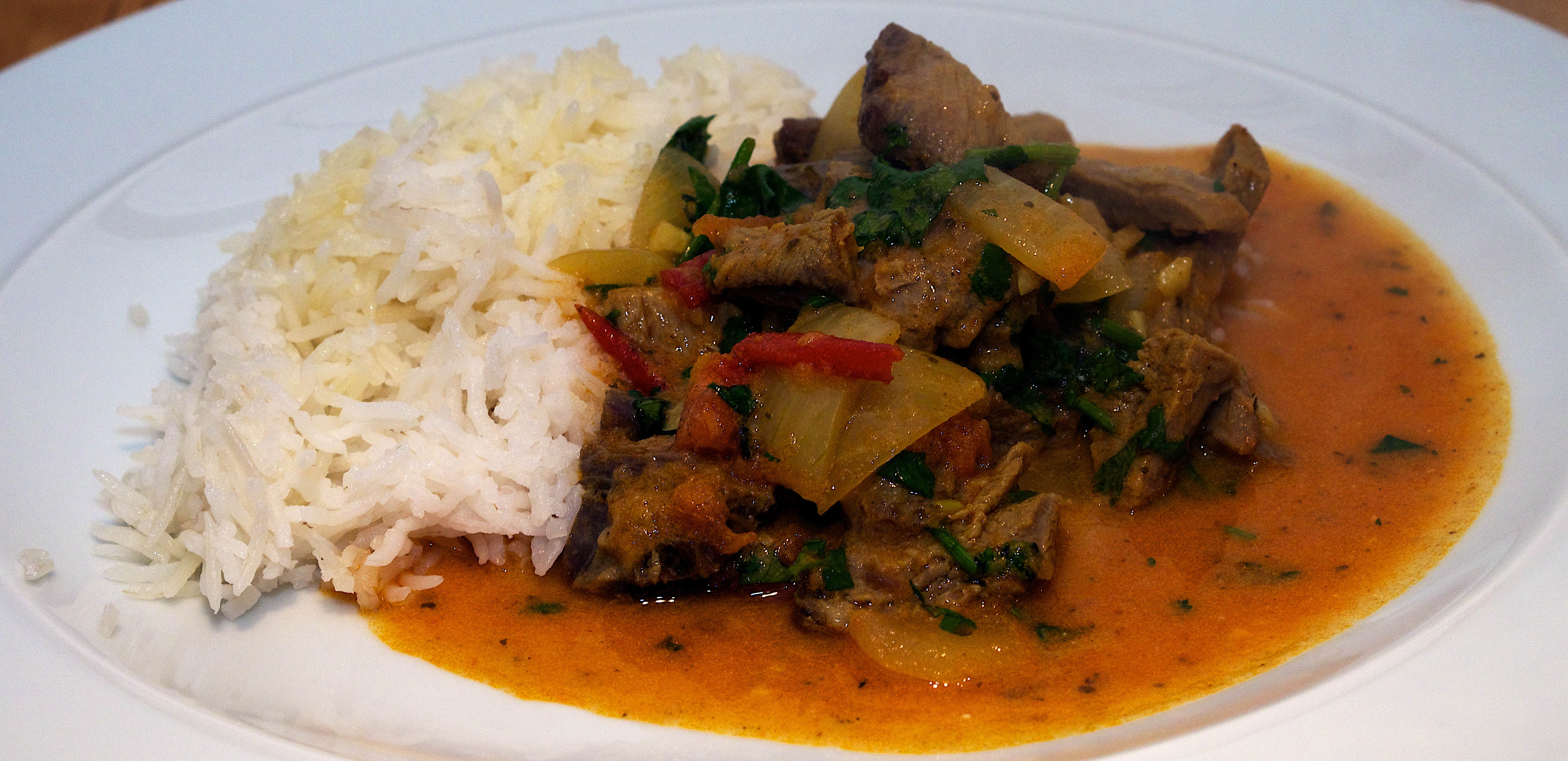
Brown food is just not photogenic but this really is a delicious lamb curry. Lamb neck is one of our favourite cuts; cheap and meltingly tender when cooked slowly.

Wine Suggestion: We’ve yet to find a wine that we think works with the intense flavours in this dish. Try an Indian beer such as Singah.

Cinnamon Lamb Curry – serves 8

  • 4 tbsp rapeseed oil
  • 2 large onions, finely chopped
  • 8 cloves of garlic, finely chopped
  • 1 x 400g tin of plum tomatoes
  • 1½ tsp garam masala
  • 1¼ tsp chilli powder
  • 2 tsp ground cumin
  • 1½ tbsp ground cinnamon
  • 1½ tsp salt
  • 1.2kg lamb neck fillet, chopped into chunks
  • 150ml full-fat yoghurt, whisked

Heat the oil in a large, heavy casserole dish over a medium heat. Add the onions when the oil is hot and fry until golden, about 8-10 minutes, then add the garlic and stir-fry for another couple of minutes.

Pour the tinned tomatoes into a bowl and crush a little with your hands before adding to the casserole. Cook for about 6 minutes or until the sauce has thickened.

Add the garam masala, chilli powder, cumin, cinnamon and salt, and mix. Add the lamb and cook until sealed all over. Add the yoghurt one spoon at a time while slowly stirring (to prevent splitting) and then add 200ml of warm water – you want it to just cover the lamb.

Bring the mixture to the boil, then cover and turn the heat to low. Simmer for 1½ hours or until the lamb is soft and falling apart. Take the lid off the pan and reduce the sauce to a consistency you like, then remove from the heat. Season to taste and serve with naan breads or steamed rice.

(Original recipe from Made in India by Meera Sodha, Penguin, 2014.)

Read Full Post »

Lamb, beer & black bean chilli

We are forever trying new chilli recipes in an effort to find the best one. Most of them end up fairly similar to be honest but this one was deliciously different and therefore a suitable dish to serve up to friends who also cook their own versions.

Wine Suggestion: we often think the wine used to cook a dish is a good match and in this case the beer used would work, especially if you’ve used one with character and a bit of body. Alternately a good Languedoc or Roussillon (southern French) wine makes a good match. If you prefer white wine there are some great Grenache blanc or Grenache gris wines – try the Roc des Anges “Llum” for an amazing textured and savoury white or the Domaine Gayda’s Grenache Gris Selection which is richer and full of round, seductive fruit. If you prefer red then seek out a bottle of Chateau Saint Jacques d’Alba Minervois for a velvety, deep and satisfying drop.

Lamb, beer & black bean chilli – serves 6

  • 4 tbsp olive oil
  • 750g shoulder of lamb, cubed
  • 1 large onion, roughly chopped
  • 4 garlic cloves, crushed
  • 2 green chillies, deseeded and chopped
  • ½ tbsp ground cumin
  • 2 x 400g tins tomatoes
  • 600ml lager
  • 1 tbsp tomato purée
  • 1 tbsp soft dark brown sugar
  • 3 tsp dried oregano
  • 2 x 400g tins black beans, drained and rinsed
  • juice of ½ – 1 lime
  • 3 scallions, finely chopped
  • 2 tbsp chopped fresh coriander
  • sour cream/Greek yoghurt
  • avocado
  • grated Lancashire/Wensleydale/Cheddar cheese

Heat the oil in a flameproof casserole and brown the lamb in batches until well coloured on all sides, then remove and set aside. Add the onion to the pan and cook until golden, then add the garlic and chillies and cook for a couple of minutes more. Add the cumin and cook for a further minute. Return the lamb to the pot along with the tomatoes, lager, tomato purée, sugar, oregano and lamb, season well and bring to the boil.

Reduce the heat immediately to a very gentle simmer and cook, uncovered, for 1½ – 2 hours or until the lamb is tender. Stir in the beans halfway through.

Taste, then add the lime juice, scallions and coriander, then taste again. Season as needed and serve with soured cream, slices of avocado and grated cheese.

(Original recipe from Food from Plenty by Diana Henry, Mitchell Beazley, 2010.)

Read Full Post »

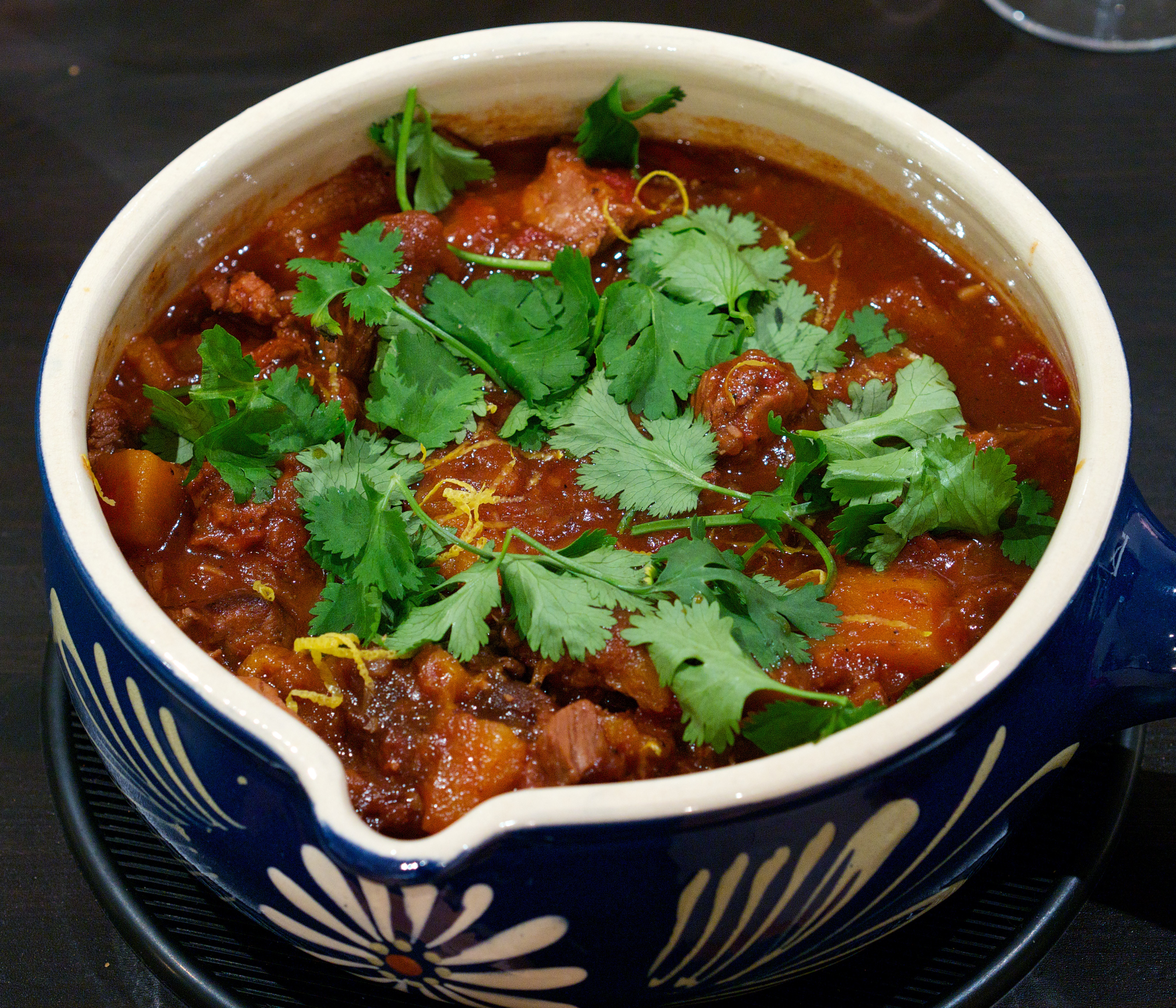
Lamb, squash and apricot tagine

This dish couldn’t be easier and the sauce is delicious. It can be made in an authentic tagine if you have one, or alternately in a large casserole dish like we used here, both work well. Serve with couscous and natural yogurt.

Wine suggestion: With all the spice and richness in this dish the best wines to match the tagine are medium to full-bodied reds with a juicier fruit like a Ribera del Duero. Our pick of the moment is the Condado de Haza Crianza  2011 which has a lovely, open and approachable nature whilst hiding a core of real depth, texture and personality. We’re sure this wine will age really well if you like but suspect most will be consumed soon after purchase; very moreish!

Lamb, squash & apricot tagine – serves 4

  • 2 tbsp oil
  • 1 large onion, finely chopped
  • 2 garlic cloves, finely chopped
  • 1 tbsp ras el hanout
  • 1 tsp ground coriander
  • 600g-800g lamb leg, diced into 2cm cubes, excess fat removed
  • 200g butternut squash
  • 200g soft dried apricots
  • 400g tin chopped tomatoes
  • 500ml lamb or beef stock
  • zest of 1 lemon
  • small bunch of coriander

Heat the oven to 200C/180C fan/gas 6.

Heat the oil in a flameproof casserole, add the onion & cook for 5 minutes until softened. Add the garlic and spices, and cook, stirring, for another couple of minutes.

Stir in the lamb, squash and apricots, then add the tomatoes and stock and season well. Bring to the boil, put the lid on and transfer to the oven.

Stir after 1 hr and return to the oven, uncovered, for another 30 minutes.

Check the seasoning and sprinkle over the lemon zest and coriander to serve.

(Original recipe from BBC Good Food)

Read Full Post »

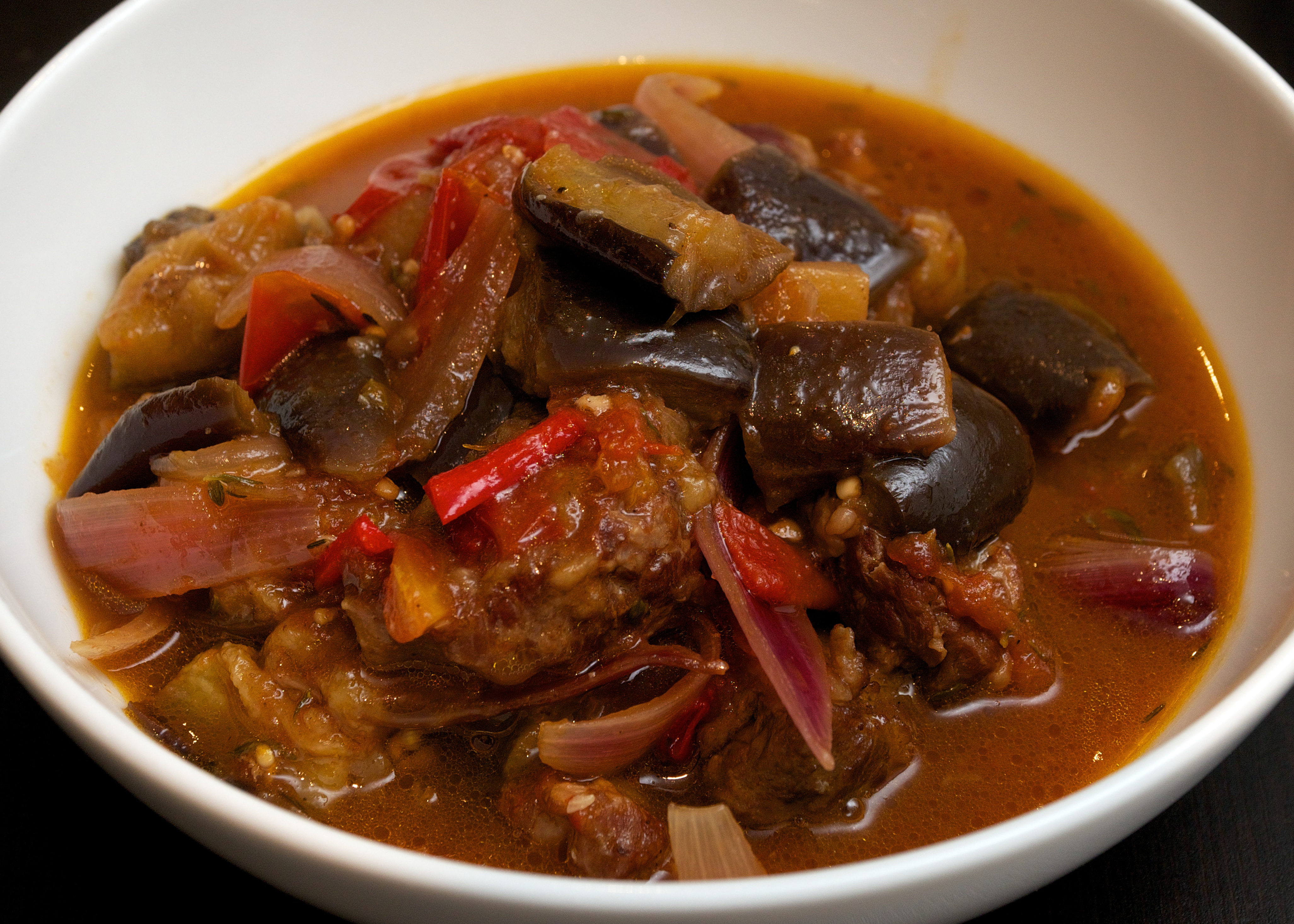
Aubergine & Lamb Stew

This is not the best looking dish but who cares when it tastes this good. To quote Itamar Srulovich (of Honey & Co. and the author of this recipe):

“Do not cook it to impress. Cook it for the ones you love the most, or just for you; it is that good.”

We concur Itamar!!

Wine Suggestion: Try a Mediterranean-style wine, a Primitivo or something similarly juicy from the south of Italy. We paired this with a lovely organic wine by Michele Biancardi, his Uno Piu Uno which is a cracking blend of Primitive and Nero di Troia. Only 12.5% abv but juicy and delicious so it didn’t overwhelm the lamb and aubergine and had enough depth to compliment it perfectly.

Patlican – Lamb & aubergine stew – serves 2

  • 450g lamb neck, cut into large dice
  • ½ tsp salt
  • ½ tsp freshly ground black pepper
  • 1 tbsp olive oil
  • 1 aubergine, cut into large cubes (about 350g)
  • 1 large tomato, cut into large cubes
  • 1 small red onion, peeled and cut into wedges
  • 6 whole cloves of garlic, peeled
  • ½ small red chilli, thinly sliced
  • 3 sprigs of fresh thyme
  • 150ml water
  • 1 tbsp pomegranate molasses

Season the lamb cubes with the salt and pepper.

Heat a large pan over a medium-high heat, add the oil and the diced lamb, and sear the meat all over. When the meat has browned (about 5-6 minutes), add the aubergine, tomato, onion & garlic. Cover and leave to steam for 5 minutes, then remove the lid and stir in the chilli and thyme. Reduce the heat to low and cook slowly for about 15 minutes, then pour in the water and pomegranate molasses.

Keep cooking on a low heat for 50-60 minutes or until the veg have broken down and the meat is soft enough to tear with a fork.

Serve with bread so you waste no sauce!

(Original recipe from Honey & Co.: Food From the Middle East by Sarit Packer & Itamar Srulovich, Saltyard Books, 2014.)

Read Full Post »

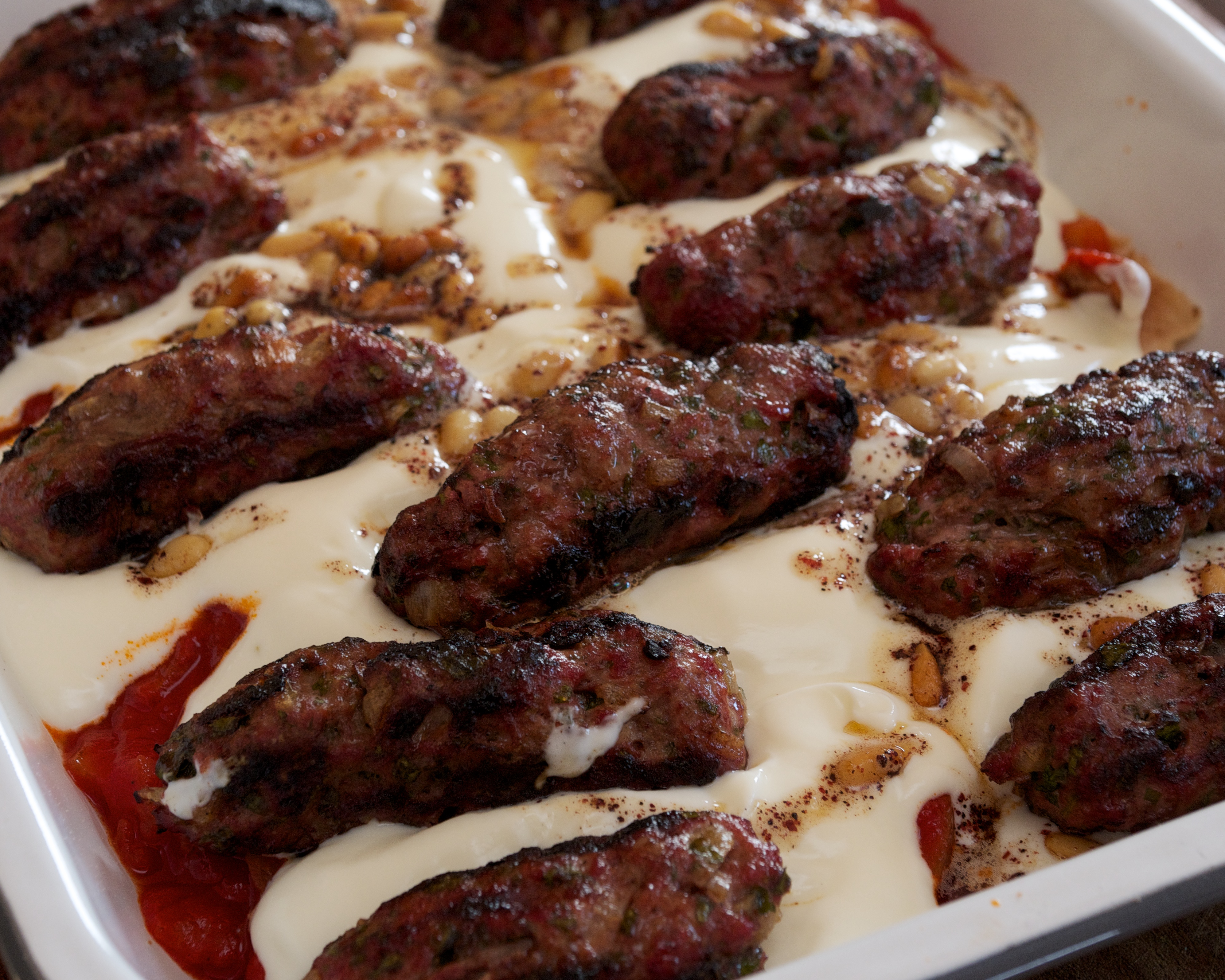
Kofte kebab

This Turkish kebab dish, from Claudia Roden’s wonderful book Arabesque, is very simple to make but you need to be organised and assemble the dish at the last minute so the layer of crunchy pitta bread at the bottom of the dish stays crisp. Claudia’s tips are to serve the tomato sauce and meat very hot but the yoghurt at room temperature.

Yogurtlu Köfte Kebabi or Turkish Kofte Kebab with Tomato Sauce & Yoghurt – serves 4

  • 2 pitta breads
  • 750g minced beef or lamb
  • 1 medium onion, finely chopped
  • 50g flat-leaf parsley, finely chopped
  • 1 tsp sumac plus an extra pinch
  • 500g full-fat natural yogurt
  • 2 tbsp butter or extra virgin olive oil
  • 2-3 tbsp pine nuts

FOR THE TOMATO SAUCE:

  • 1 small onion, chopped
  • 2 tbsp extra virgin olive oil
  • 2 cloves of garlic, chopped
  • 1 chilli pepper, seeded and chopped
  • 750g tomatoes, peeled and chopped (if it’s not tomato season use the equivalent of good quality tinned tomatoes instead)
  • 1-2 tsp sugar

Start with the tomato sauce. Fry the onion in the oil until soft. Add the garlic and chilli pepper, and stir for a couple of minutes. Add the tomatoes, season with salt, pepper and sugar, and cook over a medium heat for 10 minutes until they soften.

Open out the pitta breads, toast until crisp, then break into small pieces with your hands.

Next make the kofte kebabs. Season the mince with salt and pepper, and use your hands to work into a soft dough. Add the onion and parsley and work into the meat. Shape into sausages, about 2cm thick and 7cm long. Arrange on an oiled sheet of foil on a baking sheet and cook for about 8 minutes under a pre-heated grill, turning once, until well browned but still pink and moist on the inside. Or if you prefer (as we do) you can grill on a barbecue.

Spread the toasted pitta pieces over the bottom of your serving dish and sprinkle over a pinch of sumac. Pour the hot tomato sauce all over and top with a layer of yoghurt beaten with a fork.

Heat the butter or oil with the pine nuts and stir in the teaspoon of sumac. When the butter or oil sizzles, sprinkle all over the yoghurt, arrange the meat on top and serve immediately.

(Original recipe from Claudia Roden’s Arabesque, Michael Joseph, 2005.)

Read Full Post »

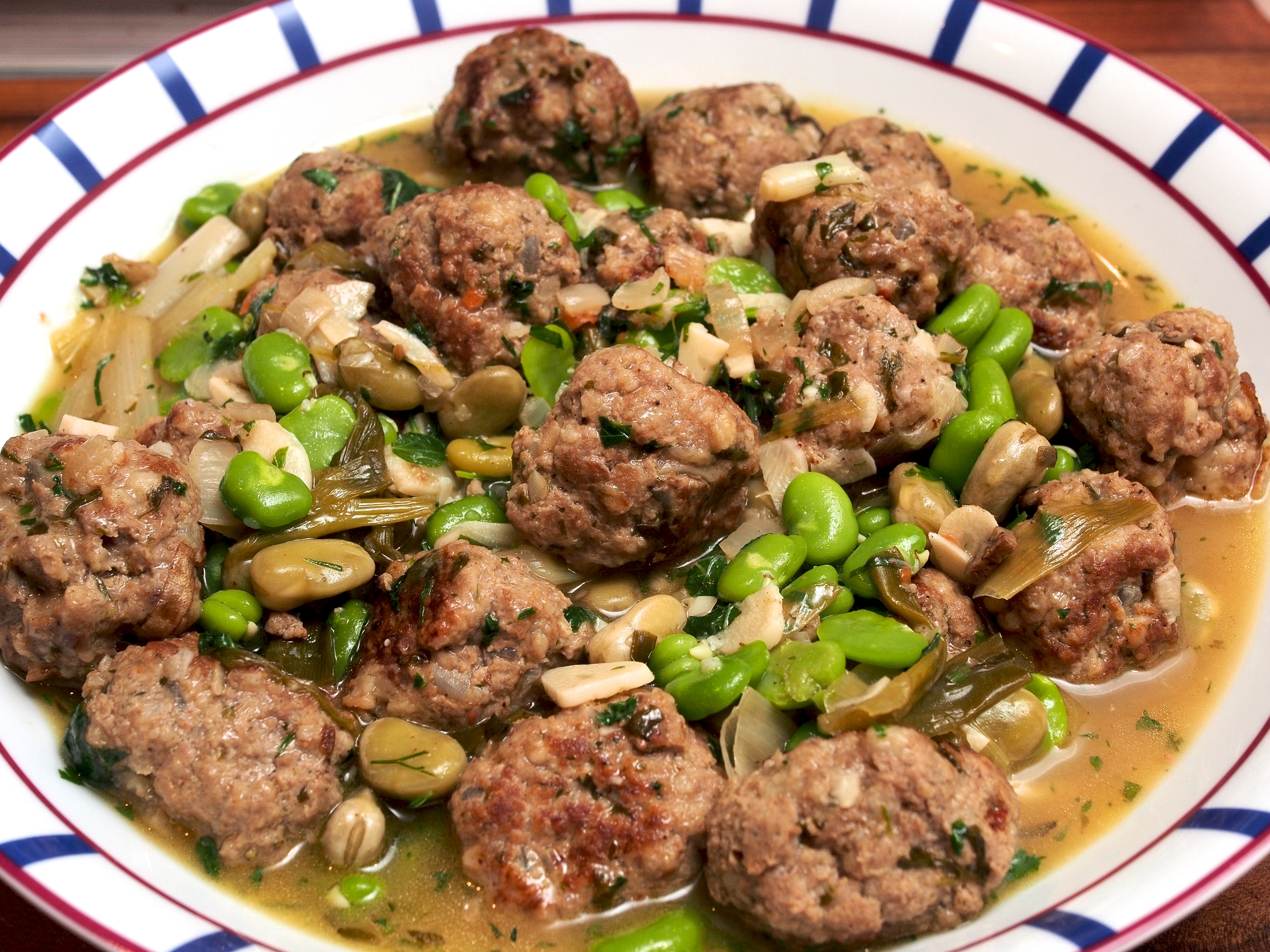
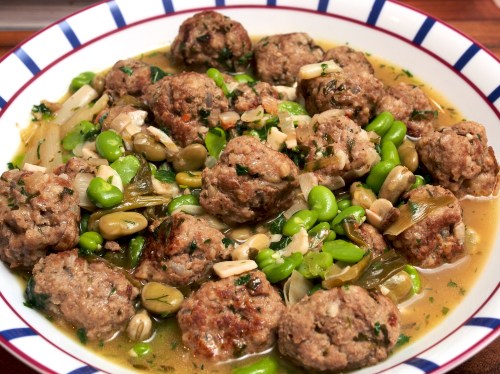
Meatballs with Broad Beans & Lemon

Delicious meatballs with a real summery feel. Use fresh broad beans if you can get them but frozen will work just as well. You can prepare this dish in advance and just reheat before serving.

Wine Suggestion: The trick with this dish is to make sure the wine is medium bodied so a lighter red with ripe (not dry) tannins would work a treat. An easy and uncomplicated shiraz cabernet blend from Australia or a nice Pinot Noir would work a treat. Alternately a medium bodied white like a good Verdicchio is a great option too. We drank the Umani Ronchi Casal di Serra Verdicchio which matched the dish perfectly with good depth of fruit and a great minerality which  allowed the food and wine to shine equally.

Beef Meatballs with Broad Beans & Lemon – serves 4

  • 4½ tbsp olive oil
  • 350g broad beans, fresh or frozen
  • 4 whole thyme sprigs
  • 6 garlic cloves, sliced
  • 8 spring onions, cut at an angle into 2cm lengths
  • 2½ tbsp lemon juice
  • 500ml chicken stock
  • salt and black pepper

MEATBALLS:

  • 300g minced beef
  • 150g minced lamb
  • 1 medium onion, finely chopped
  • 120g breadcrumbs
  • 2 tbsp each chopped flat-leaf parsley, mint, dill and coriander; plus ½ tbsp extra of each to finish
  • 2 large garlic cloves, crushed
  • 1 tbsp baharat spice mix (apparently you can buy this or you can use the recipe below*)
  • 1 tbsp ground cumin
  • 2 tsp capers, chopped
  • 1 egg, beaten

Put all the meatball ingredients into a large bowl. Add ¾ tsp of salt and lots of black pepper and mix well with your hands. Form into ping-pong sized balls (you should get about 20).

Heat 1 tbsp of the olive oil in a very large frying pan with a lid. Sear half the meatballs over a medium heat, turning until browned all over, about 5 minutes. Remove, add another ½ tbsp olive oil to the pan and cook the other batch of meatballs. Remove from the pan and wipe clean.

While the meatballs are cooking, put the broad beans into a pot of salted boiling water and blanch for 2 minutes. Drain and refresh under cold water. Remove the skins from half the broad beans.

Heat the rest of the olive oil in the pan you seared the meatballs in. Add the thyme, garlic and spring onion and sauté over a medium heat for about 3 minutes. Add the unshelled broad beans, 1½ tbsp of the lemon juice, 80ml of the stock, ¼ tsp of salt and lots of black pepper. The beans should be almost covered with liquid. Cover the pan and cook over a low heat for 10 minutes.

Return the meatballs to the pan. Add the rest of the stock, cover the pan and simmer gently for 25 minutes. Taste and adjust the seasoning. If the sauce is very runny you can remove the lid and reduce a bit. The meatballs will soak up a lot of the juice so make sure you have plenty of sauce left. You can leave the meatballs off the heat now until ready to serve.

Just before serving, reheat the meatballs and add a little water, if needed, to get enough sauce. Add the rest of the herbs and tablespoon of lemon juice, the shelled broad beans and stir very gently.

Serve with basmati rice.

*Baharat Spice Mix – 1 tsp black peppercorns, 1 tsp coriander seeds, 1 small cinnamon stick – roughly chopped, ½ tsp whole cloves, ½ tsp ground allspice, 2 tsp cumin seeds, 1tsp cardamom pods, ½ a whole nutmeg grated. Blend all the spices in a grinder or pestle and mortar until you have a fine powder. Store in an airtight jar.

(Original recipe from Jerusalem by Yotam Ottolenghi and Sami Tamimi, Ebury Press, 2012.)

Read Full Post »

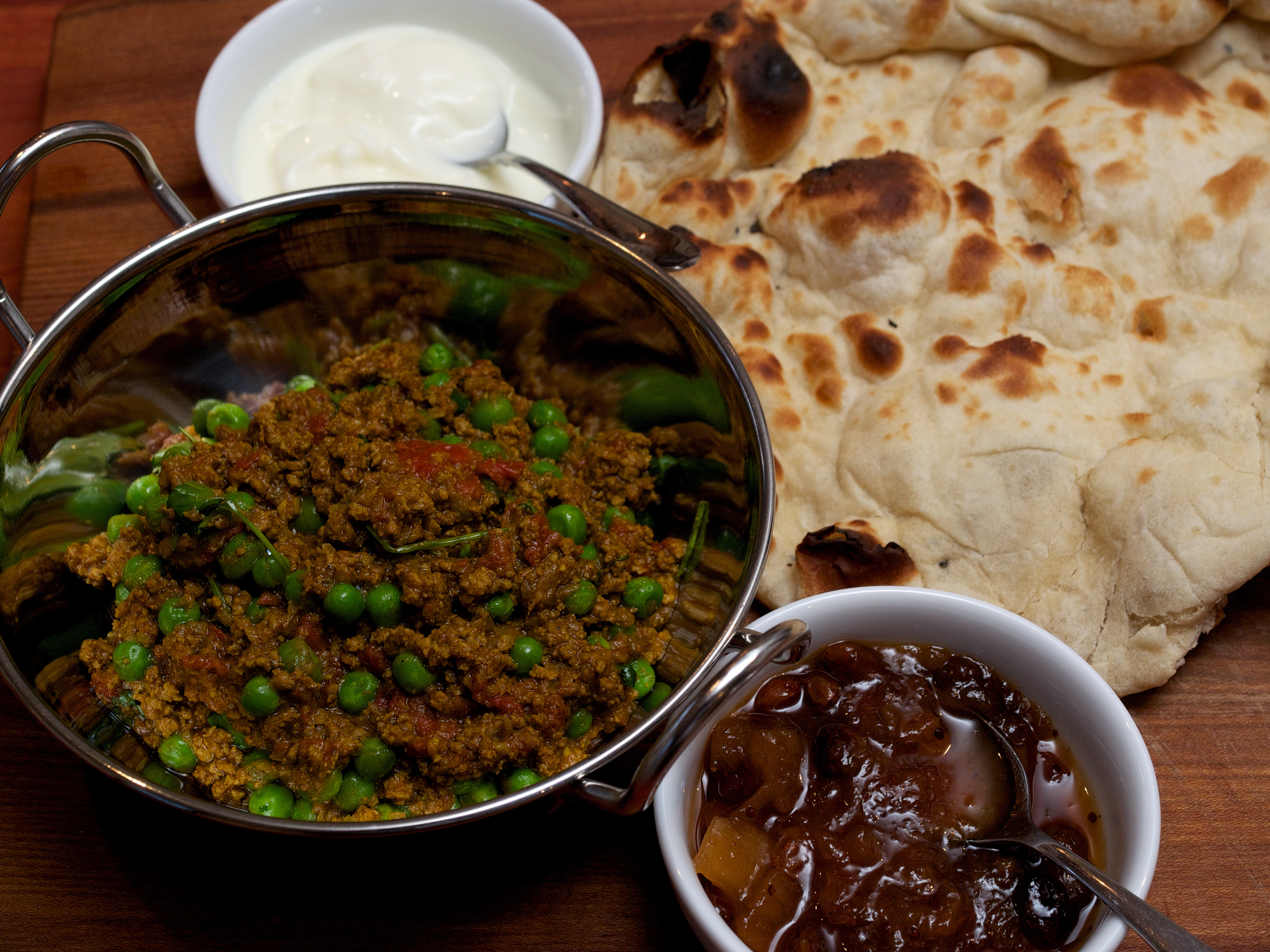
Keema with Peas

Keema with peas

This is a simple and cheap curry to whip up and it’s full of flavour. Grab some naan breads from your local takeaway and serve with some mango chutney and extra yogurt.

Keema with Peas – to serve 4

  • 1 large onion, chopped
  • 2 garlic cloves, chopped
  • 4cm piece ginger, grated
  • 2 green chillies
  • 3 tbsp oil
  • 500g lamb mince
  • 2 tbsp garam masala
  • 2 tsp turmeric
  • 200g chopped tomatoes (from a can or use 2 medium fresh tomatoes)
  • 2 tbsp natural yogurt
  • 200g frozen peas
  • 1 small bunch coriander, chopped

Chop the onion, garlic, ginger and chillies in a food processor.

Heat the oil in a large frying pan and fry the mixture until very fragrant. Add the mince and fry until starting to brown, stirring to break up the lumps.

Add the spices and fry for a minute before adding the tomatoes. Bring to a simmer, cook for a minute, then stir in the yogurt and some salt and pepper. Add a splash of water if the mixture looks dry, then cook for half an hour.

Add the frozen peas and cook for 5 minutes, then stir in the coriander.

(Original recipe from BBC Good Food)

Read Full Post »

This dish looks really good and is really very little effort. Perfect for last minute entertaining.

Wine Suggestion: We’ve successfully drunk fresh whites like Pecorino from Italy and crisp Sauvignon Chardonnay blends from Cheverny, Loire as well as  Chianti, Rioja and cool-climate Syrah/Shiraz from Australia and the have all gone very well. This is a sociable dish so think of a sociable wine and it seems to work a treat!

Lamb cutlets with mint, chilli & golden potatoes – serves 4

  • 500g baby new potatoes, halved
  • 3 tbsp olive oil
  • ½ tsp dried chilli flakes
  • 1 tsp dried mint
  • ½ tsp celery (or ordinary) salt
  • 8 lamb cutlets
  • 100g rocket
  • 1 tsp sea salt flakes
  • 1 tbsp chopped fresh parsley
  • 1 tbsp chopped fresh mint

Put the potatoes on to steam.

Mix the olive oil, chilli flakes and celery salt in a large tray. Add the lamb chops and turn to coat well in the oil. Leave to marinate for 10 minutes.

Heat a large, heavy, non-stick frying pan and fry the chops over a medium heat for 5 minutes (you won’t need any extra oil). Turn the cutlets over and cook for another 3 minutes on the other side (or longer if you prefer).

Meanwhile, drain the steamed potatoes once they are tender and leave to dry in the pot.

Use the rocket to line a platter. When the chops are cooked remove them from the pan and arrange on top of the rocket.

Add the potatoes to the pan and fry for 3 minutes on each side or until hot and golden brown. Use a slotted spoon to transfer to the platter. Sprinkle the dish with the sea salt and fresh herbs to serve.

(Original recipe from Nigella Lawson’s Nigellissima, Chatto & Windus, 2012.)

Read Full Post »

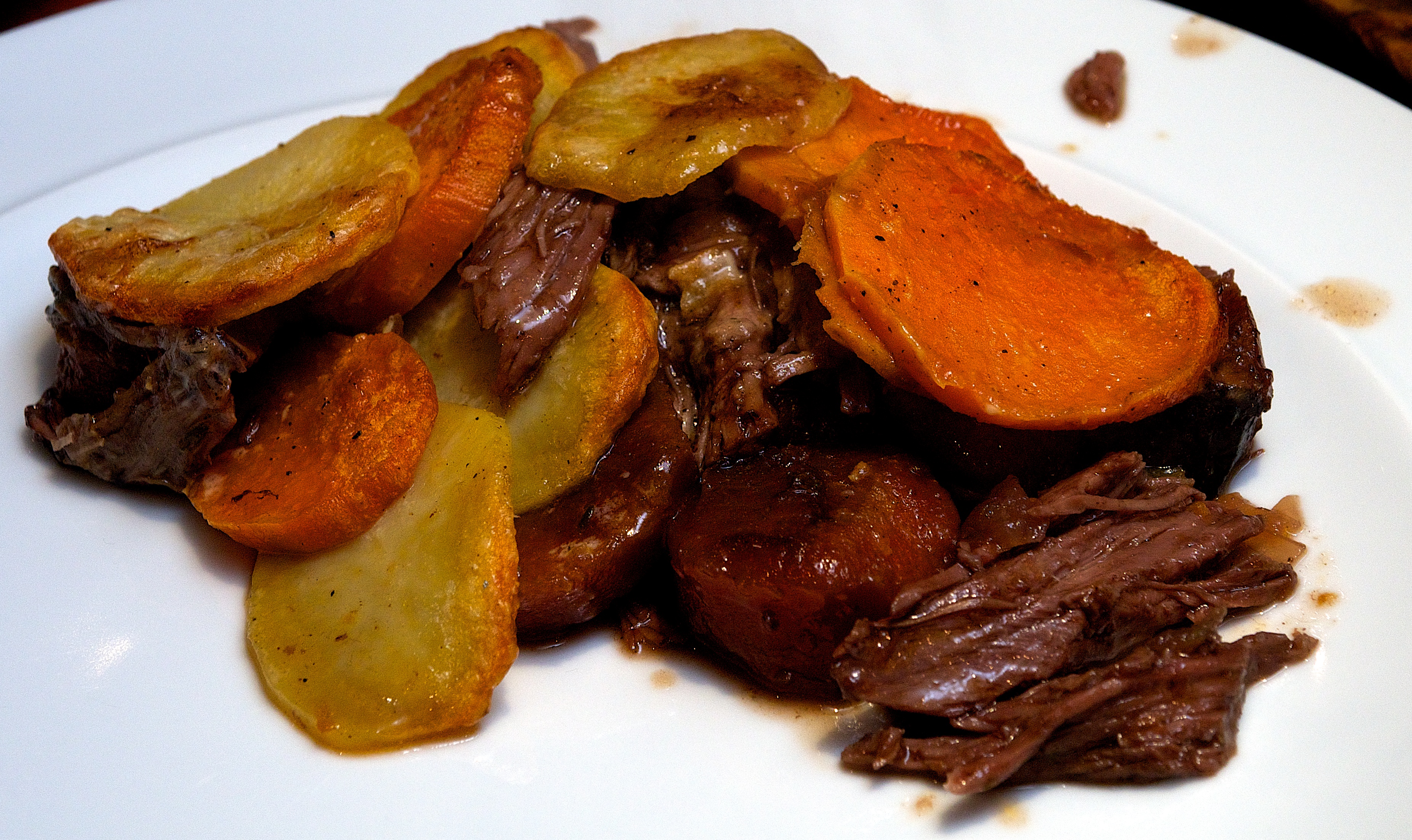
Lamb Dauphinoise Hotpot

Winter comfort food; the sweet potato topping is nice for a change and works well adding a layer of earthiness that suits the season. You will need to start this the night before but its very easy so don’t be daunted.

Wine Suggestion: We think southern Rhône reds rule here, especially a grenache dominant blend with a little bit of age where the heady spices become more velvety but you’ve retained enough tannins to work with the proteins in the lamb. The sweet spices and juicy fruit complement the sweet potato whereas a drier wine would fight with these flavours, so be careful of more traditional lamb matches like Bordeaux blends and Rioja / Tempranillo.

Lamb & Dauphinoise Hotpot – serves 8

  • 3 large carrots, cut into chunks
  • 1 onion roughly, chopped
  • 1 bulb of garlic, split in 2
  • few sprigs of rosemary
  • few sprigs of thyme
  • 2 bay leaves
  • 1 tbsp tomato purée
  • 2.5kg shoulder of lamb on the bone
  • 1 bottle red wine

For the topping: 

  • 4-5 potatoes
  • 4 sweet potatoes
  • 150ml double cream
  • few knobs of butter

Heat the oven to 180C/160C fan/gas 4.

Use a flameproof casserole big enough to fit the lamb. Put in all the vegetables and herbs and stir in the tomato purée. Put the lamb on top, pour over the wine and season well. Cover and heat on top of the stove, then transfer to the oven and cook for 3 hours. Remove the lamb from the oven, leave to cool, then chill overnight.

The next day, remove all the hard fat from around then lamb. Lift the lamb out of the dish, scraping off and keeping the jellied juice.  Shred the lamb and throw away any large bits of fat and the bones. Put the lamb back in the dish, spoon over the jellied sauce and mix with the veg.

Heat oven to 200C/180 fan/gas 6.

Peel and slice the potatoes into rounds. Put them into a pan of cold salted water, bring to a hard boil then drain immediately. Put the potatoes back into the empty pan, pour over the cream and season well.

Arrange the potatoes on top of the lamb and drizzle the cream left in the pan over the top and dot with butter. Bake for between 40 minutes and an hour or until the top is nicely coloured and the sauce is bubbling.

Serve with some green veg.

(Original recipe from BBC Good Food)

Read Full Post »

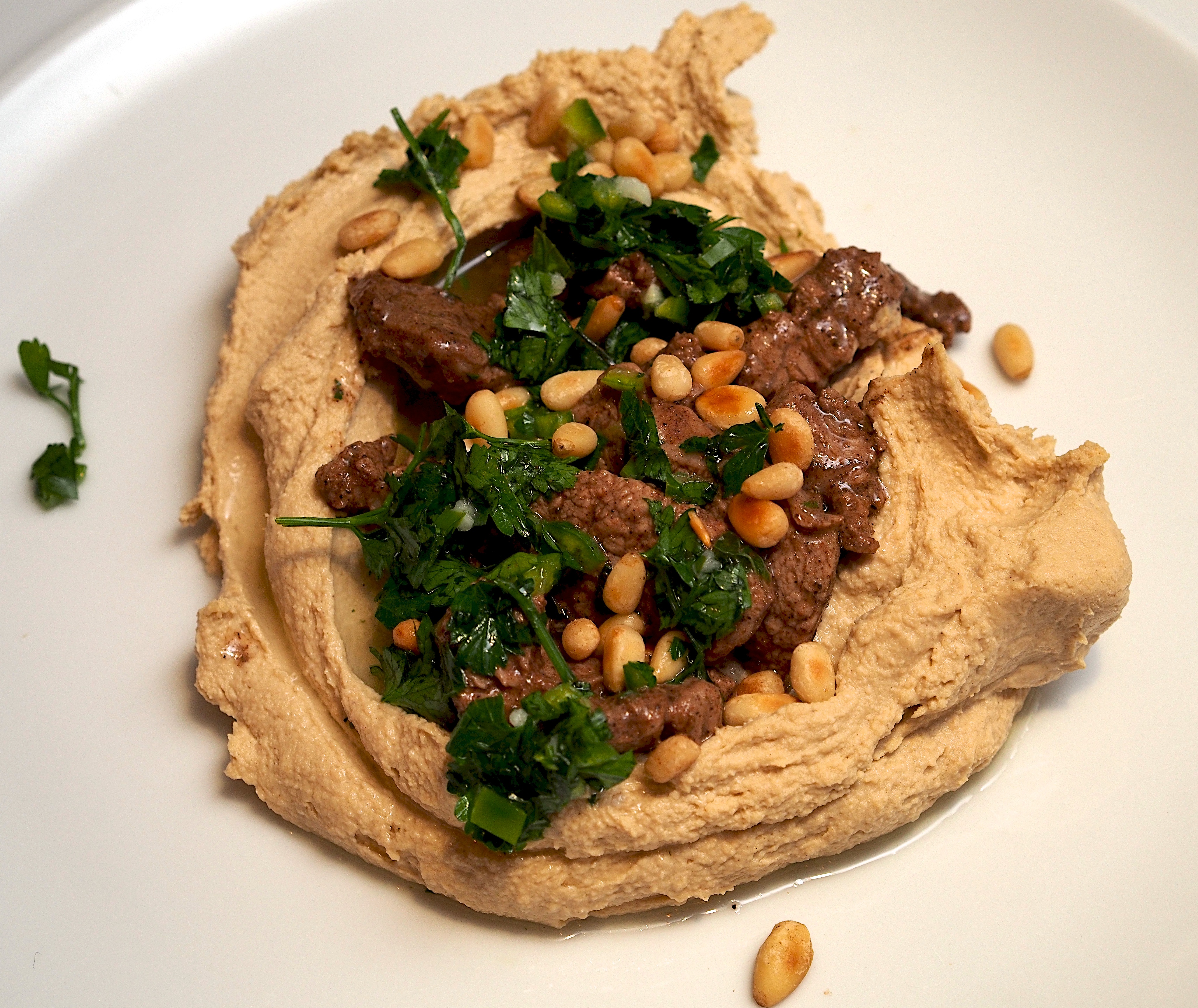
We love and are fascinated by the spices, flavours and textures of the Middle East and Africa and this dish captures all of this perfectly. The spices match the freshness  and zing of lemon, the lamb contrasts with the smooth hummus and some crisp flatbreads give crunch and texture.  The freshness of the herbs balance the warming spices to produce a pleasant mix of warm and cool ingredients, still comforting despite the crisp autumn evening.

A meal in itself or a wonderful mezze / starter to share.

Wine Suggestion: We’d drink a white that has texture and freshness but not too crisp or conversely heavy. The Pinot Blancs from Alsace fit the bill perfectly as they have a bit of perfume and hints of spice as well as attractive light stone fruit flavours.

Hummus kawarma with lemon sauce – to serve 6

  • 1 quantity of hummus (see recipe below)
  • 2 tbsp pine nuts, toasted in the oven or fried in a small amount of unsalted butter

For the kawarma (lamb)

  • 300g neck fillet of lamb, finely chopped by hand
  • ¼ tsp ground black pepper
  • ¼ tsp ground white pepper
  • 1 tsp ground allspice
  • ½ tsp ground cinnamon
  • good pinch of freshly grated nutmeg
  • 1 tsp dried za’atar
  • 1 tbsp white wine vinegar
  • 1 tbsp chopped fresh mint
  • 1 tbsp chopped flat-leaf parsley
  • 1 tsp salt
  • 1 tbsp unsalted butter
  • 1 tsp olive oil

For the lemon sauce 

  • 10g flat-leaf parsley, finely chopped
  • 1 green chilli, finely chopped
  • 4 tbsp lemon juice
  • 2 tbsp white wine vinegar
  • 2 garlic cloves, crushed
  • ¼ tsp salt

To make the kawarma, put all the ingredients apart from the butter and oil in a bowl. Mix well, cover and leave to marinate in the fridge for half an hour.

Just before cooking the meat, combine all the ingredients for the lemon sauce in a small bowl.

Heat the butter and oil in a large frying pan over a medium-high heat. Add the meat in 2-3 batches and stir-fry for a couple of minutes per batch (the meat should be slightly pink).

Divide the hummus between 6 serving dishes and spoon the warm kawarma over the top. Drizzle over plenty of lemon sauce and garnish with some more parsley and the pine nuts.

Basic Hummus – to serve 6

  • 250g dried chickpeas
  • 1 tsp bicarbonate of soda
  • 270g light tahini paste
  • 4 tbsp lemon juice
  • 100ml ice cold water
  • salt

Wash the chickpeas well and put into a large bowl. Cover with cold water and leave to soak overnight.

Drain the chickpeas. Place a medium saucepan on a high heat and add the chickpeas and the bicarbonate of soda. Cook for about 5 minutes, stirring. Add 1.5 litres of fresh water and bring to the boil. Cook, skimming off any foam and skins, for between 20 and 40 minutes or until very tender (you should be able to crush them between your thumb and finger but they should not be mushy).

Drain the chickpeas and put in a food processor. Process to a stiff paste; then, with the machine running, add the tahini paste, lemon juice, garlic, and 1½ tsp salt. Finally, slowly drizzle in the iced water and mix for about 5 minutes or until you get a very smooth paste. Transfer to a bowl and cover the surface with cling film to stop a skin forming. Rest for at least 30 minutes before serving.

(Original recipe from Jerusalem by Yotam Ottolenghi and Sami Tamimi, Ebury Press, 2012.)

Read Full Post »

Moussaka

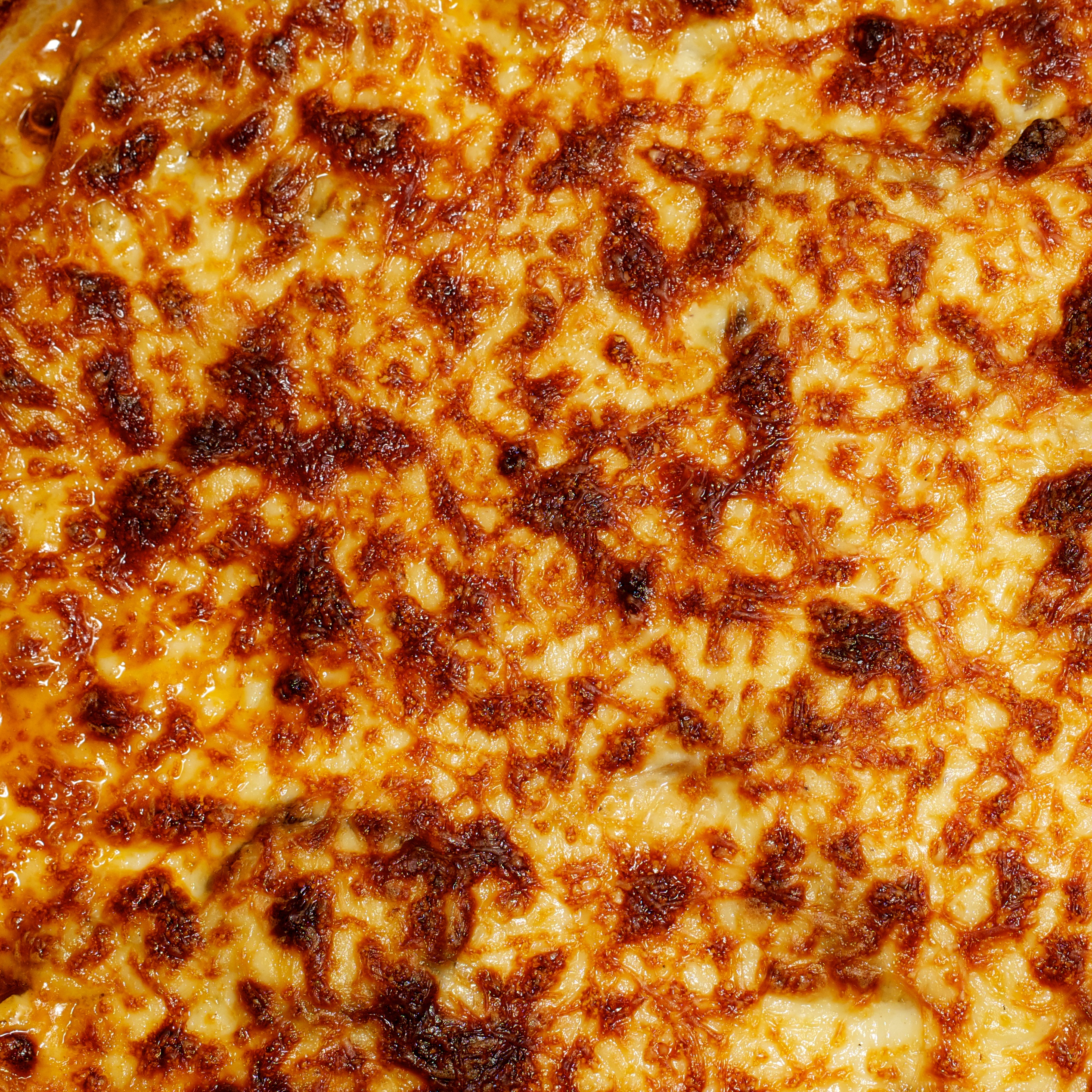
This is a really lovely moussaka which rates as one of our “comfort” dishes. We especially like roasting the aubergines in the oven rather than frying them which always seems to require vats of oil. The combination is a classic and is not difficult, but it does take a little time to bring together. It is always well worth it.

Wine Suggestion:  We’ve been inspired to drink wines from the Eastern Mediterranean with this and have found that top Lebanese wines, like Chateau Massaya, with their bramble and plum fruits plus velvety spices work very well indeed.

Moussaka – to serve 6

  • 3 aubergines, sliced 1cm thick
  • olive oil
  • 2 onions, chopped
  • 2 cloves of garlic, chopped
  • 1½ lb (675g) lamb mince
  • 1 tsp cinnamon
  • 1 tomato, skinned, seeded and chopped
  • 2-3 tbsp tomato purée
  • a bunch of flat-leaf parsley, chopped
  • a few tbsp dry white wine
  • Parmesan (optional)

FOR THE BÉCHAMEL 

  • 1 pint (600ml) full-cream milk
  • 1 onion, peeled and stuck with a couple of cloves
  •  bay leaf
  • 2oz (55g) unsalted butter
  • 1 heaped tbsp plain flour
  • nutmeg

Preheat the oven to 180ºC/350ºF/Gas 4.

Brush the aubergine slices with olive oil on both sides then put on a baking tray in a single layer and roast until soft. You will either need to do this in batches or on two trays. They should take between 10 and 20 minutes but don’t let them get too brown.

Meanwhile, heat 2 tbsp olive oil in a heavy-bottomed frying pan and sauté the onions until soft and golden. Add the garlic and continue to sauté for another few minutes, then add the mince and fry for 5-10 minutes or until well browned. Season and add the cinnamon, then add the chopped tomato, tomato purée and chopped parsley. Stir well, add the wine and simmer for 15 minutes or until most of the wine has been absorbed.

While the meat is simmering make the béchamel. Put the onion, bay leaf and milk in a small pan and bring slowly to the boil. Take the pan off the heat and leave to infuse for 20-30 minutes with the lid on and reheat just before starting the sauce.

Melt the butter over a gentle heat in a small pan. Just as the butter starts to foam, add the flour and stir gently for a few seconds. You want a thin bubbling base – if the butter hasn’t amalgamated with the flour, add a tiny bit more. Bubble for a couple of minutes or until it turns a pale biscuit colour. Add about half a cup of the hot milk and whisk hard until the mixture becomes thick. Add more milk and repeat – it will take longer to thicken each time.

Cook the sauce more slowly and stir with a wooden spoon – add more milk until you get the right consistency. You want the sauce to be thick but not solid. Cook gently for 20 minutes, stirring often. Season and grate in a little nutmeg about half way through.

When the sauce is ready put alternate layers of aubergine and meat sauce in a deep baking dish or roasting tin, staring and ending with a layer of aubergines. Pour a thick layer of béchamel over the top; you might not need it all. Sprinkle over some grated Parmesan if you like then bake in the oven for about 45 minutes or until brown on top.

(Original recipe from Tamasin’s Kitchen Bible by Tamasin Day-Lewis, Weidenfeld & Nicolson, 2005.)

Read Full Post »

We used a leg from a hogget (one year old lamb) as this has greater flavour. If you use a young “Spring” lamb this will be juicier and cook quicker but is more delicate in flavour.

Agnello Marinato alla Griglia – to serve 6

  • 1 leg of spring lamb, about 2.25kg in weight, boned and butterflied
  • 5 garlic cloves, peeled and crushed
  • 2 tbsp rosemary leaves, chopped
  • coarsely ground pepper
  • 2 tbsp lemon juice
  • 3 tbsp olive oil
  • 1 tbsp sea salt

Mix the crushed garlic, rosemary and a good pinch of pepper in a bowl, and rub into the cut side of the meat. Put in a shallow dish and pour over the lemon juice and olive oil. Turn the meat over a few times until completely coated, then cover. Leave to marinate at room temperature overnight (or at least 4 hours), turning occasionally.

Preheat the grill or barbecue to very high. Remove the meat from the marinate and pat dry. Season with salt. Carefully place the meat on the grill and seal on both sides. Lower the heat and keep cooking until done to your liking, turning once. Allow a minimum of 8 minutes per side but it could take up to 45 minutes in total depending on the age and size of the lamb as well as the barbecue temperature.

Wine Suggestion: We think that good Bordeaux works well with this and proceeded to try a couple of different Chateau to test this theory. The first was a birthday present of Chateau Mission Haut Brion from the Graves where the pencilly and inky character complemented the lamb. A very fine wine indeed and a real treat. We then followed by a Chateau d’Angludet from Margaux which was more mellow and feminine to round out the end of the meal. A treat altogether.

(Original recipe from The River Café Cookbook by Ruth Rogers and Rose Gray, Ebury Press, 1995.)

Read Full Post »

Another success from “The Lebanese Kitchen”. First you have to make a Lebanese Seven Spices mix which you can use to add flavour to loads of dishes.

Lebanese Seven Spices Mix – makes 175g

  • 5 tbsp ground allspice
  • 3½ tbsp pepper
  • 3½ tbsp ground cinnamon
  • 5 tbsp ground cloves
  • 4 tbsp ground nutmeg
  • 4 tbsp ground fenugreek
  • 4 tbsp ground ginger

Mix the spices together and store in an airtight jar in a dark cupboard until needed.

Lamb Chops with Seven Spices – to serve 4

  • 2 garlic cloves, crushed
  • 1½ tbsp seven spices mix
  • juice of 1 lemon
  • 1 tsp salt
  • 1 tsp black pepper
  • 4 lamb chops
  • natural yogurt and lemon wedges to serve

Mix the garlic, seven spices mix, lemon juice, salt, and pepper in a bowl, add the lamb chops, and rub mixture into the meat. Leave to marinade for about 1½ hours.

Barbecue for 4-6 minutes on each side, then serve with the lemon wedges and yogurt.

Wine Suggestion: We had a really nice Spanish red, Pago de los Capellanes, from Ribero del Duero (thanks Alicia). 100% Tempranillo with a lovely juicy depth and loads of flavour. Alternately you could try a wine from the Bekaa Valley in Lebanon which also makes juicy, heady, red wines.

(Original recipe from The Lebanese Kitchen by Salma Hage, Phaidon Press Ltd, 2012.)

Read Full Post »

We’re not massive fans of leftovers because we always want to cook something different the next night. Leftover roast meat is the exception though as you can usually transform it into something completely different. This originated as a roast shoulder of lamb with rosemary and tasted every bit as good in this curry.

Leftover lamb curry – to serve 4

  • 1 tbsp vegetable oil
  • 1 onion, chopped
  • 2 cloves of garlic, finely chopped
  • small knob of ginger, grated
  • 2 tbsp curry paste (we like Patak’s)
  • 500g leftover lamb, trimmed of any fat and cut into chunks
  • 300ml vegetable stock
  • 2 ripe tomatoes, chopped
  • 1 cinnamon stick
  • 3 tbsp natural yogurt
  • 25g coriander, chopped

Heat the oil in a medium saucepan and cook the onion until softened. Stir in the garlic and ginger and cook for 30 seconds before adding the curry paste; stir again for another 30 seconds or so.

Add the lamb, stock, tomatoes, cinnamon and a good pinch of salt. Bring to a simmer and cook for 10 minutes.

Take the curry off the heat and add the yogurt and coriander.

Serve with steamed basmati rice.

Wine Suggestion: We prefer to drink beer with curry. Try Tom Crean’s Lager from Dingle in County Kerry if you get the opportunity. A great drop from an Irish micro-brewery and well worth seeking out.

Read Full Post »

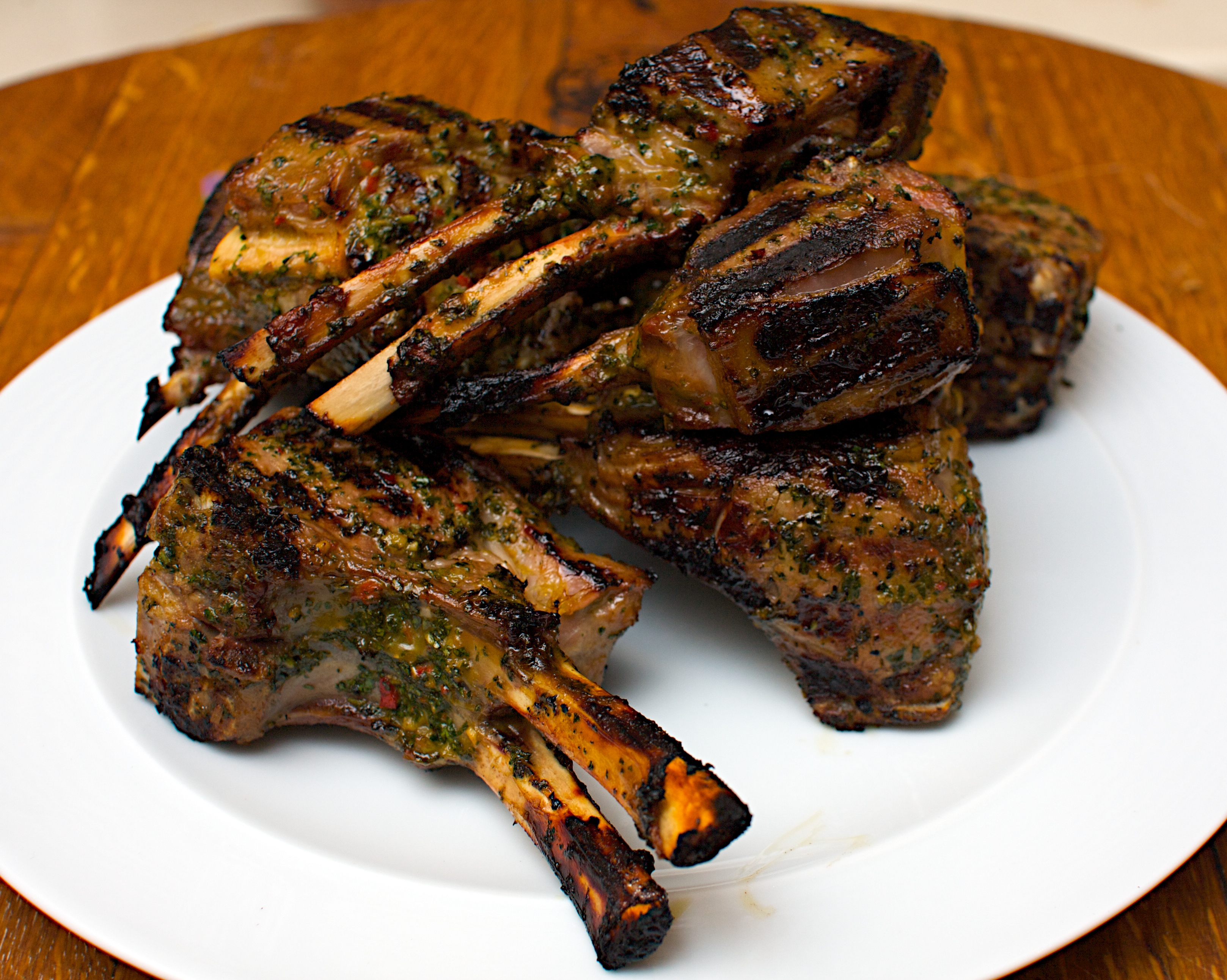
This marinade is absolutely delicious – ginger, chillies, loads of herbs, soy sauce, honey etc. We loved it! You need to start a day in advance.

Marinated rack of lamb with coriander and honey – to serve 4

  • 1kg rack of lamb, French trimmed
  • 20g flat leaf parsley
  • 30g mint
  • 30g coriander
  • 4 garlic cloves, peeled
  • 15g ginger, peeled and sliced
  • 3 chillies, seeded
  • ½ tsp salt
  • 50ml lemon juice
  • 60ml soy sauce
  • 120ml sunflower oil
  • 3 tbsp honey
  • 2 tbsp red wine vinegar
  • 4 tbsp water

Trim most of the fat from the lamb, leaving an even layer to keep it moist and tasty. Separate the rack into portions of 2/3 cutlets and put in a non-metal container.

Blitz everything else together in a food processor, then pour over the lamb. Refrigerate overnight.

Heat the oven to 200ºC/Gas Mark 6. Heat up a heavy cast iron griddle or a barbecue. Lift the meat out of the marinade, shaking off the excess. Sear well on all sides, then transfer to a baking tray and cook in the oven for about 15 minutes, depending how big your racks are and how you like your meat cooked.

Meanwhile, heat the marinade in a small saucepan and simmer for 5 minutes. Serve the cutlets with the sauce on the side.

Wine Suggestion: Try a very young, lighter style Cotes du Rhone, or a Cotes du Ventoux. The less aggressive tannins and soft plum and possibly blueberry (depending on how young) fruit flavours with the herbal twist of southern France should work perfectly with the lamb and herbs.

(Original recipe from Ottolenghi: The Cookbook, Ebury Press, 2008.)

Read Full Post »

These Greek kebabs are easy and delicious when barbecued and served with Tzatziki (a Greek yogurt dip), sliced tomatoes, pickled chillies and sliced gherkins.

Souvlaki – to serve 8

  • 2kg boned shoulder of lamb
  • 1 tbsp dried oregano
  • 1 large lemon, juiced plus wedges to serve
  • 150ml extra virgin olive oil
  • Paprika for sprinkling

Trim excess fat off the lamb and cut into bite-sized pieces. Put into a bowl with the oregano, lemon juice, olive oil, 2 tsps salt and some black pepper and leave to marinate at room temperature for about an hour.

Preheat the barbecue. Thread the lamb onto metal skewers and cook on the hot barbecue, until browned on the outside but still juicy in the centre. Sprinkle with a pinch of paprika and a squeeze of lemon juice to serve.

Drink with: a southern Italian red such as Negromaro or Primitivo. Italian wines from Puglia and Calabria complement Greek foods very well which is not surprising given the very strong historical and social links between them. In this case there is a good balance of warm ripe fruits, earthy tannins and medium weight.

(Original recipe from Rick Stein’s Mediterranean Escapes, BBC Books, 2007.)

Read Full Post »
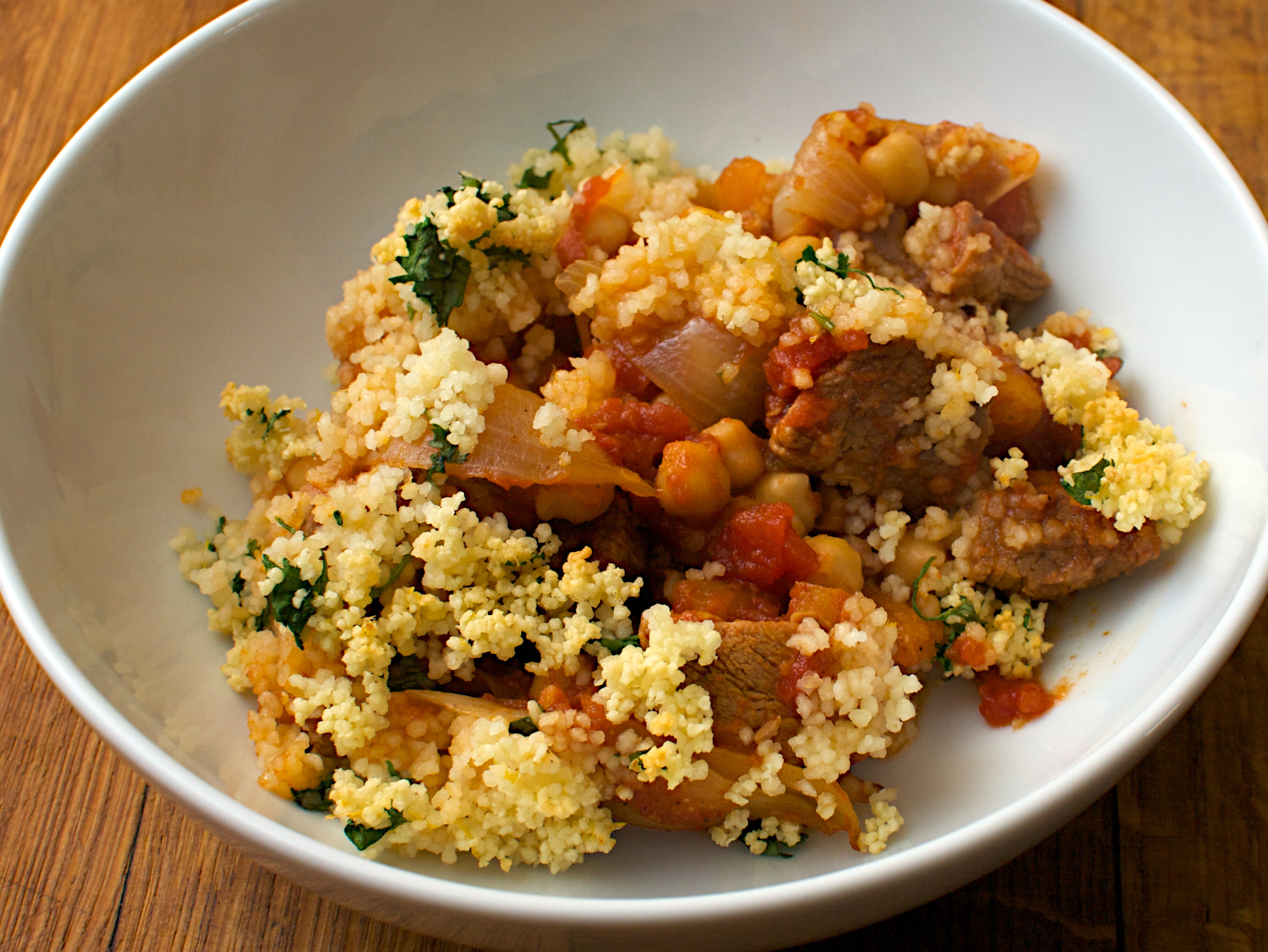
This is a much lighter version of a lamb tagine. We definitely prefer the full-fat version but this is super simple to make, tasty, and healthy – so if you’re watching your waste we highly recommend it.

Light lamb tagine – to serve 6

  • 700g lamb leg meat, trim off all the fat and cut into bite-sized chunks
  • 1 onion, cut into 8 wedges
  • 2 garlic cloves, chopped
  • 1 tsp ground cumin
  • 1 tsp ground coriander
  • ½ tsp hot chilli powder
  • 1 cinnamon stick
  • 12 dried apricots, chopped (make sure they’re the no-soak ones)
  • 1 preserved lemon, discard the pulp and chop the skin
  • 2 tbsp runny honey
  • 400g tin chickpeas, drained
  • 400g tin chopped tomatoes
  • 125g couscous
  • chopped coriander to serve

Heat the oven to 170C. Put the lamb, onion, garlic, spices, apricots, lemon, honey, chickpeas  into a large ovenproof casserole with a lid.

Season, then add the tomatoes and 400ml water. Bring to the boil cover and cook in the oven for 1½ hours, or until the lamb is tender. Turn the oven up to 200C.

Add 150ml of boiling water to the couscous and leaf to stand for 2 minutes. Fork through to avoid any clumps and spoon over the lamb. Return to the oven and cook without the lid for about 15 minutes, or until lightly browned.

Serve with some chopped coriander.

Wine Suggestion: Mediterranean reds tend to complement spicy, sweet flavours. We had a really interesting Italian red from Etna called Tenuta delle Terre Nere, which was very elegant and not too heavy. We would suggest a lighter red such as a Carrignan/Granache blend which can be found on the Mediterranean rim such as France, Spain or Sardinia. If you can find one with a bit of age it should have mellowed out nicely.

Read Full Post »

Chilli Cumin Lamb

A great introduction to an exciting chef, the winner of Australian Masterchef, Adam Liaw. He does some really exciting Asian food – well worth a trip to the Asia market! Lamb fried with cumin is a classic northern Chinese dish, Adam has given it a bit of twist and turned it into a warm salad with a peanut relish. You will need a thermometer for this, the sort that you use for jam, you can pick one up in a kitchen shop for under €10. We bought one to cook this dish and have already used it again for something else. If your peanuts have the skins on just blanch them for a minute in hot water and they will slip off easily.

Chilli cumin lamb with peanuts and herbs – to serve 2

  • vegetable oil, to deep-fry
  • 300g lamb topside, cut into 2cm cubes
  • 1 tbsp cornflour
  • 2 tbsp neutral-flavoured oil, like groundnut
  • 40g raw peanuts, peeled
  • ½ onion, finely diced
  • 2 garlic cloves, chopped
  • 1 tbsp dark soy sauce
  • ¼ tsp caster sugar, plus an extra pinch
  • 5 dried chillies, stalks and seeds removed
  • 1 tbsp cumin seeds
  • 1 tsp chilli powder
  • ¼ tsp sea salt flakes
  • 2 large handfuls mint leaves
  • 1 large handful coriander leaves
  • lemon wedges and cooked rice, to serve

Half-fill a wok with vegetable oil and heat to 180ºC. Toss the lamb in the cornflour and deep-fry for 3-5 minutes or until well browned. Lift out with a slotted spoon and drain on paper towel. Drain the vegetable oil from the wok.

Heat half the neutral oil in the wok and stir-fry the peanuts until golden brown. Remove with a slotted spoon, drain and roughly chop. Add the onion and garlic and stir-fry for 1-2 minutes or until softened and starting to colour. Add the soy sauce and sugar and stir-fry for 30 seconds. Return the peanuts to the wok with the chillies and toss for about 30 seconds. Remove the mixture from the wok and set aside.

Heat the rest of the oil in the wok and add the cumin and chilli powder. Stir-fry for 30 seconds (or until it starts to aggravate your nose). Add the lamb, the salt and a pinch of sugar. Toss for about 30 seconds and then add half the mint. Toss until the lamb is wilted, then remove the mixture from the wok.

Arrange a bed of coriander and mint leaves on a serving plate and top with the lamb mixture. Spoon the peanut and onion mixture on top of the lamb. Serve with wedges of lemon. Squeeze the lemon over just before eating and toss like a salad. Serve with rice.

Wine Suggestion: We have the old conundrum of chillies with wine – they don’t go. We’d probably go for a beer here (lager rather than ale)  but if you want wine, a Pinot Gris with a little sweetness and not too aromatic might be good.

(Original recipe from Adam Liaw’s Two Asian Kitchens, Ebury Press, 2011.)

Read Full Post »

« Newer Posts - Older Posts »