A nice bright side dish from Ottolenghi Simple, though we swapped out the dolcelatte for gorgonzola.
Roasted squash with lentils and gorgonzola – serves 6 as a side
1 large butternut squash, cut in half lengthways, deseed and cut into 1cm thick wedges, no need to peel
2 red onions, cut into wedges
3 tbsp olive oil, plus extra to serve
10g sage leaves
100g Puy lentils
1 large lemon, zest grated to give 1½ tsp, then juiced to give 2 tbsp
1 clove of garlic, crushed
5g parsley leaves, roughly chopped
5g mint leaves, roughly chopped
10g tarragon leaves, roughly chopped
100g dolcelatte (we used gorgonzola), torn into small pieces
Heat the oven to 220C fan.
Put the squash and onions into a large bowl with 2 tbsp of the oil, the sage leaves, ¾ tsp of salt and lots of black pepper.
Toss well, then spread out on a baking tray lined with baking parchment. Roast for 25-30 minutes, or until golden-brown. Remove and rest for 10 minutes.
Meanwhile, half fill a medium saucepan with water and bring to the boil. Add the lentils and simmer for 20 minutes, until cooked. Drain, then set aside to cool slightly, then put into a large bowl. Stir in the lemon zest, lemon juice, garlic, herbs and 1 tbsp of oil and ¼ tsp of salt.
Add the roasted squash and onion to the bowl of lentils and gently mix. Transfer to a serving dish, dot with the cheese, drizzle with oil and serve.
(Original recipe from Ottolenghi Simple by Yotam Ottolenghi & Tara Wigley, Ebury Press, 2018.)
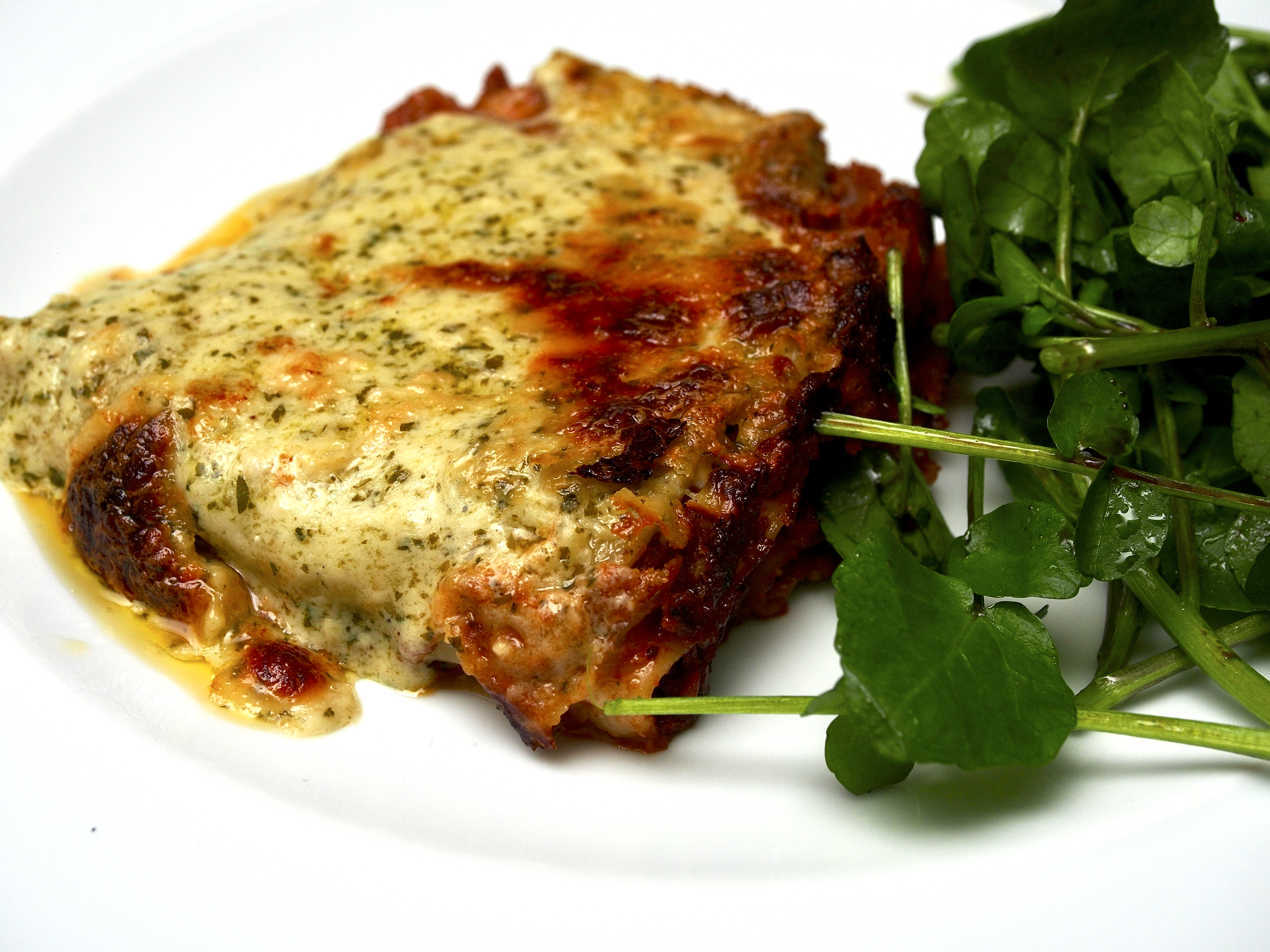
This version has fresh pesto stirred through the béchamel sauce which is a variation we’d not come across before, and it’s very good indeed. So good we may add any leftover pesto to dishes like this in the future; it brings a burst of Spring to a rich dish.
Wine Suggestion: We were uncertain what to open alongside this dish given the many components, but felt we needed to stick to an Italian. Freshness to balance the béchamel, depth for the layered richness, but a lightness of being to complement the basil pesto. We had a bottle of Pira Langhe Nebbiolo on the shelf and we’re happy to report it was a good match.
Lasagne with pesto – serves 6 to 8
3 tbsp olive oil
1 onion, finely chopped
1 large carrot, peeled and grated
1 celery stick, finely chopped
500g beef mince
1 glass of red wine
700ml passata
1 tbsp tomato purée
12 fresh lasagne sheets
FOR THE BÉCHAMEL SAUCE
100g butter
100g plain flour
1 litre full-fat milk
¼ tsp nutmeg, freshly grated
100g freshly grated Parmesan
FOR THE PESTO
40g basil leaves
1 garlic clove, peeled
30g pine nuts
120ml extra virgin olive oil
20g freshly grated Parmesan cheese
Heat the 3 tbsp of olive oil in a large saucepan and cook the onions, carrot and celery for 5 minutes over a medium heat. Add the beef mince and cook for 5 minutes, stirring and breaking it up with a wooden spoon until browned all over. Season and leave to cook for a further 5 minutes, stirring occasionally.
Add the wine, stir well and buble for about 3 minutes, then add the passata and tomato purée, lower the heat and continue to cook for an hour, uncovered, until you have a thick sauce. Taste for seasoning after 30 minutes.
Meanwhile, make the pesto by putting the basil, garlic, and pine nuts in a food processor. Pour in the oil and blitz until smooth, then transfer to a bowl and fold in the cheese. Season with a pinch of salt and set aside.
To make the béchamel, melt the butter in a large saucepan over a medium heat. Stir in the flour and cook for 1 minute, then gradually whisk in the cold milk, reduce the heat and cook for 10 minutes, whisking constantly. When the béchamel is thickened, stir in half the Parmesan, the nutmeg and the pesto. Season and set aside to cool slightly.
Preheat the oven to 180C/fan 160C/gas mark 4.
To assemble, spread a thin layer of béchamel over the bottom of a deep ovenproof dish. You can use your lasagne sheets to get the right sized dish, you need to make 3 layers of lasagne sheets. Lay a third of the lasagne sheets over the béchamel, then spread over half the meat sauce and top with another thin layer of béchamel.
Lay another third of the lasagne sheets on top and cover with the rest of the meat sauce. Add the final layer of lasagne and spread the remaining béchamel on top, completely covering the lasagne sheets. Sprinkle with the rest of the Parmesan and grind some black pepper over the top.
Cook on the bottom shelf of the oven for 30 minutes, then move to the middle shelf and increase the temperature to 200C/180C fan/gas 6. Cook for another 15 minutes or until browned and bubbling.
Remove the lasagne from the oven and leave to rest for 10 minutes before slicing.
(Original recipe from Gino’s Pasta by Gino D’Acampo, Kyle Books, 2010.)
A dish cooked in just one pan. The fish flavours all the veg below and the end result is really tasty, for very little effort.
Wine Suggestion: We had a notion for an Italian red so pulled out a bottle of Selvapiana’s Chianti Rufina from the rack. The bright red fruits and crunchy acidity made a great balance to any oiliness from the fish and is such a natural partner for tomatoes and olives. Who says fish has to go with white wine!
Baked bream on potatoes, tomatoes & olives – serves 4
400g waxy potaotes (we used Cyprus), scrubbed and sliced into ½ cm rounds
4 tbsp olive oil
3 large tomatoes, sliced into ½ cm rounds
20 pitted black olives
4 large cloves of garlic, leave the skin on and give them a bash
2-4 whole bream (depending on size), gutted but left whole and fins and spikey bits cut off
1 lemon
½ tsp peppermix (see below)
FOR THE PEPPERMIX (blitz the following in a spice grinder and use to season meat or fish):
1 chipotle chilli, seeds removed
1 pasilla chilli, seeds removed
2 tbsp black peppercorns
2 tbsp white peppercorns
2 tsp Szechuan peppercorns
1 tbsp salt
Heat the oven to 190C/Fan 170.
Toss the potatoes with 2 tbsp of the olive oil in a roasting tin that will hold them in a single layer. Season and bake for 15 minutes.
Add the tomatoes, olives and garlic, then lay the fish on top. Drizzle with another 2 tbsp of olive oil and a squeeze of lemon juice, then season with peppermix. Bake for another 25 minutes, then drizzle with some more oil and lemon juice if you like.
Serve with a green salad.
(Original recipe from Rick Stein’s Secret France, BBC Books, 2019.)
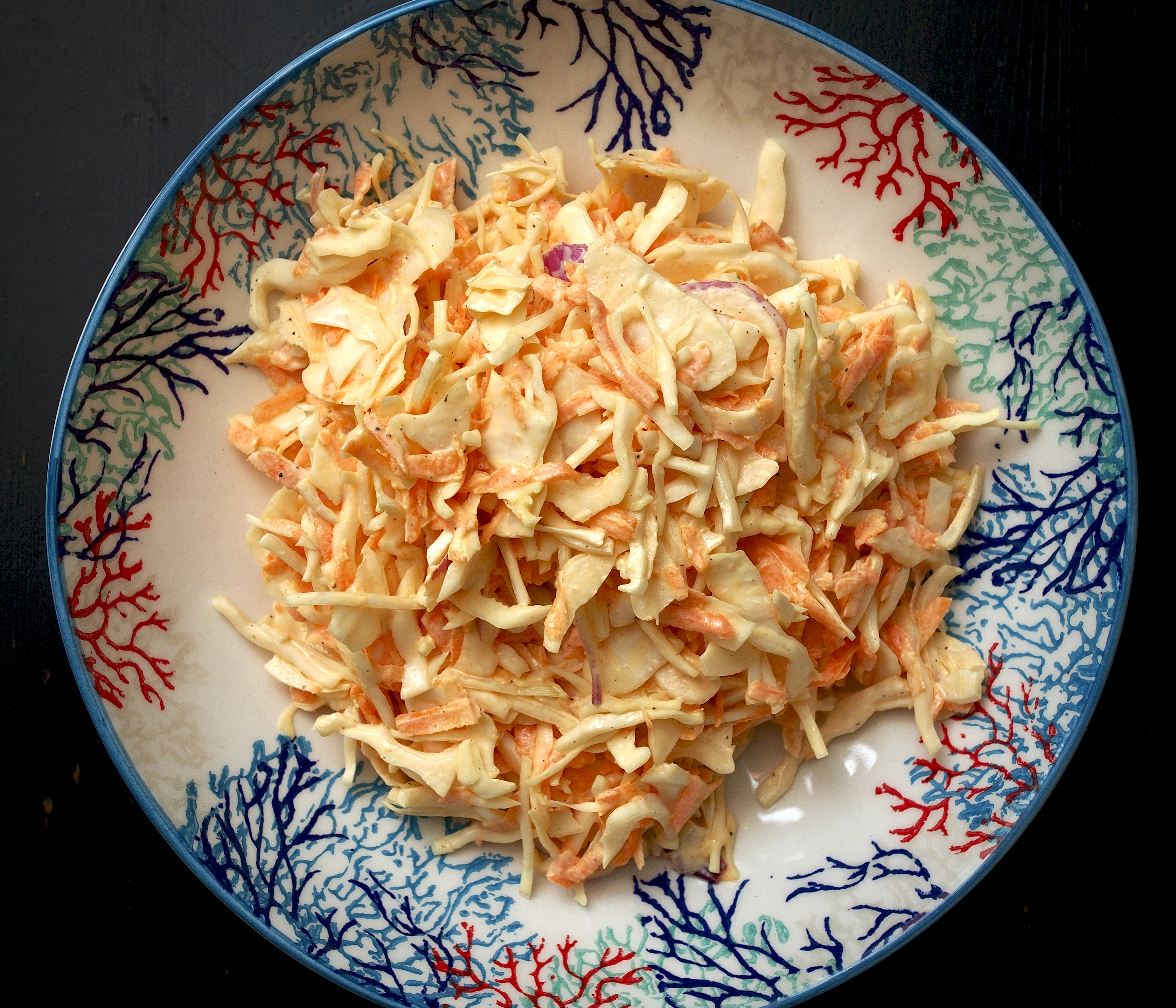
Coleslaw is a bit divisive, people tend to love it or hate it, and not helped by that gloopy stuff you buy in plastic tubs. This version is much superior!
Coleslaw – serves 4 or more
50g crème fraîche or sour cream
50g mayonnaise
1 tbsp Dijon mustard
¼ small white cabbage, finely shredded
1-2 carrots, peeled and coarsely grated
½ white onion, very finely sliced
juice of ½ a lemon, or 1 tbsp cider or white wine vinegar
Mix the crème fraîche or sour cream with the mayonnaise and mustard, and season to taste.
Put everything else into a large bowl, then add the mayonnaise mixture and mix to combine. Keep in the fridge until ready to serve.
(Original recipe from Camper Van Cooking by Claire Thompson & Matt Williamson, Quadrille: Hardie Grant Publishing, 2021.)
This side-dish from Ottolenghi Flavour is an absolute winner. You can make it up in advance as well and it will sit happily at room temperature, just add the basil before serving. We served with a roast chicken but it will sit happily alongside many other dishes.
Super-soft courgettes with harissa and lemon – serves 4
85ml olive oil
6 cloves of garlic, finely sliced
1 tbsp rose harissa
1 red chilli, finely chopped
½ preserved lemon, finely chopped
1 ½ tbsp lemon juice
1kg courgettes, finely sliced
10g basil leaves, roughly torn
Warm the oil and garlic in a large, deep frying pan. Gently fry for 4 minutes, stirring, until soft and golden but not turning brown.
Scoop out 3 tbsp of the olive oil and half the garlic and put into a small bowl. Add the harissa, chilli, preserved lemon and lemon juice. Stir together and set aside.
Return the pan to the heat and add the courgettes with 1 ¼ tsp of salt. Cook for 18 minutes, stirring often, until very soft but still holding their shape, don’t let them brown. We had to keep cooking for a few minutes extra to get them really soft but it will depend on how finely you have sliced your courgettes. Stir through half the basil and transfer to a platter. Spoon the harissa mixture over the top and leave for 15 minutes (or longer), then sprinkle with salt and the remaining basil before serving.
(Original recipe from Ottolenghi Flavour by Yotam Ottolenghi & Ixta Belfrage, Ebury Press, 2020.)
Here’s what to make if you are gifted a big bunch of rhubarb or you could even go buy some, it’s delicious!
Rhubarb & ginger jam – makes 4 jars
1kg rhubarb, trimmed weight
1kg jam sugar (the one with pectin added)
zest and juice of 1 lemon
50g stem ginger, finely chopped
4cm piece root ginger, peeled
Wash the rhubarb in lots of cold running water, then chop into 2cm pieces. Tip into a large non-metallic bowl and add the sugar, lemon zest and juice, and chopped stem ginger. Finely grate the peeled ginger over the top.
Stir the mixture, then cover loosely with cling film and leave aside for a couple of hours to allow the sugar to dissolve. It will help to give it a stir now and then.
Put a few saucers into the freezer for testing the jam later.
Transfer the contents of the bowl into a large saucepan or preserving pan and place over a medium heat. Stir until the sugar has completely dissolved and bring to the boil. Cook until the rhubarb is very tender and the jam has reached setting point – this takes about 10-15 minutes.
To test if the jam is at setting point, drop half a teaspoon of jam onto one of the cold saucers, leave for 30 seconds, then push with the tip of your finger. If the jam wrinkles it’s ready. If not, continue cooking for a couple more minutes and test again.
Remove from the heat and carefully transfer into steralised jars, then seal immediately.
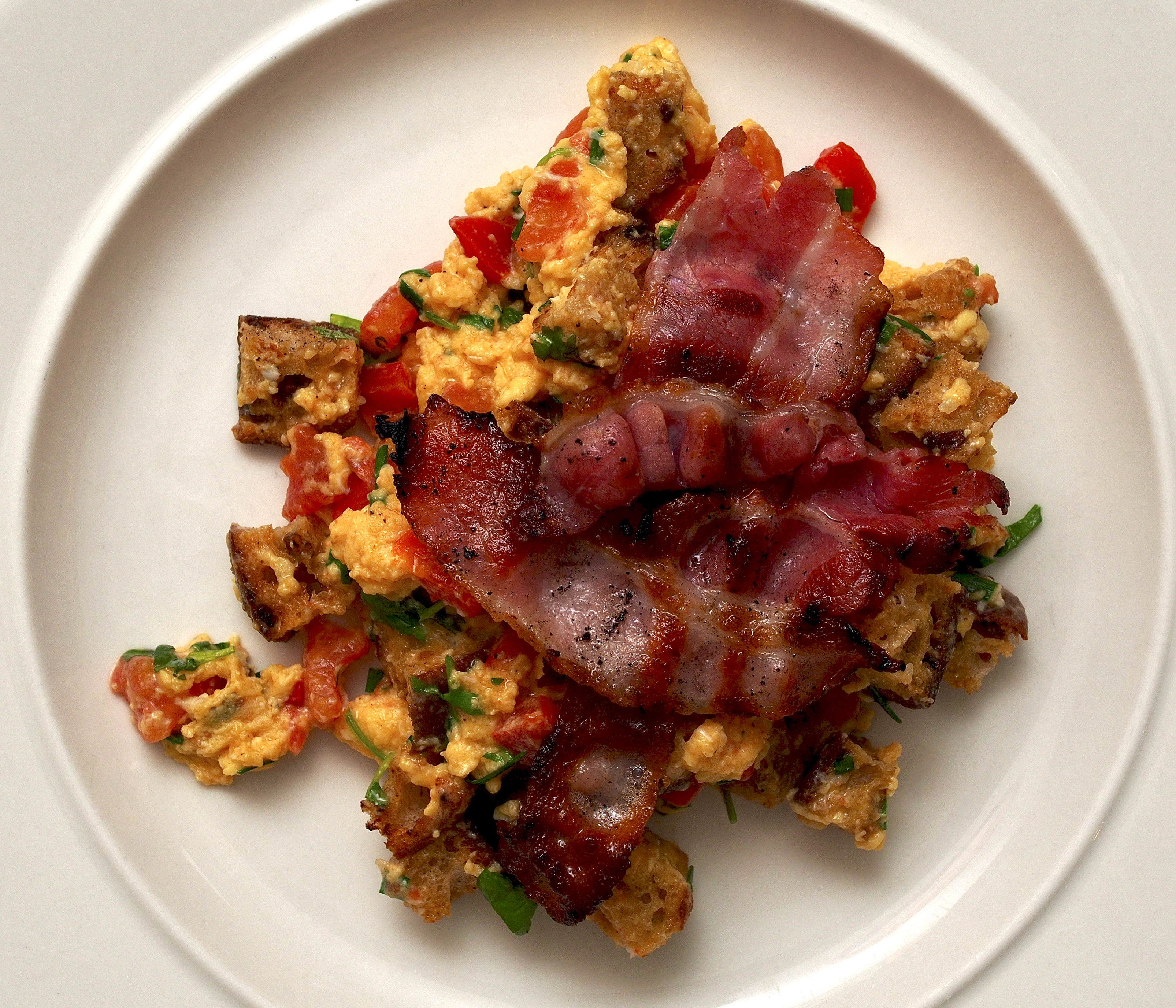
We started a new habit in lock down of cooking a nice breakfast or brunch dish on the weekends. Something we never did much before as we we always had to be somewhere. Now we love a weekend day when there’s no morning plans. This is a Southern French egg dish and it’s a great way to start the day.
Piperade – serves 4
8 very thin bacon slices
olive oil
2 slices of bread, cut into tiny cubes (we used sourdough which worked well though perhaps not very French)
1 clove of garlic, peeled and finely chopped
1 roasted red pepper from a jar, chopped
4 ripe tomatoes, peeled, seeded and chopped (cut a cross in the bottom, cover with boiling water and leave for a minute, they will peel easily)
a small bunch of chives, finely chopped
8 eggs, beaten
chopped coriander
Cook the bacon first until crispy then set aside to cool.
Heat a little bit of olive oil in a frying pan and cook the bread cubes until crispy.
In another pan, heat 3 tbsp of olive oil and briefly fry the garlic, red pepper and tomatoes. Add the chives and eggs and gently scramble.
Stir in the crôutons, coriander and seasoning. Serve on warm plates with a couple of slices of bacon crisscrossed on top.
(Original recipe from Roast Chicken and Other Stories by Simon Hopkinson, Ebury Press, 1994.)
Summer’s over, back to work and back to what to have for lunch? Our lunchtime inspiration comes mainly from what’s left in the fridge after the weekend, cheese more often than not, but it’s nice to plan for at least the first couple of days. Mondays are easier with nice lunch.
Mexican charred sweetcorn soup – serves 4
1 dried ancho chilli
2 tbsp vegetable oil, plus an extra bit for brushing on the corn cobs
1 onion, finely chopped
2 celery sticks, finely chopped
2 tsp sweet smoked paprika
2 tsp ground cumin
4 roasted red peppers from a jar, chopped
1 litre veg stock (we use Swiss Marigold Bouillon powder made up to a litre)
2 corn cobs
1 lime, juiced
a small bunch of coriander, to garnish
Put the dried chilli into a small bowl and cover with boiling water. Leave to soak for 10 minutes, then pour off the water and remove the stalk and seeds from the chilli.
Heat the vegetable oil in a large pot and gently cook the onion and celery with a pinch of salt for 10 minutes or until soft. Add the garlic and cook for another minute, then add the spices and cook for a minute. Add the ancho chilli, roasted peppers and veg stock, then simmer for 15 minutes. Season, then whizz until smooth and keep warm.
Meanwhile, remove the husks from the corn cobs, brush them with oil and season. Now you can cook them on a griddle pan until well-charred or if you have one this is very easy to do on a gas barbecue. It should take about 10 minutes. When the corn cobs have cooled a bit you can use a sharp knife to remove the corn kernels.
Add the charred corn and lime juice to the soup , then serve with some coriander on top.
(Original recipe by Adam Bush in Olive Magazine, August 2019.)
This is really light and creamy, not too spicy and perfect for kids.
Creamy salmon, prawn & almond curry – serves 3 (or 2 big people and 2 little people)
2 tbsp oil
1 onion, chopped
2 cloves of garlic, crushed
2 red peppers, sliced
½ tsp ground turmeric
2 tsp ground cumin
2 tsp ground coriander
1 tbsp tomato purée
70g ground almonds,
1 vegetable or chicken stock cube, dissolved in 500ml of water
1 ½ tbsp double cream
300g green beans, halved
300g salmon fillet, skin removed and cut into chunks
150g raw king prawns
a squeeze of lime juice, plus a few lime wedges to serve
a small handful of coriander leaves
150g brown rice, cooked to serve
Heat 1 tbsp of the oil in a pan and cook the onion for about 10 minutes, until softened, then stir in the garlic and cook for another minute.
Add the sliced peppers, spices, tomato purèe and a splash of water, cook for a couple of minutes.
Add the ground almonds and stock, then season and simmer for 10 minutes. Stir in the cream.
Meanwhile, cook the green beans in a pan of boiling water until tender, then drain.
Add the salmon to the sauce and simmer gently for 2-3 minutes or until it turns opaque, then add the prawns and cook for another minute until they are also pink. Test the salmon is cooked by ensuring if flakes easily with a fork, then stir in the cooked green beans. Remove from the heat and add a squeeze of lime.
Serve over the brown rice with some coriander scattered on top and lime wedges on the side.
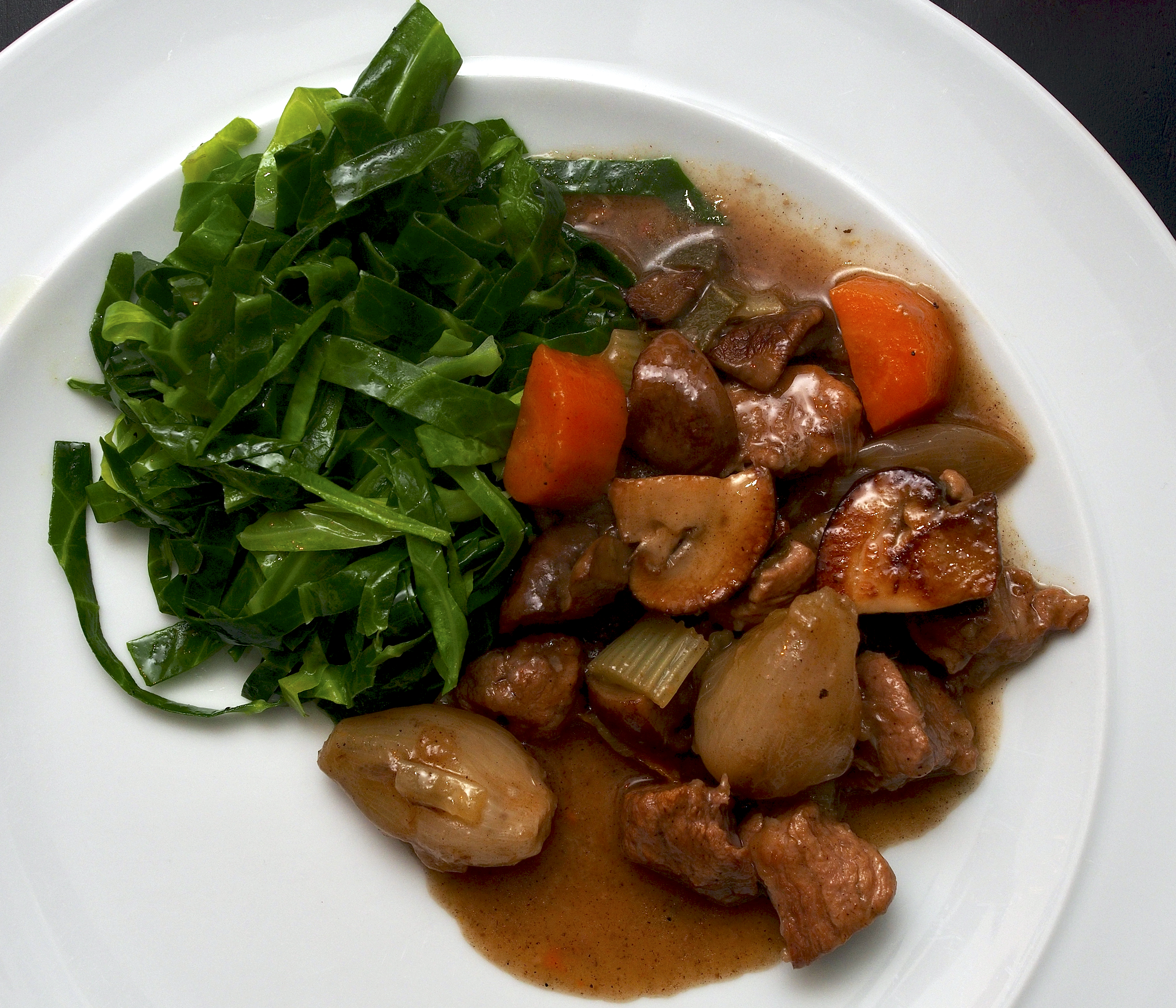
This is really a beef bourguignon recipe but the beef and wine have been replaced by pork and cider. A great crowd pleaser!
Wine Suggestion: This dish, naturally, goes with the cider used in the cooking, but we had none left after Jono scoffed the remainder of the bottle while cooking. Instead we opened the flavour-packed Chenin Blanc from Chateau Hureau, their Saumur Blanc Argile. A wine that’s delicious and vibrant in youth, but tonight one from the cellar and 6 years old. Still wonderful fruit but layers of extra development and texture; worth the wait.
Pork & cider casserole – serves 4-6
25g butter
2 tbsp rapeseed oil
350g small shallots, peeled (if you have bigger ones just halve them)
100g cubed pancetta
700g stewing pork, cut into bite-sized pieces
50g seasoned plain flour
750ml dry cider
150ml chicken stock
2 carrots, chopped
2 celery sticks, chopped
2 bay leaves
a few fresh sage leaves
250g chestnut mushrooms, halve or quarter any large ones
2 tbsp brandy
Preheat the oven to 170C/Gas 3.
Heat half the butter and oil in a large frying pan. Add the shallots and fry until starting to brown, then add the pancetta and fry until lightly browned. Remove the shallots and pancetta with a slotted spoon and set aside.
Put the pork pieces into a bag or large tub with the seasoned flour. Shake until well coated, then remove and shake any excess flour off the meat. Fry the pork in the same pan until golden all over. Transfer to a oven-proof casserole with a lid.
Add a little cider to the frying pan and scrape the bottom of the pan with a wooden spoon to release any tasty bits, then pour this over the pork with the rest of the cider and the stock, carrots, celery, bay leaves and sage. Add the shallots and pancetta and season. Give it all a stir, then cover with a lid and cook in the oven for 2 hours.
About half way through, heat the rest of the oil and butter in the frying pan and cook the mushrooms until lightly browned. Add the brandy and cook for another few minutes, then stir into the casserole and return to the oven for the remaining time.
Season to taste and serve with green veg and potatoes or bread.
(Original recipe from Neven Maguire’s Complete Family Cookbook, Gill Books, 2016.)
No, not those fancy French ones, but traditional, light and melt-in-the-mouth ones. They started disappearing from the cooling rack and didn’t last very long in the cake tin as they were very moreish.
Macaroons – makes at least 16 biscuits
2 large egg whites
8 blanched almonds
100g ground almonds
175g caster sugar
25g ground rice, or semolina
almond extract (optional)
Pre-heat the oven to 150°C / 130°Fan / Gas 2.
Line two baking trays with parchment.
Halve the blanched almonds and dip into the egg whites. Set these aside.
Whisk the egg whites until they form soft peaks. Gently fold in the ground almonds, sugar, ground rice or semolina, and a few drops of almond essence if using.
Spoon teaspoon amounts onto the prepared baking sheets. Make circles but don’t flatten too much. Place the reserved almond halves onto the centre of each macaroon.
Bake for 20-25 minutes and until a pale, golden brown. Leave to cool for a few minutes on the trays before lifting off with a palate knife and finishing on wire racks.
(Original recipe from Mary Berry’s Baking Bible, BBC Books)
We’ve had a spell of nice weather in Dublin so we’re barbecuing everything! We served these sweet potatoes with some marinated chicken but they would be lovely with anything, or even pretty good on their own.
Sweet Potatoes on the Barbecue – serves 4
4 medium sweet potatoes
extra virgin olive oil
1 tsp sweet smoked parika
120g Cheddar cheese, grated
4 generous tbsp of sour cream
a small bunch of chives
Get your barbecue going.
Rub the potatoes with a little olive oil, then season with salt and black pepper and wrap each one in tinfoil.
Put the potatoes onto the grill and cook for 45-50 minutes, turning them now and then, until soft.
Unwrap the foil slightly and cut the potatoes down the middle. Sprinle each one with a little sea salt and about ½ tsp smoked paprika, then divide the cheese between them. Set them back on the barbecue, still on the foil, and close the lid on the barbecue for a few minutes or until the cheese has melted.
Take the potatoes off the barbecue, top with the sour cream, and snip the chives over the top.
(Original recipe from Outdoor Cooking by Tom Kerridge, Bloomsbury Absolute, 2021.)
The local asparagus is still available and we can’t resist a bargain. So here’s another version of this classic dish.
Wine Suggestion: Domaine Bellevue Touraine Sauvignon Blanc with this today. The grassy freshness and zesty lemon flavours cutting through the richness from the butter and parmesan and bringing out the lovely aspargus flavours even more.
Asparagus Risotto – serves 4
1 bunch of asparagus, about 200g
800ml vegetable stock
1 tbsp olive oil
25g butter
2 small onion, fineldy chopped
175g risotto rice
100ml white wine or vermouth
25g Parmesan, finely grated
Snap the woody ends off the asparagus and put into a saucepan with the vegetable stock. Put on a low heat and bring to a gently simmer.
Cut the tips off the asparagus spears and add to the simmering stock for 1 minute, then scoop out with a slotted spoon and set aside.
Cut the rest of the asparagus into slim rounds.
Heat the oil and half the butter in a heavy, wide pan. Gently cook the onions until softened, about 5 minutes. Add the finely chopped asparagus stalks and cook for a couple of minutes.
Add the rice and stir for a few minutes until it becomes semi-transparent and is nicely coated with the butter.
Stir in the wine or vermouth and allow to evaporate, then turn the heat down to a gentle simmer. Begin adding the stock, one ladle at a time, stirring continuously after each addition until it is absorbed. This will take about 15 minutes.
Start tasting the rice, it should be tender with a little bite. Stir in the blanched asparagus tips and cook for 1 or 2 minutes more. Remove the pan from the heat and top with the butter and most of the Parmesan. Season well, then cover and leave aside for a few minutes.
Stir well to incorporate the butter and Parmesan, then serve with the rest of the Parmesan to sprinkle over.
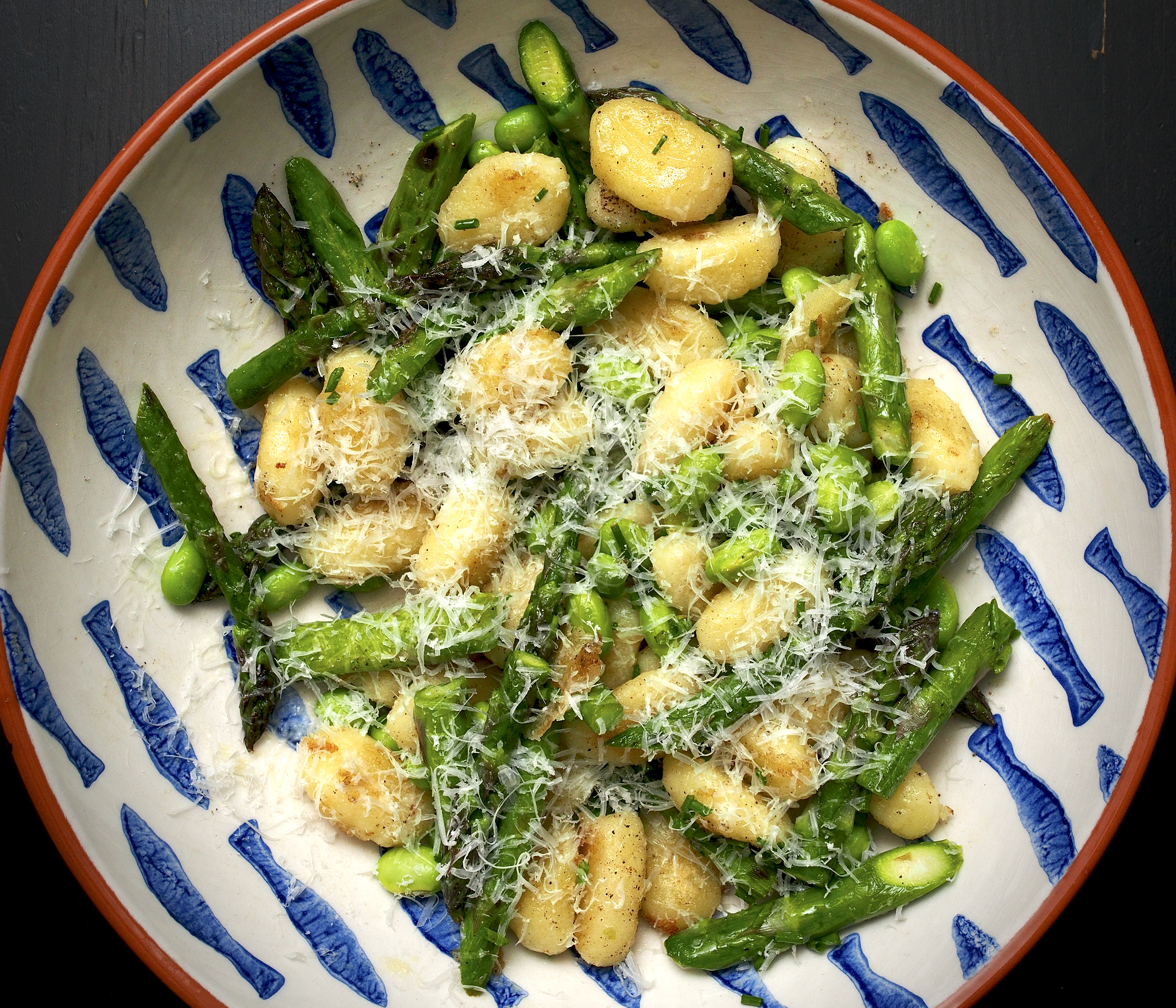
This is simplicity itself but tastes just like the season.
Wine Suggestion: Pick a good, top-notch, dry Sauvignon Blanc to match this dish like the André Dezat Sancerre which is flinty, grassy-fresh and has great concentration and power despite being super balanced and effortless.
Gnocchi with asparagus, edamame & Parmesan – serves 4
500g pack of gnocchi
good extra virgin olive oil
500g asparagus, snap off the woody part of the stems, then cut into 5cm pieces
150g frozen edamame beans
1 tbsp chopped chives
1 lemon, for squeezing over at the end
60g Parmesan, grated
Bring a large pot of salty water to the boil, then add the gnocchi and cook according the pack instructions. It’s done when if floats to the top. Drain and refresh under cold running water.
Heat a large fraying pan over a medium-high heat, then drizzle with oil, and when hot, add the asparagus with a pinch of sea salt. Fry for a few minutes or until the pieces are starting to char but are still crisp. Remove from the pan and put into a warmed dish.
Add the frozen edamame beans to pan with a splash of water and a pinch of sea salt. Cook for 2 minutes, then scoop ot and add to the asparagus.
Drizzle some more oil into the pan and warm over a medium-high heat, then add the gnocchi. Fry until golden and crispy. Don’t be tempted to turn them too quickly or they will stick. Remove from the pan and into a large dish.
Combine the gnocchi with the asparagus, edamame, and chives. Squeeze over some lemon juice to taste and drizzle with olive oil, then season with sea salt and black pepper. Scatter over the Parmesan to serve.
(Original recipe from Family by Hetty McKinnon, Prestel, 2019)
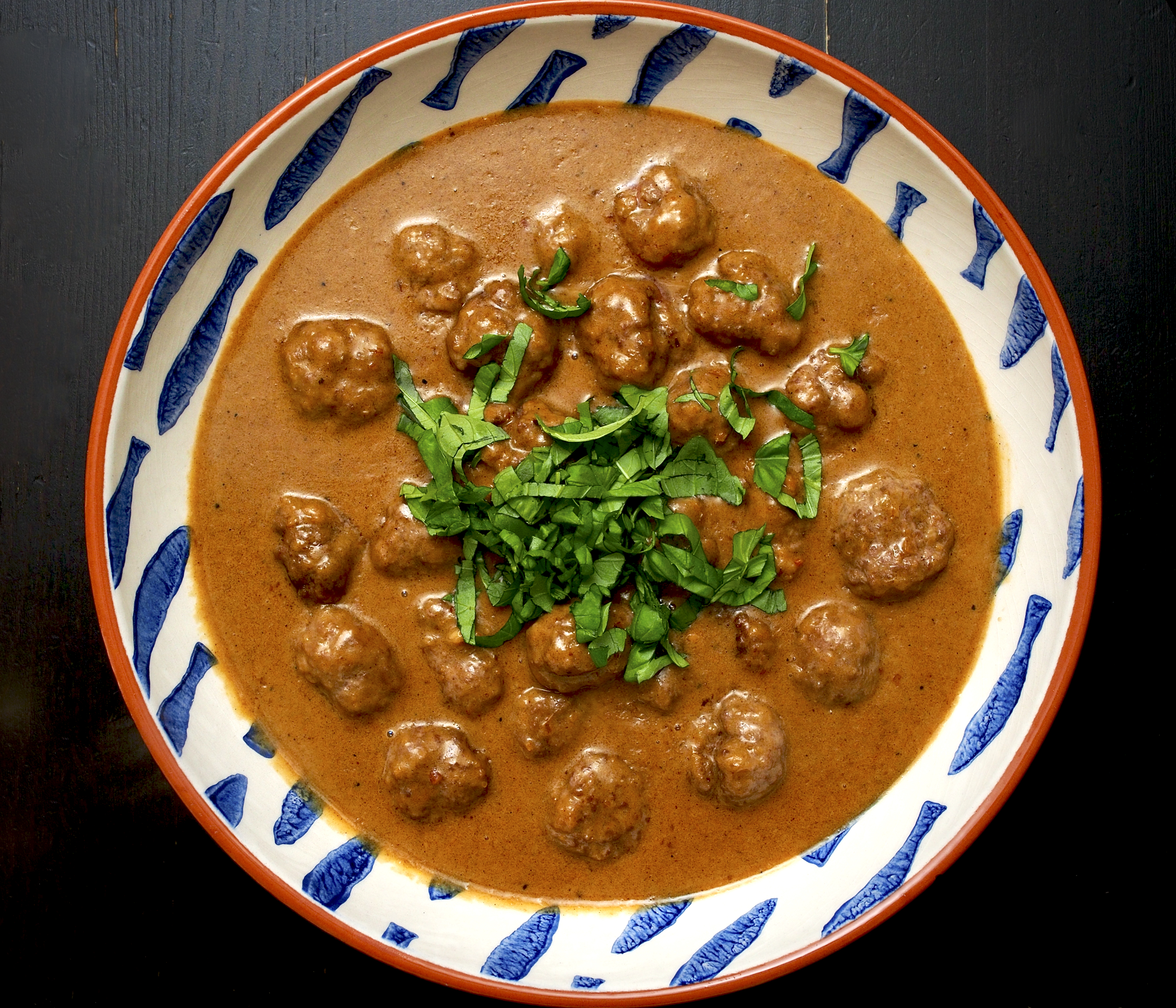
This couldn’t be easier and it’s perfect for a Friday night. We used the curry paste from this recipe but you can use a good quality shop-bought version either. Serve with sticky rice and salad.
Wine Suggestion: we often turn to aromatic wines for Thai food and for this dish was no different as we chose the Korrell Slice of Paradise Riesling. A dry Riesling from the Nahe in Germany this is the youthful cuvée from the more regal Paradies vineyard Martin Korrell makes. Standing up to the earthy and rich peanuts and cutting through the rich coconut milk this is always a joy to drink, let alone pair with food. Light and refreshing, and yet powerful enough to work with meat and complex flavours – we love the versatility this lends.
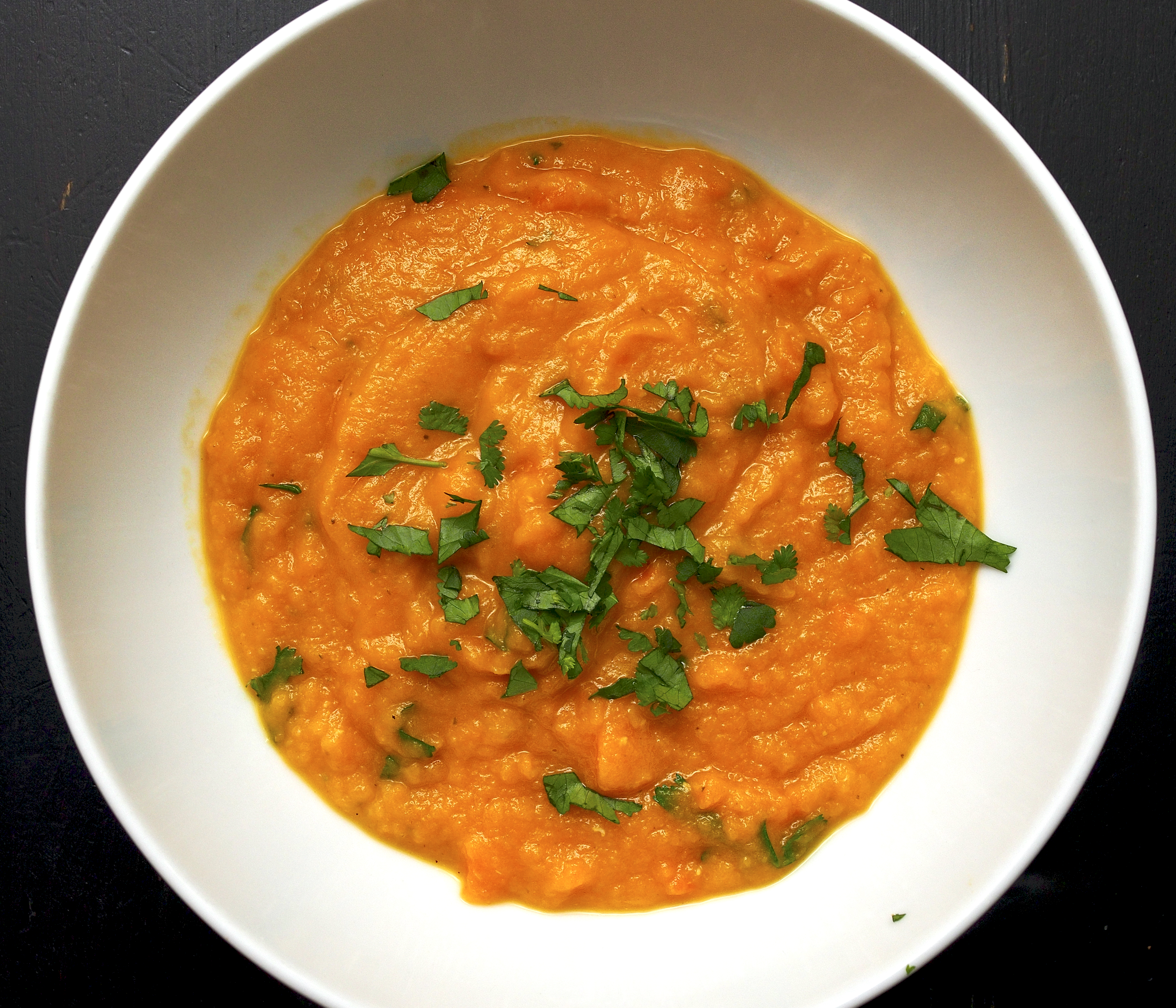
This is one of those recipes that we spotted in the paper and realised we had all the ingredients. It’s yummy – perfect for mid-week lunches.
Spiced carrot soup – serves 4
1 medium onion, roughly chopped
2 tbsp olive oil
1 clove of garlic, thinly sliced
½ tsp ground cumin
1 tsp ground coriander
a large pinch of chilli flakes
750g carrots, peeled and roughly chopped
1 litre hot vegetable stock
100g red lentils
2 bay leaves
fresh mint and parsley, to serve
Warm the olive oil in a deep saucepan over a medium heat, then add the onion. Cook for a couple of minutes, then add the garlic and continue cooking for 5-7 minutes, stirring occasionally, until soft but not coloured.
Add the cumin, ground coriander and chilli flakes, then add the carrots and cook for another 5 minutes.
Add the hot stock to the saucepan, then add the lentils, a little salt and the bay leaves.
Bring to the boil, then lower the heat and simmer, partially covered with a lid, for 25-30 minutes or until the carrots and lentils are soft.
Whizz the soup in a blender or with a stick blender until you have a thick purée.
Season to taste and garnish with the fresh herbs.
(Original recipe by Nigel Slater in The Guardian, 25 Apr 2021)
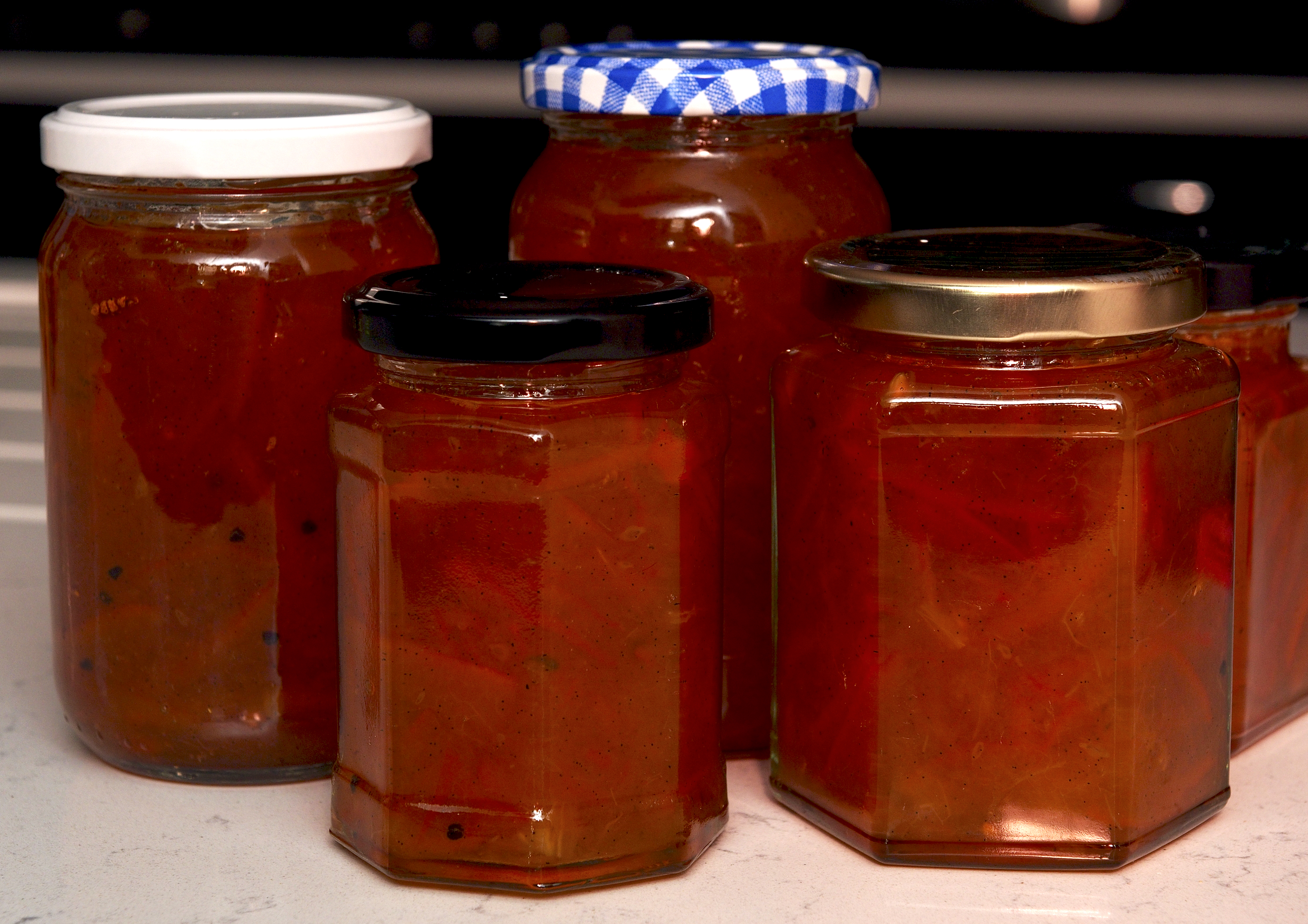
Quite unusual in flavour and a slightly different method. The bitter Seville oranges make a good contrast to the sweet spice and are balanced by a slightly reduced sugar ratio.
Seville orange, vanilla & cardamom marmalade – makes about 5 jars
1.2kg Seville oranges (approx 8)
10 cardamom pods, seeded
1 vanilla pod, split
1 lemon, juiced
850g preserving sugar
Halve one of the oranges and finely slice, removing pips as you go, then put into a large saucepan. Peel and finely chop the flesh of the remaining oranges (reserve the skin from three) and carefully remove and discard any pips. Add the chopped flesh and juice to the pan.
Trim any excess pith from the reserved orange skin, then finely chop into thin strips. Add this to the pan with the cardamom seeds and 400ml water. Also add the vanilla seeds and throw in the empty pod.
Boil for 10 mins until the skins are softening, then add the lemon juice and sugar, stirring constantly. Once the sugar has dissolved, simmer on low for 30-35 mins. Turn up the heat and boil to set for about 10-15 mins. The boiling point of jam is 105C but if you don’t have a jam thermometer, try the ‘wrinkle test’ and spoon some marmalade onto a freezer-cold saucer and leave for a minute. If it wrinkles when you poke it and has a fine skin on top, it’s ready. Pour the marmalade into sterilized jars, and store for up to a year.
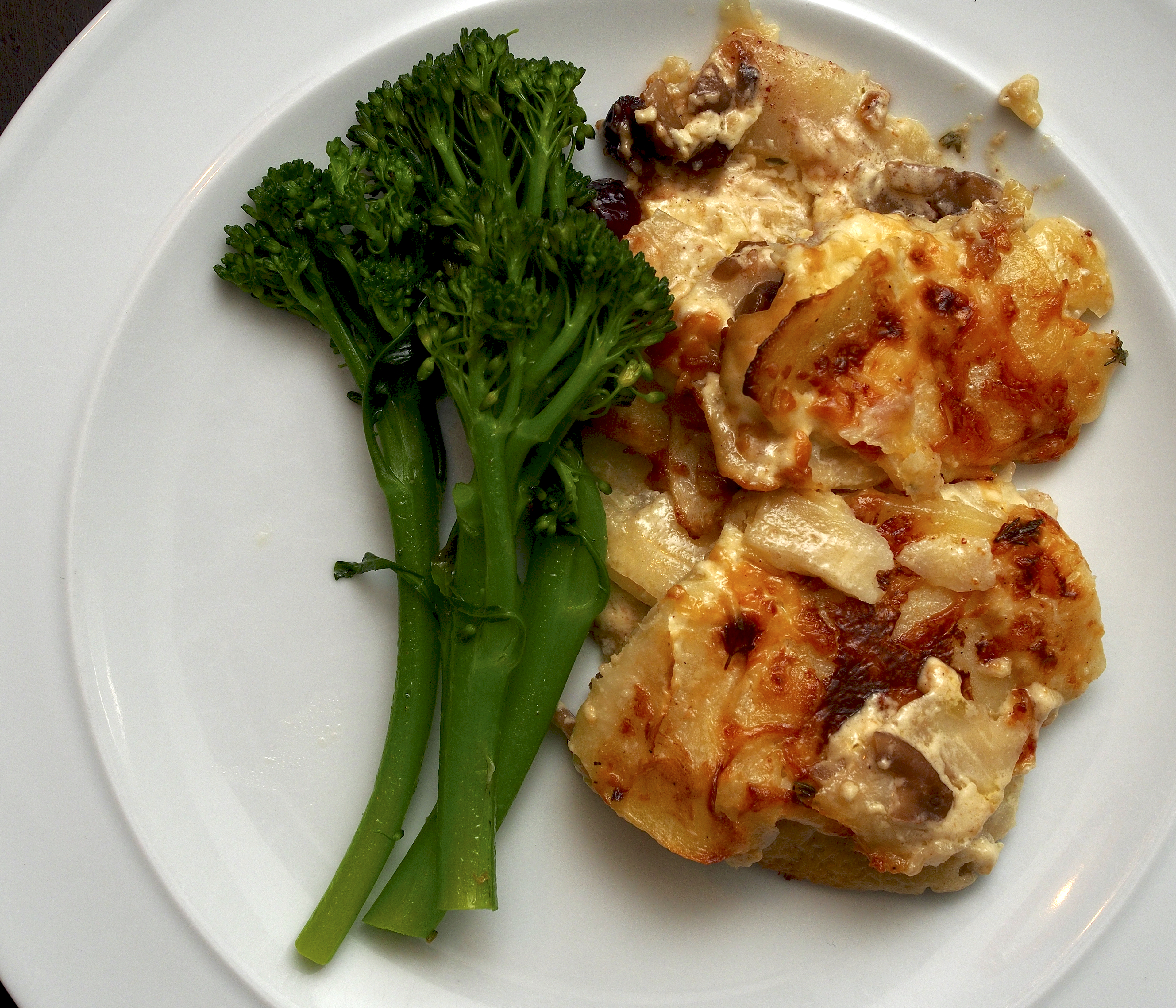
The trick, as with all gratin’s, is to slice the vegetables really thinly. Invest in a mandolin, or use your food processor’s slicing blade, and you’ll get even slices that will cook at the same time. This dish has a lovely festive feel to it and would be great as a side dish for roast chicken (or turkey) or a rich casserole. We served just as it was with some steamed broccoli which was good too.
There was no cheese in the original recipe so feel free to leave it out. We’re still working our way through the cheese mountain in the fridge.
Creamy vegetable gratin with chestnuts and cranberries – serves 4 as a main, 6 as a side
400g potatoes
300g parsnips
300g celeriac
425ml double cream
140ml sour cream
85ml full-fat milk
2 cloves of garlic, very finely sliced
leaves from 2 sprigs of thyme
butter, to grease the dish
50g dried cranberries
100g cooked chestnuts, sliced
a large handful of grated Parmesan
a large handful of grated Cheddar/Gruyere
Preheat the oven to 180C/350F/Gas 4.
Slice the potatoes, parsnips and celeriac very finely, use a mandolin if you have one.
In a large saucepan, mix the creams and milk together, then bring to just under the boil. Add the sliced veg, garlic and thyme and cook gently for 5 minutes.
Season generously and spoon half the vegetables into a buttered gratin dish. Sprinkle the cranberries and chestnuts on top and half of the cheese, then add another layer of vegetables and the rest of the cheese over the top.
Bake for 1 hour or until completely tender. You may need to cover with foil after 45 minutes to stop it browning too much.
(Original recipe from Food from Plenty by Diana Henry, Mitchell Beazley, 2010.)
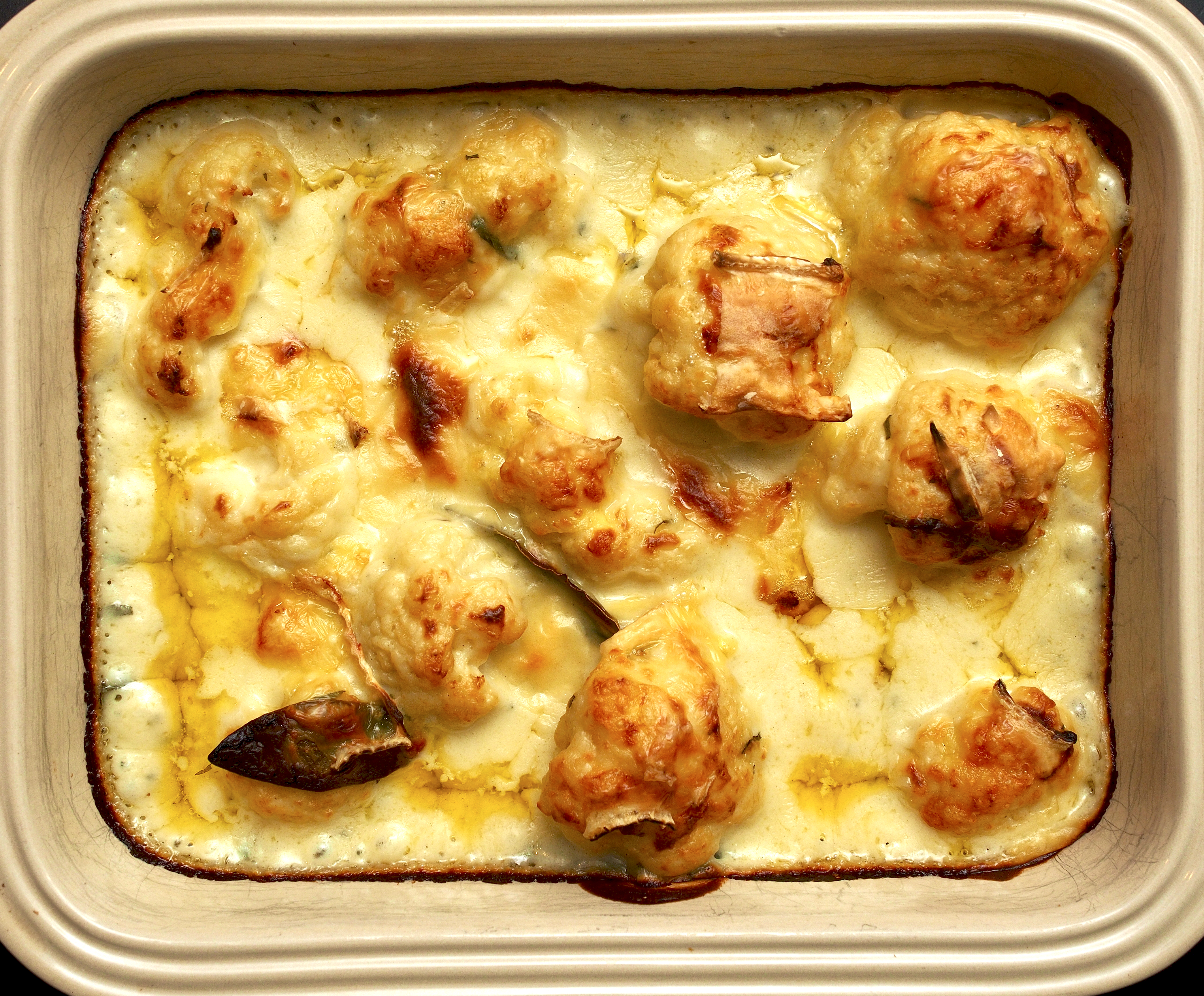
With a few days left before the New Year… when we, like many others are happy to change pace for a bit. For us that means lots of exercise, early nights and healthier food to eat. We don’t go on a diet but after all the excess of Christmas it’s just what we’re craving. All of this means that we have just a few days to get through all the delicious cheese in the fridge. Feel free to play around with the cheeses, we used Cooleeney from Tipperary, but Taleggio or Brie would work too.
5g tarragon, leaves picked, half chopped, half left whole
1 cauliflower, broken into florets
Heat the oven to 220C/200Cfan/gas 7.
Melt the butter in a heavy-based pan, then stir in the flour to make a paste. Cook for a few minutes, then gradually add the milk, stirring the whole time, until you have a smooth sauce. Season.
Add the bay leaf, cheddar, Parmesan, half the taleggio and the whole tarragon leaves. Heat gently, stirring continuously, for 6 to 8 minutes or until the cheeses have melted and the sauce thickened. Remove from the heat and leave to infuse.
Cook the cauliflower in a steamer for 8 to 10 minutes or until just tender. Put the cauliflower into a baking dish. Add the chopped tarragon to the sauce and pour over the cauliflower.
Dot with the remaining taleggio and bake for 20-25 minutes until golden.









 Jono & Jules do food & wine