Feeds:
Posts
Comments

Archive for the ‘Wine’ Category

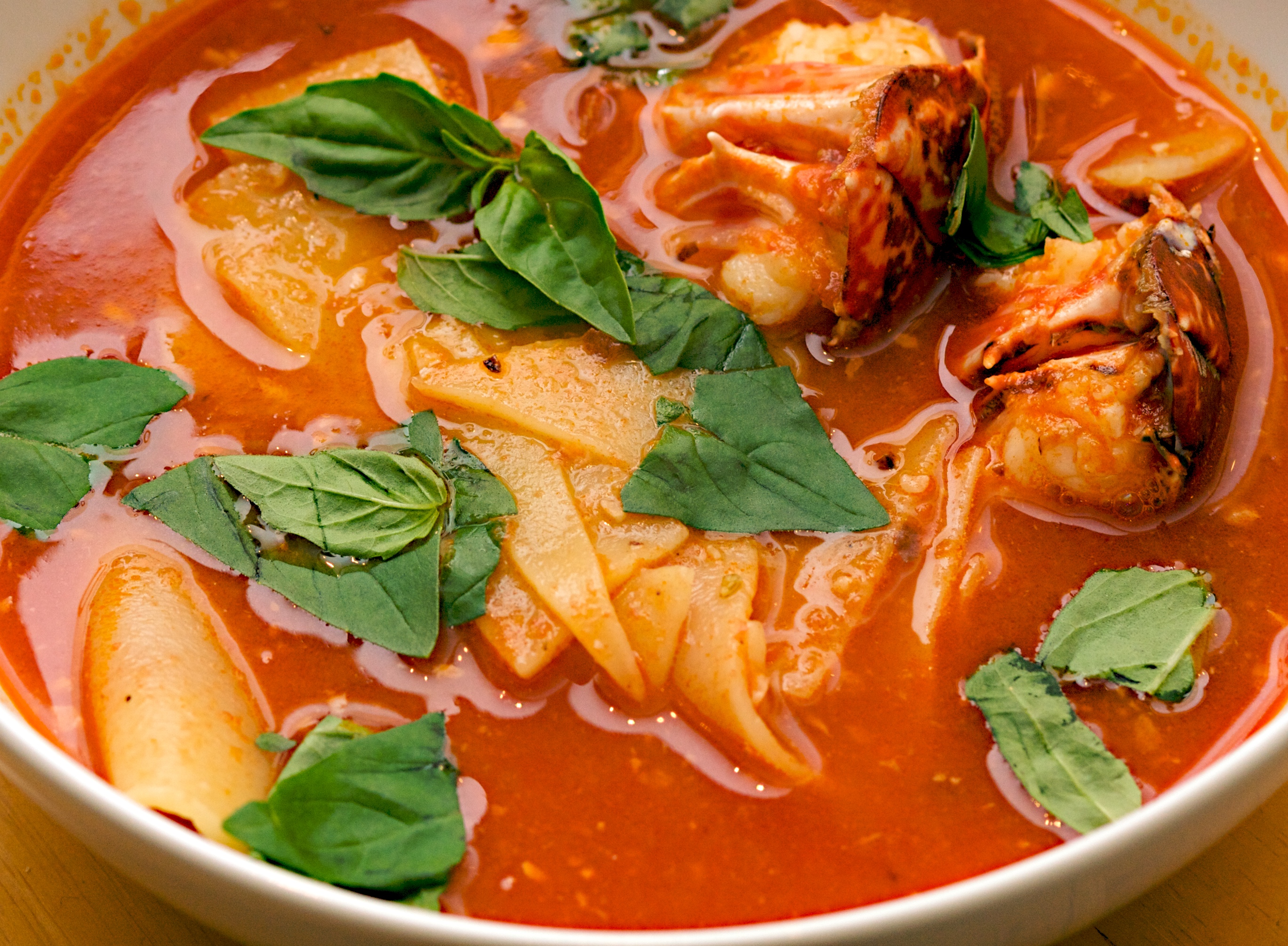
We got a surprise call from our great friend Ben who had some live lobsters which he was terrified of. He’s now got over this and is an expert lobster stabber and we got the benefit of two live lobsters too. I made this years ago before I met Jules and have always promised to cook it if two live lobsters arrive on our doorstep, so happy Friday night Jules! This recipe feeds 4 people – we had no problem finding 2 volunteers to help us eat it.

Il miglior brodo siciliano di aragosta – the best Sicilian  lobster broth – to serve 4

  • 150g dried lasagne sheets, smashed up
  • 2 x 1kg live lobsters
  • extra virgin olive oil
  • 1 large white onion, finely chopped
  • 6 cloves of garlic, peeled and finely chopped
  • 1 large carrot, peeled and finely chopped
  • 1 cinnamon stick
  • 1 tsp chilli flakes or 1 or 2 small dried red chillies, crumbled
  • 1 tsp fennel seeds, smashed
  • 1/2 a bottle of Sicilian white wine – you can substitute any white wine
  • 850ml passata or 3 x 400g tins plum tomatoes, liquidized
  • a large handful of whole almonds, skins on
  • a small handful of fresh basil leaves
First you’re going to have to kill the lobsters. The best way to do this – and the fairest way for the lobster – is to get a large sharp knife, place the tip on the little crown on the head and chop straight down between its eyes. Be brave! Once you’ve killed your lobsters you need to twist and pull the head away from the tail. Put the tails and claws aside for now. Open the heads and discard the little grey stomach sack which will be near the eyes. Then just cut the head up into little pieces, keeping all the brown meat and other stuff.

Put a large pot on a very gentle heat. When hot, pour a good glug of olive oil in along with all the head pieces and lobster legs. You can turn the heat up a bit now. Add your onions, garlic, carrots, cinnamon stick, chillies and fennel seeds. Continue frying this for about 15 minutes – keep moving it around in the pot – so the onions take on a bit of colour but careful they don’t burn. If the pan gets too hot just splash in a bit of water.

Add your white wine and boil hard for 5 minutes before adding the passata and the same quantity of water. Bring back to the boil, then reduce the heat and simmer for about 20 or 30 minutes. Now put a colander on top of another large pot and pass the soup through it. Press down on the shells with the back of a ladle and let them drip for 5 minutes to make sure you get all the flavour out of them. You can now throw the shells away. Put the soup back on the heat to simmer. It should look like tomato soup – if you think it looks to thick you can add a little water.

Slice the lobster tails across, through the shell and the meat, into 2.5cm slices and put these into the broth. Crack open the claws and pick out all the meat and add this to the broth too. Continue to simmer for 8 more minutes. Meanwhile, cook the pasta in salted boiling water, then drain and toss into the soup for 4-5 minutes.

Chop the almonds very finely and stir into the soup. Taste and season if needed. Divide between 4 bowls, tear over some basil leaves and drizzle with some extra virgin olive oil.

Wine Suggestions: as this is such a rich dish you need to pair it with a wine that is a little more robust and full-bodied. For whites there are a couple of options: stay local and choose Sicilian wines like Inzolia or Grillo which have weight and a herbal minerality. The other option is to look at a classic Chardonnay with a bit of oak for structure. Try to pick one that has a little bit of acidity for freshness too. This was the option we went for and it worked a treat. For red, do the opposite and look for a fruity, but lighter style of wine like an easy and inexpensive Pinot Noir or Grenache – you want to avoid too much tannin and weight which would overwhelm the sweet, delicate lobster.

(Original recipe by Jamie Oliver in Jamie’s Italy)
Read Full Post »

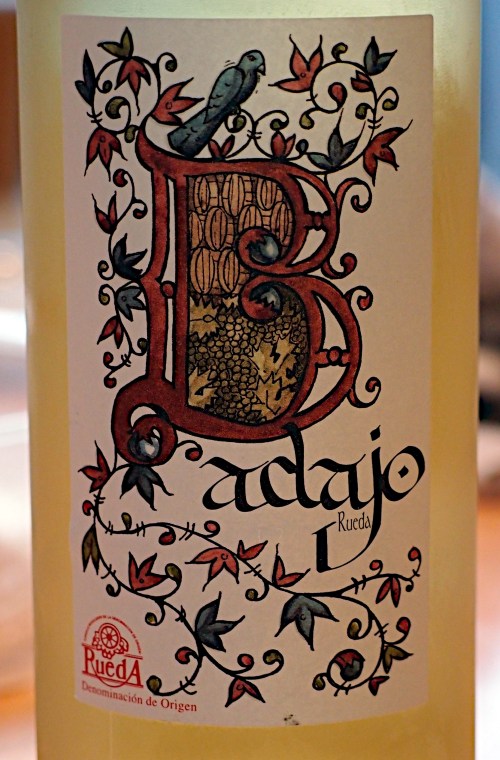
A very eye-catching wine label and a delightful wine to drink as well. This was brought over by our friend Jennifer from one of our local wine shops: The Wine Boutique in Ringsend, Dublin.

Being from Rueda in central Spain this wine is dominated by Verdejo, but interestingly it also has some Albillo,  a little known grape. Albillo has very little flavour characteristics, but has been cleverly used by the winemaker because it is quite glycerous and smooths acidity in wines. Because Verdejo is fresh, aromatic and typically acidic this is a clever trick and has worked very well as the wine is fresh, fruity and smooth, so very easy to drink.

Well recommended by Jen and well enjoyed by all – worth checking out and great value at €11.00

Read Full Post »

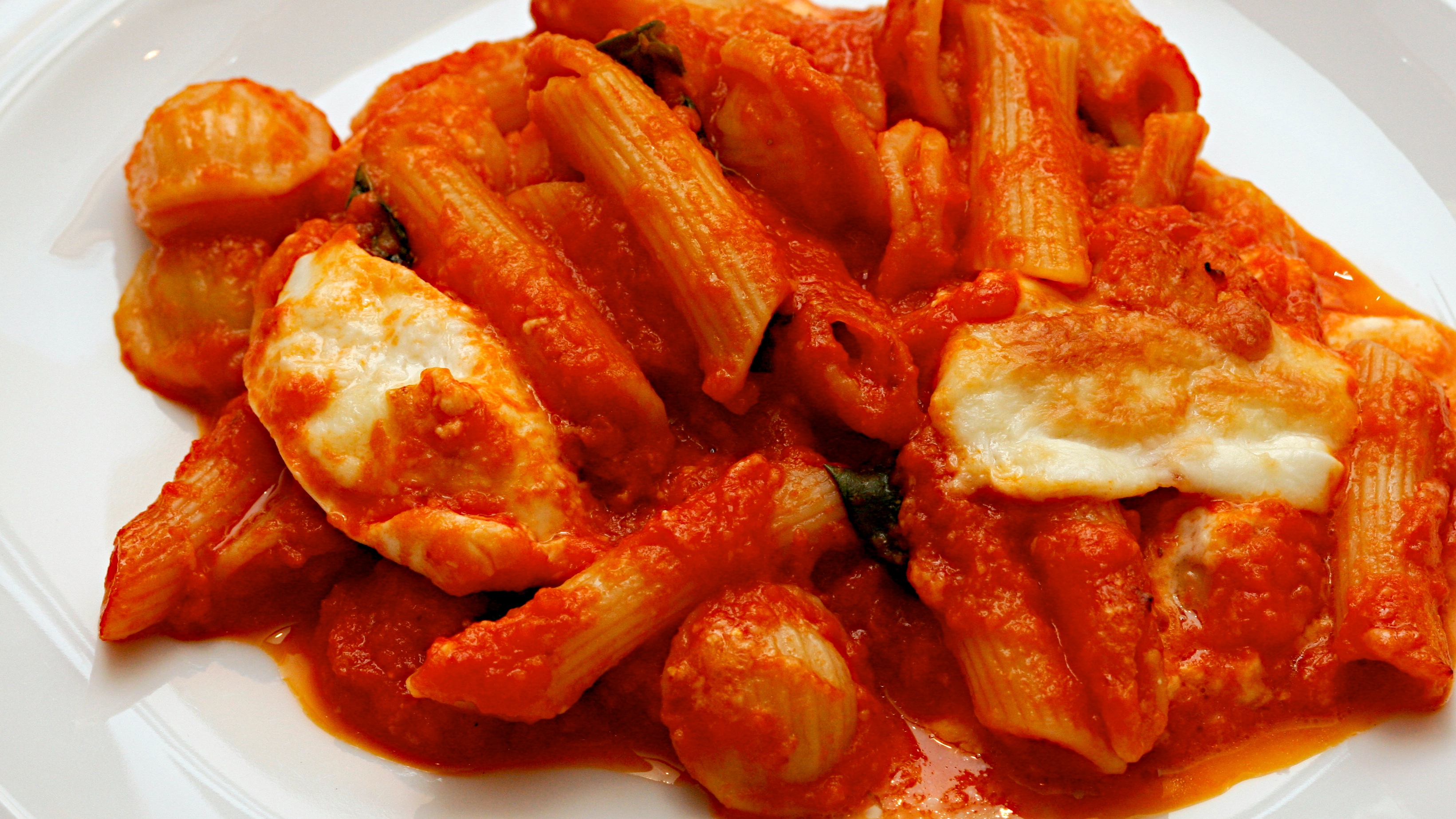
Otherwise known as “Jamie’s Pasta Bake”; a simple, tasty dish that can be easily doubled for parties. Delicious hot for dinner with some garlic toasts and also cold the next day for lunch.

The recipe suggests using orecchiette but any pasta shapes will do so it’s a great way to use up all the packets lying around the cupboard.

Baked pasta with tomatoes and mozzarella (serves 4 generously)

  • 1 onion, peeled and finely chopped (white onions are suggested but any other onion lying to hand will do)
  • 2 cloves garlic, peeled and finely sliced
  • 1 to 2 dried chillies, crumbled
  • 3 x 400g tins of good quality plum tomatoes
  • large handful of basil, torn
  • 1 tablespoon red wine vinegar
  • 400g short, any shaped dried pasta, preferably orecchiette
  • 4 very big handfuls of freshly grated parmesan
  • 3 x 150g balls of mozzarella, sliced
Preheat oven to 200C / 400F / Gas 6.

Heat a saucepan on Medium-low heat and a couple of glugs of olive oil, onion, garlic and chill. Slowly fry for 10 minutes until softened but not coloured.

Add tinned tomatoes and a small glass of water and bring to a boil. Simmer for 20 minutes. Wizz sauce until smooth add basil leaves, red wine vinegar and season.

Boil a large pot of salted water and cook the pasta shapes according to packet instructions. Drain and then toss with half the tomato sauce and a handful of parmesan.

Rub a little olive oil in a baking tray and layer a third of the pasta in the bottom. Follow by a layer of tomato sauce a handful of parmesan and 1 mozzarella ball. Repeat two more times and until ingredients are used up. Make sure that there is a good layer of cheese on the top.

Cook in oven for 15 minutes or until golden and bubbling.

Original recipe: Jamie’s Italy

Wine suggestions: This will work equally well with a nutty, dry white like a Verdicchio or Greco di Tufo or  a mid-weight red like Barbera, Montepulciano d’Abbruzzo or a fruity Chianti. You don’t need to get too complex as this is a very social dish so it suits a social and easy style of wine.

Read Full Post »

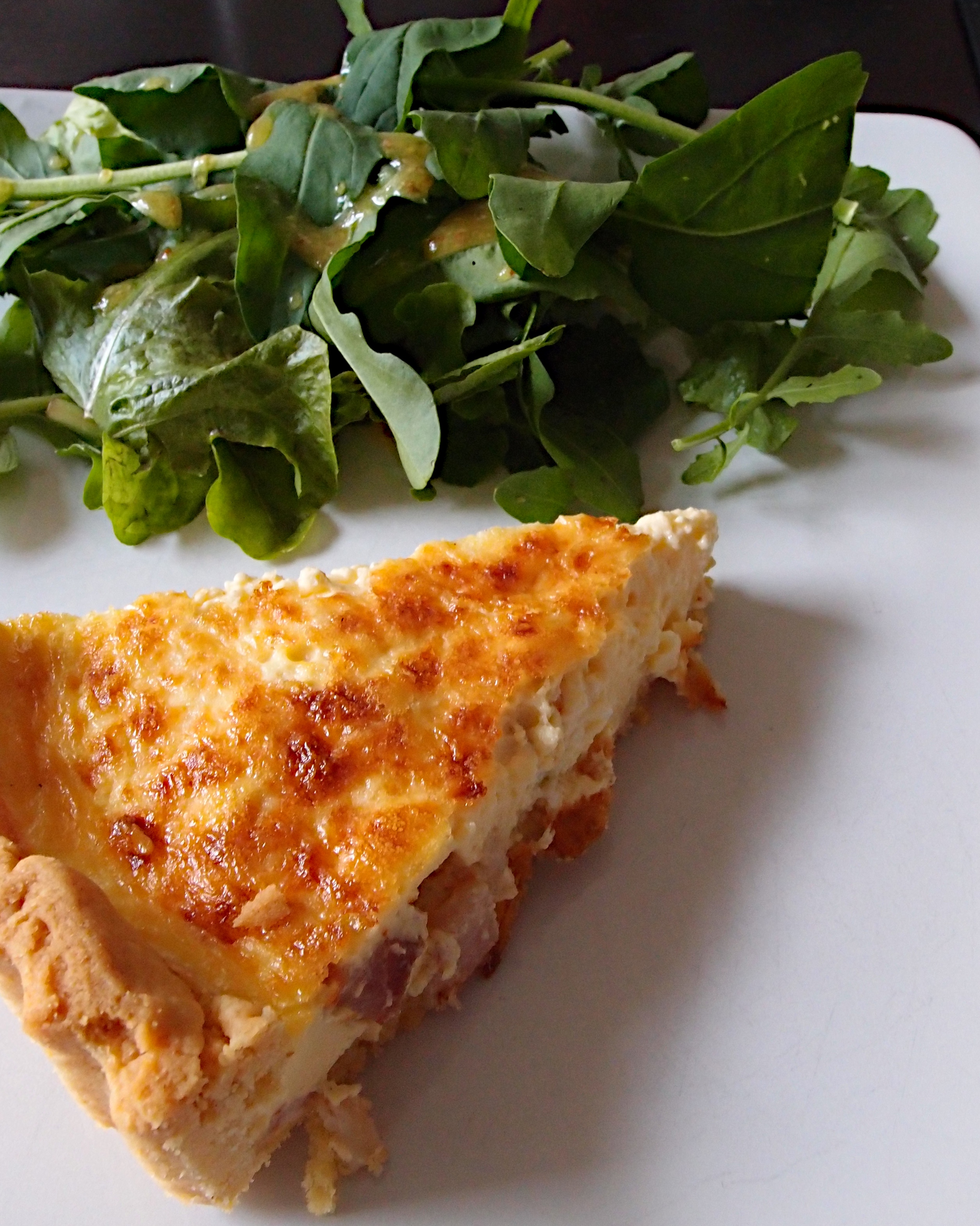
So good that our friend’s David & Nicola fed this to their two-year old son Theo and he had seconds! We had trouble with the pastry, but the humid day really didn’t help. If you’re having trouble put the pastry in the fridge after bringing it together in the food processor to keep it cold, it will really help.

We served this at a French-themed dinner party where everyone brought a course and a complimentary wine to go with it. There was Quiche Lorraine for starter, leg of lamb roasted with lots of garlic and served with dauphinoise potatoes, an apple tarte tatin and some French cheeses. We are now all on a diet!

Quiche Lorraine – cuts into 8 slices

For the pastry:

  • 175g plain flour
  • 100g cold butter, cut into pieces
  • 1 egg yolk
For the filling:
  • 200g pancetta, sliced into cubes
  • 50g Gruyère
  • 200ml carton crème fraîche
  • 200ml double cream
  • 3 eggs, well beaten
  • pinch ground nutmeg
  1. For the pastry, put the flour, butter, egg yolk and 4tsp cold water into a food processor. Use the pulse button to process until the mixture binds. Tip out onto a lightly floured surface, gather into a smooth ball, then roll out as thinly as you can. Line a 23 x 2.5cm loose-bottomed, fluted flan tin with the pastry. Trim the edges with scissors so it sits slightly above the tin – this way it will not shrink below the level of the tin (don’t throw the trimmings away yet). Press the pastry into the flutes, lightly prick the base with a fork, then chill for 10 minutes. Put a baking sheet in the oven and heat oven to 200C/fan 189C/gas 6.
  2. Line the pastry case with foil, shiny side down, fill with dry beans and bake on the hot baking sheet for 15 minutes. Remove the foil and beans and bake for another 4-5 minutes until the pastry is pale golden. If there are any small cracks or holes use your pastry trimmings to patch them. This part can be done the day before.
  3. Heat a small frying pan and fry the pancetta for a couple of minutes. Drain off any liquid, then continue cooking until they start to colour, but aren’t crisp. Remove and drain on paper towels. Cut three quarters of the cheese into small dice and finely grate the rest. Scatter the diced cheese and pancetta over the bottom of the pastry case.
  4. Using a spoon, beat the crème fraîche to slacken it then slowly beat in the double cream. Mix in the beaten eggs. Season, but go easy on the salt, and add nutmeg. Pour three-quarters of the filling into the pastry case.
  5. Half-pull the oven shelf out and put the tin on the baking sheet. Quickly pour the rest of the mixture into the case – so you get it right up to the top. Scatter the grated cheese over the top, then carefully push the shelf back in. Lower the oven to 190C/fan 170C/gas 5. Bake for about 25 minutes, or until golden and softly set (the centre doesn’t need to be too firm). Let it settle for 4-5 minutes before removing from the tin.
Wine Suggestion: it is quite hard to match egg dishes with wine, but the addition of the cream, crème fraîche and pancetta helps. You need to balance the saltiness from the pancetta and the creamy and rich filling; so a white from Alsace with a touch of sweetness balanced by fresh acidity is a good match. We had a Clos Saint Landelin Grand Cru Vendange Tardive Riesling from 2001 – this is a late harvest wine that in most years is very sweet, but in 2001 had great fruit but ended up being just off-dry. With a beautiful balance of acidity and a mellowness from 10 years of age this worked a real treat and had layers of flavours that complimented the quiche superbly.
(Original recipe from BBC Good Food)

Read Full Post »

Reserve du Reverend, Corbières 2009, €9.95 from Mitchell & Son, Dublin

Jules and I regularly drink wines from the south of France, we find them reliable and usually good value; the Reserve du Reverend is no exception.

Corbières is the largest appellation in the Languedoc, southern France. As such it has the advantage of good, warm weather and plenty of sunshine. It also has cooling breezes sweeping up from the Mediterranean into the Pyrenees. This breeze helps keep the grapes from getting too hot and then becoming jammy and alcoholic.

Like many wines from this area the Reserve du Reverend is a blend of Carignan, Grenache and Syrah; these grapes give a juiciness without any hard edges. The joy here is the balance of brambly, dark berried fruit and the easy, velvety and slightly herbal spices. A wine that doesn’t try to be any more than enjoyable and drinkable. Because it succeeds at this there is a big cheers from me.

A wine that is as easy to drink on its own, or with rustic French fare: grilled meats, roast duck, lamb or ratatouille.

After a long week at work and on a rainy Friday night in the middle of our Irish summer it was good to get home, cook a simple pasta and open something uncomplicated but well made, balanced and enjoyable.

Read Full Post »

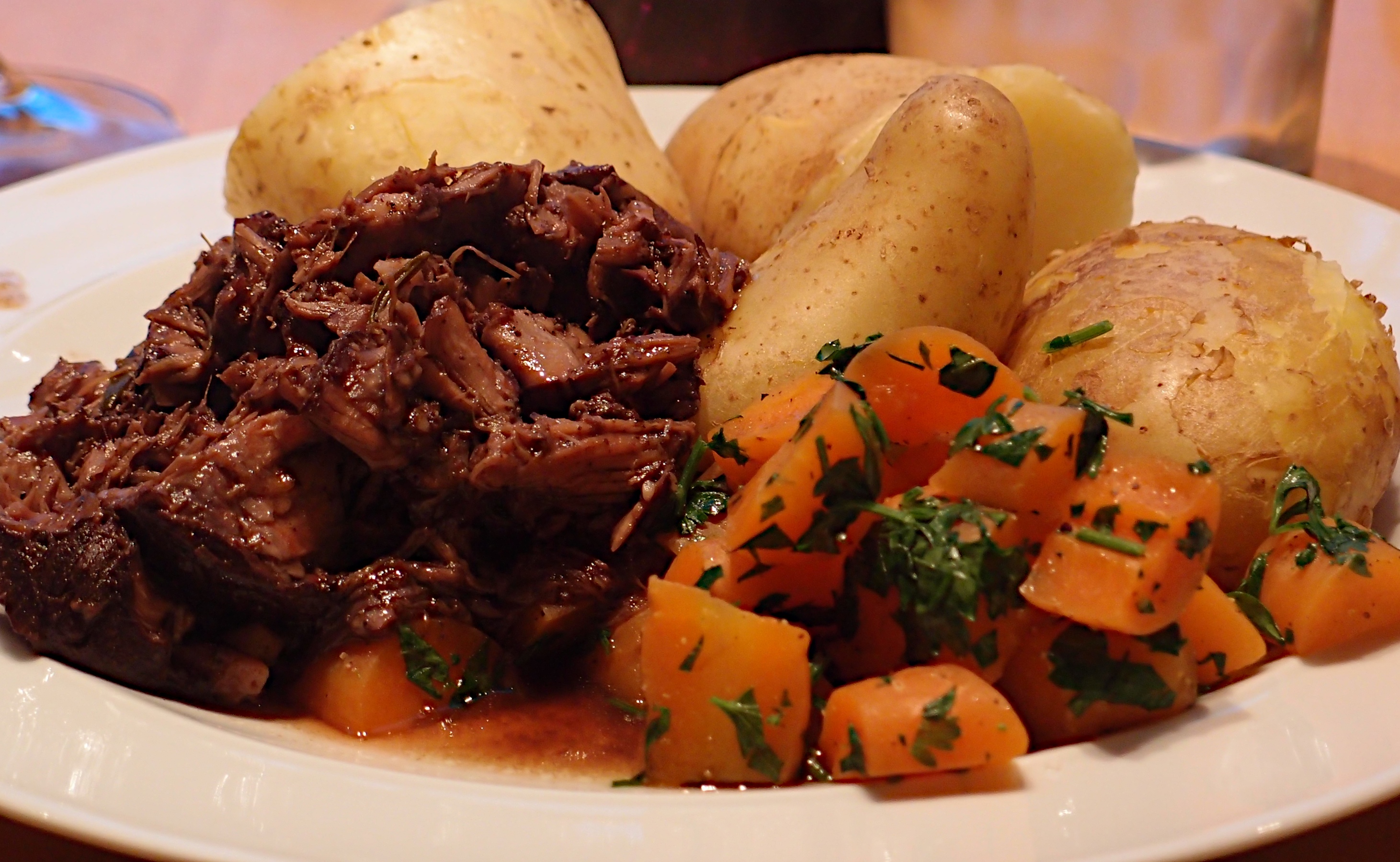
I would like to point out that the plate above is Jono’s and not mine – he’s much greedier than me.

If you don’t like Italian food you might want to ignore us for the next while as we’re somewhat smitten.

We tasted a few stews in Italy, peppery and otherwise, and they were fantastic. Jono’s had his eye on this recipe for ages too so we got on to Tom O’Connor in Glasthule, our butcher, who rose to the challenge as always.

You can use beef or veal shin for this recipe (we used veal). Jamie suggests buying the whole bone, slicing the meat off, and adding the bone to the stew. We got it osso bucco style which worked brilliantly.


There is a shocking amount of black pepper and garlic in this recipe. You hardly notice the garlic by the time it’s cooked but the pepper is fierce. Jamie recommends 4 tablespoons of fresh ground black pepper. I think we’ll try two next time which might be safer for a crowd.

This is a really easy dish to cook but it takes 6 hours in the oven (or overnight if you like) so be prepared. This gives intense flavour and makes the meat melt – you can literally lift the bones out and carve the meat with a spoon.

Peposo (the famous hunter’s peppery beef stew) – serves 10

  • 2.5 kg beef or veal shin on the bone (see advice above)
  • 20 cloves of garlic, peeled
  • 4 heaped tbsp freshly ground black pepper (we’ll go for 2 tbsp next time we think)
  • 5 sprigs fresh rosemary
  • 2 bottles of Chianti (we just used a decent fruity red wine from Gascony cause that’s what we had)
  • 2 bay leaves
If your meat is in one piece, slice the meat off the bone in big chunky slabs (keep the bone). If it is osso bucco style leave it as it is.
Heat the oven to 150C/300F/Gas 2.
Put a layer of sliced meat in the bottom of your biggest casserole, cover with some garlic cloves and sprinkle with a tbsp of pepper and a little salt.
Add 2 sprigs of rosemary and repeat with another layer of meat. Keep going like this until your ingredients are used up and you have a full pot.
Pour the wine over the top, add any left over bones and the bay leaves. Top up with water if necessary to cover the meat.
Bring to the boil and cover tightly with double thick foil and the lid.
Cook in the oven for 6 hours (or overnight at 140C/275F/Gas1).
When it’s done, skim off any fat, remove the bones, bay leaves and rosemary twigs.
Serve on toast (hunter style) or with some new potatoes and carrots (Jono and Jules’ style).
It’s good!

(Original recipe from Jamie’s Italy).

Wine Suggestion: An Italian red with a good dollop of Sangiovese for tannin and fresh acidity. We drank some Col d’Orcia Brunello di Montalcino which matched the spiciness and had majestic fruit. Perfect

Read Full Post »

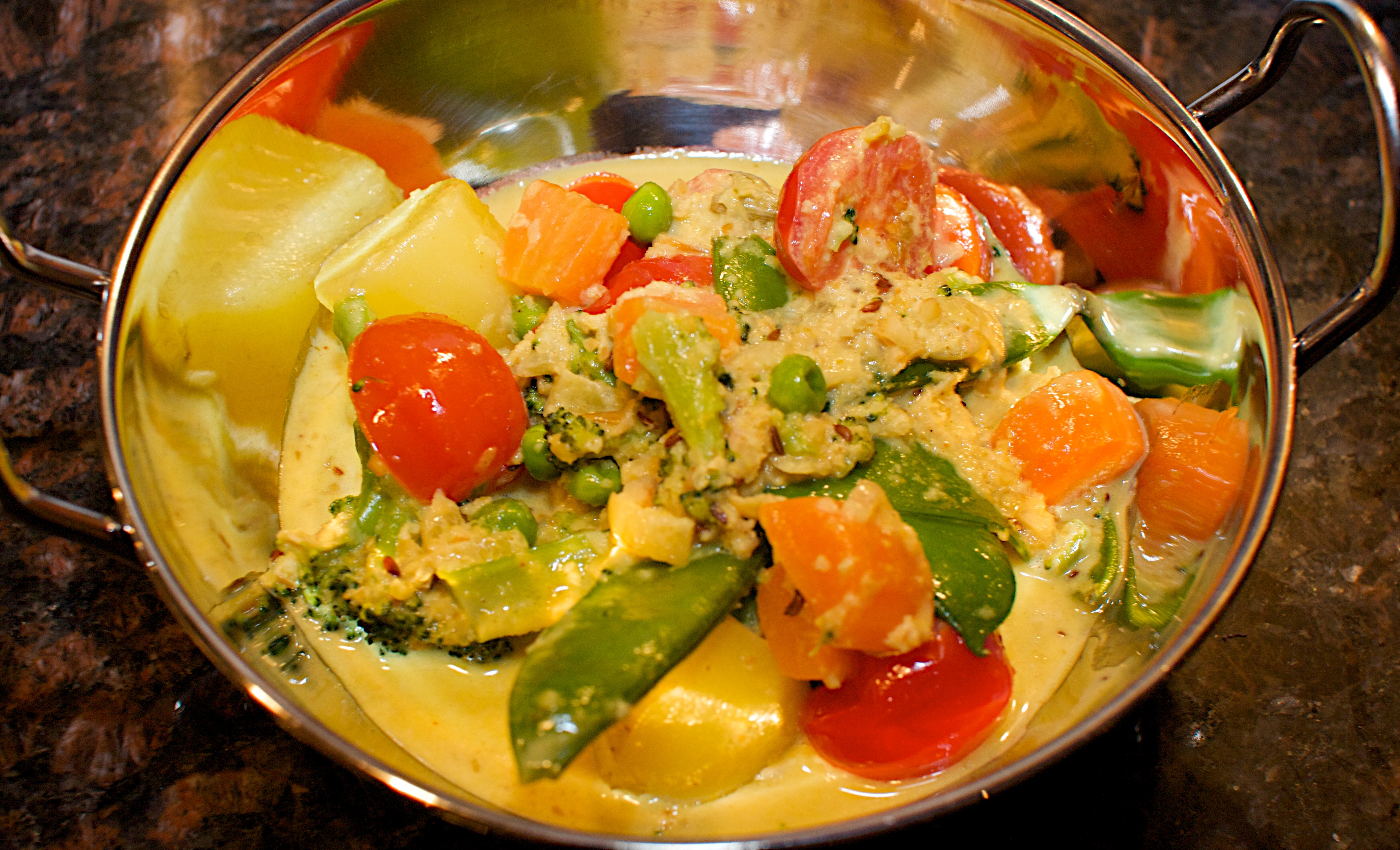
We were so enamoured by the Keralan Prawns two nights ago we looked for more lighter Indian dishes and found these in our newest cookbook: “I love Curry” by Anjum Anand. We admire Anjum’s style as she makes traditional dishes lighter, but never loses flavour or authenticity; these are no exception.

As with all Indian dishes (and any other that we cook when we have the time) we like to prep the ingredients before we start cooking. It really helps in this case; the recipes aren’t difficult but there are many elements and sometimes quick additions with the spices. We have little bowls to gather each bit together which makes it easy.

Our other suggestion is to blanch the vegetables for the Curry, then prepare the rice. As the rice simmers you can then prepare the rest of the curry.

Creamy almond vegetable curry – serves 3-4

For the vegetables:

  • 125g potatoes, peeled and cut into 2cm cubes  – we used new ones which held their shape well
  • 60g carrots, peeled and sliced into half moons
  • 70g broccoli cut into small florets
  • 60g mangetout
  • a large handful of peas – frozen are perfect

For the curry:

  • 4 tbsp vegetable oil plus 1 tsp
  • 60g blanched almonds
  • 6 cloves
  • 6 green cardamom pods
  • 1 tsp caraway seeds
  • 1 small onion, finely chopped
  • 15g fresh root ginger, peeled weight, grated to a paste
  • 4 fat cloves of garlic, grated to a paste
  • a generous tsp of ground cumin
  • 2 tsp ground coriander
  • 1/4 tsp turmeric
  • 1/4 tsp chilli powder
  • 4 tbsp plain yoghurt
  • salt to taste
  • 6 tbsp single cream
  • 8 cherry tomatoes, halved

Bring a pot of salted water to the boil and add the potatoes. After 5 minutes add the carrots and cook for another 5-10 minutes until cooked. Scoop out the potatoes and carrots and add the broccoli and then 3 minutes later the mangetout and peas. After a minute drain and set aside.

Heat 1 tsp of oil in a small pan and fry the almonds until nice and golden. Crush straight away in a pestle and mortar to a fine powder.

Heat the rest of the oil in a large non-stick saucepan and add the cloves, cardamom and caraway.

After 20 seconds add the onion until starting to turn golden at the edges.

Scrape in the ginger and garlic pastes and saute gently for 1-2 minutes until the garlic is just golden.

Add the ground spices and yoghurt and bring to the boil, stirring constantly. Cook for 5-8 minutes until the oil separates out.

Add 250ml of water and bring to the boil. Simmer gently for 10-12 minutes.

Add the blanched vegetables, salt, cream, tomatoes and crushed almonds. Cook for a few minutes until it all comes together.

Check the seasoning and serve with Indian bread or the pilaf below.

Aromatic rice pilaf – serves 4

  • 220g basmati rice, rinsed
  • 2 good tbsp of ghee (we used 1 tbsp of butter and 2tbsp of vegetable oil instead)
  • 1 good tsp cumin seeds
  • 10cm cinnamon stick
  • 1 bay leaf
  • 4 green cardamom pods
  • 4 cloves
  • 1 small onion, sliced
  • 1/2 tsp of turmeric
  • salt to taste

Tip the rice into a large bowl, cover with water, and leave to soak. (If you’re cooking the curry then prep and blanch the veg while the rice is soaking).

Heat the ghee or alternative in a saucepan, add the cumin, cinnamon, bay leaf, cardamom pods and cloves and sizzle for 10-15 seconds. Then add the onion and cook until turning gold at the edges.

Drain the rice and add to the saucepan with turmeric and salt. Cook for 1 minute, stirring.

Add 400ml of water, then taste the water and adjust for salt.

Bring to the boil, cover and reduce the heat to the lowest it will go. Cook undisturbed for about 12 minutes. Turn off the heat and serve when your’re ready. Don’t take the lid off before then!

Wine Suggestion: A dry Riesling. We had a Grosset, Polish Hill 2007 from the Clare Valley. We’ve tasted this a few times and been underwhelmed but this one was a bit older and it really comes into its own with age. So if you have a recent vintage stick it in the cellar for a few years.

Read Full Post »

Movida is the best Spanish restaurant in Melbourne. We were there last June and just got a table by the skin of our teeth as it is massively popular. It’s up a little cobbled street and if you didn’t know better you would walk right by which would be a big mistake as the tapas are fandabbydosey. They also have a crackin wine list and great staff – our idea of heaven. So book your table before you go!!

Jono’s sister Rachel sent us Movida Rustica for Christmas, the second cookbook to come out of this restaurant and we’ve been dying to get stuck into the recipes.

These barbecue kebabs have a delicious herby flavour with a massive oomph from the smoked paprika and they give off a fabulous sweet smoke when they’re cooking. So if you’re not going to Melbourne or indeed Spain any time soon we suggest you try these.

P.S. M&S are at last doing skinless, boneless chicken thighs but they are in the casserole section rather than the chicken section.

P.P.S. You’re supposed to marinade the chicken overnight but we forgot and just marinated for 1 hour and it was still great.

Adobo de Pollo (or Chicken skewers with paprika and oregano to us Irish folk) – makes 12 tapas

  • 1kg skinless chicken thigh meat, cut into 2.5 cm chunks
  • 2 tbsp smoked sweet paprika
  • 1 tbsp cumin seeds, roasted and ground
  • 3 garlic cloves, finely chopped
  • 3 tbsp finely chopped parsley
  • 1 tsp dried oregano
  • 1/2 tsp saffron threads
  • 1 tsp fine sea salt
  • 125ml extra virgin olive oil

Combine all of the ingredients in a big bowl, cover with cling film and marinate overnight in the fridge (or for as long as you’ve got).

Thread the chicken onto 12 metal skewers.

Heat the barbecue to high and cook the skewers for 5 minutes, or until cooked through, turning often.

Let them cool slightly and serve – we had ours with some herby lemon couscous.

Wine suggestion: Do like the Spanish and drink Sherry – we had a glass of Lustau VORS (Very Old Rare Sherry) dry Oloroso which is exceptionally special but any dry Oloroso or Amontillado will serve you well. Chin chin!

Read Full Post »

We opened this as a a birthday on a week night treat. We wanted bubbles, but also liked the idea of lower alcohol, and it hit the spot very nicely!

Antech, Doux Blanquette Méthode Ancestrale NV (£8.95 form the Wine Society, UK)

This wine is a bit of a throw back and is made in a more rustic way than the sophisticated Champagne method. The grapes are grown to extra ripeness and partially fermented to about 5% alcohol. The wine is then transferred to bottle where it ferments a little more, giving the fizz. Made from Mauzac, the result is an apple pie of a wine; in fact we’re going to serve an apple pie or tarte tatin next time we open a bottle! It has a real creaminess with soft and mouth-filling bubbles. Though not completely elegant and sophisticated this nonetheless oozes charm and playfulness. The flavours are dominated by apples, but we also got rich double cream, poached pears and a touch of quince plus hints of caramelisation (like you get when cooking a tarte tatin). Delicious!

In contrast to Champagne and many traditional sparkling wines this has bags of fruitiness. It is comparable with the very fruity Moscato d’Asti, which like this has naturally low alcohol. The Blanquette however has a good dollop of acidity, which comes from the Mauzac grape, to make it all the more refreshing and attractive.

Jono

Read Full Post »

BBQ Steak

We don’t need to tell you how to do this, but we used sirloins which tend to be tastier than fillets and our trusty barbeque – I don’t know how we could live without it!

Root Vegetable Mash (serves 4)

This is really tasty and a nice change from the usual mash. We’re using the leftovers for bangers and mash tomorrow night.


  • 2 large baking potatoes, cut into chunks
  • half a turnip, cut into chunks
  • 3 carrots, diced
  • 25g butter


Put the potatoes, turnip and carrots in a large pan of salted water and bring to the boil.

Cook for 20 to 25 minutes, then drain and mash.

Add butter and plenty of salt and pepper.


Roast field mushrooms (serves 2)

  • 8 field mushrooms
  • 1 small clove garlic, crushed
  • a few sprigs of thyme
  • a few drops of Worcestershire sauce
  • olive oil
  • a squeeze of lemon juice
  • 2 tbsp chopped parsley

Heat the oven to 180C/fan 160C.

Put the mushrooms in a small roasting tin and top with garlic and thyme.

Sprinkle over the Worcestershire sauce and a little oil.

Cover with foil and roast for 15 minutes.

Discard the foil and toss the mushrooms around in their juice. Return to oven for another 20 minutes.

Season and add lemon juice and parsley.

Wine Suggestion: This worked great with this Barbera from Italy: Tenuta Olim Bauda Barbera d’Asti Superiore, Nizza, 2007.

From what is regarded as the best vineyard area for Barbera in Piedmont, Italy (the home of the grape) this wine has good depth and really nice personality.

Aromas and flavours of dark cherries, chocolate, menthol, nuttiness, pencil shavings and tobacco. The medium body works well with the depth of flavours and the lovely freshness of acidity, which is common in Italian wines. A wine of charm and thoroughly enjoyed by us.

Available from The Lighthouse in Whiteabbey Village, Newtownabbey for just over 20 pounds and well worth it.

Read Full Post »

The wine of the week is a little gem: the Chateau Dereszla, Tokaji Aszu 5 Puttonyos 2000 – in a snipe (187ml) and sells for €13.95 from Mitchells in Dublin.

You may be saying to yourself, how can they be seriously reviewing a snipe as the wine of the week? Quite simply, this is no ordinary wine.

Chateau Dereszla is from the the Hungarian region of Tokaji and this type of wine can be considered one of the great wines of the world. It is intensely sweet, but at the same time wonderfully fresh. This particular example has over 120g of sugar per litre, which makes it very sweet, and yet it is so fresh that the wine never tasted cloying or sugary. Rather it has an intenseness to the flavour: very lemony, with orange peel, marmalade and honeyed aromas and flavours from the botrytis (noble rot) that lends this character to great sweet wines. The acidity balances the sweetness perfectly and the flavours last forever.

Normally Tokaji comes in 50cl bottles which is great when sharing with a few friends, but if there is just one or two drinking (or nobody else likes sweet wine) the 187ml snipe is perfect. We had a delightful glass each while nibbling on a little cheese after dinner. A real treat.

Read Full Post »

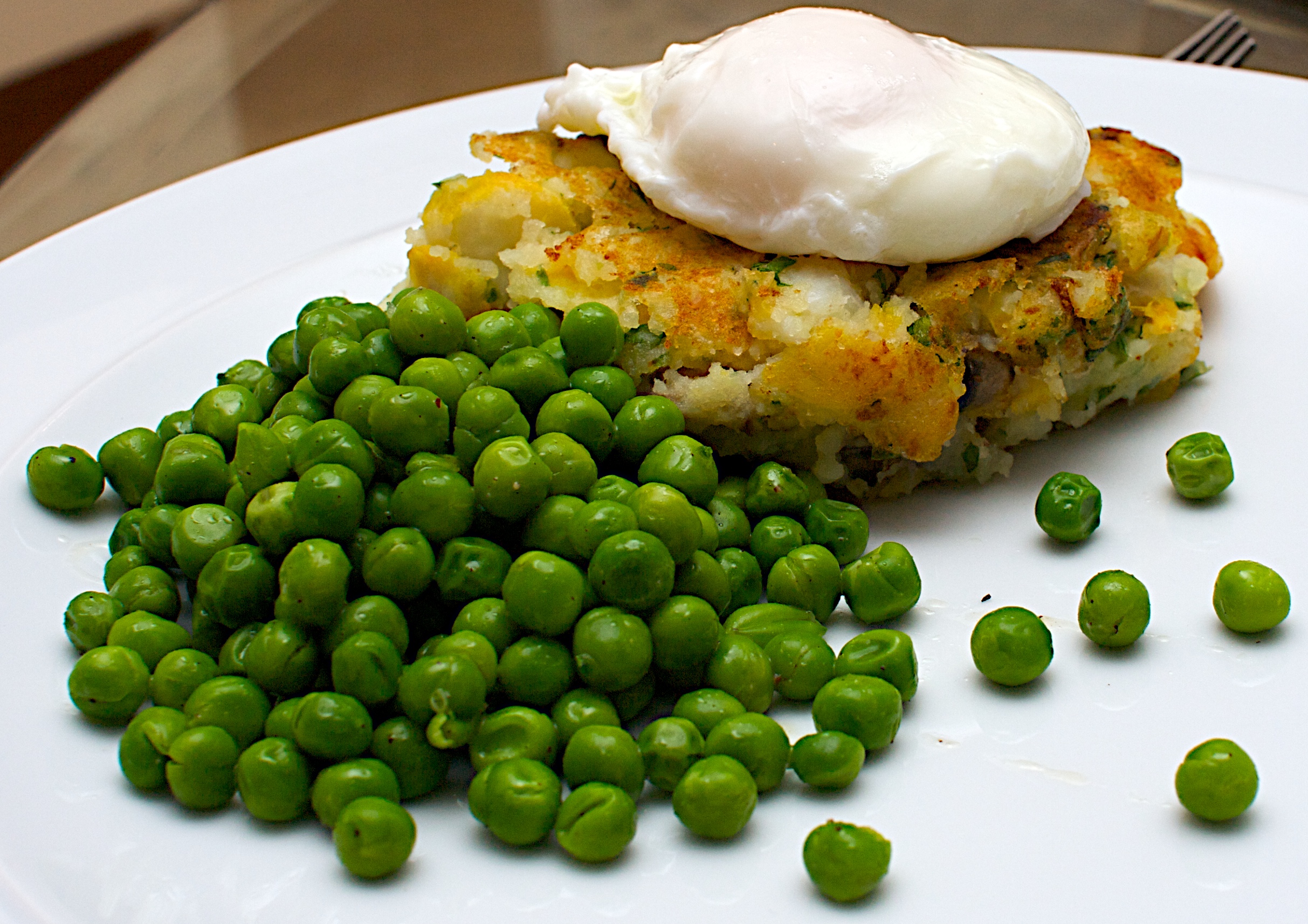
It’s another healthy one but not lacking in flavour at all. Haven’t had eggs for ages so poached eggs were a nice treat on the top. Don’t think we’ve ever had mushrooms in a fish cake but they definitely added good flavour and texture so we’ll throw a few in next time too.

Smoked fish cakes with poached eggs (serves 4)

  • 250g potatoes, peeled (and halved if big)
  • 300g smoked haddock
  • 100g button mushrooms, thinly sliced
  • 1 tbsp chopped fresh parsley
  • 1-2 tbsp plain flour
  • 2-3 tbsp sunflower oil
  • 4 medium eggs
  • cooked frozen peas, to serve

Boil the potatoes for 10 minutes until tender but firm. Put the haddock on top, flesh side down, then cover and simmer gently for 4-5 minutes.

Remove the fish, roughly flake and get rid of any skin and bones.

Drain and roughly mash the potatoes, and season.

Dry-fry the mushrooms in a non-stick pan until golden.

Mix the mash, mushrooms, fish and parsley together in a bowl and leave to cool.

Shape the mixture into four fish cakes with floured hands.

Heat the oil in a non-stick pan and gently fry the cakes for 6-8 minutes, turning once.

Meanwhile, poach the eggs and cook your peas.

Top the fish cakes with the eggs and serve the peas on the side.

Original recipe from BBC Good Food.

Wine Suggestion: eggs can be difficult to pair with wine but we had a glass of easy-drinking lemony sauvignon blanc from Bordeaux which did the trick nicely.

Read Full Post »

Harvey Nichols, Plan de Dieu, Cotes du Rhone Villages, 2008 €14.95

We had actually tried another Cotes du Rhone Villages from a different wine shop (which will remain nameless as we’re in the business of recommending not slating wines) and it wasn’t good enough to have as our wine of week. To be fair though it too was a 2008, which wasn’t a great vintage in the Rhone, with poor weather (rain and hail storms) in July and August.

This wine was a bit lighter in colour than you would expect for a southern Rhone red which probably also reflects the difficult vintage. More importantly though there was plenty of red berry and black pepper aromas with a slight herbal note.  A perfect wine for uncomplicated food; try it with steak, sausages or stew.

Well done Kelly in Harvey Nichols wine shop in Dundrum who suggested we try it.

Julie

Read Full Post »

Jono picked up this Whiting for just over €3 for 500g – the challenge then was finding a recipe to use it with. This one is from “I Know How to Cook” (the French Silver Spoon) which we got at Christmas but hadn’t used yet. The sauce is delicious and the fish cooks just right. Next time you see some bargain whiting, grab it!

Whiting  to serve 6 (we only used half the amount of fish but kept the quantities for the sauce)

  • 1/2 an onion, chopped
  • 3-4 shallots, chopped
  • small handful flat-leaf parsley, chopped
  • 250g tomatoes, skinned, deseeded and torn up small
  • six fillets of whiting (or whole whiting, scaled and cleaned)
  • 400ml white wine
  • 50g butter, plus a bit more to grease the dish
  • 30g flour
  • juice of a lemon
  • 2 tbsp creme fraiche

Preheat the oven to 220C and grease a flameproof dish with butter.

Mix onion, shallot, parsley and tomatoes together in a bowl and season. Spoon into your greased dish.

Put the fish on top and pour the wine over everything.

Bring to the boil over a high heat and then cover with buttered greaseproof paper.

Bake in the oven for 15 minutes.

Meanwhile, soften the butter slightly (if its come straight from the fridge) and mix to a paste with the flour.

Transfer the fish to a serving dish and keep warm (but don’t put it back in your hot oven at this stage or it will over cook).

Boil the juices in the pan and reduce.

Gradually stir in the paste, making sure each bit is fully blended in before you add more.

Stir in lemon juice to taste, add the creme fraiche and adjust seasoning.

Pour the sauce over the fish and put some more parsley over the top.

Serve with some steamed baby spuds.

Wine suggestion: Kelly from the wine shop in Harvey Nichols (Dundrum) suggested La Griffe Bernard Chéreau, Muscadet Sevre et Maine (€15)  and it was a great match: honeyed, minerally and rounded. I know we always suggest Muscadet with white fish but it goes!

Read Full Post »

This was our first attempt at a Jamie 30 minute meal but we didn’t really try to do it in 30 minutes as we like to relax when we’re cooking. We didn’t bother with dessert either. The result was pretty good – very nice risotto and a fabulous salad which we’ll definitely do again with other dishes. We found the recipe quite confusing to follow and it’s particularly difficult if you’re not cooking the entire meal (dessert included). We’ve given you the recipes below but they’re in old-fashioned format, i.e. prep first and cook second, so sorry if that’s not your style but we find the traditional format easier.

Mushroom risotto to serve 4

  • 1 large white onion, halved and peeled
  • 1 stick celery
  • 15g dried porcini mushrooms
  • 2 sprigs of fresh rosemary, finely chopped
  • 300g risotto rice
  • 1/2 a glass of white wine
  • 1 vegetable or chicken stock
  • 1 litre boiling water or stock (we used Marigold swiss bouillon)
  • 500g mixed mushrooms, wiped clean and torn (we used a mixture of chestnut, shiitake and oyster mushrooms)
  • 1 clove garlic, finely chopped
  • a small bunch of thyme, leaves picked
  • a large knob of butter
  • 40g Parmesan, grated
  • juice of 1/2 a lemon
  • small bunch of flat-leaf parsley, chopped

Put the onion, celery and dried porcini into a food processor and pulse until finely chopped.

Heat a large saucepan on medium and add a good lug of olive oil. Scrape in the processed mixture and cook for a few minutes.

Throw in the chopped rosemary and rice; stir well for a minute. Pour in the white wine and crumble in the stock cube. Stir until the wine is absorbed and then season.

Add a couple of ladles of the stock or water and stir in well. You need to then keep coming back to the risotto every minute for about 16-18 minutes – stirring in a bit more stock each time. Add half the mushrooms after a couple of minutes.

Heat the grill.

Heat a large ovenproof frying pan and add a couple of good lugs of olive oil, the remaining mushrooms, garlic, and a good pinch of salt and pepper. Stir for a second, add half the thyme and take off the heat. Add the remaining thyme to the rice.

Put frying pan of mushrooms under the grill to crisp up, turn the grill off when they are golden and crispy.

When the rice is al dente stir in the butter and most of the Parmesan, add lemon juice and taste for seasoning.

Stir in half the parsley and throw the rest over the grilled mushrooms.

Put the lid on the risotto and let it rest for a minute or two – you could dress the salad at this point.

Ladle the risotto onto plates and spoon some grilled mushrooms over the top with some extra Parmesan.

Spinach salad to serve 4

  • 100g pinenuts, toasted in a non-stick pan
  • 1 tbsp balsamic vinegar
  • juice of 1/2 a lemon
  • 200g baby spinach, sliced roughly into 1cm thick strips
  • 3 large sprigs of fresh mint, leaves picked
  • 5 sun-dried tomatoes in oil, roughly chopped
  • 1 medium cucumber, halved and sliced on an angle about 1cm thick

Put balsamic vinegar, lemon juice, 3 tbsp of extra virgin olive oil and a good pinch of salt and pepper into a large salad bowl and add the pine nuts.

Add the spinach, mint leaves, sun-dried tomatoes and cucumber. Don’t toss until the last minute.

Serve with the risotto (or anything else you fancy a nice salad with).

Wine suggestion: we had a really nice Riesling from Mount Horrocks in the Clare Valley, South Australia. If you come across anything from Mount Horrocks it is well worth a try as everything we have tasted has been really special (Jono got a bottle of their Semillon, which is barrel fermented, for a Christmas gift and we loved it!). Also has a nice label if such things matter to you.


Read Full Post »

Oops, we’ve broken our price point slightly on this one – the rule for wine of the week is to stay under €15.00, but this was the cheapest Italian red in Fallon & Byrne on Exchequer Street, Dublin and came in at €15.99. As we had a hankering for an Italian at the time to go with our meatballs (see below), this wine gets to be our Wine of the Week!

From an area slightly less prestigious than Chianti Classico, this Chianti Rufina delivers on value and flavour. It had a lovely, juicy cherry flavour which was balanced with fine, and slightly rustic tannins. This gave the wine a delightful character and was perfect with the Meatballs.

I am sure this would have been a few Euro more if from Chianti Classico as it had personality and good levels of fruit.

Read Full Post »

From The Corkscrew on Chatham Street (off Grafton St in Dublin): three guys who are passionate about their wines!

This is one they import themselves and I can see why: it has a fullness and roundness to the body and fruit while balancing a real easiness of drinking. The flavours and aromas of grapefruit and apple meld well with the fullness and juiciness to give a delightful wine that works very well with winter dishes of chicken and turkey, but equally on its own too. €14.95 and well worth it .

Jono

Read Full Post »

We came across this eye-catching wine advertised in Central Victoria when we visited in June, but didn’t get to try it. When we saw it on the shelf of OddBins in Blackrock at just over €20, we thought it was definitely worth a try.

Made by two men (despite the name on the label) and inspired by their love of game and shooting; this is a characterful wine that combines depth of flavour, a full, rounded body and a lovely, light, freshness and drinkability. In comparison to the elegantly crafted but slightly dull Wolf Blass Gold Label Chardonnay tasted a couple of weeks ago this is definitely less polished – and to it’s advantage as it is a delightful wine full of interest and character. We’d like to see more of these types of wine, and will be looking out for the matching Ladies Who Shoot Shiraz to see if this is just as interesting.

Read Full Post »

This week we went to Oddbins in Blackrock village while walking home from work in the really bad snow. We unfairly put the staff under pressure, and the poor shop assistant even gave us a wine out of her Christmas box – thanks a mill!

We also don’t usually chill our reds in snow before drinking, but the photo opportunity, and the abundant snow in Dublin, begged for this photo.

To the wine: classically new world in that the fruit is wonderfully ripe with a little lift from slightly higher alcohol (compared to Burgundy, where Pinot Noir finds its greatest expression). The aromas and flavours are predominately cherries and summer berries and it has a nice juiciness and medium weight. The best thing is the balance and freshness which makes this wine effortless to drink and yet interesting and flavoursome.

Don’t serve with a big, meaty stew, rather this wine would be great with lighter meats, like Christmas turkey and ham .. the shop assistant would have had a nice wine for the big day ahead (now I feel guilty). It also went particularly well with barbecued sausages and champ; see right.

We paid €14.99 but don’t rush out as we think Oddbins may not have this in stock again until after Christmas.


Read Full Post »

This week a wine found in Tesco – normally €23.49 but on offer for €15 (and so it qualifies for our wine of the week slot!)

We had some trepidation over this wine as we are a little biassed against big brands of which Wolf Blass is one – the cheaper level wines tend to be a big and brash and have much less attention to detail and the sense of place the grapes have been grown. We like to see a little individuality and personality in the wines we drink.

The Gold Label signifies a step up from the masses and we agree, this is sophisticated, balanced and not without charm. Would we pay full price – probably not – but for €15 it is a steal.

This would go perfectly with creamy chicken dishes; a full-bodied and yet soft and low-acid wine with flavours of yellow apples and toast. It maintains freshness through well judged winemaking techniques (battonage) and the result is very pleasant. A well balanced, well made, clever wine.

Jono

Read Full Post »

« Newer Posts - Older Posts »