Feeds:
Posts
Comments

Posts Tagged ‘Cooking’

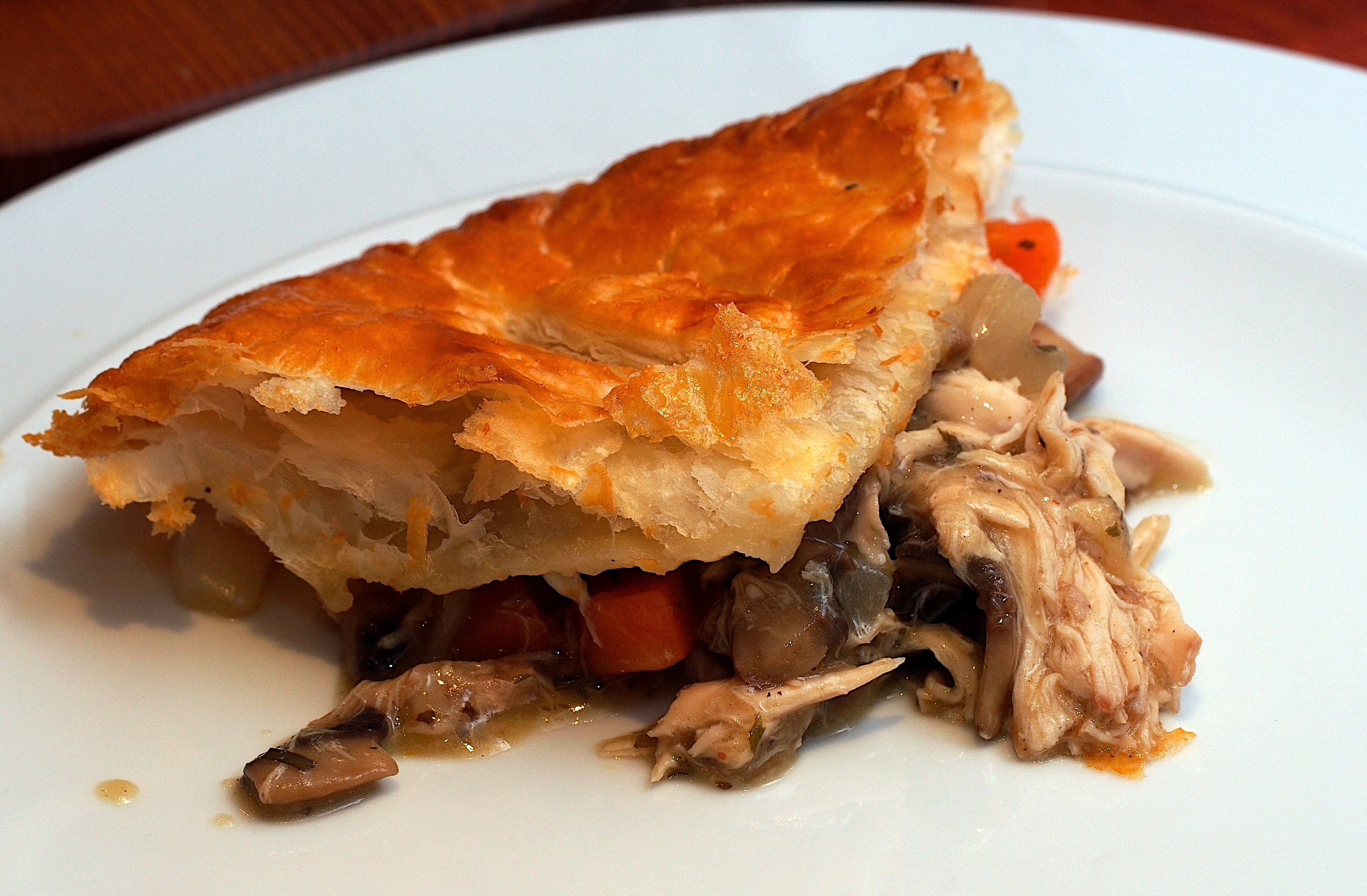
This is a really simple recipe for using up leftover chicken and is easily adjusted to suit what you have in the cupboard. We seem to serve almost every pie with peas and this was no exception.

Wine Suggestion: This went perfectly with a glass of Domaine Saint Denis, Macon-Lugny 2010; a great little white burgundy that has much more presence and character than others from this area in the Mâconnais achieve. I think this has something to do with the extra care that is made in the domaine’s vineyards and it really shows – delightful round flavours and a structured mid-palate of minerally apple fruits. A wine to look out for and really versatile with food. If this domaine is hard to find, look out for a St-Véran, or Pouilly-Fuissé instead!

Leftover Chicken & Veg Pie – serves 3-4

  • 350g cooked chicken, torn into pieces
  • 2 tbsp olive oil
  • 1 carrot, chopped quite small
  • 1 onion, chopped
  • 1 garlic clove, crushed
  • 4 sliced mushrooms
  • 400ml chicken stock
  • 2 tbsp flour
  • fresh herbs, chopped (tarragon or parsley would be good or use 1 tsp dried)
  • 1 sheet of ready-rolled puff pastry
  • 1 egg, beaten

Heat the oven to 220C/Fan 200C/Gas 7.

Heat the oil in a large pot and add the carrot, onion, garlic, and mushrooms. Cook for about 10 minutes or until the carrots and onions are almost soft.

Stir in the flour and cook for a minute or two before adding the chicken stock. Stir continually until the sauce boils, then turn down the heat and simmer for a further 5 minutes or until the veg is completely cooked through.

Add the cooked chicken, along with your herbs and plenty of seasoning. Stir briefly to heat through then transfer to a pie dish.

Brush the rim of the pie dish with the beaten egg. Then cover the dish with the pastry sheet and trim off any excess. Decorate the top with some leaves made from the pastry scraps and brush the top with the beaten egg. Bake for 20 minutes or until well browned.

Read Full Post »

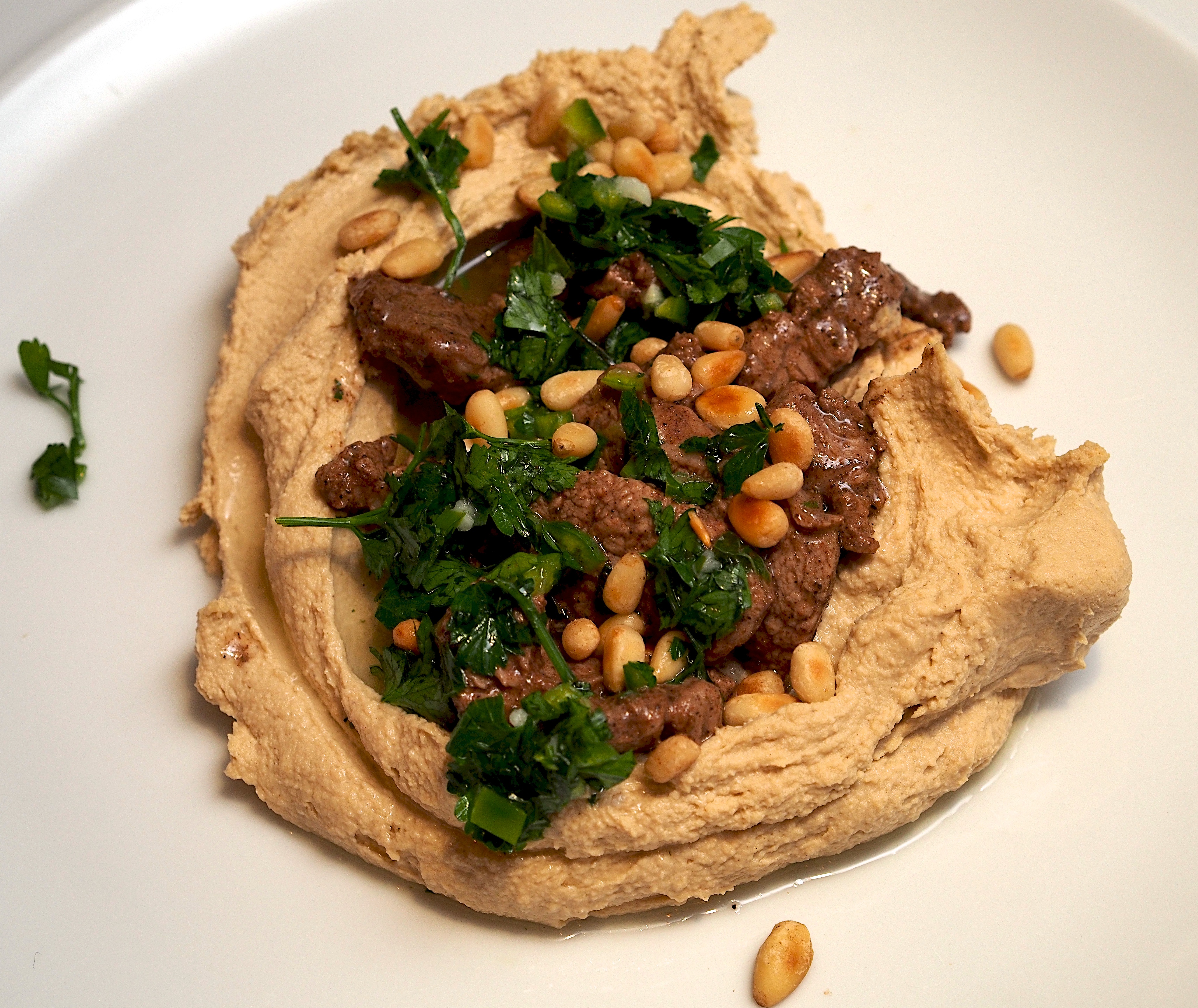
We love and are fascinated by the spices, flavours and textures of the Middle East and Africa and this dish captures all of this perfectly. The spices match the freshness  and zing of lemon, the lamb contrasts with the smooth hummus and some crisp flatbreads give crunch and texture.  The freshness of the herbs balance the warming spices to produce a pleasant mix of warm and cool ingredients, still comforting despite the crisp autumn evening.

A meal in itself or a wonderful mezze / starter to share.

Wine Suggestion: We’d drink a white that has texture and freshness but not too crisp or conversely heavy. The Pinot Blancs from Alsace fit the bill perfectly as they have a bit of perfume and hints of spice as well as attractive light stone fruit flavours.

Hummus kawarma with lemon sauce – to serve 6

  • 1 quantity of hummus (see recipe below)
  • 2 tbsp pine nuts, toasted in the oven or fried in a small amount of unsalted butter

For the kawarma (lamb)

  • 300g neck fillet of lamb, finely chopped by hand
  • ¼ tsp ground black pepper
  • ¼ tsp ground white pepper
  • 1 tsp ground allspice
  • ½ tsp ground cinnamon
  • good pinch of freshly grated nutmeg
  • 1 tsp dried za’atar
  • 1 tbsp white wine vinegar
  • 1 tbsp chopped fresh mint
  • 1 tbsp chopped flat-leaf parsley
  • 1 tsp salt
  • 1 tbsp unsalted butter
  • 1 tsp olive oil

For the lemon sauce 

  • 10g flat-leaf parsley, finely chopped
  • 1 green chilli, finely chopped
  • 4 tbsp lemon juice
  • 2 tbsp white wine vinegar
  • 2 garlic cloves, crushed
  • ¼ tsp salt

To make the kawarma, put all the ingredients apart from the butter and oil in a bowl. Mix well, cover and leave to marinate in the fridge for half an hour.

Just before cooking the meat, combine all the ingredients for the lemon sauce in a small bowl.

Heat the butter and oil in a large frying pan over a medium-high heat. Add the meat in 2-3 batches and stir-fry for a couple of minutes per batch (the meat should be slightly pink).

Divide the hummus between 6 serving dishes and spoon the warm kawarma over the top. Drizzle over plenty of lemon sauce and garnish with some more parsley and the pine nuts.

Basic Hummus – to serve 6

  • 250g dried chickpeas
  • 1 tsp bicarbonate of soda
  • 270g light tahini paste
  • 4 tbsp lemon juice
  • 100ml ice cold water
  • salt

Wash the chickpeas well and put into a large bowl. Cover with cold water and leave to soak overnight.

Drain the chickpeas. Place a medium saucepan on a high heat and add the chickpeas and the bicarbonate of soda. Cook for about 5 minutes, stirring. Add 1.5 litres of fresh water and bring to the boil. Cook, skimming off any foam and skins, for between 20 and 40 minutes or until very tender (you should be able to crush them between your thumb and finger but they should not be mushy).

Drain the chickpeas and put in a food processor. Process to a stiff paste; then, with the machine running, add the tahini paste, lemon juice, garlic, and 1½ tsp salt. Finally, slowly drizzle in the iced water and mix for about 5 minutes or until you get a very smooth paste. Transfer to a bowl and cover the surface with cling film to stop a skin forming. Rest for at least 30 minutes before serving.

(Original recipe from Jerusalem by Yotam Ottolenghi and Sami Tamimi, Ebury Press, 2012.)

Read Full Post »

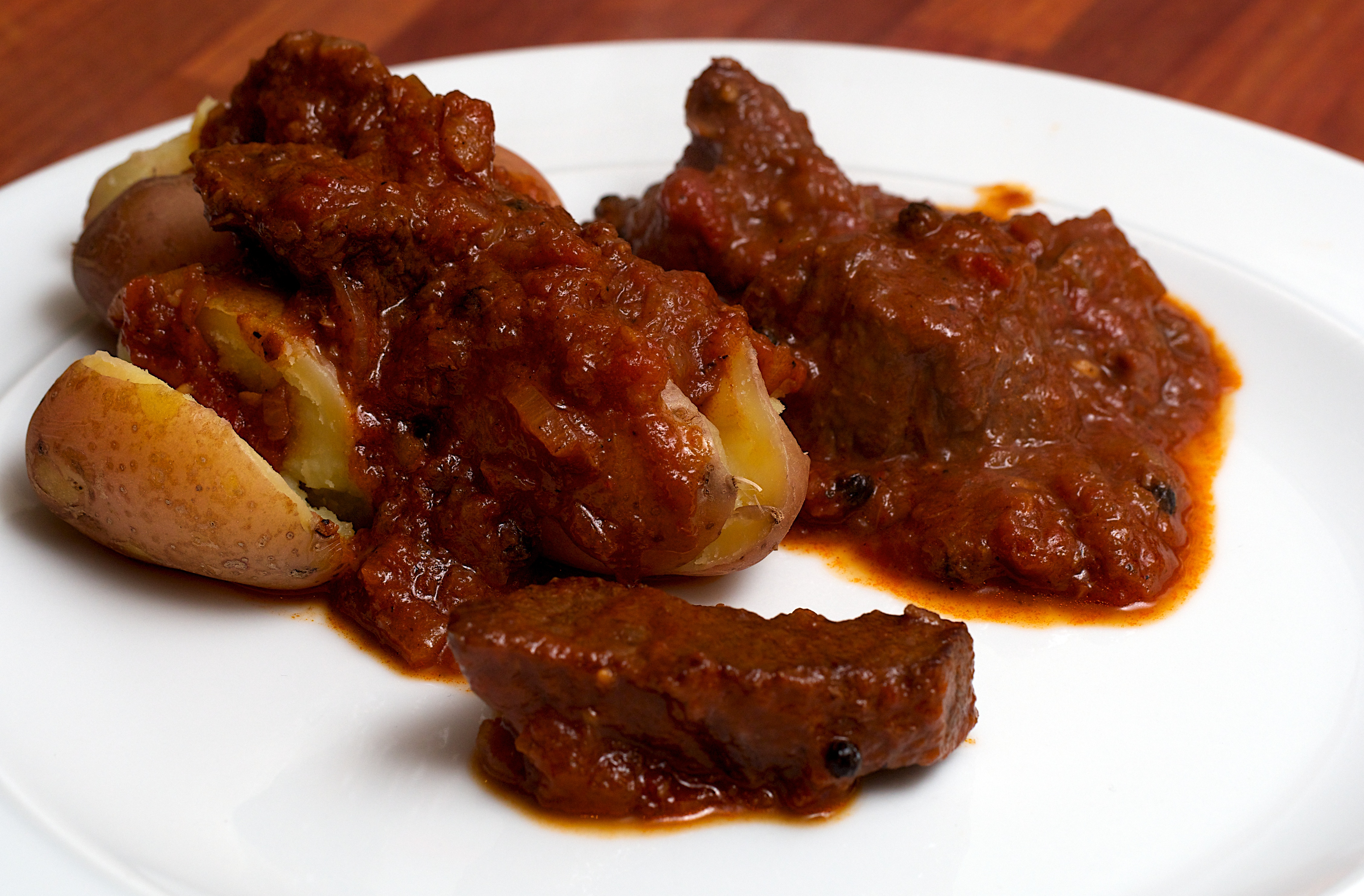
An easy version of Peposo which works a treat and reheats perfectly. The peppercorns are very much the star of the show rather than the seasoning.

Wine Suggestion:  Regional foods are generally complemented by the wines of the same region so go for a good Tuscan wine that will be able to stand up to this rich stew. We had a Morisfarms Mandriolo from the Maremma.

Hunter’s Stew – to serve 4-6

  • 4 tbsp olive oil
  • 1kg stewing steak, in big chunks
  • 3 onions, sliced
  • 4 garlic cloves, crushed
  • 2 tbsp black peppercorns
  • 2 tsp ground black pepper
  • 2 bay leaves
  • 250ml red wine
  • 1 x 400g tin tomatoes
  • 1 whole tube of tomato purée

In a large saucepan, with a tight fitting lid, heat the olive oil and brown the beef well.

Season with plenty of salt, then add the onions, garlic, and peppercorns and cook for another 5-10 minutes, or until the onions are soft and reduced.

Add the remaining ingredients, cover with a lid and cook very gently for about 2 hours, stirring regularly.

Check the seasoning after 90 minutes and add a bit of water if necessary. If it is too liquid you can remove the lid for the last 20-30 minutes.

Allow to cool slightly before serving with potatoes or polenta.

(Original recipe by Domini Kemp in THE IRISH TIMES Magazine, September 21, 2013.)

Read Full Post »

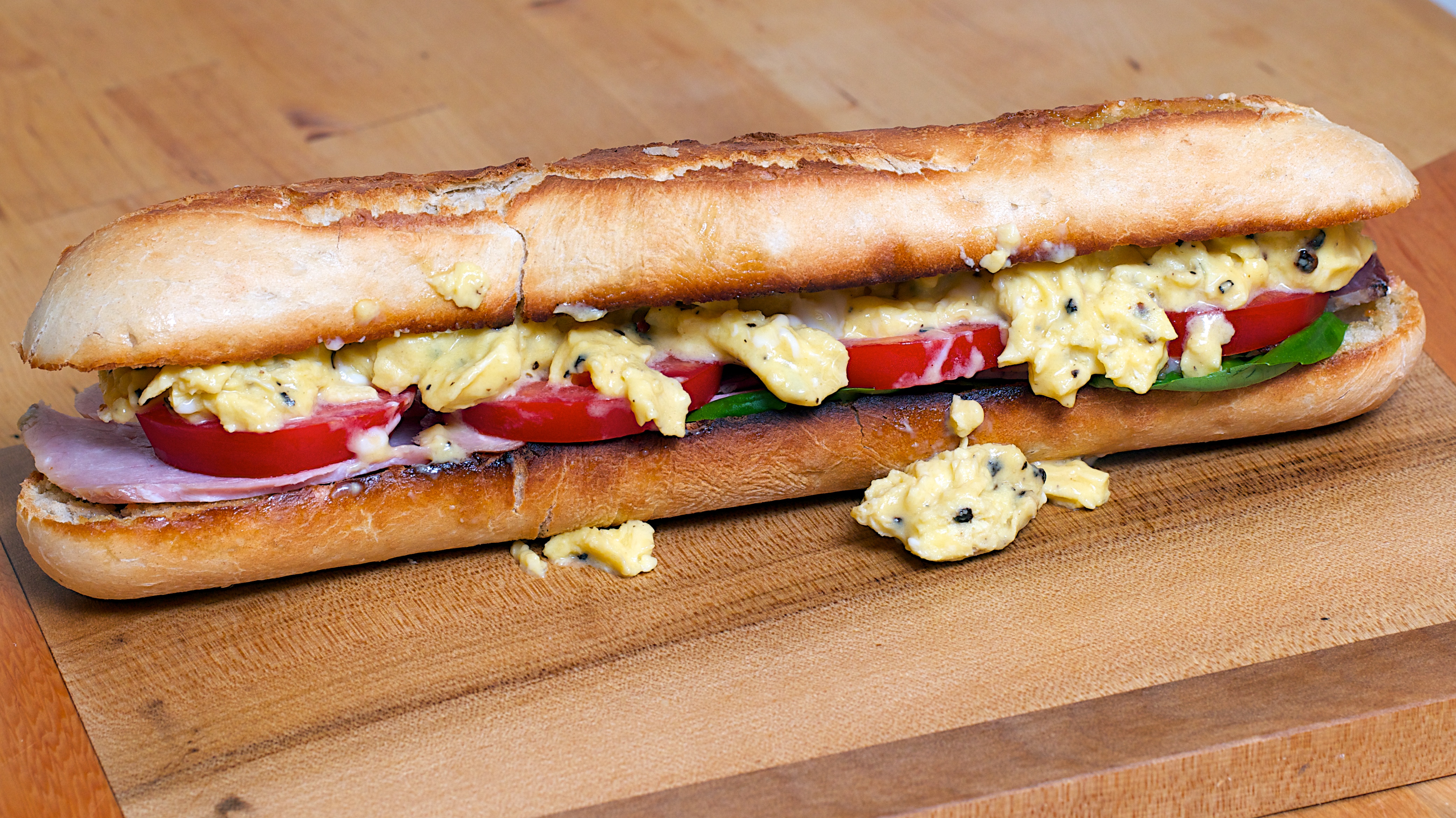
This was no effort at all to whip up on a Saturday for brunch. We were a bit concerned when we saw the quantity of peppercorns, but they work superbly and give much less heat than expected.

Peppercorn Eggs & Ham Baguette – to serve 4

  • large baguette, cut in 4 and sliced in half
  • good quality olive oil
  • 1 clove garlic, peeled
  • 55g unsalted butter
  • 8-12 large eggs
  • 1 tbsp black peppercorns, cracked in a mortar
  • a handful of basil leaves
  • 4 slices of good quality ham or prosciutto
  • 2 large tomatoes, cored and sliced

Scoop out the dough from the slices of baguette to make room for the filling. Pour olive oil over each slice and rub with the garlic clove. Put the slices on a tray and toast under a grill on both sides.

Meanwhile, melt the butter in a frying pan and whisk the eggs. Add the cracked peppercorns and tip the mixture into the pan. Tumble and push the eggs around the pan with a flat wooden spatula (think half scramble, half omelette).

Remove when still soft as they will continue to cook, and season with a little salt. Put a few basil leaves on the base of 4 baguette slices, then add the ham, the tomato and finally the egg, finishing with the top pieces of baguette.

(Original recipe from Tamasin’s Kitchen Bible by Tamasin Day-Lewis, Weidenfeld & Nicolson, 2005.)

Read Full Post »

Moussaka

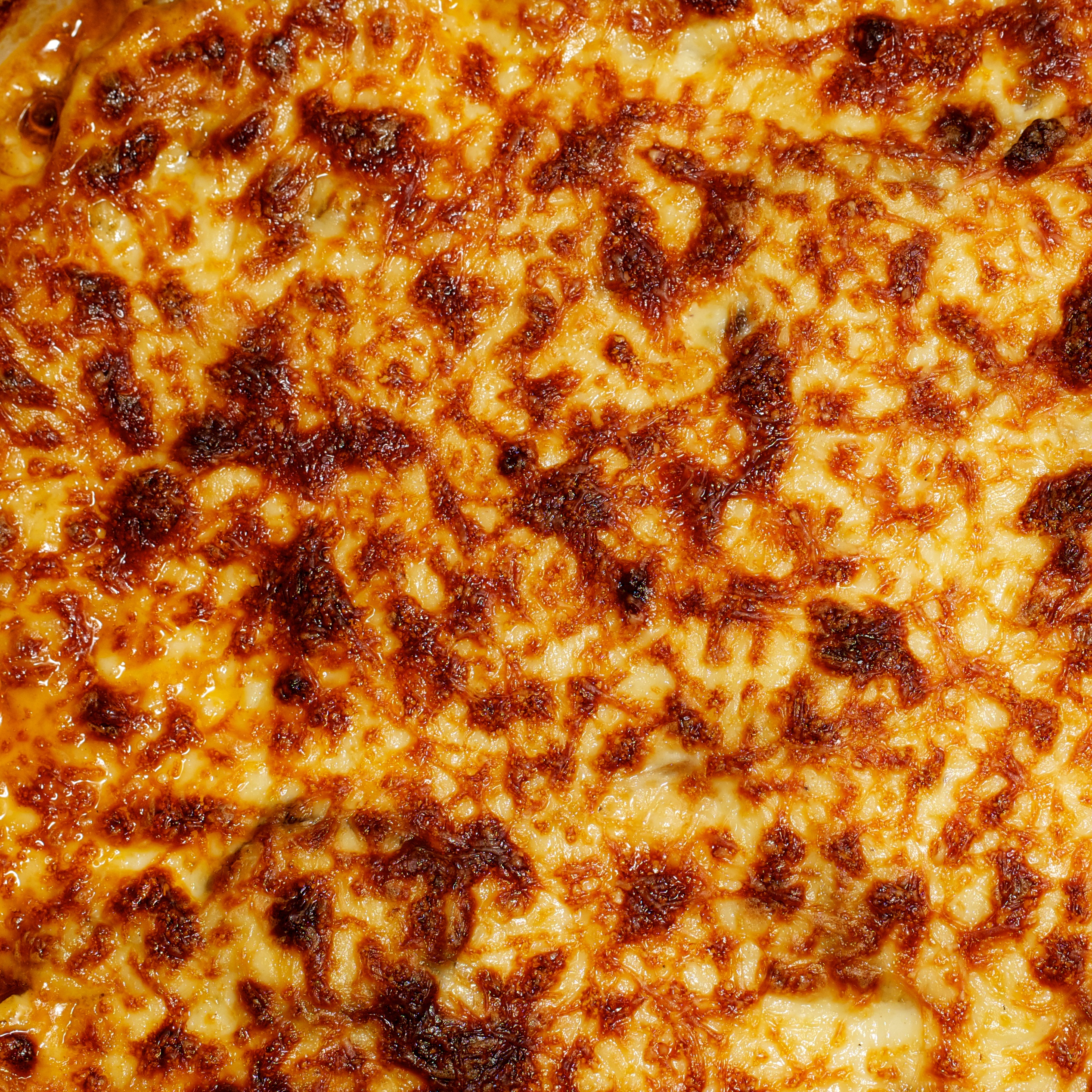
This is a really lovely moussaka which rates as one of our “comfort” dishes. We especially like roasting the aubergines in the oven rather than frying them which always seems to require vats of oil. The combination is a classic and is not difficult, but it does take a little time to bring together. It is always well worth it.

Wine Suggestion:  We’ve been inspired to drink wines from the Eastern Mediterranean with this and have found that top Lebanese wines, like Chateau Massaya, with their bramble and plum fruits plus velvety spices work very well indeed.

Moussaka – to serve 6

  • 3 aubergines, sliced 1cm thick
  • olive oil
  • 2 onions, chopped
  • 2 cloves of garlic, chopped
  • 1½ lb (675g) lamb mince
  • 1 tsp cinnamon
  • 1 tomato, skinned, seeded and chopped
  • 2-3 tbsp tomato purée
  • a bunch of flat-leaf parsley, chopped
  • a few tbsp dry white wine
  • Parmesan (optional)

FOR THE BÉCHAMEL 

  • 1 pint (600ml) full-cream milk
  • 1 onion, peeled and stuck with a couple of cloves
  •  bay leaf
  • 2oz (55g) unsalted butter
  • 1 heaped tbsp plain flour
  • nutmeg

Preheat the oven to 180ºC/350ºF/Gas 4.

Brush the aubergine slices with olive oil on both sides then put on a baking tray in a single layer and roast until soft. You will either need to do this in batches or on two trays. They should take between 10 and 20 minutes but don’t let them get too brown.

Meanwhile, heat 2 tbsp olive oil in a heavy-bottomed frying pan and sauté the onions until soft and golden. Add the garlic and continue to sauté for another few minutes, then add the mince and fry for 5-10 minutes or until well browned. Season and add the cinnamon, then add the chopped tomato, tomato purée and chopped parsley. Stir well, add the wine and simmer for 15 minutes or until most of the wine has been absorbed.

While the meat is simmering make the béchamel. Put the onion, bay leaf and milk in a small pan and bring slowly to the boil. Take the pan off the heat and leave to infuse for 20-30 minutes with the lid on and reheat just before starting the sauce.

Melt the butter over a gentle heat in a small pan. Just as the butter starts to foam, add the flour and stir gently for a few seconds. You want a thin bubbling base – if the butter hasn’t amalgamated with the flour, add a tiny bit more. Bubble for a couple of minutes or until it turns a pale biscuit colour. Add about half a cup of the hot milk and whisk hard until the mixture becomes thick. Add more milk and repeat – it will take longer to thicken each time.

Cook the sauce more slowly and stir with a wooden spoon – add more milk until you get the right consistency. You want the sauce to be thick but not solid. Cook gently for 20 minutes, stirring often. Season and grate in a little nutmeg about half way through.

When the sauce is ready put alternate layers of aubergine and meat sauce in a deep baking dish or roasting tin, staring and ending with a layer of aubergines. Pour a thick layer of béchamel over the top; you might not need it all. Sprinkle over some grated Parmesan if you like then bake in the oven for about 45 minutes or until brown on top.

(Original recipe from Tamasin’s Kitchen Bible by Tamasin Day-Lewis, Weidenfeld & Nicolson, 2005.)

Read Full Post »

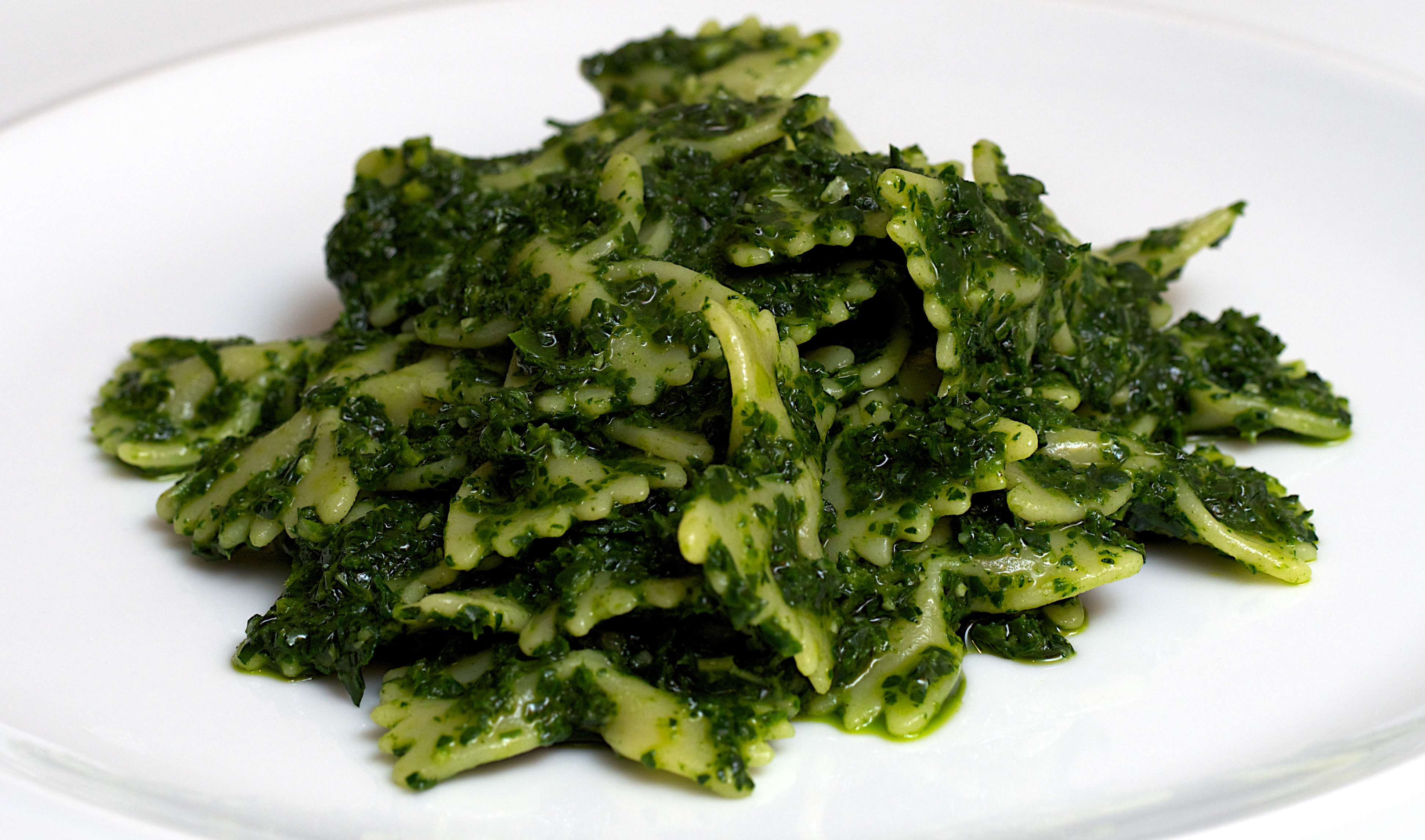
This works really well as a starter portion for 6 people. Make sure you use top quality fresh extra virgin olive oil from the most recent vintage. We buy fresh olive oil made by the Tuscan wineries Capezzana and Selvepiana. They’re not cheap but they taste fabulous when only the best olive oil will do.

Wine Suggestion: The iron rich Cavolo Nero requires something minerally and iron rich too, but you need to avoid wines with too much weight. We’d suggest trying the Gulfi Cerasuolo di Vittoria, a red from Sicily that is a blend of Frappatto and Nero d’Avola which combines an earthiness and power with a joyful fruit and fresh acidity giving the wine personality and depth without excess weight.

Farfalle al Cavolo Nero con Olio Nuovo – serves 6

  • 1.1kg cavolo nero leaves
  • sea salt and black pepper
  • 4 garlic cloves, peeled
  • 250ml extra virgin olive oil (see comment above)
  • 250g farfalle
  • Parmesan

Remove the stalks from the cavolo nero but keep the leaves whole. Blanch the leaves in a generous amount of boiling salted water along with 2 of the garlic cloves for just a few minutes. Put the blanched garlic and cavolo nero in a food processor and pulse to a coarse purée. In the last few seconds, pour in around 75ml of the oil to make a fairly liquid purée.

Crush the rest of the garlic with 1 tsp sea salt and stir into the purée with another 75ml of oil. Season to taste.

Cook the the farfalle in plenty of salted water, then drain. Add the pasta to the purée and stir until evenly coated. Pour in the remaining olive oil and serve with some grated Parmesan.

(Original recipe from The River Café by Rose Gray and Ruth Rogers, Ebury Press, 1995.)

Read Full Post »

Aussie Sponge

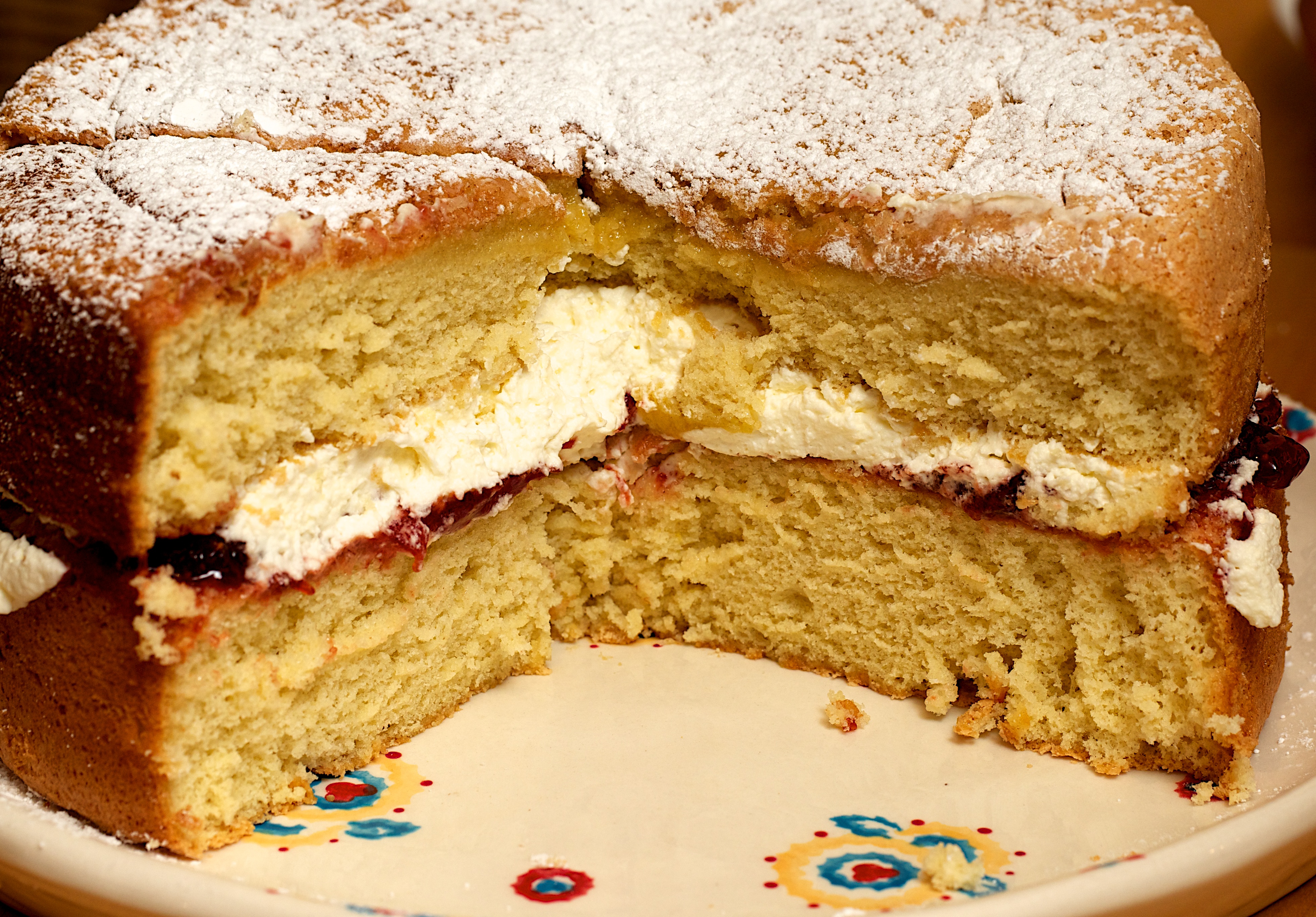
Jono has inherited this recipe for a never-fail Sponge Cake from his Nan and Mum in Australia. We’ll call it an Aussie Sponge as it’s not the usual Victoria Sponge. Very moreish and can be decorated in many ways. We just added some of our Strawberry and Pimm’s Jam, a bit of cream and a dusting of icing sugar. The cake lasted only 5 minutes (we had some help).

Aussie Sponge 

  • 4 eggs – separated
  • scant 250ml of castor sugar
  • 250ml self raising flour – sifted 3 times
  • 1 tbsp hot water

Beat the egg whites until very stiff, then slowly beat in the castor sugar.

Beat in the egg yolks, one at a time, taking care not to over beat.

Fold in the sifted flour with a fork, then fold in the hot water.

Divide the mixture between two sandwich tins and bake for 12-15 minutes or until the cake is lightly coloured and the sides spring back from the edges of the tin. Turn out onto a clean tea towel and cool.

Read Full Post »

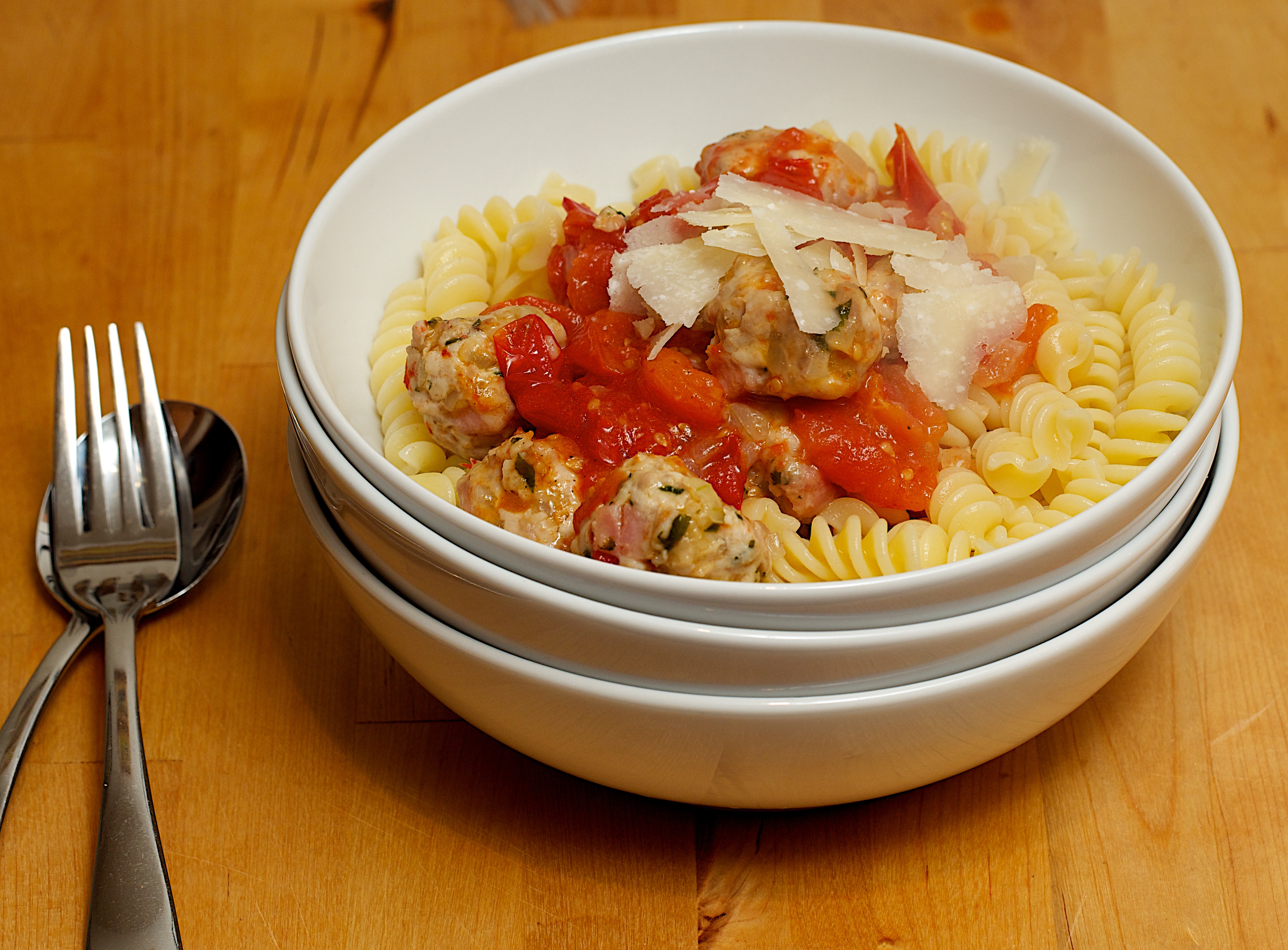
We found these to be a surprisingly tasty alternative to traditional spaghetti and meatballs. We loved these for their freshness and verve; it really hit the spot for a weeknight dinner. It was also usefully quick and easy as well as being very cost effective.

Wine Suggestion: try some of Italy’s thoroughly modern whites that are being rejuvenated and reinvented. If you can find a good Pecorino from the Marche you’ll be in for a treat. We had a glass of Umani Ronchi’s Vellodoro which had good freshness of fruit and terrific depth of minerality and nutty savouriness; showing what can be done with a forgotten grape variety when love and attention are given.

Spicy Chicken Meatballs – to serve 4

  • 3 tbsp olive oil
  • 1 small onion, finely chopped
  • 2 cloves of garlic, crushed
  • ½ tsp ground coriander
  • 1 red chilli, thinly sliced
  • 500g chicken mince
  • 3 tbsp fresh breadcrumbs
  • 50g pancetta, chopped
  • 2 tbsp flat-leaf parsley, chopped
  • 500g cherry tomatoes, halved
  • 125ml chicken stock
  • 500g fusilli  pasta, cooked, to serve
  • Parmesan

Preheat the oven to 200ºC/400ºF/Gas 6. Heat 1 tbsp of the oil in a saucepan over medium-high heat. Add the onion and garlic and cook for 5 minutes, or until softened. Add the coriander and chilli and cook for another minute.

Put the chicken in a bowl with the breadcrumbs, pancetta, parsley and some salt. Add the spiced onion and mix well with your hands. Refrigerate for 30 minutes, then wet your hands with cold water and roll the mixture into small meatballs.

Put the cherry tomatoes on a baking tray lined with baking paper, drizzle with 1 tbsp olive oil and season. Put the meatballs on another lined tray and drizzle with the remaining oil. Roast the tomatoes and meatballs for 15-20 minute, or until the meatballs are golden and the tomatoes are starting to burst.

Put the stock and tomatoes in a saucepan and add the meatballs. Simmer for 5 minutes and season.

Serve with the cooked pasta and some Parmesan shavings.

(Original recipe from Bill Granger Every Day, Murdoch Books, 2006)

Read Full Post »

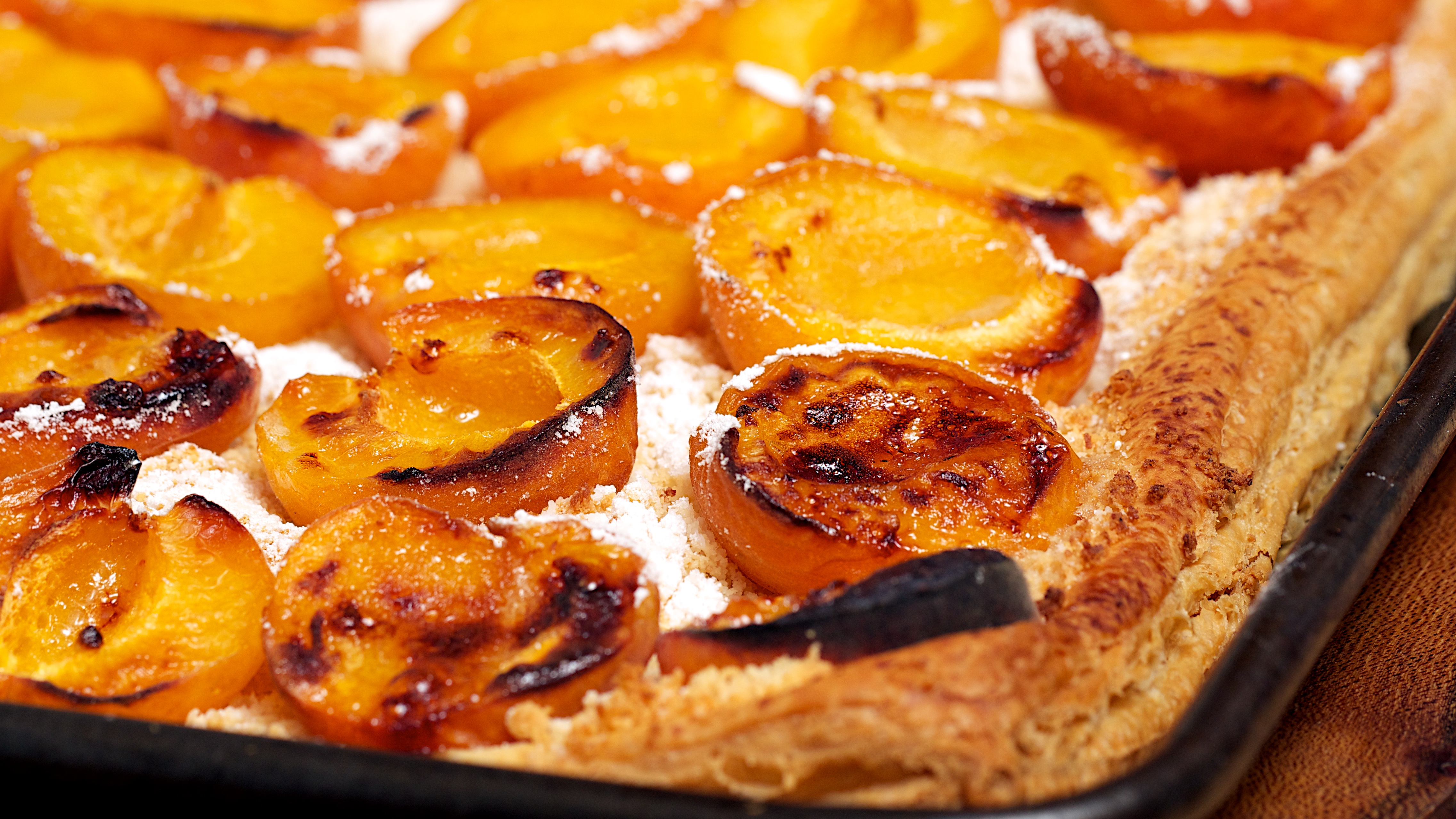
We had an abundance of perfectly ripe apricots a while back and whipped this up to celebrate. Baking fruit on top of puff pastry, with some ground almonds and a dusting of sugar is dead easy plus it brings out all the flavours and enhances the deliciousness.

Wine Suggestion: we think that these flavours go well with southern French botrytised wines, especially from Semillon and Sauvignon. Don’t go all out with a top named Sauternes Chateau as  these will be too concentrated and rich, rather find smaller Chateau, second wines or little appellations like Cérons. Look for a purity of fruit and balance of freshness, but a lightness of being and not too rich.

Apricot Tart – to serve 8

  • one pack of ready-rolled puff pastry
  • 50g ground almonds
  • 900g ripe apricots, halved and stoned
  • 2 tbsp icing sugar
  • maple syrup and cream to serve

Preheat oven to 220°C/Gas 7/Fan 200°C.

Unroll the pastry onto a slightly damp baking tray and sprinkle over the almonds. Arrange the apricots on top, tightly packed and right up to the edges of the pastry.

Dust with the icing sugar and bake for 20-25 minutes or until the sugar has started to caramelise.

Serve hot or warm with a drizzle of maple syrup and some cream if you like.

(Original recipe from BBC Good Food)

Read Full Post »

We have just moved into yet another new house but this time it is ‘our’ new house as opposed to another rental. The result has been lots of painters, plumbers, builders etc. and very little cooking. We’ve now got the most important room in the house (the kitchen!) sorted and are very glad to be eating proper food again.

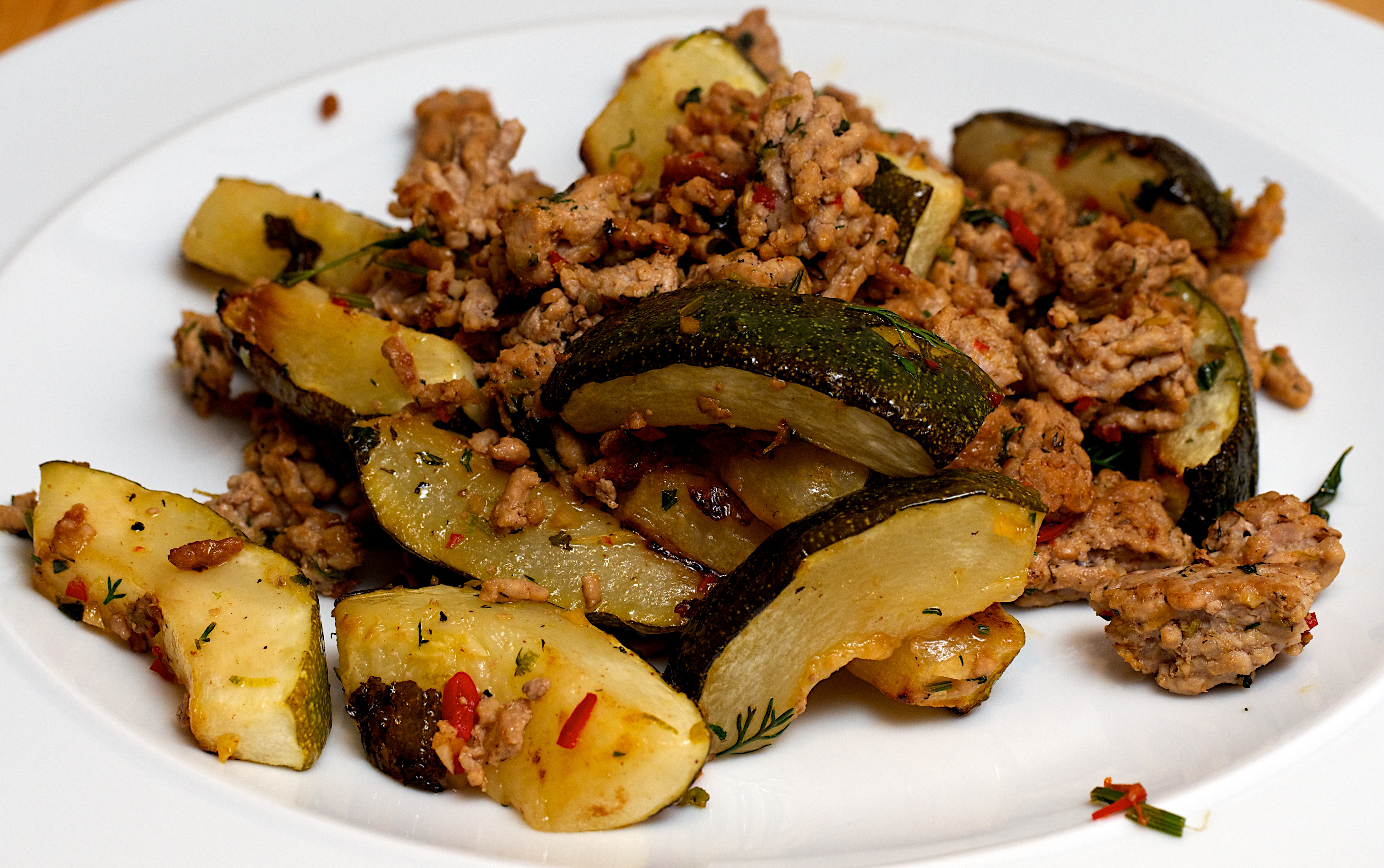
This was the last thing we cooked in our flat before packing up the saucepans. We had a generous donation of an enormous courgette (not quite a marrow but a marrow would work just as well in the recipe) from a friend of Julie’s Mum. Very tasty and there and should still be a few enormous courgettes kicking about in allotments and veg patches for you to get your hands on.

Wine Suggestion: Look out for some of the better cru Beaujolais at a good wine shop. They’re completely underrated and overlooked (due to the scourge of “Beaujolais Nouveau”) and quite delicious. We drank a Regnie from Domaine Rochette which has that delightful balance of light and easy fruit as well as a seriousness, structure and verve. Yum.

Baked Courgette & Minced Pork – to serve 2

  • 750g large courgettes
  • 2 cloves garlic, crushed
  • a handful of mint leaves
  • olive oil
  • juice of half a lemon

FOR THE PORK: 

  • a small handful of dill, roughly chopped
  • a small bunch of parsley, roughly chopped
  • 2 cloves of garlic, chopped
  • 2 small, hot, red chillies, finely chopped
  • 450g minced pork
  • grated zest and juice of a lime

Preheat the oven to 180°C/Gas 4.

Halve the courgettes and scoop out the seedy bits. Cut into thick chunks and toss in a roasting tin with the crushed garlic, mint, plenty of olive oil and the lemon juice. Bake for  about 45 minutes or until tender.

Heat a couple of tablespoons of olive oil in a shallow pan until smoking hot, then add the meat. Leave to sear on one side without stirring, turning or breaking up. When the bottom has crisped up, turn over and brown the other side. Add the dill, parsley, garlic and chilli and let the mixture cook over a high heat until everything is hot and golden. Season generously with salt and pepper, then stir in the lime juice and zest.

Serve with the baked courgette.

(Original recipe from Nigel Slater’s Tender: Volume 1, Fourth Estate, 2009.)

Read Full Post »

We made this with some leftover chorizo that had been cluttering the fridge for a while. It works really well before dinner with some toasted bread but equally as part of a Tapas selection, or starter with olives etc.  Multiply the quantities depending on how much sausage you have. You can also make individual portions in smaller jars. Leave this in the fridge for at least a week before serving and it will mellow and subtly take on the flavours of the herbs and oil, so make sure the olive oil is decent and herbs are fresh.

Herb-marinated Sausage 

  • 1 cured sausage e.g. chorizo
  • 1 garlic clove
  • 10 juniper berries
  • 2 thyme sprigs
  • 1 bay leaf
  • a small sprig of fresh rosemary
  • 300-600ml olive oil
  • toasted bread, to serve

Slice the sausage and remove the skin. Put the sausage slices in a clean jar with the garlic, juniper berries, thyme, bay leaf and rosemary. Add enough olive oil to cover, close the lid and leave in the fridge for at least a week.

Serve with toasted bread.

(Original recipe from Stéphane Reynaud’s Pork & Sons, Phaidon, 2005.)

Read Full Post »

This dish was divine.  The moist chicken pieces perfectly match the pilaf with the whole combination epitomising Turkish cuisine – sitting comfortably on the European / Middle East divide. Try to find the sumac as it gives the dish an authentic sharp lemony tang.

Wine Suggestion: Look for a good quality Albariño or Godello from Spain that has seen a small amount of oak for structure. These will provide a good balance of citrus/zestiness, medium body and tangy minerality to complement the chicken and sumac.

Sautéed Chicken with Tomato Pilfaf – to serve 4

  • 4 chicken fillets, breast or thigh, cut into cubes
  • 1 tbsp sunflower oil
  • 35g butter
  • 2 tbsp chopped parsley
  • lemon quarters or sumac to garnish

FOR THE TOMATO PILAF 

  • 300g basmati rice
  • 500g ripe tomatoes, peeled
  • 1 chicken stock cube
  • 2 tsp sugar
  • 75g butter, cut into small cubes

Make the pilaf first. Pour cold water over the rice and leave to soak in a bowl for a few minutes, then strain and rinse under cold water.

Quarter the tomatoes, remove the core, then liquefy in a food processor. Add enough water to the tomato juice to make it up to 650ml. Pour into a pan, add the crumbled stock cube, the sugar and some salt and pepper and bring to the boil.

Add the rice and stir well. Simmer, covered, over a low heat, for 18-20 minutes or until the rice is tender and the liquid has been absorbed. Don’t be tempted to stir it during this time but you can add a bit more water if it looks dry. Fold in the butter. Taste and adjust the seasoning.

While the rice is cooking, heat the oil and butter in a frying pan and sauté the chicken for 6-8 minutes or until lightly browned, turning once. Sprinkle the chicken with the parsley and serve with lemon quarters or sprinkle with sumac, along with the rice.

(Original recipe from Claudia Roden’s Arabesque, Penguin 2005.)

Read Full Post »

This is such a clever idea, especially if you don’t have one of those fancy things for cooking fish on the barbecue. The fish doesn’t stick to the grill but you still get all the smoky barbecue flavours plus a  delicious spike of citrus. The idea has us thinking of other combinations and we loved the caramelisation that happened to the oranges which gives the dish an extra dimension.

Wine Suggestion: This cries out for a Spanish white, like Albarino or Godello, where the best examples balance a depth of texture with a lightness of being. We drank a Dominio de Tares Godello from Bierzo which was amazing on its own and then with the fish. Perfectly matched.

Barbecue Sea Bass & Citrus Salad – serves 4

  • 2-3 large oranges
  • zest of 1 lemon (keep the juice for the salad)
  • 1 tbsp olive oil
  • 4 x 300g whole sea bass, scaled, gutted and slashed down each side (or 8 fillets)

FOR THE SALAD: 

  • 2 oranges, segmented
  • juice of 1 lemon
  • 4 tbsp olive oil
  • 2 bags watercress
  • handful small capers
  • handful pitted green olives, roughly chopped

Finely grate the zest of the 1 of the oranges and add to the lemon zest. Mix with the olive oil, then drizzle over the fish and season.

Cut the rest of the oranges into slices, about ½ cm thick. Arrange the orange slices over the barbecue grill, close together so you can lay the fish on top. Barbecue the fish for 5-8 minutes on each side, or until the flesh flakes easily.

To make the salad: Put the orange segments into a large bowl, with the squeezed juice from the rest of the oranges and the lemon juice. Season and stir in the olive oil. Toss the watercress in the orange dressing with the capers and the olives.

Serve the fish with the salad.

(Original recipe from BBC Good Food)

Read Full Post »

For the past few weeks we have been walking past a basket of perfect looking gooseberries at our grocer and saying we need to make something with these. A version of the classic Eton Mess the tart gooseberries balance the sweetness to make this light and sunny, just like the weather.

Gooseberry & Elderflower Mess – serves 6

  • 300g gooseberries, tops pinched off
  • 50g golden caster sugar, plus 2 tbsp
  • 2 tbsp elderflower cordial
  • 600ml whipping cream
  • about 100g of meringue nests, roughly crumbled

Put the gooseberries, 2 tbsp water, and 25g of sugar in a small saucepan. Cook gently until the gooseberries start to soften and break down. Taste and add as much of the remaining 25g as you need, then cool.

Put the 2tbsp sugar, the cordial and the cream into a large bowl and whisk until soft peaks form, then cover and chill.

Just before serving, roughly mix the gooseberry mixture, the cream and the meringues together and spoon into serving glasses or bowls.

(Original recipe from BBC Good Food)

Read Full Post »

This salad is a twist on the classic  tomatoes with basil. The creamy dressing works surprisingly well and gives the salad a cool and luxurious feel.

Tomato Salad with a Basil Cream Dressing – serves 2

  • 1½ tbsp white wine vinegar
  • 2 tbsp warm water
  • 75ml whipping cream
  • 50ml extra virgin olive oil, plus some extra
  • pinch of sugar
  • 7-8 basil leaves, torn or chopped
  • 4 ripe, medium tomatoes, cored and sliced

In a mixing bowl, whisk the wine vinegar, water and some salt and pepper.

Whisk in the cream, olive oil and sugar ,then stir in the basil.

Arrange the tomatoes on a large plate, very lightly season and spoon over the dressing. Serve with an extra drizzle of olive oil.

(Original recipe from Simon Hopkinson’s The Vegetarian Option, Quadrille 2009.)

Read Full Post »

We’ve eaten this as a side salad, and on it’s own with crusty bread –  a summery meal in its own right! As always the quality of the tomatoes will really make this dish sing.

You should assemble most of this dish a bit in advance to allow the flavours to develop, then add the herbs and feta cheese just before serving.

Wine Suggestion: Try to find a youthful Italian red that echo’s the sunshine of this dish. We drank a Dolcetto d’Alba from Pira Luigi that had a joy and vitality, but reds from the Marche, Abruzzo and other central Italian regions should be a delight too. If you’re pushing the boat out go for a Rosso di Montalcino.

Summer Chickpea Salad – to serve 4

  • 1 small red onion, finely sliced
  • 1-2 small red chillies, deseeded and finely sliced
  • 2 handfuls of ripe tomatoes, roughly chopped
  • 2 lemons
  • extra virgin olive oil
  • 1 x 410g tin of chickpeas, drained
  • a handful of fresh mint, chopped
  • a handful of  basil, finely torn
  • 200g feta cheese

Mix the tomatoes (including any juice) with the onion and chillies in a large bowl. Dress with the juice of 1½ lemons and lots of good olive oil. Season to taste.

Heat the chickpeas in a pan, then add almost all of them to the bowl. Mush up the remaining chickpeas before adding them as well. Allow to marinate for a while at room temperature.

Add the herbs and check the seasoning just before serving – you can add a bit more lemon juice if necessary. Put the salad in a serving dish and crumble the feta cheese over the top.

(Original recipe from Jamie’s Dinners by Jamie Oliver, Penguin Books, 2004.)

Read Full Post »

This is not the most attractive dish in the world and we definitely didn’t do the best job of cutting the aubergines. It nonetheless tasted delicious and we’re sure to do it again.

Wine Suggestion: We’d recommend finding a juicy red from Spain. Look out for well made wines from the smaller and lesser known areas as these offer great value; this dish doesn’t need a refined and suave wine, some rusticity is good. We tried  a juicy and smooth Tempranillo called Biberius from the Ribera del Duero and thoroughly enjoyed it!

‘Swooning Imam’ Stuffed Aubergines – serves 2

  • 2 large aubergines
  • 4-6 garlic cloves, finely sliced
  • 2 red onions, finely sliced
  • 3-4 tomatoes, finely sliced
  • 1 tsp paprika
  • 1 tsp brown sugar
  • 1 tbsp lemon juice
  • about 5 tbsp extra virgin olive oil
  • fresh mint, shredded

Leave the stem on the aubergines, score the skin and peel it away in thick stripes. Cut down the length of each one (without cutting completely in half) and scoop out the seedy bits. Chop these and set aside. Sprinkle the cavities with salt, and leave to drain on kitchen paper for half an hour, then wipe dry.

Heat a good splash of oil in a frying pan. Add the aubergines and fry for about 7 minutes, until lightly browned and softened. Remove from the pan and leave to drain.

Add some more oil to the pan and fry the onions, garlic and with the reserved seedy bits of the aubergine. After about 5 minutes, add the tomatoes, paprika, sugar and lemon juice, stir well and season.

Put the aubergines into a deep frying pan with a lid. Stuff the cavities with the onion mixture and drizzle the rest over the top. Add the rest of the olive oil and 100ml cold water, then put on the heat. Bring to the boil, then turn the heat to low, cover and leave to cook for about 45 minutes or until completely tender.

Serve warm or at room temperature with the mint sprinkled over the top and serve with crusty bread.

(Original recipe from Veggiestan: a vegetable lover’s tour of the middle east by Sally Butcher (Pavillon) and published in The Guardian.)

Read Full Post »

This is a really simple fish dish that was a delight to eat; it tastes delicious and is also very healthy. Trout or snapper would also work well if you prefer. The skin was left behind in the tinfoil when we went to serve it which was fine by us (it’s crispy skin or no skin as far as we’re concerned).

Wine Suggestion: this dish begs for a charming Riesling from Germany – look out for ones that are a drier style but without the weight of a Grosses Gewachs (great growth). If you can find one of the estate QbA’s from Helmut Dönnhoff in the Nähe or Johannes Leitz from the Rhinegau you can’t go wrong.

Thai Baked Fish – to serve 4

  • 4 seabass fillets, about 200g each
  • 1 stalk lemongrass, finely chopped
  • small knob ginger, peeled and finely chopped
  • 1 red chilli, seeded and finely chopped
  • 1 garlic clove, finely chopped
  • 1 tbsp fish sauce
  • juice of 2 limes
  • 1 tsp golden caster sugar
  • handful coriander, roughly chopped

Heat the oven to 200C/fan 180C/gas 6.

Take 2 large sheets of tinfoil. Place one fish fillet, skin-side down, in the centre of each sheet.

Make a sauce using the remaining ingredients. Spoon half the sauce of the fillets on the tinfoil and set the rest aside.

Sandwich the other 2 fish fillets on top, skin-side up, then tightly seal the foil to create 2 pouches. Bake in the oven for 12-15 minutes (depending how big your fish are). Serve with the rest of the sauce.

(Original recipe by Gizzi Erskine for BBC Good Food Magazine, June 2005).)

Read Full Post »

This is one of our favourite pasta sauces. Bucatini (long spaghetti-like tubes) is traditionally used but penne works well too and tends to be easier to find at the shops. Makes a great Friday night supper with a matching glass of something equally red and Italian.

The recipe below makes 6 little portions that you might serve as a first course. You will need to adjust accordingly if you’re serving it as a main meal – we half the quantities below to serve the two of us.

Wine Suggestion: An Italian Sangiovese is the obvious match which complements the acidity in this tomato-based sauce. We drank a Rocca delle Macie Chianti; an excellent match.

Penne all’ Amatriciana – serves 6 

  • 250g pancetta, cut into matchsticks
  • 2 tbsp olive oil
  • 2 dried chillies, crumbled
  • 2 red onions, peeled and finely chopped
  • 150ml red wine
  • 2 x 400g tins peeled plum tomatoes, drained if very liquid (look for Italian brands)
  • 2 tbsp rosemary
  • 250g penne
  • 100g Parmesan, grated
  • A handful of fresh oregano (don’t panic if you don’t have this)

Put the pancetta, oil and chillies into a large saucepan, heat and fry until the pancetta becomes crisp.

Add the onions and rosemary and keep frying until they have also turned light brown and crisp.

Add the red wine and let it reduce before adding the tomatoes, then season with the oregano and some black pepper.

Bring to the boil, lower the heat and simmer for at least 45 minutes, until thick and almost dry. Check for seasoning.

Cook the penne in a generous amount of boiling salted water, then drain. Add to the sauce, mix and serve with Parmesan.

(Original recipe from The River Café Cookbook by Ruth Rogers and Rose Gray, Ebury Press, 1995.)

Read Full Post »

We recently acquired a recipe book called Prashad: Indian Vegetarian Cooking (thanks Mum). You might remember Prashad as Gordon Ramsay’s best restaurant runner-up on TV a couple of years ago. This is the first recipe we tried from the book and is guaranteed to make your veggie friends happy at your next summer barbecue. Vegetarians often get a bum deal at barbecues, palmed off with a few peppers and onions skewered on a stick. These should right all your past wrong-doings.

Paneer is an Indian unsalted white cheese with a crumbly texture and mild taste that  goes really well with strong flavours and marinades. You can buy it in supermarkets as well as specialist Asian shops.

These are very easy to make but you need to marinade the night before!

Drinks Suggestion: We enjoyed this with both a lager and a citrus-laden Blonde Ale; fresh and summery.

Paneer Tikka – makes 6 skewers 

  • 2 x 250 blocks of paneer cheese
  • 1 medium red pepper,cut into 6 chunky pieces
  • 1 medium green pepper, cut into 6 chunky pieces
  • 1 medium onion, cut into 6 wedges
  • 2 lemons, quartered to serve

MARINADE: 

  • 2-3 green chillies, seeds left in
  • 4-8 garlic cloves
  • 2 handfuls of fresh coriander, chopped fine
  • 2 tsp ground coriander
  • 2 tsp garam masala 
  • 1½ tsp salt
  • 1 tsp trumeric
  • 2 tbsp plain live yogurt
  • 100ml sunflower oil

Finely chop the chillies and garlic then tip into a large bowl and add the other marinade ingredients.

Cut each block of cheese into 9 equal-sized cubes and add to the marinade along with the pepper and onion pieces. Stir to coat, then cover and leave in the fridge overnight.

Thread 6 skewers with 3 pieces of cheese seperated by pieces of pepper and onion. Cook the skewers over a hot barbecue for 20 minutes, until slightly charred, turning every 4-5 minutes.

Serve with the lemon quarters, a green salad and some cucumber and yogurt dip.

(Original recipe from Kaushy Patel’s Prashad: Indian Vegetarian Cooking, Saltyard Books 2012.)

Read Full Post »

« Newer Posts - Older Posts »