Melt the butter in a pan and cook the onion and lardons for about 5 minutes over a low heat until the onions have started to soften. Stir in the flour and cook for a minute or two, then add the stock and bring to the boil.
Turn the heat down and add the peas. Cover with a lid and cook for 15-20 minutes. When ready the peas should be slightly soupy.
Season with the sugar, salt and lots of black pepper.
(Original recipe from Rick Stein’s Secret France, BBC Books, 2019.)
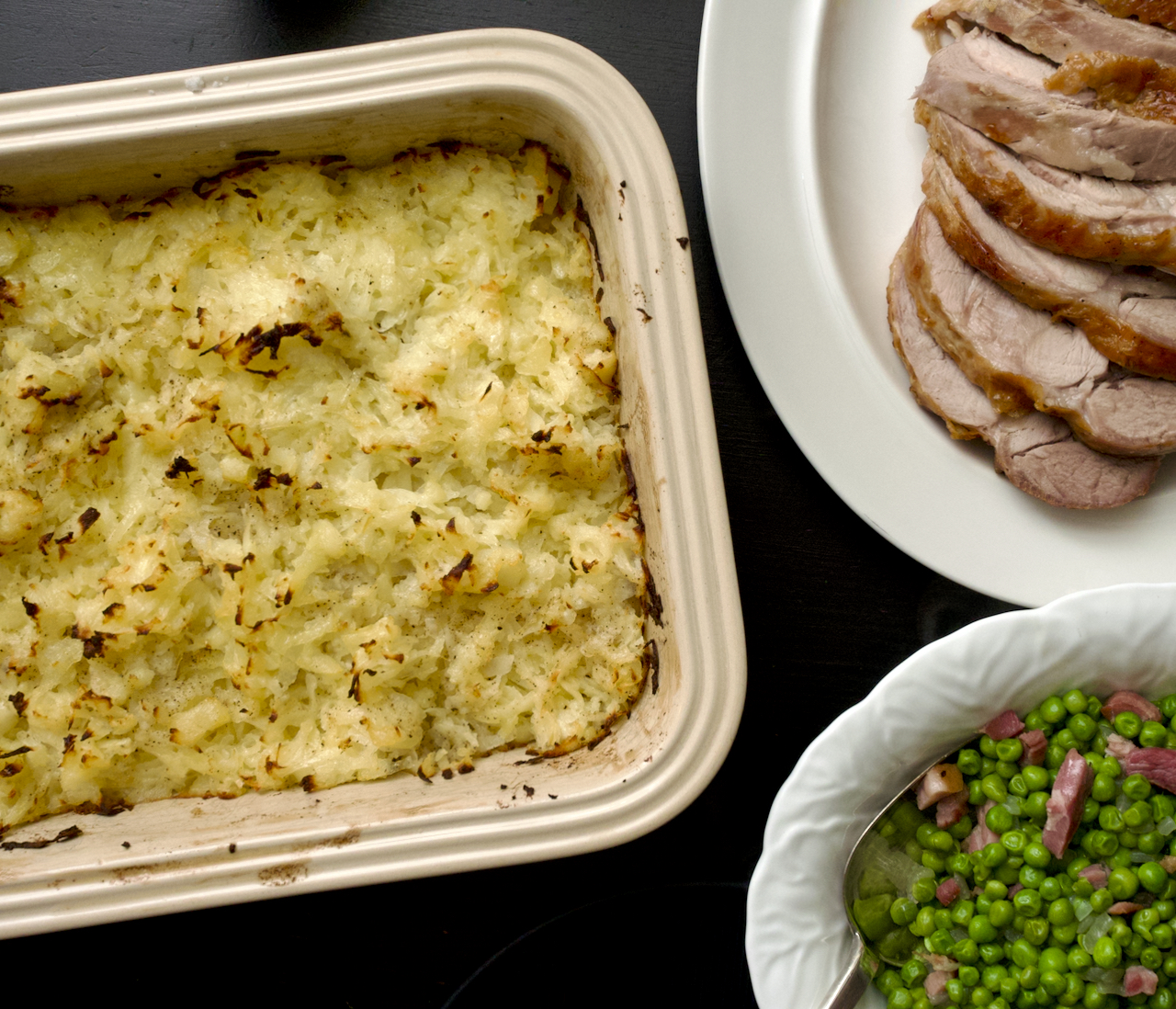
Rösti Potato Gratin – serves 6
900g waxy potatoes
45g butter, melted, plus extra to grease the dish
150ml single cream
Heat the oven to 220C/200C fan.
Scrub the potatoes, then put them into a pan and cover with cold water and add some salt. Cover with a lid, bring to the boil, and cook until just tender – they should be just slightly firm in the centre. Set aside to cool completely.
Butter a 1 litre shallow ovenproof dish.
Peel the potatoes, then use a coarse grater to grate into the buttered dish, sesaon each layer with salt and black pepper. Don’t be tempted to press then down so they remain light and fluffy.
Pour over the melted butter and cream and bake for 20-25 minutes or until crispy and golden brown.
(Original recipe from Mary Berry Cooks Up a Feast with Lucy Young, DK: Penguin Radom House, 2019.)
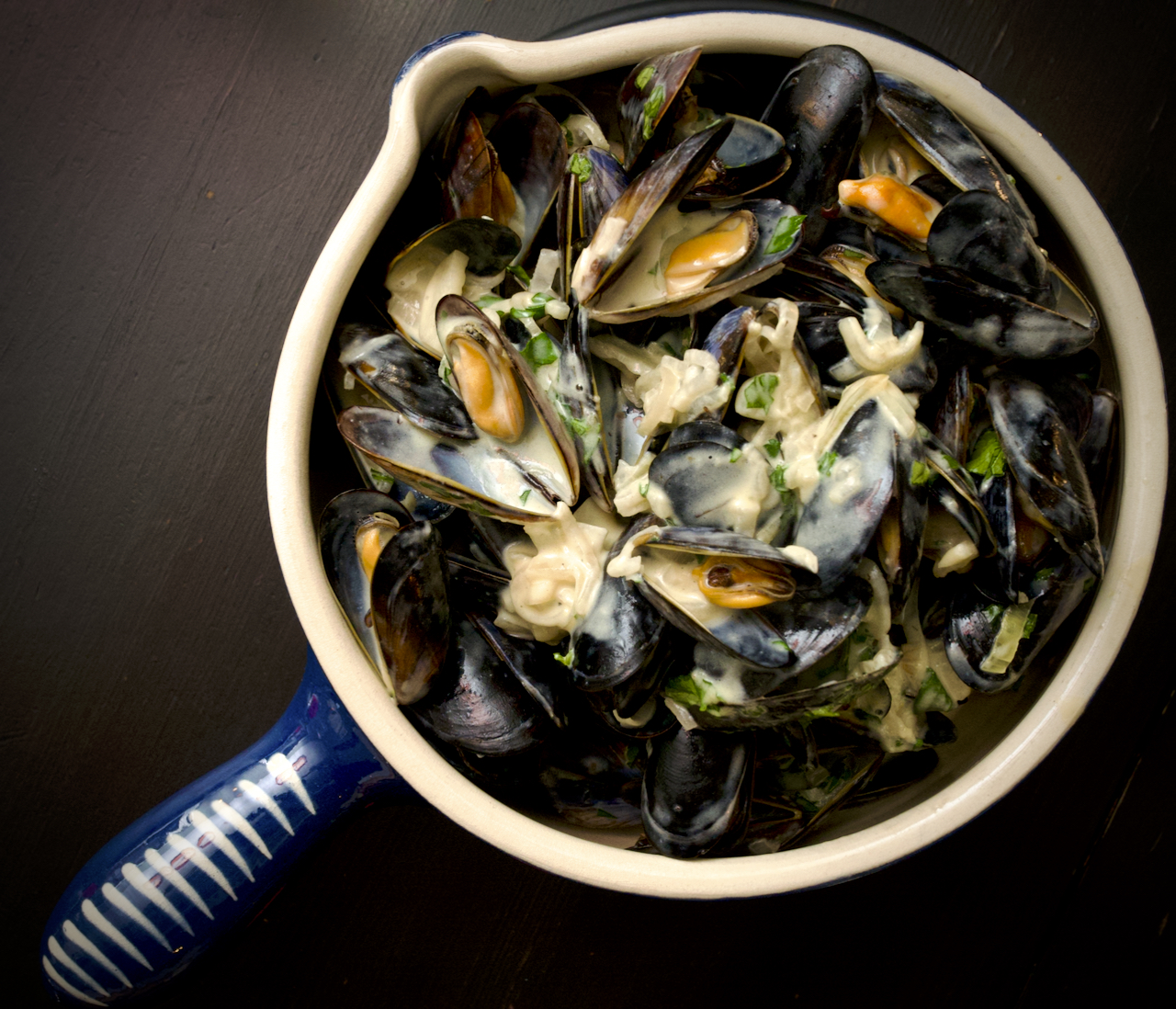
Inspired by a recent trip to Paris by Jules where she had to take shelter in a random place to get out of the rain and they served a delicious moules à la crème. A little bit more effort than Moules Marinière but very much worth it.
Wine Suggestion: Overlooked within Muscadet are certain vineyards and wines that stand out as having something extraordinary to them. Les Clos du Montys Muscadet by Jérémie Huchet is grown on a very special spot with unique soils that give this wine an extra fleshiness and body compared to other Muscadet which enables the wine to stand up to the extra level of richness of the Crème.
Moules à la crème – serves 2or 4 as a starter
1kg mussels (or more if you like), cleaned and debearded (chuck any that won’t close when you give them a sharp tap)
20g butter
3 shallots, thinly sliced
4 cloves of garlic, thinly sliced
2 bay leaves and a few sprigs of thyme tied together to make a bouquet garni
300ml white wine
200ml crème fraîche
2 egg yolks
parsley, finely chopped
Warm the buttter in a large saucepan over a gentle heat. Add the shallot and garlic and cook gently for 5 minutes. Add the white wine, bouquet garni and some black pepper. Turn the heat up and simmer for 10 minutes.
Add the mussels to the pan, stir and clamp on a tight fitting lid. Cook for 2 minutes, then stir, replace the lid and cook for another 2 minutes. The mussels are ready when they have all opened – chuck any that stay closed.
Remove the pan from the heat and scoop out the mussels with a slotted spoon into a bowl.
Return the pan to the heat and boil the stock for 5 minutes. Put a fine sieve over a clean bowl and strain the stock into the bowl. Rinse the saucepan, then pour in the strained stock. Heat to a gentle simmer.
Whisk the crème fraîche and egg yolks together in a bowl. Whisk in a couple of ladles of the stock and then pour into the simmer stock, stirring continuously.
Keep gently warming the sauce and stirring until the sauce thickens slightly, then return the mussels to the pan and warm through briefly. Add the parsley and serve in warm bowls with lots of crusty bread.
(Original recipe from Lickedspoon with Debora Robertson, Substack, 2 Feb 2025.)
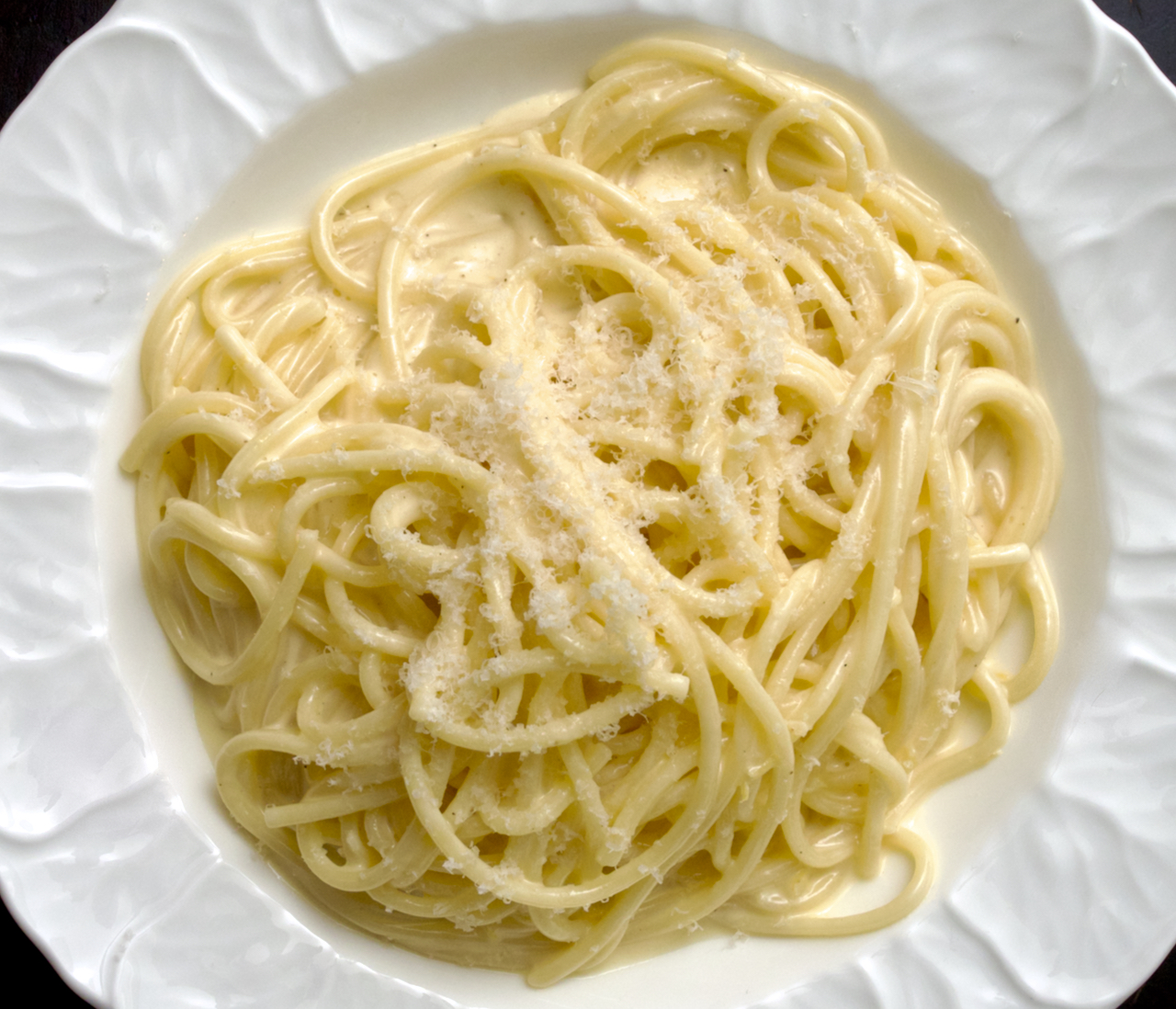
This is very rich and delicious so you can serve it in slightly smaller portions. The cooking time is a bit longer than our usual lemon spaghetti but it’s worth it for the flavour and silky texture. Perfect for an indulgent lunch at the weekend.
Wine Suggestion: An oaky white like the Dominio de Tares Old Vine Godello which is fermented with wild yeasts and aged in oak barrels. This makes it more complex, savoury and gtreat with rich, velvety foods like this.
Spaghetti al Limone – serves 6
225ml cream
2 unwaxed lemons (zest of 2 and juice of 1)
100g butter
500g spaghetti
150g grated Parmesan cheese, plus extra to serve
Put the cream and the lemon zest into a large heavy-based saucepan and bring to the boil. Lower the heat and simmer for 2 minutes.
Now start adding the butter, about 1 tbsp at a time while stirring continuously. Wait for 30-45 seconds before adding the next tbsp of butter – it should be completely melted before you add any more. Keep going until you have used all the butter and you have a rich sauce. Set aside.
Cook the spaghetti in lots of salty water until al dente. Scoop out a mugful of the pasta water before draining.
Add half the pasta water to the cream sauce and bring to a simmer. Season generously with salt and pepper.
Turn the heat back down to low, then add the cooked spaghetti and toss to coat. Add the Parmesan, 1 tbsp at a time, as you did with the butter and waiting 30-45 seconds between each addition. Stir continuously and add another splash of pasta water if it starts to get stiff. Keep going until all the Parmesan has been added, then pour in the lemon juice and toss once more.
Serve in warm pasta bowls and top with a little extra Parmesan.
(Original recipe from Avoca at Home, Penguin Random House, 2022.)
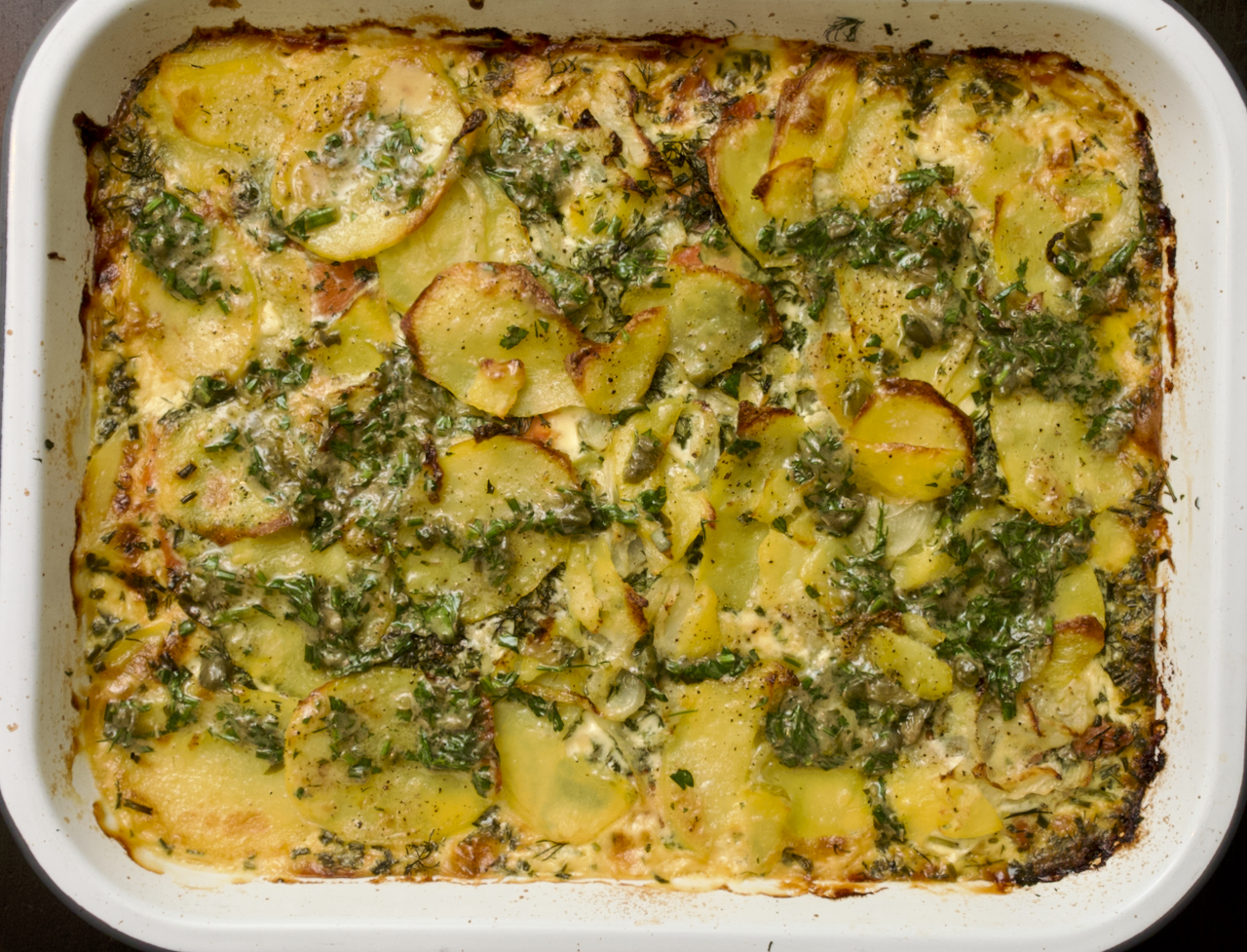
Such a lovely recipe, and you can of course use smoked salmon. We like smoked trout from Goatsbridge which is a local supplier. Recipe inspiration from the new Ottolenghi book – Comfort. You must have a green salad and a glass of white wine to serve. If you have a mandolin it will cut the potatoes and fennel just right.
Wine Suggestion: Weserved an oddity/one-off from Chateau Hureau from Saumur in the Loire. They grew a low quantity of Chenin Blanc grapes in 2022 due to frost so decided to make a Blanc de Noirs from Cabernet Franc for a bit of fun. Only available at cellar door it’s both crisp and fresh, but significantly has bags of texture which this dish needs. Look for whites with a touch of skin contact, or aged on lees as a substitute.
Potato, fennel & smoked trout bake – serves 4
200ml milk
425ml double cream
2 anchovies, finely chopped
3 cloves of garlic, lightly smashed with skin on
1 lemon, skin finely shaved into strips
2 tsp fennel seeds, finely ground
850g Yukon gold or red potatoes, peeled and sliced into ½ cm thick slices
1-2 large fennel bulbs, thinly sliced
4 egg yolks
10g dill fronds, roughly chopped
20g chives, finely chopped
20g parsley leaves, finely chopped
1½ tbsp unsalted butter, softened
200g smoked trout (or smoked salmon) slices, roughly torn
for the lemon butter sauce:
2 tbsp lemon juice
2 tsp capers, roughly chopped
40g unsalted butter, fridge cold and roughly chopped
Heat the oven to 170C fan.
Put the milk, cream, anchovies, garlic, lemon strips and ground fennel into a small saucepan. Place over a low heat and warm for 10 minutes, making sure it never comes to the boil. Give it a stir now and then and press on the solids to get plenty of flavour out of them. Remove from the heat.
Put the potato and fennel slices into a saucepan and cover with cold, salted water. Bring to the boil and cook for 6-7 minutes or until just tender. Drain and set aside.
Whisk the egg yolks with ¾ tsp of salt and a good grind of pepper in a large bowl. Strain the infused milk into the eggs, pressing on the solids against the sieve. Whisk to combine.
Combine all the herbs in bowl. Measure out 2 tbsp and reserve for the butter sauce.
Grease an ovenproof dish with ½ tbsp of the butter. Spoon a third of the potato and fennel over the base and grind over some pepper. Sprinkle over half the herbs and lay half the smoked trout over the top. Repeat with half the remaining potatoes and fennel, season with pepper, then add all the remanining trout and the rest of the herbs. Arrange a final layer of potato and fennel on top and carefully pour over the egg mixture. Grind over some more pepper and dot over the remaining butter. Bake for 45 minutes or until set and just golden. Remove from the oven and rest for 10 minutes.
Meanwhile make the lemon butter sauce. Put the lemon juice into a small saucepan on a medium-high heat and bring to a bubble. Allow to bubble for 1 minute, then add the capers and butter, a few pieces at a time. Whisk until smooth and creamy, then remove from the heat and stir in the reserved herbs and some more pepper. Spoon over the dish and serve warm with a green salad.
(Original recipe from Ottolenghi Comfort by Yotam Ottolenghi, Helen Goh, Verena Lochmuller & Tara Wigley, Ebury Press, 2024.)
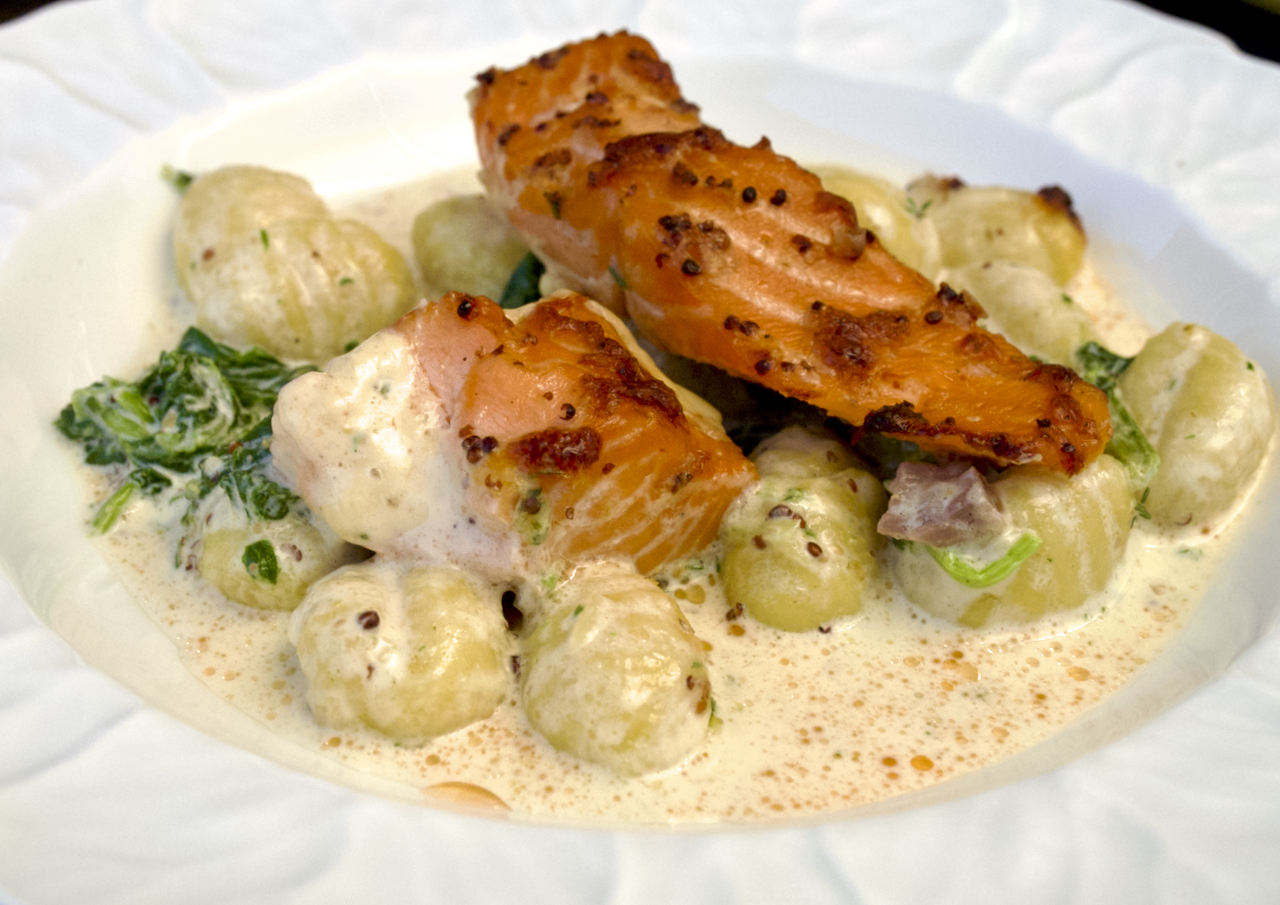
This is a dish we cook when we get home late and need something quick and tasty. You can easily pick up the ingredients in a supermarket on the way home.
Wine Suggestion: the more we taste them, the more we like how versatile Verdicchio is, even the entry level Villa Bianchi from Umani Ronchi in the Marche. There’s just the right level of texture and viscosity for the creamy richness, and zip, zing and minerality for the fish.
Hot-smoked salmon, gnocchi and spinach bake – serve 4
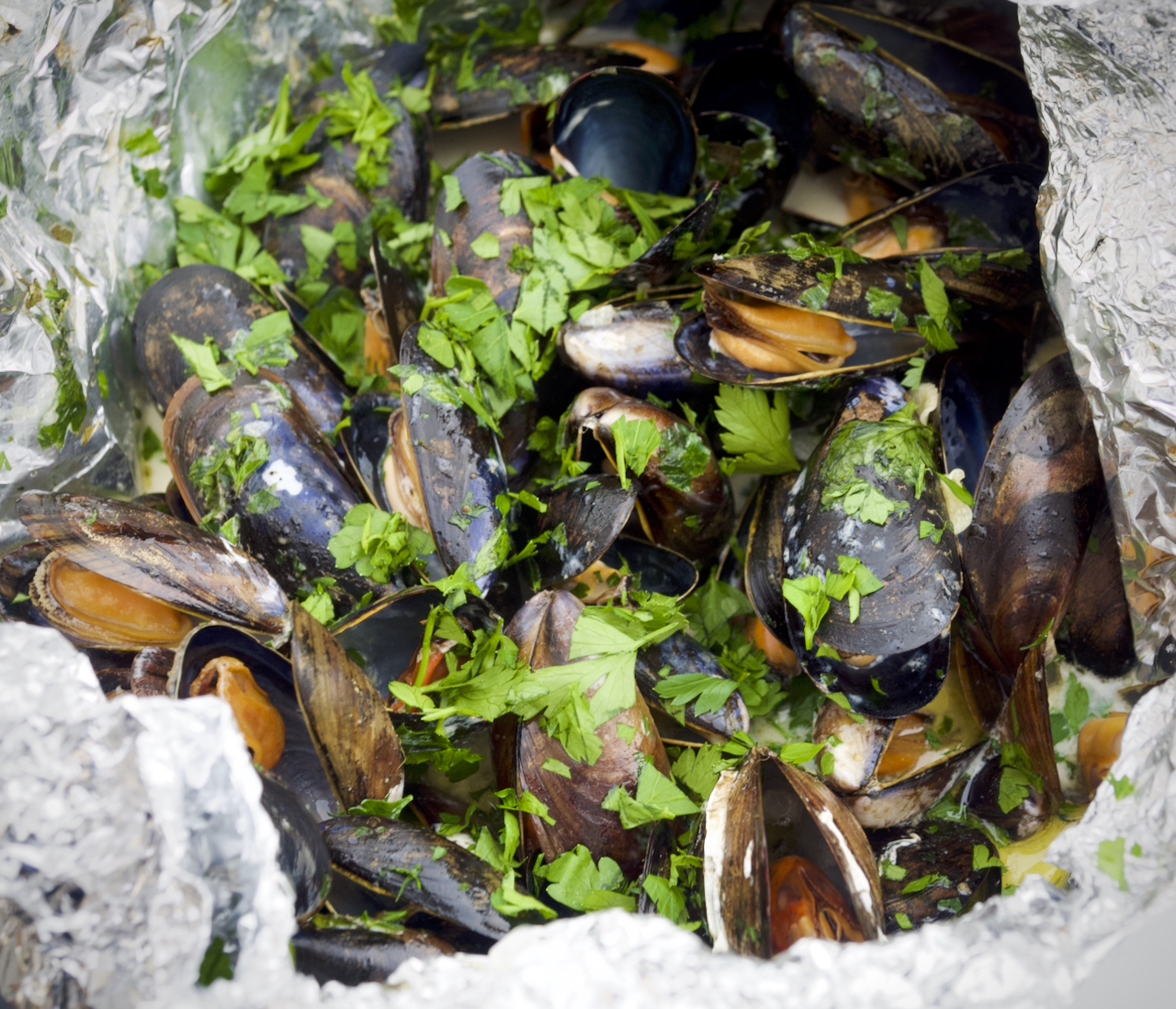
We’ll cook anything on the barbecue and these mussels come highly recommended! Serve in the foil package with plenty of crusty bread.
Wine Suggestion: Muscadet all the way, but given you get a little more with the smokey barbecue flavours coming through we’d suggest one with a bit more oomph like Jérémy Huchet’s Clos les Montys which is grown on a very particular blue-green bedrock giving the wine depth and substance.
Mussels on the barbecue – serves 2
50g softened butter
2 cloves of garlic, finely sliced
2 shallots, finely sliced
1 kg mussels
1 small pack parsley, roughly chopped
125ml white wine
100ml double cream
crusty bread, to serve
Mix the butter and garlic with a big pinch of salt.
Heat the barbecue until the coals are white. Lay a sheet of tin foil, about 60cm long on the work surface, then put another sheet the same size on to, then add a third sheet about 30cm long acorss the middle to form a cross shape. Spread the shallots in the middle of the foil, pile the mussels on top, dot the garlic butter all over, then scatter over half the parsley. Season, then fold the foil in at the sides to create a bowl.
Pour the wine into the foil bowl and then seal it securely by scrunching the foil together at the top. If you need an extra sheet of foil to encase the whole parcel at this stage then do so.
Carefully place the parcel on the barbecue coals and cook for 10 minutes. Carefully open the parcel and check the mussels have opened. Pour in the cream, then cover the barbecue with a lid to cook for a few more minutes.
Sprinkle with the remaining parsley and serve with crusty bread.
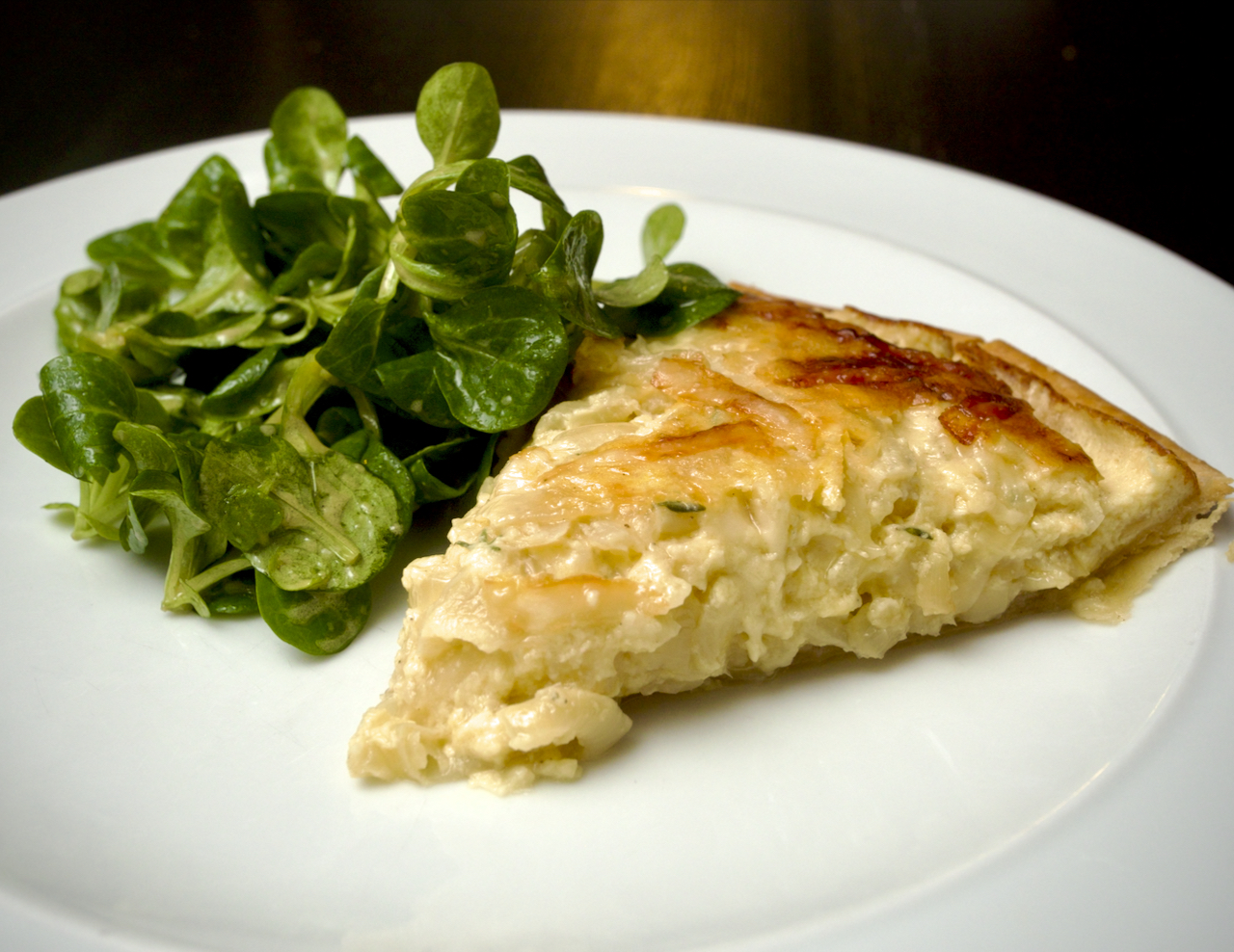
Our new year’s resolution is to make more tarts and conquer our pastry fear which is largely due to lack of practice. We’ve started with this tart filled with melting onions and cheese. Serve with a green salad.
Wine Suggestion: we paired this with a wine that opitimises a balance between freshness, richness, minerailty and fruit: Soalheiro’s Alvarinho. Fresh and elegant with tropical fruit flavours cut with a minerally saltiness balances the cheese. Plus the sweetness to the slowly cooked onions complements the richly layered fruits in the wine.
Cheese & Onion Tart – serves 6
a sheet of short-crust pastry (we were so enthusiastic that we made our own but really no need)
1 egg, beaten
FOR THE FILLING:
5 large brown onions
50g butter
a small glass of white wine
a few sprigs of thyme, leaves picked
120g cheese, the original recipe suggests Comté (we used a mix of Comté, Cheddar & Gruyère), coarsely grated
150ml full-cream milk
3 eggs
Thinly slice the onions and add to a pan with the butter, seasoning well with salt. Cover with a lid and cook slowly for 30 minutes, stirring regularly, until sweet and very tender. It’s find to let them caramelise a little but don’t let them burn. If there is a lot of liquid in the pan, remove the lid and allow this to bubble off. Add the wine, allow to cook off, then turn the heat off and allow to cool.
Lightly flour a cold surface and roll the pastry out to 3mm thick. Lift into a 25cm loose-bottom tart tin and use a little piece of dough to press the pastry into the tin and leave an overhang around the sides. Prick the base with a fork and chill in the freezer for 20 minutes.
Preheat the oven to 170C fan.
Line the pastry with baking parchment and fill with baking beans or rice. Put the tin onto a baking tray and bake for 15-20 minutes or until the pastry is firm. Remove the beans and paper, brush with egg and return to the oven for another 10 minutes, until golden. Trim off any excess pastry with a knife.
Put 100g of the cheese into a bowl with the milk, cream, eggs and thyme and mix together. Season well, then add the onions and mix again. Pour most of the mixture into the pastry case but dont fill all the way to the top. Make sure the onion is evenly spread, then place into the oven. Carefully pour in the remaining mixture, making sure it doesnt overflow. Sprinkle with the reserved cheese and bake for 30 minutes or until the top is caramelised and the middle has set. Leave to cool for 15 minutes before serving.
(Original recipe from The Farm Table by Julius Roberts, Ebury Press, 2023.)
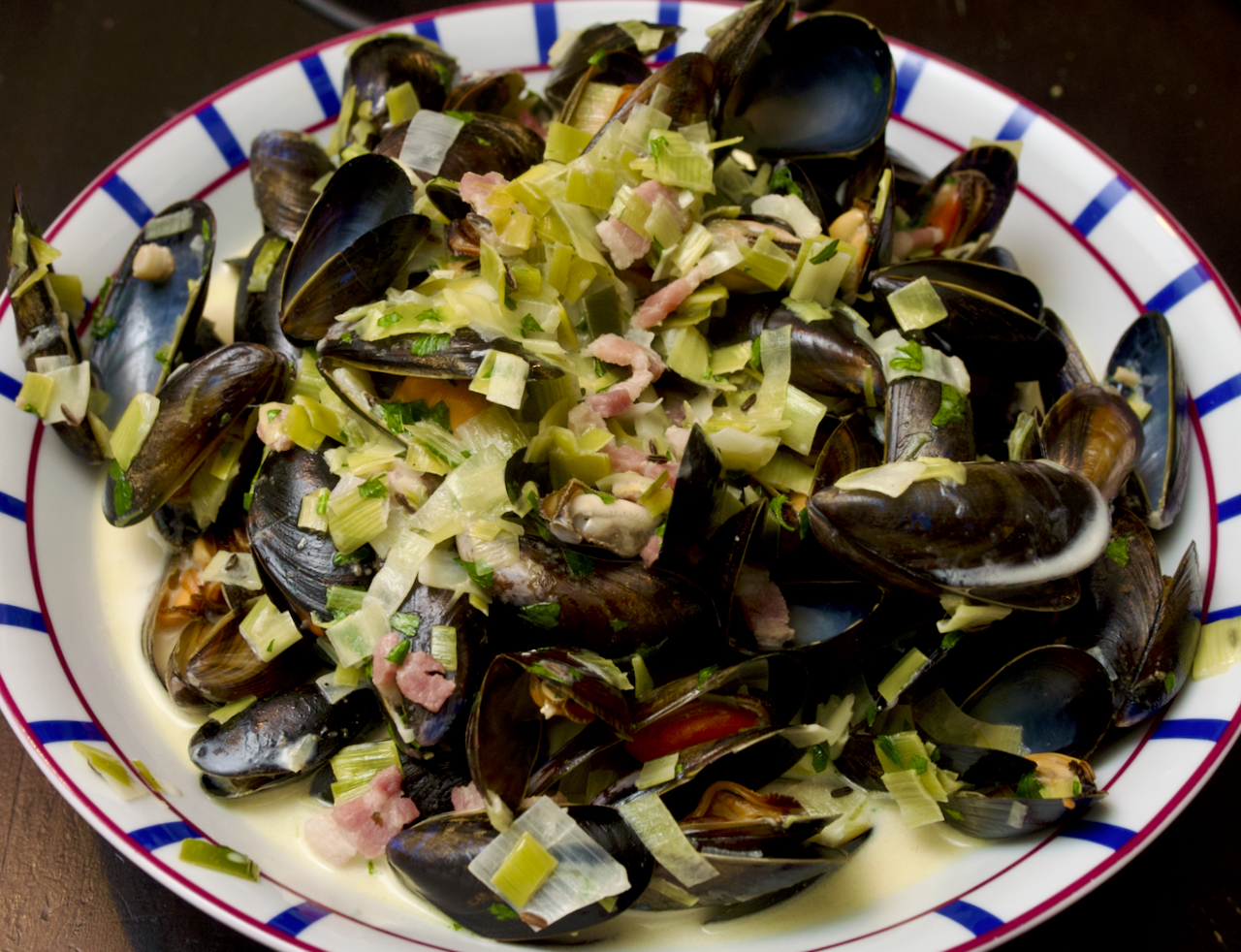
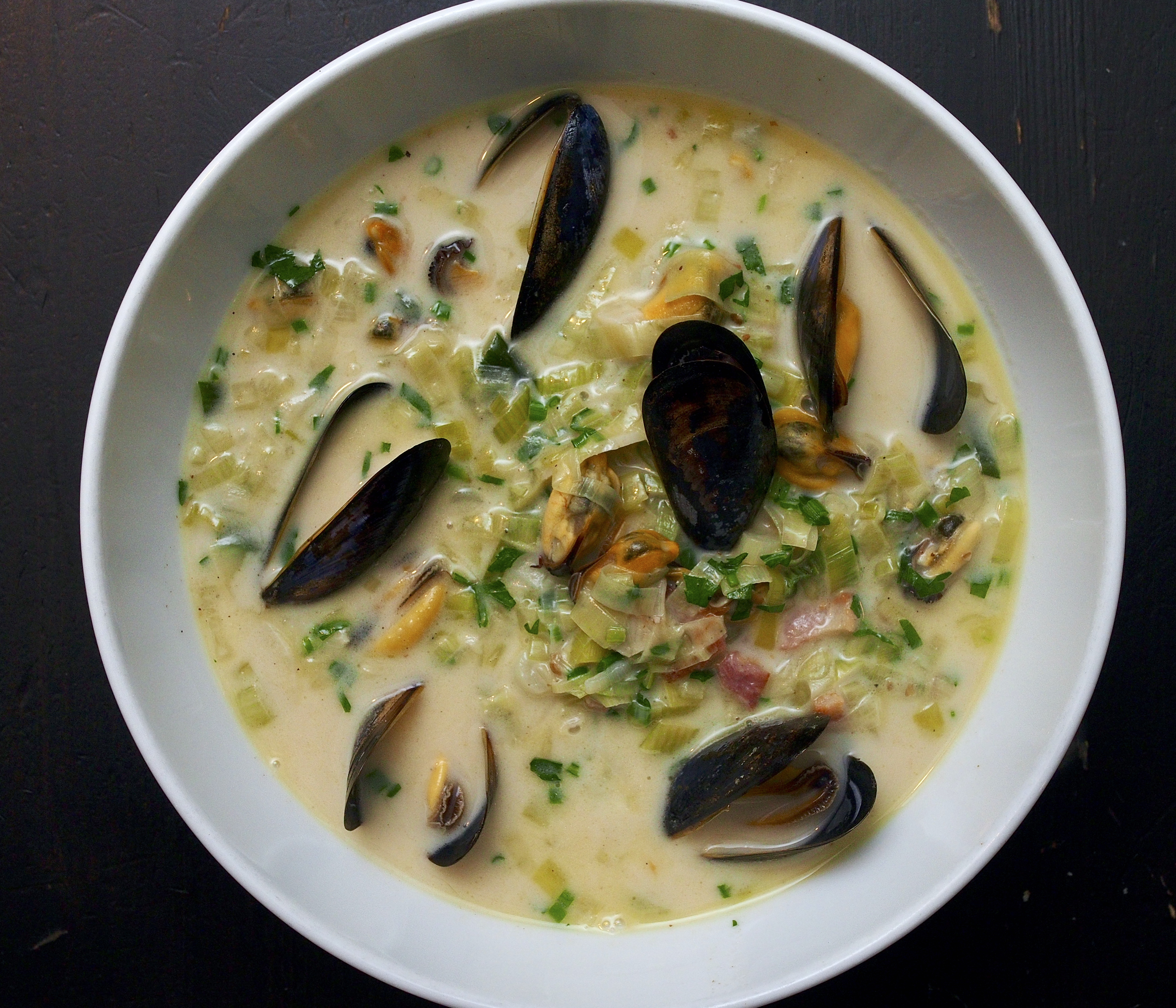
Mussels are our favourite Friday night treat and they taste amazing with this creamy leek and cider sauce. You will need a top quality baguette on the side.
Wine suggestion: we’re just loving Domaine de la Chauviniere’s Muscadet Sevre et Maine sur lie at the moment and think that Jeremie Huchet just has his vineyards in such balance that he delivers delicious wines year after year. Minerally, salty, fresh and with a rounded appley fruit that just works (or of course you could just buy some extra cider).
Mussels with leeks, bacon & cider – serves 2 to 3
200g smoked streaky bacon
1 tbsp olive oil
3 cloves of garlic, thinly sliced
1 tsp fennel seeds
400g leeks, finely chopped
1kg mussels, cleaned
a large glass of dry cider
150ml double cream
a handful of finely chopped flat-leaf parsley
baguette, to serve
Warm a little olive oil in a large saucepan and fry the bacon until the fat renders, then add the garlic and fennel seeds and cook gently for a few minutes. Add the leeks and season well with salt, then let the leeks cook until they are very soft and tender but not taking on any colour. Add a splash of water if they start to catch.
Turn the heat up and add the cider to the leeks to create plenty of steam. Add the mussels and cover with a lid. After two minutes, shake the pan well or give the mussels a toss with a spoon, then cook for another minute or two – they are ready as soon as all the shells are open (chuck any that don’t open).
Pour in the cream, add the parsley and season with lots of black pepper and a little more salt, though taste first. Give everything a final toss, then serve in big bowls with baguette and a glass of cold white wine or cider.
(Original recipe from The Farm Table by Julius Roberts, Ebury Press, 2023.)
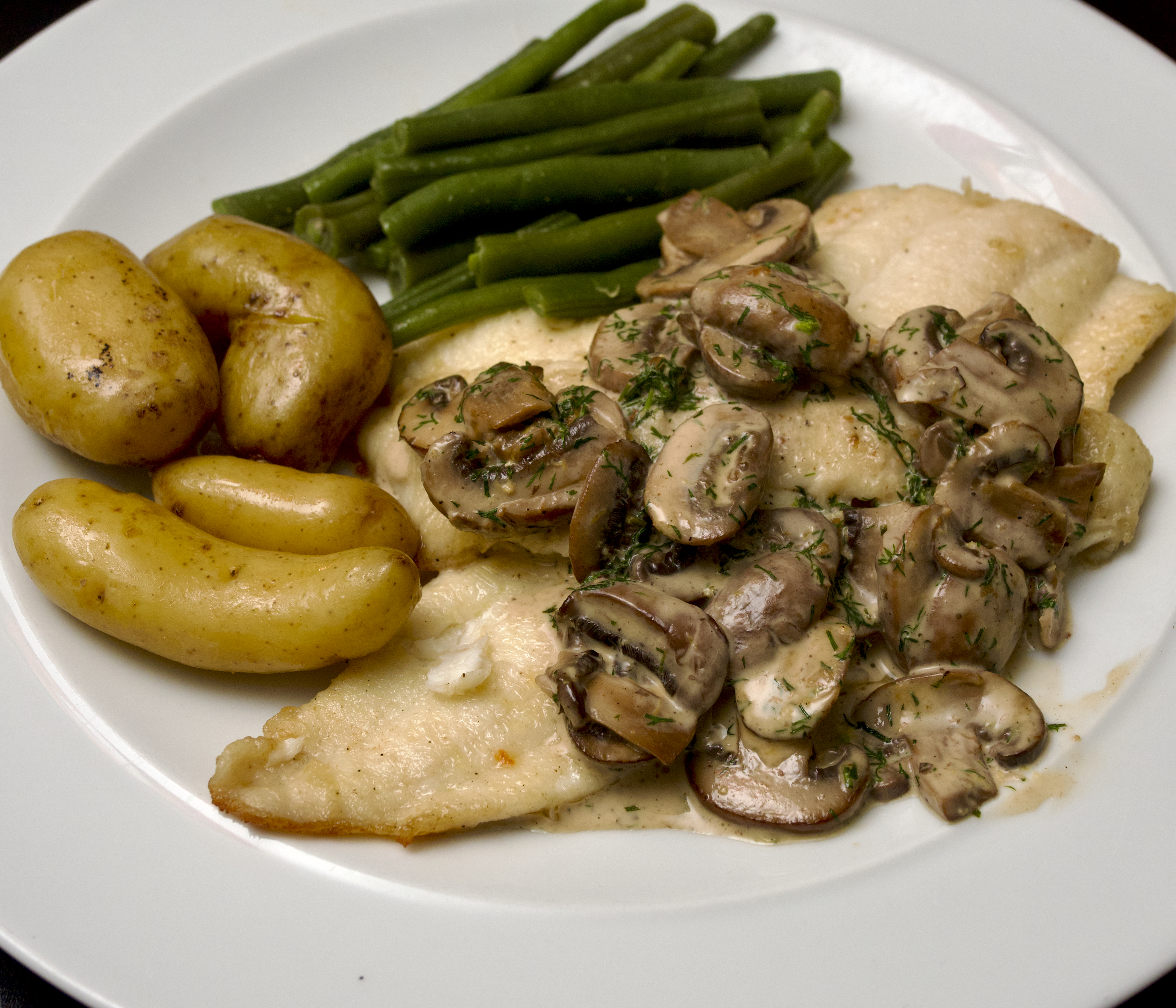
We are still a bit apprehensive when cooking fish and shy away from the simple methods that require last minute cooking. We shouldn’t do this as they tend to be the dishes that show the fish at its best. We managed to conquer this one anyhow.
Wine Suggestion: Served with Domaine Rochette Morgon Régnié Cuvée des Braves, a red fruited Beaujolais from this sensitive and thoughtful family making wine in a Cru that is often overlooked. I say… expand your horizons beyond Morgon and Fleurie! Rich, powerful, and aromatically exquisite.
Plaice with Creamy Mushroom Sauce – serves 4
8 skinless, single plaice fillets (or 4 double fillets which you need to half lengthways)
45g plain flour
2 tbsp olive oil
15g butter
FOR THE SAUCE:
20g butter
200g small chestnut mushrooms, thinly sliced
1 clove of garlic, crushed
120ml dry white wine
170ml double cream
finely grated zest of 1 lemon
juice of ½ a lemon
2 tbsp chopped dill
Pat the fish dry with kitchen paper. Sprinkle the flour onto a plate and season well with salt and pepper. Coat both sides of the fish fillets in the flour.
Heat 1 tbsp of the oil with the butter in a large non-stick frying pan over a medium-high heat. Add 4 of the fish fillets and fry for 1½ minutes-2 minutes or until golden. Gently turn and fry for another 1½-2 minutes on the other side. Careful not to let the butter brown. Transfer the fillets to a serving platter, cover with foil and keep warm while you cook the rest.
To make the sauce, melt the butter in the same frying pan. Add the mushrooms and fry over a medium-high heat for a few minutes, then add the garlic and fry for another minute or so. Pour in the wine, stir and bring to the boil. Simmer for a couple of minutes, then pour in the cream. Simmer, stirring, until the sauce thickens.
Stir in the lemon zest and juice, season with salt and pepper and add the dill. Spoon the sauce over and around the fish and serve with a few extra dill sprigs if you like.
(Original recipe from Mary Berry Cooks the Perfect, Penguin Random House Group, 2014.)
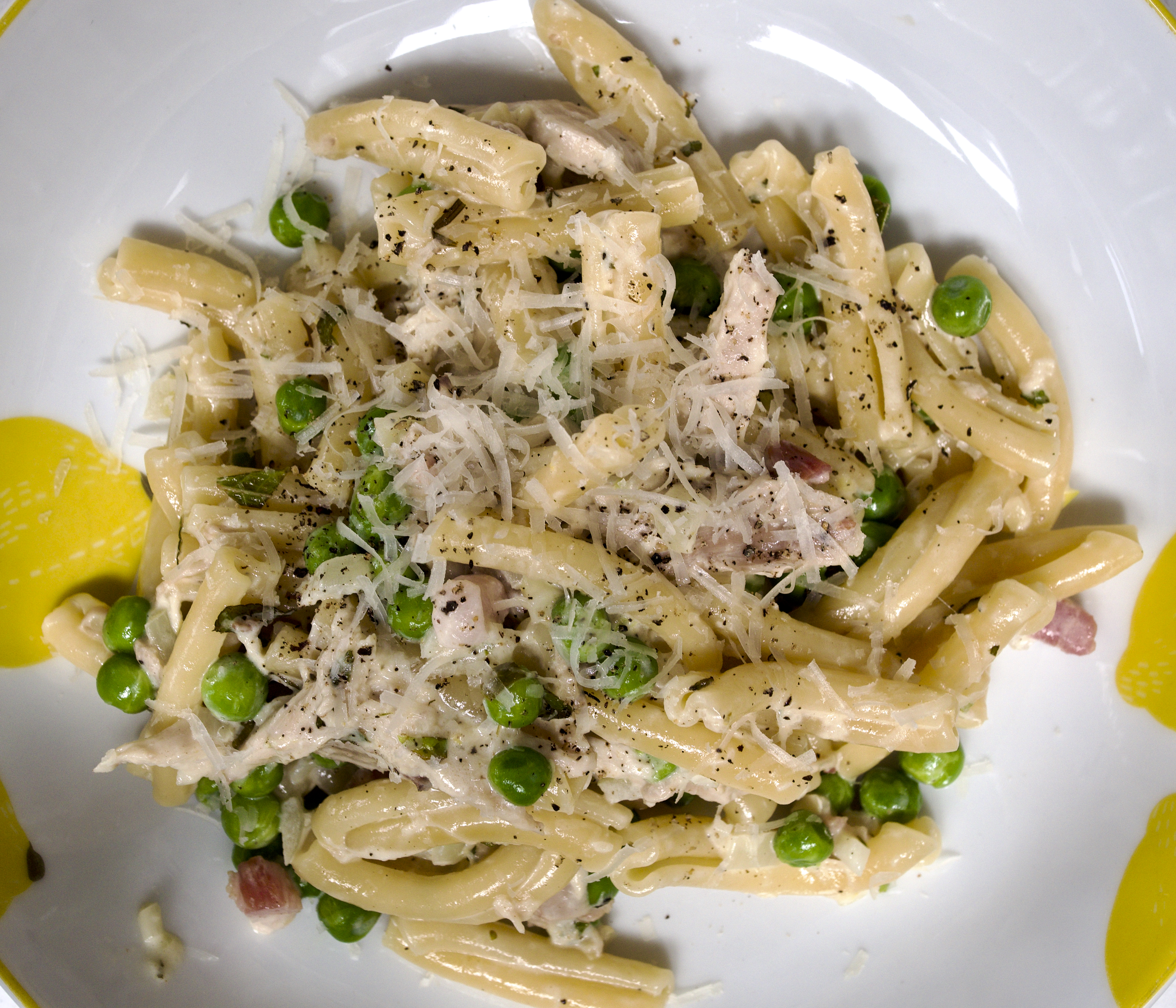
This is a great dish for some leftover roast chicken.
Wine Suggestion: This is great with a fun Chardonnay like from Domaine Gayda’s Sphere range. Serious, but light hearted and with a fresh, minerality at it’s heart this suits a creamy and summery pasta dish like this.
Casarecce with chicken, pancetta, peas & cream – serves 4
225g casarecce pasta
15g butter
1 small onion, finely chopped
70g pancetta, cubed
3 cloves of garlic, finely chopped
200g cooked chicken, torn into pieces
175g frozen peas
250ml double cream
finely grated zest of half a lemon
leaves from 6 sprigs of mint, roughly torn
freshly grated Parmesan, to serve
Bring a large pot of water to the boil and season generously with salt. Cook the pasta in the water according to the timings on the pack. Make the sauce while the pasta is cooking.
Melt the butter in a deep frying pan, then add the onion and pancetta and cook gently until softened. Add the garlic and cook for another 2 minutes, then stir in the chicken, peas, cream and lemon zest. Bring the sauce just to the boil and then turn down and add the mint. Season with salt and pepper and allow to mingle over a low heat for a minute or two.
Drain the pasta and return to the saucepan. Pour the sauce into the pasta pan and add some grated Parmesan. Stir to combine, then serve in warm pasta bowls with extra Parmesan.
(Original recipe from A Bird in the Hand by Diana Henry, Mitchel Beazley, 2015.)
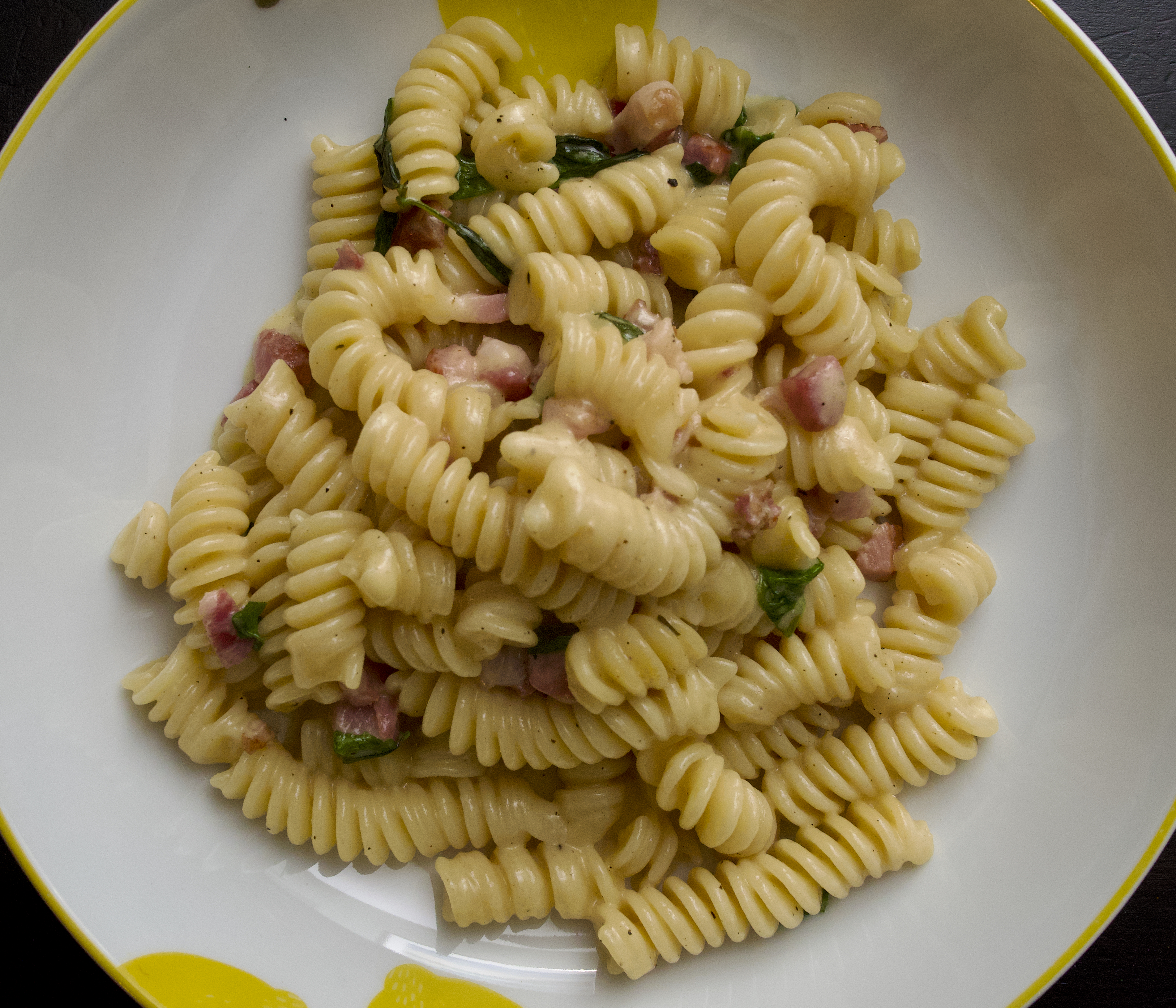
A dish for when you arrive home tired from work and realise you have almost nothing in the cupboard to eat … except pasta, a lurking packet of pancetta and a block of parmesan (a staple in our most fridges).
Wine Suggestion: A simple, dry Rosé caught our fancy, to reflect the long day and store-cupboard cooking. A reliable and refreshing wine-rack staple is the Domaine Gayda Flying Solo Rosé. Made from Grenache and Cinsault in the Languedoc by Tim Ford, an old friend, this is refreshing and has a classic textural character that allows it to be drunk with food like tonight, as well as sipped and enjoyed in the sunshine on its own.
Life-saving creamy pancetta and Parmesan pasta – serves 2
77g pack of pancetta cubes (that is one half of the two pack they come in)
2tbsp olive oil
600ml chicken stock
200g fusilli pasta
75ml double cream
30g Parmesan, finely grated
a handful of basil leaves, shredded
Heat the olive oil in a deep frying pan, then add the pancetta and cook until crisp.
Add the stock and pasta, bring to a simmer, then cook until tender (start testing a little before the suggested timings on the pasta pack).
Stir in the cream and Parmean and simmer for a couple of minutes, then season really well with plenty of black peper.
Stir in the basil and serve.
(Original recipe by Janinie Ratcliffe in Olive Magazine, June 2019.)
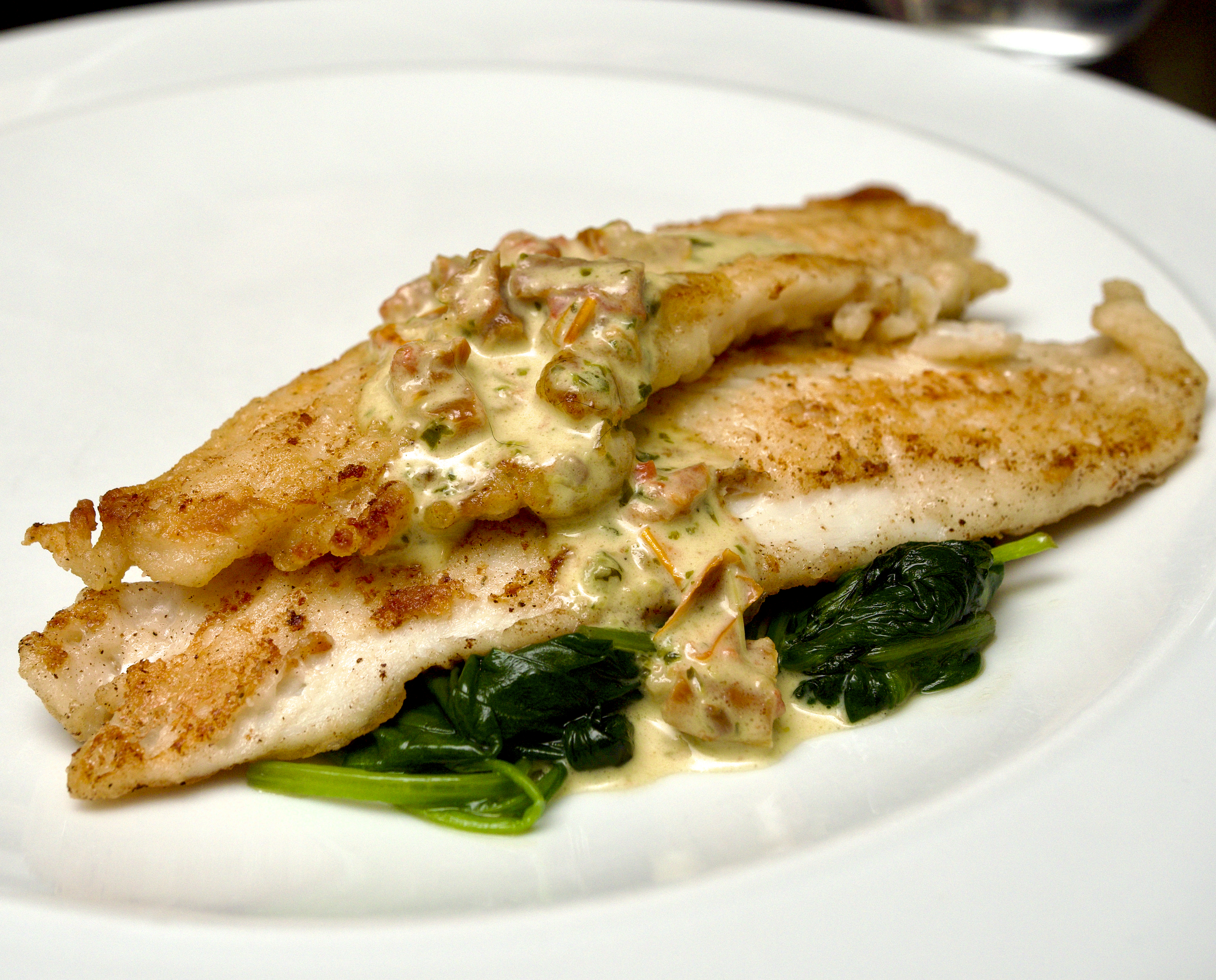
This fish dish feels a bit special but is very easy to make. Serve on buttered spinach and with steamed potatoes.
Wine Suggestion: from our recent trip to the Loire we opened the superlative Domaine de la Taille aux Loups Clos de la Bretonnière. Made by Jacky and J-P Blot from a monopole in Vouvray, it has to be “Vin de France” as their winery is not in the appellation. No matter, this is as fine as dry Vouvray gets. We really enjoyed the taut minerality that complimented the fish, and how it kept on giving more layers as it went along revealing hints of spring and summer fruits. Tension and poise, but with a real generosity too.
Lemon sole with basil & tomato sauce – serves 4
60g plain flour
2 small lemon sole, each cut into 4 fillets and skinned (your fish shop will do this for you)
30g butter
FOR THE SAUCE:
300ml double cream
juice of ½ lemon
3 tbsp fresh pesto
100g sun-blush tomatoes, finely chopped
2 tsp chopped basil, to serve
Sprinkle the flour over a large plate and season well with salt and pepper.
Dip the fish fillets into the seasoned flour and shake off any excess.
Melt the butter in a large frying pan. Wait until the butter foams, then add the fillets and cook for 2 minute on each side, or until opaque and easy to flake. Transfer to a warm plate and keep warm while you make the sauce.
Heat the cream, lemon juice, and pesto in a pan over a medium heat until hot, then add the sun-blush tomatoes and season with salt and black pepper. Serve the fish fillets on a bed of buttered spinach, dress with the sauce and sprinkle over some basil leaves.
(Original recipe from Mary Berry’s Cookery Course, DK, 2013.)
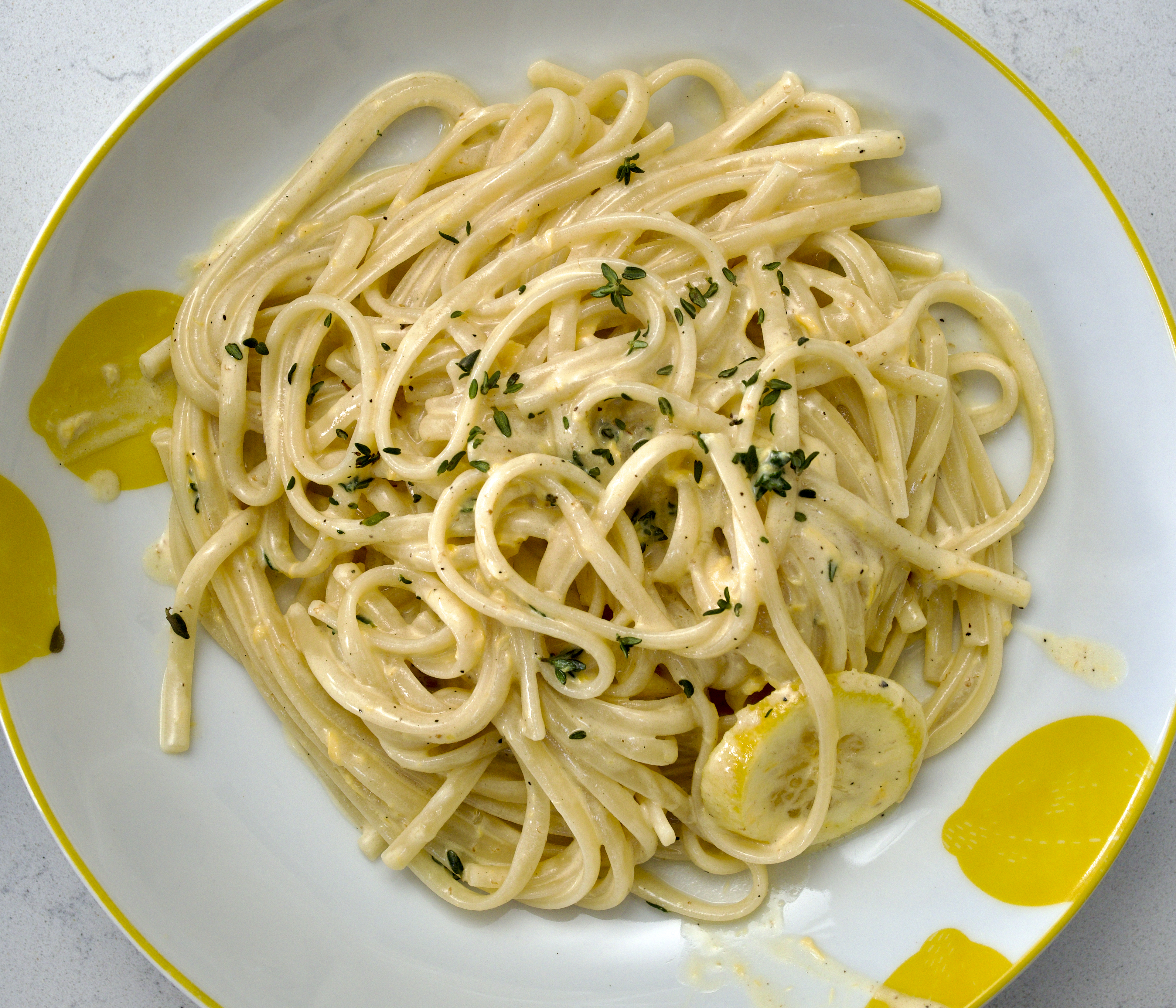
We love a lemon spaghetti and it’s our go to dish when there’s nothing for lunch. This one has cream because we had some lurking in the fridge from another dish.
Spaghetti with creamy lemon sauce – serves 4
2 lemons
4 tbsp extra virgin olive oil
220ml single cream
1 egg yolk
350g spaghetti
a small bunch of thyme
Bring a large pot of water to the boil.
Meanwhile, finely zest the lemons and put into a deep frying pan, then add the olive oil and gently fry over a medium heat for a few minutes.
Pour the cream and egg yolk into the pan and mix well, then reduce the heat and cook gently for 5 to 10 minutes, stirring occasionally.
Add plenty of salt to the pasta water, then add the spaghetti and cook according to the pack timings.
Finely slice a third of the lemon.
Drain the pasta in a colandar but keep a little of the cooking water. Squeeze the juice of the remaining lemons into the sauce and season to taste with salt and black pepper, then tip in the pasta. Add a splash of the pasta cooking water, then add the lemon slices and toss to coat. Sprinkle generously with thyme leaves and serve.
(Original recipe from A Table for Friends by Skye McAlpine, Bloomsbury, 2020.)
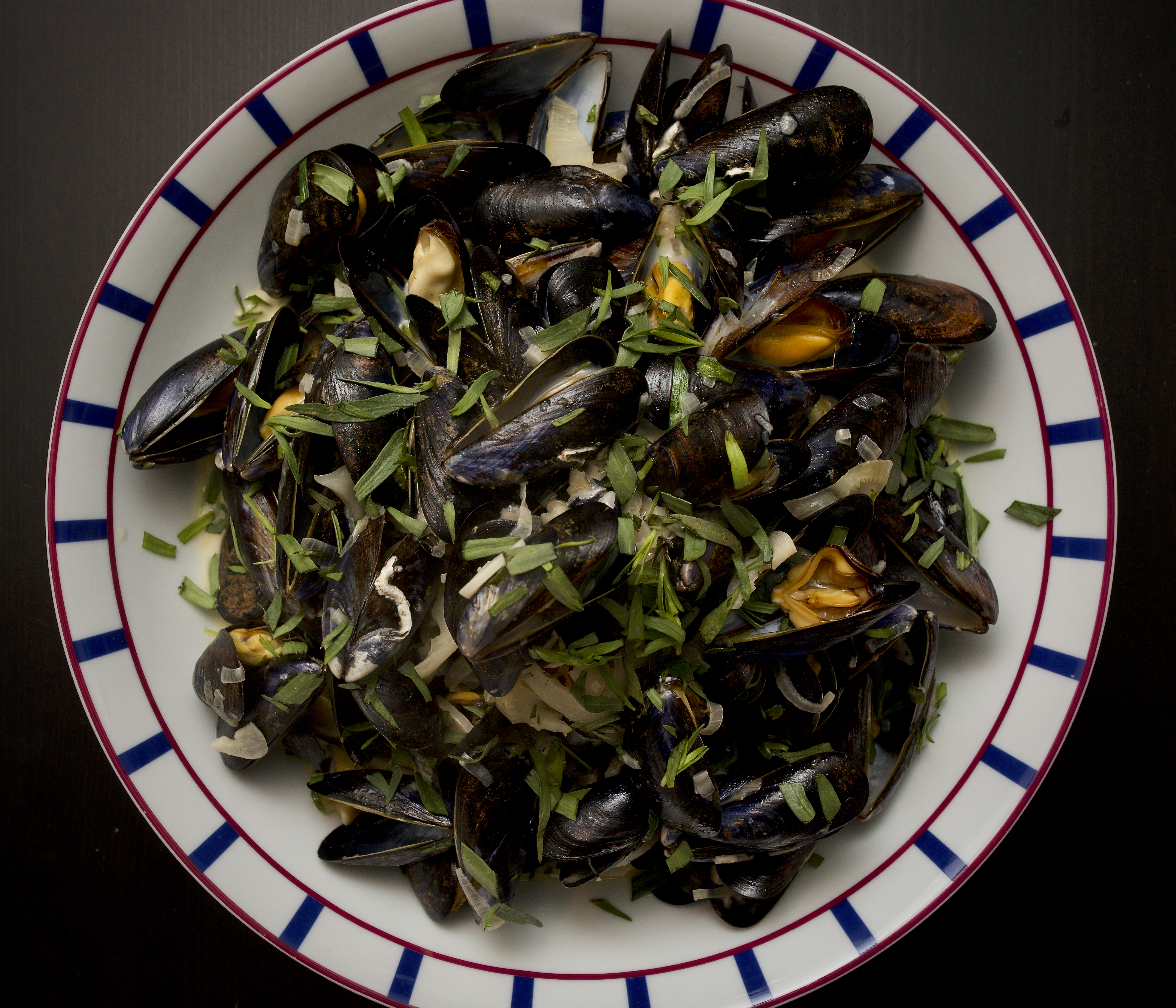
Mussels are cheap and plentiful and they’re one of the few food items that haven’t increased in price. We should all be eating this fabulous local resource. This recipe is just delicious.
Wine Suggestion: We served this with one of those under-the radar wines the La Clef du Recit Menetou Salon. While Anthony Girard from this domain makes a fab Sancerre, we are continually delighted by his other appelations: Menetou Salon which we think has more body, and is a tad more Chablis like, despite it being Loire Sauvignon Blanc; and his Quincy which is elegant and perfumed.
Mussels with fennel & tarragon – serves 2
2 tbsp olive oil
2 long shallots, finely sliced
1 small fennel bulb (or half a big one), finely sliced
3 cloves of garlic, finely sliced
100ml dry white wine
1kg mussels, cleaned and debearded
75ml double cream
a handful of tarragon leaves, roughly chopped
crusty bread, to serve
Heat the olive oil in a large heavy casserole over a medium-high heat. Add the shallots, fennel and a good pinch of salt. Cook for about 10 minutes, until starting to caramelise. Add the garlic and cook for another minute.
Tip the mussels into the pot and stir well, then pour in the white wine and season well with salt and pepper. Bring to the boil, then clamp on the lid and cook for 3-4 minutes, shaking occasionally, until the shells have opened. Stir in the cream, then scatter over the tarragon.
Serve in warm bowls with crusty bread.
(Original recipe by Adam Bush in Olive Magazine, January 2022.)
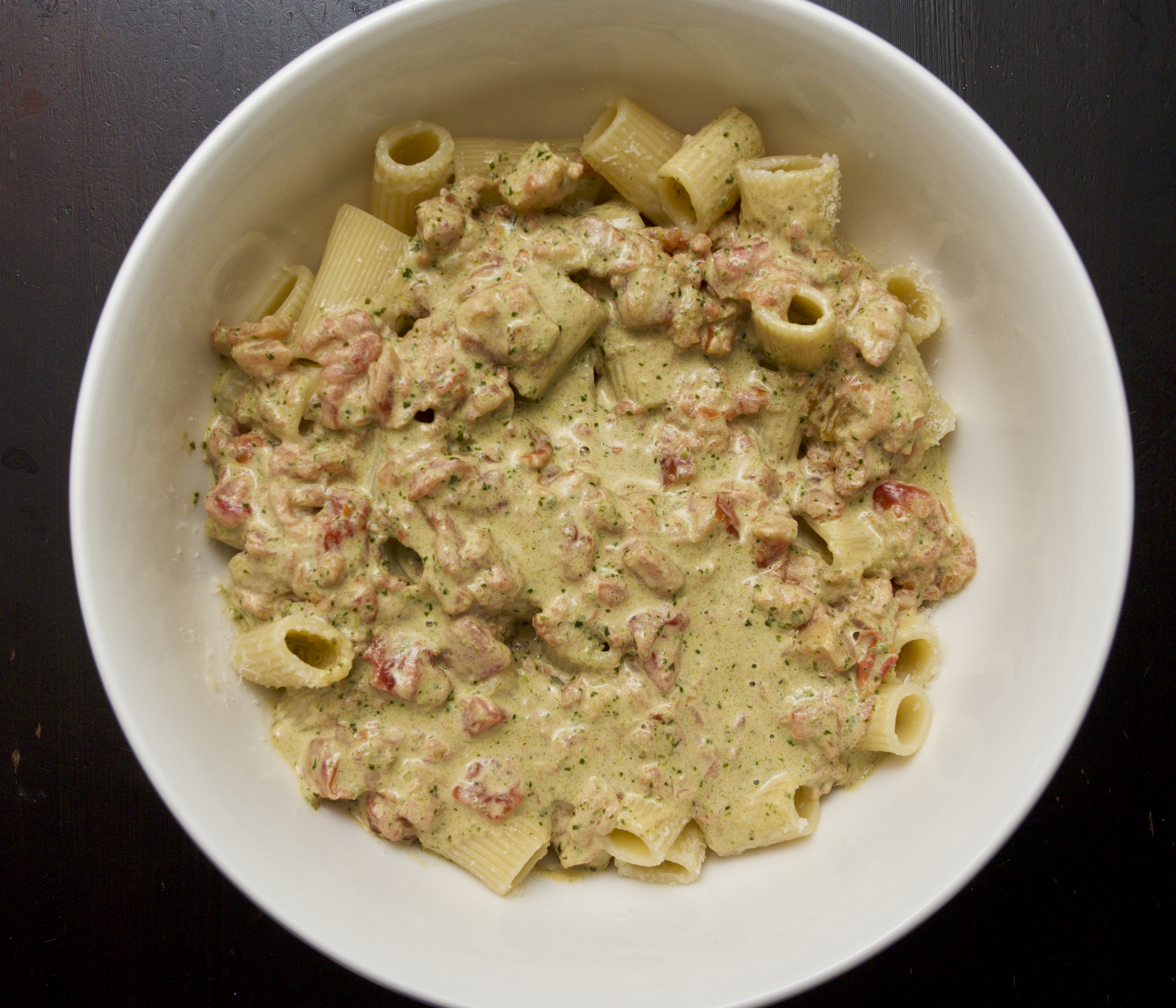
We love a pasta dish with just a few ingredients and this one is light and fresh and conveniently uses tinned tomatoes.
Wine Suggestion: Despite the cream which may suggest an oaked white, this actually works best with an unoaked, textural white instead. Something like the brilliant Dissidents Cassandre, a Vermentino from Maison Ventenac in Carbades which both lifts and expands the flavours, plus the fresh nuttiness cuts through the light cream.
Rigatoni with tomato, cream and pesto – serves 4
200ml double cream
300g tinned tomatoes, drained weight
2 tbsp pesto
350g rigatoni
40g Parmesan
Pour the cream into a saucepan, add the drained tomatoes and cook over a low heat for 10 minutes.
Remove the pan from the heat and stir in the pesto.
Meanwhile, cook the rigatoni in lots of salty water until al dente, then drain and tip it into a warm serving bowl. Sprinkle the pasta with the Parmesan, then spoon over the sauce and serve.
(Original recipe from The Silver Spoon Pasta, Phaidon, 2009.)
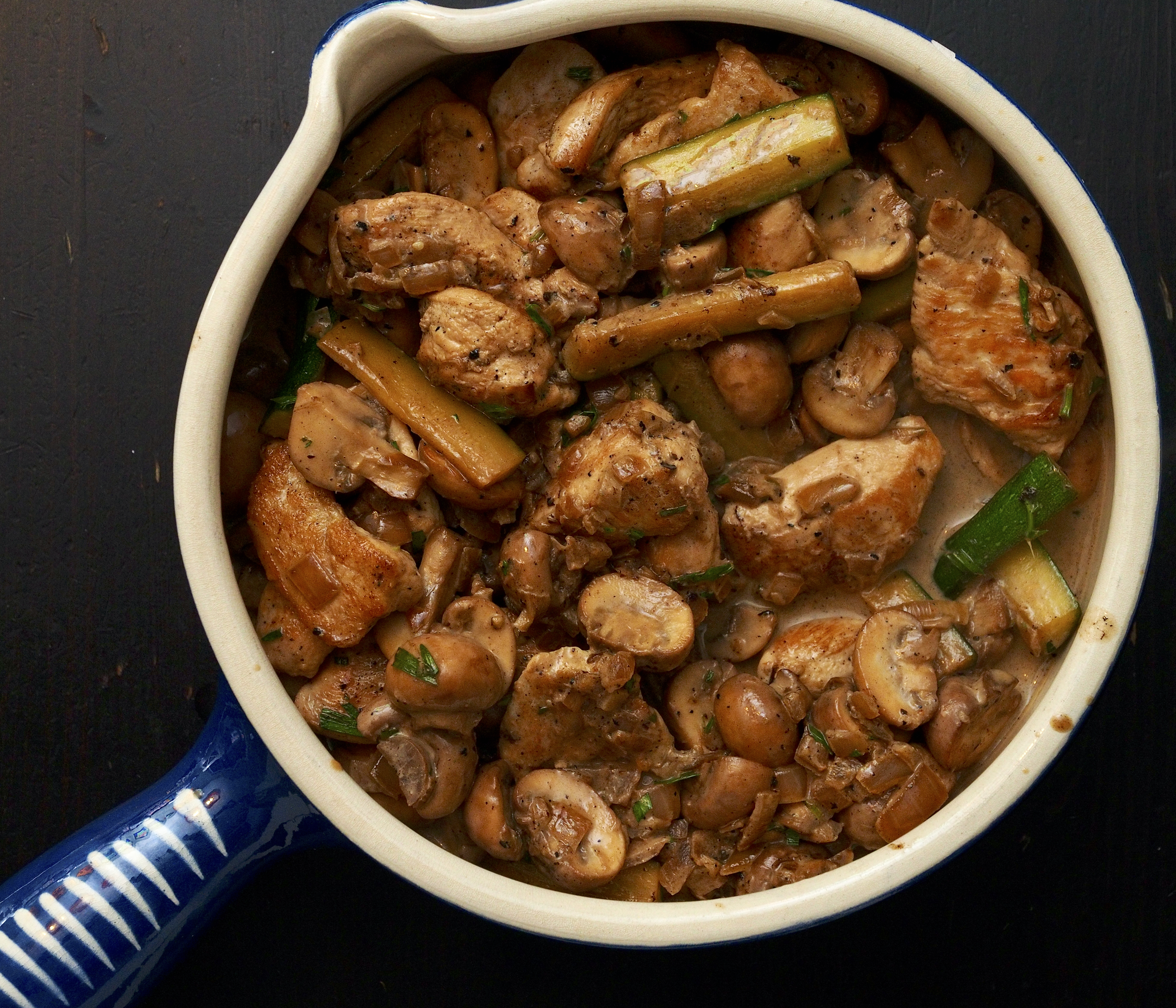
It’s courgettes from now on in our house as we have them growing in our little garden and can hardly eat them fast enough. This dish is simple but really delicious – highly recommended. Serve with rice or potatoes.
Wine Suggestion: we’re quite fond of the wines of Hungary and think they’re unfairly overlooked, especially the reds which combine an earthy spice, quite often with a real sophistication and elegance. A new find is Csaba and Csilla Sebestyén’s Sekszárd Cuvée, a blend of Kékfrankos, Merlot and Cabernet Franc. The latter two grapes have found a new spiritual home in the south of Hungary and the first a local grape with bags of character.
Chicken and courgettes with creamy mushroom and tarragon sauce – serves 6
1 tbsp olive oil
5 small chicken breasts, cut into strips
1 large onion, finely chopped
2 medium courgettes, cut into thick batons
350g button mushrooms, quartered
2 large garlic cloves, finely grated
200ml dry white wine
200ml double cream
juice of ½ lemon
1 heaped tbsp freshly chopped tarragon
Season the chicken with salt and black pepper. Heat the oil in a deep frying pan, then fry the chicken in batches until well-browned on all sides, then remove from the pan and set aside. You may need to add a bit more oil.
Add the onion and cook over a high heat for a few minutes until nicely coloured, then cover the pan with a lid and leave the onions to cook on a low heat for about 15 minutes or until soft. Turn the heat up again and add the courgettes, mushrooms and garlic and fry for a few minutes until softened. Scoop the veg out of the pan and set aside with the chicken.
Add the wine to the pan and boil over a high heat until reduced to about 4 tbsp. Stir in the cream and simmer again for a few minutes until the sauce thickens. Stir in the lemon juice and season with salt and pepper. Return the chicken and vegetables to the pan for a couple of minutes to heat through. Stir through the chopped tarragon and serve.
(Original recipe from Mary Berry Cooks Up a Feast with Lucy Young, DK: Penguin Random House, 2019.)
This is all you need with some fresh bread and butter. The simple things are the best.
Wine Suggestion: For a wine to work with this dish you need to balance a crisp, acidity to cut through the cream, body to match the depth of flavour and a minerally-savouriness to compliment the briny backbone of flavour from the mussels. If you look to a good Chablis producer or a top Muscadet then you’ll find your solution. We chose Jérémie Huchet’s lieu dit Les Montys le Parc from a very special vineyard in Muscadet that has that extra depth to match this rich, full flavoured dish.
Mussel, bacon and leek soup – serves 2
750g mussels
2 bay leaves
a small handful of parsley, leaves picked and chopped and stalks reserved
a knob of butter
75g streaky bacon, cut into small pieces
¼ tsp coriander seeds, toasted and crushed
1 garlic clove, finely sliced
1 leek, finely sliced
250ml fish stock (or veg stock)
75ml double cream
a small handful of chives, finely snipped
Wash the mussels in cold water and remove any beards. Give any open mussels a hard tap and discard them if they don’t close.
Put 75ml of water into a large saucepan with a tight fitting lid. Add the parsley stalks and bay leaves and bring to the boil. Add the mussels, clamp on the lid, and cook for 2-3 minutes or until the mussels have opened. Give the pan a good shake now and and then as they cook.
Tip the mussels into a colandar set over a bowl to catch all of the cooking juices, you will need the these later so don’t throw them away.
Wipe out the pan and return to the heat. Add a knob of butter, then gently fry the bacon until begining to crisp. Add the coriander seeds, garlic, and leek and season with salt and pepper. Cook for about 8 minutes, stirring now and then, until the leeks are nice and soft.
Add the mussel cooking liquid (watch out for the gritty bit at the bottom which you can discard) and the stock, then simmer uncovered for 5 minutes.
Meanwhile, pick the meat out of the mussels but leave about 12 in their shells to garnish.
Add the cream to the soup and bring back to a simmer. Add the mussel meat, chives and parsley and check the seasoning. Serve in warm bowls, garnished with the mussels in their shells and with bread and butter on the side.
(Original recipe from Outside by Gill Meller, Quadrille, 2022)
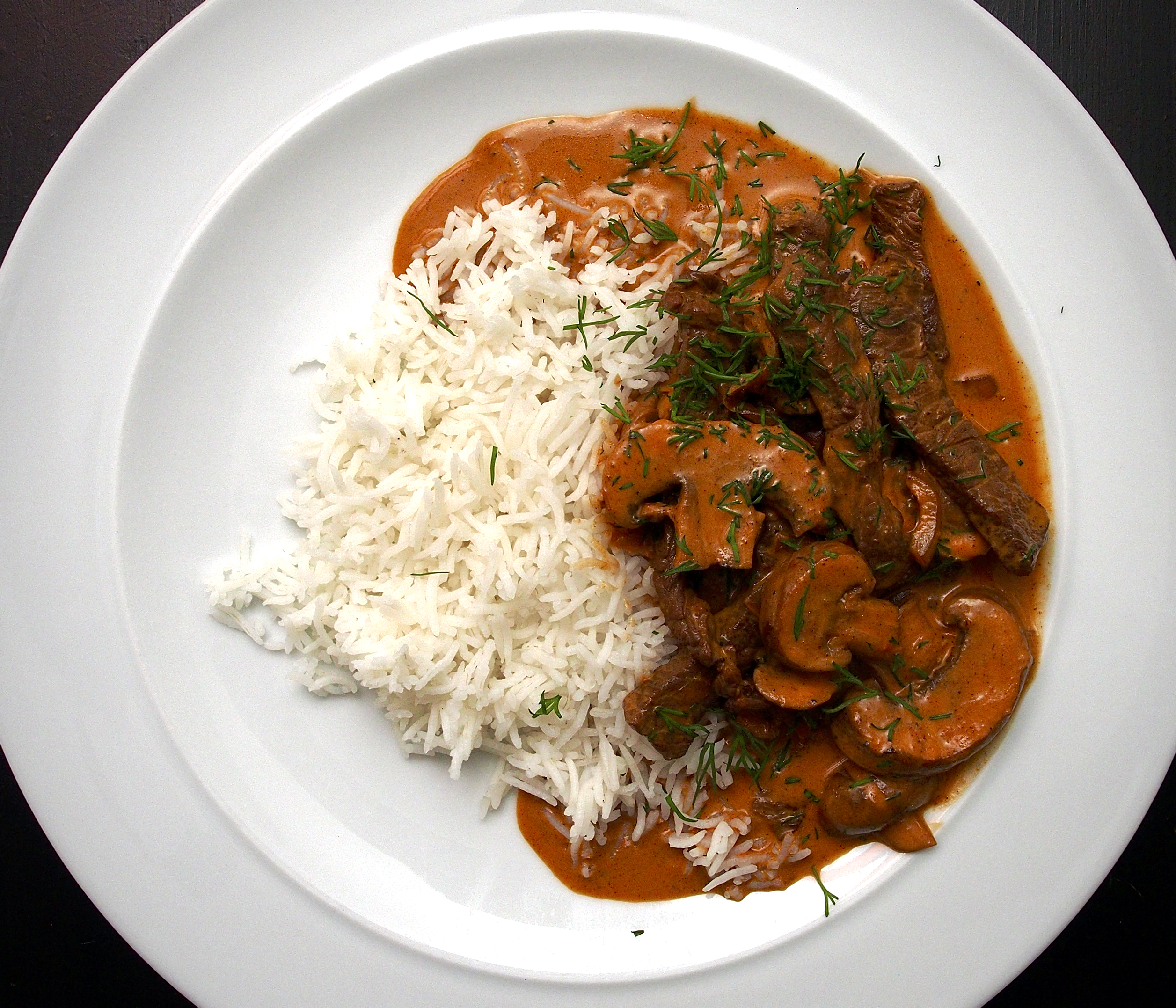
Jules’ Mum makes this all the time and serves it with home-made chips. We almost always cook it when we’re camping in France as it all cooks in the one pan and you can easily find all the ingredients. This one is different from our usual with the addition of paprika and dill, it’s very nice served with some plain white rice.
Wine Suggestion: We think this works best with a rich, full-bodied red. For us a treat from the ancient wine world, though a relatively young winery run by some young, passionate Syrians, the Bargylus, Grand Vin de Syrie 2014. Something to be celebrated due to the sheer class of this Syrah, Cabernet Sauvignon and Merlot blend, and mourned due to all the problems now in this part of the world. Superbly integrated tannins and layered fruit and spice; almost hedonistic in it’s velvetiness. You can taste some heat, but in a very good way with no evidence of alcohol. Mature but maintaining it’s freshness. We just wish this was more easily available for everyone to try.
Beef stroganoff – serves 4
30g butter
600g beef rump steak, thinly sliced
1 medium onion, thinly sliced
2 clove of garlic, crushed
1 tsp sweet paprika
400g chestnut mushrooms, thickly sliced
2 tbsp tomato purée
2 tbsp red wine
1 tbsp lemon juice
300g double cream
1 tbsp coarsely chopped dill, plus a bit extra to garnish
Season the meat with salt and pepper.
Heat 15g of butter in a large frying pan over a high heat and lightly brown the meat. Do this in batches and don’t overcrowd the pan, remove each batch to a plate and set aside.
Heat another 15g of butter in the same pan and add the onion and garlic. Cook over a gentle heat for about 4 minutes, or until softened. Add the paprika, mushrooms and tomato purée and cook for another few minutes, stirring.
Return the meat to the pan with any juices from the plate. Add the wine and lemon juice and bring to a simmer. Cover with a lid and simmer gently for 5-7 minute or until the meat is tender. Add the cream and dill and cook, stirring constantly, until heated through. We turn the heat off the second the sauce begins to simmer, don’t take it any further in case the cream splits. Season to taste with salt and pepper and serve with steamed rice. Garnish with a little more chopped dill.
(Original recipe from Rick Stein at Home, BBC Books, 2021.)
Pork ribeyes are a bit of revelation for us but they’re excellent on the barbecue and also good value. You cook them low and slow first, then a fast sear at the end. This will give you tender meat with a good browned crust on the outside. You will need a meat thermometer – they’re not expensive and an essential piece of equipment for cooking outside. You also want to start this the day ahead so you can season the meat the whole way through.
Wine Suggestion: We were treated to a gem from the cellar of our friends David & Joyce. The Domaine Tempier Bandol 2006 was at it’s absolute peak. Fresh as a daisy with velvety layers of plums and sloes and a deep, earthy bass note with touches of leather, tobacco and gentle spices. The forceful tannins from the Mourvèdre tamed by time into a silky texture allowing the fruit to emerge.
Sprinkle the pork steaks all over with the salt and place on a rack over a tray. Leave uncovered in the fridge for 24 hours (or for as long as you’ve got).
When ready to cook you need to set up the barbecue for both direct and indirect heating. This means piling up the charcoal on just one side. You can then put the meat on the opposite side (without charcoal underneath) and cover with the lid to cook indirect – this will cook the meat slowly. When you want to finish over a high heat, you transfer the meat to the other side.
Put the dried mushrooms into a bowl and pour over enough boiling water to just cover. Leave to soak until soft, then finely chop the mushrooms and return to the soaking liquid. Set aside.
Put the pork steaks on the opposite side to the charcoal and allow them to cook gently for 30-40 minutes. You want the internal temperature to reach 50C.
Meanwhile, make the sauce. Heat the oil and butter in a heavy-based frying pan and add the fresh mushrooms. Fry until soft, then add the garlic and fry for a few minutes. Add the wine and the dried mushrooms along with their soaking liquid. Allow to bubble until the liquid is almost completely reduced, then add the cream, tarragon and seasoning. Allow to heat through, then cover with a lid and set aside.
Remove the steaks to a plate and, if you need to, add a bit more charcoal to the barbecue to get it super hot again. Then sear the steaks over a really high heat, with the lid off, turning them every 30 seconds until really well browned. Keep cooking like this on the internal temperature ahas reached 63C for medium or 71C for well done.
Warm the sauce a little if you need, then serve the steaks with the sauce poured over. Potatoes and green veg are good on the side.
(Original recipe from Seared by Genevieve Taylor, Quadrille, 2022.)
We made this on a rainy Sunday last year in an effort to entertain Orlaith for a while. It’s light and buttery, and easy enough for little helpers. You will need 2 x 20 cm round sandwich tins.
Orlaith’s Strawberry Cake
225g butter, at room temperature
225g caster sugar
4 large eggs, lightly beaten
225g self-raising flour
icing sugar, to dust
FOR THE FILLING:
100ml double cream
175g strawberries, sliced
Preheat the oven to 180C/Gas 4.
Line two 20cm round sandwich tins with baking parchment.
Mix the butter and sugar with an electric whisk or stand mixer until light and creamy.
Whisk in the eggs a little at a time, then sift in the flour and gently fold it in using a metal spoon.
Divide the cake mixture between the prepeared tins and bake for 25 minutes.
Cool briefly in the tins then turn out onto a wire rack and allow to cool completely.
Whisk the cream, then spread it over the flat side of the first cake and cover with the sliced strawberries. Place the other cake on top with the round side up. Dust with icing sugar.
(Original recipe from the Complete Cookbook for Children, edited by Claire Lloyd, DK – Penguin Random House, 2017.)


 Jono & Jules do food & wine