We were so enamoured by the Keralan Prawns two nights ago we looked for more lighter Indian dishes and found these in our newest cookbook: “I love Curry” by Anjum Anand. We admire Anjum’s style as she makes traditional dishes lighter, but never loses flavour or authenticity; these are no exception.
As with all Indian dishes (and any other that we cook when we have the time) we like to prep the ingredients before we start cooking. It really helps in this case; the recipes aren’t difficult but there are many elements and sometimes quick additions with the spices. We have little bowls to gather each bit together which makes it easy.
Our other suggestion is to blanch the vegetables for the Curry, then prepare the rice. As the rice simmers you can then prepare the rest of the curry.
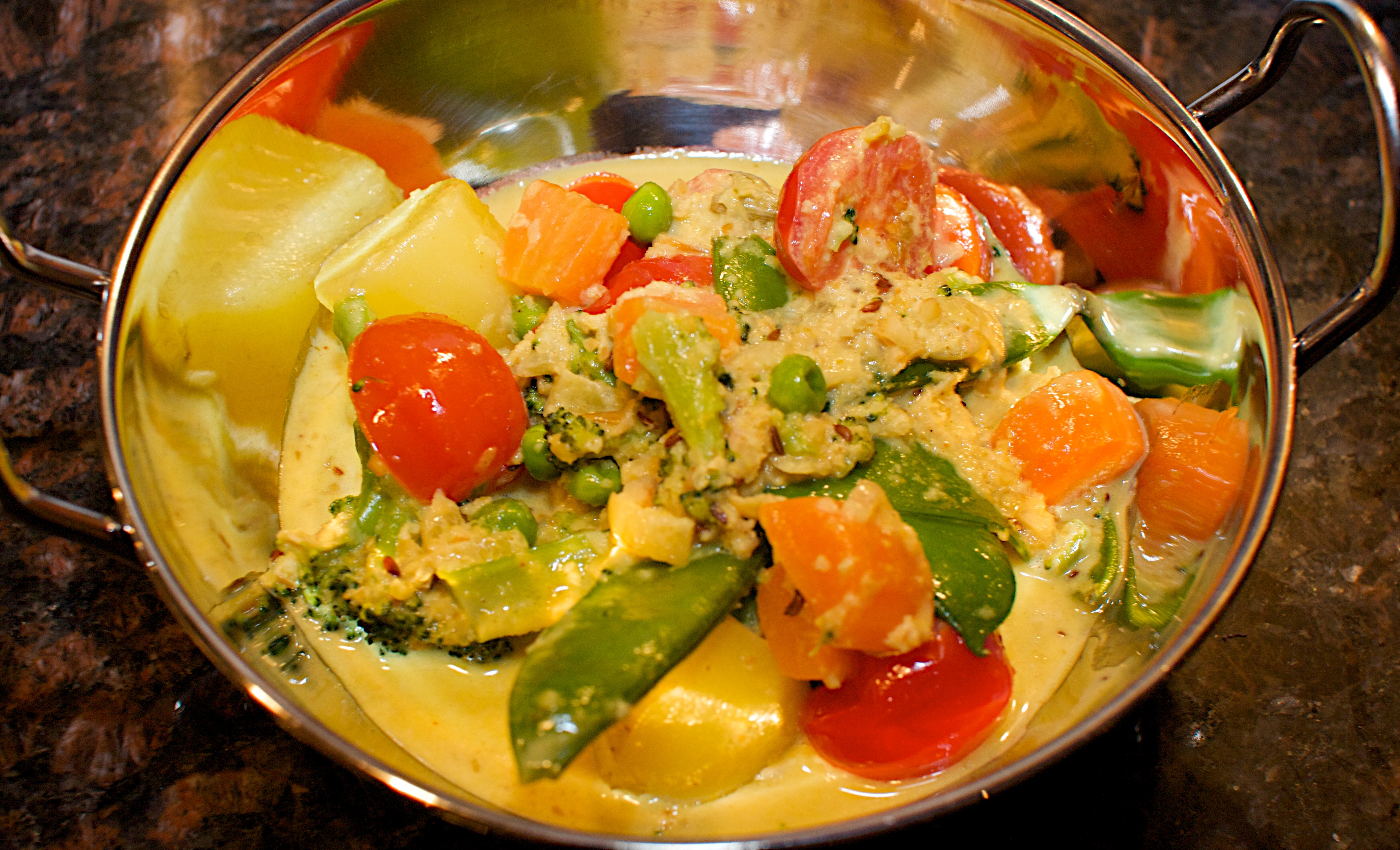
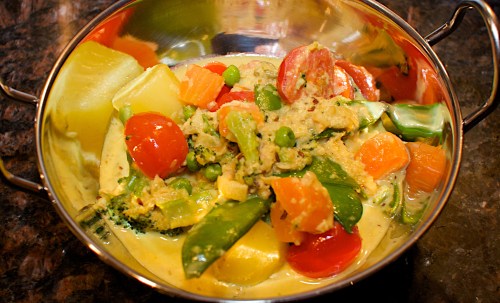 Creamy almond vegetable curry – serves 3-4
For the vegetables:
- 125g potatoes, peeled and cut into 2cm cubes – we used new ones which held their shape well
- 60g carrots, peeled and sliced into half moons
- 70g broccoli cut into small florets
- 60g mangetout
- a large handful of peas – frozen are perfect
For the curry:
- 4 tbsp vegetable oil plus 1 tsp
- 60g blanched almonds
- 6 cloves
- 6 green cardamom pods
- 1 tsp caraway seeds
- 1 small onion, finely chopped
- 15g fresh root ginger, peeled weight, grated to a paste
- 4 fat cloves of garlic, grated to a paste
- a generous tsp of ground cumin
- 2 tsp ground coriander
- 1/4 tsp turmeric
- 1/4 tsp chilli powder
- 4 tbsp plain yoghurt
- salt to taste
- 6 tbsp single cream
- 8 cherry tomatoes, halved
Bring a pot of salted water to the boil and add the potatoes. After 5 minutes add the carrots and cook for another 5-10 minutes until cooked. Scoop out the potatoes and carrots and add the broccoli and then 3 minutes later the mangetout and peas. After a minute drain and set aside.
Heat 1 tsp of oil in a small pan and fry the almonds until nice and golden. Crush straight away in a pestle and mortar to a fine powder.
Heat the rest of the oil in a large non-stick saucepan and add the cloves, cardamom and caraway.
After 20 seconds add the onion until starting to turn golden at the edges.
Scrape in the ginger and garlic pastes and saute gently for 1-2 minutes until the garlic is just golden.
Add the ground spices and yoghurt and bring to the boil, stirring constantly. Cook for 5-8 minutes until the oil separates out.
Add 250ml of water and bring to the boil. Simmer gently for 10-12 minutes.
Add the blanched vegetables, salt, cream, tomatoes and crushed almonds. Cook for a few minutes until it all comes together.
Check the seasoning and serve with Indian bread or the pilaf below.

Aromatic rice pilaf – serves 4
- 220g basmati rice, rinsed
- 2 good tbsp of ghee (we used 1 tbsp of butter and 2tbsp of vegetable oil instead)
- 1 good tsp cumin seeds
- 10cm cinnamon stick
- 1 bay leaf
- 4 green cardamom pods
- 4 cloves
- 1 small onion, sliced
- 1/2 tsp of turmeric
- salt to taste
Tip the rice into a large bowl, cover with water, and leave to soak. (If you’re cooking the curry then prep and blanch the veg while the rice is soaking).
Heat the ghee or alternative in a saucepan, add the cumin, cinnamon, bay leaf, cardamom pods and cloves and sizzle for 10-15 seconds. Then add the onion and cook until turning gold at the edges.
Drain the rice and add to the saucepan with turmeric and salt. Cook for 1 minute, stirring.
Add 400ml of water, then taste the water and adjust for salt.
Bring to the boil, cover and reduce the heat to the lowest it will go. Cook undisturbed for about 12 minutes. Turn off the heat and serve when your’re ready. Don’t take the lid off before then!
Wine Suggestion: A dry Riesling. We had a Grosset, Polish Hill 2007 from the Clare Valley. We’ve tasted this a few times and been underwhelmed but this one was a bit older and it really comes into its own with age. So if you have a recent vintage stick it in the cellar for a few years.
Read Full Post »
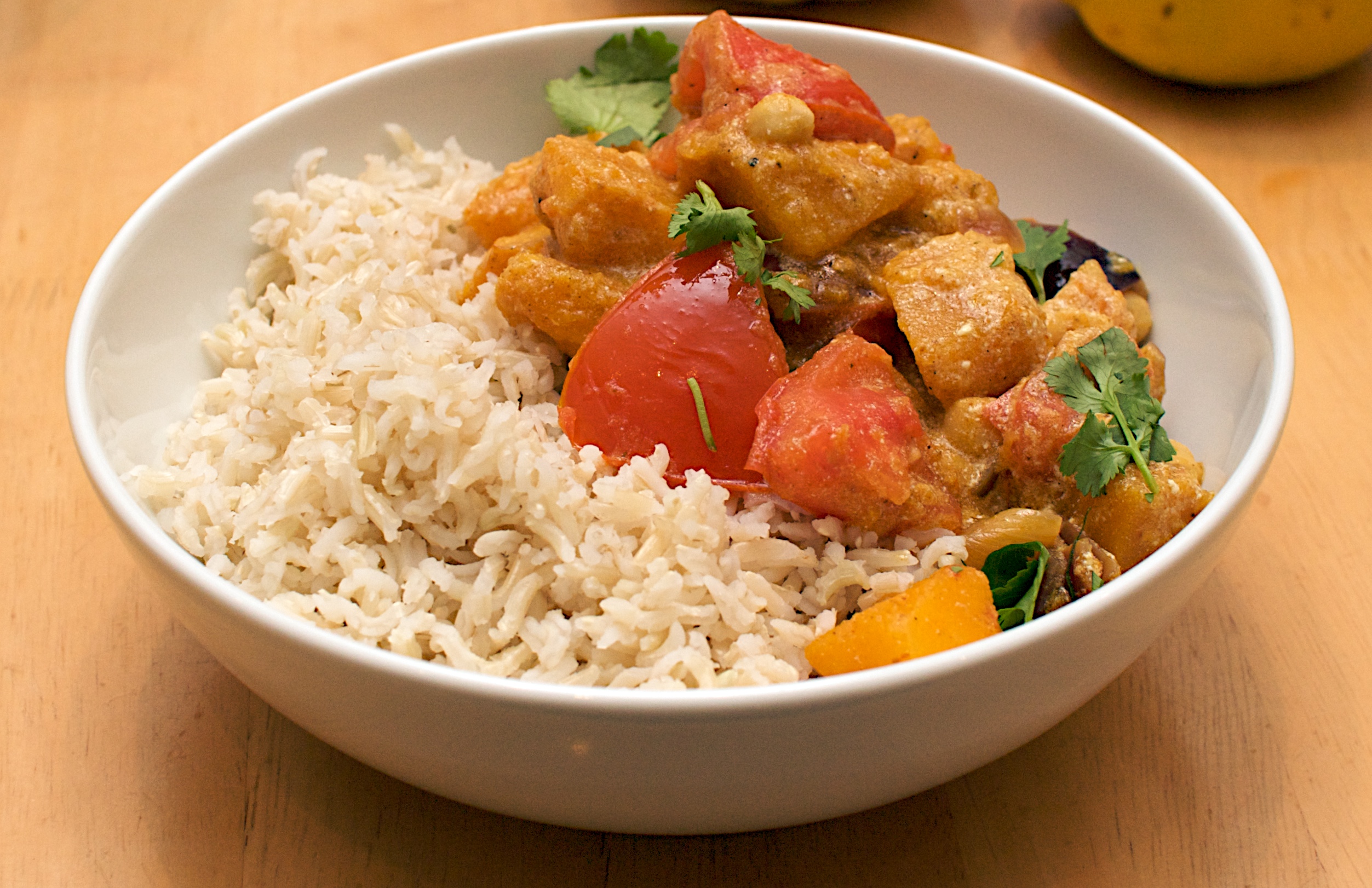 This is a handy mid-week curry with nothing like the calorie and fat content of an Indian take-away!


 Jono & Jules do food & wine