Feeds:
Posts
Comments

Posts Tagged ‘Pine nuts’

Pears poached in bay and balsamic

The classic combination of sweet pears and salty ham. This makes a nice winter starter for entertaining guests and you can poach the pears in advance so there’s not too much to do when they arrive.

Wine Suggestion: with the combination of fruity/sweet pear and the salty ham this choice wasn’t immediately obvious, but an inspired guess lead us to Sparkling Moscato. We had a bottle of the Quady Electra, a Moscato from California that danced with this dish but you may find it easier to get a Moscato d’Asti (the most famous region for this style) or a local equivalent. The Moscato is low alcohol, and refreshingly fruity so perfect to start off a lengthy meal.

Pears poached in bay & balsamic with serrano ham – serves 4 as a starter

  • 200g caster sugar
  • 80ml balsamic vinegar
  • 4 bay leaves
  • 4 pears
  • 4 large slices of Serrano ham
  • 2 large handfuls of salad leaves
  • 3 tbsp pine nuts
  • 1 tbsp olive oil

Put 600ml of water into a saucepan over a medium heat with the sugar, vinegar and bay leaves. Bring to the boil, then simmer until the sugar has dissolved.

Toast the pine nuts in a dry frying pan but keep a careful eye on them as they turn from golden to blackened in the blink of an eye.

Peel the pears and try to leave the stalks intact. Trim the bases a little so they stand up nicely. Add the pears to the liquid and simmer until tender, turning them over in the liquid now and then. This can take anywhere from 10 to 25 minutes (depending on the size and ripeness of your pears) so you will need to keep a watchful eye. Remove from the liquid and allow to cool, then wrap each one in a slice of ham.

Season the liquid with salt and plenty of black pepper, then boil until it becomes a thick syrup.

Arrange the salad leaves on 4 serving plates. Put a pear on top of each and scatter over the toasted pine nuts. Mix the balsamic syrup with the tablespoon of olive oil and drizzle over the top.

(Original recipe from Herbs by Judith Hann, Watkins Media Ltd., 2017.)
 

Read Full Post »

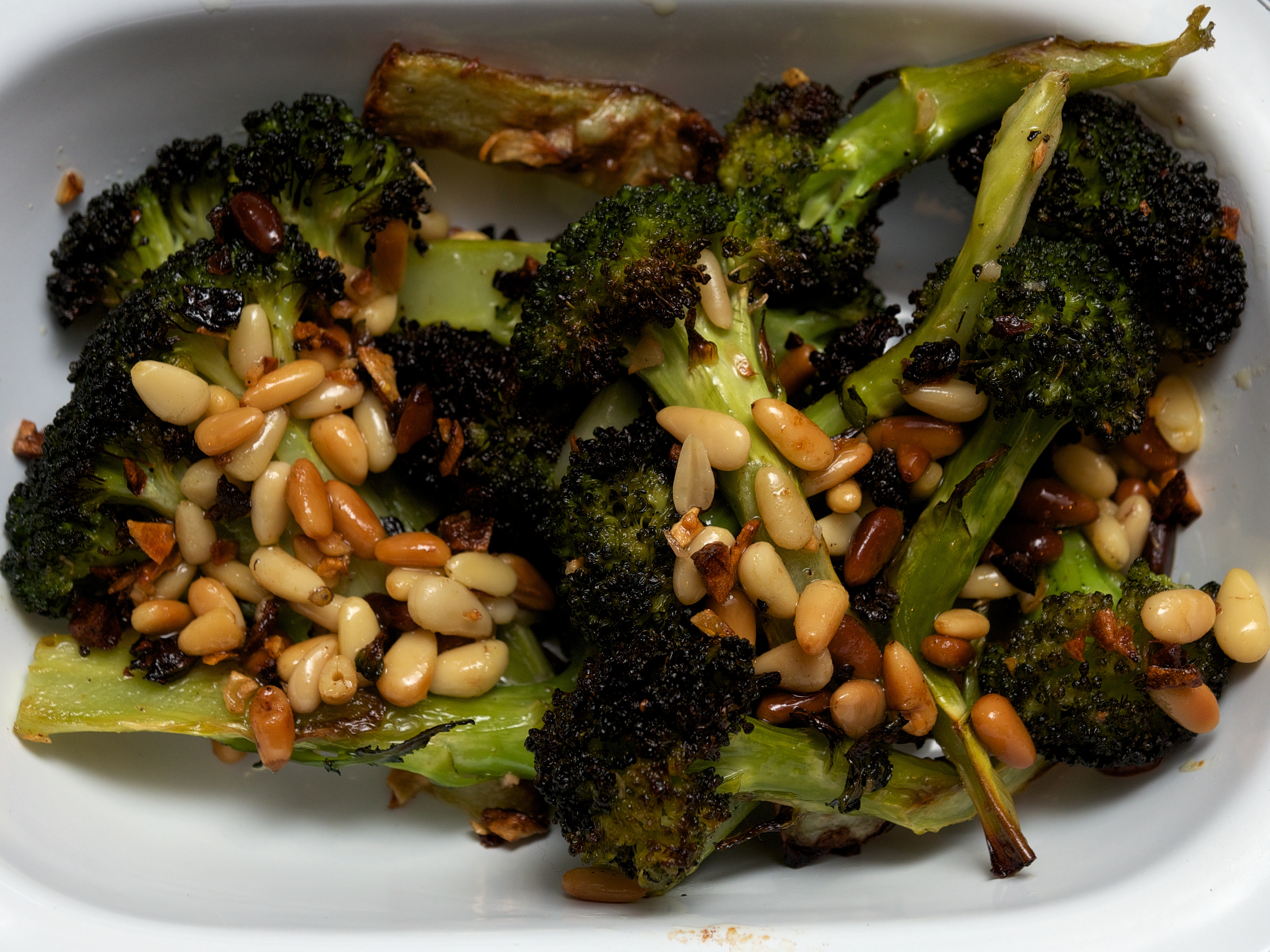
Roasted broccoli

Roasted broccoli is a bit different and retains a satisfying crunch. Careful not to over-roast the pine nuts!

Roasted broccoli – serves 4 as a side dish

  • 200g broccoli, cut into florets including the stalk
  • 50ml olive oil
  • 5 cloves of garlic, peeled and chopped
  • 25g pine nuts

Preheat the oven to 240C/Gas 9.

Put the broccoli in a bowl and toss with the garlic and olive oil, then season well with salt and black pepper.

Tip into a roasting tin and put into the oven. After 10 minutes sprinkle over the pine nuts and cook for another 5 minutes or until the broccoli is starting to soften and the pine nuts are golden.

(Original recipe from Rachel’s Everyday Kitchen by Rachel Allen, HarperCollins, 2013.)

Read Full Post »

Piquillo pepper crostini

These are very simple to assemble and make delicious canapés. We highly recommend that you seek out Spanish canned piquillo peppers, they have much more flavour than regular jarred roasted peppers. They will cost you a bit more but we reckon it’s worth it in this instance.

Bayonne ham with pine nuts and piquillo peppers – makes 10

  • 50g pine nuts
  • 4 tbsp olive oil
  • 10 slices of baguette
  • 1 bunch of fresh coriander
  • 10 canned piquillo peppers
  • 5 thin slices of Bayonne (or other dry-cured ham), halved

Dry fry the pine nuts in a small frying pan , stirring often, for about 2 minutes or until golden, then transfer to a plate.

Heat the oil in a large frying pan, add the slices of baguette, in batches, and fry on both sides until golden. Sprinkle with half the coriander leaves.

Stuff the piquillo peppers with the pine nuts and the remaining coriander.

Put a piquillo pepper onto each slice of fried bread, cover with half a slice of ham and sprinkle with the remaining coriander.

(Original recipe from Pork & Sons by Stéphane Reynaud, Phaidon, 2007.)

Read Full Post »

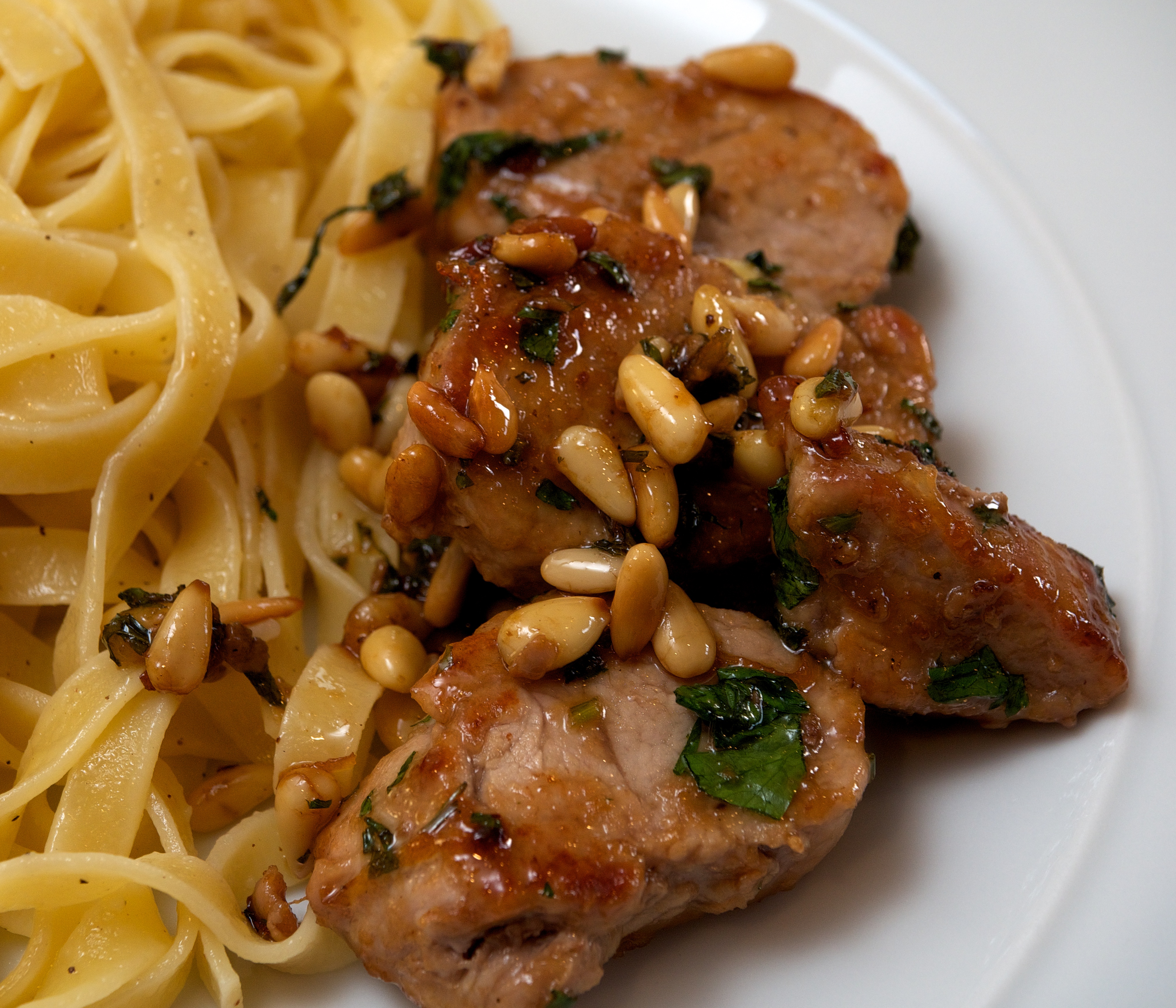
Pork with lemon and pinenuts

This was easy to whip up and a really tasty midweek meal.

Wine Suggestion: We’d suggest a crisp light white wine to go with this dish and thought the Dog Point Sauvignon Blanc from Marlborough, New Zealand worked exceptionally well. The Dog Point has a  great depth of flavour while maintaining a real elegance and layers of fine minerality, unlike quite a few other wines from this region which we find unsubtle so we highly suggest seeking out a good example. Other wines that would work would be good Sancerre or Cheverny blanc from the Loire.

Pork with Pine Nuts, Parsley & Lemon – serves 4

  • 500g pork fillet
  • large handful of flat leaf parsley, coarsely chopped
  • seasoned flour
  • 25g pine nuts
  • grated zest of ½ lemon and juice of a whole lemon
  • 1 tbsp clear honey

Cut the pork into 2cm thick slices. Toss in seasoned flour to coat very lightly and shake of the excess.

Heat 1 tbsp of olive oil in a large frying pan and fry the pork in a single layer for a few minutes on each side or until browned. Remove from the pan and keep warm.

Add another tablespoon of oil to the pan and fry the pine nuts until lightly browned. Stir in the lemon zest, juice and honey. Bubble and stir briefly to make a sauce.

Return the pork to the pan and add the parsley. Continue to cook for another few minutes to heat through.

Serve with buttered papperdelle or tagliatelle.

(Original recipe by Mary Cadogan in BBC Good Food Magazine, April 2001.)


Read Full Post »

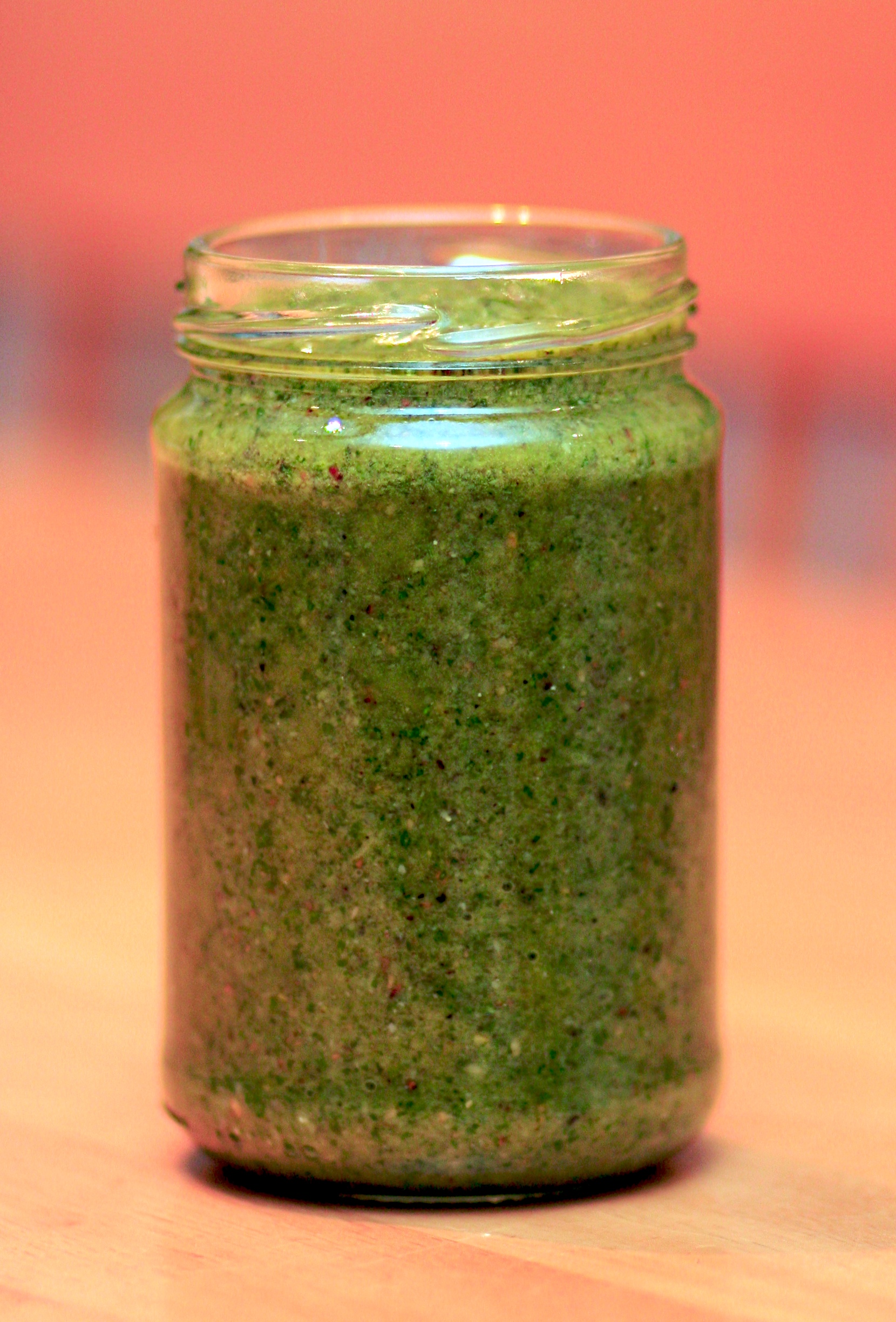
Our kitchen window was bursting with basil plants and sort of like “the Day of the Triffids” as they were out of control and growing like mad despite the neglect after being away for a week. So if like us you have some basil on your windowsill then make pesto – those leaves aren’t going to last forever! This makes about 250ml and will keep in the fridge for a couple of weeks. You can expect some pesto recipes from us to follow.

Pesto – about 250ml

  • 50g pine nuts
  • large bunch basil
  • 50g parmesan
  • 150ml olive oil, plus a bit extra for storing
  • 2 garlic cloves
Heat a small frying pan over a low heat. Cook the pine nuts until golden, shaking the pan. Keep an eye on them as they burn easily and very quickly.Put the toasted pine nuts into a food processor along with the rest of the ingredients and process until smooth, then taste and season.

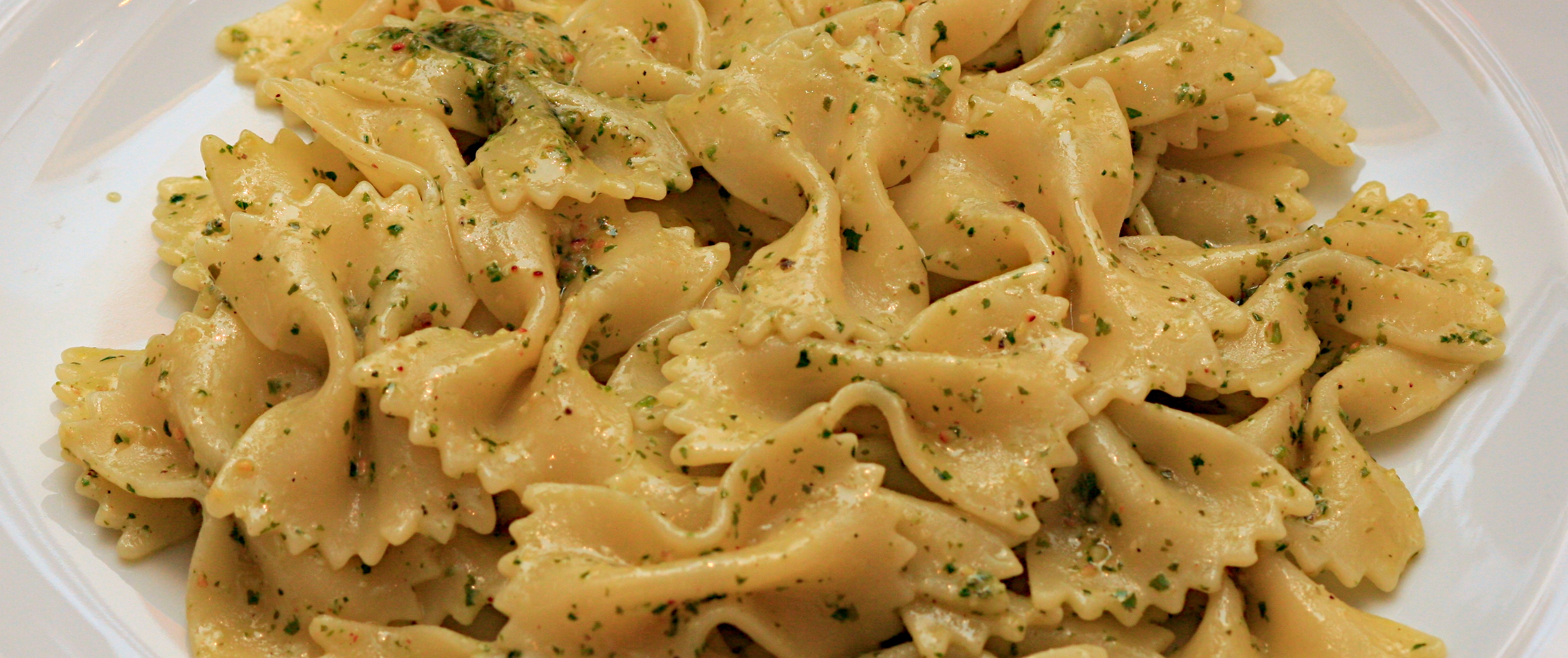
Pour into a jar and cover with a little bit of extra oil and store in the fridge. Keeps for around 2 weeks – ready for instant dinners like the one below.

Read Full Post »

« Newer Posts