Feeds:
Posts
Comments

Posts Tagged ‘Risotto’

Courgette & lemon risotto

A weekend lunch treat for the three of us as we had courgettes lying around begging to be used.

Wine Suggestion: a crunchy white was demanded here and an old favourite was opened to match; the Chateau du Hureau Saumur Blanc “Argile”. A vibrant Chenin Blanc with texture, vibrant, crunchy, apply fruit plus a real sense of place.

Courgette & lemon risotto – serves 2

  • 50g butter
  • 1 onion, finely chopped
  • 1 large garlic clove, crushed
  • 180g risotto rice
  • 1 litre of hot vegetable stock
  • zest and juice 1 lemon
  • 2 lemon thyme sprigs
  • 250g courgette, diced
  • 50g parmesan, grated
  • 2 tbsp crème fraîche

Melt the butter in a deep frying pan and gently fry the onion until softened, about 8 minutes. Add the garlic and stir for another minute. Pour in the rice and stir for a couple of minutes until it glistens.

Add a ladle of the stock to the rice, along with the lemon juice and thyme. Bubble over a medium heat, stirring constantly. When almost all the liquid has been absorbed, add another ladle and continue to stir. Tip in the courgette and keep adding the stock, stirring every now and then until the rice is just tender and creamy.

Season to taste and stir in the lemon zest, Parmesan and crème fraîche.

(Original recipe from BBC Good Food)

Read Full Post »

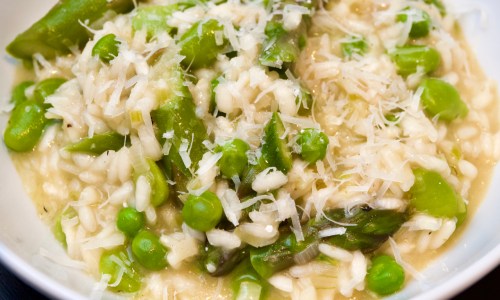
Risotto Primavera

Do it now when there is lots of asparagus in the shops! If you have peas and broad beans growing you should of course use these rather than our frozen substitutes.

Wine Suggestion: we had opened a delightful Touraine Sauvignon Blanc from Domaine Octavie which not only matched the food, it also matched the sunshine with us this evening.

Risotto Primavera – serves 4

  • 200g frozen broad beans
  • 4 medium shallots, finely chopped
  • 3 scallions, finely chopped
  • 1 small garlic clove, finely chopped
  • 250g asparagus, woody ends snapped off and chopped into 4 pieces
  • 1.3 litres of good chicken or vegetable stock – homemade if you have it
  • 1 tbsp olive oil
  • 85g butter
  • 350g Carnaroli or other risotto rice
  • 100ml dry white wine
  • 140g frozen peas, defrosted
  • 100g Parmesan, finely grated

Tip the broad beans into boiling water and simmer for 1 minute, then drain and remove the skins.

Meanwhile, bring the stock to the boil in a saucepan.

Heat the oil and half the butter in a heavy, wide pan. Add the shallots, scallions & garlic and cook for a few minutes until soft and translucent but not browned.

Keep the heat at medium and add the rice to the pan and stir for a few minutes so it gets toasted and very hot. When it starts to hiss, pour in the wine and stir for another minute or so until the wine has evaporated.

Set a timer for 20 minutes, then start adding the stock starting with a ladle and a half. It should be gently simmering and you need to stir continuously until the liquid had been absorbed. Keep adding the stock a ladleful at a time and allowing it to be absorbed before adding another.

After 14 minutes, add the beans and peas to the rice with some seasoning. Meanwhile, add the asparagus pieces to the simmering stock and cook for 4 minutes, then remove with a slotted spoon and add to the rice. Start tasting the rice to check if it is done – you’re looking for soft rice with a little bite. Keep adding stock until cooked, then take the pan off the heat and add half the Parmesan and the remaining butter along with another splash of stock. Cover with a lid and leave to rest for a few minutes.

Serve with the rest of the Parmesan.

(Original recipe from BBC Good Food)


Read Full Post »

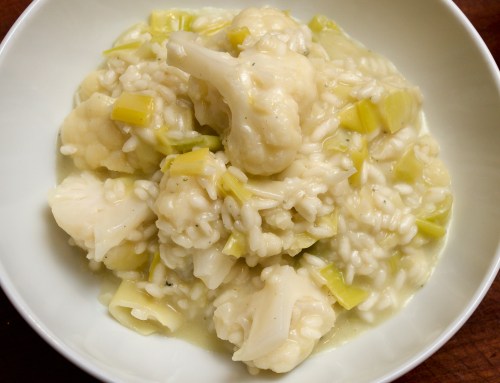
Cauliflower risotto

Using one of our favourite vegetables, that strangely we haven’t cooked for a while. Perfect comfort food for chilly evenings.

Wine Suggestion:  not as easy to suggest a wine as we thought given the conflicting flavours but we found that the Quinta Soalheiro Alvarinho Reserva a surprisingly good match. This combined a vibrant freshness with a layer of subtle oak, mineral nuttiness from the fine lees and a textured persistence that both balanced the food and didn’t overwhelm it. This wine continues to surprise with it’s quality and brilliance.

Cauliflower, leek & blue cheese risotto – serves 4

  • ½ a head of cauliflower, broken into florets
  • 25g butter
  • 2 leeks, cut into rings and washed thoroughly
  • 250g risotto rice
  • 1 litre hot chicken stock
  • 25g Parmesan cheese
  • 100g creamy blue cheese, e.g. Cashel blue or dolcelatte, broken into small chunks

Cook the cauliflower florets in boiling salted water until just tender, then drain well and set aside.

Melt the butter in a saucepan and cook the leeks over a low heat for about 10 minutes or until soft. Add the risotto rice and stir around until glistening with the butter. Now add the hot stock a ladleful at a time, stirring continuously until each has been absorbed before adding another. It should take about 25 minutes to add all of the liquid and by this time the rice should be cooked. A few minutes before the end, carefully stir in the cooked cauliflower and stir gently so you don’t break it up to much, then add the Parmesan and blue cheese.

(Original recipe from Food from Plenty by Diana Henry, Mitchell Beazley, 2011.)


Read Full Post »

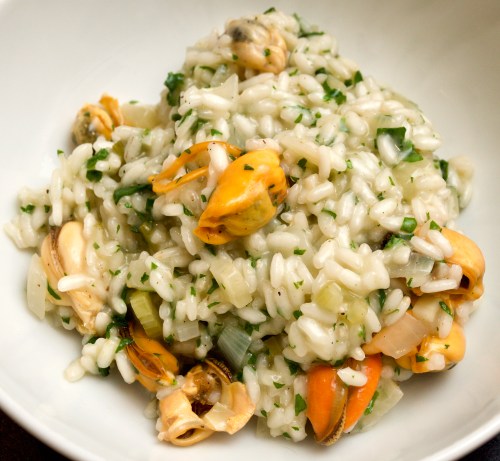
Mussel & fennel risottoWe really liked this tasty risotto made with delicious stock from the mussels. Jules bought half the quantity of mussels (in error!) but it was no worse for it. The sort of thing we like to eat on a Friday night with a glass of something bubbly.

Wine Suggestion: As we have a few bottles of Sparkling Saumur lying around after our summer holiday to the Loire this year, we automatically gravitated to this and found it a good match. This time we opened the Bouvet-Ladubay Trésor blanc, a blend of mostly Chenin Blanc with some Chardonnay. Fresh and vibrant but with the quality of fruit to stand up to the food. Cost aside, we don’t know why more sparkling wines aren’t matched with food.

Mussel & fennel risotto – serves 4

  • 1.75kg mussels, cleaned thoroughly (discard any that don’t close when you hit them off the side of the sink)
  • 250ml dry white wine
  • a few parsley stalks
  • 6 black peppercorns
  • 1 onion, finely chopped
  • 3 garlic cloves, chopped
  • ½ fennel bulb, trimmed & diced
  • 300g risotto rice
  • 50ml dry vermouth
  • 4 tbsp finely chopped parsley
  • a squeeze of lemon juice

Put the mussels into a large saucepan over a medium heat with the white wine, parsley stalks and peppercorns. Cover and cook for 4 to 6 minutes or until opened. Shake the pan a couple of times as they cook.

Strain over a bowl to catch the cooking liquor and remove the mussels from their shells. Throw away any that haven’t opened.

Strain the liquor through a sieve lined with muslin to catch any grit, then heat until simmering gently.

Heat 5 tbsp olive oil in a heavy pan and sauté the onion, garlic and fennel over a medium heat until the onion is soft but not coloured. Stir in the risotto rice. Pour on the vermouth, then add the mussel liquor a ladleful at a time, stirring continuously. The rice should be cooked after about 20 minutes. Add some water if you run out of mussel liquor.

Stir in the mussels, parsley, lemon juice and seasoning to taste.

(Original recipe from Food from Plenty by Diana Henry, Mitchell Beazley, 2010.)

Read Full Post »

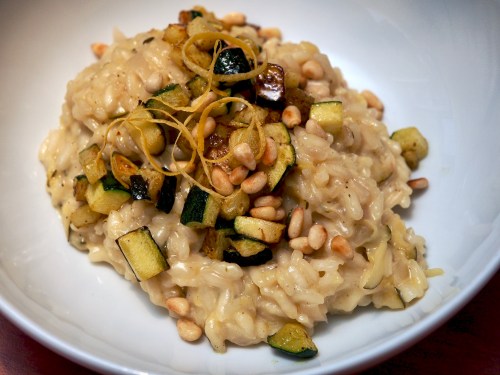
Courgette RisottoWe loved this simple risotto with toasted pine nuts and little pieces of fried courgette. Definitely special enough to serve to friends for dinner.

Wine Suggestion: this risotto demands a waxy, nutty white and what better than an excellent Soave made by Graziano Pra. His Soave Classico “Otto” is fresh and a delight with jasmine and hawthorn aromas, but if you can step up to the “Monte Grande” cuvée then you get extra depth and greater layers of almonds and nuts that complement the pine nuts perfectly.

Courgette Risotto – serves 3-4

  • 50g butter, plus a bit extra to finish
  • 1 small onion, finely chopped
  • 250g courgettes, 140g coarsely grated, dice the rest
  • 175g risotto rice
  • 1 lemon, zest and juice
  • 1.2 litres of veg stock (or chicken stock) kept hot over a low heat
  • 25g parmesan, grated
  • 2 heaped tbsp mascarpone
  • 1 heaped tbsp toasted pine nuts

Melt the butter in a heavy frying pan then gently fry the onions until softened. Stir in the grated courgettes and the rice, then increase the heat and stir for 1-2 minutes.

Add the lemon juice and a ladleful of the hot stock. Stir continuously over a medium-high heat. Keep stirring until the liquid is almost absorbed, then add another ladleful of stock. Continue like this for until the rice is just tender and has a creamy texture, about 20-30 minutes. Stir in the Parmesan, mascarpone and some salt and black pepper, then cover with a lid and set aside for 5 minutes while you fry rest of the courgettes.

Heat the rest of the butter with a splash of oil in a small frying pan. Add the diced courgettes and fry over a high heat for 2-3 minutes until golden & softened. Divide the risotto between plates, then scatter with the diced courgettes and any buttery juice from the pan, the pine nuts & a few pinches of lemon zest.

(Original recipe from BBC Good Food)

Read Full Post »

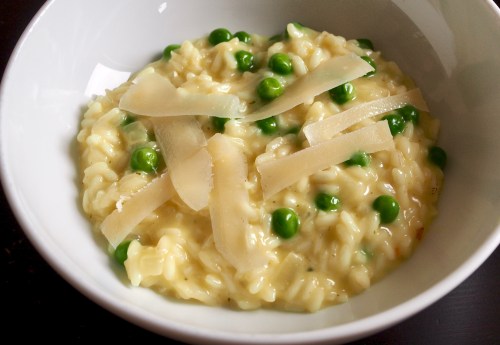
Lemony pea risotto

A standby, reliable dish; something we make for weekend lunches that is simple, tasty and comforting. We’re always surprised at how good it is!

Wine Suggestion: a fresh, zesty white is our usual choice. Vermentino from  Tuscany like the Poggio ai Ginepri IGP Bianco works a treat, or a crisp Sauvignon Blanc or a Chablis would be great too.

Pea & Parmesan risotto – serves 4

  • 1.2 litres chicken stock/veg stock
  • 100g unsalted butter
  • 2 medium onions, finely chopped
  • 1 garlic clove, crushed
  • 225g arborio rice
  • 100g frozen peas
  • 50g Parmesan cheese, finely grated

Put the stock into a saucepan and bring to the boil, then keep over a low heat.

Melt the butter in a sauté pan, and the onion and garlic, then cook for 5 minutes. Add the rice and stir over a low heat until translucent and starting to soften. Increase the heat to medium and begin adding the hot stock, a ladle at a time. Keep adding ladles of stock when the one before has been completely absorbed by the rice.

Continue like this for about 15-20 minutes or until the rice is al dente.

Tip the frozen peas into the risotto and stir. Keep stirring for about 3 minutes or until the peas have defrosted and the rice is bubbling. Finally, stir in the Parmesan and serve immediately with a few shards of Parmesan over the top.

(Original recipe by Tana Ramsey in BBC Good Food Magazine, July, 2007.)

Read Full Post »

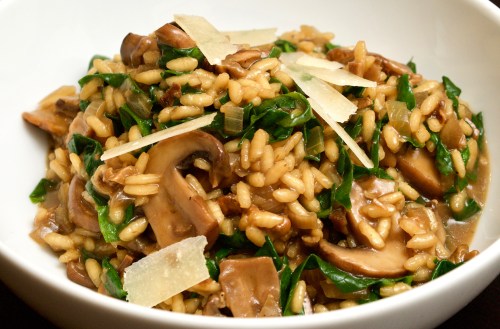
Porcini & spinach risottoWe love a good risotto and this simple one doesn’t disappoint. Perfect cold weather comfort food.

Wine Suggestion: as this is a richer flavoured mushroom dish our first choice would be to head to a Nebbiolo, especially a good Barolo. With the addition of the spinach which has a fresh, iron bitterness we would swing back to a full-bodied white and go for a good Alsace Pinot Gris. The depth of flavour of this dish can balance a really intense Pinot Gris like one from Zind- Humbrecht, which sometimes can be edgy and a bit much for many foods. This one can handle it so push the boat out for flavour and enjoy.

As we had this as a weeknight treat, however, we found that a more humbleVilla Wolf Pinot Gris from the Pfalz also worked.

Porcini & spinach risotto – serves 2

  • 25g dried porcini mushrooms
  • 50g butter
  • 1 small onion, finely chopped
  • 1 garlic clove, crushed
  • 200g chestnut mushrooms, sliced
  • 150g risotto rice
  • a glass of white wine
  • 750ml veg stock, simmering (we use Marigold Swiss Bouillon powder)
  • 100g spinach, washed & chopped
  • parmesan shavings

Soak the porcini mushrooms in a cup of boiling water for 10 minutes. Strain the liquid through a sieve to remove any gritty bits and keep for later. Roughly chop the porcini.

Heat the butter in a wide shallow pan and cook the onion and garlic until softened. Add the chestnut mushrooms and cook for 5 minutes, then add the porcini and risotto rice and stir until coated.

Pour in the wine and bubble until it has been absorbed by the rice. Gradually add the stock and porcini soaking liquid, stirring until the rice is al dente (you may not need all of the stock). Stir through the spinach until just wilted and serve sprinkled with shavings of parmesan.

(Original recipe by Janine Ratcliffe in BBC Olive Magazine, February 2009.)

Read Full Post »

Summer risotto

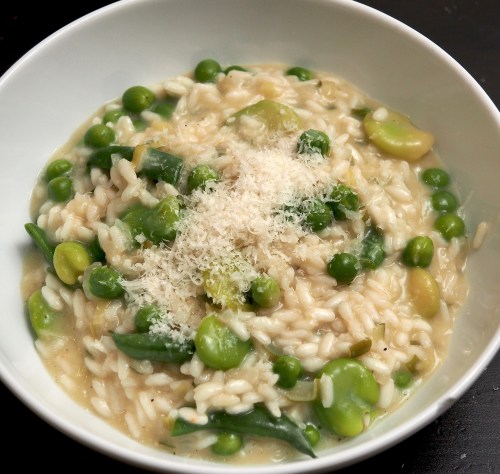
On a balmy summer evening we podded local broad beans and picked some french beans from the vines in our back yard. We used a stock made from a previously roasted chicken which was subsequently used to poach chicken fillets for a Coronation Chicken. The only thing out of place were the frozen peas, but we think unless you pick the pods fresh and eat them almost immediately, frozen is often best. This is based on a risotto primavera or Spring risotto which usually contains asparagus.

Wine Suggestion: a fresh, summery Godello caught our eye. The La Sonrisa de Tares from Bierzo had enough weight to balance the starchy creaminess and depth of the Parmesan while a lovely textural freshness and summery zing made the beans and peas sing with all their fresh flavours.

Summer Risotto – serves 4

  • 200g shelled broad beans (you will need about 800g of broad beans in their pods to get this quantity or you can use frozen broad beans, defrosted)
  • 2 large shallots, finely chopped
  • 4 scallions, trimmed and finely chopped
  • 1 small garlic clove, finely chopped
  • 250g green beans, trimmed and cut into short lengths
  • 1.5 litres home-made chicken stock (you might not need it all)
  • 1 tbsp olive oil
  • 80g butter
  • 350g Carnaroli or other risotto rice
  • 100ml dry white wine
  • 140g frozen peas
  • 100g Parmesan, finely grated

Start by double podding the broad beans so you are left with bright green beans. To do this just blanch them in boiling water for 2 minutes, then drain and squeeze to remove the papery skin. If you’re using frozen beans you might be able to remove the skins when defrosted without having to blanch first.

Put the stock into a large pot and bring to a simmer.

Heat the oil and 40g butter in a wide heavy pan with a lid. Cook the shallot, scallions & garlic for a few minutes until soft and transparent but don’t let them brown. Add the rice and keep stirring for a few minutes until the rice is hot and starting to sizzle, then pour in the wine. Continue to stir until the wine has evaporated.

Now start gradually adding the stock, a ladleful at a time. Only add another ladleful when the previous one has been absorbed by the rice. Continue stirring and adding the stock for 14 minutes, then add the broad beans and peas with some salt and black pepper. Meanwhile, cook the green beans in the simmering stock for 6 minutes or until soft, then add these to the rice too. Continue stirring and adding stock until the risotto has a creamy texture and the rice is soft but retains a little bite.

Remove the pan from the heat and add half the parmesan, the rest of the butter and one last splash of stock to retain the moisture. Put the lid on the pan and leave to rest for a few minutes off the heat. Serve with the rest of the Parmesan sprinkled over the top.

Read Full Post »

Crab & Chilli Risotto

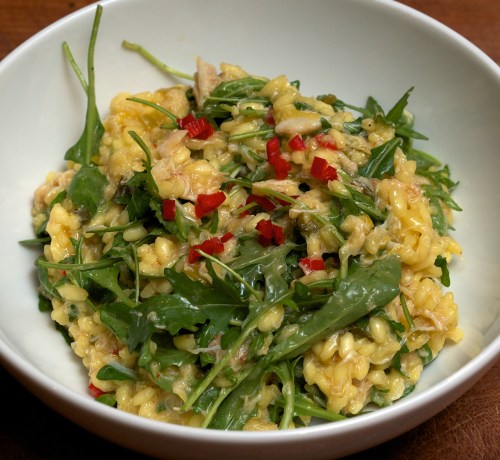
We’d been eyeing this recipe up for a while and when we stumbled across some really good crab meat we had our excuse to make it. It was luxurious and delicious as we expected.

Wine suggestion: Go for a rich white like an oaked Chardonnay, which will also have a good freshness and texture to balance the rich risotto. Our choice was the Rustenberg Chardonnay from Stellenbosch in South Africa which never lets us down.

Crab & chilli risotto  – serves 2

  • 1 litre light chicken stock
  • ¼ tsp saffron threads
  • 2 garlic cloves, bashed
  • 2 tbsp olive oil
  • 4 scallions, finely sliced
  • 1 fresh red chilli, de-seeded and finely chopped
  • 200g risotto rice
  • 75ml dry white wine or vermouth
  • 100g brown crabmeat
  • 100g white crabmeat
  • zest and juice of ½ a lemon, plus wedges to serve
  • 50g rocket

Heat up the stock, add the saffron threads and keep hot over a low heat.

Heat the oil in a heavy-based pan (which you have a lid for) and add the bashed garlic cloves. Leave to sizzle for a couple of minutes, then remove and discard the garlic. Add the scallions and most of the red chilli and cook over a medium-low heat, stirring, for about a minute.

Turn up the heat and stir in the rice so that the grains become coated in the oil.

Add the white wine/vermouth and let it bubble up until it has been absorbed. Add a ladleful of stock and cook, stirring, until it has been absorbed.

Turn the heat down and continue to stir and add ladlefuls of stock, allowing each one to be absorbed before adding another. After about 18 minutes the stock should have all been absorbed and the rice should be al dente.

Remove the pan from the heat and add the crab and the lemon zest and juice, then season. Add the rocket, cover with the lid, and let stand for a minute.

Serve the risotto with the remaining chilli over the top and a squeeze of lemon.

(Original recipe from Nigellissima by Nigella Lawson, Chatto & Windus, 2012.)

Read Full Post »

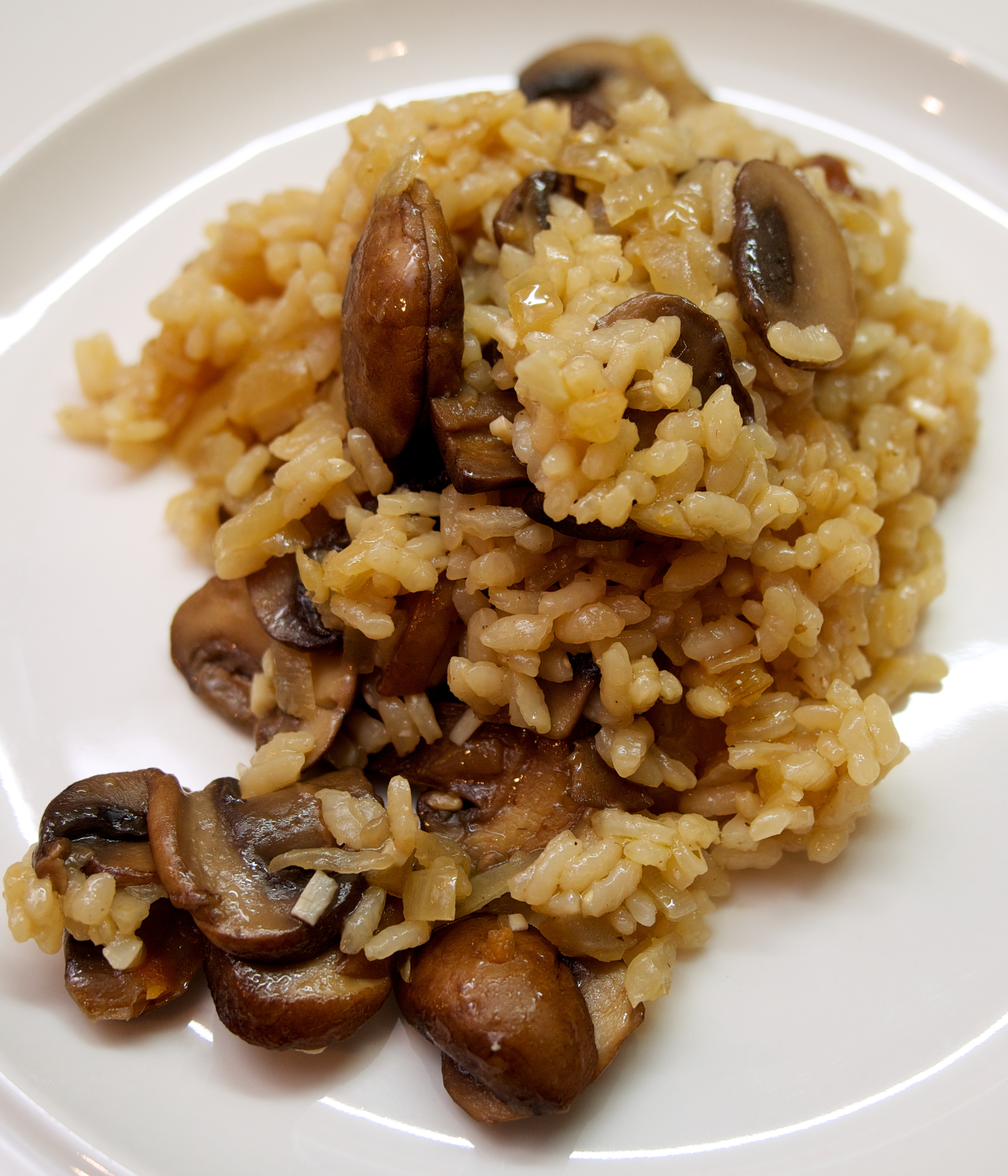
Mushroom risotto


A classic recipe from one of our reliable sources of inspiration; Leith’s.

Not terribly seasonal so you might like to keep this for the Autumn when the mushroom selection is better.

Mushroom Risotto – serves 4

  • 1 onion, finely diced
  • 150g unsalted butter
  • 100g Parmesan cheese, grated (plus more to serve)
  • 300g risotto rice (Arborio, Carnaroli or Vialone Nano)
  • 15-20g dried wild mushrooms
  • 400g mixed wild mushrooms
  • 150ml dry white wine
  • 1.5-2 litres chicken or vegetable stock

Add the dried wild mushrooms to the stock, bring to a simmer, then remove from the heat and leave to infuse for 10-15 minutes. Strain the stock and return to the pan. Bring  back to a gentle simmer, then reduce the heat to as low as possible.

Meanwhile, sauté the soaked mushrooms with the mixed wild mushrooms in 50g of the butter over a medium-high heat for 3-4 minutes or until browned and any excess water has gone. Set aside and keep warm.

Melt another 50g of the butter in a large, shallow saucepan, add the onion and sweat over a low heat until completely soft but not coloured (about 10 minutes).

Add the rice to the pan and fry gently, stirring until coated in the butter. Add the wine and bring to the boil, then reduce the heat and cook, stirring, until the wine has been absorbed.

Start adding the stock, a ladleful at a time, stirring all the time, and making sure each ladleful is absorbed before adding the next. Keep going until the rice is just cooked, about 25 minutes. If you run out of stock use a little boiling water. Make sure the risotto is quite fluid at this stage as it will thicken on standing and you are aiming for a loose, almost sloppy texture.

Take the pan off the heat and stir in the last 50g of butter, the grated Parmesan and the sautéed mushrooms. Season to taste and allow to stand, covered, for 5 minutes before serving with extra Parmesan.

(Original recipe from Leith’s How to Cook, Quadrille, 2013.)


Read Full Post »

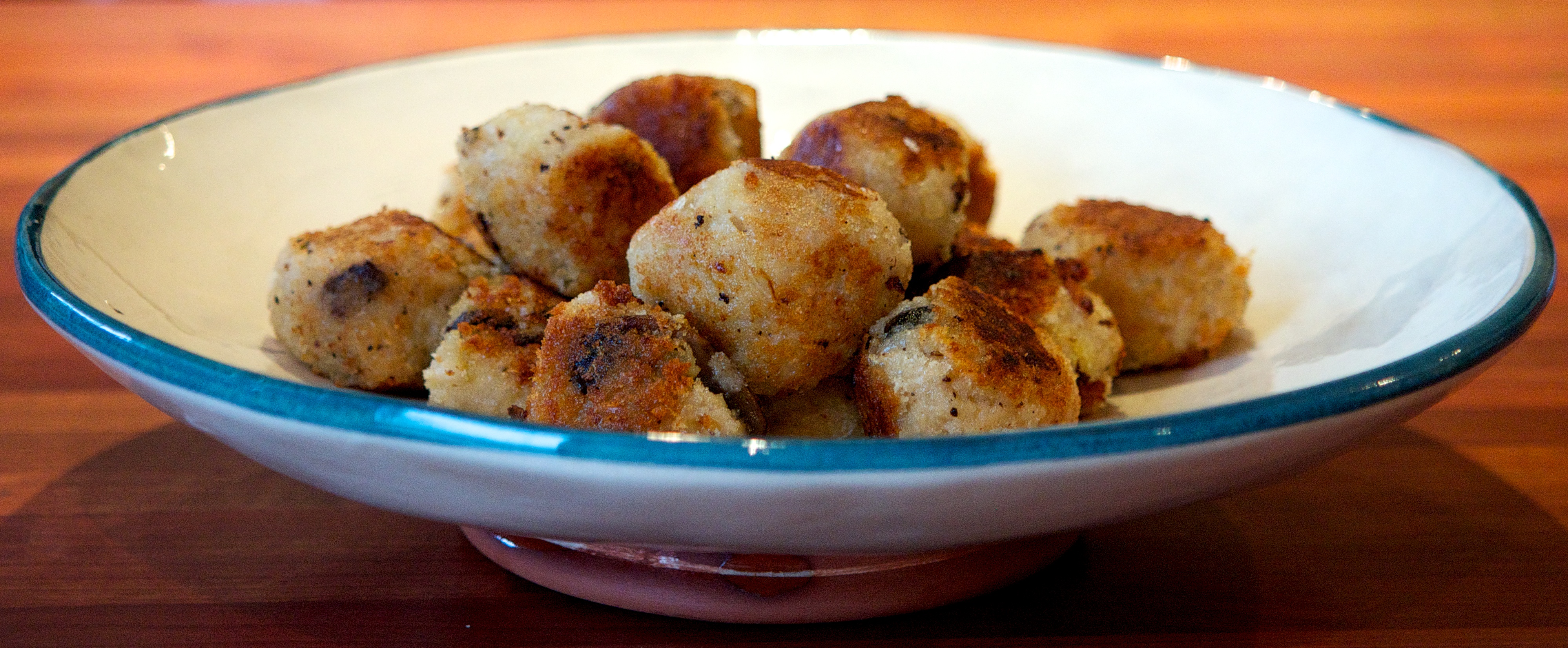
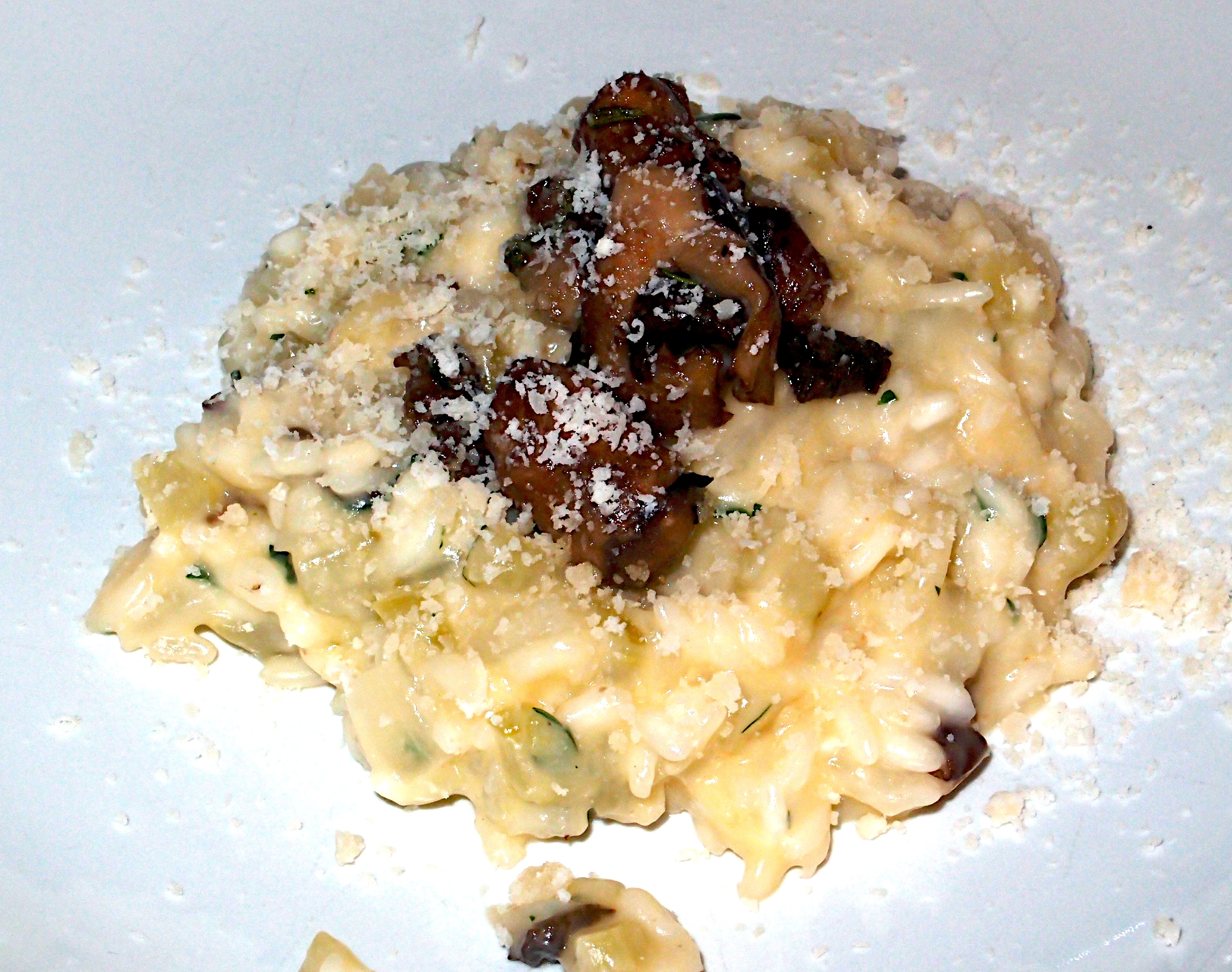
Mushroom Arancini

These little arancini or  risotto balls are the perfect solution for leftover risotto which tends to turn a bit claggy. We made ours from leftover mushroom risotto but you can use any flavour. The joy of arancini is the crisp exterior and melting centre; easy and moreish.

Easy Arancini – serves 3-4

  • 350g leftover risotto
  • 25g Parmesan cheese, finely grated
  • 50g breadcrumbs
  • 4-6 tbsp olive oil

Put the risotto into a bowl and stir in the Parmesan. Spread the breadcrumbs out on a flat plate.

Use your hands to roll the risotto into ping-pong-sized balls, then roll in the breadcrumbs to coat, and put on a baking tray.Chill the risotto balls in the fridge for at least half an hour.

Put a large frying pan on a high heat and add 2 tbsp of the oil. Wait for the oil to get hot before adding a few arancini. Fry for about 4 minutes, turning now and then, until golden brown all over.

Drain the cooked arancini on a serving plate lined with kitchen paper, then repeat to cook the rest, adding more oil as needed.

(Original recipe from Rachel Allen’s Everyday Kitchen, HarperCollins, 2013.)

Read Full Post »

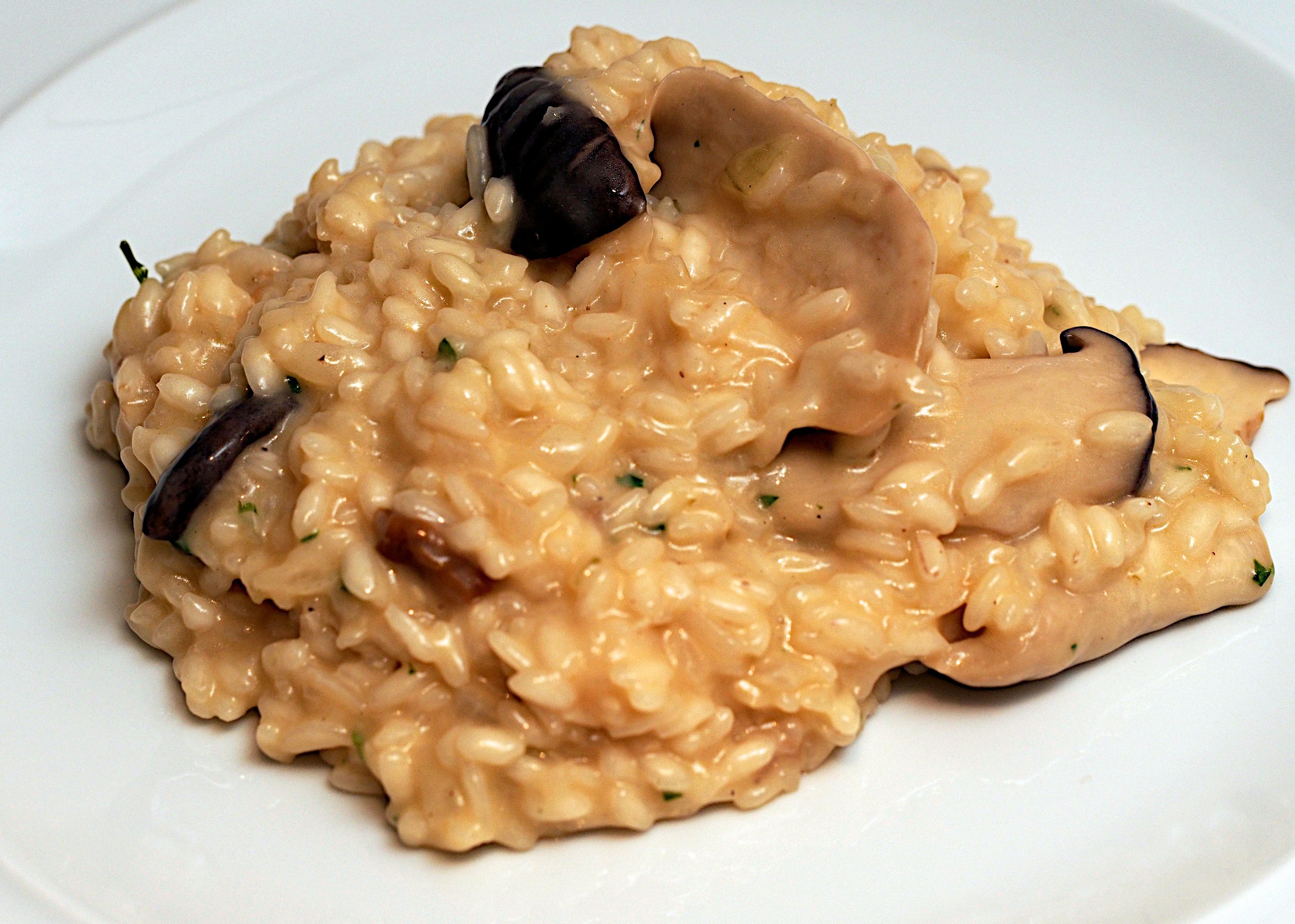
Ceps are not cheap but they are worth every penny in our opinion. If you can’t get ceps, or you are not feeling extravagant, you can use other fresh wild mushrooms. This is a very rich and luxurious dish.

Cep Risotto – to serve 4

  • about 8 pieces of dried porcini (ceps), roughly chopped
  • 250g fresh porcini, wiped clean (don’t wash them)
  • 75g butter
  • 2 garlic cloves, finely chopped
  • 150ml dry white wine
  • 2.5 litres good chicken or vegetable stock
  • 1 onion, chopped super fine
  • 400g vialone nano rice
  • 2 tbsp chopped parsley
  • 75g cold butter, cut into small dice
  • 100g finely grated Parmesan

Soak the dried porcini in a bowl of water for a couple of hours or until soft. Lift the porcini out of the water and squeeze to get rid of extra moisture.

Slice the fresh porcini lengthways.

Heat 20g of the butter in a sauté pan over a low heat, add the garlic and cook until soft but not coloured. Add the fresh porcini slices with 2 tbsp of the wine and toss around for a minute over a low heat, you want the mushrooms to stew rather than fry. Season, cover with a lid and set aside.

Bring the stock to the boil, then turn down to a simmer.

Melt the first 75g of  butter in a heavy-based pan and add the chopped onion. Cook gently until soft but not coloured (about 5 minutes).

Add the dried porcini, then the rice and stir to coat the grains in the butter. Make sure the grains are warm before adding the rest of the wine. Let the wine evaporate completely so the onion and rice are dry.

Start to gradually add the stock, a ladle at a time, stirring the rice all the time. Wait until each addition of stock has almost evaporated before adding any more. Keep cooking like this for about 15 minutes, adding the stock and stirring continually as above. Taste and keep cooking until the grains are soft, but still have a little bite.

Turn the heat down and add the fresh porcini and the parsley. Allow the risotto to rest for a minute, then vigorously beat in the 75g cold diced butter with a wooden spoon and then the Parmesan. Season to taste and serve.

Wine Suggestion: Something with a bit of what wine geeks call sous bois (forest floor) or in other words some earthy or mushroomy flavours. Pinot Noir is a classic match and an oaked Chardonnay similarly, but given the Italian inspiration this would also pair beautifully with an elegant and developed Barolo or an aged Brunello di Montalcino.

(Original recipe from Georgio Locatelli’s Made in Italy Food & Stories, Fourth Estate, 2006.)

Read Full Post »

This is a fabulous recipe for left-over roast chicken and it’s even worth roasting a bird especially (though we cheated with a shop-bought rotisserie one). You can make a decent chicken stock by pouring water over the carcass and simmering it with a carrot, bay leaf and onion for half an hour.

Creamy Roast Chicken Risotto – to serve 2

  • 1 medium onion, peeled and finely chopped
  • 50g butter
  • small bunch of thyme leaves
  • 250g arborio rice
  • 1 litre hot chicken stock
  • 350g leftover roast chicken, torn into bite-size chunks
  • 100g crème fraîche
  • a handful of chopped parsley
  • Parmesan, grated

Melt the butter in a heavy, shallow pan and cook the onion gently until soft but not coloured. Stir in the thyme leaves and the rice and stir until the rice is glistening. Add a little of the hot stock and bring slowly to the boil. Turn the heat down and gradually add the stock, a ladleful at a time, stirring. Stir in the roast chicken as you add the last ladleful of stock.

After about 20 minutes the rice should be tender but with a little bite to it. Stir in the crème fraîche and parsley, then some seasoning. Leave to rest for 5 minutes before serving with a little Parmesan grated over.

Wine Suggestion: A glass of Vintage Champagne if you’re feeling extravagant or  a good Maconnais white, like Pouilly-Fuisse or possibly even something from Roussillon like a Limoux… the choices are endless but don’t go too dry you need a bit of fruitiness here to help with the richness of the dish and a bit of body too otherwise the wine will be overwhelmed.

(Original recipe from Nigel Slater’s Real Food, Fourth Estate, 1998.)

Read Full Post »

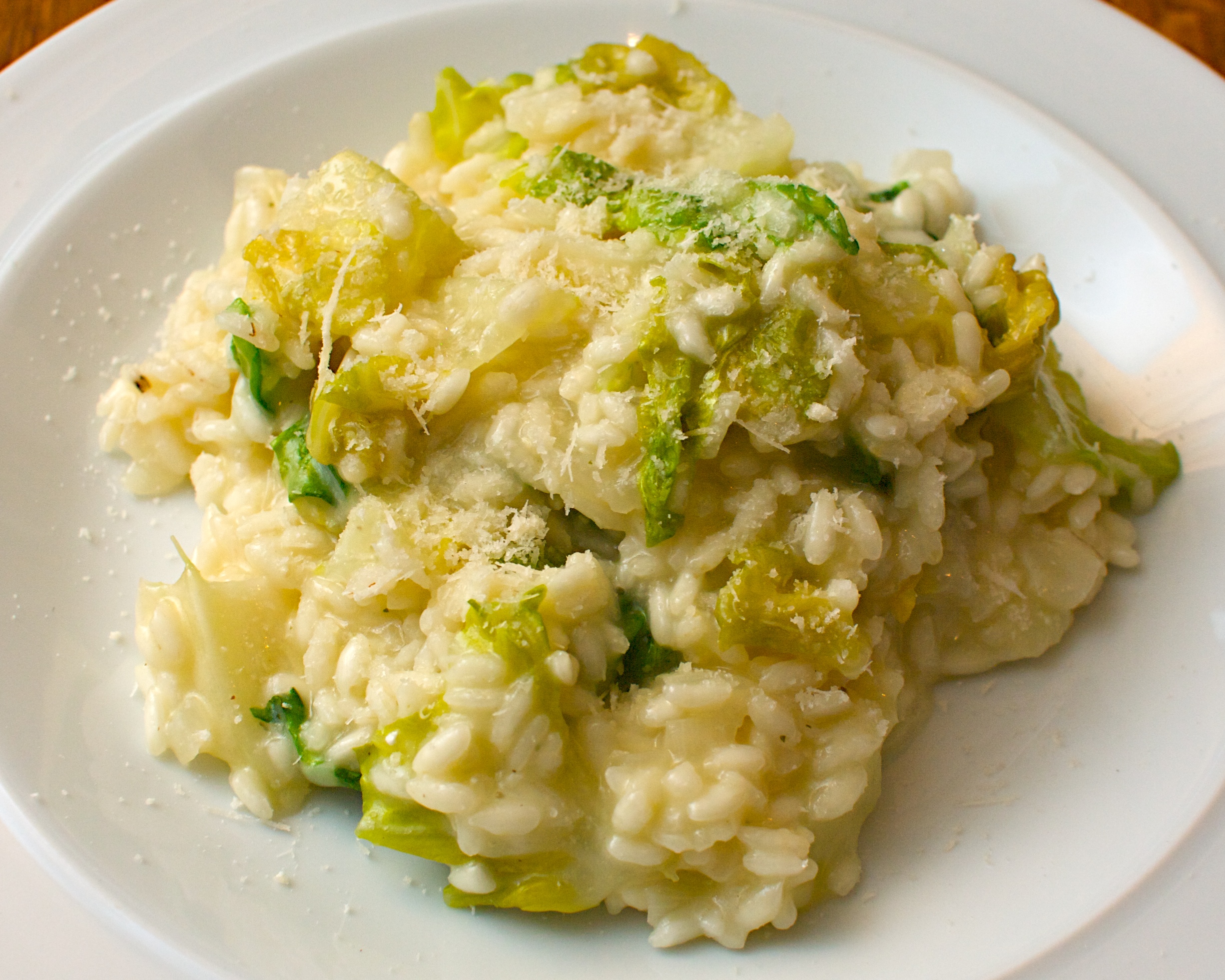
Who says lettuce is just for salad? An unusual contrast of flavours and textures which works exceptionally well.

Little Gem Lettuce Risotto – to serve 4

  • butter
  • 1 onion, finely chopped
  • 2 garlic cloves, finely chopped
  • 350g risotto rice (carnaroli or arborio)
  • 1 large glass of white wine
  • 1.5 litres vegetable stock, kept hot
  • 50g Parmesan, grated
  • 2 little gem lettuces, torn into small pieces

Melt a knob of butter in a large saucepan, add the onion and garlic and cook until soft and translucent.

Add the rice and stir to coat with the butter. Add the wine and stir until evaporated.

Add the stock gradually, a ladle at a time, until the rice is cooked but still has a bit of bite – you probably won’t need all of the stock.

Add the cheese and lettuce, stirring to gently wilt the lettuce leaves. Serve with some extra cheese.

Drink with: a glass of sparkling Spanish Cava. We had a bottle open and it was a great match!

(Original recipe from BBC Good Food)

Read Full Post »

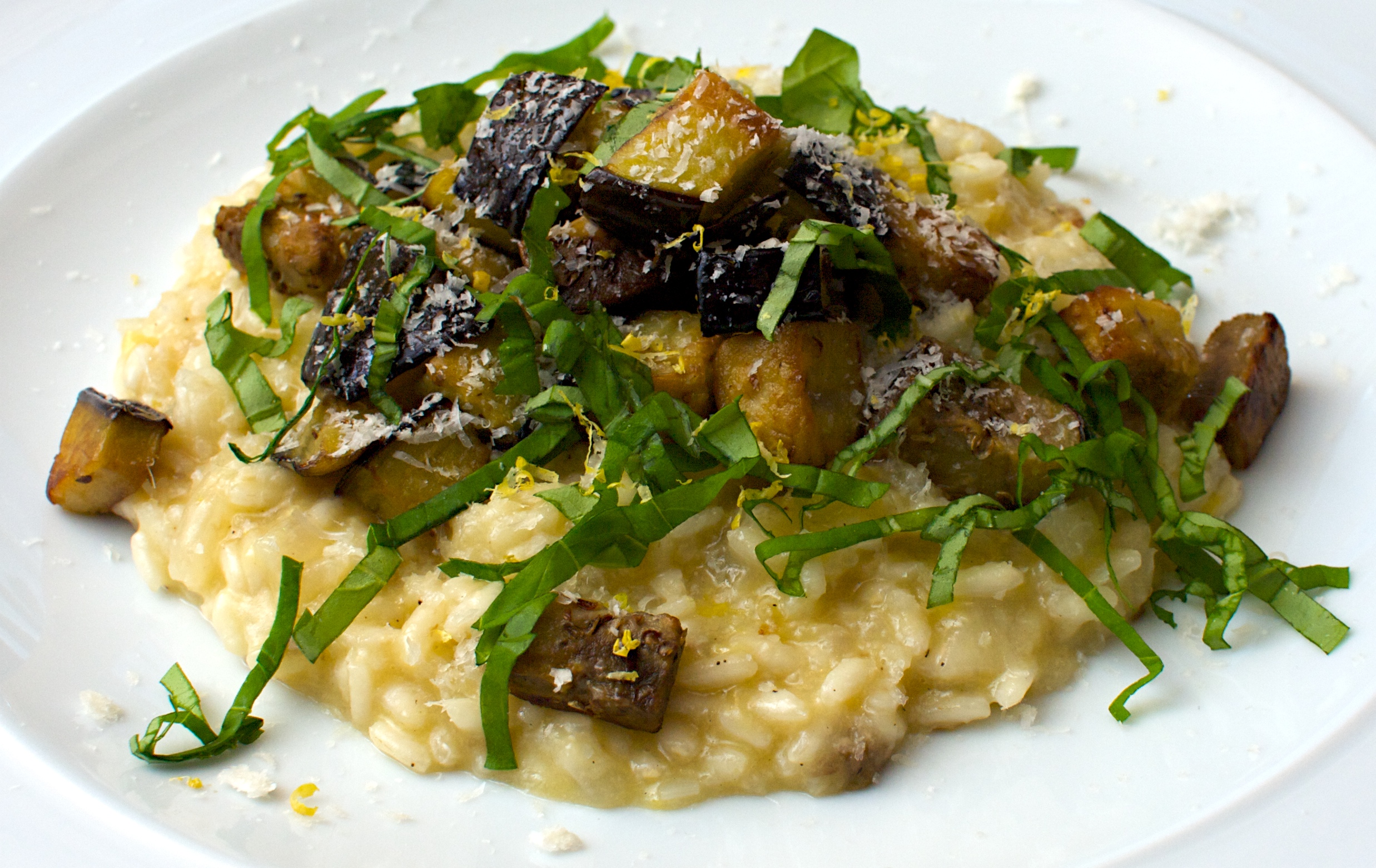
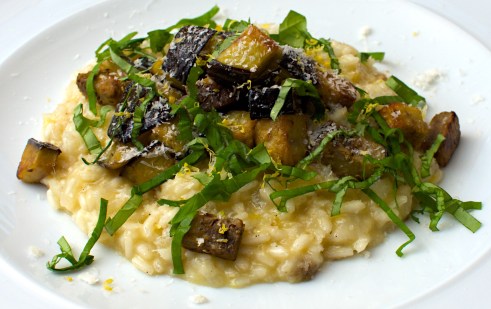
Another delicious dish by Yotam Ottolenghi who recommends making some home-made stock which we duly did. Throw some aromatic vegetables and herbs into a large pot (we used carrot, celery, onion, parsley, garlic, lemongrass and fennel), cover with water and simmer for 30 minutes. This dish does take some time to make but is completely worth the effort and time with levels of flavour and texture that really make this risotto special.

Lemon and aubergine risotto – to serve 4

  • 2 medium aubergines
  • 130ml olive oil
  • 1 medium onion, finely chopped
  • 2 garlic cloves, crushed
  • 200g good-quality risotto rice
  • 120ml white wine
  • 750ml hot vegetable stock
  • grated zest of 1 lemon
  • 2 tbsp lemon juice
  • 20g butter
  • 50g Parmesan, grated
  • 10g basil leaves, shredded

First you need to literally burn one of the aubergines. Pierce it with a sharp knife then put on a foil-lined tray and place under a hot grill for an hour, turning now and then. You need the aubergine to deflate and the skin to be burnt and breaking. Carefully spoon out the soft flesh without getting any of the burnt skin, then chop the flesh roughly and set aside.

Cut the other aubergine into 1.5 cm cubes. Heat 80ml of the olive oil in a frying pan and fry the aubergine in batches until golden and crisp. Transfer to a colander, sprinkle with salt and leave to cool.

Put the onion and the rest of the oil in a heavy-based pan and fry slowly until soft. Add the garlic and cook for 3 minutes. Turn up the heat and add the rice, stirring until it is well coated with oil. Fry for a few minutes, then add the wine and cook until nearly evaporated. Turn the heat down to medium.

Start adding the hot stock to the rice, a ladeful at at time, and wait until each addition is absorbed before adding the next and stirring all the time. When all the stock has been added take the pan off the heat. Add half the lemon zest, the lemon juice, grilled aubergine flesh, butter, most of the Parmesan and ¾ tsp salt. Stir well, then cover and leave to rest for 5 minutes. Taste and correct the seasoning with more salt and some black pepper.

Serve the risotto sprinkled with the diced aubergine, the rest of the Parmesan, the basil and the rest of the lemon zest.

Drink with: an Italian red to complement the earthy flavour of the charred aubergine and stand up to the acidity of the lemon. We drank a Chianti Rufina made by Selvapiana, where we visited in April, and it was superb.

(Original recipe from Plenty by Yotam Ottolenghi, Ebury Press, 2010.)

Read Full Post »
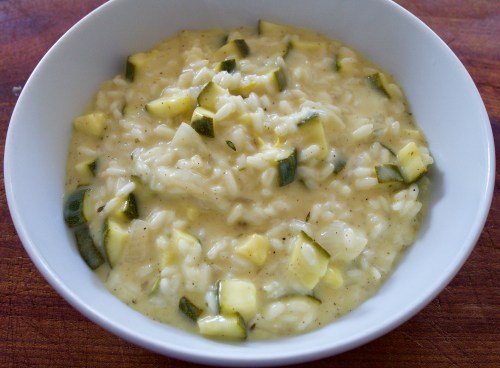
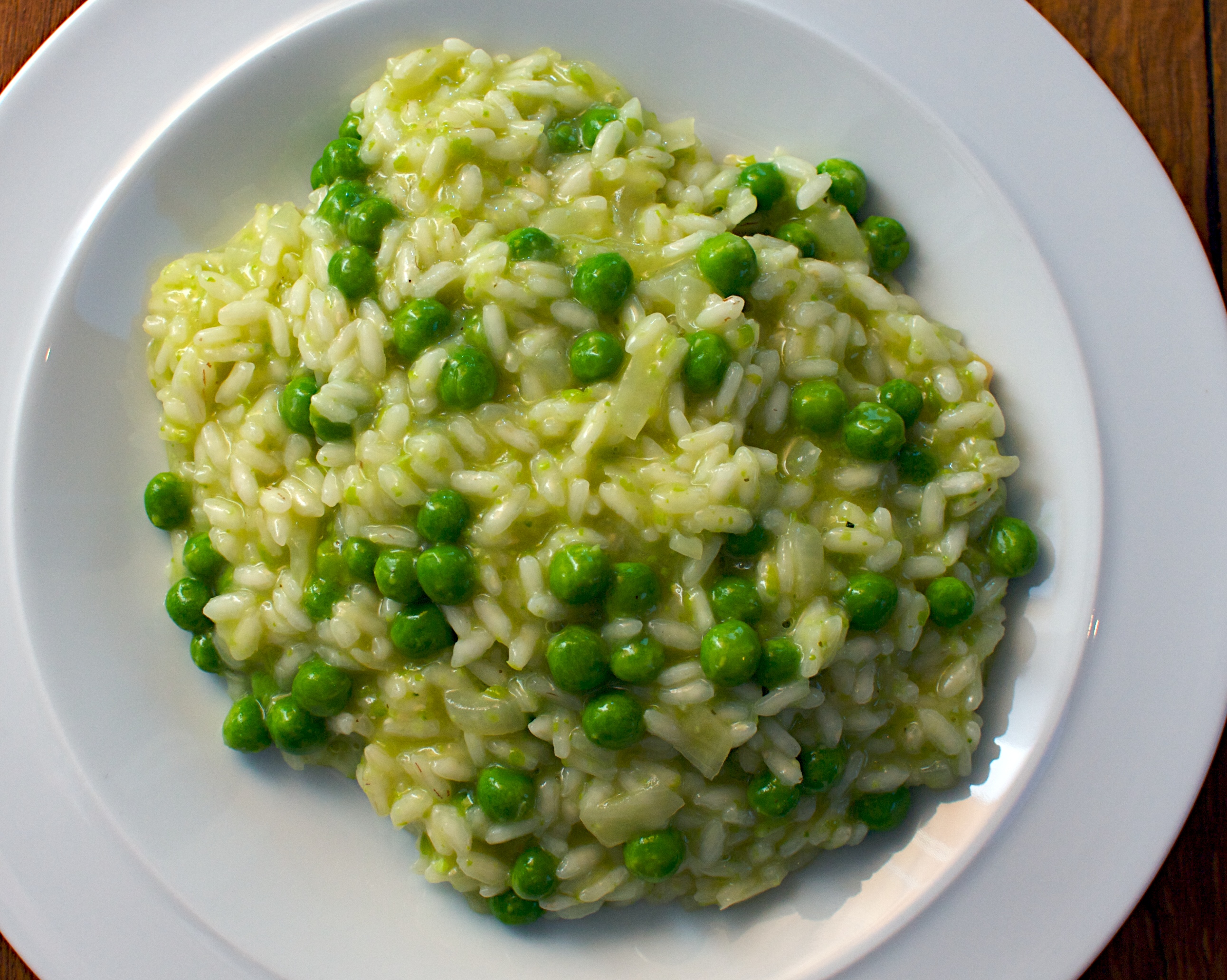
A bit of a celebration of peas. The original recipe also suggested topping it off with pea shoots at the end but unfortunately we couldn’t find any today. Not as tasty as some of our richer risottos (with much more butter and cheese) but very nice all the same.

Pea risotto – to serve 4

  • 50g butter
  • 1 onion, finely chopped
  • 300g cooked fresh peas
  • 1.7 litres hot vegetable stock (you might not need it all)
  • 350g risotto rice
  • 200ml white wine
  • 25g Parmesan, grated

Melt the butter in a large saucepan, add the onion and cook gently for about 10 minutes until very soft but not coloured.

Whizz about a third of the peas in food processor with a ladle of stock to make a purée.

Stir the rice into the onion, turn up the heat, then sizzle and stir for about a minute. Add the wine and bubble until it has all be absorbed, stirring the whole time. Continue cooking this way, adding a ladle of stock at a time and stirring continuously until the rice is tender and creamy. It should take between 20 and 30 minutes.

Stir in the pea purée, the remaining peas, Parmesan and seasoning, then turn off the heat and leave to stand for a few minutes. Drizzle with a splash of good olive oil before serving if you like.

Wine Suggestion: A Sauvignon Blanc should complement the fresh green pea flavour you can often find similar characteristics in the wine. We prefer the more subtle versions from the Loire Valley but there are some excellent examples from Marlborough in New Zealand that don’t go too over the top, like Morton Estate.

(Original recipe from BBC Good Food)

Read Full Post »

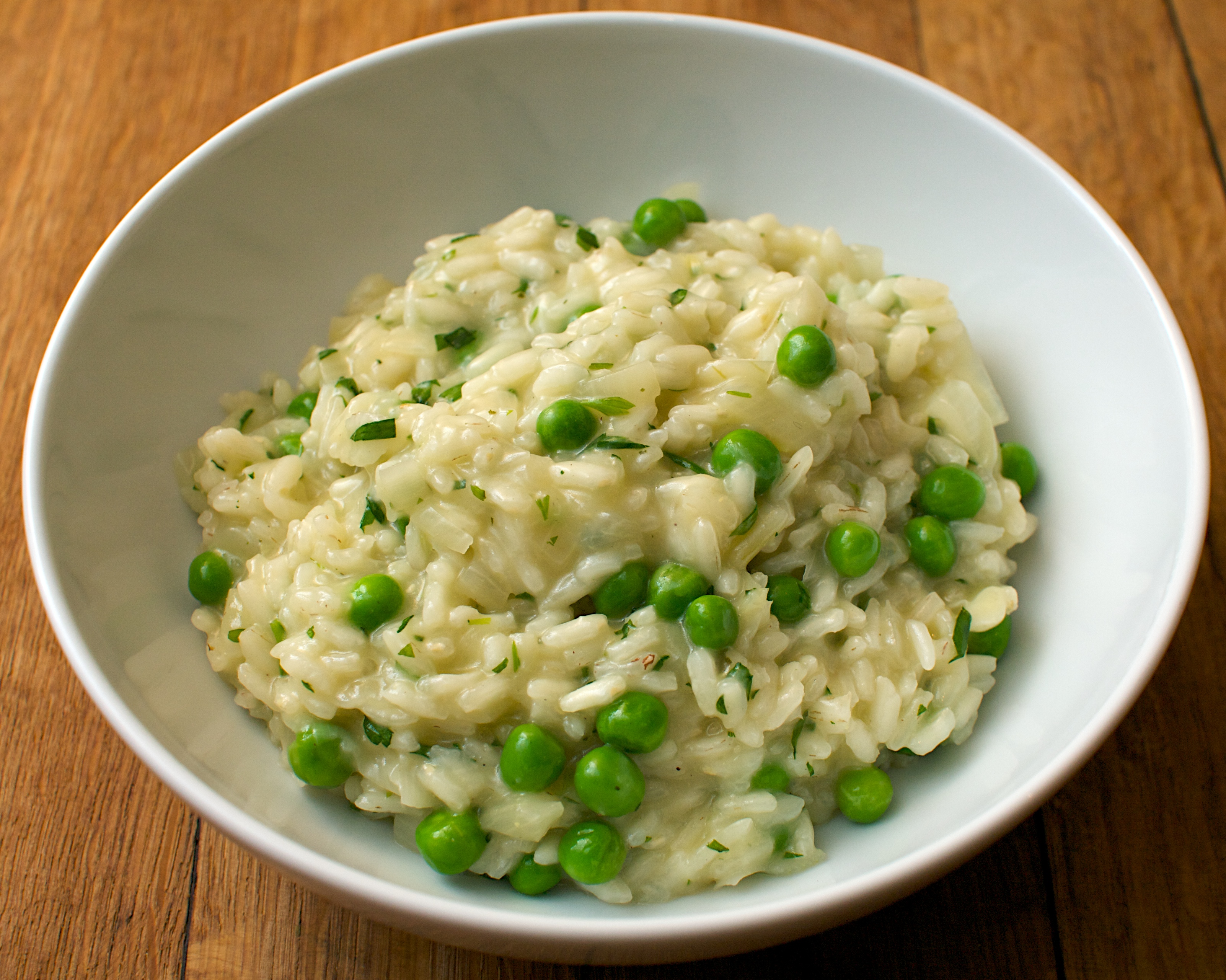
This is a great little risotto to help use up those half-used bags of fresh herbs. Tarragon, parsley and basil will all work well and you will probably have the rest of the ingredients in the cupboard already.

Pea & leftover herb risotto – to serve 2

  • 25g butter
  • 1 onions, finely chopped
  • 1 small garlic clove, crushed
  • 140g risotto rice
  • 600ml hot vegetable stock
  • 85g frozen peas
  • 2 tbsp chopped tarragon, basil or parsley
  • 1 tbsp grated Parmesan

Melt the butter in a saucepan, then add the onion and garlic. Cook for about 5 minutes or until softened, then stir in the rice.

Pour in a ladleful of stock and simmer until the liquid has been absorbed, stirring now and then. Keep adding the stock like this until it is all used and the rice is soft. Stir in the peas and tarragon and heat through for a couple of minutes. Check seasoning, then stir in the Parmesan and serve with some more Parmesan if you like.

Wine Suggestion: Sauvignon Blanc has characteristic herbal and green vegetal flavours which will complement the peas and herbs in this dish. We prefer the more subtle French versions, try one from the Loire Valley and don’t forget white Bordeaux.

 (Original recipe from BBC Good Food)

Read Full Post »

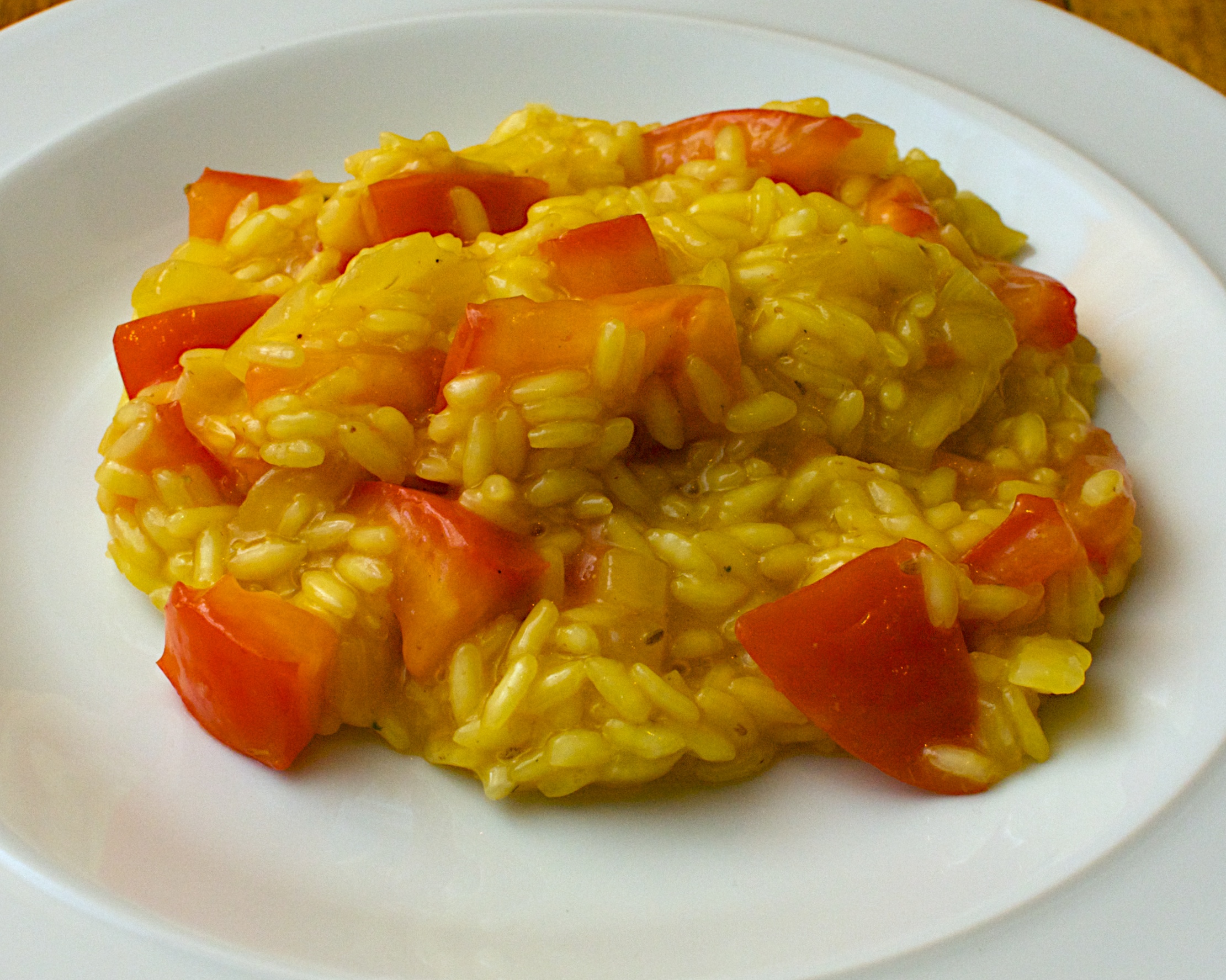
Mixing fresh tomatoes into a risotto is a revelation and adds a layer of freshness that is enhanced by the crushed fennel – yum! This is a lighter risotto with much less butter and cheese than we would normally add! Still there is loads of flavour and this is perfect for a weeknight (we try and save the butter and cheese for the weekend).

Saffron & tomato risotto – to serve 2

  • 1/2 tsp fennel seeds, crushed
  • 2 tomatoes, chopped
  • a large pinch of saffron threads, crushed
  • olive oil
  • 1 small onion, finely chopped
  • 1.5 litres vegetable stock
  • 275g arborio rice
  • 125ml white wine
  • 3 tbsp parmesan, grated

Mix the fennel seeds with the chopped tomatoes. Pour 1 tbsp of boiling water over the saffron to soak. Heat the oil in a wide, shallow pan and add the onion with some seasoning. Cook for a few minutes or until softened. Heat the stock in a separate pan until simmering.

Add the rice to the onion and cook for a few minutes or until the grains are glistening. Pour in the saffron and stir for a minute before adding the wine. Keep stirring until the wine is absorbed.

Add a ladleful of stock and stir again until absorbed. Keep doing this until the rice is cooked but still has a bite. Add the tomatoes and fennel seeds and cook for a minute. Serve with the Parmesan.

Wine Suggestion: Try a medium-bodied and well-rounded white from Italy, like a Fiano or Falanghina. Or you could push the boat out with a top quality Greco di Tufo, full of minerality but still with the freshness needed for this dish – we had none of these unfortunately 😦

Read Full Post »

Another cracker from Jamie Oliver. We have posted other risottos on this blog but none quite compare to this one – no doubt due to the copious quantities of butter and Parmesan. This is definitely a weekend dish! It is supposed to serve 6 but we served it as a starter for 8. Delicious!

Risotto ai funghi e prezzemolo (Roasted mushroom risotto with parsley)

  • 1.1 litres vegetable stock
  • 2 tbsp olive oil
  • a knob of butter
  • 1 large onion, peeled and finely chopped
  • 2 cloves of garlic, peeled and finely chopped
  • 1 bulb of garlic, cloves peeled and halved
  • 1/2 a head of celery, trimmed and finely chopped
  • 400g risotto rice
  • 2 wineglasses of dry white vermouth or dry white wine
  • 200g wild mushrooms, wiped clean and torn
  • a small bunch of thyme, leaves picked
  • a small bunch of flat-leaf parsley, very finely chopped
  • 1 lemon
  • 1 tbsp butter
  • 70g butter
  • 115g freshly grated Parmesan plus a bit extra for grating over
Preheat the oven to 200ºC/400ºF/gas 6.

Heat the stock. Put the olive oil and knob of butter into a separate pan, add the onion and finely chopped garlic and celery, and cook slowly for about 15 minutes without letting it colour. When the vegetables have softened, add the rice and turn up the heat.

Keep stirring the rice as it lightly fries. When is starts to look slightly translucent and glossy add the vermouth and keep stirring.

Once the vermouth has cooked into the rice, add a ladle of hot stock and a good pinch of salt. Turn the heat down to a simmer and keep adding ladlefuls of stock, stirring and massaging, allowing each ladle to be absorbed before you add another. This will take about 15 minutes but you do need to taste the rice and check if it’s cooked. If not, keep going with the stock until the rice is soft but still has a little bite. If you run out of stock just use some boiling water.

Meanwhile, heat a heavy ovenproof frying pan or tray until medium hot and add a splash of olive oil. Fry the mushrooms for a minute or more until they start to colour, and season with salt and pepper. Add the garlic, thyme and the tbsp of butter and mix together. Put the pan in the oven and roast the mushrooms for about 6 minutes or until cooked through. We discard the garlic at this stage.

When your rice is cooked take it off the heat and add the 70g of butter , the chopped parsley and the Parmesan. Stir well. Put a lid on the pot and allow it to sit for a couple of minutes.

Roughly chop chop half the mushrooms and stir into the risotto, adding a good squeeze of lemon juice too. Divide between plates and sprinkle over the remaining mushrooms and a bit of freshly grated Parmesan.

Read Full Post »

Woohoo it’s mushroom season at last. Cold weather has its virtues. We always think of risotto as a bit of weekend thing but it’s so quick and easy we’ve vowed to make every night a potential risotto night in future. The perfect mid-week treat.

Red wine  & mushroom risotto – to serve 4

  • olive oil
  • 50g butter
  • 1 red onion, chopped
  • 400g chestnut mushrooms (we used large field mushrooms)
  • 300g risotto rice
  • 350ml dry red wine
  • 750ml chicken stock
  • 3 tbsp grated Parmesan

Heat 2 tbsp olive oil and half the butter in a large, heavy pan. Fry the onions until nearly soft. Add the mushrooms and cook until golden. Add the rice, stir to coat with the oil and butter, and cook for a minute.

Add half the wine and let it bubble, stirring. Add the rest of the wine to the stock and heat gently. When the first lot of wine has been absorbed start adding the remaining stock and wine mix, a ladle at a time, stirring all the time. Make sure each ladle has been absorbed before you add the next. Continue adding liquid until  the rice is tender but still has a bite. Add the remaining butter and the parmesan, cover and let it sit for 5 minutes before serving.

Wine Suggestion: We found this recipe in BBC Olive Magazine (October 2011) in an article by Victoria Moore, drinks expert, who highly recommends a Barbera to go with this on account of it’s high acidity and hence palate-cleansing effects. It also complements the earthy mushroom flavours. We’d agree with that!

Read Full Post »

« Newer Posts - Older Posts »