Feeds:
Posts
Comments

Archive for August, 2011

This salad from ‘Ottolenghi: the cookbook’ has just a few fresh ingredients and tastes fantastic! Really good with some grilled meat off the barbecue.

Chargrilled cauliflower with tomatoes, dill and capers – to serve 2-4

  • 2 tbsp capers, drained and roughly chopped
  • 1 tbsp wholegrain mustard
  • 2 garlic cloves, crushed
  • 2 tbsp cider vinegar
  • 120ml olive oil
  • 1 small cauliflower, divided into florets
  • 1 tbsp chopped dill
  • 50g baby spinach leaves
  • 20 cherry tomatoes, halved

You can make the dressing in a food processor or by hand (we used the processor). Mix together the capers, mustard, garlic, vinegar and some salt and pepper. Whisk vigorously or run the machine while adding half the oil in a slow trickle. You should get a thick, creamy dressing. Taste and adjust seasoning.

Add the cauliflower to a large pan of boiling salted water and simmer for just 3 minutes. Drain and run under a cold tap to stop it cooking further. Leave in the colander to dry well, then put it in a mixing bowl with the rest of the olive oil and some seasoning. Toss well.

Heat a ridged griddle pan over the highest possible heat and leave it for 5 minutes or until it is really hot. Grill the cauliflower in batches – don’t over-crowd the pan. Keep turning until they are nicely charred all over and transfer to a bowl. While the cauliflower is still hot, add the dressing, dill, spinach and tomatoes. Stir together, taste and adjust seasoning again.

Serve warm or at room temperature.

(Original recipe from Ottolenghi The Cookbook published by The Random House Group).
 

Read Full Post »

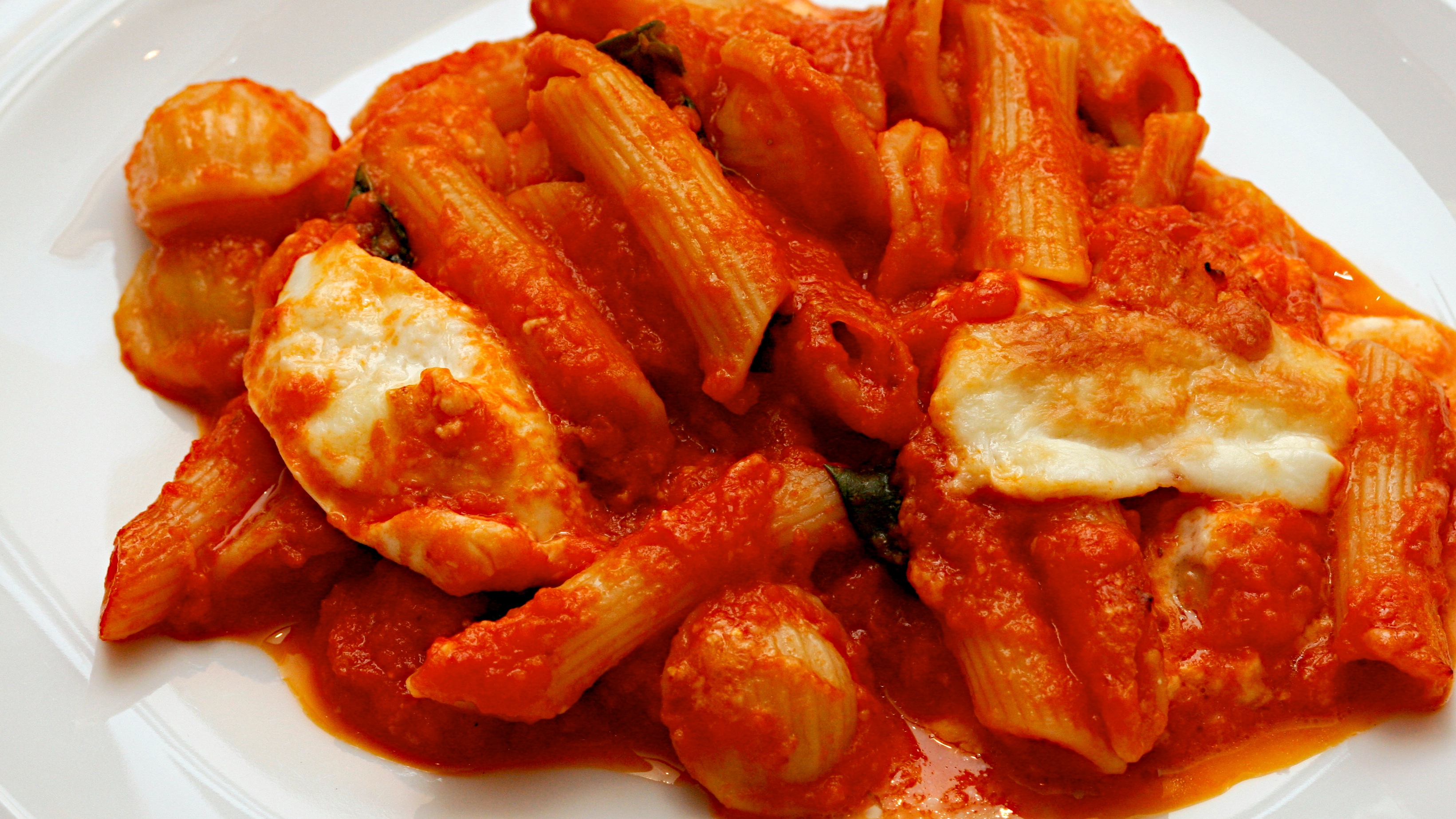
Otherwise known as “Jamie’s Pasta Bake”; a simple, tasty dish that can be easily doubled for parties. Delicious hot for dinner with some garlic toasts and also cold the next day for lunch.

The recipe suggests using orecchiette but any pasta shapes will do so it’s a great way to use up all the packets lying around the cupboard.

Baked pasta with tomatoes and mozzarella (serves 4 generously)

  • 1 onion, peeled and finely chopped (white onions are suggested but any other onion lying to hand will do)
  • 2 cloves garlic, peeled and finely sliced
  • 1 to 2 dried chillies, crumbled
  • 3 x 400g tins of good quality plum tomatoes
  • large handful of basil, torn
  • 1 tablespoon red wine vinegar
  • 400g short, any shaped dried pasta, preferably orecchiette
  • 4 very big handfuls of freshly grated parmesan
  • 3 x 150g balls of mozzarella, sliced
Preheat oven to 200C / 400F / Gas 6.

Heat a saucepan on Medium-low heat and a couple of glugs of olive oil, onion, garlic and chill. Slowly fry for 10 minutes until softened but not coloured.

Add tinned tomatoes and a small glass of water and bring to a boil. Simmer for 20 minutes. Wizz sauce until smooth add basil leaves, red wine vinegar and season.

Boil a large pot of salted water and cook the pasta shapes according to packet instructions. Drain and then toss with half the tomato sauce and a handful of parmesan.

Rub a little olive oil in a baking tray and layer a third of the pasta in the bottom. Follow by a layer of tomato sauce a handful of parmesan and 1 mozzarella ball. Repeat two more times and until ingredients are used up. Make sure that there is a good layer of cheese on the top.

Cook in oven for 15 minutes or until golden and bubbling.

Original recipe: Jamie’s Italy

Wine suggestions: This will work equally well with a nutty, dry white like a Verdicchio or Greco di Tufo or  a mid-weight red like Barbera, Montepulciano d’Abbruzzo or a fruity Chianti. You don’t need to get too complex as this is a very social dish so it suits a social and easy style of wine.

Read Full Post »

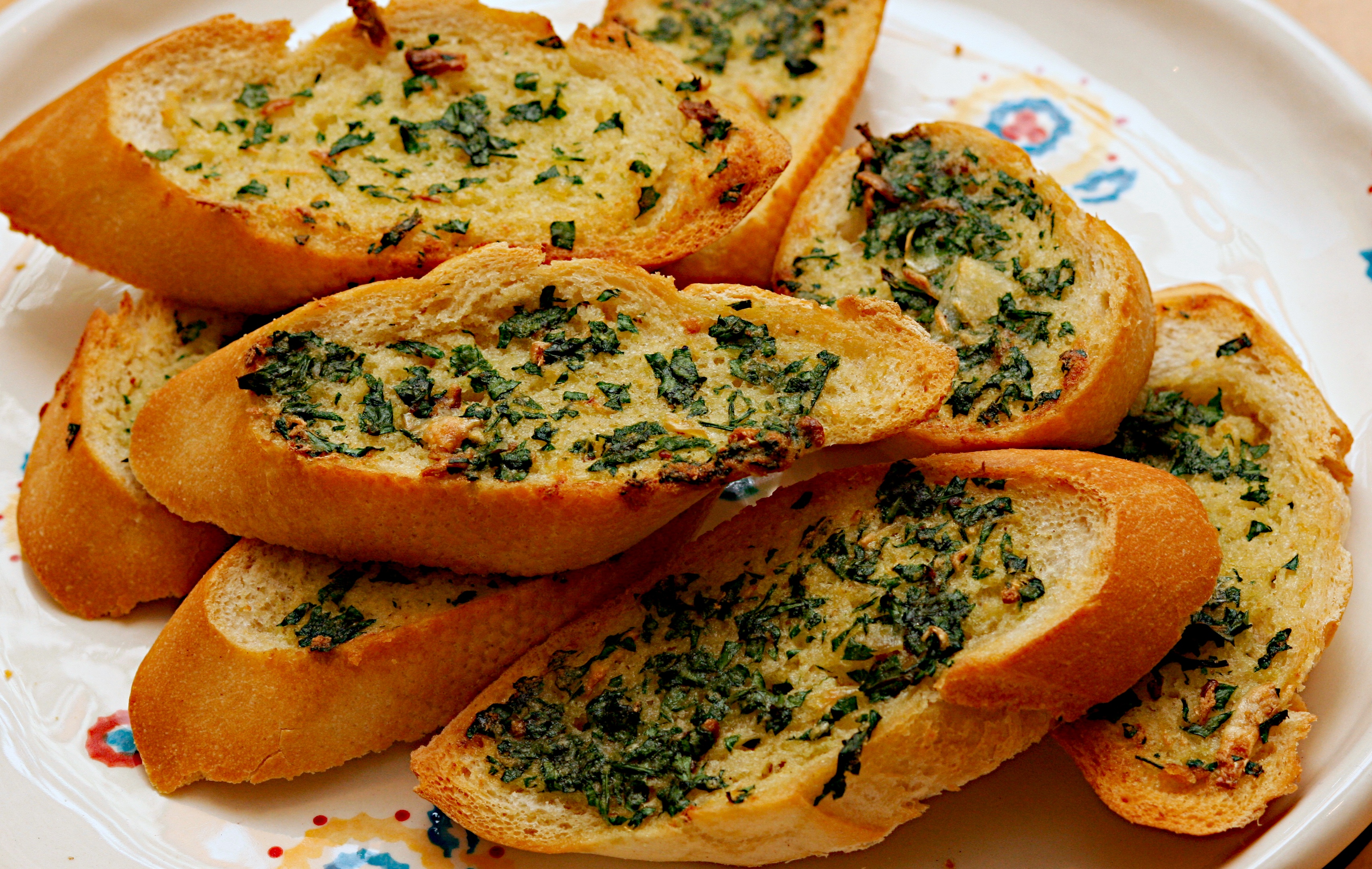
We love garlic bread but often the garlic is too raw and over-powering and it doesn’t love us back. For these toasts we roasted the garlic first before making the butter which gives a more subtle flavour.

You can make the garlic butter in advance.

Garlic Toasts (serves 4, easily multiplied for larger quantities)

  • 3 fat Garlic Cloves, peeled
  • 1 tablespoon Olive Oil
  • 1 tablespoon butter
  • 1/2 tablespoon Flat-leaf Parsley, chopped
  • 4 slices of Crostini, or a demi-baguette, sliced diagonally
Preheat oven to 180C/350F/Gas 4.
Put garlic and olive oil in a small roasting tin and season with salt and ground black pepper. Cover with foil and roast for 20 minutes.
When cooked and golden, remove from oven, cool slightly and then mash the garlic cloves in a small bowl with a fork. Add the butter and parsley and mix thoroughly.
Put bread on baking tray, spread with the garlic butter and bake until crisp (roughly 5-10 minutes).
We served this with Jamie Oliver’s Pasta Bake to great effect.
Original recipe: Bill Granger’s “Every Day”, Murdoch Books

Read Full Post »

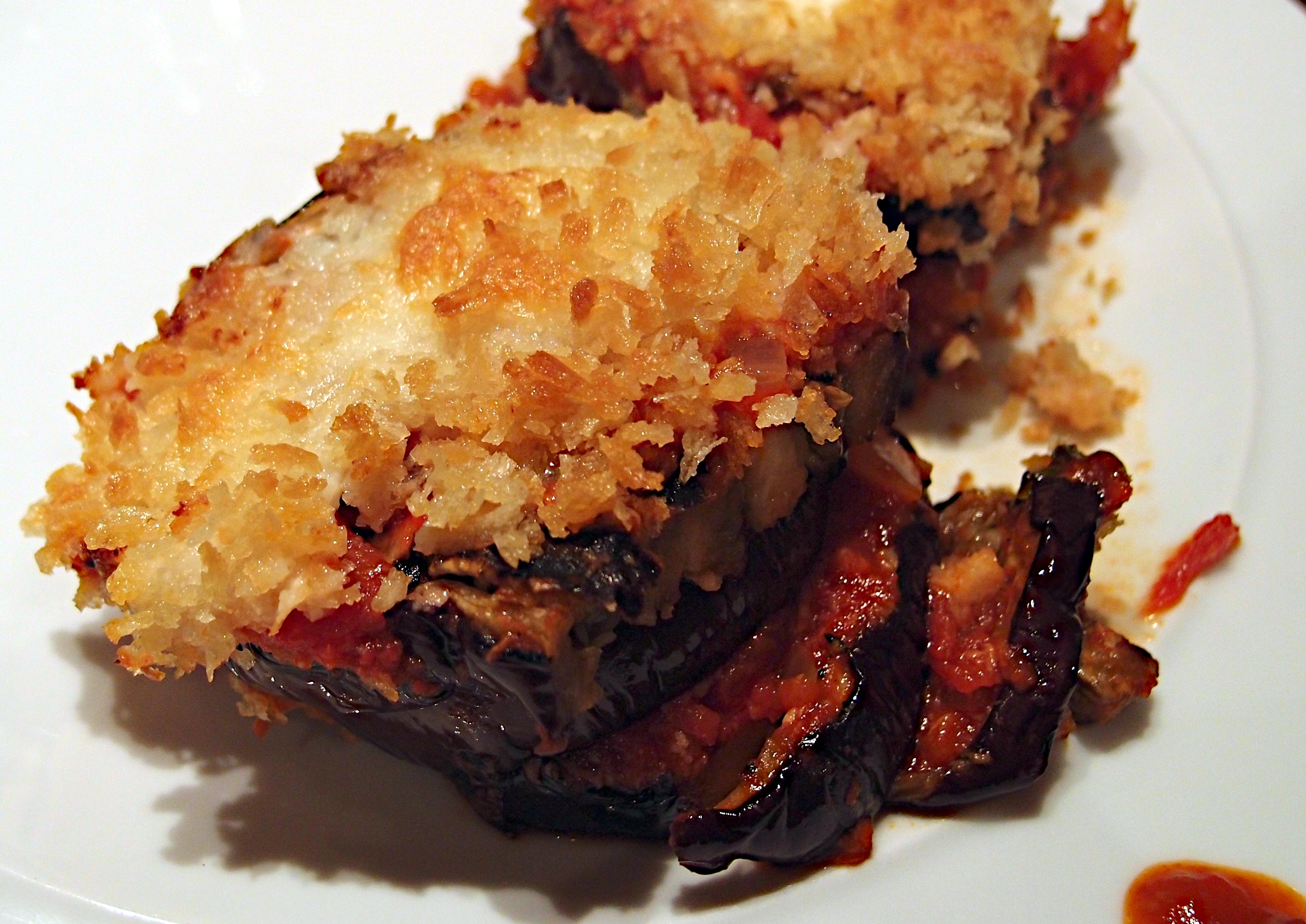
I think Jamie’s Italy might be our favourite Jamie book – it’s without a doubt the one we’ve cooked the most out of. This is a super way to use up aubergines which are bang in season at the moment. Jamie says this is a side dish but we served it as a main with some garlic bread and next time we’ll serve a green salad too. The revelation for us was to barbecue (or grill) the aubergines to avoid the oiliness you so often get with this dish.

Jamie’s Aubergine Parmigiana – to serve 6 as a side dish or 4 as a main

  • 3 large firm aubergines
  • olive oil
  • 1 onion, finely chopped
  • 1 clove of garlic, finely sliced
  • 1 heaped tsp dried oregano
  • 2 x 400g tins of good-quality plum tomatoes
  • a little wine vinegar
  • a large handful of basil
  • 4 large handfuls of freshly grated Parmesan
  • 2 handfuls of dried breadcrumbs (we used Panko)
  • a little fresh oregano, leaves chopped
  • 1 x 150g ball of buffalo mozzarella
Slice the aubergine into 1cm thick slices and set aside. Get the barbecue (or griddle pan) really hot. Meanwhile put some olive oil into a large pan and put onto a medium heat. Add the onion, garlic and dried oregano and cook for 10 minutes, until the onion is soft and the garlic has started to colour. Break up the tomatoes and add to the onion, garlic and oregano. Give it all a stir and cover and simmer slowly for 15 minutes.

Meanwhile, barbecue the aubergines until lightly charred, in batches. When the tomato sauce is reduced, season it carefully with salt, pepper and a tiny bit of wine vinegar, and add the basil.

Put a small layer of tomato sauce is an earthenware dish, then a thin scattering of Parmesan, followed by a single layer of aubergines. Repeat until the ingredients are used, finishing with a little sauce and a good sprinkle of Parmesan. Tear the mozzarella over the top and scatter over the breadcrumbs. Bake the dish at 190°C/375°F/gas 5 for half an hour until golden and bubbling.

Nice!

(Original recipe from Jamie’s Italy published by Penguin Group, 2005)

Wine suggestion: a great way to match food and wine is to look at where the food comes from … in this case Northern Italy so a nice Barbera d’Asti would work a treat.

Read Full Post »

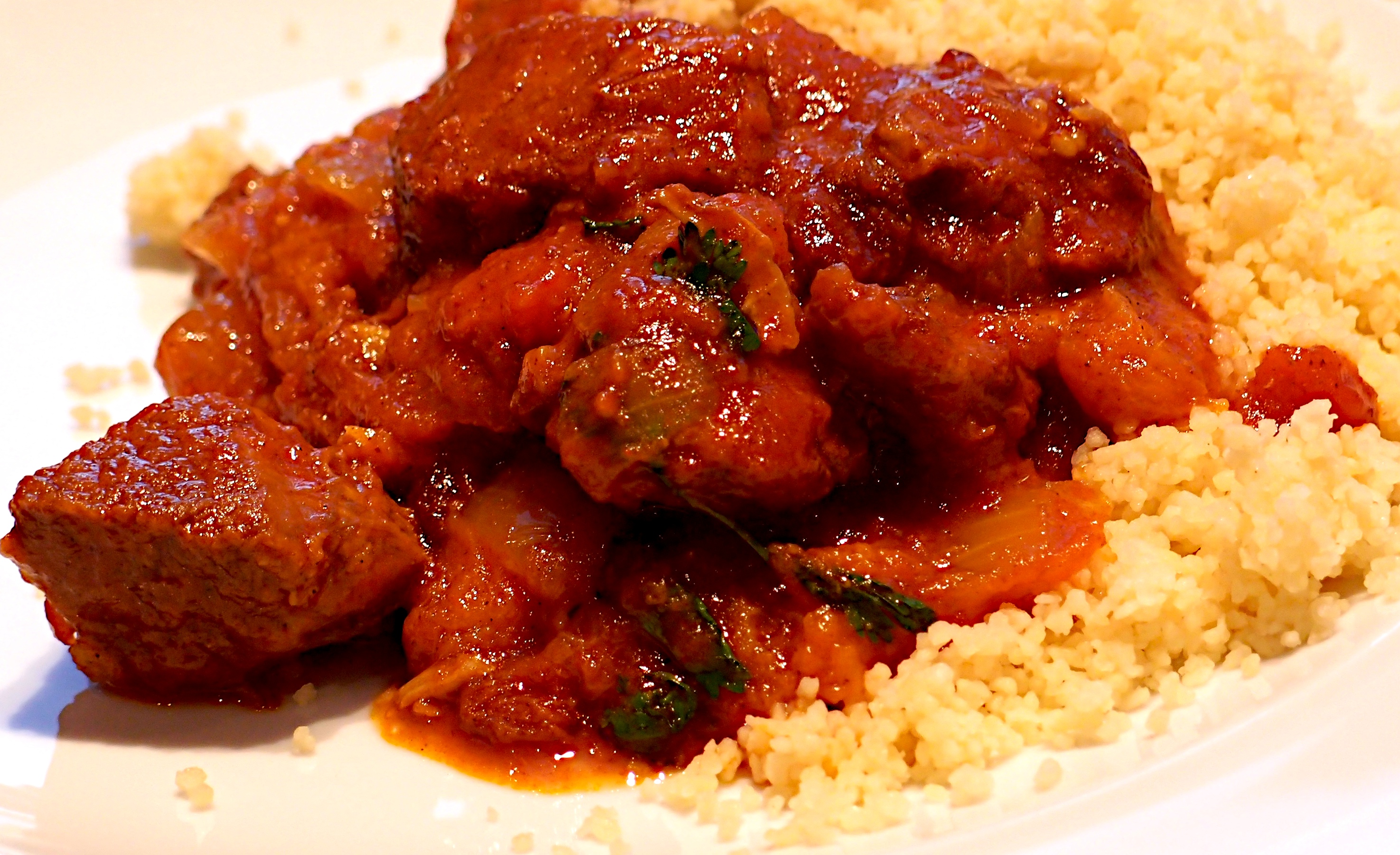
Jono liked this so much he swears that if he’d been on his own he would have scoffed the lot! The combination of lamb shoulder, spices, apricots and preserved lemons give this dish such richly and multi-layered flavours that are all exceptionally well balanced and moreish. Make the most of fresh apricots while we can get them!

This needs time to marinate which will add even more depth of flavour and tastiness, but if you forget even a short marinating time will still give a very nice result.

Lamb Tagine with Apricots (serves 4)

  • 1kg lamb shoulder, diced
  • 2 teaspoons ground cinnamon
  • 2 teaspoons ground turmeric
  • 1 tablespoon sweet paprika
  • 1 teaspoon hot paprika
  • 2 tablespoons olive oil
  • 3 onions, roughly chopped
  • 4 garlic cloves, finely sliced
  • 60g sultanas
  • 2 tablespoons runny honey
  • 1 teaspoon saffron
  • 750 ml vegetable stock
  • 2 x 400g tins chopped tomatoes
  • 350g fresh apricots
  • 1 preserved lemon, pulp discarded and skin finely chopped
  • 1 handful coriander leaves, torn
  • 1 small handful mint leaves, torn

Mix ground spices thoroughly together then toss lamb in half the ground spices and leave for at least 4 hours, but try to marinate from the night before (we didn’t read the recipe properly so didn’t marinade it at all and it was still fab!).

Heat oven to 160C/Gas 3. Warm olive oil gently in a deep, heavy-based casserole and add seasoned meat in small batches; brown on all sides and then remove. Next add the onions and garlic with the remaining spices and soften, stirring regularly. Add a little more oil if it dries too much because of the spices. Be careful to moderate the heat as you don’t want to burn the spices.

Add sultanas, honey, saffron, stock, tomatoes and whole apricots and then return the meat to the pan. Bring to the boil, season with salt and black pepper, cover with a lid and place into the oven.

Cook for 2.5 hours.

Remove tagine and stir in the preserved lemon. Lift meat out with a slotted spoon and boil sauce over a high heat until reduced and thick.

Return meat to sauce and stir in the coriander and mint.

Serve with couscous.

[Original recipe from Nigel Slater: Tender Volume II (fruits)]

Wine suggestion: a lighter Pinot Noir from New Zealand’s 2009 vintage. This vintage is excellent all the way across NZ so that even the €6.00 Tesco Finest: Marlborough Pinot Noir 2009 was a delight; and a complete bargain! (Thanks Michael!)

Read Full Post »

I’m sure we’ve already mentioned that we panic-buy skinless, boneless chicken thighs – though they do seem to be easier to get these days. Thighs are much tastier than chicken breasts and don’t have the same tendency to dry out.

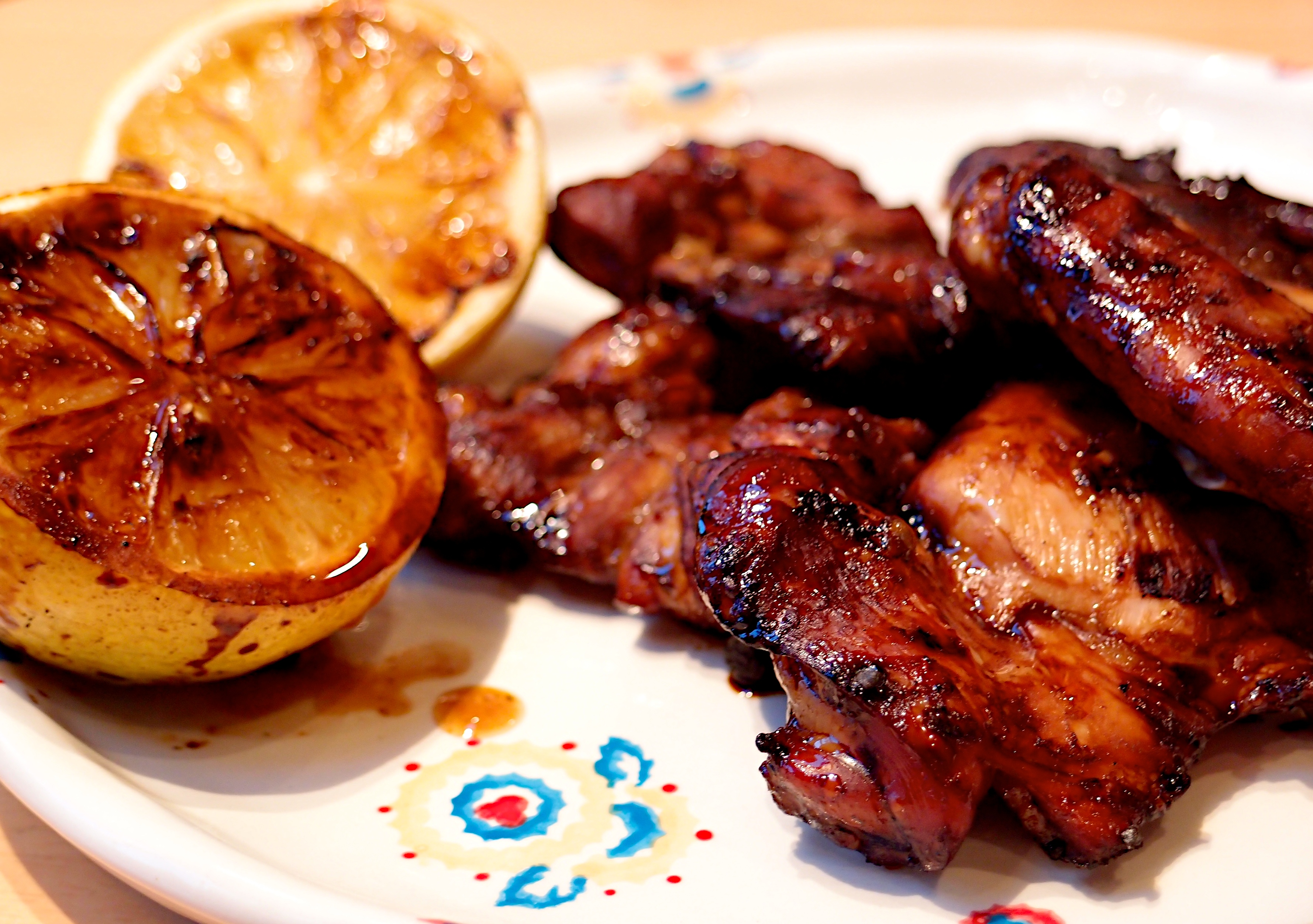
After a relatively sunny day on Sunday we deicided to plan a barbecue for Monday. Jono ended up standing outside in the rain under a big umbrella – that’s summer in Ireland! Do try barbecuing lemon halves – it makes them super juicy and a bit milder, perfect squeezed over grilled meat or fish.

Teryyaki mustard chicken – to serve 4

  • 8 boneless chicken thigh fillets – the skin can be on or off
  • vegetable oil, for brushing
For the teriyaki sauce
  • 3 tbsp beer
  • 3 tbsp Japanese soy sauce
  • 1 tbsp caster sugar
  • 1 tsp mustard powder
  • lemon halves, for serving
Combine the teriyaki sauce ingredients in a small bowl and stir until the sugar dissolves.

Put the chicken in a flat, non-metallic dish and pour over the marinade. Cover and refrigerate for no more than 3 hours, turning now and again. Take it out of the fridge 20 minutes before cooking.

Light the barbecue. Brush the grill with a little vegetable oil to stop the chicken sticking. Put the chicken thighs on the grill, reserving the marinade, and cook for about 5 minutes, turn and cook for another 3 minutes.

Start basting with the teriyaki sauce and turning every minute – for about 4 minutes or until the thighs start to look charred at the edges.

Check they are cooked through and remove them to a plate, cover and rest for 5 minutes before serving.

Serve with barbecued lemon halves to squeeze over.

(Original recipe by Ross Dobson for Sainsbury’s Magazine, August 2009)

Read Full Post »

There is something so comforting about chicken and rice. The butter and gentle spices  lift the otherwise bland background – a really simple but impressive dish.

Golden Chicken Pilaf – to serve 4

  • 50g butter
  • 4 skinless chicken breasts, cut into chunks
  • 2 onions, sliced
  • 1 cinnamon stick
  • 5 cardamom pods, lightly bruised
  • 4 whole cloves
  • 500g chicken stock mixed with a large pinch of saffron (from a cube is fine)
  • 300g basmati rice
  • a handful of roughly chopped coriander

Heat half the butter in a large wide pan with a lid. Brown the chicken in batches and set aside. Add the rest of the butter then tip in the onions and cook really slowly until tender and golden brown (around 10 minutes).

Add the garlic and cook for 2 minutes. Add the cinnamon, cardamom pods and cloves and cook for a minute. Add the chicken stock and chicken pieces, pour in the rice and stir well.

Cover tightly (if the lid isn’t tight, put a sheet of foil underneath) and cook on a really low heat for another 15-20 minutes until the liquid has been absorbed and the rice is tender. Scatter the coriander over before serving.

(Original recipe from BBC Olive, August 2007)

Read Full Post »

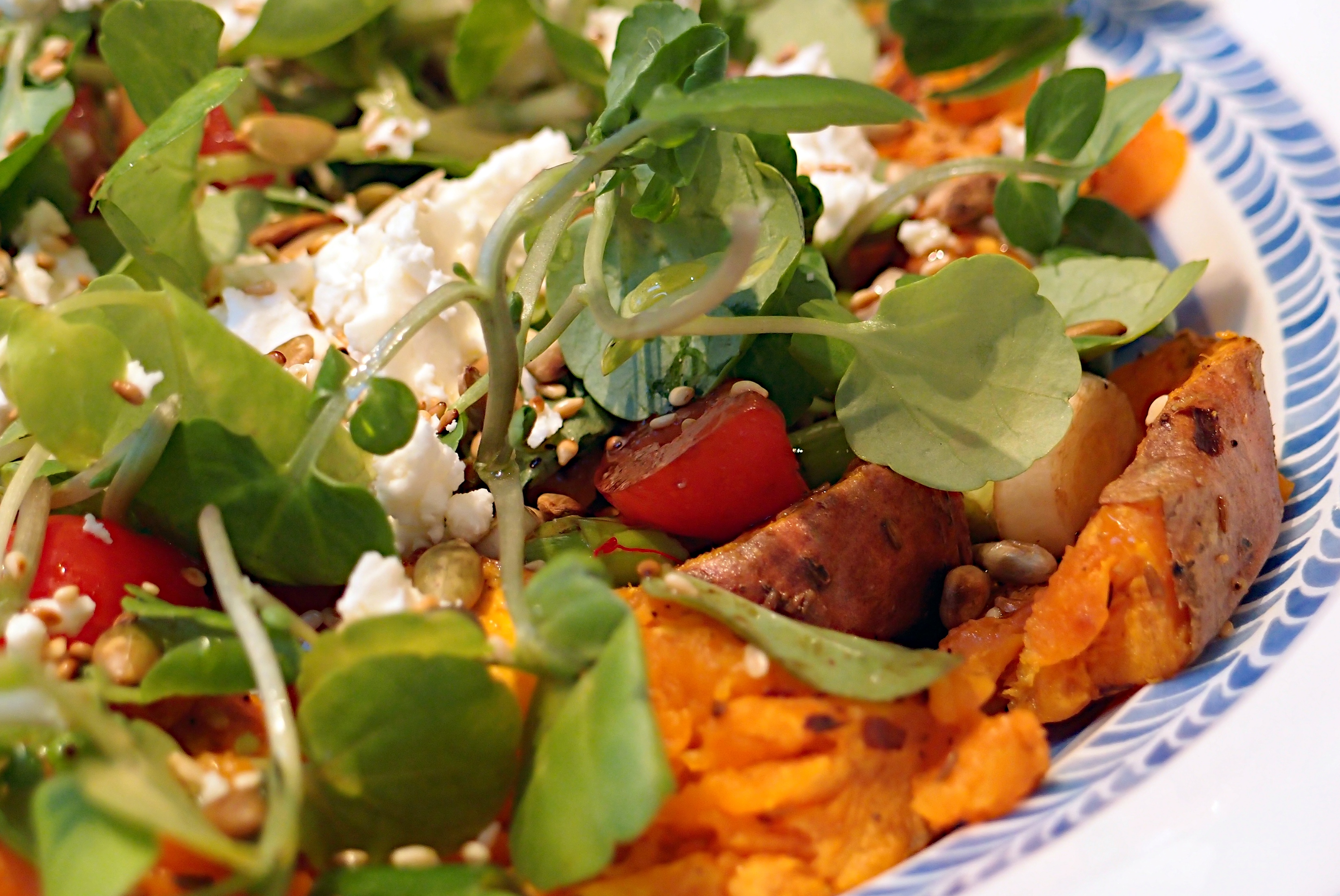
This was supposed to be Thursday night’s dinner but we were seduced by some Minervois and French food in La Cave instead. Thankfully it works just as well on a Friday night! The spicy sweet potatoes make this a main meal salad but you could also serve it as a side to some barbecued meat or even a starter.

Sweet potato salad – to serve 8 (we adjusted quantities to serve 2)

  • 4 large sweet potatoes, scrubbed
  • olive oil
  • 1 tbsp cumin seeds, crushed with a pestle and mortar
  • 3 dried chillies, crumbled 0r some chilli flakes
  • 4 scallions
  • 400g vine tomatoes
  • a small bunch of basil leaves
  • balsamic vinegar
  • 100g watercress
  • 200g feta cheese
  • a handful of mixed seeds, toasted (we used pumpkin, sunflower and sesame seeds)

Preheat the oven to 200C/fan 180C/gas 6. Roughly chop the sweet potatoes into large chunks then toss in olive oil, salt and pepper, the crushed cumin and chillies until well coated. Put on a baking tray and roast for about 25 minutes or until they are soft inside and crispy outside. Let them cool a bit.

Roughly chop the scallions and tomatoes and add to a bowl with the basil leaves. Dress with a good splash of balsamic vinegar and twice as much good quality olive oil, then season with salt and pepper.

Squidge the sweet potato on to a big platter and top with the dressed onions and tomatoes. Pile the watercress on top and crumble over the feta. Drizzle some more olive oil over and sprinkle with the toasted nuts. Delicious!

(Original recipe by Jamie Oliver for Sainsbury’s magazine, August 2009)

 Wine suggestion: try a white wine with good food ability and fresh fruit flavours. We chose a white Bordeaux, G de Guiraud, the dry white wine made by famous Sauternes producer Chateau Guiraud. The Semillon gives it a great food friendliness and structure to stand up to the many flavours in the salad, while the Sauvignon Blanc brings a fruitiness which balances the spicy chilli flavours.

Read Full Post »

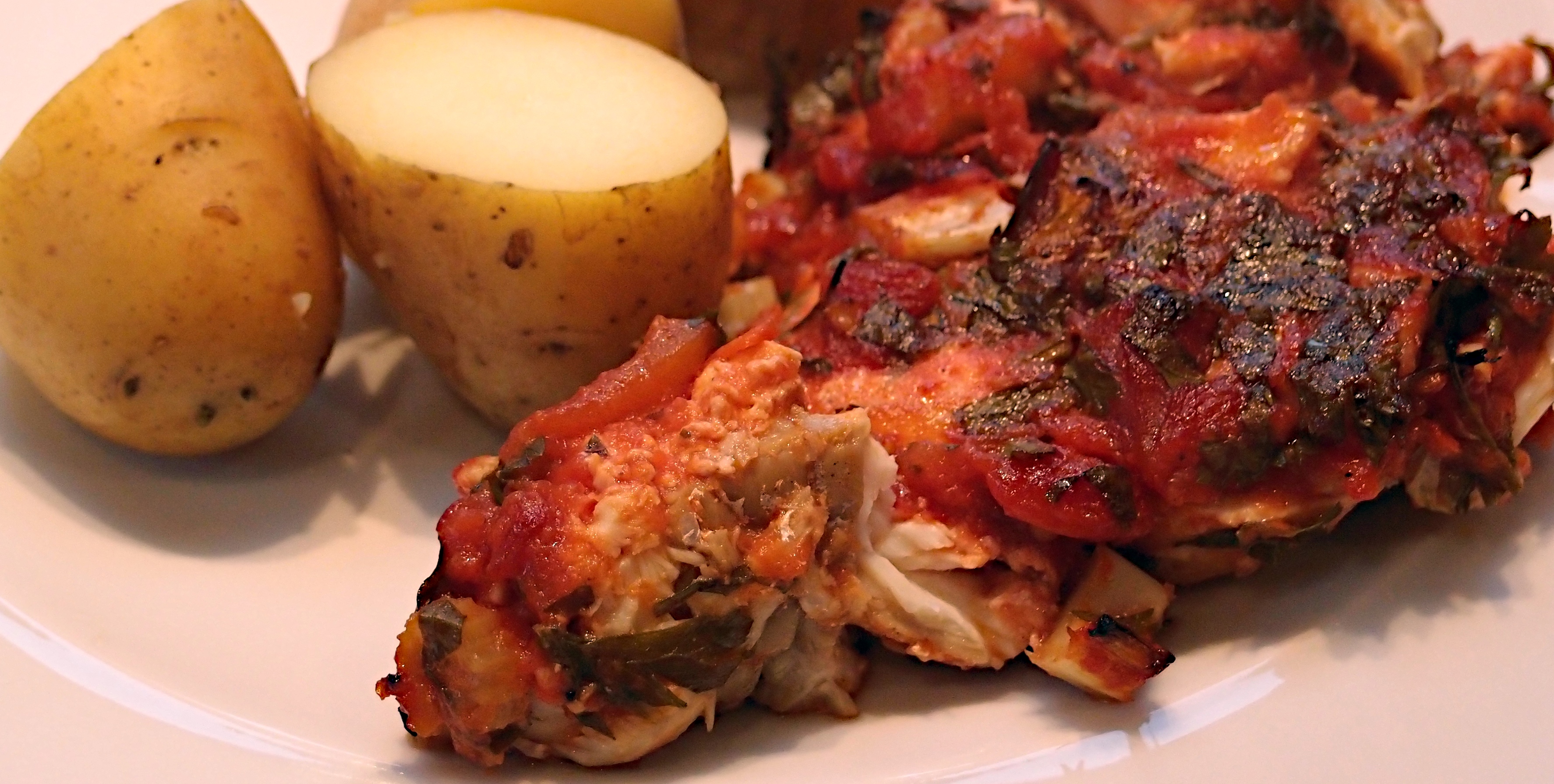
When we find recipes that do something a little differently and look like they work we have to give them a go. In this case Tessa Kiros suggested baking a firm white fish for one and a half hours which to our wisdom was too long to respect the fish flavours and texture but her enthusiasm and passion for the dish won out. The following recipe proved our preconceptions wrong and we had a delightful and flavoursome dish that proved a complete success. Definitely will be made again (and already has been :-))

Oven-baked fish with tomato & parsley (serves 4 )

  • 1 kg firm white fish fillets, skinned and cut into 6cm pieces
  • 400g tin tomatoes with juice
  • 15g (1/4 cup) chopped parsley
  • 4 large garlic cloves, finely chopped
  • 2 lemons, juiced
  • 2 celery stalks, very finely chopped with some leaves too if you like
  • 1 teaspoon sugar
  • 3 tablespoons olive oil

Preheat oven to 180C/160C fan/350F. Lay fish pieces in a single layer in a large flat oven dish. Mix together all the other ingredients and taste for seasoning. Pour over and cover fish pieces, shaking the dish to balance and equally distribute the juices. Cover with foil and bake for 30 minutes.

Remove foil and bake for another 40 to 50 minutes until the liquid has thickened and the top of the fish is golden. You will have to judge this according to your oven as you may have to raise the temperature or reduce the time if necessary. Try to let the dish remain somewhat juicy and not dry out but at the same time crisp the top a little.

Serve with boiled or steamed potatoes as we did to good effect, or a warm crusty bread would work well too.

Wine Suggestion: A slightly herbally and mineral white with a medium body and no overt oak. We drank a superb Friulano brought by our friend Enrico, Vignai da Duline Fiulano 2007,  which had a  great balance of medium weight but perfectly poised concentration and elegant complexity. A delight and superbly matched the food. We recommend you search out this gem (2100 bottles in 2007) as it truly represents the Friulano grape to it very best and has a taughtness and poise that lifts it above the crowd.

We had this dish as the main when we cooked the Saffron Penne –  a good pair.

Read Full Post »

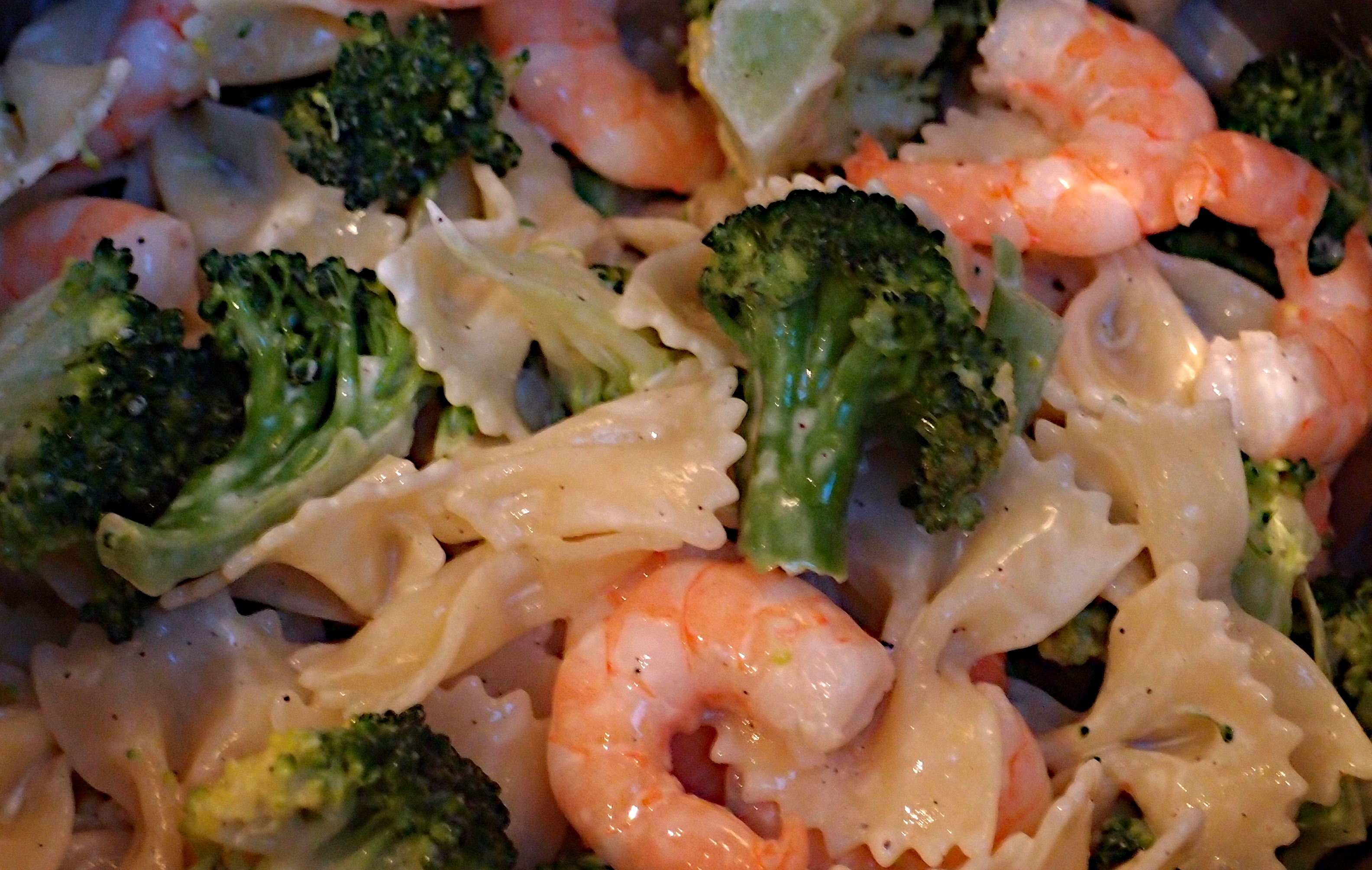
Easy-peasy and used up some prawns that had been in the freezer for nearly too long.

Lemony prawn pasta with broccoli – to serve 4

  • 300g farfalle pasta
  • 1 head of broccoli, cut into small florets
  • 200g large cooked prawns
  • 3 tbsp double cream
  • juice of 1/2 a lemon

Cook the pasta according to the instructions on the pack and scoop out and keep a bit of the cooking water near the end. Add the broccoli to the pasta pan 3 minutes before the end of the cooking time and cook for another 3 minutes. Drain and tip back into the pan.

Turn the heat down very low and add the prawns, cream, lemon juice and some seasoning. Add a bit of your pasta water if you need to thin the sauce a bit.

Healthy and low-fat dinner is served (the 3 tbsp of cream is divided between 4 people!!)

(Original recipe from BBC Good Food)

Read Full Post »

We have a tonne of recipe books, some we use all the time and some we use very seldom. For this reason we try to go to the shelves and deliberately choose something we haven’t cooked from for ages, or indeed never. This is how we ended up cooking this gammon dish, as Nigella Express has been neglected since well before Jono and Jules even met. Since 2007 to be precise when Jules cooked some cocktail sausages in honey, soy sauce and sesame oil and wrote “28.10.2007 Too sweet!!” beside the recipe. The comment beside this recipe is, “5.8.11 Really good!! Serve with new spuds + peas w/ Parmesan + cream” – which is much more positive and so we thought we would share it.

Nigella’s Gammon Steaks with Parsley – Serves 2

  • 2 tsp oil (Nigella suggests garlic oil but we didn’t have any and it didn’t seem to matter much)
  • 2 gammon steaks, around 200g each
  • 2 tbsp white wine vinegar
  • 4 tbsp water
  • lots of freshly ground pepper
  • 2 tsp honey
  • 4 tbsp parsley, roughly chopped

Heat the oil in a large, heavy-based frying pan and cook the gammon steaks for about 3 minutes on each side. Remove and keep warm.

Take the pan off the heat. Whisk the vinegar with the water, pepper and honey and throw into the hot pan along with most of the parsley. Stir to mix and make sure you scrape all the sticky bits of the bottom of the pan, then pour over the gammon steaks.

Sprinkle over the remaining parsley and serve.

P.S. Nigella suggest serving this with some frozen peas blended with a little Parmesan, pepper and Mascarpone. We blended ours with some Parmesan, pepper and double cream as that’s what we had.

(Original recipe from Nigella Lawson’s Nigella Express, published by Chatto and Windus.)

Wine Suggestion: Pick a lightly oaked and well balanced Chardonnay – you should get a wine with freshness and minerality as well as lovely ripe fruits and a good structure to hold it all together. If the wine is well made it won’t be too forceful rather it will have a structure to support and compliment the food. We drank the William Cole Columbine Reserve Chardonnay from Chile which went down a treat; really great value at €13.50 in Mitchells.

Read Full Post »

We ♥ Curry

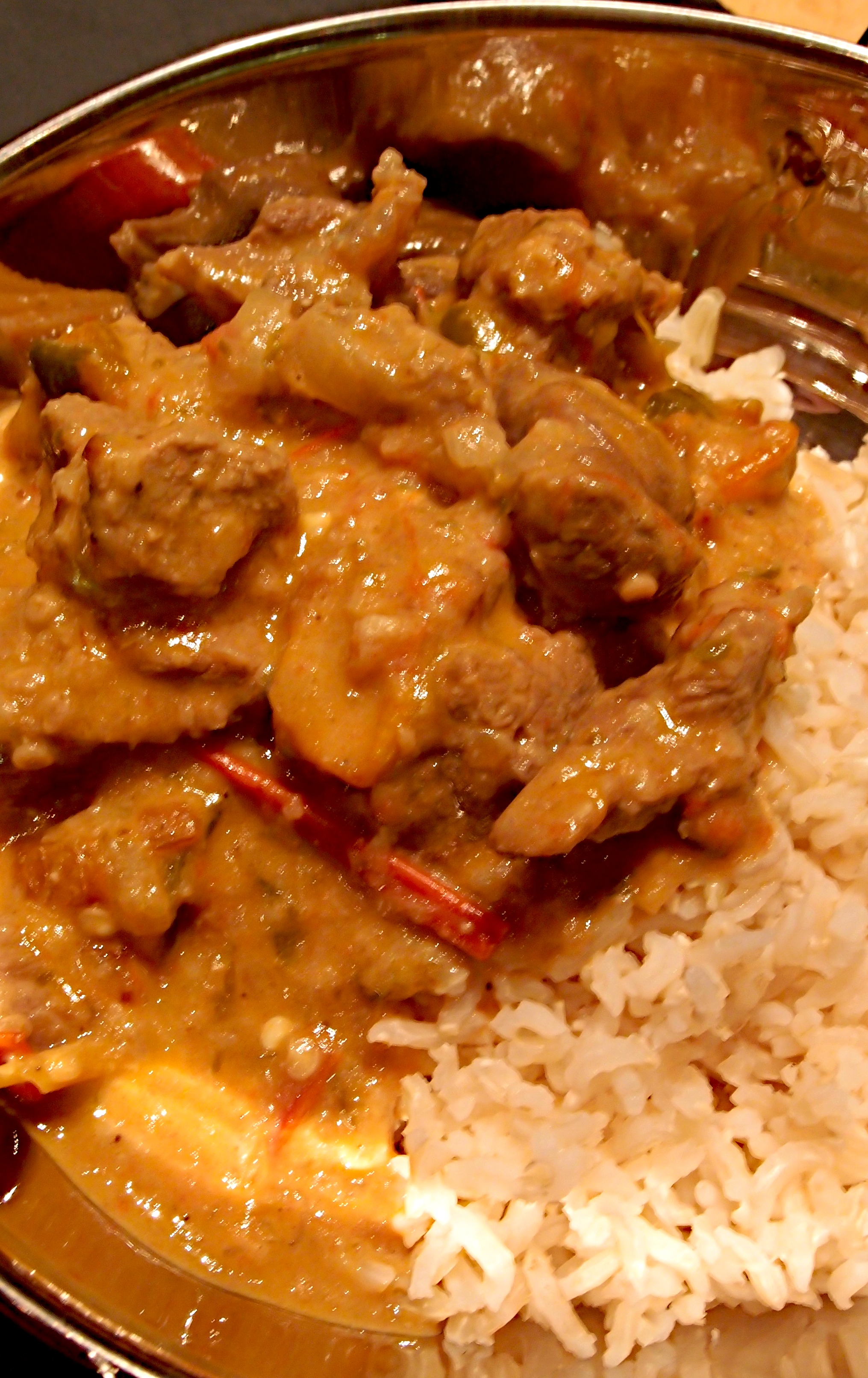
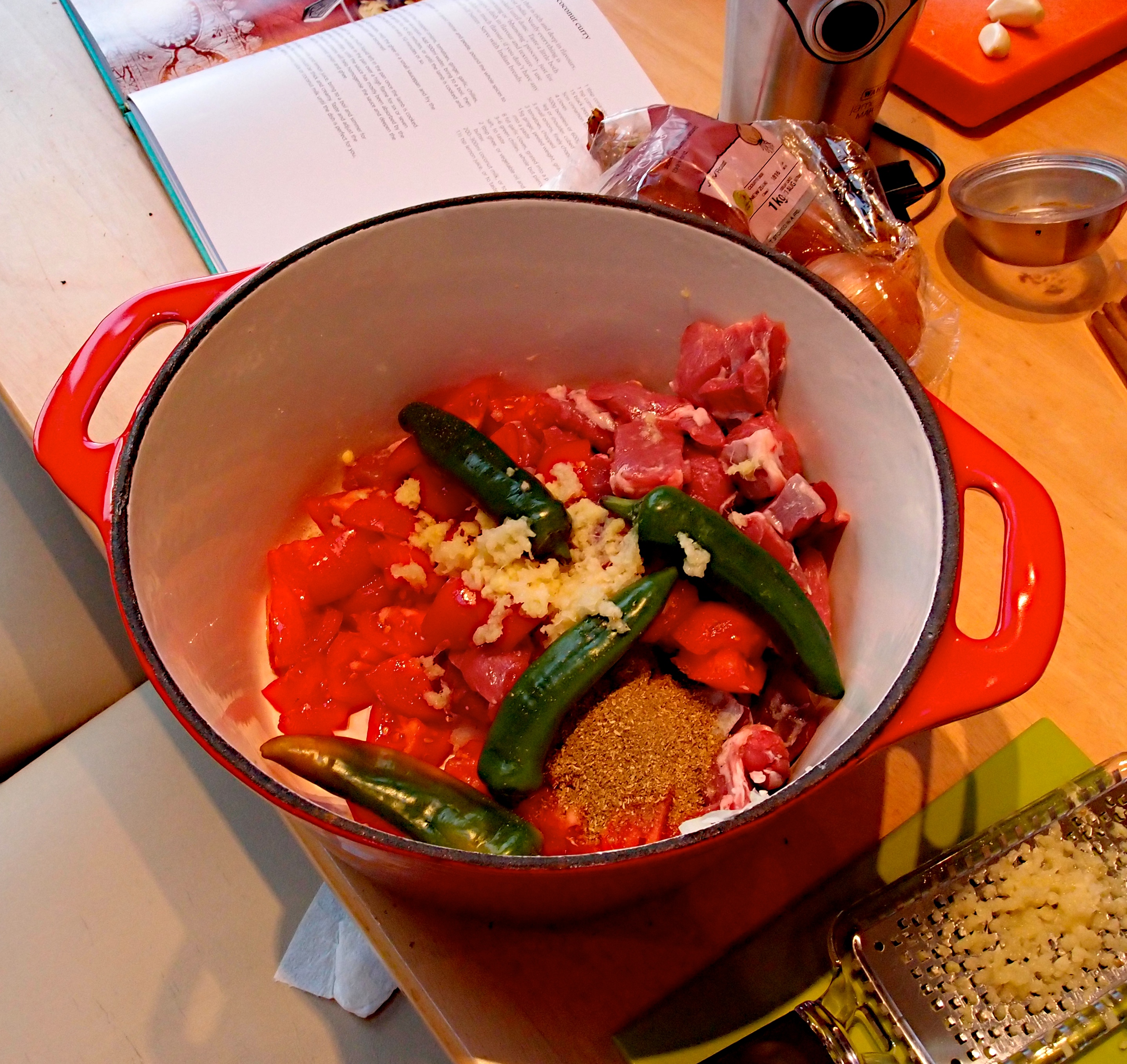
The best curry we’ve ever made by a mile! This was fabulous – so much lighter than takeaway and the lamb just melted. Our whole chillies kind of disintegrated into the sauce so prepare yourself for a good chilli kick. You can grind the whole spices in a mortar and pestle but we’ve invested in a little electric spice grinder which turns them into fine powder almost instantly. A microplane is the way forward for grating ginger and garlic. Two of our more successful kitchen gadgets!

Spicy lamb, tomato and coconut curry – to serve 4

  • 1tbsp coriander seeds
  • 1 tsp cumin seeds
  • 15 black peppercorns
  • 5cm cinnamon stick
  • 4 cloves
  • 500g boneless lamb shoulder, cubed
  • 3 small onions, finely chopped
  • 3 tomatoes, chopped
  • 15g ginger, peeled weight, grated to a paste
  • 8 fat garlic cloves, grated to a paste
  • 3-6 green chillies, whole but pierced
  • salt
  • 2 tbsp ghee, or you can use half butter and half vegetable oil
  • 200-300ml coconut milk, or to taste
  • 1 1/2 tsp lemon juice, or to taste
Use your spice grinder or mortar and pestle to pound the spices to a fine powder.

Put the lamb, 2 of the chopped onions, tomatoes, ginger, garlic, chillies, spices and salt in a large saucepan. Add 500ml water, bring to a boil, then cover and cook gently for 45-60 minutes, or until the lamb is cooked and soft. Give it a stir every 10 minutes or so.

After about 45 minutes, melt the ghee in a small saucepan and fry the remaining onion until well browned.

Once the lamb is cooked you need to cook off all the excess moisture over a high heat, stirring often, until almost all the sauce has been absorbed by the lamb. This is called bhunoing and helps deepen the flavours (try it before and after to see the difference it makes). Add the browned onion and ghee.

Pour in the coconut milk and lemon juice, bring to a boil and simmer for 5 minutes; the sauce should be thick and creamy. Taste and adjust the seasoning, and add lemon or coconut milk until it tastes amazing.

We served this with brown basmati rice.

(Original recipe from Anjum Anand’s I ♥ Curry, published by Quadrille)

Read Full Post »

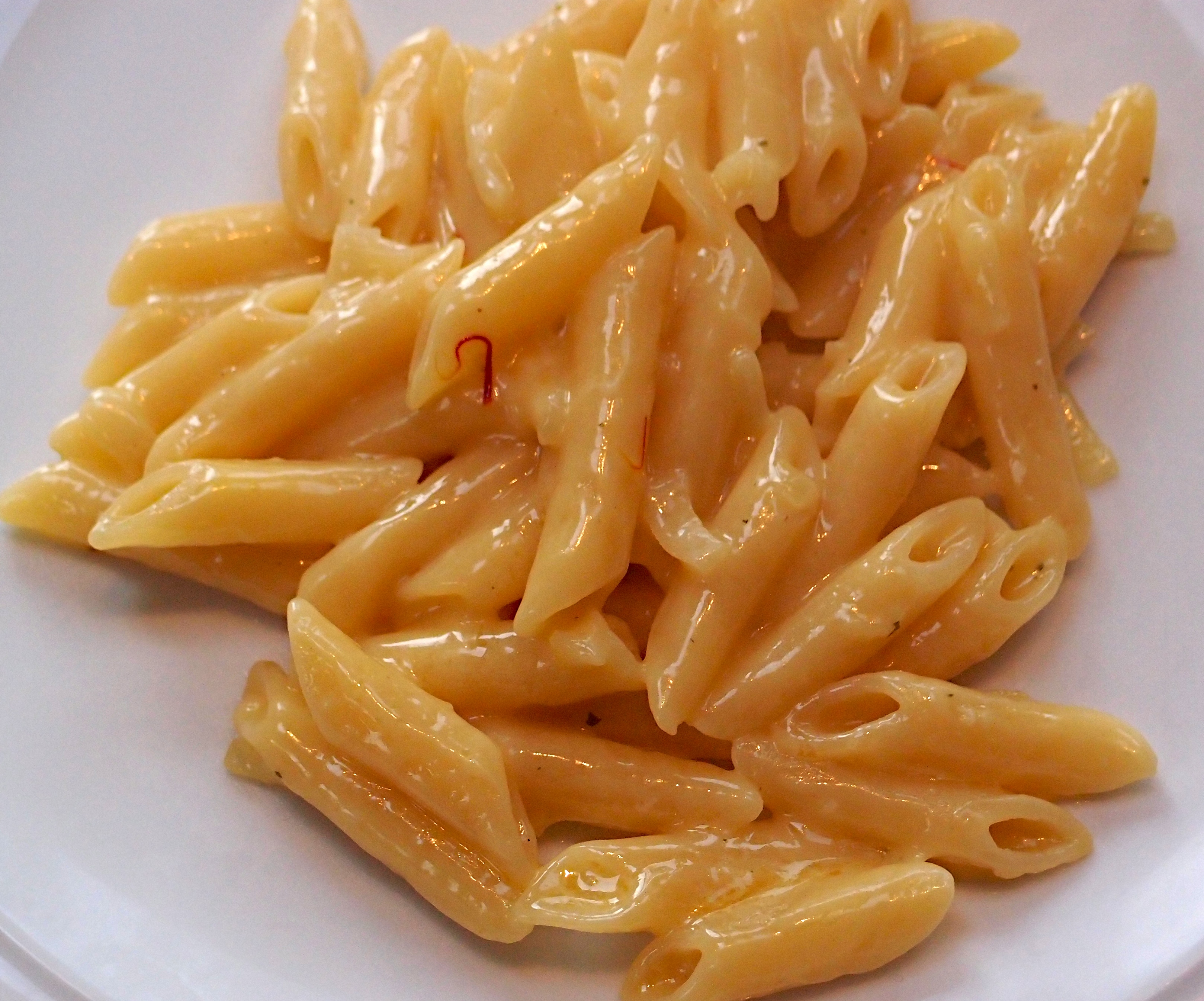
This is made just like a risotto, except you use penne pasta instead of rice. Sounds strange but apparently it’s quite common in the south of Italy, according to our Italian friend. The pasta ends up really soft instead of al dente like we’re all used to but it melts in the mouth and is not at all like over-cooked pasta. We served this as a dinner party starter and it was really simple to stir up while we all had an aperitif.

Penne Gialle (Penne with Saffron) – to serve 4 (or 6 as a starter)

  • about a litre of vegetable or meat stock
  • 40g butter
  • 1 tbsp olive oil
  • 1 onion, thinly sliced
  • 350g penne lisce (this is the smooth type but if you have ridged penne that will do)
  • pinch of saffron threads
  • 40g Parmesan cheese, grated
Bring the stock to the boil. Heat the butter and oil in a large saucepan, add the onion and cook over a low heat for about 5 minutes or until soft. Add the penne and stir until shiny and coated with fat. Add a ladleful of hot stock and stir until it has been absorbed. Continue adding stock, a ladle at a time, until the pasta  is completely cooked. Stir the saffron into the last ladleful of stock before adding it to the pan. Mix well until everything turns an even yellow colour. Remove from the heat and sprinkle with the Parmesan.
(Original recipe from The Silver Spoon Pasta published by Phaidon – we highly recommend it!)

Wine Suggestion: We had a Friulano from the north-east of Italy but any fresh Italian white with good roundness and medium body will do. Stay clear of Pinot Grigio as it doesn’t tend to taste of much.

Read Full Post »

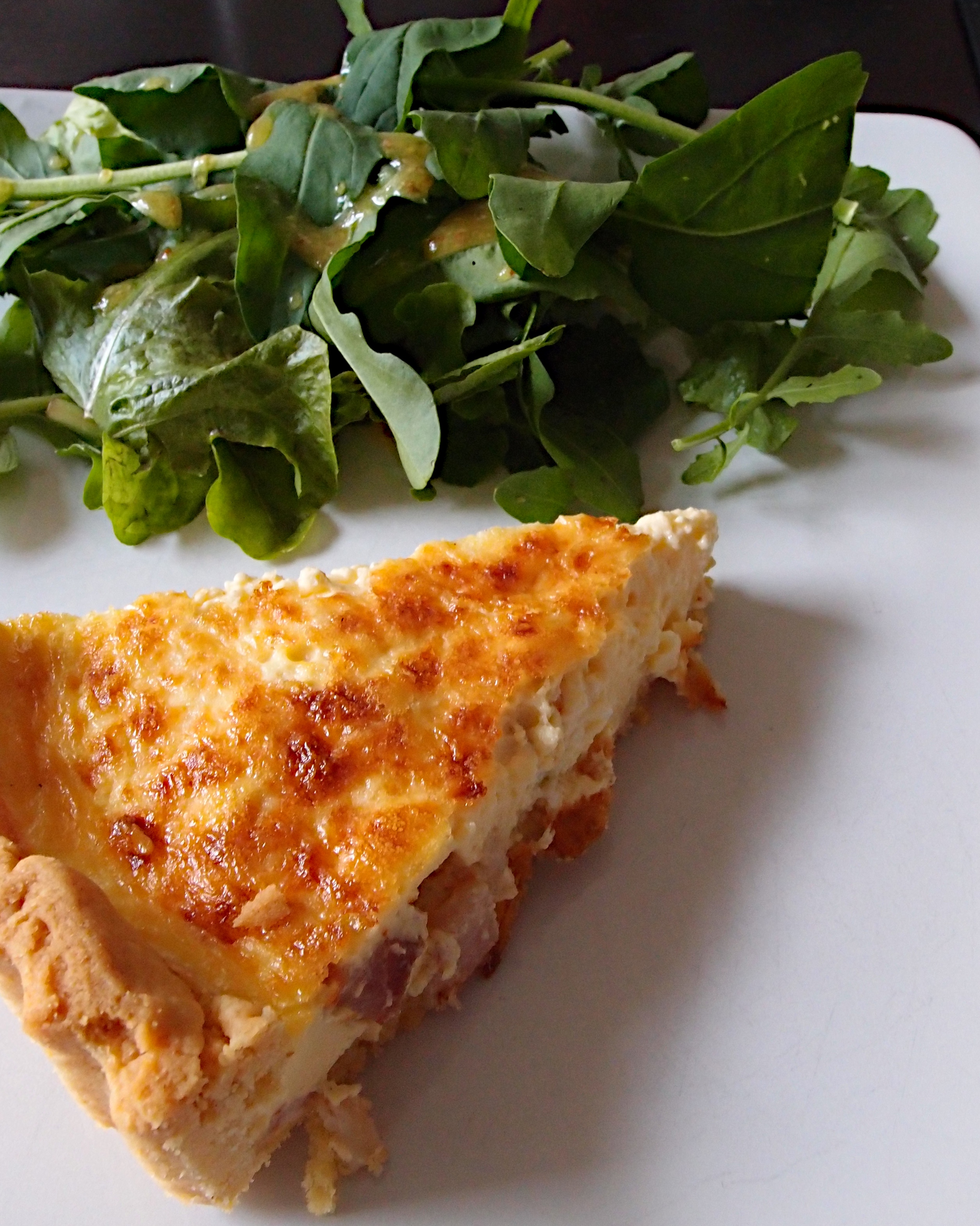
So good that our friend’s David & Nicola fed this to their two-year old son Theo and he had seconds! We had trouble with the pastry, but the humid day really didn’t help. If you’re having trouble put the pastry in the fridge after bringing it together in the food processor to keep it cold, it will really help.

We served this at a French-themed dinner party where everyone brought a course and a complimentary wine to go with it. There was Quiche Lorraine for starter, leg of lamb roasted with lots of garlic and served with dauphinoise potatoes, an apple tarte tatin and some French cheeses. We are now all on a diet!

Quiche Lorraine – cuts into 8 slices

For the pastry:

  • 175g plain flour
  • 100g cold butter, cut into pieces
  • 1 egg yolk
For the filling:
  • 200g pancetta, sliced into cubes
  • 50g Gruyère
  • 200ml carton crème fraîche
  • 200ml double cream
  • 3 eggs, well beaten
  • pinch ground nutmeg
  1. For the pastry, put the flour, butter, egg yolk and 4tsp cold water into a food processor. Use the pulse button to process until the mixture binds. Tip out onto a lightly floured surface, gather into a smooth ball, then roll out as thinly as you can. Line a 23 x 2.5cm loose-bottomed, fluted flan tin with the pastry. Trim the edges with scissors so it sits slightly above the tin – this way it will not shrink below the level of the tin (don’t throw the trimmings away yet). Press the pastry into the flutes, lightly prick the base with a fork, then chill for 10 minutes. Put a baking sheet in the oven and heat oven to 200C/fan 189C/gas 6.
  2. Line the pastry case with foil, shiny side down, fill with dry beans and bake on the hot baking sheet for 15 minutes. Remove the foil and beans and bake for another 4-5 minutes until the pastry is pale golden. If there are any small cracks or holes use your pastry trimmings to patch them. This part can be done the day before.
  3. Heat a small frying pan and fry the pancetta for a couple of minutes. Drain off any liquid, then continue cooking until they start to colour, but aren’t crisp. Remove and drain on paper towels. Cut three quarters of the cheese into small dice and finely grate the rest. Scatter the diced cheese and pancetta over the bottom of the pastry case.
  4. Using a spoon, beat the crème fraîche to slacken it then slowly beat in the double cream. Mix in the beaten eggs. Season, but go easy on the salt, and add nutmeg. Pour three-quarters of the filling into the pastry case.
  5. Half-pull the oven shelf out and put the tin on the baking sheet. Quickly pour the rest of the mixture into the case – so you get it right up to the top. Scatter the grated cheese over the top, then carefully push the shelf back in. Lower the oven to 190C/fan 170C/gas 5. Bake for about 25 minutes, or until golden and softly set (the centre doesn’t need to be too firm). Let it settle for 4-5 minutes before removing from the tin.
Wine Suggestion: it is quite hard to match egg dishes with wine, but the addition of the cream, crème fraîche and pancetta helps. You need to balance the saltiness from the pancetta and the creamy and rich filling; so a white from Alsace with a touch of sweetness balanced by fresh acidity is a good match. We had a Clos Saint Landelin Grand Cru Vendange Tardive Riesling from 2001 – this is a late harvest wine that in most years is very sweet, but in 2001 had great fruit but ended up being just off-dry. With a beautiful balance of acidity and a mellowness from 10 years of age this worked a real treat and had layers of flavours that complimented the quiche superbly.
(Original recipe from BBC Good Food)

Read Full Post »

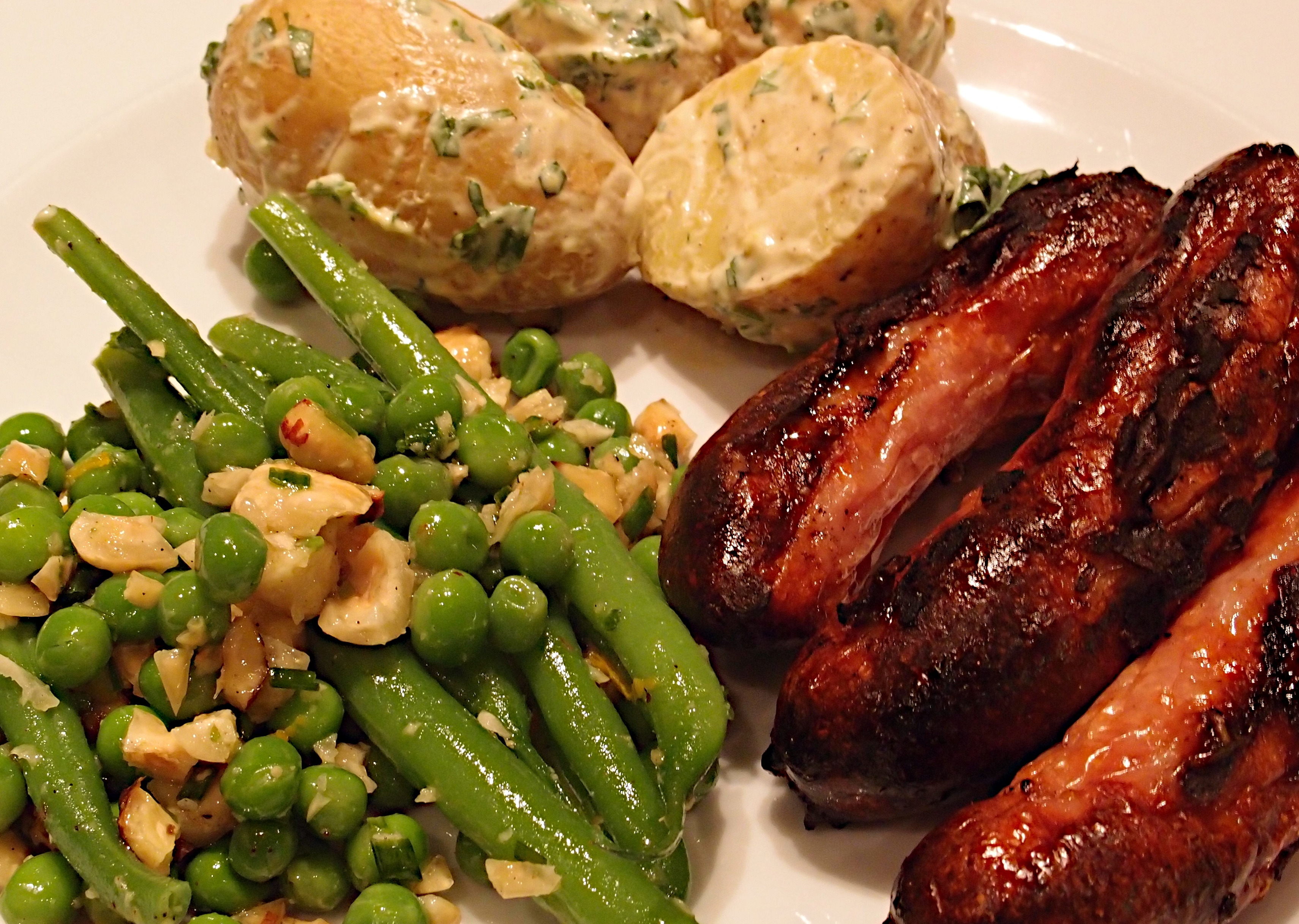
Potato salad is one of those recipes that needs a friend. We’ve paired this really well: some barbequed sausages and a bean salad with some hazelnuts – it worked superbly. This is a light version – not too heavy on the mayo.

Potato salad with yogurt dijon dressing  – serves 8

  • 1 kg small new potatoes
  • 2 tbsp natural yogurt
  • 1 tbsp mayo
  • 1 tbsp Dijon mustard
  • some finely chopped parsley

Cook the potatoes in boiling water until cooked but still firm and not falling apart – around 10 minutes. Drain and leave to cool.

Mix together the yogurt, mayo, mustard and parsley (reserving a little parsley to serve).

Toss the cooled potatoes with the yogurt mixture and some seasoning, sprinkle over the rest of the parsley.

(Original recipe from BBC Good Food)

Read Full Post »

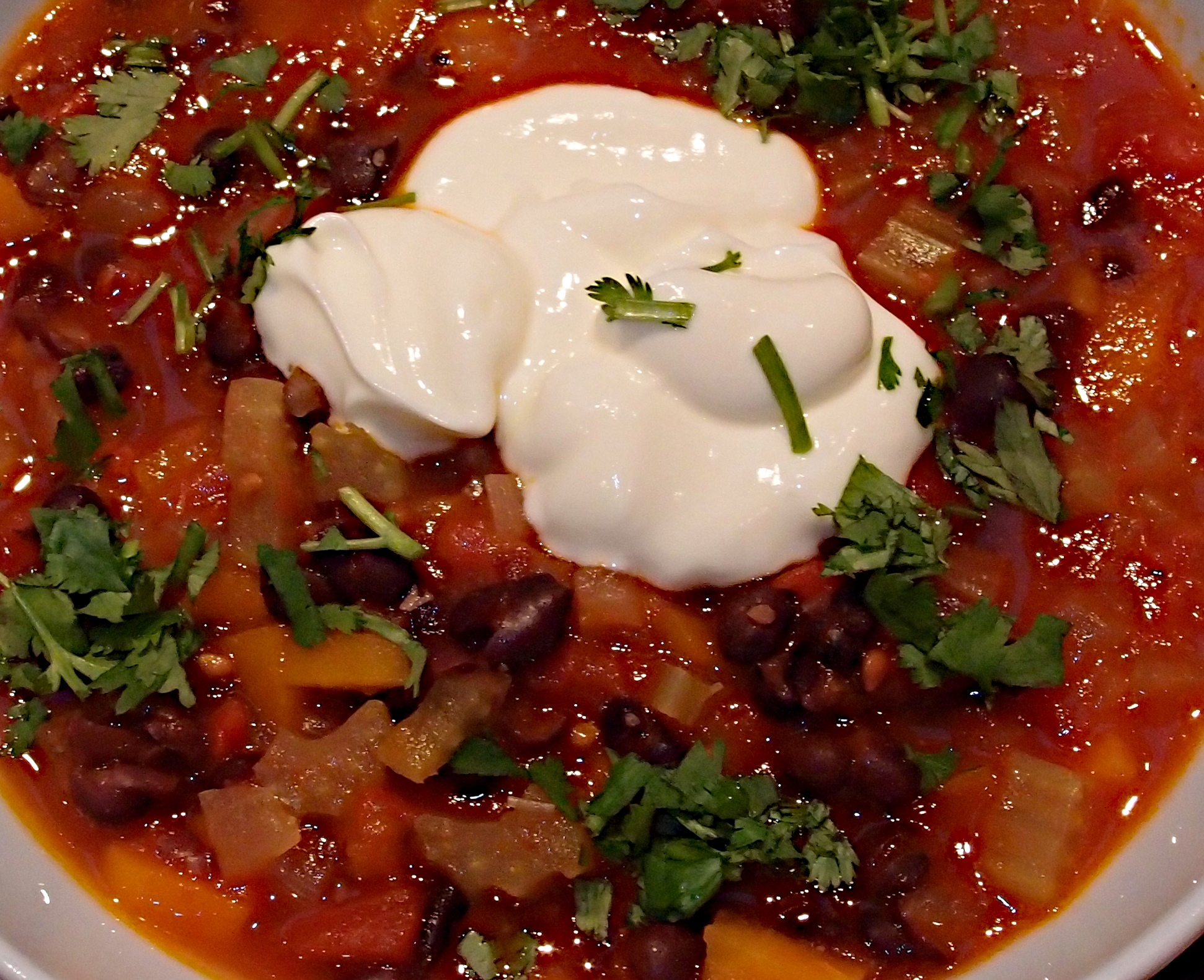
Easy, tasty, low-fat, cheap, hearty… need we say more? We had carrots and celery that needed used so we added more than the recipe suggests – it was a good idea!

Black bean and chilli soup – to serve 2 

  • 1 onion chopped
  • 2 sticks celery, sliced
  • 1 carrot, diced small
  • olive oil
  • a pinch of chilli flakes
  • 1/2 tsp ground cumin
  • 400g tin of chopped tomatoes
  • 400ml vegetable stock
  • 400g tin of black beans, rinsed and drained
  • 150ml natural yogurt
  • a small bunch of coriander, chopped
Cook onion, celery and carrot in 1 tbsp olive oil until softened. Add the chilli flakes and cumin and cook for another minute. Add the tomatoes, stock and beans and simmer for about half an hour, or until the veg is soft. Serve with a dollop of yogurt and some coriander on top.

(Original recipe from BBC Good Food)

Read Full Post »

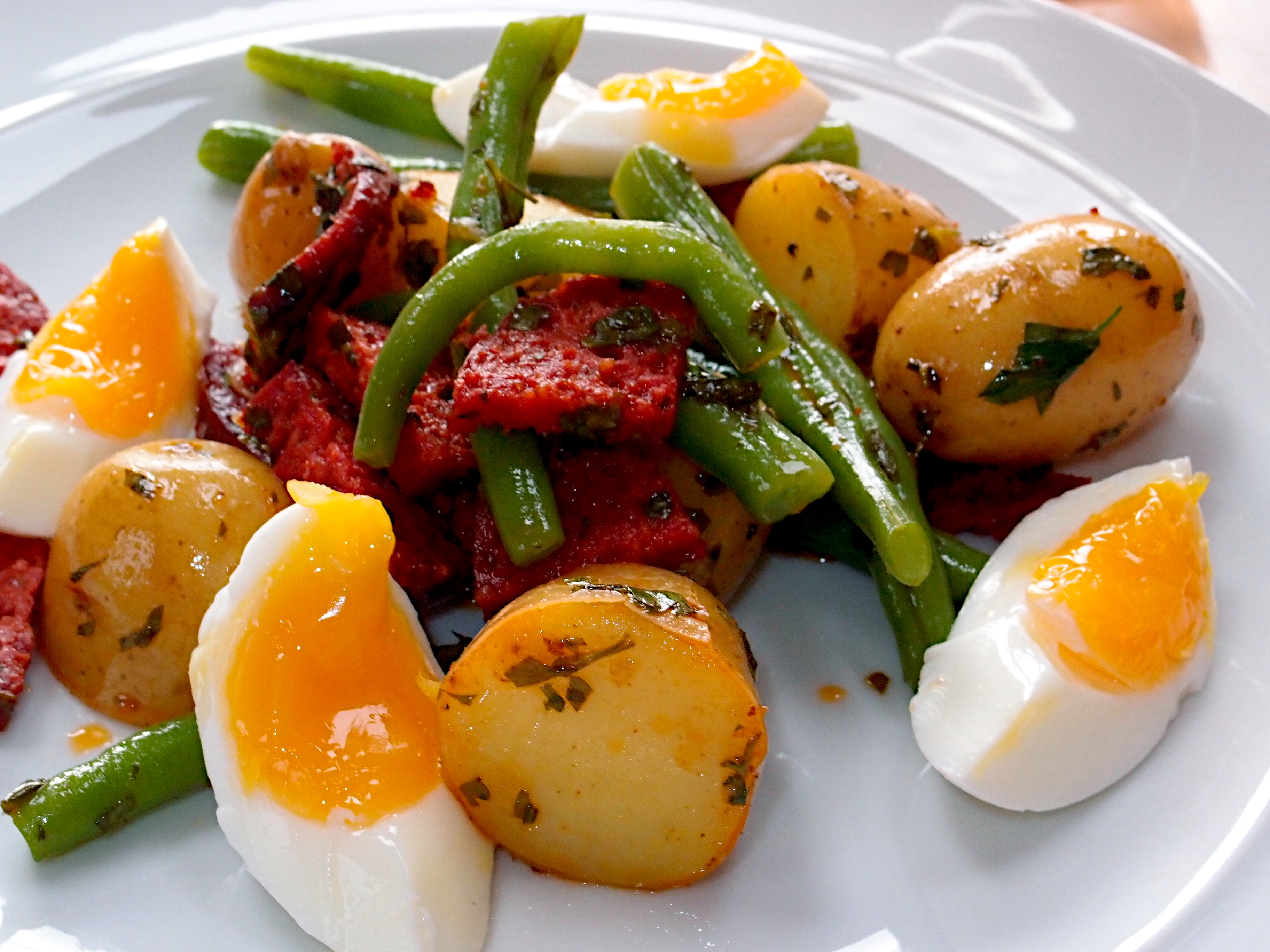
Oh so tasty and perfect for a weeknight or even weekend brunch/lunch. If you’ve been watching Rick Stein’s Spain on the tv you will have heard him rave about Sherry vinegar – really worth having in the cupboard as you can use if in lots of dishes.

Chorizo & soft egg salad – to serve 4 (or halve for 2)

  • 500g baby new potatoes, halved
  • 4 eggs
  • 225g green beans, trimmed
  • 225g chorizo, sliced
  • 1 garlic clove, sliced
  • 2 tbsp Sherry vinegar
  • 2 tbsp chopped parsley
  1. Cook the potatoes in boiling salted water for 12 minutes, adding the eggs after 6 minutes, and the beans for the final 2 minutes. Drain and cool the eggs under cold running water.
  2. Meanwhile fry chorizo for a minute or two, until starting to crisp. Remove with a slotted spoon and set aside, leaving the oil in the pan. Add the garlic to the chorizo oil and cook gently for 1 minute.
  3. Take the pan off the heat, stir in the vinegar and parsley, then toss with the potatoes, beans, chorizo and some seasoning. Shell the eggs, cut into quarters and add to the salad.
(Original recipe from BBC Good Food)

Read Full Post »