We’ve cooked this easy Indian salmon a load of times now. The salmon is really soft and tender and the flavours are fab! Nice with potatoes and a green salad or with other Indian dishes.
Grilled masala salmon – serves 2
⅛ tsp salt
¼ tsp ground cumin
⅛ tsp ground coriander
⅛ tsp ground turmeric
¼ tsp ground cayenne pepper
340g skinned salmon fillet
2 tbsp Dijon mustard
1 tbsp olive or rapeseed oil
2 tsp lemon juice
2 tbsp finely chopped fresh coriander
Mix the salt, cumin, coriander, turmeric and cayenne pepper together, then rub all over the salmon fillet. Cover and leave in the fridge for 1-4 hours.
Heat the oven to 180C/Gas 4, and heat the grill to it’s highest setting.
Mix the mustard, oil and lemon juice together and add the chopped coriander. Rub this all over the fish and place under the grill until the top has slightly browned, about 4 minutes. Transfer the fish to the oven and bake for about 10 minute or until cooked through.
(Original recipe from Curry Easy by Madhur Jaffrey, Ebury Press, 2010.)
Paneer is the typical cheese for curry but halloumi works as well if this is what’s to hand. Plus this is the perfect weeknight dish as it’s so easy; we made it between two after-school activities! Serve with rice or naan bread.
Wine Suggestion: This dish works well with white wines with a degree of plushness; dry but not too crisp. Unusually, as we find most of them a little boring, we went with a Pinot Grigio. Perusini’s version though is from Collio and not the characterless Veneto versions found most commonly. Peach and tangerine flavours with a pleasant herbal spice and medium-full body, combined with good freshness and a minerally saline undercurrent.
Creamy halloumi curry – serves 2 to 3
225g halloumi, cut into bite-sized pieces
2 tbsp vegetable oil
1 large onion, chopped
2 cloves of garlic, crushed
a thumb-sized piece of ginger, grated
2 tsp ground cumin
2 tsp ground coriander
1 tsp turmeric
400g tin chopped tomatoes
100ml double cream
80g fresh or frozen spinach
2 tsp sugar
1 tbsp garam masala
1 tsp nigella seeds
Heat 1 tbsp of the oil in a large pan over a medium heat. Add the onion and cook for 5 to 10 minutes or until softened.
Add the garlic and ginger and cook for another 2 minutes, then stir in the cumin, coriander and turmeric and cook for a couple of minutes more. Stir in the tomatoes and simmer for 5-7 minutes or until thickened.
Reduce the heat and add the cream, then simmer gently for another 3 to 4 minutes.
Meanwhile, heat another tbsp of oil in a frying pan over a medium-high heat. Fry the halloumi for a few minutes or until browned on all sides.
Add the browned halloumi to the curry sauce along with the spinach, sugar and garam masala and stir to combine. Simmer gently for 5 minutes or until the spinach and wilted or defrosted. Add a splash of water or extra cream if the sauce seems a bit thick, then serve with the nigella seeds sprinkled over.
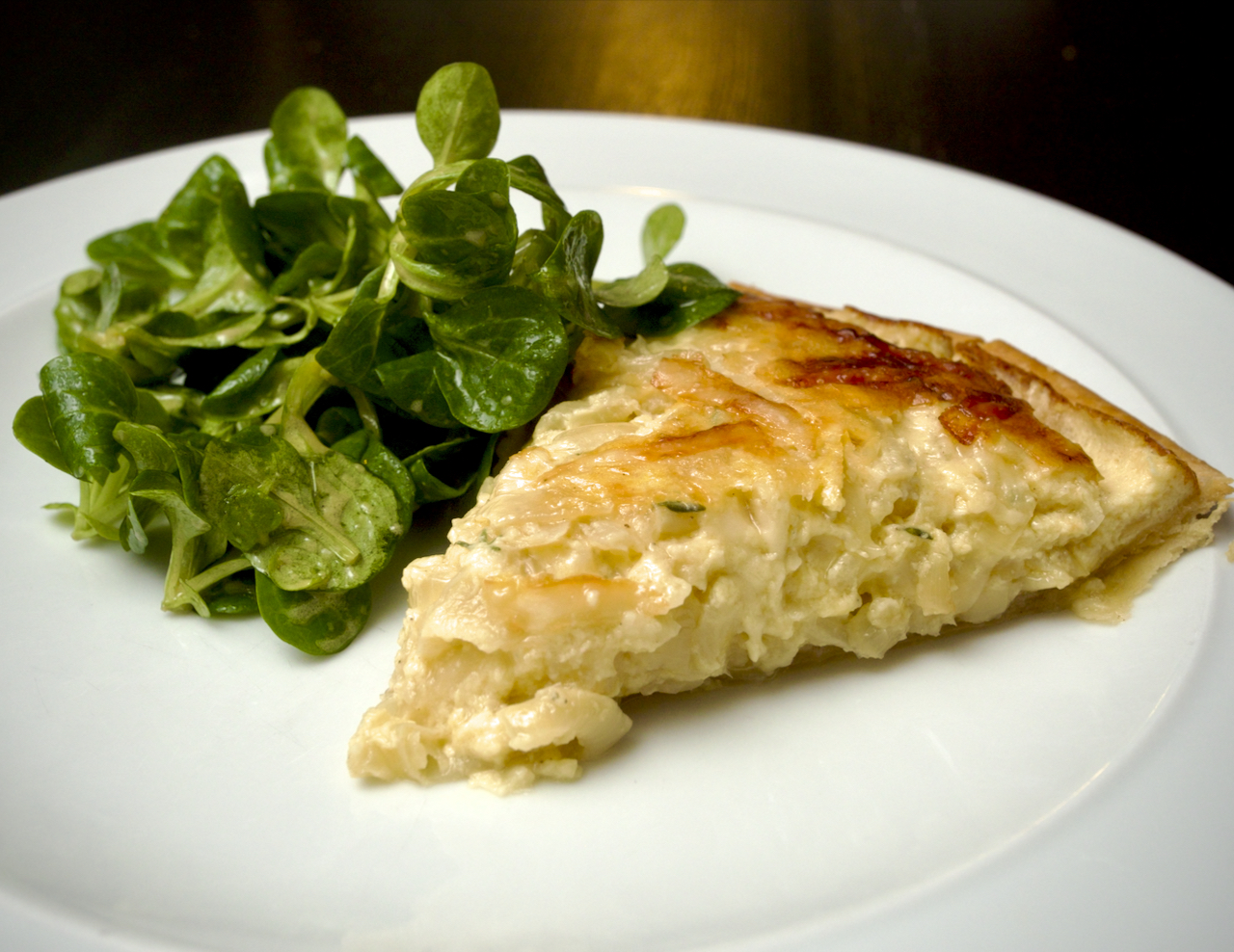
Our new year’s resolution is to make more tarts and conquer our pastry fear which is largely due to lack of practice. We’ve started with this tart filled with melting onions and cheese. Serve with a green salad.
Wine Suggestion: we paired this with a wine that opitimises a balance between freshness, richness, minerailty and fruit: Soalheiro’s Alvarinho. Fresh and elegant with tropical fruit flavours cut with a minerally saltiness balances the cheese. Plus the sweetness to the slowly cooked onions complements the richly layered fruits in the wine.
Cheese & Onion Tart – serves 6
a sheet of short-crust pastry (we were so enthusiastic that we made our own but really no need)
1 egg, beaten
FOR THE FILLING:
5 large brown onions
50g butter
a small glass of white wine
a few sprigs of thyme, leaves picked
120g cheese, the original recipe suggests Comté (we used a mix of Comté, Cheddar & Gruyère), coarsely grated
150ml full-cream milk
3 eggs
Thinly slice the onions and add to a pan with the butter, seasoning well with salt. Cover with a lid and cook slowly for 30 minutes, stirring regularly, until sweet and very tender. It’s find to let them caramelise a little but don’t let them burn. If there is a lot of liquid in the pan, remove the lid and allow this to bubble off. Add the wine, allow to cook off, then turn the heat off and allow to cool.
Lightly flour a cold surface and roll the pastry out to 3mm thick. Lift into a 25cm loose-bottom tart tin and use a little piece of dough to press the pastry into the tin and leave an overhang around the sides. Prick the base with a fork and chill in the freezer for 20 minutes.
Preheat the oven to 170C fan.
Line the pastry with baking parchment and fill with baking beans or rice. Put the tin onto a baking tray and bake for 15-20 minutes or until the pastry is firm. Remove the beans and paper, brush with egg and return to the oven for another 10 minutes, until golden. Trim off any excess pastry with a knife.
Put 100g of the cheese into a bowl with the milk, cream, eggs and thyme and mix together. Season well, then add the onions and mix again. Pour most of the mixture into the pastry case but dont fill all the way to the top. Make sure the onion is evenly spread, then place into the oven. Carefully pour in the remaining mixture, making sure it doesnt overflow. Sprinkle with the reserved cheese and bake for 30 minutes or until the top is caramelised and the middle has set. Leave to cool for 15 minutes before serving.
(Original recipe from The Farm Table by Julius Roberts, Ebury Press, 2023.)
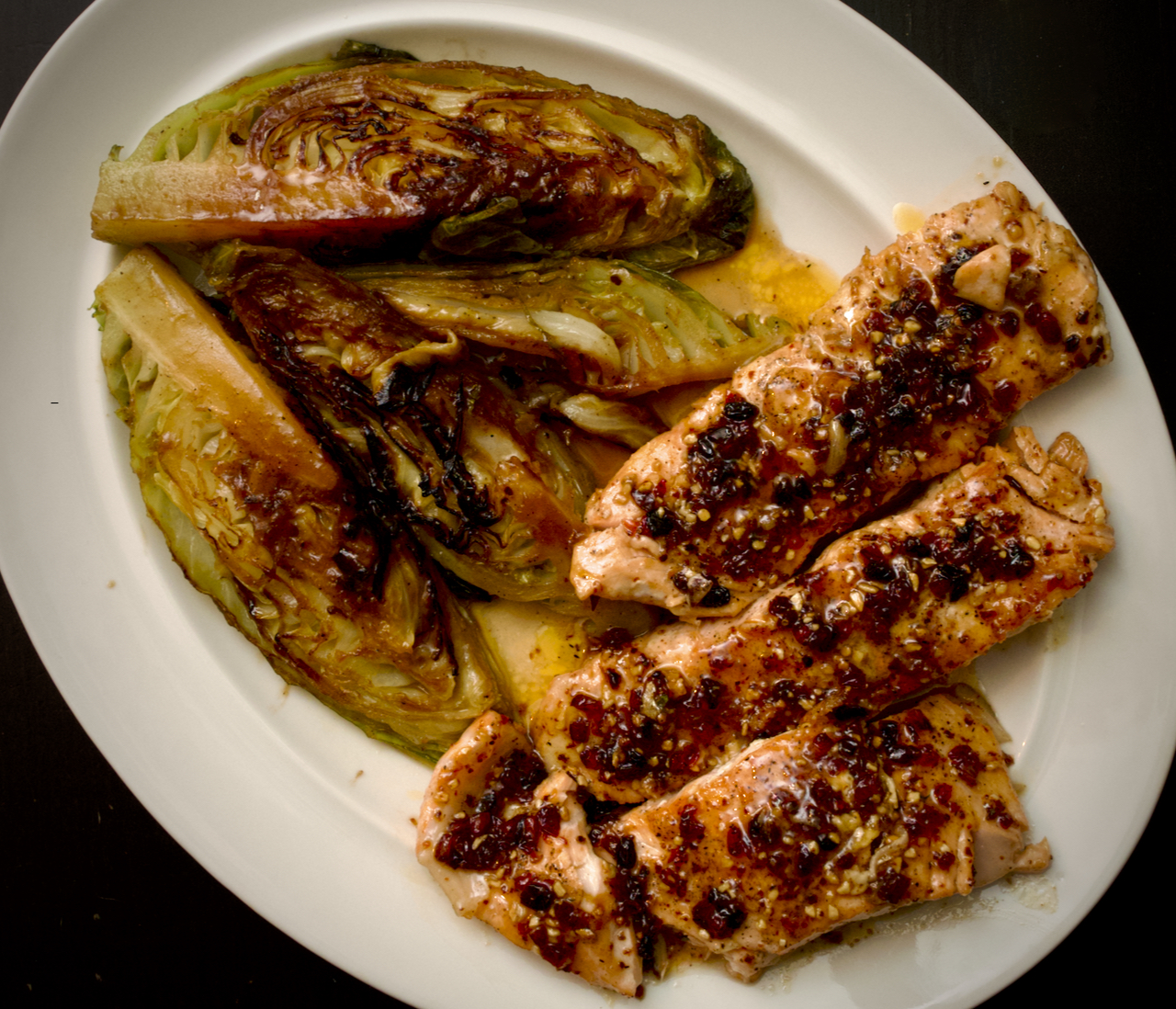
We have fallen in love with this buttery cabbage dish which we served tonight alongside some salmon with barberries. This is seriously pimped up cabbage and would be delicious with anything! Both recipes are from Flavour by Sabrina Ghayour.
Wine suggestion: we thought the tamarind would be a hard match, so opened a wine we didn’t know, the Lyrarakis Liatiko from Crete, and were delighted when this obscure wine was a total gem. A light, juicy cherry flavoured wine with wild berry and gentle herbs and a cedary spice. We’ll be looking out for this again.
Cabbage with tamarind, maple & black pepper butter – serves 2 to 4
olive oil
1 large head of sweetheart cabbage, quartered
100ml cold water
50g butter
1 heaped tbsp tamarind paste
2 tbsp maple syrup
1 tsp coarse freshly ground black pepper
Put a large frying pan over a medium heat and add some olive oil. Arrange the cabbage wedges in the pan, sitting on one cut side and the stalk ends in the centre of the pan, and fry for 5 minutes. Pour in the cold water, then increase the heat and cover the pan with a lid. Cook for 6-7 minutes or until the water has evaporated.
Take the lid off the pan and turn the cabbage wedges onto the other side for 3-4 minutes, uncovered. Add the butter, then mix the tamarind, maple syrup and pepper together and add to the pan with a good seasoning of salt. Stir to melt the butter – making sure it doesn’t burn. Baste the cabbage with the butter, then turnover onto the other side and continue basting for a few more minutes. Serve with any butter left in the pan drizzled over.
(Original recipe from Flavour by Sabrina Ghayour, Aster*, 2023.)
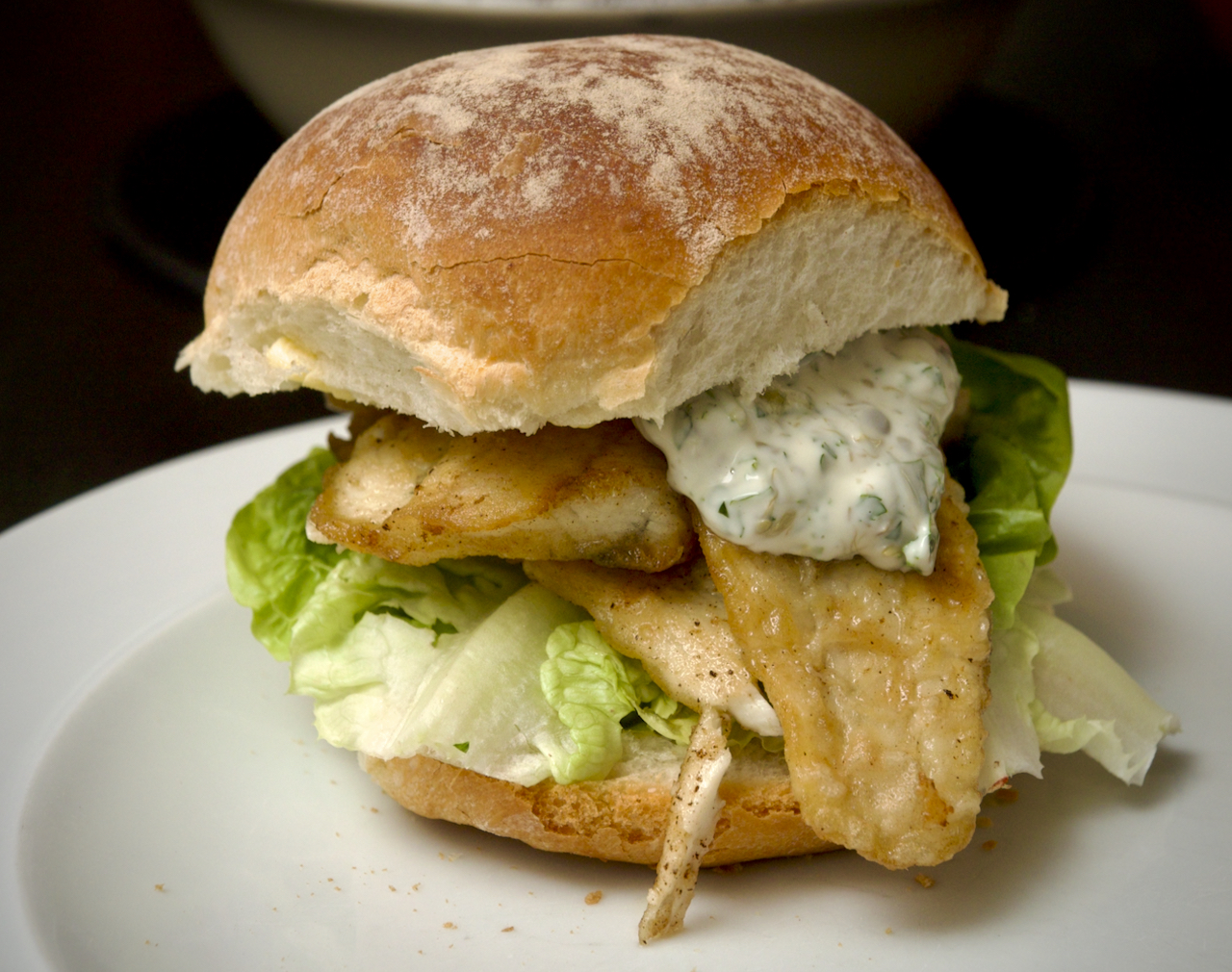
Fish in a bap with caper mayonnaise because most things taste good in a bap.
Wine Suggestion: We went Portuguese and chose an Arinto-Verdelho blend from near Lisbon: the Mar de Lisboa white, made by Quinta de Chocapalha. Lemon flavours with hints of passionfruit felt the perfect addition to this dish and the minerally, zip added a freshness that really matched the caper mayonnaise.
Fish in a bap – serves 1(easily multiplied)
2 skinless fillets of dab or other flat fish – we used plaice
butter
1 tbsp sunflower or groundnut oil
2 tbsp plain flour
a fresh white bap
a squeeze of lemon & a dash of tabasco, to serve
For the caper mayonnaise:
2 tbsp good mayo
2 tsp capers, drained and finely chopped
1 tbsp chopped parsley
lemon juice
Make the mayonnaise first by combining the mayonnaise, capers, parsley and a squeeze of lemon juice (to taste). Set aside.
Heat the the oil and a knob of butter in a non-stick frying pan over a medium heat. Spread the flour out on a plate and season it well. Dust the fish fillets with the flour, shaking off any excess, then fry for 2 minutes on each side.
Slice the bap in half and butter it generously. Add a few lettuce leaves and put the cooked fish on top, seasoning with lemon juice and tabasco. Add a good blob of the caper mayonnaise, the close the bap and eat it.
(Original recipe from River Cottage Everyday by Hugh Fearnley-Whittingstall, Bloomsbury, 2009.)
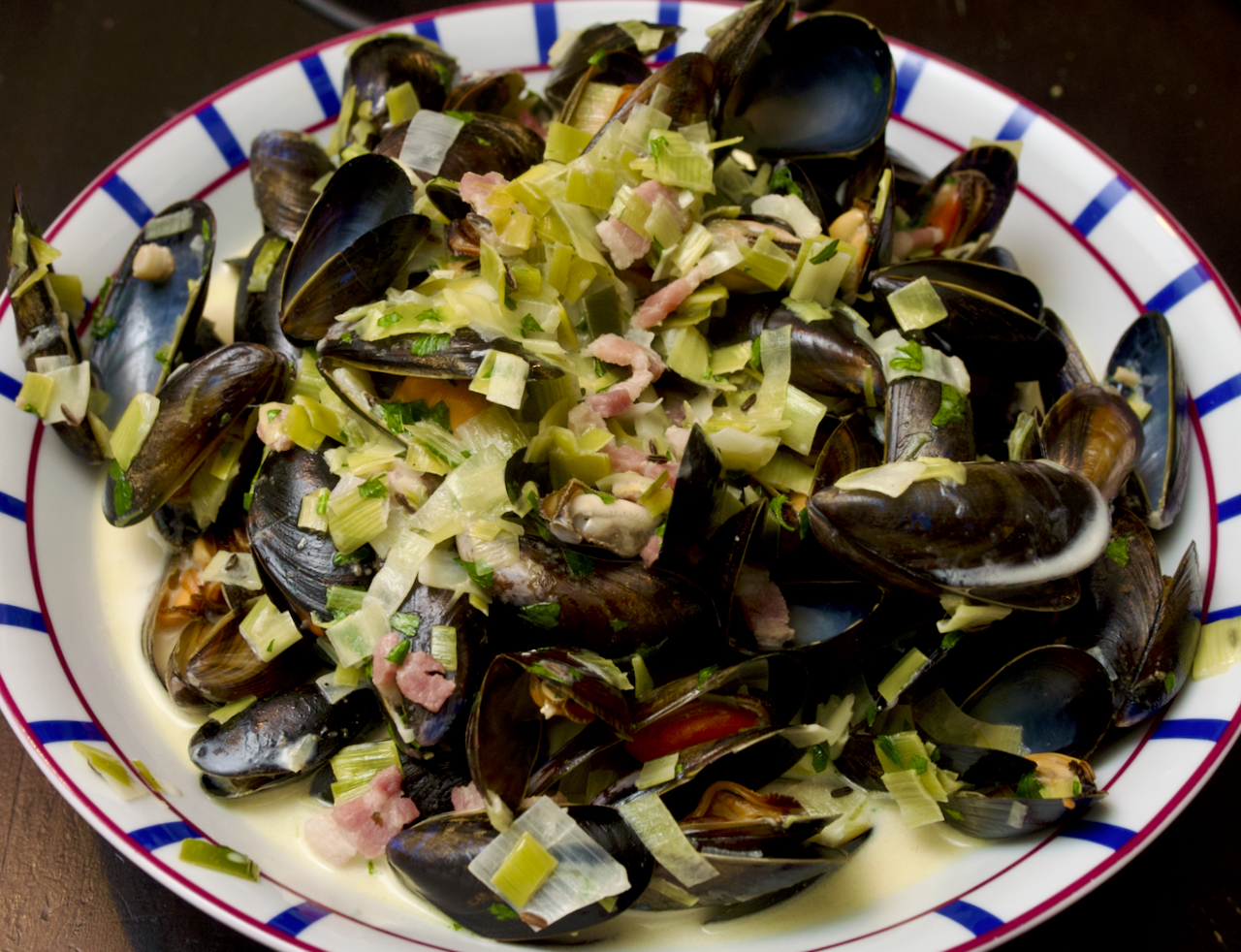
Mussels are our favourite Friday night treat and they taste amazing with this creamy leek and cider sauce. You will need a top quality baguette on the side.
Wine suggestion: we’re just loving Domaine de la Chauviniere’s Muscadet Sevre et Maine sur lie at the moment and think that Jeremie Huchet just has his vineyards in such balance that he delivers delicious wines year after year. Minerally, salty, fresh and with a rounded appley fruit that just works (or of course you could just buy some extra cider).
Mussels with leeks, bacon & cider – serves 2 to 3
200g smoked streaky bacon
1 tbsp olive oil
3 cloves of garlic, thinly sliced
1 tsp fennel seeds
400g leeks, finely chopped
1kg mussels, cleaned
a large glass of dry cider
150ml double cream
a handful of finely chopped flat-leaf parsley
baguette, to serve
Warm a little olive oil in a large saucepan and fry the bacon until the fat renders, then add the garlic and fennel seeds and cook gently for a few minutes. Add the leeks and season well with salt, then let the leeks cook until they are very soft and tender but not taking on any colour. Add a splash of water if they start to catch.
Turn the heat up and add the cider to the leeks to create plenty of steam. Add the mussels and cover with a lid. After two minutes, shake the pan well or give the mussels a toss with a spoon, then cook for another minute or two – they are ready as soon as all the shells are open (chuck any that don’t open).
Pour in the cream, add the parsley and season with lots of black pepper and a little more salt, though taste first. Give everything a final toss, then serve in big bowls with baguette and a glass of cold white wine or cider.
(Original recipe from The Farm Table by Julius Roberts, Ebury Press, 2023.)
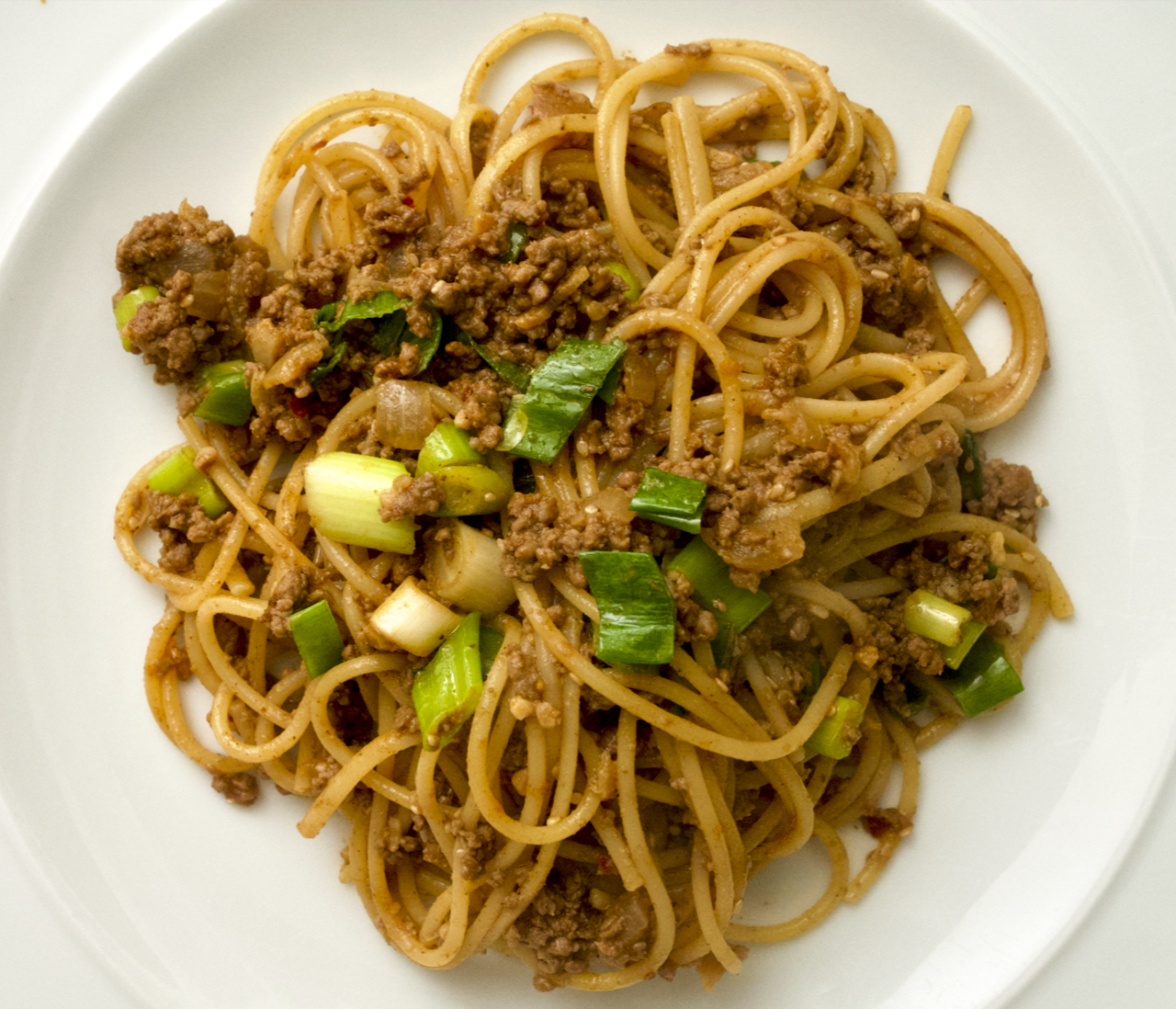
Bags of flavour in this one and not the flavours you would usually associate with spaghetti and mince.
Wine Suggestion: we like a crisp, clean and dry lager with this, partly because it reminds of a warm summer evening, of which we’re craving at the moment.
Harissa, tahini and lamb spaghetti – serves 4
vegetable oil
1 large onion, finely chopped
6 fat garlic cloves, finely sliced
500g lamb mince
1 tbsp garlic granules
1 tbsp curry powder
1 tbsp ground cumin
2 tbsp rose harissa
3 tbsp tahini
3 tbsp light soy sauce
300g spaghetti
4 scallions, finely sliced
2 tbsp toasted sesame seeds
Put a large frying pan over a medium-high heat and add a splash of vegetable oil. Add the onion and cook until soft and transparent, then add the garlic and continue cooking for a couple of minutes. Add the lamb mince to the pan and break it up with a wooden spoon. When it has broken up and lost it’s pinkness, add the garlic granules, curry powder and ground cumin. Stir to mix well through, then add the harissa, tahini and soy sauce. Season with salt and black pepper and mix together well. Continue cooking, stirring regularly, while you cook the spaghetti.
Cook the spaghetti in a large pan of salty water, then drain and reserve a good mugful of the cooking water.
Add the spagehtti to the lamb mince and mix well, then pour in enough pasta cooking water to loosen it. Add the scallions and sesame seeds and mix together, then serve.
(Original recipe from Flavour by Sabrina Ghayour, Aster*, 2023.)
We can see why this is eaten in across the world in Swedish furniture stores: it’s light, homely, and a total child-pleaser (sans sprouts for some).
Wine Suggestion: we love a creamy white to go with this dish; that means a touch of oak and if possible a little battonage to bring structure and a toasty, creamy texture. A little left field, we chose the Dominio de Tares Godello from old vine Godello, wild fermented in oak. With a lemony core layered with pears and stonefruit this has hints of white flowers, brioche and a gentle toasty/nutty character.
Swedish Meatballs – serves 4
1 onion, peeled and grated (use a box grater)
2 slices soft white bread, crusts removed and cut into 1cm cubes
a splash of milk
300g beef mince
300g pork mince
1 egg
a little freshly grated nutmeg
¼ tsp ground allspice
¼ tsp black pepper
¾ tsp cooking salt
1 tbsp rapeseed oil
CREAMY GRAVY:
50g unsalted butter
3 tbsp plain flour
500ml beef stock
125ml double cream
TO SERVE:
finely chopped chives (only if you have them)
lingonberry jam or cranberry sauce (also not essential)
Put the grated onion into a large mixing bowl. Add the bread and mix well – if the bread doesn’t turn soggy you can add a splash of milk. Set aside for a minute, then add the rest of the meatball ingredients, except the oil. Mix well with your hands to combine.
Roll the mixture into about 25-30 meatballs.
Heat the oil in a deep frying pan over a medium-high heat. Brown the meatballs in batches – they should be nicely browned all over but not cooked through. Set aside.
Lower the heat to medium.
Melt the butter in the meatball pan and wait until it foams. Add the flour and stir for a minute, then gradually add the beef stock, stirring constantly until you have a smooth sauce.
Turn the heat up slightly and bring the sauce to a simmer. Add the meatballs and any juices on the plate. Cook for 8-10 minutes or until the liquid has thickened to a thin gravy. Stir in the cream and simmer for a couple of minutes, then remove from the heat.
Sprinkle the meatballs with chives if you like and serve with creamy mash and some greans. Ligonberry or cranberry optional.
(Original recipe from Recipetin Eats Dinner by Nagi Maehashi, Pan Macmillan, 2022.)
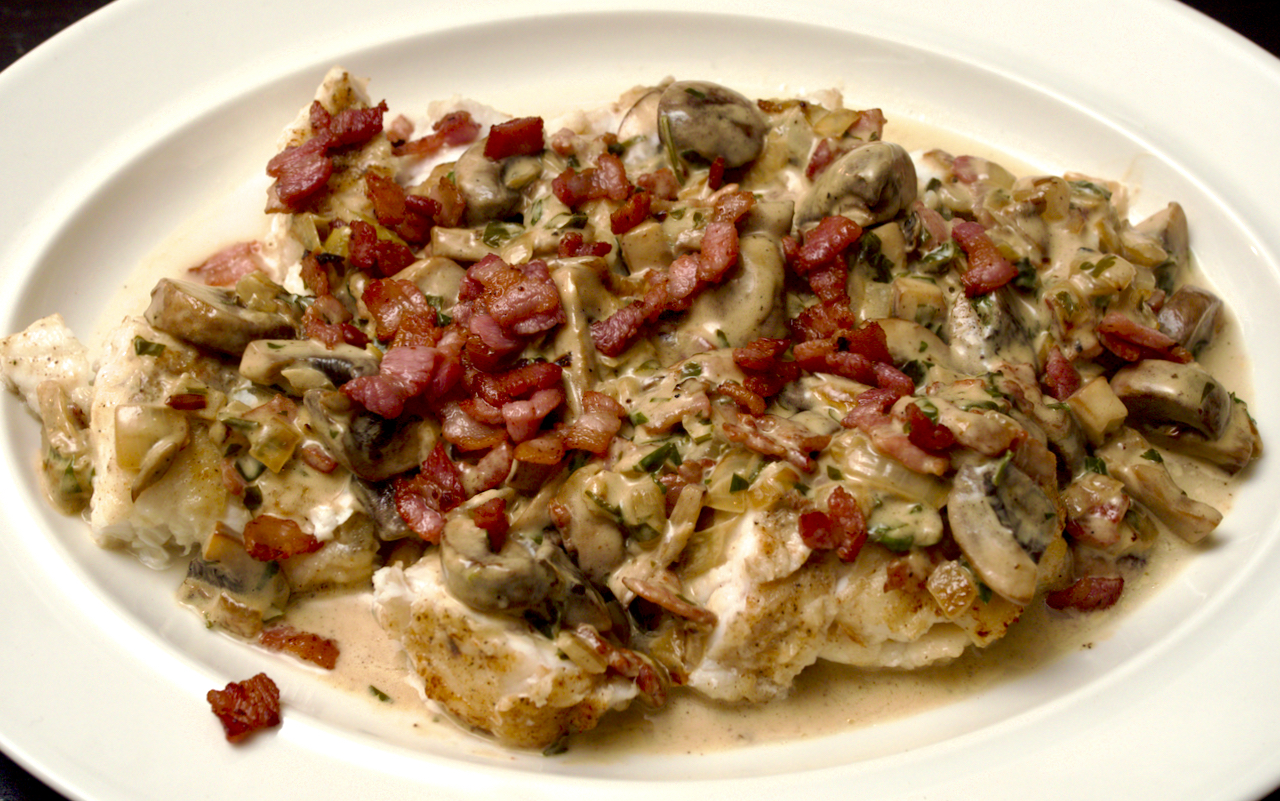
A surf-n-turf compromise maybe for the meat-eaters and such a delicious sauce to go with the fish. Looks a bit messy in the picture but it tastes delicious! We served with baby roast potatoes and greens.
Wine Suggestion: This begs for a youthful, oaked white like the textural, fresh and balanced Neudorf Tiritiri Chardonnay from Nelson in NZ. There’s both a finesse and a complexity to this wine with fresh fruits, hints of spice and … it may be the food influencing it, but we get hints of bacon and a meatiness. All bound together tightly and opening up gently in the glass.
Monkfish with mushroom & bacon sauce – serves 6
6 x 150g monkfish fillets, ask the fishmonger to remove the skin and membrane
3 tbsp plain flour
2 tbsp oil
a knob of butter
6 rashers of smoked streaky bacon, chopped into small pieces
1 small onion, finely chopped
200g chestnut mushrooms, sliced
200ml crème fraîche
juice of ½ lemon
1 tsp Dijon mustard
3 tbsp chopped parsley
Preheat the oven to 200C/180C fan/Gas 6 and line a tray with baking paper.
Season the monkfish with salt and pepper. Sprinkle the flour over a plate and dust the fish until coated, shaking off any excess.
Put a frying pan over a high heat and add the oil and butter. When the butter is foaming, add the fish fillets and fry for 2-3 minutes on each side or until sealed and lightly golden. Transfer to the paper-lined tray and pour over any buttery juice from the pan. Roast in the oven for 8-10 minutes or until cooked through.
Meanwhile, wipe the pan clean with kitchen paper to remove any flour, then add the bacon and fry over a high heat until crispy, then remove to a plate. Tip the onion into the pan and fry for a few minutes, then cover and reduce the heat and leave to cook for another 5 minutes. Remove the lid and turn the heat back up, add the mushrooms and fry for a few minutes until golden.
Add the crème fraîche, lemon juice and mustard with half the cooked bacon and half the parsley. Bring to the boil and bubble for a few minutes until reduced and slightly thickened. Season to taste with salt and pepper.
Slice each fish fillet into three and arrange on a platter. Spoon over the sauce and garnish with the rest of the bacon and parsley.
(Original recipe from Foolproof Cooking by Mary Berry, BBC Books, 2016.)




 Jono & Jules do food & wine