Feeds:
Posts
Comments

Archive for the ‘Fish’ Category

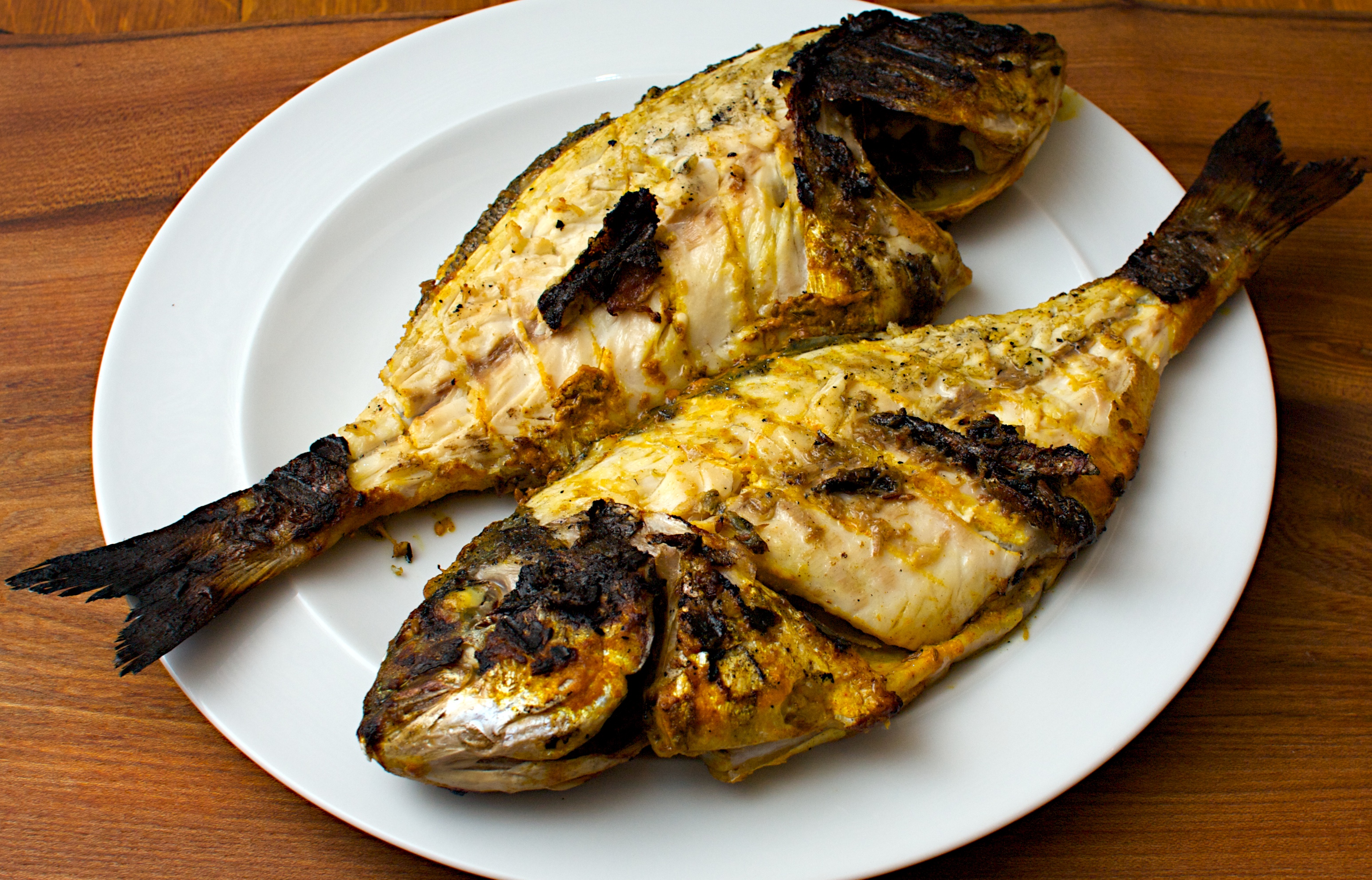
We didn’t brush the grill of our barbecue well enough to prevent the skin sticking to it. If you’re cooking fish on a barbecue learn from our mistakes and brush the grill down well and rub with a bit of oil to stop it sticking. You can also season the fish with salt and set it aside for 15 minutes or so before cooking which will draw the moisture out of the skin. Alternatively you can take the extra safe precaution of cooking the fish on some tinfoil. This is a delicious way to cook fish and you get the flavours of the garlic, ginger and Tikka flavours with the added barbecue smokiness which works a treat and can be served with a fresh cucumber, tomato and coriander salad.

BBQ Tikka Sea Bream – to serve 2

  • 2 tbsp finely grated fresh ginger
  • 4 garlic cloves, finely grated
  • 2 small sea bream, approx. 450g each
  • 6 tbsp natural yoghurt
  • 2 tbsp olive oil
  • 2 tsp turmeric
  • 2 tsp chilli powder
  • 3 tsp cumin seeds

Get the barbecue hot.

Slash the skin of the fish on either side and place in a shallow dish. Mix the ginger and garlic, season with salt, then rub all over the fish.

Mix the yoghurt with the oil, spices and seasoning. Pour this over the fish and rub it all over the fish with your hands, inside and out.

Cook for about 6 minutes on each side and serve with an Indian-style salad.

Drink with: a chilled bottle of Singha beer, preferably outside in the sunshine.

(Original recipe from BBC Good Food)

Read Full Post »

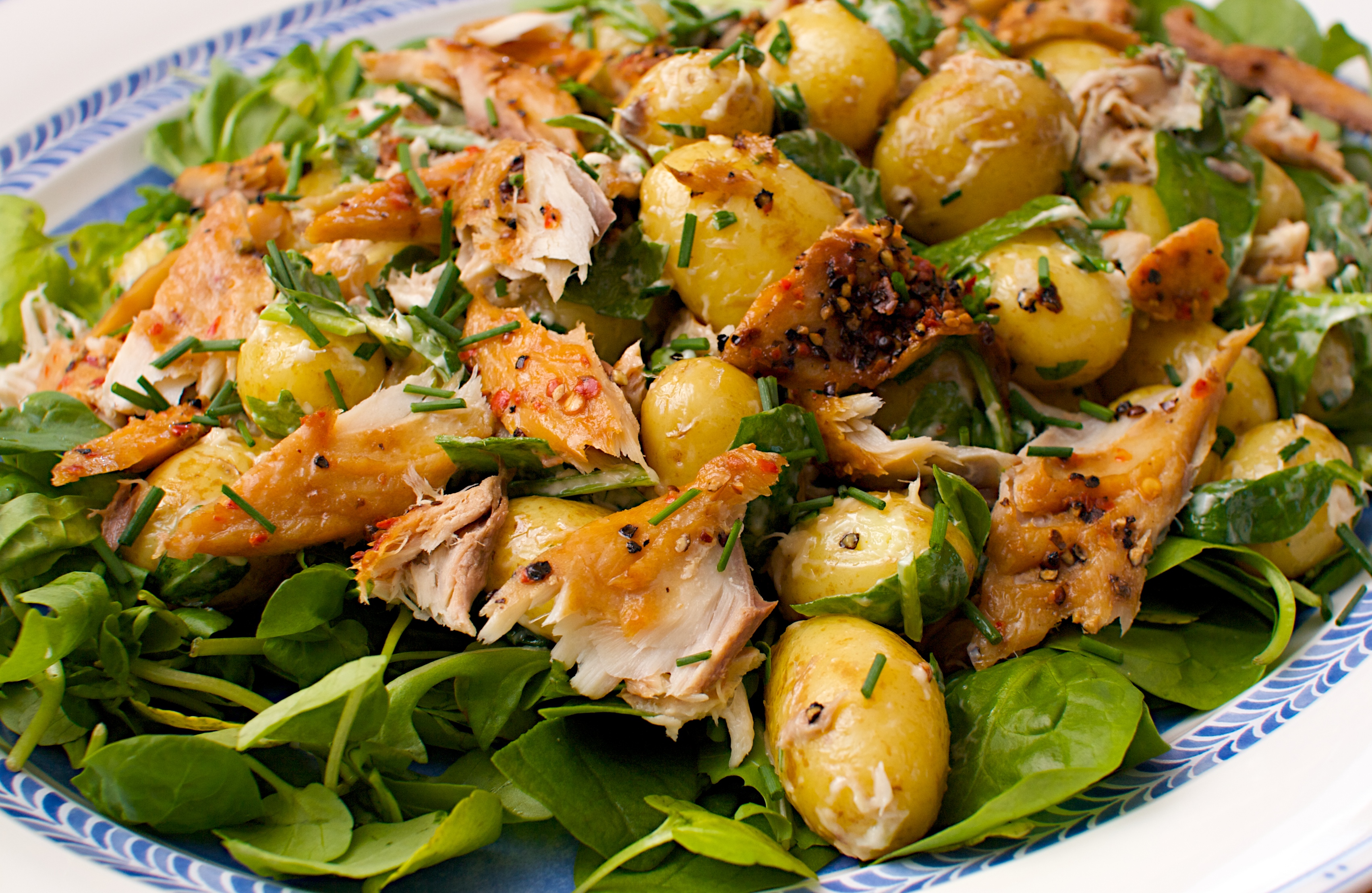
Stock up on your oily fish with this delicious and easy-peasy dish. Leftovers are great for lunch the next day.

Peppered mackerel, new potato & watercress salad – to serve 6

  • 750g baby new potatoes
  • 5 tbsp mayonnaise
  • small bunch chives
  • 100g bag watercress
  • 270g peppered mackerel fillets

Boil the potatoes until tender, then drain and allow to cool for 10 minutes. Snip most of the chives and mix with the mayonnaise.

Scatter half the watercress on a serving platter, chop the rest roughly and mix with the mackerel, potatoes and mayonnaise.

Pile the mackerel and potato mix on top of the watercress and snip the rest of the chives over the top.

Wine Suggestion: Oily fish is difficult to match with wine – go for a crisp white with fresh acidity, such as a Sauvignon Blanc.

Read Full Post »

This makes a really tasty side dish so serve it with something else if you’re not keen on tuna. A definite repeat recipe!

Tuna with peppery tomatoes & potatoes – to serve 4

  • 4 tuna steaks
  • 1 tbsp olive oil
  • 3 garlic cloves, crushed
  • few thyme sprigs
  • 500g new potatoes, sliced about 1 cm thick
  • 2 red peppers, cut into large chunks
  • 1 red onion, cut into 8 wedges
  • 1 green chilli, deseeded and chopped
  • 400g tin cherry tomatoes

Preheat the oven to 220C/fan 200C/gas 7 and put in a roasting tin to heat up. Put the tuna in a shallow dish with half the oil, about two-thirds of the garlic and leaves from a sprig of thyme. Leave to marinate.

Get your barbecue on as you want a high heat to cook the tuna later (a griddle pan will suffice if it’s not barbecue weather).

Put the potatoes, peppers, onion and chilli into the hot tin with the rest of the oil and toss to coat. Roast for 20 minutes or until the potatoes are very nearly cooked (you might need to put them back in for another 5-10 minutes). Add the rest of the garlic and thyme and stir well before adding the tomatoes, then cook for another 5 minutes and add some seasoning.

Wipe most of the marinade off the fish, season, then sear on the barbecue for a minute on each side for medium (longer if you like it better done). Serve with the veg.

Wine Suggestion: Serve with a light Italian red, like a Valpolicella, which will have enough acidity for the tomatoey sauce.

(Original recipe from BBC Good Food)

Read Full Post »

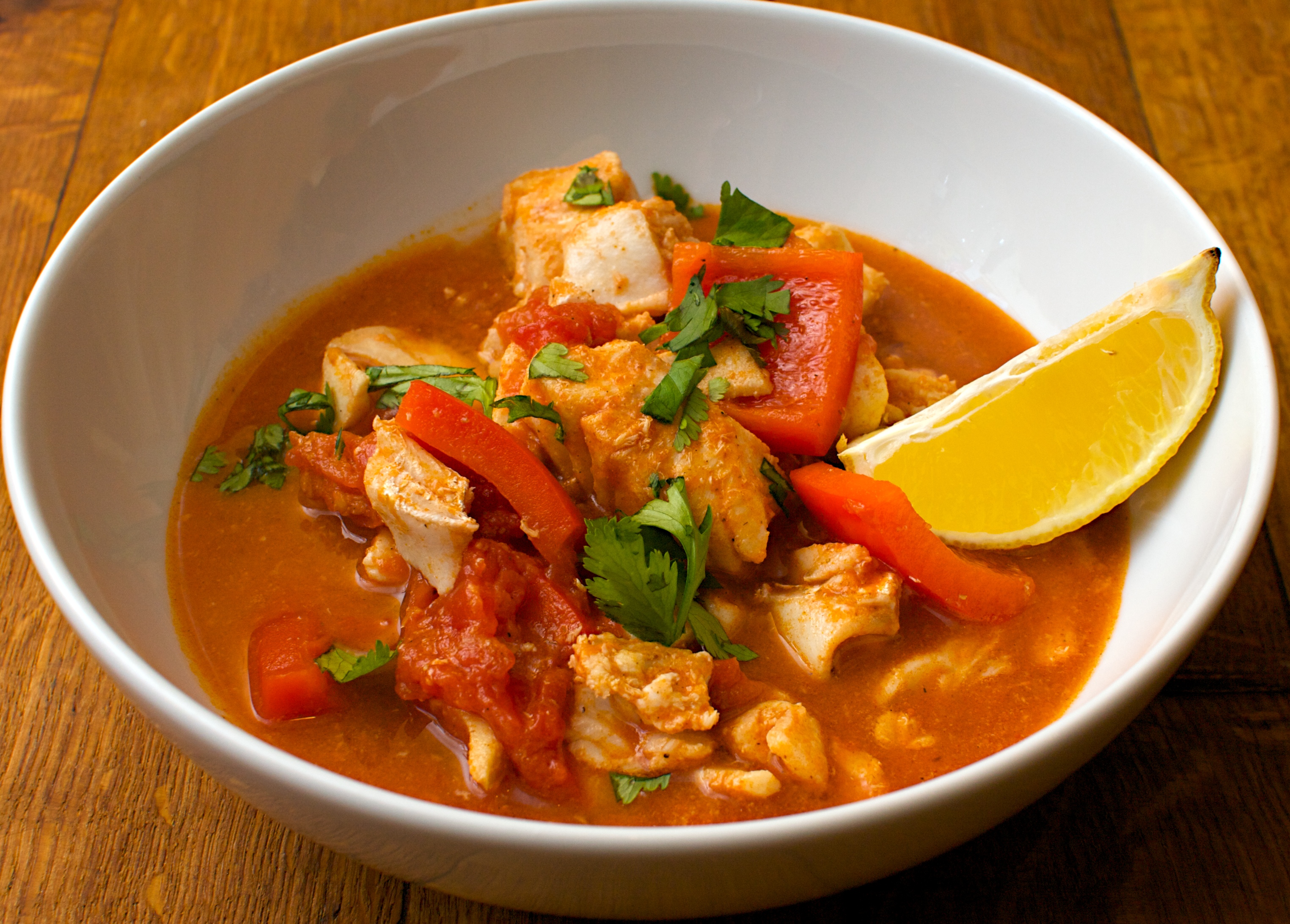
Spicy Haddock Stew

It’s another fish stew but very different to our last one. This is really easy to throw together, tastes good and very low-calorie and low-fat. We used haddock but you can use whatever white fish you have available. If you like a bit of heat you could add a bit of chilli too.

Spicy Haddock Stew – to serve 4 (or less if you’re very hungry)

  • 1 tbsp olive oil
  • 2 garlic cloves, crushed
  • 1 tsp ground cumin
  • ½ tsp paprika
  • 200g tin chopped tomatoes
  • 1 red pepper, cut into chunks
  • 450g haddock or other white fish fillet, cut into chunks
  • coriander, roughly chopped
  • lemon wedges

Heat the oil in medium-sized saucepan. Add the garlic, cumin and paprika and cook for 1 minute.

Add 100ml water and the tomatoes. Bring to the boil, then turn down to a simmer.

Add the pepper and simmer for 5 minutes, then add the fish and simmer for a further 5. Don’t be tempted to stir it too much or you’ll break up your fish chunks.

Season well and serve with the coriander, lemon and some crusty bread.

Wine Suggestion: It’s a weeknight and this is a simple dish. If you feel like a glass of wine go for something light and white.

(Original recipe from BBC Good Food)

Read Full Post »

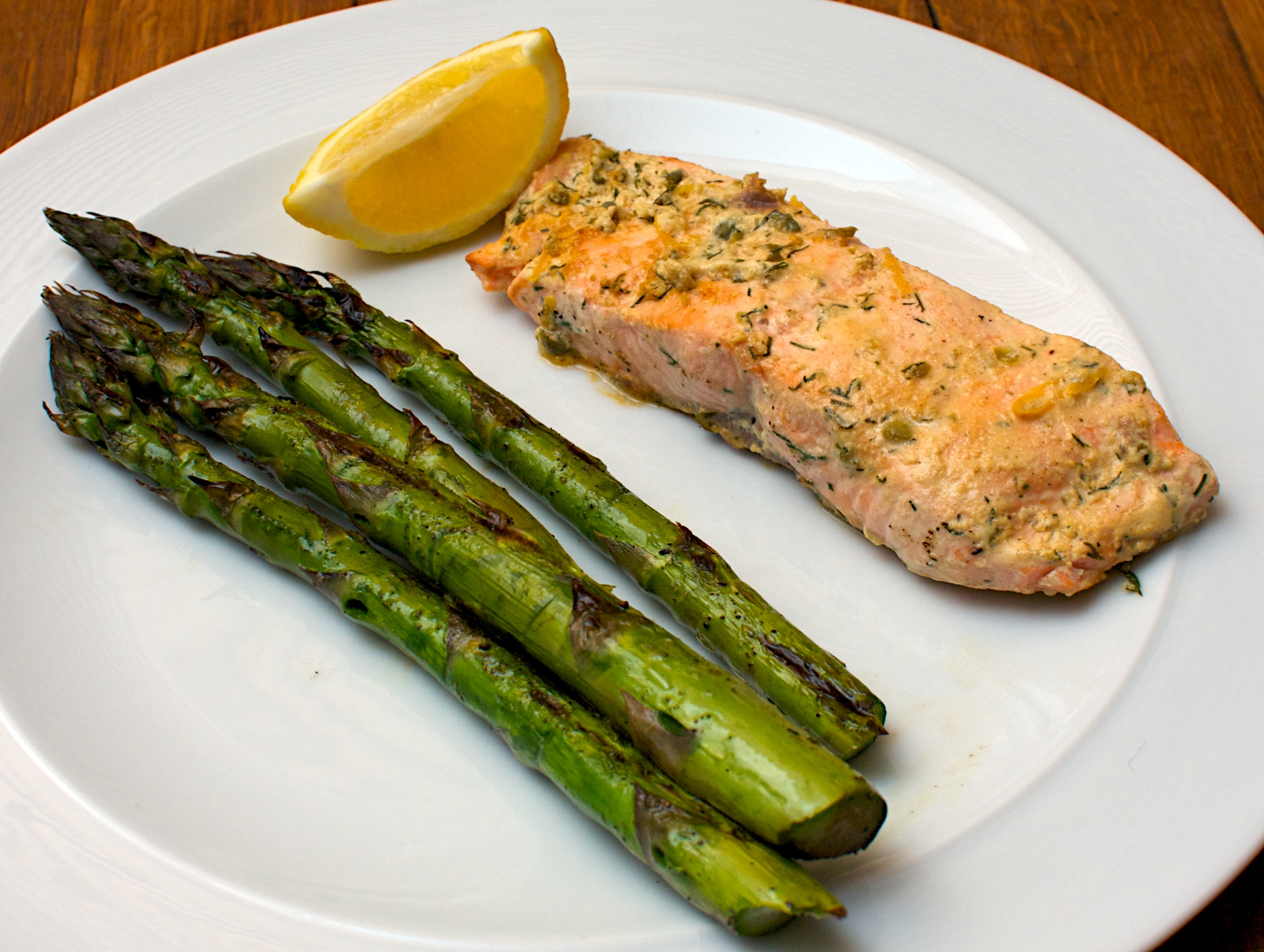
Low calorie and really good for you. The salmon stays lovely and moist. Serve with asparagus and new potatoes.

Salmon with Dill & Capers – to serve 8 (but easy to adapt for less)

  • 140g Greek yogurt
  • 2 tbsp Dijon mustard
  • zest 1 lemon
  • 1 tbsp chopped dill
  • 1 tbsp small capers, lightly chopped
  • 8 portions of fresh salmon, scaled
  • lemon wedges to serve

Mix the yogurt, mustard, lemon zest, dill and capers together and season with pepper. Use this mixture to coat the salmon really well.

Either grill the salmon on foil for 6-8 minutes (no need to turn) or barbecue for 3-4 minutes on each side (we recommend a fish grill).

Serve with the lemon wedges and some green veg and salad.

Wine Suggestion: This would work with a medium-bodied unoaked Chardonnay, like a Macon-Villages from Burgundy. Nothing too complex as you don’t want to overwhelm the flavours of the delicate salmon.

(Original recipe from BBC Good Food)

Read Full Post »

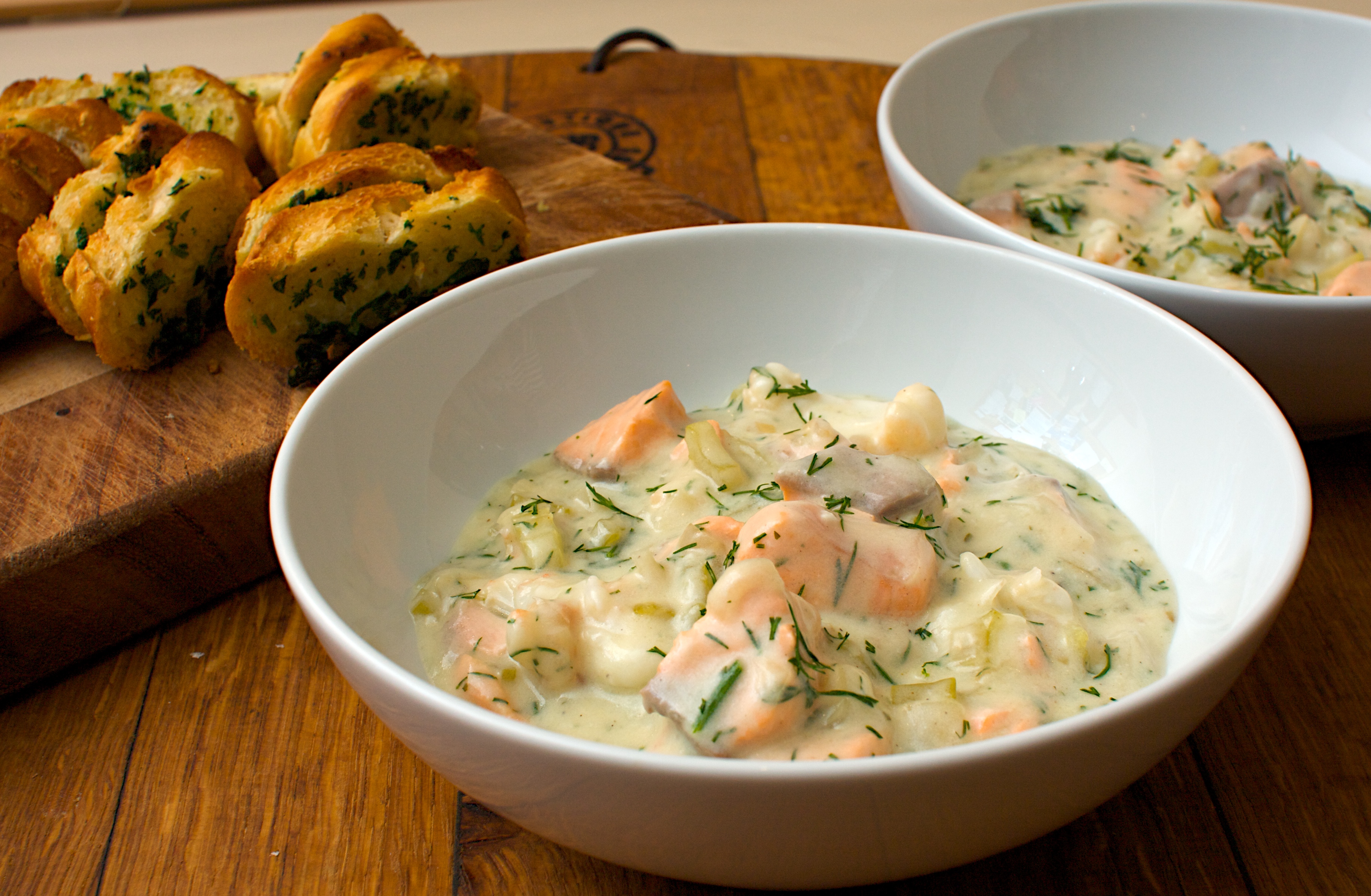
This is a lovely, warming dish, despite being both low-fat and low-calorie. The garlic bread works a treat so don’t leave it out.

Creamy seafood stew – to serve 4

  • 1 tbsp olive oil
  • 1 onion, chopped
  • 2 celery sticks, chopped
  • 1 garlic clove, crushed
  • 175ml white wine
  • 300ml chicken stock
  • 1 tbsp cornflour, mixed to a paste with 1 tbsp cold water
  • 400g mixed seafood, we used some defrosted prawns and some cubed salmon but frozen mixed seafood would work well
  • small bunch dill, chopped
  • 5 tbsp half-fat crème fraîche
  • garlic bread, to serve

Heat the oil in a large frying pan and cook the onion and celery for about 10 minutes, until soft but not coloured. Add the garlic and cook for another minute. Pour in the wine and simmer on a high heat until it has almost evaporated.

Pour in the stock and cornflour mix and simmer for 5-10 minutes, stirring regularly until thickened. Season and add the seafood and most of the dill. Simmer for a few minutes until piping hot, then stir in the crème fraîche.

Meanwhile, cook your garlic bread according to the pack. We find shop bought garlic bread way to garlicky so we buy a part-baked baguette and make our own garlic butter. Just mix some softened butter with one crushed garlic clove and lots of chopped parsley and some seasoning. Cut slices into the baguette and stuff in the butter. Bake in the oven according to the pack.

Serve the stew in bowls and scatter with the rest of the dill. Serve with the garlic bread.

Wine Suggestion: Careful not to go for anything too light and crisp with this dish as it is quite creamy and rich. We had a chardonnay which worked really well.

Read Full Post »

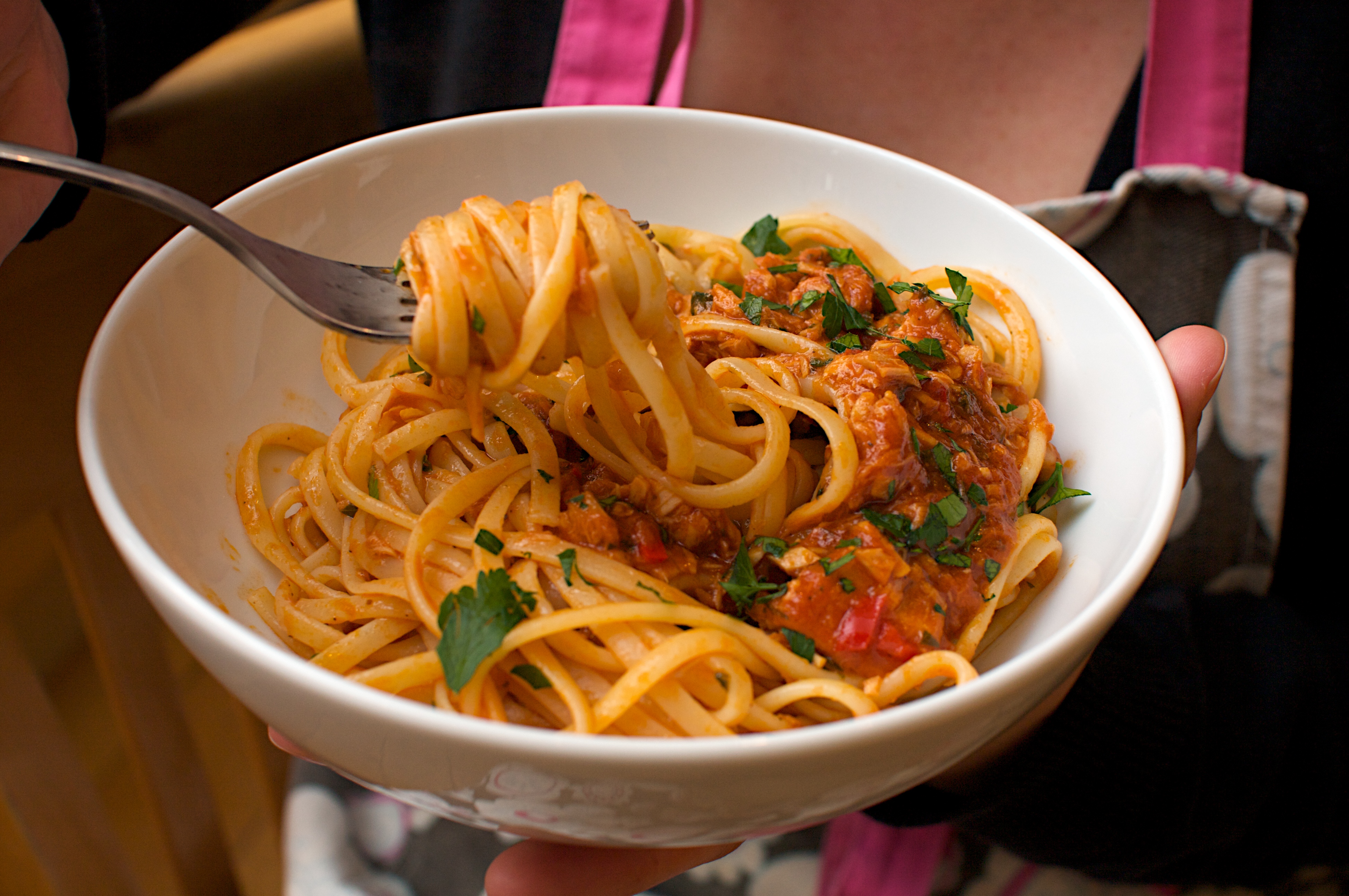
This is so delicious!!! Make sure you use top quality tuna in olive oil (we like Ortiz). It’s really healthy too. What more can we say?

Note to Cara – Jono reckons Cian will like this one 😉

Linguine with tuna sauce – to serve 4

  • 4 tbsp extra virgin olive oil
  • 3 tbsp fresh flat leaf parsley, chopped
  • 2 garlic cloves, finely chopped
  • 1 red chilli, deseeded and finely chopped
  • 1 cm fresh ginger, peeled and finely chopped
  • 450g creamed tomatoes (passata)
  • 2 x 200g cans tuna in olive oil, drained and flaked
  • 375g linguine

Heat the oil in a medium pan. Toss in 2 tbsp of the parsley, the garlic, chilli and ginger and fry for a few minutes until starting to soften. Add the tomatoes and cook for another few minutes. Fold in the tuna and season generously. Leave the sauce to simmer for 10 minutes.

Meanwhile, cook the pasta, then drain and return to the pan. Pour the tuna sauce into the pasta and toss well. Sprinkle over the rest of the parsley and serve.

Wine Suggestions: We think a light Italian red would be good here. Try a Langhe Nebbiolo or something from Basilicata if you fancy going south.

(Original recipe from BBC Good Food.)

Read Full Post »

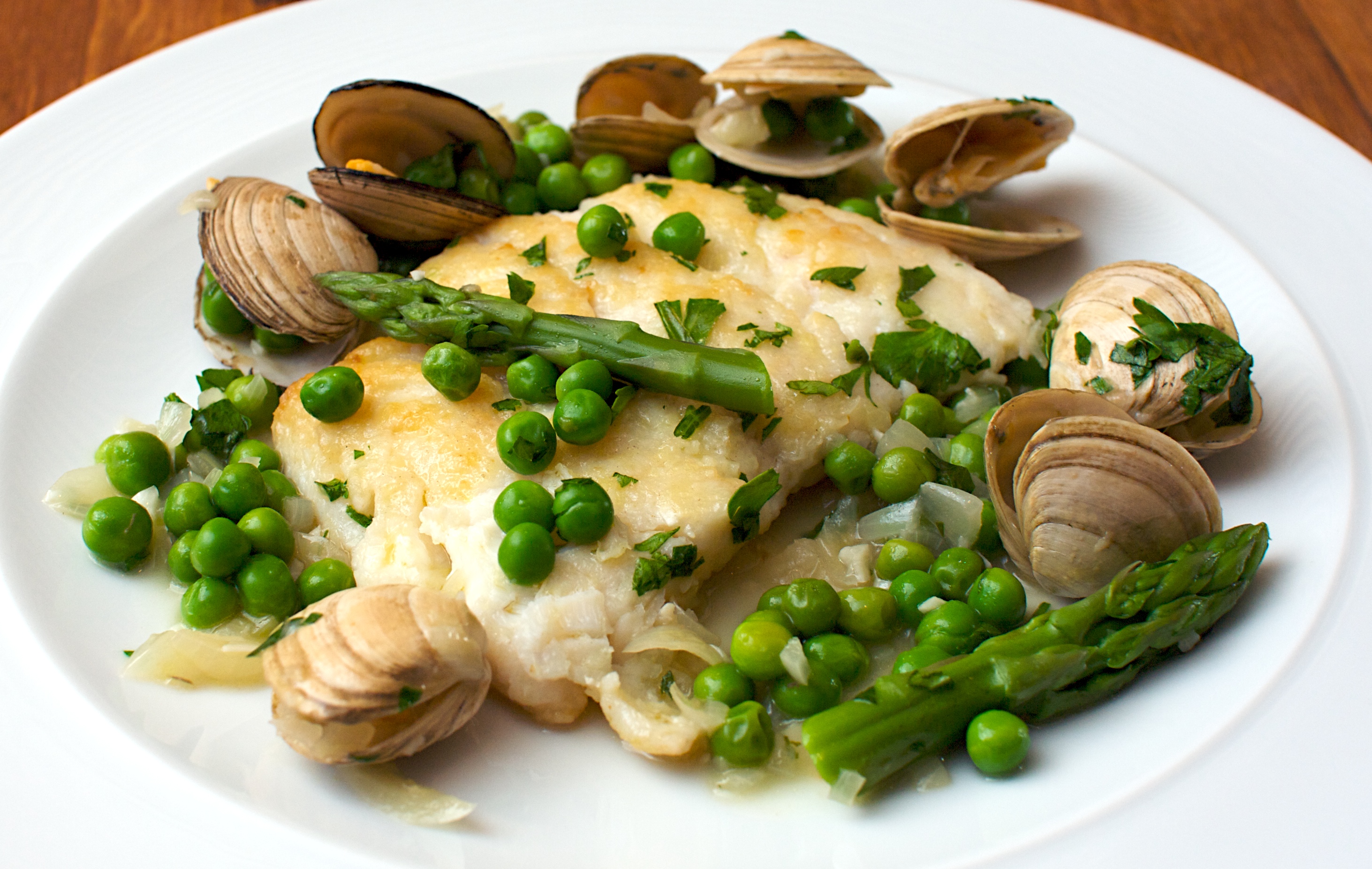
We have been waiting for asparagus season to start and this dish seemed an appropriate celebration. Basque inspiration but completely at home in Ireland with every ingredient in season and locally sourced which we are passionately in favour of.

This recipe uses the tips of asparagus but we suggest buying the whole thing and cutting the tips off at home (instead of the pre pack tips). The remaining asparagus stalks are great steamed or blanched the next day for breakfast with a nice boiled or poached egg 🙂

Merluza a la koxkera – serves 4

  • 4 x 175-200g pieces of skinned hake fillet, 2 – 2.5cm thick
  • 200g asparagus tips (8cm long)
  • 250g peas
  • plain flour for dusting + 1 tbsp for the sauce
  • 6 tbsp olive oil
  • 4 cloves garlic, finely chopped
  • 100g shallot, finely chopped
  • 175ml dry white wine
  • 100ml fish stock
  • 250g small clams (or a few extra of your pot will fit them)
  • 1 tbsp flat-leaf parsley, chopped

Season both sides of the hake pieces generously with salt and set aside for 10-15 minutes.

Meanwhile drop the asparagus tips into a pan of boiling, salted water and cook for 2 minutes. Add the peas and when it reaches the boil again drain and refresh under cold water. Leave to drain.

Pat hake pieces to remove excess moisture and then dust with flour and shake off any excess. Heat 4 tablespoons of olive oil over a medium-high heat in a large frying pan (big enough to fit your 4 hake pieces). Add hake and fry for 2-3 minutes on each side until golden brown on outside, but not quite cooked through. Lift out onto a plate and set aside.

Wipe frying pan clean and add 2 tablespoons of oil, the garlic and shallots. Fry over a medium heat for 3 minutes, or until soft and lightly golden. Stir in the 1 tablespoon of flour and then gradually stir in the wine and stock to make a smooth sauce.

Bring to a simmer and return the hake to the pan and cook for 1 minute. Add the clams, cover and cook for 2-3 minutes until all the clams are opened and the fish is cooked through. Uncover and scatter over the asparagus, peas and parsley. Simmer for a minute or two until the vegetables are warmed through. Taste for seasoning and serve.

Wine suggestion: As this is of Basque origin we could suggest a Txakoli, a Basque white wine. If this is difficult to find try a Semillon-Sauvignon Blanc blend, like from Bordeaux which has good freshness and crispness but also the body and structure to stand up to the flavours of the dish.

Inspiration from: Rick Stein’s Spain, BBC Books 2011

Read Full Post »

A great balance between the meaty and oily Gurnard and the sweet onions, salty capers and vinegar. You want the onions to be al dente so don’t cook them too long.

Fried Gurnard with Sweet & Sour Red Onions – to serve 4

  • olive oil, for shallow frying
  • 8 x 75g fillets of gurnard
  • 50g plain flour
  • 1 tsp small capers, to garnish

For the sweet and sour onions

  • 50ml extra virgin olive oil
  • 2 medium red onions, halved and thinly sliced
  • 2 tbsp red wine vinegar
  • 2 tbsp clear honey

Cook the sweet and sour onions first. Heat the olive oil in a frying pan, then add the onions, honey, ½ tsp salt and some pepper and cook gently for 10 minutes, stirring occasionally, until they are soft but still have a bit of a bite, but don’t let them brown. Keep warm.

Pour the olive oil into a wide shallow pan to a depth of 1cm and heat to 180ºC (buy a cheap jam thermometer in a cook shop for this). Season the fish fillets on both sides, coat in the plain flour and knock off the excess. Lower the heat slightly and add the fish and cook for 1 minute on each side until lightly golden and cooked through. Lift onto kitchen paper and drain briefly.

Serve the fish on warm plates and spoon some of the sweet and sour onions over. Scatter with capers and serve.

Wine Suggestion: Acidity is important here we’d recommend a white Inzolia or Grillo from Sicily.

(Original recipe from Rick Stein’s Mediterranean Escapes, BBC Books, 2007.)

Read Full Post »

This soup is delicious and really filling with a mild smoky flavour from the fish. Serve with crusty bread.

Broccoli & smoked haddock soup – to serve 4

  • 450g broccoli
  • 50g unsalted butter
  • 1 onion, chopped
  • 2 garlic cloves
  • 1 sprig of thyme
  • 1 bay leaf
  • 250g smoked haddock fillet, skinned and diced
  • 850ml milk
  • lemon juice
  • cayenne pepper

Trim the broccoli, peel the fatter bits of the stem and then cut into bite-sized pieces. Melt the butter in a large pan. Add the broccoli, onion, whole garlic cloves, thyme and bay leaf. Stir to make sure everything is coated and then cover and sweat over a very low heat for 10 minute, stir now and then to make sure it doesn’t stick.

Add the haddock and milk, and season (though not too much salt as your fish might be quite salty). Bring to the boil and simmer covered, for 10-15 minutes or until the broccoli is really tender. Remover the bay leaf and thyme and liquidise.

Reheat when ready to serve, stir in a squeeze of two or lemon to give it a nice freshness.

Wine suggestion: Try a white wine from Gascogny. We enjoy drinking the Domaine de Pellehaut Harmonie de Gascogne white (from Mitchellandson.com)  which blends Ugni Blanc, Colombard, Sauvignon, Gro & Petit Manseng and Chardonnay into a delightful fresh and fruity wine. Enough freshness and interest, but with an easy drinking finish. Great as a house white!

Read Full Post »

This is really healthy and low-fat which is just what we like during the week. Serve with some steamed rice.

Steamed fish & pak choi parcels – to serve 4

  • 4 plaice, haddock or other white fish fillets
  • 2 pak choi, thickly sliced
  • 4 scallions, shredded
  • 1 red chilli, thinly sliced
  • 3cm ginger, cut into matchsticks
  • 2 tbsp reduced-salt soy sauce
  • juice 1 lime
  • 1 tsp sesame oil

Heat oven to 200C/180C fan/gas 6.

Put each fish fillet in the centre of a large piece of tinfoil. Top with the pak choi, scallions, chilli and ginger. Pull up the edges of the foil to make a dish to catch the sauce.

Mix the soy sauce, lime juice and 1 tbsp water and spoon over the fish. Carefully crimp the foil to enclose the fish making sure there are no gaps for the steam to escape.

Put the parcels on a baking tray and bake for 10-15 minutes or until the fish is cooked (depends how big your fillets are). Drizzle over a few drops of sesame oil before serving but go easy or you will overpower the delicate flavours.

Wine Suggestion: light and delicate with aromatic overtones and a little residual sugar instead of bone-dry is the key; try a New Zealand or just-off-dry German Riesling and you’ll have a delightful match.

(Original recipe from BBC Good Food)

Read Full Post »

Tuna tataki noodles

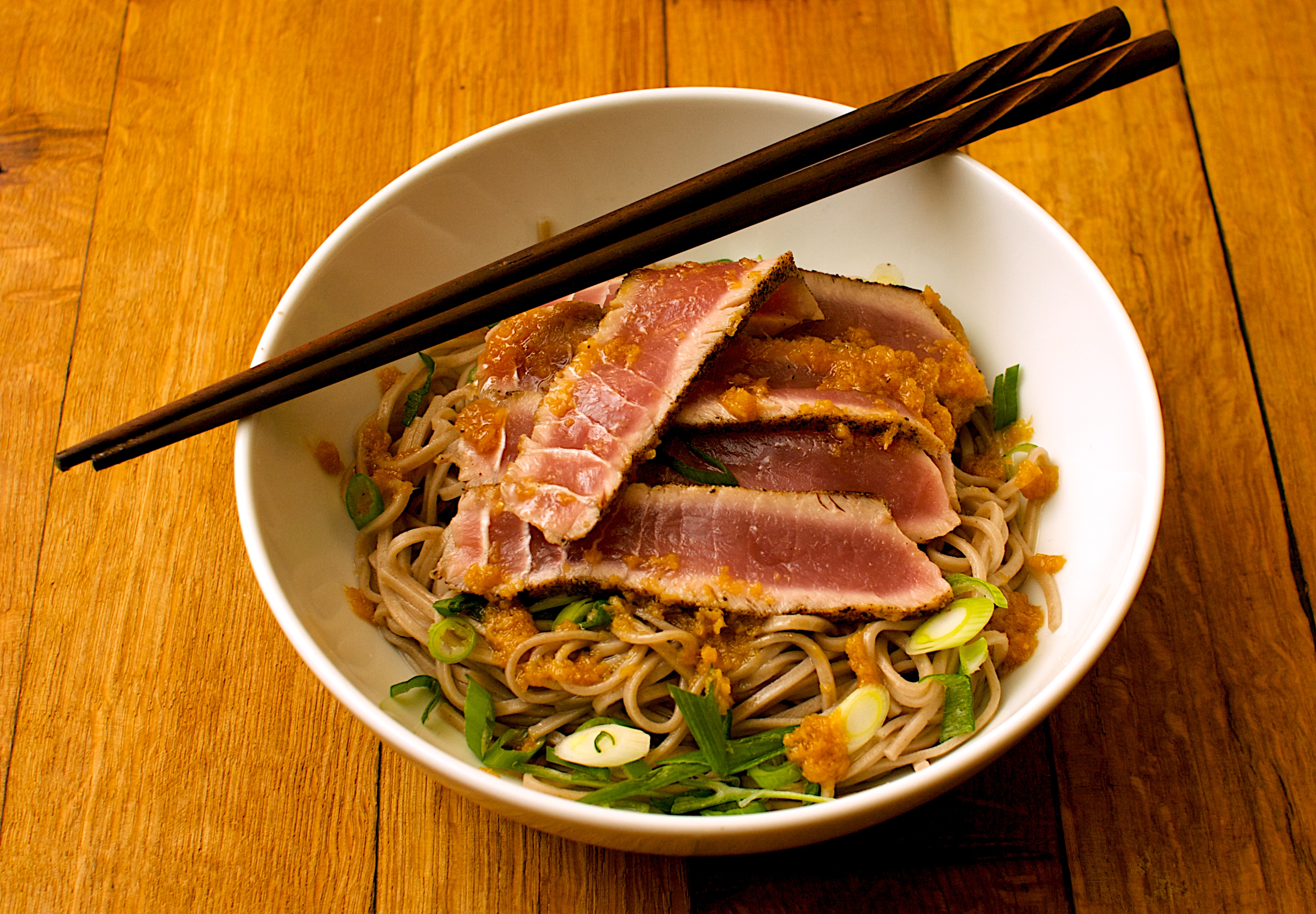
Tataki is a Japanese way of preparing fish which involves searing it quickly, slicing thinly and serving with ginger that has been pounded into a paste.  This takes just 15 minutes to make and is fresh, tasty and healthy.

Tuna tataki noodles – to serve 2

  • 2 tuna steaks
  • 1 tsp black peppercorns, coarsely ground or cracked
  • 150g soba noodles, cooked according to the pack
  • 2 scallions, shredded
  • 1 tbsp groundnut oil
  • 1 tsp sesame oil
  • 1 tsp soy sauce
  • 1 garlic clove, grated
  • ginger grated to make 1 tbsp

Rub the tuna with the black pepper and sear in a hot non-stick pan for 1 minute on either side. Rest for a couple of minutes before slicing into strips.

Divide the noodles between 2 bowls and add half the tuna strips to each. Top with the scallions.

Mix the rest of the ingredients together to form a paste and drizzle this over the tuna and noodles.

Wine Suggestion: Tuna is meaty fish but this dish is definitely not heavy so a light red wine, such as a Beaujolais would work well. Stick it into the fridge for a short time so it is slightly chilled and it will give the whole meal a zing.

(Original recipe from BBC Good Food.)

Read Full Post »

Lemon Sole Gratin

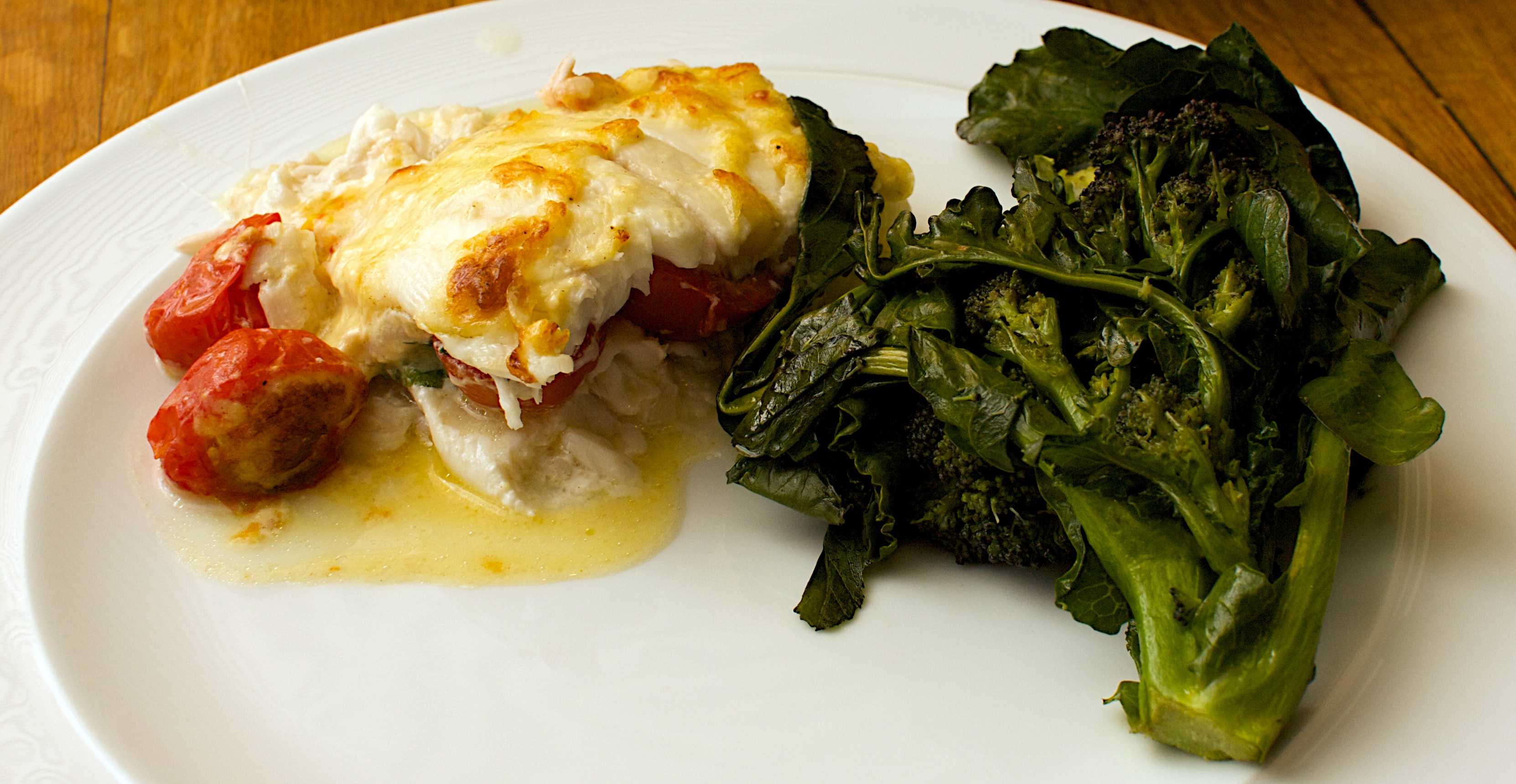
The great debate continues whether it is acceptable to have fish with cheese – Italians seem particularly anti this combination. We wouldn’t sprinkle Parmesan over spaghetti with clams or prawns but have no qualms in recommending this cheesy fish bake. You can put this together in minutes and it will keep in the fridge until you’re ready to cook it. We served it with some sprouting broccoli and steamed baby potatoes and none of our guests took offence at the fish and cheese combo.

Gratin of fish with cheese, tomatoes and herbs – to serve 6

  • 75g Guryère cheese, grated
  • 75g Emmental, grated (or you can use all Gruyère if you like)
  • 3 generous tsp Dijon mustard
  • 4-5 tbsp single cream
  • 18 cherry tomatoes
  • 1½ tbsp torn basil
  • 750g filleted and skinned flat-fish, like plaice or lemon sole
Preheat the oven to 180ºC, Gas mark 4. Mix the grated cheese with the mustard and cream and season with black pepper. Cut the cherry tomatoes in half, season with salt and sprinkle with basil.

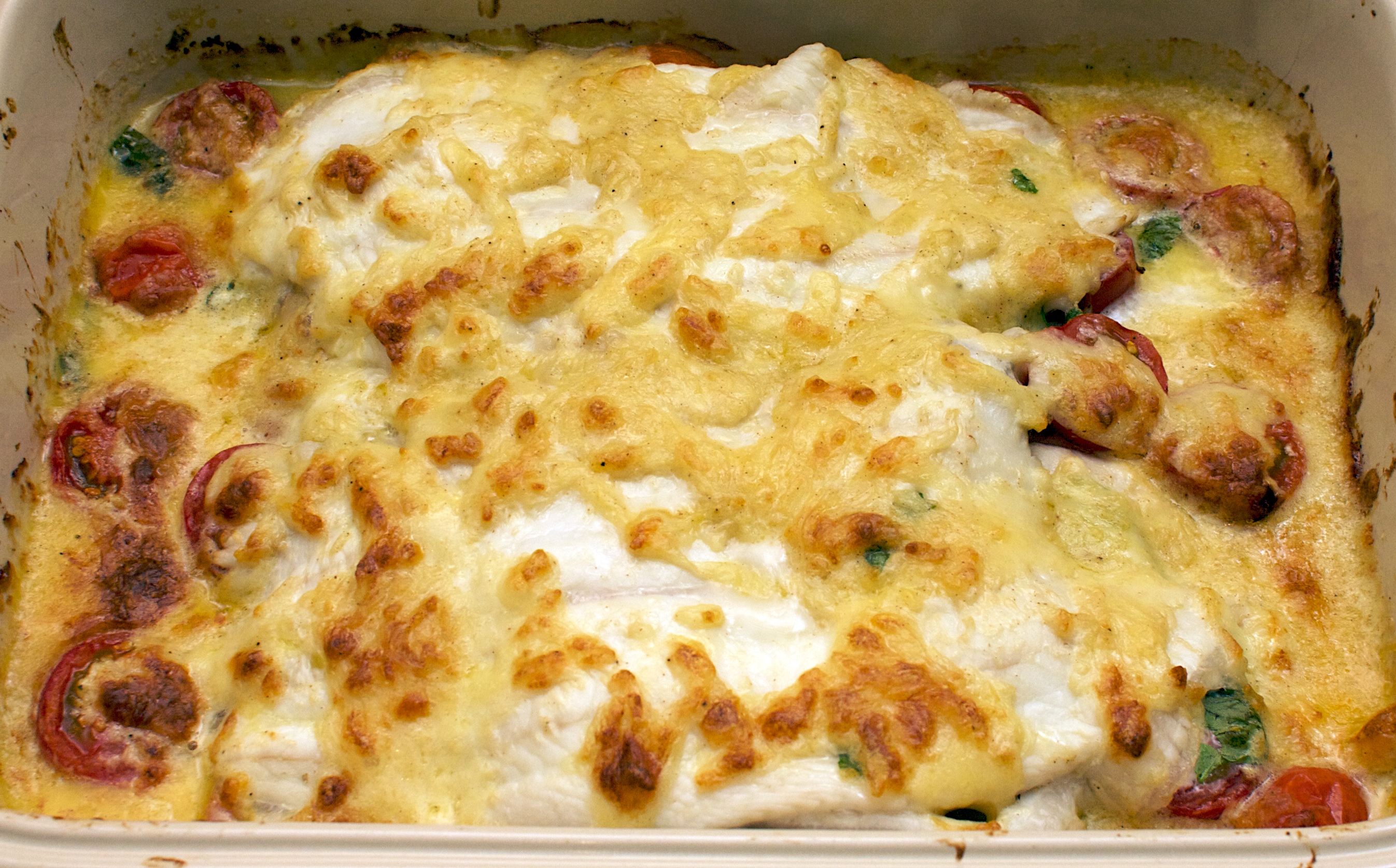
Spread half the cheese mixture in a gratin dish. Lay half the fish on top, then add all of the tomatoes and herbs. Add the second layer of fish, followed by the rest of the cheese. Keep in the fridge until you’re ready to cook.

Cook for 20-30 minutes until golden and bubbling (as below).

Wine suggestion: Matching a wine for cheese and fish together is a little difficult which may be a reason why Italian’s are generally not in favour of this combination; but we suggest looking for a wine that has no oak, and yet good fruit and minerality. We tried a Pouilly Fumé from fruitier, fuller-flavoured producer (Henri Beourgeois) which was a good match.

(Original recipe from Rachel’s Favourite Food at Home by Rachel Allen, Collins, 2006.)

Read Full Post »

Easy Sushi Hand Rolls

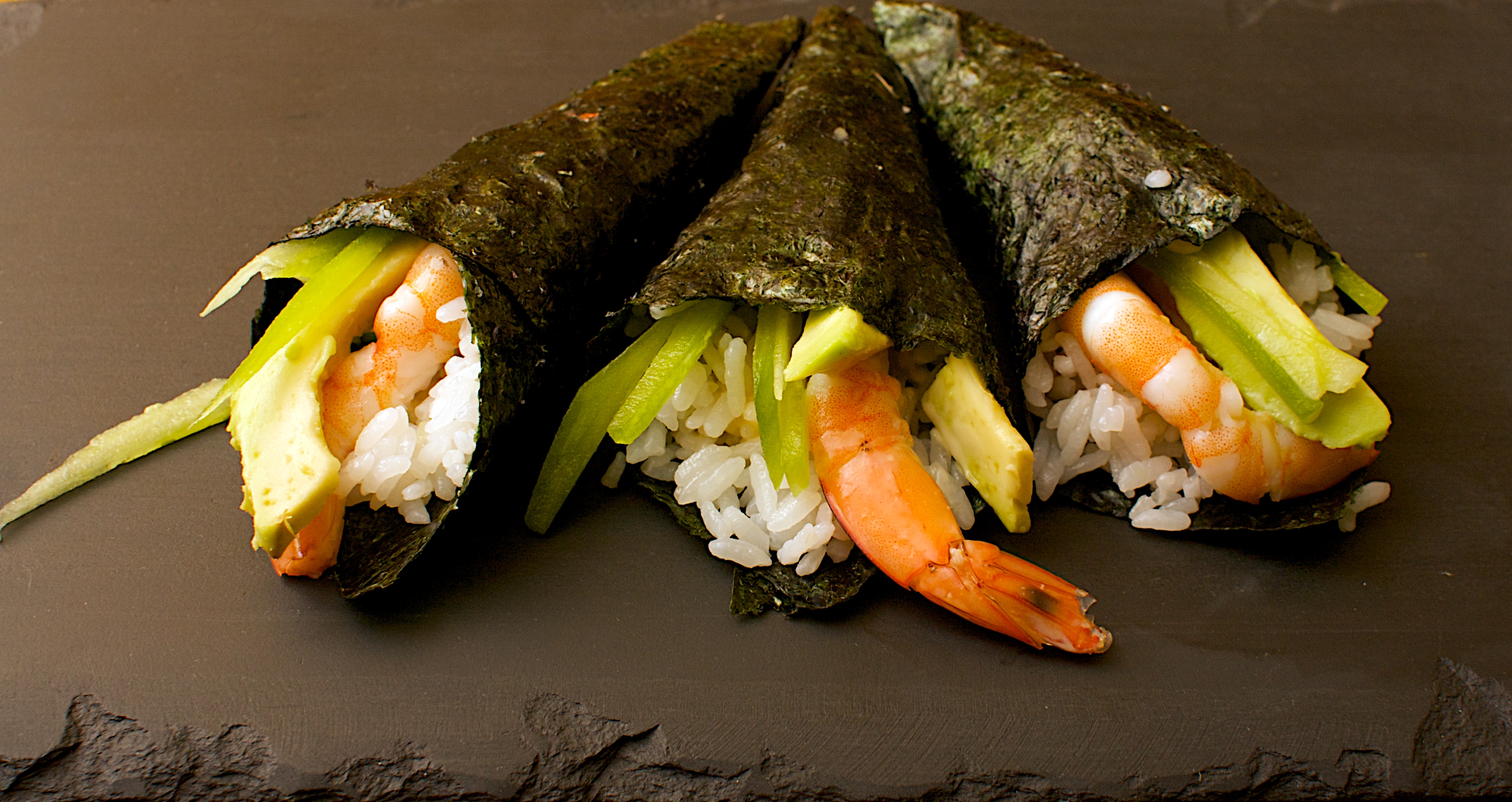
We have shied away from sushi recipes up until now as they tend to be a bit intimidating with all that delicate rolling and slicing. These hand rolls are really easy and by the time you’ve made 14 of them you will have perfected the skill!

Sushi hand rolls (temaki) – makes 14

  • 7 sheets nori

FILLINGS (your choice of …)

  • 150g salmon or tuna, cut into strips
  • ½ an avocado, peeled and cut into strips
  • ¼cucumber, seeds removed and cut into strips
  • 150g cooked, peeled prawns
  • 2 scallions, finely chopped

RICE

  • 250g sushi rice
  • 50ml Japanese rice vinegar
  • 40g golden caster sugar
  • 1 tsp salt

SPICY CHILLI MAYONNAISE

  • 6 tbsp mayonnaise
  • 2-3 tbsp chilli garlic sauce
  • ½ lemon, juiced
TO SERVE
  • soy sauce
  • wasabi
  • pickled ginger

To make the rice, put it in a sieve and wash in cold running water until the water runs clear. Drain for about 30 minutes to rid of excess water.

Put the rice into a saucepan, add 250ml cold water and bring to the boil on a high heat. Cover tightly and simmer on a low heat for 30 minutes. Take off the heat and leave covered to steam for 15 minutes.

Meanwhile, put the rice vinegar, sugar and 1tsp salt in a saucepan. Heat the mixture until the sugar dissolves, then cool to room temperature.

Put the hot rice in a large bowl and add ¼of the sushi rice seasoning. Fold gently and repeat until all of the seasoning is mixed through. Cool the rice by fanning it for 5 minutes (this makes it shine).

To make the mayonnaise, mix all the ingredients together, taste and add extra salt and lemon if necessary.

Now you are ready to make your sushi hand rolls. Use the fillings in different combinations and serve with pickled ginger, soy sauce and wasabi.

  1. Lay a sheet of nori shiny side down and cut horizontally in half to make 2 strips. Cut a diagonal corner piece from the right hand side of each strip.
  2. Put one strip in your palm, keeping the shiny side down.
  3. With a damp hand, take a ping-pong sized ball of rice and spread it over half the nori on the side closest to your thumb.
  4. Make a diagonal trough in the middle of the rice with your finger to make a space for your filling.
  5. Add a little drizzle of spicy mayonnaise along the trough (a squeezy bottle makes this easier).
  6. Add your choice of filling – though not too much or you won’t be able to roll it.
  7. Start rolling the nori from the rice-covered part by creating a triangle. You can practice this with an empty sheet before beginning. Bring the bottom corner up to enclose the filling.
  8. Keep rolling until the nori forms a cone – make sure it is rolled tight.
  9. Use a tiny ball of wasabi as glue to seal the join of your cone at the top. Repeat 14 times!

Wine Suggestion: Go for something delicate and light with some floral and fruit aromas. A dry Riesling worked well for us.

(Original recipe from BBC Good Food)

Read Full Post »

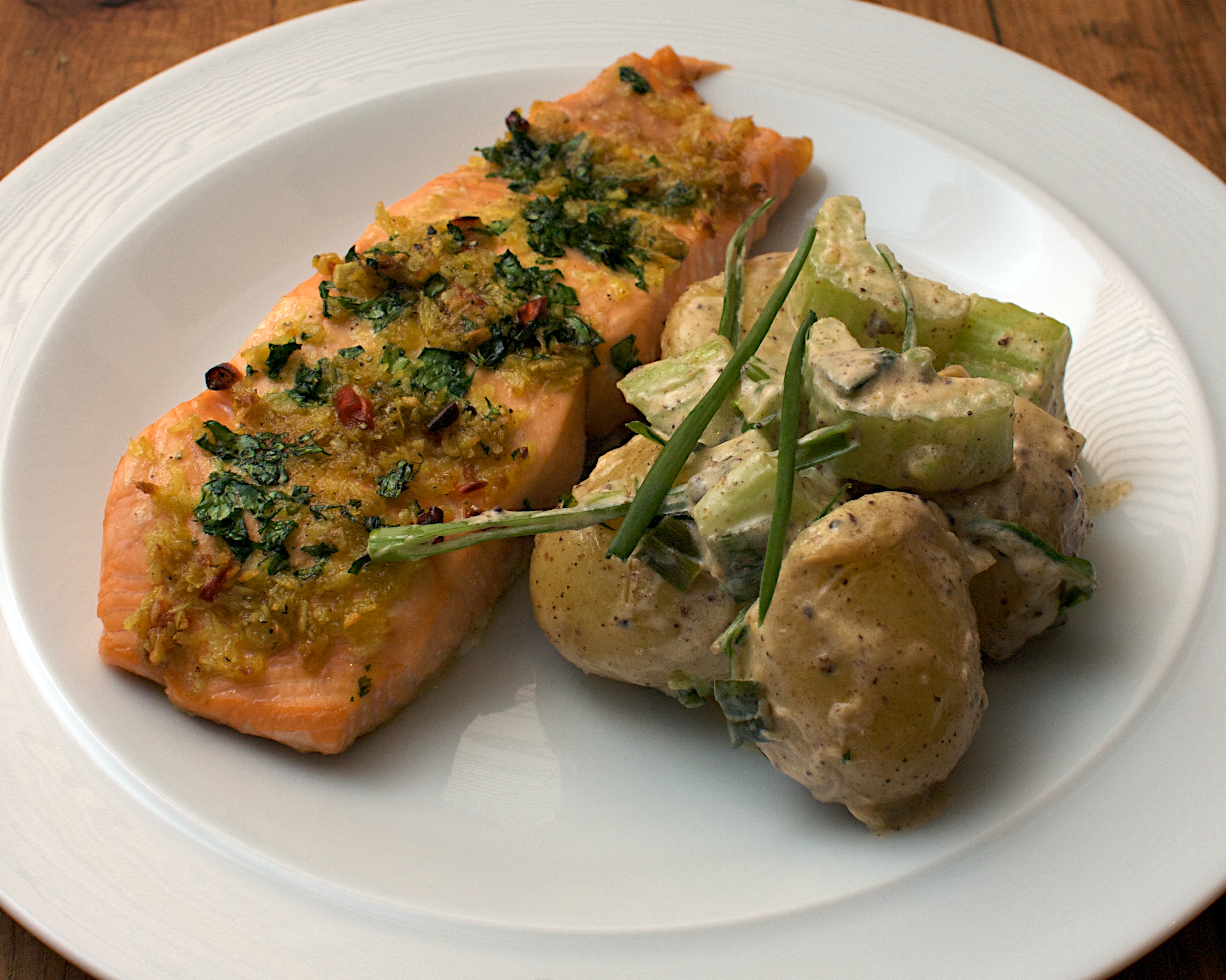
This is lovely and healthy too. We served it with the potato salad in the post below. The recipe serves eight so it would be really easy for a dinner party but was also really easy to adapt to feed just two.

Roast spiced salmon with coconut crumbs – to serve 8 (or divide it up to serve less)

  • 50g butter
  • 8 green cardamom pods, seeds removed and finely crushed
  • 3 tbsp desiccated coconut
  • 1 red chilli, seeded and finely chopped
  • 1 tbsp grated fresh root ginger
  • 2 garlic cloves, finely chopped
  • 1 tsp ground coriander
  • generous pinch of ground turmeric
  • 8 slim boneless skinless salmon fillets
  • 2 tbsp finely chopped fresh coriander

Melt the butter in a medium pan, add the cardamom and coconut and keep stirring for a few minutes or until the coconut starts to toast and smell divine. Stir in the chilli, ginger, garlic, ground coriander and turmeric. Cook for another minute and then leave to cool.

Arrange the salmon in a single layer but not touching, in 1 large or 2 smaller buttered ovenproof dishes. Scatter the coriander over and spread the coconut mixture on top. You can cover the salmon with cling film and stick it in the fridge for up to a day. Take it out of the fridge about an hour before you want to cook it.

Turn the oven to 200C/gas 6/fan 180C. Roast the salmon for 13-15 minutes or until cooked, but still moist.

Wine Suggestion: We had a Gruner Veltliner from Austria which tends to be a little bit spicy and so complements a dish like this. A little residual sugar never goes amiss when there is chilli in the food either.

(Original recipe from BBC Good Food)

Read Full Post »

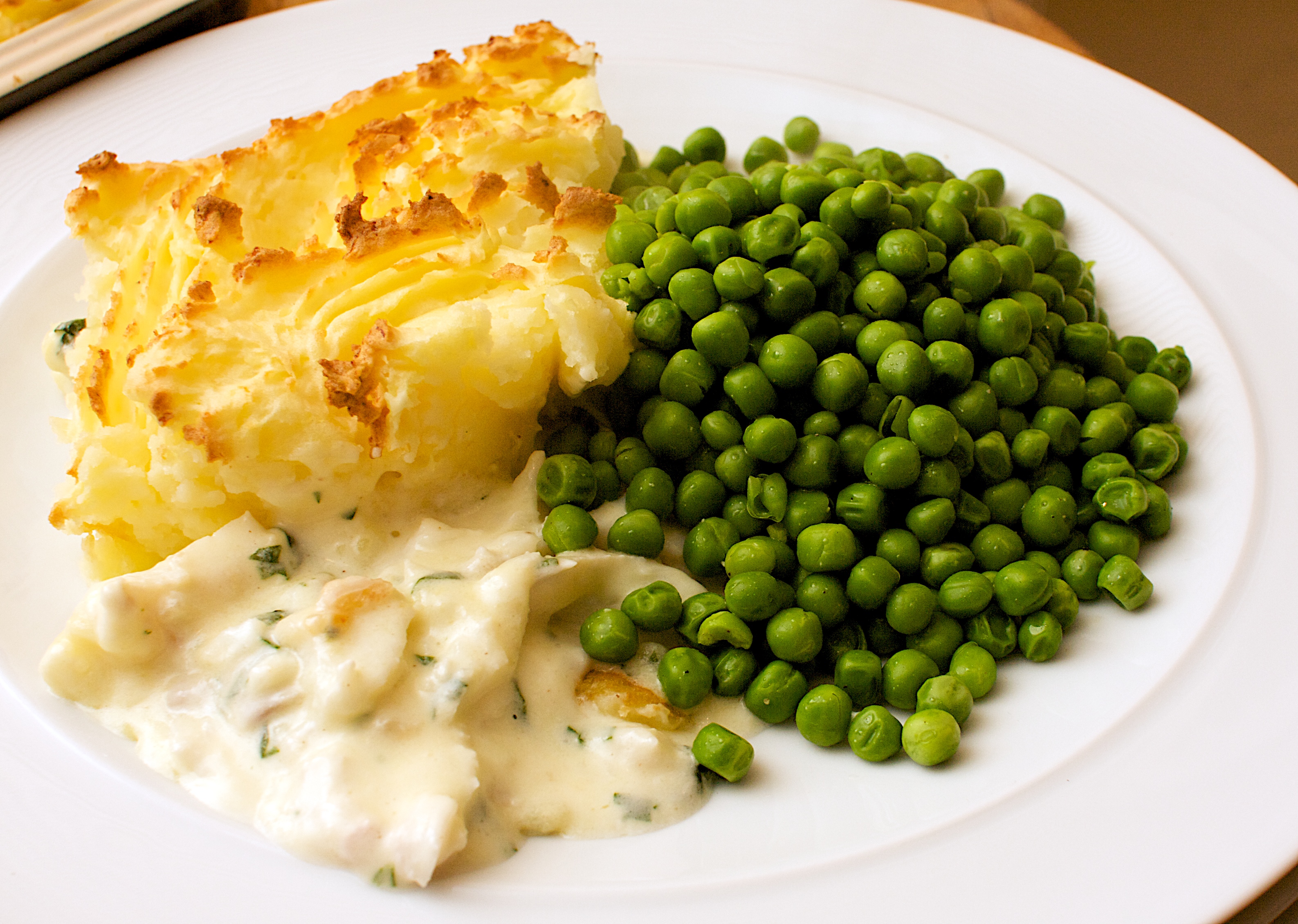
Fantastic Fish Pie

Sometimes the less complicated recipes are the best. Our fish pies usually have all sorts of stuff inside but this white fish, egg and parsley sauce combo was delicious. Perfect comfort food.

Fish Pie – to serve 4 

  • 1 small onion, thickly sliced
  • 2 cloves
  • 1 bay leaf
  • 600ml milk
  • 300ml double cream
  • 450g unskinned cod or haddock fillet
  • 225g undyed smoke cod or haddock fillet
  • 4 eggs
  • 100g butter
  • 45g plain flour
  • 5 tbsp chopped flat-leaf parsley
  • freshly grated nutmeg
  • 1.25kg floury potatoes, peeled
  • 1 egg yolk
  • salt and freshly ground white pepper

Push the cloves into a couple of the onion slices. Put the onion into a large pan with a bay leaf, 450ml of the milk, all of the cream, and fish. Bring just to a boil and them simmer gently for 8 minutes. Lift the fish out with a slotted spoon and strain the cooking liquid into a jug. When the fish is cool enough to handle, break it into big flakes, discarding the skin and any bones. Sprinkle the fish over the base of a shallow 1.75 litre ovenproof dish.

Hard-boil the eggs for 8 minutes, then drain and leave to cool in cold water (so you don’t get ugly black rings). Peel and cut into chunky slices and arrange then on top of the fish.

Melt 50g of the butter in a pan, add the flour and cook for 1 minute. Take the pan off the heat and gradually stir in the reserved liquid. Return it to the heat and bring to the boil slowly, stirring all the time. Leave it to simmer gently for 10 minutes to thicken and cook out the flour. Remove from the heat again, stir in the parsley and season with nutmeg, salt and white pepper. Pour the sauce over the fish and leave to cool. Chill in the fridge for 1 hour.

Boil the potatoes until tender. Drain, mash and add the rest of the butter and the egg yolk. Season with salt and white pepper and beat in enough of the milk to form a soft mash that you can spread.

Pre-heat the oven to 200ºC/400ºF/Gas 6. Spoon the potato over the filling and mark the surface with a fork. Bake for 35-40 minutes, until piping hot and golden brown.

Wine Suggestion: keep it simple and try a dry and minerally Muscadet. There are some great examples of Muscadet around at the moment and for not much money so it’s worth a try with any other seafood too.

(Original recipe from Rick Stein’s Seafood, BBC Books, 2001.)

Read Full Post »

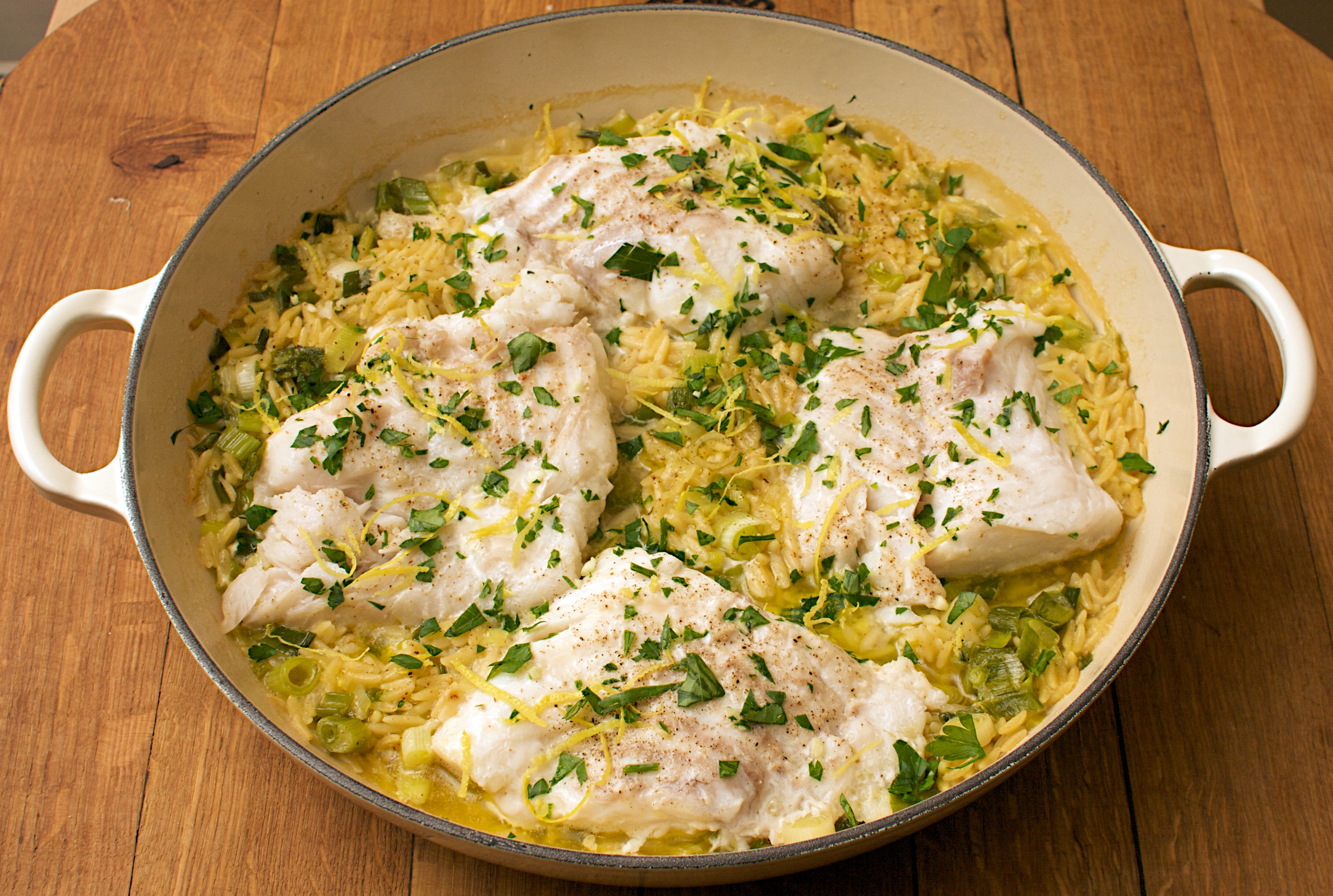
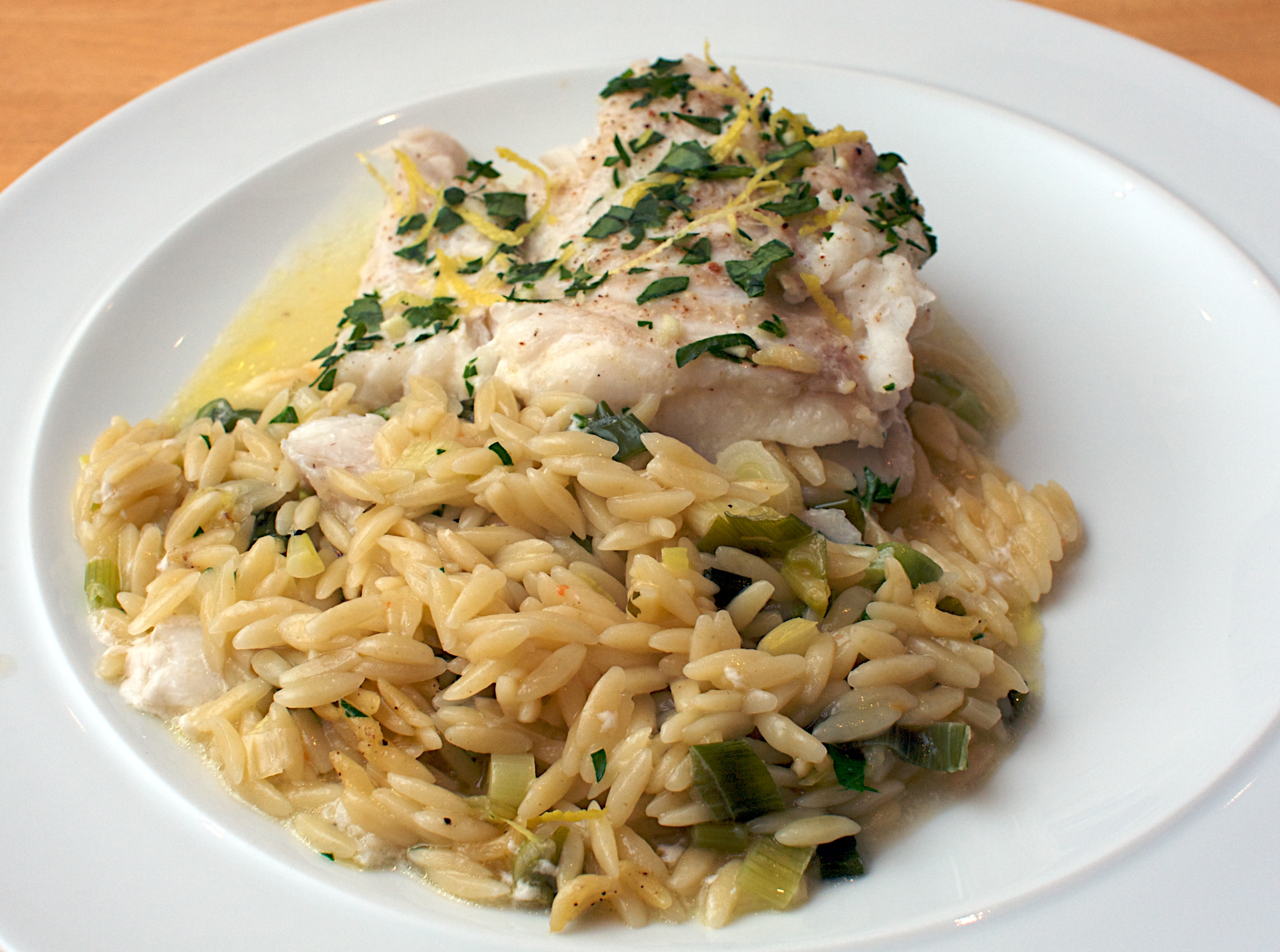
A much needed bit of lightness in the midst of all the Christmas festivities. This is really nice and we got to use our new shallow casserole – not sure how we ever survived without one. The fish steams lightly in the oven which keeps it really moist and you’ve much less chance of over-cooking.

Baked fish with orzo and gremolata – to serve 4

  • 25g butter
  • 1 bunch scallions, chopped
  • 500ml chicken stock
  • 200g orzo
  • 4 thick skinless pieces of haddock or cod
  • a small bunch of flat-leaf parsley, chopped
  • 1 lemon, zested
  • 1/2 a garlic clove, finely chopped

Heat the oven to 190C/fan 170C/gas 5. Heat the butter in a non-stick shallow oven-proof pan. Slowly cook the scallions until soft and then add the orzo and chicken stock. Simmer for a few minutes, until the orzo is almost cooked. Lay the fish on top, season, cover with a lid and put in the oven. Cook for 15-20 minutes or until your fish is cooked through – it will flake easily when pushed with a fork.

Mix the parsley, lemon and garlic and sprinkle over the top.

(Original recipe from BBC Good Food)

Wine Suggestion: Go for something simple, light and lemony – like a Verdicchio or a light and dry Riesling. Nothing too complicated is required here.

Read Full Post »

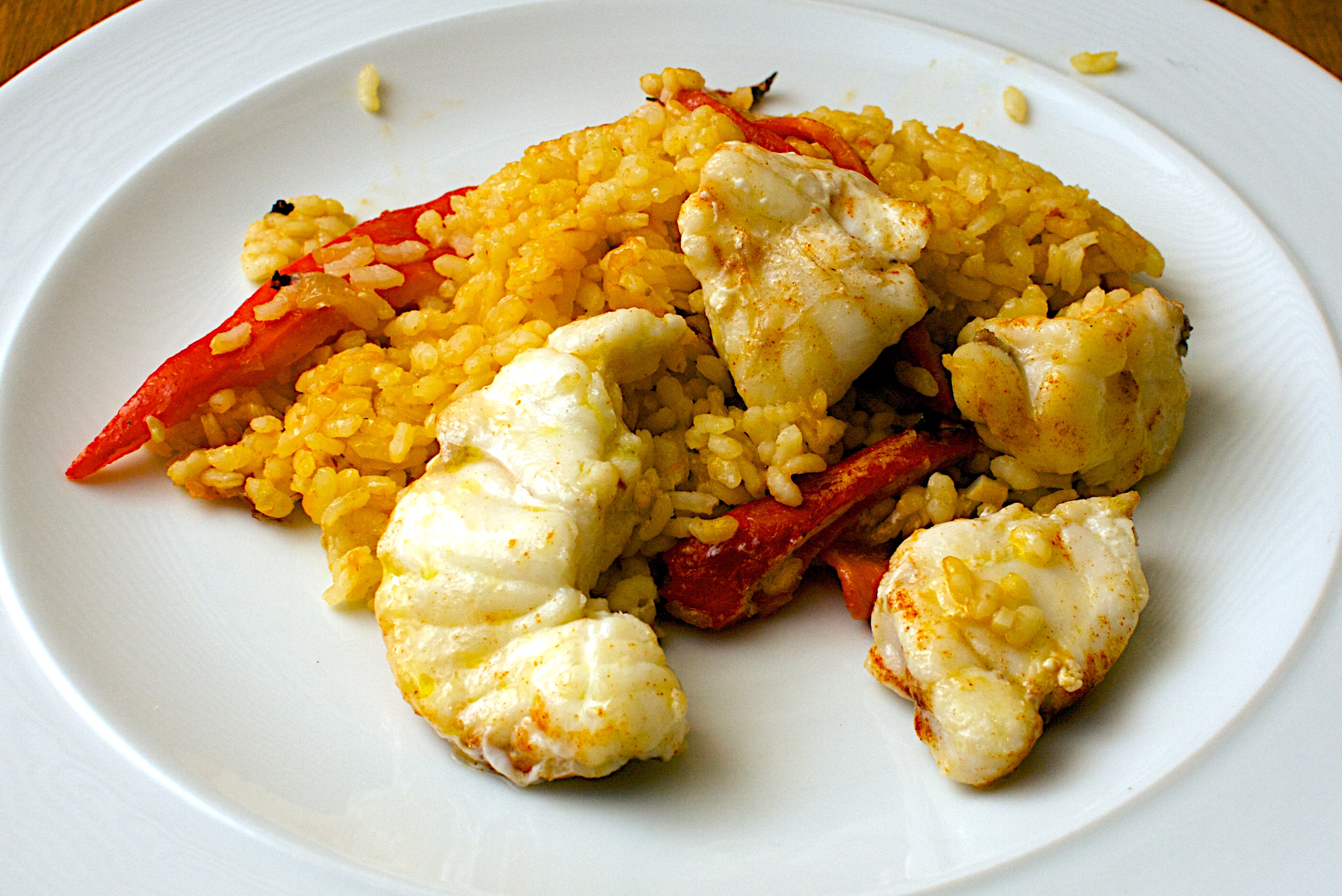
We have loved every recipe we have tried from Rick Stein’s Spain. This is a really nice rice dish from Valencia which we’ll definitely be doing again. It tastes similar to paella but requires fewer ingredients. Delicious and easy!

Arroz de rape, azafrán y pimientos – to serve 6

  • 4 tbsp olive oil
  • 75g finely chopped shallot
  • 1 small head of garlic, cloves separated, peeled and finely chopped
  • 1/2 tsp pimentón dulce (smoked sweet Spanish paprika), plus a bit extra for seasoning the fish
  • a pinch of crushed dried chillies
  • 200g vine ripened beef tomatoes, halved
  • 1 litre Fish stock
  • 1/2 tsp loosely packed saffron strands
  • 400g short-grained paella rice such as Calasperra
  • 1 large roasted red pepper or 3 jarred pimientos
  • 500g monkfish fillet, trimmed of membrane then cut across into 1 cm thick slices
  • Aioli to serve

Grate the tomatoes using a coarse grater. You will be left with the skin which you can discard. Heat 2 tbsp of the oil in a 28-30cm cazuela or shallow flameproof casserole, add the shallot and fry gently for 10 minutes or until soft but not browned. Add the garlic, pimentón and chillies and fry for another 2 minutes, then stir in the tomatoes and cook until they have broken down into a sauce.

Stir in the fish stock, saffron and 1 1/2 tsp of salt and bring to the boil, stirring. Sprinkle in the rice, stir once, then leave to simmer vigorously over a medium-high heat for 6 minutes.

Meanwhile, cut the roasted red pepper or jarred pimientos into 1cm-wide strips, removing any skin and seeds. Sprinkle over the top of the rice and shake briefly so they sink in a bit. Lower the heat and leave to simmer gently for another 12 minutes. At the end the liquid should all have absorbed and the rice should have small holes on the surface.

Before the rice is ready, pat the monkfish pieces dry and season well with salt and a little pimentón. Heat 2tbsp olil in a non-stick frying pan. Add the monkfish slices in batches and fry over a high heat for 1 minute on each side until very lightly coloured and almost cooked.

Lay the fish on top of the rice, turn off the heat and cover with a lid or clean cloth. Leave to rest for 5 minutes to allow the monkfish to finish cooking through.

Serve with alioli.

(Original recipe from Rick Stein’s Spain, BBC Books, 2011)

Wine Suggestion: The best match would be something with a the joy of youth and fruitiness like a joven (young) Tempranillo or a light Garnacha.

Read Full Post »

Sicilian-style Fish Stew

This dish is really easy, light and yet full of flavours. Takes hardly any time to rustle up on a week night too.

Sicilian-style fish stew – to serve 2

  • olive oil
  • 1 onion, finely sliced
  • 2 celery stalks, sliced
  • 3 garlic cloves, sliced
  • a pinch of chilli flakes
  • 2 plum tomatoes (we had to use tinned tomatoes this time)
  • 125ml white wine
  • 400ml vegetable stock
  • 50g couscous
  • 250g white fish fillet – we used hake
  • 1/2 a lemon, zested
  • a small handful of chopped parsley chopped

Heat 1 tbsp of olive oil in a wide, shallow pan. Add the onion, celery, garlic, and chilli flakes. Season and cook for 10 minutes. Add the tomatoes and cook for another couple of minutes. Pour in the wine and stock and bring to a boil. Cook for 2 minutes then add the couscous. Turn down to a simmer and add the fish. Cover with a lid and cook until the fish is done, about 5-7 minutes. Break the fish into large chunks as you serve and sprinkle over the lemon zest and parsley.

(Original recipe from BBC Good Food)

Wine suggestion: You want a bit of body and minerality here as there are some fairly robust flavours, despite being a light dish. We went for a Riesling from Alsace but a Provencal rosé would also work well.

Read Full Post »

Hake is a really versatile white fish. It has a meaty texture that holds together when cooked and is also really good value as it’s not as popular as cod, haddock etc. It’s quite mild and so goes well with firm flavours like the mushrooms and sage below.

Hake with mushrooms, hazlenuts and crispy sage – serves 4

  • 100ml white wine
  • 200ml fish stock
  • 100ml double cream
  • 1 tbsp butter
  • 1 tbsp oil
  • 50g hazlenuts
  • a handful of sage
  • 250g mixed mushrooms, sliced if large
  • 4 hake fillets
Bring the stock and wine to boil in a small pan. Simmer rapidly until you have just 2 tbsp of liquid left. Stir in the cream, take off the heat and set aside.

Heat the butter and oil in a frying pan and toast the hazelnuts until golden, coarsely chop and then set aside. Next, crisp the sage leaves in the same pan for just a few seconds, then drain them on kitchen paper.

Fry the mushrooms until soft, you will need a little more butter. Season, then tip them onto a plate. Cook the hake in the same pan for 2-3 minutes on each side. Reheat the sauce over a low heat.

Put the cooked fish onto warm plates, pour a little sauce over each and scatter over mushrooms, hazelnuts and sage.

Wine Suggestion: Something like a Vermentino from Italy or Sardinia that has a little more body – 13% abv or more (as some are a lighter style – 11-12% abv – which would be overwhelmed with these flavours). This should be nutty and minerally and will complement the earthy flavours in the dish.

(Original recipe by Sarah Randell for Sainsbury’s Magazine, October 2011)

Read Full Post »

« Newer Posts - Older Posts »