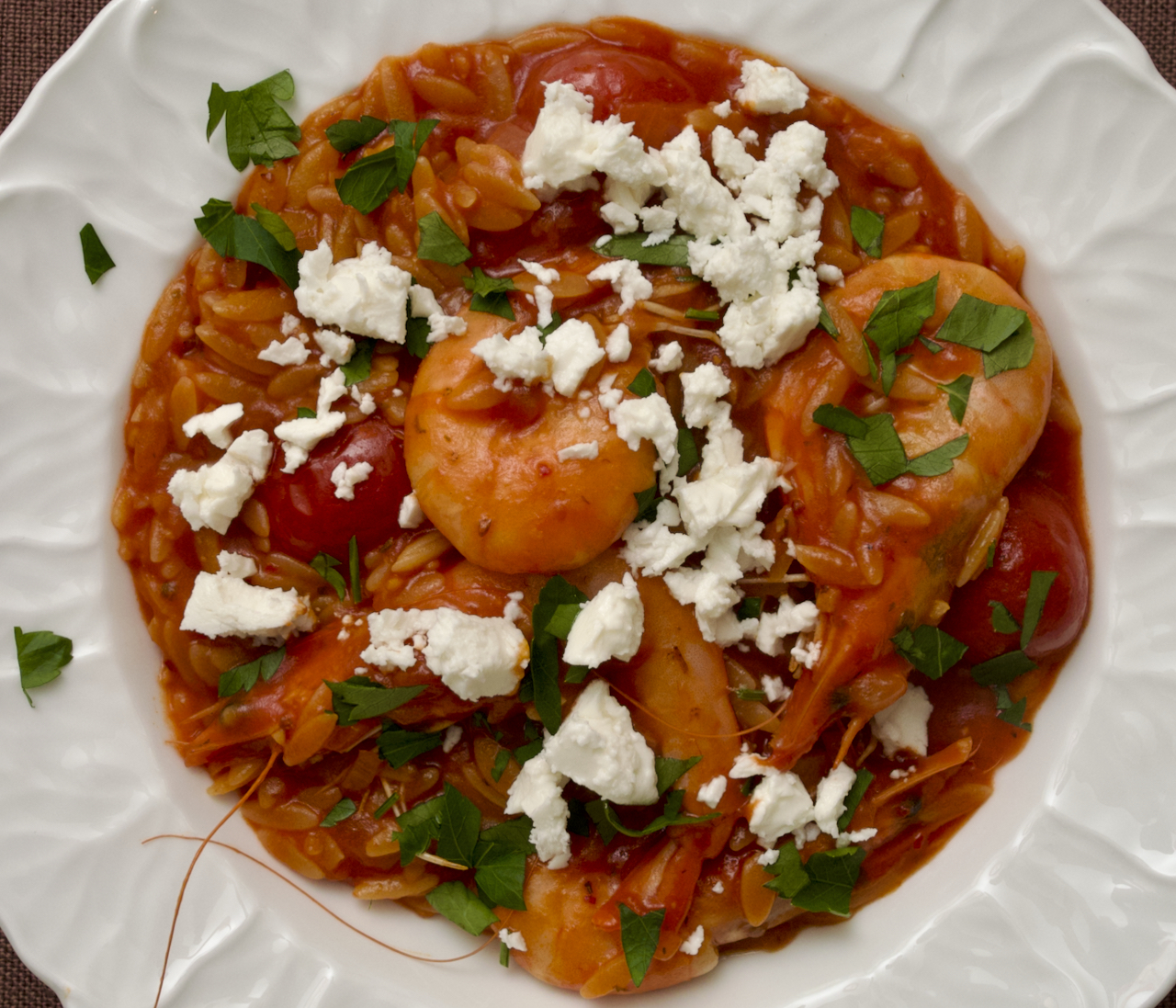
Inspired by the classic Greek saganaki this dish bring together juicy king prawns, bright cherry tomatoes, orzo simmered in wine and stock, a drizzle of lemon and a scatter of feta and parsley. Perfect when you want something that’s quick, feels indulgent, but still very satisfying.
Wine Suggestion: We followed the time-honoured rule of “what grows together, goes together” and opened a bottle of Tetramythos Roditis from the Peloponnese. This dry Greek white is crisp and appley, with a soft, rounded texture through the mid-palate and a clean, saline finish. It worked perfectly with the prawns and the tomato base, echoing the citrusy notes of the lemon while balancing the heat from the chilli. No, we weren’t eating this by the sea in Greece but it certainly felt like we could have been.
Saganaki-style orzo with prawns – serves 4
2 tbsp olive oil
1 large onion, finely chopped
5 cloves of garlic, finely chopped
1 tsp chilli flakes
2 tsp dried oregano
2 tbsp tomato purée
200ml white wine
2 x 400g tin cherry tomatoes
300g orzo
500ml hot chicken stock
350g raw king prawns
a small handful of parsley, finely chopped
50g feta, crumbled
half a lemon, cut into wedges
toasted ciabatta, to serve
Heat the oil in a wide frying pan over a medium heat, then fry the onion with a pinch of salt for a few minutes or until slightly softened.
Add the garlic, chilli, oregano and tomato purée and cook for another couple of minutes.
Turn the heat up high, then add the wine and leave until reduced by half, about 3-5 minutes.
Stir in the cherry tomatoes, orzo and stock, bring to a simmer and cook, stirring occasionally for 5-7 minutes or until the orzo is almost tender.
Stir in the prawns and cook for 2-3 minutes or until cooked through. Season and scatter over the parsley and feta. Serve with lemon wedges for squeezing over.
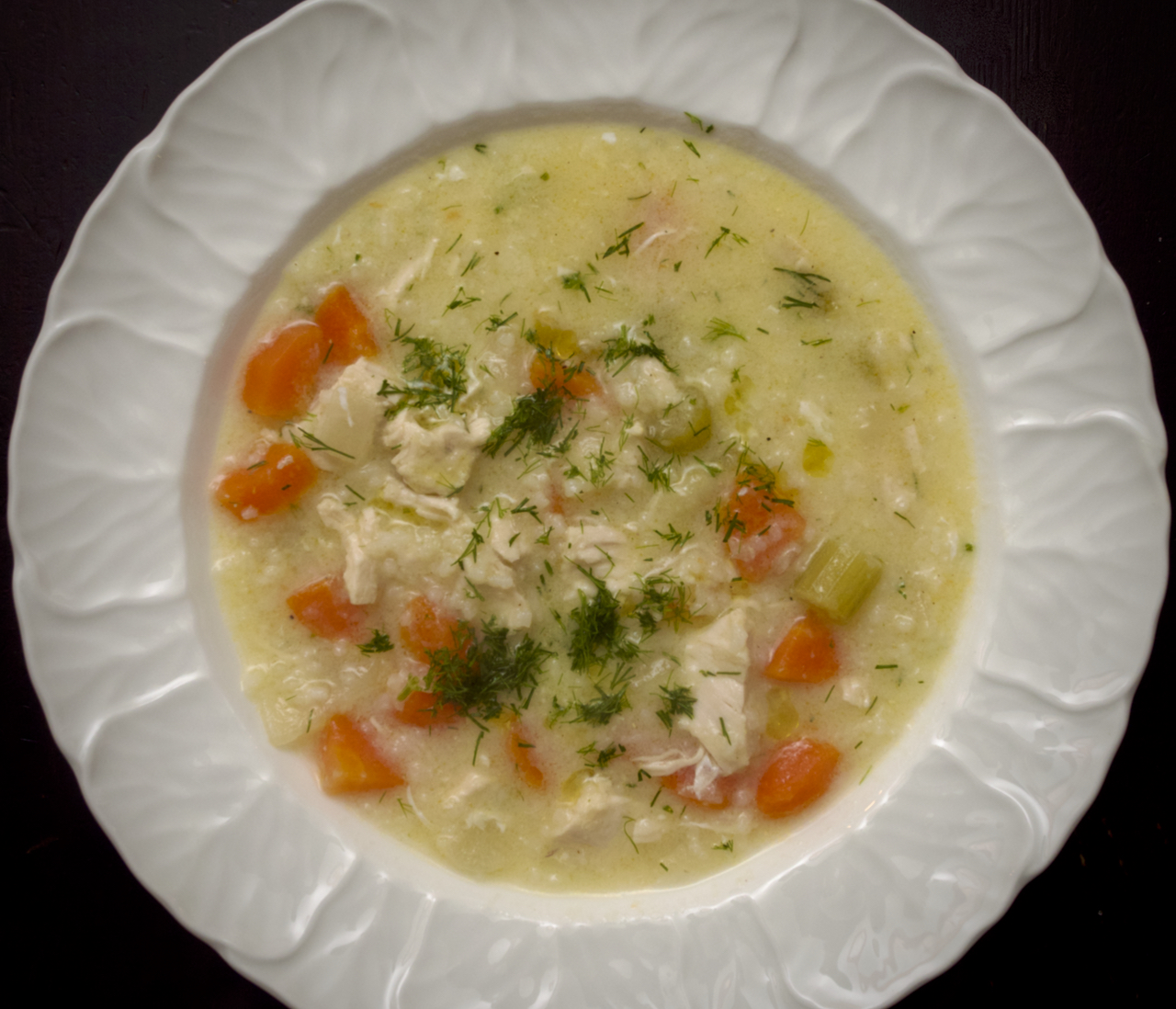
A Greek chicken and rice soup with egg and lemon. Tastes delicious and can only be good for you.
Avgolemono – serves 4 to 6
125g extra virgin olive oil
2 medium white onions, diced into 1cm pieces
2 medium carrots, diced into 1cm pieces
2 ribs of celery, diced into 1cm pieces
3 large cloves of garlic, peeled and finely sliced
3 bay leaves
500g skinless chicken breasts
125g rice
2 large eggs
75g lemon juice
3 tbsp dill, chopped
Heat the oil in a large pot, then add the onions, carrots, celery, garlic, bay leaves and a pinch of salt. Cook gently for about 30 minutes or until soft.
Meanwhile, put the chicken in a single layer in a large pan and cover with 2 litres of water. Add 2 tsp of fine sea salt, then bring to a simmer with the lid on. As soon as the water simmers, turn the heat right down and cook for 5 minutes, then turn the heat off and leave until cool enough to handle.
Remove the chicken and reserve the cooking liquid. Chop the chicken into 1cm pieces.
Add the rice, chicken and chicken cooking waterto the cooked vegetables and bring up to a gentle simmer. Cook for 30 minutes or until the rice is tender.
Whisk the eggs and lemon juice together, then add a couple of ladlefuls of the hot soup to this mix, whisking constantly, before adding the mixture to the soup in a thin stream, stirring all the time.
Bring the soup back to a simmer and leave for another 5 to 10 minutes, stirring constantly until thickened slightly. Remove the bay leaves and check the seasoning. Stir in half the dill, then take off the heat and leave to rest for 10 minutes.
Seve in warm bowls with the rest of the dill, some more black pepper and a drizzle of good olive oil.
(Original recipe by Nick Bramham in FT Magazine, 1/2 March 2025.)
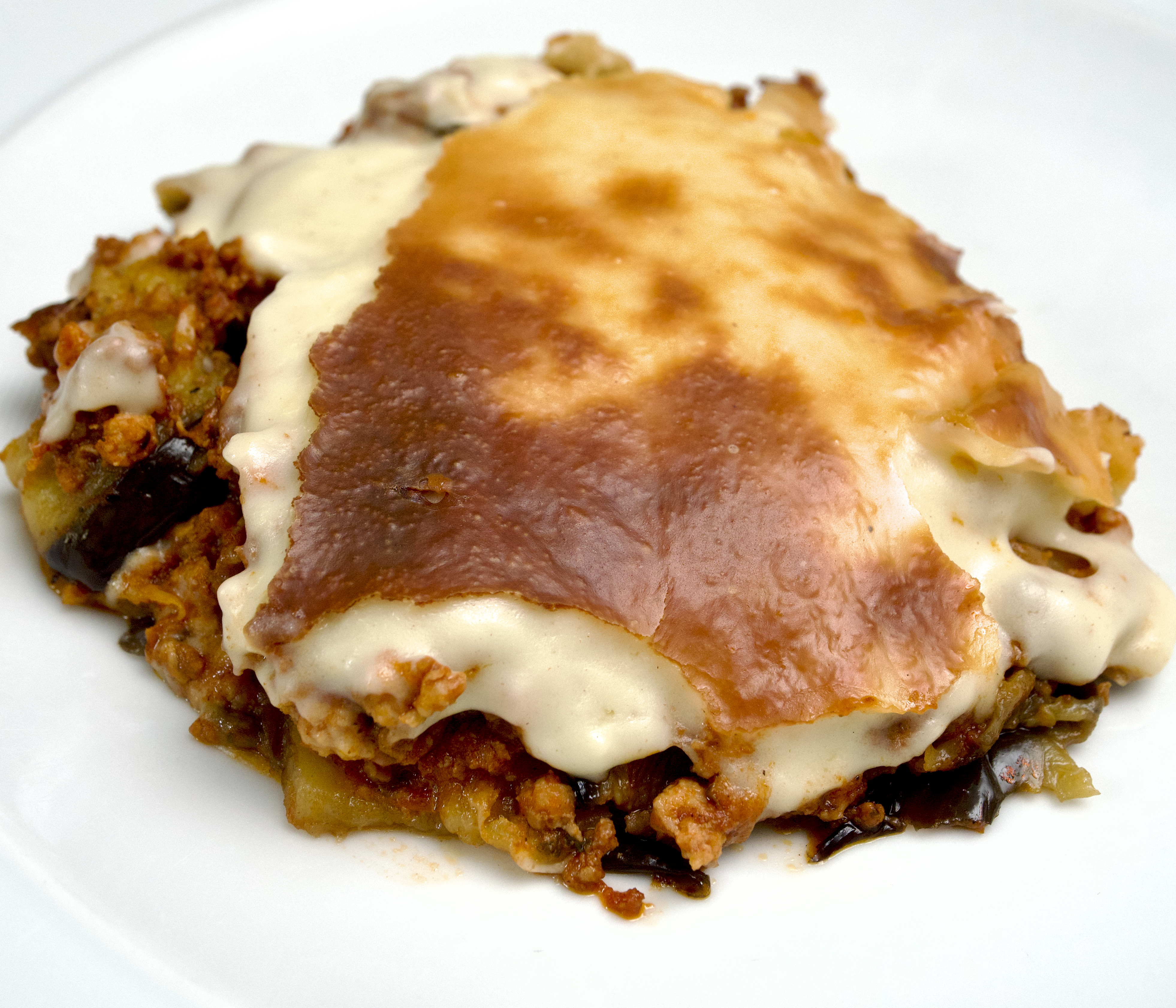
We make moussaka once a year … usually in the summer on a rainy day as it takes a bit of time and attention. This is the fourth version on the blog and we can’t decide which one we prefer and usually alternate between this recipe by Neil Perry and this one by Tamasin Day-Lewis. Recently someone sent us a message and suggested that we try a version by Tessa Kiros from Falling Cloudberries. Tessa’s version has a layer of fried potatoes which is an excellent addition and a really thick layer of bechamel on top – yet again another excellent moussaka recipe to add to our list. We love all three but they’re all slightly different. A delicious conundrum.
You can prepare the fried vegetables and mince a few hours in advance and layer it up in the dish but don’t make the béchamel until you’re ready to bake the moussaka. You will need a large rectangular dish about 35cm long, 24 cm wide and 6 cm deep.
Wine Suggestion: If you are lucky enough to have a Xinomavro, or Agiorgitiko to hand from Greece we’d highly recommend pairing with this. We had none lying around so instead opened a wonderfully fresh old-vine blend of Garnacha Fina and Garnatxa Peluda (Grenache Noir varieties) from Terra Alta in Spain. The Edetària via Edetana Negre is so expressive and minerally with red plum and deep, earthy cherry flavours and a balsamic twist. It shows why this region should be regarded as one of the best in the world for this grape, both red and white, with it’s combination sunshine, altitude, and fresh breezes on a landscape formed by an ancient sea bed.
Moussaka – serves 8
2 large aubergines (about 1kg)
light olive oil for frying
1 large onion, finely chopped
3 tbsp chopped flatleaf parsley
2 cloves of garlic, finely chopped
850g minced pork and beef
1 tsp ground cinnamon
½ tsp dried oregano
1 bay leaf
125ml white wine
500g tomato passata
500g potatoes
FOR THE BÉCHAMEL SAUCE:
120g butter
125g plain flour
1 litre warm milk
freshly grated nutmeg
Slice the tops off the aubergines, then slice lengthways into 5mm thick slices. Sprinkle generously with salt and set aside in a bowl for about 30 minutes.
Heat tbsp of the oil in a wide, deep saucepan. Sauté the onion until soft and golden, then add the parsley and garlic and cook for another minute, then add the mince. Cook over a medim-high heat until beginning to brown, then add the cinnamon, oregano and bay leaf and season with salt and pepper. Keep cooking until the mince is browned, then add the wine and allow most of it to evaporate off before adding the passata. Leave to simmer for 30 minutes, uncovered, if it looks dry add a splash of water.
Meanwhile, cut the potatoes lengthways into 5mm thick slices and pat them dry with kitchen paper. Heat 4-5 tbsps of the olive oil in a large non-stick frying pan and fry the potatoes in batches over a medium heat, until golden on both sides and cooked through. Remove to a plate lined with kitchen papper and sprinkle with a little salt.
Rinse the salt from the aubergine with cold water and pat dry. Fry the aubergine slices in the same oil that you used for the potatoes. When they are golden on one side, turn the slices over and prick any hard bits with a fork. Continue cooking until they are almost collapsing, then drain on kitchen paper. You will need to add another tbsp of olive oil between each batch as the aubergines tend to suck it up.
Preheat the oven to 180C/Gas 4.
Arrange half the aubergine slices over the base of the dish, you can overlap them a little if needed. Add the potatoes in a single layer if possible, then top with half the mince, pressing down with the back of a large spoon. Add the rest of the aubergine in a layer and top with a final layer of the mince, pressing it down.
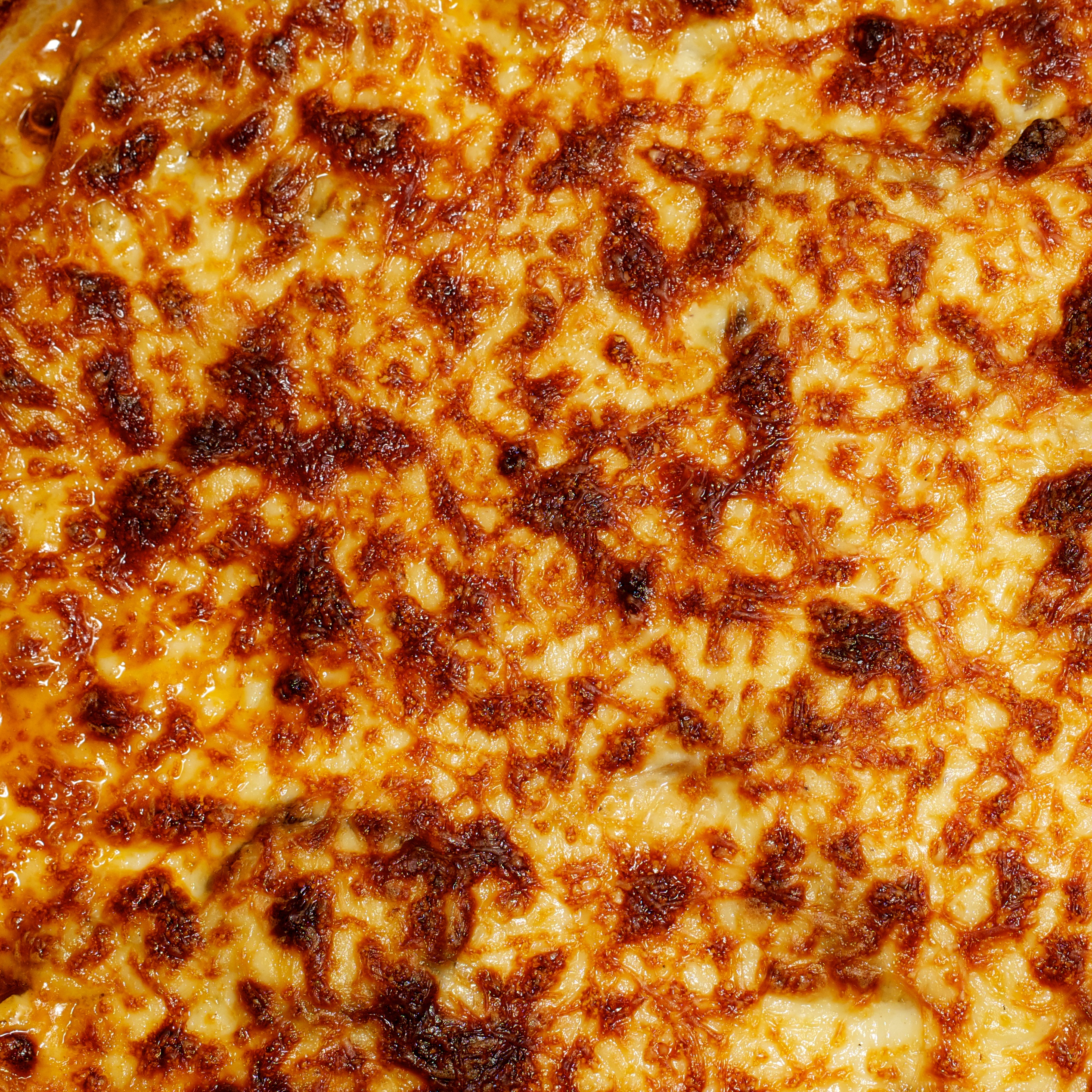
Melt the butter for the béchamel in a saucepan, then whisk in the flour and cook for a few minutes, stirring constantly. Begin adding the warm milk, a ladleful at a time, until you have a thick white sauce. Stir continually until the sauce begins to bubble then allow to simmer for 5 minutes, still stirring. Season the sauce with salt and pepper and grate in a little fresh nutmeg. Spoon the sauce over the mince to completely cover.
Bake for 45 minute to an hour or until golden on top. If the moussaka comes near to the top of your dish you might like to put a baking sheet underneath to catch anything that bubbles over. Leave to cool for about 15 minutes before cutting into squares to serve. A green salad is all you need on the side.
(Original recipe from Falling Cloudberries by Tessa Kiros, Mudrdoch Books Pty Limited, 2004.)
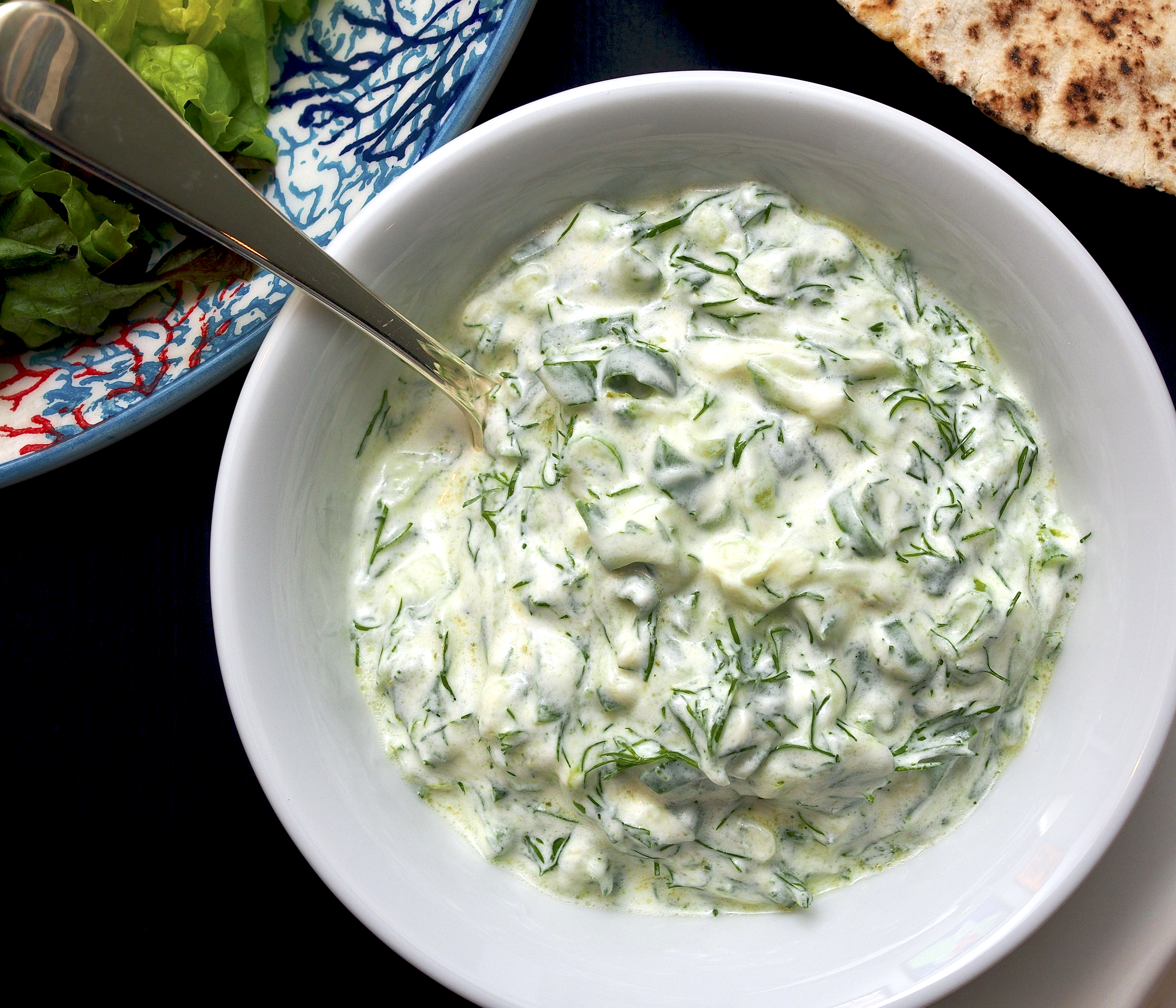
This is such a handy yoghurt number. Serve with barbecues, roasts, with flatbreads, as a side, for a starter – it’s an all rounder and it keeps for a couple of days in the fridge.
250g full fat Greek-style yoghurt
30g scallions, green parts only, finely chopped (keep the white parts for something else)
about 10g of dill, chopped
1 clove of garlic, peeled and grated
zest and juice of 1 lime
200g cucumber, coarsely grated
3 tbsp olive oil
½ tsp sea salt flakes, crumbled
Put the grated cucumber into a clean tea towel and squeeze tightly to get rid of the excess liquid.
Tip the cucumber into a bowl and mix with all of the other ingredients.
(Original recipe from Chasing Smoke: Cooking over Fire Around the Levant by Sarit Packer and Itamar Srulovich, Pavilion, 2021)
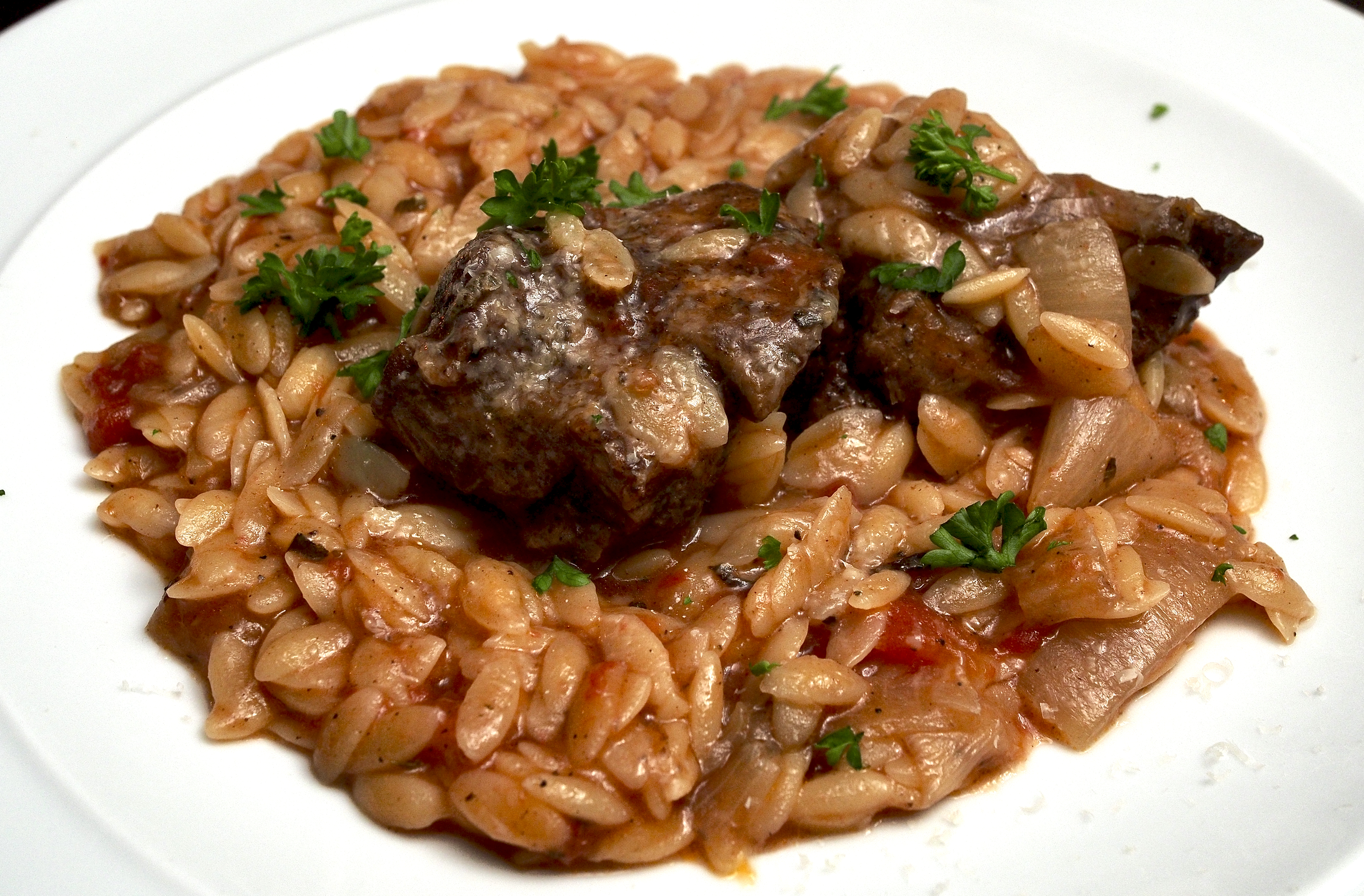
A treat for the weekend without too many ingredients. There is also just a tiny bit of work at the start and then this can be left to pretty much cook itself for a few hours. You can serve with crusty bread or just by itself.
Wine Suggestion: we think that a southern French blend like Grenache, Syrah and Mourvedre is a really good combination as long as the wine is fresh and not too jammy. Tonight we enjoyed the Domaine de Cébène Faugeres “Felgaria” which had a majority of Mourvedre and was pure, elegant and expressive with spices and warm aromas.
Greek lamb with orzo – serves 6
1kg shoulder of lamb, cut into large cubes
2 onions, sliced
1 tbsp chopped oregano or 1 tsp dried oregano
½ tsp ground cinnamon
2 cinnamon sticks, broken in half
2 tbsp olive oil
400g tin chopped tomatoes
1.2 litres hot chicken or veg stock
400g orzo
freshly grated Parmesan, to serve
Heat the oven to 180C/160C fan/gas 4.
Put the lamb into a large casserole dish with the onions, oregano, ground cinnamon, cinnamon sticks and olive oil. Toss with your hands to ensure everything is coated with oil. Bake in the oven, uncovered, for 45 minutes, stirring halfway through.
Add the tomatoes and stock, then cover and return to the oven for a further 1½ hours or until the lamb is meltingly tender. You can throw away the cinnamon sticks at this point.
Stir in the orzo and return to the oven again, with the lid on. Cook for another 20 minutes, stirring halfway through, or until the orzo is cooked and the sauce has thickened. Serve sprinkled with grated Parmesan.
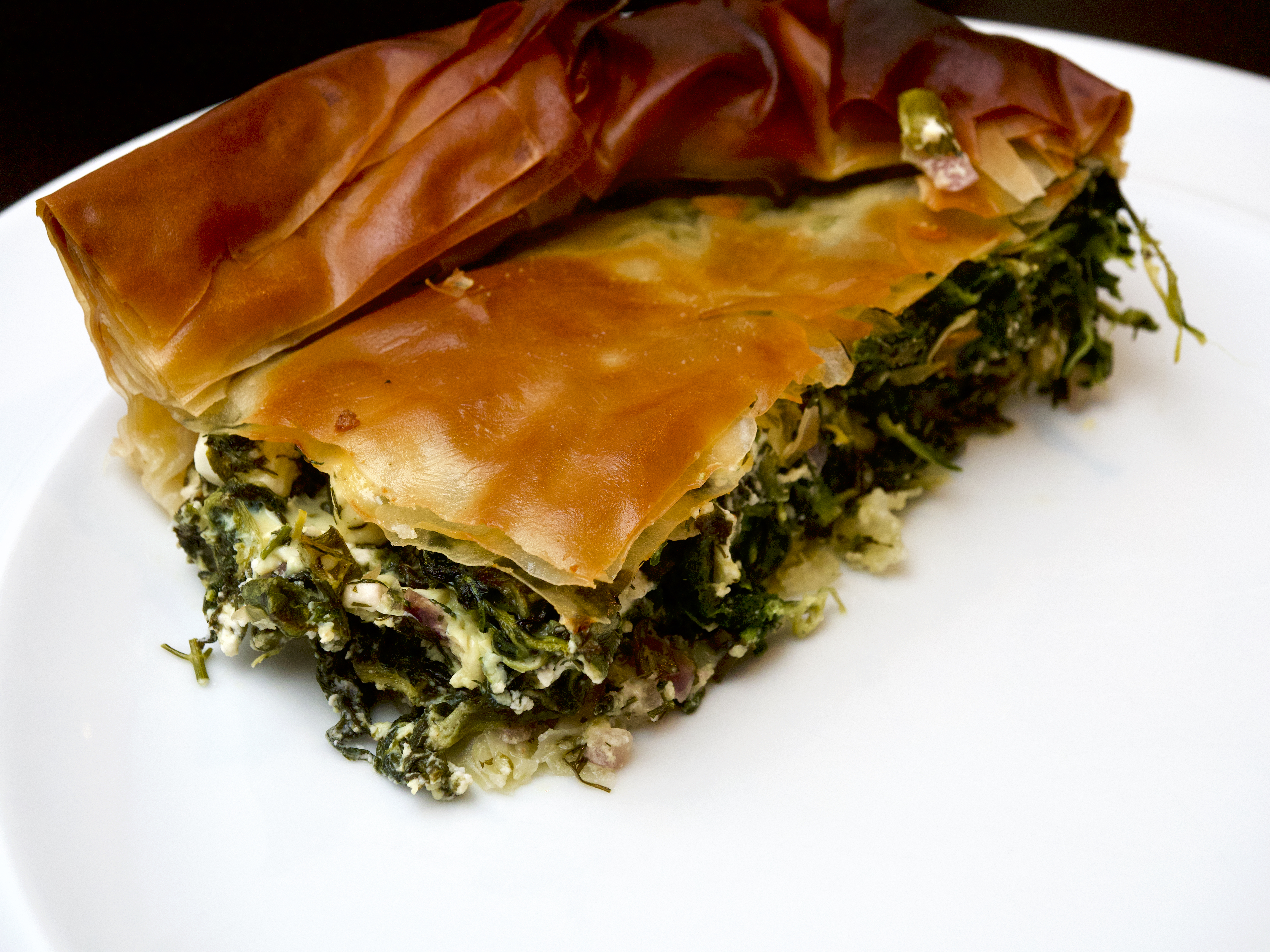
We can’t get enough of this classic Greek dish and we especially like this herby version by Felicity Cloake. Serve with salad.
Wine Suggestion: we think this works best with crisp, herbal white wines. As we couldn’t find a Greek Assyrtiko we chose instead the Zuani Vigne Collio Bianco, a blend of Sauvignon Blanc, Pinot Grigio, Friulano and Chardonnay from north-eastern Italy. White flowers, peaches, crisp yellow apple and citrus aromas and flavours are followed by a good texture, vitality and fresh acidity.
Spanakopita – serves 6
1kg frozen whole leaf spinach, defrosted
2 tbsp olive oil
1 red onion or leek, finely chopped
4 scallions, chopped
300g feta, crumbled
25g dill, chopped
20g mint, leaves removed and chopped
3 sprigs of oregano, chopped
2 eggs, beaten
zest of 1 lemon
nutmeg
250g filo pastry
oil, for brushing
Gently fry the onion or leek in the oil until softened, then remove from the heat and stir in the scallions. Tip into a large bowl with the feta and herbs.
Squeeze the spinach with your hands until all of the liquid has comes out, then stir into the cheese mix. Add the egg, lemon zest, a splash of oil and a good grating of nutmeg, then mix with your hands. Season lightly (not too much salt).
Heat the oven to 200C/390F/Gas 6.
Brush a 30cm x 25cm baking tin with olive oil, then line with half the filo, brushing each sheet with oil as you go and trying not to press down. Leave the excess pastry hanging over the sides.
Spoon the filling into the pastry lining, level the top, then put the lid on: repeat the layering process with the rest of the filo pastry. Fold the overhang inwards to form a rim and drizzle with more oil and cut into portions.
Bake for 30-40 minutes, until golden and leave to cool slightly before serving.
(Original recipe by Felicity Cloake in The Guardian, Wed 22 Aug 2018)
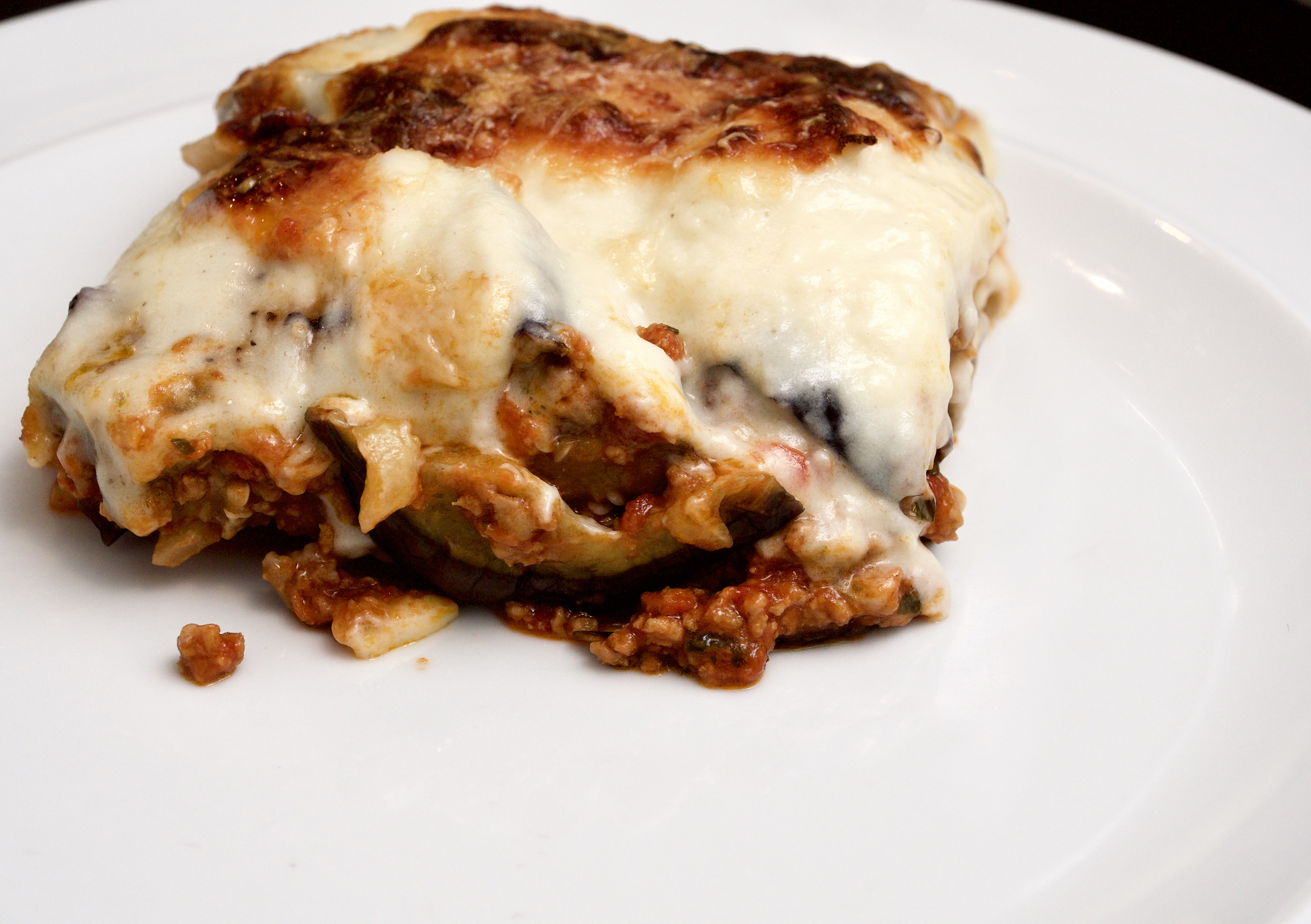
A rich, show-stopper version of a favourite dish. We remain torn between the richness of this version by Neil Perry and the fresh elegance of this Moussaka by Tamasin Day-Lewis. We love both.
Wine Suggestion: As this is a rich dish we looked for a similarly rich, but not too heavy wine and liked the Insoglio del Cinghiale, a Syrah, Cabernet Franc, Merlot and Petit Verdot blend from Bolgheri. It was nice and lifted with dark fruit, blackberries, plums and hints of spice. The key was the medium weight with a youthful freshness, fine rounded tannins and a smooth finish. We suspect a nice earthy and voluptuous red Burgundy would also do very or a top quality Chianti.
Moussaka – serves 4 (generously)
2 large aubergines, cut into 5 mm slices
2 tbsp olive oil, plus a bit extra for brushing the slices of aubergine
2 small onions, finely chopped
4 cloves of garlic, finely chopped
500g lamb mince
90g tomato purée
1 tin of chopped tomatoes
1 cinnamon stick
1 tsp sugar
a large handful of flat-leaf parsley leaves, chopped
40g grated Parmesan cheese
FOR THE BÉCHAMEL SAUCE
50g butter
50g flour
500ml warmed milk
80g finely grated parmesan
Salt the aubergine slices on both sides and leave aside for an hour. Rinse the slices under running water and pat dry with kitchen paper. Brush lightly with olive oil and cook in a non-stick frying pan over a medium-high heat for a few minutes on each side or until golden. Set the aubergine slices aside and wipe out the pan with some kitchen paper.
Heat 2 tbsp of olive oil in the frying pan and cook the onions over a low heat for about 5 minutes. Add the garlic and continue to cook until the onions have softened. Add the lamb, then turn up the heat and stir-fry until browned. Season with salt, then add the tomato purée and cook for a couple of minutes. Stir in the tomatoes, the cinnamon stick and the sugar. Bring to the boil, then reduced the heat, cover and simmer for about 20 minutes. Remove the lid and simmer for a few more minutes to thicken slightly if needed. Remove the cinnamon stick and fold through the chopped parsley.
To make the béchamel, melt the butter in a saucepan, add the flour and stir over a low heat for a few minutes or until the mixture is bubbling.Gradually pour in the warm milk, stirring continuously, and cook until the sauce starts to boil and thicken. Stir in the Parmesan and season with salt and freshly grated white pepper if you have it.
Preheat the oven to 180ºC/350ºF.
Layer the lamb and fried aubergine slices two or three times in a large ovenproof dish, starting and finishing with a layer of aubergine if you can manage it. Spread the béchamel over the top and sprinkle with the Parmesan.
Bake for 25-35 minutes or until hot through and golden brown on top. Leave to settle for 5 to 10 minutes before serving with a green salad.
(Original recipe from Neil Perry’s Good Cooking, Murdoch Books, 2016.)
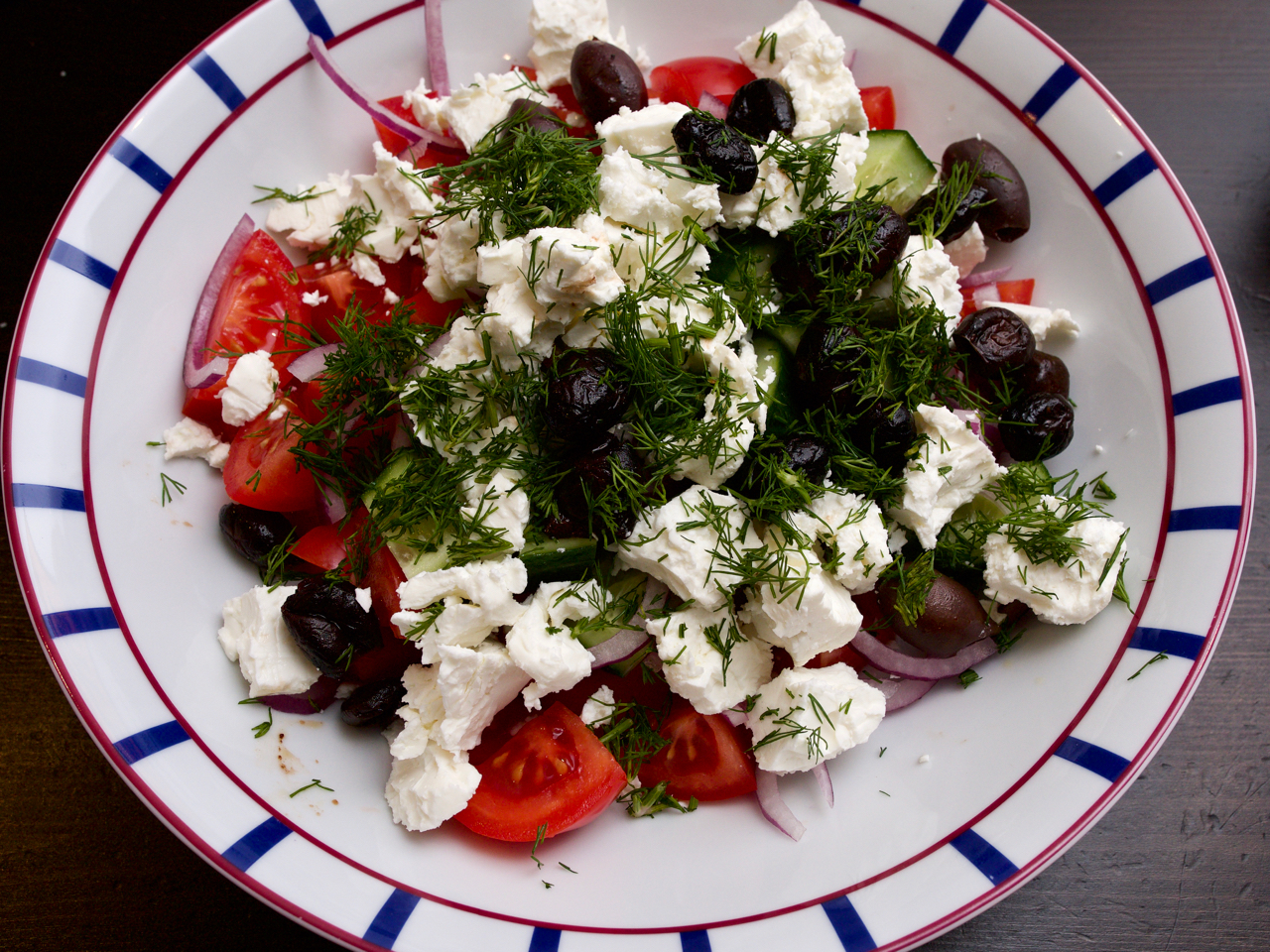
Perfect with many Greek dishes, but none mores than barbecued lamb cutlets or kebabs/souvlaki. You could also serve it as as starter with some crusty bread. A very popular salad in our house when the days get warmer. In fact, we blogged it here a few years ago and it’s still a firm favourite.
Greek Salad – serves 4
450g ripe tomatoes
½ a cucumber
1 red onion (we only use half an onion)
200g Greek feta cheese
4½ tbsp extra virgin olive oil
1 tbsp red wine vinegar
1 tsp ouzo/Pernod
2 tbsp chopped dill
20 small black olives
large pinch of dried oregano – Greek if you can find it
Cut the tomatoes into chunky pieces and cut the cucumber in half lengthways and then across into thick slices. Slice the red onion as thinly as possible (a mandolin is good for this if you have one). Crumble the feta into chunky pieces.
To make the dressing whisk the olive oil, ½ tsp salt, the red wine vinegar, ouzo/Pernod and some black pepper in a large salad bowl. Add the tomatoes, cucumber and onions and toss gently. Add the feta, dill and olives and mix briefly.
Drizzle with more olive oil, sprinkle with the dried oregano and some coarsely ground black pepper.
(Original recipe from Rick Stein’s Mediterranean Escapes, BBC Books, 2007.)
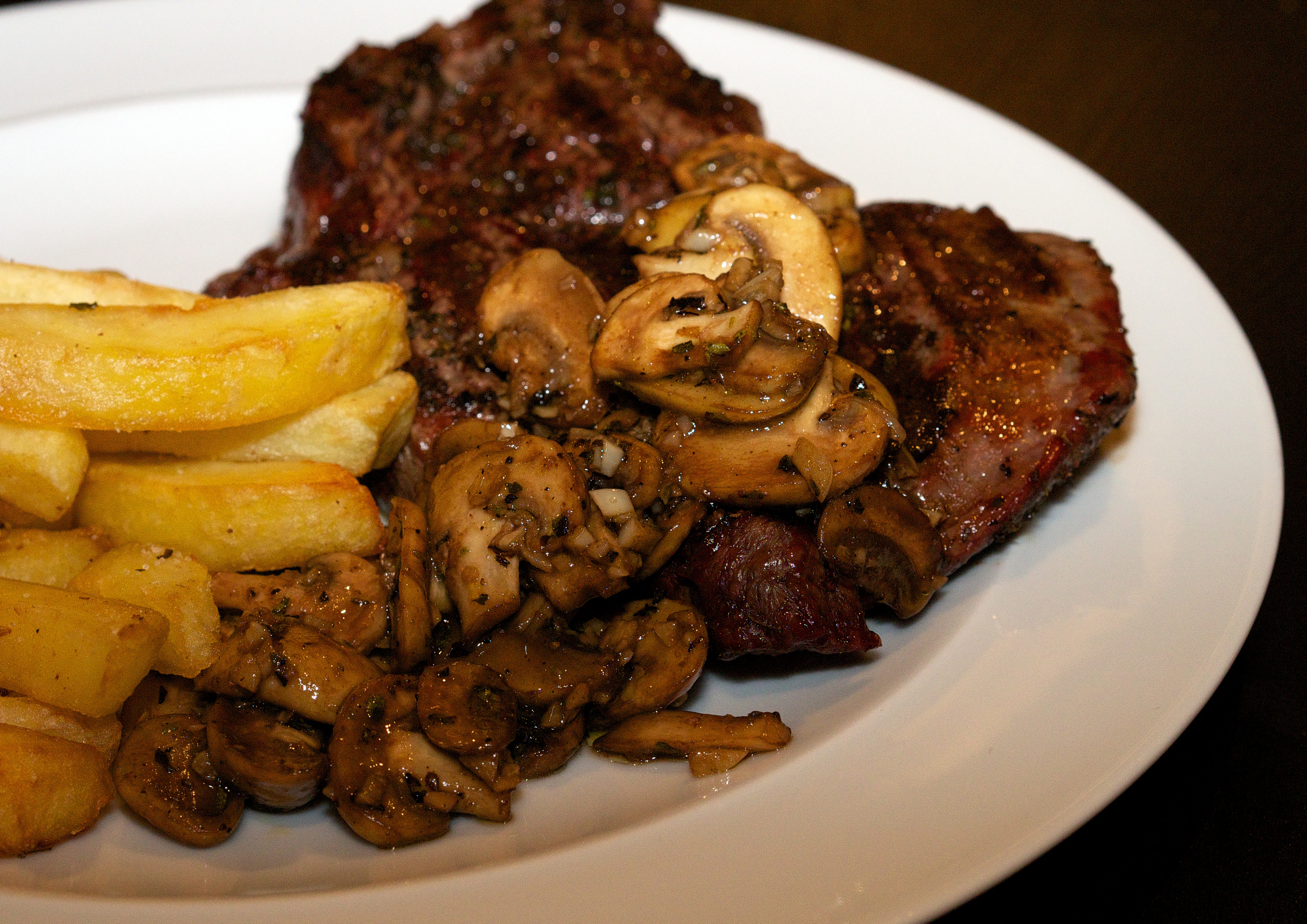
What could be better than steak, mushrooms & chips? Nothing too groundbreaking here but we do recommend taking some inspiration from the Greeks when cooking your mushrooms.
Wine Suggestion: We always fall for a big red when having steak and this dish caused us to try one of our 2009 Bordeaux’s lying waiting in the cellar; this time the Ch Capbern Gasquetton. Full of flavour and still very youthful but the seven years from vintage has brought it all together and made it a great match.
Grilled steak with village mushrooms – serves 4
4 rib-eye or sirloin steaks (rib-eye would be our preference), about 250g each
50ml olive oil, plus a bit extra for brushing on the steaks
2 tsp dried oregano
½ a lemon
200g button mushrooms, thinly sliced
5 cloves of garlic, chopped
25ml balsamic vinegar
Brush the steaks with oil, season with salt, pepper and half the oregano, then grill on a hot barbecue until cooked the way you like.
Sauté the mushrooms in the 50ml of olive oil with the garlic, balsamic vinegar, ½ tsp salt, 20 turns of the black pepper mill and the rest of the oregano. Serve with the steak (and some chips if you like).
(Original recipe from Venice to Istanbul by Rick Stein, BBC Books, 2015.)
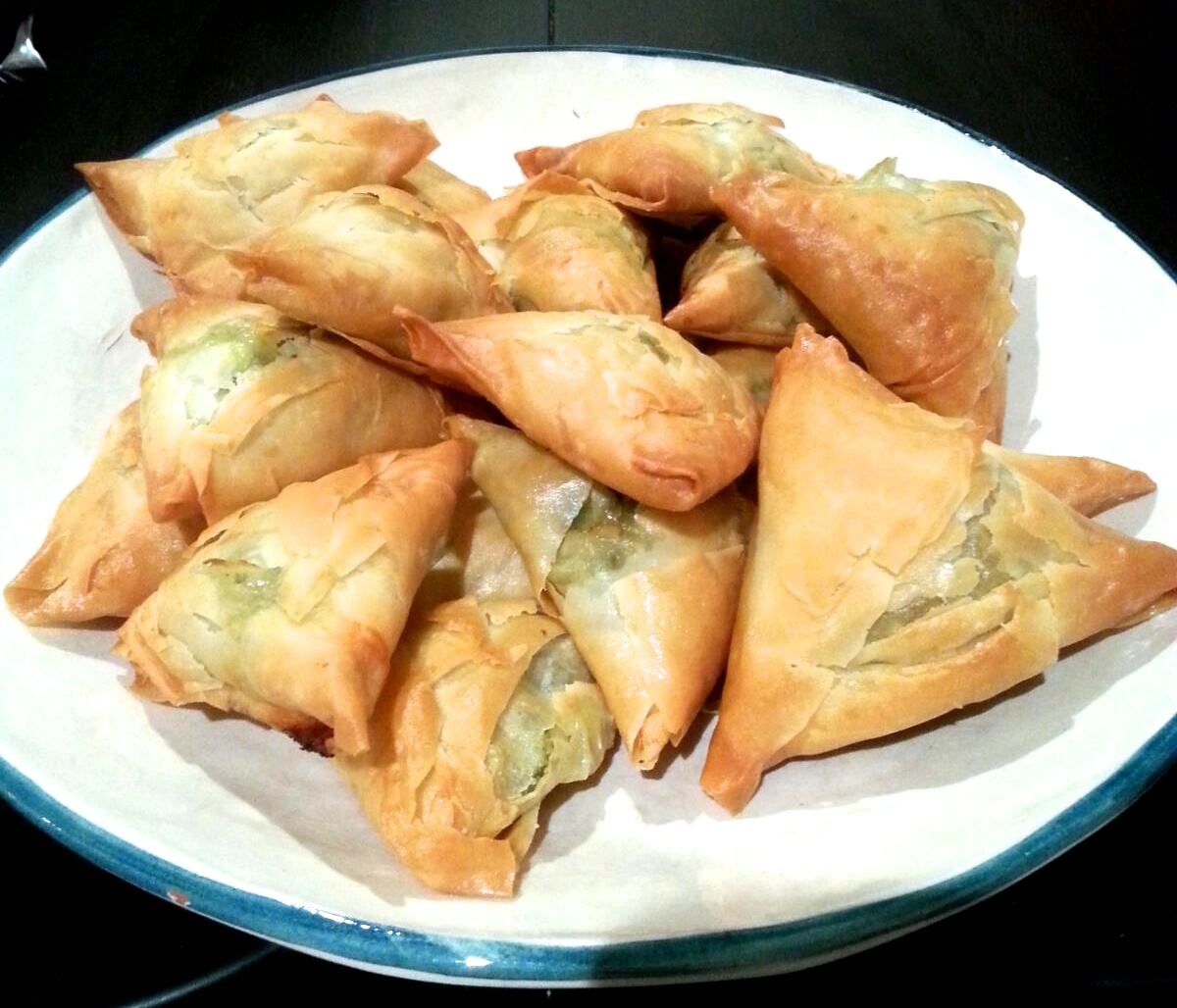
The classic spinach & feta combination never gets tired. These savoury Greek pastries are delicious and very easy to make. We worked out a production line (thanks Tricia & Orla) and had them assembled in no time! Great as a starter or snack with drinks. Perfect entertaining food.
Wine Suggestion: If you can find an Assyrtiko, a crisp and delicious Greek white, then you’ve got a great match. Unfortunately it can be hard to find good Greek wines so stick to the Mediterranean and search for a Fiano or Greco di Tufo from Italy. Failing this we’ve had crisp Touraine Sauvignon Blancs with this as well to great effect.
Spanakopita (Spinch, mint & feta pastries) – makes 18-20
500g spinach
1 tbsp olive oil
½ small onion, finely chopped
2 scallions, trimmed and finely chopped
100g Greek feta cheese
1 large egg
1 tbsp finely grated Greek kefalotiri cheese or Parmesan
a pinch of finely grated nutmeg
2 tbsp chopped mint
250-275g pack of filo pastry (about 6 sheets)
100g butter, melted
Wash and dry the spinach (remove the stalks if they look tough). Finely shred the leaves.
Heat the oil in a large pan, add the onion and cook gently until soft but not browned. Gradually add the spinach, a handful at a time, until it has all wilted. Tip into a colander and drain, pressing out the liquid with a wooden spoon, then return to the pan with the scallions and cook for 1 minute. Leave to cool.
Crumble the feta into a large bowl and roughly mash with a fork – you can leave it a bit chunky. Mix in the eggs, Parmesan, the spinach mixture, nutmeg, mint and season with salt and pepper.
Preheat the oven to 180C/Gas Mark 4.
Unroll the sheets of filo and cut the stack lengthways into strips about 7.5cm wide. Brush the top layer with melted butter. Put a heaped teaspoonful of the filling in the centre of one strip, at the end closest to you, and fold one bottom corner of the pastry diagonally over the filling, so that the corner touches the opposite side to make a triangle. Then fold over the filled triangular corner, and keep folding it along the whole strip in a triangular parcel. Repeat to make all the spanakopita.
Brush the undersides of each parcel with more butter and place on a lightly buttered baking tray. Brush the tops with butter and bake for 25 minutes or until crisp and golden brown.
These are best served straight from the oven while the pastry is still crispy but they are also good at room temperature.
(Original recipe from Rick Stein’s Mediterranean Escapes, BBC Books, 2007.)
This is a really lovely moussaka which rates as one of our “comfort” dishes. We especially like roasting the aubergines in the oven rather than frying them which always seems to require vats of oil. The combination is a classic and is not difficult, but it does take a little time to bring together. It is always well worth it.
Wine Suggestion: We’ve been inspired to drink wines from the Eastern Mediterranean with this and have found that top Lebanese wines, like Chateau Massaya, with their bramble and plum fruits plus velvety spices work very well indeed.
Moussaka – to serve 6
3 aubergines, sliced 1cm thick
olive oil
2 onions, chopped
2 cloves of garlic, chopped
1½ lb (675g) lamb mince
1 tsp cinnamon
1 tomato, skinned, seeded and chopped
2-3 tbsp tomato purée
a bunch of flat-leaf parsley, chopped
a few tbsp dry white wine
Parmesan (optional)
FOR THE BÉCHAMEL
1 pint (600ml) full-cream milk
1 onion, peeled and stuck with a couple of cloves
bay leaf
2oz (55g) unsalted butter
1 heaped tbsp plain flour
nutmeg
Preheat the oven to 180ºC/350ºF/Gas 4.
Brush the aubergine slices with olive oil on both sides then put on a baking tray in a single layer and roast until soft. You will either need to do this in batches or on two trays. They should take between 10 and 20 minutes but don’t let them get too brown.
Meanwhile, heat 2 tbsp olive oil in a heavy-bottomed frying pan and sauté the onions until soft and golden. Add the garlic and continue to sauté for another few minutes, then add the mince and fry for 5-10 minutes or until well browned. Season and add the cinnamon, then add the chopped tomato, tomato purée and chopped parsley. Stir well, add the wine and simmer for 15 minutes or until most of the wine has been absorbed.
While the meat is simmering make the béchamel. Put the onion, bay leaf and milk in a small pan and bring slowly to the boil. Take the pan off the heat and leave to infuse for 20-30 minutes with the lid on and reheat just before starting the sauce.
Melt the butter over a gentle heat in a small pan. Just as the butter starts to foam, add the flour and stir gently for a few seconds. You want a thin bubbling base – if the butter hasn’t amalgamated with the flour, add a tiny bit more. Bubble for a couple of minutes or until it turns a pale biscuit colour. Add about half a cup of the hot milk and whisk hard until the mixture becomes thick. Add more milk and repeat – it will take longer to thicken each time.
Cook the sauce more slowly and stir with a wooden spoon – add more milk until you get the right consistency. You want the sauce to be thick but not solid. Cook gently for 20 minutes, stirring often. Season and grate in a little nutmeg about half way through.
When the sauce is ready put alternate layers of aubergine and meat sauce in a deep baking dish or roasting tin, staring and ending with a layer of aubergines. Pour a thick layer of béchamel over the top; you might not need it all. Sprinkle over some grated Parmesan if you like then bake in the oven for about 45 minutes or until brown on top.
(Original recipe from Tamasin’s Kitchen Bible by Tamasin Day-Lewis, Weidenfeld & Nicolson, 2005.)
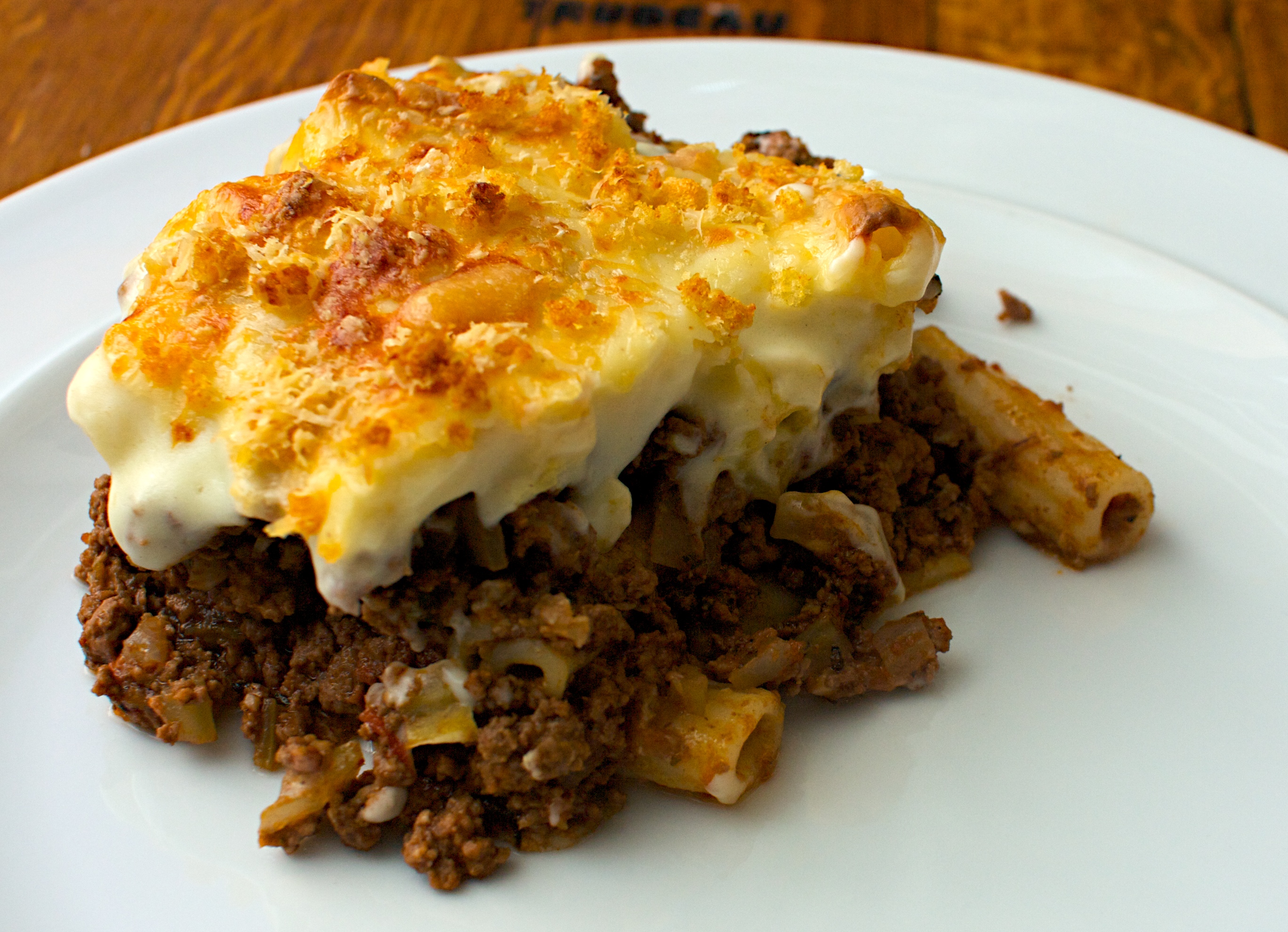
This is a bit like lasagne but easier to make and you can have it all done in advance, ready to throw in the oven when your guests arrive.
Pastitsio (beef and macaroni pie with cinnamon, red wine and cheese) – generously serves 8-10
500g pasta tubes (we used big macaroni or rigatoni would be good)
2 eggs, lightly beaten
50g finely grated Parmesan
2 tbsp melted butter
10g fresh white breadcrumbs
FOR THE WHITE SAUCE:
115g butter
115g plain flour
1.2 litres full-cream milk
½ tsp freshly grated nutmeg
FOR THE MEAT SAUCE
4 tbsp olive oil
1 medium onion, finely chopped
4 garlic cloves, finely chopped
2 celery sticks, finely chopped
1 kg lean minced beef
200ml red wine
400g chopped tomatoes
2 tbsp tomato purée
10cm piece cinnamon stick
¼ tsp ground cloves
1 tbsp dried oregano
2 tbsp fresh chopped oregano
3 fresh bay leaves
For the meat sauce, heat the oil in a large pan, add the onion, garlic, and celery, and fry until starting to brown. Add the mince and fry over a high heat for about 4 minutes, breaking up the lumps. Add the red wine, tomatoes, tomato purée, cinnamon stick, ground cloves, dried and fresh oregano, bay leaves, 100ml water, 1½ tsp salt and some black pepper, and simmer for about 30-40 minutes, stirring occasionally, until the sauce has thickened but is still nice and moist. Throw away the cinnamon stick and bay leaves.
Bring a large saucepan of water to the boil and add plenty of salt. Cook the pasta for a minute less than it says on the pack (as it will cook a bit more in the oven). Drain well, transfer to a large bowl and leave to cool a little.
For the white sauce, melt the butter in a non-stick saucepan, add the flour and cook, stirring, over a medium heat, for 1 minute. Gradually beat in the milk, then bring to the boil, stirring, lower the heat and leave to simmer for 5-7 minute, stirring occasionally. Season with nutmeg and some salt and pepper.
Stir 250ml (about one-fifth) of the white sauce into the warm pasta with the beaten eggs and half the grated cheese. Keep the rest of the sauce warm over a low heat, stirring now and then and adding a bit more milk if it gets too thick.
Use the melted butter to grease a large, ovenproof dish (about 23 x 33 cm across and 7 cm deep) or baking tray. Spread one-third of the pasta over the base of the dish and cover with half the meat sauce. Add another third of the pasta, then the rest of the meat sauce, then cover with a final layer of pasta. Spoon the rest of the white sauce over. Mix the remaining cheese with the breadcrumbs and sprinkle this over the top.
The dish is now ready for the oven. When you’re ready, bake it in a preheated oven at 180ºC/Gas Mark 4 for 40 minutes or until bubbling hot and nicely browned.
Serve with some salad.
Drink with: a glass of good Bordeaux but from a warmer vintage, like the atypical 2003. One of our guests kindly brought an ’03 Domaine de Chevalier.
(Original recipe from Rick Stein’s Mediterranean Escapes, BBC Books, 2007.)
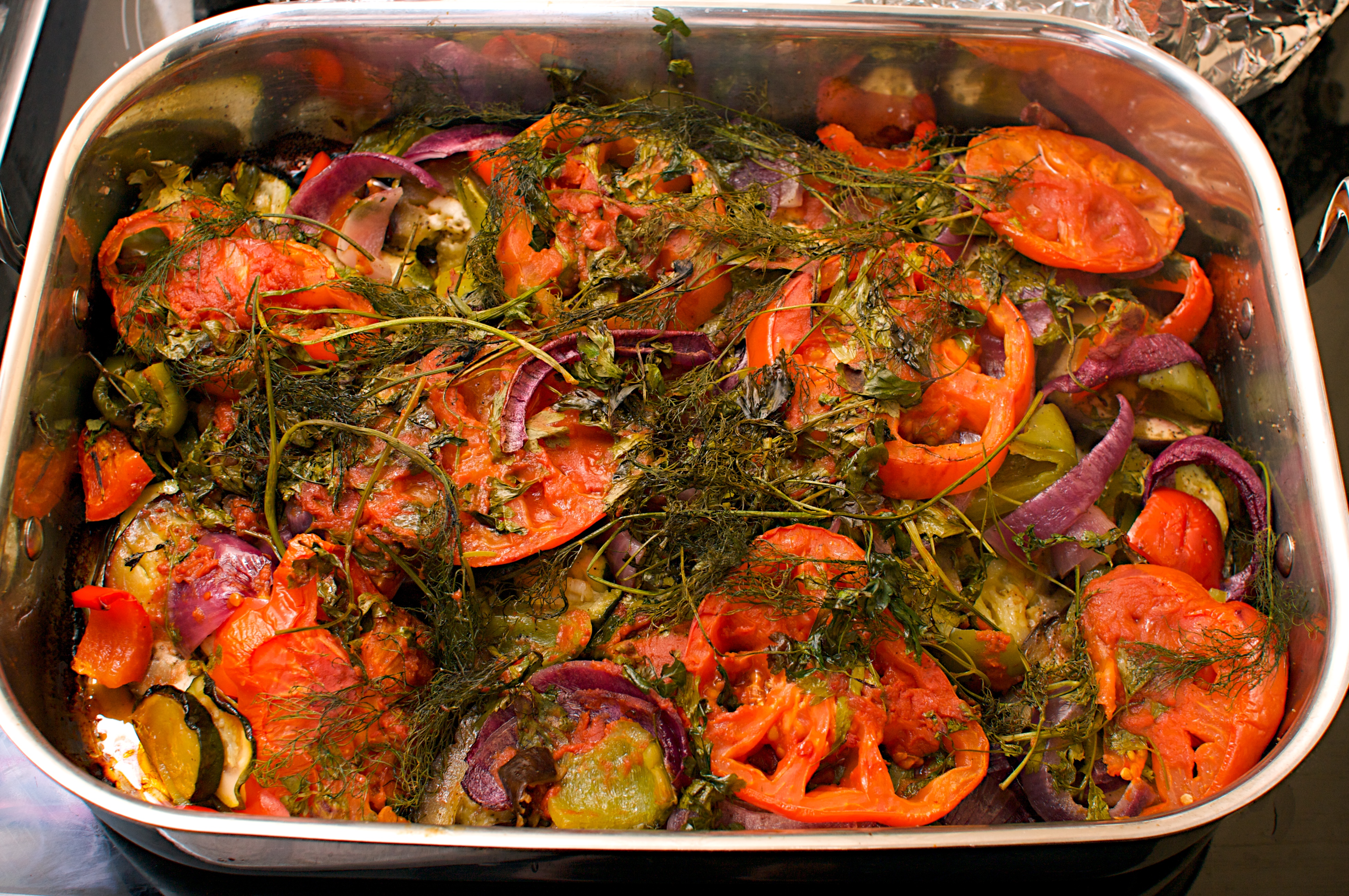
This has such great flavours that we made it two days in a row – it’s even great cold the next day so don’t be put off by the large quantities. Serve with barbecue lamb or just some feta cheese.
Briam – to serve 8
150ml extra virgin olive oil, plus a bit extra to grease the tin
500g waxy potatoes, peeled and cut lengthways into ½ cm thick slices
6 garlic cloves, sliced
2 large courgettes, sliced
1 large aubergine, cut into 1cm thick slices
1 large green pepper, cut into chunks
1 large red pepper, cut into chunks
1 large red onion, thickly sliced
15-20g dill sprigs
15-20g flat-leaf parsley sprigs
200ml passata
Preheat the oven to 190ºC.
Oil a large roasting tin (about 26 x 36 cm) well and spread the potatoes on the base in a single layer. Season with salt and pepper, then scatter over the garlic and courgettes. Season again, then add a layer each of the aubergine, peppers and onion, seasoning between each layer. Scatter over half the dill and parsley sprigs, cover with tomato slices and then add the rest of the herbs and season again. Pour the sieved tomatoes over the top, followed by the olive oil.
Cover the roasting tin tightly with foil and bake for about 1½ hours or until the vegetables are tender.
If you have a lot of juices in the tin, carefully pour them into a wide pan and boil until reduced and concentrated. Pour back over the vegetables and leave to cool a bit before serving.
(Original recipe from Rick Stein’s Mediterranean Escapes, BBC Books, 2007.)
These Greek kebabs are easy and delicious when barbecued and served with Tzatziki (a Greek yogurt dip), sliced tomatoes, pickled chillies and sliced gherkins.
Souvlaki – to serve 8
2kg boned shoulder of lamb
1 tbsp dried oregano
1 large lemon, juiced plus wedges to serve
150ml extra virgin olive oil
Paprika for sprinkling
Trim excess fat off the lamb and cut into bite-sized pieces. Put into a bowl with the oregano, lemon juice, olive oil, 2 tsps salt and some black pepper and leave to marinate at room temperature for about an hour.
Preheat the barbecue. Thread the lamb onto metal skewers and cook on the hot barbecue, until browned on the outside but still juicy in the centre. Sprinkle with a pinch of paprika and a squeeze of lemon juice to serve.
Drink with: a southern Italian red such as Negromaro or Primitivo. Italian wines from Puglia and Calabria complement Greek foods very well which is not surprising given the very strong historical and social links between them. In this case there is a good balance of warm ripe fruits, earthy tannins and medium weight.
(Original recipe from Rick Stein’s Mediterranean Escapes, BBC Books, 2007.)
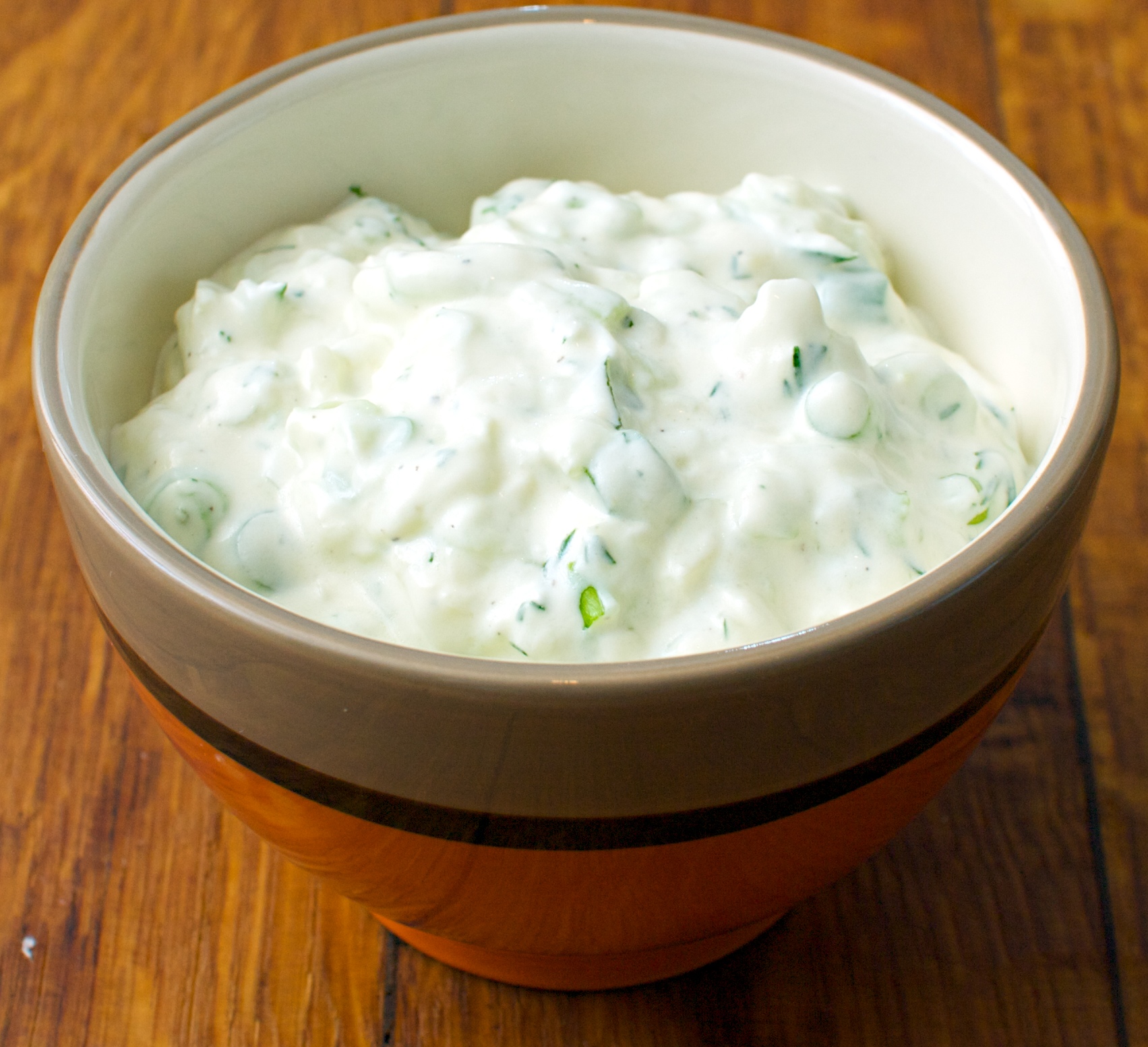
The best Tzatziki we’ve made with great flavour and a really thick creamy texture. Totally different to the watery shop-bought versions. Serve with lightly toasted pitta breads, for dipping, or Greek lamb kebabs.
Tzatziki – to serve 6
1 large cucumber
2 garlic cloves
500g natural Greek ewe’s milk yogurt (‘Total’ if you can find it – don’t buy a low-fat version for this)
75g scallions, finely chopped
2 tbsp chopped fresh dill or mint
2 tbsp extra virgin olive oil
1 tsp white wine vinegar
Peel most of the skin off the cucumber but not all of it. Coarsely grate the cucumber, put into a clean tea towel and squeeze out most of the excess liquid.
Crush the garlic into a smooth paste by adding a large pinch of salt and crushing on a board with the back of a large knife.
Put the yogurt into a bowl and stir in the cucumber, garlic, scallions, dill or mint, olive oil, vinegar and some seasoning.
(Original recipe from Rick Stein’s Mediterranean Escapes, BBC Books, 2007.)
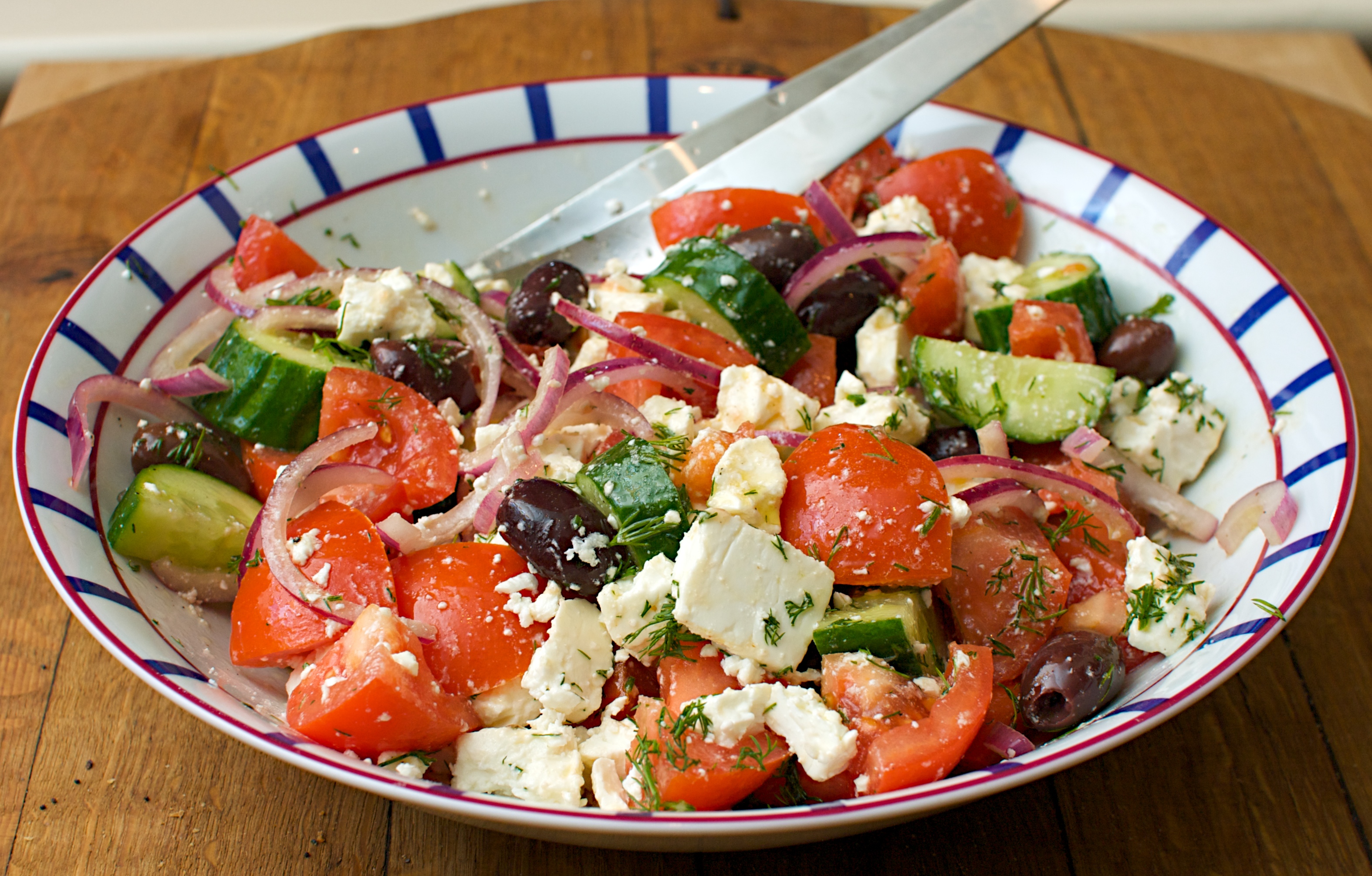
We hadn’t thought of using Pernod or ouzo in a salad until Rick Stein inspired us in his Mediterranean Escapes book. Good enough to make twice in two weeks.
Salata Horiatiki (Greek salad with tomato, cucumber, olives, dill and feta cheese) – to serve 4
450g ripe, red, tasty tomatoes
½ cucumber
1 red onion
200g Greek feta cheese
4½ tbsp extra virgin olive oil, plus a bit extra to serve
1 tbsp red wine vinegar
1 tsp ouzo or Pernod
2 tbsp chopped dill
20 small black olives
Large pinch of dried oregano
Salt and freshly ground black pepper
Crusty fresh bread, to serve
Cut the tomatoes into chunks, and cut the cucumber in half lengthways and then across into thick slices. Very thinly slice the red onion. Crumble the feta cheese into small chunks.
Put the olive oil, ½ tsp salt, the red wine vinegar, ouzo and some black pepper into a large salad bowl and whisk. Add the tomatoes, cucumber and onions and toss gently. Add the feta, dill and olives and mix briefly, then divide onto plates.
Drizzle the salad with a bit more oil, sprinkle with the dried oregano and a little coarsely ground pepper, and serve with crusty bread.
Wine Suggestion: If you were on a Greek island you would be sipping ouzo or retsina… not sure that we’d recommend either. Maybe try a Vermentino, which is still from the Mediterranean (Sardinia or the Italian coast), a fresh white wine that has a bit of texture to it.
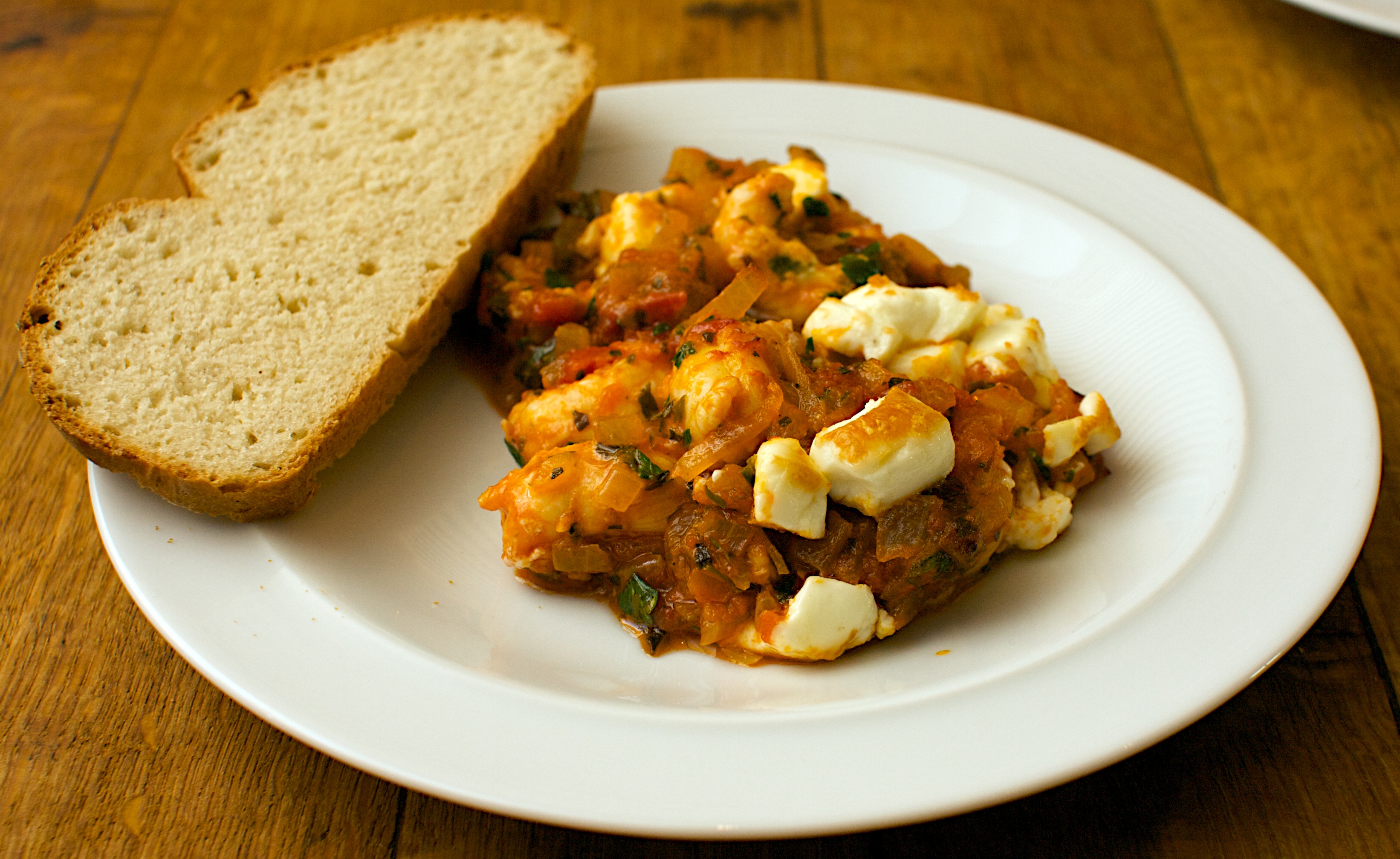
This is a Greek mezedes dish which works really well as a starter for 4 with some crusty bread. We divided this onto plates but its also nice (and more common in Greece) to plonk the dish on the table and let everyone serve themselves. Saganaki dishes take their name from a small shallow frying pan used to fry or braise small portions of food, like cheese or shellfish.
Garides saganaki (Prawn saganaki) – to serve 4
4 tbsp olive oil
1 onion, finely chopped
200g tinned chopped or fresh tomatoes, peeled and diced
½ tsp sugar
5 tbsp dry white wine
2 tsp dried oregano
16 large prawns, peeled and deveined
3 tbsp finely chopped parsley or mint
100g feta cheese, diced
Heat the oil in a pan. Add the onion and cook over a medium heat for 4-5 minutes, or until soft and translucent. Add the tomatoes, sugar, wine, and oregano and season with salt and pepper. Turn up the heat and cook, uncovered, over a high heat for about 10 minutes, until thickened. Meanwhile, preheat the grill.
Add the prawns to the pan and cook for another few minutes. Stir in the parsley or mint and transfer the mixture to a small flameproof dish. Sprinkle over the cheese and grill for 5 minutes or until the cheese is melted and starting to brown.
Wine Suggestion: Serve with a glass of anise-scented ouzo if you’re feeling really authentic! Or try and search out some of the excellent, new-generation of Greek wines, like a white Assyrtiko.
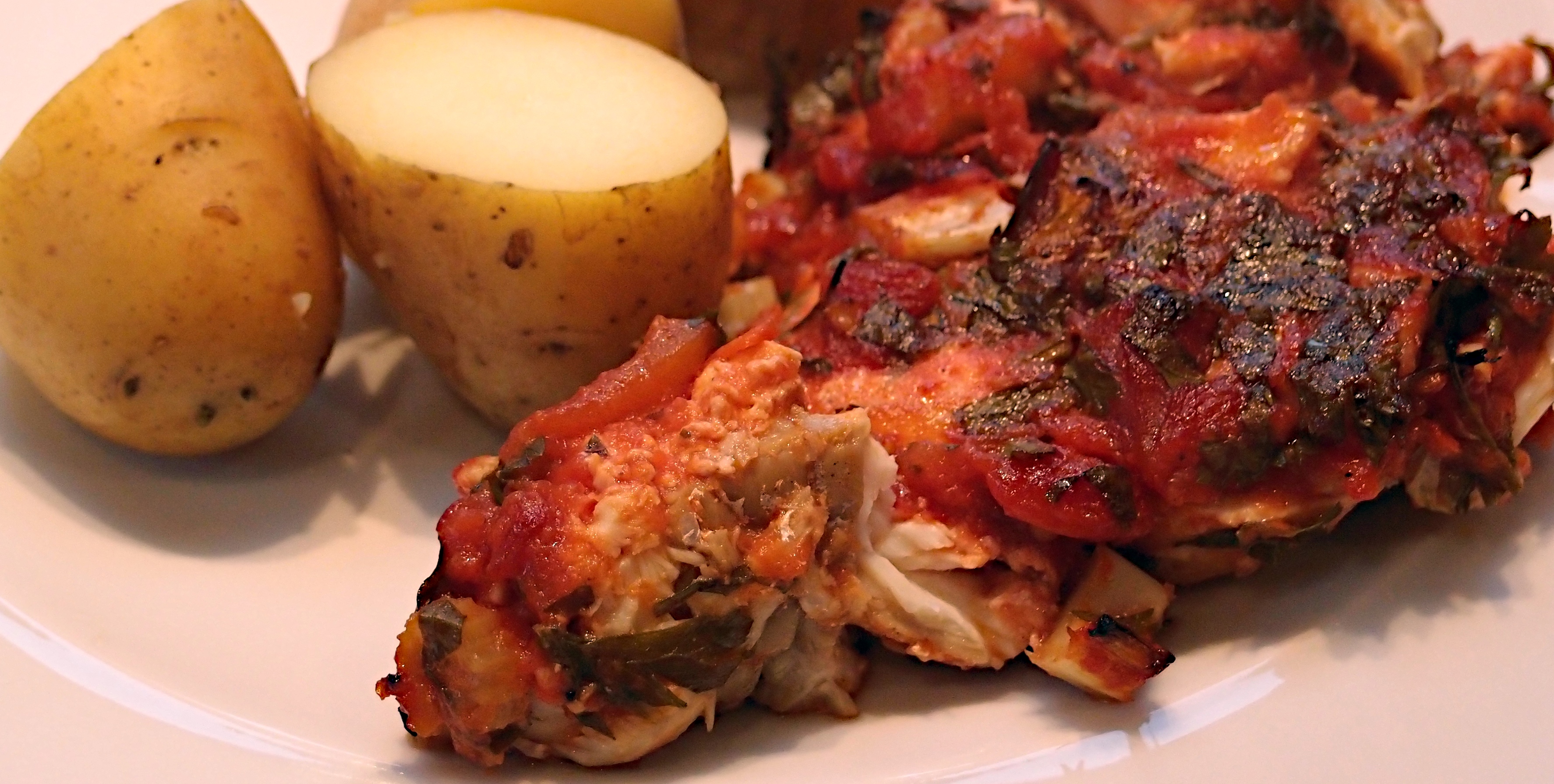
When we find recipes that do something a little differently and look like they work we have to give them a go. In this case Tessa Kiros suggested baking a firm white fish for one and a half hours which to our wisdom was too long to respect the fish flavours and texture but her enthusiasm and passion for the dish won out. The following recipe proved our preconceptions wrong and we had a delightful and flavoursome dish that proved a complete success. Definitely will be made again (and already has been :-))
Oven-baked fish with tomato & parsley (serves 4 )
1 kg firm white fish fillets, skinned and cut into 6cm pieces
400g tin tomatoes with juice
15g (1/4 cup) chopped parsley
4 large garlic cloves, finely chopped
2 lemons, juiced
2 celery stalks, very finely chopped with some leaves too if you like
1 teaspoon sugar
3 tablespoons olive oil
Preheat oven to 180C/160C fan/350F. Lay fish pieces in a single layer in a large flat oven dish. Mix together all the other ingredients and taste for seasoning. Pour over and cover fish pieces, shaking the dish to balance and equally distribute the juices. Cover with foil and bake for 30 minutes.
Remove foil and bake for another 40 to 50 minutes until the liquid has thickened and the top of the fish is golden. You will have to judge this according to your oven as you may have to raise the temperature or reduce the time if necessary. Try to let the dish remain somewhat juicy and not dry out but at the same time crisp the top a little.
Serve with boiled or steamed potatoes as we did to good effect, or a warm crusty bread would work well too.
Wine Suggestion: A slightly herbally and mineral white with a medium body and no overt oak. We drank a superb Friulano brought by our friend Enrico, Vignai da Duline Fiulano 2007, which had a great balance of medium weight but perfectly poised concentration and elegant complexity. A delight and superbly matched the food. We recommend you search out this gem (2100 bottles in 2007) as it truly represents the Friulano grape to it very best and has a taughtness and poise that lifts it above the crowd.
We had this dish as the main when we cooked the Saffron Penne – a good pair.
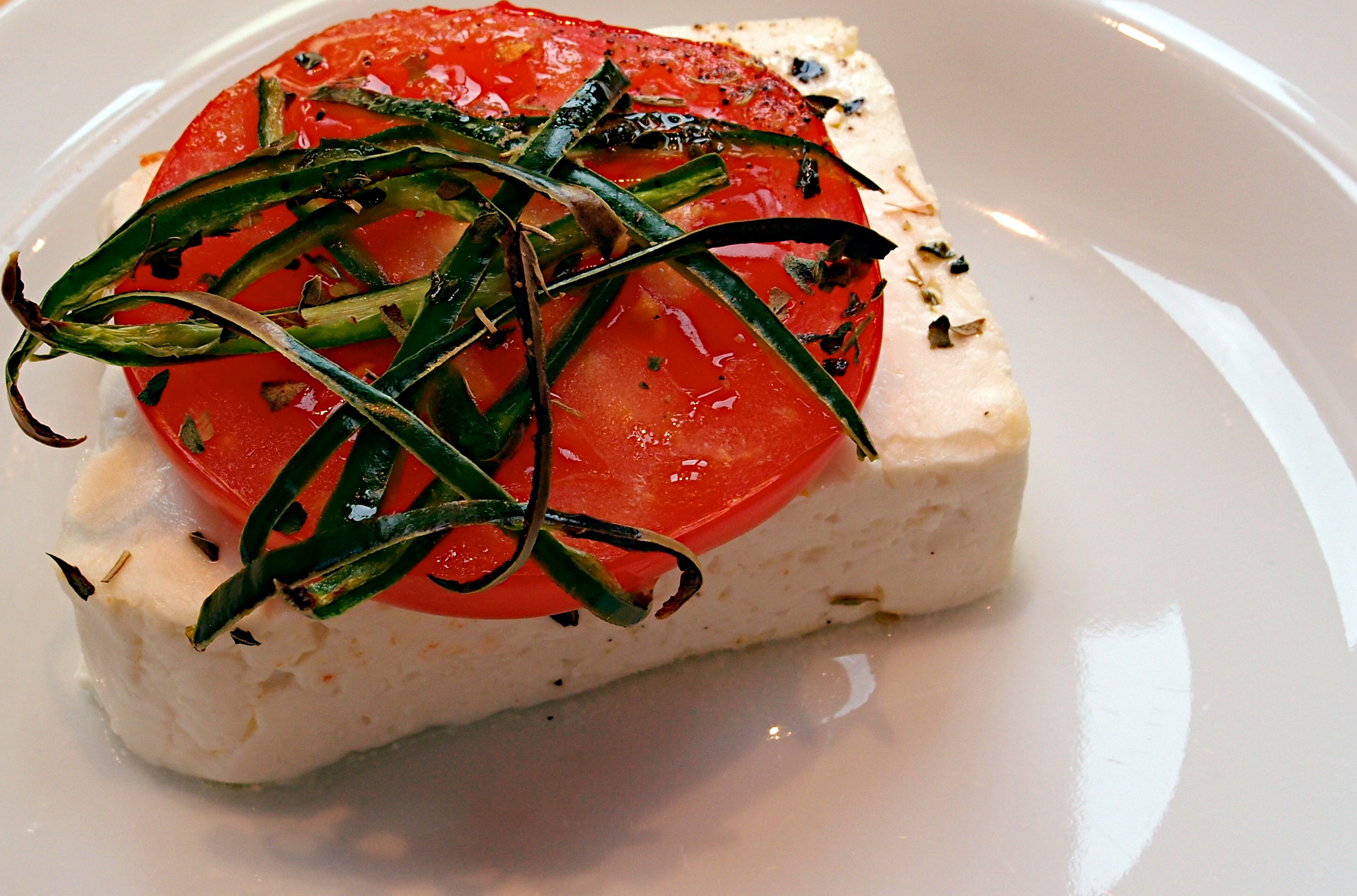
This is so simple to make and was an excellent way to start a Greek meal (see main course below). The saltiness of the feta becomes imperceptible with grilling, and it balances perfectly with the sweetness of the tomato and mild heat of the chilli. We’ll definitely do this again!
Tiromezes: easy cheese appetizer – serves 4
4 square, thick slices feta cheese
1 large tomato, cut into 4 rounds
1 long green chilli, thinly sliced
pinch of dry oregano
pepper
olive oil for drizzling
Preheat the grill. Put the cheese slices side by side in a shallow flameproof dish. Put a tomato slice on top of each feta square and top with the slices of chilli. Sprinkle with oregano and pepper and drizzle with a little bit of oil. Grill for 6-8 minutes, until the tomato and chilli are lightly browned. Serve immediately with a glass of ouzo if you have some (we didn’t 😦 maybe next time).
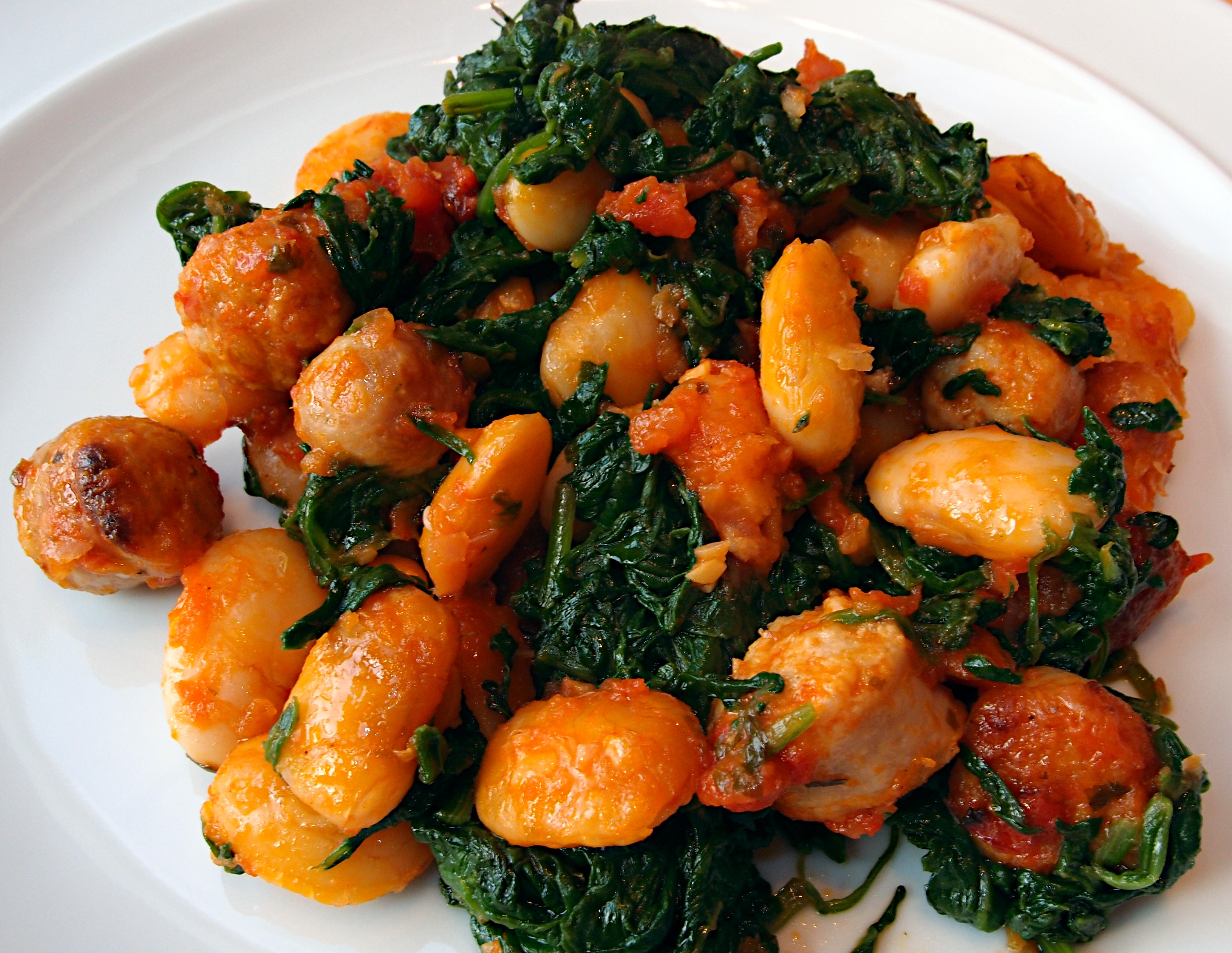
Gigantes me spanaki ke loukanika sto fourno (Bean, Spinach and Sausage Casserole)
Don’t be scared that this takes over 24 hours preparation – it’s all soaking time for the beans! It does take about an hour and a half to cook though so don’t get started too late. It is very easy despite the time it takes and is totally worth it.
Gigantes me spanaki ke loukanika sto fourno (Bean, Spinach and Sausage Casserole) – serves 4
300g dried butter beans
120ml olive oil
250g pork sausages, cut into bite sized pieces
1 onion, grated
2 garlic cloves, finely chopped
1 400g can chopped tomoatoes
Cover the Butter beans in plenty of cold water and soak for 24 hours.
Put the beans into a saucepan, cover them with cold water, and bring to the boil. Reduce the heat and simmer for about 30 minutes, then drain and tip into an ovenproof casserole dish.
Preheat the oven to 180°C/350°F/Gas Mark 4.
Meanwhile, heat half the oil in a frying pan. Add the sausage, onion, and garlic and cook over a low heat for 5 minutes, until the onion has softened. Stir in the tomatoes and parsley, season and simmer for 5 minutes. Pour the mixture over the beans, stir well and bake, adding a little hot water if necessary, for about 50 minutes or until the beans are soft – check every now and then that it isn’t drying out and give it a stir.
Meanwhile, roughly chop the spinach, and cook over a low heat for a few minutes, until wilted. Drain well. Heat the remaining oil in a frying pan, add the spinach and cook over a low heat for about 5 minutes.
Take the beans out of the oven and dot the top with spinach. Bake for 5 minutes more. Serve hot.
Kali orexi (bon appétit)!
(Original recipe from Vefa’s Kitchen published by Phaidon)



 Jono & Jules do food & wine