We often buy little jars of peas when we’re on holidays in France. This recipe requires peas from a jar which have a distinct and lovely flavour that compliments the other ingredients. Delicious!
Wine Suggestion: Umani Ronchi’s Pecorino Vellodoro is a taste of spring from the Abruzzo region of Italy; floral & fruity with a lovely dry, refreshing minerality.
Tagliatelle with peas & prosciutto – serves 2
3 sliced of prosciutto, torn into small pieces
75g butter
1 shallot, finely diced
1 x 400g tin or jar of petits pois
250g fresh tagliatelle
35g Parmesan, finely grated, plus extra to serve
Heat a non-stick frying over a medium heat, then add the prosciutto and cook until crispy. Remove the prosciutto from the pan and set aside.
Add 50g of the butter to the pan and allow to melt, then add the shallot and cook for 5 minutes or until soft. Add the peas, including their liquid, and cook for about 5 minutes or until reduced by half. Add the cooked prosciutto, then season, and remove from the heat and set aside.
Bring a large pan of salty water to the boil and cook the tagliatelle for 2-3 minutes. Put the frying pan back on the heat and transfer the taliatelle to the pan with tongs. Add an extra ladle of pasta cooking water and the rest of the butter. Add the Parmesan and toss everything together for a couple of minutes, until warmed through – you may need to add a little more of the pasta water.
Serve in warm bowls, sprinkled with more Parmesan and some black pepper.
(Original recipe from The Italian Deli Cookbook by Theo Randall, Quadrille, 2021.)
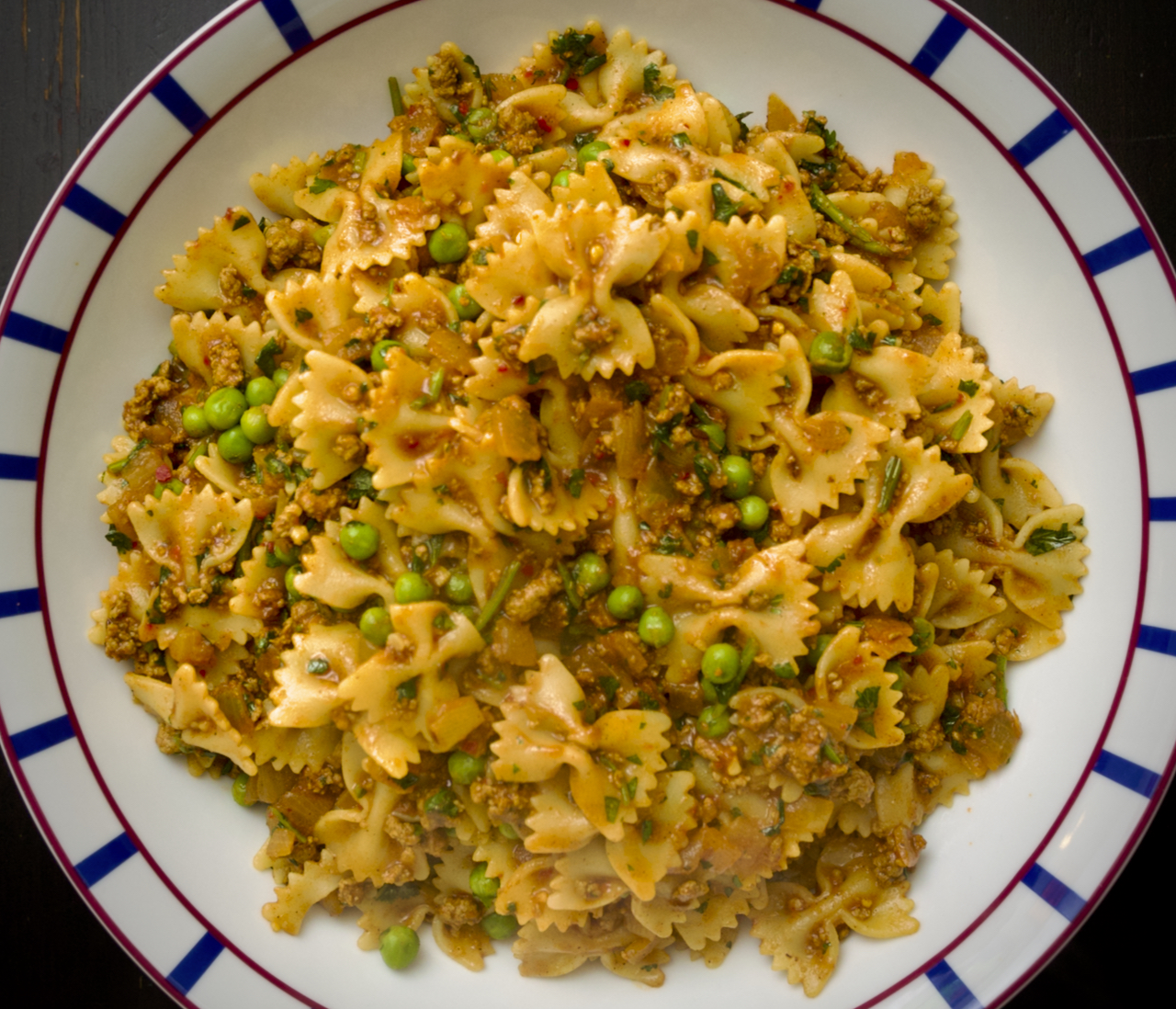
Big flavours in this pasta dish by Sabrina Ghayour – modelled on a samosa which is no bad thing.
Wine Suggestion: we are on a bit of a Grenache kick at the moment and really revelling on the subtleties and various expressions this grape can give … alongside it working with a variety of dishes, especially with warm spices at the core. Tonight we opened the Paradou Grenache from Chateau Pesquie, which comes from Provençal vineyards and is joyously youthful, fruit forward and balanced with a fresh acidity.
Samosa Pasta – serves 3 to 4
vegetable oil
1 large onion, finely chopped
250g beef mince
1 heaped tsp garlic granules
1 tsp cumin seeds
1 tsp ground cinnamon
1 tsp ground turmeric
1 tsp chilli flakes
3 tbsp tomato purée
200ml warm water
3 handfuls of frozen peas
250g farfalle pasta
15g coriander, leaves picked and roughly chopped
Warm some vegetable oil in a large frying pan, then fry the onions with a pinch of salt until soft and starting to colour. Add the beef mince and break it up with a wooden spoon, then add the garlic granules, all the spices, the tomato purée and plenty of black pepper. Stir-fry the mince for a few minutes, then pour in the warm water and stir-fry again until mostly evaporated. Stir in the peas, then turn off the heat.
Cook the pasta in lots of salty water. When it’s cooked scoop out the pasta with a slotted spoon and add to the beef mixture over a medium-high heat. You can add a little more pasta water if needed. Season to taste, then stir in the coriander and serve.
(Original recipe from Flavour by Sabrina Ghayour, Aster, 2023.)
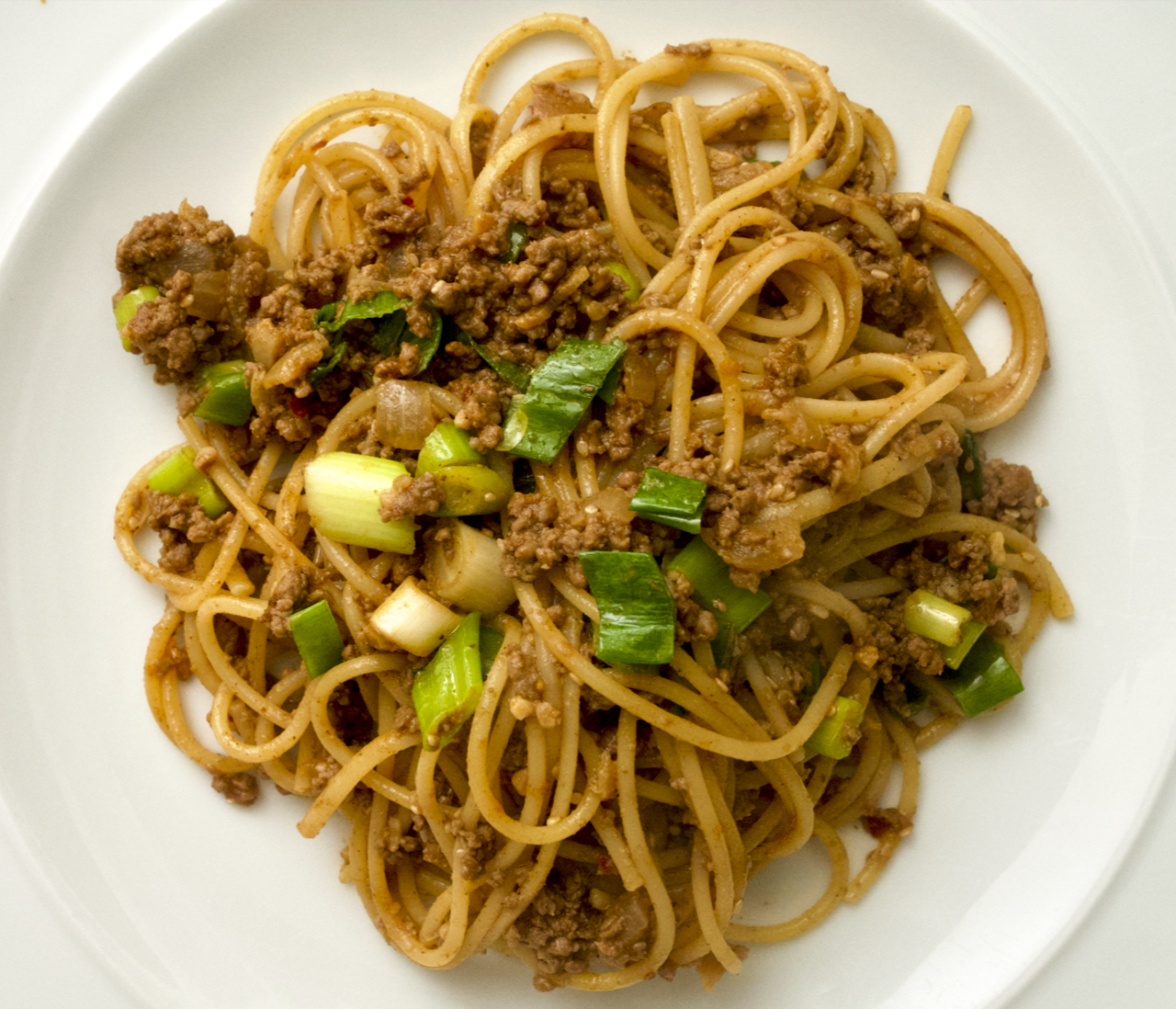
Bags of flavour in this one and not the flavours you would usually associate with spaghetti and mince.
Wine Suggestion: we like a crisp, clean and dry lager with this, partly because it reminds of a warm summer evening, of which we’re craving at the moment.
Harissa, tahini and lamb spaghetti – serves 4
vegetable oil
1 large onion, finely chopped
6 fat garlic cloves, finely sliced
500g lamb mince
1 tbsp garlic granules
1 tbsp curry powder
1 tbsp ground cumin
2 tbsp rose harissa
3 tbsp tahini
3 tbsp light soy sauce
300g spaghetti
4 scallions, finely sliced
2 tbsp toasted sesame seeds
Put a large frying pan over a medium-high heat and add a splash of vegetable oil. Add the onion and cook until soft and transparent, then add the garlic and continue cooking for a couple of minutes. Add the lamb mince to the pan and break it up with a wooden spoon. When it has broken up and lost it’s pinkness, add the garlic granules, curry powder and ground cumin. Stir to mix well through, then add the harissa, tahini and soy sauce. Season with salt and black pepper and mix together well. Continue cooking, stirring regularly, while you cook the spaghetti.
Cook the spaghetti in a large pan of salty water, then drain and reserve a good mugful of the cooking water.
Add the spagehtti to the lamb mince and mix well, then pour in enough pasta cooking water to loosen it. Add the scallions and sesame seeds and mix together, then serve.
(Original recipe from Flavour by Sabrina Ghayour, Aster*, 2023.)
Wine Suggestion: Italian reds work with tomato pasta sauces as they tend to be a little bit more acidic which compliments the acidity of the tomatoes. Given how light the spinach and ricotta are a light chianti or a young nebbiolo will work well.
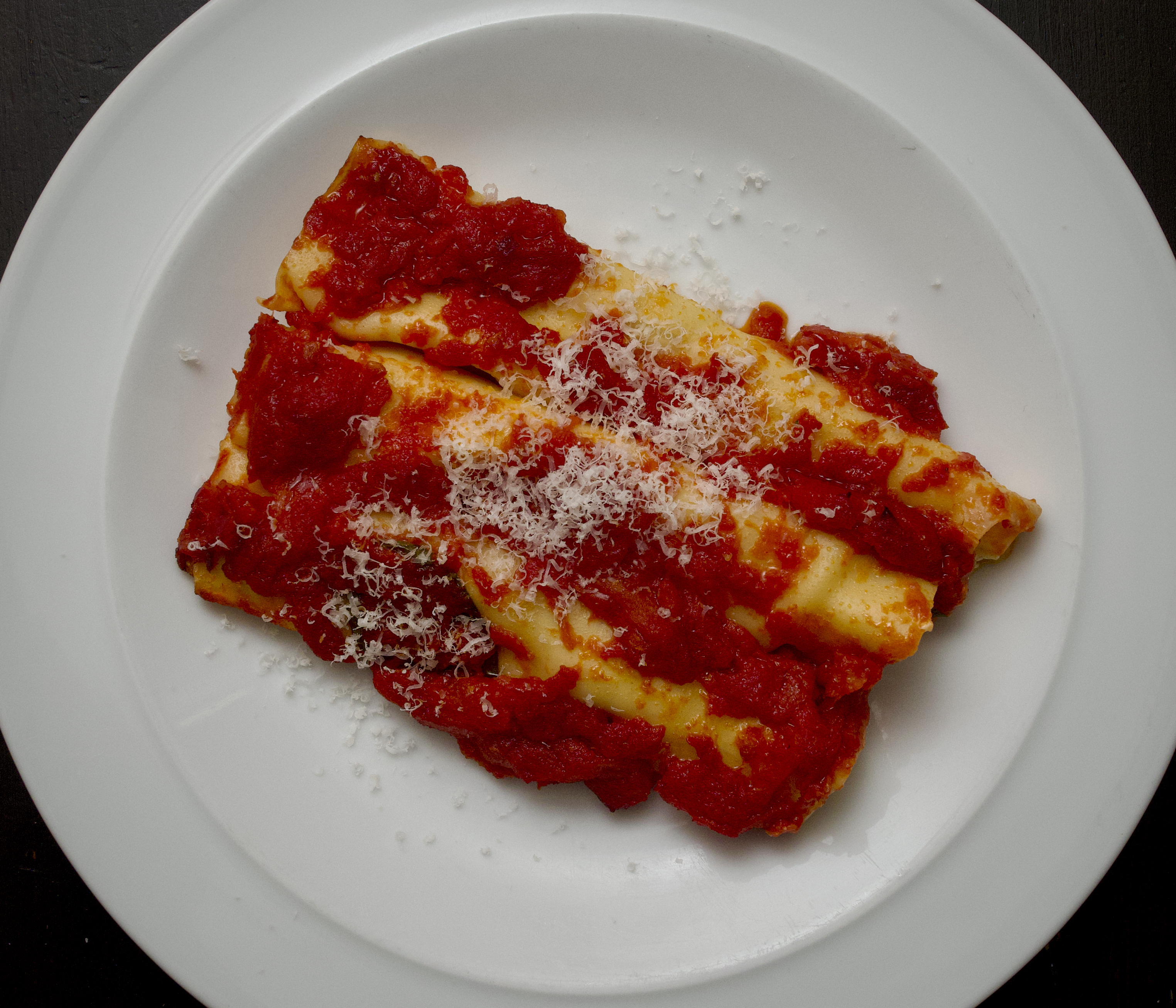
Spinach & Ricotta Cannelloni – serves 5 to 6
FOR THE TOMATO SAUCE:
4 tbsp olive oil
1 onion, finely chopped
4 cloves of garlic, crushed
2 bay leaves
½ tsp dried thyme
½ tsp dried oregano
6 tbsp tomato purée
170ml white wine
2 x 400g tins crushed tomatoes
1 litre vegetable stock
1½ tsp caster sugar
1 tsp fine sea salt
½ tsp black pepper
10g basil leaves, roughtly torn, plus extra to serve
250g cannelloni tubes
50g finely grated Parmesan
125g grated mozzarella
FOR THE FILLING:
250g frozen chopped spinach, defrosted
500g ricotta
30g finely grated Parmesan
100g grated mozzarella
1 egg
1 large clove of garlic
a little grated nutmeg
¾ tsp fine sea salt
½ tsp black pepper
First make the sauce. Heat the olive oil in a medium saucepan over a medium heat. Add the onion, garlic, bay leaves, thyme and oregano. Cook for 3-4 minutes or until the onion is translucent. Add the tomato purée and stir for a minute. Stir in the wine, then turn the heat up hight and simmer until almost evaporated. Add the tomatoes, stock, sugar, salt and pepper. Simmer gently for 35 minutes.
Remove the bay leaves and whizz the sauce until smoooth, then stir in the basil leaves.
Squeeze the defrosted spinach with your hands to get rid of as much water as possible. Put the spinach in a bowl with the rest of the filling ingredients and mix well with wooden spoon.
Heat the oven to 200C/180C fan.
Spread about 375ml of the sauce across the base of a large baking dish (about 23 x 32 cm).
Put the filling into a piping bag (or you can use a sandwich bag with the corner snipped off). Pipe the filling into the tubes until full, then place them in the baking dish.
Pour over the rest of the tomato sauce, making sure to cover all the tubes. Cover with foil, then bake for 30 minutes. Remove the foil, then sprinkle with the Parmesan, then the mozzarella. Bake for another 15 minutes or until the cheese has melted.
Garnish with extra basil leaves and Parmesan and serve with a green salad.
(Original recipe from Recipetin Eats by Nagi Maehashi, Pan Macmilan, 2022)
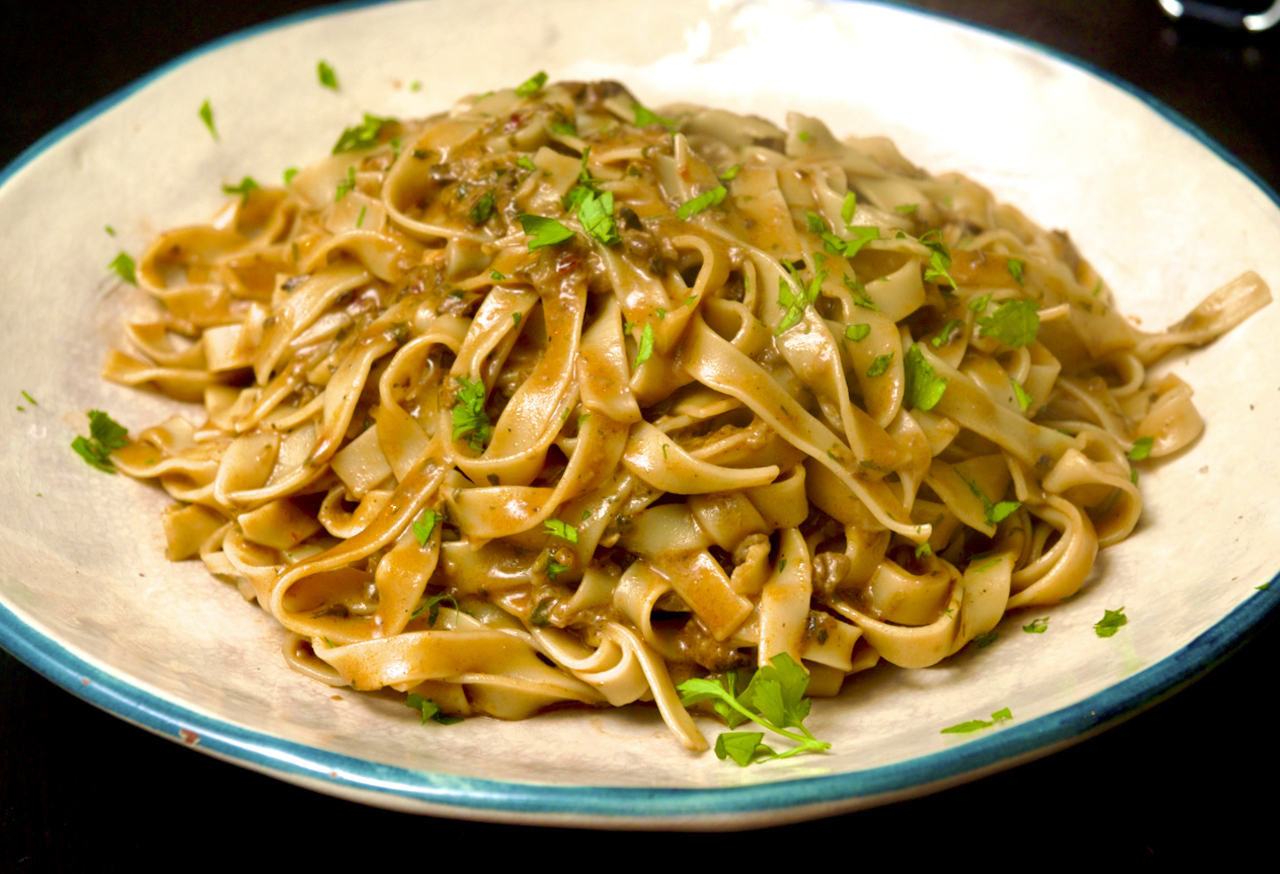
This has a surprising umaminess given the short cooking time. A dish for mushroom lovers.
Wine Suggestion: We enjoy pairing mushroom dishes with Nebbiolo and really enjoy stepping outside the box to find versions made outside it’s native Piedmont. Tonight a glass of Clendenen Family Vineyards (Au Bon Climat) “Pip” from the Santa Maria Valley in California, which despite it getting some of the famous sunshine, is also a very cool area with fog … just like Piedmont. We liked it a lot.
Porcini sauce for tagliatelle – serves 2
40g dried porcini
4 tbsp olive oil
3 cloves of garlic, very finely chopped
½ tsp chilli flakes
10g fresh parsley (stalks and leaves), finely chopped, plus extra to serve
a big pinch of fine sea salt
1½ tbsp tomato purée
about 50 twists of freshly ground black pepper
250g dried tagliatelle
40g Parmesan, very finely grated, plus extra to serve
3 tbsp double cream
Put the dried porcini into a bowl and cover with boiling water, then leave to soak for 10 minutes. Drain, reserving 75g of the soaking liquid. Very finely chop the porcini so it is like the consistency of mince, then set aside.
Put the oil, garlic, chilli flakes, parsley and fine salt into a large sauté pan, then place over a medium-low heat. Fry very gently for 5 minutes or until soft, taking care that the garlic doesn’t turn brown.
Increase the heat, then add the chopped porcini, tomato purée and the pepper. Stir-fry for a few minutes, then set the pan aside while you cook the tagliatelle.
Cook the pasta in boiling salty water until al dente, then drain and reserve 350g of the pasta water.
Return the sauté pan to a medium-high heat, then add the reserved porcini and pasta water. Bring to a simmer and leave to bubble for a few minutes. Add half the Parmesan, stir until melted before adding the rest. Lower the heat, then stir in the cream, followed by the cooked pasta. Toss over the heat for a minute or two until the sauce comes together.
Remove from the heat and serve with more Parmesan and olive oil.
(Original recipe from Mezcla by Ixta Belfrage, Ebury Press, 2022.)
We love this easy pasta dish. If you haven’t cooked smoked salmon before you should.
Wine Suggestion: this is a deceptively rich dish and we think needs something like a fuller Pinot Gris, like Au Bon Climat’s blend with Pinot Blanc which is treated very much like a Burgundian Chardonnay and is both textured and vibrantly fresh with flavours of fresh pears, toasty creaminess and gentle spices.
Pasta with smoked salmon & mascarpone – serves 4
400g farfalle
200g smoked salmon
125g mascarpone
20g butter, at room temperature
zest of 1 unwaxed lemon
dill, snipped
Cook the pasta in lots of salty water until al dente.
Meanwhile, cut the salmon into short pieces with scissors and put them into a large warm serving bowl along with the mascarpone, butter and lemon zest. Ladle some pasta cooking water into the bowl to loosen to a cream, then taste and add salt if needed.
Drain the pasta, reserving some more pasta water, then tip on to the sauce and gently mix together, adding more cooking water if needed. Serve, sprinkled with dill.
(Original recipe from An A-Z of Pasta by Rachel Roddy, Penguin: Fig Tree, 2021.)
This dish takes a while but it’s a waiting game for the most part and you will be richly rewarded. A good value dish for lamb lovers!
Wine Suggestion: a succulent red with gentle spices and if you can push the boat out something like Ridge’s superlative Lytton Springs. All blackberry, raspberry, coffee and warm spices, but with fine, layered tannins and a chalky undercurrent.
Lamb pilaf with orzo – serves 4
800-900g lamb neck fillet
2-3 tbsp olive oil
1 large onion, finely chopped
2 cloves of garlic, crushed
½ tsp ground cinnamon
½ tsp ground allspice
400g tin chopped tomatoes
2 tbsp tomato purée
300ml dry white wine
2 tbsp lemon juice
2 tsp sugar
1 chicken stock cube
1 tbsp chopped fresh thyme
250g orzo
TO SERVE:
85g feta
1 tbsp chopped thyme
1 tbsp chopped mint
finely grated rind of 1 lemon
Heat the oven to 160C/Fan 140C/Gas 3.
Cut the lamb neck fillets in half lengthways and don’t trim off any fat. Cut each half fillet crossways into bite-size pieces.
Heat a good glug of olive oil in a large non-stick frying pan until hot, then sear the lamb in batches over a medium-high heat until well browned on all sides. Remove with a slotted spoon to a large casserole.
Turn the heat down and add the chopped onion. Fry for a few minutes until golden brown, then add the garlic, cinnamon and allspice and fry for another minute or two. Scrape the onion mixture into the casserole with the meat.
Pour the tin of tomatoes over the meat, then fill the can twice with water and add this too. Give it all a stir, then add the tomato purée, wine, lemon juice, and sugar. Crumble in the stock cube and add the thyme, ½ tsp salt and plenty of black pepper. Bring to the boil, stirring, then cover and transfer to the oven. Cook for 2 hours, stirring halfway through.
Stir in the orzo then cover and return to the oven for 20 minutes or until the orzo is cooked, stirring halfway through. Crumble the feta over and sprinkle with the herbs and lemon zest to serve.
A green salad is all you need on the side.
(Original recipe from Mary Berry Cooks the Perfect, Penguin Random House Group, 2014.)
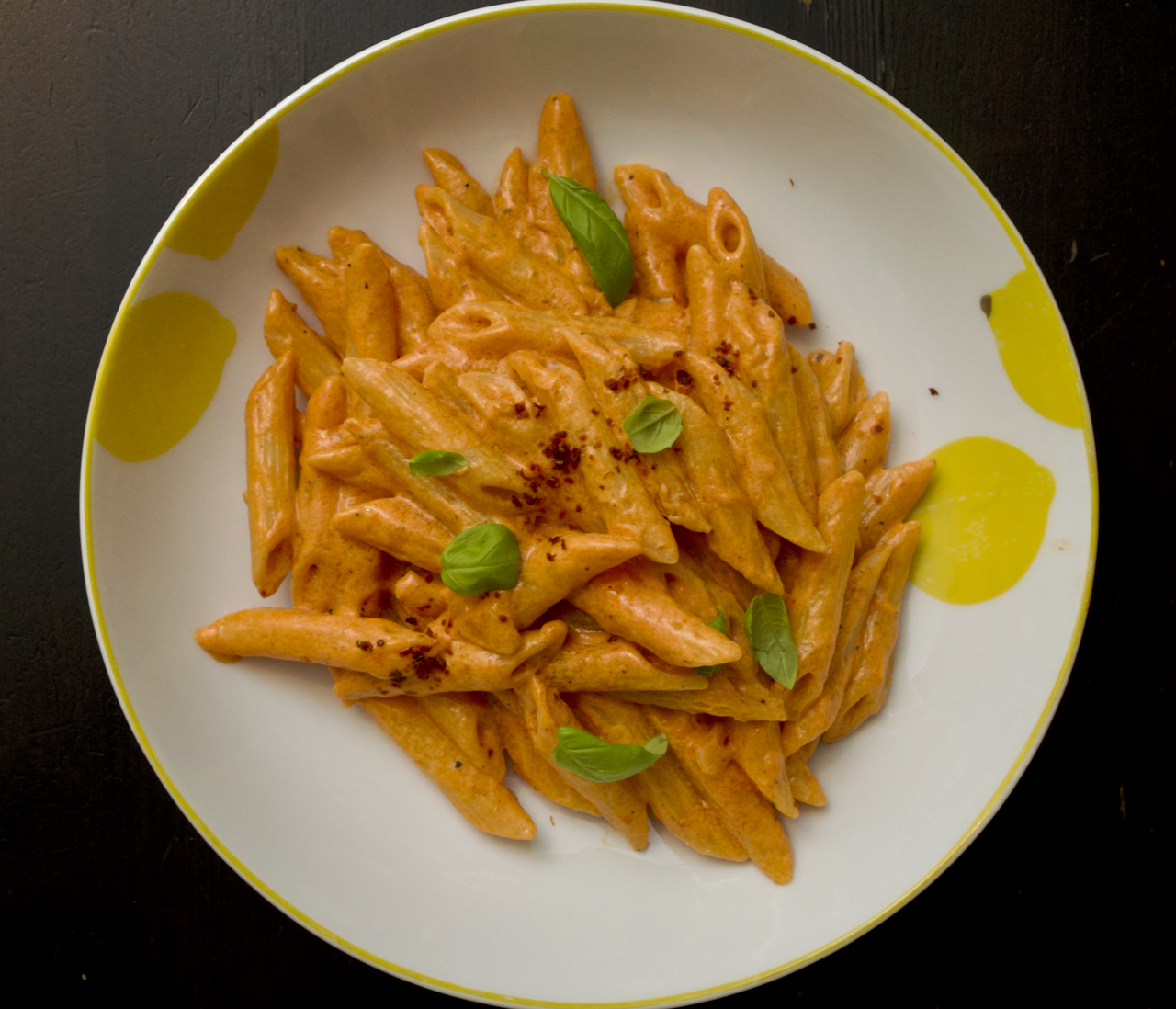
An easy pasta dish from Persiana Everyday by Sabrina Ghayour. Ready in 10 minutes and perfect for midweek.
Wine Suggestion: A crisp and fresh Sartarelli Verdicchio dei Castelli di Jesi Classico which lifts the dish and adds an extra roundness and depth. Easy white peach flavours but with that classic green almond twist at the end that bring both wine and food together.
Penne with spicy tomato & mascarpone sauce – serves 2
200g penne pasta
2 tbsp olive oil
4 big garlic cloves, thinly sliced
2 tbsp tomato purée
150g mascarpone cheese
1 tsp pul biber chilli flakes
2 handfuls of Greek basil – we used some regular basil
Cook the pasta in plenty of salty water according to the timings on the pack.
Meanwhile, warm a frying pan over a medium heat, and add the olive oil. Add the garlic and cook gently until soft and translucent.
Add the tomato purée, mascarpone and most of the chilli flakes, then stir until you have a smooth sauce.
When the pasta is cooked, scoop it out with a slotted spoon and straight into the frying pan with the sauce. Season well with plenty of salt and black pepper. You might need to add a bit more pasta water to loosen to a creamy sauce.
Serve in warm bowls with a sprinkle of pul biber and the basil leaves.
(Original recipe from Persiana Everyday by Sabrina Ghayour, Aster*, 2022.)
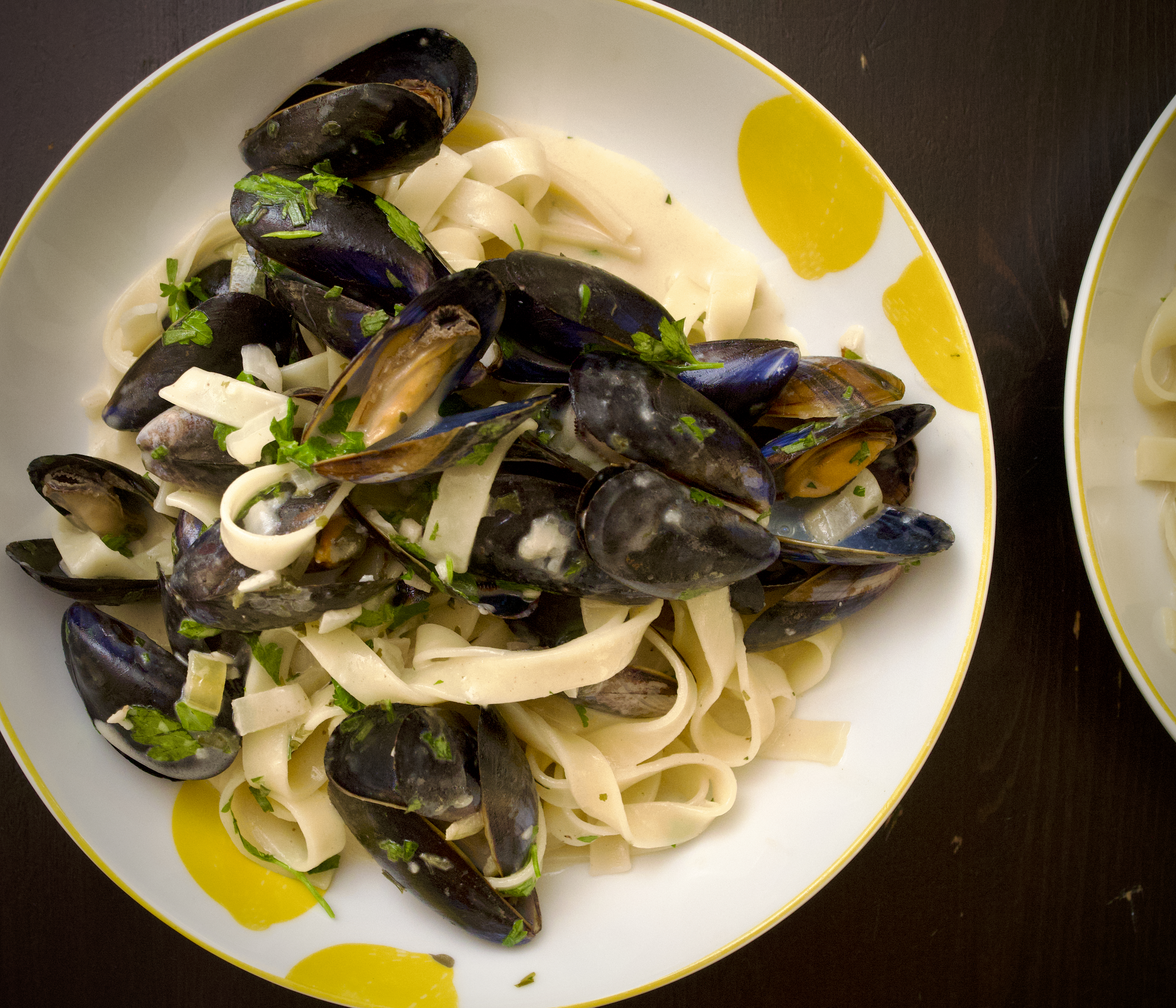
This is made with packets of mussels in garlic butter sauce which you can easily pick up in the supermarket on your way home – no need to make it in time for the fish shop and no fiddly prep. You might want a bit of crusty bread to mop up the sauce.
Wine Suggestion: We couldn’t go past a good Muscadet and with ever greater choices out there we’d recommend you explore beyond some of the classic cuvées being offered. Jérémie Huchet’s Clos les Montys is an unique terroir with some very old vines. Not within the Sévre et Maine appelation this could easily be overlooked, but you get something special in the glass: aromas of lemon, jasmine, and pears with hints of a fresh herb. Juicy, well-balanced and elegant, it finishes very long and refreshing.
Tagliatelle with mussels & crème fraîche – serves 4(easily halved)
300g dried tagliatelle
1 large onion, finely chopped
2 tbsp olive oil
150ml dry white wine
200ml crème fraîche
2 x 450g packs mussels in garlic sauce (we used Carr & Sons from Dunnes)
a good handful of flat leaf parsley, roughly chopped
2 tbsp chopped tarragon
Heat the olive oil in a deep frying pan, then add the onion and cook gently for about 10 minutes until softened and starting to colour. Pour in the wine, turn up the heat and bubble until it has almost evaporated.
Meanwhile, bring a large pan of salty water to the boil and cook the pasta according to the timings on the pack.
Add the crème fraîche to the onions and bring to the boil, then tip in the mussels and cook for about 5 minutes until piping hot and open (chuck any that don’t open away). Drain the pasta and return to the pan and tip in the mussel mixture. Stir in the herbs and serve with some crusty bread if you like.
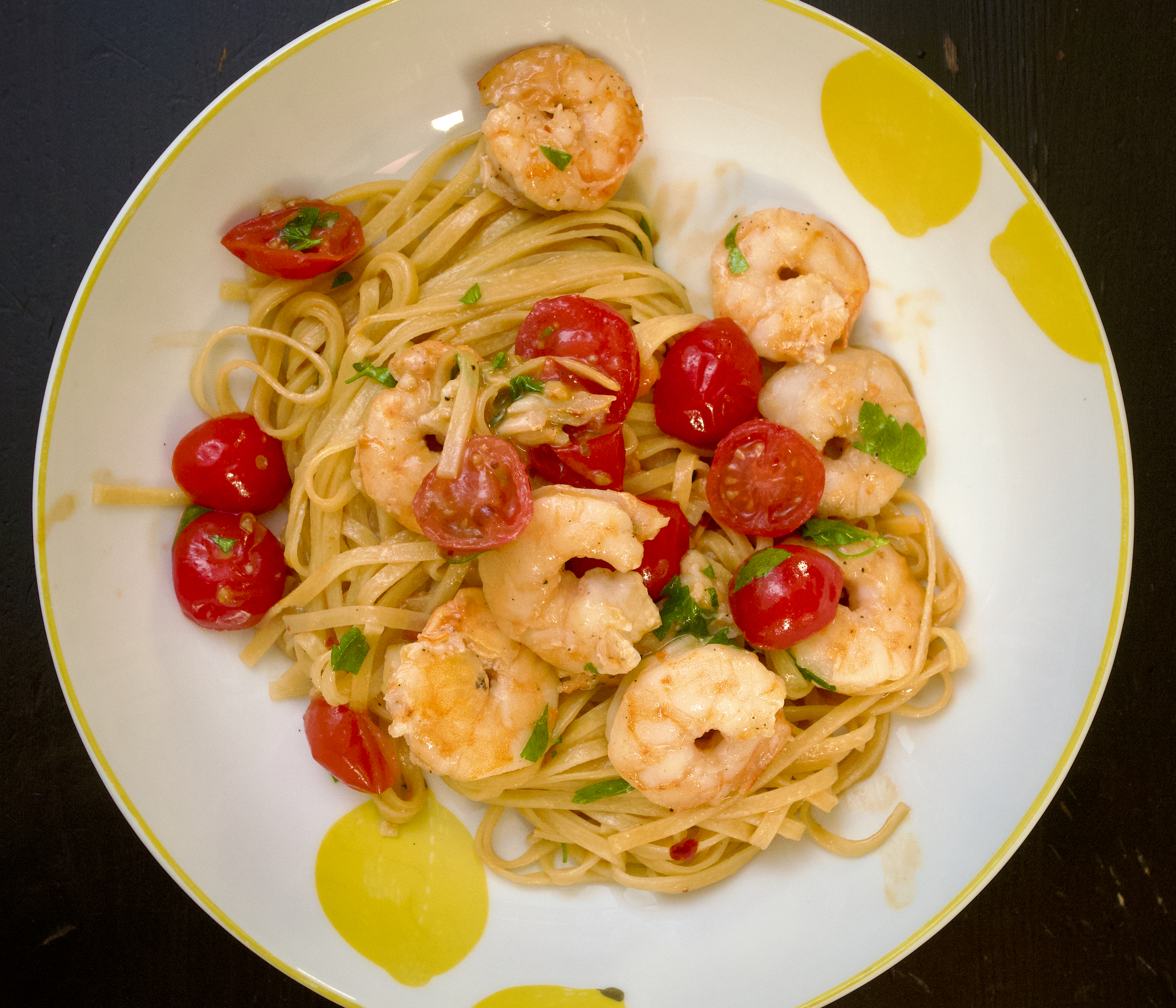
This is not your average prawn linguine and you do need to make a shellfish stock BUT we did this on a Tuesday night after work so you can too!! The photo really doesn’t do justice to how deep and complex the flavours are.
Wine Suggestion: A southern Italian white like Michele Biancardi’s Solo Fiano from Puglia where it has perfume and stone fruits bursting from the glass. A rich and round palate counter-balanced with a fresh, textural acidity completes the wine; like warm sunshine in a glass tempered by fresh breezes off the Adriatic Sea.
Prawn linguine – serves 2
350g whole prawns, you need to peel and devein them yourself and keep the shells and the heads
160g linguine
2 tbsp extra virgin olive oil
1 large clove of garlic, crushed
¼ tsp dried chilli flakes
8 cherry tomatoes, halved
1 tbsp roughly chopped parsley
FOR THE PRAWN STOCK:
1 tbsp extra virgin olive oil
1 clove of garlic, roughly chopped
1 shallot, roughly chopped
2 tinned anchovies
1 bay leaf
shells and heads from the peeled prawns (see above)
125ml white wine
375ml chicken stock
You need to start with the stock. Heat the oil in a medium saucepan over a medium-high heat and cook the garlic, shallot, anchovies and bay leaf for a few minutes, mashing the anchovies up as you go. Add the prawn heads and shells and cook, stirring, for 4 minutes.
Add the wine and turn the heat up high and simmer for a couple of minutes or until almost evaporated. Add the stock and ½ tsp salt, bring to the boil, then simmer gently for 25 minutes. Crush the prawn heads with a potato masher a couple of times as the stock simmers. Strain the stock through a fine sieve into a jug, pressing down hard on the shells to extract all the flavour. Throw away the solids and hang on to the delicious stock.
Toss the now peeled prawns with salt and black pepper. Heat 1 tbsp of the olive oil in a large, non-stick frying pan over a medium heat. Cook the prawns for about 1 minute on each side, or until opaque, then transfer to a plate.
Heat another tbsp of oil in the same frying pan and cook the garlic and chilli flakes for 15 seconds or until the garlic is just golden. Add the prawn stock and turn the heat up high. Simmer rapidly, stirring to scrape any tasty bits from the bottom of the pan, until the liquid has reduced to about 125ml. Turn off the heat and leave aside while you cook the pasta.
Bring a large pot of salty water to the boil and cook the linguine for 1 minute less than the timing suggested on the pack. When the pasta is almost cooked put the shellfish stock back over a high heat. Transfer the pasta directly from the pot of water to the stock with some tongs, it will bring some pasta cooking liquid with it. Add the cherry tomatoes and toss for a couple of minutes with two wooden spoons until the sauce coats the pasta and no longer sits in a puddle at the bottom of the pan. If it starts to clag add a little more pasta water.
Toss the prawns and parsley through the pasta and divide between two bowls.
(Original recipe from Recipetin Eats Dinner by Nagi Maehashi, Pan Macmillan, 2022.)
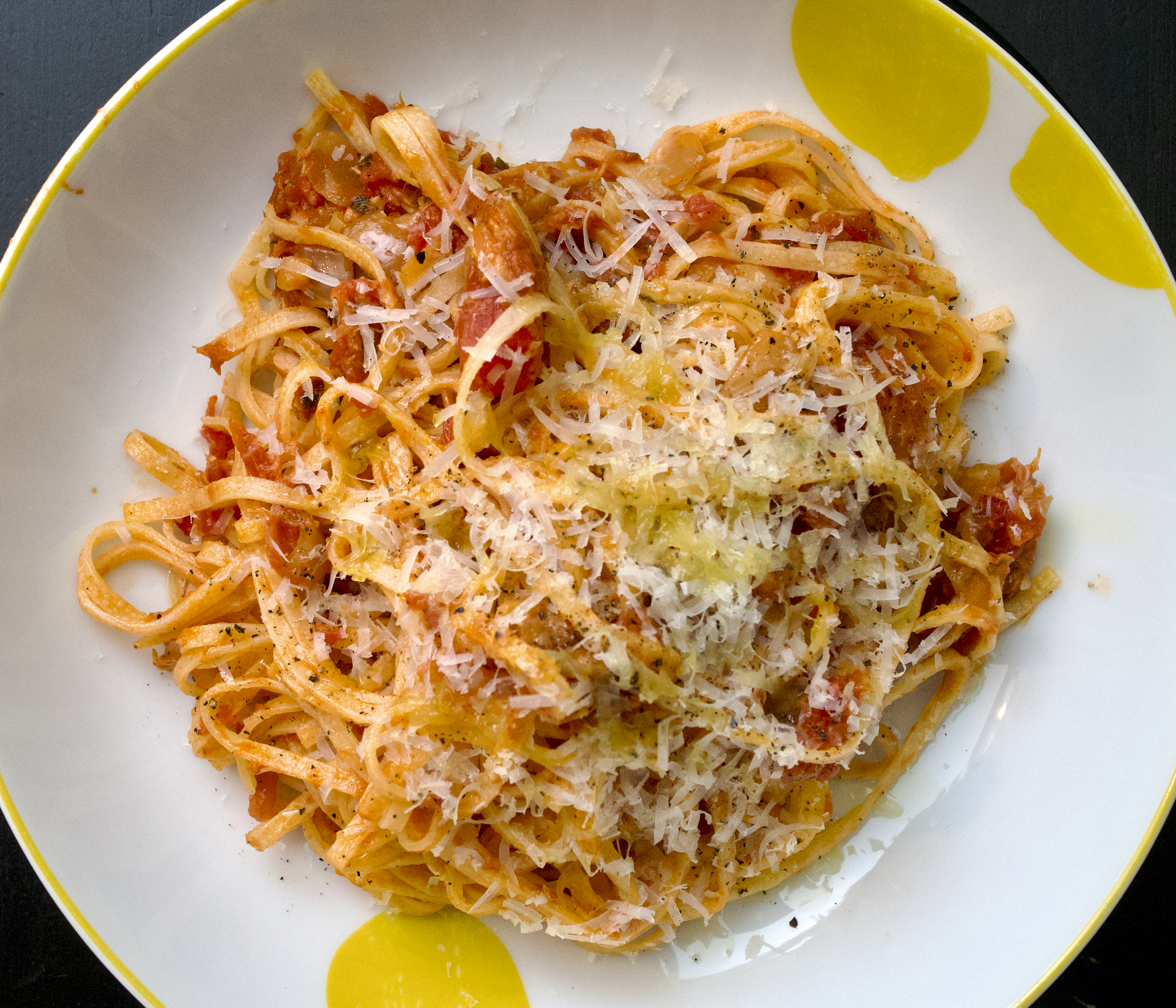
We are never without tins of tuna – Ortiz or Shines are great – and always in olive oil. This sauce takes a while but it’s easy and tastes delicious. The sauce is flavoured with a parmesan rind – you should always keep these as they freeze well and add great savoury flavours to dishes like this, a meaty ragú, or soups.
Wine Suggestion: A little left field and possibly only available when visiting the winery: Chateau du Hureau Blanc de Noirs 2022. A white made from 100% Cabernet Franc from Saumur because the usual vineyard of Chenin Blanc was hit by bad frosts, and the owner Philippe wanted some white to drink … plus he couldn’t resist having a play in the winery at the same time. Fresh but with a real texture with hints of phenolics. Hints of yellow plum, lightly floral, slightly nutty and touches of apple. It really came into it’s own with the food.
Linguine con tonno – serves 4 to 5
60ml extra virgin olive oil, plus extra to serve
1 onion, diced
3 cloves of garlic, finely chopped
1 Parmesan rind
1 tsp dried oregano
1 tbsp tomato purée
2 x 400g tins chopped tomatoes
300g tinned tuna, well drained
500g dried linguine
freshly grated Parmesan, to serve
Put the olive oil in a large pan over a medium heat. Add the onion and some salt, then allow to soften for about 5 minutes without colouring. Add the garlic, Parmesan rind and oregano. Cook for another 2 to 3 minutes, then add the tomato purée and cook for another minute.
Add the tinned tomatoes, season with more salt and bring to the boil, turn the heat down as low as it will go and cook for a couple of hours, stirring every 20 minutes or so. If the sauce starts to stick add a splash of water.
Add the tuna to the tomato sauce, then cook the linguine in lots of salty boiling water. Drain the pasta and return it to the pan. Tip in the tuna sauce and mix through. Serve drizzled with your best olive oil and sprinked with grated Parmesan and black pepper.
(Original recipe from Rick Steain at Home, BBC Books, Penguin, 2021.)
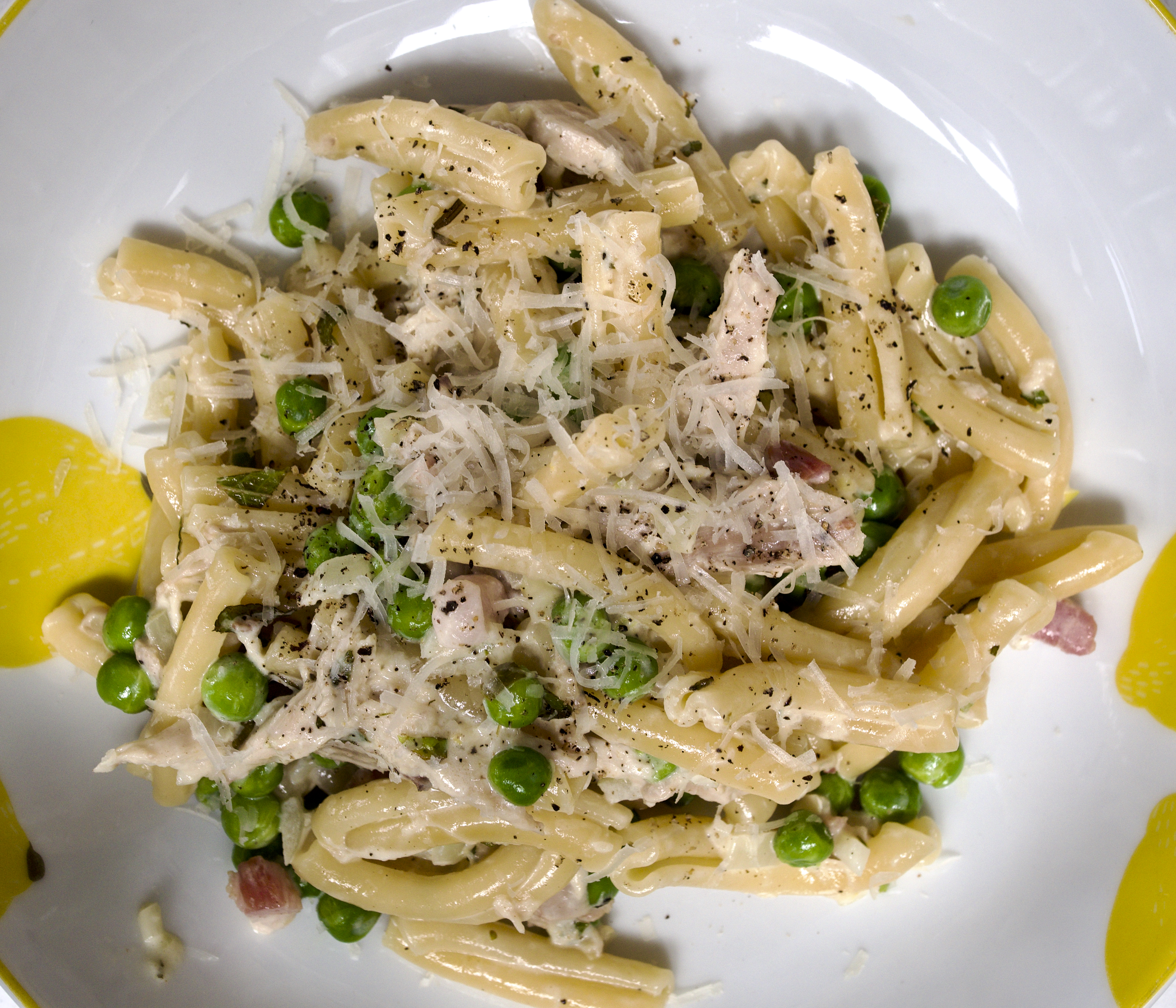
This is a great dish for some leftover roast chicken.
Wine Suggestion: This is great with a fun Chardonnay like from Domaine Gayda’s Sphere range. Serious, but light hearted and with a fresh, minerality at it’s heart this suits a creamy and summery pasta dish like this.
Casarecce with chicken, pancetta, peas & cream – serves 4
225g casarecce pasta
15g butter
1 small onion, finely chopped
70g pancetta, cubed
3 cloves of garlic, finely chopped
200g cooked chicken, torn into pieces
175g frozen peas
250ml double cream
finely grated zest of half a lemon
leaves from 6 sprigs of mint, roughly torn
freshly grated Parmesan, to serve
Bring a large pot of water to the boil and season generously with salt. Cook the pasta in the water according to the timings on the pack. Make the sauce while the pasta is cooking.
Melt the butter in a deep frying pan, then add the onion and pancetta and cook gently until softened. Add the garlic and cook for another 2 minutes, then stir in the chicken, peas, cream and lemon zest. Bring the sauce just to the boil and then turn down and add the mint. Season with salt and pepper and allow to mingle over a low heat for a minute or two.
Drain the pasta and return to the saucepan. Pour the sauce into the pasta pan and add some grated Parmesan. Stir to combine, then serve in warm pasta bowls with extra Parmesan.
(Original recipe from A Bird in the Hand by Diana Henry, Mitchel Beazley, 2015.)
A dish for when you arrive home tired from work and realise you have almost nothing in the cupboard to eat … except pasta, a lurking packet of pancetta and a block of parmesan (a staple in our most fridges).
Wine Suggestion: A simple, dry Rosé caught our fancy, to reflect the long day and store-cupboard cooking. A reliable and refreshing wine-rack staple is the Domaine Gayda Flying Solo Rosé. Made from Grenache and Cinsault in the Languedoc by Tim Ford, an old friend, this is refreshing and has a classic textural character that allows it to be drunk with food like tonight, as well as sipped and enjoyed in the sunshine on its own.
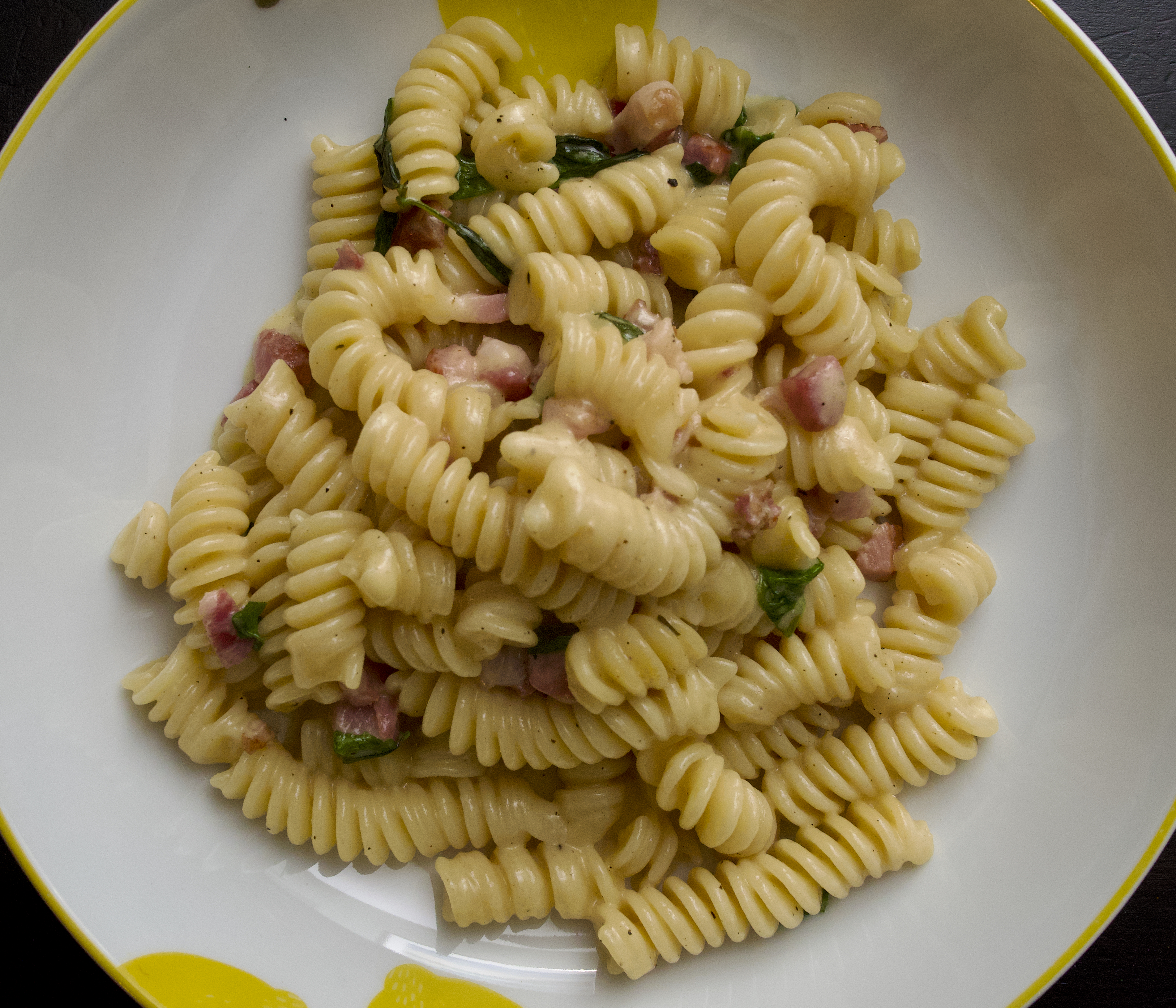
Life-saving creamy pancetta and Parmesan pasta – serves 2
77g pack of pancetta cubes (that is one half of the two pack they come in)
2tbsp olive oil
600ml chicken stock
200g fusilli pasta
75ml double cream
30g Parmesan, finely grated
a handful of basil leaves, shredded
Heat the olive oil in a deep frying pan, then add the pancetta and cook until crisp.
Add the stock and pasta, bring to a simmer, then cook until tender (start testing a little before the suggested timings on the pasta pack).
Stir in the cream and Parmean and simmer for a couple of minutes, then season really well with plenty of black peper.
Stir in the basil and serve.
(Original recipe by Janinie Ratcliffe in Olive Magazine, June 2019.)
You too can make a pasta cake like this on a Monday, trust us. Who knew it would be so easy to get cooked rigatoni to sit upright in a cake tin? The results are fun and although it will fall apart when you start serving, you can get your insta photo beforehand.
Wine Suggestion: Something fun, red and Italian like Umani Ronchi’s Rosso Conero Serrano. A blend of smooth Montepulciano and vibrant Sangiovese, this wine is fun and easy, but tied together with energy and vitality.
Torta di rigatoni – serves 4
butter, to grease the tin
4 tbsp breadcrumbs
325g rigatoni pasta
handful of basil leaves, finely chopped
250g mozzarella, cubed (buy a block of mozzarella, not buffalo)
50g grated Parmesan
FOR THE TOMATO SAUCE:
2 tbsp extra virgin olive oil
1 garlic clove, peeled and bashed
2 x 400g tins chopped tomatoes
a handful of basil leaves
Heat the oven to 180C/160C fan/gas 4.
Line the base and sides of a loose-bottomed, 20cm round cake tin with baking parchment, then butter and coat in the breadcrumbs.
Get the sauce going first. Heat the olive oil in a medium saucepan over a medium heat, then add the garlic clove and cook for about a minute. Add the chopped tomatoes, most of the basil leaves and season well with salt. Cover and simmer for 25 minutes, stirring occasionally.
Meanwhile, cook the pasta in lots of boiling salty water until al dente. Drain well, then mix with the chopped basil, half the mozzarella, some black pepper, half the tomato sauce (throw away the garlic) and half of the Parmesan. Leave to cool until the pasta is cool enough to handle.
Place the rigatoni upright in the cake tin. Pour over the remaining tomato sauce, then scatter over the rest of the mozzarella and Parmesan. Bake for 25 minutes, until golden. Leave to rest for 5 minutes before attempting to release from the tin, then scatter over a few basil leaves to serve.
(Original recipe by Gennaro Contaldo IN BBC Good Food Magazine, April 2020.)
A Nigella creation that is in no way authentic and makes no apologies. Anything with mackerel goes in this house.
Wine Suggestion: Quite an exceptional wine was chosen to match with this: Sartarelli’s Balciana. From a low-yielding vineyard Verdicchio in the Marche, this is hand harvested picking only the grapes of utmost ripeness at the very end of the season. This means the picking team goes out many times picking individual grapes and bunches that meet the required levels of ripeness. It makes quite an extraordinary dry wine that has a richness of almost a sweet wine, alongside textured layers of savoury nuttiness and salty minerality. Named best white wine in Italy many times, and we understand why. We chose this as the combinations of sweet, savoury, fresh and sour flavours in the dish need a wine with substance and depth.
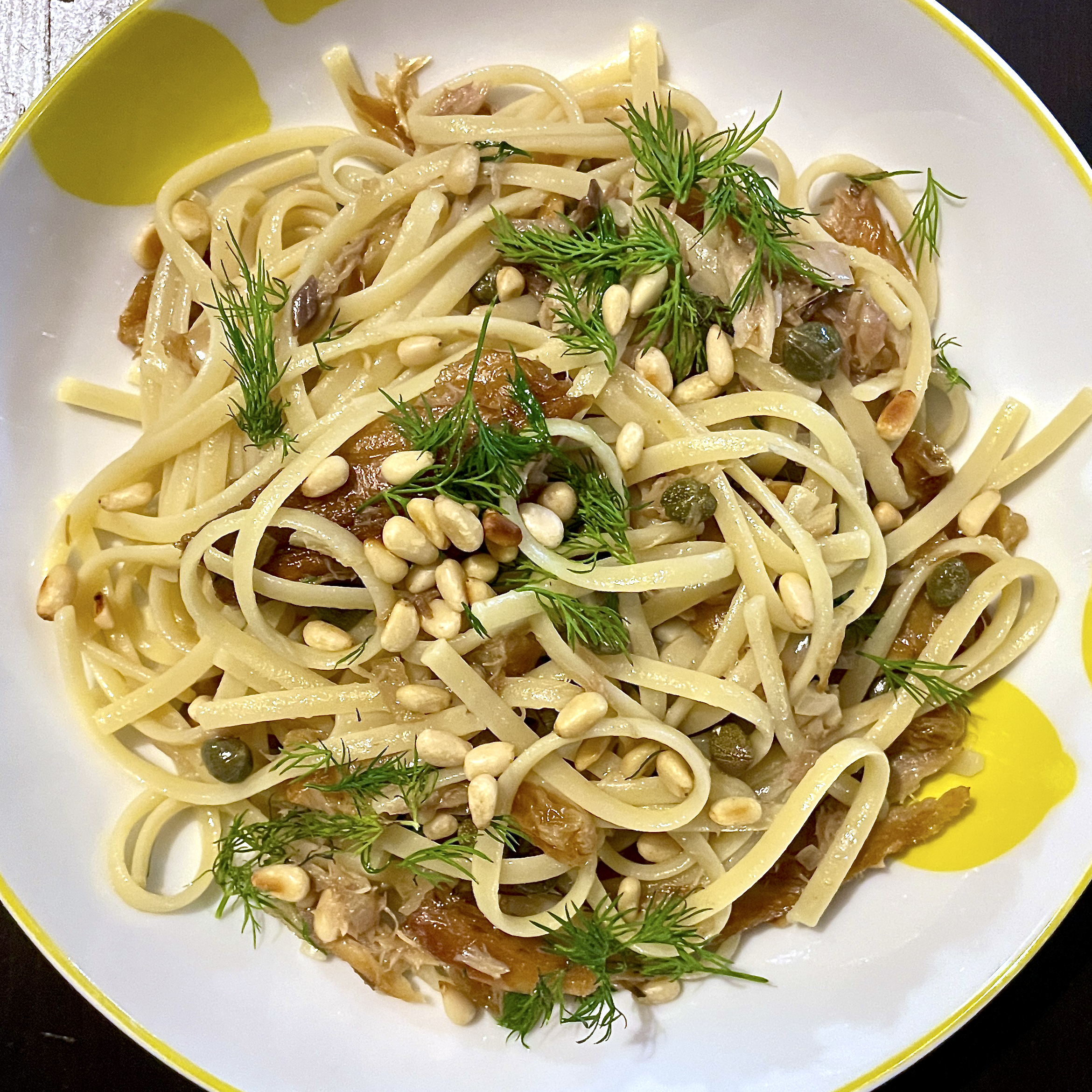
Pasta with mackerel, Marsala and pine nuts – serves 2
50g golden sultanas
200g linguine
2 tbsp olive oil
1 long shallot, finely chopped
60ml Marsala
2 smoked makerel fillets, skinned and flaked
2 tbsp drained capers
a few drops of red wine vinegar
a handful of dill, torn into fronds
25g toasted pine nuts
Bring a large pan of water to the boil for the pasta. Put the sultanas into a small bowl and cover with hot water from a boiled kettle.
Add lots of salt to the boiling water, then cook the linguine until al dente.
Warm the olive oil in a frying pan and cook the shallot for a couple of minutes until softened.
Add the Marsala and let it bubble, then add the mackerel, sultanas (squeeze the water out of them with your hands first), the capers and a few drops of vinegar. Remove from the heat once the mackerel is warm. There should be barely any liquid left.
Reserve a cupful of pasta cooking water before draining. Return the pasta to the pan, then tip in the mackerel, half the dill and half the pine nuts and a tbsp of pasta water. Toss gently to combine, then taste and add another few drops of vinegar if you like.
Divide between warm bowls and finish with the remaining dill and pine nuts.
(Original recipe from Nigellissima, Chatto & Windus, 2012.)
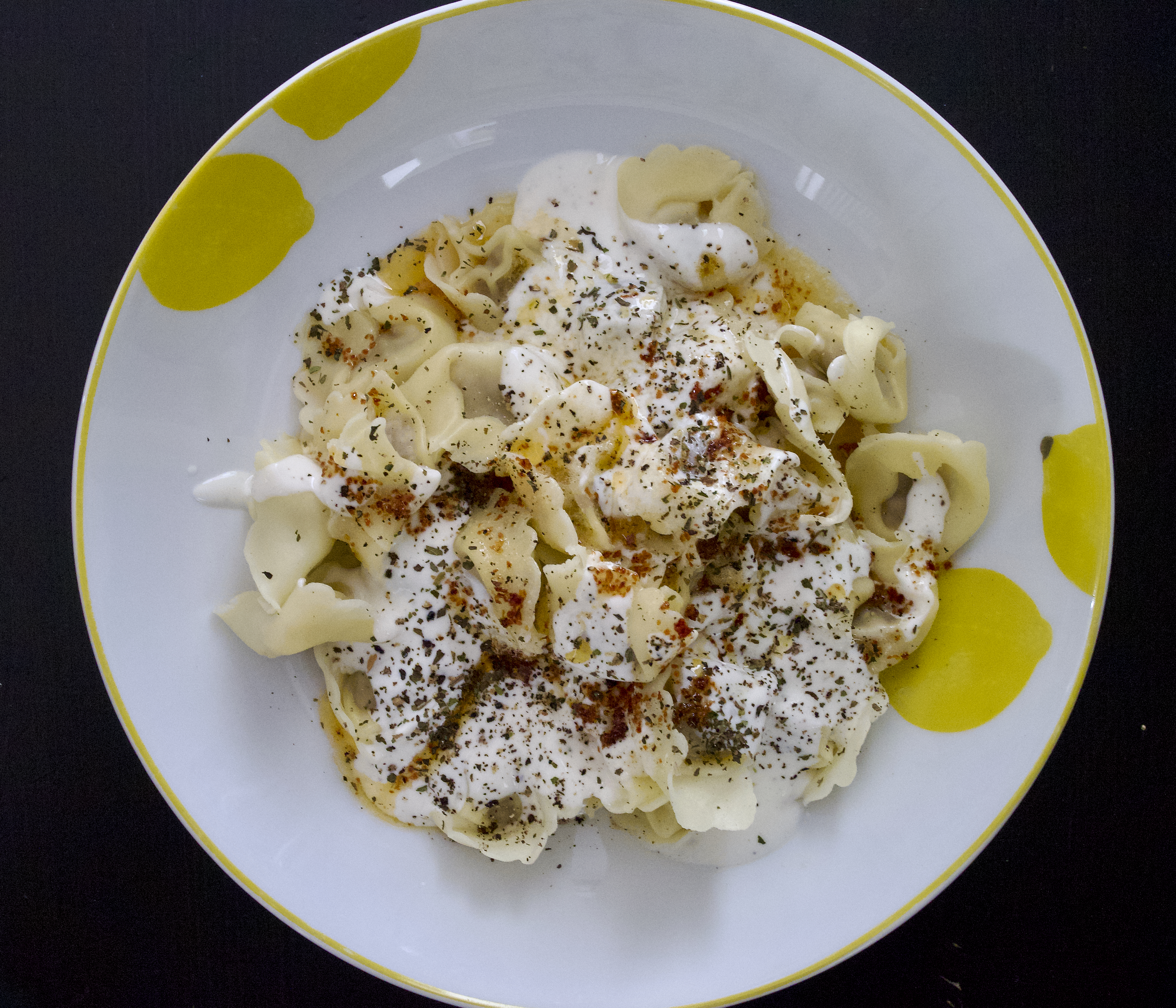
This is a cheat recipe using a packet of shop-bought stuffed pasta. It makes a delicious lunch!
Lazy mantí – serves 2
300g pack of shop-bought stuffed pasta
50g butter
1 tsp pul biber chilli flakes
150g natural yoghurt
1 scant tsp dried mint
Cook the pasta in lots of salty boiling water according to the timings on the pack, then drain into a sieve.
Return the pasta pan to the heat and add the butter. When the butter has melted, stir in the pul biber, then remove from the heat.
Season the yoghurt with salt and pepper and loosen with a little water – you’re looking for double cream consistency.
Divide the pasta between warm bowls and pour over the yoghurt, then drizzle over the pul biber butter, sprinkle with dried mint and season generously with black pepper.
(Original recipe from Persiana Everyday by Sabrina Ghayour, Aster, 2022.)
You need to take your time over this one but it’s an excellent thing to do on a rainy day.
Wine Suggestion: A bright, youthful, vibrant red Italian red came to mind immediately for this. We didn’t have anything to hand from the Sorrento/Naples area so crossed over to the Marches for Umani Ronchi’s Rosso Conero Serrano. A delightful blend of Montepulciano and Sangiovese it stepped in admirably with an elegant red-fruited core and fine tannins.
Cannelloni all sorrentina – serves 4
First you need to make a batch of fresh egg pasta. If you have never done this before a youtube video will be helpful.
400g 00 flour
4 eggs
Make a mountain of flour on a large wooden board. Make a crater in the centre and break in the eggs.
Use a fork to break the egg yolks and gently whisk before starting to incorporate the flour by knocking it into the eggs. When you have added enough flour that the eggs will no longer run away, you can start using your hands and continue to mix, bring the flour and eggs together into a soft scraggy ball.
Knead the pasta until the dough starts to soften and smooth out – at least 5 minutes. If after the first few minutes the ball is still dry and flaky, flick just a few drops of water onto the board and knead them into the dough. You may need to do this a couple times, but don’t add too much, keep it to a couple of drops each time.
Once the dough is smooth, firm but pliable, leave it to rest, covered with a cloth or cling film for a at least 30 minutes.
Clamp a pasta machine onto a suitable table and put to the widest setting. Divide the pasta dough into 4, take a quarter and put the other 3 back under the cloth. Flatten the dough into a patty and put it through the rollers. Fold the strip of dough like an envelope and pass it through again, evelope again and pass again. It will be the size of a small book.
Set the machine at two and pass the dough through, but don’t fold this time. Do the same with the third setting, and so on until you have rolled it through all the settings and have a long strip, you can cut this to make it more manageable. Dust with some flour if it feels sticky.
Repeat this method with the other lumps of pasta. Cut the pasta into 12 sheets, each 20 x 10cm.
FOR THE SAUCE:
6 tbsp olive oil
2 cloves of garlic
a pinch of chilli flakes
2 x 400g tins plum tomatoes
a few fresh basil leaves
FOR THE FILLING:
300g ricotta, drained
2 eggs
200g mozzarella, drained overnight and diced
3 heaped tbsp chopped flat-leaf parsley
60g Parmesan, grated, plus extra for the top
a few fresh basil leaves
grated nutmeg
First make the sauce. Warm the olive oil, garlic and chilli in a large, deep frying pan. When the garlic is fragrant, add the tomatoes, basil and a pinch of salt. Break the tomatoes up with a wooden spoon and allow to simmer for 15 minutes.
To make the filling, mash the ricotta in a large bowl, then beat in the eggs. Add the mozzarella, parsley and Parmesan and season with salt, pepper and nutmeg to taste.
Bring a large pan of salty water to the boil and prepare a large bowl of cold water. Drop a few pasta sheets into the boiling water, leave for 1 minutes, then lift out and into the cold water for 20 seconds, then lay on clean tea towels.
To roll the cannelloni, put 2 spoons of the filling at the top of the longer edge of each pasta sheet and roll closed.
Spread a little tomato sauce into the bottom of a large baking dish, arrange the cannelloni on top, then sprinkle with grated Parmesan and a few basil leaves, then pour over the rest of the sauce.
It helps to rest the dish now for at least 2 hours or even overnight.
Preheat the oven to 200C and bake for 30 minutes.
Leave the dish to rest for 30 minutes before serving with a green salad.
(Original recipe from An A-Z of Pasta by Rachel Roddy, Penguin:Fig Tree, 2021.)
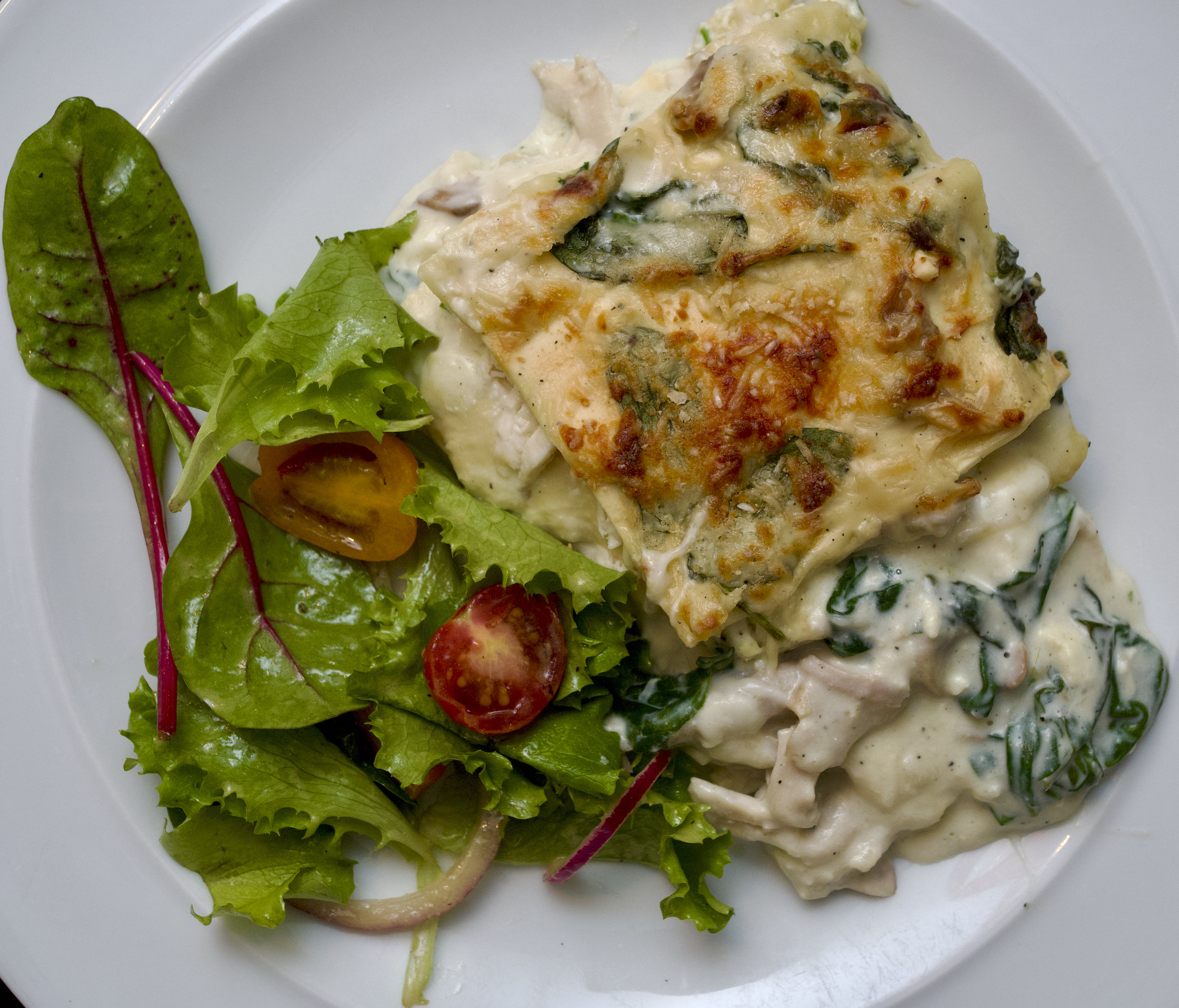
Make this with your roast chicken leftovers. It will generously serve 6 people and is very rich so you will only need a green salad on the side. Make sure you season all the components separately.
Wine Suggestion: We are big fans of Chardonnay, especially judiciously oaked and handled, no matter where they are grown. Tonight a hidden gem from Burgundy, the Patrick Javillier Bourgogne Côte d’Or Cuvée des Forgets which is grown on clay very close to Meursault. Quite vigorous and toasty with yellow and red apples poking through, plus layers of nuts. Generous and fleshy with a fresh, vibrant core that helps balance the richness of the dish.
Chicken and spinach lasagne – serves 6 to 8
40g butter
2 large cloves of garlic, finely chopped
100g button mushrooms, finely sliced
3 tbsp plain flour
600ml milk
100g cream cheese
50g grated Parmesan
150g baby spinach
1 large egg
250g ricotta cheese
1 tbsp chopped flat-leaf parsley
no-cook lasagne sheets, about 8
400g cooked chicken, cut into bite-sized pieces
200g grated mozzarella cheese
Melt the butter in a saucepan, then add the garlic and mushrooms. Season and cook gently for a few minutes or until the mushrooms have softened.
Stir in the flour and cook for another minute, then gradually add the milk. Season generously, bring to a simmer, then reduce the heat and cook for a few minutes, until thickened. Stir in the cream cheese and half of the Parmesan, then remove from the heat and stir in the spinach until wilted.
Whisk the egg, ricotta and parsley together in a bowl and season generously.
Spoon a quarter of the sauce into a large, deep, rectangular dish. Cover with lasagne sheets. Add a third of the ricotta mix, then add a third of the chicken, a third of the mozzarella and a small sprinkling of Parmesan. Repeat these layers twice more, then finish with a layer of lasagne sheets and the last of the sauce and remaining Parmesan.
Bake for 25 minutes, until bubbling and browned. Leave to settle before cutting into squares and serving with salad.
(Original recipe from More Midweek Meals by Neven Maguire, Gill Books, 2022.)
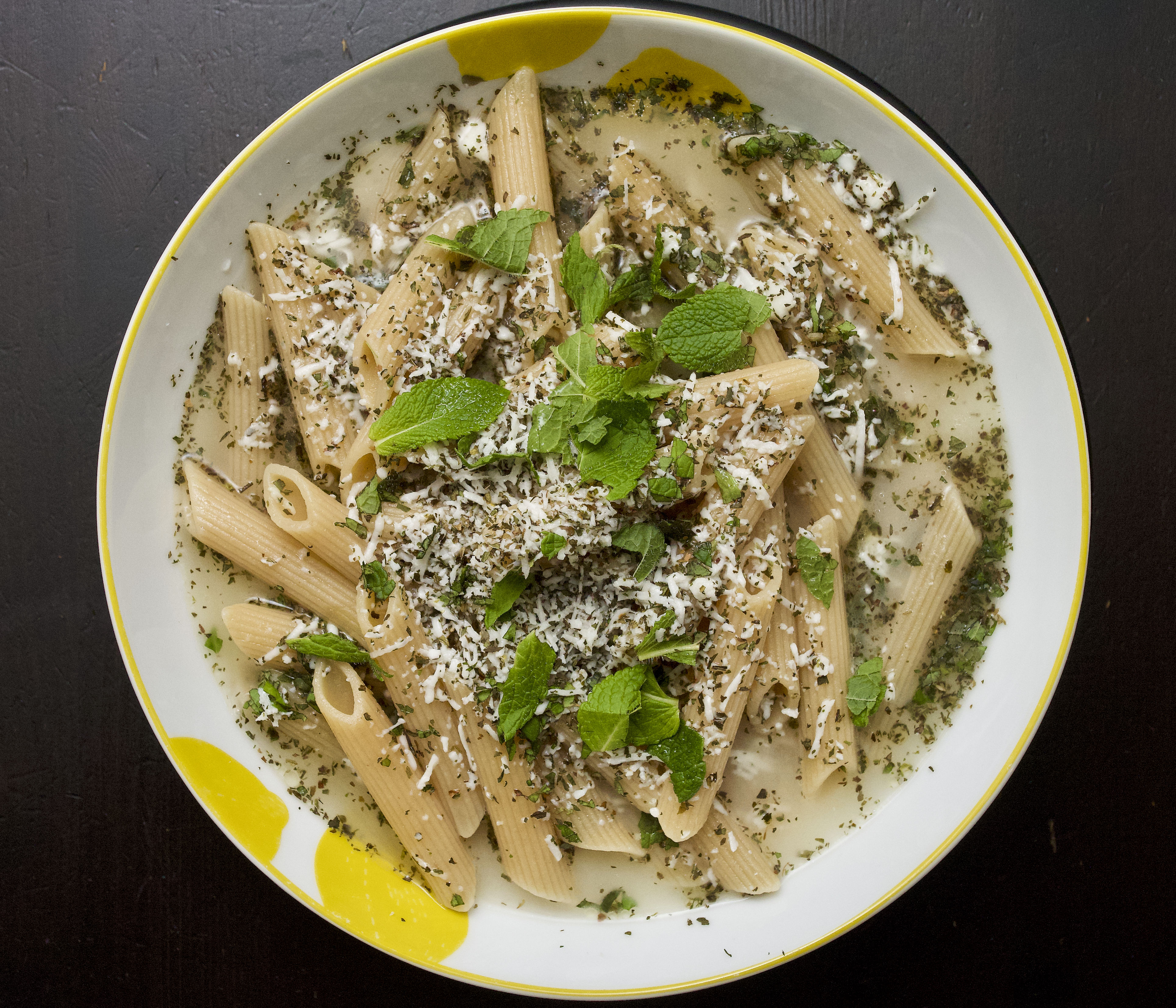
We heard about this dish on The Food Programme on BBC Radio 4 as described, lovingly, by Leyla Kazim on a program about Cyprus and halloumi/hellim. We couldn’t wait to try it. Constructed from the description by Leyla and trawling the internet for quantities. Delicious comfort food and a new way with halloumi (for us at least).
Turkish macaroni – serves 4
200g halloumi
2 tbsp dried mint
400g wholewheat pasta, we used penne
2 litres good chicken stock
1-2 lemons
a large handful of fresh mint leaves, chopped
Finely grate the halloumi cheese and mix with the dried mint.
Cook the pasta in the chicken stock until al dente.
Put some of the cheese and mint mixture in the bottom of four bowls. Ladle some pasta and stock over each portion, then sprinkle with another layer of cheese and mint. Add another layer of pasta and finish with a final layer of cheese. Sprinkle over the fresh mint and squeeze some lemon juice over each to taste.
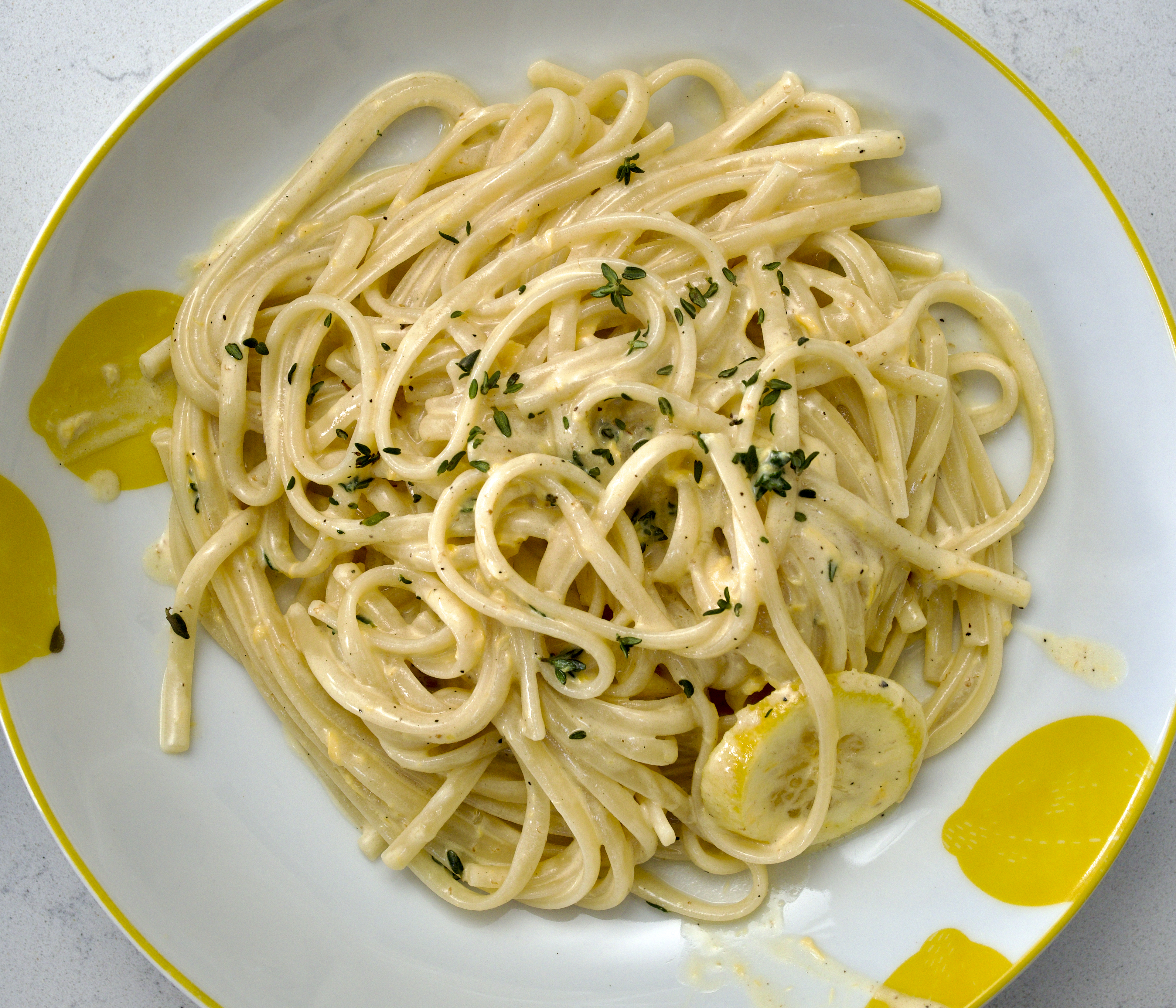
We love a lemon spaghetti and it’s our go to dish when there’s nothing for lunch. This one has cream because we had some lurking in the fridge from another dish.
Spaghetti with creamy lemon sauce – serves 4
2 lemons
4 tbsp extra virgin olive oil
220ml single cream
1 egg yolk
350g spaghetti
a small bunch of thyme
Bring a large pot of water to the boil.
Meanwhile, finely zest the lemons and put into a deep frying pan, then add the olive oil and gently fry over a medium heat for a few minutes.
Pour the cream and egg yolk into the pan and mix well, then reduce the heat and cook gently for 5 to 10 minutes, stirring occasionally.
Add plenty of salt to the pasta water, then add the spaghetti and cook according to the pack timings.
Finely slice a third of the lemon.
Drain the pasta in a colandar but keep a little of the cooking water. Squeeze the juice of the remaining lemons into the sauce and season to taste with salt and black pepper, then tip in the pasta. Add a splash of the pasta cooking water, then add the lemon slices and toss to coat. Sprinkle generously with thyme leaves and serve.
(Original recipe from A Table for Friends by Skye McAlpine, Bloomsbury, 2020.)






 Jono & Jules do food & wine