Feeds:
Posts
Comments

Archive for the ‘Uncategorized’ Category

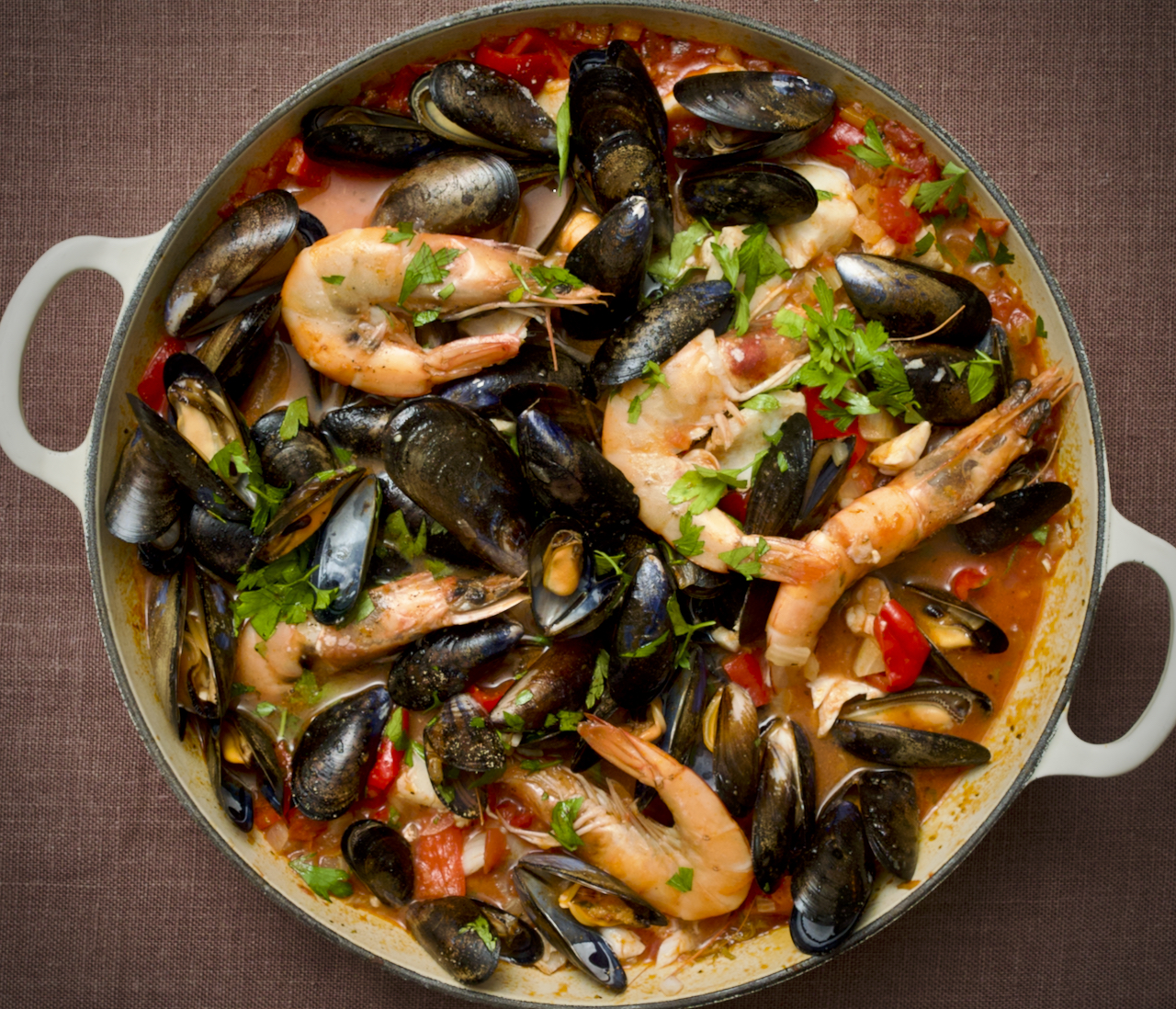
This rich, tomato-based seafood stew is a true taste of San Francisco and packed with fresh shellfish. Cioppino is the perfect Saturday night dinner to share with friends, a bit messy but delicious.

You will need to cook it while everyone is there, but as long as your ingredients are prepped ahead of time, it’s all very straightforward. Make sure you’ve got plenty of bread on hand to soak up all the broth.

Wine Suggestion: A fresh, mineral-driven white is the perfect match for this seafood-rich stew. Something vibrant and clean, without the weight of oak. We didn’t have a Californian wine that quite suited so opened an old favourite, the Céline & Frédéric Chablis. It’s full of white stone fruit, crisp apple and zesty citrus with the distinct limestone chalkiness of Chablis.

Cioppino – serves 4 to 6

  • 2 tbsp olive oil
  • 1 large onion, finely chopped
  • 1 garlic clove, chopped
  • a small bulb of fennel, finely chopped
  • 2 Romano peppers, chopped
  • 250ml white wine, plus an extra splash for the mussels
  • 400g tin of finely chopped tomatoes
  • 1 tbsp tomato purée
  • 300ml very light chicken stock
  • 1 tsp dried oregano
  • 2 bay leaves
  • 750g mussels, cleaned
  • 300g firm white fish, we used cod, cut into chunks
  • 12 raw shell-on prawns
  • 200g scallops, halved if large
  • a good handful of parsley, chopped
  • sourdough baguette and butter, to serve

Heat the oil in a a large wide pan. Add the onion, garlic and fennel with a good pinch of salt and cook gently for 10 minutes until softened but not coloured. Add the peppers and cook for another 5 minutes until softened. Add the wine and simmer for 5 minutes. Add the tomatoes, tomato purée, stock and herbs, then cover and simmer for 20 minutes.

Meanwhile, heat a large pan, then tip in the mussels with the extra splash of white wine. Cover and shake the pan for a few minutes until the mussels have opened. Scoop the mussels out and set aside, keep the cooking liquid.

Add the fish, prawns and scallops to the stew, cover and simmer gently for 3-4 minutes or until the fish is cooked and the prawns are pink. Add the mussels with the reserved cooking liquid (hold back any grit) and cook for another minute to heat through. Taste and season if needed.

Stir in the parsley and serve in bowls with plenty of bread and butter.

(Original recipe by Janine Ratcliffe in Olive Magazine, August 2025.)

Read Full Post »

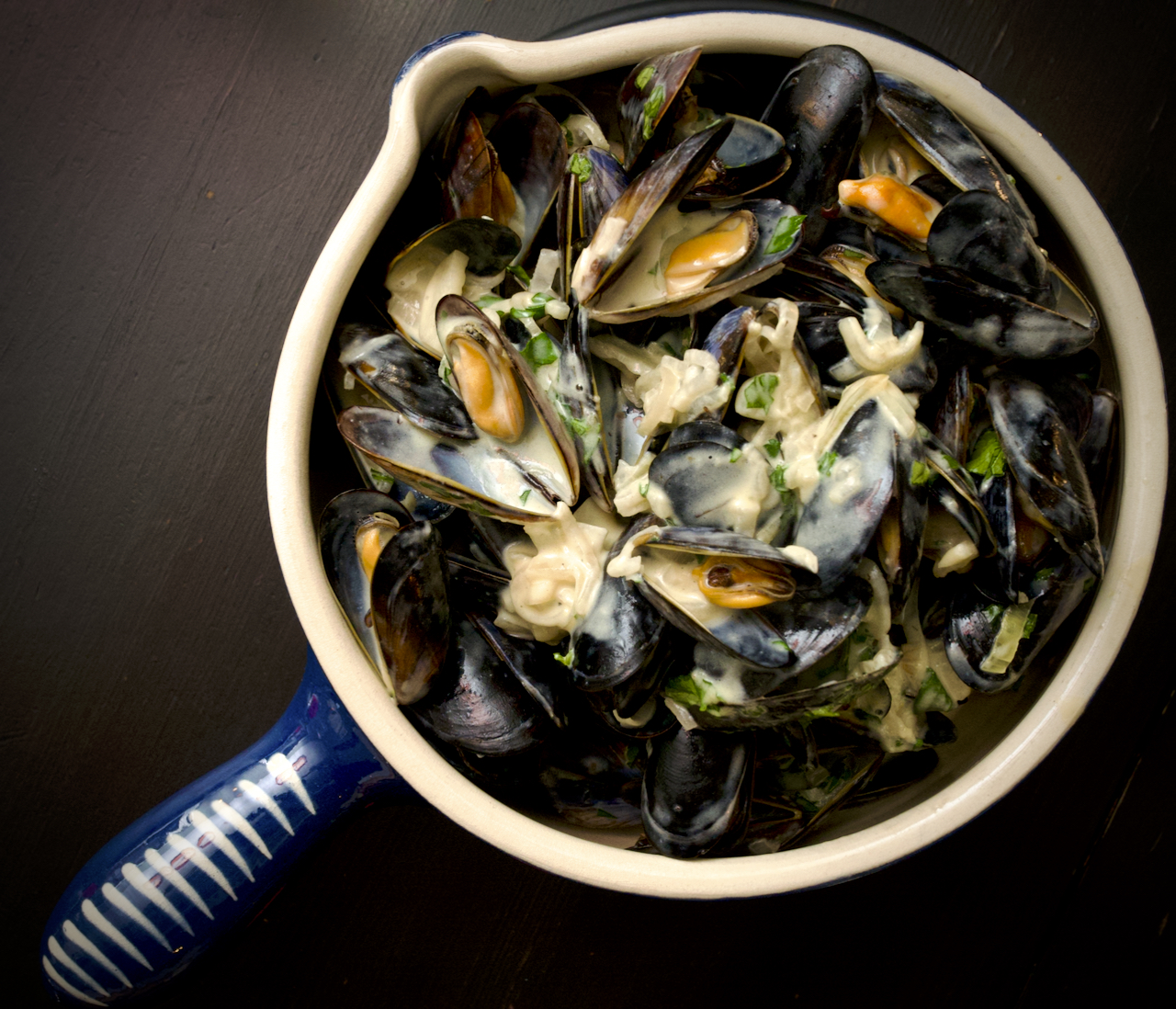
Inspired by a recent trip to Paris by Jules where she had to take shelter in a random place to get out of the rain and they served a delicious moules à la crème. A little bit more effort than Moules Marinière but very much worth it.

Wine Suggestion: Overlooked within Muscadet are certain vineyards and wines that stand out as having something extraordinary to them. Les Clos du Montys Muscadet by Jérémie Huchet  is grown on a very special spot with unique soils that give this wine an extra fleshiness and body compared to other Muscadet which enables the wine to stand up to the extra level of richness of the Crème.

Moules à la crème – serves 2 or 4 as a starter

  • 1kg mussels (or more if you like), cleaned and debearded (chuck any that won’t close when you give them a sharp tap)
  • 20g butter
  • 3 shallots, thinly sliced
  • 4 cloves of garlic, thinly sliced
  • 2 bay leaves and a few sprigs of thyme tied together to make a bouquet garni
  • 300ml white wine
  • 200ml crème fraîche
  • 2 egg yolks
  • parsley, finely chopped

Warm the buttter in a large saucepan over a gentle heat. Add the shallot and garlic and cook gently for 5 minutes. Add the white wine, bouquet garni and some black pepper. Turn the heat up and simmer for 10 minutes.

Add the mussels to the pan, stir and clamp on a tight fitting lid. Cook for 2 minutes, then stir, replace the lid and cook for another 2 minutes. The mussels are ready when they have all opened – chuck any that stay closed.

Remove the pan from the heat and scoop out the mussels with a slotted spoon into a bowl.

Return the pan to the heat and boil the stock for 5 minutes. Put a fine sieve over a clean bowl and strain the stock into the bowl. Rinse the saucepan, then pour in the strained stock. Heat to a gentle simmer.

Whisk the crème fraîche and egg yolks together in a bowl. Whisk in a couple of ladles of the stock and then pour into the simmer stock, stirring continuously.

Keep gently warming the sauce and stirring until the sauce thickens slightly, then return the mussels to the pan and warm through briefly. Add the parsley and serve in warm bowls with lots of crusty bread.

(Original recipe from Lickedspoon with Debora Robertson, Substack, 2 Feb 2025.)

Read Full Post »

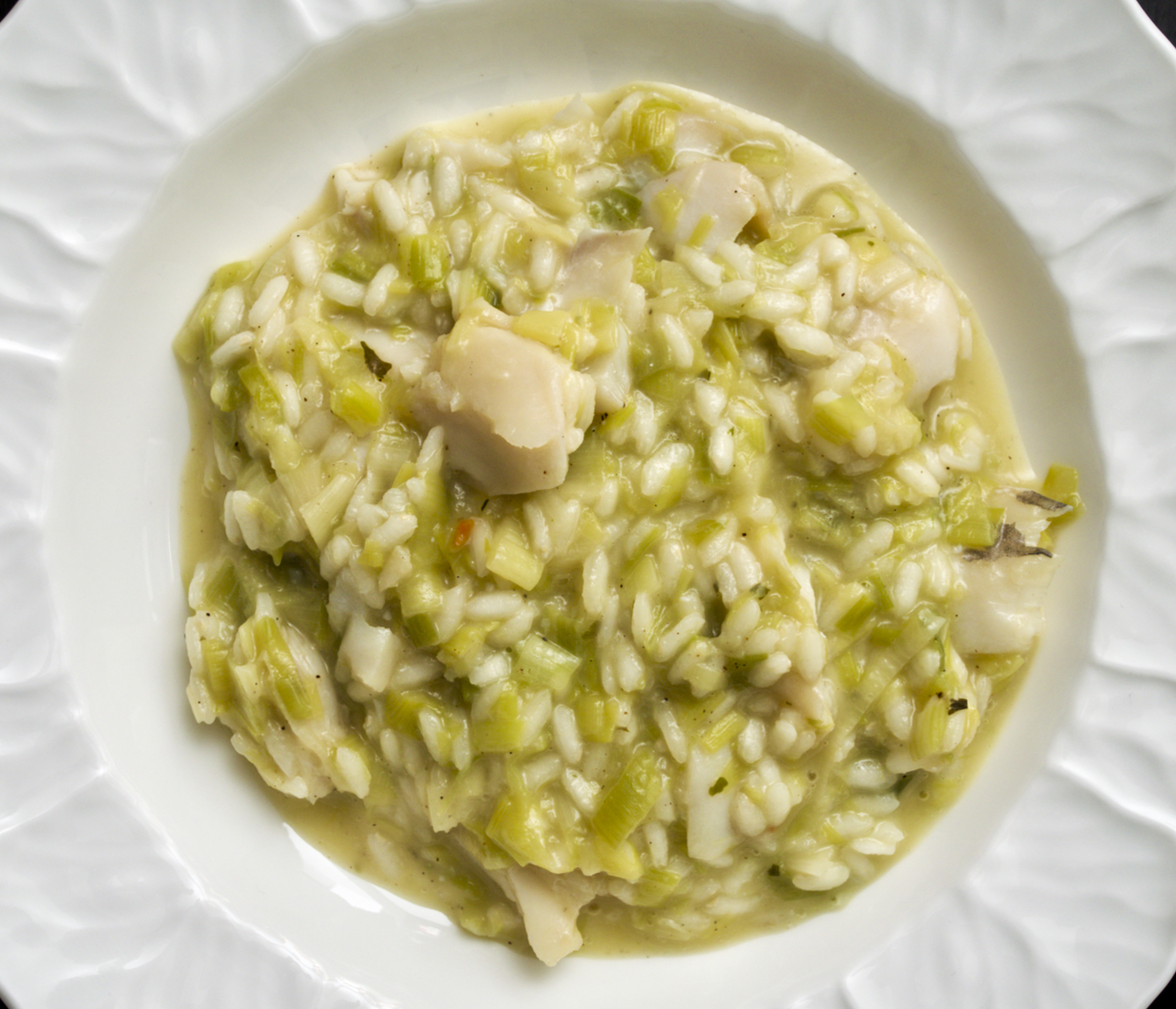
A delicious fish risotto which also includes Parmesan cheese. We’re firm disbelievers of the “no cheese with fish” rule!

Wine Suggestion: we gravitated to something Spanish for this dish, the Bodegas Castro Martin Albariño, which has the body and texture required to stand up to the richness and intense flavours the dish presents with the the umami pepperiness complimenting the salty/savoury smoked fish.

Smoked haddock & leek risotto – serves 4

  • 50g butter
  • 4 medium leeks, finely sliced
  • 1.25 litres light chicken stock
  • 450g smoked haddock
  • 300g risotto rice
  • 75g Parmesan cheese, finely grated

Melt the butter in a saucepan, add the leeks and and gently cook for 15 minutes.

Meanwhile, bring the stock to a gentle simmer in a separate pan.

Put the fish in another pan and enough of the hot stock to cover. Poach for 5 minutes, then remove the skin and discard. Leave the cooked fish in the stock off the heat.

Add the rice to the leeks and stir until coated in the butter. Start adding the stock, a ladle at a time, stirring constantly. Add another ladle when the previous one has been completely absorbed. Keep going for about 20 minutes, then start tasting the rice – you want it to be soft with just a slight bite in the middle. Use the stock in the fish for the last addition of liquid.

Gently break the fish into chunks and stir into the risotto at the last minute, along with 2 tbsp of the Parmesan.

Check the seasoning (you probably won’t need salt) and add plenty of freshly ground black pepper.

Serve immediately with the rest of the Parmesan for sprinkling over.

(Original recipe from Rosast Figs, Sugar Snow by Diana Henry, Aster*, 2023.)

Read Full Post »

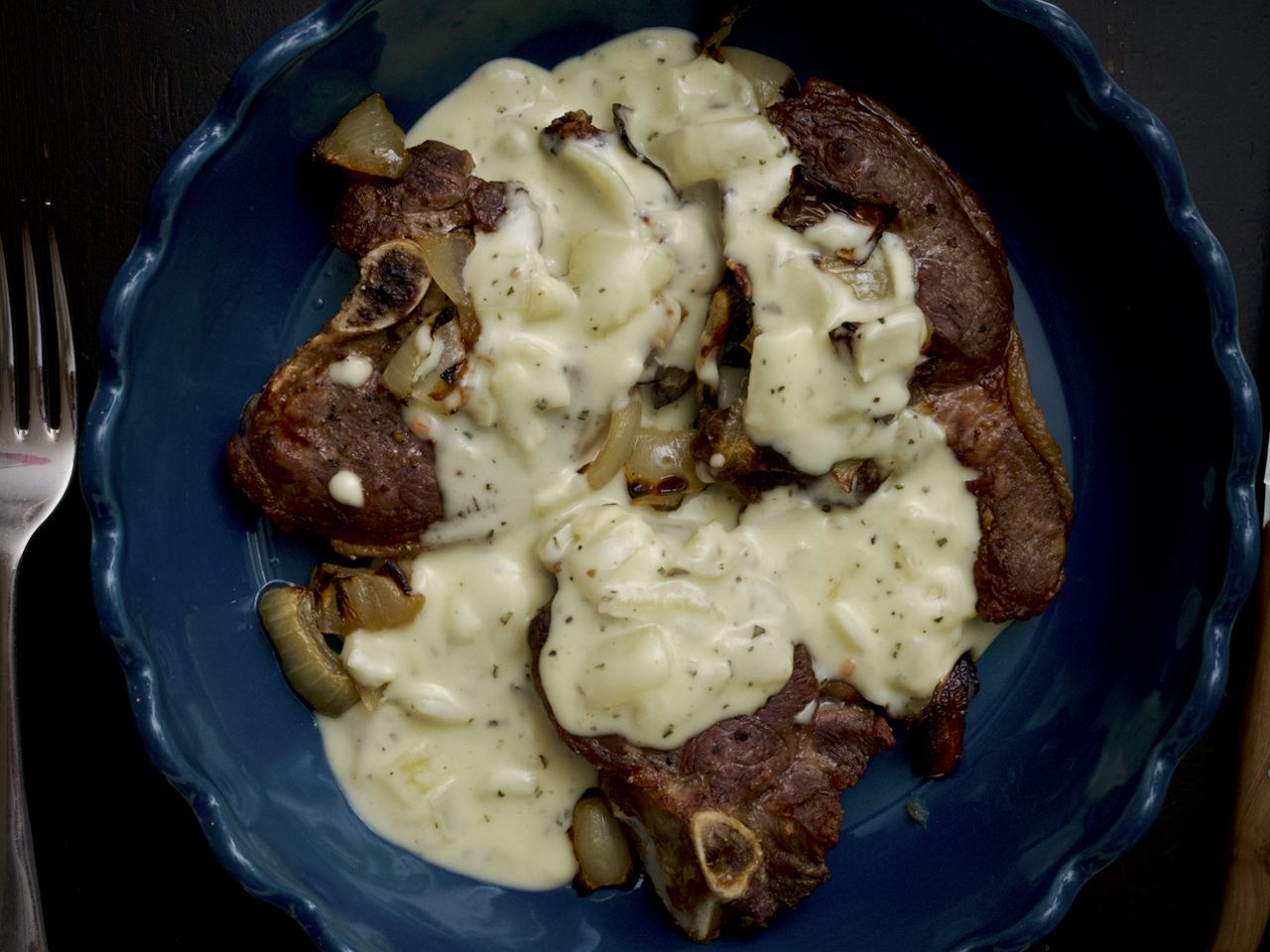
Quite old-fashioned but homely and tasty, perfect as the weather turns a bit colder.

Wine suggestion: the Quinta de Chocapalha Tinto, which is a blend of four classic Portuguese grapes: Touriga Nacional, Tinta Roriz, Touriga Franca and Castelão hit a satisfying mark here. A wine of depth, body, roundness and judicious tannins this hit the mark for the same reasons the dish did.

Baked lamb chops with a creamy rosemary sauce – serves 4

  • 8 lamb loin chops
  • 1 small onion, peeled and chopped

For the sauce:

  • 1 large onion, peeled and finely chopped
  • 1 rounded tbsp rosemary leaves
  • 25g butter
  • 25g plain flour
  • 175ml milk
  • 175ml veg stock
  • 2 tbsp double cream

Heat the oven to 200C/180C fan.

Place the lamb chops in a shallow roasting tin and arrange the onion around them.

Season with salt and pepper and bake on the top shelf of the oven for about 45 minutes or until the fat is crisp.

Meanwhile, melt the butter in a small saucepan and sweat the onions over a very gentle heat for 5 minutes. Bruise the rosemary leaves with a pestle and mortar, then chop them very finely and add them to the onion. Continue to cook gently for another 15 minutes, but don’t let the onions colour too much. Add the flour and stir with a wooden spoon until smooth, then gradually add the milk followed by the stock, stirring constantly. Season with salt and peper and allow to simmer very gently for 2 minutes, then remove from the heat and liquidise half and combine with the rest along with the cream. Check the seasoning and pour into a warm serving jug – cover the surface with cling film to prevent a skin forming.

Serve the chops with the sauce poured over.

(Original recipe from Delia Online)

Read Full Post »

Sausages & Lentils

We recommend a trip to your local Polski shop for some smoked sausages, plus you’ll be able to find lots of other goodies while you’re there. Our local one has some very friendly and helpful staff willing to help navigate the differences in sausages… of which they have many.

Wine Suggestion: This dish works well with Spanish reds, especially Tempranillo based ones and the one we enjoyed tonight was the Cantos de Valpiedra from Rioja which we find particlaurly refined and elegant with a gentle undercurrent of warm spices.

Sausages & lentils – serves 6

  • 300g dried Puy lentils
  • 3 tbsp olive oil
  • 600g cooked Polish smoked sausages e.g. Kielbasa
  • 1 large onion, finely chopped
  • 2 celery sticks, finely chopped
  • 1 green pepper, deseeded and cut into 1cm dice
  • 3 garlic cloves, crushed
  • 1 tbsp thyme leaves, roughly chopped
  • 1 bay leaf
  • 400g Swiss chard, stalks cut into 1cm dice, leaves roughly shredded
  • 1 tbsp tomato purée
  • 2 tsp ground cumin
  • 1 litre chicken stock
  • 20g parsley
  • 50g shop-bought crispy onions, to serve (optional)

FOR THE MUSTARD CRÈME FRAÎCHE:

  • 75g crème fraîche
  • 1½  tsp Dijon mustard
  • 1½  tsp wholegrain mustard

Rinse the lentils well, then cover with lots of cold water and set aside.

Mix all the ingredients together for the mustard crème fraîche and put it in the fridge until needed.

Heat ½ tbsp of olive oil in a large casserole, over a medium-high heat. Add the sausages and cook until brown on all sides, about 5 minutes. Transfer to a plate.

Add another 2½ tbsp of oil to the pan and add the onion, celery and green pepper. Cook for 12-15 minutes or until the vegetables are turning golden. Add the garlic, thyme, bay leaf and chard stalks and cook for another few minutes. Add the tomato purée and cumin and cook for a further minute.

Drain the lentils and add them to the pan, along with the stock, 1½ tsp of salt and a good grind of black pepper. Bring to the boil, then turn the heat to low and cook for 30 minutes, covered, until the lentils are cooked through. Use a stick blender to blitz one side of the pot for maximum 30 seconds, to break some of the lentils up. Add the chard leaves and stir them in.

Add the sausages to the pan and simmer for 10 minutes, or until the leaves have wilted and the sausages are warmed through. Stir in the parsley and divide between warm bowls. Spoon the crème fraîche on top and the crispy onions if you have them.

(Original recipe from Ottolenghi Comfort by Yotam Ottolenghi, Helen Goh, Verena Lochmuller & Tara Wigley, Ebury Press, 2024.)

Read Full Post »

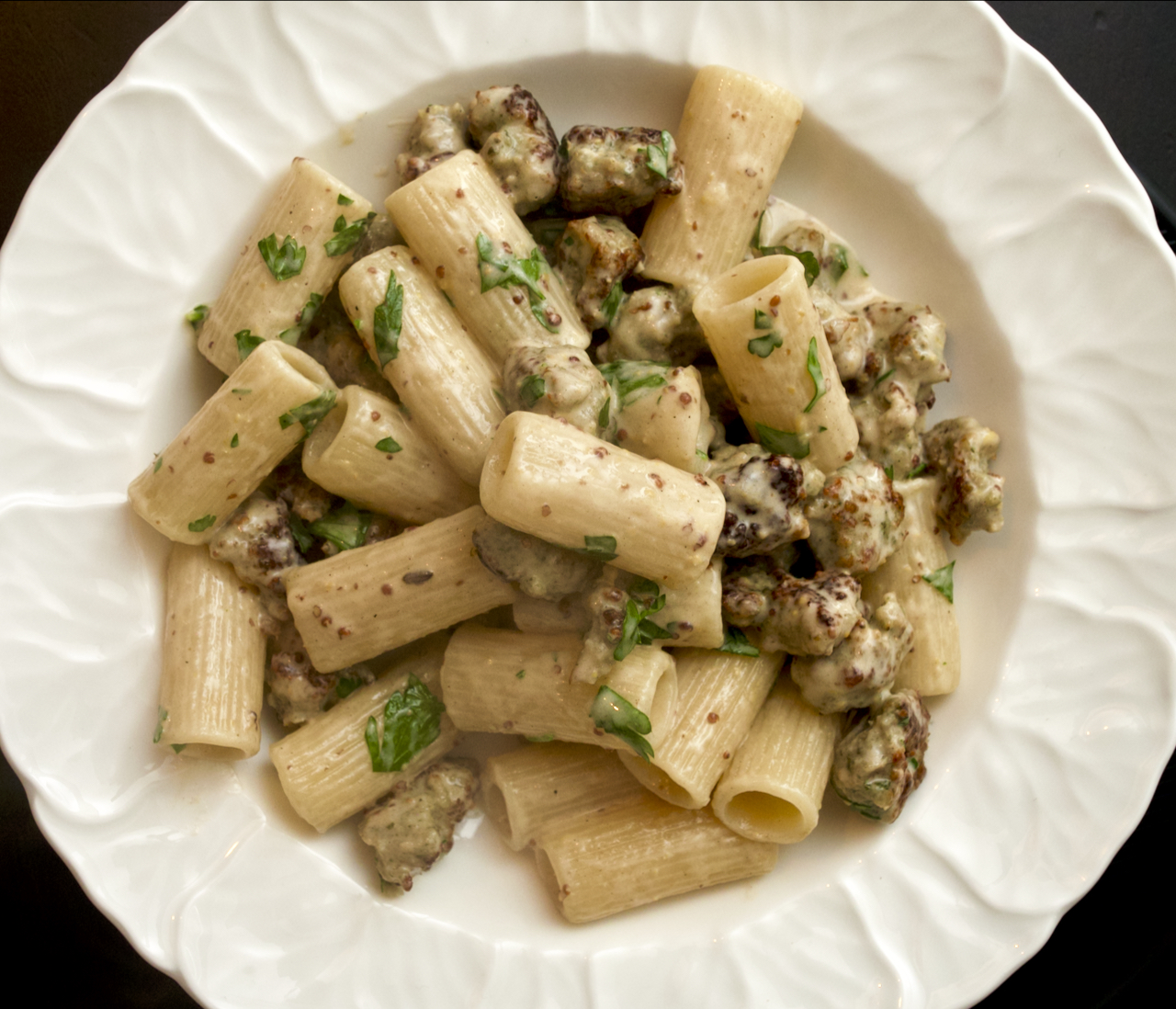
A delicious pasta dish for when you’re short on time.

Wine Suggestion: Despite this being a very Italian inspired dish our match was the t’Air d’Oc Syrah made by Domaine Gayda in the Languedoc. Coming from the foothills of the Pyrenees this has a wonderful balance of black fruits and a fresh peppery twist which allowed the wine to hold its own with the richness of the dish and then cut through and balance the lemony creaminess.

Rigatoni with sausage, lemon & mustard – serves 4

  • 300g rigatoni
  • 450g herby pork sausages
  • olive oil
  • 1 tsp fennel seeds
  • 200ml white wine
  • 2 tbsp wholegrain mustard
  • ½ lemon, zested
  • 150g crème fraîche
  • a small handful of parsley, chopped

Cook the pasta then drain but save a little pasta water.

Remove the skins from the sausages, break the meat into little pieces and cook in 1 tbsp of oil in a non-stick frying pan. Fry until golden and crisp, then add the fennel seeds and cook for a minute.

Pour in the wine and let it bubble up, then stir in the mustard, lemon zest and crème fraîche. Simmer until the sauce is the consistency of single cream, then toss with the pasta, a tbsp or so of pasta cooking water and the parsley.

(Original recipe by Janine Ratcliffe in Olive Magazine, July 2014.)

Read Full Post »

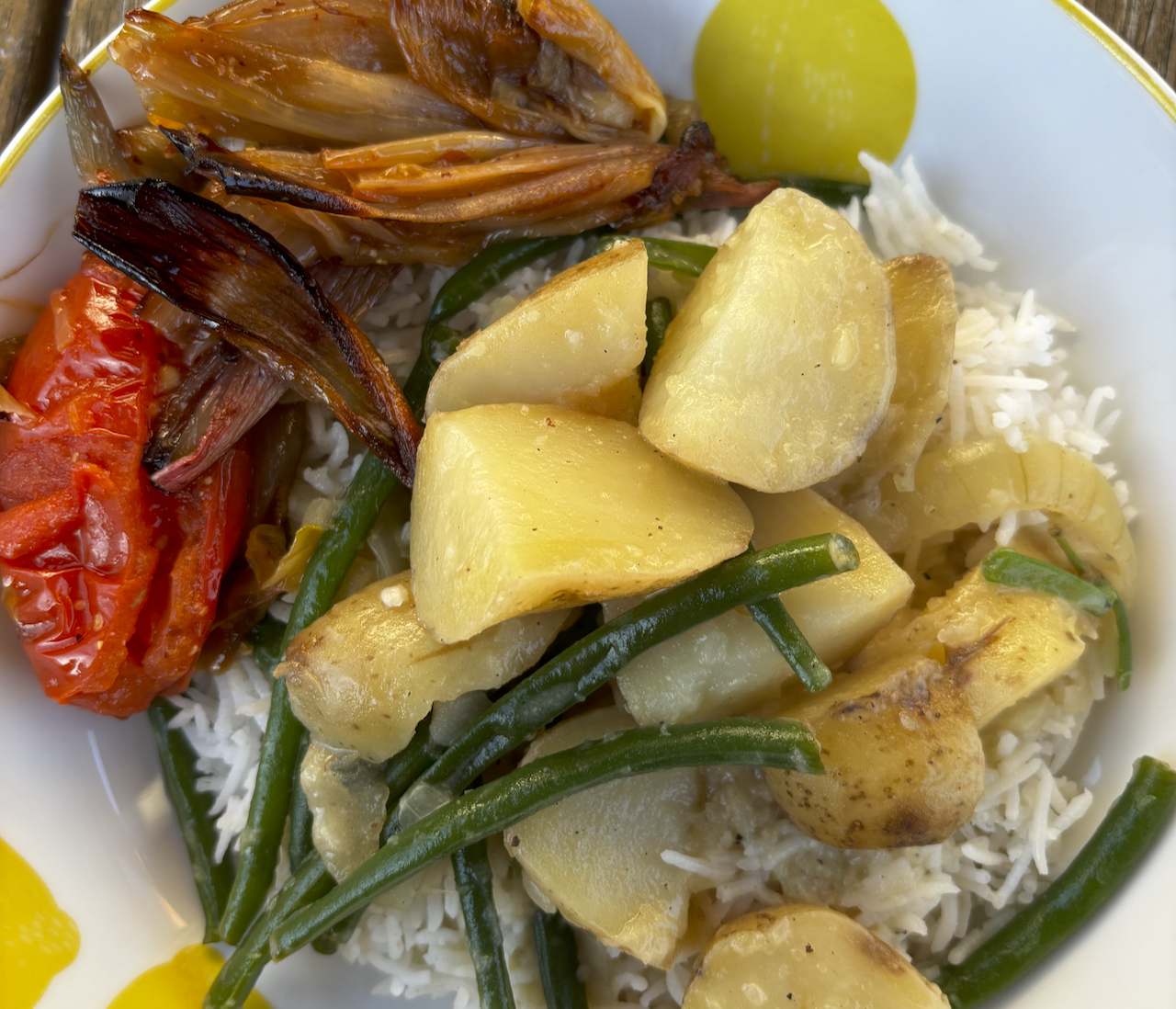
A gently spiced curry that reaches new heights when served with tamarind shallots. We’ll be making it again.

Wine Suggestion: We think this goes really well with a slightly honeyed, just off-dry Chenin Blanc like the Domaine Aubuisieres Vouvray Silex. With a touch of residual sugar this is rounded and smooth. And with the tart tamarind and sweet shallots it’s a joy.

New potato & green bean istoo with tamarind shallots – serves 4

  • 2 tbsp rapeseed oil
  • 10 fresh curry leaves (we buy them in the Asia market and freeze them)
  • 4cm cinnamon stick, broken in two
  • 1 medium onion, sliced
  • 2cm fresh ginger, peeled and finely grated
  • 4 cloves of garlic, crushed
  • 1 green finger chilli, slit
  • 650g baby new potatoes, quartered
  • 1 tsp each of salt and freshly ground black pepper
  • 1 x 400ml tin of coconut milk
  • 250g green beans, trimmed
  • cooked basmati rice, to serve

FORT THE TAMARIND SHALLOTS:

  • 800g banana shallots
  • 400g vine tomatoes
  • 1 tsp cumin seeds
  • ½ tsp black mustard seeds
  • 5 tbsp rapeseed oil
  • ¾ tsp salt
  • 2 tsp tamarind paste
  • 8 fresh curry leaves
  • 1 green finger chilli, slit

Heat the oil for the istoo over a medium heat in a large casserole dish. Once hot, add the curry leaves, cinnamon stick and onion. Cook for 8-10 mintues or until the onion is very soft but not coloured. Stir in the ginger, garlic and chilli and cook for another 2 minutes.

Add the potatoes, salt and pepper, then stir in the coconut milk. Fill the empty can with 100ml of water and add to the casserole. The potatoes need to be just covered so add a little more water if you need. Bring to the boil over a medium heat, then turn down and simmer for 10 minutes.

Add the green beans, then cover and simmer until the beans and potatoes are tender – about 5-6 minutes.

FOR THE TAMARIND SHALLOTS:

Preheat the oven to 180C fan/200C/gas 6 and line two large baking trays with foil.

Top and tail the shallots, then cut them in half lengthways and peel off the skin. Put the shallots onto one of the two lined trays, breaking them up a little as you go – they should be in a single layer. Halve the tomatoes and place these on the other tray.

Grind the cumin and mustard seeds together in a pestle and mortar to a coarse powder. Add the oil and salt, then pour over the shallots and tomatoes, mixing with your hands to coat the shallots.

Bake for 25 minutes, turning the trays halfway, then remove from the oven and tip the tomatoes onto the shallot tray and add the tamarind, curry leaves and chilli. Carefully mix with a wooden spoon, then bake for another 5-8 minutes, until they are starting to char here and there. Transfer to a bowl and serve with the istoo and cooked basmati rice.

(Original recipe from East by Meera Sodha, Penguin: Random House, 2019.)

Read Full Post »

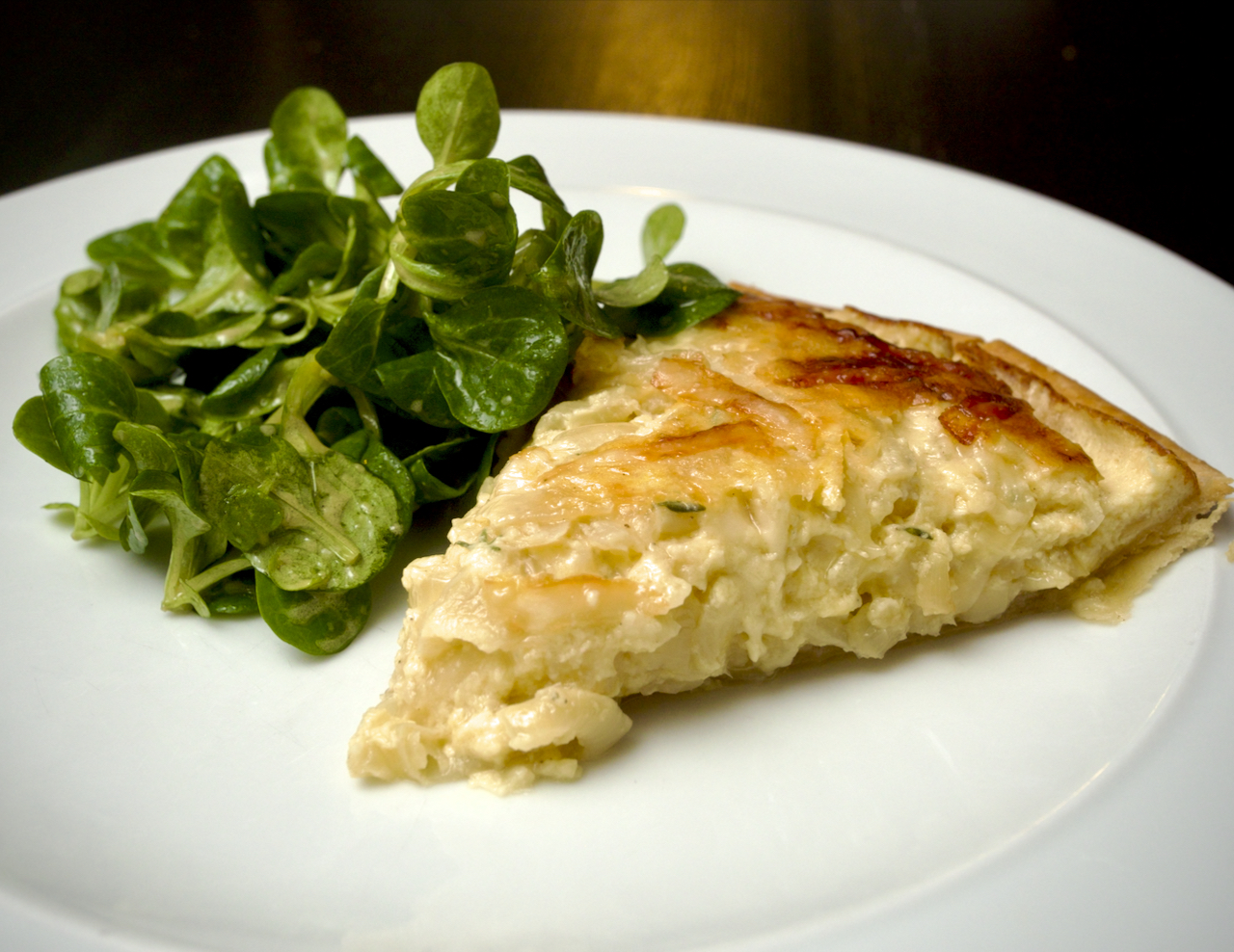
Our new year’s resolution is to make more tarts and conquer our pastry fear which is largely due to lack of practice. We’ve started with this tart filled with melting onions and cheese. Serve with a green salad.

Wine Suggestion: we paired this with a wine that opitimises a balance between freshness, richness, minerailty and fruit: Soalheiro’s Alvarinho. Fresh and elegant with tropical fruit flavours cut with a minerally saltiness balances the cheese. Plus the sweetness to the slowly cooked onions complements the richly layered fruits in the wine.

Cheese & Onion Tart – serves 6

  • a sheet of short-crust pastry (we were so enthusiastic that we made our own but really no need)
  • 1 egg, beaten

FOR THE FILLING:

  • 5 large brown onions
  • 50g butter
  • a small glass of white wine
  • a few sprigs of thyme, leaves picked
  • 120g cheese, the original recipe suggests Comté (we used a mix of Comté, Cheddar & Gruyère), coarsely grated
  • 150ml full-cream milk
  • 3 eggs

Thinly slice the onions and add to a pan with the butter, seasoning well with salt. Cover with a lid and cook slowly for 30 minutes, stirring regularly, until sweet and very tender. It’s find to let them caramelise a little but don’t let them burn. If there is a lot of liquid in the pan, remove the lid and allow this to bubble off. Add the wine, allow to cook off, then turn the heat off and allow to cool.

Lightly flour a cold surface and roll the pastry out to 3mm thick. Lift into a 25cm loose-bottom tart tin and use a little piece of dough to press the pastry into the tin and leave an overhang around the sides. Prick the base with a fork and chill in the freezer for 20 minutes.

Preheat the oven to 170C fan.

Line the pastry with baking parchment and fill with baking beans or rice. Put the tin onto a baking tray and bake for 15-20 minutes or until the pastry is firm. Remove the beans and paper, brush with egg and return to the oven for another 10 minutes, until golden. Trim off any excess pastry with a knife.

Put 100g of the cheese into a bowl with the milk, cream, eggs and thyme and mix together. Season well, then add the onions and mix again. Pour most of the mixture into the pastry case but dont fill all the way to the top. Make sure the onion is evenly spread, then place into the oven. Carefully pour in the remaining mixture, making sure it doesnt overflow. Sprinkle with the reserved cheese and bake for 30 minutes or until the top is caramelised and the middle has set. Leave to cool for 15 minutes before serving.

(Original recipe from The Farm Table by Julius Roberts, Ebury Press, 2023.)

Read Full Post »

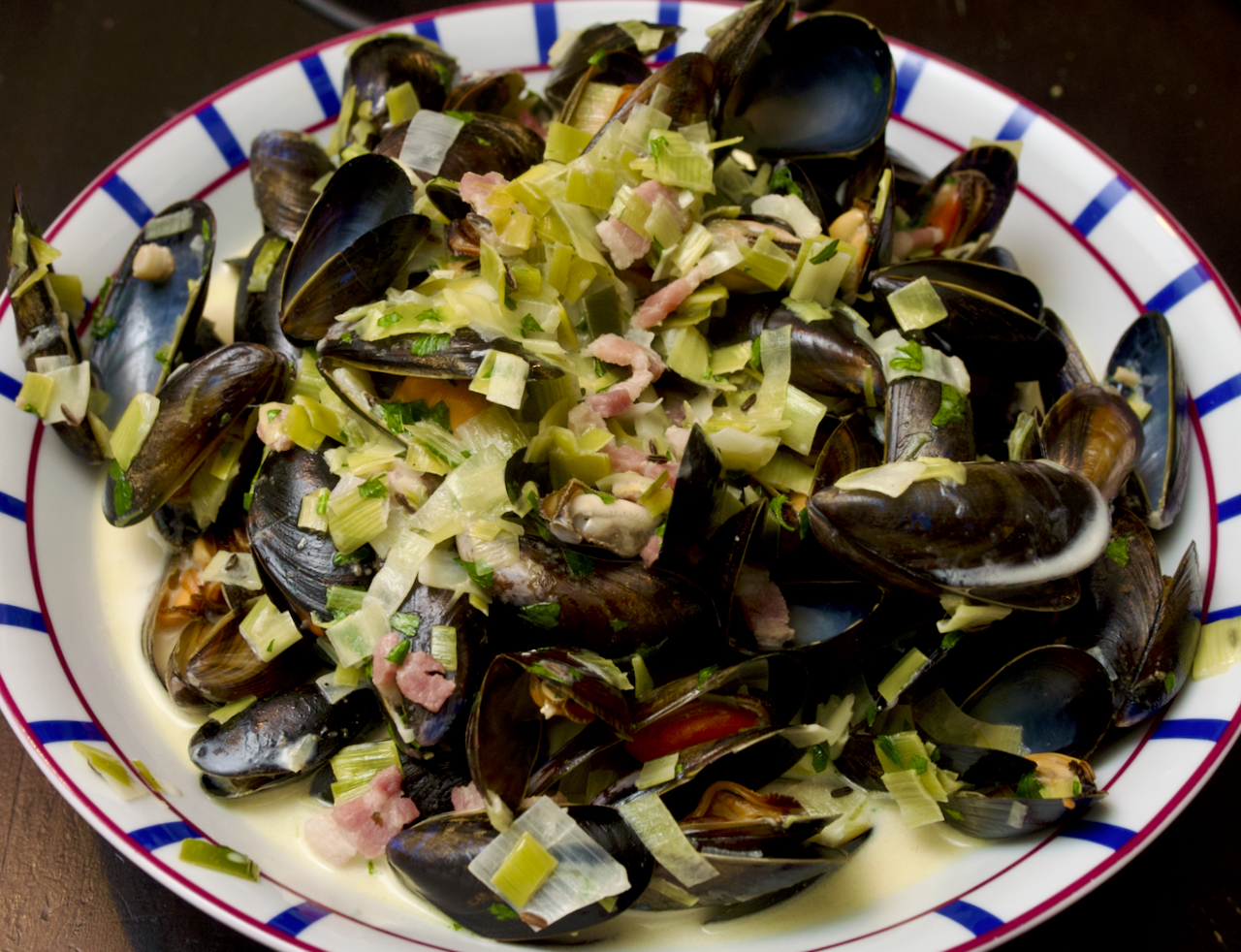
Mussels are our favourite Friday night treat and they taste amazing with this creamy leek and cider sauce. You will need a top quality baguette on the side.

Wine suggestion: we’re just loving Domaine de la Chauviniere’s Muscadet Sevre et Maine sur lie at the moment and think that Jeremie Huchet just has his vineyards in such balance that he delivers delicious wines year after year. Minerally, salty, fresh and with a rounded appley fruit that just works (or of course you could just buy some extra cider).

Mussels with leeks, bacon & cider – serves 2 to 3

  • 200g smoked streaky bacon
  • 1 tbsp olive oil
  • 3 cloves of garlic, thinly sliced
  • 1 tsp fennel seeds
  • 400g leeks, finely chopped
  • 1kg mussels, cleaned
  • a large glass of dry cider
  • 150ml double cream
  • a handful of finely chopped flat-leaf parsley
  • baguette, to serve

Warm a little olive oil in a large saucepan and fry the bacon until the fat renders, then add the garlic and fennel seeds and cook gently for a few minutes. Add the leeks and season well with salt, then let the leeks cook until they are very soft and tender but not taking on any colour. Add a splash of water if they start to catch.

Turn the heat up and add the cider to the leeks to create plenty of steam. Add the mussels and cover with a lid. After two minutes, shake the pan well or give the mussels a toss with a spoon, then cook for another minute or two – they are ready as soon as all the shells are open (chuck any that don’t open).

Pour in the cream, add the parsley and season with lots of black pepper and a little more salt, though taste first. Give everything a final toss, then serve in big bowls with baguette and a glass of cold white wine or cider.

(Original recipe from The Farm Table by Julius Roberts, Ebury Press, 2023.)

Read Full Post »

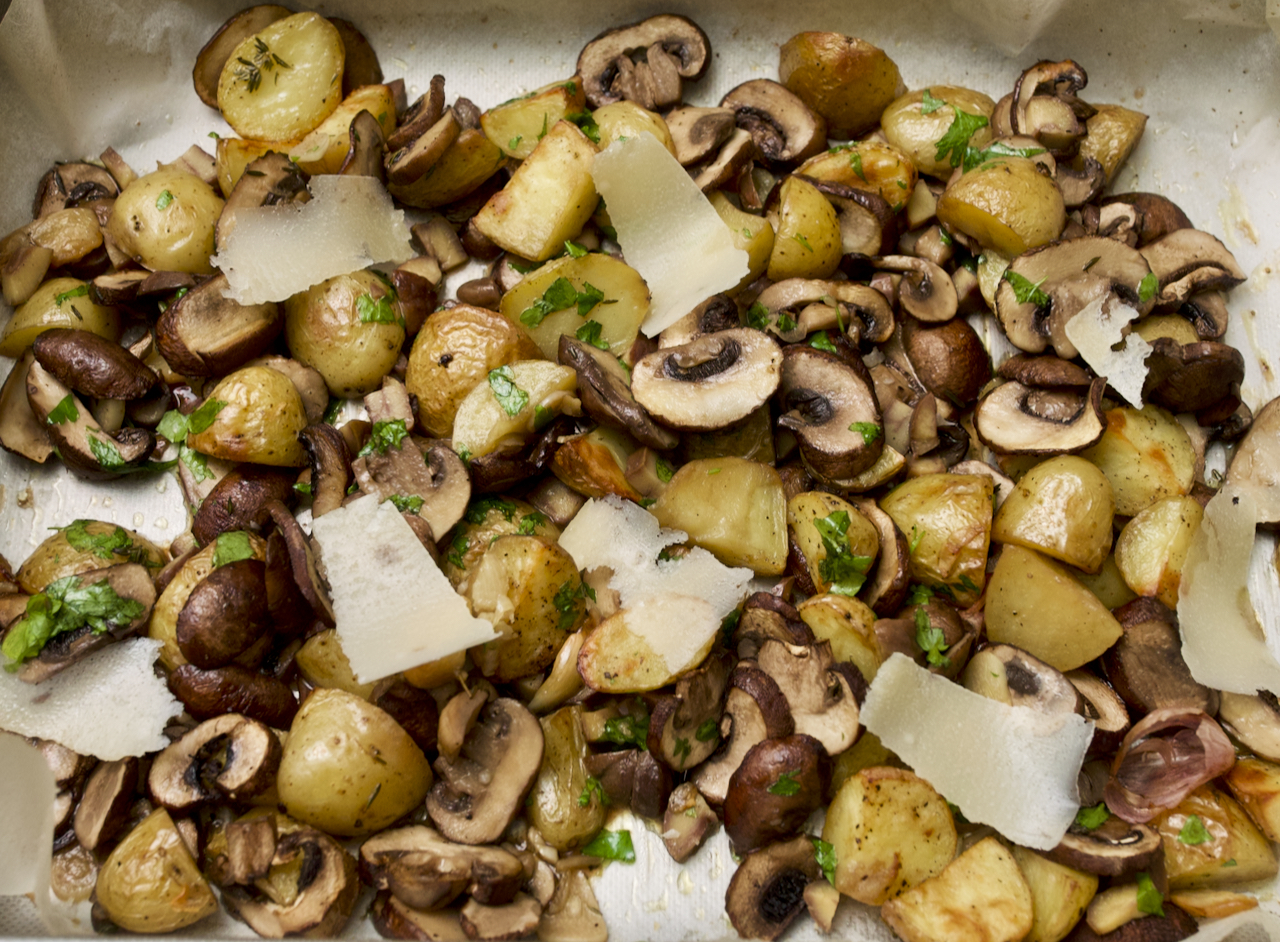
You can’t capture the autumn sliding into winter better than in this dish. It’s perfect for a weeknight main or a side dish at the weekend.

Wine Suggestion: We think Nebbiolo is such a natural pairing with mushrooms, but thought opening a Barolo or Barbaresco was a bit extravagant, so Luigi Pira’s Langhe Nebbiolo was chosen and the gentle leather, spice and tea leaf characters were a delight.

Roast potatoes with mushrooms, chestnuts & sherry – serves 4

  • 1kg waxy potatoes
  • 7 cloves of garlic, 4 unpeeled and smashed, 3 peeled and finely sliced
  • 4 tbsp extra virgin olive oil
  • 3 sprigs of thyme, leaves picked
  • 500g chestnut mushrooms, sliced
  • 3 tbsp dry or medium sherry
  • 75g cooked chestnuts, roughly chopped
  • a small bunch of flatleaf parsley, finely chopped
  • 100g manchego or Parmesan cheese

Heat the oven to 220C/fan 200C/gas 7.

Line a baking tray with baking paper.

Spread the potatoes over the lined tray alongwith the smashed garlic, olive oil and thyme. Season and toss, then roast for 15-20 minutes or until the potatoes are softened but not cooked through.

Add the mushrooms, sliced garlic and sherry to the potatoes and toss again. Cook for another 20-25 minutes or until the mushrooms and potatoes are cooked. Remove from the oven and add the chestnuts and parsley. Mix well and check the seasoning.

Shave the cheese over the top to serve.

(Original recipe by Claire Thompson in Olive Magazine, October 2020.)

Read Full Post »

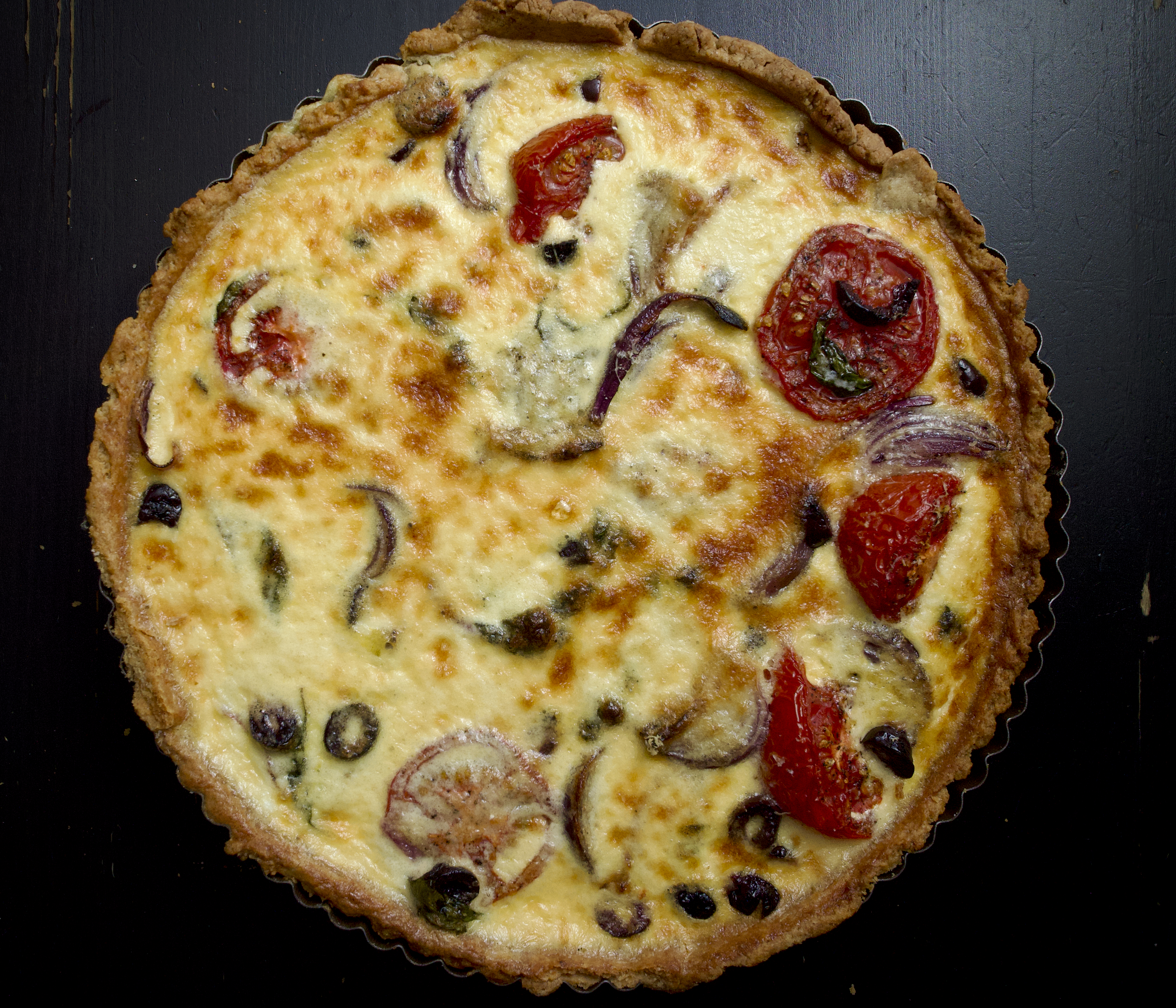
A nice late-summer dish by Thomasina Miers in the Guardian. Pastry is not one of our strong points but we managed this Parmesan crust and it was well worth the effort.

Wine suggestion: Try this with a restrained, cooler climate white like Domaine Gayda’s Sphere Chardonnay which comes from the hills leading up to the Pyrenees so cooled both by altitude and cool breezes descending from the hills at night. A touch of oak brings it together and while not complex there is an effortless drinakability and character, perfect for this summery quiche.

Tomato and Red Onion Quiche – Serves 6

  • 500g mixed tomatoes, halved
  • 2 medium red onions, cut into wedges
  • about 15 pitted black olives, roughly chopped
  • a handful of oregano leaves
  • 3 tbsp olive oil
  • a splash of red wine vinegar
  • 2 whole eggs, plus 2 egg yolks (you can keep the whites to glaze the tart)
  • 60g Parmesan, finely grated, plus 1 tbsp extra for the top
  • 400ml double cream

FOR THE PASTRY:

  • 110g wholemeal flour
  • 220g plain white flour
  • 220g chilled unsalted butter, cut into cubes, plus extra for greasing the tin
  • 70g Parmesan, finely grated

Start by making the pastry. Tip both flours and the chilled butter into a food processor with half a tsp of fine sea salt and the Parmesan. Pulse a few times so the butter is in big flakes. Trickle in 5 tbsp of ice-cold water and pulse a few more times – you need to be able to form a rough lump with it (add an extra tbsp of water only if you need it). Transfer to a floured work surface and bring together into a ball. Flatten into a disc, wrap in paper and leave in the fridge for 1-2 hours.

Meanwhile, heat the oven to 220C/200C fan/gas 7.

Put the tomatoes, cut side up, on a lined baking tray, scatter over the onions, olives and oregano, season generously, then drizzle with the olive oil and vinegar. Roast for 15-20 minutes or until starting to caramelise.

Turn the oven down to 200C/180C fan/gas 6.

Grease a 28-30cm tart tin. Roll the pastry out on a lightly floured surface and lift using your rolling pin into the greased tin. Make sure it’s big enough to leave an overhang on the sides. Push the pastry into the corners, then lightly prick the base with a fork and put in the fridge for 20 minutes.

Meanwhile, beat the eggs and yolks in a bowl, then pour in the cheese and cream and season lightly.

Line the chilled tart case wth foil, pushing it well into the edges. Blind bake for 20 minutes, then remove the foil and brush the tart case with the reserved egg white loosened with a splash of milk. Bake for another 5-10 minutes or until light brown.

Transfer the tomatoes, onions and olives to the tart case, then gently pour over the cream mixture and scatter with the last tbsp of Parmesan. Bake for 15-20 minutes, or until set and golden brown. Cool in the case until just warm, then trim the edges of the pastry and serve with a salad.

(Original recipe by Thomasina Miers in The Guardian, 22 July 2023.)

Read Full Post »

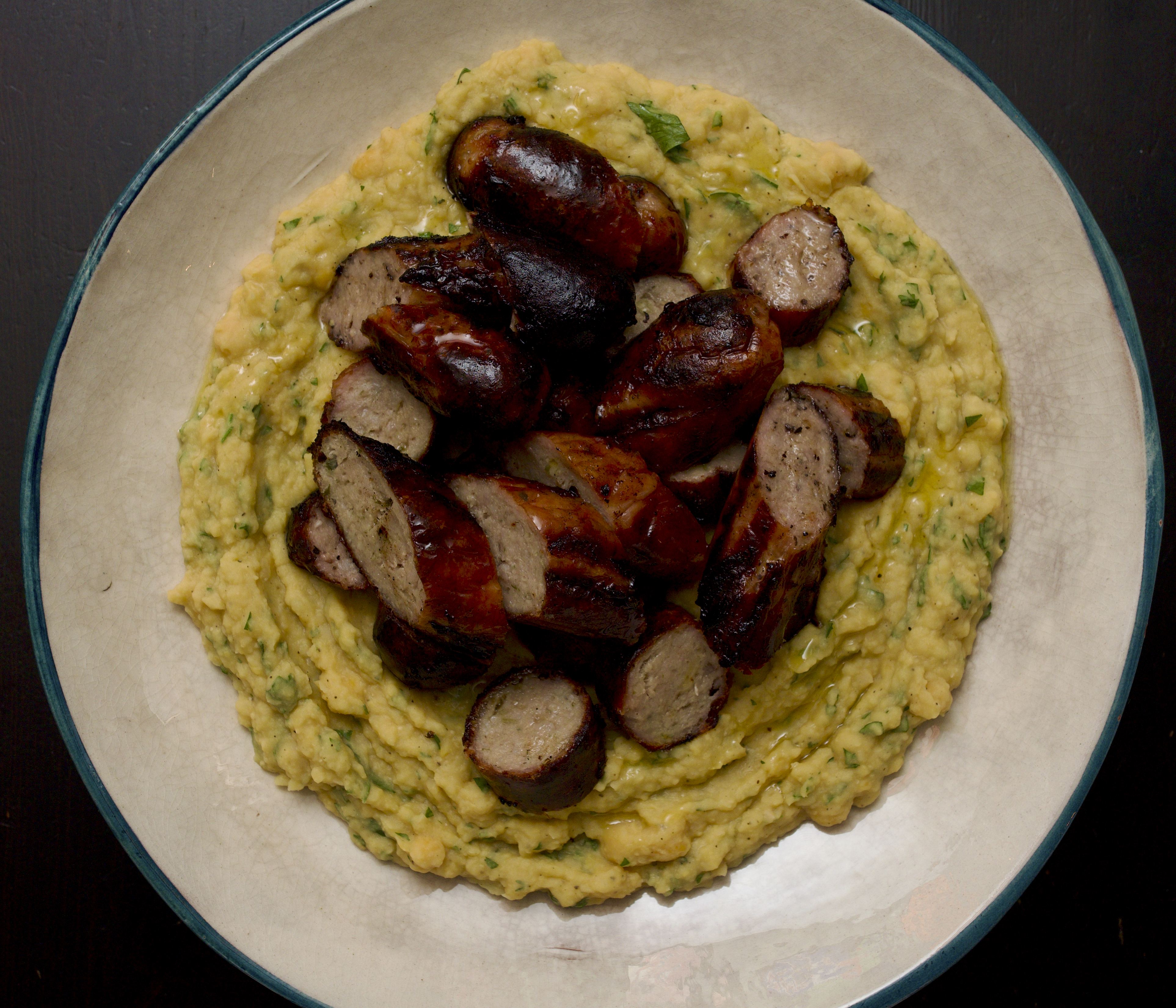
My friend Antoinette made me this a few years ago after seeing the recipe in the Guardian. Nigel Slater has since published it in A Cook’s Book and it’s still good. Super simple but do go to town on good sausages.

Wine Suggestion: go for an easy, central Italian Red, like Umani Ronchi’s Serrano. From the Marches on the Adriatic coast this is a Rosso Conero DOC made from Montepulciano and a touch of Sangiovese. Smooth and medium bodied, but with character, refinement and substance.

Sausages with Chickpea Mash – serves 2 to 3

  • 2 x 400g tins chickpeas
  • 4 bay leaves
  • 1 medium onion, peeled and halved
  • 6-8 top-quality sausages with fennel
  • 60ml olive oil
  • 6 sprigs rosemary
  • 25g parsley, leaves picked
  • 4-5 bushy sprigs of thyme, leaves picked
  • 120ml cooking water from the chickpeas

Drain the chickpeas and put them into a large saucepen. Cover with water and bring to the boil. Add the baby leaves and onion, then partially cover and simmer for 5-10 minutes.

Cook the sausages in a pan or under the grill with a little of the oil and the rosemary (we cooked ours on a barbecue).

Roughly chop the parsley and thyme.

Drain the chickpeas and discard the onion and bay leaves but keep 120ml of the cooking water.

Warm the rest of the olive oil in a small pan. Mash the chickpeas with a blender but careful not to over process. Pour in the warm oil and cooking water, then stir in the herbs and sesaon well with salt and pepper.

Thickly slice the cooked sausages and pile them onto the mash, drizzle with some more olive oil if you like.

(Original recipe from A Cook’s Book by Nigel Slater, 4th Estate, 2021.)

Read Full Post »

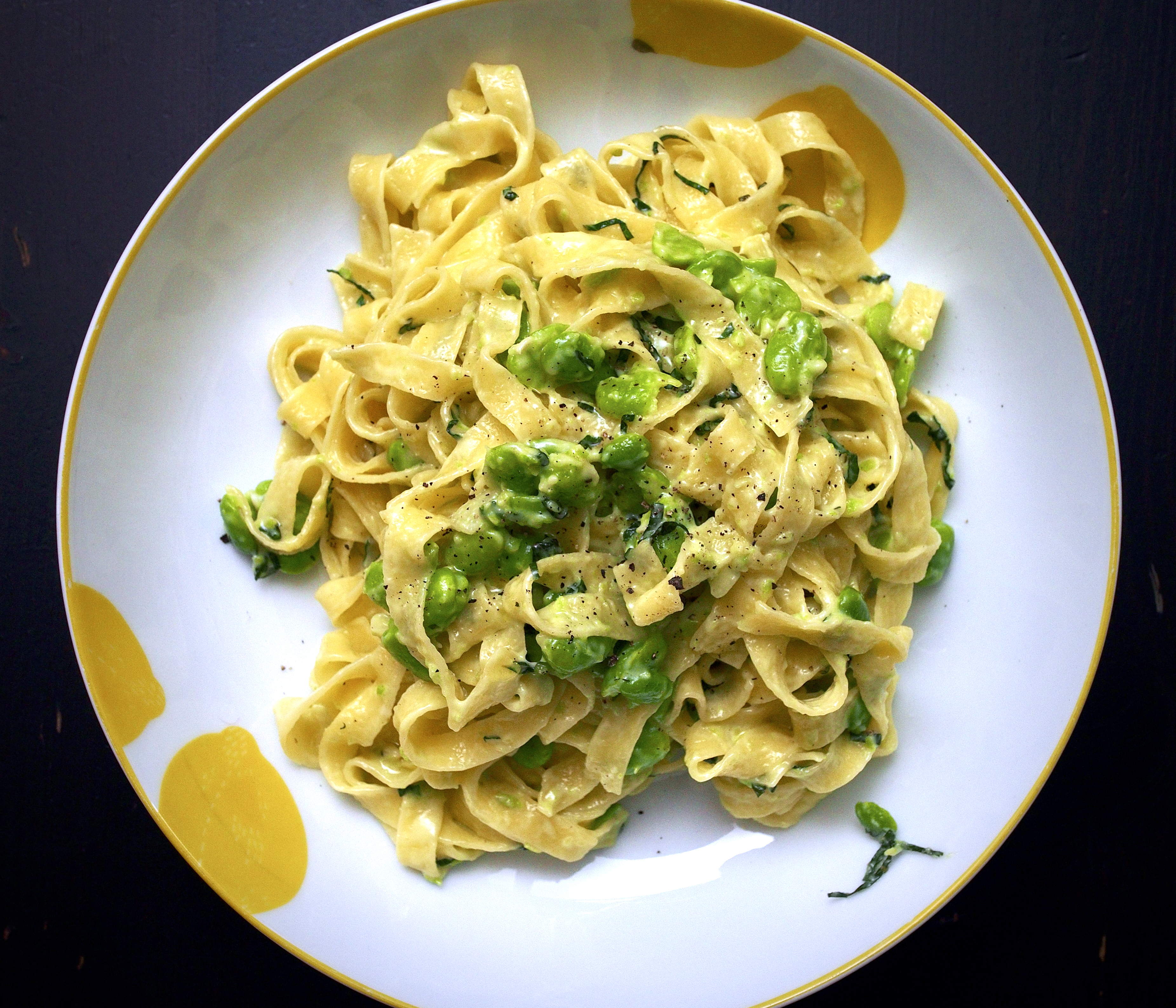
A great dish for using up the end of a tub of cream with just a few ingredients that you might well have already.

Wine Suggestion: Central Italian whites just seem to sing with this dish and the La Piuma Pecorino which is light as a feather, citrussy and floral hits the spot; and is a bargain to boot.

Tagliatelle with broad beans, cream & mint – serves 2

  • 150g broad beans, blanched and skins slipped off
  • 2 tbsp olive oil
  • 1 clove of garlic, finely chopped
  • 100ml double cream
  • a small handful of mint, finely chopped
  • 75g pecorino, finely grated
  • 200g dried tagliatelle

Get the pasta water on, then start the sauce.

Whizz half the beans in the small bowl of a food processor to get a rough purée.

Warm the 1 tbsp of the oil and the garlic in a heavy-based saucecpan for a minute or two to soften the garlic but without letting it colour.

Add the puréed broad beans, to the pan and cook for a minute, then add the double cream and the rest of the broad beans. Stir in the mint and bring to a simmer. Add half the pecorino and season to taste – careful as the cheese is quite salty.

Meanwhile, cook the pasta in lots of salty water then scoop straight out of the cooking water and into the pan with the sauce. Toss to combine and add a little more pasta cooking water if needed to make a sauce. Serve with the extra pecorino for sprinkling over the top.

Read Full Post »

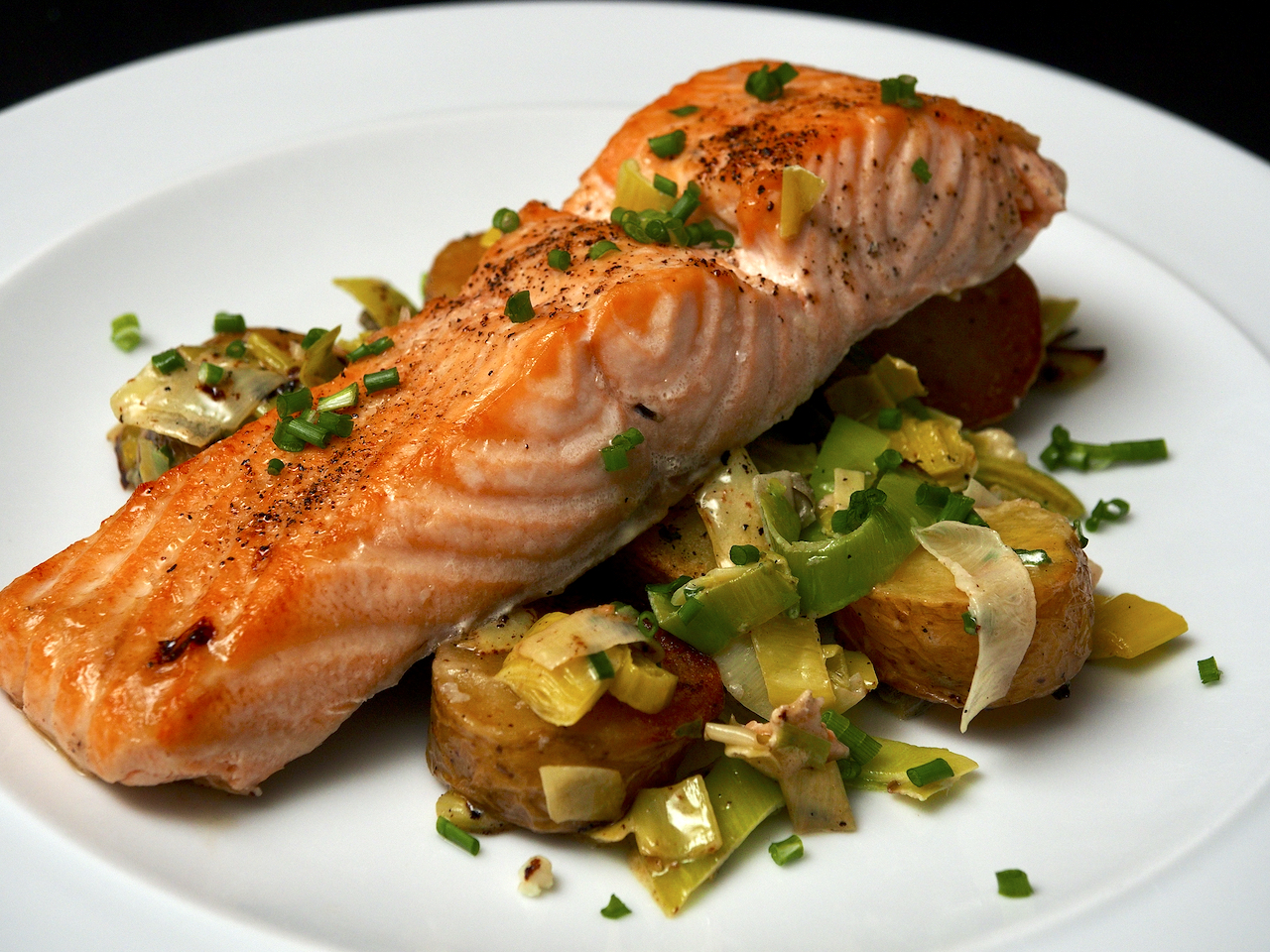
A dish we made on a Monday with all the after school activities. Easy but a rewarding treat after a long day.

Wine Suggestion: we’d suggest a good Portuguese Alvarinho for this as the extra sunshine (closer to the equator than Spain) helps with the cream and oily salmon. Our choice tonight, the Quinta Soalheiro Primeiras Vinhas, an old vine selection that is made partially in oak to give a deep base note alongside the minerally primary fruits.

Creamy salmon, leek & potato traybake – serves 2

  • 250g baby potatoes, thickly sliced
  • 2 tbsp olive oil
  • 1 leek, halved and sliced
  • 1 clove of garlic, crushed
  • 70ml double cream
  • 1 tbsp capers
  • 1 tbsp chives, plus extra to serve
  • 2 skinless salmon fillets

Heat the oven to 200C/180C fan/gas 6.

Bring a pot of water to the boil, the add the potatoes and cook for 8 minutes. Drain and leave to steam-dry for a few minutes.

Toss the potatoes with 1 tbsp of olive oil and plenty of seasoning in a baking tray, then bake for 20 minutes, tossing halfway.

Meanwhile, heat 1 tbsp of oil in a frying pan over a medium heat. Add the leek and fry for 5 minutes, or until starting to soften. Stir through the garlic for 1 minute then add the cream, capers and 75ml of hot water, then bring to the boil. Stir in the chives.

Heat the grill to high. Pour the creamy leek mixture over the potatoes, then sit the salmon fillets on top. Grill for 7-8 minutes or until just cooked through. Serve topped with extra chives.

(Original recipe from BBC Good Food)

Read Full Post »

A very useful cake for entertaining Coeliac friends though you do need to check your ingredients state they are gluten-free. This is both richly chocolatey and light as air, plus really easy to make. Serve alongside a coffee, or with cream or vanilla ice-cream. It’s a good idea to boil the orange the day before.

Chocolate Orange Cake – serves 8

  • 2 small or 1 large thin-skinned orange, about 375g total weight
  • 6 eggs
  • 1 heaped tsp baking powder
  • ½ tsp bicarbonate of soda
  • 200g ground almonds
  • 250g caster sugar
  • 50g cocoa

Put the oranges into a pan with cold water, bring to the boil and cook for 2 hours until soft. Drain and leave to cool, then cut in half and remove the pips. Pulp the oranges in a food processor (with skin and all).

Preheat the oven to 180C.

Butter and line a 20cm springform tin.

Add the eggs, baking powder, bicarbonate of soda, almonds, sugar and cocoa to the orange in the food processor. Whizz until the mixture comes together but still a bit rough with some flecks of puréed orange.

Scrape the mixture into the prepeared tin and bake for an hour, a skewer inserted into the middle should come out fairly clean. Check after 45 minutes and cover if needed, you can also check it for doneness at this point.

Leave the cake to cool in the tin, on a rack. When cold remove from the tin and serve with cream.

(Original recipe from Feast by Nigella Lawson, Chatto & Windus, 2004.)

Read Full Post »

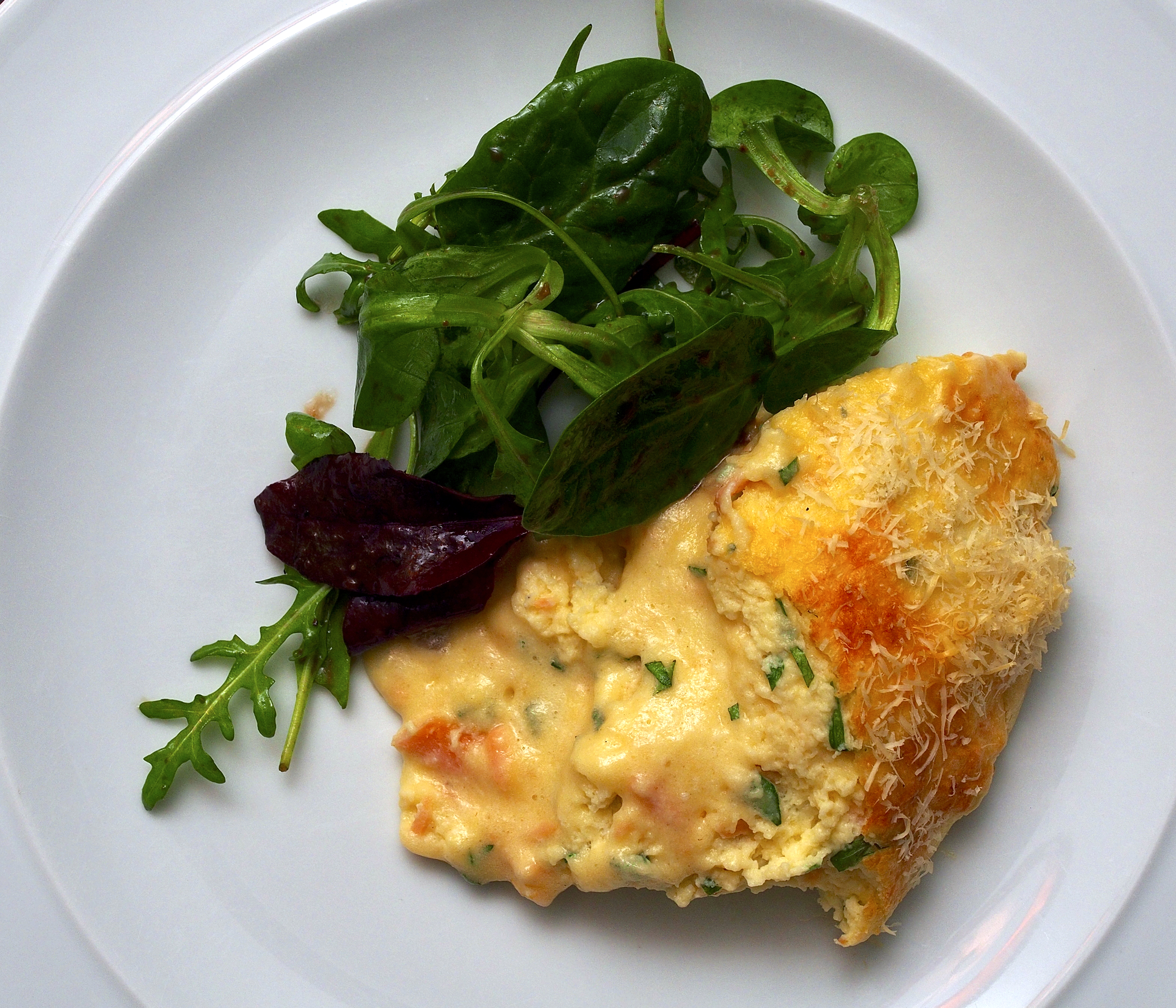
This has to be the perfect post-Christmas dish; great for using up the cheeseboard leftovers and all that smoked fish you though you would eat. Our daughter was so enamoured of this that she has been demanding it ever since. Serve with a green salad and some crusty bread.

Wine Suggestion: Find yourself a Chardonnay made on the lees, but not necessarily in oak. This will preserve a freshness and mid-weight while giving a yeasty, buttery character. A good producer from the Maçon, like Manciat-Poncet, would be ideal and that’s what we had.

Smoked Salmon Soufflé – Serves 3

  • 20g freshly grated Parmesan, plus an extra 1 tbsp
  • 1 small onion, peeled
  • 100g smoked salmon or smoked trout, finely chopped
  • 300ml full fat milk
  • 1 bay leaf
  • 50g butter
  • 55g plain flour
  • 4 large eggs, separated
  • 2 tbsp chopped tarragon

You will need a soufflé dish or baking dish, approximately 18-20cm.

Lightly grease the inside of the dish with butter, then dust with the 2 tbsp of grated Parmesan.

Preheat the oven to 200C/Gas 6.

Put the milk into a small saucepan with the onion and bay leaf. Bring to the boil, then remove from the heat and leave to sit for a few minutes. Remove the onion and bay leaf and discard.

Melt the butter in a heavy saucepan, then stir in the flour and cook, stirring, for a few minutes. Then pour in the warm milk and stir vigorously until you have a smooth, thick sauce. Continue to cook for another couple of minutes, then remove from the heat.

Lightly beat the the egg yolks with a fork, then stir them into the sauce with 20g of Parmesan, the chopped fish and the tarragon.

Beat the egg whites until stiff with a whisk in a large bowl. Fold the egg whites into the sauce, then spoon into the buttered dish. Smooth the top if needed, then sprinkle over the remaining Parmesan. Put the dish onto a baking sheet and bake for 20-25 minutes. The crust should be pale brown and the centre slightly soft, it should still have a little wobble when you give it a shake.

Serve immediately with dressed salad leaves and crusty bread. You need to eat it all up as this dish will not keep.

(Original recipe by Nigel Slater in The Guardian, Tuesday, 28 December 2021.)

Read Full Post »

This is a great alternative chilli for those not so fussed on red meat. Serve with rice, feta, coriander, sour cream, steamed rice, tortilla chips and lime wedges. Add the chipotle with caution, the brand we used was very hot!

Wine Suggestion: Given the heat this needs a juicy wine to match. If you’d like a white some Pinot Gris would be great, however tonight we felt like a red and so opened an Altosur Malbec made by Finca Sophenia in the wonderful Gualtallary area of Mendoza. Stony and super-high altitude freshness and yet expressive, perfumed and juicy, brambly fruit.

Chicken & Black Bean Chilli – serves 4

  • 2 tbsp sunflower oil
  • 2 onions, sliced
  • 4 chicken thigh fillets
  • 3 cloves of garlic, finely chopped
  • 1 tbsp oregano
  • 1 tsp cumin seeds
  • 2 tbsp chipotle in adobo or 1 tsp chipotle paste (if using chipotles in adobo check how hot they are)
  • 350g passata
  • ½ chicken stock pot
  • 400g tin black beans, drained but don’t rinse!
  • juice of ½ a lime
  • rice, feta, coriander, sour cream, steamed rice, tortilla chips and lime wedges – to serve

Heat the 2 tbsp of oil in a shallow casserole dish with a lid. Add the onions and cook gently for 5 minutes or until softened. Add the chicken and turn the heat up to medium. Add the garlic, a small pinch of sugar, the oregano, cumin seeds and seasoning. Cook for a couple of minute, then add the chipotle and cook for another few minutes. Add the passata, 100ml water and the stock, then bring to a simmer.

Cover and cook for 40-50 minutes, stirring now and then, until the chicken is tender. Shred the chicken with two forks and mix through the sauce, then stir through the beans. Simmer for 5 minutes, then take off the heat and squeeze in the lime juice.

(Original recipe from BBC Good Food)

Read Full Post »

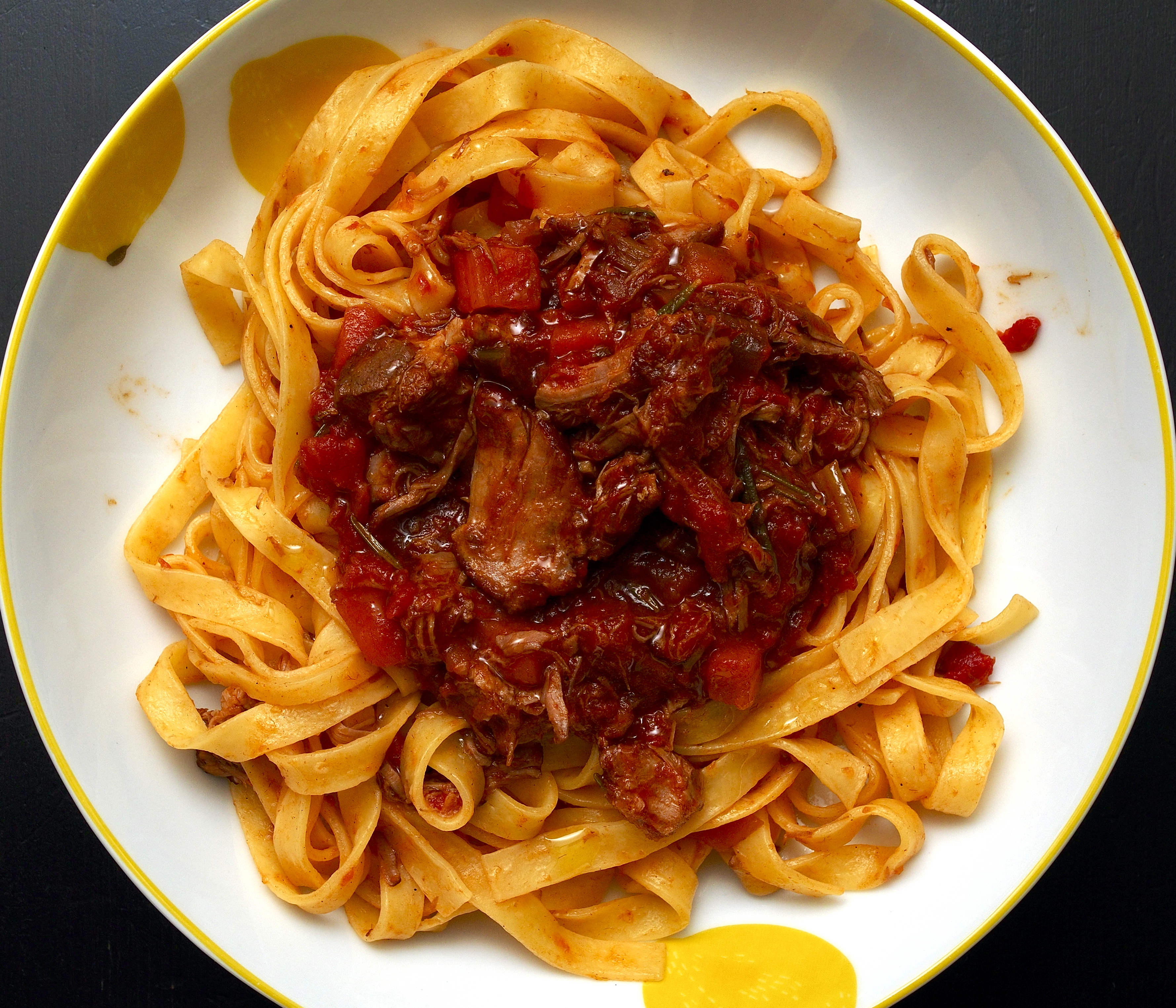
You can start cooking this the day before, the flavours will improve and your home will smell delicious. Serve with fresh tagliatelle and grated Parmesan.

Wine Suggestion: find a rich red with some stuffing to stand up to the richer flavours. A touch of acidity and a good grip of tannin will also help. Ideally you’ll finish the bottle used to cook with, as we did tonight; Cline’s Old Vine Zinfandel from Lodi in California. Heady, brambly and with juicy tannins.

Italian slow-cooked lamb ragu – serves 8

  • 2 tbsp olive oil
  • 1.2kg boneless lamb shoulder, cut into 3.5cm cubes
  • 2 onions, diced
  • 3 carrots, peeled and diced
  • 4 celery sticks, diced
  • 4 cloves of garlic, finely chopped
  • 3 tbsp tomato purée
  • 6 anchovy fillets in oil, drained
  • 400ml red wine
  • 4 sprigs of thyme
  • 2 sprigs of rosemary
  • 2 bay leaves
  • 500ml lamb stock
  • 2 x 400g tins chopped tomatoes

Put on the oven to 170C/Fan 160C/Gas 3.

Heat 1 tbsp of olive oil in a large casserole over a high heat. Season the lamb and brown in batches, then remove to a plate and set aside.

Add another tbsp of oil to the pan, then add the onions and cook over a medium heat for 5 minutes. Add the carrots, celery and garlic and cook for a further 8 minutes. Stir in the tomato purée and anchovies.

Add the wine and scrape up any bits that are stuck to the base of the pan. Bring to the boil and reduce by half, then add the herbs, lamb stock, tomatoes and browned lamb. Cover with a lid and cook in the oven for 2 hours.

Transfer the casserole from the oven to the hob, remove the lid and stir, then simmer gently for 1 hour to reduce and thicken. Remove the large herb sprigs, then shred the lamb with two forks and season.

Serve with pasta and Parmesan.

(Original recipe from Tom Kerridge’s Fresh Start, Bloomsbury Publishing Plc, 2018.)

Read Full Post »

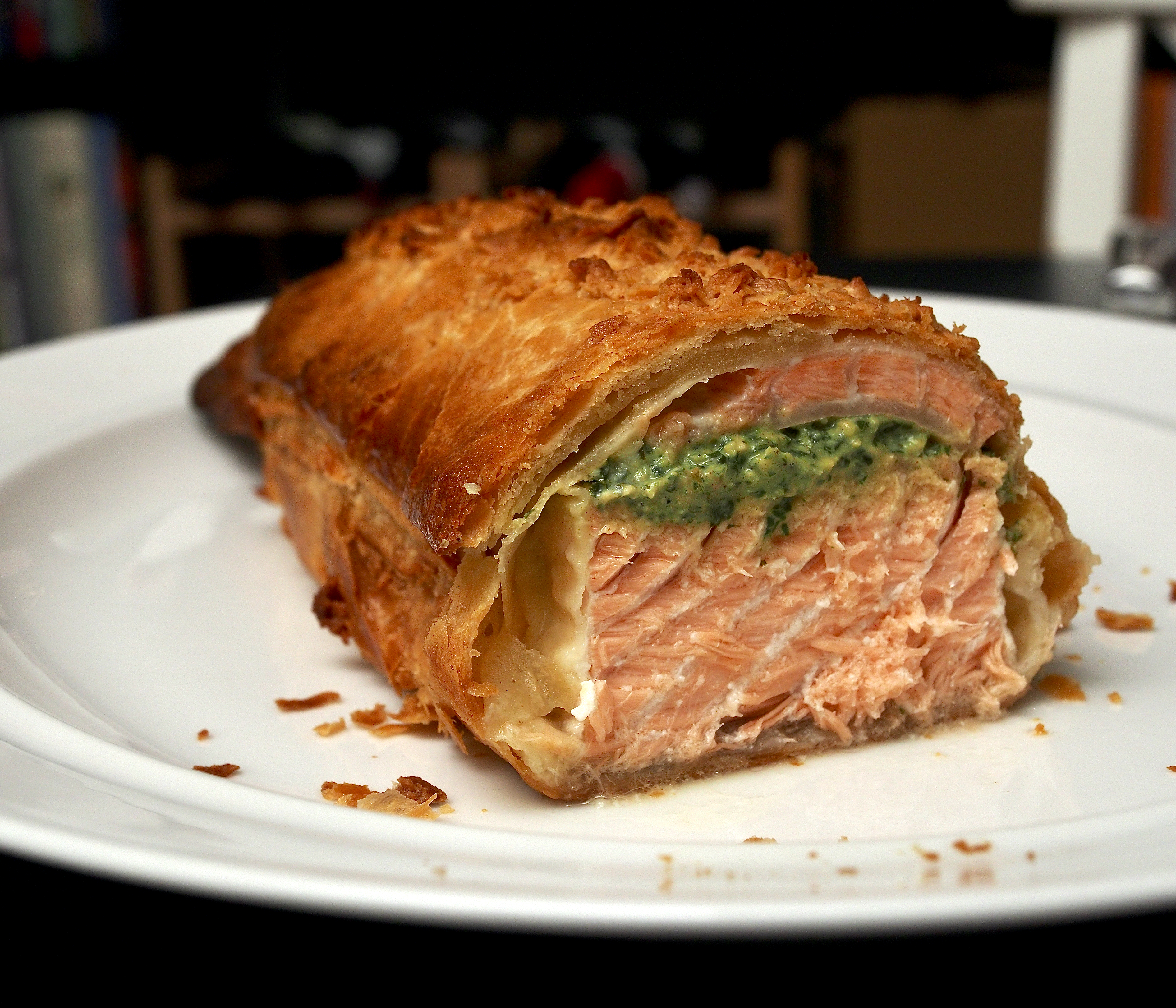
Salmon en Croûte

We can’t tell you how incredibly simple this is to make. If we’d known we would have made it many times before now. You can even make it earlier in the day, ready to bake when needed which is useful when having guests. The salsa verde in the middle is an excellent addition. Lovely served with roast baby potatoes and a green salad.

Wine Suggestion: With the pastry and salmon this needs a white with a good amount of body, but not necessarily heavily oaked given the salsa verde running through each bite. We’re fans of good Vermentino and for this we opened the Poggio ai Ginepri Bianco which from the Tuscan coast, made by Tenuta Argentiera. Vibrancy, depth and a juicy body wrapping a mineral core.

Salmon en croûte – serves 6

FOR THE SALSA VERDE:

  • 3 tbsp flat-leaf parsley leaves
  • 2 tbsp basil leaves
  • 2 tbsp mint leaves
  • 1 clove of garlic, halved
  • 3 anchovy fillets
  • 2 tbsp Dijon mustard
  • 1 egg yolk
  • 2 x 350g salmon fillets, skinned and pin-boned
  • 375g pack all-butter puff pastry
  • plain flour, for dusting
  • 1 egg beaten with 1 tbsp mlk

FOR THE DRESSING:

  • 2 large tomatoes
  • 2 scallions, finely chopped
  • 2 tsp caster sugar
  • 2 tbsp white wine vinegar
  • 4 tbsp olive oil
  • ½ tsp Dijon mustard
  • 1 tbsp finely chopped parsley

Make the salsa verde first. Put the herbs into a small food processor and whizz to finely chop. Add the garlic, anchovies, mustard, egg yolk, and black pepper, then whizz until smooth.

Put a salmon fillet onto a board and spread with the salsa verde. Set the other fillet on top to make a rectangle.

Cut two-thirds of the pastry from the block and put the remaining piece in the freezer. Put the pastry onto a piece of lightly floured baking parchment, then roll out until large enough to completely enclose the salmon. Put the fillets in the centre and brush the pastry with the beaten egg (keeping some for later). Fold the pastry over the fish and pinch the edges together to seal. Refrigerate for at least 30 minutes or up to 12 hours ahead.

Heat the oven to 240C/220C fan/Gas 9.

Heat a baking tray in the oven until hot. Brush the salmon en croûte with the leftover beaten egg, then coarsely grate the frozen pastry and sprinkle over the top.

Transfer the salmon and baking parchment to the hot baking tray and bake for 25-30 minutes or until golden and the pastry is cooked. Rest at room temperature for 15 minutes.

Meanwhile, make the dressing. Cover the tomatoes in boiling water for 1 minute, then remove and put into cold water, then drain. Peel the skin off the tomatoes and scoop out the seeds, then dice and put into a bowl. Add the rest of the dressing ingredients, season with salt and pepper, and stir to combine.

Serve the salmon in thick slices with the dressing alongside.

(Original recipe from Mary Berry Cooks up a Feast with Lucy Young, DK: Penguin Random House, 2019.)

Read Full Post »

A nice bright side dish from Ottolenghi Simple, though we swapped out the dolcelatte for gorgonzola.

Roasted squash with lentils and gorgonzola – serves 6 as a side

  • 1 large butternut squash, cut in half lengthways, deseed and cut into 1cm thick wedges, no need to peel
  • 2 red onions, cut into wedges
  • 3 tbsp olive oil, plus extra to serve
  • 10g sage leaves
  • 100g Puy lentils
  • 1 large lemon, zest grated to give 1½ tsp, then juiced to give 2 tbsp
  • 1 clove of garlic, crushed
  • 5g parsley leaves, roughly chopped
  • 5g mint leaves, roughly chopped
  • 10g tarragon leaves, roughly chopped
  • 100g dolcelatte (we used gorgonzola), torn into small pieces

Heat the oven to 220C fan.

Put the squash and onions into a large bowl with 2 tbsp of the oil, the sage leaves, ¾ tsp of salt and lots of black pepper.

Toss well, then spread out on a baking tray lined with baking parchment. Roast for 25-30 minutes, or until golden-brown. Remove and rest for 10 minutes.

Meanwhile, half fill a medium saucepan with water and bring to the boil. Add the lentils and simmer for 20 minutes, until cooked. Drain, then set aside to cool slightly, then put into a large bowl. Stir in the lemon zest, lemon juice, garlic, herbs and 1 tbsp of oil and ¼ tsp of salt.

Add the roasted squash and onion to the bowl of lentils and gently mix. Transfer to a serving dish, dot with the cheese, drizzle with oil and serve.

(Original recipe from Ottolenghi Simple by Yotam Ottolenghi & Tara Wigley, Ebury Press, 2018.)

Read Full Post »

Older Posts »