Inspired by an extra cucumber in the veg drawer. A lovely meal for mid-week with crusty bread.
Wine Suggestion: Wines from the hills in South Western France are very underrated, especially when made by insightful provocative winemakers. The Domaine Coustarret Jurançon Sec is 100% Gros Manseng and has a great balance between a sappy, salty backbone overlayed with orange zest and fresh stonefruit flavours. Well worth seeking out.
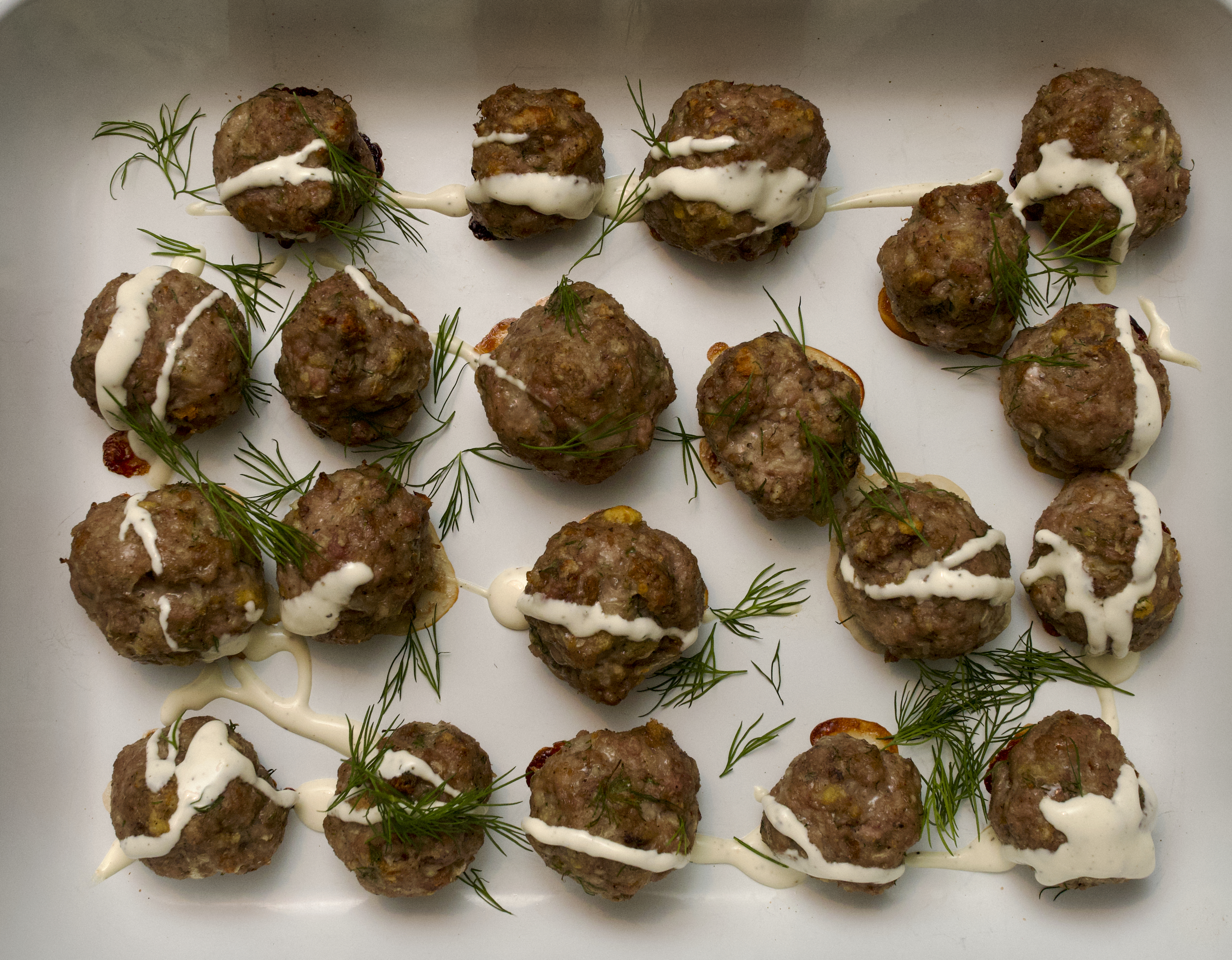
Scandi baked meatballs with pickled cucumber salad – serves 4
400g pork mince
1 egg yolk
½ tsp allspice
100g breadcrumbs
1 small onion, grated
a handful of dill, finely chopped, plus extra to serve
1 tsp freshly ground white pepper
4 tbsp sour cream, seasoned
crusty bread, to serve
FOR THE PICKLED CUCUMBER SALAD:
2 tbsp white wine vinegar
1 tbsp caster sugar
½ cucumber, peeled and cut into half moons
1 tsp yellow mustard seeds
a handful of parsley, chopped
Heat the oven to 200C/180C fan/gas 6.
Start with the pickled cucumber salad. Put the vinegar and sugar into a small saucepan and heat until the sugar has dissolved, then set aside to cool. Put the cucumber into a bowl, then pour over the cooled vinegar and add the mustard seeds. Stir and set aside.
Put the pork mince, egg yolk, allspice, breadcrumbs, grated onion, dill and white pepper, into a bowl. Season well, then mix with your hands until well combined. Form into 20 meatballs and set them into a large baking dish.
Put the meatballs into the hot oven for 20 minutes or until golden and cooked through. Drizzle with the sour cream and scatter over the reserved dill. Serve with the cucumber salad and crusty bread.
(Original recipe by Janine Ratcliffe in Olive Magazine, April 2017.)
You too can make a pasta cake like this on a Monday, trust us. Who knew it would be so easy to get cooked rigatoni to sit upright in a cake tin? The results are fun and although it will fall apart when you start serving, you can get your insta photo beforehand.
Wine Suggestion: Something fun, red and Italian like Umani Ronchi’s Rosso Conero Serrano. A blend of smooth Montepulciano and vibrant Sangiovese, this wine is fun and easy, but tied together with energy and vitality.
Torta di rigatoni – serves 4
butter, to grease the tin
4 tbsp breadcrumbs
325g rigatoni pasta
handful of basil leaves, finely chopped
250g mozzarella, cubed (buy a block of mozzarella, not buffalo)
50g grated Parmesan
FOR THE TOMATO SAUCE:
2 tbsp extra virgin olive oil
1 garlic clove, peeled and bashed
2 x 400g tins chopped tomatoes
a handful of basil leaves
Heat the oven to 180C/160C fan/gas 4.
Line the base and sides of a loose-bottomed, 20cm round cake tin with baking parchment, then butter and coat in the breadcrumbs.
Get the sauce going first. Heat the olive oil in a medium saucepan over a medium heat, then add the garlic clove and cook for about a minute. Add the chopped tomatoes, most of the basil leaves and season well with salt. Cover and simmer for 25 minutes, stirring occasionally.
Meanwhile, cook the pasta in lots of boiling salty water until al dente. Drain well, then mix with the chopped basil, half the mozzarella, some black pepper, half the tomato sauce (throw away the garlic) and half of the Parmesan. Leave to cool until the pasta is cool enough to handle.
Place the rigatoni upright in the cake tin. Pour over the remaining tomato sauce, then scatter over the rest of the mozzarella and Parmesan. Bake for 25 minutes, until golden. Leave to rest for 5 minutes before attempting to release from the tin, then scatter over a few basil leaves to serve.
(Original recipe by Gennaro Contaldo IN BBC Good Food Magazine, April 2020.)
We rarely make a proper starter but we do like nibbles that you can eat in your hand with a drink. These pastries are inspired by Sabrina Ghayour and are particularly tasty.
Wine Suggestion: At this time of year we look out for savoury and dry whites, and from Crete we chose an Assyrtiko from Nikos Karavitakis. His Nomas cuvee is crisp, dry, appley citrus with a stony salinity and savoury finish; just perfect for a salty, savoury, herby pastry like this. Sunshine on a plate, and in a glass.
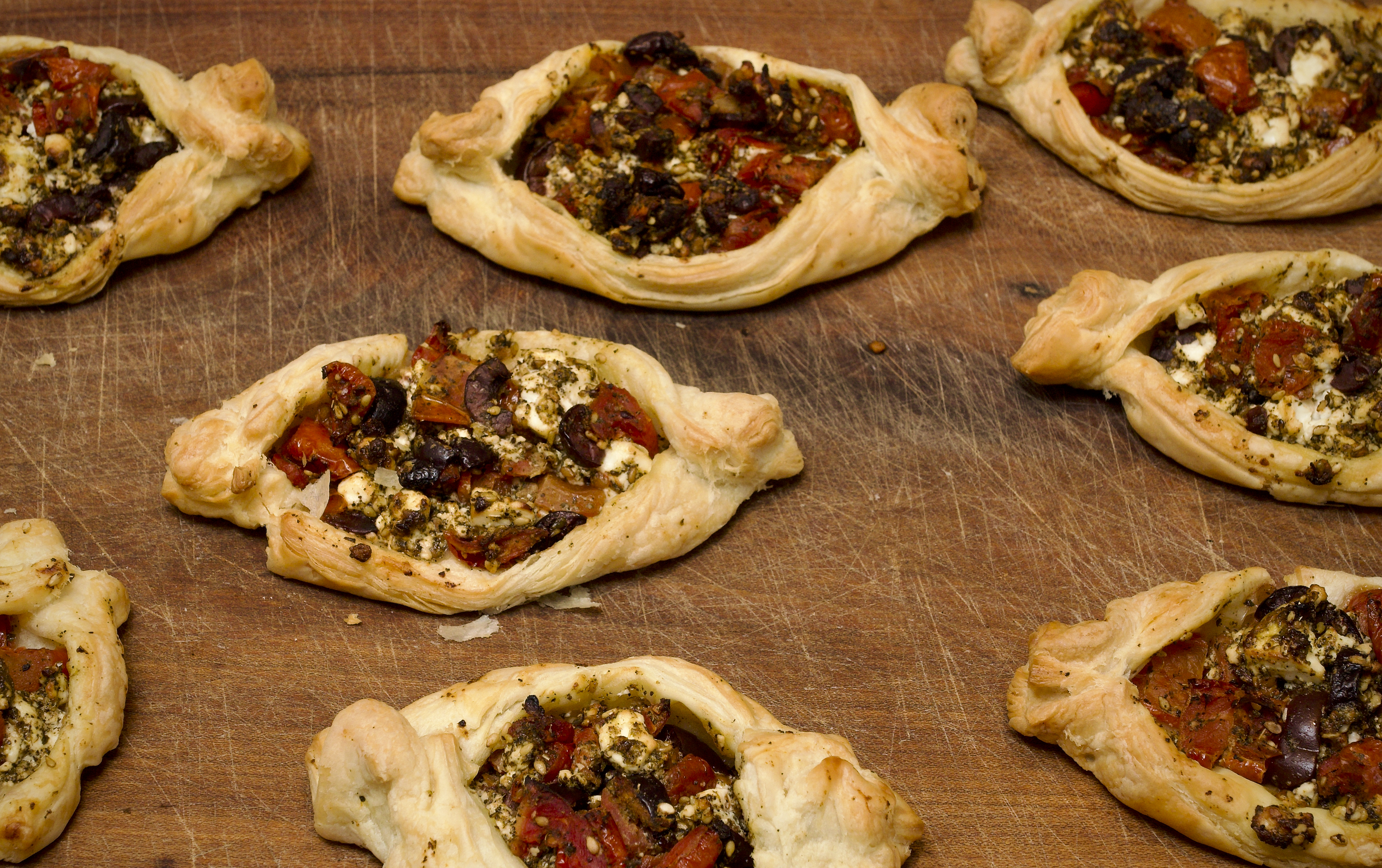
Za’atar, tomato, olive & feta pastries – makes 9
1 x 320g ready-rolled puff pastry sheet
150g sunblush tomatoes in oil, drained and patted dry with kitchen paper, then roughly chopped
200g feta cheese, crumbled
75g pitted Kalamata olives, roughly chopped
2 tbsp za’atar
Heat the oven to 200C/Gas 6.
Line a large baking tray with baking paper.
Cut the pastry into 3 vertically and then horizontally to give 9 rectangles.
Mix the tomatoes, feta, olives and za’atar together in a mixing bowl and season generously with black pepper.
Divide the mixture between each pastry rectangle. Put spoonfuls in the centre and pat with your fingers to flatten it down.
Take 2 corners of the pastry and twist them together like a sweet wrapper. Repeat with the 2 remaining corners, leaving the filling exposed in the middle. Repeat with each piece of pastry.
Put the pastries onto the lined baking tray and bake for 25 minutes, or until golden brown.
Remove from the oven and cool slightly, they are best served warm.
(Original recipe from Persiana Everyday by Sabrina Ghayour, Aster, 2022.)
This is an Iberico pork dish inspired by José Pizarro. We did not have any Iberico and substituted Tamworth free-range pork from our butchers instead. This is not quite the same but the dish was still lovely, but of course use Iberico if you can find it.
Wine Suggestion: A dish that begs for a Spanish Garnacha.
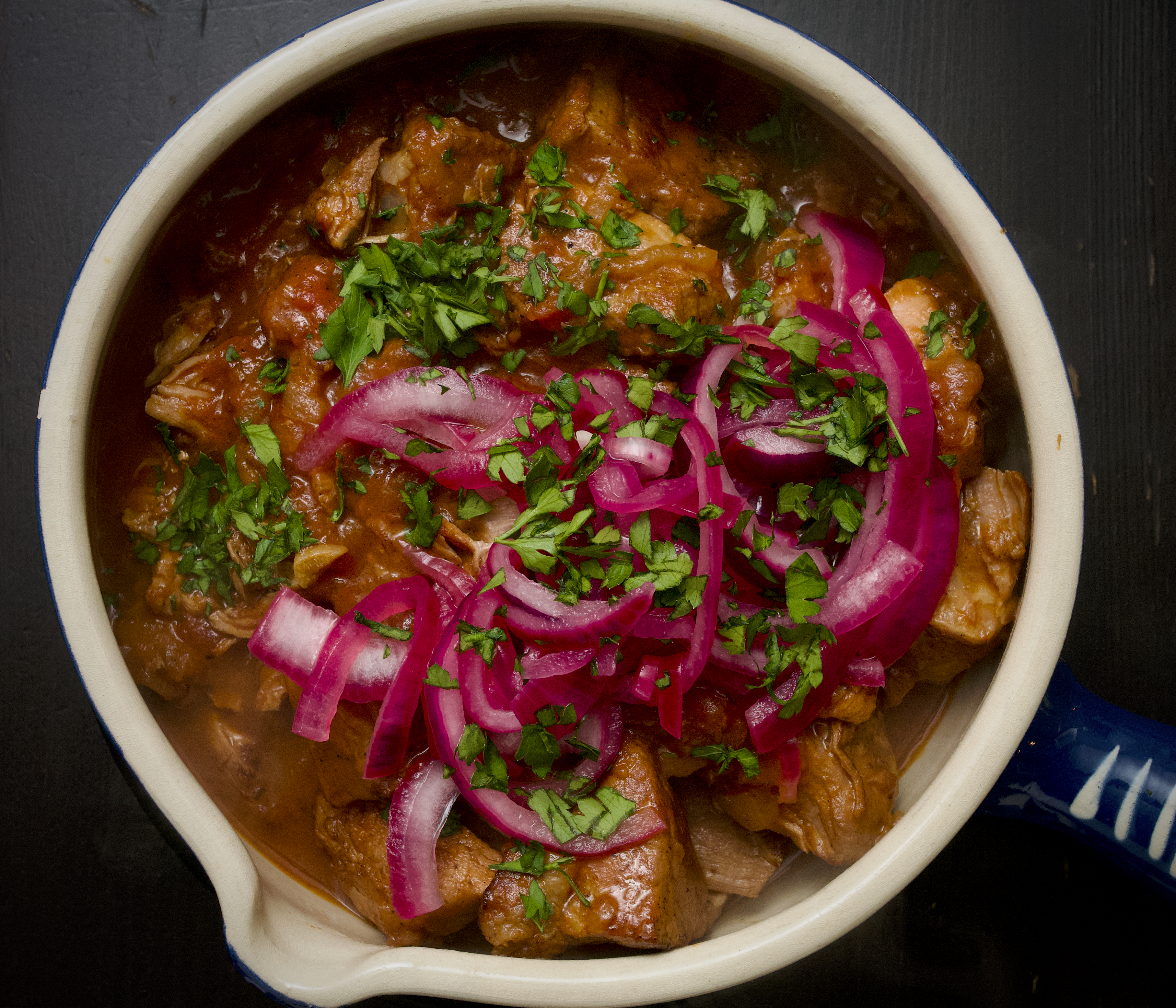
Pork shoulder in tomato & sherry sauce with lemony couscous – serves 6
2 tbsp olive oil
1.5kg shoulder of pork (or Iberico pork), cut into 5cm chunks
2 red onions, finely sliced
3 cloves of garlic, finely sliced
2 tsp coriander seeds, lightly crushed
1 tbsp tomato purée
150ml oloroso sherry
1 x 400g tin chopped tomatoes
400ml chicken stock
FOR THE COUSCOUS:
1 red onion, finely sliced
juice of 1 lemon
250g couscous
3 tbsp extra virgin olive oil
450ml chicken stock
a large handful of flat-leaf parsley, chopped, plus extra to serve
2 preserved lemons, skin finely sliced and pulp discarded
½ cucumber, peeled, deseeded and finely diced
30g toasted flaked almonds
Heat the oven to 160C/140C fan/gas 3.
Season the pork with salt and pepper, then heat the olive oil in a large casserole and fry the pork in batches until well browned on all sides.
Reduce the heat to medium-low, then add the onions to the dish and fry gently for 10 minutes, then add the garlic and coriander seeds and fry for another 5 minutes.
Add the tomato purée and sherry and bubble for 1 minute, then return the pork to the pan and add the tomatoes and stock. Season and bring to a simmer, then cover and transfer to the oven. Cook for 2½-3 hours or until the meat is really tender.
Meanwhile, prepare the couscous. Put the onion into a heatproof bowl, then pour over boiling water from the kettle and leave to sit for 30 seconds. Drain and cool under running water. Tip the onion back into the bowl and squeeze over the lemon juice and season with salt. Set aside.
Put the couscous into a flat dish and stir in the olive oil and a good pinch of salt, then pour over the chicken stock. Stir and cover with clingfilm, then leave to steam for 10 minutes. Remove the cover and fluff the couscous up with a fork. Add the rest of the ingredients and stir to combine.
Serve the pork with the couscous, the pickled onion and its juices, and some extra parsley.
(Original recipe from The Spanish Home Kitchen by José Pizarro, Hardie Grant, 2022.)
Who doesn’t love a dauphinoise? This one is extra special with some smoked mackerel and is a meal in itself with some green salad on the side.
Wine Suggestion: Chardonnay is not commonly found in the Loire, but there are gems to be found, especially around the appellation of Cheverny where it is brilliantly blended with Sauvignon Blanc. Tonight an outlier from Touraine, Domaine Bellevue’s IGP Chardonnay. Classic crisp red apple flavours with layers of tropical and citrus notes; good body but without any flabby weight. Perfect for fish and dairy combination
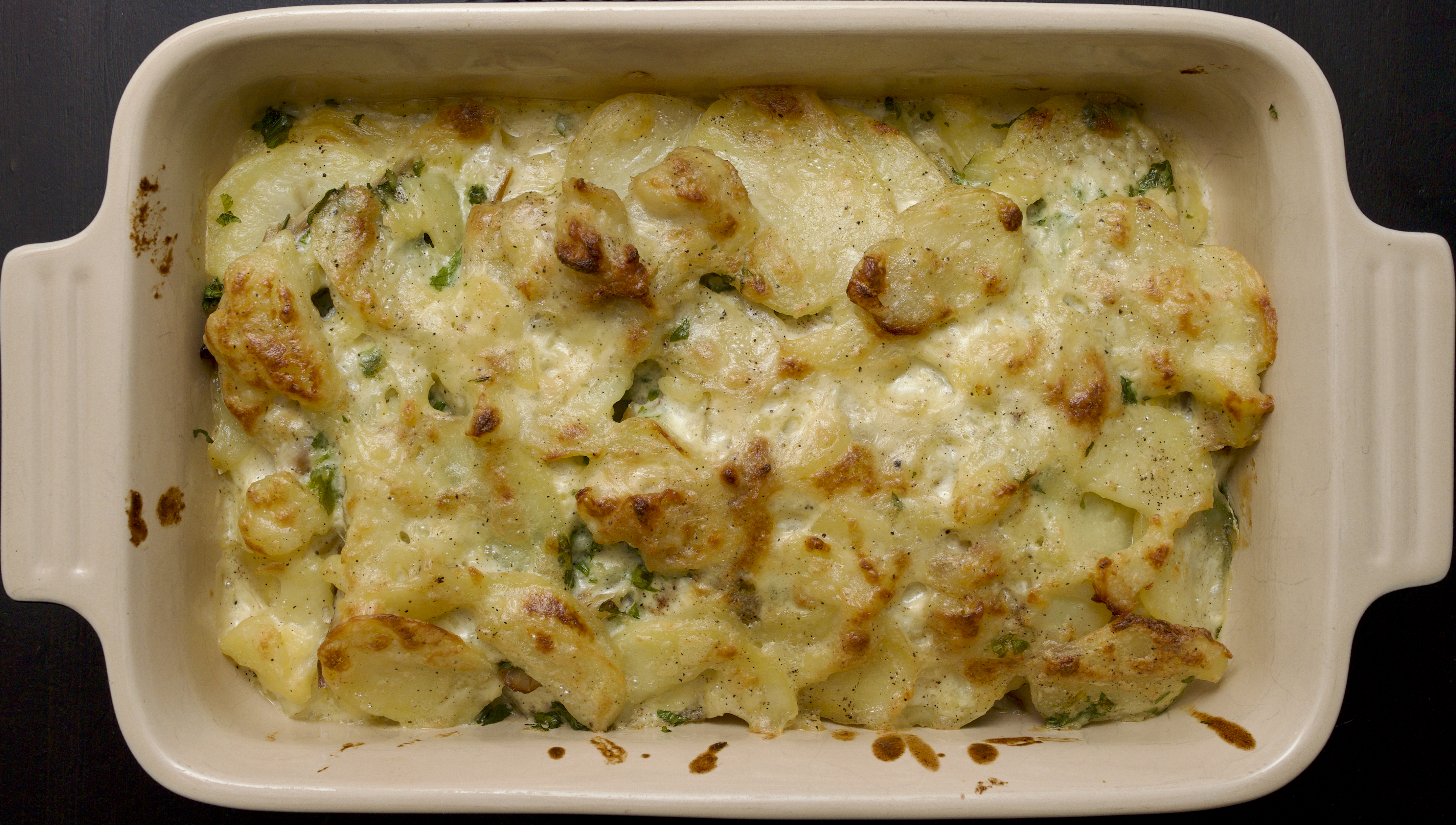
Smoked mackerel dauphinoise – serves 4
900g potatoes
250ml milk
250ml double cream
a small clove of garlic, crushed
freshly grated nutmeg
225g smoked mackerel, skin and bones removed and flaked into chunky pieces
a small handful of chopped flat-leaf parsley
Heat the oven to 200C/400F/Gas 6.
Peel the potatoes and slice very thinly, a mandoline is the best job for this but watch your fingers. Dry the potatoes slices with a clean cloth, then spread out and season with salt and black pepper, mixing with your hands.
Pour the milk into a saucepan, add the potatoes and bring to the boil. Cover, then reduce the heat and simmer gently for 10 minutes.
Add the cream, garlic and a generous grating of nutmeg and continue simmering for another 20 minutes. Stir occasionally to prevent the potatoes sticking to the pan. As soon as the potatoes are cooked, remove them with a slotted spoon and put a layer into a large ovenproof dish. Sprinkle over the mackerel and parsley, then cover with the rest of the potatoes. Pour the creamy liquid over the top. Put some water into the base of a large roasting tin and set the potato dish into the tin, the water should come about half-way up the sides. Bake the dish in the oven for 10 to 20 minutes or until the top is golden and bubbling.
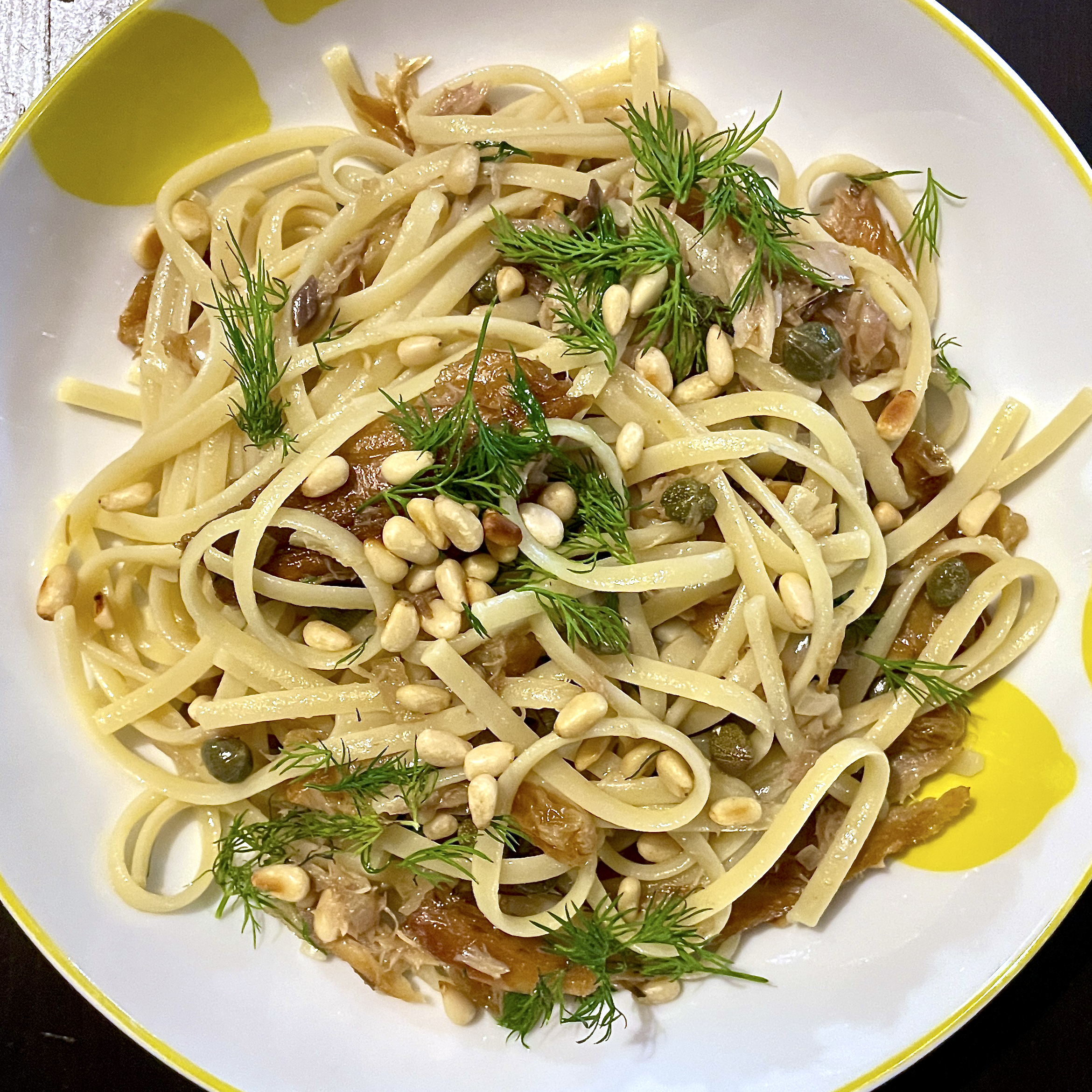
A Nigella creation that is in no way authentic and makes no apologies. Anything with mackerel goes in this house.
Wine Suggestion: Quite an exceptional wine was chosen to match with this: Sartarelli’s Balciana. From a low-yielding vineyard Verdicchio in the Marche, this is hand harvested picking only the grapes of utmost ripeness at the very end of the season. This means the picking team goes out many times picking individual grapes and bunches that meet the required levels of ripeness. It makes quite an extraordinary dry wine that has a richness of almost a sweet wine, alongside textured layers of savoury nuttiness and salty minerality. Named best white wine in Italy many times, and we understand why. We chose this as the combinations of sweet, savoury, fresh and sour flavours in the dish need a wine with substance and depth.
Pasta with mackerel, Marsala and pine nuts – serves 2
50g golden sultanas
200g linguine
2 tbsp olive oil
1 long shallot, finely chopped
60ml Marsala
2 smoked makerel fillets, skinned and flaked
2 tbsp drained capers
a few drops of red wine vinegar
a handful of dill, torn into fronds
25g toasted pine nuts
Bring a large pan of water to the boil for the pasta. Put the sultanas into a small bowl and cover with hot water from a boiled kettle.
Add lots of salt to the boiling water, then cook the linguine until al dente.
Warm the olive oil in a frying pan and cook the shallot for a couple of minutes until softened.
Add the Marsala and let it bubble, then add the mackerel, sultanas (squeeze the water out of them with your hands first), the capers and a few drops of vinegar. Remove from the heat once the mackerel is warm. There should be barely any liquid left.
Reserve a cupful of pasta cooking water before draining. Return the pasta to the pan, then tip in the mackerel, half the dill and half the pine nuts and a tbsp of pasta water. Toss gently to combine, then taste and add another few drops of vinegar if you like.
Divide between warm bowls and finish with the remaining dill and pine nuts.
(Original recipe from Nigellissima, Chatto & Windus, 2012.)
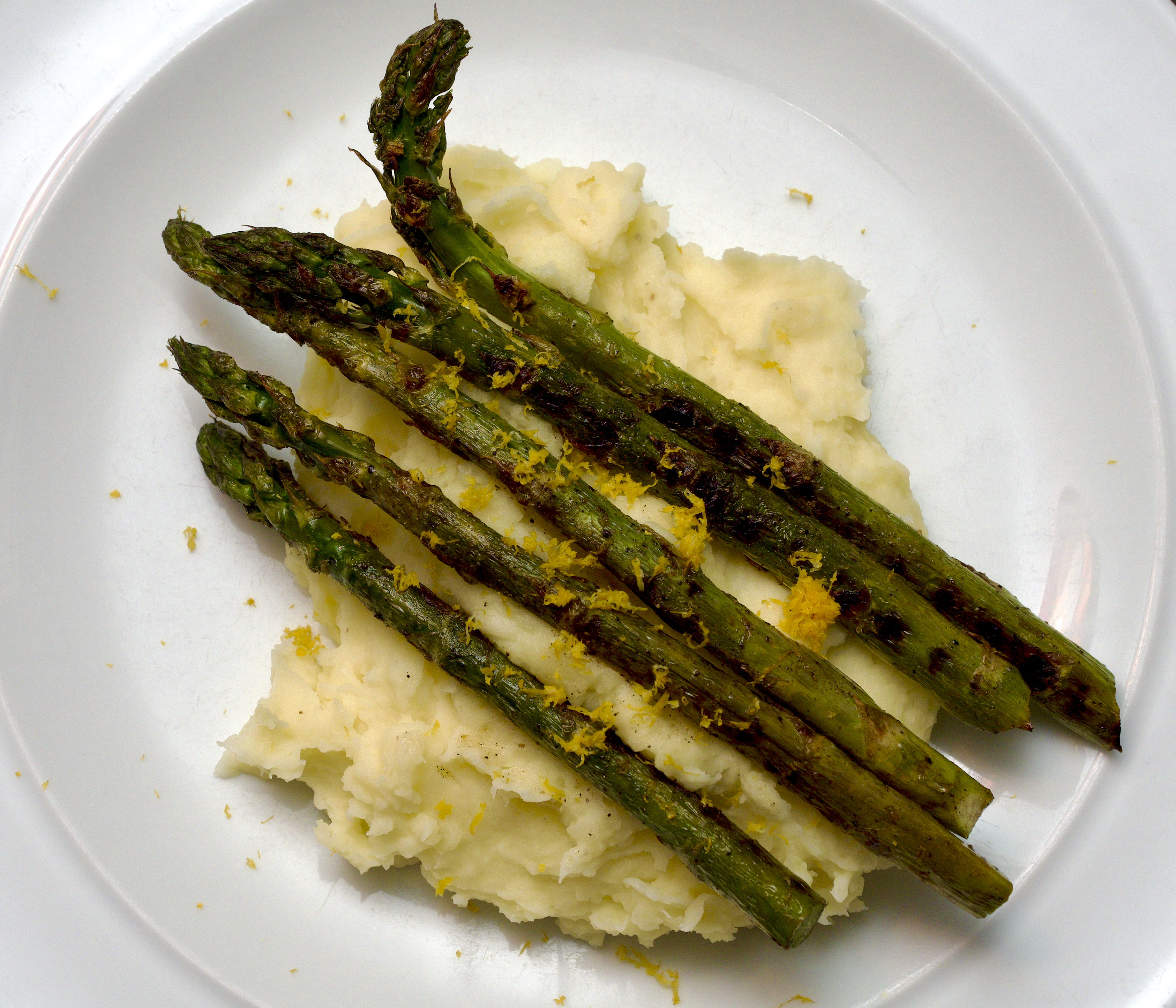
When asparagus arrives we have it with everything and if there’s nothing else with buttery mash.
Wine Suggestion: We know asparagus can clash with many wine grapes, but we enjoyed this with a glass of the Rustenberg Chardonnay, because it just goes so well with the buttery mash.
Asparagus & mash – serves 2
850g potatoes, a good variety for mashing, peeled and cut into even-sized pieces
300ml full cream milk
1 lemon, juiced, plus 1tsp grated zest
lots of butter
250g asparagus
Cook the potatoes in boiling salty water for about 20 minutes or until tender, then drain.
Warm the milk in a small saucepan, then set aside.
Put the potatoes into a food mixer with a flat paddle beater. Slowly beat the potatoes, adding the warm milk and lemon juice, until you have a smooth mash, then beat in plenty of butter.
Brush the asparagus with olive oil, then cook for 3-4 minutes on a griddle pan, turning to colour on all sides.
Taste the mash and season with white pepper and salt if needed. Divide the mash between two plates, top with the asparagus and scatter over the lemon zest.
(Original recipe from A Cook’s Book by Nigel Slater, 4th Estate, 2021.)
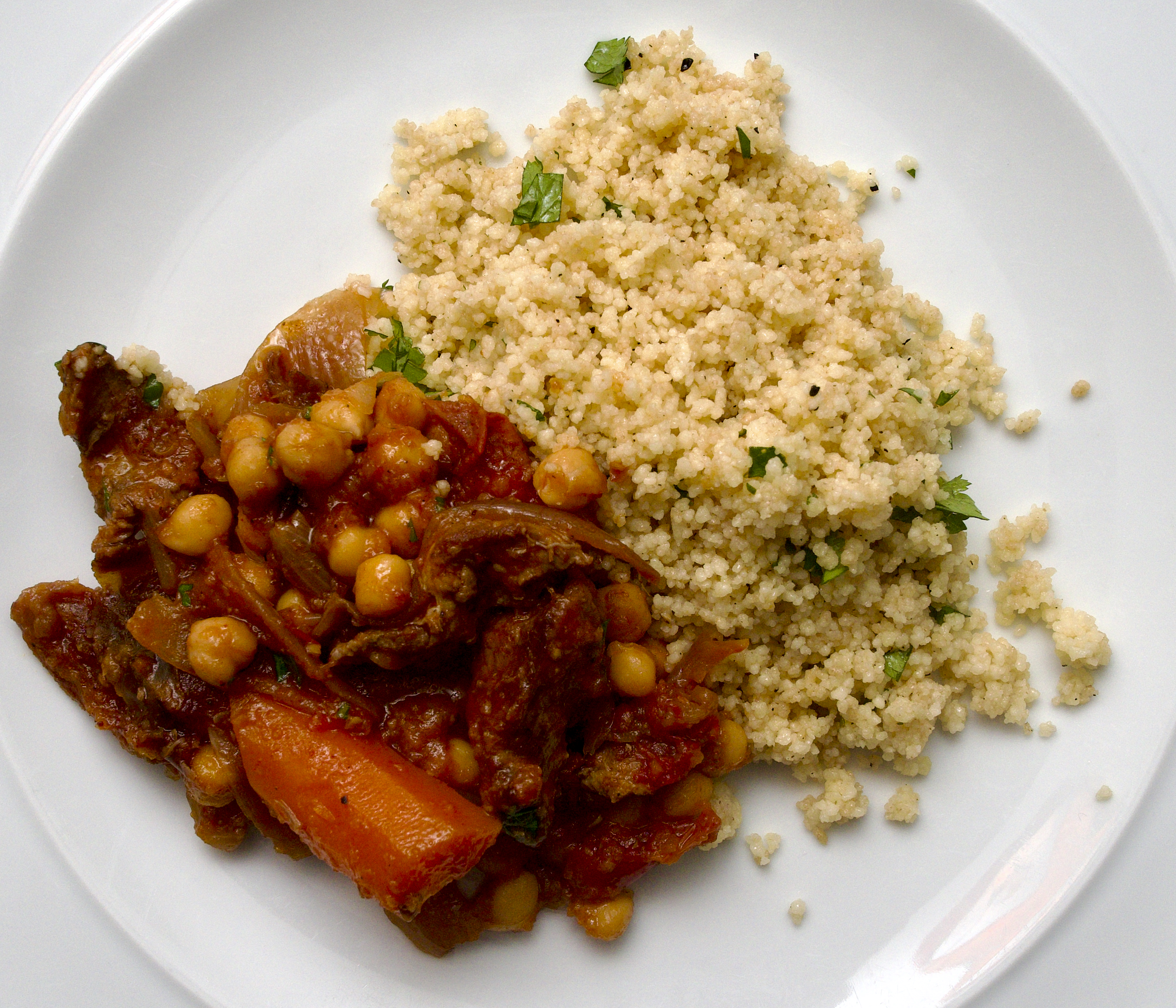
This is delicious and you can prep it all in advance. If you like you can cook for the initial 1 hour and 15 minutes earlier in the day, then bring back to a simmer before adding the chickpeas and dates and putting back into the oven for the final 40 minutes.
Wine Suggestion: We think juicy, but elegant Shiraz from the Clare Valley is hard to beat with lamb and warm spices so we opened Killikanoon’s Killerman’s Run Shiraz and enjoyed the delightful plum and sloe flavours with the elegant spicy tannins adding their own to the dish.
Lamb and chickpea tagine – serves 6
1 tbsp olive oil
750g lamb neck, cut into chunks and seasoned well
4 carrots, peeled and cut into chunky pieces
1 red onion, cut into wedges
400ml chicken stock, plus extra to make the couscous
400g tin cherry tomatoes
1 cinnamon stick
8 medjool dates, pitted and halved
660g jar chickpeas, drained and rinsed
300g couscous
50g butter, diced
a large bunch of coriander, leaves picked and stems reserved for the spice paste
FOR THE SPICE PASTE:
1 small red onion, roughly chopped
3 cloves of garlic, roughly chopped
a walnut-sized piece of ginger, roughly chopped
2 tsp ground cumin
2 tsp paprika
4 cloves, ground
4 allspice berries, ground
2 tsp mild chilli powder
1 lemon, zested and juiced
2 tbsp olive oil
a large bunch of coriander stalks, reserve the leaves to add at the end
Heat the oven to 190C/fan 170C/gas 5.
Put all of ingredients for the spice paste into a small food processor and whizz to a paste.
Heat the olive oil in a large, heavy casserole and brown the lamb in batches until well browned all over. Remove with a slotted spoon and set aside.
Add the spice paste to the casserole and cook for a few minutes, until fragrant. Add the carrots, red onion, chicken stock, tinned tomatoes and cinnamon stick. Then stir in the browned lamb. Bring to a simmer, then cover with a lid and cook in the oven for 1 hour 15 minutes.
Stir in the dates and chickpeas and return to the oven for a further 40 minutes.
To make the couscous, put the couscous into a heatproof bowl and add the diced butter and some seasoning. Add enough just-boiled stock to cover, then cover the bowl with a plate or cling film and leave to steam for about 10 minutes. Fork through to separate the grains then stir some chopped coriander leaves. Scatter the rest of the chopped coriander leaves over the lamb and chickpeas before serving.
(Original recipe by Janine Ratcliffe, in Olive Magazine, January 2020.)
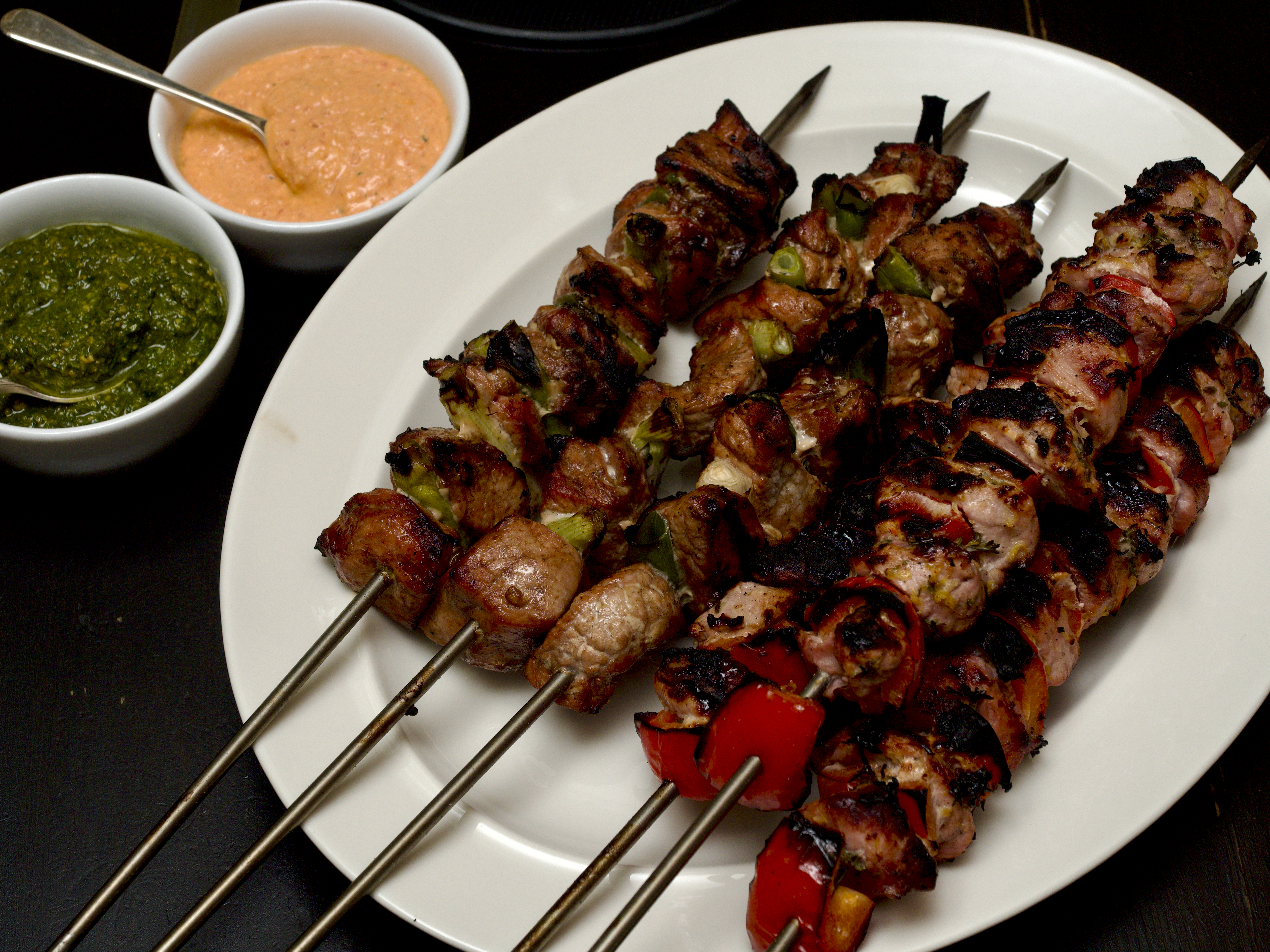
Two kebabs for the barbecue with their respective sauces. We couldn’t decide which one to do, so we halved each recipe and made both. A meat probe is great for checking that barbecued meat is cooked – you are looking for 63C for medium or 71C for well done. You can buy a good-quality pesto if you don’t want to make your own.
Lemony pork kebabs with feta & pepper sauce, makes 6-8 kebabs
zest and juice of 2 lemons
4 tbsp olive oil
2 cloves of garlic, crushed
a handful of thyme sprigs, roughly chopped
1.2kg pork leg, diced
2 red peppers, diced
FOR THE FETA AND RED PEPPER SAUCE:
2 red peppers
200g feta
½-1 tsp chilli flakes
3 tbsp olive oil
Mix the lemon zest and juice, olive oil, garlic and thyme together. Sesaon with salt and pepper, then add the pork and stir well. Cover and refrigerate for 12-24 hours.
When ready to cook get a barbecue ready for both direct and indirect cooking.
Put the whole peppers for the sauce directly over the fire and char the skins all over until blackened. Transfer to a bowl and cover with cling film, then leave for a few minutes or until cool enough to handle. Rub off the skin and discard the stems and seeds. Put the pepper flesh into a food processor with the feta, chilli flakes and olive oil, season, then blend to a purée. Transfer into a bowl and set aside.
Thread the pork and pepper pieces onto skewers. Set onto the barbecue, slightly away from the fire so they cook over a medium heat for 15-20 minutes.
Serve with the feta and red pepper sauce.
Balsamic pork kebabs with pesto dressing, makes 8 kebabs
4 tbsp balsamic vinegar
3 tbsp olive oil
1 tbsp brown sugar
3 cloves of garlic, crushed
1 tsp smoked paprika
1.2kg pork leg, diced
a bunch of scallions, cut into 4cm lengths
FOR THE PESTO (or use good-quality shop-bought pesto)
50g pine nuts, toasted
30g basil, leaves and stems, roughly torn
40g Parmesan, grated
6 tbsp olive oil
juice of ½ lemon
1 clove of garlic, crushed
Mix the balsamic, olive oil, brown sugar, garlic and smoked paprika together in a bowl. Season with salt and pepper, then stir in the pork pieces. Cover and put into the fridge for 12-24 hours.
To make the pesto, tip the pine nuts, basil, Parmesan, olive oil, lemon juice, garlic and a little salt into a food processor and blend to a purée. Scrape the pesto into a bowl and set aside.
When ready to cook get the barbecue prepped for direct and indirect cooking.
Thread the pork and scallions on to skewers. Set onto the barbecue, slightly away from the fire so they cook over a medium heat for 15-20 minutes.
Serve with the pesto on the side.
(Original recipes from Seared by Genevieve Taylor, Hardie Grant: Quadrille, 2022).
This is a long recipe but it’s not difficult and quite nice and methodical. You can make the fishcakes earlier in the day and cook when you’re ready if you like. You will get big fishcakes full of chunky pieces of fish. Serve with green salad.
Wine Suggestion: a top-notch Muscadet, like Jérémie Huchet’s, very special Clos des Montys. Finely toned and vibrant with citrus and grapefruit on the palate; both dry and salty, and creamy at the same time. It’s a little edgy, but we like that. Wines like this bring out the flavours of the sea and celebrate the three fish in this dish.
Fishcakes with parsley sauce – serves 6
600g Maris Piper potatoes, cut into chunks
250g thick unskinned cod fillet
250g thick unkinned salmon fillet
100g unskinned smoked haddock fillet
500ml full-fat milk
1 bay leaf
grated zest of ½ lemon
6 scallions, finely sliced
25g plain flour
2 eggs
100g fresh white breadcrumbs
75ml vegetable oil
lemon wedges, to serve
FOR THE PARSLEY SAUCE:
25g butter
25g plain flour
reserved milk from cooking the fish
25g curly parsley, finely chopped
Put the potatoes into cold salted water, bring to the boil, then simmer for 12 to 15 minutes or until tender, then drain and mash. Season with salt and white pepper, then spread the potatoes out over a plate to cool.
Put the fish pieces into a large saucepan with the milk and bay leaf. Season with a little salt and peppper. Cover with a lid and gently bring to a simmer, then remove from the heat and set aside for 10 minutes to finish cooking.
Remove the fish from the milk and set onto a plate. Pour the milk into a jug as you will need this for the parsley sauce later. Remove the skin from the fish and break it into chunky pieces, discarding any bones, then leave to cool completely.
When the potato has cooled, transfer it to a large bowl and stir in the lemon zest and scallions. Gently stir in the fish with a wooden spoon, trying not to break it up too much.
Divid the mixture into 6 balls. Flatten the balls into cakes, about 3cm thick, and place on a lined baking tray. Put the tray into the fridge for 45 minutes or into the freezer for 20 to firm up.
Sprinkle the flour over a plate. Beat the eggs together in a shallow bowl. Spread half the breadcrumbs over another plate. Now take each fishcake and coat in the flour, shaking off any excess, then into the egg, allowing excess to drip off and finally into the breadcrumnbs to coat. Place on a lined baking tray. When you have coated 3 fishcakes put the rest of the breadcrumbs onto the plate for the rest. The fishcakes will keep in the fridge for 24 hours at this stage.
Heat the oven to 200/C/180C fan.
Heat the oil in a large frying pan, then place 3 fishcakes into the pan and fry for about 3 minutes on each side. Put onto a baking tray while you fry the rest.
Put the fishcakes into the hot oven for 10 minutes to finish cooking. Test with a skewer to make sure they are hot right through to the middle.
To make the parsley sauce, melt the butter in a small pan, then stir in the flour. Cook for a minute, then gradually add the reserved milk, stirring continually until you have a smooth sauce. Allow to simmer, then cook gently for a few minutes until thickened, then season. Remove from the heat and stir in the chopped parsley.
Serve the fishcakes with the sauce and some lemon wedges. A green salad works well on the side.
(Original recipe from The Hairy Bikers’ British Classice by Si King and Dave Myers, Seven Dials, 2018.)
A great starter dish from Persiana Everyday by Sabrina Ghayour. The sun came out so we could sit outside for a relaxed Saturday lunch, and this takes very little time to put together which was perfect.
Wine Suggestion: The much under-rated varietal, Chenin Blanc is our pick. A dry version like Adi Badenhorst’s Secateurs and it’s stonefruit and apple flavours over a flinty core stands up to the baked halloumi and bacon with aplomb.
Halloumi, bacon, date & apple salad – serves 4as a starter
250g block of halloumi
8 smoked streaky bacon rashers
4 large Medjool dates, pitted and halved
FOR THE SALAD:
2 tbsp olive oil
1 tbsp red wine vinegar
1 tbsp clear honey
1 tsp ground cinnamon
1 tsp water
a small bag of mixed salad leaves
1 apple, cored and sliced
Preheat the oven to 240C.
Line a large baking tray with baking paper.
Cut the block of halloumi in half lengthways, then cut each half into 4 rectangular fingers.
Lay a piece of bacon on a board, put a piece of halloumi at the end and top with half a date, then roll up tightly to form a neat bundle. Repeat to make 8 rolls.
Roast the halloumi in the oven for 10-12 minutes or until the bacon is very crispy.
Meanwhile, put the olive oil, red wine vinegar, honey, cinnimon and water into a small bowl and whisk to combine. Spread the salad leaves over a platter, drizzle with the dressing and scatter over the apple slices.
Put the hot halloumi and bacon rolls on top of the salad leaves and serve.
(Original recipe from Persian Everyday by Sabrina Ghayour, Aster, 2022.)
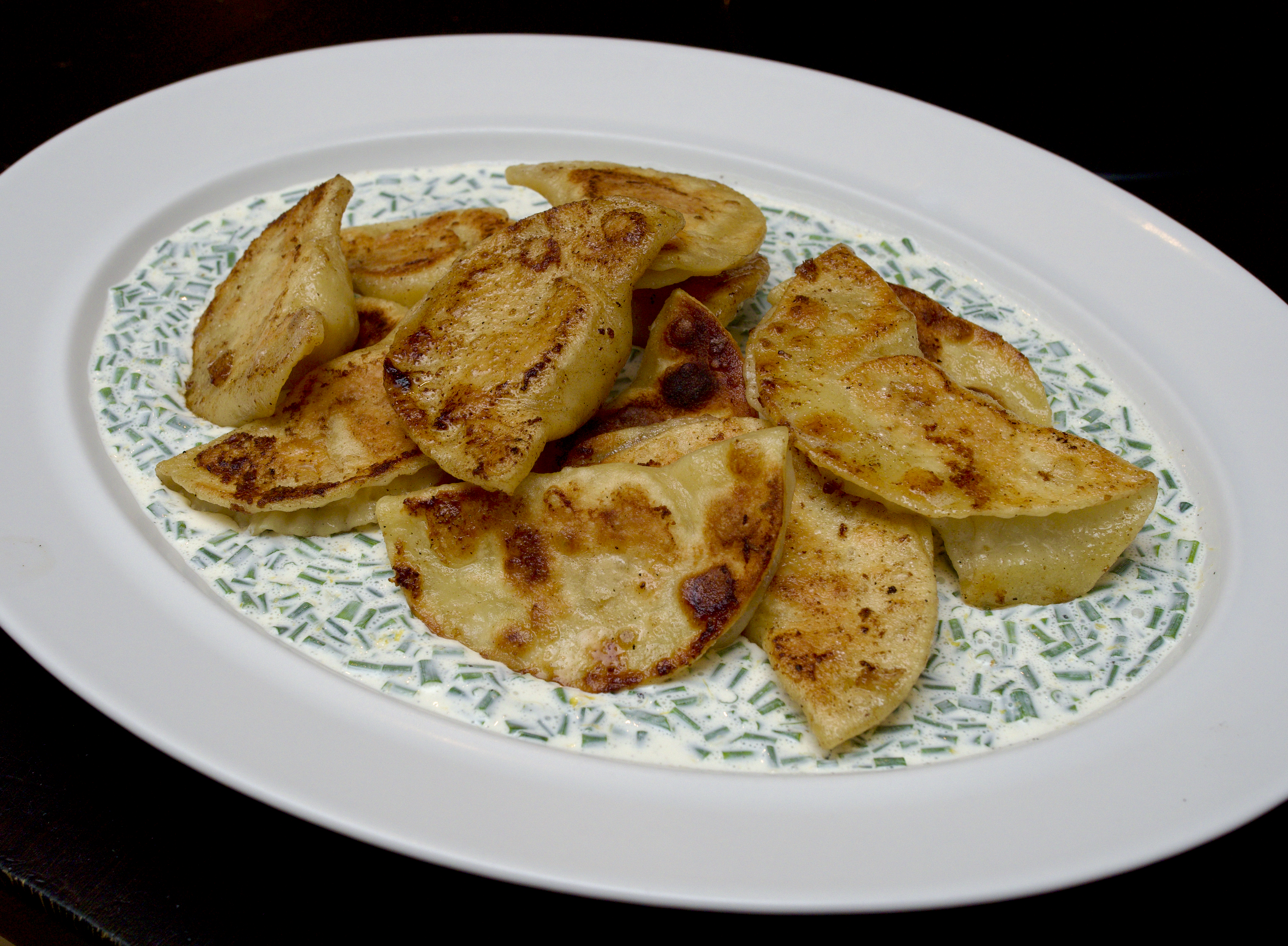
Our first time making these delicious Polish dumplings, and we’ll be making them again as the recipe is easy (if lengthy), makes loads, and they cook from frozen if you don’t eat them straight away. It helps if you can get a bit of a production line going… so involve others if they’re around.
Wine Suggestion: Dry Chenin Blanc, like Domaine des Aubuisières Vouvray “le Marigny”. A dry cuvée that sees a bit of oak and aging on the fine lees giving it extra texture and allowing the minerality to emerge from the precise fuit. The texture in this contrasts with the silkiness of the Pierogi and plays with the sour cream and lemon zest in a good way.
Pierogi – serves 8 to 10
FOR THE DOUGH:
2 large eggs
400g soured cream
350g plain flour, plus extra for dusting
½ tsp baking powder
FOR THE FILLING:
250g white cabbage, about a quarter of a whole one, coarsely grated
2 tbsp white wine vinegar
500g Maris Piper potatoes, peeled and roughly chopped
2 tsp caraway seeds
2 onions,
unsalted butter
120g mature Cheddar cheese
white pepper
TO SERVE:
30g chives
1 lemon, zested and juiced
Make the dough first by beating the eggs with 150g of the soured cream. Sift in the flour, baking powder and ½ tsp of sea salt, then mix until the dough comes together. Knead on a floured surface until smooth, then wrap in clingfilm and put into the fridge.
Put the cabbage into a bowl and add the vinegar and a pinch of salt. Rub and mix with your hands, then set aside to lightly pickle.
Put the potatoes into a pan of boiling salted water and cook for 10-12 minutes or until they are tender. Drain then return to the pot to steam dry.
Toast the caraway seeds in a large dry frying pan for a few minutes, then add the onions with a good glug of olive oil. Cook for 5 to 8 minutes or until soft and golden. Add the pickled cabbage with a knob of butter and cook for another 5 minutes. Mash the potatoes, then add to the cabbage and onions. Add the cheese and some white pepper. Mix well, then taste and add plenty of seasoning. Set aside to cool.
Meanwhile, finely chop the chives and mix in a bowl with the rest of the soured cream, lemon zest and juice. Season, then tip onto a large serving platter and chill in the fridge.
Tip the dough out onto a floured surface and cut in half. Take the first half and roll out to 2mm thick, dusting with flour as you go. Cut as many circles as you can with a 9cm cutter and repeat with the second piece of dough.
Divide the filling into heaped teaspoons on a tray and roll into small marble-sized balls. Place a pastry circle into the palm of your hand, put a ball in the middle, then gently fold in half, piching all the way around, then place on a floured surface.
When you have made all the pierogi, take a floured fork and use it to crimp closed the edges.
Cook a few of the pierogi at a time in a large pot of boiling salted water for about 4 minutes. Carefully scoop them out and itno a large non-stick pan with a knob of foaming butter and fry until golden on one side only. Serve the hot pierogi on top of the chilled sauce.
(Original recipe from Jamie’s Comfort Food by Jamie Oliver, Michael Joseph, 2014.)
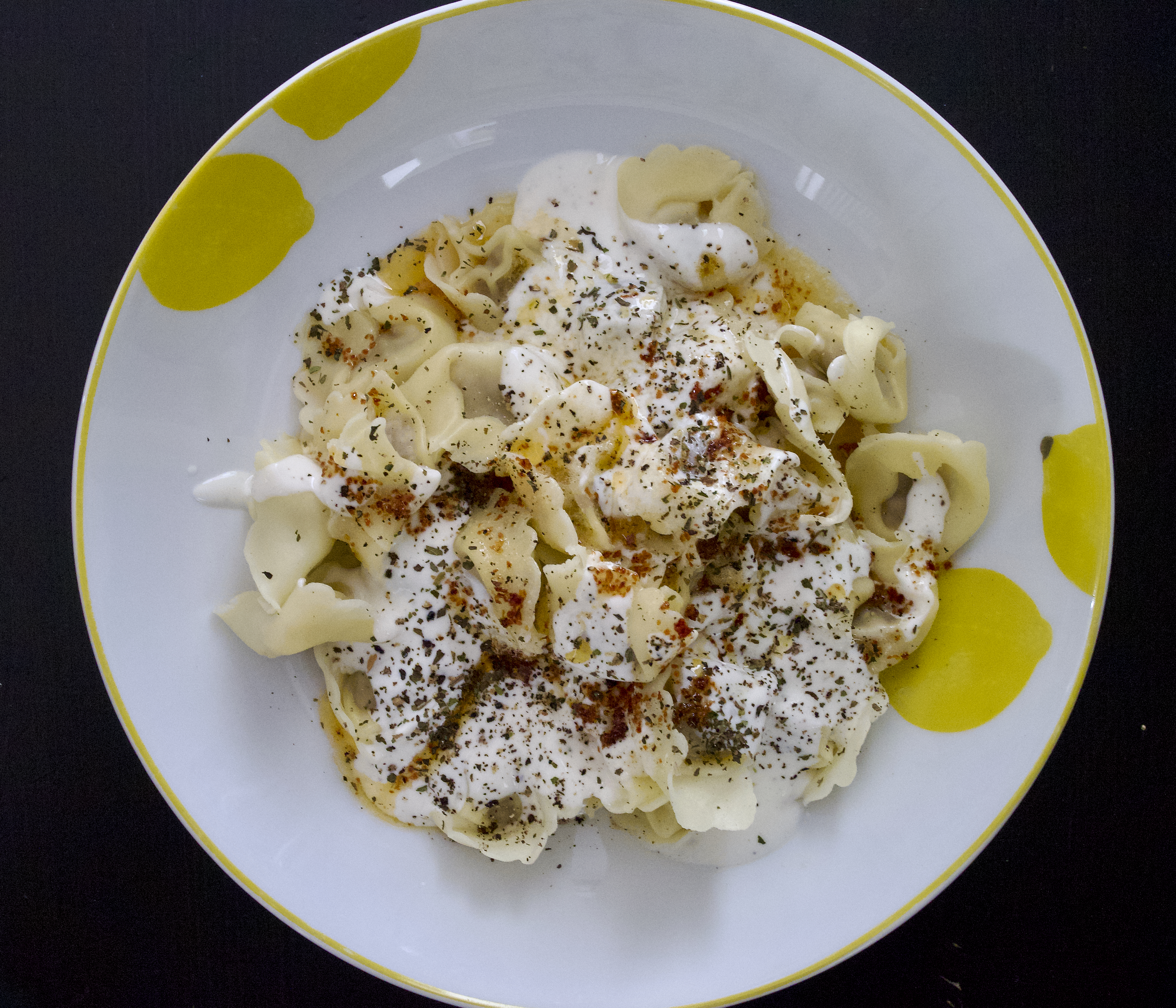
This is a cheat recipe using a packet of shop-bought stuffed pasta. It makes a delicious lunch!
Lazy mantí – serves 2
300g pack of shop-bought stuffed pasta
50g butter
1 tsp pul biber chilli flakes
150g natural yoghurt
1 scant tsp dried mint
Cook the pasta in lots of salty boiling water according to the timings on the pack, then drain into a sieve.
Return the pasta pan to the heat and add the butter. When the butter has melted, stir in the pul biber, then remove from the heat.
Season the yoghurt with salt and pepper and loosen with a little water – you’re looking for double cream consistency.
Divide the pasta between warm bowls and pour over the yoghurt, then drizzle over the pul biber butter, sprinkle with dried mint and season generously with black pepper.
(Original recipe from Persiana Everyday by Sabrina Ghayour, Aster, 2022.)
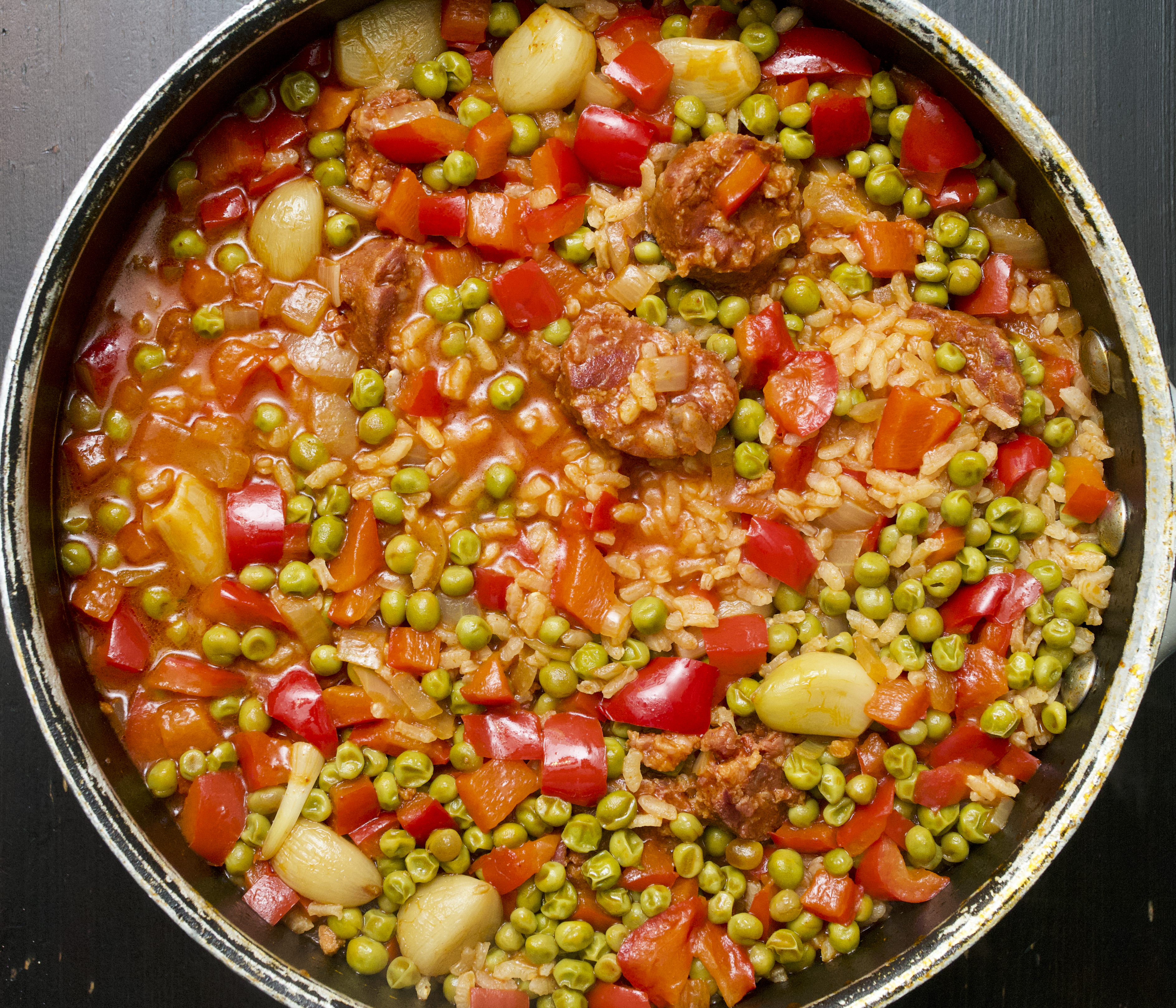
Finally, we got to sit in the garden for half an hour with the sunshine on our faces after many months of grey or wet days. This recipe is from camper van cooking – a book we rely on when camping, and also to get us in the mood for summer.
Wine Suggestion: We think this is fab with a good old Grenache, something like Edetària’s via Edetana red, which is a blend of two Garnacha varietals: Fina and Peluda. Grown in a very special location for Garnacha of all varieties, both red and white; Terra Alta in Spain. A wine that has a rich depth and yet is elegant and refined with freshness alongside the lush berry and balsamic flavours.
Baked rice with chorizo and peas – serves 4
2 tbsp good olive oil
2 fat chorizo sausages, thickly sliced
1 large onion, finely chopped
1 red pepper, finely chopped
10 garlic cloves, peeled and left whole
2 tsp paprika (use whatever sort you like or have)
200g tomato passata
1 tbsp tomato purée
1 litre chicken stock
360g paella rice
150g frozen peas
lemon wedges, to serve
Heat the oil in a large, deep frying pan. Fry the chorizo for a couple of minutes or until some oil has been realised and it is starting to brown. Add the onion, peppers, garlic and some salt, then cook gently for about 10 minutes or until soft.
Stir in the paprika, passata and tomato purée and cook for 5-10 minutes or until rich and thick.
Add the stock, then bring to the boil, season again with salt, then add the rice and stir. Scatter over the peas and cover. Cook for 18-20 minutes or until the rice is tender and most of the liquid has been absorbed.
Remove from the heat and rest with the lid on for at least 10 minutes, then serve in bowl with lemon wedges to squeeze over.
(Original recipe from Camper Van Cooking by Claire Thompson & Matt Williamson, Hardie Grant: Quadrille, 2021.)
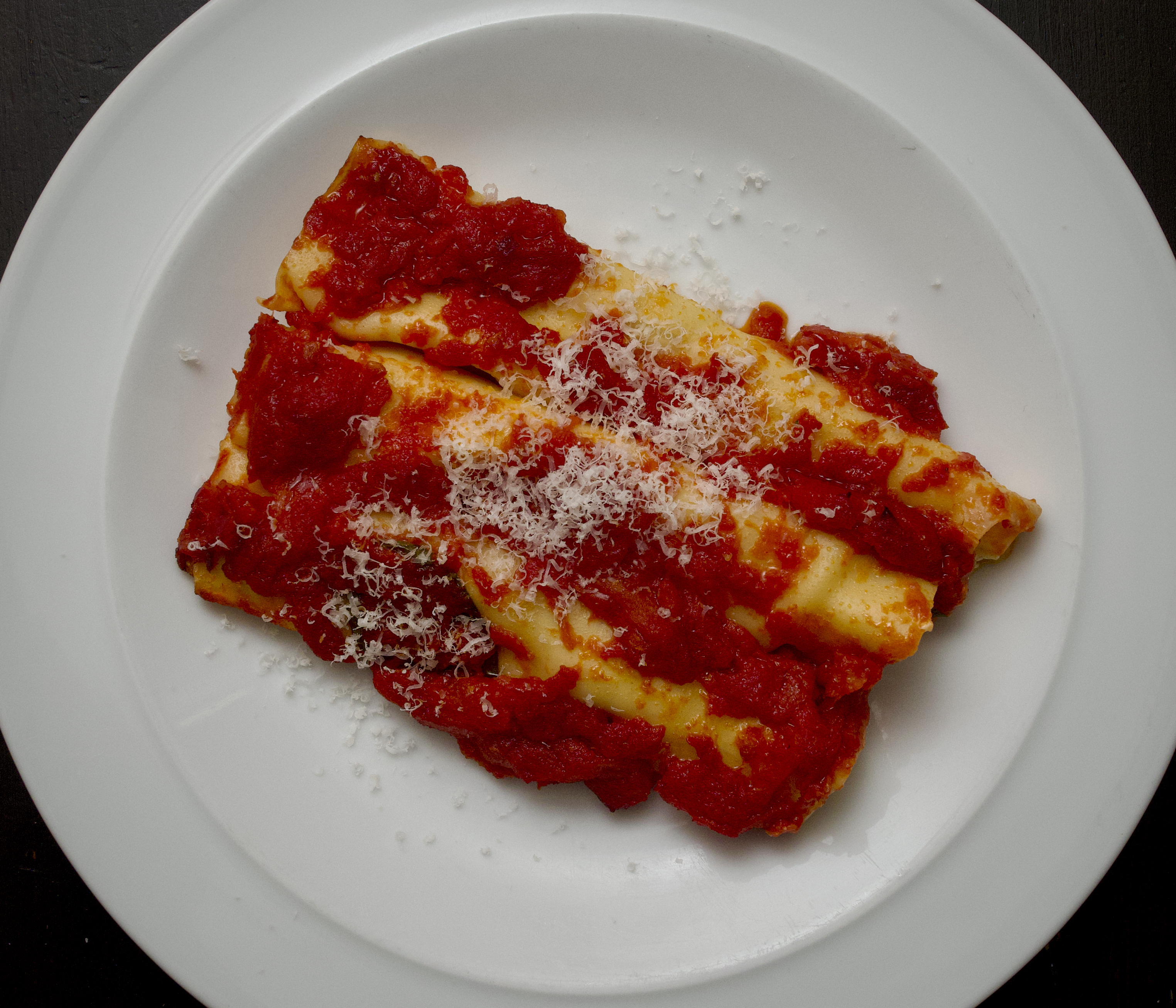
You need to take your time over this one but it’s an excellent thing to do on a rainy day.
Wine Suggestion: A bright, youthful, vibrant red Italian red came to mind immediately for this. We didn’t have anything to hand from the Sorrento/Naples area so crossed over to the Marches for Umani Ronchi’s Rosso Conero Serrano. A delightful blend of Montepulciano and Sangiovese it stepped in admirably with an elegant red-fruited core and fine tannins.
Cannelloni all sorrentina – serves 4
First you need to make a batch of fresh egg pasta. If you have never done this before a youtube video will be helpful.
400g 00 flour
4 eggs
Make a mountain of flour on a large wooden board. Make a crater in the centre and break in the eggs.
Use a fork to break the egg yolks and gently whisk before starting to incorporate the flour by knocking it into the eggs. When you have added enough flour that the eggs will no longer run away, you can start using your hands and continue to mix, bring the flour and eggs together into a soft scraggy ball.
Knead the pasta until the dough starts to soften and smooth out – at least 5 minutes. If after the first few minutes the ball is still dry and flaky, flick just a few drops of water onto the board and knead them into the dough. You may need to do this a couple times, but don’t add too much, keep it to a couple of drops each time.
Once the dough is smooth, firm but pliable, leave it to rest, covered with a cloth or cling film for a at least 30 minutes.
Clamp a pasta machine onto a suitable table and put to the widest setting. Divide the pasta dough into 4, take a quarter and put the other 3 back under the cloth. Flatten the dough into a patty and put it through the rollers. Fold the strip of dough like an envelope and pass it through again, evelope again and pass again. It will be the size of a small book.
Set the machine at two and pass the dough through, but don’t fold this time. Do the same with the third setting, and so on until you have rolled it through all the settings and have a long strip, you can cut this to make it more manageable. Dust with some flour if it feels sticky.
Repeat this method with the other lumps of pasta. Cut the pasta into 12 sheets, each 20 x 10cm.
FOR THE SAUCE:
6 tbsp olive oil
2 cloves of garlic
a pinch of chilli flakes
2 x 400g tins plum tomatoes
a few fresh basil leaves
FOR THE FILLING:
300g ricotta, drained
2 eggs
200g mozzarella, drained overnight and diced
3 heaped tbsp chopped flat-leaf parsley
60g Parmesan, grated, plus extra for the top
a few fresh basil leaves
grated nutmeg
First make the sauce. Warm the olive oil, garlic and chilli in a large, deep frying pan. When the garlic is fragrant, add the tomatoes, basil and a pinch of salt. Break the tomatoes up with a wooden spoon and allow to simmer for 15 minutes.
To make the filling, mash the ricotta in a large bowl, then beat in the eggs. Add the mozzarella, parsley and Parmesan and season with salt, pepper and nutmeg to taste.
Bring a large pan of salty water to the boil and prepare a large bowl of cold water. Drop a few pasta sheets into the boiling water, leave for 1 minutes, then lift out and into the cold water for 20 seconds, then lay on clean tea towels.
To roll the cannelloni, put 2 spoons of the filling at the top of the longer edge of each pasta sheet and roll closed.
Spread a little tomato sauce into the bottom of a large baking dish, arrange the cannelloni on top, then sprinkle with grated Parmesan and a few basil leaves, then pour over the rest of the sauce.
It helps to rest the dish now for at least 2 hours or even overnight.
Preheat the oven to 200C and bake for 30 minutes.
Leave the dish to rest for 30 minutes before serving with a green salad.
(Original recipe from An A-Z of Pasta by Rachel Roddy, Penguin:Fig Tree, 2021.)
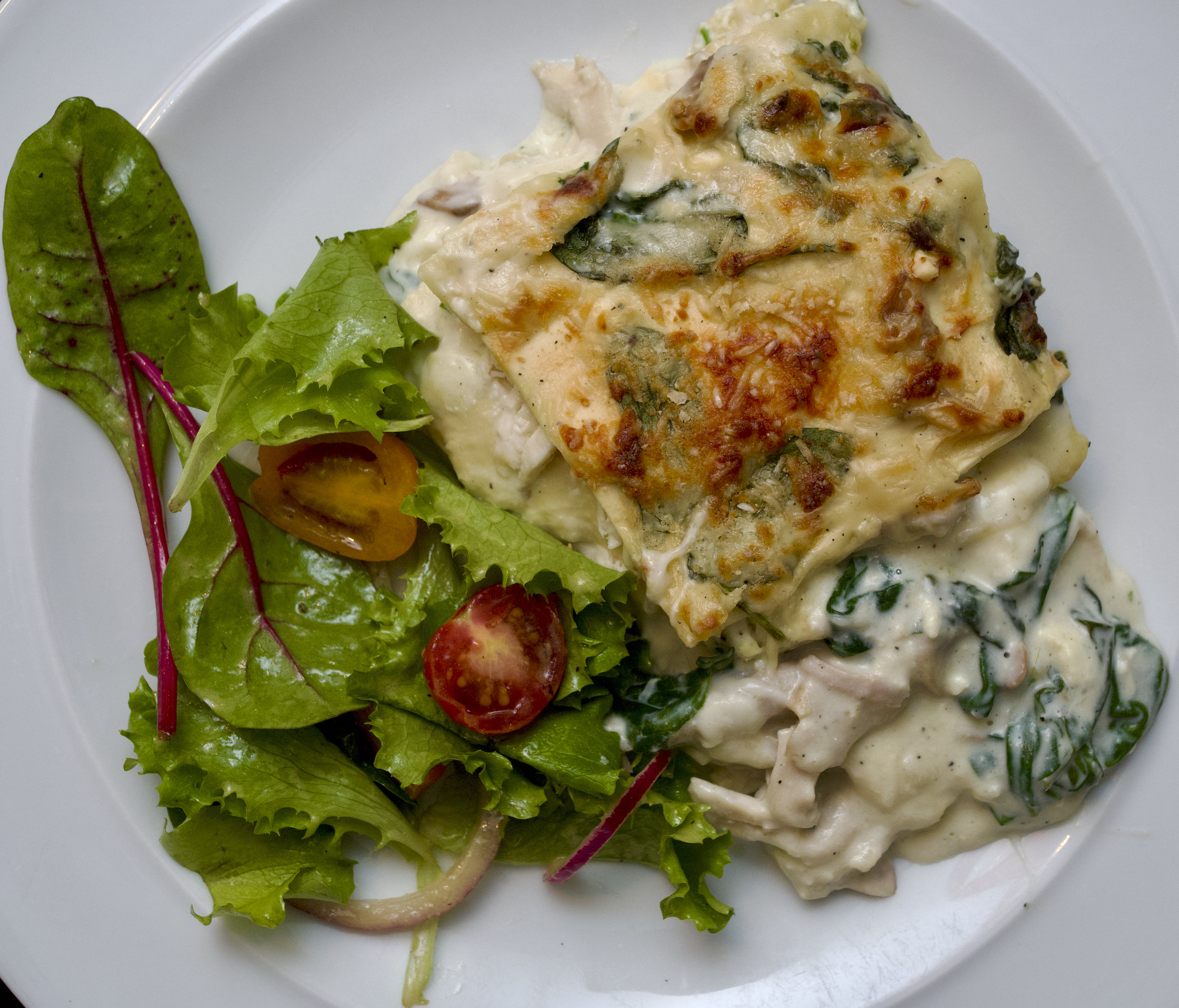
Make this with your roast chicken leftovers. It will generously serve 6 people and is very rich so you will only need a green salad on the side. Make sure you season all the components separately.
Wine Suggestion: We are big fans of Chardonnay, especially judiciously oaked and handled, no matter where they are grown. Tonight a hidden gem from Burgundy, the Patrick Javillier Bourgogne Côte d’Or Cuvée des Forgets which is grown on clay very close to Meursault. Quite vigorous and toasty with yellow and red apples poking through, plus layers of nuts. Generous and fleshy with a fresh, vibrant core that helps balance the richness of the dish.
Chicken and spinach lasagne – serves 6 to 8
40g butter
2 large cloves of garlic, finely chopped
100g button mushrooms, finely sliced
3 tbsp plain flour
600ml milk
100g cream cheese
50g grated Parmesan
150g baby spinach
1 large egg
250g ricotta cheese
1 tbsp chopped flat-leaf parsley
no-cook lasagne sheets, about 8
400g cooked chicken, cut into bite-sized pieces
200g grated mozzarella cheese
Melt the butter in a saucepan, then add the garlic and mushrooms. Season and cook gently for a few minutes or until the mushrooms have softened.
Stir in the flour and cook for another minute, then gradually add the milk. Season generously, bring to a simmer, then reduce the heat and cook for a few minutes, until thickened. Stir in the cream cheese and half of the Parmesan, then remove from the heat and stir in the spinach until wilted.
Whisk the egg, ricotta and parsley together in a bowl and season generously.
Spoon a quarter of the sauce into a large, deep, rectangular dish. Cover with lasagne sheets. Add a third of the ricotta mix, then add a third of the chicken, a third of the mozzarella and a small sprinkling of Parmesan. Repeat these layers twice more, then finish with a layer of lasagne sheets and the last of the sauce and remaining Parmesan.
Bake for 25 minutes, until bubbling and browned. Leave to settle before cutting into squares and serving with salad.
(Original recipe from More Midweek Meals by Neven Maguire, Gill Books, 2022.)
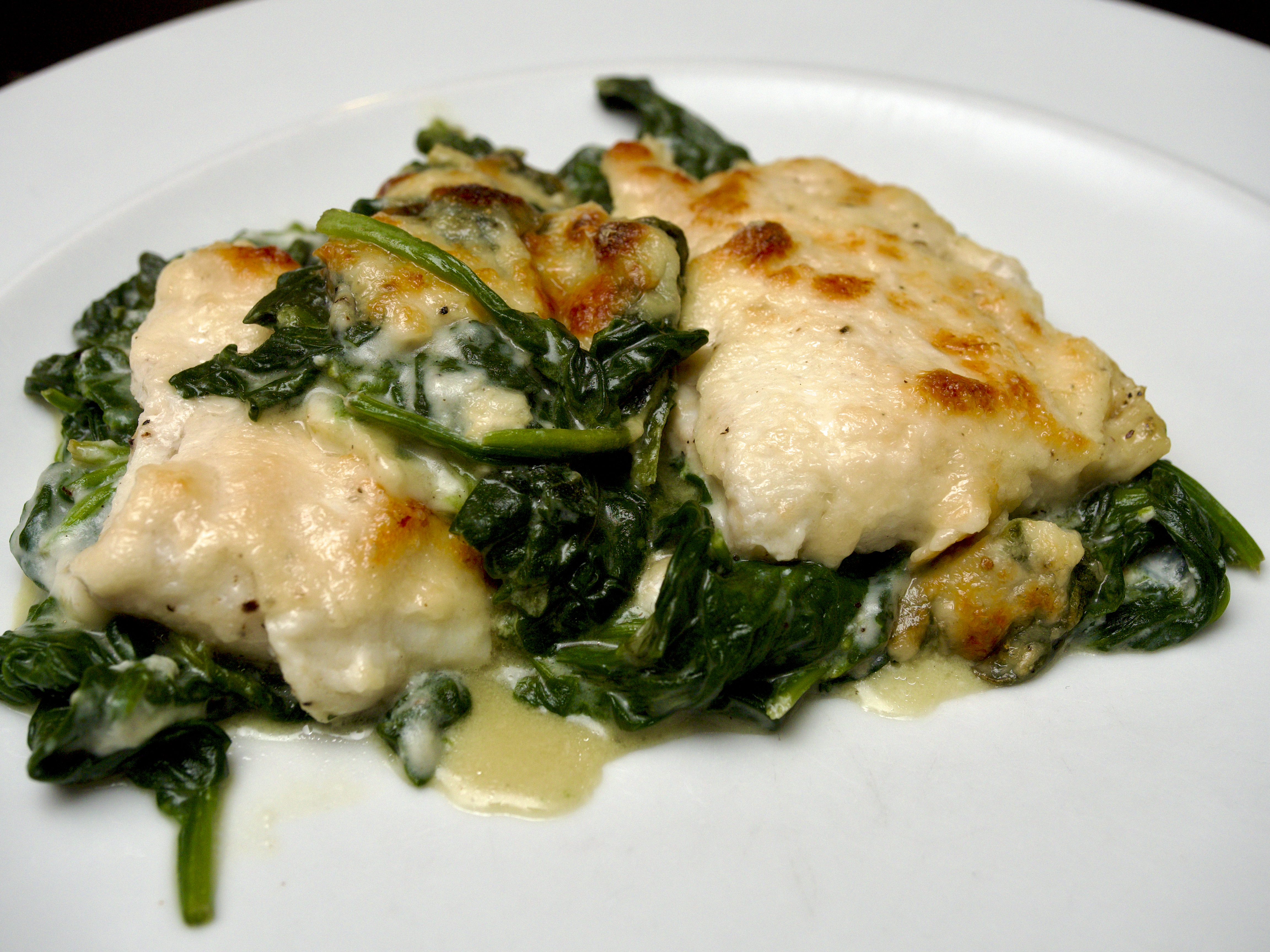
It’s a classic combination for good reason. Very easy to make and absolutely delicious.
Wine Suggestion: playing on the balance of rich parmesan and bechamel, earthy spinach and gentle sole we opened a bottle of Sartarelli’s Mellitta. A Castelli di Jesi Verdicchio Riserva this shows the depth only top quality old-vines can give with flinty almond and peach flavours overlaid with a creamy toastiness. Made gently and with thought this wine isn’t brash, but rather has great depth and subtle nuances. A new find and one we’ll revisit.
Lemon sole florentine – serves 4
4 large lemon sole, each cut into 4 fillets and skinned (your fish shop will do this for you)
juice of ½ lemon
45g butter
45g plain flour
450ml full-fat milk
750g spinach leaves
30g Parmesan cheese, grated
Heat the oven to 200C/180C fan/Gas 6.
Sprinkle the fish fillets with the lemon juice and season with salt and pepper. Fold them in half widthways, and set aside.
Melt the butter in a saucepan, add the flour and cook, stirring for a minute. Remove from the heat and gradually blend in the milk. Bring to the boil, stirring constantly until thickened. Simmer for 2-3 minutes, then season.
Wash the spinach and put into a pan with just the water left on the leaves. Cook for a couple of minutes until wilted, then drain well and squeeze out excess water.
Stir half the sauce into the cooked spinach and spoon into a shallow ovenproof dish. Arrange the sole on top, then pour over the rest of the sauce and sprinkle with cheese. Bake in the oven for 30 minutes, then serve.
(Original recipe from Mary Berry’s Complete Cookbook, DK, 1995. )
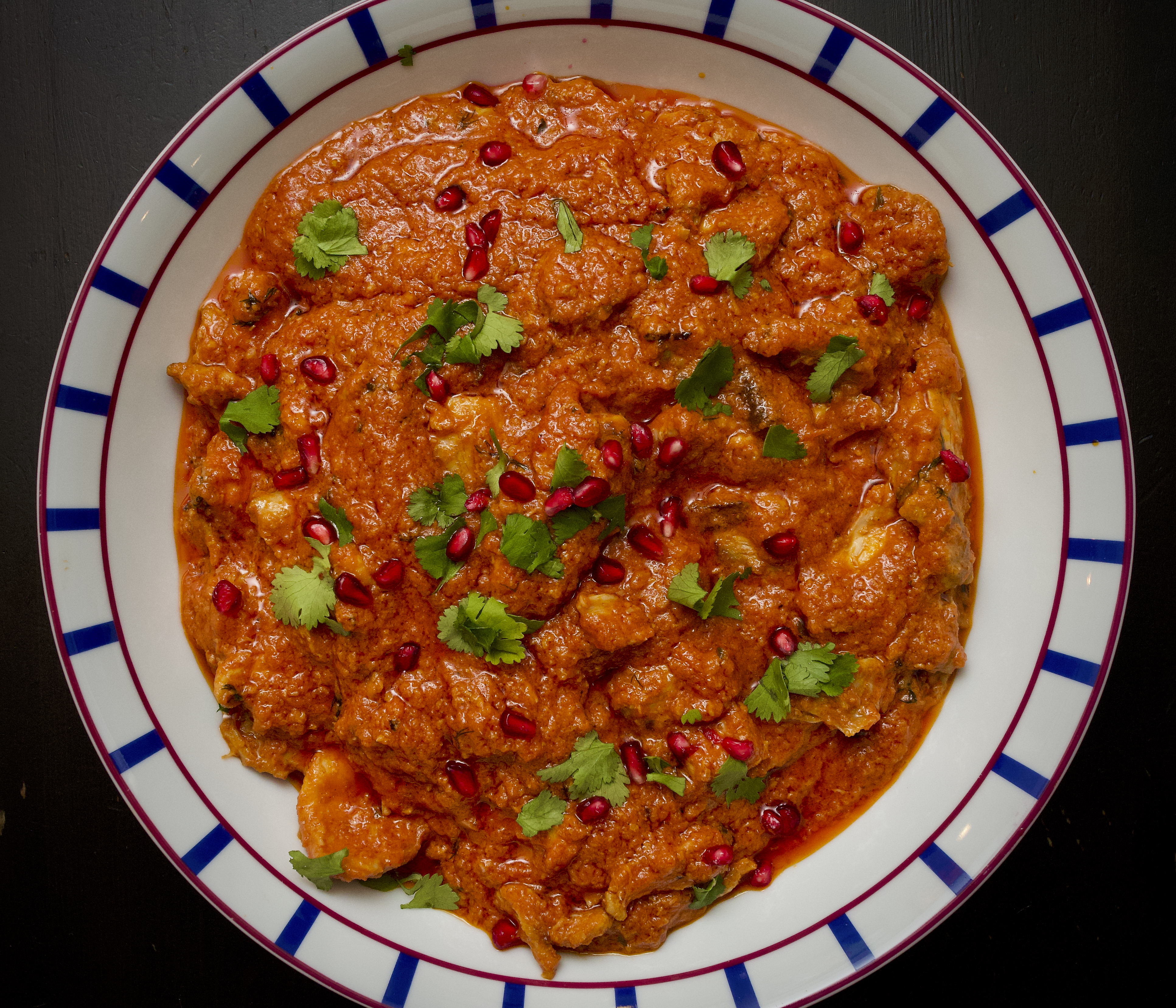
This is Dishoom’s Chicken Ruby and it’s by far the best recipe for butter chicken that we’ve made. There’s definitely quite a bit to do but you can marinate the chicken and make the sauce in advance, so the last bit is very easy. Serve with rice.
Butter chicken – serves 4
700g skinless, boneless chicken thighs
20g unsalted butter, melted
50ml double cream
FOR THE MARINADE:
10g fresh ginger, chopped
20g garlic, chopped
5g fine sea salt
1 tsp deggi mirch chilli powder
1½ tsp ground cumin
½ tsp garam masala
2 tsp lime juice
2 tsp veg oil
75g full-fat Greek yoghurt
FOR THE MAKHANI SAUCE:
35g garlic
175ml vegetable oil
20g fresh ginger
2 x tins chopped tomatoes
2 bay leaves
6 green cardamom pods
2 black cardamom pods
2 cinnamon sticks
2 tsp fine sea salt
1½ tsp deggi mirch chilli powder
30g butter
1 tsp garam masala
20g granulated sugar
1 tbsp runny honey
1 tsp ground cumin
1 tsp dried fenugreek leaves, crumbled
½ tsp dill fronds
80ml double cream
TO GARNISH:
coriander leaves, chopped
1 tbsp pomegranate seeds
You need to marinate the chicken for 6-24 hours. To make the marinade, whizz the ingredients together in a blender to a smooth paste, then transfer to a bowl.
Cut the chicken into 4cm pieces, add to the marinade and stir to coat. Cover and marinate in the fridge.
Next make the makhani sauce.
Finely chop 15g of the garlic. Warm a large saucepan over a medium-high heat and add the oil. Add the chopped garlic and fry until light golden brown and slightly crispy, about 7-8 minutes. Remove with a slotted spoon and drain on kitchen paper.
Finely grate the rest of the garlic and the ginger.
Blitz the tomatoes in a blender until smooth.
Put the saucepan with the garlicky oil back over a medium-high heat and add the bay leaves, all of the cardamom pods and the cinnamon sticks. Let them crackle for a minute, stirring.
Turn down the heat and add the garlic and ginger paste. Cook for 5 minutes, allowing it to brown, but not burn.
Add the tomatoes, salt and chilli powder and bring to a fast simmer, then cook until reduced by half, stirring regularly – about 30 minutes.
Add the butter and simmer for another 5 minutes.
Add the garam masala, sugar, honey, cumin, crispy garlic, dried fenugreek and fresh dill and cook for another 15 minutes.
If you are using the sauce straight away, add the cream and simmer gently for 5 minutes. If not, allow to cool and chill in the fridge until needed. Add the cream when you reheat the sauce.
To assemble / finish:
When you’re ready for the curry, heat the grill to medium-high. Place the marinated chicken on a rack in the grill pan, then brush with the melted butter and grill for 8-10 minutes or until cooked and nicely charred.
Warm a large saucepan over a medium-low heat. Add the makhani sauce, cream and grilled chicken and simmer gently for 10 minutes.
Serve the curry garnished with the chopped coriander and pomegranate seeds with steamed rice on the side.
(Original recipe from Dishoom by Shamil Thakrar, Kavi Thakrar & Naved Nasir, Bloomsbury, 2019.)
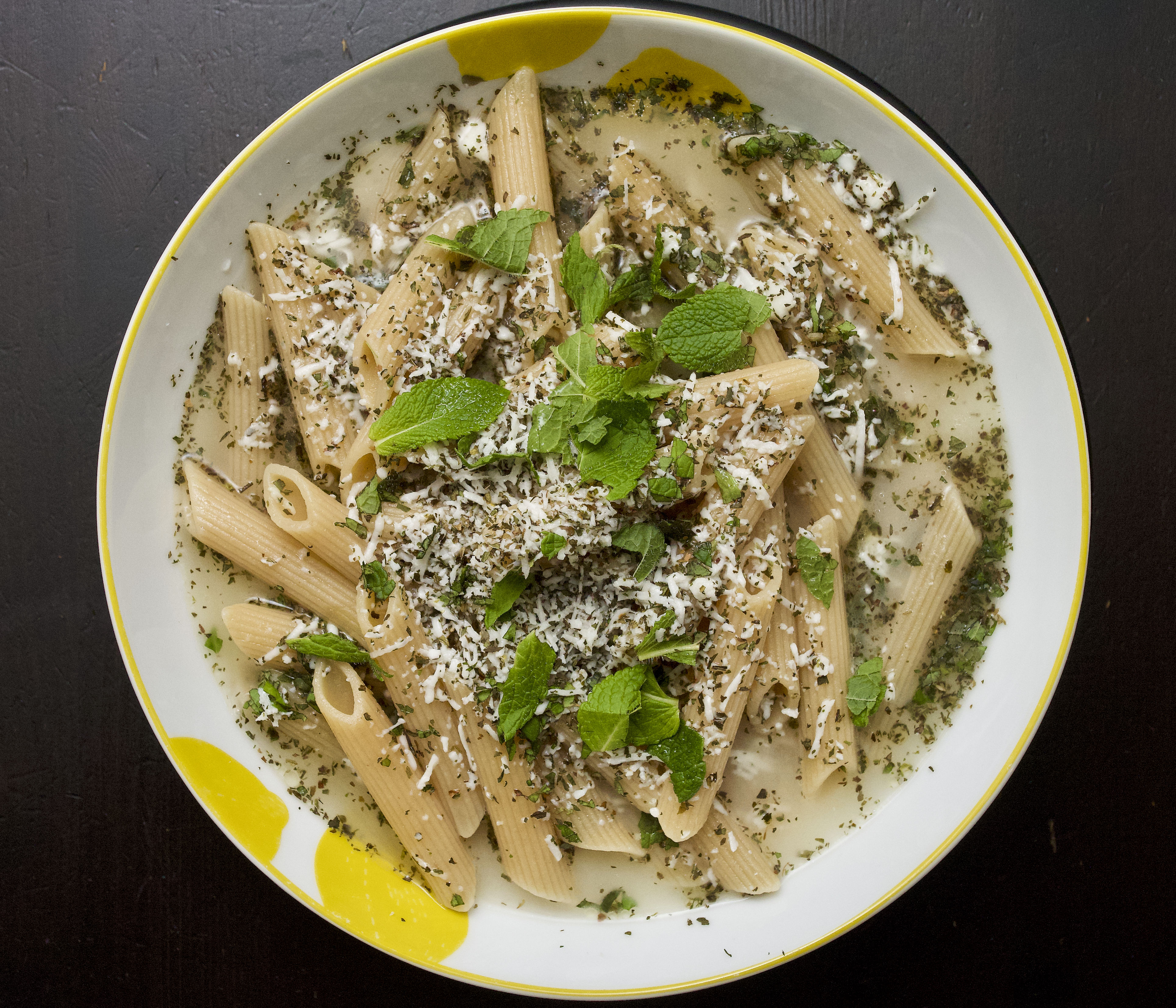
We heard about this dish on The Food Programme on BBC Radio 4 as described, lovingly, by Leyla Kazim on a program about Cyprus and halloumi/hellim. We couldn’t wait to try it. Constructed from the description by Leyla and trawling the internet for quantities. Delicious comfort food and a new way with halloumi (for us at least).
Turkish macaroni – serves 4
200g halloumi
2 tbsp dried mint
400g wholewheat pasta, we used penne
2 litres good chicken stock
1-2 lemons
a large handful of fresh mint leaves, chopped
Finely grate the halloumi cheese and mix with the dried mint.
Cook the pasta in the chicken stock until al dente.
Put some of the cheese and mint mixture in the bottom of four bowls. Ladle some pasta and stock over each portion, then sprinkle with another layer of cheese and mint. Add another layer of pasta and finish with a final layer of cheese. Sprinkle over the fresh mint and squeeze some lemon juice over each to taste.
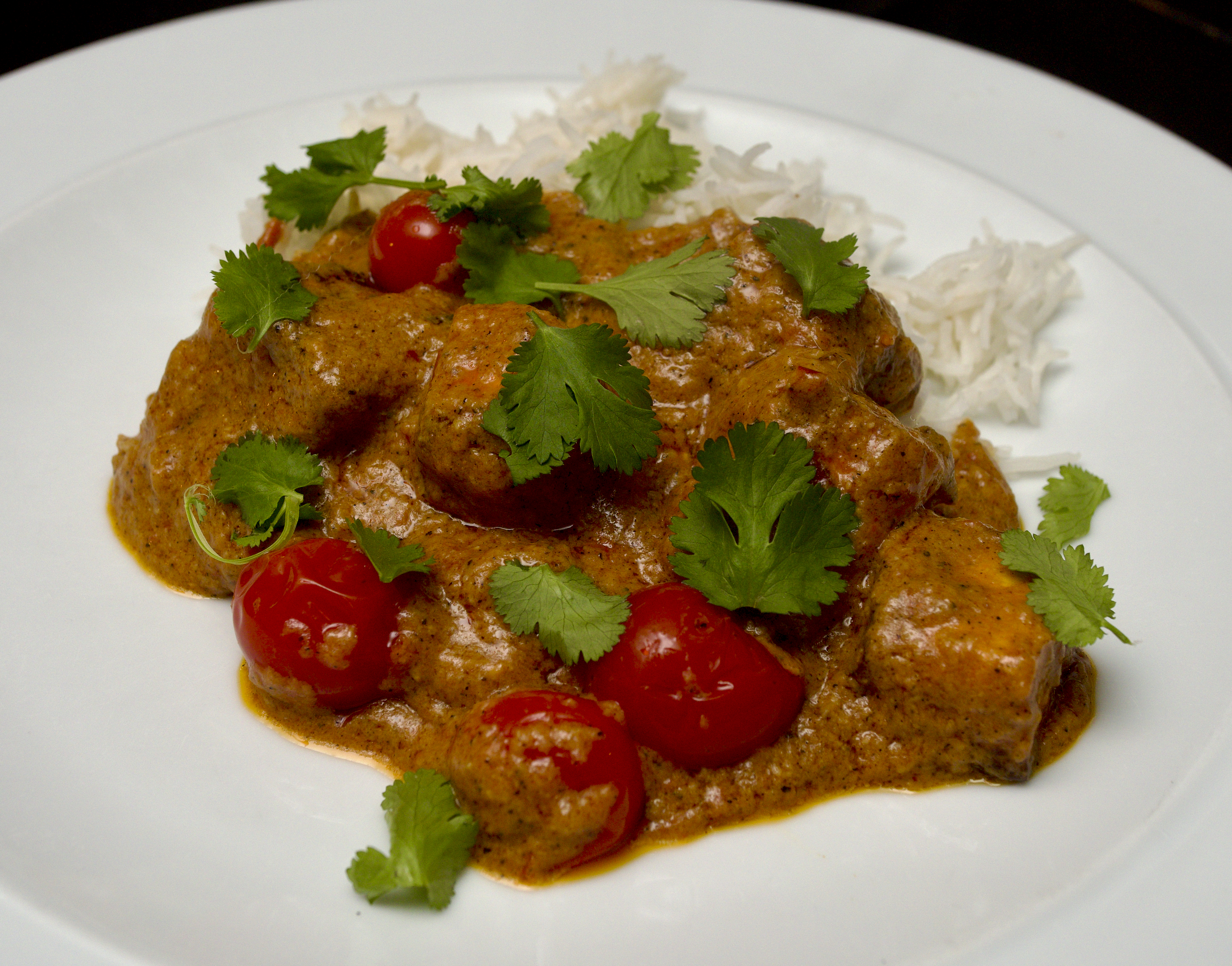
A easy peasy curry for weeknights. Serve with steamed basmati.
Black pepper paneer and cashew curry – serves 4
2 tbsp sunflower oil
2 x 225g packs of paneer, cut into 3cm cubes
2 tbsp finely grated ginger
2 tbsp finely grated garlic
1 tbsp freshly ground black pepper
3 tbsp madras curry paste (we use Patak’s)
1 x 400ml tin coconut milk
1 x 400g tin cherry tomatoes
4 tbsp cashew butter (if you don’t have this you can whizz cashews a food processor to make it)
1 lime, juiced
coriander leaves, to serve
Heat the oil in a large frying pan over a medium-high heat and cook the paneer for 5-6 minutes, until golden on all sides.
Turn the heat down ot medium-low and add the garlic, ginger and black pepper, then cook for 1 minutes before adding the curry paste and cooking for another minute.
Add the coconut milk, tomatoes and cashew butter, then season and simmer for 20 minutes until thickened. Season again add the lime juice.
Scatter coriander leaves over and serve with steamed rice.
(Original recipe by Adam Bush in Olive Magazine, March 2022.)




 Jono & Jules do food & wine