7 April 2014 by jonoandjules
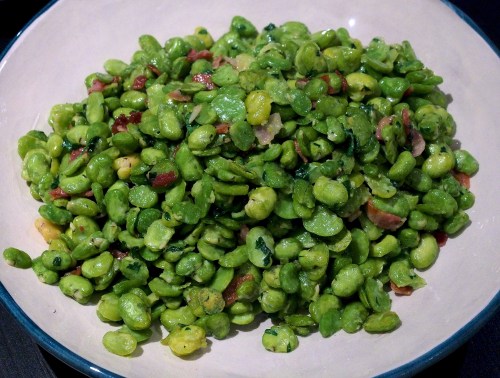
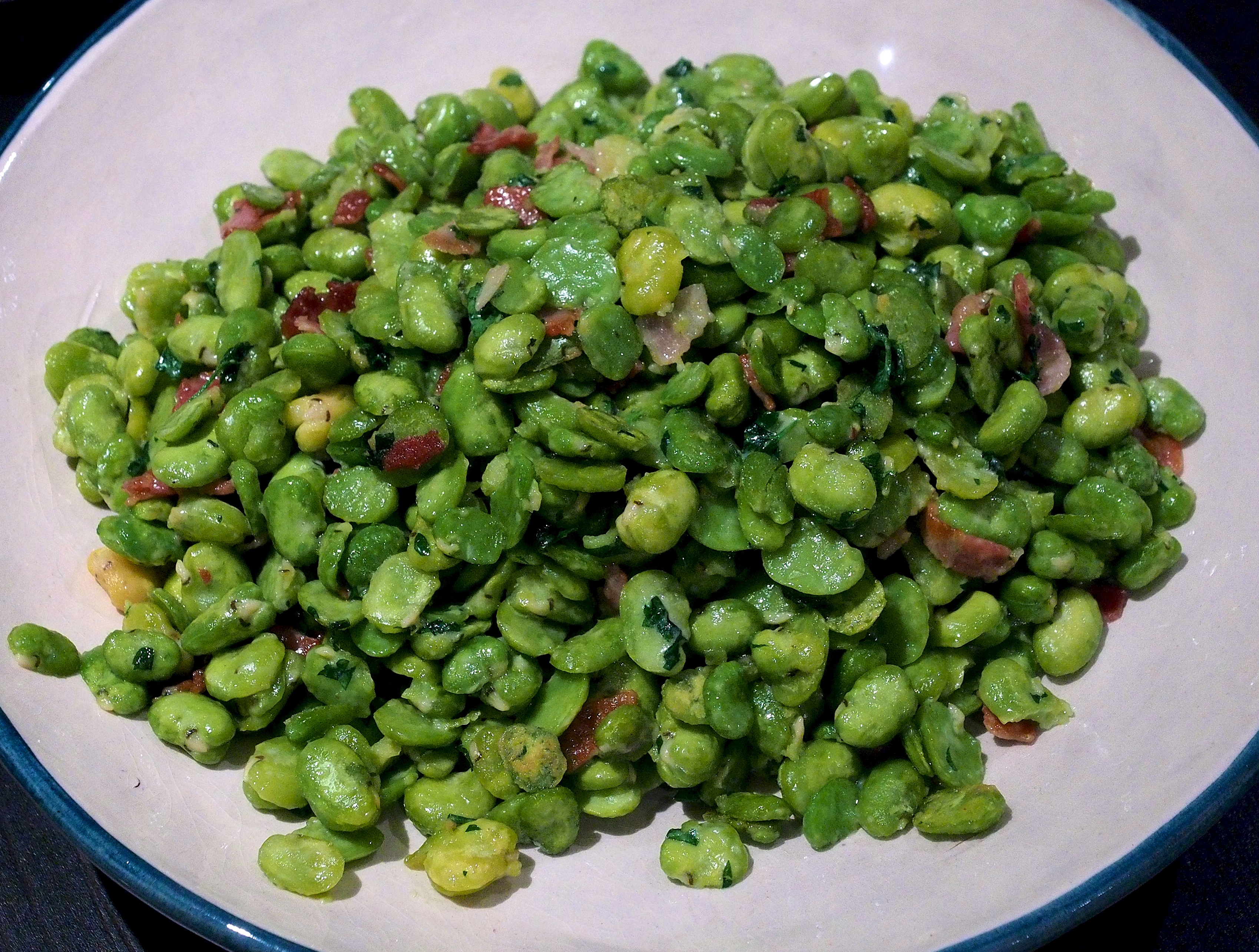
Broad Bean and Bacon
Spring has definitely sprung in Ireland but we’re not picking beans just yet. This recipe works just as well with the frozen variety.
Broad Beans with Bacon – serves 6
- 60g diced bacon (or ham)
- butter
- 1kg cooked broad beans
- 2-3 tbsp light béchamel sauce (make a batch and you can freeze the remainder)
- cream
- chopped parsley
Cook the bacon in a little butter.
Add the cooked beans, the béchamel sauce, cream and a little chopped parsley. Simmer together for 5 minutes.
(Original recipe from At Elizabeth David’s Table: Her very best everyday recipes, Penguin, 2010.)
Posted in Food, Side dish | Tagged Broad beans, Cooking, Elizabeth David, Food, Recipe, side dish | Leave a Comment »
31 March 2014 by jonoandjules

Celeriac purée
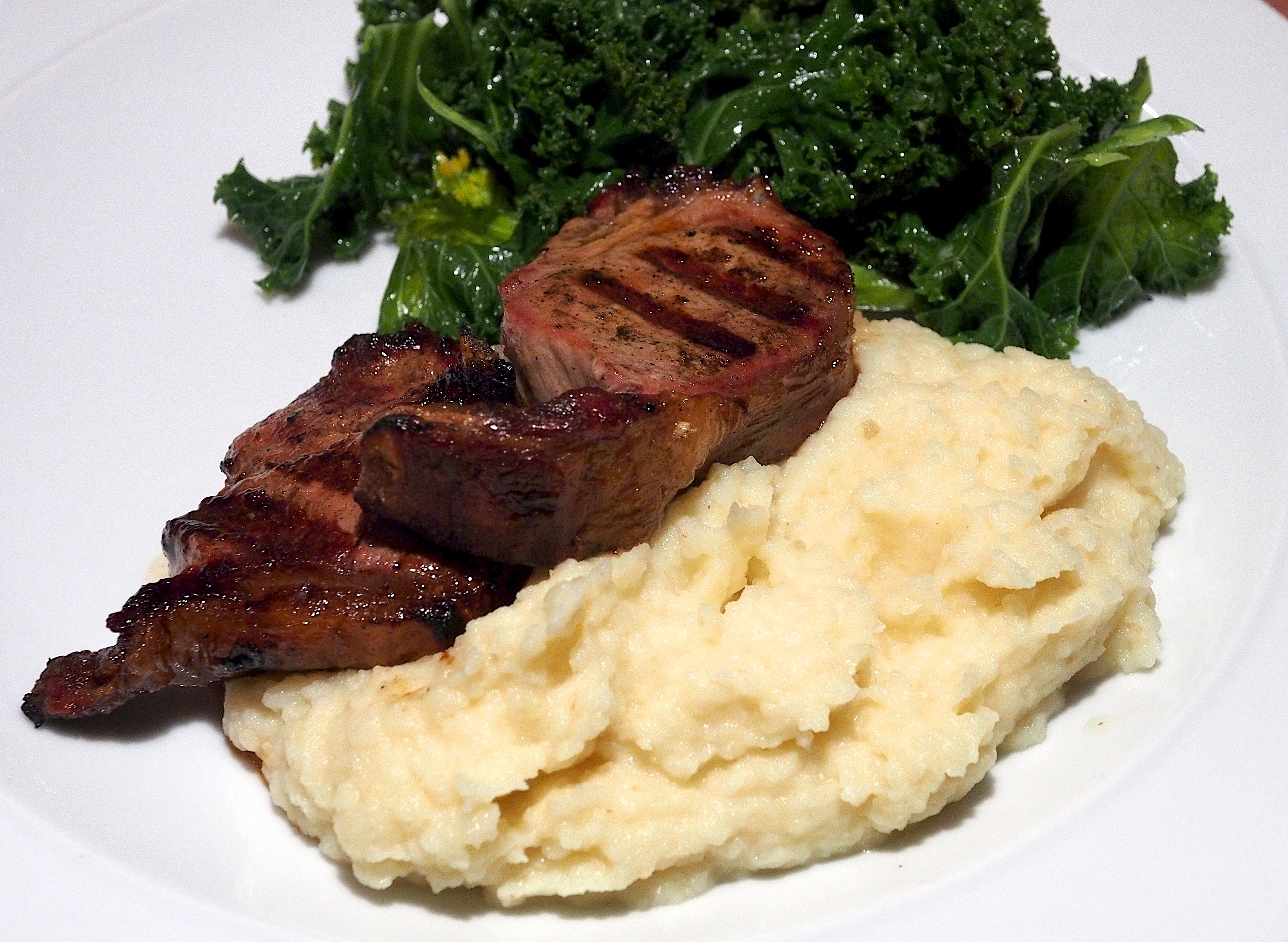
We’re still waiting on spring veg to arrive in Ireland but we’re comforting ourselves with the old root veggies. We love the earthiness that celeriac brings to lamb cutlets and kale or lighter dishes like seared scallops.
Wine Suggestion: You could try a New World Pinot from a cooler climate, like New Zealand, balancing not too much weight with a joyful fruit and freshness that works with the lamb and creamy celeriac.
Celeriac purée – to serve 4
- 1 lemon
- 350g celeriac
- 150g floury potatoes
- 50ml double cream or crème fraîche
- 25-50ml milk
- 15g butter
- salt and freshly ground white pepper
Peel and cut the celeriac into 5 cm chunks. Submerge in cold water acidulated with some juice from the lemon.
Peel and cut the potatoes into chunks the same size as the celeriac and put into a small saucepan. Cover with salted water, bring to the boil, then simmer for about 15 minutes, or until tender.
Drain the celeriac chunks and put in a separate saucepan, cover with salted water, add a little lemon juice and bring to the boil. Reduce the heat and simmer until tender – it will take longer than the potato.
When the vegetables are soft, drain them well and allow to steam-dry in colanders for a few minutes. Mash the potato using a potato ricer or push it through a sieve. Mash the celeriac either with a potato ricer or by blending in a food processor. Combine both vegetables in a clean saucepan.
Put the pan over a gentle heat and stir in the cream and milk. Stir in the butter, season well with salt and pepper and serve.
(Original recipe from Leith’s How To Cook by Claire McDonald and Jenny Stringer, Quadrille, 2013.)
Posted in Food, Side dish | Tagged Celeriac, Celeriac purée, Cooking, Food, Kale, Lamb, Leith's, Purée, Recipe, side dish | 1 Comment »
30 March 2014 by jonoandjules
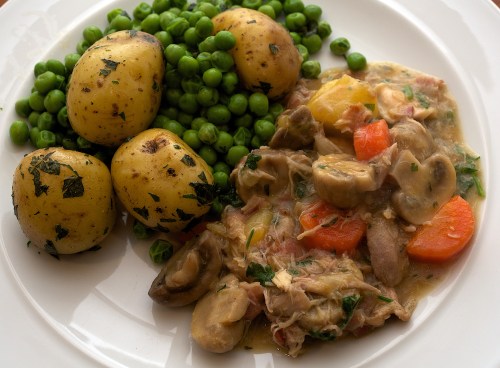
Humble Chicken Stew
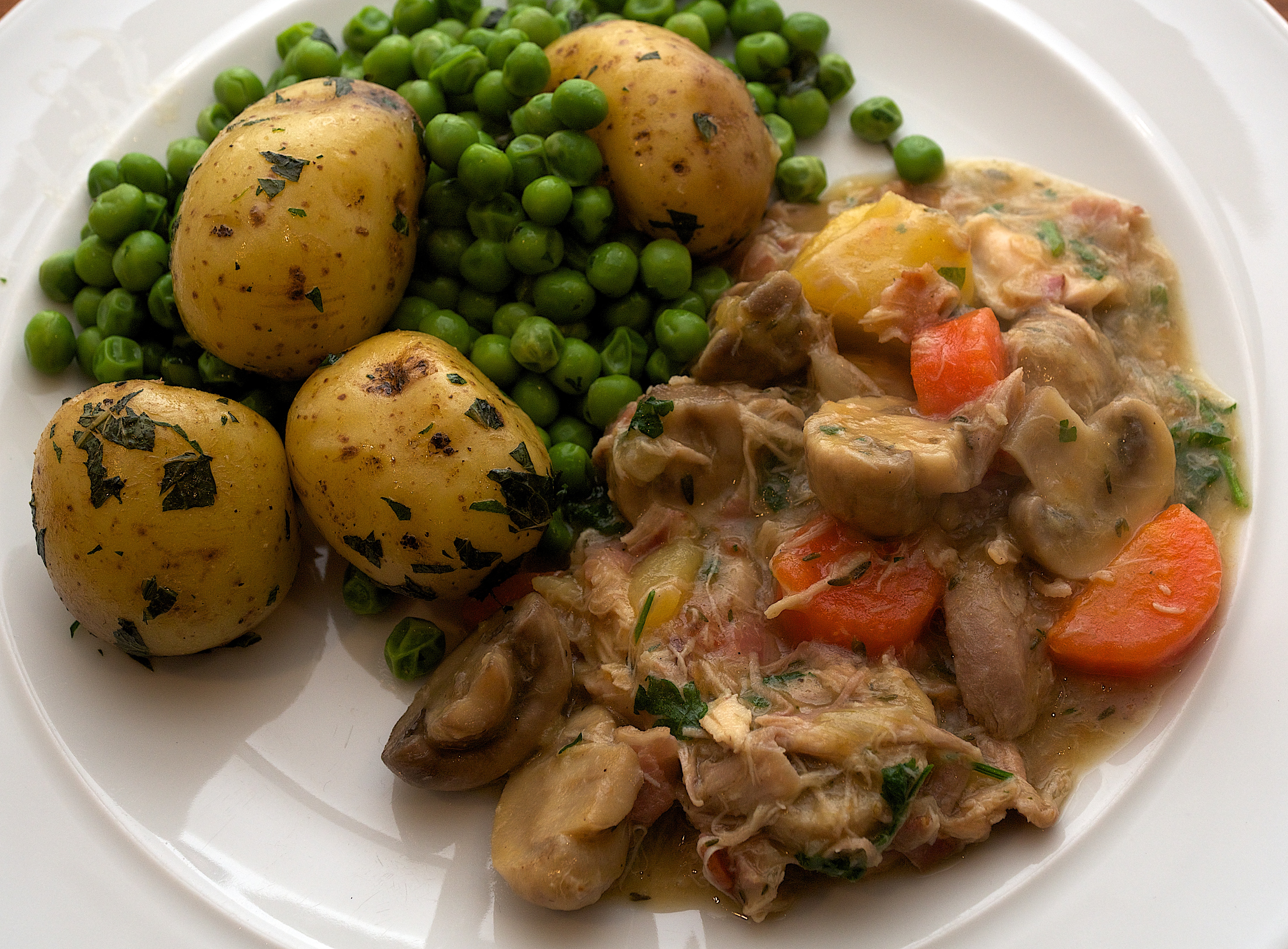
This is a great way to use up leftover roast chicken – including the carcass. Too often we guiltily put the bones in the bin.
Wine Suggestion: Our natural instinct when cooking chicken is to plump for a Chardonnay as it goes so well, but instead we drank a delightful German Pinot Noir from Villa Wolf, which is made by Ernie Loosen. He’s managed to get a real charm and ripeness in the aroma that tempts you to think this comes from a warmer country, with even a few hints of new World. It, however, is true to it’s roots and had a rounded earthiness and real charm along with an easiness and gentle weight that didn’t overwhelm the chicken; plus the earthy spice complemented the “humble” nature of this dish too.
Chicken Stew – to serve 4
- 300g leftover roast chicken
- 1 chicken carcass
- 4 rashers smoked streaky bacon, finely sliced
- 2 onions, chopped
- 3 large carrots, chopped
- 2 potatoes, chopped
- a few sprigs of fresh thyme
- 2 fresh bay leaves
- 200g button mushrooms, halved
- 1 heaped tbsp plain flour
Place the chicken carcass in a large pan and bash with a rolling pin to break it up. Cover with 1 litre of water, bring to the boil and simmer for at least half an hour, skimming off any scum.
Meanwhile, heat a lug of olive oil in a casserole over a medium heat and add the bacon. Cook for a few minutes before adding the onions, carrots and potatoes along with the thyme and bay leaves. Cook for 10 minutes.
Stir in the mushrooms, chicken and flour.
Pour the stock through a sieve straight into the pan (add a bit of water if necessary). Simmer for 4o minutes and season to taste before serving.
(Original recipe from Save with Jamie, Penguin Books Ltd, 2013.)
Posted in Chicken, Food | Tagged Carcass, Chicken, Cooking, Food, Jamie, Jamie Oliver, Leftovers, Recipe, Stew | Leave a Comment »
28 March 2014 by jonoandjules
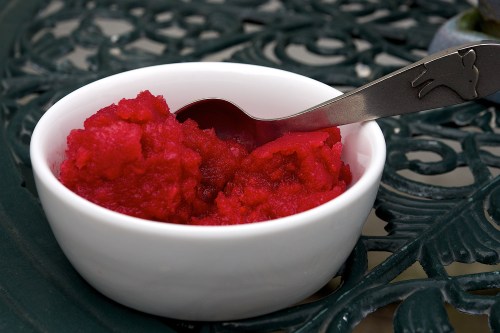
Blood Orange Sorbet
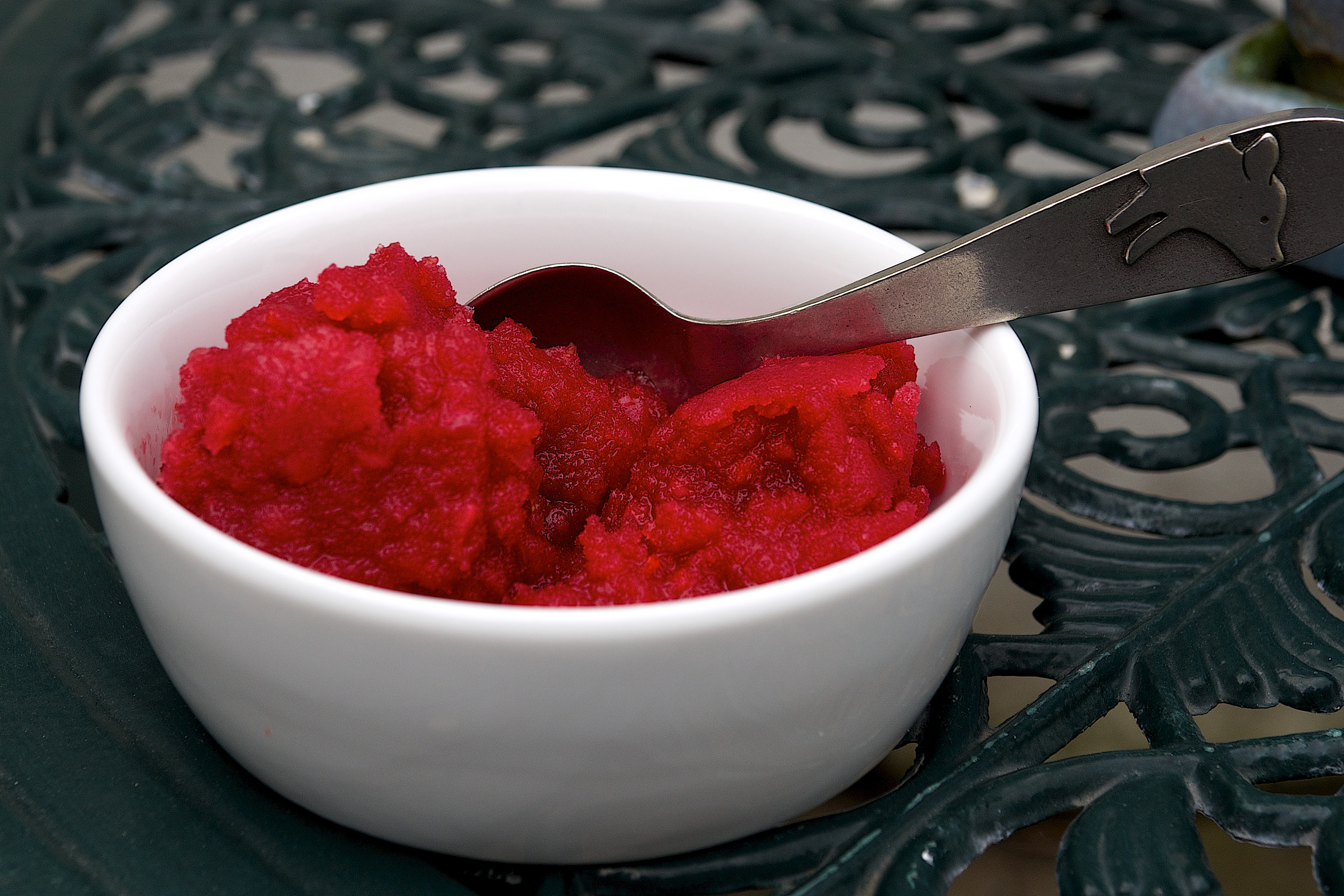
This amazing red sorbet is completely natural and is made from oranges with blood-coloured flesh. Blood oranges are a winter treat available from December to March. You need 20 for this recipe so look out for a good price later in the season. The sorbet is best served on the same day as it is made.
Blood Orange Sorbet – to serve 6
- 20 blood oranges
- caster sugar
- 2 lemons
Juice 19 of the oranges and measure the volume of liquid. Use half that volume of caster sugar.
Cut the whole lemons and remaining orange into quarters and remove the pips. Place in a food processor with the sugar and pulse to a liquid. Add the orange juice and pulse once or twice to combine.
Pour into an ice-cream machine and churn until frozen (or freeze in a container).
(Original recipe from The River Cafe Cookbook by Rose Gray and Ruth Rogers, Ebury Press, 1995.)
Posted in Food, Italian | Tagged Blood Oranges, Cooking, Food, Recipe, Sorbet | Leave a Comment »
18 March 2014 by jonoandjules
 The perfect solution for the black bananas in your fruit bowl – the blacker the better in fact!
Banana Bread
- 100g softened butter
- 175g caster sugar
- 2 large eggs
- 2 ripe bananas, mashed
- 225g self-raising flour
- 1 level tsp baking powder
- 2 tbsp milk
Pre-heat the oven to 180ºC/Fan 160ºC/Gas 4. Lightly grease a 2lb loaf tin and line the base and sides with baking parchment.
Measure the ingredients into a mixing bowl and beat for about 2 minutes or until well blended. Spoon into the prepared tin and level the surface.
Bake for about 1 hour or until well risen and golden brown. Leave to cool for a few minutes in the tin before turning out and cooling on a wire rack.
(Original recipe from Mary Berry’s Baking Bible, BBC Books, 2009.)
Posted in Food | Tagged Baking, Banana, Bread, Cake, Cooking, Food, Recipe | 1 Comment »
20 February 2014 by jonoandjules
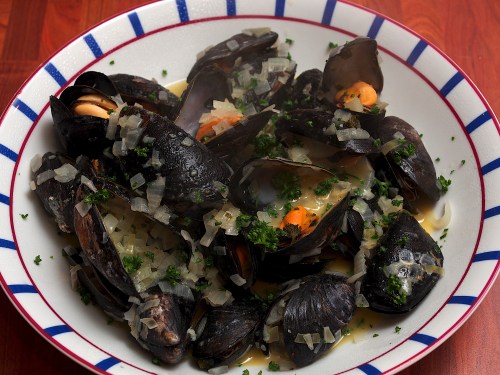
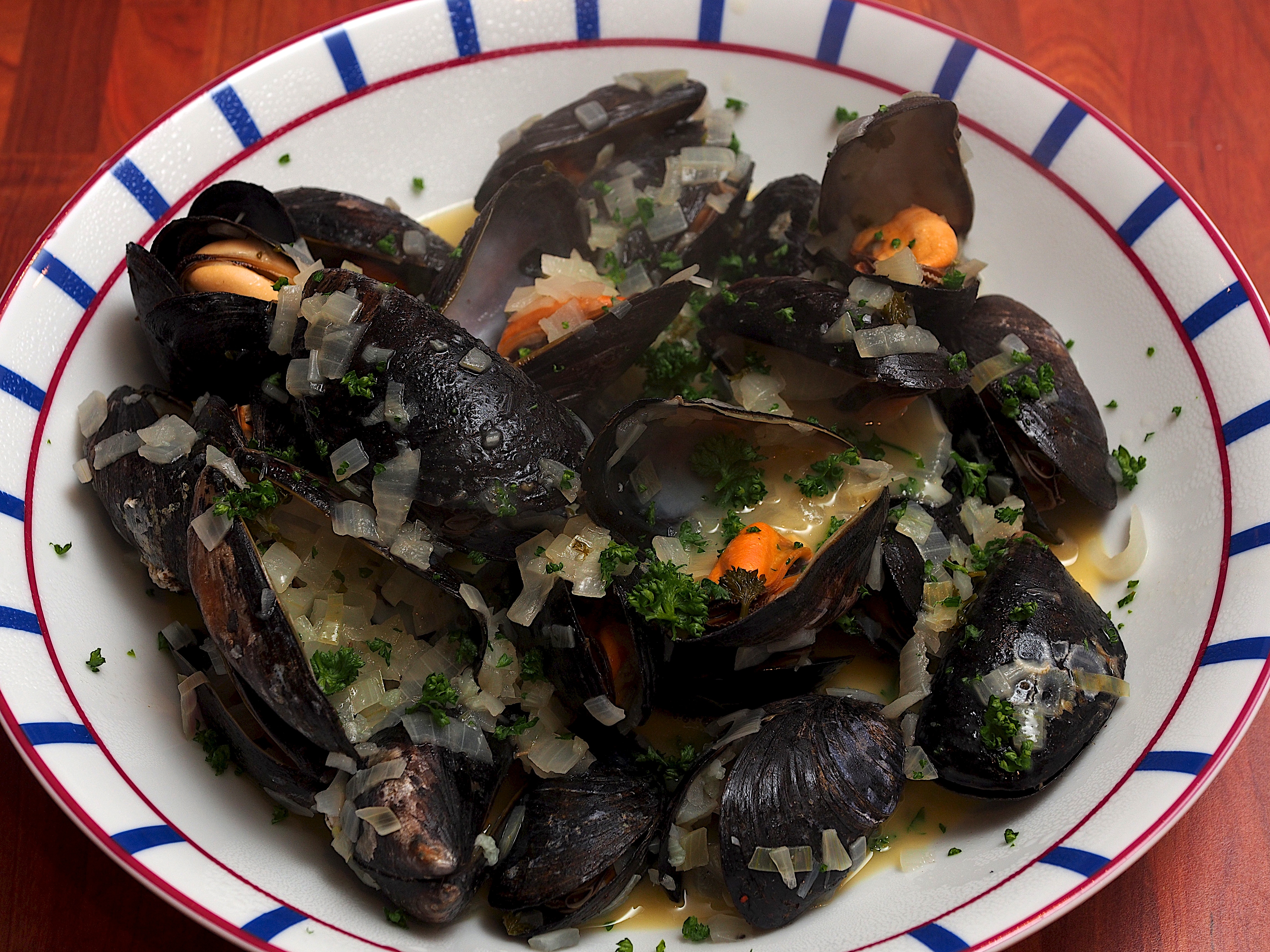
We love this Normandy classic and have been known to make Moules Marinières as an impromptu supper served with some skinny fries or crusty bread. No other dish is as reminiscent of holidays in France and mussels are also very cheap. What could be better?
Wine Suggestion: You can’t go wrong with a good old Muscadet here. Just the thing to complement the dish and shouldn’t blow the budget. Unfortunately Muscadet has had a few good quality but low quantity vintages so it may be a bit more scarce than usual.
Moules Marinière – to serve 4
- 2kg mussels
- 1 onion, finely chopped
- 2 shallots, finely chopped
- 2 garlic cloves, crushed
- a small handful of parsley, roughly chopped
- 50g butter, chilled
- 150ml water
- 150ml dry white wine
Melt half the butter in a large saucepan, add the onion and shallots and sweat for about 10 minutes or until soft. Add the garlic and cook for 1 minute, then add the water, wine and half the parsley and simmer for 5-10 minute.
Add the mussels, cover the pan quickly with a tight lid and cook over a high heat for 5 minutes, giving the pan a good shake occasionally. Check if the mussels are open, if most of them are still closed, cover and cook for another minute or two, or until opened.
Drain the mussels in a colander over a bowl to catch the liquid and discard any that haven’t opened. Cover the mussels with a pan lid to keep them warm. Pour the mussel liquid back into the pan and boil until it has a strong concentrated flavour. Reduce the heat.
Cut up the remaining butter into small pieces and whisk into the sauce, piece by piece. Taste and season.
Transfer the mussels to a serving bowl, pour over the sauce and sprinkle with the remaining parsley.
(Original recipe from Leiths: How to Cook, Quadrille, 2013.)
Posted in Food, Shellfish | Tagged Cooking, Food, Mussels, Recipe, Seafood, Shellfish | 2 Comments »
17 February 2014 by jonoandjules
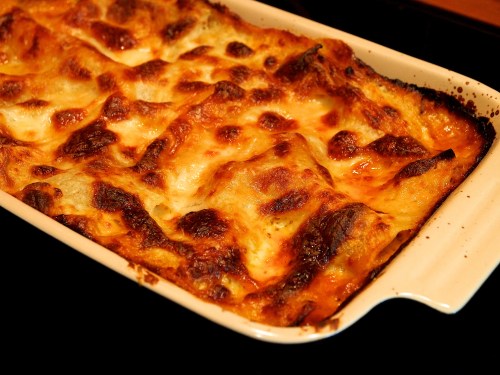
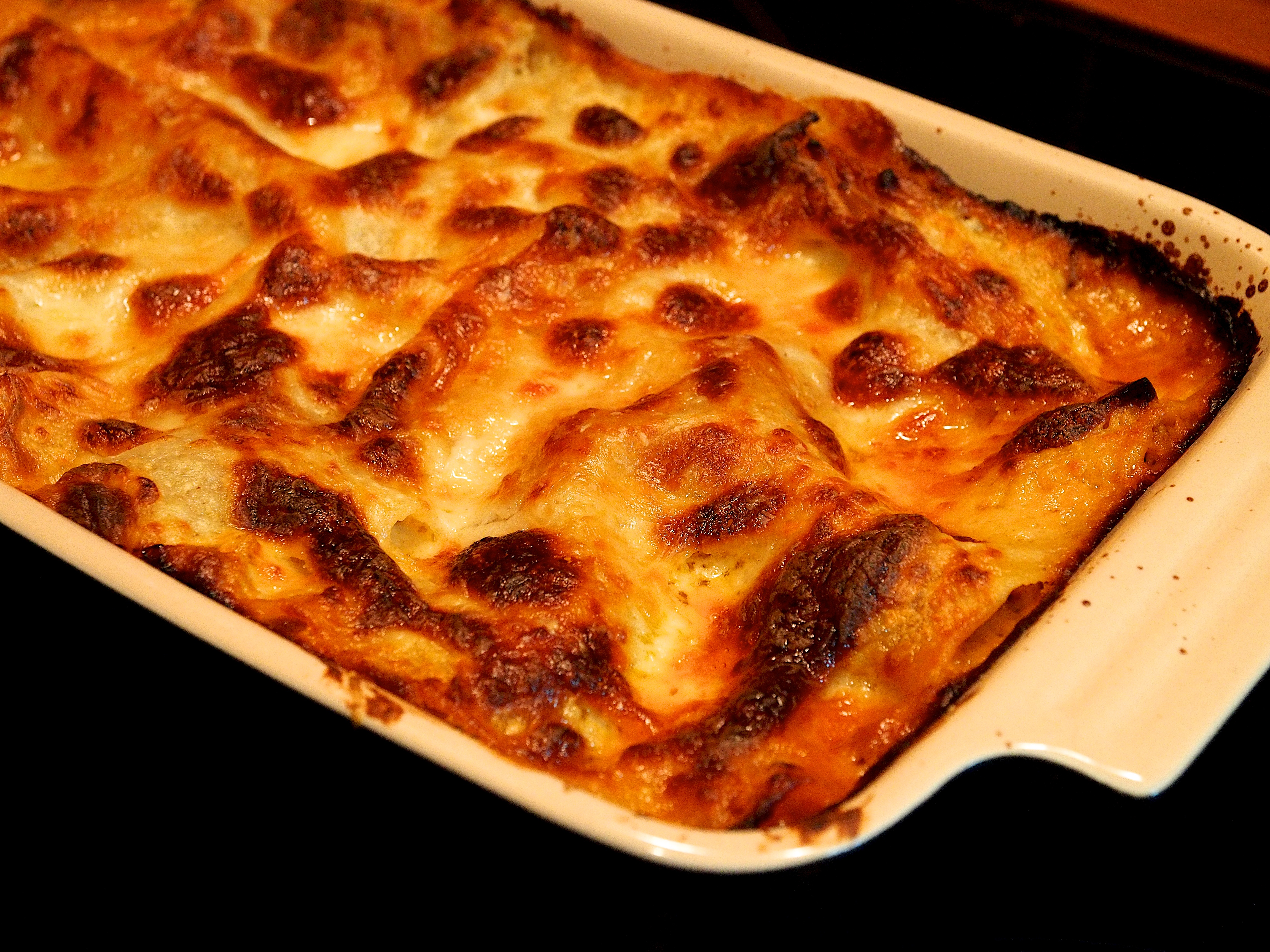
This recipe comes in two parts, with the first an easy to make a Bolognese Ragù which tastes good but is not really exciting or flavour-packed like we like. When created into a lasagne, however, it really sings with a perfect balance of flavour.
The recipe takes a while, but is actually quite easy, especially if you make the ragù the day before. We made two lasagne this time which served eight people over two days amply. Alternately, make a big tray of it for a larger crowd.
Ragù – serves 6-8
- 3 tbsp olive oil
- 1 large onion, finely diced
- 3 cloves of garlic, crushed
- 3 sticks of celery, finely diced
- 1 leek, finely diced
- 1 kg minced beef/pork (or half and half)
- 1 bay leaf
- 2 x 400g tins chopped tomatoes
- 2 tbsp tomato purée
- 200ml white or red wine
- 2-3 tbsp sugar
Preheat the oven to 150ºC/300°F/Gas mark 2.
Put a large ovenproof casserole on a medium heat and heat the olive oil. Tip in the onion, garlic, celery and leek. Season with salt and pepper and cook for 8-10 minutes or until softened. Turn the heat to high, add the meat and stir to break up, cooking until there are no longer any pink bits.
Add the bay leaf with the chopped tomatoes, tomato purée, wine and sugar, and bring to the boil. Cover with a lid and cook for about 1 hour in the oven. Season to taste.
Lasagne – serves 6-8
- 1 quantity of cooked ragù
- 12-16 sheets of pre-cooked dried lasagne
- 100g Cheddar cheese, grated
- 50g Parmesan, grated
FOR THE CHEESE SAUCE
- 70g butter
- 70g plain flour
- 1 litre milk
- 200g Cheddar cheese, grated
- 1 tsp Dijon mustard
Preheat the oven to 180°C/350°F/Gas mark 4.
First make the cheese sauce. Melt the butter in a saucepan over a medium heat, then whisk in the flour and cook, stirring often, for 1 minute. Gradually pour in the milk and bring to the boil, whisking continuously until the sauce is thickened. Remove from the heat and whisk in the cheese and mustard, seasoning with salt and pepper, then set aside.
Put a thin layer of ragù in the bottom of an ovenproof dish (20 x 30cm), cover with a layer of the cheese sauce, then add lasagne sheets to cover, in a single layer. Repeat this process, finishing with a layer of pasta topped with cheese sauce only.
Sprinkle over both cheeses and bake in the oven for 45-50 minutes or until golden brown and bubbling.
(Original recipe from Rachel’s Everyday Kitchen by Rachel Allen, HarperCollins, 2013.)
Posted in Beef, Food, Italian, Party Food | Tagged Cooking, Food, Italian, Lasagne, Pasta, Ragu, Recipe | Leave a Comment »
14 February 2014 by jonoandjules
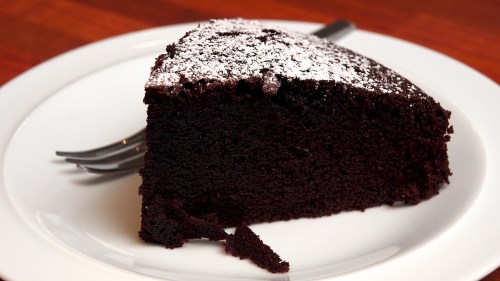
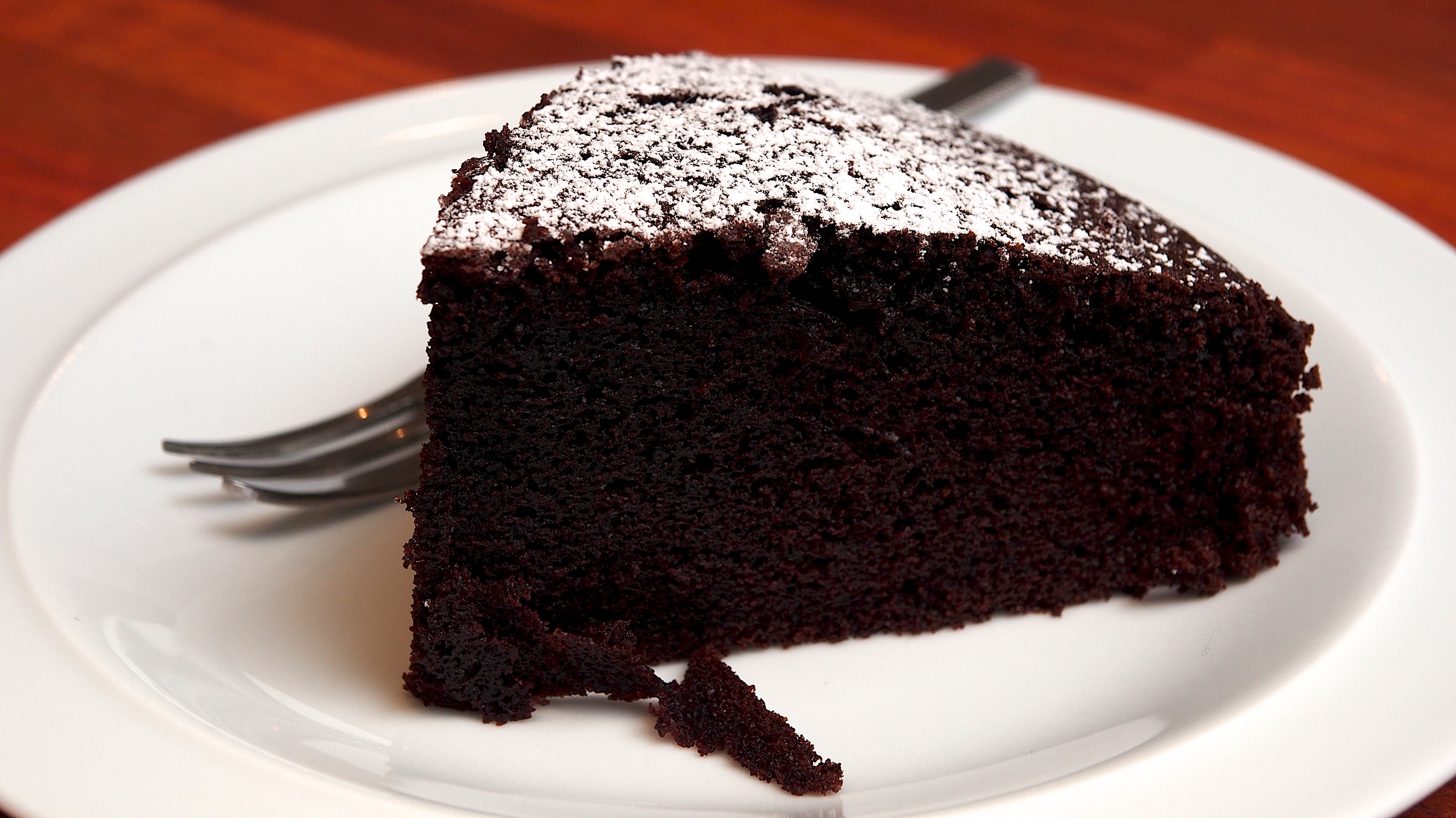
We gave each other a food mixer for Christmas and hence have baked more cakes in the last month than we’ve made in all our years of blogging. This one can be mixed up really quickly and can be made wheat-free for our coeliac friends with no adverse affect. We made this example with wheat; the wheat-free version which substitutes nuts (ground almonds) for the flour is more squidgy and dessert-like.
Chocolate Olive Oil Cake
- 150ml olive oil (not extra virgin), plus extra for greasing
- 50g good quality cocoa powder
- 125ml boiling water
- 2tsp vanilla extract
- 125g plain flour (OR 150g ground almonds)
- ½ tsp bicarbonate of soda
- a pinch of salt
- 200g caster sugar
- 3 large eggs
Preheat the oven to 170ºC/Gas 3/325ºF.
Grease a 22 or 23cm springform tin with a little olive oil and line the base with baking parchment.
Sift the cocoa powder into a bowl and whisk in the boiling water to give a smooth paste. Whisk in the vanilla extract and set aside to cool a little.
In another bowl, combine the flour (or ground almonds) with the bicarbonate of soda and a pinch of salt.
Put the sugar, olive oil and eggs into the bowl of a freestanding mixer with the paddle attachment (or use whatever bowl and whisk you have) and beat vigorously for about 3 minutes until you have a pale yellow and thickened cream.
Turn down the speed a little and add the cocoa mixture. When this is mixed in, add the flour (or ground almond) mixture.
Scrape down and stir a little with a spatula, then pour into the prepared tin. Bake for 40-45 minutes or until the sides are set and the very centre still looks slightly damp. A skewer inserted into the cake should come out mostly clean.
Cool on a wire rack, still in the tin, for 10 minutes before easing the sides gently away with a metal spatula and springing out of the tin. Leave to cool completely and serve with cream and berries or eat while still warm with ice-cream.
(Original recipe from Nigella.com)
Posted in Dessert, Food | Tagged Cake, Chocolate, Cooking, Dairy-free, Food, Nigella, Olive oil, Recipe, Wheat-free | 1 Comment »
12 February 2014 by jonoandjules
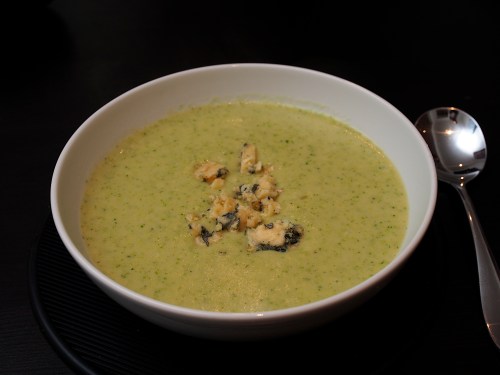
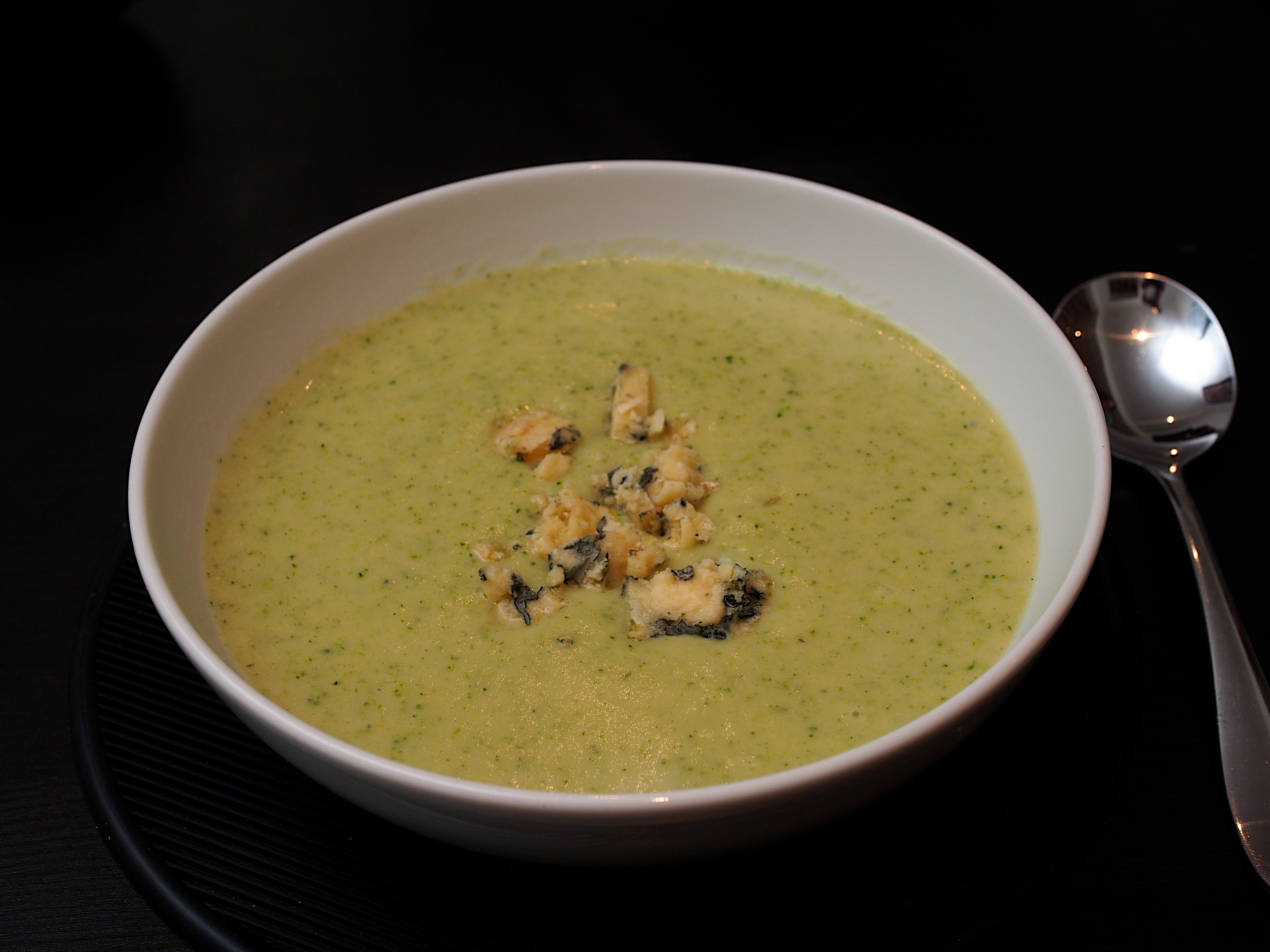
We love cheese after dinner but it seems a bit indulgent during the week and therefore we inevitably end up with chunks of cheese lurking in the back of the fridge. We try our best not to waste any food but something as expensive and delicious as cheese (particularly the cheese pantry stuff as opposed to the supermarket plastic-wrapped kind) is even more of a travesty to not use. That’s when recipes like this one are perfect for a mid-week treat without having to indulge in a two-course evening meal.
Broccoli & Stilton Soup – to serve 4
- 2 tbsp flavourless oil
- 1 onion, finely chopped
- 1 stick of celery, sliced
- 1 leek, sliced
- 1 medium potato, diced
- a knob of butter
- 1 litre of good chicken or vegetable stock
- 1 head of broccoli, roughly chopped (including stalks)
- 140g Stilton (or other blue cheese), crumbled
Heat the oil in a large saucepan and cook the onions until soft but not coloured. Add a splash of water if they start to catch.
Add the celery, leek, potato and butter. Stir until the butter melts, then cover with a lid and sweat for 5 minutes.
Pour in stock and add any chunks of broccoli stalk. Cook for 10-15 minutes or until the vegetables are soft.
Add the remaining broccoli and cook for another 5 minutes. Whizz until smooth, then stir in the stilton. Season with black pepper (you are unlikely to need salt) and serve.
(Original recipe from BBC Good Food)
Posted in Food, Soup, Uncategorized, Vegetarian | Tagged Blue cheese, Broccoli, Cooking, Food, Recipe, Soup, Stilton, Vegetarian | 2 Comments »
10 February 2014 by jonoandjules
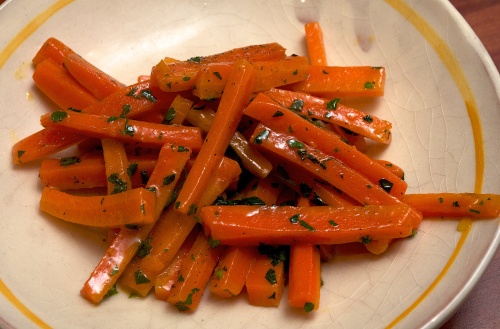 This is a classic French side dish which remarkably improves steamed carrots and we find impresses guests too despite being easy to cook.
Vichy carrots – serves 4
- 6-8 carrots
- 15g butter
- small pinch of salt
- 1 tsp caster sugar
- few mint sprigs
- few parsley sprigs
- black pepper
Peel the carrots and cut into batons.
Put the butter, salt and sugar in a saucepan and heat gently. Stir in the carrots and add enough water to come halfway up.
Increase the heat to medium and partially cover. Simmer until the carrots are tender and most of the water has evaporated.
Turn down the heat and remove the lid. Reduce the remaining liquid to a glaze, stirring to ensure the carrots are evenly coated and don’t stick.
Finely chop the mint and parsley – you need about a ¼ tsp of each. Season with pepper, stir in the herbs and serve.
(Original recipe from Leiths How to Cook, Quadrille Publishing Limited, 2013)
Posted in Food, Side dish, Vegetarian | Tagged Carrots, Classic, Cooking, Easy, Food, French, Recipe, side dish, Vichy | Leave a Comment »
22 January 2014 by jonoandjules
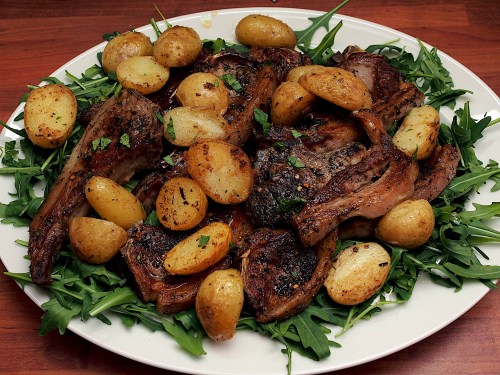
This dish looks really good and is really very little effort. Perfect for last minute entertaining.
Wine Suggestion: We’ve successfully drunk fresh whites like Pecorino from Italy and crisp Sauvignon Chardonnay blends from Cheverny, Loire as well as Chianti, Rioja and cool-climate Syrah/Shiraz from Australia and the have all gone very well. This is a sociable dish so think of a sociable wine and it seems to work a treat!
Lamb cutlets with mint, chilli & golden potatoes – serves 4
- 500g baby new potatoes, halved
- 3 tbsp olive oil
- ½ tsp dried chilli flakes
- 1 tsp dried mint
- ½ tsp celery (or ordinary) salt
- 8 lamb cutlets
- 100g rocket
- 1 tsp sea salt flakes
- 1 tbsp chopped fresh parsley
- 1 tbsp chopped fresh mint
Put the potatoes on to steam.
Mix the olive oil, chilli flakes and celery salt in a large tray. Add the lamb chops and turn to coat well in the oil. Leave to marinate for 10 minutes.
Heat a large, heavy, non-stick frying pan and fry the chops over a medium heat for 5 minutes (you won’t need any extra oil). Turn the cutlets over and cook for another 3 minutes on the other side (or longer if you prefer).
Meanwhile, drain the steamed potatoes once they are tender and leave to dry in the pot.
Use the rocket to line a platter. When the chops are cooked remove them from the pan and arrange on top of the rocket.
Add the potatoes to the pan and fry for 3 minutes on each side or until hot and golden brown. Use a slotted spoon to transfer to the platter. Sprinkle the dish with the sea salt and fresh herbs to serve.
(Original recipe from Nigella Lawson’s Nigellissima, Chatto & Windus, 2012.)
Posted in Food, Lamb, Uncategorized | Tagged Cooking, Cutlets, Food, Lamb, Recipe | 2 Comments »
20 January 2014 by jonoandjules
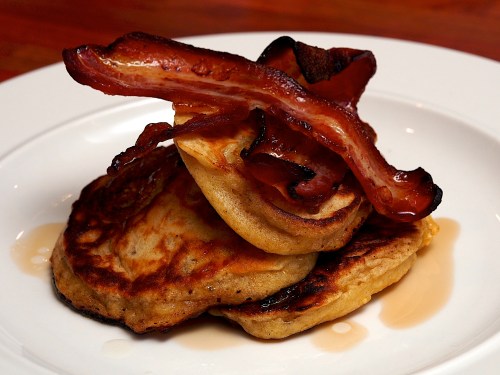
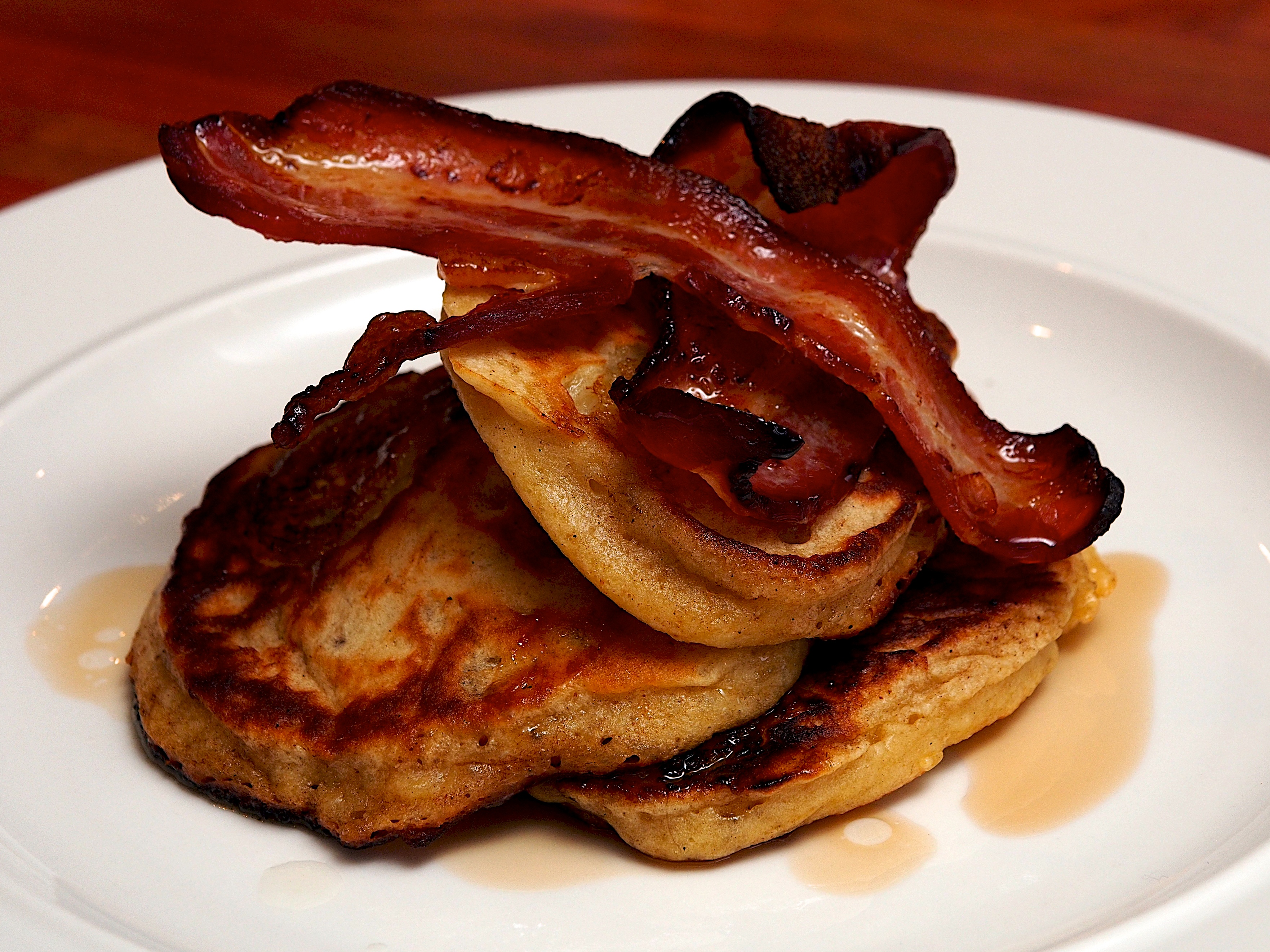
We made this for a Saturday breakfast and really enjoyed the playful balance of flavours. The pancakes are light, fluffy and not too sweet.
Banana pancakes with maple syrup and smokey bacon – serves 4
- 8 rashers smoked streaky bacon (or pancetta strips)
- 140g self-raising flour
- 1 tsp baking powder
- 2 tbsp light soft brown sugar
- 2 ripe bananas, 1 mashed, 1 thinly sliced
- 2 large eggs
- 25g butter, melted, plus a little extra
- 125ml milk
- maple syrup
Cook the bacon or pancetta under a hot grill, on a tray lined with foil, until crispy and keep warm.
Mix the flour, baking powder, sugar and a pinch of salt together in a large bowl. Make a well in the centre and add the mashed banana, eggs, butter and milk. Whisk until you have a smooth batter without any floury lumps.
Heat a little butter in a large frying pan until sizzling. Ladle in small dollops of batter and put a few slices of banana on the surface of each pancake. Cook for 2 minutes over a medium heat and turn when bubbles appear on the surface of the batter. Cook for 1 more minute on the other side or until puffed up and golden brown. Keep warm while you use the rest of the batter. Serve the pancakes topped with the crispy bacon and a generous drizzle of maple syrup.
(Original recipe from BBC Good Food)
Posted in Brunch, Food, Uncategorized | Tagged Bacon, Banana pancakes, Breakfast, Brunch, Cooking, Food, Maple syrup, Pancakes, Recipe | 2 Comments »
17 January 2014 by jonoandjules

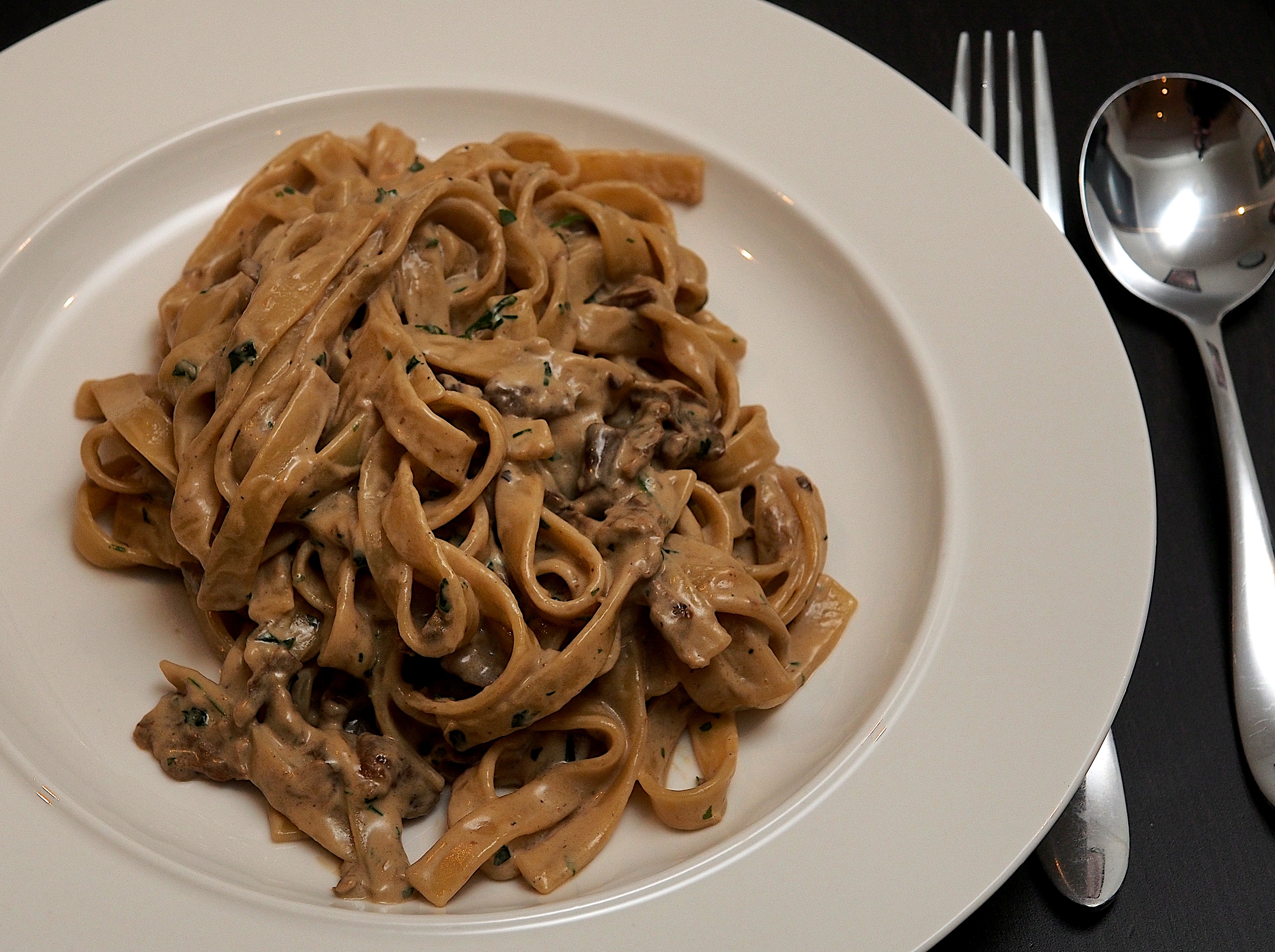
A rich and indulgent pasta dish and quite a hefty portion but as Nigella points out there is little point in leaving 50g of fettuccine in the box for another time!
Fettuccine with Mushrooms, Marsala & Mascarpone – serves 2
- 15g dried porcini
- 60ml Marsala
- 125g mascarpone
- freshly grated nutmeg
- ground pepper
- 2 tbsp chopped parsley plus more to serve
- 250g fettuccine (or tagliatelle)
- 1 tbsp unsalted butter
- small clove of garlic, crushed
- 4 tbsp grated Parmesan
Measure the porcini into a very small saucepan, cover with the Marsala and 60ml water, put on the heat and bring to the boil. As soon as it starts to boil, turn off the heat and leave to stand for 10 minutes.
Put the mascarpone into a bowl with a good grating of fresh nutmeg and ground pepper. When the porcini have finished soaking, strain the liquid into the bowl and fork together to combine.
Squeeze the porcini out over the bowl, then chop on a board along with the parsley.
Cook the fettuccine in a large pan of boiling salted water.
Melt the butter in a large pan and add the garlic, stirring over the heat for a minute, then add the porcini and parsley mixture and cook for a couple of minutes. Whisk in the mascarpone and stir until the sauce bubbles, then turn the heat off.
Reserve a small cup of the pasta cooking water before draining and tipping the pasta into the sauce. Add a little pasta water to loosen as it will thicken on standing.
Add the Parmesan and check the seasoning before serving with some extra parsley.
(Original recipe from Nigella Lawson’s Nigellissima, Chatto & Windus, 2012).
Posted in Food, Pasta, Vegetarian | Tagged Cooking, Fettuccine, Food, Marsala, Mascarpone, Mushrooms, Nigella, Pasta, Porcini, Recipe | 8 Comments »
13 January 2014 by jonoandjules
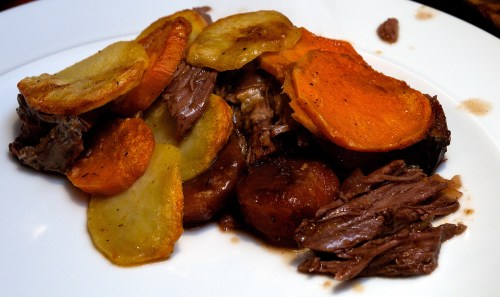
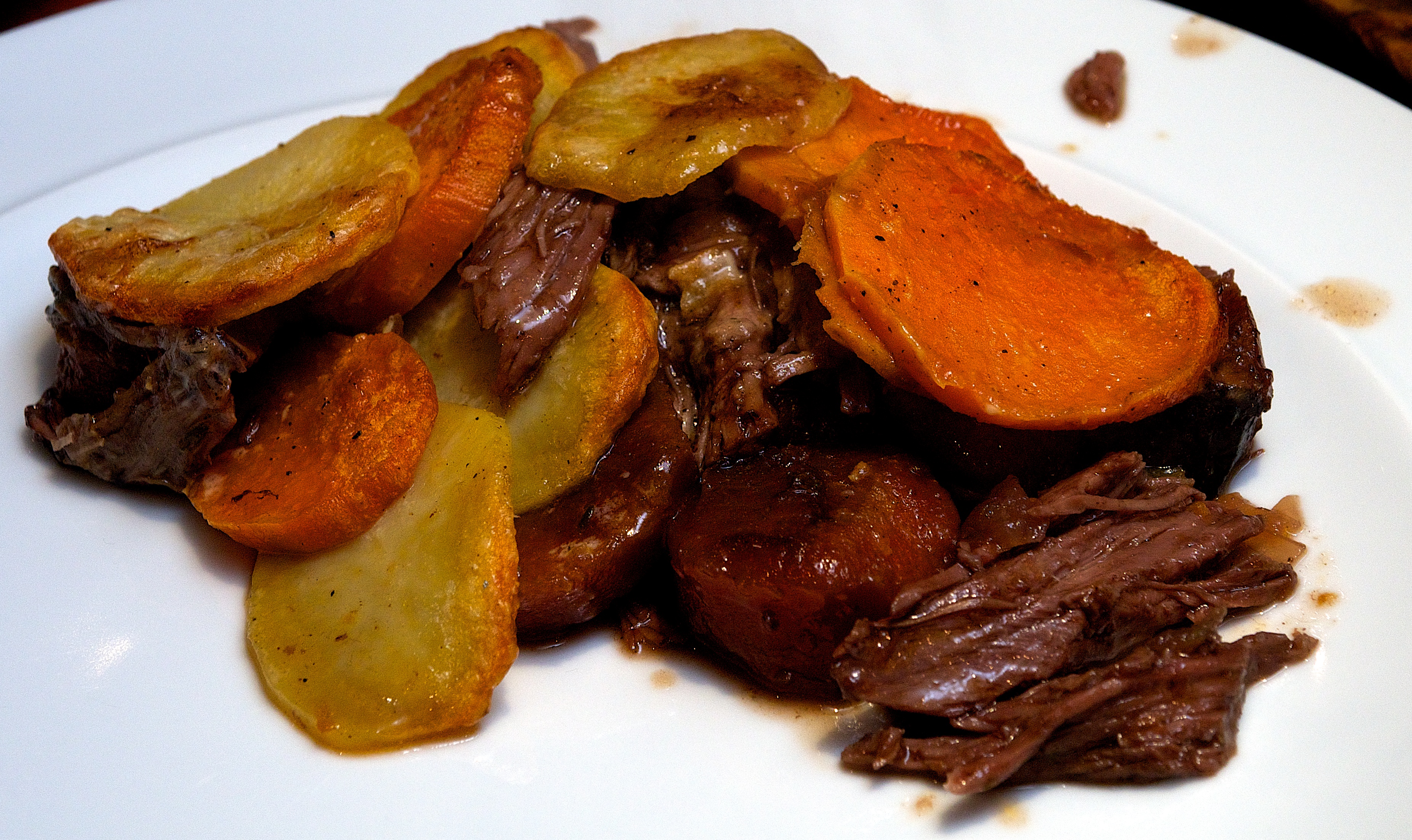
Winter comfort food; the sweet potato topping is nice for a change and works well adding a layer of earthiness that suits the season. You will need to start this the night before but its very easy so don’t be daunted.
Wine Suggestion: We think southern Rhône reds rule here, especially a grenache dominant blend with a little bit of age where the heady spices become more velvety but you’ve retained enough tannins to work with the proteins in the lamb. The sweet spices and juicy fruit complement the sweet potato whereas a drier wine would fight with these flavours, so be careful of more traditional lamb matches like Bordeaux blends and Rioja / Tempranillo.
Lamb & Dauphinoise Hotpot – serves 8
- 3 large carrots, cut into chunks
- 1 onion roughly, chopped
- 1 bulb of garlic, split in 2
- few sprigs of rosemary
- few sprigs of thyme
- 2 bay leaves
- 1 tbsp tomato purée
- 2.5kg shoulder of lamb on the bone
- 1 bottle red wine
For the topping:
- 4-5 potatoes
- 4 sweet potatoes
- 150ml double cream
- few knobs of butter
Heat the oven to 180C/160C fan/gas 4.
Use a flameproof casserole big enough to fit the lamb. Put in all the vegetables and herbs and stir in the tomato purée. Put the lamb on top, pour over the wine and season well. Cover and heat on top of the stove, then transfer to the oven and cook for 3 hours. Remove the lamb from the oven, leave to cool, then chill overnight.
The next day, remove all the hard fat from around then lamb. Lift the lamb out of the dish, scraping off and keeping the jellied juice. Shred the lamb and throw away any large bits of fat and the bones. Put the lamb back in the dish, spoon over the jellied sauce and mix with the veg.
Heat oven to 200C/180 fan/gas 6.
Peel and slice the potatoes into rounds. Put them into a pan of cold salted water, bring to a hard boil then drain immediately. Put the potatoes back into the empty pan, pour over the cream and season well.
Arrange the potatoes on top of the lamb and drizzle the cream left in the pan over the top and dot with butter. Bake for between 40 minutes and an hour or until the top is nicely coloured and the sauce is bubbling.
Serve with some green veg.
(Original recipe from BBC Good Food)
Posted in Food, Lamb | Tagged Cooking, Food, Hotpot, Lamb, Lamb shoulder, Recipe, Sweet potato | 1 Comment »
7 January 2014 by jonoandjules
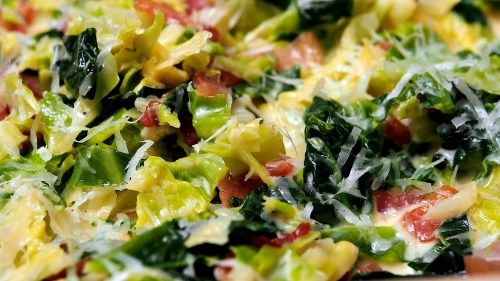
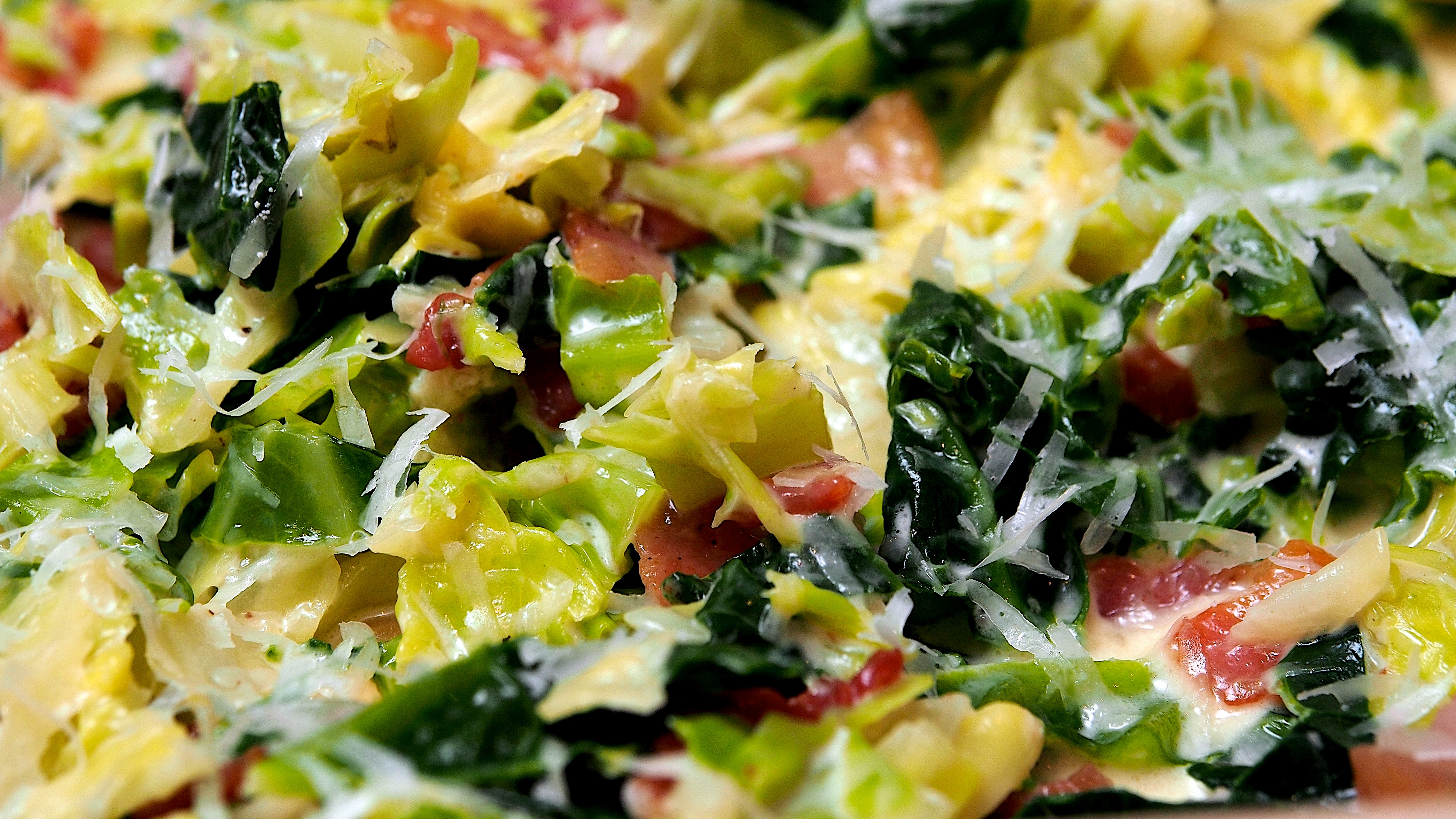
This is delicious but very rich, plus a little goes a long way! We found this a really good twist on a classic.
Carbonara Cabbage – serves 8
- 1kg Savoy cabbage, finely shredded
- 12 rashers streaky bacon, chopped small
- 2 cloves of garlic, finely sliced
- 250ml single cream
- 50g Parmesan, grated
Cook the cabbage for 10 minutes in a large pan of boiling salted water. Drain and keep warm.
Meanwhile, fry the bacon in a large frying pan for 7-8 minutes or until crispy, adding the garlic for the final few minutes.
Mix the cream and Parmesan in a bowl with some black pepper. Add the cream mixture and the cabbage to the bacon pan and toss everything together really well. Warm through for a few minutes before serving.
(Original recipe from BBC Good Food)
Posted in Food, Side dish | Tagged Bacon, Carbonara, Cooking, Cream, Easy, Food, Parmesan, Recipe, Savoy cabbage, side dish | 3 Comments »
3 January 2014 by jonoandjules

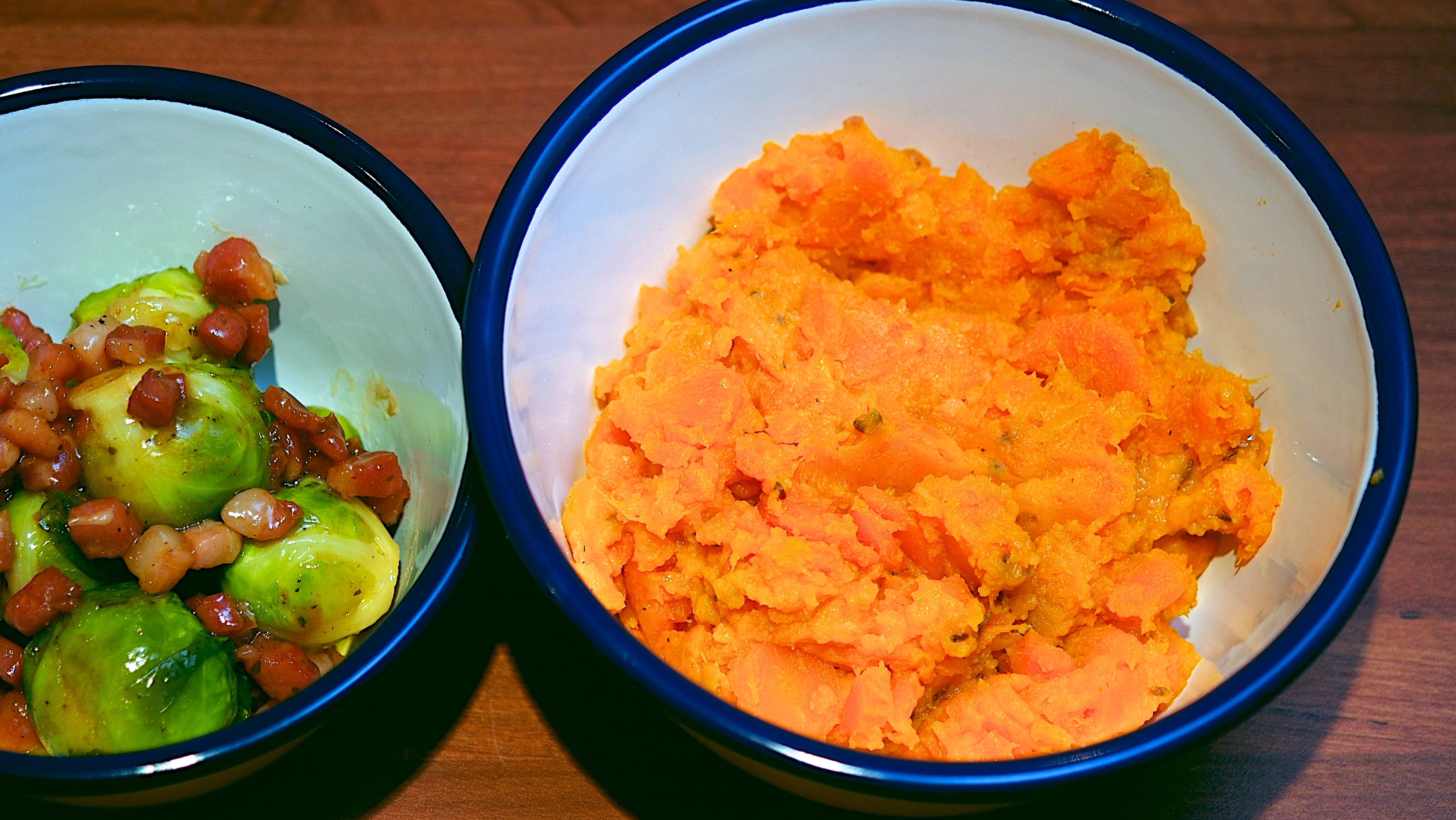
This was good served alongside a beef hotpot, but we daresay it’ll be nice against a few other dishes as well.
Carrot & Sweet Potato Mash – to serve 4
- 500g carrots, chopped
- 500g sweet potatoes, chopped
- 3 garlic cloves, bashed
- 1 tsp cumin seeds, toasted
- 25g butter
Put the carrots, sweet potatoes and garlic in a large pan salted water, bring to the boil and cook for about 12 minutes or until very tender, then drain. Add the cumin seeds, butter and seasoning and serve.
(Original recipe from BBC Good Food)
Posted in Food, Side dish, Vegetarian | Tagged Carrot, Cooking, Cumin, Easy, Food, Mash, Recipe, side dish, Sweet potato, Vegetarian | Leave a Comment »
2 January 2014 by jonoandjules
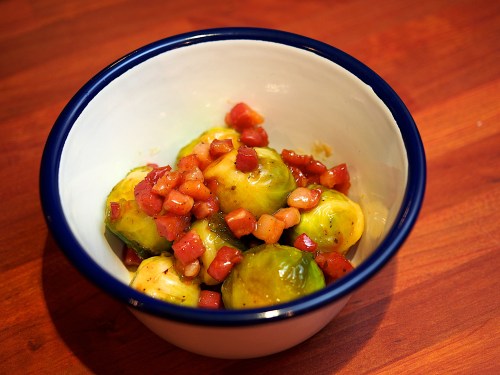
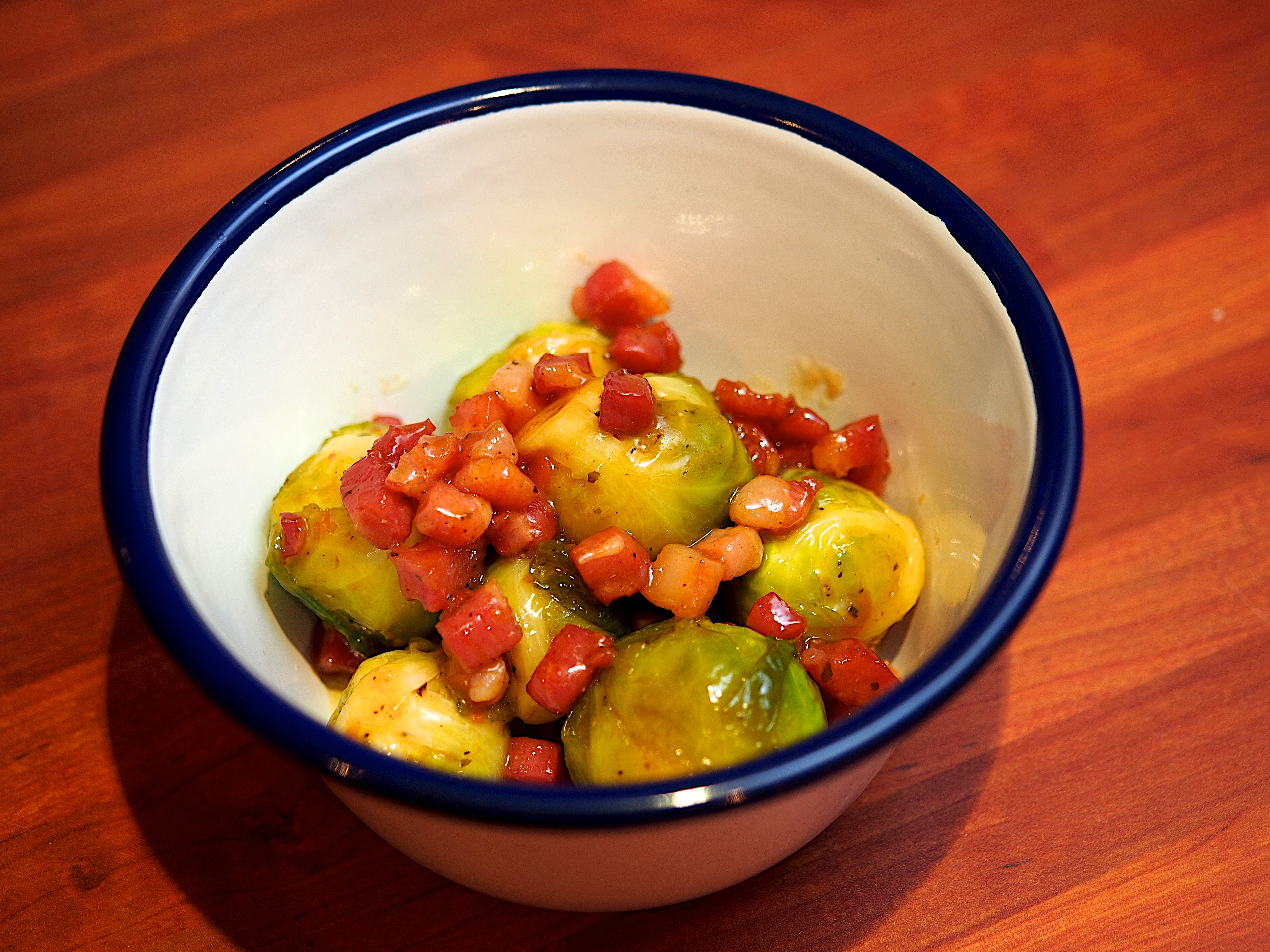
For those who eat brussels sprouts more than once a year. This is a gem of a dish that we’ve done a few times now and an easy feature in any winter meal.
Buttered Sprouts with Pancetta – to serve 6
- 100g cubed pancetta
- 750g brussels sprouts
- 400ml chicken stock
- 25g butter
Fry the pancetta in a non-stick frying pan for about 5 minutes or until crispy. Add the sprouts and cook for another minute. Add the stock and simmer for 15-20 minutes or until the sprouts are tender and the stock has reduced. Add the butter and season well but be careful with the salt, as the pancetta and stock should make this fairly salty already.
(Original recipe from BBC Good Food)
Posted in Food, Side dish | Tagged Brussels sprouts, Cooking, Easy, Food, pancetta, Recipe, side dish | 1 Comment »
1 January 2014 by jonoandjules

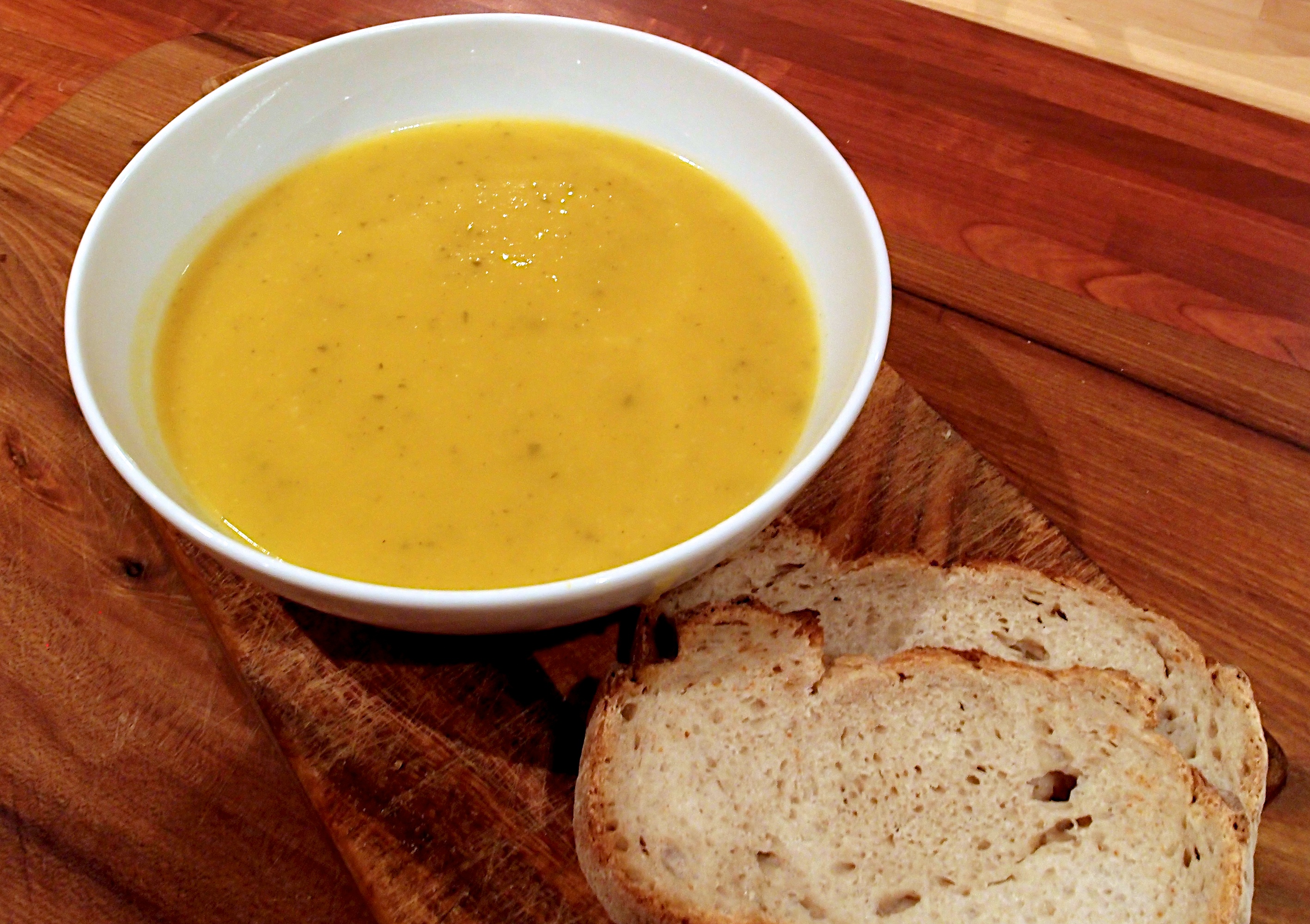
Sage brings an unexpected element to this soup that really works. Super warming and homely.
Pumpkin and sage soup – to serve 8
- 1 tbsp olive oil
- 1 tbsp butter
- 3 onions, chopped
- 2 tbsp chopped sage
- 1.4kg of pumpkin or squash flesh
- 1 tbsp clear honey
- 1.5 litres vegetable stock
Melt the oil and butter in a large pot. Add the onions and sage and cook gently for about 15 minutes or until really soft. Add the squash and cook for another 5 minutes. Add the honey and stock. Bring to a simmer and cook until the squash is soft.
Cook before processing until smooth. Season and add a bit more stock if its too thick. Reheat to serve.
(Original recipe from BBC Good Food)
Posted in Food, Healthy, Soup, Uncategorized, Vegetarian | Tagged Cooking, Food, Healthy, Pumpkin, Recipe, Sage, Soup, Vegetarian | 1 Comment »
11 December 2013 by jonoandjules
Jono and Jules have a new addition in the form of baby Orlaith and although we’ve managed to cobble together a few tasty dinners in the last few weeks they haven’t been worth sharing. We’re hoping to keep cooking but it may take a little longer to edit photos and type up recipes in the coming months. We shall endeavour to keep trying.
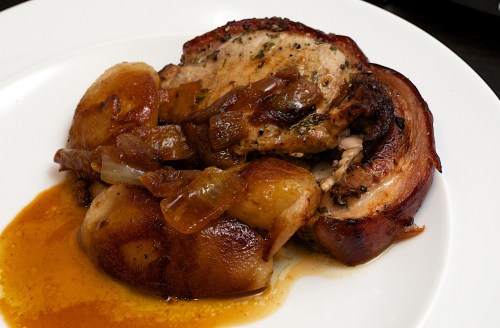
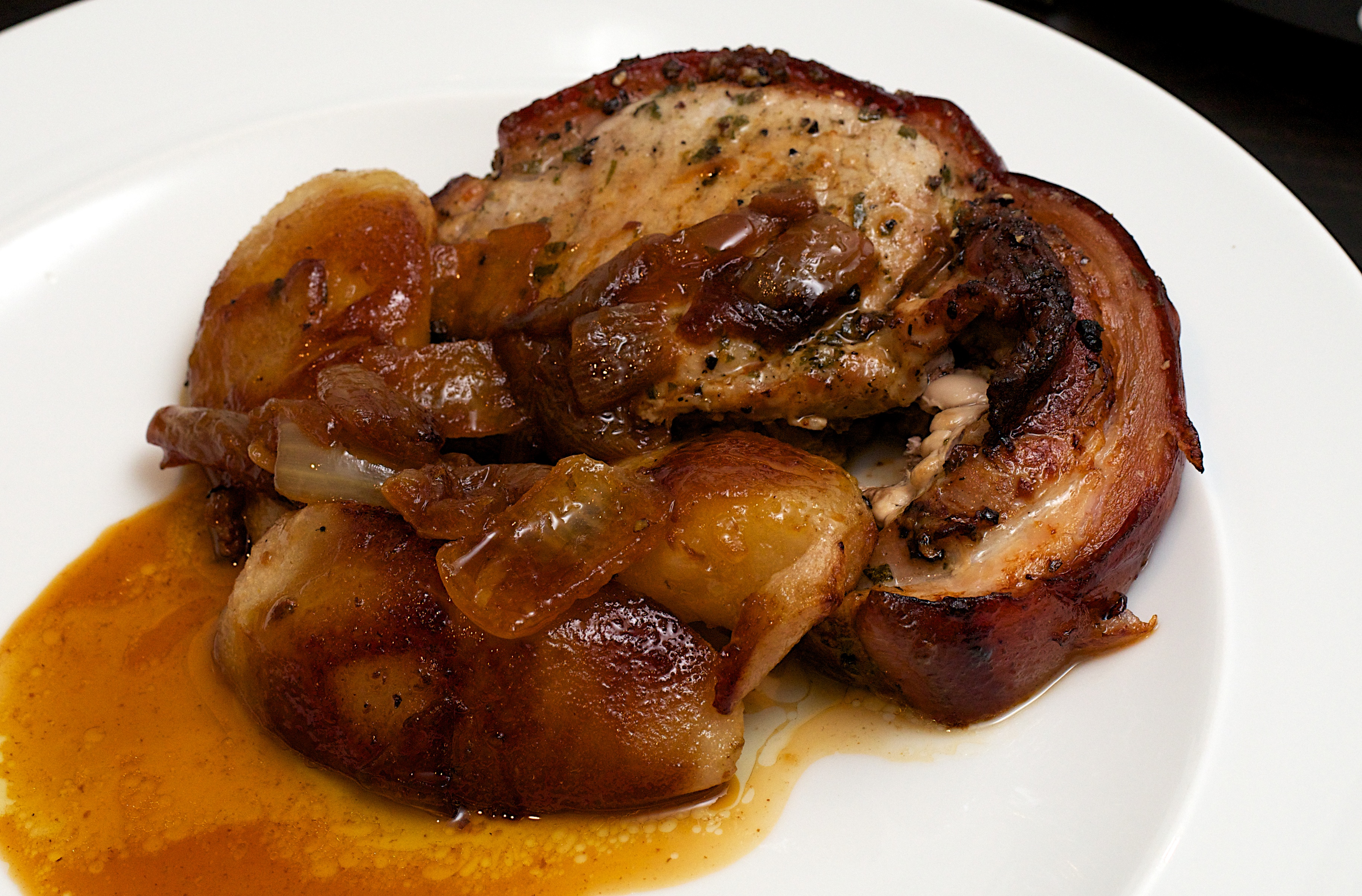
We really loved using pears instead of the usual apples with these pork chops – a perfect cold weather dish.
Wine Suggestion: Chenin Blanc from the Loire tends to have a nice yellow apple and honeyed fruit character that goes really well with pork and fruit dishes like this. A good version, like one from Chateau Gaudrelle – Vouvray, would give you a great balance of freshness, minerality and a structure for drinking with food.
Pork with pears and cream to serve 4
- olive oil
- 4 pork chops
- 4 sprigs of thyme
- 2 pears
- a thick slice of butter
- 200ml perry
- 150ml double cream
Lightly oil the chops. Chop the thyme leaves finely and use to season the chops with some salt and pepper.
Peel and core the pears and cut the flesh into large cubes. Melt the butter in a shallow pan , add the pears and cook until golden and getting tender. Set aside.
Return the pan to the heat and cook the chops over a moderate heat until cooked (about 5 minutes on each side). Remove from the pan and keep warm.
Pour the perry into the pan and stir to dissolve the sticky residue from the chops. Reduce for a few minutes until just a few tablespoons are left. Pour in the cream and bubble again for another few minutes. Return the chops and pears to the pan and heat through. Season and serve.
(Original recipe from Nigel Slater’s The Kitchen Diaries II, Fourth Estate, 2012.)
Posted in Food, Pork | Tagged Cooking, Food, Pear, Perry, Pork chops, Recipe, Wine Matching | Leave a Comment »
18 November 2013 by jonoandjules
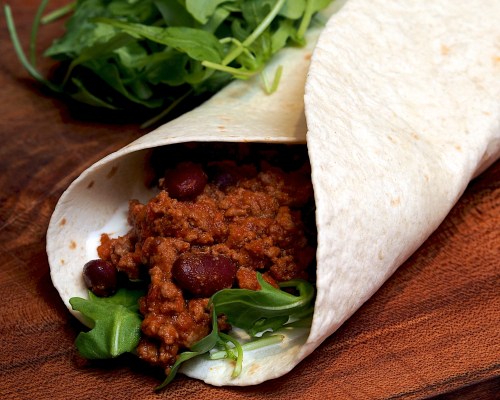
This is a doddle to whip up after work and it’s not a bad chilli for very little effort. Serve in warmed tortillas with some rocket and sour cream or in a baked potato.
Cheat’s Chilli – to serve 4
- 500g minced beef
- 350g jar of tomato and chilli sauce (we use our own tomato sauce which we always have a supply of in the freezer)
- 400g tin of red kidney beans
Fry the mince in a non-stick pan until well browned. Pour in the sauce, then fill the empty jar about a third full of water and rinse out into the pan. Bring to the boil then simmer for about 15 minutes, stirring occasionally.
Drain and rinse the beans before adding to the meat and heat through for about 5 minutes or until the beans are hot and the sauce is thick.
Posted in Beef, Food | Tagged Beef, Chilli, Cooking, Easy, Food, Recipe, red kidney beans, Tomato Sauce | Leave a Comment »
« Newer Posts - Older Posts »





 Jono & Jules do food & wine