Feeds:
Posts
Comments

Posts Tagged ‘Barbecue’

These Greek kebabs are easy and delicious when barbecued and served with Tzatziki (a Greek yogurt dip), sliced tomatoes, pickled chillies and sliced gherkins.

Souvlaki – to serve 8

  • 2kg boned shoulder of lamb
  • 1 tbsp dried oregano
  • 1 large lemon, juiced plus wedges to serve
  • 150ml extra virgin olive oil
  • Paprika for sprinkling

Trim excess fat off the lamb and cut into bite-sized pieces. Put into a bowl with the oregano, lemon juice, olive oil, 2 tsps salt and some black pepper and leave to marinate at room temperature for about an hour.

Preheat the barbecue. Thread the lamb onto metal skewers and cook on the hot barbecue, until browned on the outside but still juicy in the centre. Sprinkle with a pinch of paprika and a squeeze of lemon juice to serve.

Drink with: a southern Italian red such as Negromaro or Primitivo. Italian wines from Puglia and Calabria complement Greek foods very well which is not surprising given the very strong historical and social links between them. In this case there is a good balance of warm ripe fruits, earthy tannins and medium weight.

(Original recipe from Rick Stein’s Mediterranean Escapes, BBC Books, 2007.)

Read Full Post »

This is a Basque inspired dish where fresh fish is cooked really simply over hot coals. Firm fish like Monkfish, or Grouper, will not fall apart as easily so make them perfect for barbecuing. Serve with a green salad and some bread.

Barbecue Monkfish Kebabs – to serve 4

  • 1 kg monkfish fillets, cut into large chunks
  • 12 tbsp olive oil
  • 3 large garlic cloves, thinly sliced
  • 1 tsp dried chilli flakes
  • 4 tbsp white wine vinegar
  • 1 tbsp finely chopped parsley
  • 3 tbsp lemon juice

Light the barbecue and wait until it is really hot before you start cooking.

Thread the monkfish onto 4 metal skewers. Make a marinade using 6 tbsp of the olive oil, the lemon juice, 3 tbsp of the white wine vinegar and 1 tsp salt. Brush this lightly over the kebabs and barbecue until the fish is browned and cooked through. Keep brushing with the marinade as the fish cooks.

Put 6 tbsp olive oil, the garlic and chilli flakes into a small pan and heat over a high heat until the garlic turns golden (but don’t let it go brown as it will turn bitter). Take off the heat and stir in the parsley, 1 tbsp white wine vinegar and ½ tsp salt. Drizzle over the fish and serve.

Drink with: a chilled glass of Txakoli if you can find it. This Basque speciality is hard to find outside Spain but an Albarino from Galicia makes a more than satisfactory substitute.

Read Full Post »

At last summer has arrived in Dublin and you can smell barbecues everywhere. Here’s a healthy alternative to sausages and burgers and it tastes delicious!

Summer Barbecue Chicken – to serve 4

  • 4 skinless chicken breasts (not too big)
  • 3 tbsp maple syrup
  • 1 tbsp wholegrain mustard
  • grated zest of 1 orange

Slash the chicken breasts a few times across the top. Put the rest of the ingredients in a shallow dish and swish together. Then add the chicken and turn it over a few times until completely covered. If you have time you can leave it in the fridge for up to 24 hours to marinade (cover the dish with cling film), if not it will still taste great cooked straight away.

Cook the chicken on a barbecue turning once and brushing on any marinade left in the dish. Ours took about 8 minutes in total but cook them longer if necessary.

Serve with a salad and some new potatoes.

Wine Suggestion: We would try a light red here rather than a white wine to complement the chicken. Barbecues intensify flavour and a white wine can easily become overwhelmed. Try an Italian Valpolicella which has a bit of spice and should be able to stand up to the powerful flavours.

Read Full Post »

This makes a really tasty side dish so serve it with something else if you’re not keen on tuna. A definite repeat recipe!

Tuna with peppery tomatoes & potatoes – to serve 4

  • 4 tuna steaks
  • 1 tbsp olive oil
  • 3 garlic cloves, crushed
  • few thyme sprigs
  • 500g new potatoes, sliced about 1 cm thick
  • 2 red peppers, cut into large chunks
  • 1 red onion, cut into 8 wedges
  • 1 green chilli, deseeded and chopped
  • 400g tin cherry tomatoes

Preheat the oven to 220C/fan 200C/gas 7 and put in a roasting tin to heat up. Put the tuna in a shallow dish with half the oil, about two-thirds of the garlic and leaves from a sprig of thyme. Leave to marinate.

Get your barbecue on as you want a high heat to cook the tuna later (a griddle pan will suffice if it’s not barbecue weather).

Put the potatoes, peppers, onion and chilli into the hot tin with the rest of the oil and toss to coat. Roast for 20 minutes or until the potatoes are very nearly cooked (you might need to put them back in for another 5-10 minutes). Add the rest of the garlic and thyme and stir well before adding the tomatoes, then cook for another 5 minutes and add some seasoning.

Wipe most of the marinade off the fish, season, then sear on the barbecue for a minute on each side for medium (longer if you like it better done). Serve with the veg.

Wine Suggestion: Serve with a light Italian red, like a Valpolicella, which will have enough acidity for the tomatoey sauce.

(Original recipe from BBC Good Food)

Read Full Post »

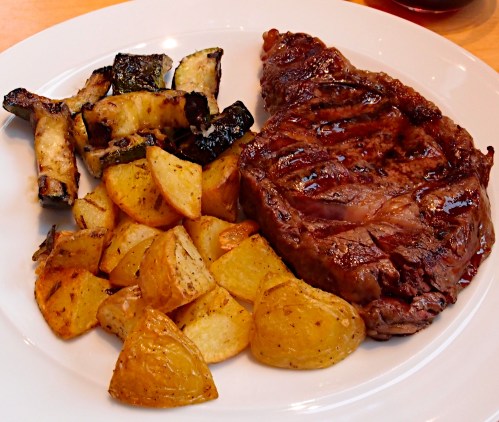
Really good spuds!

We cooked these recently and took pics, as always, so we could post the recipe on the blog later. Only to find out that we have in fact cooked them before and blogged the recipe also. So we would like to reiterate that this is a very nice way to cook potatoes. We also recommend that you make a little note beside every recipe you do so you don’t forget that you’ve made it before and whether or not you liked it. We almost always do this but clearly forgot this time. You can get the recipe here.

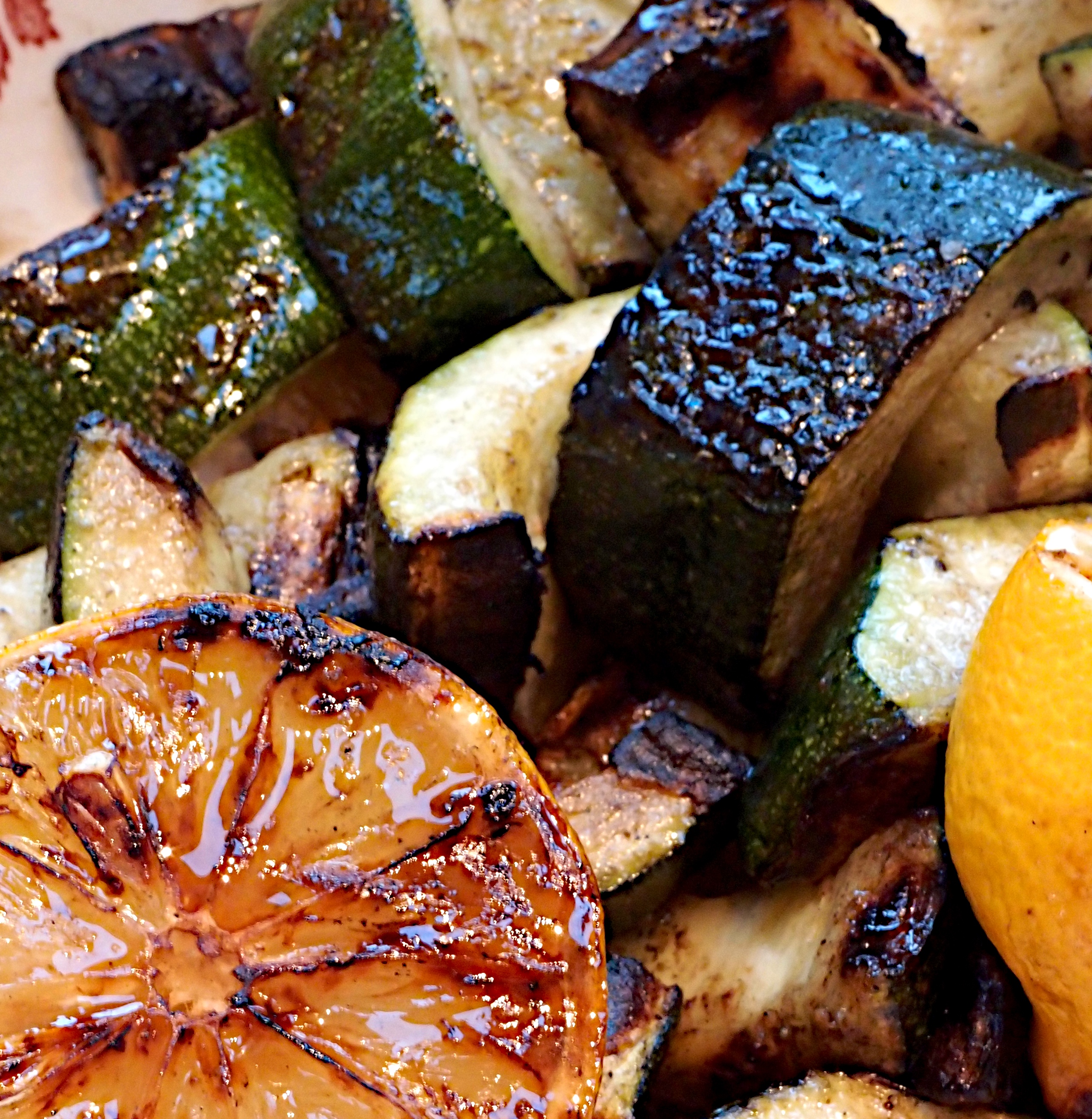
A great accompaniment to potatoes and steak were these courgettes from Johnny and Vivienne’s garden which barbecued superbly, especially with the lemon halves which contribute a caramel zing.

Read Full Post »

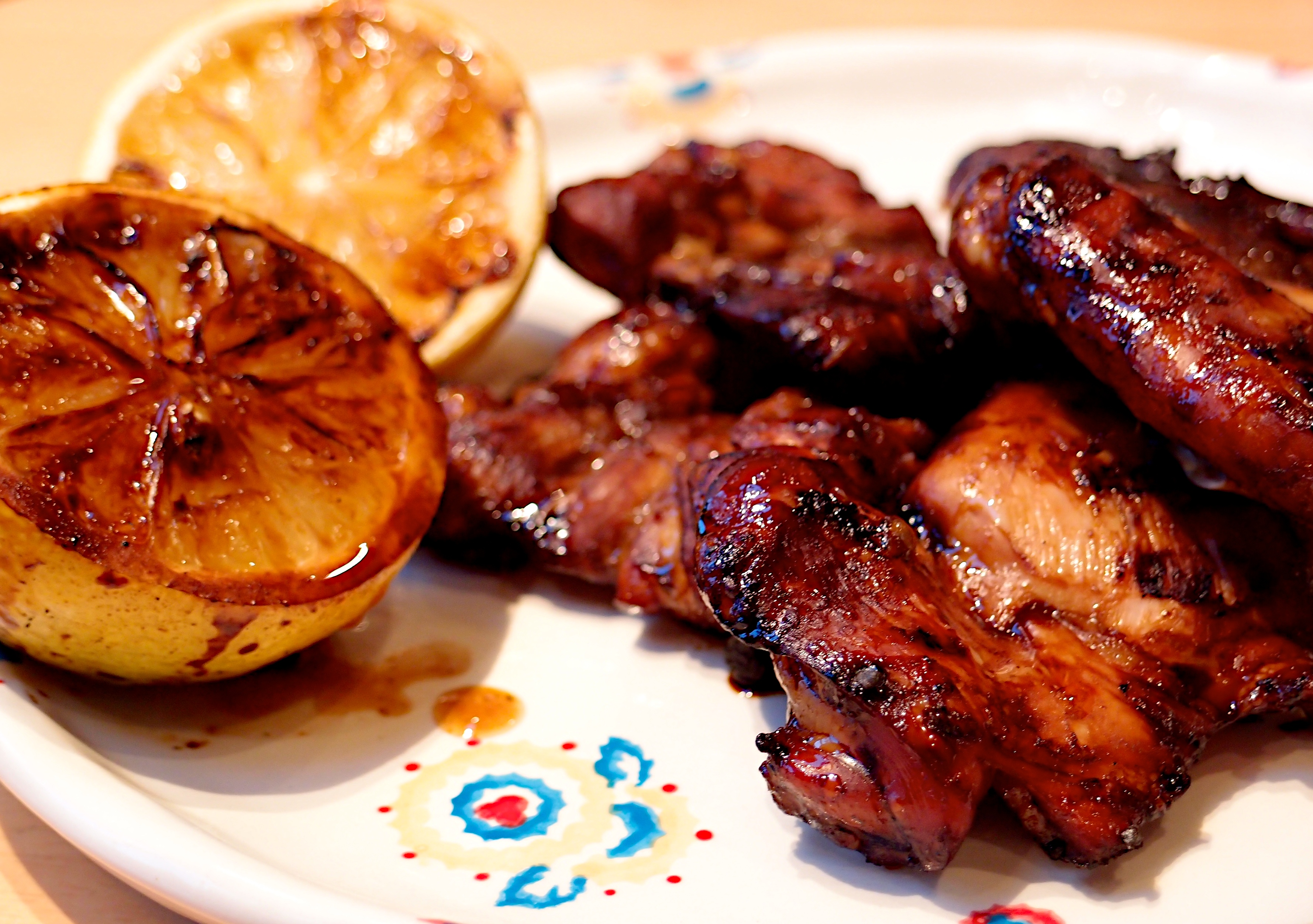
I’m sure we’ve already mentioned that we panic-buy skinless, boneless chicken thighs – though they do seem to be easier to get these days. Thighs are much tastier than chicken breasts and don’t have the same tendency to dry out.

After a relatively sunny day on Sunday we deicided to plan a barbecue for Monday. Jono ended up standing outside in the rain under a big umbrella – that’s summer in Ireland! Do try barbecuing lemon halves – it makes them super juicy and a bit milder, perfect squeezed over grilled meat or fish.

Teryyaki mustard chicken – to serve 4

  • 8 boneless chicken thigh fillets – the skin can be on or off
  • vegetable oil, for brushing
For the teriyaki sauce
  • 3 tbsp beer
  • 3 tbsp Japanese soy sauce
  • 1 tbsp caster sugar
  • 1 tsp mustard powder
  • lemon halves, for serving
Combine the teriyaki sauce ingredients in a small bowl and stir until the sugar dissolves.

Put the chicken in a flat, non-metallic dish and pour over the marinade. Cover and refrigerate for no more than 3 hours, turning now and again. Take it out of the fridge 20 minutes before cooking.

Light the barbecue. Brush the grill with a little vegetable oil to stop the chicken sticking. Put the chicken thighs on the grill, reserving the marinade, and cook for about 5 minutes, turn and cook for another 3 minutes.

Start basting with the teriyaki sauce and turning every minute – for about 4 minutes or until the thighs start to look charred at the edges.

Check they are cooked through and remove them to a plate, cover and rest for 5 minutes before serving.

Serve with barbecued lemon halves to squeeze over.

(Original recipe by Ross Dobson for Sainsbury’s Magazine, August 2009)

Read Full Post »

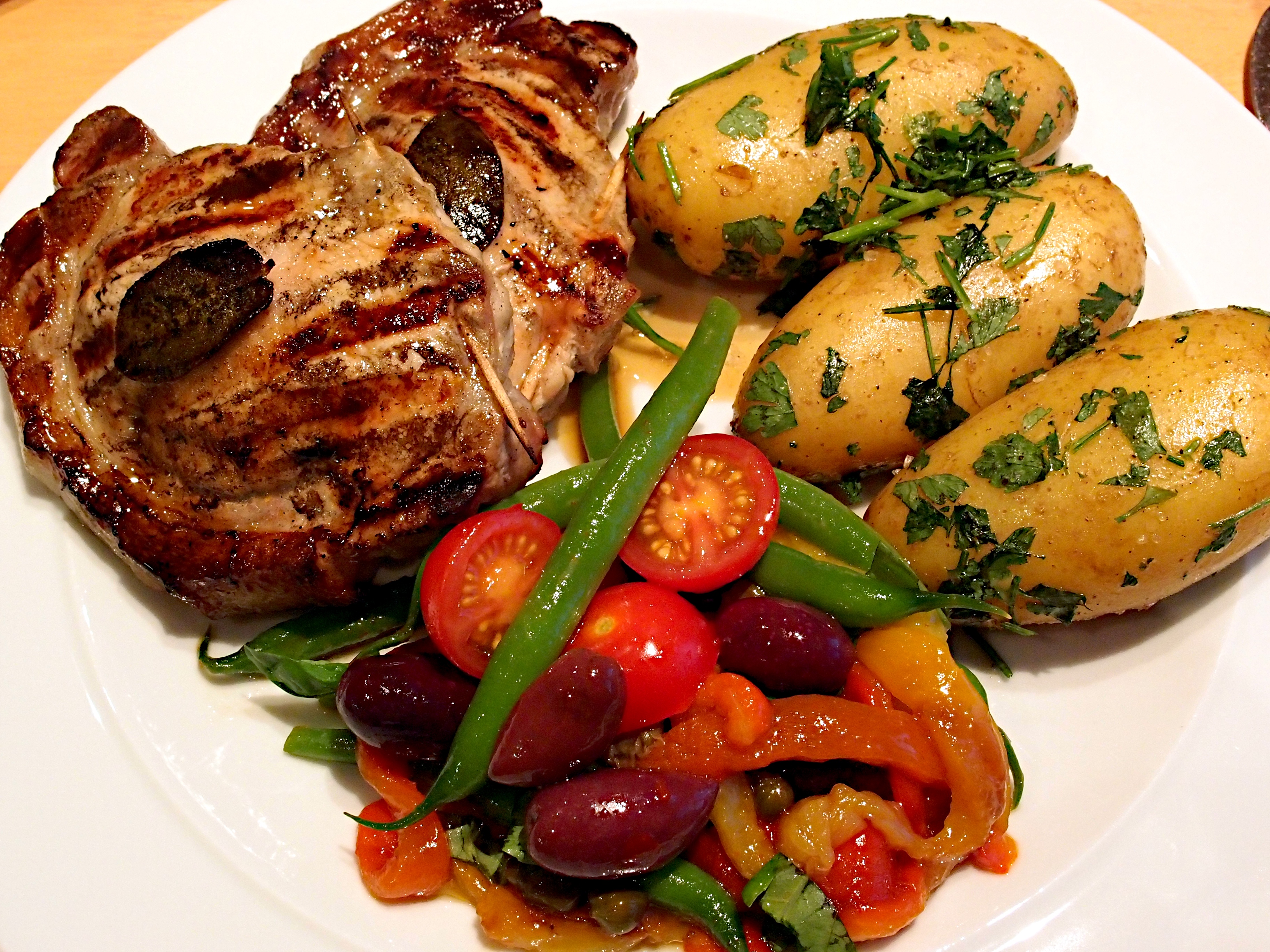
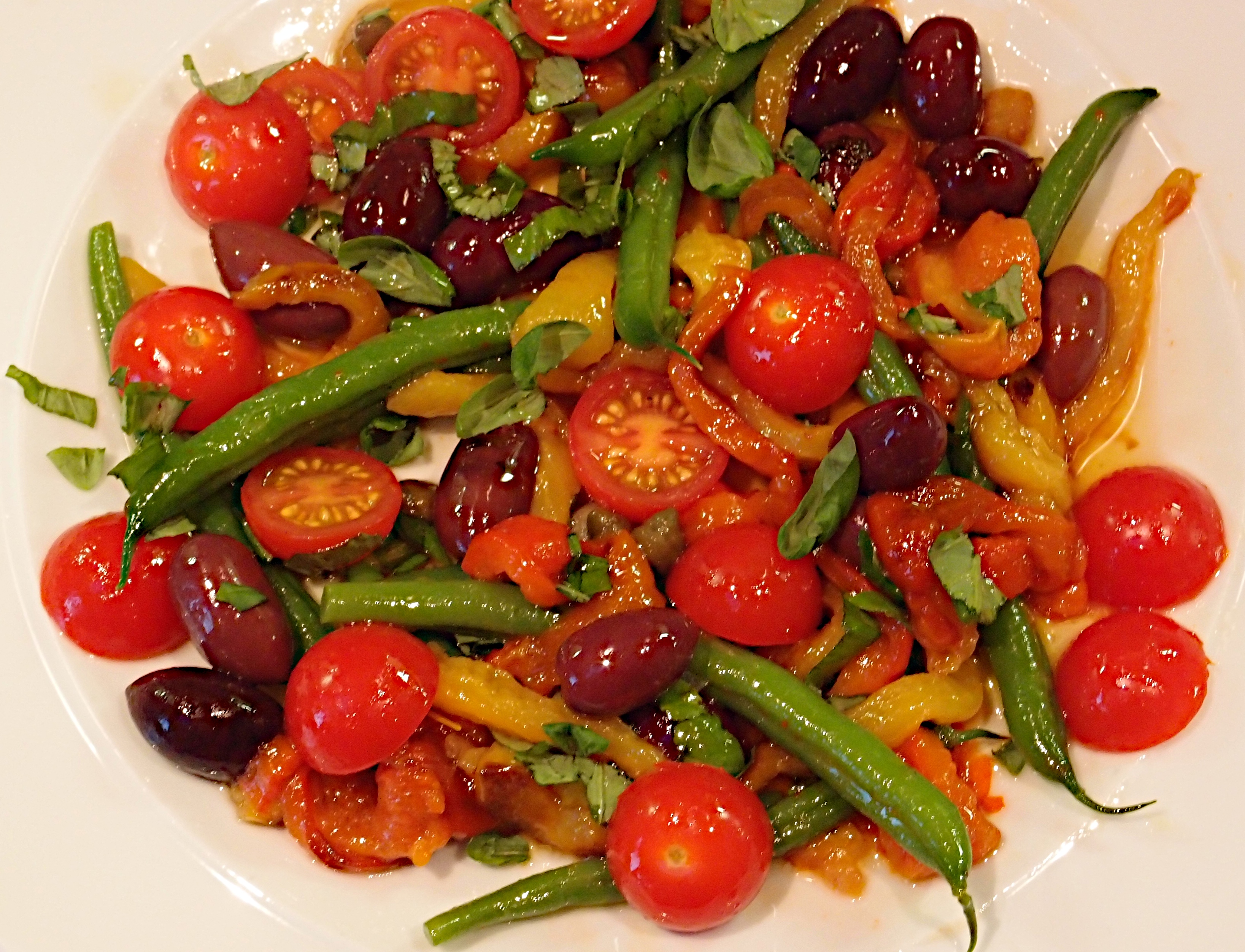
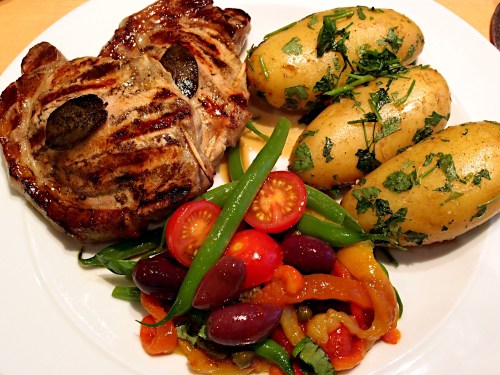
Something a little different for the barbecue (and if it rains it can be cooked in the oven). The bean and olive salad is also delicious. We like this because it can serve up to eight people  but can also be easily adapted for two (or as many as you like). You can also assemble the pork up to a day in advance and keep it in the fridge.  A few new spuds on the side are the perfect accompaniment.

Stuffed pork medallions – to serve 8 (we successfully quartered to serve 2)

  • 16 boneless pork loin steaks
  • large bunch sage, leaves picked (about 32 leaves)
  • 125g ball mozzarella, sliced into 16 pieces
  • 2 lemons, halved
  • cocktail sticks.
Put the pork on a board and make a deep pocket in the side using the tip of a knife, without cutting all the way through. Wiggle the knife around so the pocket is bigger than the opening. Stuff the pockets with a bit of cheese and a sage leaf. Close the opening by threading a cocktail stick through. Press another sage leaf on top of each medallion. Squeeze over juice from one of the lemon halves. You can make these up to a day ahead and keep them in the fridge.

Drizzle the medallions with a little bit of oil and barbecue for 4 minutes on each side (starting with the sage-leaf side down). While they are cooking, barbecue the lemon halves, cut side down, until charred, for squeezing over at the end. Season and serve.

If all else fails you can griddle the medallions in batches on a griddle pan, then transfer to a hot baking tray in the oven to finish cooking (160C/140C fan/gas 3).

(Original recipe from BBC Good Food)
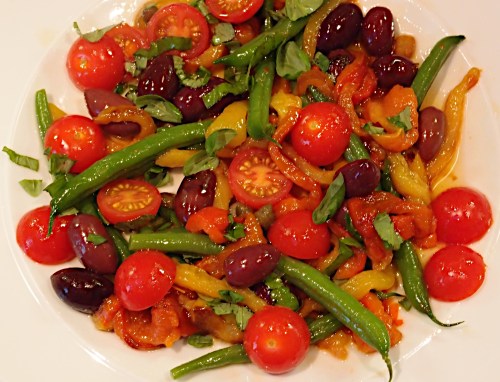
Bean & olive salad – also to serve 8 but make less if you’re not that many!

  • 2 yellow peppers
  • 2 red peppers
  • 300g green beans
  • 300g cherry tomatoes, halved
  • 1 tbsp small capers
  • 2 handfuls of black olives, stoned (or not if you can’t be bothered)
  • 4 tbsp olive oil
  • 1 tbsp red wine vinegar
  • large bunch basil, leaves picked, large ones shredded, small ones left whole
Blacken the peppers using a gas flame, barbecue or hot grill. Put them in a bowl and cover with cling film. When they are cool, peel, deseed and cut them into strips, keeping any juices.

Cook the beans in boiling salted water until crunch but not squeaky, then drain and put in ice water to stop them cooking further. Toss everything together, adding the shredded basil at the last minute and scatter over the small leaves to finish.

(Original recipe from BBC Good Food)

Read Full Post »

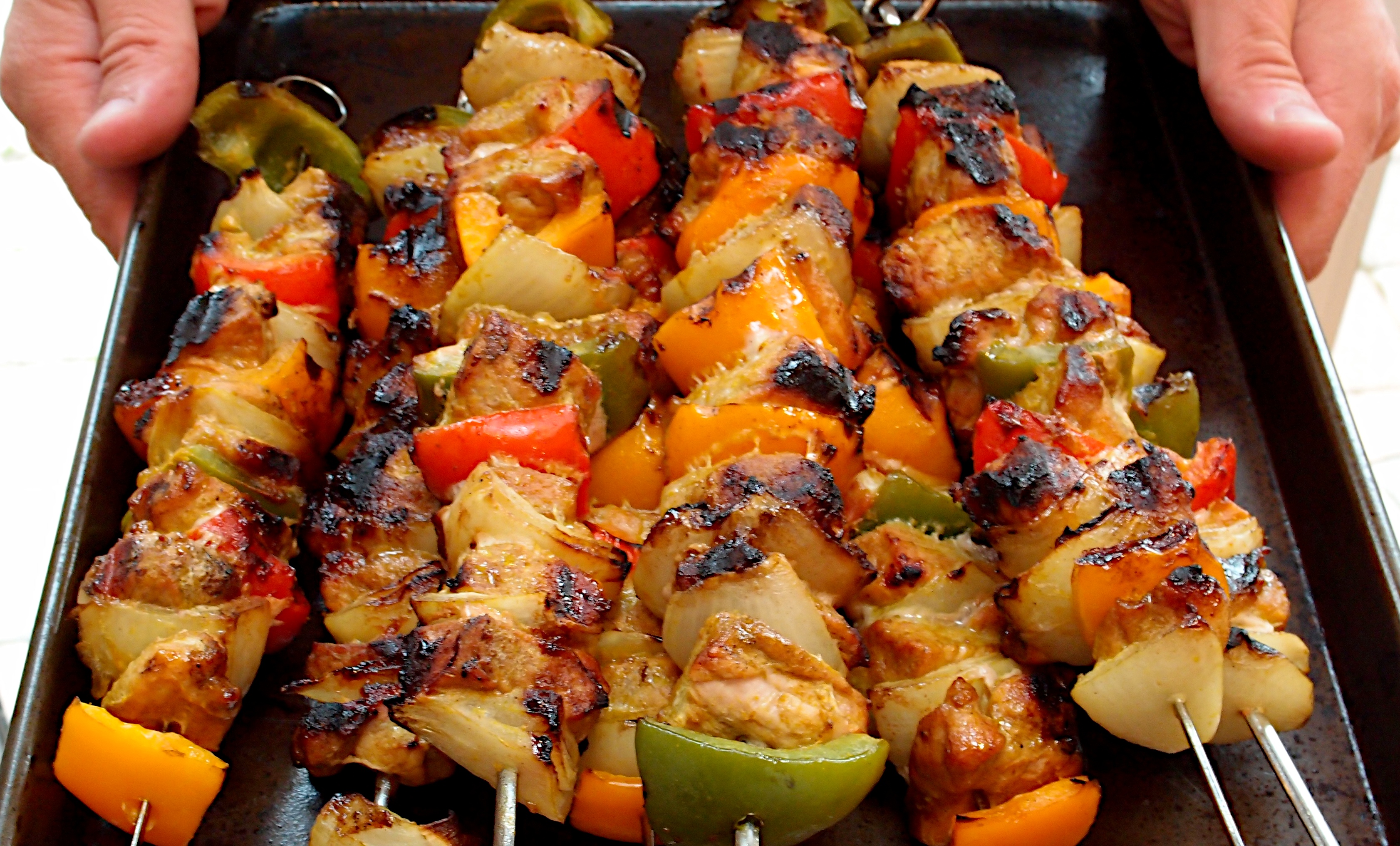
When you live in Ireland you need to take advantage of every glimmer of sunshine. It’s always good to have a barbecue recipe up your sleeve so you don’t end up with burgers and sausages again (though we like them too).

Pork fillet and pepper kebabs – to serve 6

  • 1kg boneless pork loin
  • 1 red pepper
  • 1 yellow pepper
  • 1 green pepper
  • 2 onions, quartered
  • 1 tbsp sugar
  • 1 tbsp balsamic vinegar
  • 2 tbsp olive oil
  • 1 tbsp ras el hanout (a spice mix from North Africa. Available in the supermarket)
Cut the pork into 36 large cubes and cut each pepper into 12 squares. Cut the onions into 36 small wedges.
Put the sugar and vinegar in a small pan and cook over a low heat, stirring until the sugar has dissolved. Pour into a bowl and stir in the olive oil and ras el hanout. Add the pork cubes and give it a good mix.
Thread the pork and veg alternately onto 12 kebab skewers (if you’re using wooden ones you need to soak them for about half an hour first).
Cook on the barbecue, turning and brushing with the marinade for 12-15 minutes, until cooked through.
Serve with salad and some baked potatoes if you like.

Read Full Post »

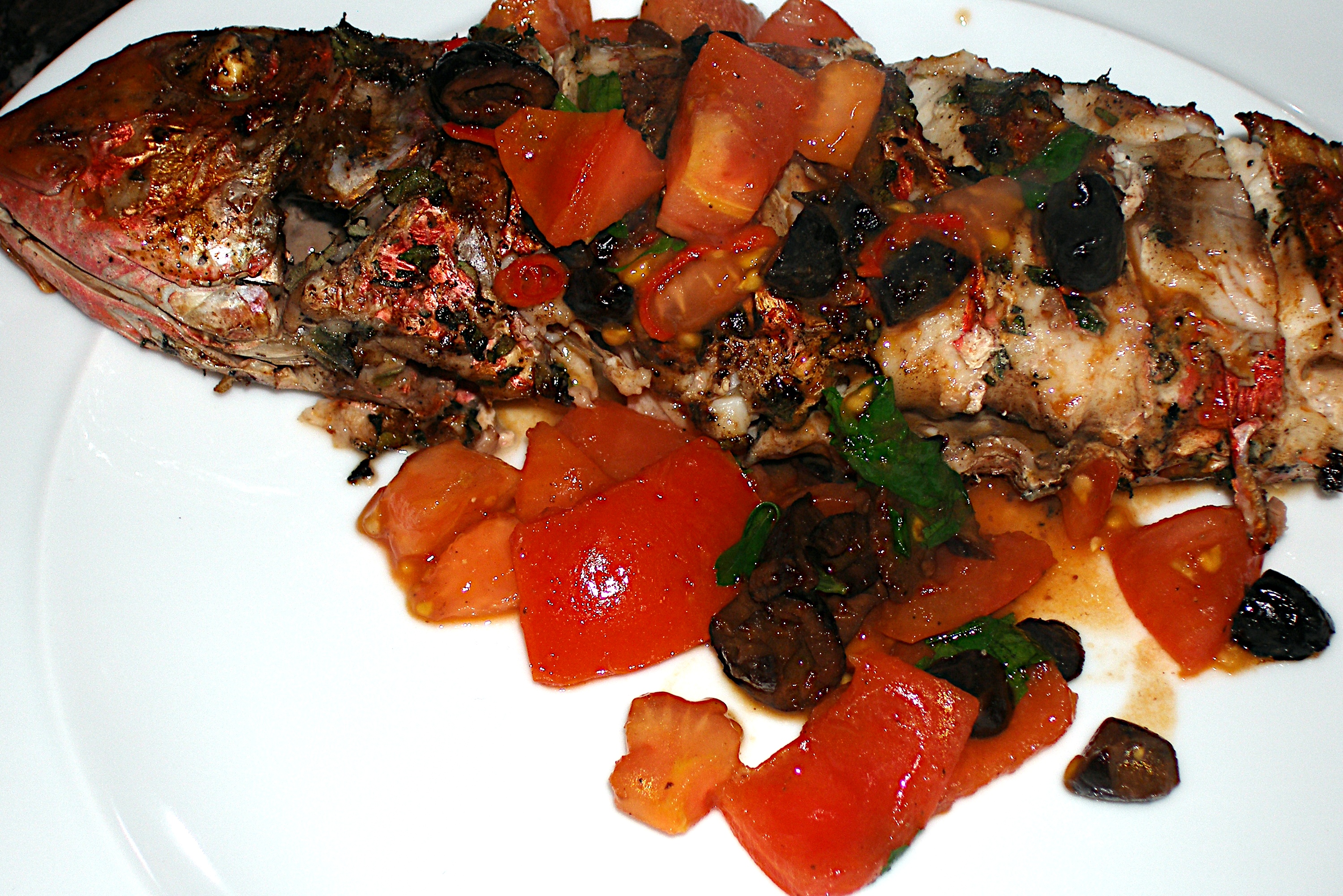
Our local fish counter (in Caviston’s, Glasthule) had Red Mullet today, which we never see, so I urgently called Jules to find a recipe. She found this in 2 minutes flat and we went with it as there wasn’t too many ingredients. The salsa tastes absolutely amazing. Now that the evenings are longer we’ve been dying to use the barbecue more so we’re very pleased with ourselves for a Monday night (especially as we’d planned to have  salad!) Very full and satisfied now.

Barbecue red mullet with a hot salsa (to serve 4)

For the fish:

  • 4 red mullet, scaled, cleaned and gutted
  • small bunch of fresh oregano, leaves picked

For the salsa:

  • a handful of black olives, stoned and roughly chopped
  • 3 cloves of garlic, peeled and finely sliced
  • 1 fresh red chilli, deseeded and finely sliced
  • a few sprigs of fresh rosemary
  • 6 ripe tomatoes, roughly chopped
  • juice of 1/2 a lemon
  • a small bunch of flatleaf parsley, leaves picked and torn

Get your barbecue hot.

Slash the fish all over on both sides, about 1 cm deep, to help it cook through.

Roughly chop some oregano on a big board and spread it out. Sprinkle with a generous amount of salt and black pepper.

Roll the fish over the board and rub all the flavourings into the slashes you made.

Barbecue the fish for about 4 minutes on each side until you have crispy skin and soft cooked flesh inside.

Heat a little olive oil in a frying pan and add the chopped olives. Warm them through for a minute or two and add the garlic, chilli and rosemary sprigs. Fry gently until the garlic is soft.

Remove and discard the rosemary and toss in the chopped tomatoes. Squeeze in the lemon juice and add the parsley.

Taste for seasoning (you probably won’t need salt as the olives will be salty) and warm through.

(Original recipe from Jamie Oliver)

Wine suggestion: We had a glass of Gruner Veltliner from Marlborough in New Zealand. Very unusual as this grape’s home turf is Austria. Quite peachy with bit of typical white pepper spice. If you fancy something different you can buy it in Mitchell and Son for about €15.95. A refreshing change from Sauvignon Blanc.


Read Full Post »

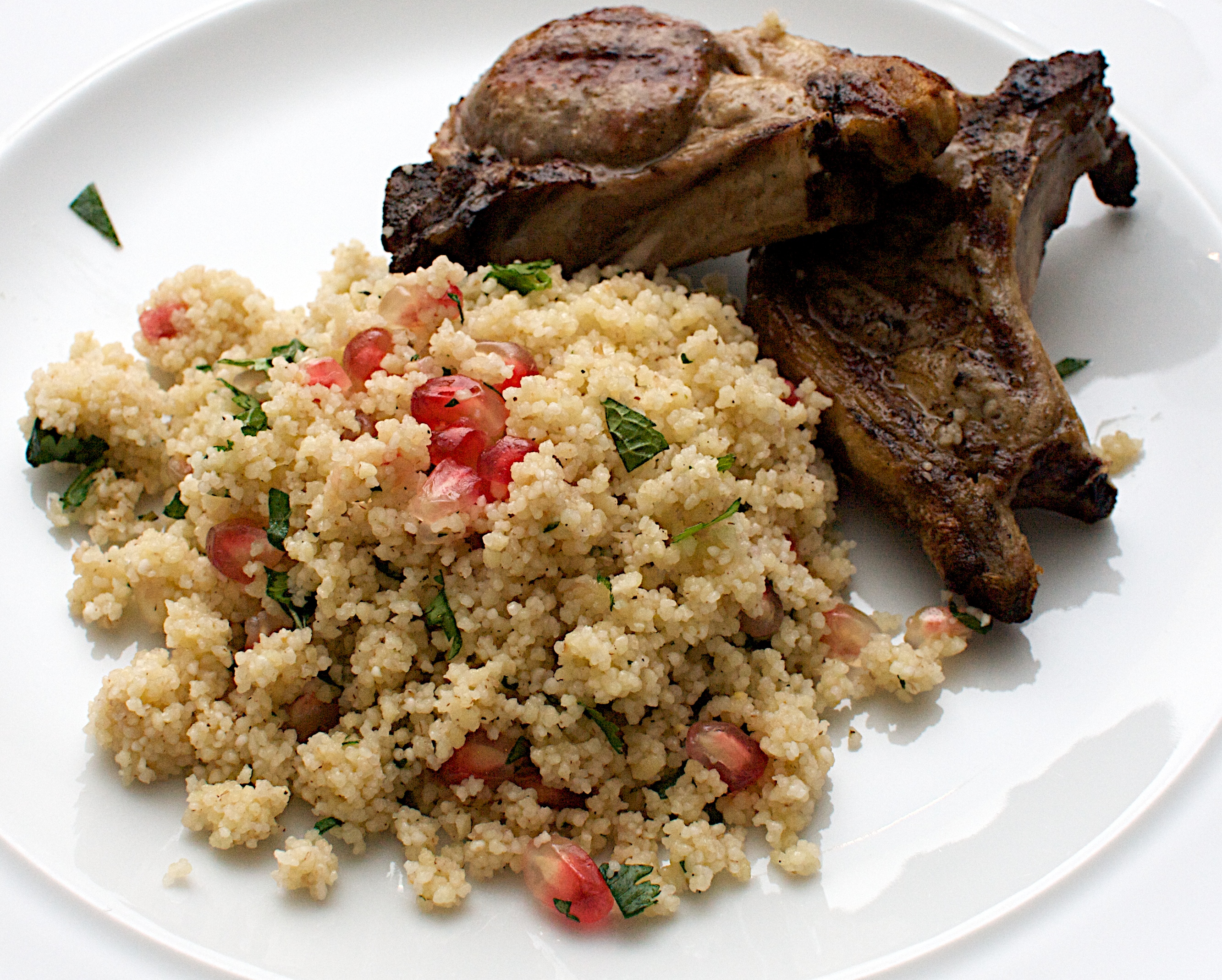
We got some cheap lamb chops at the weekend and so looked for something fresh to accompany them. This looked good and went really well with the chops, which we barbecued. Dress the couscous when it is still warm to get the flavour in.

Herby couscous with citrus & pomegranate dressing – to serve 4

  • 200g couscous
  • 150 pomegranate seeds (you can buy a packet  of seeds in the supermarket or just buy one pomegranate)
  • handful of chopped mint and coriander
  • juice of 1 orange
  • 2 tbsp each of white wine vinegar and olive oil

Put the couscous in a shallow dish and pour over 200ml boiling water. Cover with cling film and leave for 5 minutes. Rough it up with a fork to separate the grains and stir through the pomegranate seeds and herbs.

Mix the orange juice, vinegar and olive oil and stir into the couscous. Season well with salt.

Tip: If you buy a whole pomegranate cut it in half and bang it with a wooden spoon to get the seeds out. It’s very easy so we don’t really get why the seeds come in packets.

(Original recipe from BBC Good Food – http://www.bbcgoodfood.com/recipes/9841/herby-couscous-with-citrus-and-pomegranate-dressin)

Read Full Post »

This week we went to Oddbins in Blackrock village while walking home from work in the really bad snow. We unfairly put the staff under pressure, and the poor shop assistant even gave us a wine out of her Christmas box – thanks a mill!

We also don’t usually chill our reds in snow before drinking, but the photo opportunity, and the abundant snow in Dublin, begged for this photo.

To the wine: classically new world in that the fruit is wonderfully ripe with a little lift from slightly higher alcohol (compared to Burgundy, where Pinot Noir finds its greatest expression). The aromas and flavours are predominately cherries and summer berries and it has a nice juiciness and medium weight. The best thing is the balance and freshness which makes this wine effortless to drink and yet interesting and flavoursome.

Don’t serve with a big, meaty stew, rather this wine would be great with lighter meats, like Christmas turkey and ham .. the shop assistant would have had a nice wine for the big day ahead (now I feel guilty). It also went particularly well with barbecued sausages and champ; see right.

We paid €14.99 but don’t rush out as we think Oddbins may not have this in stock again until after Christmas.


Read Full Post »

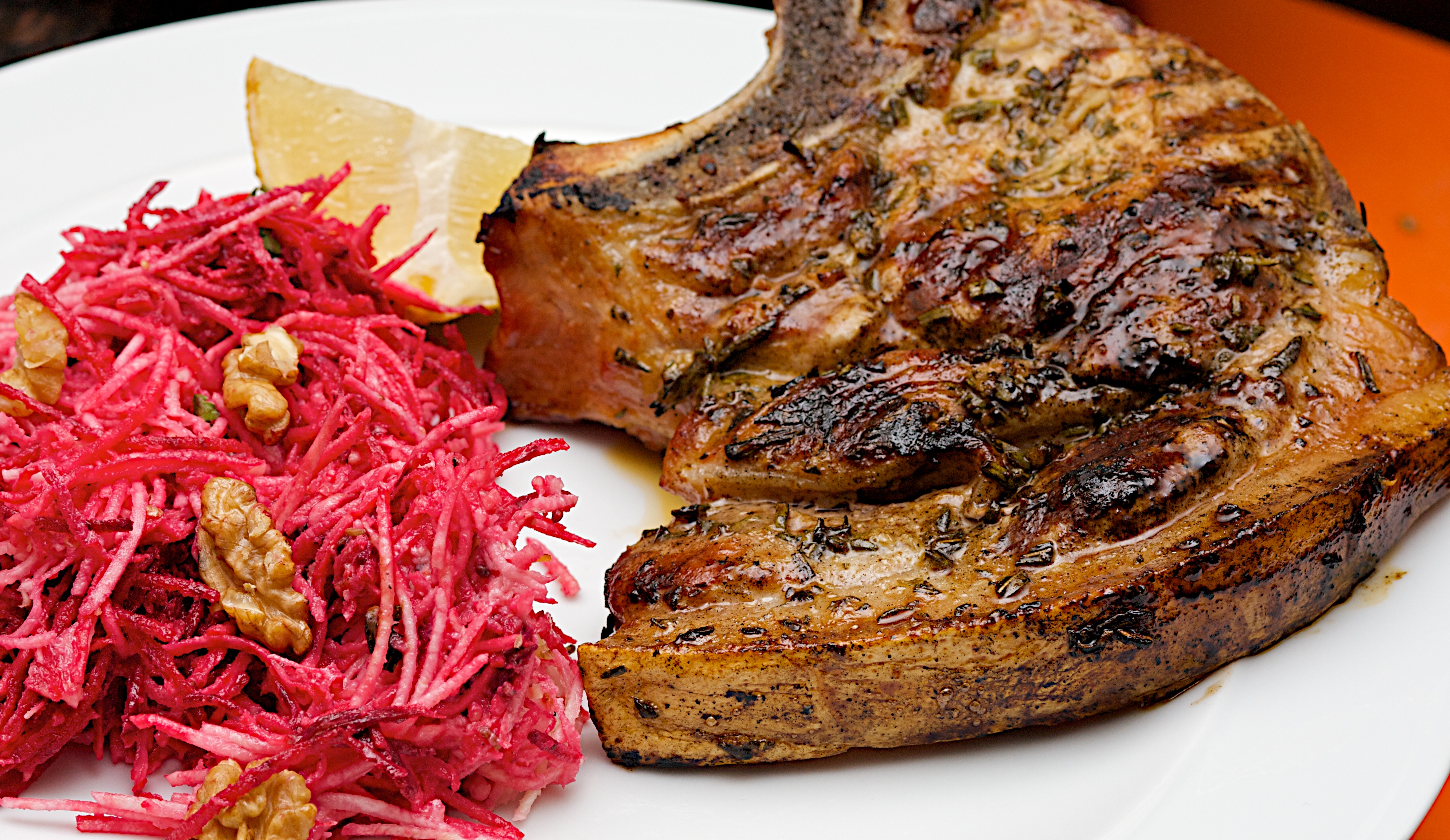
We barbecue all year round like eejits and when our butcher Tom (O’Toole’s in Glasthule) produced these fabulous pork chops we were powerless to resist – complete with crackling and everything!

Jono mixed together some coarse chopped rosemary from our balcony, a big fat garlic clove and plenty of salt and pepper. He pounded and ground this for a few minutes and then added enough olive oil to make a paste to smear on the chops – you want the mixture to stick on the chops so go easy on the oil.

While Jono barbecued the chops outside I made this tasty remoulade. Celeriac remoulade is in lots of my Mum’s old cookbooks from the seventies and it looks a bit like creamy coleslaw – this is Nigel Slater’s much lighter and fresher take on the whole thing (Tender Vol 1). Makes heaps for a side dish which means you can take some to work for lunch too.

Celeriac Remoulade

  • juice of half a lemon
  • about 500g of celeriac
  • a raw beetroot – medium size
  • 4 heaped tbsp creme fraiche
  • 2 tsp grainy mustard
  • olive or walnut oil
  • a small handful of parsley leaves
  • enough walnut halves to sprinkle over the top
  1. Put the lemon juice in a big mixing bowl.
  2. Peel the celeriac and grate it coarsely – we used the Magimix which grated it quite fine and it worked well.
  3. Toss the grated celeriac with the lemon juice in the bowl to stop it from turning brown.
  4. Grate the beetroot (also best done in the processor to avoid purple hands) and to the celeriac but don’t mix it in yet.
  5. Mix the creme fraiche, mustard and some seasoning in a bowl. Gently mix in enough oil to make a coating consistency (2-3 tbsps).
  6. Roughly chop the parsley and add to the sauce before folding it gently into the vegetables, don’t mix too hard or it will all turn very pink.
  7. Toast the walnuts lightly in a non-stick pan and scatter them over the salad.

Tip: Don’t make this on a first date as you’ll have mucky hands and faces by the time you’ve finished sucking the bones – delicious!

Julie

Read Full Post »

« Newer Posts