Feeds:
Posts
Comments

Posts Tagged ‘Basil’

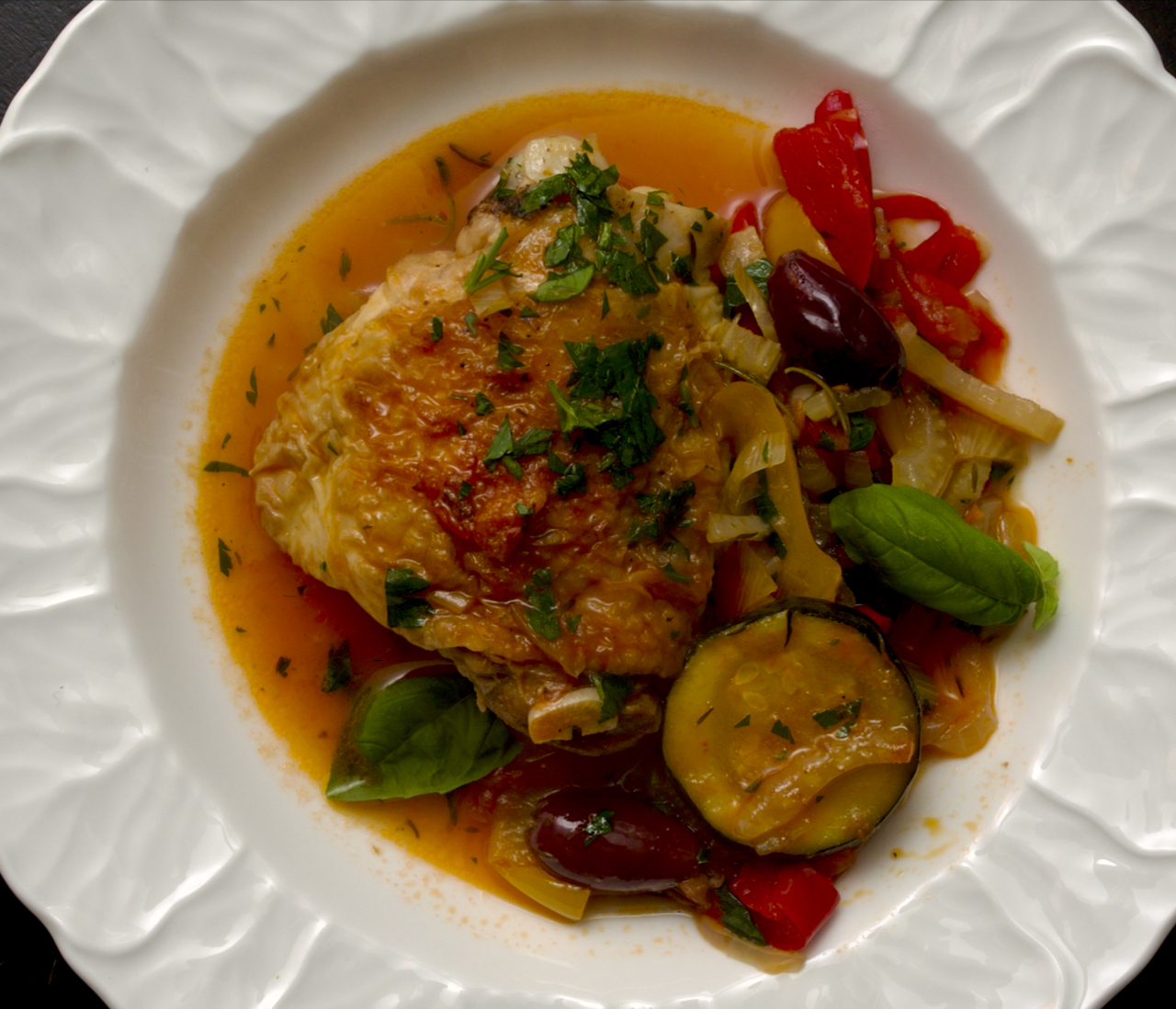
Hanging onto summer like rosé in October… As Autumn seems to appear intermittantly in Dublin, we’re clinging to the flavours of sunnier days. This simple Chicken Provençal is sunshine in a frying pan. You can’t beat the cheerful tones of this French classic, perfect for lifting spirits as the evenings draw in. Serve it with buttery new potatoes or a chunk of crusty baguette.

Wine Suggestion: We paired it with a classic dry Provençal rosé from Château Léoube – textured and full-bodied (for a rosé), yet still elegant and crisp on the finish.

Chicken Provençal – serves 4

  • 2 tbsp olive oil
  • 8 chicken thighs
  • 2 onions, thinly sliced
  • 2 anchovies in oil, chopped
  • 4 sprigs of thyme
  • 2 bay leaves
  • 2 red peppers, cut into strips
  • 1 yellow pepper, cut into strips
  • 1 big fennel bulb, quartered, core removed and thinly sliced
  • 2 courgettes, cut into 1cm thick slices
  • 8 cloves of garlic, thinly sliced
  • 200ml white wine
  • 1 x 400g tin chopped tomatoes
  • 1 litre chicken stock
  • 100g pitted black olives
  • 1 sprig of rosemary
  • 15g flatleaf parsley, leaves only, finely chopped
  • a handful of small basil leaves
  • a small handful of capers

Warm the oil in a large, heavy-bottomed saucepan over a medium-high heat. Season the chicken with salt and pepper and brown well. You will probably need to do this in two batches. Put the browned chicken aside on a plate.

Turn the heat down and add the onion, anchovies, bay leaves and thyme with a good pinch of salt. Sauté gently for about 15 minutes or until very soft.

Turn the heat up a little, then add the peppers, fennel and courgettes, then sauté for 5 minutes. Add the garlic and sauté for a further minute.

Pour in the wine and simmer for a couple of minutes, then add the tomatoes, stock, rosemary and olives. Season with salt and pepper and simmer for 5 minutes. Return the chicken to the pan with any juices on the plate and simmer very gently for 35-40 minutes or until the chicken is very tender.

Stir in the parsley, half the basil and the capers. Taste and season again if required.

Serve with the rest of the basil scattered over.

(Original recipe from Lickedspoon with Debora Robertson on Substack, 4 Jun 2025.)
Read Full Post »

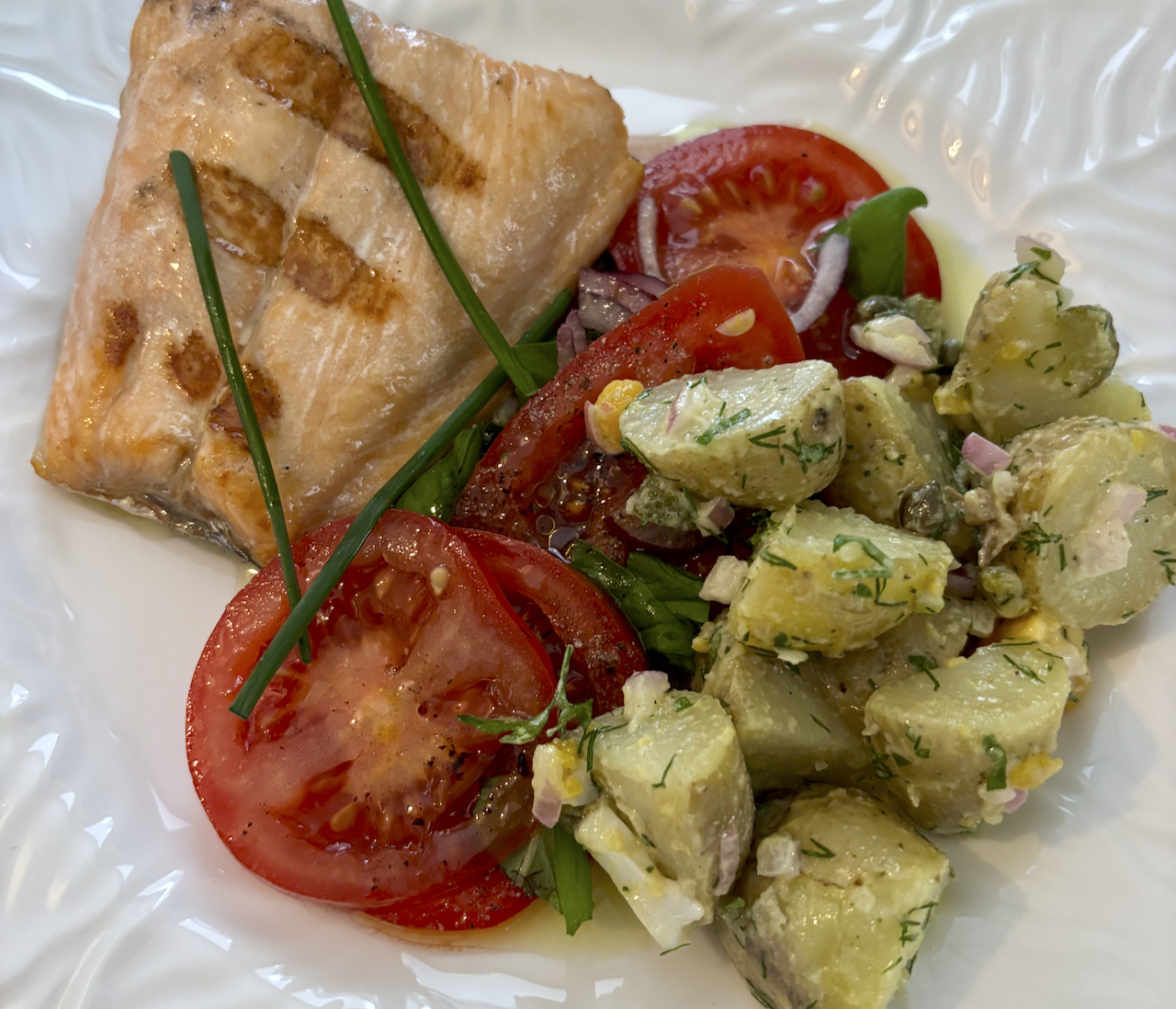
Quite a lot going on here but all very straightforward and not too time-consuming. We highly recommend this potato salad – piquant and not to mayonaisy.

Wine Suggestion: We’ve always enjoyed albariño but have really got into it in a big way recently by exploring the Spanish, Portuguese and new areas in the world making this great grape that pairs with fish and seafood. Tonight a little off-piste the Newton Johnson Albariño from Hermanus in South Africa … which has similar granitic soils to Spain. Sunshine, Antarctic breezes and a southern African hint make this unique but recognisable and delicious with the salmon, capers etc.

Smoked salmon on the barbecue with tomato salad and potato salad – serves 4

  • 4 lightly smoked salmon fillets (we bought ours in M&S)

FOR THE CHIVE DRESSING:

  • a small bunch of chives
  • 1 small shallot, finely chopped
  • 90ml (6 tbsp) of extra virgin olive oil
  • 1 tbsp white wine vinegar
  • ½ tsp salt

FOR THE TOMATO SALAD:

  • 6 tomatoes, finely sliced
  • 1 smal red onion, finely sliced
  • a pinch of caster sugar
  • 1 tbsp extra virgin olive oil
  • 1 tsp sherry vinegar
  • a handful of basil, torn

FOR THE POTATO SALAD:

  • 1 kg new potatoes – we used Jersey Royals
  • 2 banana shallots, finely chopped
  • 2 eggs, hard-boiled, peeled and chopped
  • 2 tbsp capers
  • a handful of cornichons, finely chopped
  • 4 tbsp olive oil
  • 1 tbsp sherry vinegar
  • 2 tbsp mayonnaise
  • a small handful of parsley and dill, chopped

Start by boiling the potatoes for the salad in salty water until tender, then drain and set aside to cool.

Get your barbeuce on to heat up.

When the potatoes have cooled, cut them into halves or quarters and mix with the rest of the potato salad ingredients. Set aside until ready to serve.

For the chive dressing, set aside 4 chives for a garnish and finely slice the rest. Mix them with the shallot, olive oil, vinegar and salt.

For the tomato salad, arrange the sliced tomatoes on a serving plattter and scatter over the red onion. Season well with salt, pepper and sugar, then dress with the oil and vinegar and garnish with the basil.

Brush the fish with a little oil and cook over a hot barbecue for a couple of minutes on each side.

Spoon some chive dressing on each plate and top with the cooked salmon. Garnish with the remaining chives and serve with the tomato and potato salad.

(Original recipe from Rick Stein’s Food Stories, BBC Books, 2024.)

Read Full Post »

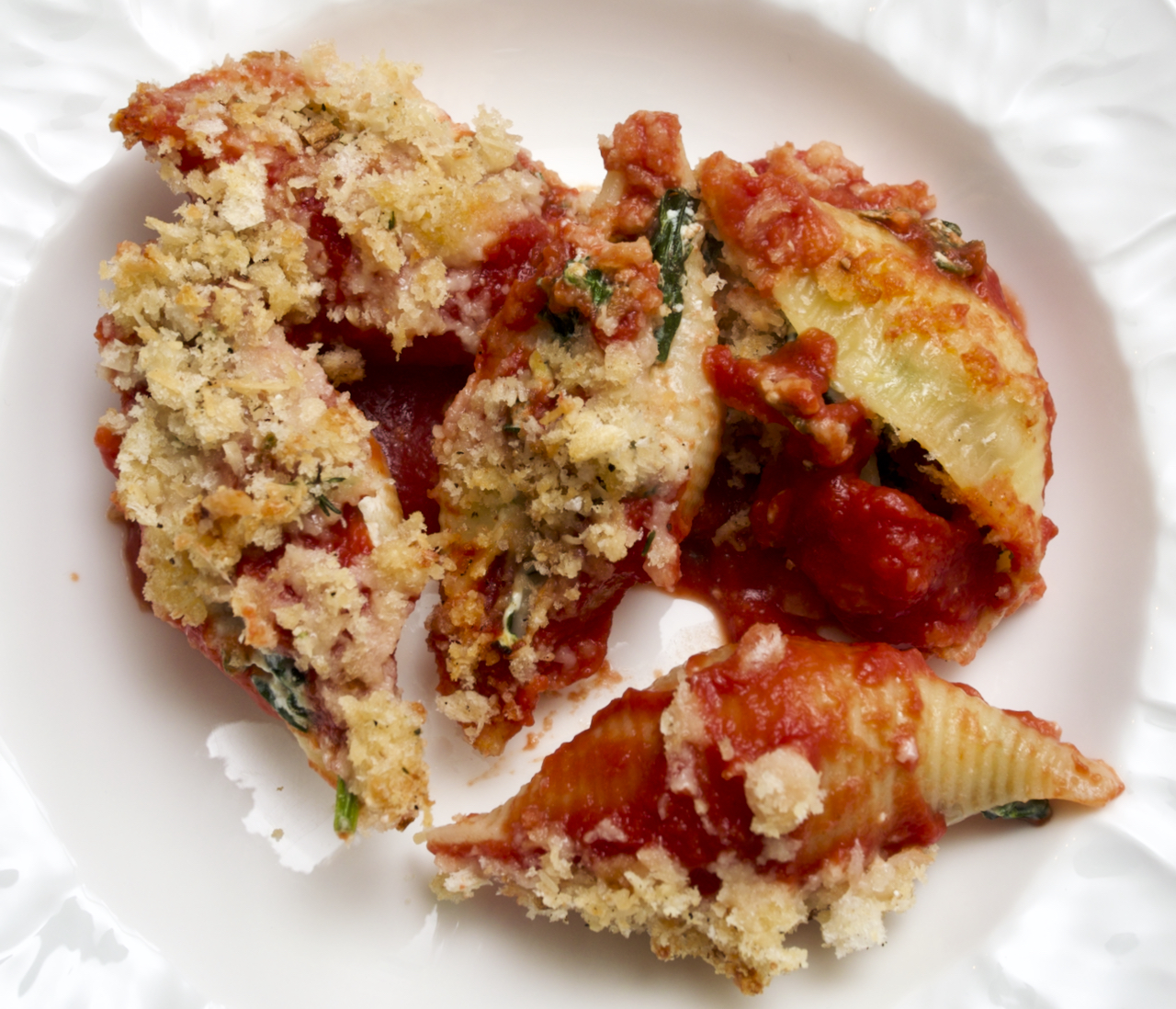
A vegetarian dish picked by Orlaith who wants to be a vegetarian for January – we’ll see how she goes! She wasn’t put off by this dish anyhow.

Wine Suggestion: A juicy, youthful Sangiovese or similar, like Umani Ronchi’s Serrano Rosso Conero which is a Montepulciano-Sangiovese blend. Bright, joyful red fruits with a smooth elegance and vivacity of youth.

Baked pasta shells – serves 4

  • 250g conchiglioni (big pasta shells)
  • 1 tbsp rapeseed oil, plus a bit extra
  • 400g baby spinach
  • 250g ricotta cheese
  • 200g Greek yoghurt
  • 30g grated Parmesan cheese,
  • 2 garlic cloves, crushed
  • zest of 2 lemons
  • 10 fresh basil leaves, shredded
  • ¼ tsp ground nutmeg
  • 1 x 700g jar of tomato passata

FOR THE TOPPING:

  • 70g fresh breadcrumbs
  • 70g grated Parmesan cheese
  • 1 tsp chopped fresh thyme
  • 1 tbsp butter, melted

Heat the oven to 170C.

Bring a large pan of very salty water to the boil. Add the pasta shells and cook for no more than 9 minutes – they need to be undercooked. Drain and cool under running cold water, then drain again and drizzle with a little oil to stop the shells sticking together, then set aside.

Heat the oil in a large frying pan over a medium heat. Add the spinach and cook for 1-2 minutes, until just wilted. Remove the pan from the heat and leave to cool, then squeeze out any moisture and roughly chop it.

Put the chopped spinach into a large bowl with the ricotta, yoghurt, Parmesan, garlic, lemon zest, basil and nutmeg and mix to combine. Season with salt and pepper.

Pour half the passata over the bottom of a large baking dish and season with salt and pepper. Stuff the shells with the ricotta and spinach mixture, then add the shells to the dish on top of the sauce, stuffed side up. Pour over the rest of the passata and season with a little more salt and pepper.

Mix the breadcrumbs, Parmesan and thyme in a small bowl, then pour over the melted butter and toss to combine. Sprinkle this over the top of the pasta, then bake in the preheated oven for 25 to 30 minutes, until the breadcrumbs are golden and the pasta is bubbling.

(Original recipe from Avoca at Home, Penguin Random House, 2022.)

Read Full Post »

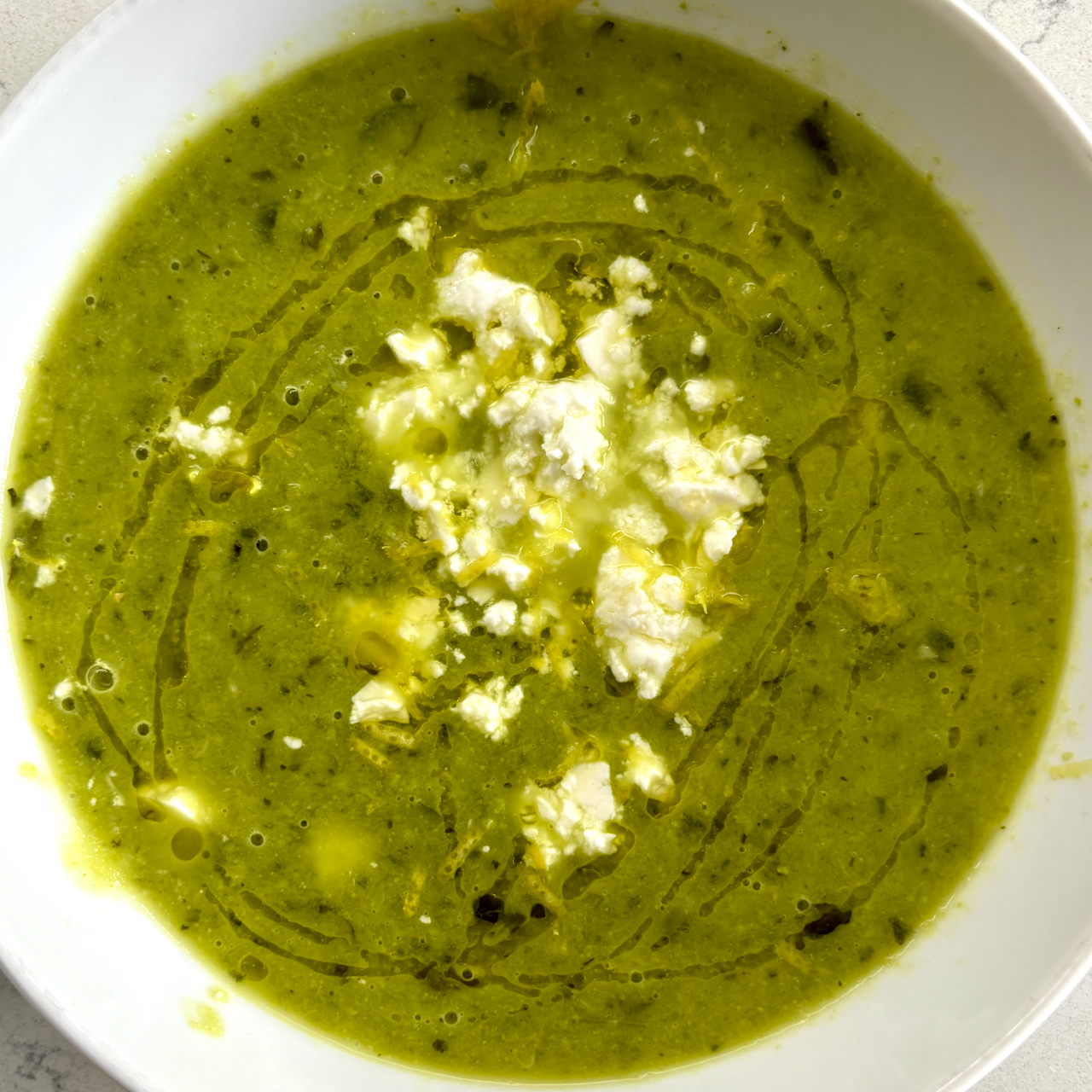
How can it be soup season already?? This is a good transition recipe made with summer veg and herbs. Don’t leave out the feta and lemon zest garnish as it really makes it sing.

Courgette, pea and basil soup – serves 8

  • 75ml olive oil, plus extra to serve
  • 1 bulb of garlic, cloves separated and peeled
  • about 1.3kg of courgettes, cut into 3 cm thick slices
  • 1 litre veg stock
  • 500g frozen peas
  • 50g basil leaves
  • 200g feta, crumbled into pieces
  • 1 lemon, finely grate the zest

Heat the olive oil in a large saucepan over a medium heat. Add the garlic cloves and fry for a few minutes or until turning golden. Add the courgettes, 2 tsp of salt and plenty of black pepper and keep cooking for about 3 minutes, stirring all the time, until the courgettes are starting to brown. Pour in the stock and 500ml of water, then bring to the boil over a high heat. Cook for 7 minutes, until the courgettes are softened.

Add the peas, stir through for 1 minute, then add the basil. Remove the soup from the heat and whizz using a stick blender or liquidiser until smooth.

Serve the soup in bowls with crumbled feta, some lemon zest and a drizzle of good olive oil.

(Original recipe from Ottolenghi Simple by Yotam Ottolenghi with Tara Wigley and Esme Howarth, Ebury Press, Penguin: Random House, 2018.)

Read Full Post »

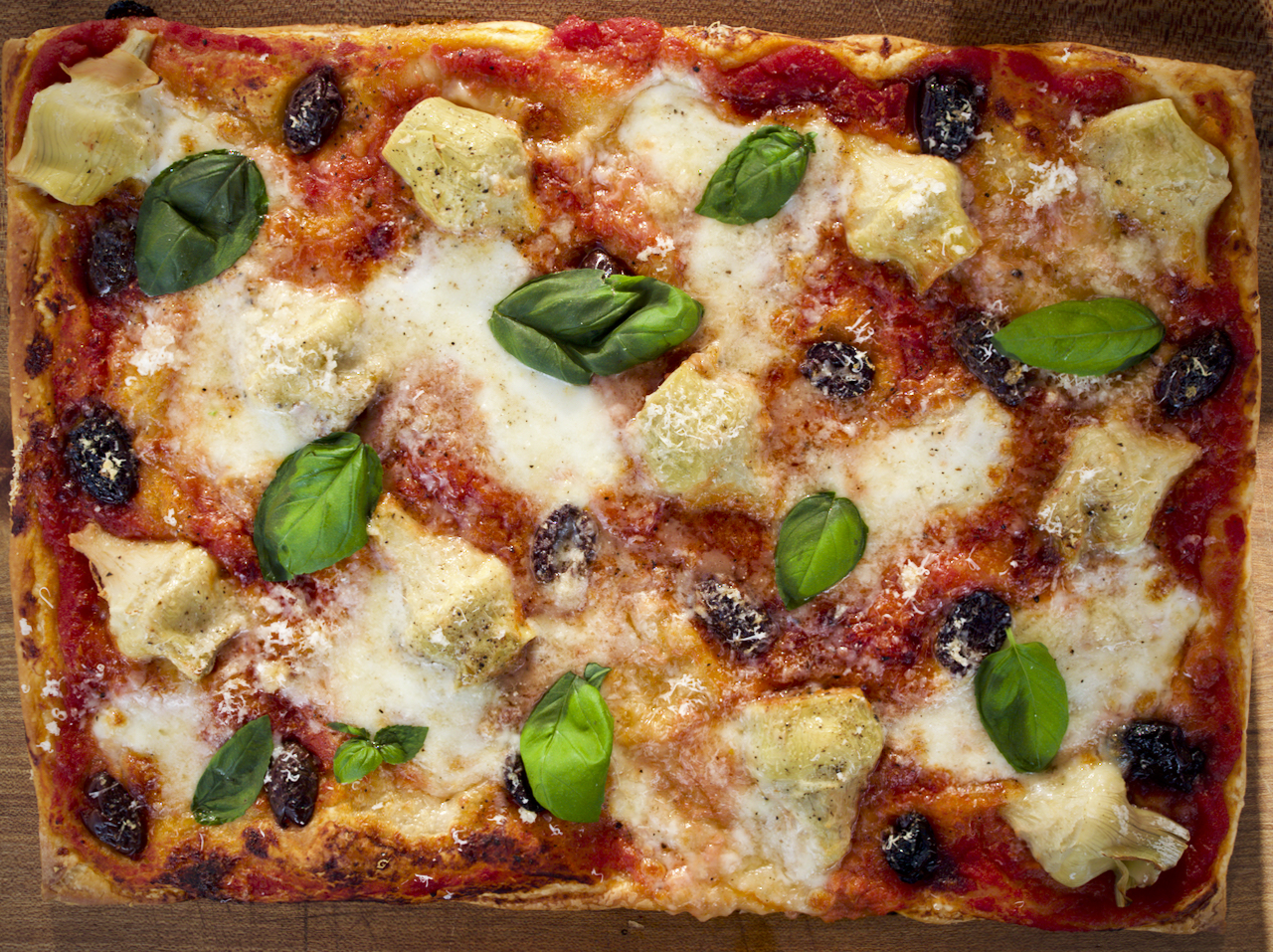
We love a good pizza … but there are times we just can’t be bothered lighting our little pizza oven and getting it up and running … or the weather defeats us! This is essentially pizza toppings on pastry and makes a great substitute. Plus we got to use the jar of artichokes we’d lugged from Spain last holiday.

Wine suggestion: a wine we’d also brought home from our holiday, Luis Moya Tortosa’s Kimera, an old-vine Grenache from Navarra. Minerally, vibrant and expressive.

Tomato, mozzarella, black olive & artichoke tart – serves 4

  • 2 x 320g ready-rolled puff pastry sheets
  • 300g tomato sauce (you can make your own or use a good brand)
  • 2 x 125-150g mozzarella balls, sliced
  • a handful of pitted black olives, halved
  • 8 to 10 artichoke hearts from a jar, halved
  • 60g Parmesan, finely grated
  • a handful of basil leaves

Heat the oven to 230C/Fan 210C.

Unroll the puff pastry sheeets onto a couple of baking trays and prick them all over with a fork.

Spread the tomato sauce over the pastry, then top with the mozzarella, olives and artichokes. Add half the grated Parmesan and season with salt and pepper.

Bake for 15-18 minutes, then sprinkle with the basil leaves and the rest of the Parmesan and serve immediately. It’s as easy as that!

(Original recipe from Rick Stein’s Simple Suppers, Ebury Publishing, 2023.)

Read Full Post »

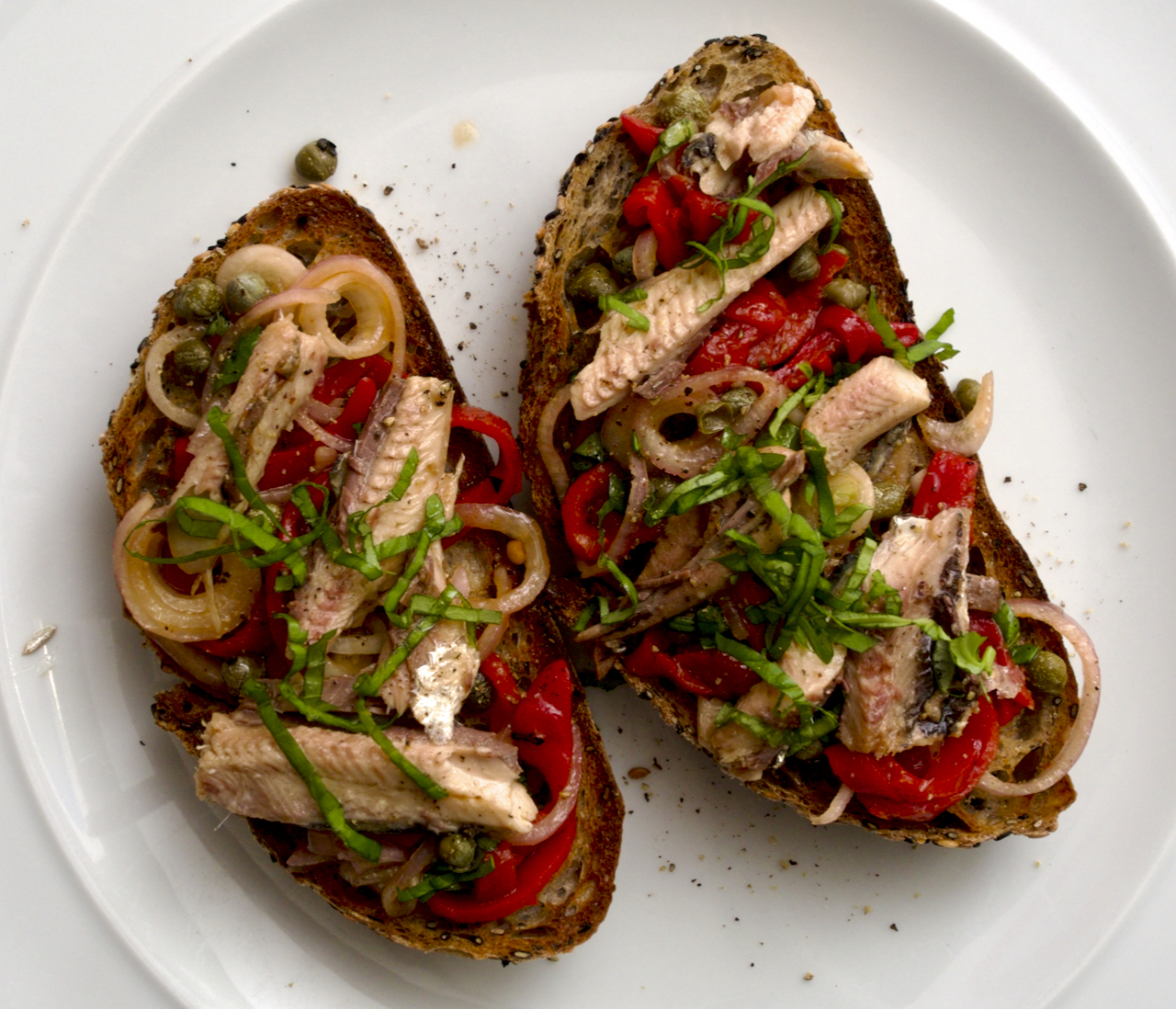
The perfect lunch for a sunny day. Get yourself a tin of sardines so you’re ready for the next one.

Sardines and peperonata on toast – serves 1

  • 1 tbsp olive oil
  • ½ tbsp red wine vinegar
  • 1 large roasted pepper from a jar, thinly sliced
  • 1 small shallot, thinly sliced
  • ½ tbsp capers
  • ½ small garlic clove, finely sliced
  • a smal handful of basil, shredded
  • 2 slices of sourdough
  • 120g tin sardines of olive oil, drained

Whisk the olive oil and vinegar together in a small bowl. Add the pepper, shallot, capers and garlic. Toss with half the basil and season to taste.

Toast the bread, then top with the peperonata and large chunks of the sardines. Finish with the rest of the basil and a grind of black pepper.

(Original recipe from BBC Good Food)

Read Full Post »

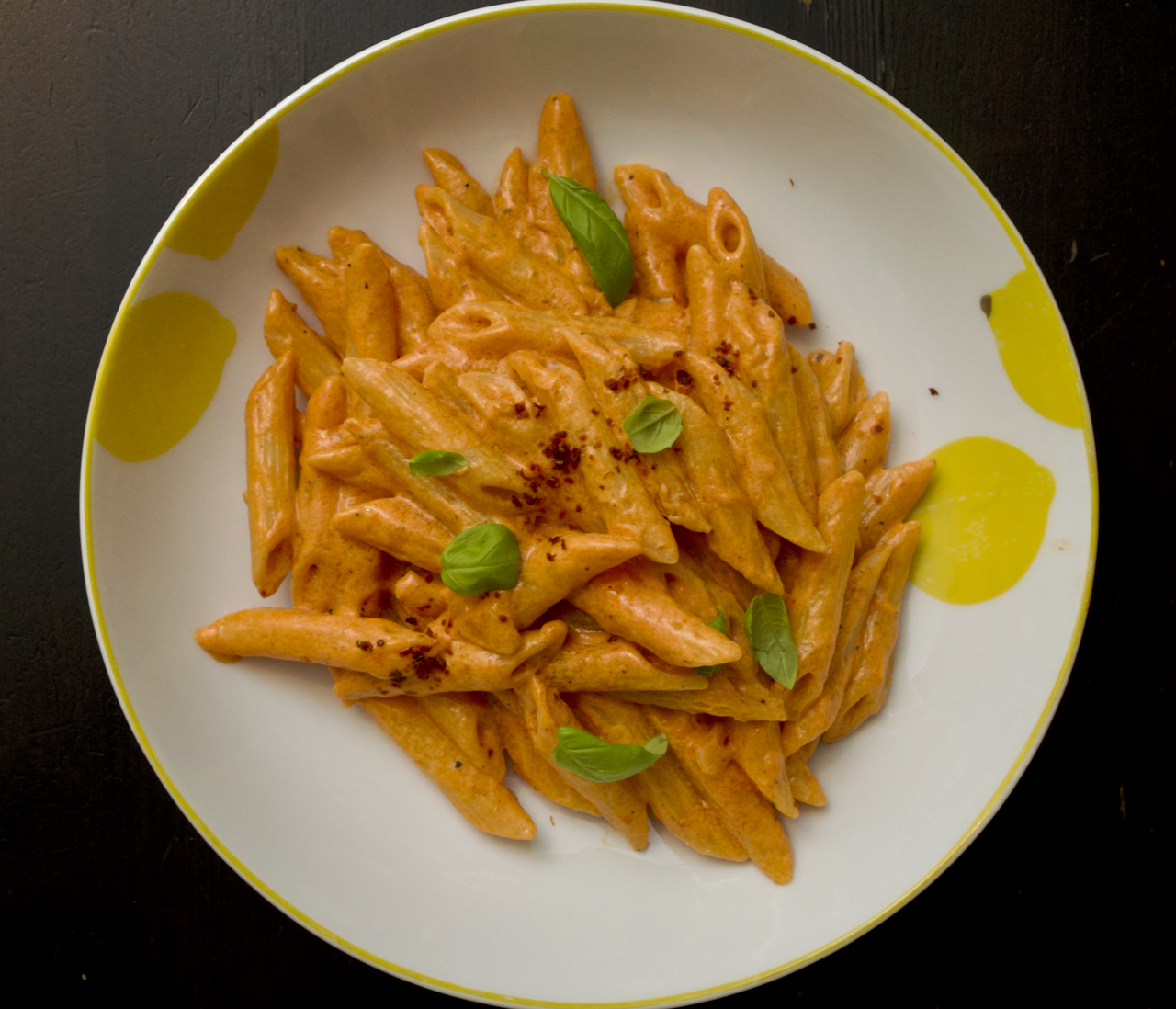
An easy pasta dish from Persiana Everyday by Sabrina Ghayour. Ready in 10 minutes and perfect for midweek.

Wine Suggestion: A crisp and fresh Sartarelli Verdicchio dei Castelli di Jesi Classico which lifts the dish and adds an extra roundness and depth. Easy white peach flavours but with that classic green almond twist at the end that bring both wine and food together.

Penne with spicy tomato & mascarpone sauce – serves 2

  • 200g penne pasta
  • 2 tbsp olive oil
  • 4 big garlic cloves, thinly sliced
  • 2 tbsp tomato purée
  • 150g mascarpone cheese
  • 1 tsp pul biber chilli flakes
  • 2 handfuls of Greek basil – we used some regular basil

Cook the pasta in plenty of salty water according to the timings on the pack.

Meanwhile, warm a frying pan over a medium heat, and add the olive oil. Add the garlic and cook gently until soft and translucent.

Add the tomato purée, mascarpone and most of the chilli flakes, then stir until you have a smooth sauce.

When the pasta is cooked, scoop it out with a slotted spoon and straight into the frying pan with the sauce. Season well with plenty of salt and black pepper. You might need to add a bit more pasta water to loosen to a creamy sauce.

Serve in warm bowls with a sprinkle of pul biber and the basil leaves.

(Original recipe from Persiana Everyday by Sabrina Ghayour, Aster*, 2022.)

Read Full Post »

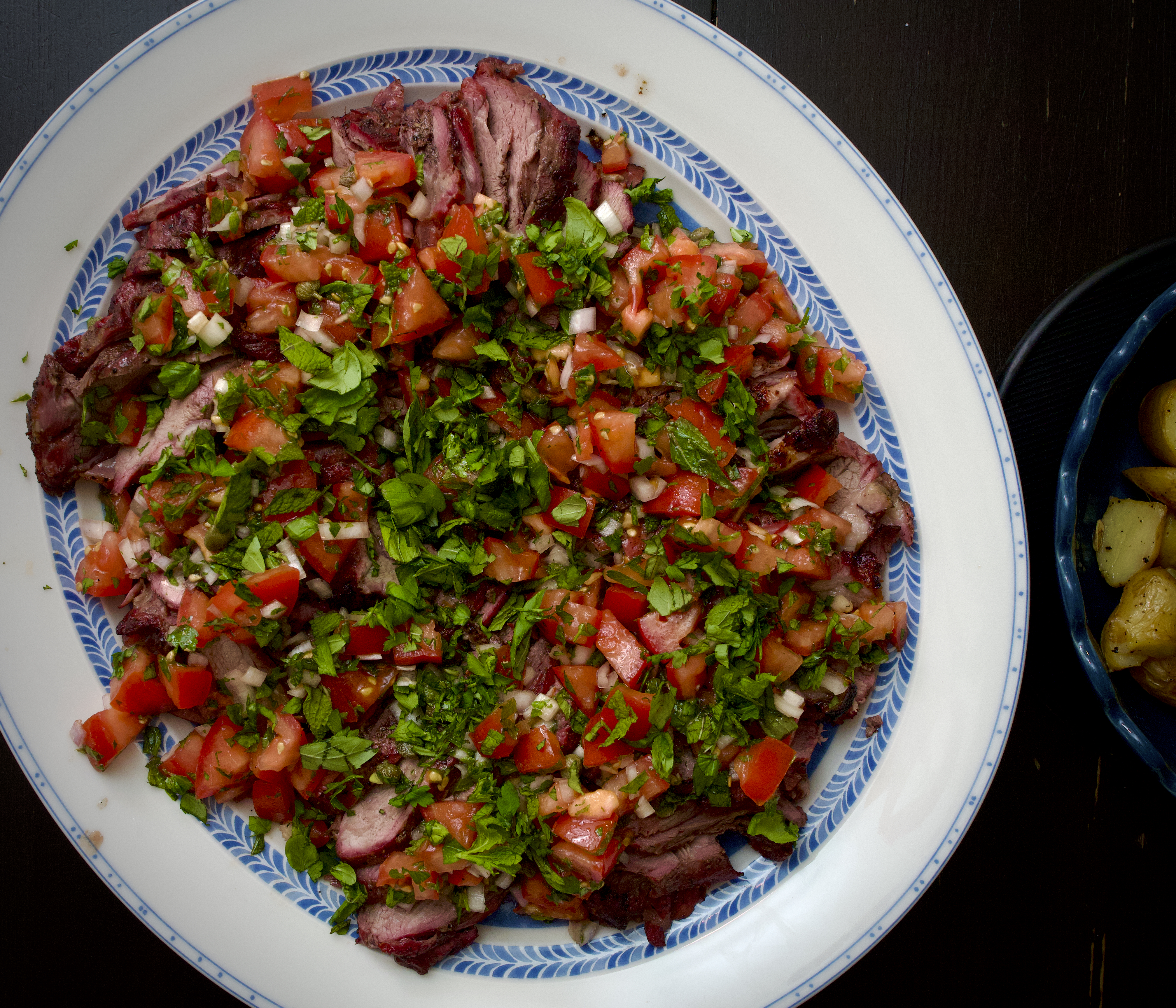
It’s last chance saloon if you want to cook this dish before both the tomatoes and weather turn rubbish. The marinade is added after you cook the lamb.

Wine Suggestion: We think barbecued lamb goes really nicely with Cabernet Franc, so a good excuse to open a bottle of our favourite wine: Chateau du Hureau’s Saumur-Champigny “Tuffe”.

Barbecue Lamb with Tomato & Capers – serves 6

  • 1.5kg butterflied leg of lamb

FOR THE MARINADE:

  • 3 tomatoes, diced
  • 2 large shallots, finely chopped
  • 1 tbsp capers, rinsed
  • a small bunch of parsley, chopped
  • a small bunch of mint, chopped
  • a small bunch of basil, chopped
  • 1 lemon, juiced
  • 2 tbsp olive oil

Mix the ingredients for the marinade together, keeping a small handful of herbs aside to garnish at the end.

Get your barbecue going and wait until the flames have died down. Move the coals to the sides and put a drip-tray in the middle, then BBQ the lamb for 20 minutes on each side.

When the lamb is cooked to your liking, set it on a platter and spoon over the marinade. Cover loosely with foil and leave to rest for 20 minutes. Slice and serve with the marinade and the rest of the herbs.

(Original recipe by Adam Bush & Janine Ratcliffe, Olive Magazine, August 2017.)

Read Full Post »

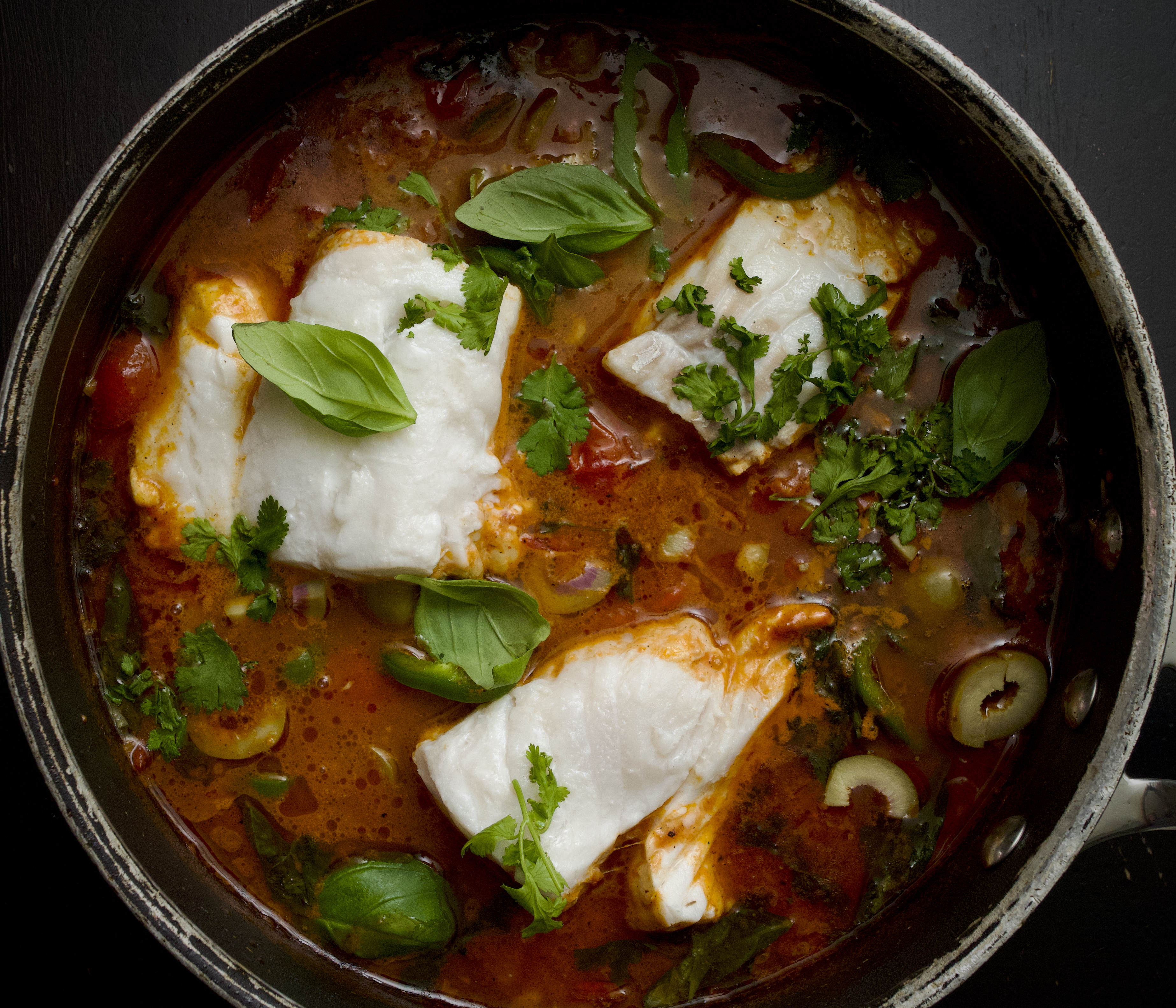
There is nothing difficult about this dish but despite the ease of cooking this tastes sophisticated and has bags of flavour. Inspiration from Mezcla by Ixta Belfrage, a book jam-packed with delicious things! Serve with some grilled sourdough.

Wine Suggestion: A good Sangiovese is our suggestion and we particularly enjoyed the Morisfarms Mandriolo from the Maremma on the Tuscan coast. With crushed raspberry flavours layered over a smooth dark berry core and aromas of violets this cut through any richness and gave it all a lift, adding an extra dimension to the meal. Just what we wanted with this complex and sophisticated meal.

Poached fish and charred tomatoes – serves 4

  • 4 x 100g white fish fillets e.g. cod or hake, skin and bones removed
  • 1 tbsp lime juice
  • 1 tsp fine salt

FOR THE AÏOLI:

  • 3 egg yolks
  • ¼ tsp fine salt
  • ½ a small clove of garlic, crushed
  • ¼ tsp sweet paprika
  • pinch of saffron
  • 50g light olive oil

FOR THE BROTH:

  • 250g cherry tomatoes
  • 1 Scotch bonnet chilli, whole
  • ½ tsp fine salt
  • 5 tbsp olive oil
  • 3 cloves of garlic, very finely chopped
  • ½ tsp paprika
  • 1 tbsp tomato purée
  • 5g fresh coriander
  • 5g fresh basil
  • 350g water
  • 15g unsalted butter
  • 1 jalapeño or green chilli, thinly sliced
  • 70g pitted green olives, roughly chopped
  • 1 lime, cut into wedges, to serve
  • grilled sourdough, to serve

Place the fish in a dish with the lime juice and fine salt. Mix to coat, then aside while you prep everything else.

Make the aïoli by putting the egg yolks, salt, garlic, paprika, some black pepper and saffron into a medium bowl and whisk until smooth. Add half the oil and whisk hard for 30 seconds or until the mixture starts to thicken. Add the rest of the oil and whisk hard again for about a minute, then stir in the vinegar. You should end up with loose mayonnasie consistency.

Heat a large sauté pan over a high heat until smoking hot. Add the tomatoes and Scotch bonnet and cook for about 6 minutes, give the pan a shake now and then to get a bit of char on the tomatoes.

Remove from the heat and add the salt, oil, garlic, paprika, tomato purée, half the coriander and half the basil. Mix well then return to the heat and stir-fry for a couple of minutes. Add the water and butter and bring to a simmer. Simmer gently for 5 minutes, squeezing most of the tomatoes into the broth.

Lay the fish fillets into the broth, then cover with a lid and cook for a few minutes, or until just cooked through. Remove from the heat and leave covered for 2 minutes.

Throw away the Scotch bonnet and top the dish with the green chilli, olives and remaining herbs. Serve with the aïoli spooned on top and with lime wedges and grilled bread on the side.

(Original recipe from Mezcla by Ixta Belfrage, Ebury Press, 2022.)

Read Full Post »

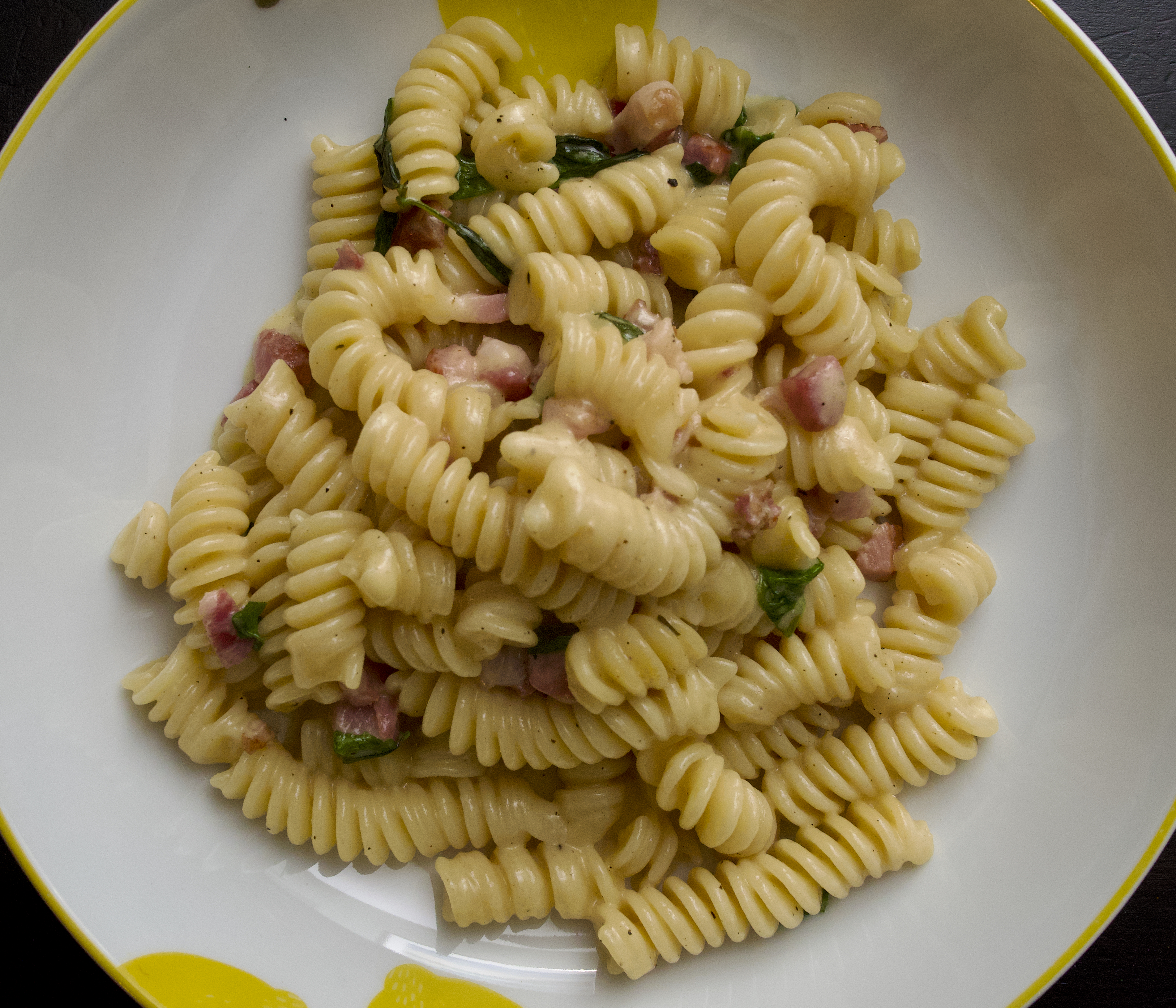
A dish for when you arrive home tired from work and realise you have almost nothing in the cupboard to eat … except pasta, a lurking packet of pancetta and a block of parmesan (a staple in our most fridges).

Wine Suggestion: A simple, dry Rosé caught our fancy, to reflect the long day and store-cupboard cooking. A reliable and refreshing wine-rack staple is the Domaine Gayda Flying Solo Rosé. Made from Grenache and Cinsault in the Languedoc by Tim Ford, an old friend, this is refreshing and has a classic textural character that allows it to be drunk with food like tonight, as well as sipped and enjoyed in the sunshine on its own.

Life-saving creamy pancetta and Parmesan pasta – serves 2

  • 77g pack of pancetta cubes (that is one half of the two pack they come in)
  • 2tbsp olive oil
  • 600ml chicken stock
  • 200g fusilli pasta
  • 75ml double cream
  • 30g Parmesan, finely grated
  • a handful of basil leaves, shredded

Heat the olive oil in a deep frying pan, then add the pancetta and cook until crisp.

Add the stock and pasta, bring to a simmer, then cook until tender (start testing a little before the suggested timings on the pasta pack).

Stir in the cream and Parmean and simmer for a couple of minutes, then season really well with plenty of black peper.

Stir in the basil and serve.

(Original recipe by Janinie Ratcliffe in Olive Magazine, June 2019.)

Read Full Post »

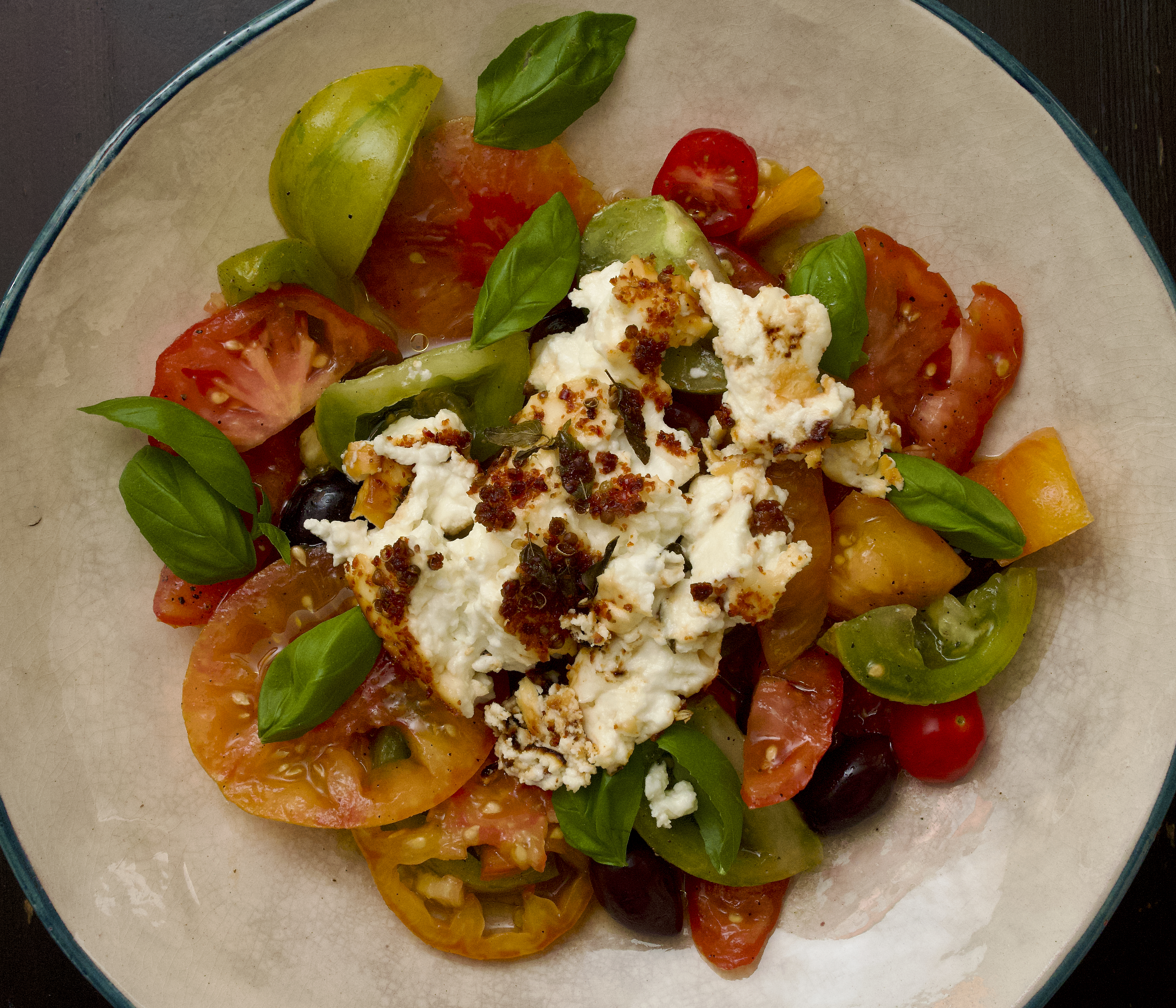
We love a tomato salad and reckon we’ll be making this one all summer. Great for a barbecue.

Baked feta and tomato salad – serves 4

  • 1 block of feta
  • 100ml olive oil, plus 1 tsp
  • a drizzle of runny honey
  • ½ tsp coriander seeds, lightly crushed
  • 1 tsp fresh oregano leaves, or a good pinch of dried oregano
  • ½ tsp pul biber
  • 600g mixed tomatoes
  • 2 tbsp kalamata olives, pitted
  • 2 tsp red wine vinegar
  • a handful of basil

Heat the oven to 220C/200C/Gas 7.

Rub the feta with a tsp of olive oil. Place on a sheet of foil, then drizzle over the honey and sprinkle with the coriander seeds, oreganoa and pul biber. Wrap the foil around the feta to make a sealed parcel then bake for 10 minutes.

Unwrap the foil and roast for another 5-10 minutes or until caraemelised.

Meanwhile, slice the tomatoes and put them into a large bowl. Sprinkle over a good pinch of sea salt and lots of black pepper. Stir in the olives and red wine vinegar and set aside.

Spoon the tomatoes onto a serving platter and drizzle with olive oil (use a nice one). Sprinkle over the basil leaves and set the baked feta on top.

(Original recipe by Rosie Birkett in Olive Magazine, June 2023).

Read Full Post »

You too can make a pasta cake like this on a Monday, trust us. Who knew it would be so easy to get cooked rigatoni to sit upright in a cake tin? The results are fun and although it will fall apart when you start serving, you can get your insta photo beforehand.

Wine Suggestion: Something fun, red and Italian like Umani Ronchi’s Rosso Conero Serrano. A blend of smooth Montepulciano and vibrant Sangiovese, this wine is fun and easy, but tied together with energy and vitality.

Torta di rigatoni – serves 4

  • butter, to grease the tin
  • 4 tbsp breadcrumbs
  • 325g rigatoni pasta
  • handful of basil leaves, finely chopped
  • 250g mozzarella, cubed (buy a block of mozzarella, not buffalo)
  • 50g grated Parmesan

FOR THE TOMATO SAUCE:

  • 2 tbsp extra virgin olive oil
  • 1 garlic clove, peeled and bashed
  • 2 x 400g tins chopped tomatoes
  • a handful of basil leaves

Heat the oven to 180C/160C fan/gas 4.

Line the base and sides of a loose-bottomed, 20cm round cake tin with baking parchment, then butter and coat in the breadcrumbs.

Get the sauce going first. Heat the olive oil in a medium saucepan over a medium heat, then add the garlic clove and cook for about a minute. Add the chopped tomatoes, most of the basil leaves and season well with salt. Cover and simmer for 25 minutes, stirring occasionally.

Meanwhile, cook the pasta in lots of boiling salty water until al dente. Drain well, then mix with the chopped basil, half the mozzarella, some black pepper, half the tomato sauce (throw away the garlic) and half of the Parmesan. Leave to cool until the pasta is cool enough to handle.

Place the rigatoni upright in the cake tin. Pour over the remaining tomato sauce, then scatter over the rest of the mozzarella and Parmesan. Bake for 25 minutes, until golden. Leave to rest for 5 minutes before attempting to release from the tin, then scatter over a few basil leaves to serve.

(Original recipe by Gennaro Contaldo IN BBC Good Food Magazine, April 2020.)

Read Full Post »

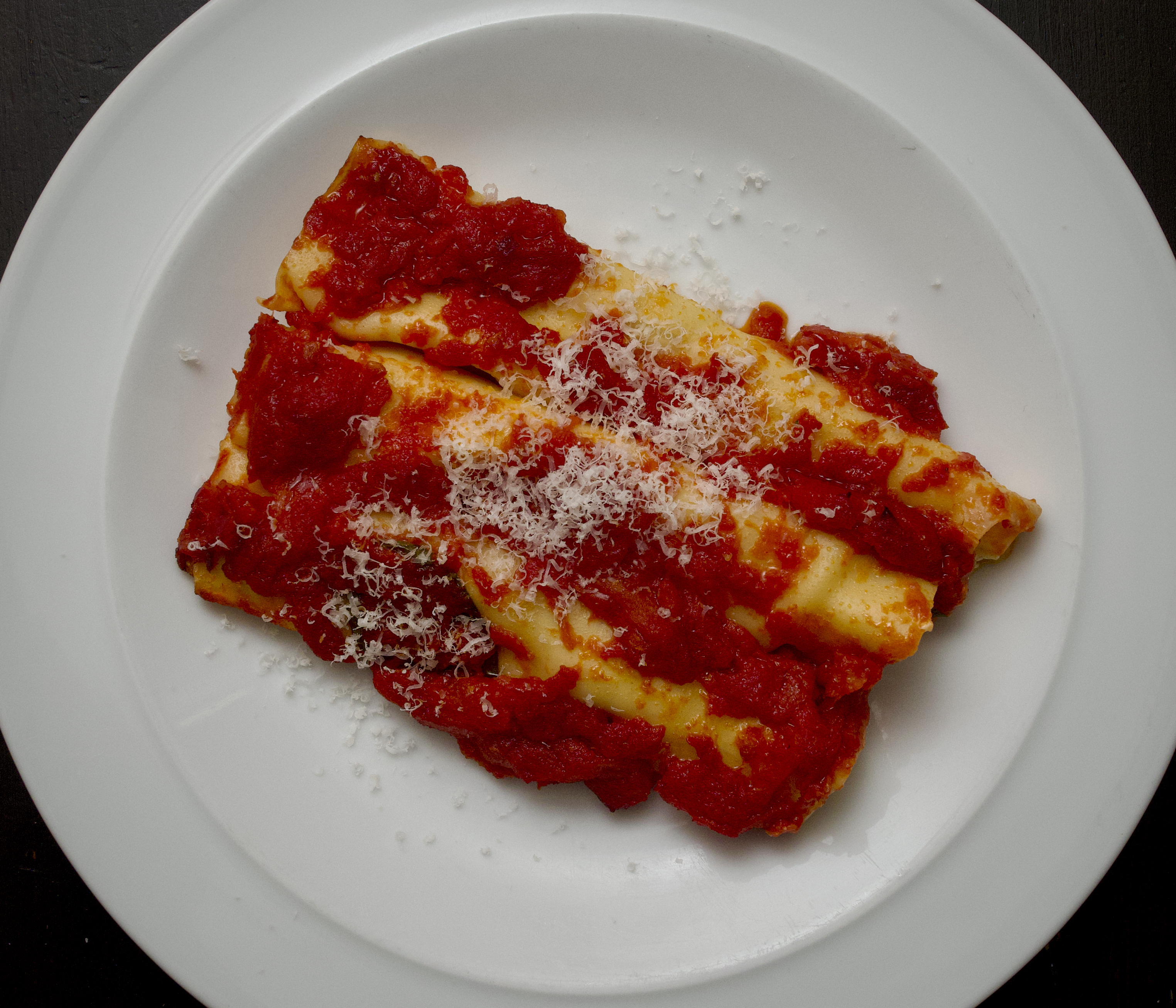
You need to take your time over this one but it’s an excellent thing to do on a rainy day.

Wine Suggestion: A bright, youthful, vibrant red Italian red came to mind immediately for this. We didn’t have anything to hand from the Sorrento/Naples area so crossed over to the Marches for Umani Ronchi’s Rosso Conero Serrano. A delightful blend of Montepulciano and Sangiovese it stepped in admirably with an elegant red-fruited core and fine tannins.

Cannelloni all sorrentina – serves 4

First you need to make a batch of fresh egg pasta. If you have never done this before a youtube video will be helpful.

  • 400g 00 flour
  • 4 eggs

Make a mountain of flour on a large wooden board. Make a crater in the centre and break in the eggs.

Use a fork to break the egg yolks and gently whisk before starting to incorporate the flour by knocking it into the eggs. When you have added enough flour that the eggs will no longer run away, you can start using your hands and continue to mix, bring the flour and eggs together into a soft scraggy ball.

Knead the pasta until the dough starts to soften and smooth out – at least 5 minutes. If after the first few minutes the ball is still dry and flaky, flick just a few drops of water onto the board and knead them into the dough. You may need to do this a couple times, but don’t add too much, keep it to a couple of drops each time.

Once the dough is smooth, firm but pliable, leave it to rest, covered with a cloth or cling film for a at least 30 minutes.

Clamp a pasta machine onto a suitable table and put to the widest setting. Divide the pasta dough into 4, take a quarter and put the other 3 back under the cloth. Flatten the dough into a patty and put it through the rollers. Fold the strip of dough like an envelope and pass it through again, evelope again and pass again. It will be the size of a small book.

Set the machine at two and pass the dough through, but don’t fold this time. Do the same with the third setting, and so on until you have rolled it through all the settings and have a long strip, you can cut this to make it more manageable. Dust with some flour if it feels sticky.

Repeat this method with the other lumps of pasta. Cut the pasta into 12 sheets, each 20 x 10cm.

FOR THE SAUCE:

  • 6 tbsp olive oil
  • 2 cloves of garlic
  • a pinch of chilli flakes
  • 2 x 400g tins plum tomatoes
  • a few fresh basil leaves

FOR THE FILLING:

  • 300g ricotta, drained
  • 2 eggs
  • 200g mozzarella, drained overnight and diced
  • 3 heaped tbsp chopped flat-leaf parsley
  • 60g Parmesan, grated, plus extra for the top
  • a few fresh basil leaves
  • grated nutmeg

First make the sauce. Warm the olive oil, garlic and chilli in a large, deep frying pan. When the garlic is fragrant, add the tomatoes, basil and a pinch of salt. Break the tomatoes up with a wooden spoon and allow to simmer for 15 minutes.

To make the filling, mash the ricotta in a large bowl, then beat in the eggs. Add the mozzarella, parsley and Parmesan and season with salt, pepper and nutmeg to taste.

Bring a large pan of salty water to the boil and prepare a large bowl of cold water. Drop a few pasta sheets into the boiling water, leave for 1 minutes, then lift out and into the cold water for 20 seconds, then lay on clean tea towels.

To roll the cannelloni, put 2 spoons of the filling at the top of the longer edge of each pasta sheet and roll closed.

Spread a little tomato sauce into the bottom of a large baking dish, arrange the cannelloni on top, then sprinkle with grated Parmesan and a few basil leaves, then pour over the rest of the sauce.

It helps to rest the dish now for at least 2 hours or even overnight.

Preheat the oven to 200C and bake for 30 minutes.

Leave the dish to rest for 30 minutes before serving with a green salad.

(Original recipe from An A-Z of Pasta by Rachel Roddy, Penguin:Fig Tree, 2021.)

Read Full Post »

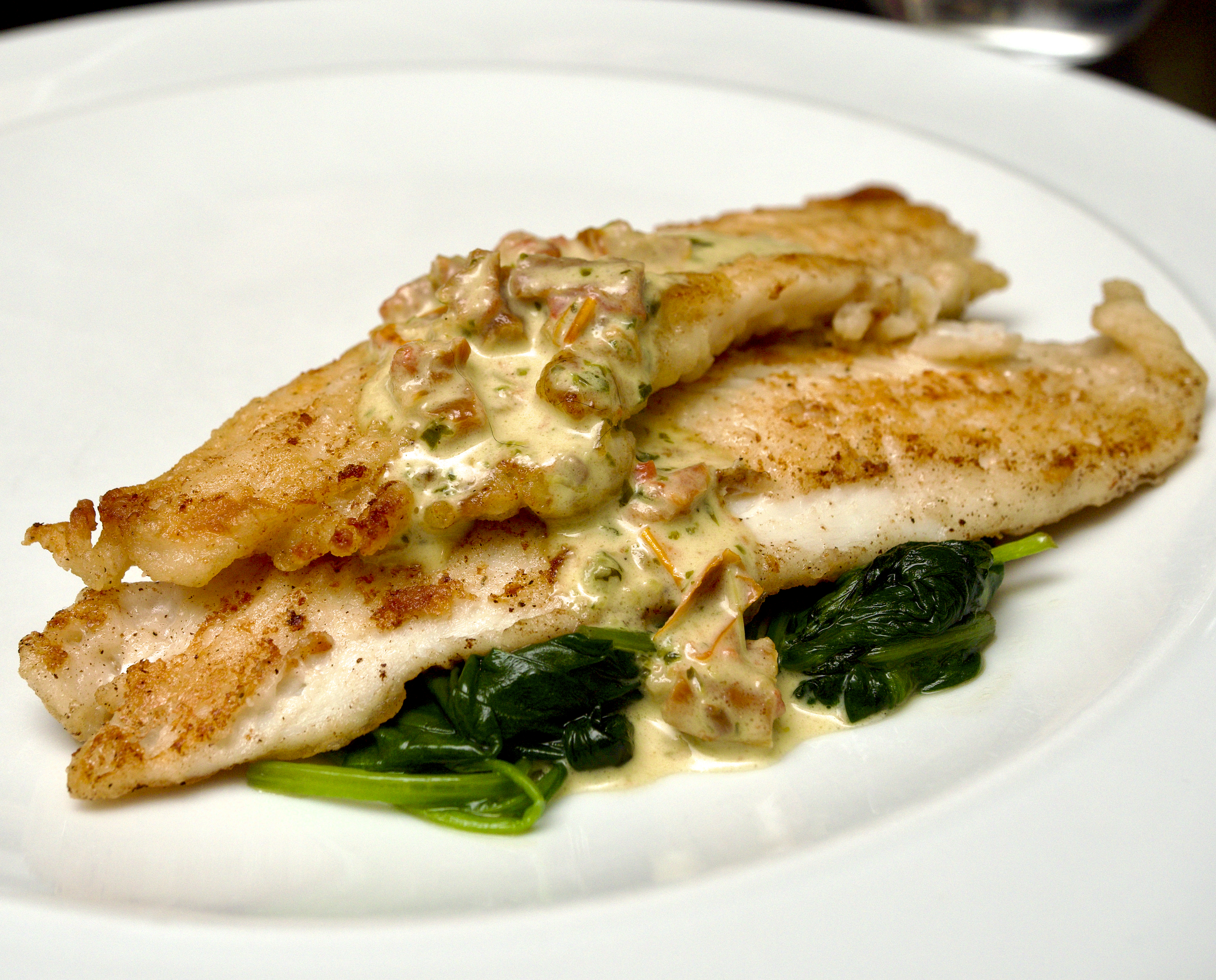
This fish dish feels a bit special but is very easy to make. Serve on buttered spinach and with steamed potatoes.

Wine Suggestion: from our recent trip to the Loire we opened the superlative Domaine de la Taille aux Loups Clos de la Bretonnière. Made by Jacky and J-P Blot from a monopole in Vouvray, it has to be “Vin de France” as their winery is not in the appellation. No matter, this is as fine as dry Vouvray gets. We really enjoyed the taut minerality that complimented the fish, and how it kept on giving more layers as it went along revealing hints of spring and summer fruits. Tension and poise, but with a real generosity too.

Lemon sole with basil & tomato sauce – serves 4

  • 60g plain flour
  • 2 small lemon sole, each cut into 4 fillets and skinned (your fish shop will do this for you)
  • 30g butter

FOR THE SAUCE:

  • 300ml double cream
  • juice of ½ lemon
  • 3 tbsp fresh pesto
  • 100g sun-blush tomatoes, finely chopped
  • 2 tsp chopped basil, to serve

Sprinkle the flour over a large plate and season well with salt and pepper.

Dip the fish fillets into the seasoned flour and shake off any excess.

Melt the butter in a large frying pan. Wait until the butter foams, then add the fillets and cook for 2 minute on each side, or until opaque and easy to flake. Transfer to a warm plate and keep warm while you make the sauce.

Heat the cream, lemon juice, and pesto in a pan over a medium heat until hot, then add the sun-blush tomatoes and season with salt and black pepper. Serve the fish fillets on a bed of buttered spinach, dress with the sauce and sprinkle over some basil leaves.

(Original recipe from Mary Berry’s Cookery Course, DK, 2013.)

Read Full Post »

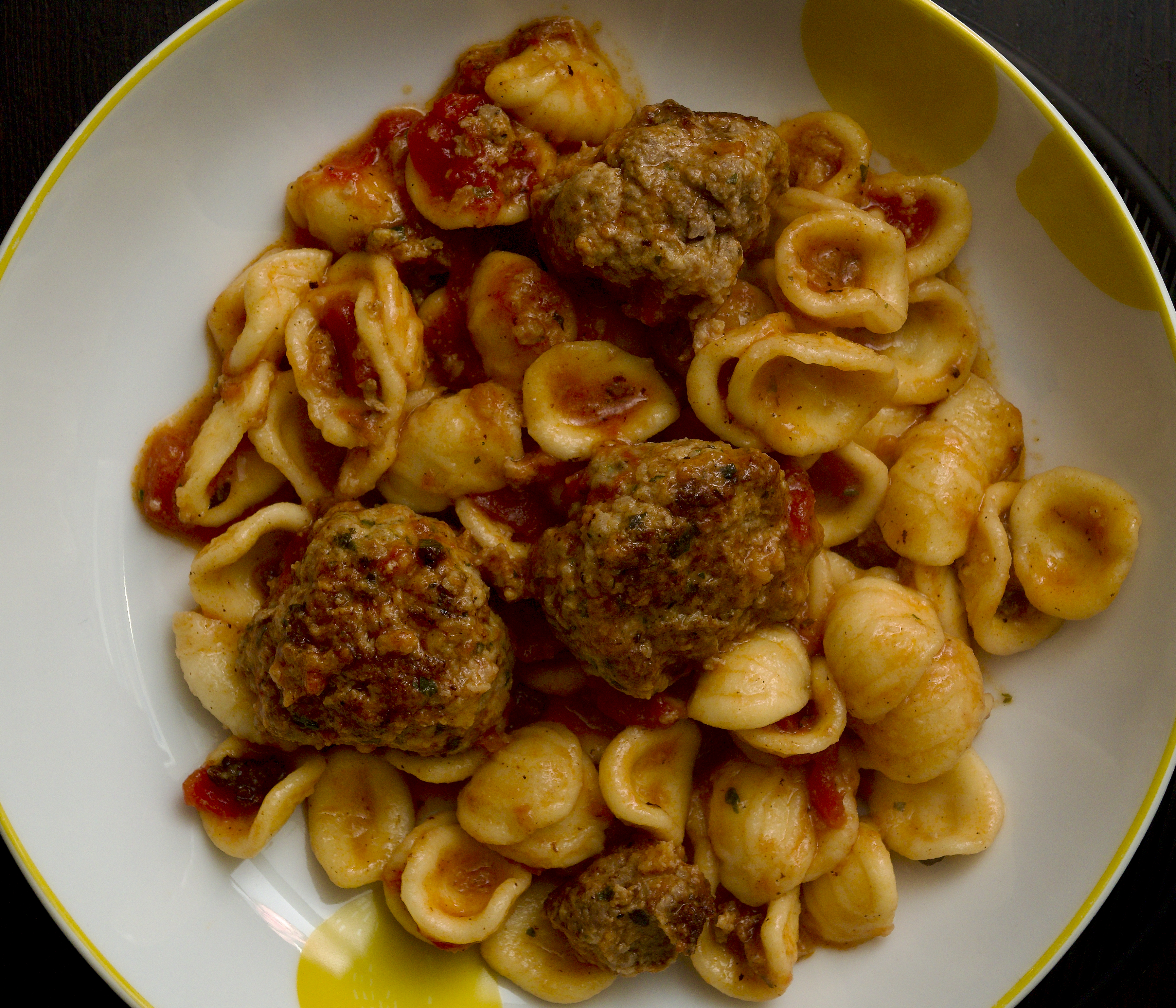
Who doesn’t love meatballs. There’s at least one person in this house who would have them every week. This recipe by Olia Hercules makes heaps to help with that problem.

Wine Suggestion: great with a simple Sangiovese with bright and slightly crunchy fruits and a good wack of tannins. Rocca delle Macie’s Chianti Vernaiolo is our standby and doesn’t hide behind oak, rather celebrates the joy of fruit. The added joy is the smooth tannins this wine brings despite the potentially awkward Sangiovese grape; they have a great feel for getting the balance right even with a bouncingly youthful cuvee.

Olia’s Meatballs – Sugo Della Mamma – makes 30 meatballs

FOR THE MEATBALLS:

  • 60g stale sourdough bread with crusts (or dry out 80g of fresh bread chunks in the oven)
  • 250ml hot whole milk
  • 20g parsley, very finely chopped
  • 400g beef mince
  • 400g pork mince
  • 1 small egg, lightly beaten
  • 2 cloves of garlic, finely grated
  • 100g Pecorino/Parmesan, finely grated, plus extra to serve
  • ¼ nutmeg, finely grated

FOR THE SAUCE:

  • up to 5 tbsp olive oil
  • 2 cloves of garlic, peeled and bruised but left whole
  • 800g tomato passata or 2 x 400g tins chopped tomatoes
  • a couple of sprigs of basil
  • Tagliagelle, pappardelle or orecchiette, to serve

Put the bread into a bowl and pour over the hot milk. Leave for 5 mintues then press the bread down to make sure it’s all soaked. Cover and leave for 15 minutes.

Mix the mince, egg, bread and soaking milk, grated garlic, parsley, cheese and nutmeg together. Season well with 1 tbsp of sea salt and lots of black pepper. Use your hands to mix it all together really well.

Wet your hands and shape the mixture into about 30 golf-ball sixed meatballs.

Heat 3 tbsp of the olive oil for the sauce. Fry the meatballs in batches until browned on a couple of sides. Remove from the pan and set aside.

If you need more fat you can add the extra 2 tbsp of oil, then add the bruised garlic and cook for a few minutes to infuse the oil, then remove and discard.

Add the passata or tomatoes to the pan, then fill the jar or tin with 200ml water and add that with a generous pinch of salt. Cook over a medium-low heat for 15 minutes. Gently place the meatballs into the sauce and cook for 15-20 minutes at a gentle bubble. Add the basil sprigs for the last 5 minutes of cooking time.

Cook the pasta, then roughy drain so a little water remains. Return the pasta to the pot it was cooked in, ladle over the sauce and meatballs and gently stir to combine.

Serve with extra grated pecorino.

(Original recipe from Home Food by Olia Hercules, Bloomsbury, 2022.)

Read Full Post »

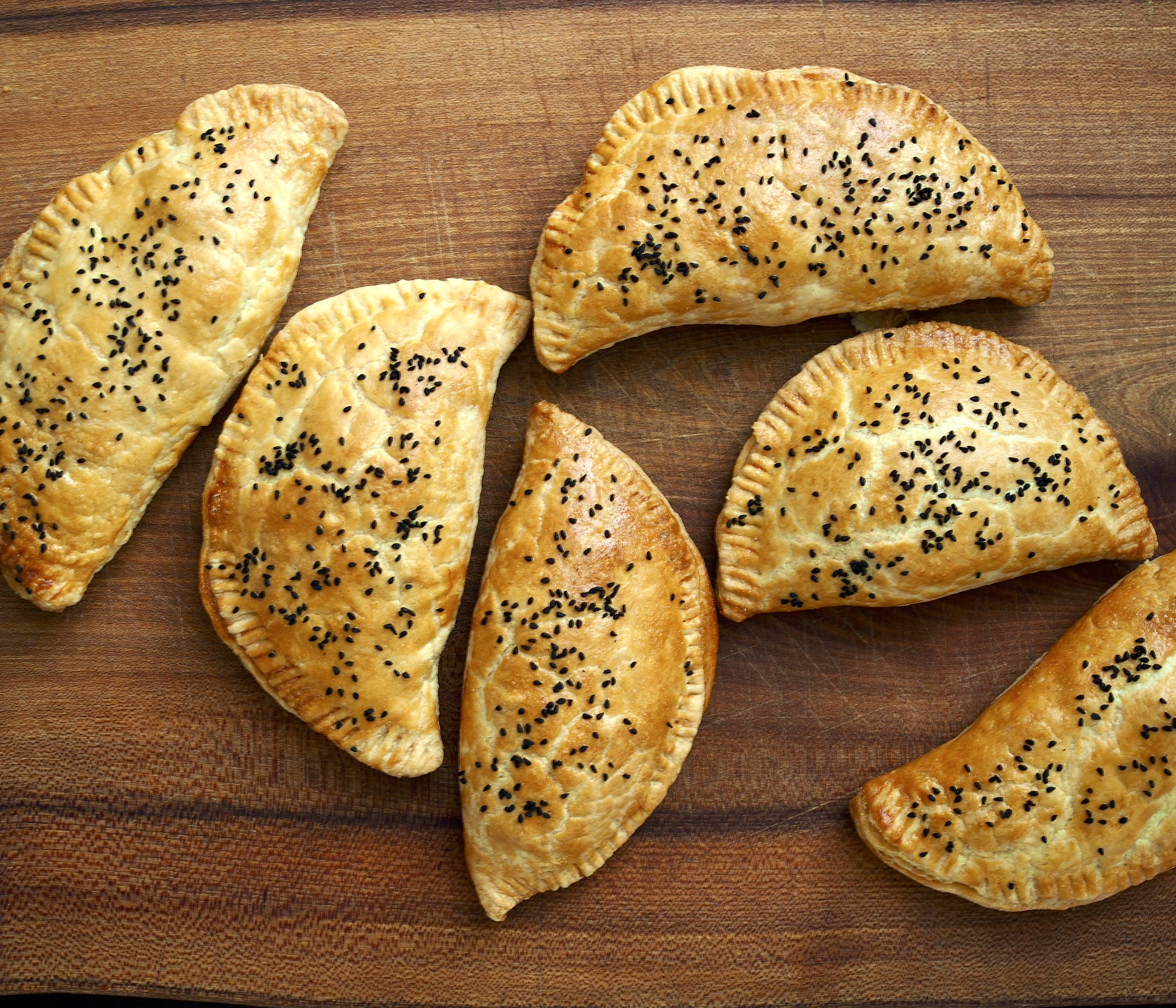
This was our first ever attempt at rough puff pastry. It’s actually pretty simple but you do need to start in the morning if you want to eat these for lunch. We had too much filling and we made some extras with shop-bought puff pastry – these were good too! It’s a good idea to make the filling first as it needs to cool completely before stuffing the pasties.

Courgette, chard & feta pasties – serves 4

FOR THE FILLING:

  • a bunch of chard
  • 4 tbsp extra virgin olive oil
  • 2 onions, thinly sliced
  • 2 cloves of garlic, thinly sliced
  • 6-8 small courgettes, sliced into 1cm rounds
  • finely grated zest of 1 lemon
  • a large handful of basil leaves, chopped
  • a handful of flat-leaf parsley leaves, chopped
  • 150-200g feta cheese (or soft goat’s cheese)

FOR THE ROUGH PUFF PASTRY:

  • 250g unsalted butter, cubed and chilled
  • 500g plain flour, plus extra for dusting
  • a good pinch of salt
  • 200ml iced water

TO FINISH:

  • 1 beaten egg
  • 1 tsp black onion seeds

Wash the chard, then remove the stalks from the leaves. Roughly chop the leaves and cut the stalks into 1cm pieces. Bring a pan of salty water to the boil and add the stalk pieces. Cook for a minute or two, then add the leaves and cook for another couple of minutes. Drain and allow to cool, then squeeze out any excess liquid from the leaves with your hands. Set aside.

Heat half the olive oil in a large frying pan over a medium heat. Add the onions, garlic and some seasoning. Cook for 5-6 minutes, watching that they don’t catch. Add the courgettes and cook for another 15-20 minutes. You want the courgettes to be nice and soft but not disintegrated. Take the pan off the heat and stir in the chard, lemon zest, basil, parsley and more seasoning. Allow to cool completely, then crumble in the feta and gently mix together. Keep the filling cool while you make the pastry.

TO MAKE ROUGH PUFF PASTRY:

Combine the butter cubes, flour and salt in a large bowl. Add just enough cold water to bring everything together into a dough. It will have big pieces of butter in it and that’s ok.

Flour your surface well, then roll the dough in one direction, away from you, to a 1cm thick rectangle. Fold the two short ends into the middle so they overlap. Give the pastry a quarter turn, repeat the rolling, folding and turning process another three times (four in total). Wrap the pastry in baking paper and put into the fridge for 30 minutes. Remove the pastry and repeat the rolling, folding and turning process another 4 times. Return to the fridge again for another 30 minutes.

Heat the oven to 200C/180C fan/400F/Gas 6.

Remove the chilled pastry from the fridge and roll out to 4-5mm thick. Use a 18-20cm plate or cutter to cut out 4 rounds. Put a quarter of the filling (or whatever fits) in the lower half of each round, leaving a 2cm border around the edge. Brush the border below the filling with beaten egg and fold the pastry over to encase the filling. Crimp the edges with a fork to seal, then brush with the egg and sprinkle over the onion seeds and a little bit of flaky sea salt.

Put the pasties on to a baking sheet lined with baking paper and bake for 45-50 minutes or until golden. Eat just warm or at room temperature.

(Original recipe from Outside by Gill Meller, Hardie Grant: Quadrille, 2022.)

Read Full Post »

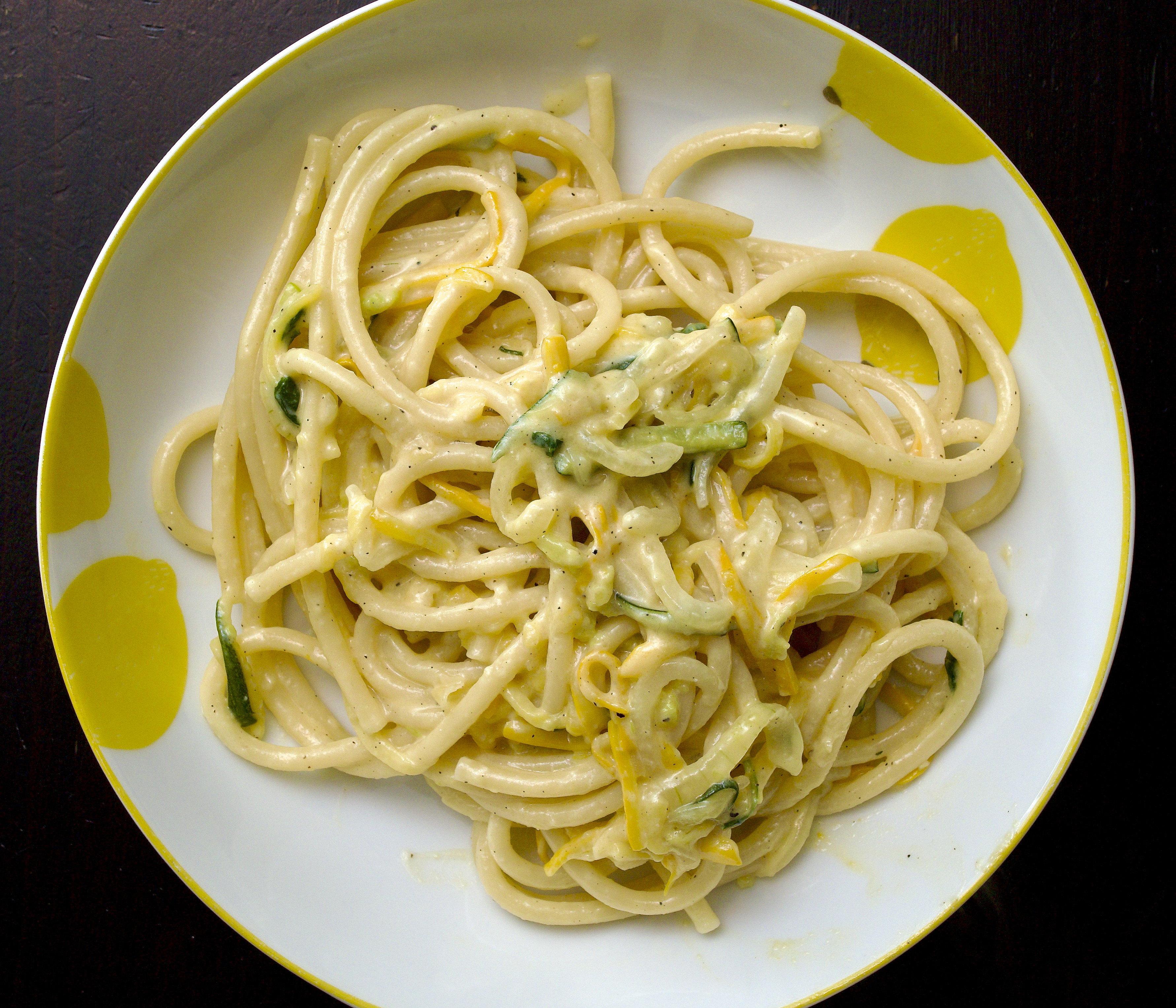
You need to cut your courgettes into very thin strips for this, as thin as the pasta. The sauce is a bit carbonara-ish, very delicious.

Wine Suggestion: Something fun and white like the El Abuelo de Piqueras, a Verdejo – Sauvignon Blanc blend from Almansa in Spain. Vibrant fruit tied together with a sense of fun and energy.

Bucatini with courgettes – serves 4 (easily halved)

  • 5 tbsp extra virgin olive oil
  • 1 medium onion, thinly sliced
  • 300g courgettes, cut into 5cm long, 2mm thick strips
  • 400g bucatini (or spaghetti, linguine or fusilli)
  • 2 eggs, plus 2 extra egg yolks
  • 70g Parmesan, grated
  • a few fresh basil leaves

Warm the olive oil in a large frying pan. Add the onion and courgettes with a pinch of salt, then cook gently for 10 minutes, turning over gently, until very soft. Remove from the heat.

Bring large pan of water to the boil, then add lots of salt. Add the pasta and cook until al dente.

Meanwhile, put the eggs, egg yolks, Parmesan, a pinch of salt and lots of black pepper into a large bowl. Whisk together to combine.

When the pasta is almost cooked, return the courgette pan to the heat to warm through the fat and courgettes and add the torn basil.

Drain the pasta and reserve some of the water. Add the pasta to the courgette pan and stir together. Remove the pan from the heat and add the egg mixture and a splash of pasta water, then stir quickly until everything is coated in a creamy sauce. Add a little more pasta water to make it silky if needed, then serve.

(Original recipe from An A-Z of Pasta by Rachel Roddy, Fig Tree, 2021.)

Read Full Post »

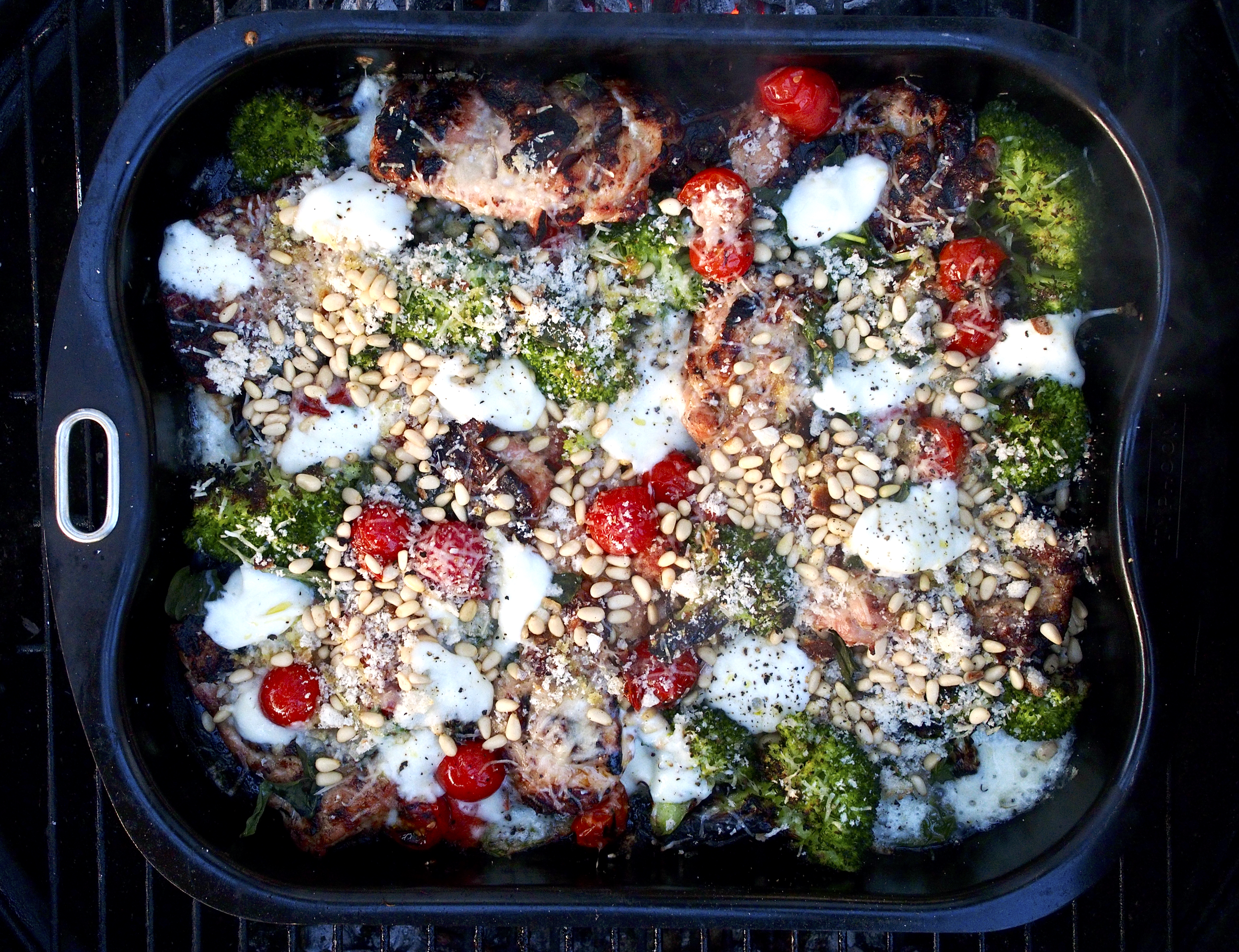
This is a totally different barbecue recipe from Geniveive Taylor’s fantastic new barbecue book – Seared. The buttermilk makes the chicken super tender, so it’s worth marinating it the day before if you can.

Wine Suggestion: A round, fresh white was in order here with a bit of body to stand up to the barbecued flavours, so we chose an oaked Rioja for something a bit different. A bargain in any language, the Urbina Blanco Crianza 2014, yes that is correct … 8 years old, is released when ready and despite its age is fresh and vibrant, with layers of tertiary development, butter, toast and nuttiness alongside the melon, cirtus and jasmine flavours. It reminded us of a complex white Burgundy.

Barbecued buttermilk chicken, charred broccoli, mozzarella, tomato, basil & pine nuts – serves 4-6

  • 800g chicken thigh fillets
  • 300ml buttermilk
  • 3 cloves of garlic, crushed
  • 2 tbsp Dijon mustard
  • 2 tsp brown sugar
  • 1 head of broccoli, cut into florets
  • 1 tbsp olive oil, plus extra to drizzle
  • 250g cherry vine tomatoes
  • a big bunch of basil, roughly chopped
  • 50g grated Parmesan
  • 50g fresh breadcrumbs
  • 50g pine nuts
  • 250g mozzarella, torn

Slash the chicken thighs with a sharp knife taking care not to cut the whole way through. Place in a shallow dish in a single layer.

Mix the buttermilk, garlic, mustard and sugar together with plenty of salt and black pepper. Pour over the chicken and toss to coat. Cover and refrigerate for up to 24 hours.

Light your barbecue for direct and indirect cooking (half with coals and half without).

While the barbecue is getting hot, blanch the broccoli in lots of boiling salty water for a couple of minutes. Drain well and toss with the olive oil and some seasoning. Set aside.

Cook the chicken thighs over indirect heat for about 30 minutes or until they reach 60-65C inside, turning regularly. Move them a little closer to the fire and keep cooking until they reach 74C.

When the chicken is almost cooked, grill the tomatoes and the broccoli for about 10 minutes over the fire, turning until nicely charred on all sides.

Transfer the chicken, broccoli and tomatoes to a heavy roasting tin. Add the basil and gently toss to mix. Sprinkle over the Parmesan, breadcrumbs and pine nuts. Top with mozzarella adn drizzle over a little olive oil and some salt and pepper. Set the tin directly over the fire for 15 minutes to melt the cheese.

Serve with crusty bread or some baby roasted potatoes.

(Original recipe from Seared by Genevieve Taylor, Quadrille, 2022.)

Read Full Post »

Easy and full of veg. Great for a weeknight, and if your kid is like ours they will eat anything with pasta and cheese!

Wine Suggestion: keep it simple with a juicy red from a warmer climate. The Cline Family Cellars have star with their Old Vine Lodi Zinfandel which has a joyful balance between vibrant and complex red and black fruit, velvety tannins and a easy drinkability.

Veggie Pasta Bake – serves 4

  • 1 red pepper, cut into bite-size pieces
  • 1 yellow pepper, cut into bite-size pieces
  • 1 aubergine, finely chopped
  • 1 courgette, finely chopped
  • 1 red onion, sliced
  • 3 tbsp olive oil
  • 150g cherry tomatoes, halved
  • 400g tin chopped tomatoes
  • 2 cloves of garlic, crushed
  • a handful of roughly chopped basil
  • 300g pasta – we used fusilli
  • 150g mozzarella ball, drained and finely chopped (you don’t need the expensive buffalo stuff for this)
  • 2 tbsp pesto
  • a handful of grated Parmesan cheese

Heat the oven to 190C/170C Fan/Gas 5.

Put the peppers, aubergine, courgettes and onion into a large roasting tin and toss in the oil. Season well with salt and pepper, then cook in the oven for 45 minutes, turning a couple of times, until the vegetables are soft and golden brown.

Add the cherry tomatoes, tinned tomatoes, garlic and basil and return to the oven for a further 10-15 minutes.

Meanwhile, cook the pasta in lots of boiling salty water. Add 4-6 tbsp of the pasta cooking water to the cooked vegetables to make it a bit more saucy.

Drain the pasta and tip into the roasting tin with the veg. Add the mozzarella and pesto and stir well to combine. Top with the Parmesan and return to the oven for a final 10 minutes to melt the cheese.

(Original recipe from BBC Food)

Read Full Post »

A delicious creamy pasta dish which is ready in minutes, and very useful when you’ve got leftover mascarpone.

Wine Suggestion: Anytime we have pasta our automatic choice is an Italian wine, and with all these summery flavours opened a bottle of Macchialupa Greco di Tufo from the hills and valleys inland from Naples. Quite full bodied for a white it nonetheless added an extra layer to the meal with it’s stonefruit and citrus flavours and nutty (almond & hazelnut) finish. Despite it’s weight it was also fresh and tasted of a warm Italian summer.

Pasta with pancetta, broad beans & mascarpone – serves 6

  • 300g conchiglie pasta
  • 200g frozen broad beans, blanched in boiling water and skins slipped off
  • 200g green beans, sliced into three
  • 140g pancetta cubes
  • 250g tub mascarpone cheese
  • 75g grated Parmesan
  • juice of 1 small lemon
  • a small bunch of basil leaves, torn

Cook the pasta in lots of boiling and very salty water according to the timings on the pack. Add the green beans 5 minutes before the end of the cooking time.

Meanwhile, heat a large frying pan and cook the pancetta until crispy. Stir in the mascarpone and Parmesan cheese and stir until melted.

Scoop out a cup of the pasta cooking water before draining the pasta and beans. Add the pasta, green beans and broad beans to the frying pan and add 6 tbsp of the pasta cooking water (you can add a bit more if it needs loosened further). Add the lemon juice and basil, then season with salt and pepper.

Serve with the rest of the Parmesan sprinkled over.

(Original recipe from Mary Berry Cooks up a Feast with Lucy Young, DK: Penguin Random House, 2019.)

Read Full Post »

Older Posts »