This would be nice on the big day or any other day.
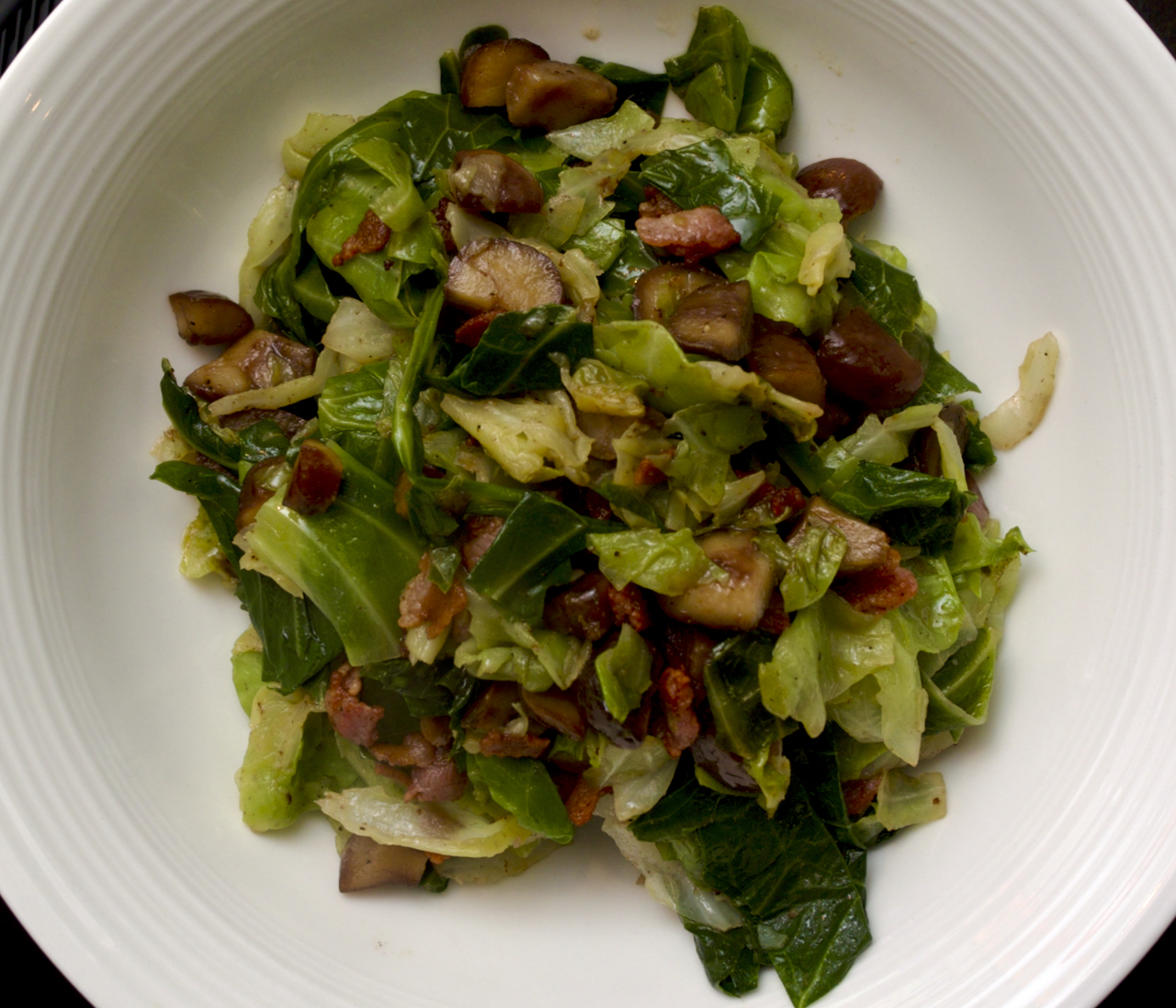
Cabbage with bacon & chestnuts – serves 6
700g winter cabbage
2 tbsp olive oil
200g streaky bacon, finely chopped
200g vacuum-packed chestnuts, roughly chopped
butter
Remove the stalks from the cabbage and roughly chop.
Bring a large pan of salty water to the boil and cook the cabbage for 3-4 minutes or until tender, then drain and leave to dry in the pan.
Meanwhile, heat the oil in a large frying pan and cook the bacon over a medium heat until starting to get crispy. Add the chestnuts to the bacon and stir so they absorb the bacon fat. Add the cooked cabbage, a knob of butter and seasoning. Toss together and serve.
You can’t capture the autumn sliding into winter better than in this dish. It’s perfect for a weeknight main or a side dish at the weekend.
Wine Suggestion: We think Nebbiolo is such a natural pairing with mushrooms, but thought opening a Barolo or Barbaresco was a bit extravagant, so Luigi Pira’s Langhe Nebbiolo was chosen and the gentle leather, spice and tea leaf characters were a delight.
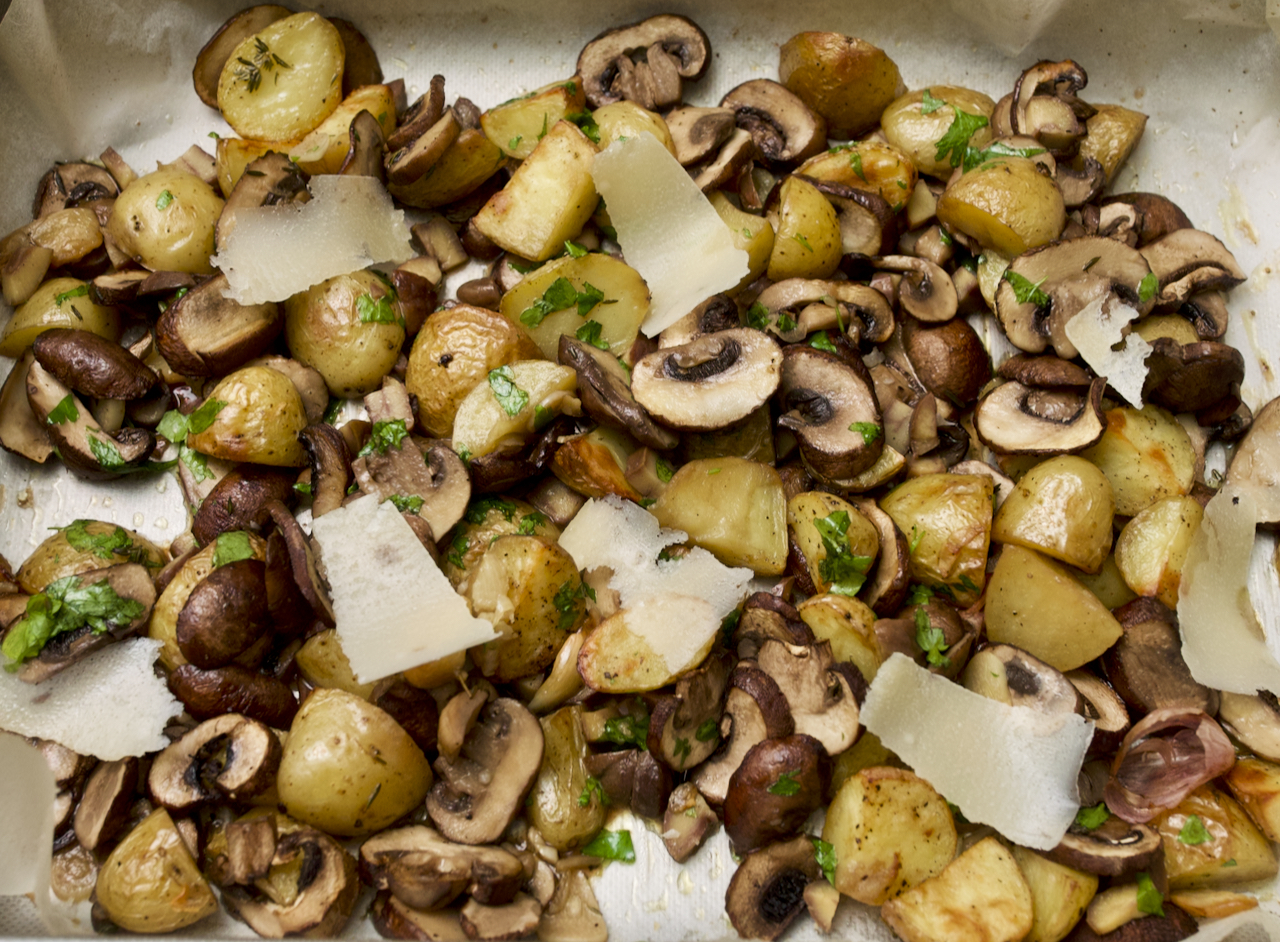
Roast potatoes with mushrooms, chestnuts & sherry – serves 4
1kg waxy potatoes
7 cloves of garlic, 4 unpeeled and smashed, 3 peeled and finely sliced
4 tbsp extra virgin olive oil
3 sprigs of thyme, leaves picked
500g chestnut mushrooms, sliced
3 tbsp dry or medium sherry
75g cooked chestnuts, roughly chopped
a small bunch of flatleaf parsley, finely chopped
100g manchego or Parmesan cheese
Heat the oven to 220C/fan 200C/gas 7.
Line a baking tray with baking paper.
Spread the potatoes over the lined tray alongwith the smashed garlic, olive oil and thyme. Season and toss, then roast for 15-20 minutes or until the potatoes are softened but not cooked through.
Add the mushrooms, sliced garlic and sherry to the potatoes and toss again. Cook for another 20-25 minutes or until the mushrooms and potatoes are cooked. Remove from the oven and add the chestnuts and parsley. Mix well and check the seasoning.
Shave the cheese over the top to serve.
(Original recipe by Claire Thompson in Olive Magazine, October 2020.)
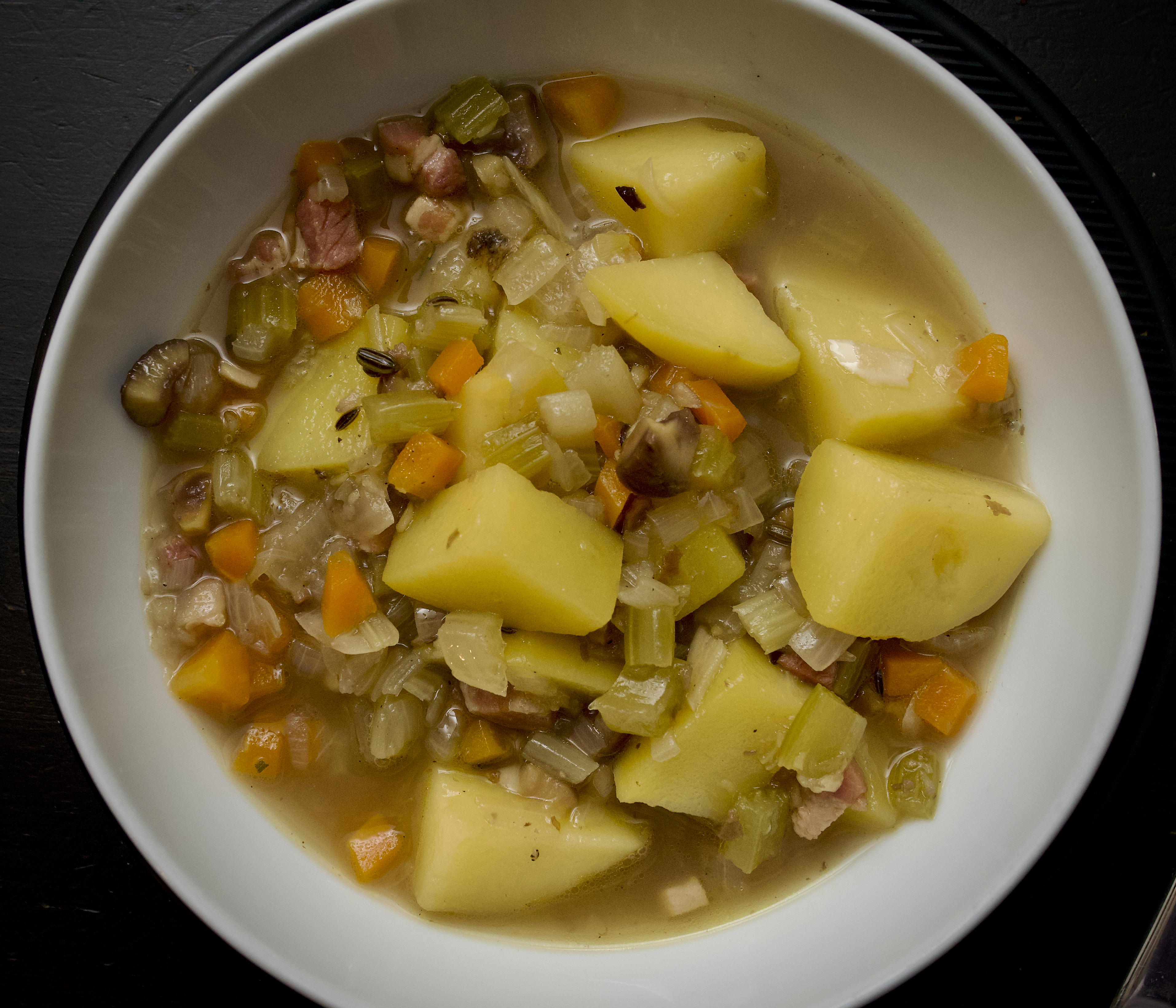
We have a reputation for using things up, and hence were donated a friends’ leftover chestnuts from Christmas: they thought we would probably use them. No probably about it … here they are in the loveliest Provençal soup recipe by Alex Jackson.
Wine Suggestion: And if you feel inspired then try a La Clef du Recit Menetou-Salon to accompany this dish. A Sauvignon Blanc from the Loire, the soils and aspect give this wine an extra super depth and richness, while maintaining the purity and clarity of expression to make it an excellent match.
2 fat cloves of garlic, peeled, green middle removed and finely sliced lengthways
1 tsp fennel seeds
½ tsp picked rosemary leaves (no more)
a few dried ceps, soaked in boiling water and roughly chopped (reserve the soaking water)
100g cooked chestnuts, broken in half
500g waxy potatoes, peeled and cut into 1.5 cm chunks
1 litre homemade chicken stock or water
best extra virgin olive oil, to serve
grated Parmesan, to serve
Heat the olive oil in a large heavy saucepan, then add the pancetta and cook over a gentle heat until well browned but not crispy. Add the onion, celery, carrot, garlic and fennel seeds. Add a good pinch of salt and fry slowly for at least 30 minutes, stirring now and then, until soft and sweet.
Finely chop the rosemary, then add to the pan and allow to cook for another couple of minutes. Add the chopped porcini and cook for a few minutes before adding the chestnuts and potatoes. Pour in the liquid from the mushrooms, then add stock until the vegetables are just covered by about an inch of liquid (you can add more as it cooks if you need). Bring to the boil, then simmer for about 30 minutes or until the potatoes are soft. Mash the chestnuts against the edge of the pan to mush them up a bit. The soup should have some liquid but otherwise be quite thick.
Season with salt and pepper to taste, then serve in warm bowls with Parmesan and olive oil drizzled over the top.
(Original recipe from Sardine by Alex Jackson, Pavilion, 2019.)
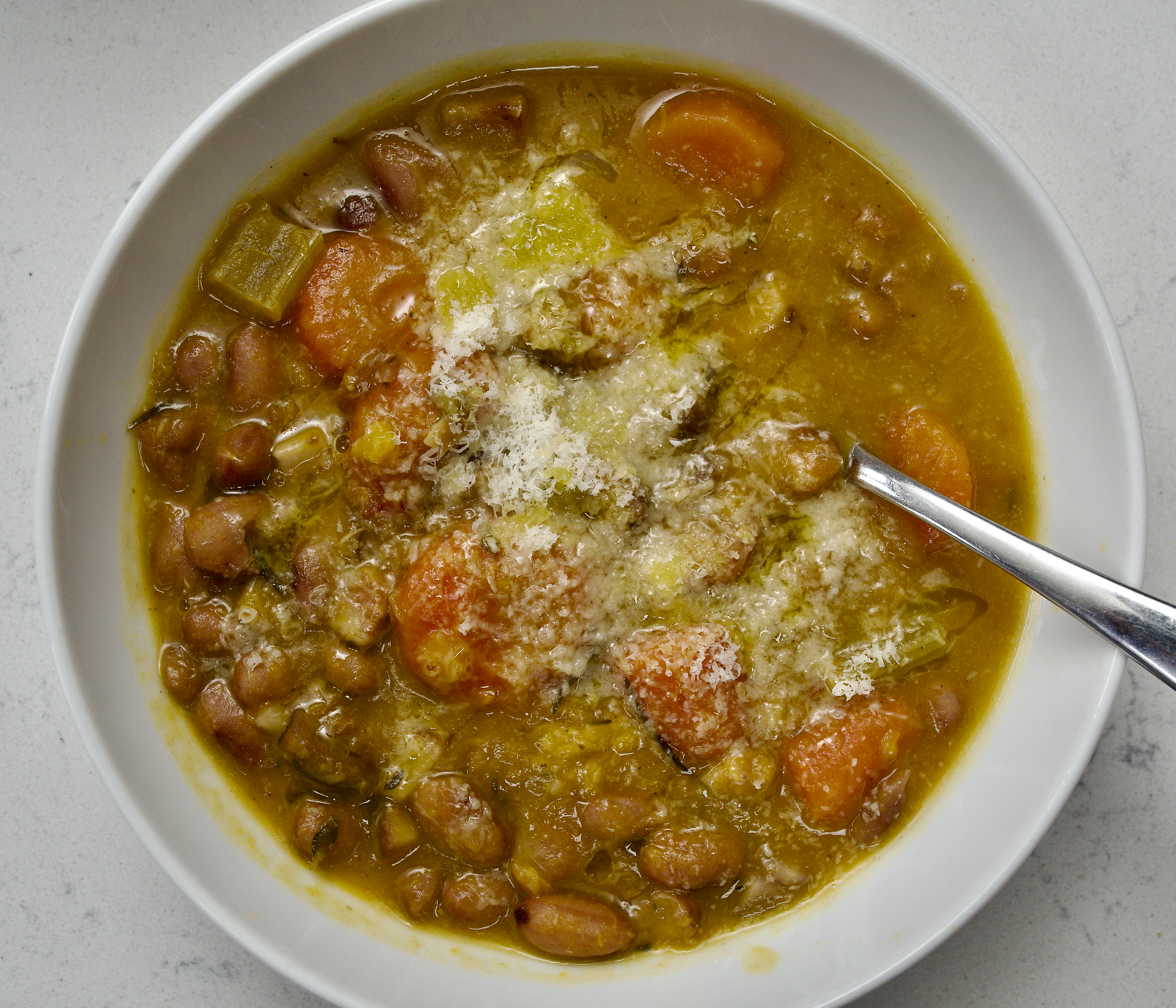
This is a delicious soup recipe from Cooking by Jeremy Lee. Make it on a cold day when you don’t have very much else to do, it takes an age but tastes amazing. You need to soak the beans the night before.
Chestnut, bacon, bean and pumpkin soup – serves 6
2 small onions
3 sticks of celery
3 large carrots
1 smoked ham hock or diced smoked pancetta
4 tbsp olive oil
a small stick of rosemary
a small handful of thyme
4 bay leaves
4 cloves of garlic, peeled
a big pinch of dried chilli flakes
250g dried borlotti beans, soaked overnight in lots of cold water
1 small pumpkin or a wedge of pumkin, roughly 1kg
250g vac-packed chesnuts
Parmesan and good extra virgin olive oil, to serve
Peel and cut the onions, celery and carrot into chunky pieces. If using a smoked ham hock cut it into small cubes.
Warm the olive oil in a wide, heavy saucepan and add the pork, herbs, garlic, chilli flakes and vegetables. Stir well, cover with a lid and cook over a gentle heat, stirring occaionally, for roughly 1½ – 2 hours. If your ring is hot they may take a bit less time than this to become soft and caramelised. The idea is to cook them as slowly as possible until you achieve this then proceed with the recipe.
Drain the beans and rinse under cold water until it runs clear. Put the beans into a saucepan with lots of cold water and bring the boil over a high heat. Drain well and lightly rinse, then tip them on to the vegetables and cover with 4-5cm of water. Bring to the boil, then lower to a simmer and cook for at least an hour or until the beans are tender. Don’t be tempted to stir the soup while the beans are cooking, you want them to hold together.
Heat the oven to 180C and roast the pumpkin whole for 40 minutes to 1 hour or until soft and fudgy. Remove from the oven and leave to cool, then remove the seeds and skin. Purée the cooked pumpkin and add to the cooked beans.
Chop the chestnuts coarsely and add them to the soup, then gently reheat. Take care when stirring to keep the beans as intact as possible. Season well with salt and black pepper.
Serve in warm bowls with lots of grated Parmesan cheese and drizzled with your best olive oil.
(Original recipe from Cooking by Jeremy Lee, 4th Estate, 2022.)
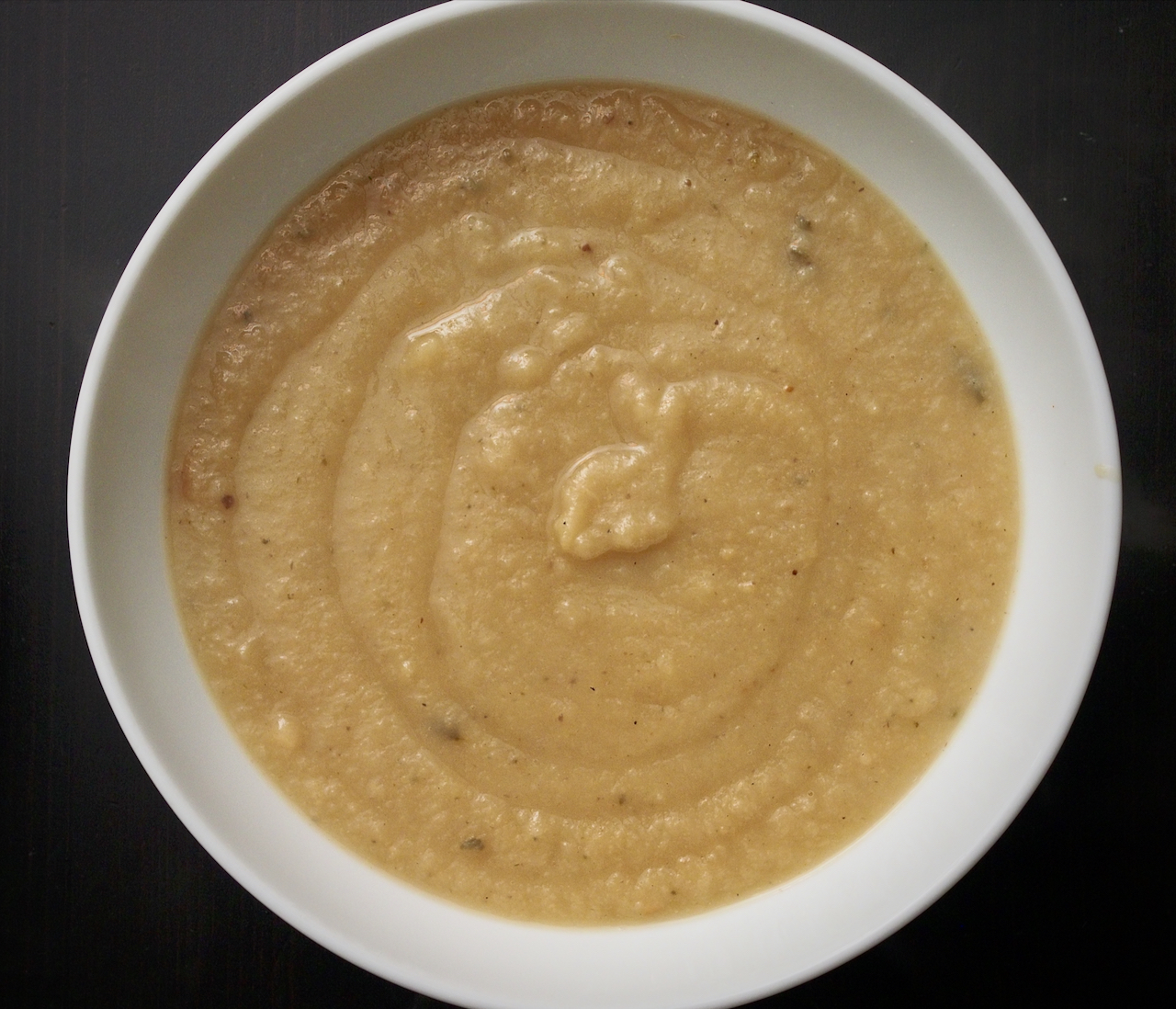
We usually only cook with chestnuts around Christmas but we’ve been trying to use up an extra pack, and they are delicious in this soup recipe by Gill Meller.
Parsnip, roast garlic and chestnut soup – serves 4
6 parsnips, peeled and cut into chunks
1 bulb of garlic, halved around the middle
150g cooked chestnuts
10-12 sage leaves
1 onion, sliced
3 tbsp extra-virgin olive oil
1 litre vegetable stock
Heat the oven to 200C/180C fan/gas 6.
Spread the parsnips over a roasting tin. Add the garlic bulb, chestnuts, sage, onion and olive oil. Season well with salt and pepper and toss together. Cover the tin tightly with foil and bake for about an hour, shaking the tin now and then, until the parsnips are soft and caramelised.
Remove the foil and pour in the stock, then return to the oven for another 30 minutes.
Ladle everything except the garlic bulb halves into a blender (or a pot if you’re using a hand blender). Squeeze the roasted garlic flesh out of the skins and add to the rest. Whizz the soup until smooth.
Pour the soup into a saucepan and bring to a simmer over a low heat, then cook for 10 minutes. Season to taste, then serve.
(Original recipe from Root Stem Leaf Flower by Gill Meller, Hardie Grant: Quadrille, 2020.)
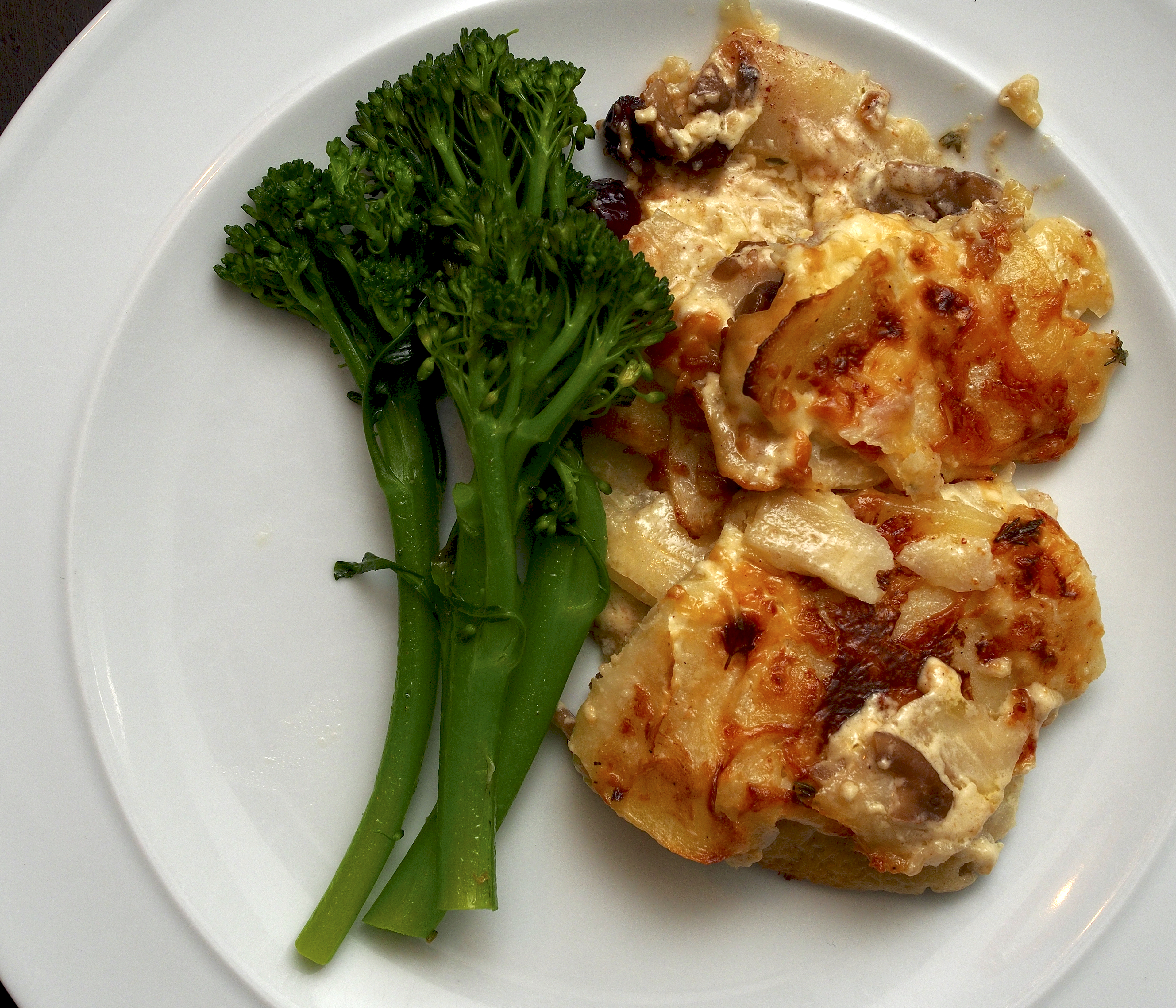
The trick, as with all gratin’s, is to slice the vegetables really thinly. Invest in a mandolin, or use your food processor’s slicing blade, and you’ll get even slices that will cook at the same time. This dish has a lovely festive feel to it and would be great as a side dish for roast chicken (or turkey) or a rich casserole. We served just as it was with some steamed broccoli which was good too.
There was no cheese in the original recipe so feel free to leave it out. We’re still working our way through the cheese mountain in the fridge.
Creamy vegetable gratin with chestnuts and cranberries – serves 4 as a main, 6 as a side
400g potatoes
300g parsnips
300g celeriac
425ml double cream
140ml sour cream
85ml full-fat milk
2 cloves of garlic, very finely sliced
leaves from 2 sprigs of thyme
butter, to grease the dish
50g dried cranberries
100g cooked chestnuts, sliced
a large handful of grated Parmesan
a large handful of grated Cheddar/Gruyere
Preheat the oven to 180C/350F/Gas 4.
Slice the potatoes, parsnips and celeriac very finely, use a mandolin if you have one.
In a large saucepan, mix the creams and milk together, then bring to just under the boil. Add the sliced veg, garlic and thyme and cook gently for 5 minutes.
Season generously and spoon half the vegetables into a buttered gratin dish. Sprinkle the cranberries and chestnuts on top and half of the cheese, then add another layer of vegetables and the rest of the cheese over the top.
Bake for 1 hour or until completely tender. You may need to cover with foil after 45 minutes to stop it browning too much.
(Original recipe from Food from Plenty by Diana Henry, Mitchell Beazley, 2010.)
Got chestnuts? We made this with a vac-pack we still had in the drawer from last Christmas. A really delicious soup and perfect for using a post- or pre-season chestnut surplus!
Heat the olive oil in a large saucepan, then add the onion and cook gently for 8 to 10 minutes or until softened. Add the cauliflower, milk and stock, then bring to a simmer and cook for 10 to 12 minutes or until the cauliflower is tender.
Add the cream, season well, and bring back to the boil. Remove from the heat and add the chestnuts, then blend with a hand blender until smooth. Season to taste and serve with shaved Parmesan, lots of black pepper and a drizzle of olive oil.
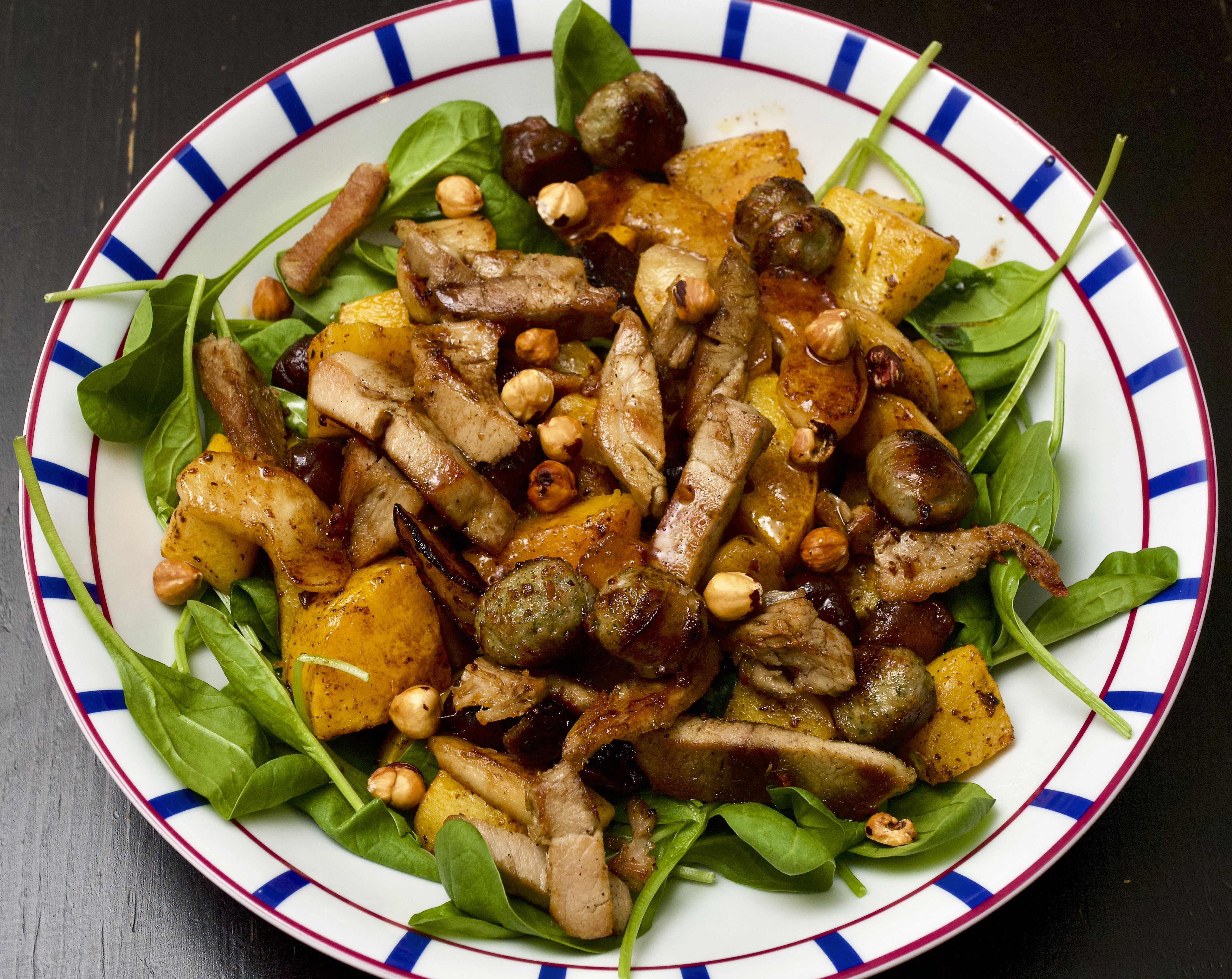
Could there be a more autumnal dish? We went completely overboard with a roast pork last weekend and have been searching for great recipes to use it all up. Love your leftovers!
Wine Suggestion: Pork and apples are a happy match for a good Chenin Blanc. Tonight we had Bernard Fouquet’s, Domaine des Aubuisieres Vouvray Silex. Fresh and appley to complement the salad with a lovely clean, dry finish; a soft and friendly wine with good persistence and layers of texture.
Pork, roast squash, apple and chestnut salad – serves 4
For the salad:
50g butter
4 tbsp olive oil
½ tsp ground cinnamon
½ tsp ground ginger
1kg squash or pumpkin, peeled and cut into slim wedges
2 tsp caster sugar
2 apples, halved, cored and cut into wedges
100g cooked chestnuts (vacuum-packed work fine)
100g spicy pork sausage, cut into chunks
200g leftover cooked pork, cut into chunks
25g hazelnuts, toasted (roast for 20 minutes or so until they smell toasty, the skins will rub off easily with a clean tea towel)
150g watercress or baby spinach
For the dressing:
1½ tbsp balsamic vinegar
a tiny bit of Dijon mustard
4 tbsp olive oil
3 tbsp hazelnut oil (we didn’t have any hazelnut oil so used extra virgin olive oil instead)
Preheat the oven to 190C/375F/gas mark 5.
Melt 25g of the butter in a saucepan. Add 3 tbsp of the olive oil, the cinnamon and ginger. Put the squash into a roasting tin and drizzle over the spicy mixture, tossing to coat. Season the squash, then sprinkle over half of the sugar. Roast for 25 minutes, or until tender and slightly caramelised.
Whisk the dressing ingredients together in a bowl, seasoning with salt and pepper.
Melt the rest of the butter in a large frying pan and sauté the apples until golden. Add the chestnuts and heat through, then set aside. Add the rest of the oil to the same pan and sauté the sausage until cooked and nicely browned, then add the pork and heat through – a few toasty brown bits on the pork will taste good too. Season.
Toss the warm squash with all the salad ingredients and the dressing.
(Original recipe from Food by Plenty by Diana Henry, Mitchell Beazley, 2011.)
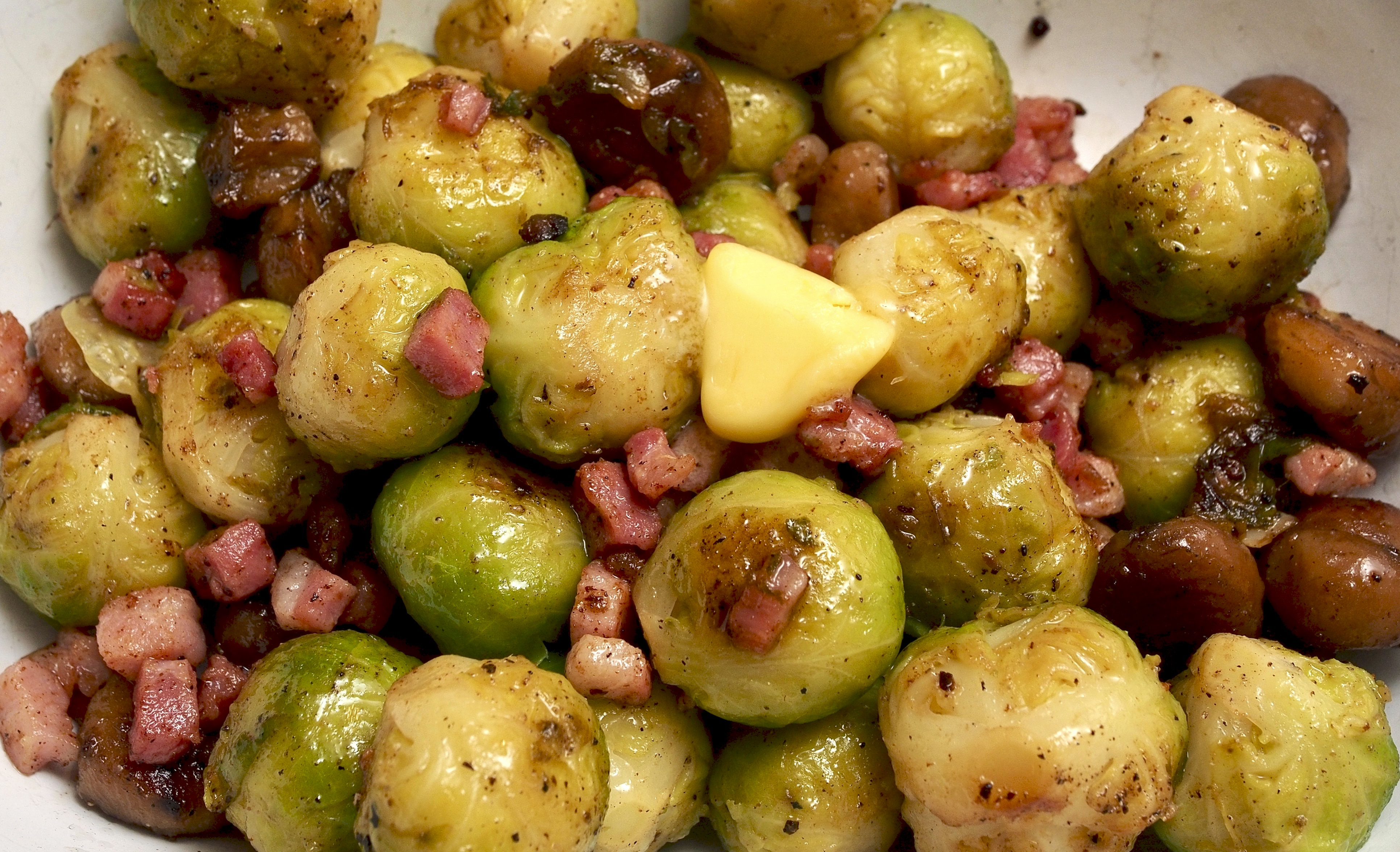
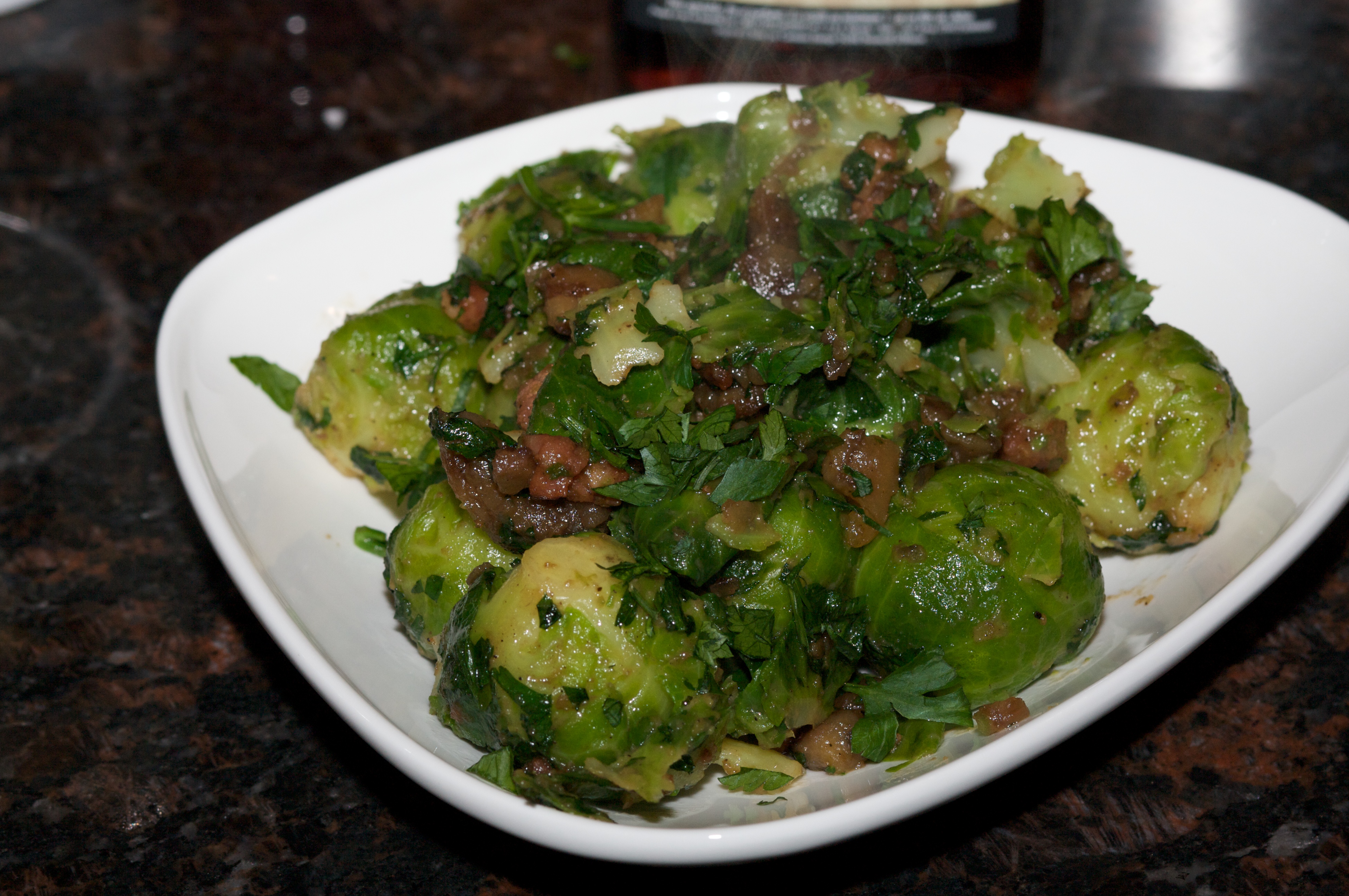
Sprouts are not just for Christmas and indeed should be eaten throughout the frosty months in our opinion. We particularly like this recipe with butter, bacon bits and chestnuts – a sprout-lovers dream!
6 rashers streaky smoked bacon cut into bit-sized pieces or cubes of pancetta
200g vacuum-packed chestnuts
50g butter
Bring a large pan of salted water to the boil and tip in the sprouts. Return to the boil and cook for 5 minutes, then drain and run under the cold tap until cold, then drain again.
Heat a large frying pan, add the bacon and gently fry for 10 minutes until crispy. Scoop the bacon out of the pan with a slotted spoon and leave the fat behind, then add the chestnuts and fry over a high heat for about 5 minutes until they have darkened in places, then tip out of the pan.
Put the sprouts into the frying pan with a splash of water, then cover the pan with a lid and finish cooking over a medium heat for about 5 minutes or until just tender. Remove the cover, turn up the heat, then add most of the butter and sauté the sprouts for another 2 minutes. Tip in the bacon and chestnuts, season generously, then serve with the last bit of butter on top.
(Original recipe from BBC Good Food Magazine, December 2009.)
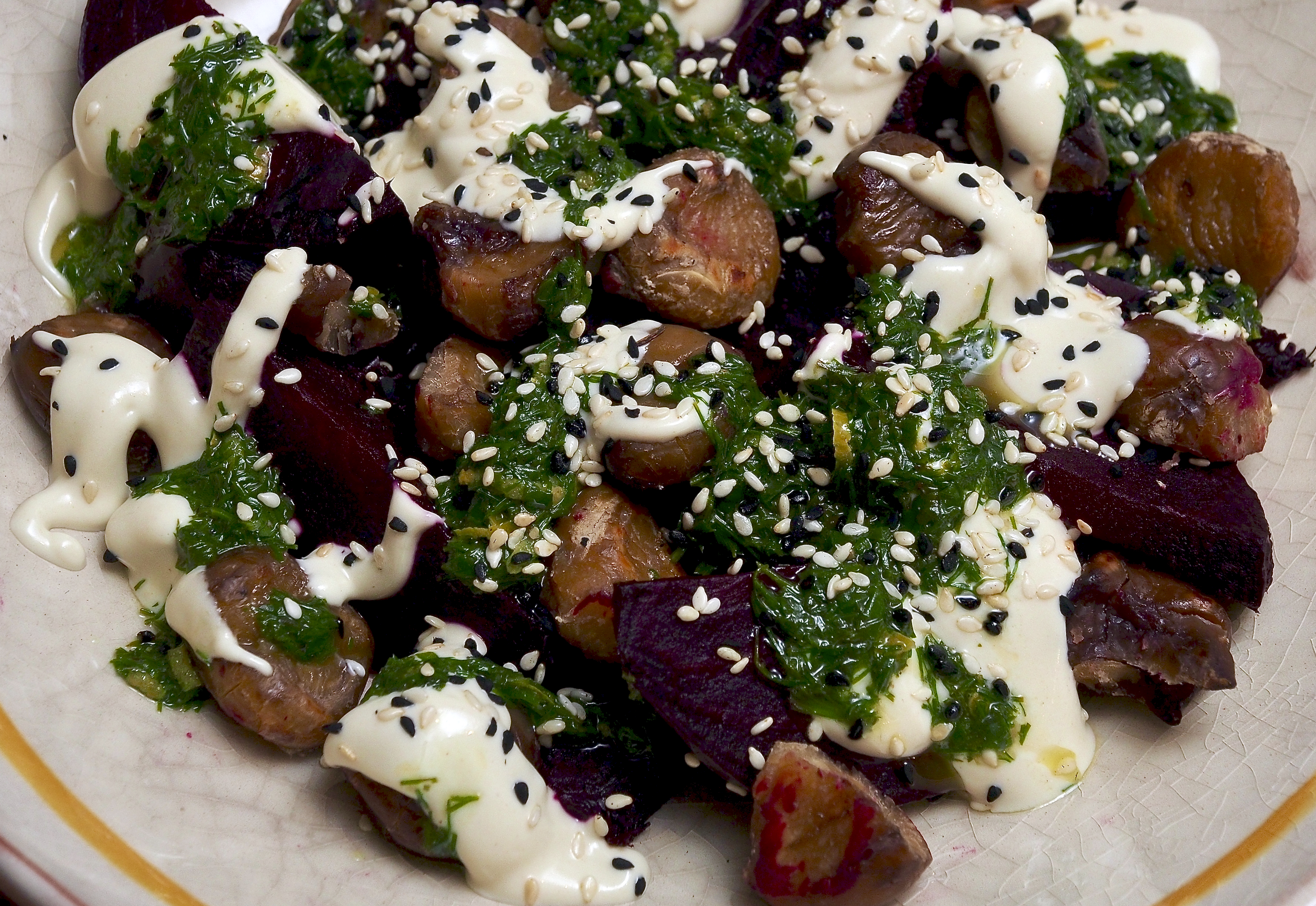
We can’t help but associate chestnuts with December when everyone’s in holiday mood. This side dish would complement any banquet and would even work well on the big day as an alternative to carrots and sprouts (not that there’s anything wrong with them). Another great idea from Sabrina Ghayour.
Roasted Beetroot Salad with Burnt Chestnuts, Tahini Yoghurt & Herb Oil – serves 4
1.5kg beetroot, roasted and peeled, quartered (roast beetroots wrapped in foil for between 45 to 90 minutes or until soft when pierced with a knife)
200g vacuum packed cooked chestnuts
FOR THE YOGHURT SAUCE
3 tbsp tahini
100g Greek-style yoghurt
2-3 tbsp olive oil
1-2 tbsp warm water
FOR THE HERB OIL
15g dill
15g coriander
a good squeeze of lemon juice
finely grated zest of 1 lemon
5 tbsp olive oil
TO GARNISH
toasted sesame seeds
toasted nigella seeds
Arrange the beetroot quarters over a large platter.
Heat a large frying pan over a high heat, then dry fry the chestnuts for a couple of minutes on each side or until slightly blackened. Arrange the chestnuts on the platter with the beetroot.
Make the herb oil by pouring boiling water into a bowl and immersing the dill and coriander in it. Leave to blanch for 1 minutes before draining and then cool the herbs by running under cold water.
Blitz the herbs in a blender with the squeeze of lemon juice, the lemon zest, olive oil and some salt and pepper. Blend to a smooth mixture, adding more oil to loosen if needed. Adjust the seasoning and set aside.
Combine the ingredients for the yoghurt sauce together and add enough warm water to make a smooth sauce. Drizzle the yoghurt sauce over the beetroot. Spoon over the herb oil and sprinkle with the toasted seeds to garnish.
(Original recipe from Feasts by Sabrina Ghayour, Mitchell Beazley, 2017.)
Oh where to start. This was supposed to be a straightforward Tuesday night dinner – blanch a few cabbage leaves, make a bit of stuffing, roll them up and pop them in the oven.
All I can say is that the air was blue in my kitchen (if you don’t use that expression it means I swore a lot).
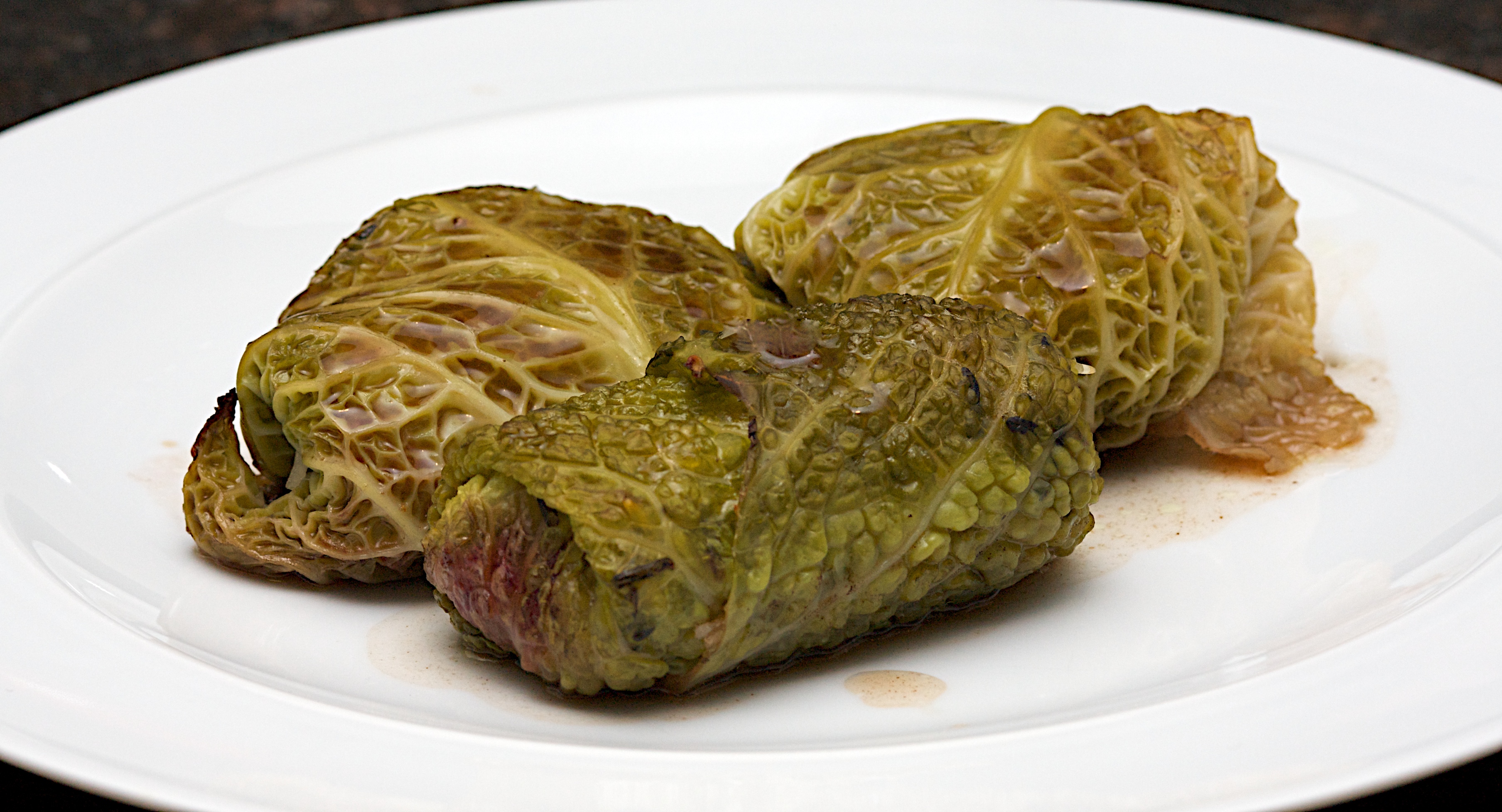
First I removed the central stalk and blanched the leaves as instructed. Then I made some seasonal stuffing, then I tried to put some stuffing onto a cabbage leaf and roll it into a neat parcel and that’s where it all went wrong. Did the person that wrote this recipe have some sort of gigantic cabbage leaves or something? Or were their cranberries not round and so didn’t ping out the minute you started trying to roll the things? Or did the big split up the middle not cause them a few problems when trying to keep all the stuffing inside? I’ll stop cause I’m getting angry just thinking about it.
Do not be put off by my bad experience – these are divine!!! A few tips… don’t bother your head taking out the stalk; 6 cabbage leaves is not enough to use up all the stuffing so blanch a few more leaves than this; don’t panic if your stuffed cabbage leaves look like crap they will be fine when they come out of the oven (see pic); and it helps if you stick a cocktail stick through each one to hold it together (good idea Jono).
We had just these for dinner and I cannot do justice to how tasty they were. Chestnuts, wild rice, cranberries, rosemary, balsamic, honey and a few other goodies. The leftovers are going to be used for a side dish tomorrow night. This is a great recipe and if you follow the advice above hopefully you won’t lose your temper while making. If you do lose your temper I promise you’ll feel better when you taste them.


 Jono & Jules do food & wine