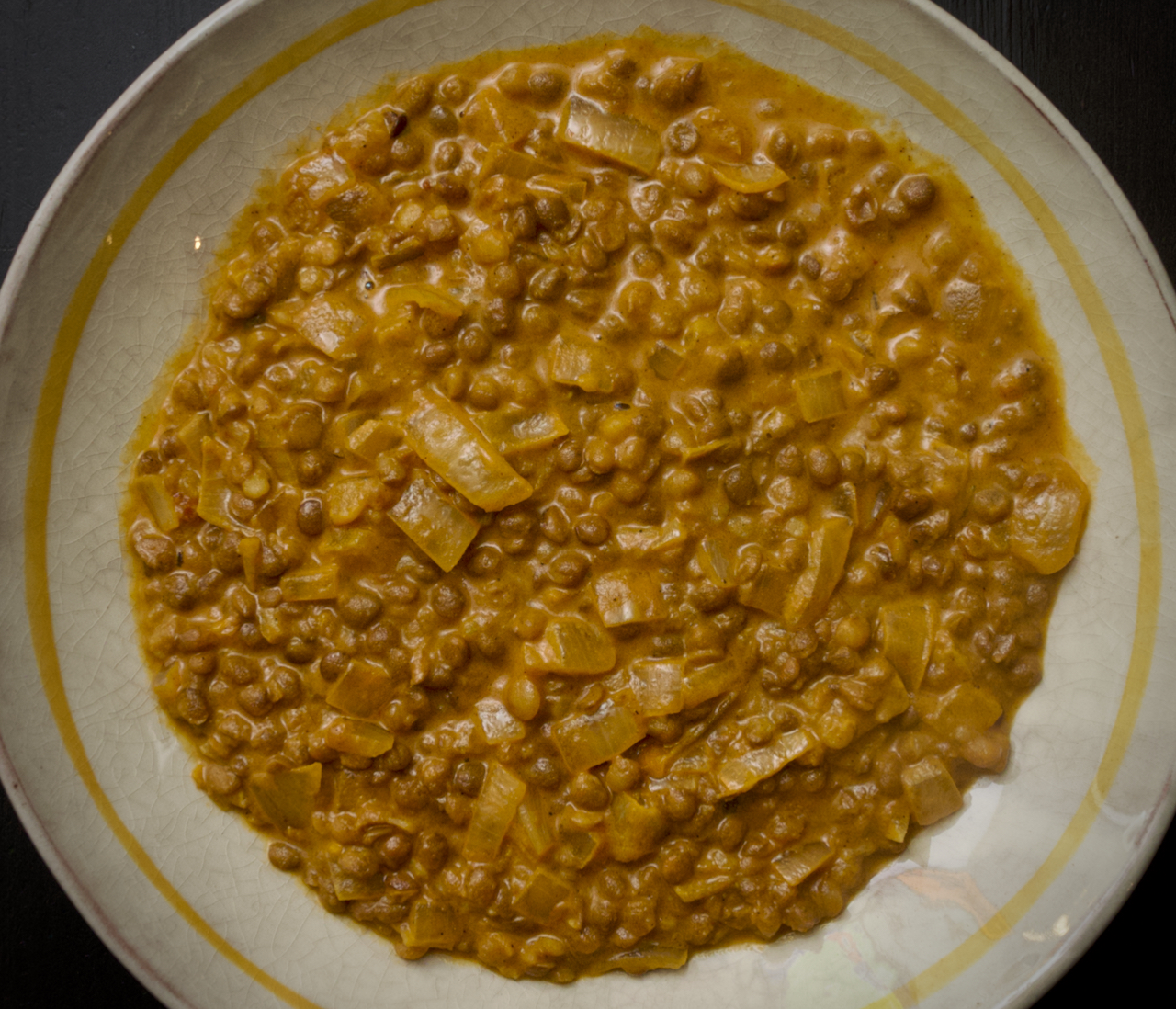
We love dhal and this cheat’s version is delicious! It’s similar to a dhal makhani but a fraction of the effort to make. We will never be without 2 tins of lentils again! Serve with rice or naan of course.
Wine Suggestion: a regular grenache, Domaine Ventenac’s “les Dissidents” Paria because it has an effortless freshness and gentle plummy, warm spices of a juicy core of red fruit.
Cheat’s Dhal – serves 4 to 6
2-3 tbsp vegetable oil
1 large onion, finely chopped
1 tsp ground cumin
1 tsp ground turmeric
1 tsp ground coriander
½ tsp ground cinnamon
½ tsp chilli flakes
3 tbsp tomato purée
2 x 400g tins green lentils, drained
50g butter
150ml double cream
300ml boiling water
Heat a large heavy saucepan over a medium-high heat. Add the vegetable oil and the onion and stir-fry until softened and starting to brown at the edges.
Stir in the spices until the onions are coated, then add the tomato purée and cook for 2 minutes. Stir in the lentils, then the butter and stir until melted. Pour in the cream and season generously, then pour in the water and stir again.
Reduce the heat and simmer gently for 30 minutes, stirring occasionally, until thick and creamy. Season to taste and serve.
(Original recipe from Persiana Everyday by Sabrina Ghayour, Aster, 2022.)
We love this easy pasta dish. If you haven’t cooked smoked salmon before you should.
Wine Suggestion: this is a deceptively rich dish and we think needs something like a fuller Pinot Gris, like Au Bon Climat’s blend with Pinot Blanc which is treated very much like a Burgundian Chardonnay and is both textured and vibrantly fresh with flavours of fresh pears, toasty creaminess and gentle spices.
Pasta with smoked salmon & mascarpone – serves 4
400g farfalle
200g smoked salmon
125g mascarpone
20g butter, at room temperature
zest of 1 unwaxed lemon
dill, snipped
Cook the pasta in lots of salty water until al dente.
Meanwhile, cut the salmon into short pieces with scissors and put them into a large warm serving bowl along with the mascarpone, butter and lemon zest. Ladle some pasta cooking water into the bowl to loosen to a cream, then taste and add salt if needed.
Drain the pasta, reserving some more pasta water, then tip on to the sauce and gently mix together, adding more cooking water if needed. Serve, sprinkled with dill.
(Original recipe from An A-Z of Pasta by Rachel Roddy, Penguin: Fig Tree, 2021.)
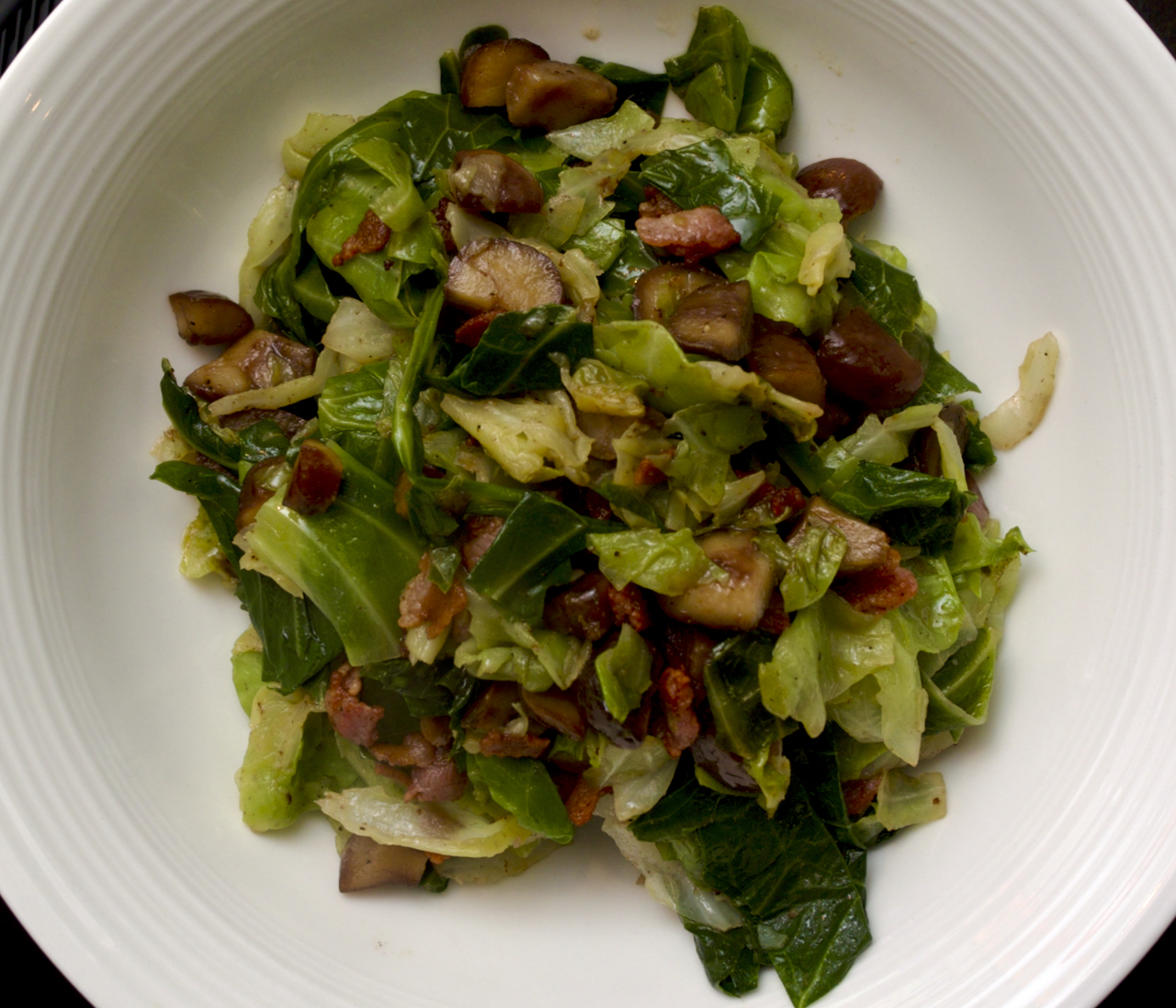
This would be nice on the big day or any other day.
Cabbage with bacon & chestnuts – serves 6
700g winter cabbage
2 tbsp olive oil
200g streaky bacon, finely chopped
200g vacuum-packed chestnuts, roughly chopped
butter
Remove the stalks from the cabbage and roughly chop.
Bring a large pan of salty water to the boil and cook the cabbage for 3-4 minutes or until tender, then drain and leave to dry in the pan.
Meanwhile, heat the oil in a large frying pan and cook the bacon over a medium heat until starting to get crispy. Add the chestnuts to the bacon and stir so they absorb the bacon fat. Add the cooked cabbage, a knob of butter and seasoning. Toss together and serve.
This dish takes a while but it’s a waiting game for the most part and you will be richly rewarded. A good value dish for lamb lovers!
Wine Suggestion: a succulent red with gentle spices and if you can push the boat out something like Ridge’s superlative Lytton Springs. All blackberry, raspberry, coffee and warm spices, but with fine, layered tannins and a chalky undercurrent.
Lamb pilaf with orzo – serves 4
800-900g lamb neck fillet
2-3 tbsp olive oil
1 large onion, finely chopped
2 cloves of garlic, crushed
½ tsp ground cinnamon
½ tsp ground allspice
400g tin chopped tomatoes
2 tbsp tomato purée
300ml dry white wine
2 tbsp lemon juice
2 tsp sugar
1 chicken stock cube
1 tbsp chopped fresh thyme
250g orzo
TO SERVE:
85g feta
1 tbsp chopped thyme
1 tbsp chopped mint
finely grated rind of 1 lemon
Heat the oven to 160C/Fan 140C/Gas 3.
Cut the lamb neck fillets in half lengthways and don’t trim off any fat. Cut each half fillet crossways into bite-size pieces.
Heat a good glug of olive oil in a large non-stick frying pan until hot, then sear the lamb in batches over a medium-high heat until well browned on all sides. Remove with a slotted spoon to a large casserole.
Turn the heat down and add the chopped onion. Fry for a few minutes until golden brown, then add the garlic, cinnamon and allspice and fry for another minute or two. Scrape the onion mixture into the casserole with the meat.
Pour the tin of tomatoes over the meat, then fill the can twice with water and add this too. Give it all a stir, then add the tomato purée, wine, lemon juice, and sugar. Crumble in the stock cube and add the thyme, ½ tsp salt and plenty of black pepper. Bring to the boil, stirring, then cover and transfer to the oven. Cook for 2 hours, stirring halfway through.
Stir in the orzo then cover and return to the oven for 20 minutes or until the orzo is cooked, stirring halfway through. Crumble the feta over and sprinkle with the herbs and lemon zest to serve.
A green salad is all you need on the side.
(Original recipe from Mary Berry Cooks the Perfect, Penguin Random House Group, 2014.)
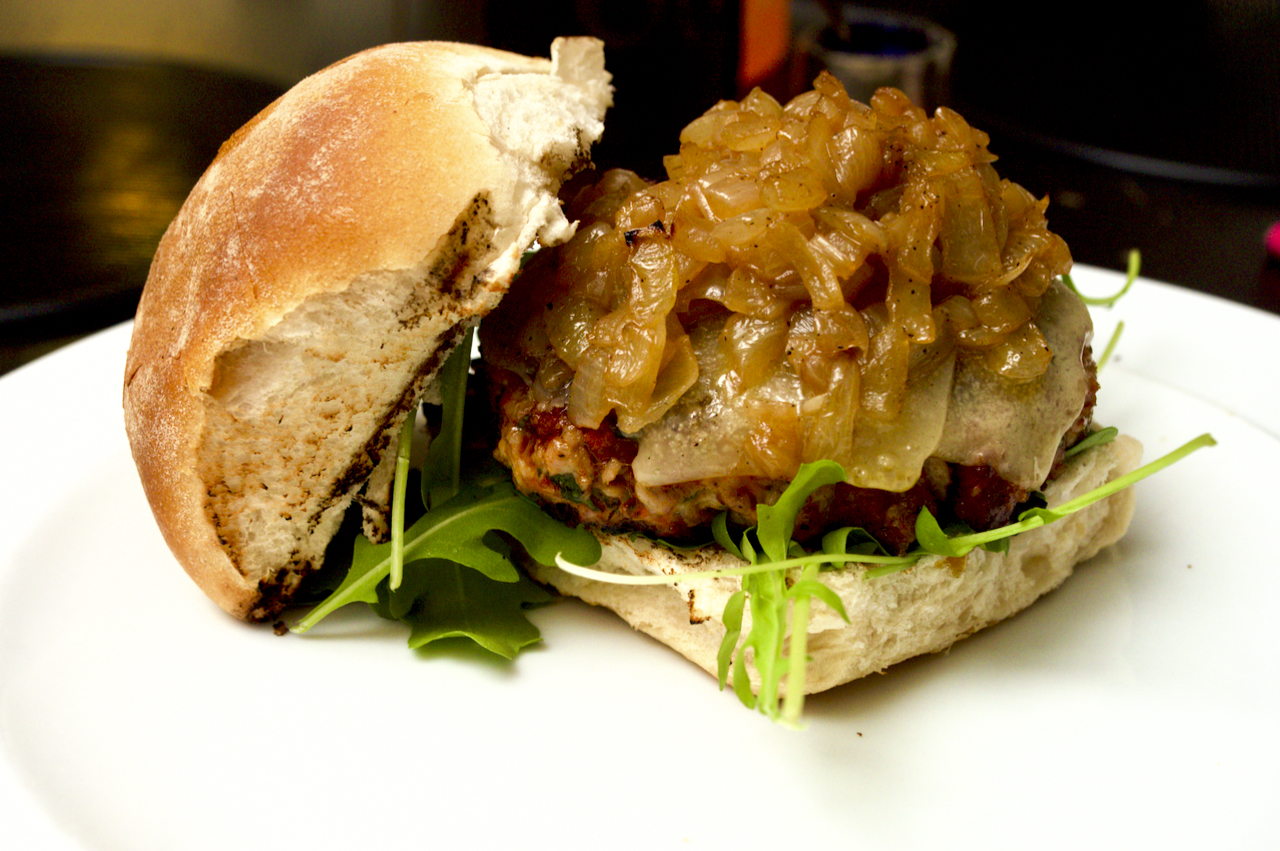
It’s getting colder but we’re determined to keep barbecueing anyway. These burgers are worth making for the onions alone, and the burger is something else too!
Wine Suggestion: a lighter, fruit forward red with a bit of tannin structure. We love some of the still wines from the Douro in Portugal and Quinta de la Rosa’s DouRosa red is a gem. Just 12.5%abv but full of flavour and with lovely depth, length and fine tannins.
Put the pork, chorizo, garlic, parsley, and paprika into a large bowl. Season with a salt (not too much) and plenty of black pepper then pound with your hands until well combined. Shape into 4 balls, then press these down to make burgers about 1 cm thick. Put the burgers into the fridge until you’re ready to cook them.
Next, make the onions. Put a large deep saucepan over a low heat and add the oil and butter. When the butter has melted, tip in the onions and a little salt and pepper. Cook very gently for at least 30 minutes, stirring occasionally. Pour in the sherry and allow to reduce for another 15 minutes or so.
Light your barbecue and if you have one put a fireproof hot plate or frying pan on to warm up (if you cook the burgers on a hot plate you won’t lose any bits through the grill). When it is really hot, add the burgers and press down with a fish slice. Cook for a couple of minutes, then turn and grill the other side for a minute before turning again. Top with the manchego slices and a good spoon of onions, then shut the lid and cook for another couple of minutes.
Lightly toast the burger buns, and add a handful of rocket to each. Add a burger and serve.
(Original recipe from Seared by Genevieve Taylor, Quadrille, 2022.)
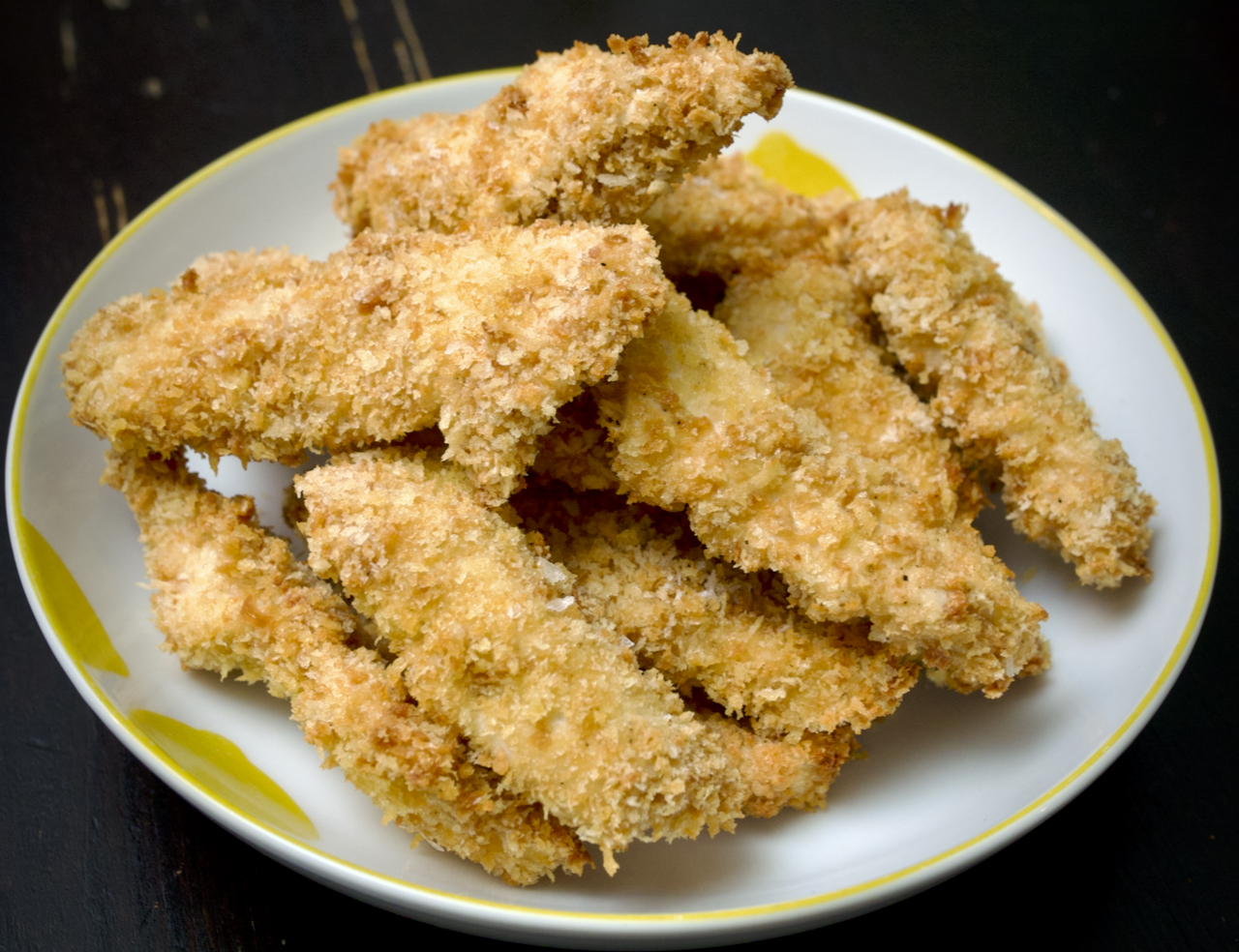
All they want to eat is chicken nuggets – at least you know what’s in this version and they’re baked in the oven. Little wins!
Chicken dippers – serves 3 to 4
rapeseed oil spray
90g panko breadcrumbs
500g chicken breasts, cut into 1½ cm strips
¼ tsp fine sea salt
FOR THE BATTER:
1 egg
1 tbsp mayonnaise
1½ tbsp Dijon mustard
2 tbsp plain flour
½ tsp fine sea salt
¼ tsp pepper
Heat the oven to 200C/180C fan.
Spread the panko breadcrumbs onto a baking tray, spray with oil and bake for 7 minutes or until golden, then transfer to a bowl.
Get a grill pan and spray the metal rack with oil.
Put the batter ingredients in a bowl and whisk with a fork to combine. Add the chicken and toss to coat in the batter.
Pick the chicken pieces up with tongs and put into the breadcrumb bowl. Sprinkle the surface with the breadcrumbs and press with your fingers to make sure they stick. Transfer the breadcrumbed chicken to the metal rack and repeat until the chicken is all coated.
Spray the chicken pieces generously with oil, and sprinkle with salt. Bake for 15-20 minutes until cooked through.
Serve with ketchup or mayonnaise.
(Original recipe from Recipetineats Dinner by Nagi Maehashi, Pan Macmillan, 2022.)
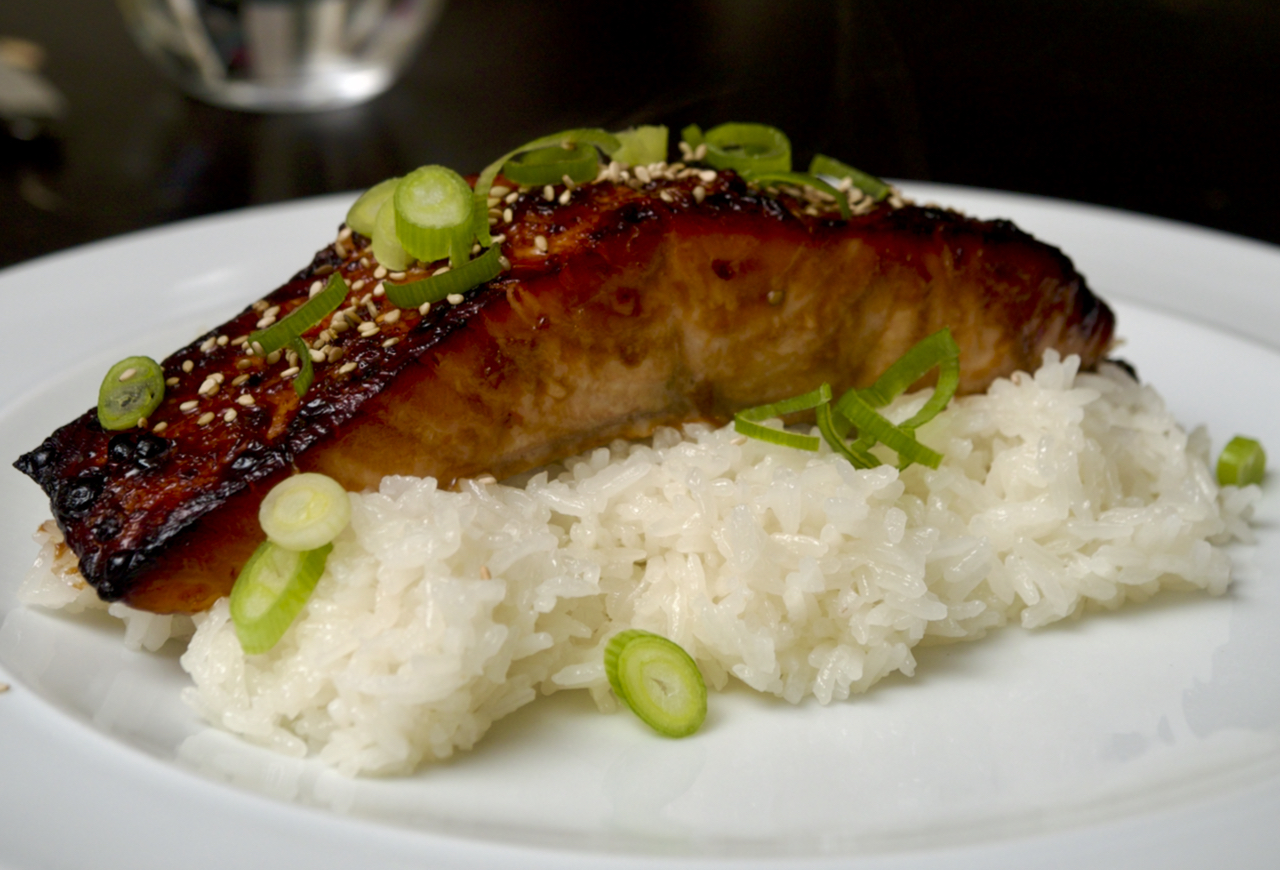
You need to marinade the salmon for 30 minutes or up to 24 hours ahead. After that, it’s dinner in 15 minutes. We served with with some sticky rice and dressed Asian greens.
Wine Suggestion: This works with a good Pinot Gris, like Neudorf’s Tiritiri. An underestimated grape, given the oceans of bland Pinot Grigio sold, but in the right hands … the riper, richer and more textural French styled Pinot Gris is a joy. Neudorf’s version is all about mouth feel: depth, viscosity, and richness while staying deliciously clean and deceptively moreish. And the back-bone is a fresh, salty-stoney texture keeping it all clean and vibrant.
Sticky glazed salmon – serves 2-3
2-3 salmon fillets
rapeseed oil spray
FOR THE MARINADE:
1 tsp finely grated ginger
1 garlic clove, finely grated
1 tbsp soy sauce
2 tbsp oyster sauce
2 tbsp sweet chilli sauce
TO SERVE
sesame seeds
1 scallion, finely sliced
Mix all of the marinade ingredients together in a shallow dish, then add the salmon and turn to coat.
When you are ready to cook, heat the grill to high. Line a grill tray with tin foil and place the salmon fillets on top, skin-side down. Brush with the marinade but don’t pour if over as any on the tin foil will burn, discard any extra.
Put the salmon under the grill, about 15-20 cm away from the heat. Cook for 7 minutes, then remove and spray with the rapeseed oil. Put back under the grill for another 1-3 minutes or until nicely caramelised.
Allow the salmon to rest for 5 minutes before serving with the scallions and sesame seeds scattered over.
(Original recipe from Recipetin Eats Dinner by Nagi Maehashi, Pan MacMillan, 2022.)
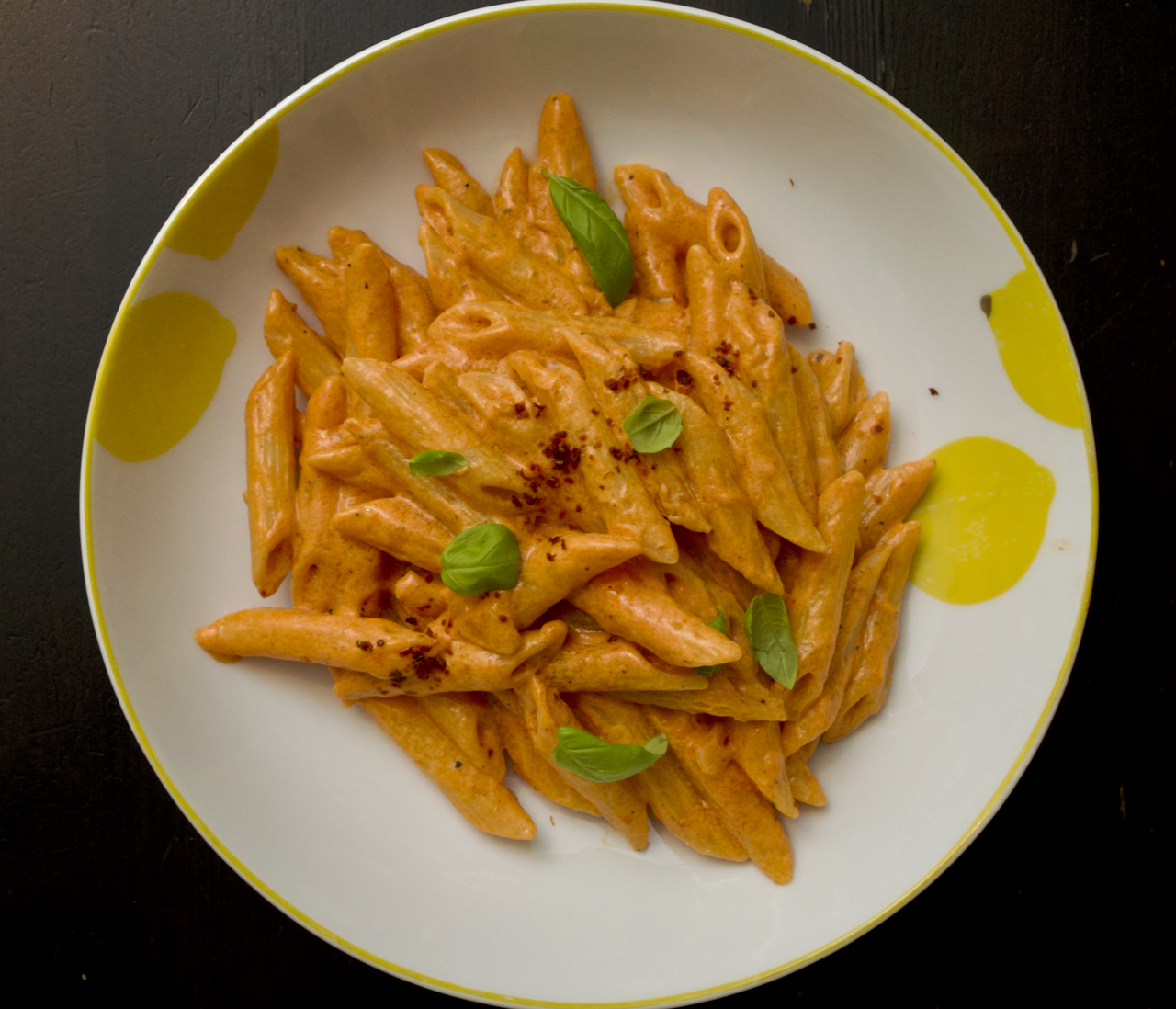
An easy pasta dish from Persiana Everyday by Sabrina Ghayour. Ready in 10 minutes and perfect for midweek.
Wine Suggestion: A crisp and fresh Sartarelli Verdicchio dei Castelli di Jesi Classico which lifts the dish and adds an extra roundness and depth. Easy white peach flavours but with that classic green almond twist at the end that bring both wine and food together.
Penne with spicy tomato & mascarpone sauce – serves 2
200g penne pasta
2 tbsp olive oil
4 big garlic cloves, thinly sliced
2 tbsp tomato purée
150g mascarpone cheese
1 tsp pul biber chilli flakes
2 handfuls of Greek basil – we used some regular basil
Cook the pasta in plenty of salty water according to the timings on the pack.
Meanwhile, warm a frying pan over a medium heat, and add the olive oil. Add the garlic and cook gently until soft and translucent.
Add the tomato purée, mascarpone and most of the chilli flakes, then stir until you have a smooth sauce.
When the pasta is cooked, scoop it out with a slotted spoon and straight into the frying pan with the sauce. Season well with plenty of salt and black pepper. You might need to add a bit more pasta water to loosen to a creamy sauce.
Serve in warm bowls with a sprinkle of pul biber and the basil leaves.
(Original recipe from Persiana Everyday by Sabrina Ghayour, Aster*, 2022.)
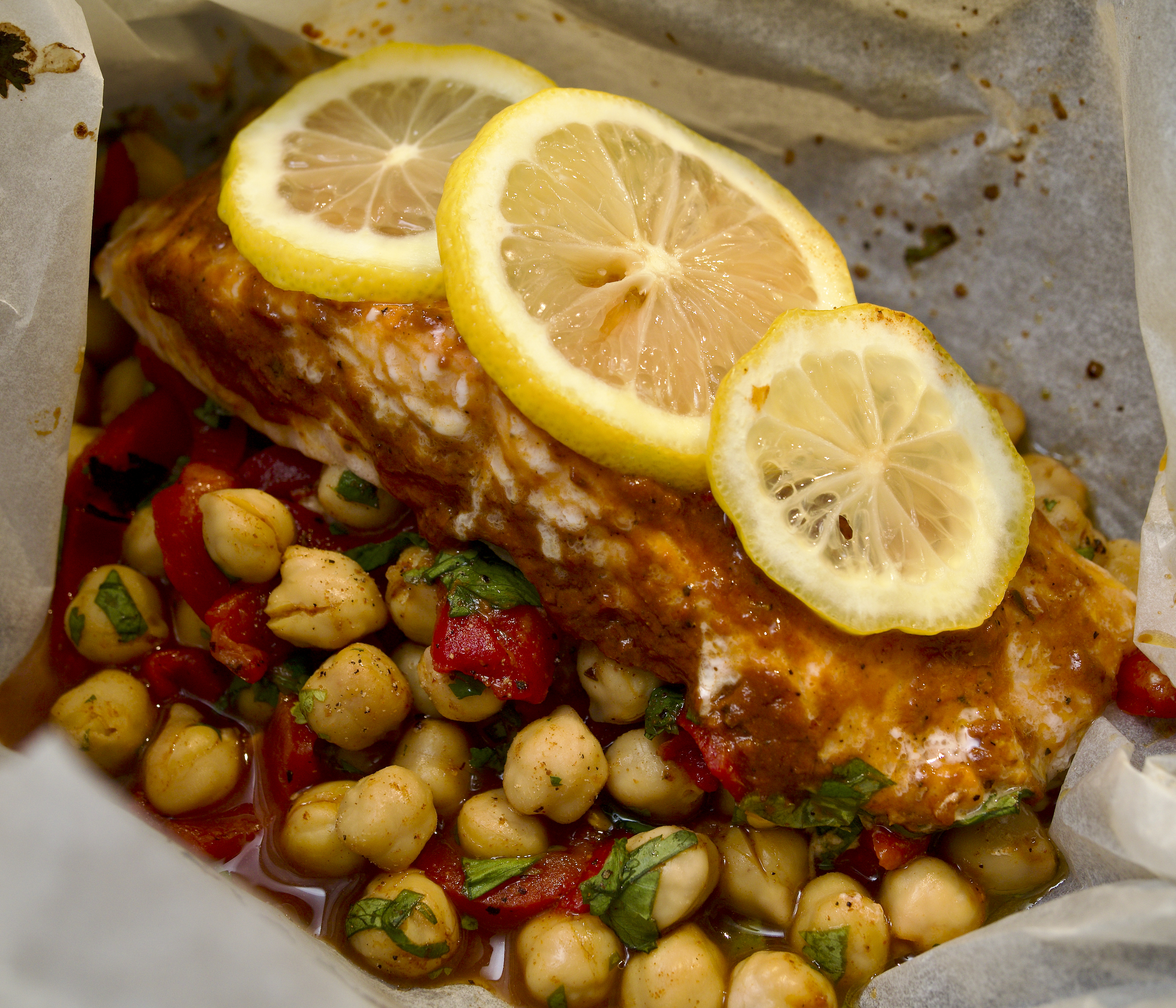
This is very much a weeknight dish but it’s suprisingly good. Baking in a bag means very few dishes to wash which always helps. Serve with a green salad.
Wine Suggestion: try to find a good Vermentino with a medium body, not the richer ones with higher alcohol like you sometimes find from Sardinia and similar. A favoured one at the moment is Domaine Ventenac’s “les Dissidents” Cassandre from Cabardes in southern France.
Baked salmon with harissa and chickpeas – serves 2
1 unwaxed lemon
1 x 400g tin chickpeas, drained and rinsed
1 tsp smoked paprika
1 tsp clear honey
3 tsp harissa paste
150g roasted red peppers from a jar, sliced
15g coriander, roughly chopped
2 salmon fillets, skinned
1 tsp olive oil
Heat the oven to 190C/170C fan/gas 5.
Tear off 2 large sheets of baking paper.
Halve the lemon and cut one half into thin slices.
Toss the drained chickpeas with the smoked paprika, honey, 1 tsp of the harissa paste, the peppers, most of the coriander and seasoning, then divide this between the two sheets of paper.
Season the salmon and spread each piece with 1 tsp of harissa, then place on top of the chickpeas and drizzle with the olive oil. Place the lemon slices on top, then fold over the edges to seal the parcels.
Put the parcels onto a baking tray and bake for 15 minutes or until the salmon is cooked. Open the parcels and scatter over the rest of the coriander, then serve with some salad on the side.
(Original recipe by Tom Mitchell-Dawson in Sainsbury’s Magazine, September 2023.)
The sauce here is fairly spicy but well-tempered by the fishcakes and lots of white rice and some yoghurt if you like. The depth of flavour and balance is superb. You can cook the sauce and prep the kofta mixture in advance.
Wine Suggestion: this works with Grenache – Tempranillo blends, especially if they’re fruit forward and low/no oak like Jesus Romero’s Rubus from rural Aragon. We love this as it’s real hands-off winemaking at it’s best, capturing the essence and energy of the fruit in the vineyard.
Fish koftas in chilli and tomato sauce – serves 4
FOR THE KOFTAS:
500g firm white fish without skin and bones, we used hake
4 scallions, finely sliced
10g dill, roughly choped, plus extra picked fronds to serve
1 green chilli, deseeded and finely chopped
1½ tsp finely grated lemon zest
1 egg, beaten
30g panko breadcrumbs
3 tbsp olive oil
FOR THE TOMATO SAUCE:
15g dried ancho chillies, stems removed
2 tsp caraway seeds, toasted and roughly crushed
1 tbsp cumin seeds, toasted and roughly crushed
6 cloves of garlic, peeled
1 onion, roughly chopped
60m olive oil
1 green chilli, halved and seeds removed
1 tbsp tomato purée
3-4 plum tomatoes, roughly grated and skins discarded
300ml chicken stock or vegetable stock
2 tsp caster sugar
25g fresh coriander, roughly chopped
Make the sauce first. Put the dried chillies into a bowl and cover with lots of boiling water. Leave to soak for 20 minutes, then drain and discard the liquid and the seeds. Roughly chop the chillies and put them into a food processor with two-thirds of the caraway and cumin seeds, the garlic, the onion and 2 tbsp of the oil. Whizz until you have a coarse paste.
Heat 2 tbsp olive oil in a large sauté pan, then add the chilli paste, green chilli and tomato purée. Cook for 7 minutes, stirring frequently, until soft and fragrant. Add the tomatoes, stock, 200ml water, sugar, half the coriander, 1¼ tsp of salt and a good grind of pepper and bring to the boil. Lower the heat and simmer for 15 minutes, then keep warm until needed (or cool and re-heat later).
Meanwhile, make the koftas. Finely chop the fish into ½-1cm pieces. Put them into a large bowl with the scallions, dill, chilli, lemon zest, egg, panko, the rest of the coriander, the remaining caraway and cumin, 1 tsp of salt and plenty of black pepper and mix well to combine. Form into 12 round fish cakes, pressing to compact them so they don’t fall apart.
Heat 1½ tbsp of oil in a large frying pan over a medium-high heat. Add half the koftas and cook for 2½ minutes on each side, or until golden. Transfer to a plate, then repeat with the rest of the koftas.
Bring the sauce to a simmer. Add the koftas, then turn the heat to medium low and cook for 10 minutes. Leave to sit for 5 minutes, then serve with the extra dill.
(Original recipe from Ottolenghi Test Kitchen, Shelf Love by Noor Murad & Yotam Ottolenghi, Ebury Press, 2021.)
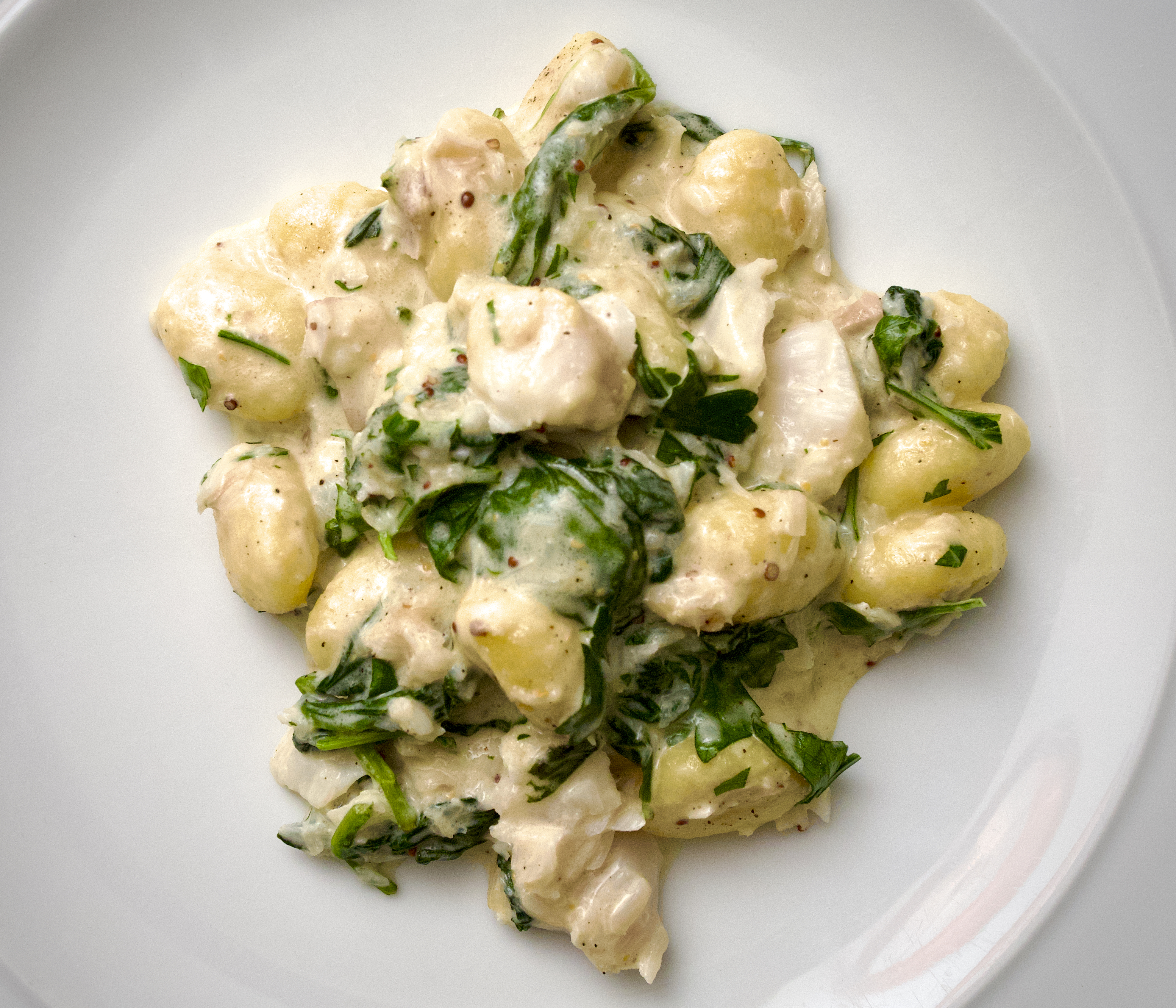
We had planned to cook this outside on a fire pit until Jono lit a blazing inferno and scared us off. It was the excitement of being outside after a year of rain! A simple dish and such a treat.
Wine Suggestion: We just think smoked haddock and a good, oaked Chardonnay are a match, with some of the best value and superb quality coming from the new world. Tonight was Neudorf’s Tiritiri Chardonnay which was elegant and rounded, with a supreme balance, hints of smoky oak and layers of texture, nuts and finishing fresh and vibrant. Under-rated and such a treat.
Smoked haddock and spinach gnocchi – serves 2
100ml double cream
a few big handfuls of young spinach, roughly chopped
200g skinless smoked haddock fillet, cut into bitesize pieces
200g fresh gnocchi (from the fridge section)
1 tsp grainy mustard
25g mature cheddar cheese, grated
a handful of flat-leaf parsley, leaves picked and chopped
Put a large, deep frying pan over a medium-high heat.
Pour the cream into the pan with a few tablespoons of water. Add the spinach and fish and cook for a minute or two. Add the gnocchi, mustard and cheese and stir gently. Add a bit more water if the sauce is too thick.
When everything is heated through, remove the pan from the heat and add plenty of black pepper. Sprinkle with the chopped parsley to serve.
(Original recipe from Outside by Gill Meller, Quadrille, 2022.)
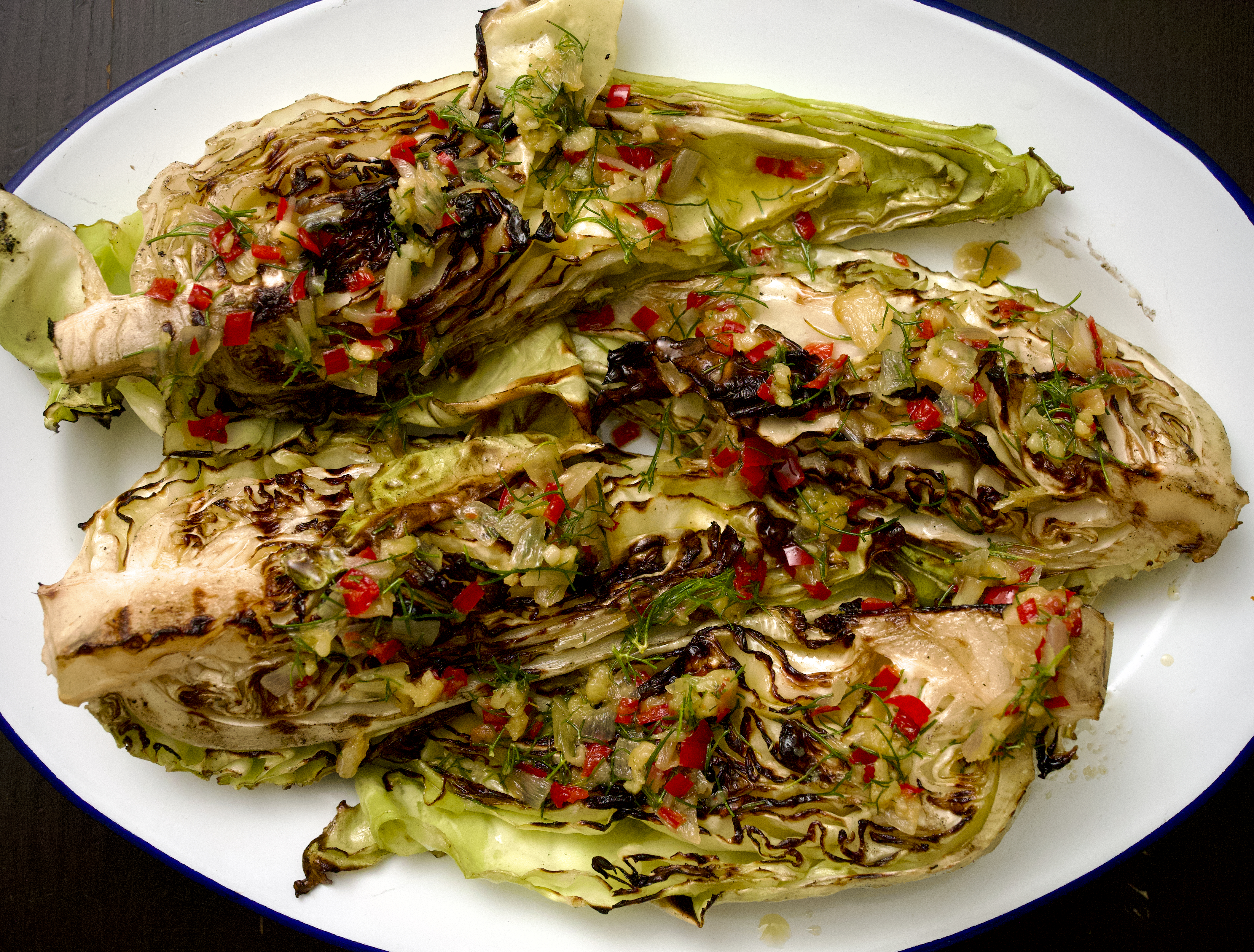
Typing this recipe to the sound of lashing rain and howling wind but better weather is coming and you might be inspired to barbecue a cabbage. You will be very glad you did.
Barbecued cabbage with chilli and garlic butter – serves 2 as a side
1 pointed/hispi cabbage, cut into 4 wedges
2 tbsp olive oil
FOR THE DRESSING:
1 long shallot, peeled and finely chopped
1 red chilli, halved, desseded and finely sliced
3 cloves of garlic, peeled and crushed
50g butter
½ tsp flaky sea salt
a small bunch of dill, fronds roughly chopped
Brush the cut surfaces of the cabbage wedges with the olive oil, then set them cut-side down on a very hot barbecue to char for about 4 minutes. Turn to char the other cut surface for 4 minutes, then set the wedges on the rounded sides for a final 4 minutes. Remove to a platter and sprinkle with flaky sea salt.
Meanwhile, combine the shallots, chilli and garlic with the butter and put over a low heat to melt the butter and lightly cook the vegetables. Cook for about 12-14 minutes or until the shallots are soft and translucent. Remove from the heat and mix in the salt and chopped dill. Pour the butter dressing over the warm cabbage and serve.
(Original recipe from Chasing Smoke: Cooking Over Fire Around the Levant by Sarit Packer and Itamar Srulovich, Pavilion, 2021.)
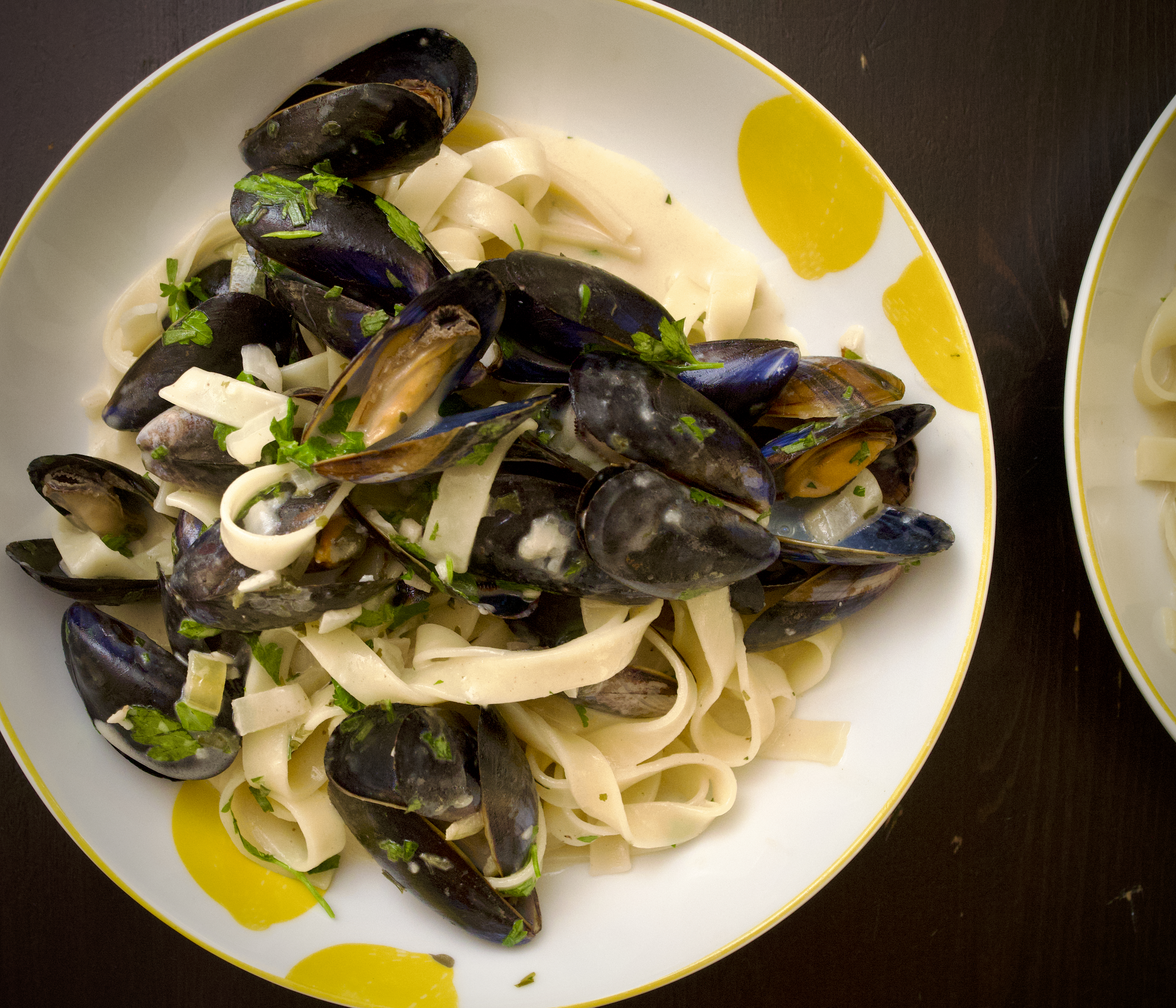
This is made with packets of mussels in garlic butter sauce which you can easily pick up in the supermarket on your way home – no need to make it in time for the fish shop and no fiddly prep. You might want a bit of crusty bread to mop up the sauce.
Wine Suggestion: We couldn’t go past a good Muscadet and with ever greater choices out there we’d recommend you explore beyond some of the classic cuvées being offered. Jérémie Huchet’s Clos les Montys is an unique terroir with some very old vines. Not within the Sévre et Maine appelation this could easily be overlooked, but you get something special in the glass: aromas of lemon, jasmine, and pears with hints of a fresh herb. Juicy, well-balanced and elegant, it finishes very long and refreshing.
Tagliatelle with mussels & crème fraîche – serves 4(easily halved)
300g dried tagliatelle
1 large onion, finely chopped
2 tbsp olive oil
150ml dry white wine
200ml crème fraîche
2 x 450g packs mussels in garlic sauce (we used Carr & Sons from Dunnes)
a good handful of flat leaf parsley, roughly chopped
2 tbsp chopped tarragon
Heat the olive oil in a deep frying pan, then add the onion and cook gently for about 10 minutes until softened and starting to colour. Pour in the wine, turn up the heat and bubble until it has almost evaporated.
Meanwhile, bring a large pan of salty water to the boil and cook the pasta according to the timings on the pack.
Add the crème fraîche to the onions and bring to the boil, then tip in the mussels and cook for about 5 minutes until piping hot and open (chuck any that don’t open away). Drain the pasta and return to the pan and tip in the mussel mixture. Stir in the herbs and serve with some crusty bread if you like.
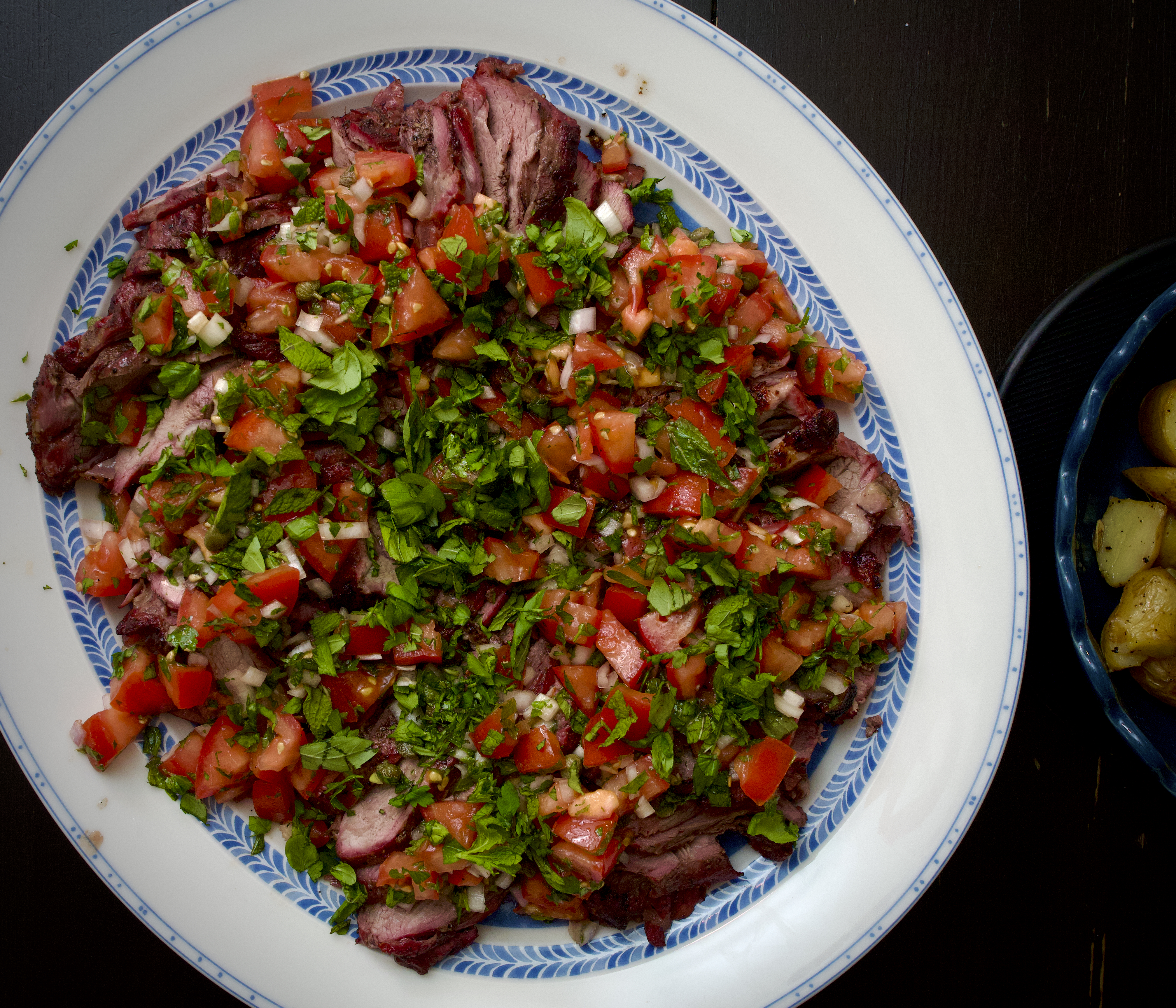
It’s last chance saloon if you want to cook this dish before both the tomatoes and weather turn rubbish. The marinade is added after you cook the lamb.
Wine Suggestion: We think barbecued lamb goes really nicely with Cabernet Franc, so a good excuse to open a bottle of our favourite wine: Chateau du Hureau’s Saumur-Champigny “Tuffe”.
Barbecue Lamb with Tomato & Capers – serves 6
1.5kg butterflied leg of lamb
FOR THE MARINADE:
3 tomatoes, diced
2 large shallots, finely chopped
1 tbsp capers, rinsed
a small bunch of parsley, chopped
a small bunch of mint, chopped
a small bunch of basil, chopped
1 lemon, juiced
2 tbsp olive oil
Mix the ingredients for the marinade together, keeping a small handful of herbs aside to garnish at the end.
Get your barbecue going and wait until the flames have died down. Move the coals to the sides and put a drip-tray in the middle, then BBQ the lamb for 20 minutes on each side.
When the lamb is cooked to your liking, set it on a platter and spoon over the marinade. Cover loosely with foil and leave to rest for 20 minutes. Slice and serve with the marinade and the rest of the herbs.
(Original recipe by Adam Bush & Janine Ratcliffe, Olive Magazine, August 2017.)
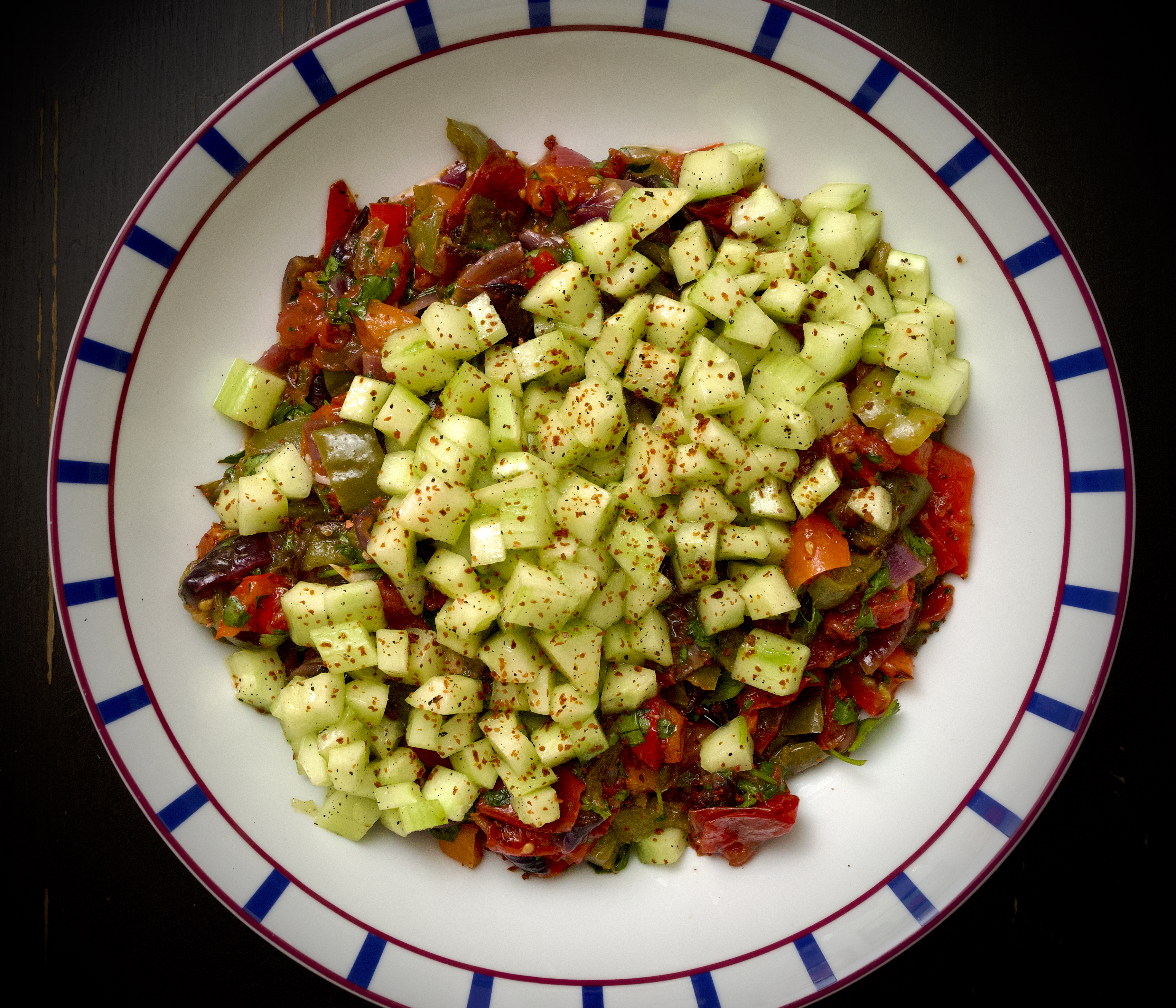
You can prep this salad in advance and serve warm or at room temperature. Jam-packed with flavour and a great side dish for a barbecue or roast meat.
Roasted pepper salad with cucumber and herbs – serves 4 as a side dish
4 green peppers (600g), cut into 4cm pieces
2 red peppers (300g), cut into 4cm pieces
4 vine tomatoes (400g), quartered
2 small red onions (200g), roughly cut into 3cm pieces
1 green chilli, stem removed and left whole
6 large cloves of garlic, peeled
6 tbsp olive oil
1½ tbsp lemon juice
10g parsley, roughly chopped
10g coriander, roughly chopped
1 cucumber, peeled, deseeded and cut into 1cm cubes
¾ tsp Urfa chilli flakes
Heat the oven to 230C fan.
Put the peppers, tomatoes, red onion, chilli and garlic into a large bowl. Add 4 tbsp olive oil, ¾ tsp of salt and plenty of black pepper. Toss well to combine.
Line to large baking sheets with baking parchment. Spread the vegetables out over the trays and roast for about 30 minutes, stirring once or twice, until softened and charred.
When cool enough to handle, roughly chop the vegetables and transfer to a bowl with the lemon juice, herbs and ½ tsp salt and plenty of black pepper.
In a separate bowl, toss the cucumber with 2 tbsp of oil, ¼ tsp of salt and plenty of black pepper.
Spread the roasted pepper mixture out over a platter. Spoon over the cucumber and sprinkle with the chilli.
(Original recipe from Ottolenghi Test Kitchen: Shelf Love, Ebury Press, 2021.)
We are never without tins of tuna – Ortiz or Shines are great – and always in olive oil. This sauce takes a while but it’s easy and tastes delicious. The sauce is flavoured with a parmesan rind – you should always keep these as they freeze well and add great savoury flavours to dishes like this, a meaty ragú, or soups.
Wine Suggestion: A little left field and possibly only available when visiting the winery: Chateau du Hureau Blanc de Noirs 2022. A white made from 100% Cabernet Franc from Saumur because the usual vineyard of Chenin Blanc was hit by bad frosts, and the owner Philippe wanted some white to drink … plus he couldn’t resist having a play in the winery at the same time. Fresh but with a real texture with hints of phenolics. Hints of yellow plum, lightly floral, slightly nutty and touches of apple. It really came into it’s own with the food.
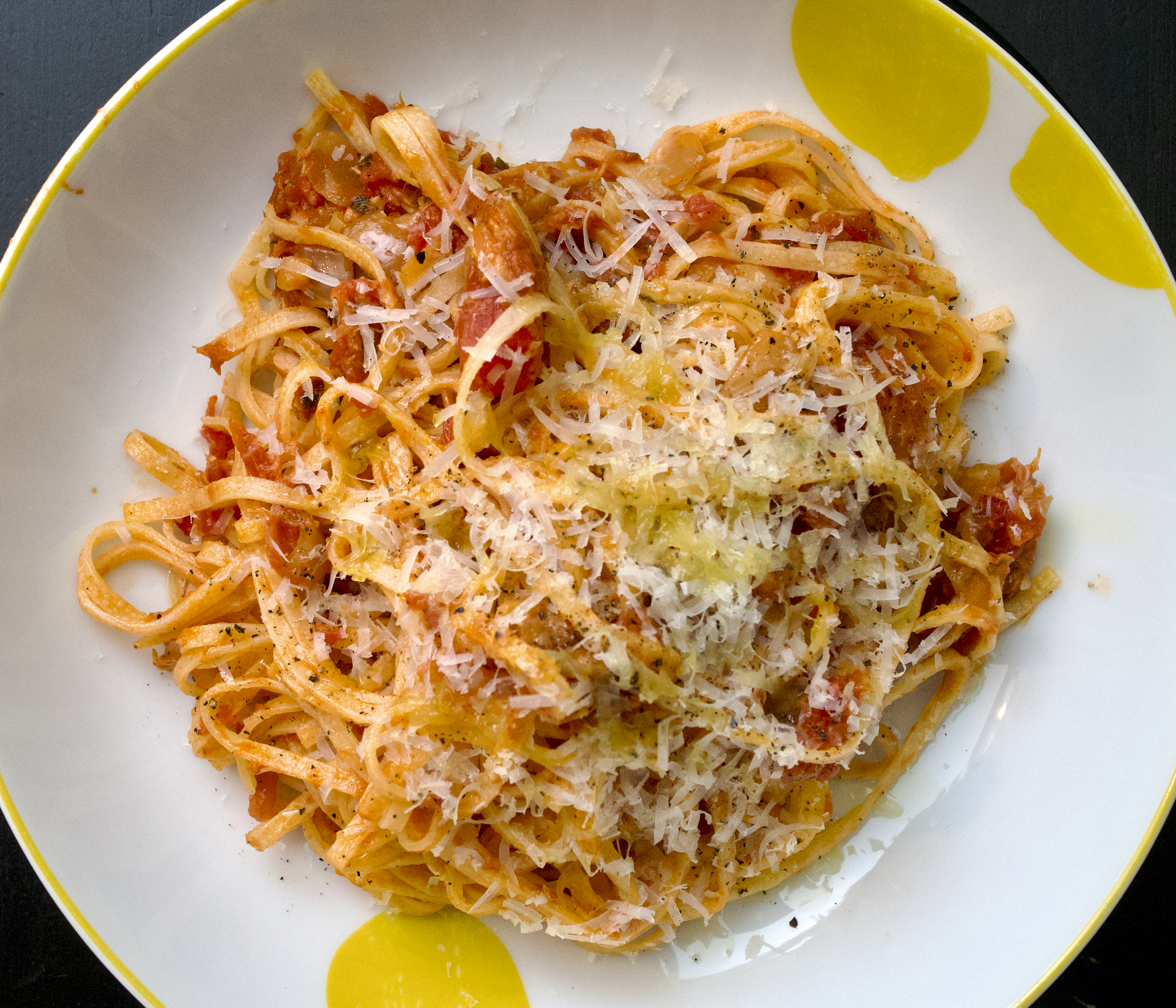
Linguine con tonno – serves 4 to 5
60ml extra virgin olive oil, plus extra to serve
1 onion, diced
3 cloves of garlic, finely chopped
1 Parmesan rind
1 tsp dried oregano
1 tbsp tomato purée
2 x 400g tins chopped tomatoes
300g tinned tuna, well drained
500g dried linguine
freshly grated Parmesan, to serve
Put the olive oil in a large pan over a medium heat. Add the onion and some salt, then allow to soften for about 5 minutes without colouring. Add the garlic, Parmesan rind and oregano. Cook for another 2 to 3 minutes, then add the tomato purée and cook for another minute.
Add the tinned tomatoes, season with more salt and bring to the boil, turn the heat down as low as it will go and cook for a couple of hours, stirring every 20 minutes or so. If the sauce starts to stick add a splash of water.
Add the tuna to the tomato sauce, then cook the linguine in lots of salty boiling water. Drain the pasta and return it to the pan. Tip in the tuna sauce and mix through. Serve drizzled with your best olive oil and sprinked with grated Parmesan and black pepper.
(Original recipe from Rick Steain at Home, BBC Books, Penguin, 2021.)
A ‘magic’ recipe inspired by the lovely book Recipetineats Dinner by Nagi Maehashi. The magic is that you bake the whole thing in one tray and it tastes just like any excellent chicken fried rice. Give it a go.
Wine Suggestion: This dish was well enjoyed with an Au Bon Climat Pinot Gris/Pinot Blanc from Santa Barbara in California, though we suspect a good Alsace Pinto Gris, or German Grauburgunder will work just as well. A generosity and breadth in the palate, underscored by a lovely texture allowing this wine to work with, but not overpower.
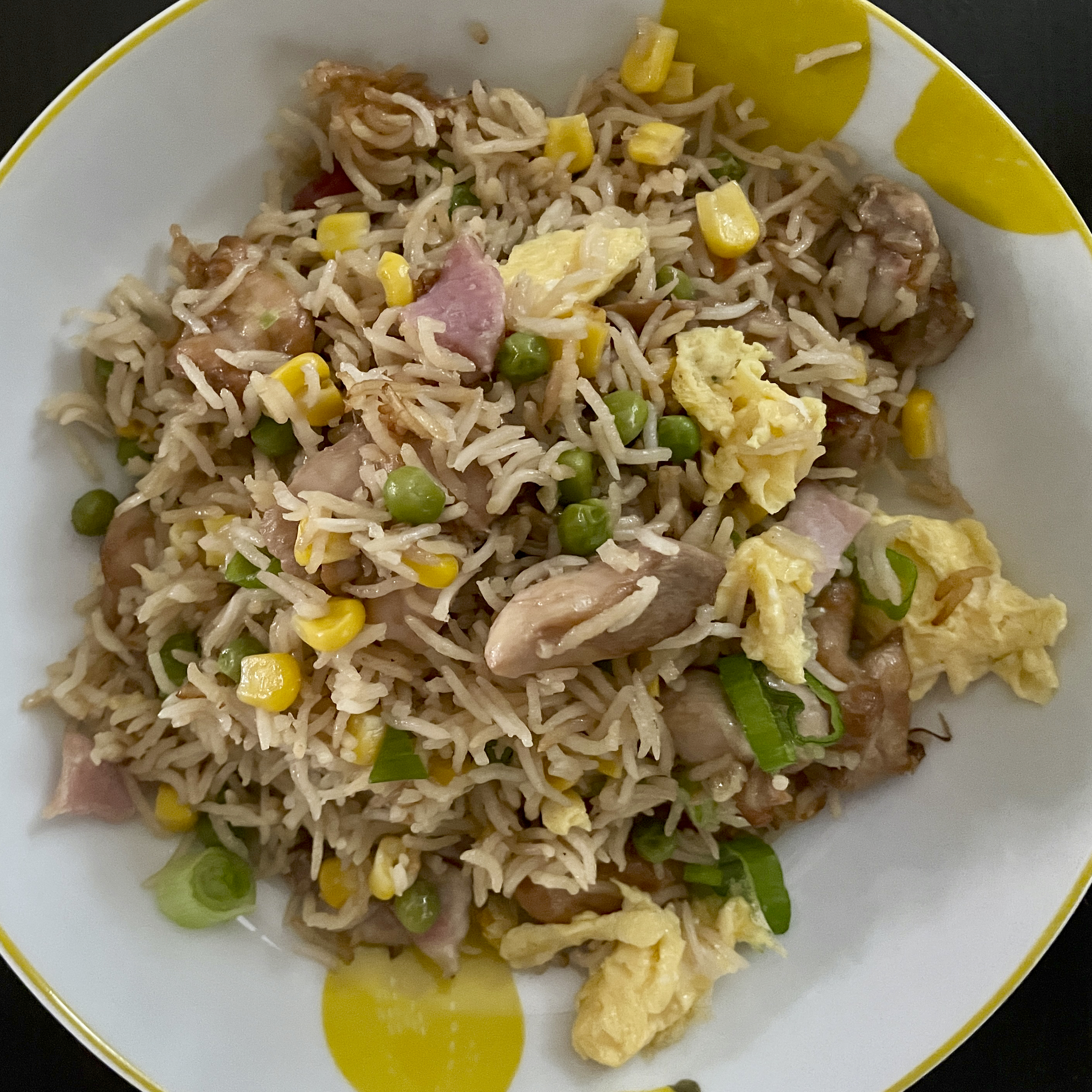
Chicken fried rice – serves 4
300g basmati rice (or long-grain rice)
400ml chicken stock (from a stock pot will be fine)
2 ½ tbsp light soy sauce
2 tbsp Shaoxing wine
3 garlic cloves, crushed (save 1 to add a bit later)
¼ tsp white pepper
100g frozen peas
100g frozen sweetcorn
100g bacon lardons, or chop up some bacon yourself
500g chicken thigh fillets, cut into small pieces – about 1.5cm
1 tbsp oyster sauce
4 tsp sesame oil
2 eggs, scrambled
1 scallion, finely chopped
You will need a deep metal roasting tin – about 23 x 33cm.
Heat the oven to 200C/180C fan.
Put the rice, chicken stock, 1 tbsp light soy sauce, 1 tbsp Shaoxing wine, 2 of the crushed garlic cloves, and the white pepper into the roasting tin. Give the tin a gentle shake to make sure the rice is distributed evenly and that it’s submerged in the stock. Sprinkle the frozen peas and sweetcorn over the top in an even layer, then sprinkle the bacon on top of that. Cover tightly with foil and bake in the oven for 25 minutes.
Meanwhile, put the chicken into a bowl and add 1 tbsp oyster sauce, 1 tbsp Shaoxing wine, 1 tbsp light soy sauce, 2 tsp of sesame oil and the last clove of crushed garlic. Stir to combine then set aside to marinate.
Remove the tray from the oven after the initial 25 minutes, gently remove the tinfoil and set it aside for later.
Spread the chicken in an even layer over the contents of the baking tray, then return to the oven and bake for another 20 minutes, uncovered.
Remove the tray from the oven and cover with the reserved tin foil. Leave to rest for 10 minutes.
Gently break up the rice with a wooden spoon and mix with the other ingredients.
Add the scrambled egg and sprinkle with 2 tsp sesame oil and the chopped scallion, then gently toss again before serving.
(Original recipe from Recipetineats Dinner by Nagi Maehashi, Bluebird, 2023.)
We can’t get enough of St Tola, a delicious goats’ cheese from County Clare. Here it is with some courgettes and mint in a summery risotto.
Wine Suggestion: Something suitably summery and white, like Domaine Ventenac’s “Marie”. Made from Vermentino and Colombard this tastes of lemons with a hint of grapefruit plus white flowers, touches of green apples and an under-current of salty texture. Zippy and round with a fun and easy finish.
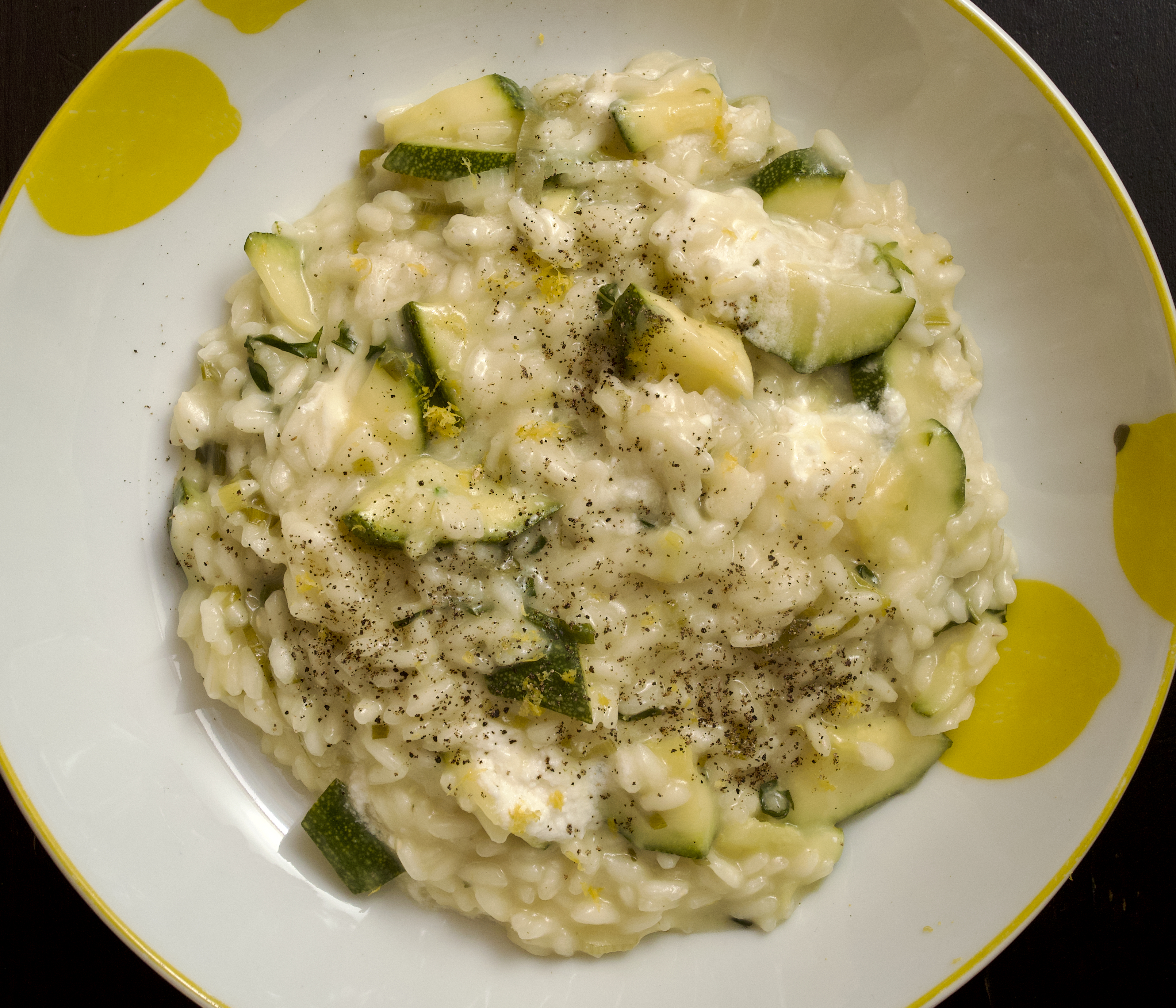
Courgette Risotto with St Tola & Mint, serves 4
1.5 litres vegetable stock
2 tbsp extra virgin olive oil
a large bunch of scallions, very finely sliced
350g Carnaroli rice
a glass of dry white wine, Russel Norman suggests Sauvignon Blanc but we used a Vermentino-Colombard blend
2 medium courgettes, cut into quarters lengthways, then sliced into 3cm lengths
150g St Tola goats’ cheese
a large handful of mint leaves, roughly chopped
a large knob of butter
the zest of ½ a lemon
Heat the stock and leave it simmering gently.
Heat the olive oil in a large, heavy saucepan over a gentle heat. Gently sauté the scallions with a good pinch of salt for about 10 minutes, until they are soft and shiny but not browned. Mix in the rice and make sure all the grains are coated in the oil. Turn the heat up a bit a pour in the wine.
Start adding a ladeful of stock at a time and gently stirring until absorbed before adding the next one. Keep going like this for 8 minutes.
Add the courgettes and stir to combine, then keep adding the stock for another 6 minutes. Crumble half the goat’s cheese and mix it in along with the mint. Stir well and cook for another 4 minutes or until the rice is al dente. Season to taste.
Remove the pan from the heat and add the butter and remaining crumbled goat’s cheese. Fold these gently into the risotto, then cover and rest for a minute. Serve in warm bowls with some black pepper and lemon zest.
(Original recipe from Venice by Russell Norman, Fig Tree, 2018.)
Wine Suggestion: It was a rare, for this year, sunny and warm day in Dublin that coincided with us making this dish so we straight away opened a Chateau Léoube Rosé from Provence that we had chilling for this moment (for far too long!). A properly dry Rosé with gentle red fruits and a long, fresh and savoury finish.
Pork and chorizo paella – serves 4
2 tbsp rapeseed oil
1 onion, finely sliced
1 clove of garlic, finely sliced
2 large vine tomatoes, grated (throw away the skin)
1 red pepper, finely sliced
225g Iberico pork steaks (we used Irish pork butt though Dunnes sometimes has Iberico pork steaks)
100g fresh chorizo, tear off the casing and crumble roughly or cut into small chunks
1 tbsp tomato purée
250g paella rice
a good pinch of saffron, soaked in a little just-boiled water
1 tsp smoked paprika
½ tsp fresh thyme leaves
600ml hot chicken stock
1 x 290g jar of grilled artichokes in olive oil, drained and quartered
1 tbsp chopped flat-leaf parsley
1 lemon, cut into wedges
Heat the oven to 180C/350F/Gas 4.
Put the oil into a large shallow casserole dish with a lid (if you don’t have one of these use a roasting tin and use a double layer of tinfoil to cover). Add the onion, garlic, grated tomatoes, red pepper, pork chorizo and tomato purée. Stir gently to combine, then roast, uncovered, for 20 minutes.
Stir in the rice, saffron, paprika and thyme, then pour in the stock and season generously. Stir gently to combine. Arrange the artichokes on the top.
Turn the oven down to 160C/325F/Gas3.
Cover the casserole with a tight lid or a double thickness of foil. Bake for an hour or until the stock has been absobed and the paella is starting to catch at the edges.
Serve with the parsley and lemon wedges scattered over the top.
(Original recipe from More Midweek Meals by Neven Maguire, Gill Books, 2022.)
Our favourite vegetarian cookbook at the moment is East by Meera Sodha. This is an Indian main course dish but it’s like a soup and works well as both a mid-week dinner, and in a flask for lunch the next day. Also vegan and gluten-free if this is useful information for you. Serve with crusty bread.
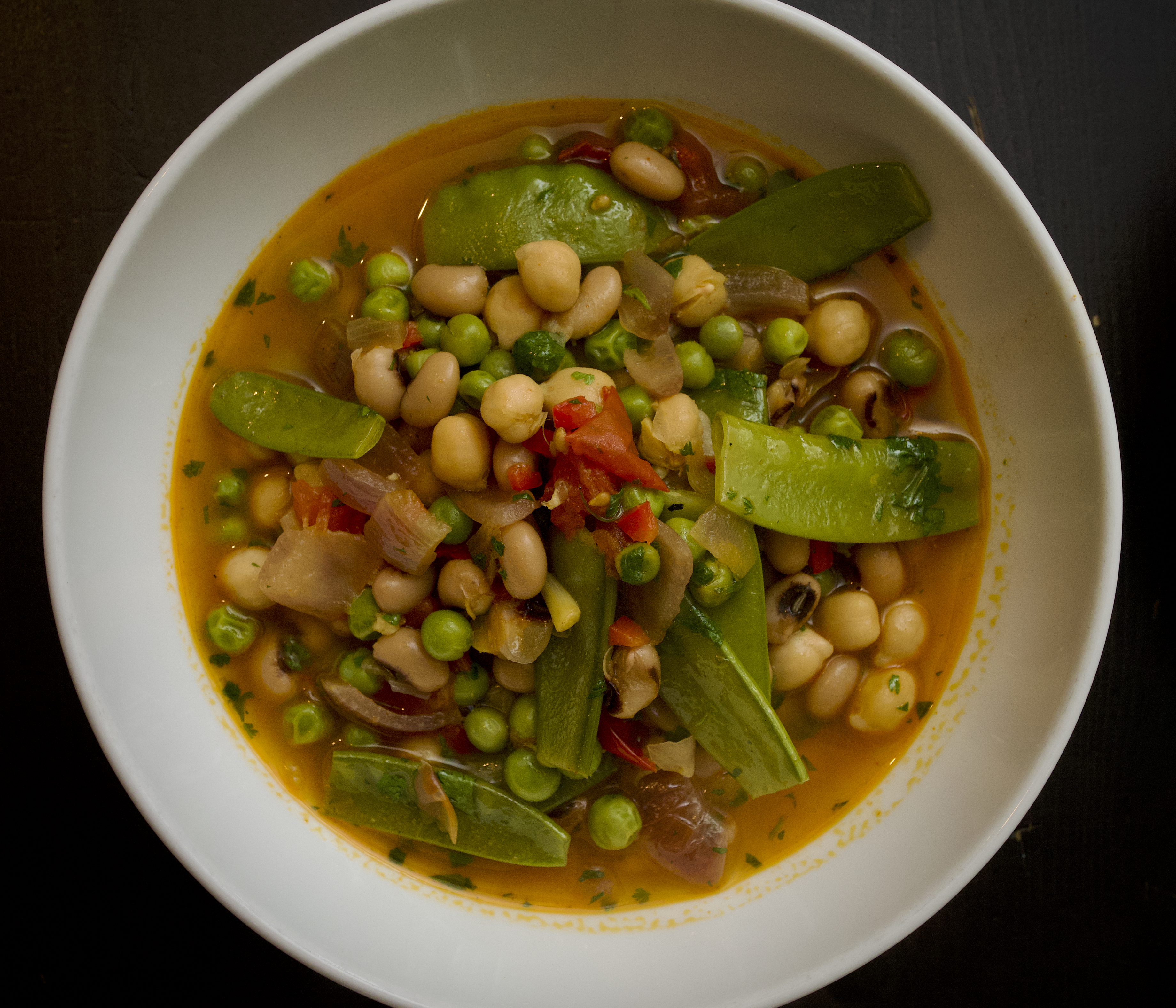
Black-eyed bean and chickpea usal – serves 4
4 tbsp rapeseed oil
2 red onions, chopped
2 long green chillies, very finely chopped
4 cloves of garlic, crushed
2 large vine tomatoes, chopped
1¾ tsp salt
1 tsp Kashmiri chilli powder
1 tsp garam masala
1 tsp ground cumin
½ tsp ground turmeric
1 x 400g tin of black-eyed beans, drained
250g frozen peas, defrosted
1 x 400g tin of chickpeas, drained
200g mangetout
1 tbsp lemon juice
a handful of coriander leaves, finely chopped
Heat the oil in a saucepan over a high heat. Add the onion and chillies and cook for about 10 minutes, then add the garlic and cook for a minute more.
Add the tomatoes and cook for about 5 minutes or until they have broken down, then add the salt and spices and stiry-fry for another minute.
Stir in the black-eyed beans, peas, chickpeas and mangetout and continue cooking for 5 minutes.
Add the lemon juice and coriander, then taste and season with more salt if needed.
(Original recipe from East by Meera Sodha, Penguin, 2019.)





 Jono & Jules do food & wine