Feeds:
Posts
Comments

Posts Tagged ‘Easy’

You too can make a pasta cake like this on a Monday, trust us. Who knew it would be so easy to get cooked rigatoni to sit upright in a cake tin? The results are fun and although it will fall apart when you start serving, you can get your insta photo beforehand.

Wine Suggestion: Something fun, red and Italian like Umani Ronchi’s Rosso Conero Serrano. A blend of smooth Montepulciano and vibrant Sangiovese, this wine is fun and easy, but tied together with energy and vitality.

Torta di rigatoni – serves 4

  • butter, to grease the tin
  • 4 tbsp breadcrumbs
  • 325g rigatoni pasta
  • handful of basil leaves, finely chopped
  • 250g mozzarella, cubed (buy a block of mozzarella, not buffalo)
  • 50g grated Parmesan

FOR THE TOMATO SAUCE:

  • 2 tbsp extra virgin olive oil
  • 1 garlic clove, peeled and bashed
  • 2 x 400g tins chopped tomatoes
  • a handful of basil leaves

Heat the oven to 180C/160C fan/gas 4.

Line the base and sides of a loose-bottomed, 20cm round cake tin with baking parchment, then butter and coat in the breadcrumbs.

Get the sauce going first. Heat the olive oil in a medium saucepan over a medium heat, then add the garlic clove and cook for about a minute. Add the chopped tomatoes, most of the basil leaves and season well with salt. Cover and simmer for 25 minutes, stirring occasionally.

Meanwhile, cook the pasta in lots of boiling salty water until al dente. Drain well, then mix with the chopped basil, half the mozzarella, some black pepper, half the tomato sauce (throw away the garlic) and half of the Parmesan. Leave to cool until the pasta is cool enough to handle.

Place the rigatoni upright in the cake tin. Pour over the remaining tomato sauce, then scatter over the rest of the mozzarella and Parmesan. Bake for 25 minutes, until golden. Leave to rest for 5 minutes before attempting to release from the tin, then scatter over a few basil leaves to serve.

(Original recipe by Gennaro Contaldo IN BBC Good Food Magazine, April 2020.)
Read Full Post »

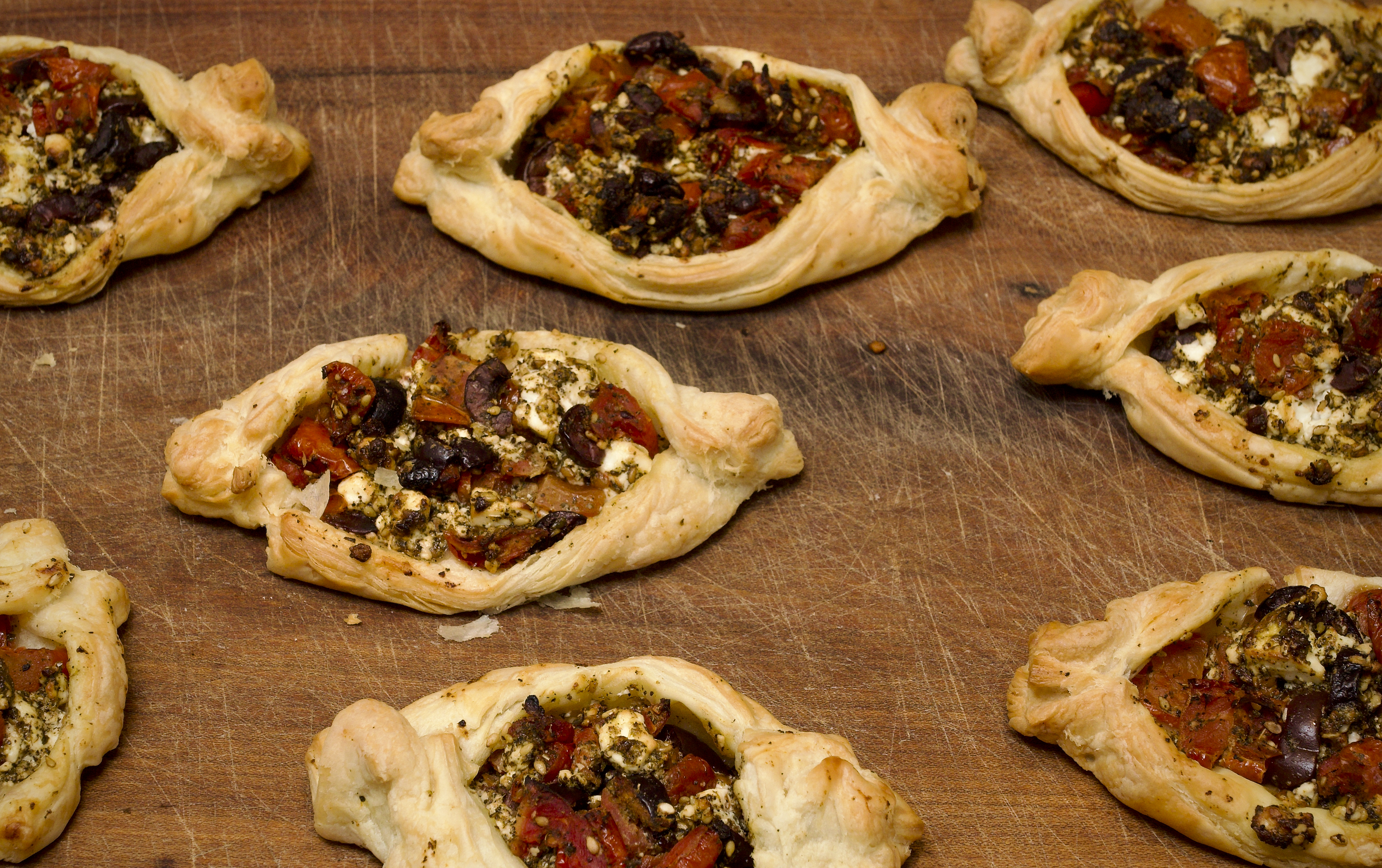
We rarely make a proper starter but we do like nibbles that you can eat in your hand with a drink. These pastries are inspired by Sabrina Ghayour and are particularly tasty.

Wine Suggestion: At this time of year we look out for savoury and dry whites, and from Crete we chose an Assyrtiko from Nikos Karavitakis. His Nomas cuvee is crisp, dry, appley citrus with a stony salinity and savoury finish; just perfect for a salty, savoury, herby pastry like this. Sunshine on a plate, and in a glass.

Za’atar, tomato, olive & feta pastries – makes 9

  • 1 x 320g ready-rolled puff pastry sheet
  • 150g sunblush tomatoes in oil, drained and patted dry with kitchen paper, then roughly chopped
  • 200g feta cheese, crumbled
  • 75g pitted Kalamata olives, roughly chopped
  • 2 tbsp za’atar

Heat the oven to 200C/Gas 6.

Line a large baking tray with baking paper.

Cut the pastry into 3 vertically and then horizontally to give 9 rectangles.

Mix the tomatoes, feta, olives and za’atar together in a mixing bowl and season generously with black pepper.

Divide the mixture between each pastry rectangle. Put spoonfuls in the centre and pat with your fingers to flatten it down.

Take 2 corners of the pastry and twist them together like a sweet wrapper. Repeat with the 2 remaining corners, leaving the filling exposed in the middle. Repeat with each piece of pastry.

Put the pastries onto the lined baking tray and bake for 25 minutes, or until golden brown.

Remove from the oven and cool slightly, they are best served warm.

(Original recipe from Persiana Everyday by Sabrina Ghayour, Aster, 2022.)

Read Full Post »

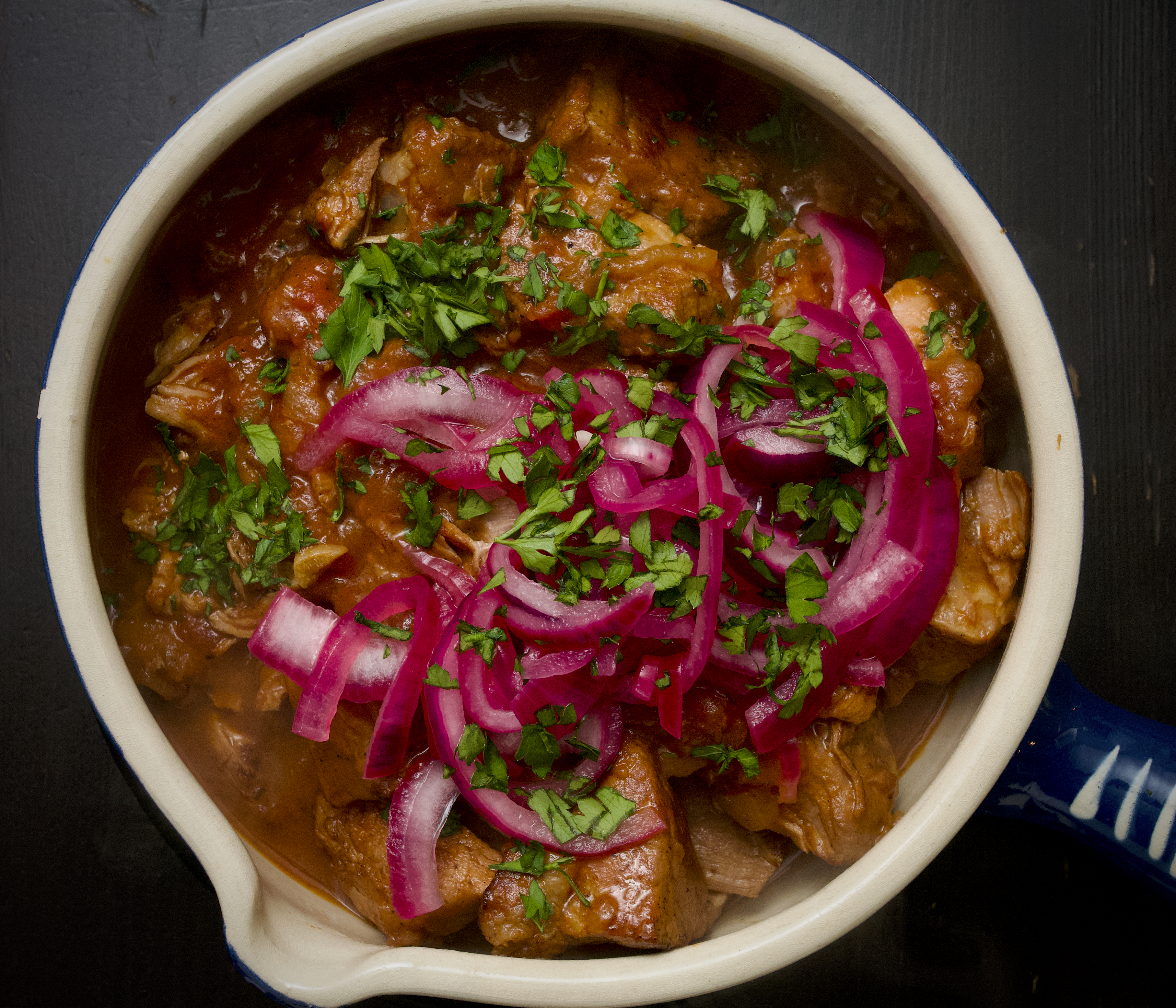
This is an Iberico pork dish inspired by José Pizarro. We did not have any Iberico and substituted Tamworth free-range pork from our butchers instead. This is not quite the same but the dish was still lovely, but of course use Iberico if you can find it.

Wine Suggestion: A dish that begs for a Spanish Garnacha.

Pork shoulder in tomato & sherry sauce with lemony couscous – serves 6

  • 2 tbsp olive oil
  • 1.5kg shoulder of pork (or Iberico pork), cut into 5cm chunks
  • 2 red onions, finely sliced
  • 3 cloves of garlic, finely sliced
  • 2 tsp coriander seeds, lightly crushed
  • 1 tbsp tomato purée
  • 150ml oloroso sherry
  • 1 x 400g tin chopped tomatoes
  • 400ml chicken stock

FOR THE COUSCOUS:

  • 1 red onion, finely sliced
  • juice of 1 lemon
  • 250g couscous
  • 3 tbsp extra virgin olive oil
  • 450ml chicken stock
  • a large handful of flat-leaf parsley, chopped, plus extra to serve
  • 2 preserved lemons, skin finely sliced and pulp discarded
  • ½ cucumber, peeled, deseeded and finely diced
  • 30g toasted flaked almonds

Heat the oven to 160C/140C fan/gas 3.

Season the pork with salt and pepper, then heat the olive oil in a large casserole and fry the pork in batches until well browned on all sides.

Reduce the heat to medium-low, then add the onions to the dish and fry gently for 10 minutes, then add the garlic and coriander seeds and fry for another 5 minutes.

Add the tomato purée and sherry and bubble for 1 minute, then return the pork to the pan and add the tomatoes and stock. Season and bring to a simmer, then cover and transfer to the oven. Cook for 2½-3 hours or until the meat is really tender.

Meanwhile, prepare the couscous. Put the onion into a heatproof bowl, then pour over boiling water from the kettle and leave to sit for 30 seconds. Drain and cool under running water. Tip the onion back into the bowl and squeeze over the lemon juice and season with salt. Set aside.

Put the couscous into a flat dish and stir in the olive oil and a good pinch of salt, then pour over the chicken stock. Stir and cover with clingfilm, then leave to steam for 10 minutes. Remove the cover and fluff the couscous up with a fork. Add the rest of the ingredients and stir to combine.

Serve the pork with the couscous, the pickled onion and its juices, and some extra parsley.

(Original recipe from The Spanish Home Kitchen by José Pizarro, Hardie Grant, 2022.)

Read Full Post »

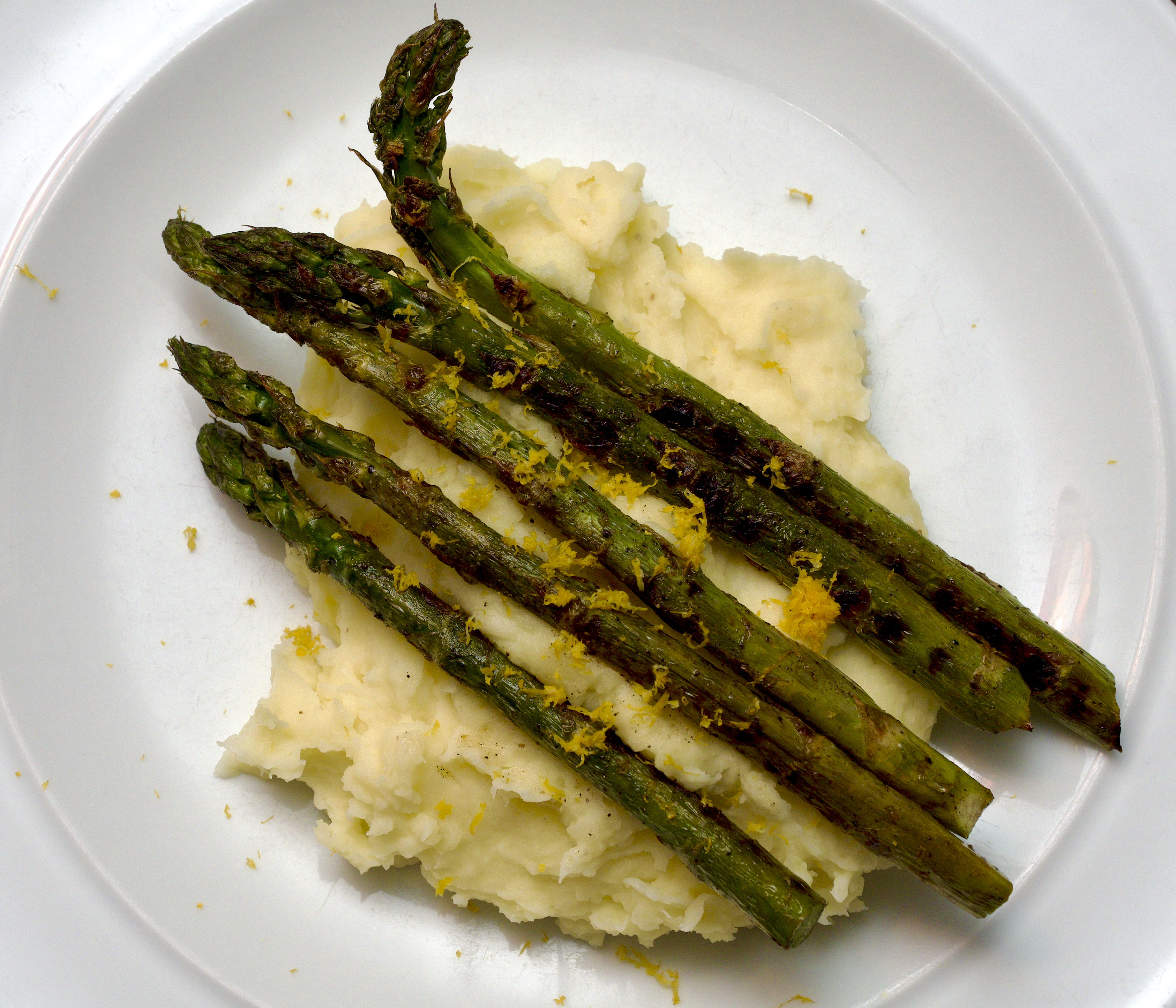
When asparagus arrives we have it with everything and if there’s nothing else with buttery mash.

Wine Suggestion: We know asparagus can clash with many wine grapes, but we enjoyed this with a glass of the Rustenberg Chardonnay, because it just goes so well with the buttery mash.

Asparagus & mash – serves 2

  • 850g potatoes, a good variety for mashing, peeled and cut into even-sized pieces
  • 300ml full cream milk
  • 1 lemon, juiced, plus 1tsp grated zest
  • lots of butter
  • 250g asparagus

Cook the potatoes in boiling salty water for about 20 minutes or until tender, then drain.

Warm the milk in a small saucepan, then set aside.

Put the potatoes into a food mixer with a flat paddle beater. Slowly beat the potatoes, adding the warm milk and lemon juice, until you have a smooth mash, then beat in plenty of butter.

Brush the asparagus with olive oil, then cook for 3-4 minutes on a griddle pan, turning to colour on all sides.

Taste the mash and season with white pepper and salt if needed. Divide the mash between two plates, top with the asparagus and scatter over the lemon zest.

(Original recipe from A Cook’s Book by Nigel Slater, 4th Estate, 2021.)

Read Full Post »

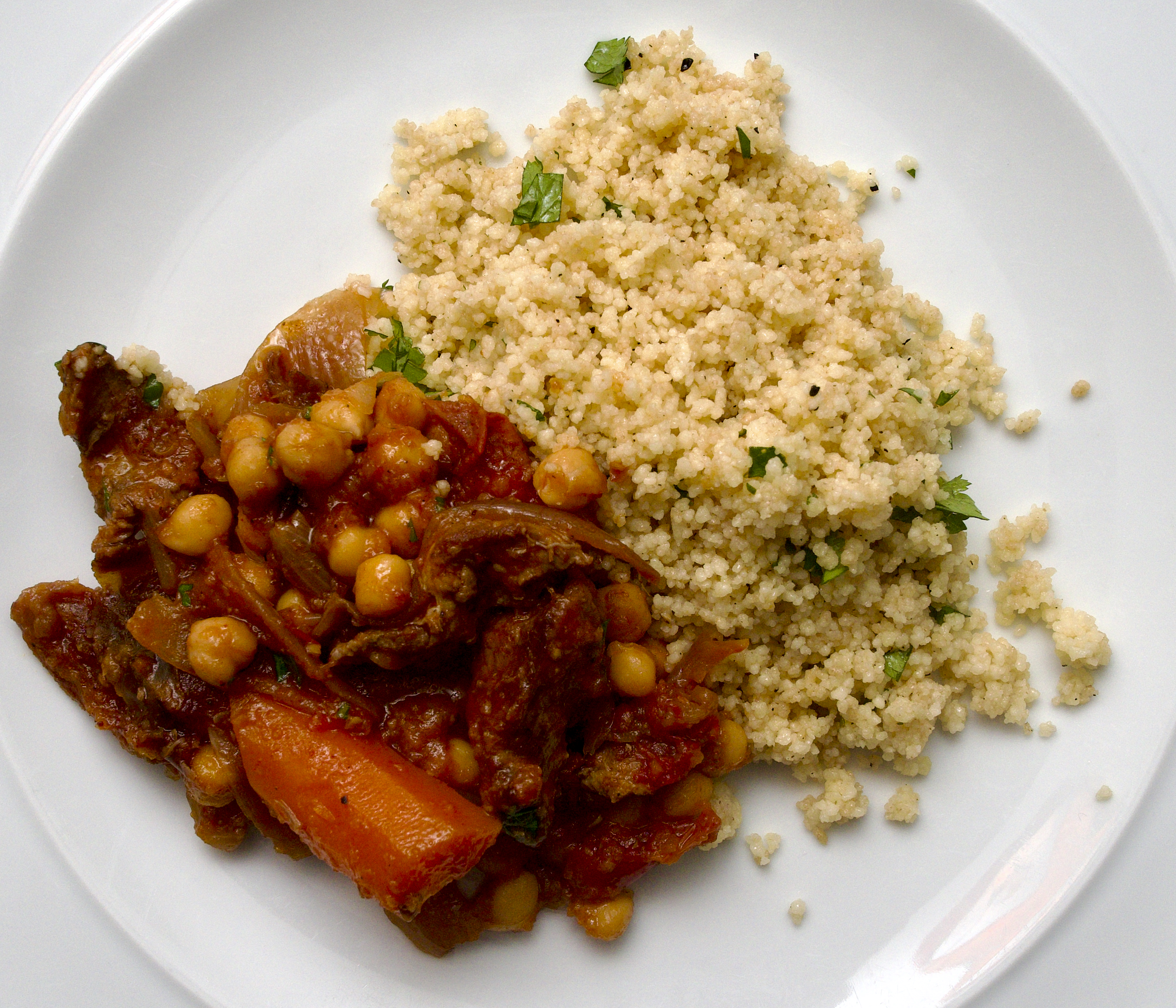
This is delicious and you can prep it all in advance. If you like you can cook for the initial 1 hour and 15 minutes earlier in the day, then bring back to a simmer before adding the chickpeas and dates and putting back into the oven for the final 40 minutes.

Wine Suggestion: We think juicy, but elegant Shiraz from the Clare Valley is hard to beat with lamb and warm spices so we opened Killikanoon’s Killerman’s Run Shiraz and enjoyed the delightful plum and sloe flavours with the elegant spicy tannins adding their own to the dish.

Lamb and chickpea tagine – serves 6

  • 1 tbsp olive oil
  • 750g lamb neck, cut into chunks and seasoned well
  • 4 carrots, peeled and cut into chunky pieces
  • 1 red onion, cut into wedges
  • 400ml chicken stock, plus extra to make the couscous
  • 400g tin cherry tomatoes
  • 1 cinnamon stick
  • 8 medjool dates, pitted and halved
  • 660g jar chickpeas, drained and rinsed
  • 300g couscous
  • 50g butter, diced
  • a large bunch of coriander, leaves picked and stems reserved for the spice paste

FOR THE SPICE PASTE:

  • 1 small red onion, roughly chopped
  • 3 cloves of garlic, roughly chopped
  • a walnut-sized piece of ginger, roughly chopped
  • 2 tsp ground cumin
  • 2 tsp paprika
  • 4 cloves, ground
  • 4 allspice berries, ground
  • 2 tsp mild chilli powder
  • 1 lemon, zested and juiced
  • 2 tbsp olive oil
  • a large bunch of coriander stalks, reserve the leaves to add at the end

Heat the oven to 190C/fan 170C/gas 5.

Put all of ingredients for the spice paste into a small food processor and whizz to a paste.

Heat the olive oil in a large, heavy casserole and brown the lamb in batches until well browned all over. Remove with a slotted spoon and set aside.

Add the spice paste to the casserole and cook for a few minutes, until fragrant. Add the carrots, red onion, chicken stock, tinned tomatoes and cinnamon stick. Then stir in the browned lamb. Bring to a simmer, then cover with a lid and cook in the oven for 1 hour 15 minutes.

Stir in the dates and chickpeas and return to the oven for a further 40 minutes.

To make the couscous, put the couscous into a heatproof bowl and add the diced butter and some seasoning. Add enough just-boiled stock to cover, then cover the bowl with a plate or cling film and leave to steam for about 10 minutes. Fork through to separate the grains then stir some chopped coriander leaves. Scatter the rest of the chopped coriander leaves over the lamb and chickpeas before serving.

(Original recipe by Janine Ratcliffe, in Olive Magazine, January 2020.)

Read Full Post »

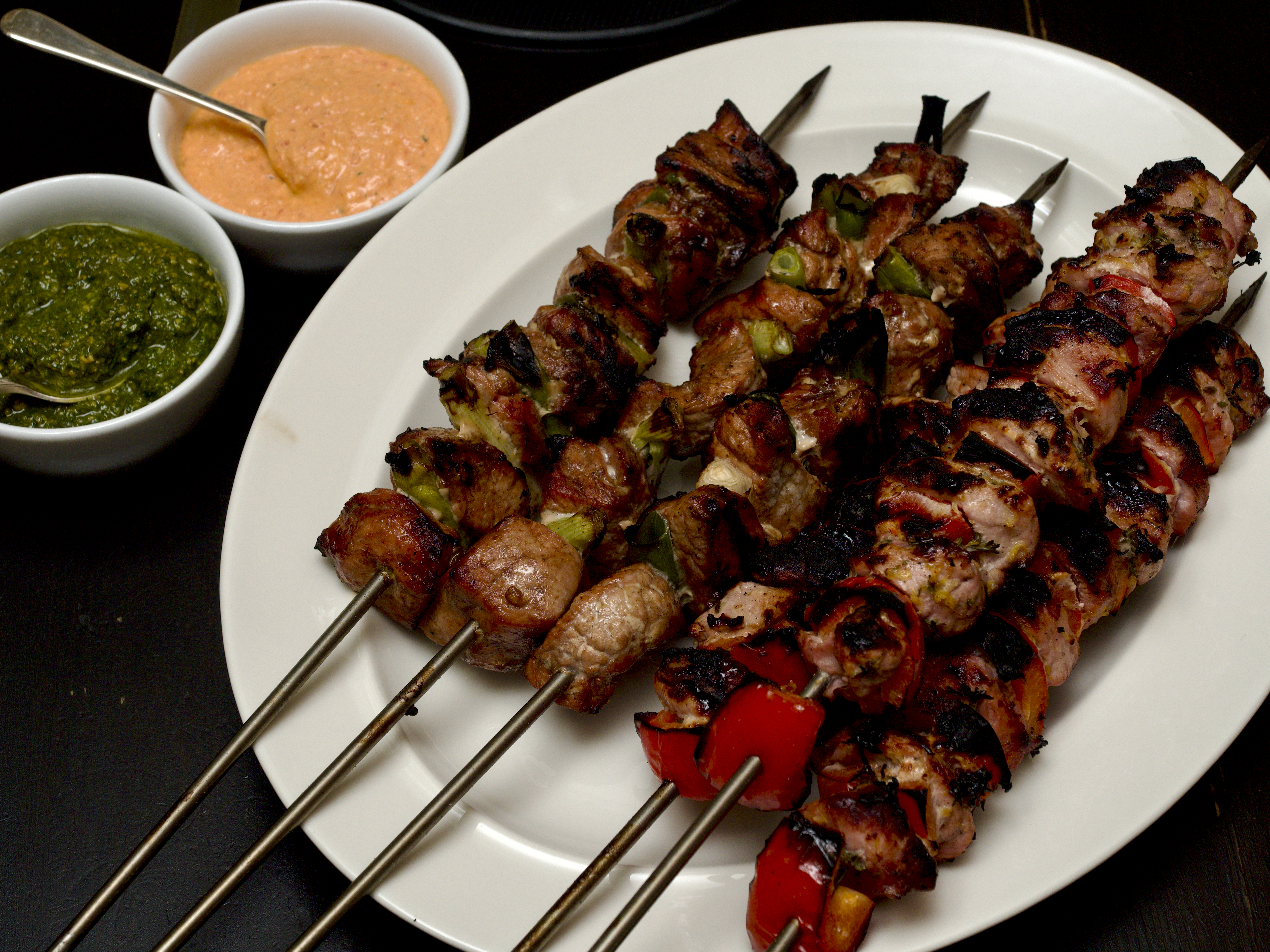
Two kebabs for the barbecue with their respective sauces. We couldn’t decide which one to do, so we halved each recipe and made both. A meat probe is great for checking that barbecued meat is cooked – you are looking for 63C for medium or 71C for well done. You can buy a good-quality pesto if you don’t want to make your own.

Lemony pork kebabs with feta & pepper sauce, makes 6-8 kebabs

  • zest and juice of 2 lemons
  • 4 tbsp olive oil
  • 2 cloves of garlic, crushed
  • a handful of thyme sprigs, roughly chopped
  • 1.2kg pork leg, diced
  • 2 red peppers, diced

FOR THE FETA AND RED PEPPER SAUCE:

  • 2 red peppers
  • 200g feta
  • ½-1 tsp chilli flakes
  • 3 tbsp olive oil

Mix the lemon zest and juice, olive oil, garlic and thyme together. Sesaon with salt and pepper, then add the pork and stir well. Cover and refrigerate for 12-24 hours.

When ready to cook get a barbecue ready for both direct and indirect cooking.

Put the whole peppers for the sauce directly over the fire and char the skins all over until blackened. Transfer to a bowl and cover with cling film, then leave for a few minutes or until cool enough to handle. Rub off the skin and discard the stems and seeds. Put the pepper flesh into a food processor with the feta, chilli flakes and olive oil, season, then blend to a purée. Transfer into a bowl and set aside.

Thread the pork and pepper pieces onto skewers. Set onto the barbecue, slightly away from the fire so they cook over a medium heat for 15-20 minutes.

Serve with the feta and red pepper sauce.

Balsamic pork kebabs with pesto dressing, makes 8 kebabs

  • 4 tbsp balsamic vinegar
  • 3 tbsp olive oil
  • 1 tbsp brown sugar
  • 3 cloves of garlic, crushed
  • 1 tsp smoked paprika
  • 1.2kg pork leg, diced
  • a bunch of scallions, cut into 4cm lengths

FOR THE PESTO (or use good-quality shop-bought pesto)

  • 50g pine nuts, toasted
  • 30g basil, leaves and stems, roughly torn
  • 40g Parmesan, grated
  • 6 tbsp olive oil
  • juice of ½ lemon
  • 1 clove of garlic, crushed

Mix the balsamic, olive oil, brown sugar, garlic and smoked paprika together in a bowl. Season with salt and pepper, then stir in the pork pieces. Cover and put into the fridge for 12-24 hours.

To make the pesto, tip the pine nuts, basil, Parmesan, olive oil, lemon juice, garlic and a little salt into a food processor and blend to a purée. Scrape the pesto into a bowl and set aside.

When ready to cook get the barbecue prepped for direct and indirect cooking.

Thread the pork and scallions on to skewers. Set onto the barbecue, slightly away from the fire so they cook over a medium heat for 15-20 minutes.

Serve with the pesto on the side.

(Original recipes from Seared by Genevieve Taylor, Hardie Grant: Quadrille, 2022).

Read Full Post »

A great starter dish from Persiana Everyday by Sabrina Ghayour. The sun came out so we could sit outside for a relaxed Saturday lunch, and this takes very little time to put together which was perfect.

Wine Suggestion: The much under-rated varietal, Chenin Blanc is our pick. A dry version like Adi Badenhorst’s Secateurs and it’s stonefruit and apple flavours over a flinty core stands up to the baked halloumi and bacon with aplomb.

Halloumi, bacon, date & apple salad – serves 4 as a starter

  • 250g block of halloumi
  • 8 smoked streaky bacon rashers
  • 4 large Medjool dates, pitted and halved

FOR THE SALAD:

  • 2 tbsp olive oil
  • 1 tbsp red wine vinegar
  • 1 tbsp clear honey
  • 1 tsp ground cinnamon
  • 1 tsp water
  • a small bag of mixed salad leaves
  • 1 apple, cored and sliced

Preheat the oven to 240C.

Line a large baking tray with baking paper.

Cut the block of halloumi in half lengthways, then cut each half into 4 rectangular fingers.

Lay a piece of bacon on a board, put a piece of halloumi at the end and top with half a date, then roll up tightly to form a neat bundle. Repeat to make 8 rolls.

Roast the halloumi in the oven for 10-12 minutes or until the bacon is very crispy.

Meanwhile, put the olive oil, red wine vinegar, honey, cinnimon and water into a small bowl and whisk to combine. Spread the salad leaves over a platter, drizzle with the dressing and scatter over the apple slices.

Put the hot halloumi and bacon rolls on top of the salad leaves and serve.

(Original recipe from Persian Everyday by Sabrina Ghayour, Aster, 2022.)

Read Full Post »

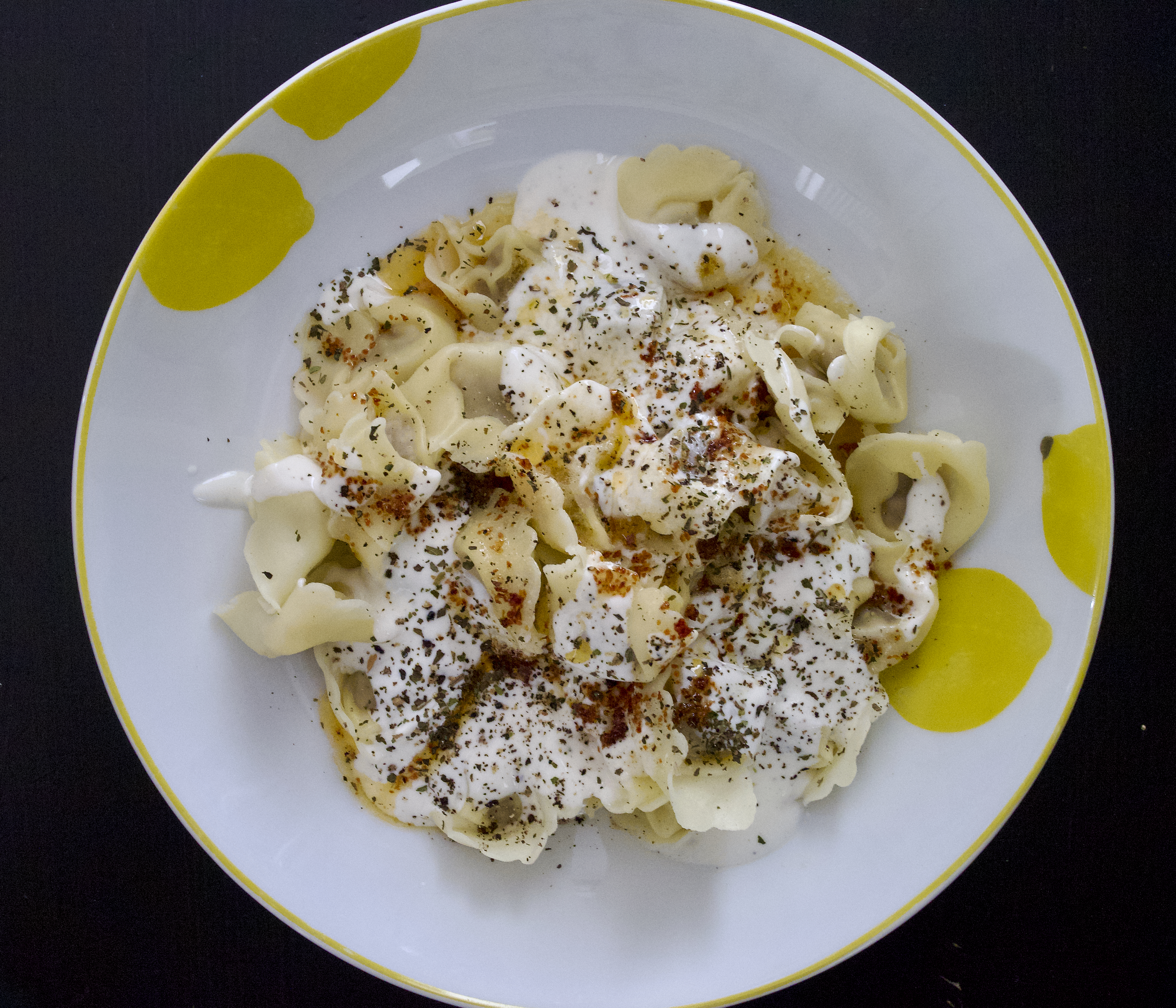
This is a cheat recipe using a packet of shop-bought stuffed pasta. It makes a delicious lunch!

Lazy mantí – serves 2

  • 300g pack of shop-bought stuffed pasta
  • 50g butter
  • 1 tsp pul biber chilli flakes
  • 150g natural yoghurt
  • 1 scant tsp dried mint

Cook the pasta in lots of salty boiling water according to the timings on the pack, then drain into a sieve.

Return the pasta pan to the heat and add the butter. When the butter has melted, stir in the pul biber, then remove from the heat.

Season the yoghurt with salt and pepper and loosen with a little water – you’re looking for double cream consistency.

Divide the pasta between warm bowls and pour over the yoghurt, then drizzle over the pul biber butter, sprinkle with dried mint and season generously with black pepper.

(Original recipe from Persiana Everyday by Sabrina Ghayour, Aster, 2022.)

Read Full Post »

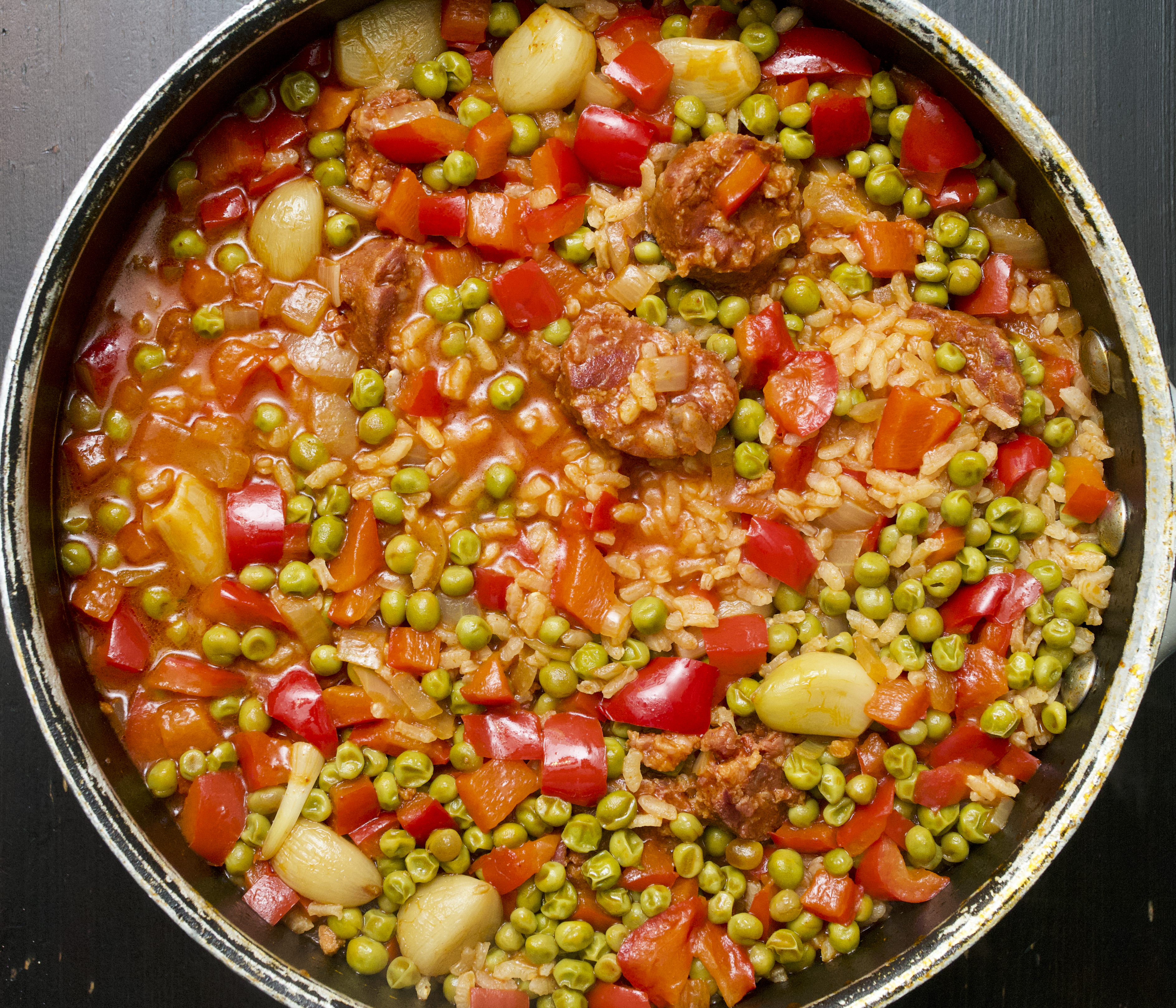
Finally, we got to sit in the garden for half an hour with the sunshine on our faces after many months of grey or wet days. This recipe is from camper van cooking – a book we rely on when camping, and also to get us in the mood for summer.

Wine Suggestion: We think this is fab with a good old Grenache, something like Edetària’s via Edetana red, which is a blend of two Garnacha varietals: Fina and Peluda. Grown in a very special location for Garnacha of all varieties, both red and white; Terra Alta in Spain. A wine that has a rich depth and yet is elegant and refined with freshness alongside the lush berry and balsamic flavours.

Baked rice with chorizo and peas – serves 4

  • 2 tbsp good olive oil
  • 2 fat chorizo sausages, thickly sliced
  • 1 large onion, finely chopped
  • 1 red pepper, finely chopped
  • 10 garlic cloves, peeled and left whole
  • 2 tsp paprika (use whatever sort you like or have)
  • 200g tomato passata
  • 1 tbsp tomato purée
  • 1 litre chicken stock
  • 360g paella rice
  • 150g frozen peas
  • lemon wedges, to serve

Heat the oil in a large, deep frying pan. Fry the chorizo for a couple of minutes or until some oil has been realised and it is starting to brown. Add the onion, peppers, garlic and some salt, then cook gently for about 10 minutes or until soft.

Stir in the paprika, passata and tomato purée and cook for 5-10 minutes or until rich and thick.

Add the stock, then bring to the boil, season again with salt, then add the rice and stir. Scatter over the peas and cover. Cook for 18-20 minutes or until the rice is tender and most of the liquid has been absorbed.

Remove from the heat and rest with the lid on for at least 10 minutes, then serve in bowl with lemon wedges to squeeze over.

(Original recipe from Camper Van Cooking by Claire Thompson & Matt Williamson, Hardie Grant: Quadrille, 2021.)

Read Full Post »

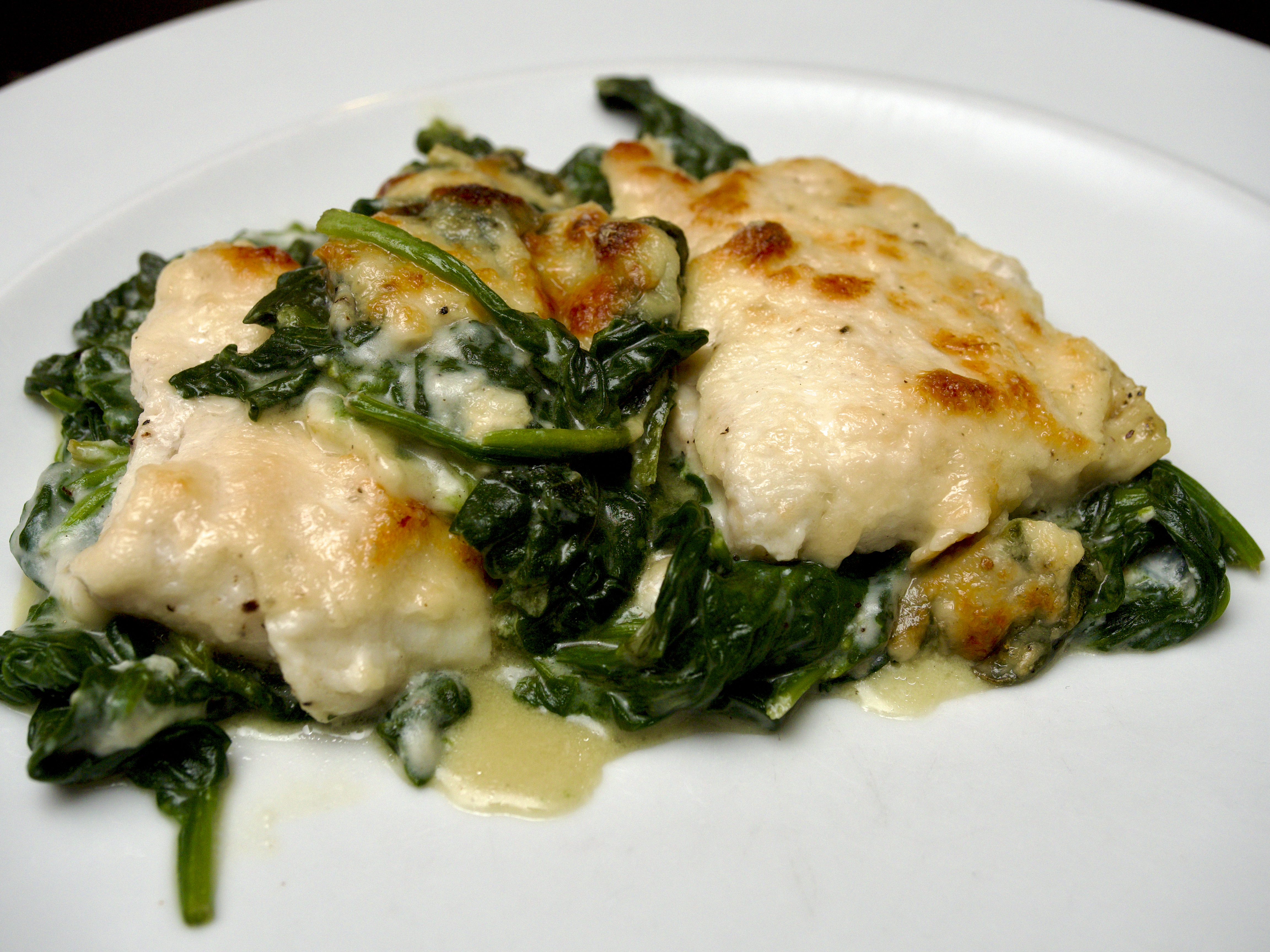
It’s a classic combination for good reason. Very easy to make and absolutely delicious.

Wine Suggestion: playing on the balance of rich parmesan and bechamel, earthy spinach and gentle sole we opened a bottle of Sartarelli’s Mellitta. A Castelli di Jesi Verdicchio Riserva this shows the depth only top quality old-vines can give with flinty almond and peach flavours overlaid with a creamy toastiness. Made gently and with thought this wine isn’t brash, but rather has great depth and subtle nuances. A new find and one we’ll revisit.

Lemon sole florentine – serves 4

  • 4 large lemon sole, each cut into 4 fillets and skinned (your fish shop will do this for you)
  • juice of ½ lemon
  • 45g butter
  • 45g plain flour
  • 450ml full-fat milk
  • 750g spinach leaves
  • 30g Parmesan cheese, grated

Heat the oven to 200C/180C fan/Gas 6.

Sprinkle the fish fillets with the lemon juice and season with salt and pepper. Fold them in half widthways, and set aside.

Melt the butter in a saucepan, add the flour and cook, stirring for a minute. Remove from the heat and gradually blend in the milk. Bring to the boil, stirring constantly until thickened. Simmer for 2-3 minutes, then season.

Wash the spinach and put into a pan with just the water left on the leaves. Cook for a couple of minutes until wilted, then drain well and squeeze out excess water.

Stir half the sauce into the cooked spinach and spoon into a shallow ovenproof dish. Arrange the sole on top, then pour over the rest of the sauce and sprinkle with cheese. Bake in the oven for 30 minutes, then serve.

(Original recipe from Mary Berry’s Complete Cookbook, DK, 1995. )

Read Full Post »

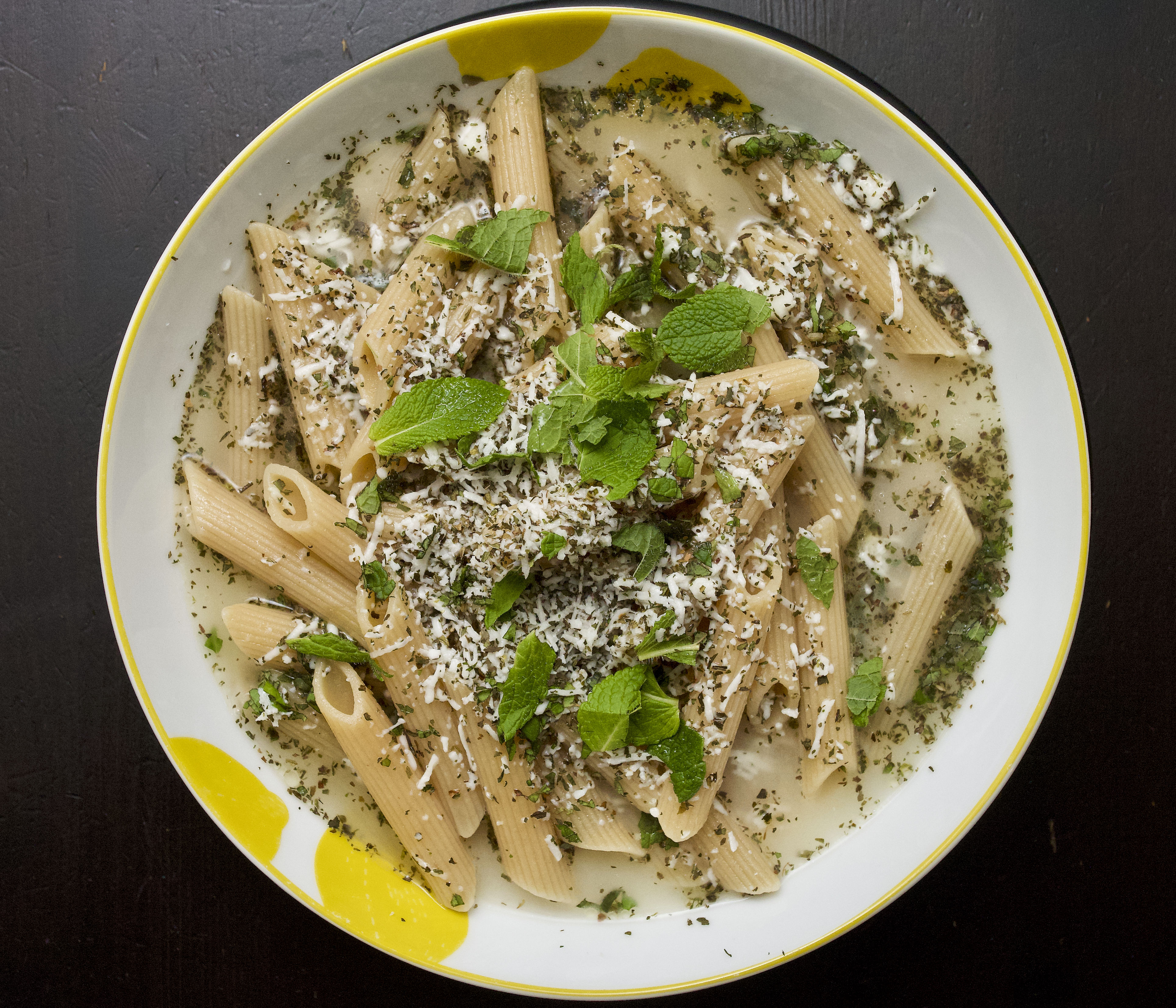
We heard about this dish on The Food Programme on BBC Radio 4 as described, lovingly, by Leyla Kazim on a program about Cyprus and halloumi/hellim. We couldn’t wait to try it. Constructed from the description by Leyla and trawling the internet for quantities. Delicious comfort food and a new way with halloumi (for us at least).

Turkish macaroni – serves 4

  • 200g halloumi
  • 2 tbsp dried mint
  • 400g wholewheat pasta, we used penne
  • 2 litres good chicken stock
  • 1-2 lemons
  • a large handful of fresh mint leaves, chopped

Finely grate the halloumi cheese and mix with the dried mint.

Cook the pasta in the chicken stock until al dente.

Put some of the cheese and mint mixture in the bottom of four bowls. Ladle some pasta and stock over each portion, then sprinkle with another layer of cheese and mint. Add another layer of pasta and finish with a final layer of cheese. Sprinkle over the fresh mint and squeeze some lemon juice over each to taste.

Read Full Post »

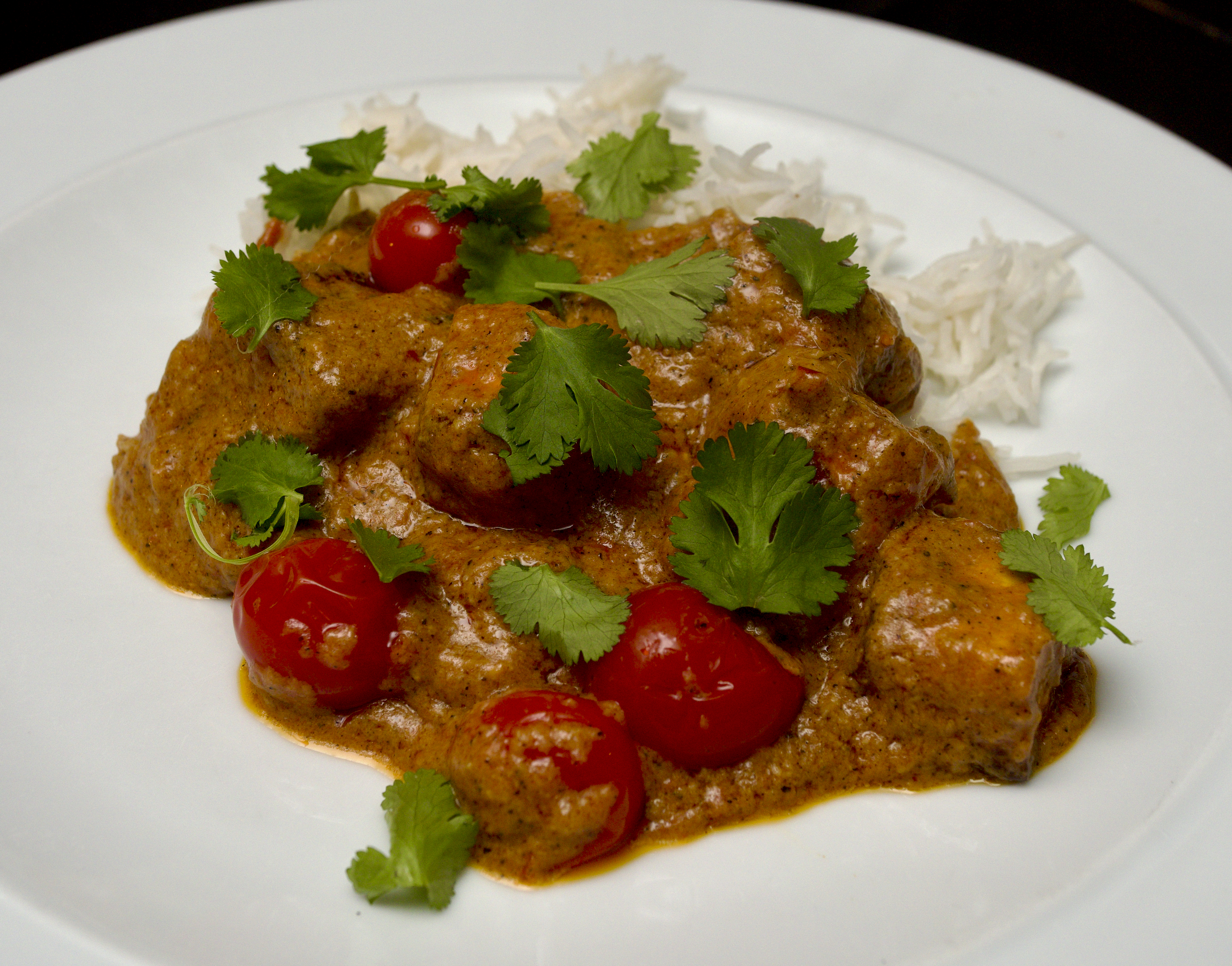
A easy peasy curry for weeknights. Serve with steamed basmati.

Black pepper paneer and cashew curry – serves 4

  • 2 tbsp sunflower oil
  • 2 x 225g packs of paneer, cut into 3cm cubes
  • 2 tbsp finely grated ginger
  • 2 tbsp finely grated garlic
  • 1 tbsp freshly ground black pepper
  • 3 tbsp madras curry paste (we use Patak’s)
  • 1 x 400ml tin coconut milk
  • 1 x 400g tin cherry tomatoes
  • 4 tbsp cashew butter (if you don’t have this you can whizz cashews a food processor to make it)
  • 1 lime, juiced
  • coriander leaves, to serve

Heat the oil in a large frying pan over a medium-high heat and cook the paneer for 5-6 minutes, until golden on all sides.

Turn the heat down ot medium-low and add the garlic, ginger and black pepper, then cook for 1 minutes before adding the curry paste and cooking for another minute.

Add the coconut milk, tomatoes and cashew butter, then season and simmer for 20 minutes until thickened. Season again add the lime juice.

Scatter coriander leaves over and serve with steamed rice.

(Original recipe by Adam Bush in Olive Magazine, March 2022.)

Read Full Post »

Stuffed pasta shells with spinach, ricotta chilli and lemon. Tomato sauce underneath and lots of Parmesan on top.

Wine Suggestion: An old favourite from the Adriatic coast of Italy, Sartarelli’s Tralivio Verdicchio Superiore, which comes from their low-yielding, oldest vineyard. A bit of body and texture plus a twist of almonds and citrus; playing along very nicely with the lemon, ricotta and earthy spinach, and enough acidity to complement the tomato.

Stuffed pasta shells with chilli, spinch and lemon – serves 2

  • 175g giant pasta shells
  • 1 tbsp olive oil
  • 2 cloves of garlic, crushed
  • a pinch of dried chilli flakes
  • 200g spinach, chopped
  • 125g ricotta
  • ½ lemon, zested
  • 400g jar of tomato pasta sauce or you can use some home-made sauce if you have it
  • Parmesan

Heat the oven to190C/fan 170C/gas 5.

Cook the shells in lots of salty water until al dente, then drain.

Heat the oil in a pan and gently cook the garlic and chilli for 2-3 minutes. Stir in the spinach and cook until wilted, then stir in the ricotta and lemon zest. Season well.

Spoon the tomato sauce into the base of a large baking dish. Use a teaspoon to stuff the pasta shells with the spinach mixture, then place in the dish in a single layer. If you have any leftover mixutre you can spoon it over the top.

Sprinkle with the Parmesan and bake for 20-25 minutes or until bubbling and golden.

(Original recipe by Janine Ratcliffe in Olive Magazine, March 2019.)

Read Full Post »

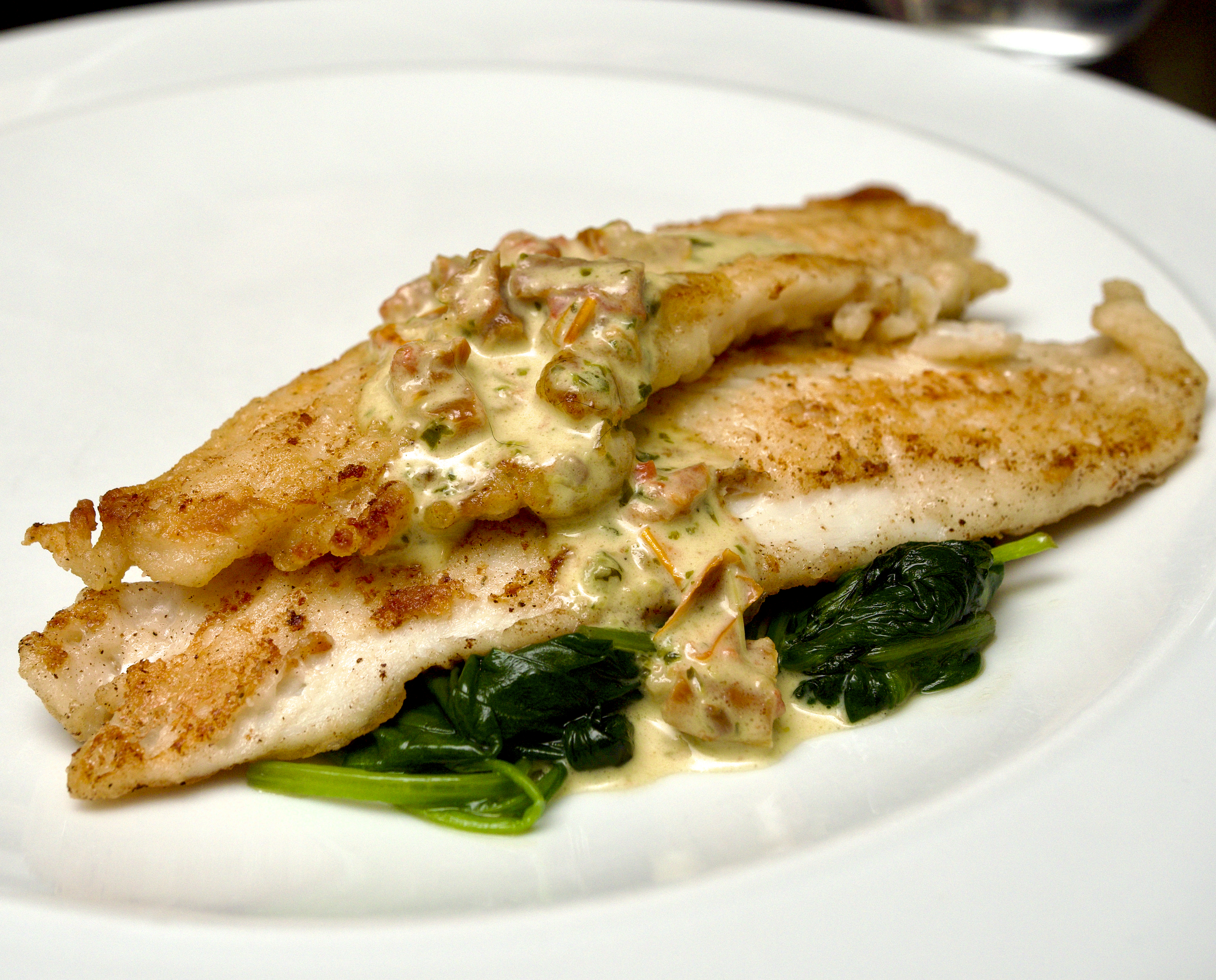
This fish dish feels a bit special but is very easy to make. Serve on buttered spinach and with steamed potatoes.

Wine Suggestion: from our recent trip to the Loire we opened the superlative Domaine de la Taille aux Loups Clos de la Bretonnière. Made by Jacky and J-P Blot from a monopole in Vouvray, it has to be “Vin de France” as their winery is not in the appellation. No matter, this is as fine as dry Vouvray gets. We really enjoyed the taut minerality that complimented the fish, and how it kept on giving more layers as it went along revealing hints of spring and summer fruits. Tension and poise, but with a real generosity too.

Lemon sole with basil & tomato sauce – serves 4

  • 60g plain flour
  • 2 small lemon sole, each cut into 4 fillets and skinned (your fish shop will do this for you)
  • 30g butter

FOR THE SAUCE:

  • 300ml double cream
  • juice of ½ lemon
  • 3 tbsp fresh pesto
  • 100g sun-blush tomatoes, finely chopped
  • 2 tsp chopped basil, to serve

Sprinkle the flour over a large plate and season well with salt and pepper.

Dip the fish fillets into the seasoned flour and shake off any excess.

Melt the butter in a large frying pan. Wait until the butter foams, then add the fillets and cook for 2 minute on each side, or until opaque and easy to flake. Transfer to a warm plate and keep warm while you make the sauce.

Heat the cream, lemon juice, and pesto in a pan over a medium heat until hot, then add the sun-blush tomatoes and season with salt and black pepper. Serve the fish fillets on a bed of buttered spinach, dress with the sauce and sprinkle over some basil leaves.

(Original recipe from Mary Berry’s Cookery Course, DK, 2013.)

Read Full Post »

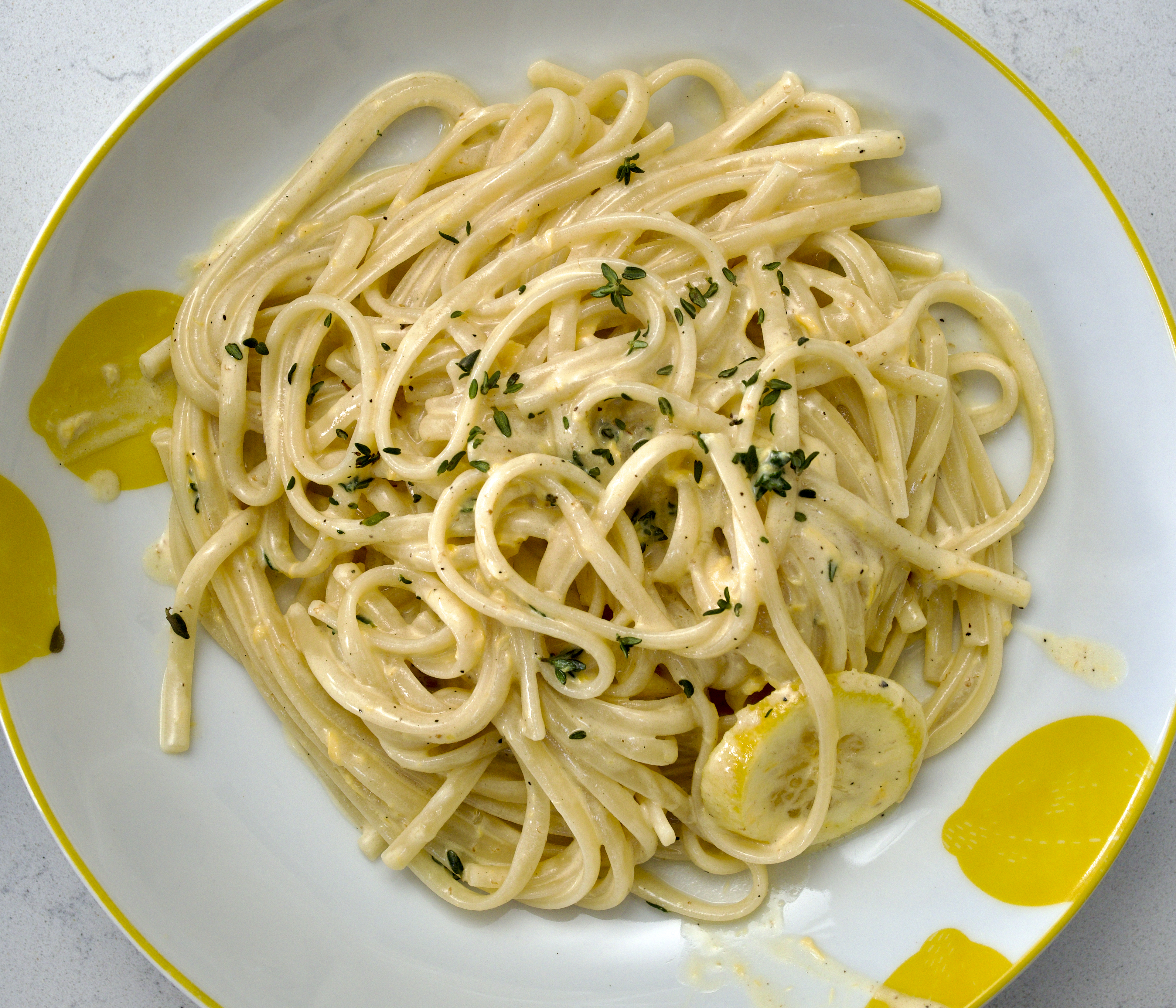
We love a lemon spaghetti and it’s our go to dish when there’s nothing for lunch. This one has cream because we had some lurking in the fridge from another dish.

Spaghetti with creamy lemon sauce – serves 4

  • 2 lemons
  • 4 tbsp extra virgin olive oil
  • 220ml single cream
  • 1 egg yolk
  • 350g spaghetti
  • a small bunch of thyme

Bring a large pot of water to the boil.

Meanwhile, finely zest the lemons and put into a deep frying pan, then add the olive oil and gently fry over a medium heat for a few minutes.

Pour the cream and egg yolk into the pan and mix well, then reduce the heat and cook gently for 5 to 10 minutes, stirring occasionally.

Add plenty of salt to the pasta water, then add the spaghetti and cook according to the pack timings.

Finely slice a third of the lemon.

Drain the pasta in a colandar but keep a little of the cooking water. Squeeze the juice of the remaining lemons into the sauce and season to taste with salt and black pepper, then tip in the pasta. Add a splash of the pasta cooking water, then add the lemon slices and toss to coat. Sprinkle generously with thyme leaves and serve.

(Original recipe from A Table for Friends by Skye McAlpine, Bloomsbury, 2020.)

Read Full Post »

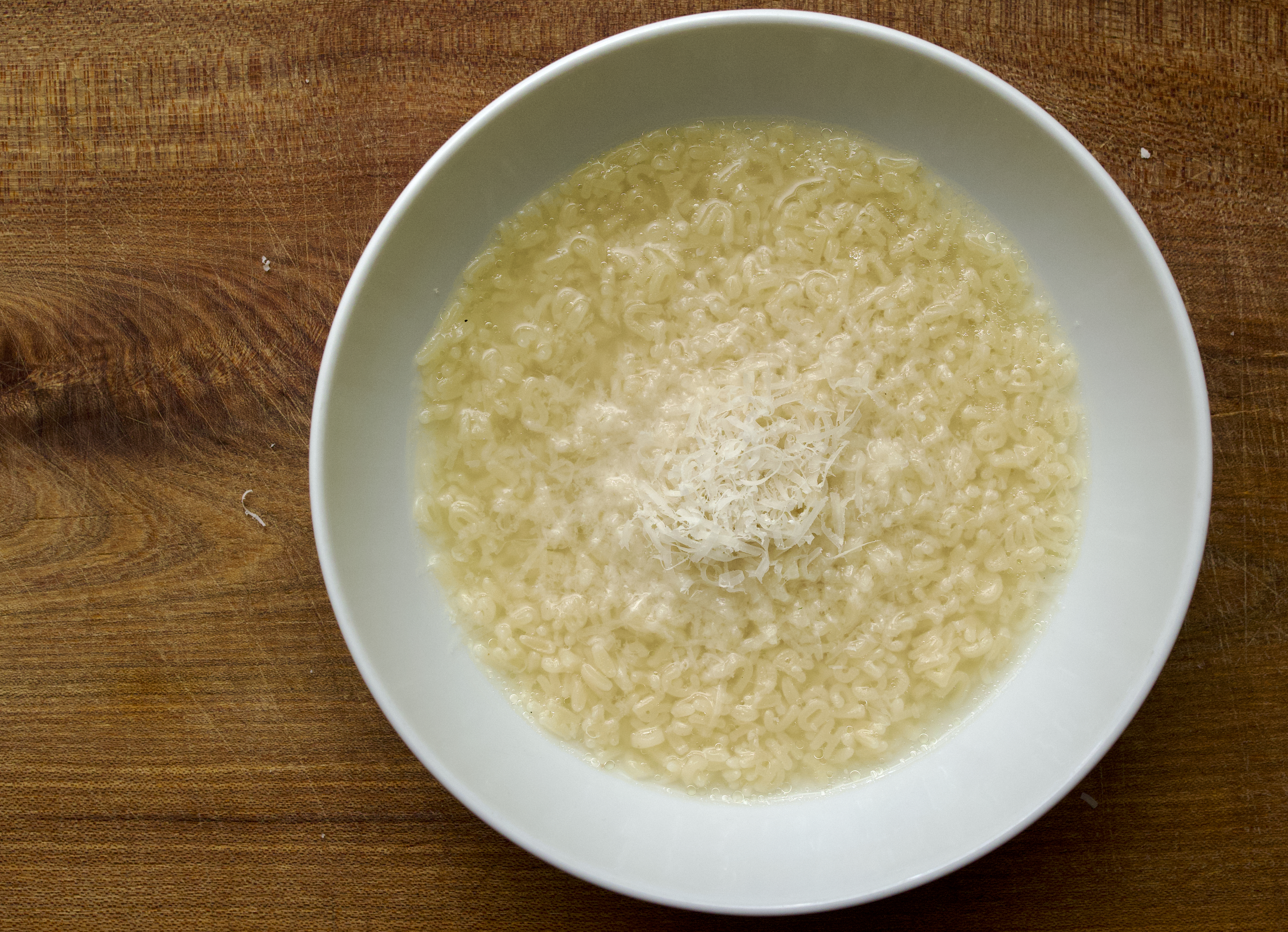
Comfort food at its best. Don’t be tempted to strain the chicken broth of fat, it adds to the flavour and don’t skimp on the salt. You can use the poached chicken meat for sandwiches, or something else.

Alpabetto in Brodo – serves 4 (the recipe makes double the quanity of broth needed and it will keep in the freezer)

  • 800kg chicken thighs (skin on and bone-in)
  • 1 onion, peeled and halved
  • 1 carrot, peeled and halved
  • 1 stick of celery, halved
  • 1 bay leaf
  • a few peppercorns
  • 200g alfabeto
  • grated Parmesan, to serve

Put the chicken into a large heavy pan, cover with 2.5 litres of cold water and add a large pinch of salt. Bring to the boil, then reduce the heat to low and use a slotted spoon to spoon off any scum.

Add the vegetables, bring back to the boil, then turn the heat to low, cover and simmer gently for 1 hour and 15 minutes.

Strain through a fine sieve, pressing down on the veg and chicken to extract all the flavor. You won’t need the chicken after this but you should strip the meat from the bones and keep it for something else.

Bring 1 litre of the broth to the boil, add the alfabeto and cook until al dente. Ladle into bowl and add grated Parmesan.

(Original recipe from An A-Z of Pasta by Rachel Roddy, Penguin: Fig Tree, 2021.)

Read Full Post »

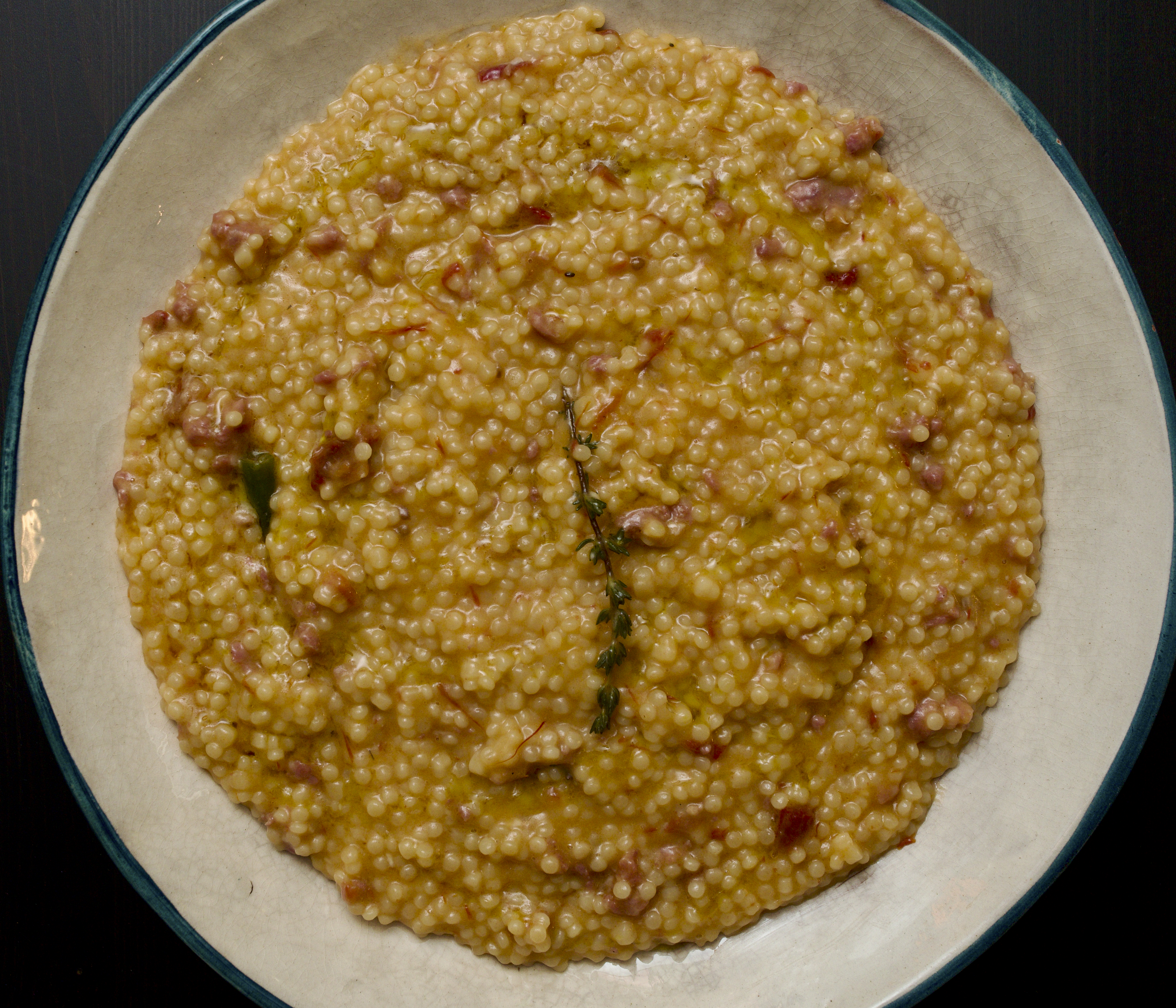
So fregula is fregola, pearl couscous, giant couscous, mograbia(h) as well as some other names, but it is essentially tiny pasta balls. We’ve cooked with it before but this time Jules bought it by accident and we had to find a recipe to use it up. Somewhat like a risotto, but the texture is a touch more unctuous. Quite a rich and flavoursome dish.

Wine Suggestion: This dish requires a powerful red with a fresh core of acidity. Taking inspiration from a Risotto Milanese pairing we opened a Pira Luigi Barolo Serralunga from 2018. Youthful and expressive aromatics of leather, violets & wild berries plus hints of tar. This flowed into an energetic and refined palate with elegant, but persistent tannins; almost lifted and light, but with a deep core of rich fruits.

Fregula with sausage and saffron – serves 4

  • 1 clove of garlic
  • 6 tbsp olive oil
  • 120g sausage meat, crumbled – try to find meaty Italian sausages if you can
  • 4 sun-dried tomatoes, chopped
  • 2 sprigs of thyme
  • a small piece of chilli
  • 1 litre stock – meat or veg – we used turkey stock
  • 350g fregula (see note above)
  • a few strands of saffron
  • 60g pecorino, grated

Put the stock into a small saucepan and bring to a simmer.

Smash the garlic clove but leave it whole, then put into a deep frying pan with 3 tbsp of the olive oil. Fry gentluy over a medium-low heat.

Add the sausage, sun-dried tomatoes, thyme and chilli, and fry, stirring, for a couple of minutes.

Add the fregula to the sausage and stir for a minute. Then start adding the stock, a ladelful at a time, the same as you would if cooking risotto. Keep both pans simmering as you keep going like this. Start tasting the fregula after 12 minutes and cook until al dente. You are looking for a loose rather than stiff consistency.

Add the saffron, pecorino and 3 tbsp of olive oil and serve.

(Original recipe from An A-Z of Pasta by Rachel Roddy, Penguin:Fig Tree, 2021.)

Read Full Post »

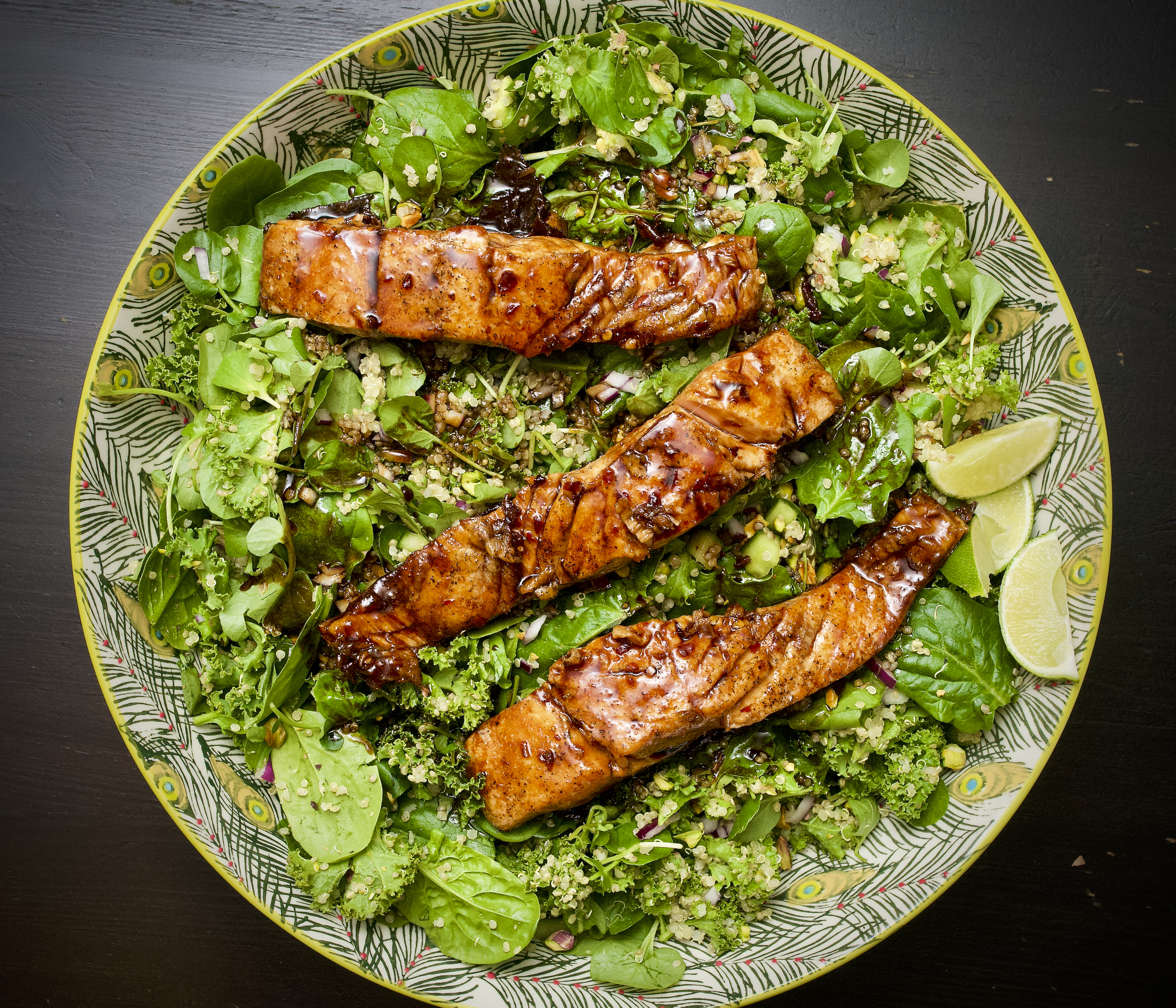
And so we’ve realised that we do like quinoa after all. This green salad is delicious and the quantity given below is half that suggested by Neven Maguire. Feel free to double if you think you can manage it.

Wine Suggestion: We think this suits a young, fruit forward Cabernet Franc like Olga Raffault Cuvée Domaine. Unoaked and joyful dark cherry fruits with a crispness and earthiness that really complements the kale, spinach and watercress.

Honey and Soy Glazed Salmon with Green Quinoa – serves 4

  • 100ml soy sauce
  • 3 tbsp honey
  • a good pinch of chilli flakes
  • 1 tbsp rapeseed oil
  • 1 tsp sesame oil
  • 4 salmon fillets, skin on

FOR THE QUINOA:

  • 75g quinoa
  • 150ml vegetable stock
  • 50g curly kale, remove the stalks
  • 50g baby spinach
  • 50g pistachios, toasted and chopped
  • 40g watercress
  • ½ an avocado, diced
  • ¼ cucumber, deseeded and finely diced
  • 1 tbsp chopped coriander
  • lime wedges, to garnish

Rince the quinoa then put into a small saucepan with the vegetable stock and bring to the boil. Cover with a lid and simmer gently for 10-12 minutes until tender and the stock has been absorbed. Tip into a large bowl and leave to cool.

Put the soy sauce, honey and chilli flakes into a small bowl and whisk to combine.

Prep the rest of the ingredients for the quinoa and fold them gently in to the cooled quinoa. Taste and season with salt and black pepper.

Season the salmon fillets, then heat a non-stick frying pan over a medium heat. Add the rapeseed and sesame oil, then fry the salmon fillets, skin side up, for 2-3 minutes, until lightly golden. Turn them over gently and cook for another 4 minutes. Turn the heat to hight and pour in the honey and soy mixture. Allow to simmer for a couple of minutes, spooning the sauce over the salmon, it should thicken to a syrupy sauce.

Put the quinoa onto a large serving platter and sit the salmon fillets on top. Drizzle over the syrupy sauce and garnish with the lime wedges.

(Original recipe from More Midweek Meals by Neven Maguire, Gill Books, 2022.)

Read Full Post »

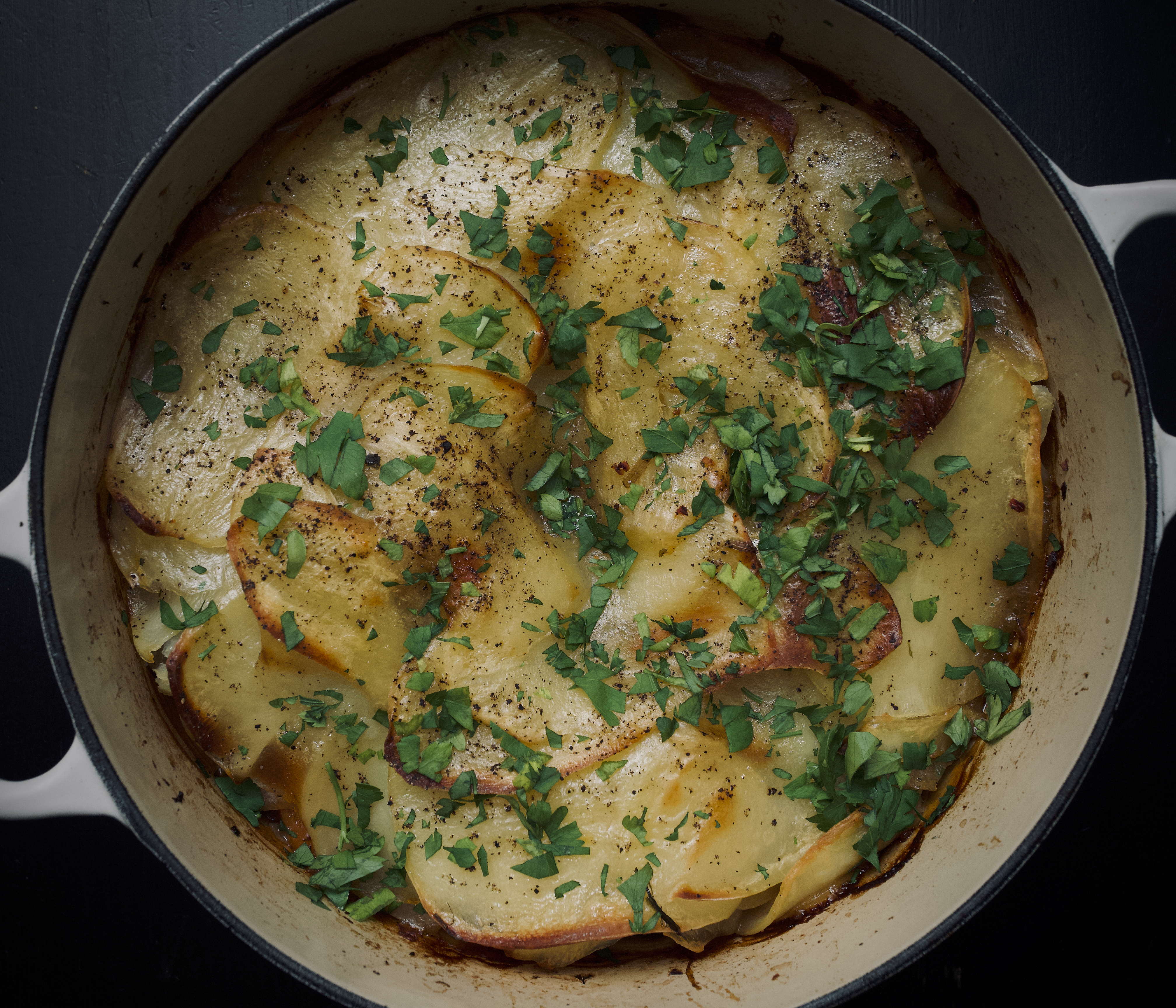
We’ve never tried Dublin coddle, mainly because it tends to be served with anaemic sausages. In this recipe by Neven Maguire you brown them; a far more sensible approach altogether.

Wine Suggestion: This dish works perfectly with a Grenache blend. For us this time, a current favourite as they’re drinking so well, Romain Roche’s Côtes du Rhône. So well balanced and smooth, but with a warmth of sunshine and gentle, velvety spices.

Dublin Coddle – serves 4 to 6

  • 1 tbsp rapeseed oil
  • top-quality pork sausages – 2 per person
  • 2 onions, sliced
  • 150g dry-cured bacon lardons
  • 1 tbsp plain flour
  • 2 tsp fresh thyme leaves
  • 4 carrots, sliced
  • 750g potatoes, peeled and thinly sliced (use a mandoline if you’ve got one)
  • 2 tsp Worcestershire sauce
  • 400ml chicken stock
  • 15g butter
  • 1 tbsp chopped fresh flat-leaf parsley

Preheat the oven to 180C/350F/Gas 4.

Heat half the oil in a large casserole dish and brown the sausages on all sides. Transfer to a board and cut each sausage into three chunky pieces, then set aside.

Add the rest of the oil to the pan and sauté the onions and bacon for 6-8 minutes, until lightly golden. Stir in the flour and thyme and cook, stirring, for another minute. Add the sausages, carrots and half of the potatoes. Season generously, then shake to get everything even in the dish.

Turn off the heat and arrange the rest of the potatoes on top. Stir the Worcestershire sauce into the stock, then pour over the potatoes. Dot with the butter and season.

Cover the casserole with a lid and bake for 1 hour, then remove the lid and cook for another 30 minutes or until the topping is tender and golden brown. Scatter over the parsley to serve.

(Original recipe from More Midweek Meals by Neven Maguire, Gill Books, 2022.)

Read Full Post »

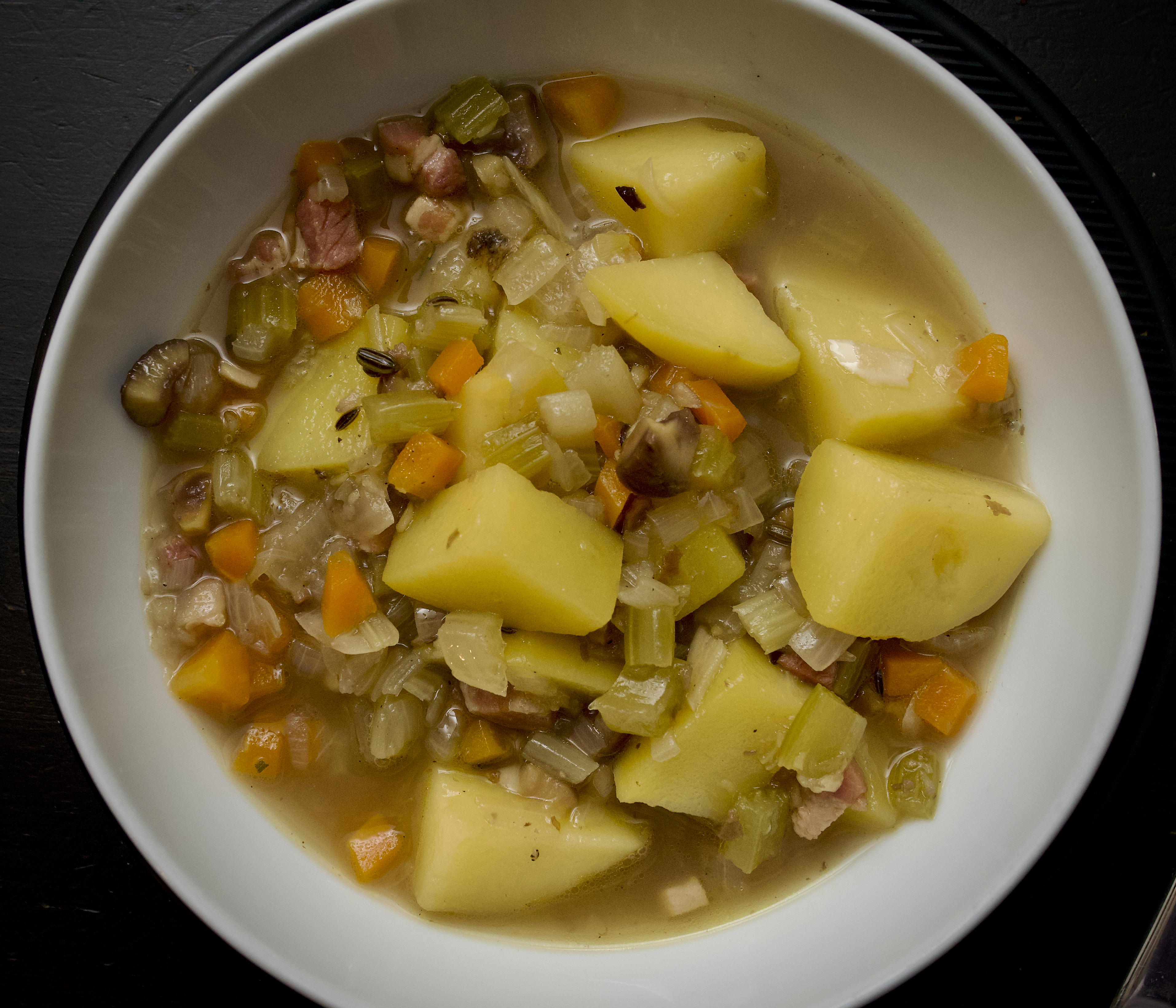
We have a reputation for using things up, and hence were donated a friends’ leftover chestnuts from Christmas: they thought we would probably use them. No probably about it … here they are in the loveliest Provençal soup recipe by Alex Jackson.

Wine Suggestion: And if you feel inspired then try a La Clef du Recit Menetou-Salon to accompany this dish. A Sauvignon Blanc from the Loire, the soils and aspect give this wine an extra super depth and richness, while maintaining the purity and clarity of expression to make it an excellent match.

Bacon, chestnut, rosemary & potato soup – serves 4

  • 2 tbsp olive oil
  • 60g smoked pancetta lardons
  • 2 medium white onions, finely diced
  • ½ head celery, finely diced
  • 1 carrot, peeled and finely diced
  • 2 fat cloves of garlic, peeled, green middle removed and finely sliced lengthways
  • 1 tsp fennel seeds
  • ½ tsp picked rosemary leaves (no more)
  • a few dried ceps, soaked in boiling water and roughly chopped (reserve the soaking water)
  • 100g cooked chestnuts, broken in half
  • 500g waxy potatoes, peeled and cut into 1.5 cm chunks
  • 1 litre homemade chicken stock or water
  • best extra virgin olive oil, to serve
  • grated Parmesan, to serve

Heat the olive oil in a large heavy saucepan, then add the pancetta and cook over a gentle heat until well browned but not crispy. Add the onion, celery, carrot, garlic and fennel seeds. Add a good pinch of salt and fry slowly for at least 30 minutes, stirring now and then, until soft and sweet.

Finely chop the rosemary, then add to the pan and allow to cook for another couple of minutes. Add the chopped porcini and cook for a few minutes before adding the chestnuts and potatoes. Pour in the liquid from the mushrooms, then add stock until the vegetables are just covered by about an inch of liquid (you can add more as it cooks if you need). Bring to the boil, then simmer for about 30 minutes or until the potatoes are soft. Mash the chestnuts against the edge of the pan to mush them up a bit. The soup should have some liquid but otherwise be quite thick.

Season with salt and pepper to taste, then serve in warm bowls with Parmesan and olive oil drizzled over the top.

(Original recipe from Sardine by Alex Jackson, Pavilion, 2019.)

Read Full Post »

« Newer Posts - Older Posts »