Feeds:
Posts
Comments

Posts Tagged ‘Feta’

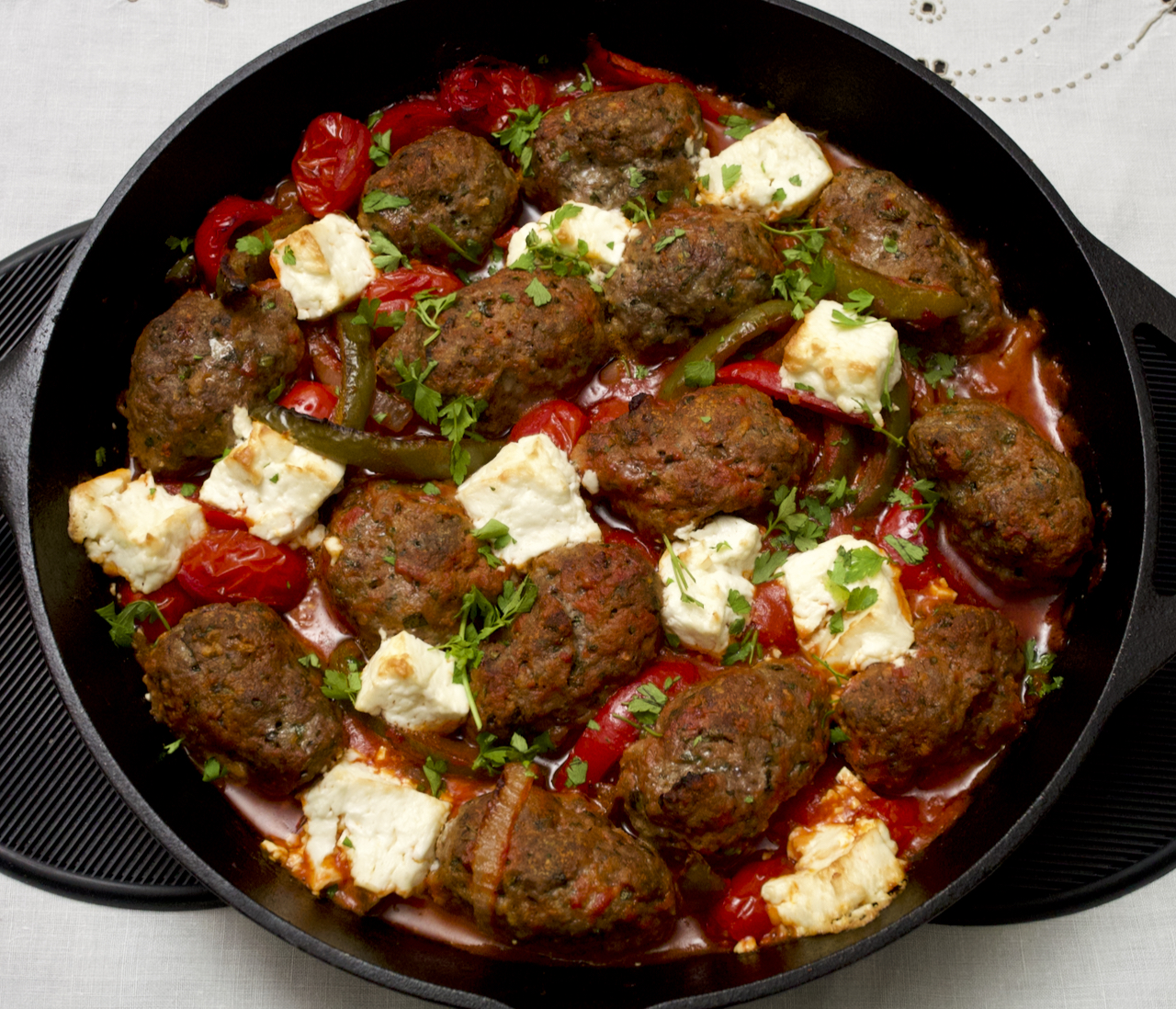
Some bold and tasty flavours in this dish by Noor Murad — lamb koftas baked with sweet peppers, salty feta, and oregano. This is minimal fuss for maximum payoff. Another standout from Noor’s beautiful new book, Lugma, a collection we’re really enjoying cooking from.

Wine Suggestion: Grenache all the way with this one. Tonight, we opened a rare treat, the Edetaria La Personal made from old-vine Garnacha Peluda. You won’t find this particular clone outside of Terra Alta, and we think it’s one to watch in a warming climate. The fine hairs on the backs of the vine leaves help trap humidity and conserve moisture, a clever natural adaptabion. It’s also delicious with the lamb and feta.

Lamb koftas with peppers and feta – serves 4

  • 1 large onion, sliced
  • 1 green pepper, sliced
  • 1 red pepper, sliced
  • 1 tbsp fresh thyme leaves
  • 3 tbsp olive oil, plus a bit extra
  • 1½ tsp sweet paprika
  • 200g Datterini or cherry tomatoes
  • 150g passata
  • 2 tbsp apple cider vinegar
  • ¾ tbsp maple syrup
  • 150g feta, broken into large chunks

FOR THE KOFTAS:

  • 500g lamb mince
  • 40g panko breadcrumbs
  • 20g parsley, leaves and soft stems finely chopped, plus a bit extra to serve
  • 10g oregano leaves, finely chopped, plus a bit extra to serve
  • 3 cloves of garlic, crushed
  • 1 tsp ground cinnamon
  • 1 tsp ground cumin
  • ¼ bicarbonate of soda
  • 1 onion, halved
  • 1 large ripe plum tomato

Heat the oven to 200C fan.

Make the koftas first by adding the lamb mince, panko, herbs, garlic, spices, bicarbonate of soda, 1 tsp of salt and plenty of black pepper to a large bowl. Grate the onion halves on the coarse side of a grater and squeeze out the excess liquid with your hands (it’s easiest in a clean teatowel). Add this to the bowl, then grate the tomato in the same way, straning off the juice through a sieve. Add this to the bowl too.

Grease your hands with a little olive oil and knead the meat mixture for about 4 minutes, then set aside to rest for 20 minutes.

Meanwhile, add the sliced onion, peppers, thyme, 2 tbsp of the oil and ½ tsp salt to a large cast-iron frying pan and mix to combine. Bake for 15 minutes or until starting to brown, then remove from the oven and turn the temperature up to 220C fan.

Divide the meat mixture into 12 pieces, about 55-60g each, and form into torpedo-shaped koftas with oiled hands.

Stir the paprika and the tomatoes into the frying pan.

Whisk the passata, vinegar, maple syrup and ¼ tsp of salt together in a jug, then pour this into the pan.

Add the koftas, then drizzle over the final tbsp of oil.

Return to the oven for 8 minutes, then turn each kofta over. Dot with the feta and bake for 12 minutes or until the feta is nicely browned and the dish is bubbling.

Sprinkle over the extra herbs to finish.

(Original recipe from Lugma by Noor Murad, Quadrille, 2025.)
Read Full Post »

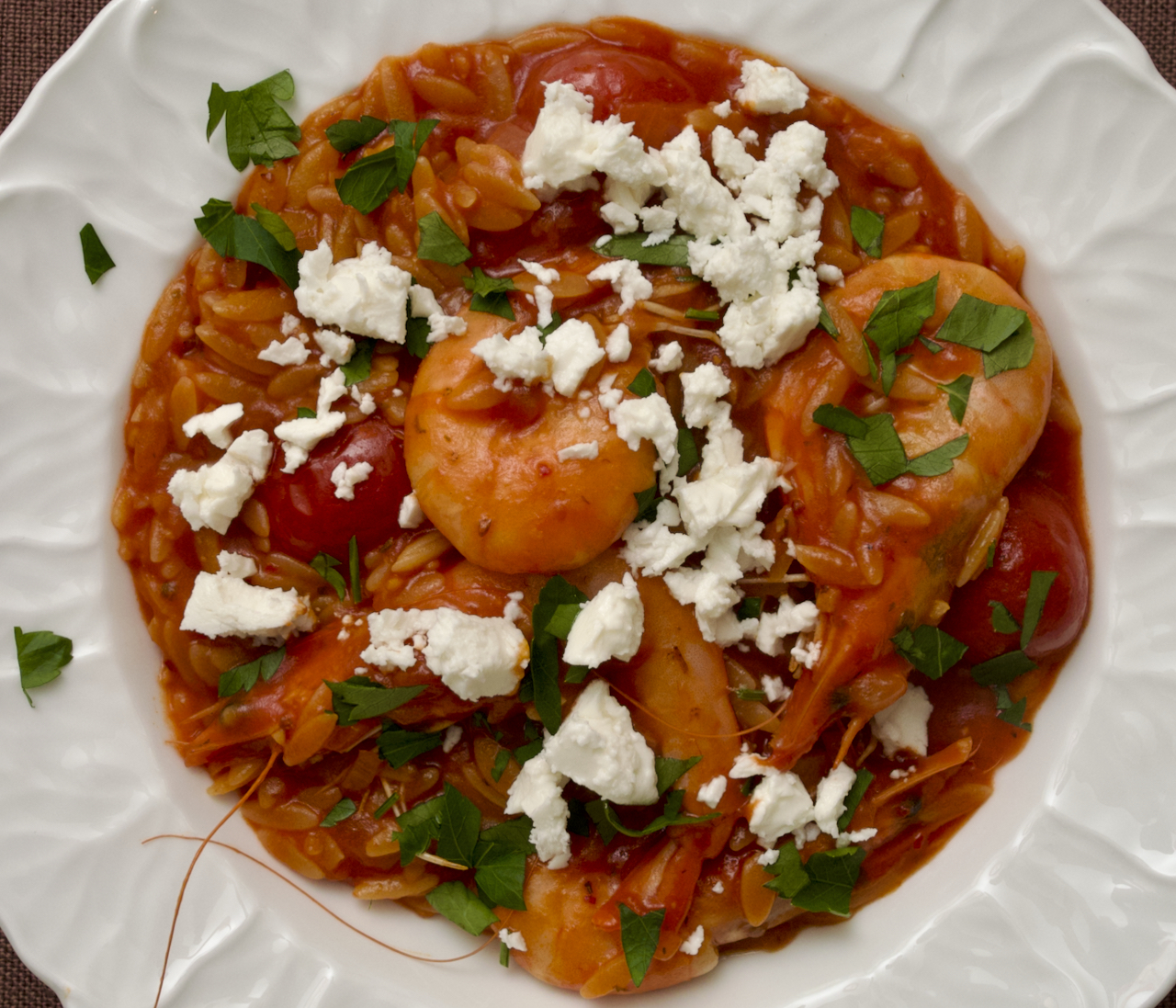
Inspired by the classic Greek saganaki this dish bring together juicy king prawns, bright cherry tomatoes, orzo simmered in wine and stock, a drizzle of lemon and a scatter of feta and parsley. Perfect when you want something that’s quick, feels indulgent, but still very satisfying.

Wine Suggestion: We followed the time-honoured rule of “what grows together, goes together” and opened a bottle of Tetramythos Roditis from the Peloponnese. This dry Greek white is crisp and appley, with a soft, rounded texture through the mid-palate and a clean, saline finish. It worked perfectly with the prawns and the tomato base, echoing the citrusy notes of the lemon while balancing the heat from the chilli. No, we weren’t eating this by the sea in Greece but it certainly felt like we could have been.

Saganaki-style orzo with prawns – serves 4

  • 2 tbsp olive oil
  • 1 large onion, finely chopped
  • 5 cloves of garlic, finely chopped
  • 1 tsp chilli flakes
  • 2 tsp dried oregano
  • 2 tbsp tomato purée
  • 200ml white wine
  • 2 x 400g tin cherry tomatoes
  • 300g orzo
  • 500ml hot chicken stock
  • 350g raw king prawns
  • a small handful of parsley, finely chopped
  • 50g feta, crumbled
  • half a lemon, cut into wedges
  • toasted ciabatta, to serve

Heat the oil in a wide frying pan over a medium heat, then fry the onion with a pinch of salt for a few minutes or until slightly softened.

Add the garlic, chilli, oregano and tomato purée and cook for another couple of minutes.

Turn the heat up high, then add the wine and leave until reduced by half, about 3-5 minutes.

Stir in the cherry tomatoes, orzo and stock, bring to a simmer and cook, stirring occasionally for 5-7 minutes or until the orzo is almost tender.

Stir in the prawns and cook for 2-3 minutes or until cooked through. Season and scatter over the parsley and feta. Serve with lemon wedges for squeezing over.

(Original recipe from BBC Good Food)

Read Full Post »

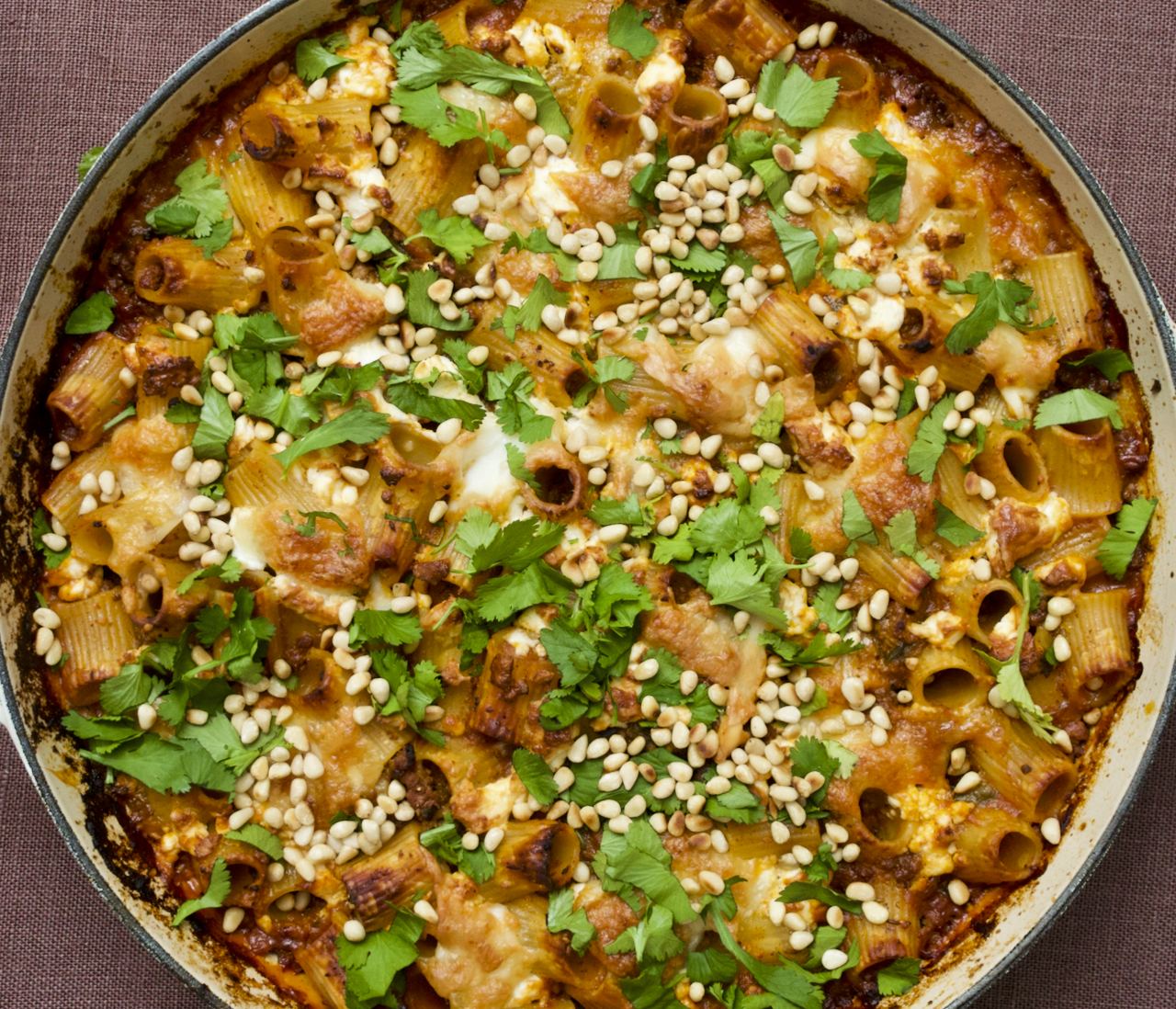
We’re loving Lugma by Noor Murad and this pasta bake is a definate crowd pleaser.

Wine Suggestion: It was a toss up between a rich white and a warm, ripe red like the Condado de Haza Crianza from Ribera de Duero which we ended up pairing with this dish. Rich and deep from the sunshine in Spain, but with an elegance and freshness plus warm spices that make this a great combo.

Middle Eastern Pasta Bake – serves 4 to 6

FOR THE RAGU:

  • 2 tbsp olive oil
  • 1 onion, finely chopped
  • 1 carrot, peeled and finely chopped
  • 1 green pepper, finely chopped
  • 4 garlic cloves, finely chopped
  • 300g beef mince
  • 300g lamb mince
  • 2 cinnamon sticks
  • 3 fresh bay leaves
  • 1 black dried lime, pierced a couple of times with a sharp knife
  • 2 red chillies, pierced a couple of times with a sharp knife
  • seeds from 15 cardamom pods, finely crushed with a pestle and mortar
  • 1 tbsp cumin seeds, finely crushed with a pestle and mortar
  • 2 tsp coriander seeds, finely crushed with a pestle and mortar
  • 1 tsp Aleppo chilli flakes
  • 1½ tsp dried oregano
  • 1½ tbsp tomato purée
  • 1 chicken stock cube
  • 400g tin plum tomatoes, puréed
  • 150ml full-fat milk
  • 20g coriander, roughly chopped

FOR THE PASTA BAKE:

  • 300g rigatoni pasta
  • 125g feta, rouglhy crumbled
  • 125g buffalo mozzarella, roughly torn
  • 25g pine nuts, well toasted
  • 10g coriander, leaves and soft stems roughly chopped

Make the sauce first by heating the olive oil in a large, deep sauté pan over a medium-high heat. Add the onion, carrot and pepper and cook for about 5 minutes. Add the garlic and cook for 2 more minutes. Stir in the beef and lamb mince and cook for 10 minutes, breaking the mince up with a wooden spoon so it is finely crumbled. Allow the liquid to cook off and the mince will start to brown. Stir in the cinnamon sticks, bay leaves, dried lime, chillies, spices, oregano, tomato purée, stock cube, 1 tsp of salt and plenty of black pepper. Fry for a couple of minutes until fragrant, then pour in the puréed tomatoes and 300ml of water. Bring to a simmer then reduce the heat to the lowest setting and cover with a lid. Leave to cook for 2 hours, stirring every 25 minutes. You should end up with a thick and rich sauce.

Pour in the milk, cover and cook for another 25 minutes. Set aside to cool a bit, then pick out and discard the cinnamon sticks and bay leaves. Remove the dried lime, squeezing any juice into the sauce. Add the chopped coriander. You can now use the sauce or stick it in the fridge or freezer until ready to use.

Heat the oven to 200C fan.

Bring a large pan of water to the boil and add 2 tsp of salt. Cook the pasta in the water until al dente. Remove 130ml of the pasta water before draining in a colander.

You will need a baking dish about 23 x 33cm. Add the drained pasta, the ragu and the reserved pasta cooking water and mix to combine. Pick out the whole chillies and lay over the top, then sprinkle over the feta and mozzarella. Bake for 30 minutes or until browned and crispy.

Sprinkle over the pine nuts and fresh coriander, then serve.

(Original recipe from Lugma by Noor Murad, Quadrille, 2025.)
Read Full Post »

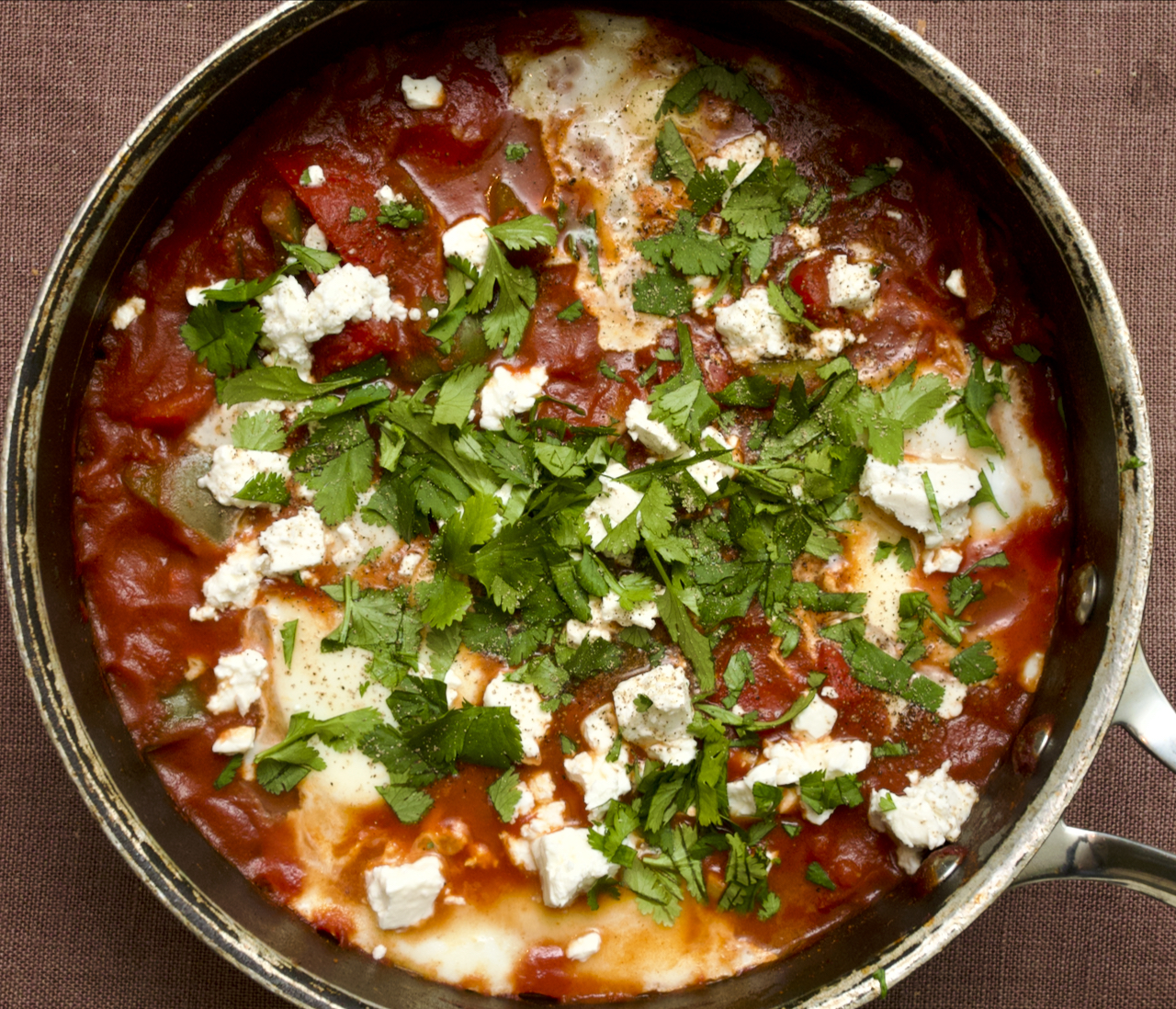
We cook many versions of shakshuka on weekends and they’re all good. Here’s the latest – serve with toasted sourdough.

Shakshuka with feta & coriander – serves 2-3

  • 1 tbsp olive oil
  • 1 red onion, finely sliced
  • 1 red pepper, deseeded and diced
  • 1 green pepper, deseeded and diced
  • 4 cloves of garlic, finely sliced
  • 1 tsp ground cumin
  • ½ tsp ground cinnamon
  • 2 tsp hot smoked paprika
  • 2 x 400g tins chopped tomatoes
  • 4 eggs
  • 100g feta
  • a large handful of coriander leaves, roughly chopped

Heat the oil in a deep frying pan over a high heat. Add the onion and cook for a couple of minutes, then add the peppers and garlic and cook for another 4 minutes. If the pan looks dry just add a splash of water rather than more oil.

Add the cumin, cinnamon, paprika and some flaky sea salt and stir briefly until the spices smell good. Stir in the tomatoes and simmer for 10-15 minutes to let the sauce thicken a bit.

Make 4 wells in the sauce and crack an egg into each one. Place a lid over the frying pan and leave the eggs to cook for 5 minutes or until the whites are just set.

Crumble the feta over the top, sprinkle with the coriander and season with black pepper.

Serve with toasted sourdough.

(Original recipe from Lose Weight for Good by Tom Kerridge, Bloomsbury Publishing Plc, 2017.)

Read Full Post »

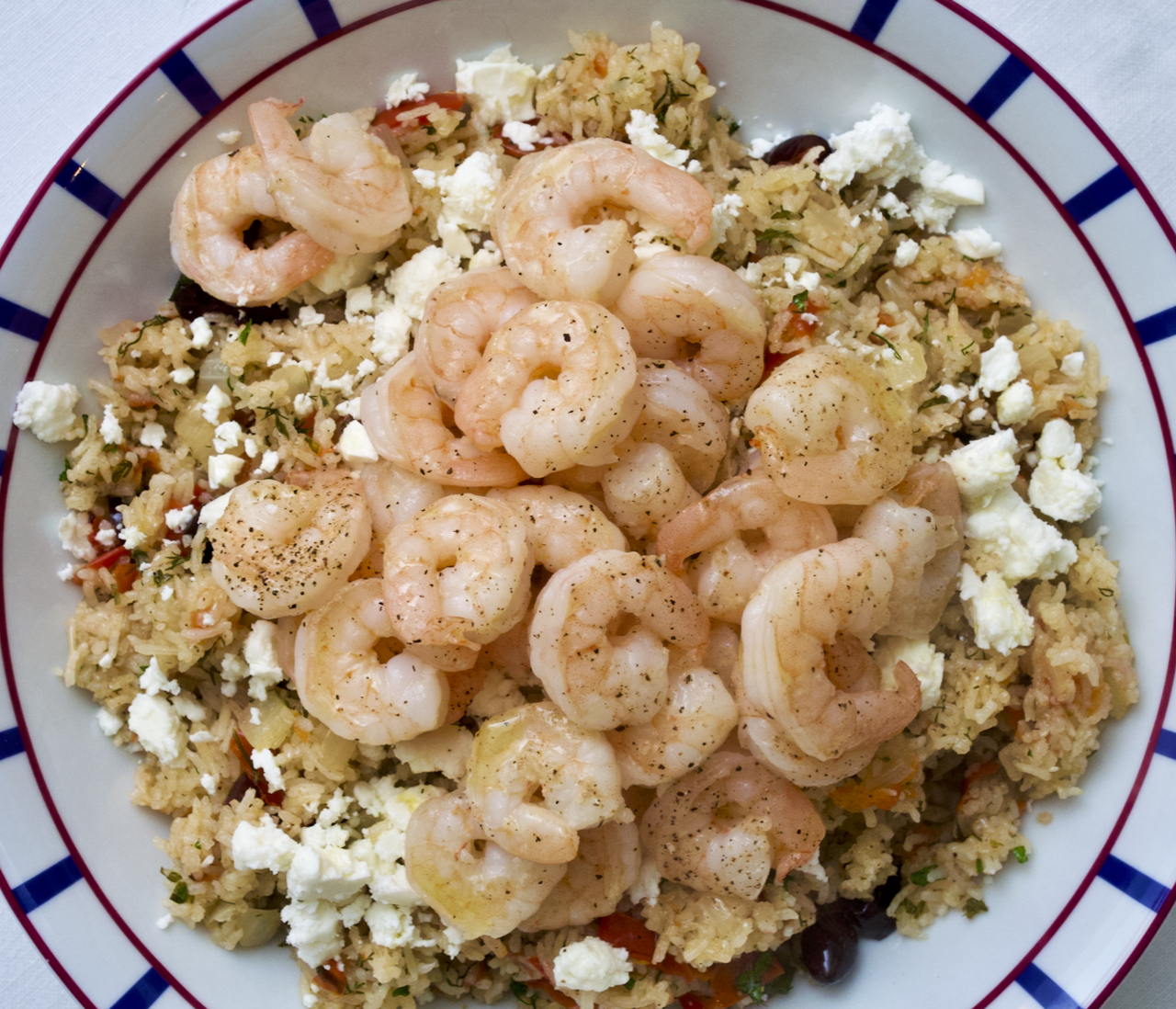
Prawns actually pair very well with feta, which is always a bit suprising to us. It’s nice to have a lighter dish amongst all the winter soups and stews.

Wine Suggestion: we think this suits a white grown somehwere around the Mediterranean, like tonight’s choice of the Hatzidakis Santorini Cuvée 15, a wonderfully fresh and complex Assyrtiko with honeysuckle and herbs on the nose followed by a textured, almost salty palate.

Prawn & feta pilaf – serves 4

  • 225g basmati rice
  • 15g unsalted butter
  • 2 tbsp olive oil, plus a bit extra to
  • 1 onion, finely chopped
  • 1 clove of garlic, crushed
  • 275g tomatoes, deseeded and roughly chopped
  • a big bunch of dill, chopped
  • a big bunch of flat leaf parsley, leaves chopped
  • a handful of mint leaves, chopped
  • 400ml fish stock or light chicken stock
  • 350g raw prawns, shelled and deveined
  • juice of ½ lemon, plus lemon wedges to serve
  • 55g black kalamata olives, pitted and roughly chopped
  • 75g feta cheese, crumbled

Rince the rice in a sieve under cold running water until the water runs clear. Leave to soak for an hour if you have the time, then rinse again.

Heat the butter and 2 tbsp of olive oil in a saucepan and cook the onion until it starts to soften. Add the garlic and tomatoes and continue to cook, stirring now and then, until the onion is cooked and the tomatoes have softened. Stir in the rice and half the herbs, season well, then pour in the stock and bring to the boil. Boil hard until the rice starts to look pitted, with little holes in the service and it seems like the liquid has disapeared.

Wrap a clean tea towel around the lid of the pan and cover the pan. Reduce the heat to low and leave to cook for 20 minutes.

When the rice is almost ready, dry the prawns on kitchen paper and quickly sauté in a little olive oil over a high heat. Squeeze over the lemon juice and season with black pepper and salt.

When the rice is cooked, fork through the olives, remaining herbs and lemon juice with a good glug of your best extra virgin olive oil. Transfer to a serving platter, then scatter over the feta and mound the prawns on top. Drizzle again with olive oil and serve with lemon wedges.

(Original recipe from Crazy Water, Pickled Lemons by Diana Henry, Aster*, 2024.)

Read Full Post »

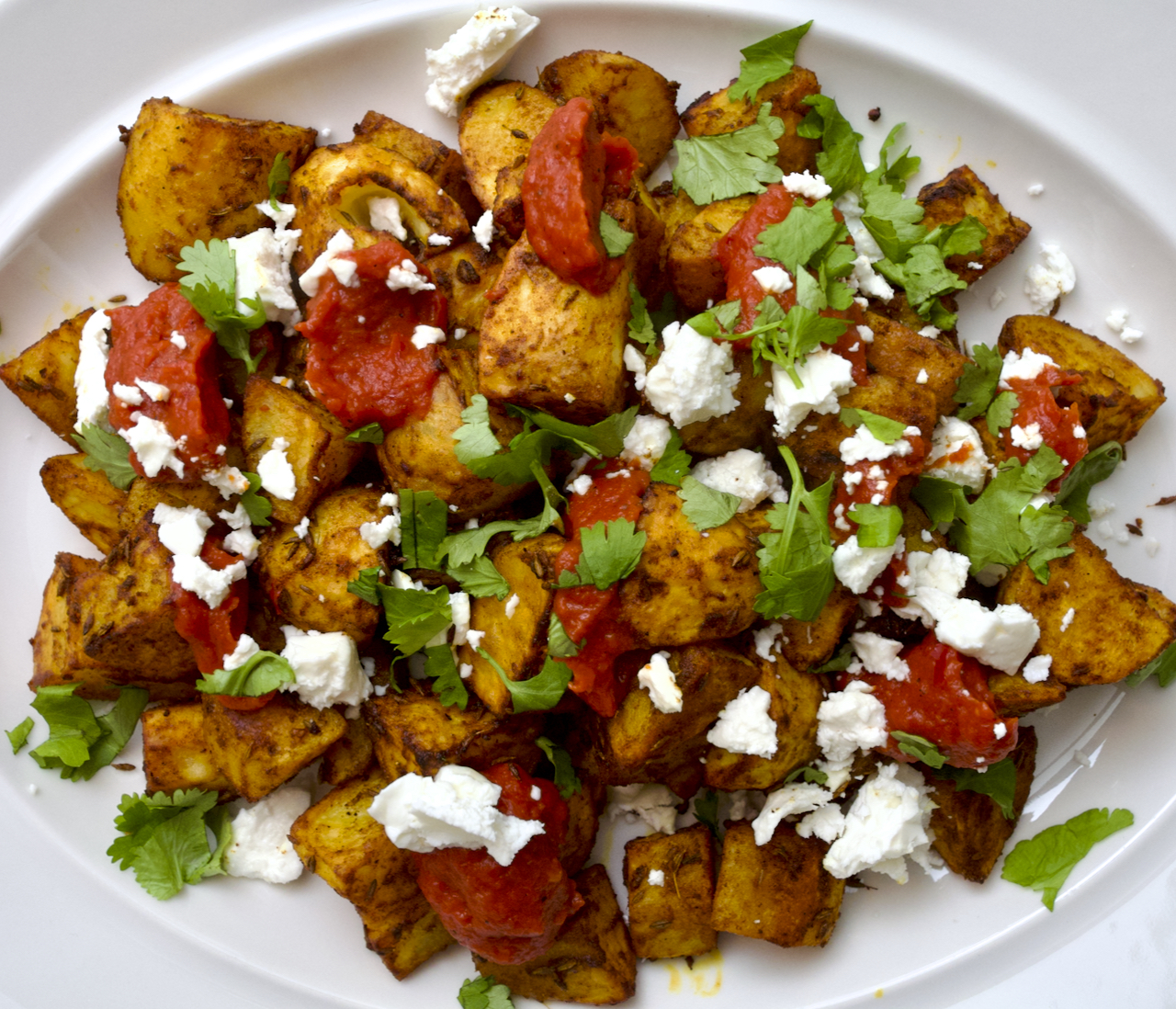
A tasty side dish that is similar to Spanish Patatas Bravas but with the flavours changed up. Usefully you can make the sauce in advance and re-heat just before serving.

Spicy Roast Potatoes with Tomato, Pepper & Harissa Sauce – serves 6

  • 1kg potatoes, peeled and cut into 2.5cm chunks
  • 2 tsp paprika
  • 2 tsp ground turmeric
  • 2 tsp cumin seeds
  • 3 tbsp garlic oil
  • a handful of fresh coriander leaves, chopped, to serve
  • crumbled feta, to serve

FOR THE SAUCE:

  • olive oil
  • 2 garlic cloves, bashed and thinly sliced
  • 250g (drained weight) roasted red peppers from a jar, roughly chopped
  • 400g tin chopped tomatoes
  • 1 heaped tbsp rose harissa
  • 1 tbsp caster sugar

Heat the oven to 220C/200C fan/Gas 7.

Line a baking tray with paper. Mix the spices with the garlic oil. Put the potatoes into a large bowl, pour over the spice mixture and toss to coat. Spread them out evenly on the tray, season with some salt and pepper and roast for 30 minutes or until crispy and cooked through.

To make the sauce, drizzle some olive oil into a saucpean, add the garlic and cook over a medium heat for a couple of minutes. Add the peppers, tomatoes and harissa and season well with salt. Cook for another couple of minutes. Stir in the sugar and cook over a medium heat for 20 minutes, stirring regularly. Remove from the heat and whizz until smooth, then taste and adjust the seasoning.

Serve the potatoes on a platter with the sauce poured over and feta and coriander scattered over the top.

(Original recipe from Flavour by Sabrina Ghayour, Aster*, 2023.)

Read Full Post »

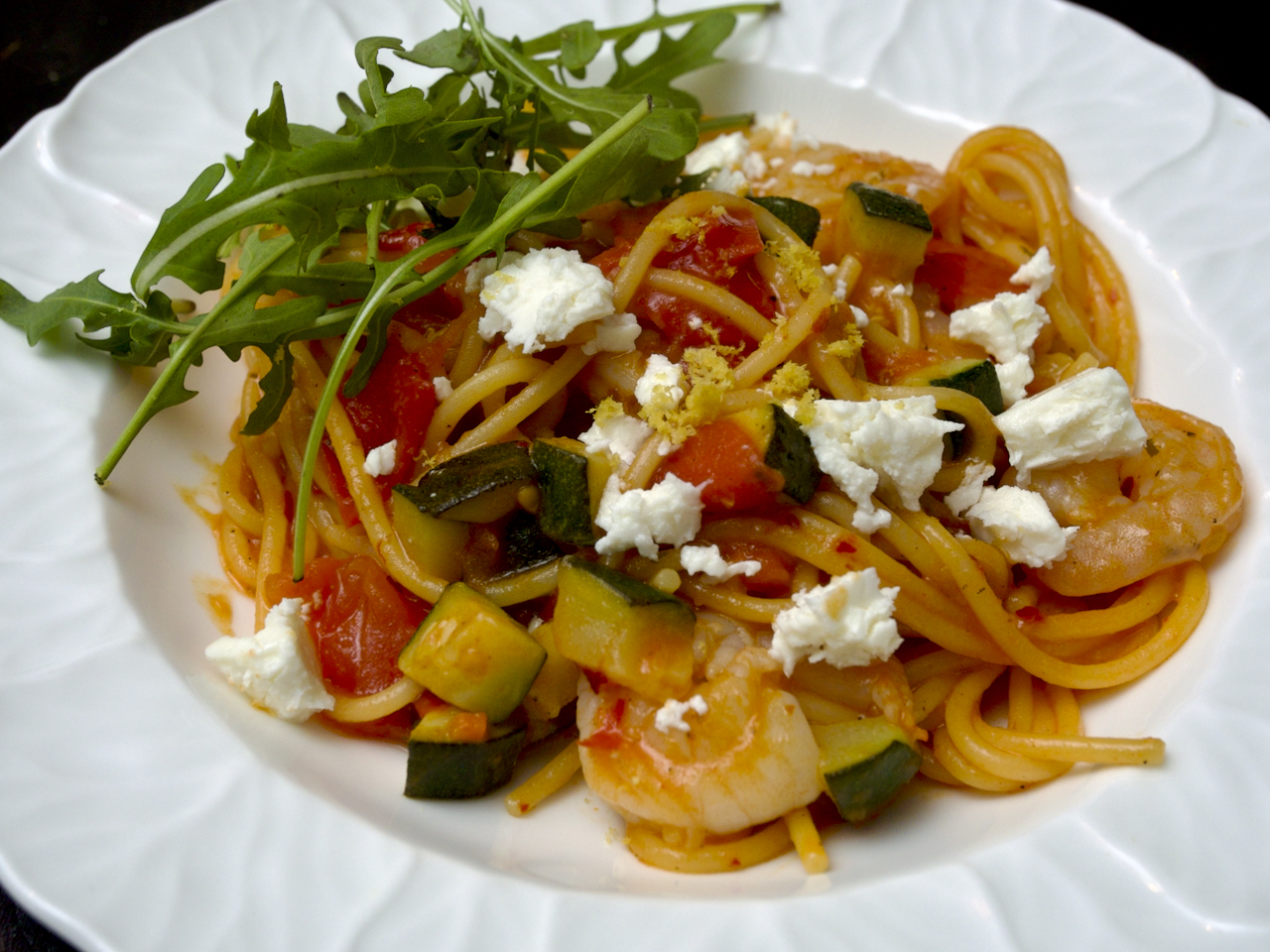
We’ve had mixed success with these all-in one pot pasta dishes with some working really well and others not quite! We were pleased with this one which worked out really well. Delicious sauce and lovely fresh flavours.

Spicy prawn spaghetti – serves 2

  • 2 tbsp olive oil
  • 1 courgette, diced quice small, about 1cm pieces
  • 165g pack raw peeled prawns
  • zest and juice of ½ lemon, plus wedges to serve
  • 2 cloves of garlic, sliced
  • 1 tbsp harissa paste
  • ½ tbsp tomato purée
  • 2 tbsp vodka
  • 2 biggish tomatoes, roughly chopped
  • 600ml hot veg stock
  • 150g spaghetti
  • ½ tsp fine sea salt
  • 75g feta, crumbled
  • a handful of rocket, to serve

Heat 1 tbsp of oil in a large sauté pan, then add the courgette and cook for a few minutes, until just starting to colour. Add the prawns and season lightly with salt and black pepper. Stir for a couple of minutes until the prawns are pink and just cooked. Squeeze in some lemon juice, then tip into a bowl and set aside.

Add another tbsp of oil to the pan and cook the garlic until it sizzles. Add the tomato purée and harissa and cook for 30 seconds, before adding the vodka, followed by the tomatoes. Pour in the stock and add the spaghetti, the salt and some black pepper. Bring the boil, mixing well. Cook at a brisk bubble, without a lid, for 15 minutes or until the pasta is al dente and is coated in the sauce. You can add extra water at any point if needed.

Tip the courgettes and prawns into the pan and toss until piping hot. Taste and add more lemon juice if you like. Serve in pasta bowls with the feta and lemon zest scattered over and a pile of rocket on top.

(Original recipe by Tasmin Burnett-Hall in Sainsburys Magazine, September 2024.)

Read Full Post »

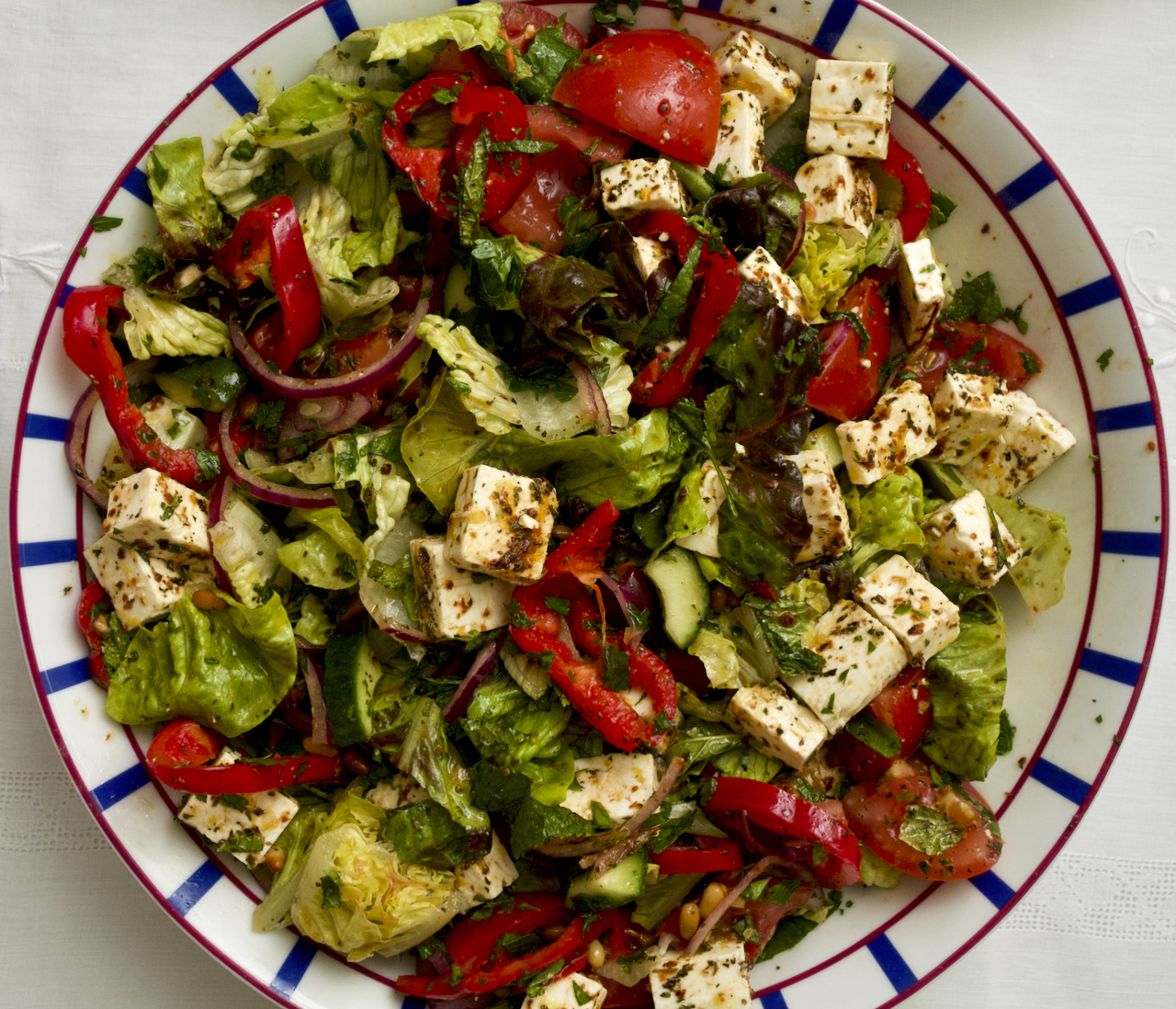
This is a really lovely salad! We served with some barbecued lamb but it would be great with loads of things.

Turkish chopped salad – serves 4 to 6

  • 5 tbsp extra virgin olive oil
  • 50g pine nuts
  • 250g feta, cut into 2cm cubes
  • 2 tsp dried mint
  • 1 tsp pul biber
  • 1 lemon, finely zested and juiced
  • 3 large, ripe tomatoes, roughly chopped
  • ¼ cucumber, deseeded and chopped
  • 1 red romano pepper, deseeded and sliced finely into rings
  • 1 Cos or Little Gem lettuce, roughly chopped
  • 10g mint leaves, roughly chopped
  • 25g parsley leaves, finely chopped
  • 2 tbsp white wine vinegar
  • 1 red onion, finely sliced
  • 50g pitted black olives

Drizzle 1 tbsp of the oil in a small frying pan and fry the pine nuts for a couple of minutes until golden brown, then set aside.

Mix the cheese cubes in a bowl with 2 tbsp of the olive oil, 1 tsp of the dried mint, the pul biber, ¼ tsp of coarse black pepper and the lemon zest. Set aside.

Put the tomatoes, cucumber, pepper, lettuce, fresh mint and parsley in a large bowl and toss well with 1 tbsp of the lemon juice and all the white wine vinegar.

Drizzle the last 2 tbsp of oil over the salad and toss well, then add the red onion, black olives, toasted pine nuts, 1 tsp of dried mint and toss again. Add the cheese and toss gently before serving.

(Original recipe from Good Food Magazine, August 2024.)

Read Full Post »

This dish takes a while but it’s a waiting game for the most part and you will be richly rewarded. A good value dish for lamb lovers!

Wine Suggestion: a succulent red with gentle spices and if you can push the boat out something like Ridge’s superlative Lytton Springs. All blackberry, raspberry, coffee and warm spices, but with fine, layered tannins and a chalky undercurrent.

Lamb pilaf with orzo – serves 4

  • 800-900g lamb neck fillet
  • 2-3 tbsp olive oil
  • 1 large onion, finely chopped
  • 2 cloves of garlic, crushed
  • ½  tsp ground cinnamon
  • ½  tsp ground allspice
  • 400g tin chopped tomatoes
  • 2 tbsp tomato purée
  • 300ml dry white wine
  • 2 tbsp lemon juice
  • 2 tsp sugar
  • 1 chicken stock cube
  • 1 tbsp chopped fresh thyme
  • 250g orzo

TO SERVE:

  • 85g feta
  • 1 tbsp chopped thyme
  • 1 tbsp chopped mint
  • finely grated rind of 1 lemon

Heat the oven to 160C/Fan 140C/Gas 3.

Cut the lamb neck fillets in half lengthways and don’t trim off any fat. Cut each half fillet crossways into bite-size pieces.

Heat a good glug of olive oil in a large non-stick frying pan until hot, then sear the lamb in batches over a medium-high heat until well browned on all sides. Remove with a slotted spoon to a large casserole.

Turn the heat down and add the chopped onion. Fry for a few minutes until golden brown, then add the garlic, cinnamon and allspice and fry for another minute or two. Scrape the onion mixture into the casserole with the meat.

Pour the tin of tomatoes over the meat, then fill the can twice with water and add this too. Give it all a stir, then add the tomato purée, wine, lemon juice, and sugar. Crumble in the stock cube and add the thyme, ½ tsp salt and plenty of black pepper. Bring to the boil, stirring, then cover and transfer to the oven. Cook for 2 hours, stirring halfway through.

Stir in the orzo then cover and return to the oven for 20 minutes or until the orzo is cooked, stirring halfway through. Crumble the feta over and sprinkle with the herbs and lemon zest to serve.

A green salad is all you need on the side.

(Original recipe from Mary Berry Cooks the Perfect, Penguin Random House Group, 2014.)

Read Full Post »

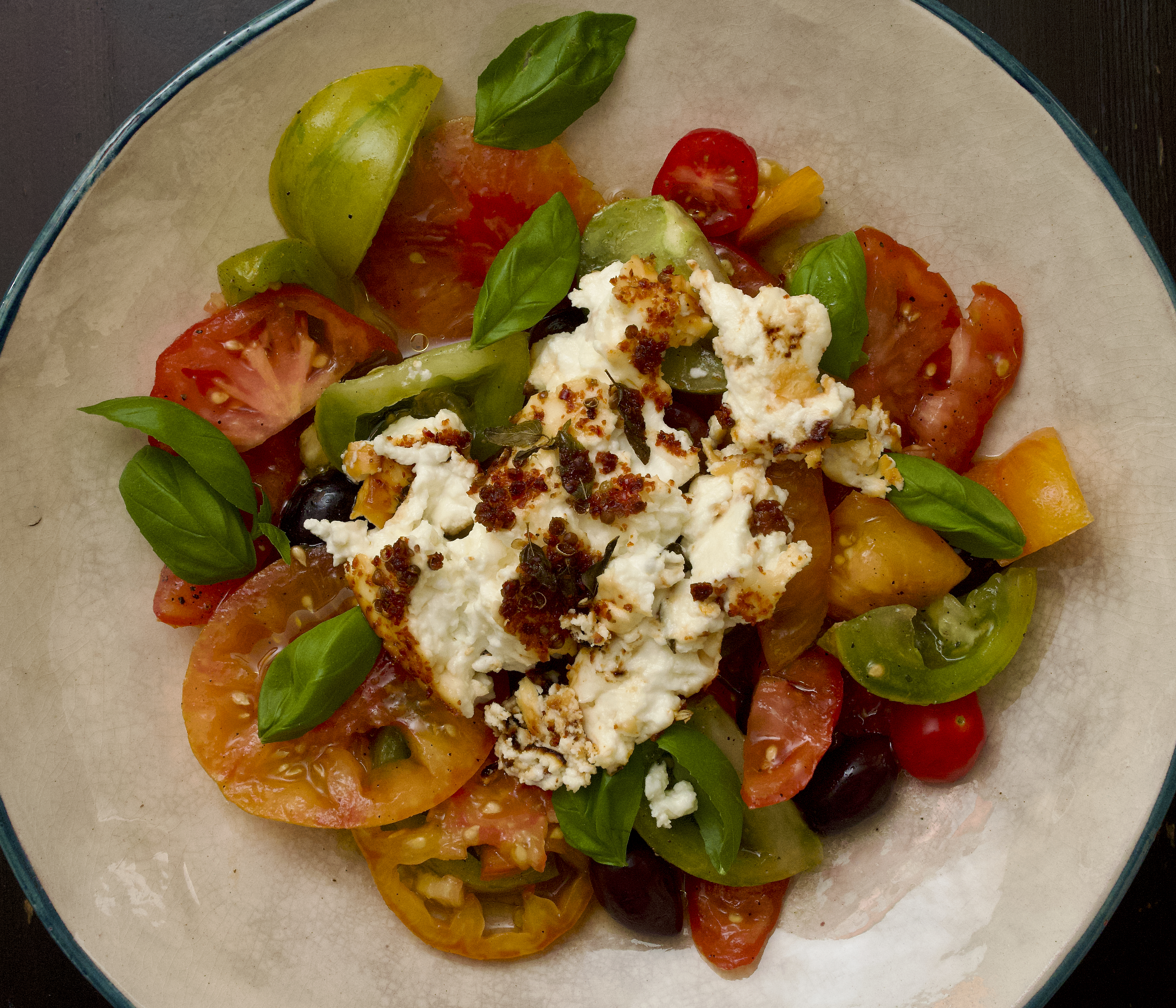
We love a tomato salad and reckon we’ll be making this one all summer. Great for a barbecue.

Baked feta and tomato salad – serves 4

  • 1 block of feta
  • 100ml olive oil, plus 1 tsp
  • a drizzle of runny honey
  • ½ tsp coriander seeds, lightly crushed
  • 1 tsp fresh oregano leaves, or a good pinch of dried oregano
  • ½ tsp pul biber
  • 600g mixed tomatoes
  • 2 tbsp kalamata olives, pitted
  • 2 tsp red wine vinegar
  • a handful of basil

Heat the oven to 220C/200C/Gas 7.

Rub the feta with a tsp of olive oil. Place on a sheet of foil, then drizzle over the honey and sprinkle with the coriander seeds, oreganoa and pul biber. Wrap the foil around the feta to make a sealed parcel then bake for 10 minutes.

Unwrap the foil and roast for another 5-10 minutes or until caraemelised.

Meanwhile, slice the tomatoes and put them into a large bowl. Sprinkle over a good pinch of sea salt and lots of black pepper. Stir in the olives and red wine vinegar and set aside.

Spoon the tomatoes onto a serving platter and drizzle with olive oil (use a nice one). Sprinkle over the basil leaves and set the baked feta on top.

(Original recipe by Rosie Birkett in Olive Magazine, June 2023).

Read Full Post »

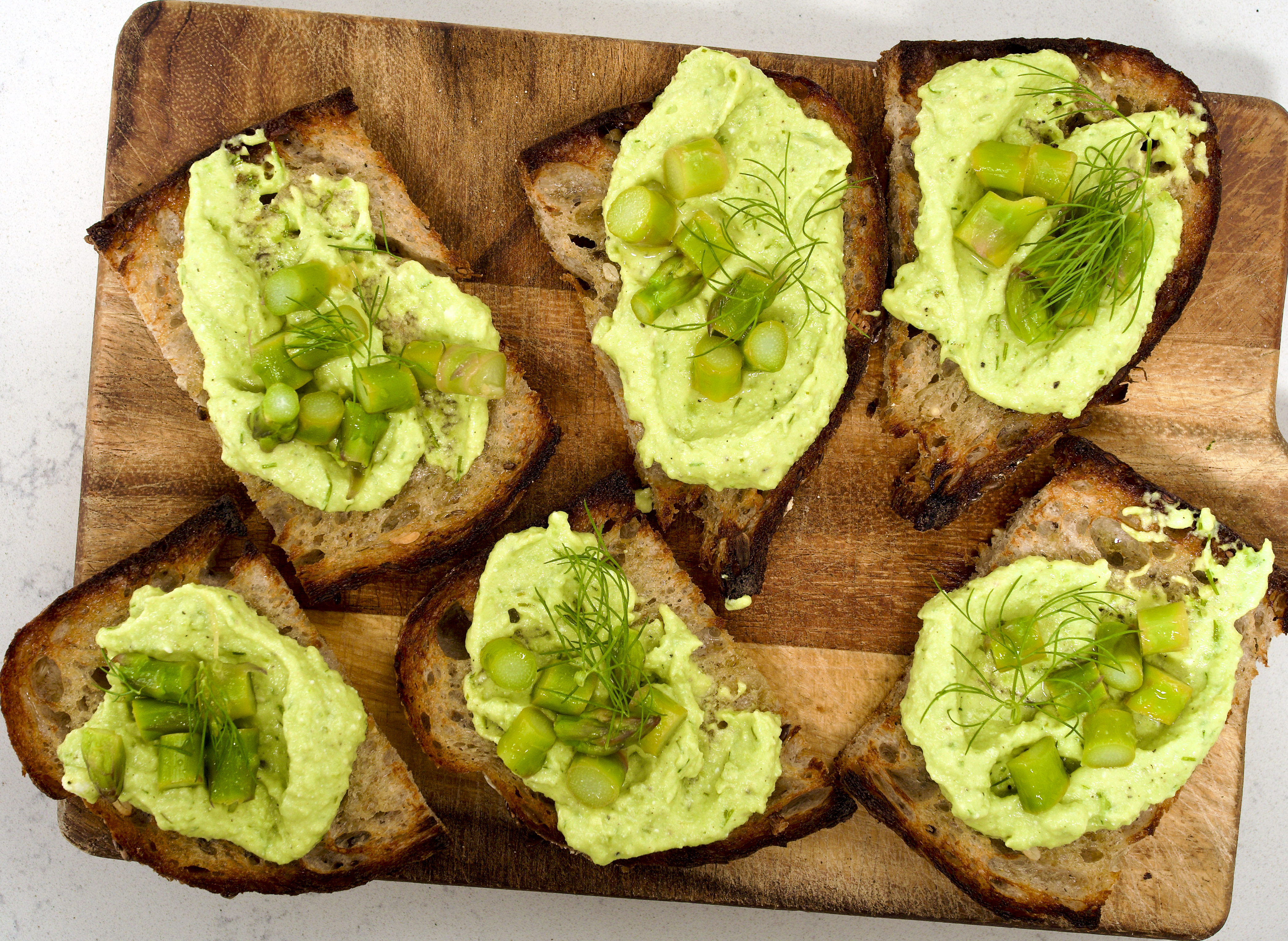
Look at the colour of these! A perfect starter or snack before the spring veg disappears.

Broad bean crostini with asparagus & dill – serves 4

  • 160g broad beans
  • 4 tbsp extra virgin olive oil
  • 50g feta cheese, crumbled
  • 1 tsp honey
  • juice of half a lemon
  • a large handful of dill fronds
  • 4 slices of sourdough
  • 1 clove of garlic, halved
  • 4 blanched asparagus spears

Bring a large pot of salted water to the boil and cook the broad beans for 5-6 minutes or until tender. Drain and tip them into a bowl of ice-cold water, then pop the beans out of their pods and transfer to a food processor.

Add the olive oil, feta, honey, lemon juice and dill to the food processor, then season with black pepper and whizz to a purée.

Meanwhile, brush the bread with some olive oil and toast or griddle until golden, then rub with the cut side of the garlic clove.

Finely chop the asparagus spears and toss with a little olive oil and lemon juice.

Spread the broad bean purée over the toast and top with the asparagus and some extra dill.

(Original recipe from BBC Good Food)

Read Full Post »

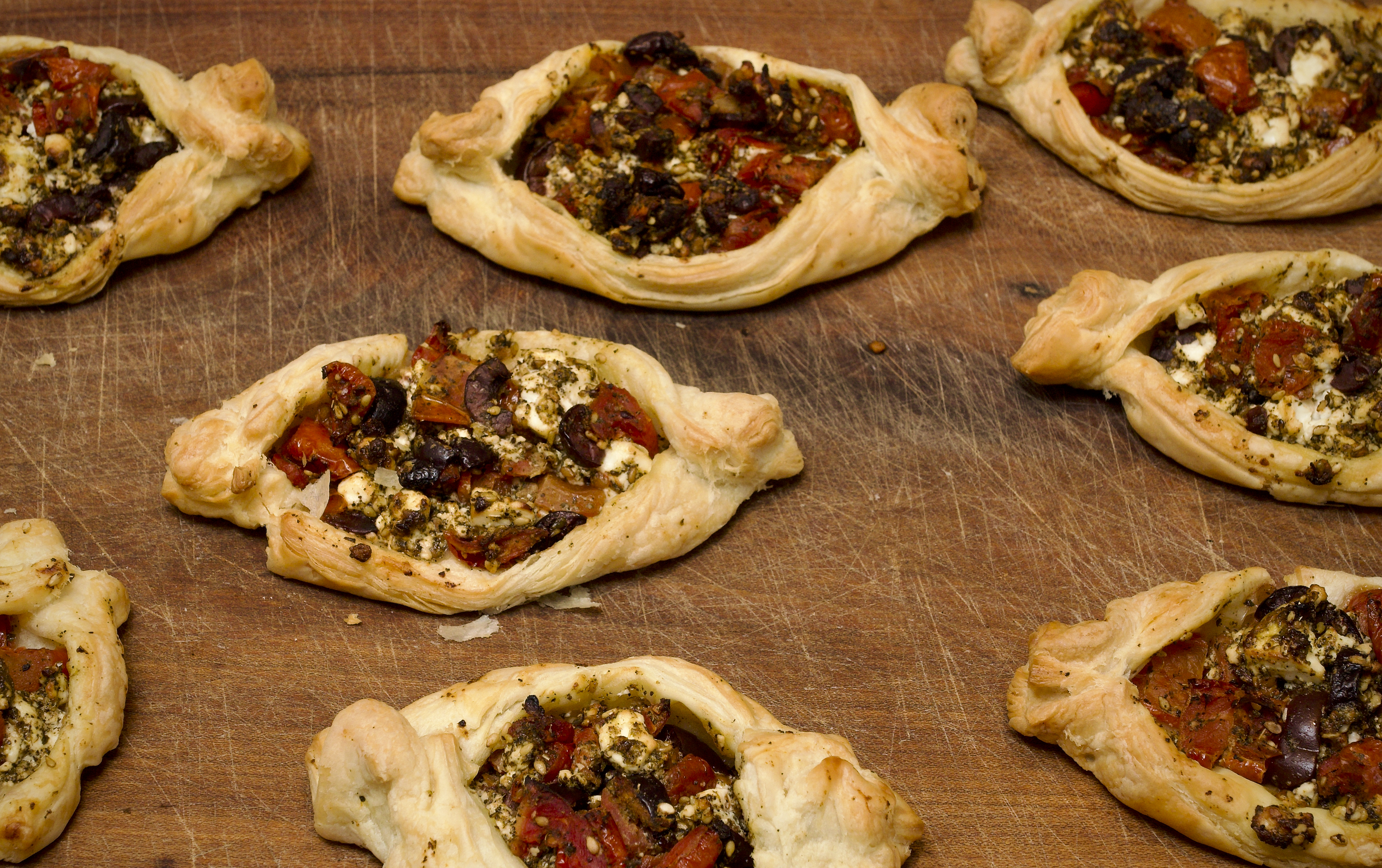
We rarely make a proper starter but we do like nibbles that you can eat in your hand with a drink. These pastries are inspired by Sabrina Ghayour and are particularly tasty.

Wine Suggestion: At this time of year we look out for savoury and dry whites, and from Crete we chose an Assyrtiko from Nikos Karavitakis. His Nomas cuvee is crisp, dry, appley citrus with a stony salinity and savoury finish; just perfect for a salty, savoury, herby pastry like this. Sunshine on a plate, and in a glass.

Za’atar, tomato, olive & feta pastries – makes 9

  • 1 x 320g ready-rolled puff pastry sheet
  • 150g sunblush tomatoes in oil, drained and patted dry with kitchen paper, then roughly chopped
  • 200g feta cheese, crumbled
  • 75g pitted Kalamata olives, roughly chopped
  • 2 tbsp za’atar

Heat the oven to 200C/Gas 6.

Line a large baking tray with baking paper.

Cut the pastry into 3 vertically and then horizontally to give 9 rectangles.

Mix the tomatoes, feta, olives and za’atar together in a mixing bowl and season generously with black pepper.

Divide the mixture between each pastry rectangle. Put spoonfuls in the centre and pat with your fingers to flatten it down.

Take 2 corners of the pastry and twist them together like a sweet wrapper. Repeat with the 2 remaining corners, leaving the filling exposed in the middle. Repeat with each piece of pastry.

Put the pastries onto the lined baking tray and bake for 25 minutes, or until golden brown.

Remove from the oven and cool slightly, they are best served warm.

(Original recipe from Persiana Everyday by Sabrina Ghayour, Aster, 2022.)

Read Full Post »

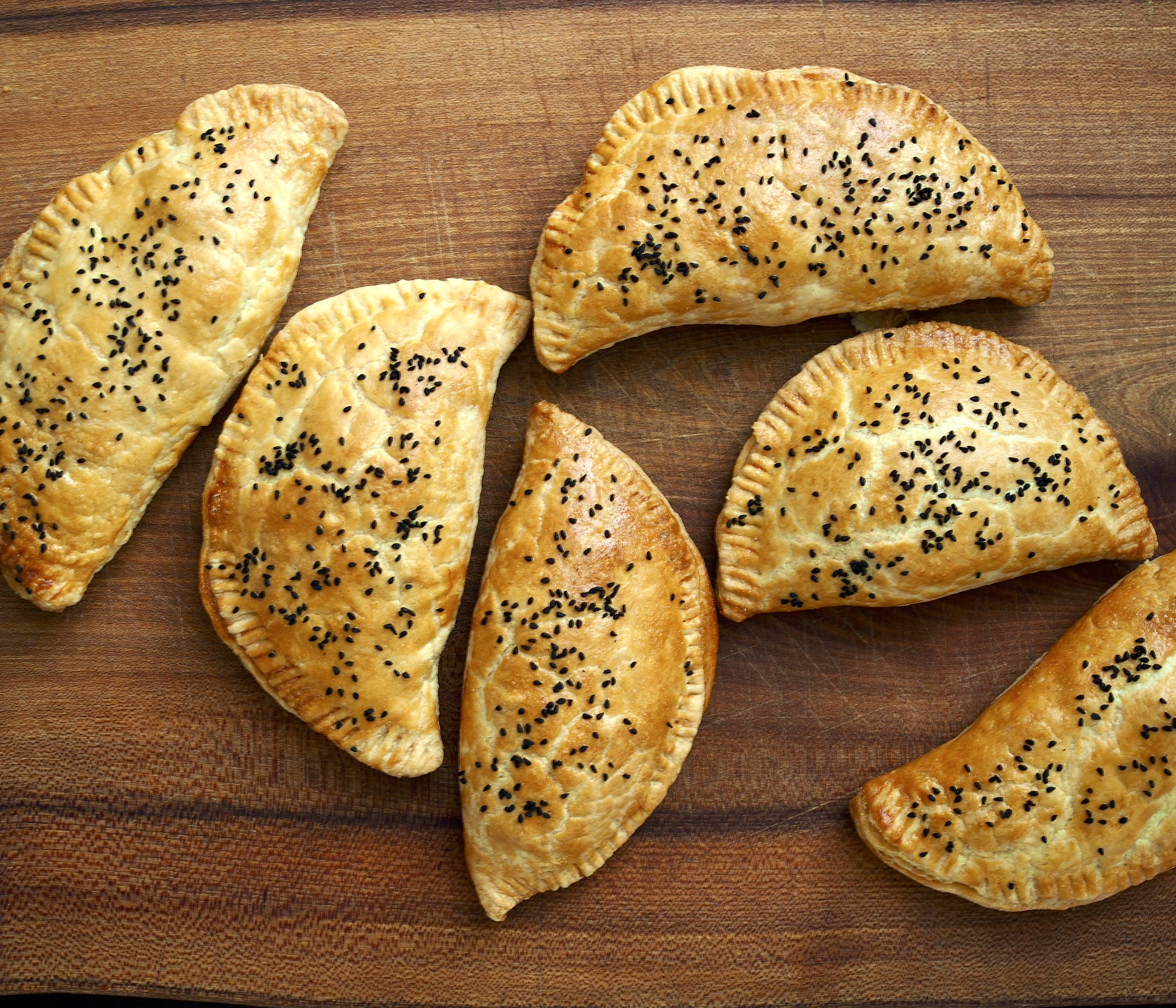
This was our first ever attempt at rough puff pastry. It’s actually pretty simple but you do need to start in the morning if you want to eat these for lunch. We had too much filling and we made some extras with shop-bought puff pastry – these were good too! It’s a good idea to make the filling first as it needs to cool completely before stuffing the pasties.

Courgette, chard & feta pasties – serves 4

FOR THE FILLING:

  • a bunch of chard
  • 4 tbsp extra virgin olive oil
  • 2 onions, thinly sliced
  • 2 cloves of garlic, thinly sliced
  • 6-8 small courgettes, sliced into 1cm rounds
  • finely grated zest of 1 lemon
  • a large handful of basil leaves, chopped
  • a handful of flat-leaf parsley leaves, chopped
  • 150-200g feta cheese (or soft goat’s cheese)

FOR THE ROUGH PUFF PASTRY:

  • 250g unsalted butter, cubed and chilled
  • 500g plain flour, plus extra for dusting
  • a good pinch of salt
  • 200ml iced water

TO FINISH:

  • 1 beaten egg
  • 1 tsp black onion seeds

Wash the chard, then remove the stalks from the leaves. Roughly chop the leaves and cut the stalks into 1cm pieces. Bring a pan of salty water to the boil and add the stalk pieces. Cook for a minute or two, then add the leaves and cook for another couple of minutes. Drain and allow to cool, then squeeze out any excess liquid from the leaves with your hands. Set aside.

Heat half the olive oil in a large frying pan over a medium heat. Add the onions, garlic and some seasoning. Cook for 5-6 minutes, watching that they don’t catch. Add the courgettes and cook for another 15-20 minutes. You want the courgettes to be nice and soft but not disintegrated. Take the pan off the heat and stir in the chard, lemon zest, basil, parsley and more seasoning. Allow to cool completely, then crumble in the feta and gently mix together. Keep the filling cool while you make the pastry.

TO MAKE ROUGH PUFF PASTRY:

Combine the butter cubes, flour and salt in a large bowl. Add just enough cold water to bring everything together into a dough. It will have big pieces of butter in it and that’s ok.

Flour your surface well, then roll the dough in one direction, away from you, to a 1cm thick rectangle. Fold the two short ends into the middle so they overlap. Give the pastry a quarter turn, repeat the rolling, folding and turning process another three times (four in total). Wrap the pastry in baking paper and put into the fridge for 30 minutes. Remove the pastry and repeat the rolling, folding and turning process another 4 times. Return to the fridge again for another 30 minutes.

Heat the oven to 200C/180C fan/400F/Gas 6.

Remove the chilled pastry from the fridge and roll out to 4-5mm thick. Use a 18-20cm plate or cutter to cut out 4 rounds. Put a quarter of the filling (or whatever fits) in the lower half of each round, leaving a 2cm border around the edge. Brush the border below the filling with beaten egg and fold the pastry over to encase the filling. Crimp the edges with a fork to seal, then brush with the egg and sprinkle over the onion seeds and a little bit of flaky sea salt.

Put the pasties on to a baking sheet lined with baking paper and bake for 45-50 minutes or until golden. Eat just warm or at room temperature.

(Original recipe from Outside by Gill Meller, Hardie Grant: Quadrille, 2022.)

Read Full Post »

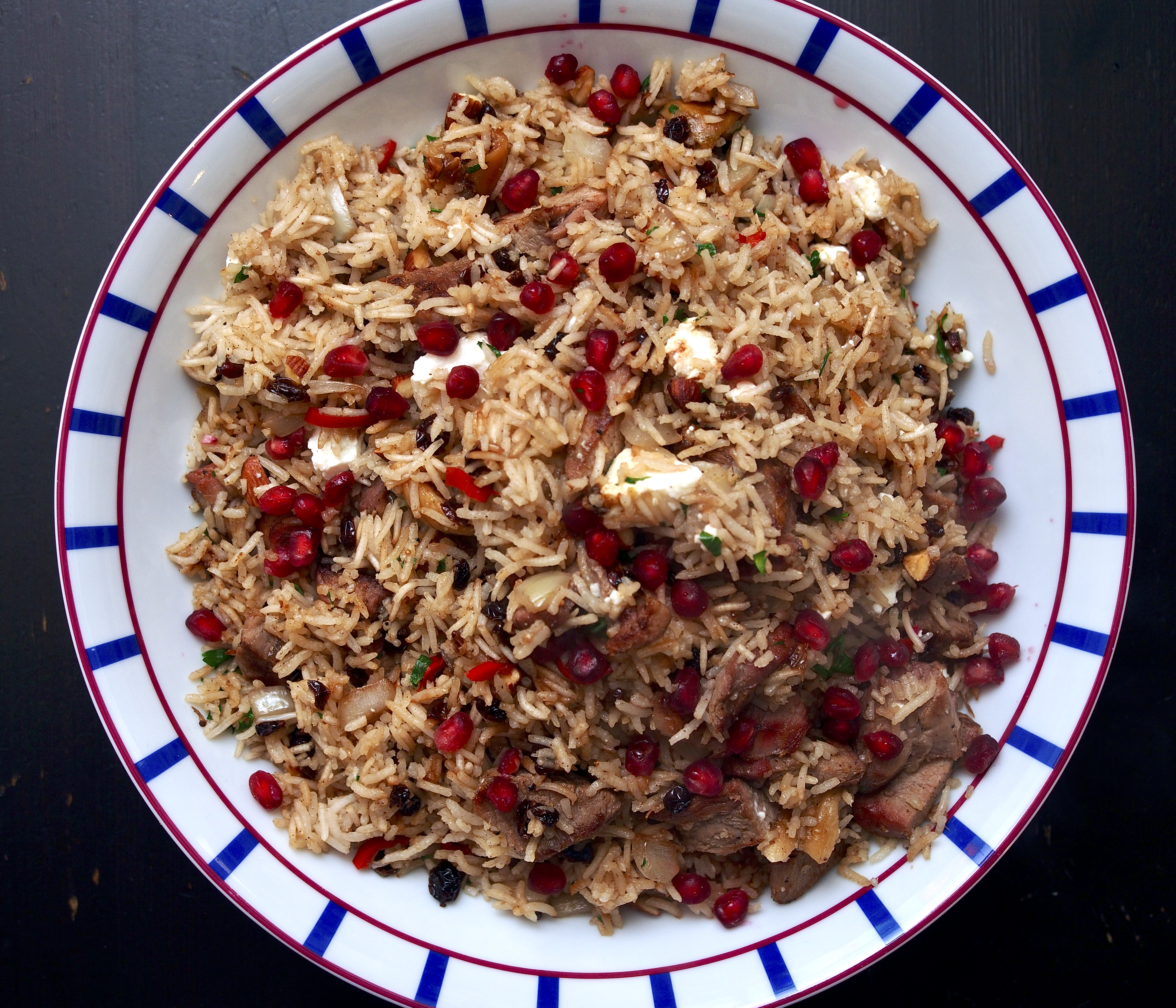
Another recipe for using up leftover cooked lamb. It doesn’t take very long so you could try it mid-week.

Wine Suggestion: This is delicious with a red with a good amount of age, where the gentle, aged spices and characters meld with the food. This isn’t always easily to hand, so Domaine Gayda’s Grenache from the border of the Languedoc and Roussillon was a more than adequate substitute, with the peppery spices from the grape providing a natural warmth and a juicy red fruit.

Leftover lamb pilaf – serves 4-6

  • 1 onion, roughly chopped
  • 1 red chilli, deseeded and finely sliced
  • ½ tsp ground allspice
  • 2 cloves of garlic, crushed
  • 350g basmati rice
  • 700ml chicken stock or lamb stock
  • 50g dried barberries (or you could use dried cherries or cranberries)
  • 50g dried figs, quartered
  • 500g leftover cooked lamb, in chunks
  • 75g feta cheese, crumbled
  • 2 tbsp chopped flatleaf parsley or mint
  • 35g toasted almonds, chopped (or pistachios)
  • seeds from ½ a pomegranate
  • Greek yoghurt to serve (optional)

Heat a splash of oil in a large heavy saucepan and cook the onion until soft and golden. Add the chilli, allspice and garlic and cook for another minute, then add the rice, stirring to coat in the oil. Add the stock and dried fruit and season well with salt and pepper. Bring to the boil, then reduce to a simmer and cover with a lid. Cook for 20 minutes or until the liquid has been absorbed and the rice is tender. Don’t be tempted to stir it! If the rice isn’t tender after 20 minutes, add a little boiling water, cover again and cook for another 4-5 minutes. If the stock isn’t completely absorbed, turn up the heat to quickly boil it off.

Heat 1 tbsp of oil in a frying pan and quickly fry the lamb until warm and crispy. Season, then fork through the rice with the feta, herbs and nuts. Transfer to a large dish and scatter over the pomegranate seeds. Serve with some yoghurt on the side if you like.

(Original recipe from Food from Plenty by Diana Henry, Mitchell Beazley, 2012.)

Read Full Post »

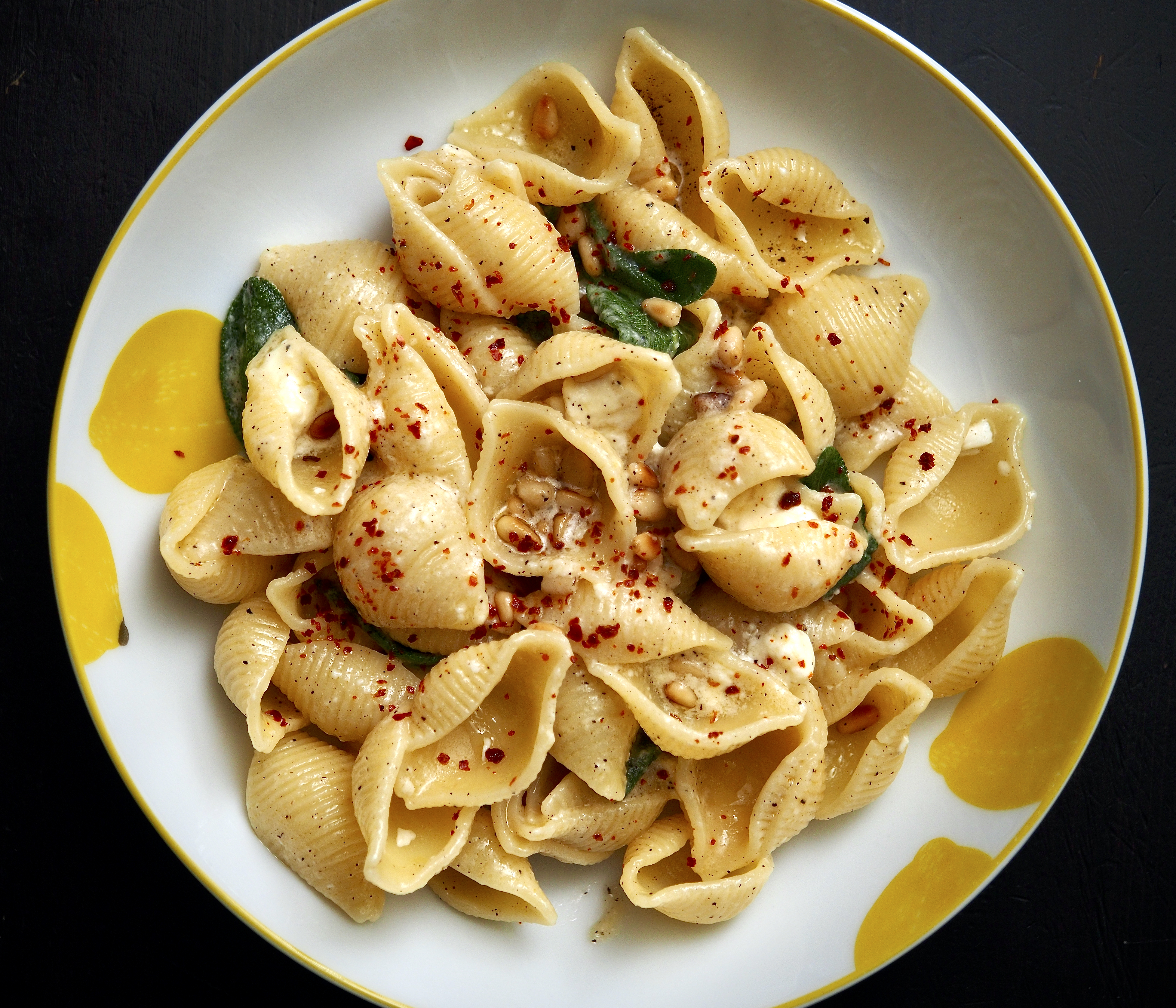
We are cooking our way through Persian Everyday by Sabrina Ghayour. We struggle like everyone to eat well on busy days but this book is perfect for just that.

Wine Suggestion: White, lemony and medium bodied. Maybe a youthful Verdicchio, or our current fave, Zuani’s Ribolla Gialla Sodevo, from Collio in North East Italy. A grape that was so higly regarded by the Romans they implemented laws to protect it from adulteration … possibly the world’s first appellation laws …we’ll need to investigate further.

Pasta with sage butter, feta & pine nuts – serves 2

  • 200g pasta shells
  • 75g butter
  • 20 sage leaves
  • 25g pine nuts
  • 100g feta cheese
  • 2 pinches of pul biber chilli flakes

Cook the pasta in lots of very salty water according to the timings on the packet.

When the pasta is almost cooked, put a large frying pan over a gentle heat. Add the butter and sage and allow the butter to melt gently but don’t let it sizzle much. Keep stirring so the sage flavours the butter.

Roughly drain the pasta (you want a little bit of water still on the pasta) and add to the pan with the butter and sage. Turn up the heat and season very generousy with black pepper and a little sea salt. Add the pine nuts and toss everything together, then add the feta and stir until melting and starting to coat the pasta.

Serve spinkled with extra black pepper and a pinch of pul biber.

(Original recipe from Persiana Everyday by Sabrina Ghayour, Aster, 2022.)

Read Full Post »

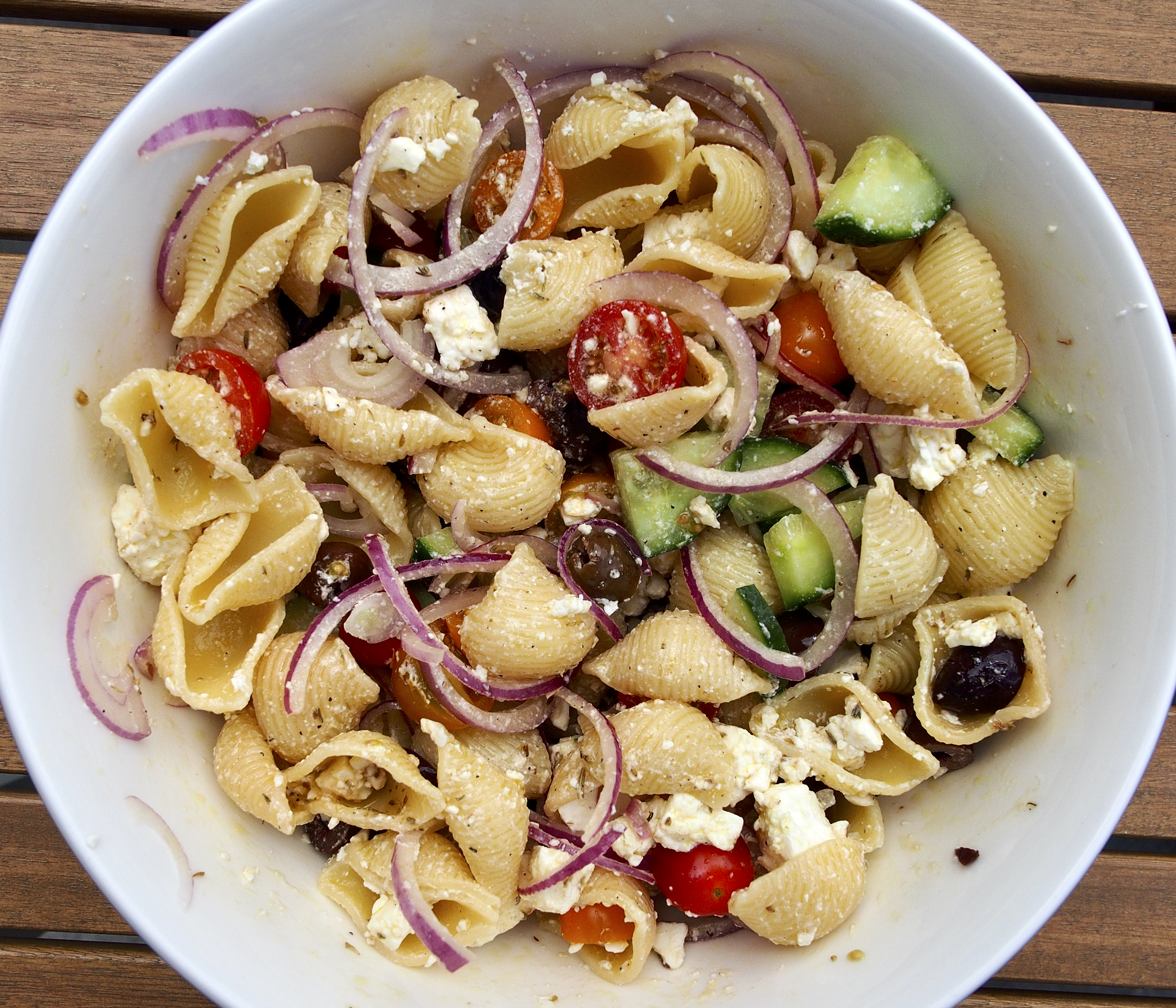
Like a Greek salad, but with pasta added in. It makes a great lunch or lunchbox and is good for using up odds and ends in the fridge.

Pasta Salad – serves 4

  • 200g pasta – use what ever shape you have
  • 3 tbsp extra virgin olive oil
  • 1 tbsp red wine vinegar
  • 1 tsp dried oregano
  • 20 cherry tomatoes, halved
  • 75g pitted black olives, halved
  • ½ small cucumber, quartered lengthways then sliced
  • ½ a red onion, thinly sliced
  • 100g feta cheese

Cook the pasta in lots of salty boiling water according to the timings on the packet.

Meanwhile, put the olive oil, red wine vinegar, oregano and some seasoning into a mixing bowl and mix well to make a dressing.

Drain the pasta in a colandar and leave to cool for a few minutes. Tip the cooked pasta into the mixing bowl and toss to coat in the dressing.

Tip in the tomatoes, olives, cucumber and red onion, then crumble in the feta cheese. Gently mix everything together, then serve or put in the fridge for lunchboxes tomorrow.

(Original recipe by Cassie Best in BBC Good Food Magazine, July 2022.)

Read Full Post »

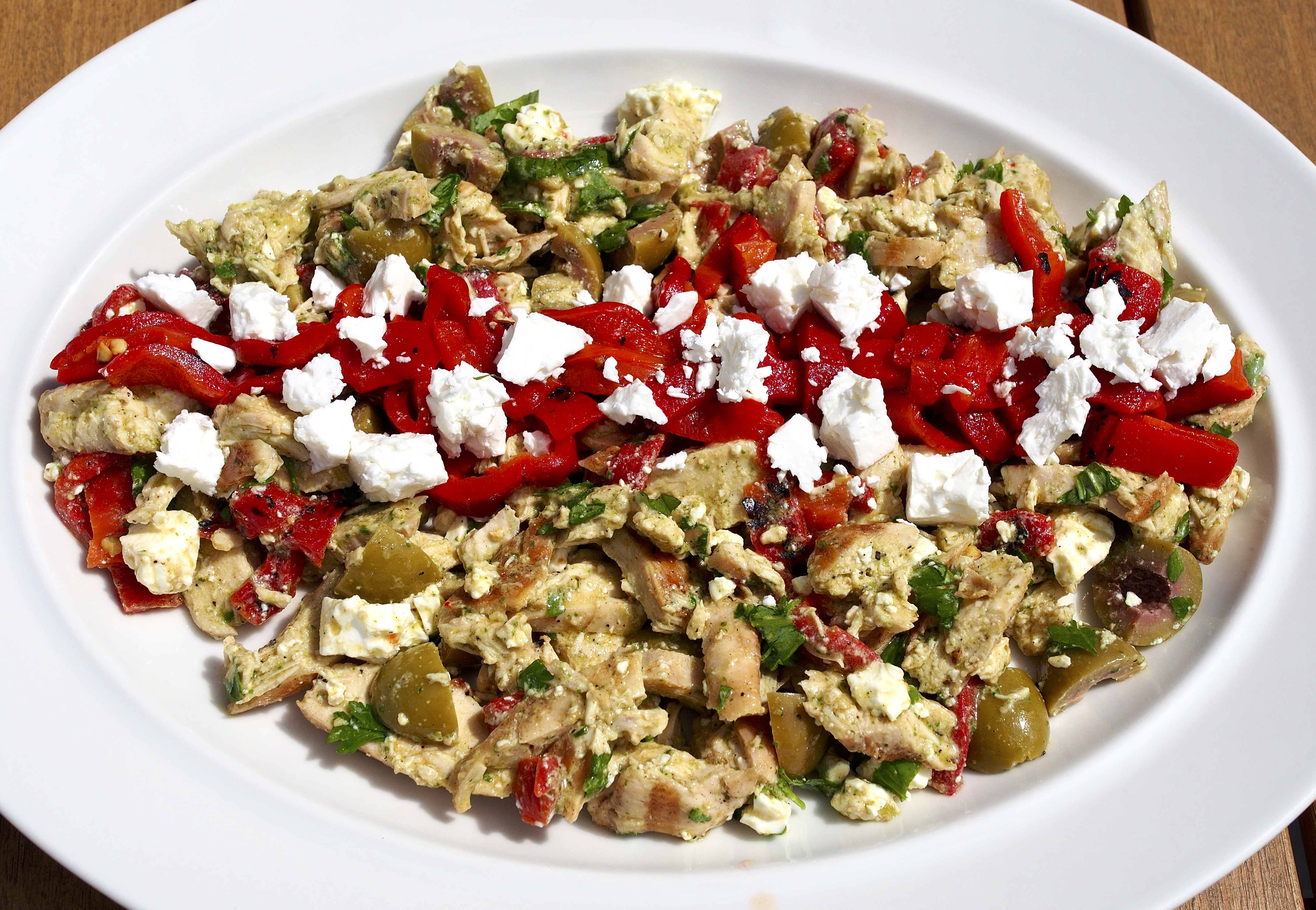
This is absolutely lovely for lunch and you can make it up a few hours in advance and chill it in the fridge. It’s also easily doubled if your serving a crowd. Like everything it tastes better outside in the sun. Serve with some crusty bread and green salad leaves if you like.

Lemon & herb chicken salad – serves 6

  • 750g cooked skinless chicken, cut into thin strips (we cook our chicken on a barbecue for extra flavour)
  • 150g pitted green olives, halved
  • 290g jar chargrilled red peppers, drained and thinly sliced
  • 2 tbsp freshly chopped basil
  • 2 tbsp freshly chopped flat-leaf parsley
  • 200g feta cheese, broken into small pieces

FOR THE DRESSING:

  • 2 tbsp Dijon mustard
  • 2 tbsp pesto
  • juice of 1 lemon
  • 4 tbsp olive oil
  • 1 tbsp caster sugar

Make the dressing by mixing all the ingredients together in a bowl and seasoning with salt and black pepper.

Add the chicken to the dressing and toss well, then addd the olives, half the peppers, the basil, parsley, and two-thirds of the feta. Season again.

Arrange the chicken on a large platter and top with the rest of the peppers and feta. Chill in the fridge for a bit before serving.

(Original recipe from Mary Berry Cooks up a Feast with Lucy Young, Penguin Random House, 2019.)

Read Full Post »

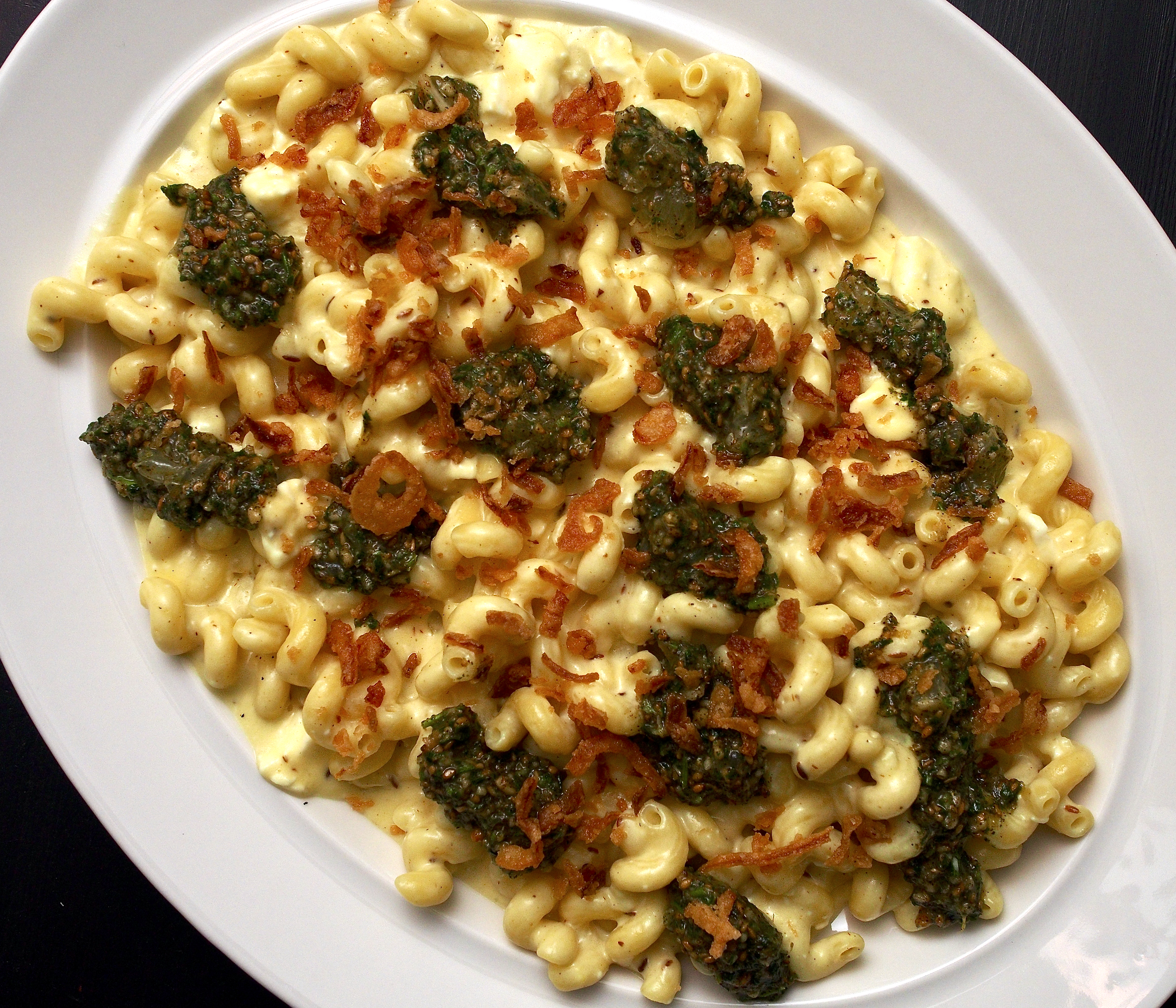
This is a rather unconventional method but it does work, and the resulting dish is perfect comfort food for a cold day. The za’atar pesto is a good addition to cut through the richness and the feta provides creamy nuggets. A crazy but good idea from the Ottolenghi Test Kitchen.

Wine Suggestion: A crisp white with body and texture is called for here to help cut through rich layers and stand up to the complex flavours. Domaine Ventenac’s Cassandre waas our choice and a very happy match indeed. Vermentino from Cabardes in the south of France, this comes from vineyards that have cooling breezes and a little altitude to give it depth of flavour as well as a scintillating freshness; finishing with a slight nutty twist that gave the pesto an extra lift.

Middle Eastern mac n cheese with za’atar pesto – serves 4 to 6

  • 300g dried cavatappi or fusilli pasta
  • 600-700ml whole milk
  • 65g unsalted butter, cut into 3cm cubes
  • 3 garlic cloves, crushed
  • tsp ground turmeric
  • 1½ tsp cumin seeds, toasted and roughly crushed
  • 75ml double cream
  • 150g mature cheddar, roughly grated
  • 180g Greek feta, roughly crumbled
  • 45g shop-bought crispy onions or shallots

FOR THE ZA’ATAR PESTO

  • 1 large lemon
  • 3 tbsp za’atar
  • 20g fresh coriander, roughly chopped
  • 1 clove of garlic, roughly chopped
  • 40g pine nuts, lightly toasted
  • 6 tbsp olive oil

Put the pasta, 600ml of milk, 350ml of water, the butter, garlic, turmeric, 1 tsp of salt and plenty of black pepper into a large sauté pan over a medium-high heat. Bring to a simmer, then turn the heat down the heat and cook, stirring now and then, for 8-14 minutes, or until the pasta is al dente and the sauce thickened. You can add the extra 100ml of milk if you need it thinned a bit.

Turn the heat to low and stir in the cumin, cream and cheeses. Stir until the cheddar has melted.

Meanwhile, make the pesto. Finely grate the lemon to get 1½ tsp of zest. Peel the lemon, cut into segments and roughly chop. Put the lemon and zest into a bowl.

Put the za’atar, coriander, garlic, pine nuts, a pinch of salt, plenty of black pepper and 3 tbsp of the oil into a food processor, then pulse a few times to get a coarse paste. Add to the lemon and stir in the remaining 3 tbsp of oil.

Transfer the cheesey pasta to a large serving platter, dot all over with the pesto and top with the crispy onions.

(Original recipe from Ottolenghi Test Kitchen Shelf Love by Noor Murad & Yotam Ottolenghi, Ebury Press, 2021.)

Read Full Post »

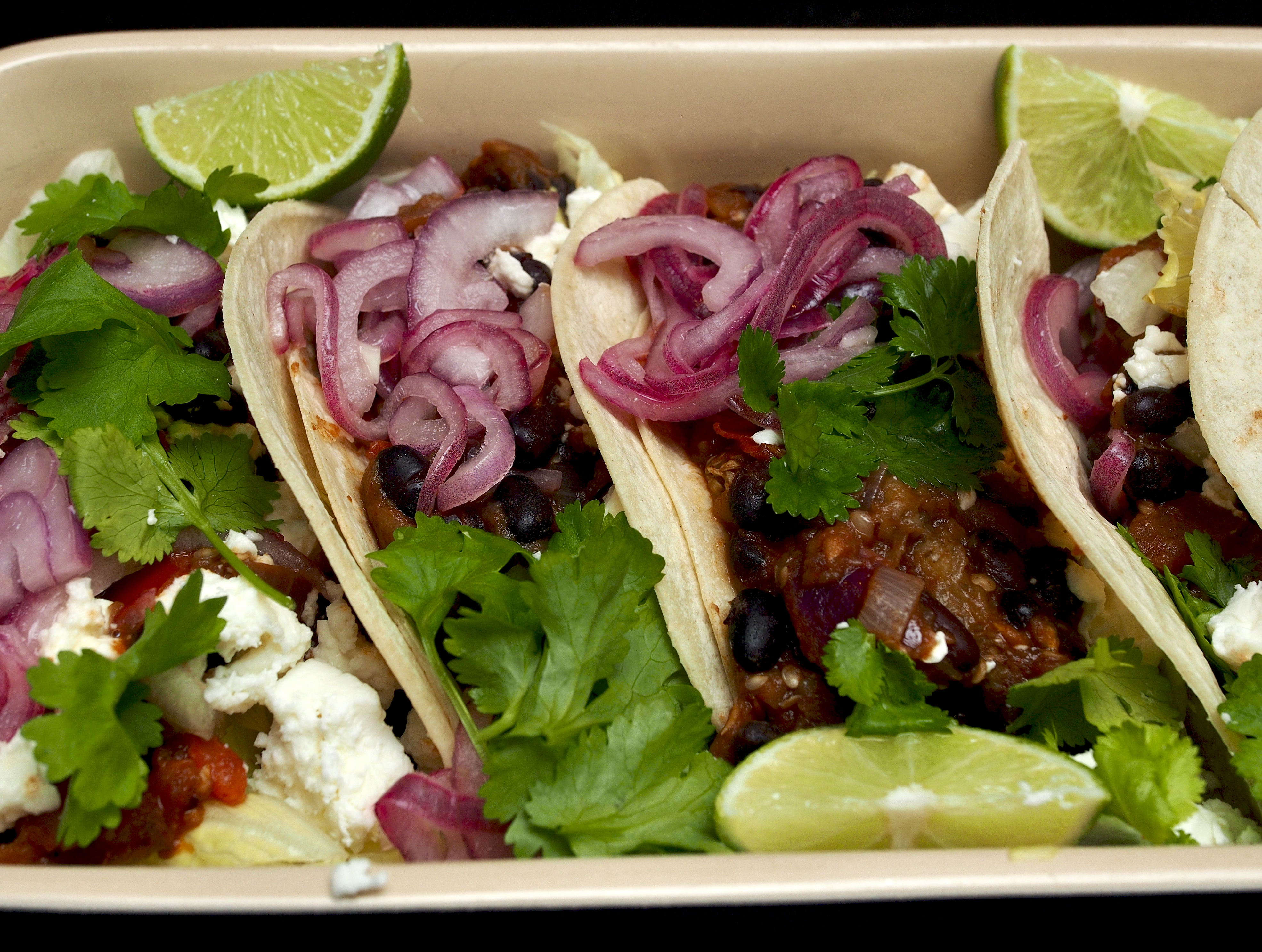
Give these a go for a super tasty mid-week and meat-free meal. The aubergines and beans really fill you up and the extras are non-negotiable as they all come together to make these tacos taste great. If you have too many pickled onions they will keep in the fridge for a few days and are great on the side of all sorts of things or in toasted sandwiches.

Wine Suggestion: The pickles need to be matched with a touch of residual sugar in the wine, or else the vinegar gets accentuated. The aubergine and black beans also need a touch of rich, earthiness but not too much weight. We found our match in Finca Bacara’s Crazy Grapes, a Monastrell from Jumilla in Spain. Superbly balanced juicy fruits, all brambles, black plums and berries, with a hint of earthy tannins and so easy to drink.

Aubergine and Black Bean Tacos with Feta & Pickled Red Onions

FOR THE QUICK PICKLED ONIONS:

  • 1 large red onion, halved and very thinly sliced
  • 1 tbsp caster sugar
  • 1 tbsp rice vinegar

FOR THE AUBERGINE & BLACK BEAN FILLING:

  • 2 aubergines
  • 2 tbsp olive oil
  • 1 bay leaf
  • ½ tsp cumin seeds
  • 1 red onion, diced
  • 2 garlic cloves, crushed
  • 1 tbsp tomato purée
  • 400g fresh tomatoes, chopped
  • a pinch of dried oregano
  • ½ tsp chilli powder
  • a pinch of chilli flakes
  • 2 tsp red wine vinegar
  • 2 x 400g tins black beans, 1 drained and rinsed
  • ½ lime, juiced, plus extra wedges to serve

TO SERVE:

  • 8 small tortillas, warmed
  • a handful of coriander leaves
  • 50g feta cheese, crumbled
  • ½ an iceberg lettuce, shredded

Start by making the pickled onions. Combine all of the ingredients with a generous sprinkle of sea salt flakes in a plastic container with a lid. Close the lid and shake hard for a couple of minutes or until the onions soften.

Next, you need to burn your aubergines. Prick them all over with a fork, then either place them directly over a gas flame, on the barbecue, or under a hot grill. Turn them until they are blackened and burnt all over and starting to collapse, then aside on a plate to cool.

When the aubergines are cool enough to handle, scoop out the flesh with a spoon and discard the blackened skins.

Heat the oven to 200C/180C fan/Gas 6.

For the aubergine and black bean filling, you need to heat the oil in a large ovenproof frying pan with the bay leaf and cumin seeds. When they start sizzling, you can add the onions and garlic. Fry for about 5 minutes or until soft but not coloured, then stir in the tomato purée and cook for a few minutes. Add the chopped tomatoes and dried oregano and cook for another few minutes or until they have collapsed into the sauce. Add the aubergine flesh, chilli powder, chilli flakes and vinegar and stir for a minutes, then tip in the drained and undrained beans. Squeeze in the juice of half a lime and cook for about 5 minutes until reduced, then transfer to the oven for 15-20 minutes until rich and thick.

Fill the warm tortillas with shredded lettuce and the aubergine and black bean filling. Top with feta, coriander, pickled onions and a squeeze of lime.

(Original recipe from BBC Good Food)

Read Full Post »

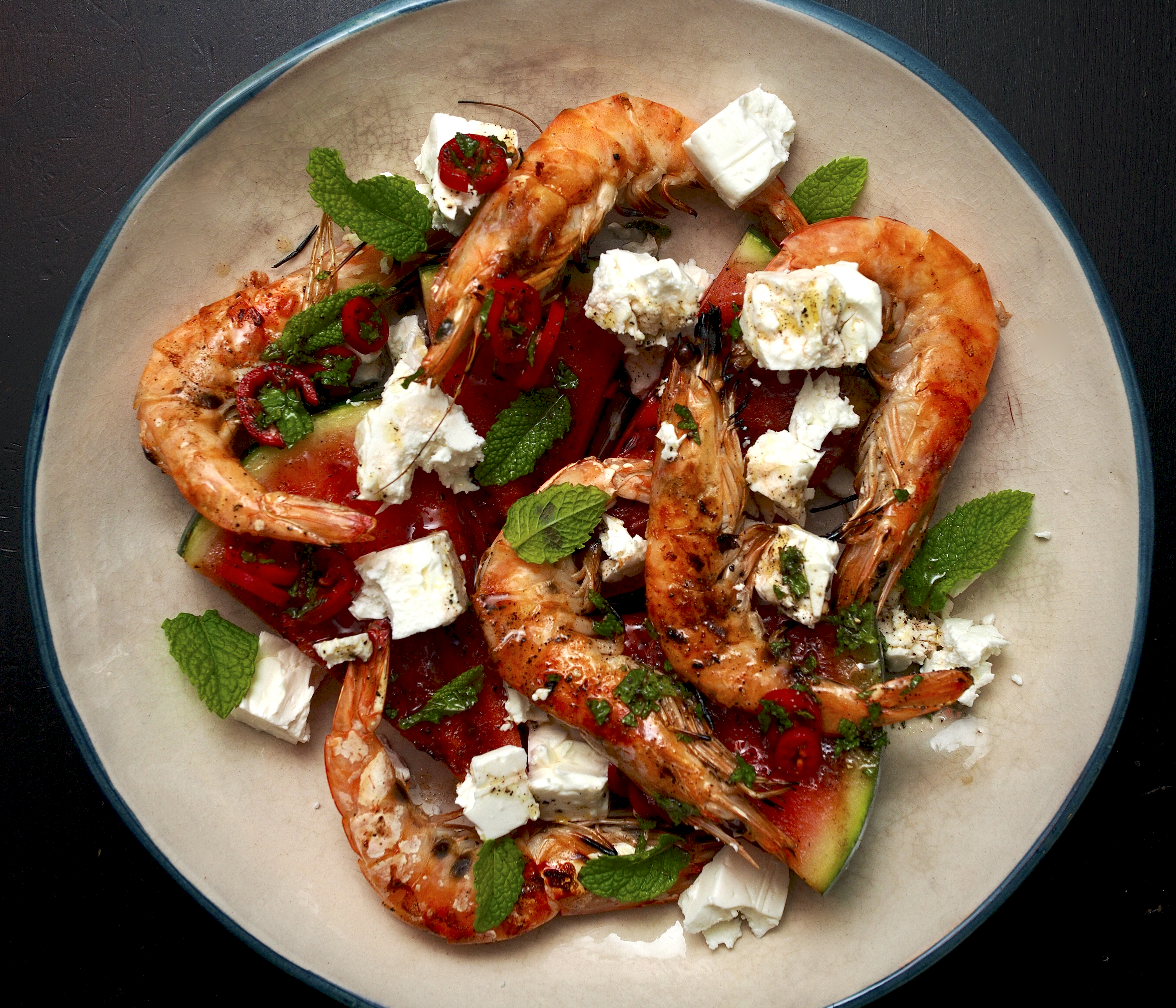
Barbecued watermelon is a revelation for us as it really intensifies the flavour. This combination with prawns, feta and chilli is total winner! Serve as a starter at your next barbecue. Another fab idea from Chasing Smoke.

Wine Suggestion: This dish has a real affinity with a juicy, youthful Grenache, be it a Rosé or a lightly chilled red like tonight’s Rubus by Jesus Romero. Made at 1000m above sea-level in the rural, far south of Aragon, Spain this is all cherry, blackberry and spice; seriously gluggable.

Grilled watermelon and prawns with feta & chilli – serves 4

  • 12 whole prawns in the shells (buy 16 if they’re small)
  • 2 thick slices from a large watermelon
  • 1 red chilli, sliced into rings (if you cut of the stalk and rub the chilli between your hands the seeds will fall out)
  • 2 tbsp red wine vinegar
  • ½ tsp salt
  • 250g feta
  • a small bunch of mint, leave half the leaves whole and chop the rest
  • 3 tbsp olive oil, plus a bit extra for brushing
  • 1 tsp roughly crushed black pepper

Take a small pointy knife and cut and cut down the back of each prawn, when you see the digestive string gently pull it out with the tip of the knife. Leave the prawns in a bowl in the fridge until ready to cook.

Cut the watermelon into 8 large wedges, leaving the skin on.

Mix the chilli slices with the vinegar and salt and set aside.

Light your barbecue and get it up to a high heat.

Brush the watermelon with some olive oil, then put on the hottest part of the barbecue for 1-2 minutes on each side or until charred. Remove to a platter, then grill the prawns for a 2-3 minutes on each side, depending how big they are.

Add the prawns to the watermelon, crumble over the feta, then scatter with the mint leaves.

Stir the olive oil, black pepper and chopped mint into the marinating chilli and drizzle over the platter.

(Original recipe from Chasing Smoke: Cooking Over Fire Aroudn the Levant by Sarit Packer and Itamar Srulovich, Pavilion, 2021.)

Read Full Post »

Older Posts »