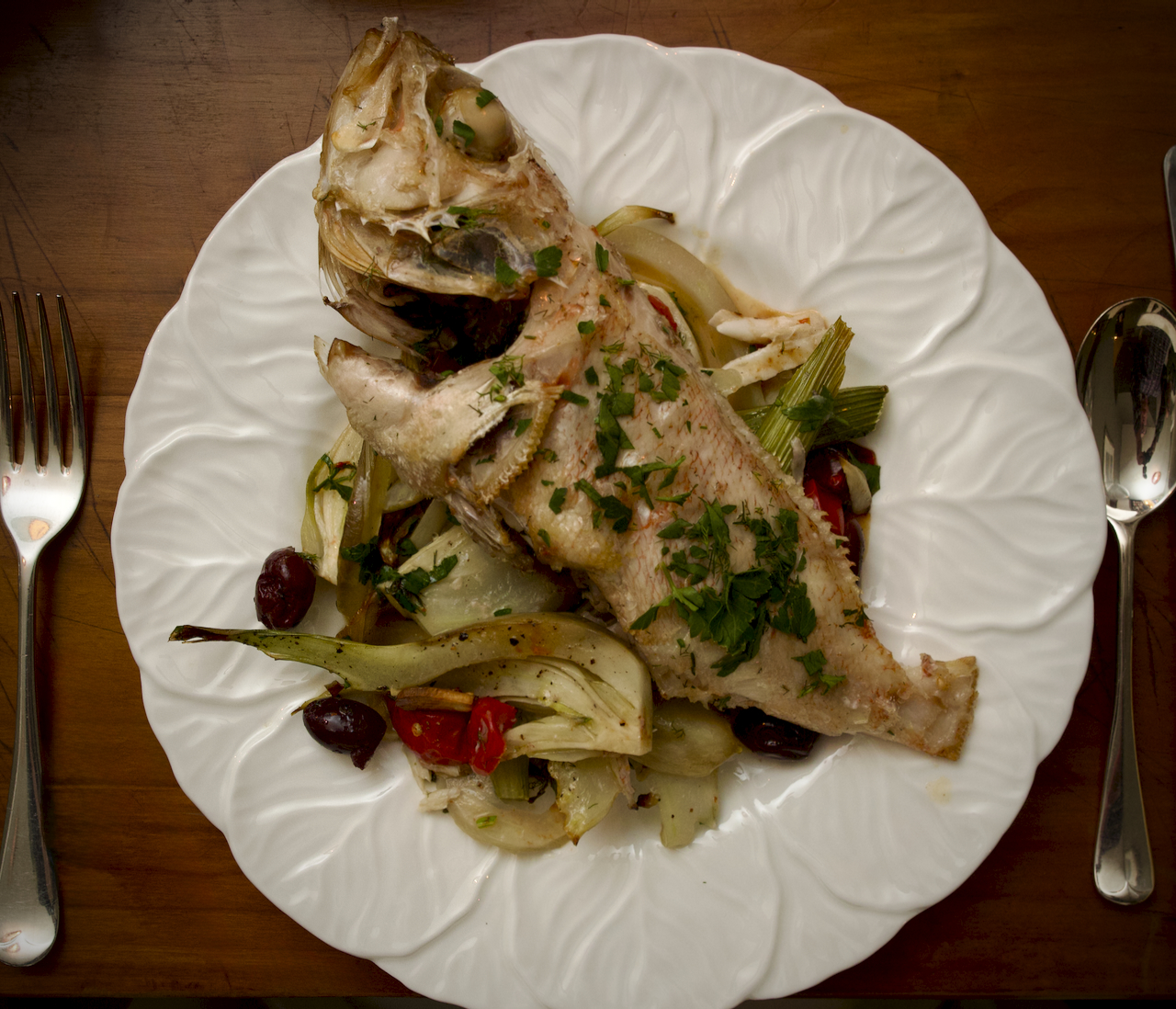
We got two red fish in our monthly fish box which were described as red mullet, but they didn’t look like the other red mullet we’ve eaten … so we’ll just call them “Red Fish”. Whatever they were, they are tasty and this dish showed them off perfectly and will work with whatever type of red fish you happen to have.
Wine Suggestion: the combination of the herbal fennel and the meaty, white fish demand a white with both a bit of body and a nutty, minerality. As it was a bank holiday we opened Patrick Javillier’s Bourgogne Côte d’Or Cuvée Oligocène, a judiciously oaked Chardonnay from soils very similar to Puligny Montrachet … without the pricetag.
Baked Red Fish with Fennel, Tomatoes & Olives – serves 2
2 whole red fish, scaled and gutted
extra virgin olive oil
1 bulb of fennel, sliced
cherry tomatoes, halved
2 cloves of garlic, sliced
a handful of pitted black olives
lemon, for squeezing over
parsley, roughly chopped
Heat the oven to 200C.
Put the cherry tomatoes, fennel, olives and garlic into a large roasting tray. Drizzle generously with olive oil and season with salt and pepper.
Roast for 10 minutes, then place the fish on top, drizzle with more olive oil and roast for another 12 to 15 minutes or until the fish is cooked through.
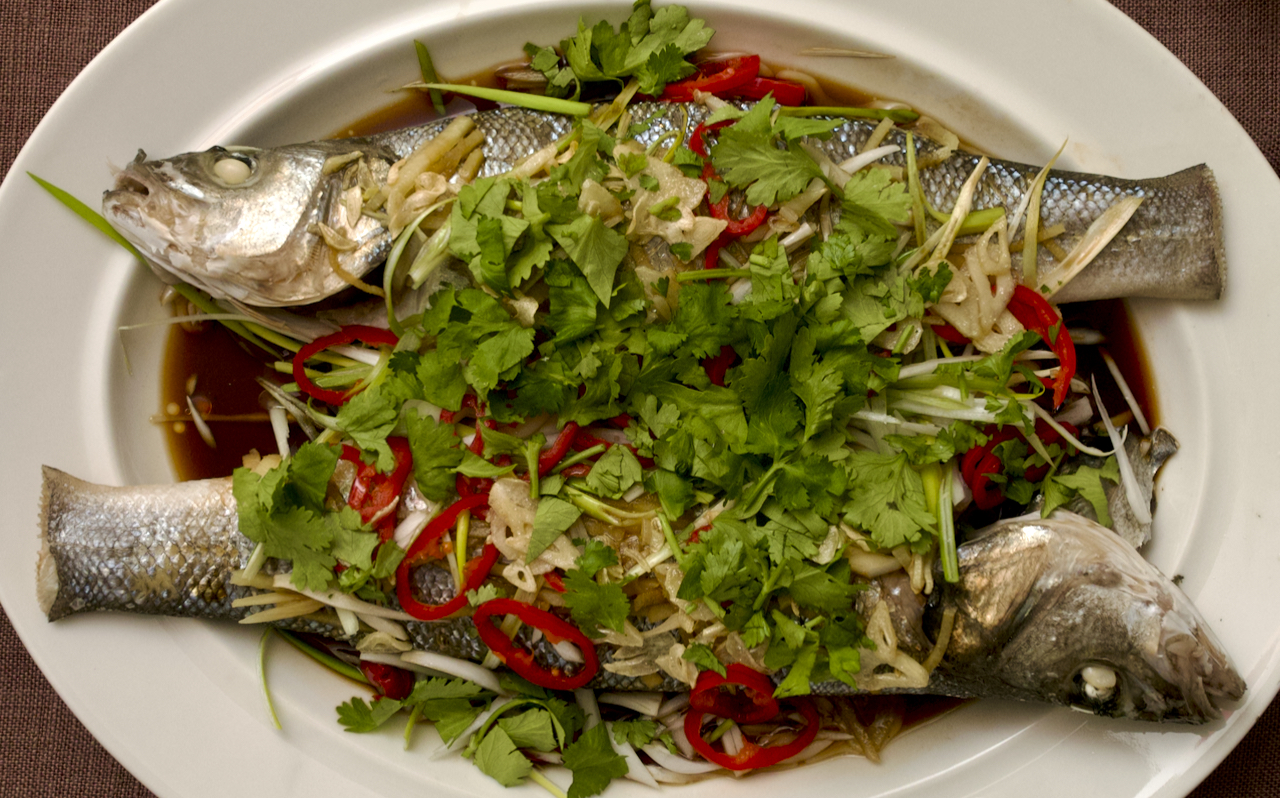
We are beyond excited by our subscription seafood box from Urban Monger. This is what we did with two whole sea bass that arrived on our doorstep amongst various other delicious things. Serve with steamed rice and tenderstem broccoli.
Wine Suggestion: We love classic wines that are slightly atypical, but showing a new direction in wine. Tonight we wanted a crisp, fresh and dry white so opened a Sybille Kuntz Kabinett Riesling from the Mosel in Germany. A wine like this from the Mosel would have typically had residual sugar but Sybille makes all her wines completely dry, it’s a roaring success and such a thrill to drink with this delicate, and flavoursome dish. A celebration of flavour all round.
Steamed Sea Bass with Garlic, Ginger and Scallions – serves 2-3
2 x 350g whole sea bass, scaled, cleaned and gutted
15g root ginger, cut into fine matchsticks
4-5 scallions, trimmed and thinly sliced
1 red chilli, finely sliced
2 tbsp dark soy sauce
2 tbsp sesame oil
4 cloves of garlic, finely sliced
a handful of coriander, roughly chopped
Put the fish in a fish kettle and sprinkle over the ginger (if you don’t have a fish kettle you could use a steamer or a rack in a roasting tin). Add 2cm of water. Use a couple of balls of tin foil to lift the rack up above the water level. Cover with the lid (or foil) and steam for about 10 minute or until cooked through. It’s easiest to use a thermometer and the fish should be 60C.
Lift the fish onto a warm serving dish and scatter over the scallions and chilli, then cover to keep warm.
Spoon about 5 tbsp of the cooking juices into a small pan, add the soy sauce and bring to the boil. Pour this over the fish. Heat the sesame oil in the same pan, then add the garlic and fry for a few seconds, then pour over the fish. Sprinkle with the coriander and serve.
(Original recipe from Rick Stein’s Simple Suppers, BBC Books, 2023.)
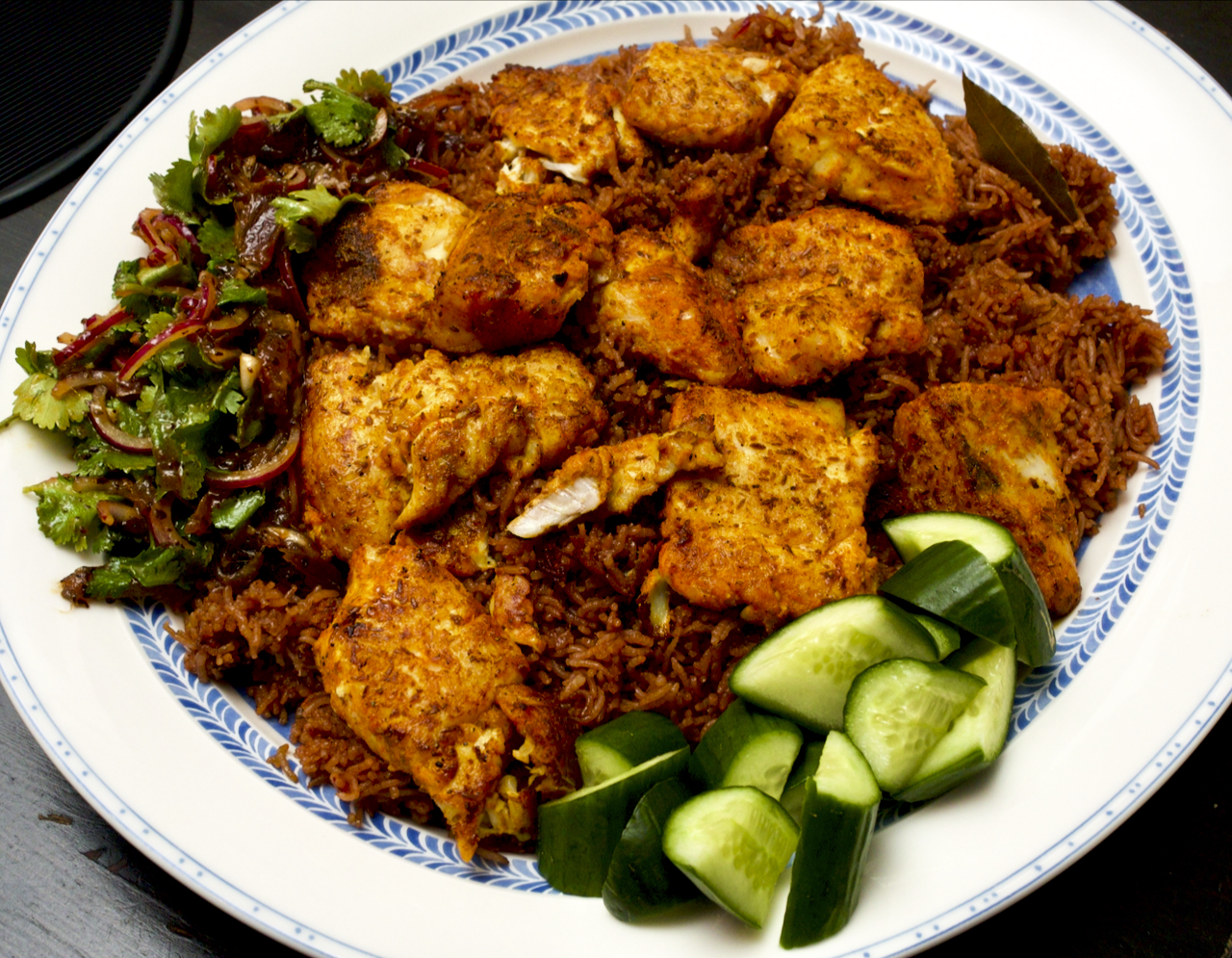
Every element of this dish from Lugma by Noor Murad, but it’s the date pickle that truly brings everything together. It lifts the whole plate and we can definitely see it making repeat appearances alongside all sorts of other dishes.
Wine Suggestion: We’ve been exploring the fresher, lighter reds from north-western Spain, a joyful match for spiced or richly flavoured fish like this. A recent gem is the Finca Millara Lagariza, a youthful, fruit forward and light bodied Mencía that we served lightly chilled. A brilliant pairing.
Fish with rice and date pickle – serves 4
FOR THE FISH:
½ tsp ground turmeric
½ tsp paprika
2 tsp cumin seeds
seeds from 15 cardamom pods
600g skinless hake fillet, cut into 6cm pieces
1½ tbsp melted ghee
½ lemon
FOR THE RICE:
2 tbsp melted ghee
5 cardamom pods
5 cloves
1 cinnamon stick
3 fresh bay leaves
150g date molasses
½ tsp loosely packed saffron threads, roughly crushed
300g basmati rice, washed until the water runs clear, then soaked for at least 20 minutes and up to 2 hours, then drained well
FOR THE DATE PICKLE:
2 tbsp olive oil
1 tsp fennel seeds
1 tsp Aleppo chilli flakes
120g Medjool dates, pitted and thinly sliced
3 tbsp apple cider vinegar
30g red onion, thinly sliced
10g coriander, leaves and soft stems picked
Use a pestle and mortar to finely crush the cumin seeds and cardamom seeds.
Mix all the ground spices for the fish in a large bowl with ½ tsp salt and plenty of black pepper. Add the fish and mix well to coat, then put in the fridge until needed.
For the rice, add the ghee, whole spices and bay leaves to a medium, lidded saucepan and place over a medium heat. Cook for a few minutes, stirring now and then, until fragrant.
Stir in the molasses then pour in 620ml of hot water, the saffron and ¾ tsp salt. Bring to the boil, then stir in the rice. Bring up to a fast boil for exactly 5 minutes, without stirring, until the grains have started to plump up and have absorbed at least half of the water. Cover with a clean tea towel followed by the lid, securing the ends of the tea towel over the lid. Turn the heat to low and cook, without touching, for 30 minutes.
Meanwhile, make the pickle. Add the oil and fennel seeds to a small frying pan over a medium heat. Cook for 2 minutes, until fragrant, then stir in the chilli and a small pinch of salt and pour into a medium heatproof bowl. Allow to cool for 5 minutes, then stir in the dates, vinegar and onion. Set aside to pickle.
When the rice is read, remove the lid and tea towel. Allow the rice to cool slightly while you fry the fish.
Heat the ghee in a large frying pan over a medium-high heat. Add the fish and cook for 2-3 minutes on each side, until nicely browned and cooked through. Squeeze over the lemon juice.
Transfer the rice to a large platter and top with the fish and any fat in the pan. Stir the coriander into the pickle and serve alongside.
(Original recipe from Lugma by Noor Murad, Quadrille, 2025.)
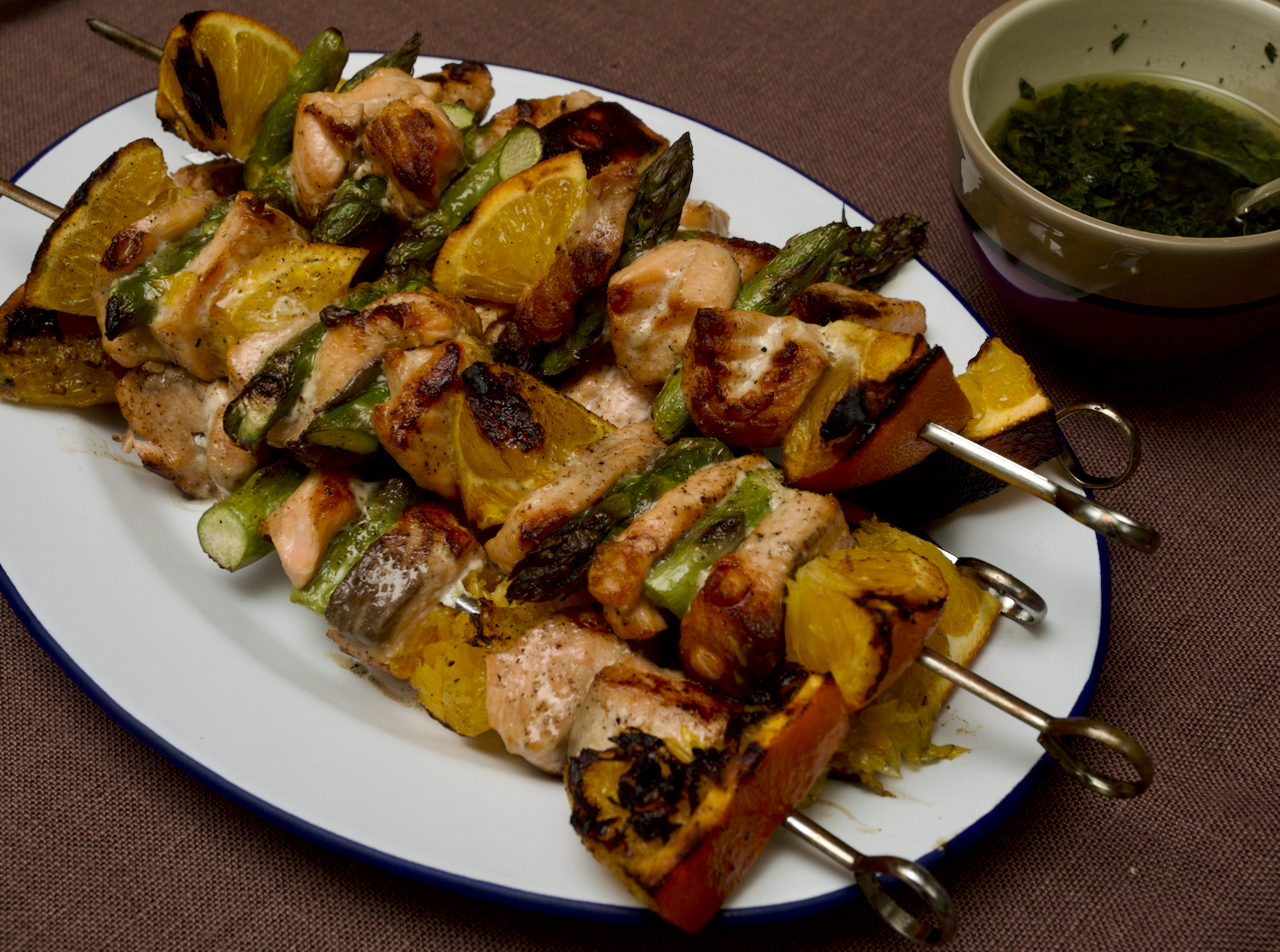
A bit late in the season to post these lovely trout and asparagus kebabs but we couldn’t leave them out.
Wine Suggestion: A bottle from a familiar winery, but one we picked up in Spain as this particular cuvée doesn’t currently make it into Ireland. Bodegas Castro Martin’s A-2-O, a fresh and elegant Albariño from the Val de Salnés in Rías Baíxas.
Trout and Asparagus Kebabs – serves 4
600g trout fillet, without skin – try and get a chunky piece, cut into 3cm pieces
200g asparagus – snap off the ends and slice into short lengths
1 orange, quarter, then slice into small pieces
2 tbsp olive oil
FOR THE HERB OIL:
about 15g of mint leaves, finely chopped
100ml olive oil
1 clove of garlic, crushed
2 tsp red wine vinegar
Thread the trout, asparagus and orange pieces onto 4 metal skewers. If your fish pieces are a bit skinny just fold them over and thread them on to make a chunkier piece.
Drizzle with olive oil and season well.
Heat the barbecue for driect grilling and ideally use a grill tray.
To make the herb oil, put the chopped mint into a small bowl, then stir in the olive oil, garlic, red wine vinegar and seasoning.
Cook the skewers on the hot grill tray (if you have one) for a couple of minutes on each side or until the fish is crispy. Don’t be tempted to turn them too quickly or they might stick.
Serve with the mint oil.
(Original recipe from Scorched by Genevieve Taylor, Hardie Grant: Quadrille, 2024.)
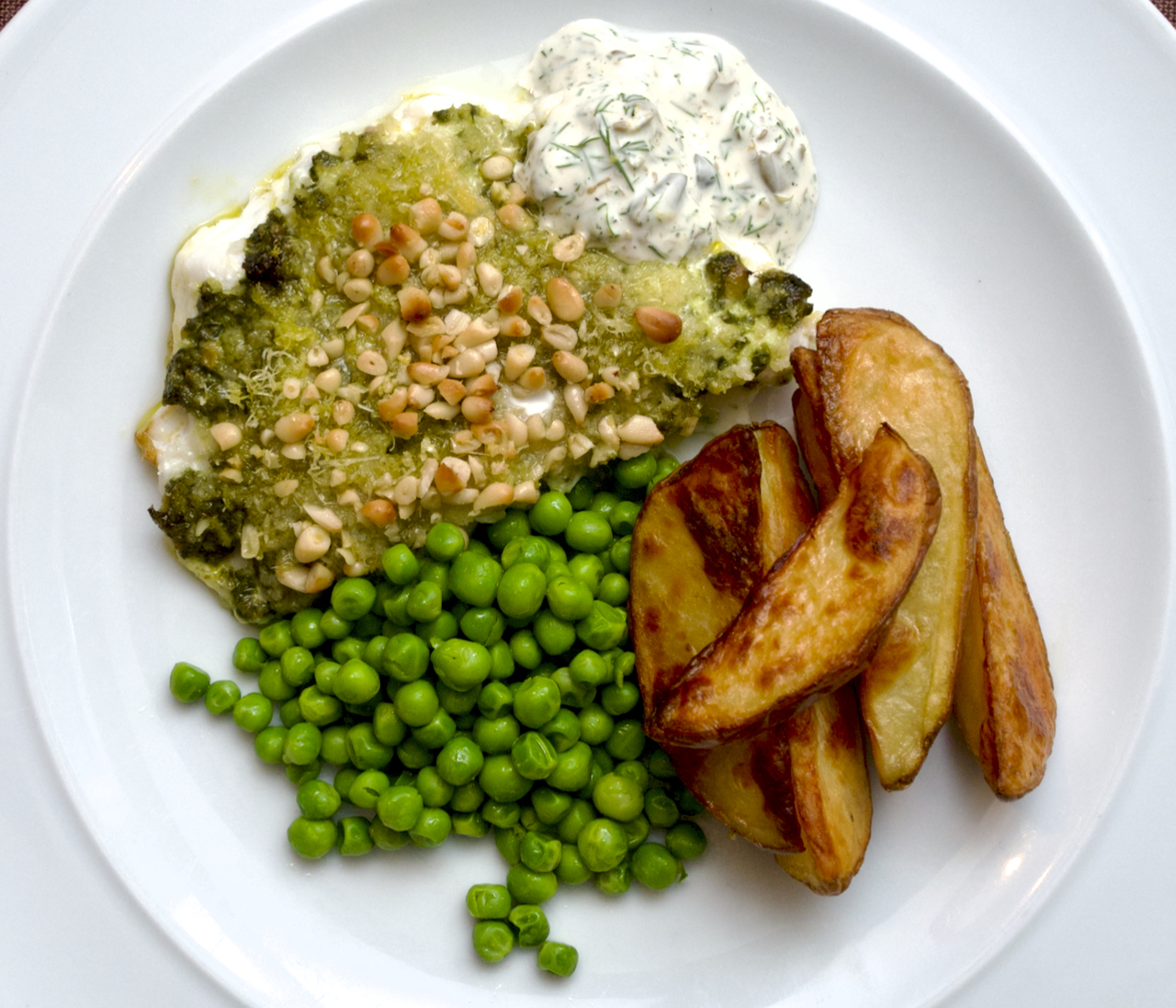
A week night fish dish that was a hit with everyone in our family, and that’s saying something. Peas are obligatory as the side.
Wine Suggestion: this works excellently with a zesty, citrus flavoured white like the Pico Maccario Gavi di Gavi from Piedmont in Italy.
Hake with Panko & Pesto – serves 4
1kg floury potatoes, cut into wedges
2 tbsp olive oil, plus a little extra
4 pieces of hake (or another firm white fish), skin and bones removed
2 tbsp pesto
2 tbsp panko breadcrumbs
2 tbsp finely grated Parmesan
1 tbsp chopped pine nuts
1 tbsp capers, finely chopped
1 tbsp dill, chopped
3 tbsp mayonnaise
¼ lemon, zested and juiced
Heat the oven to 220C/200C fan.
Put the wedges onto a baking tray and drizzle over 1 tbsp of olive oil. Season with salt and pepper, then toss to coat in the oil. Bake for 50-55 minutes, turning halfway, until crispy and golden.
Oil another baking sheet and add the fish pieces. Spread the pesto over the fish pieces and sprinkle over the panko breadcrumbs. Drizzle with a tbsp of olive oil, then sprinkle over the Parmesan and chopped pine nuts. Place in the oven for the final 10-12 minutes of cooking time. The top should be golden and the fish should flake easily.
Mix the capers, dill, mayonnaise, lemon zest and juice with some black pepper in a small bowl. Serve the fish with the wedges, peas and dip.
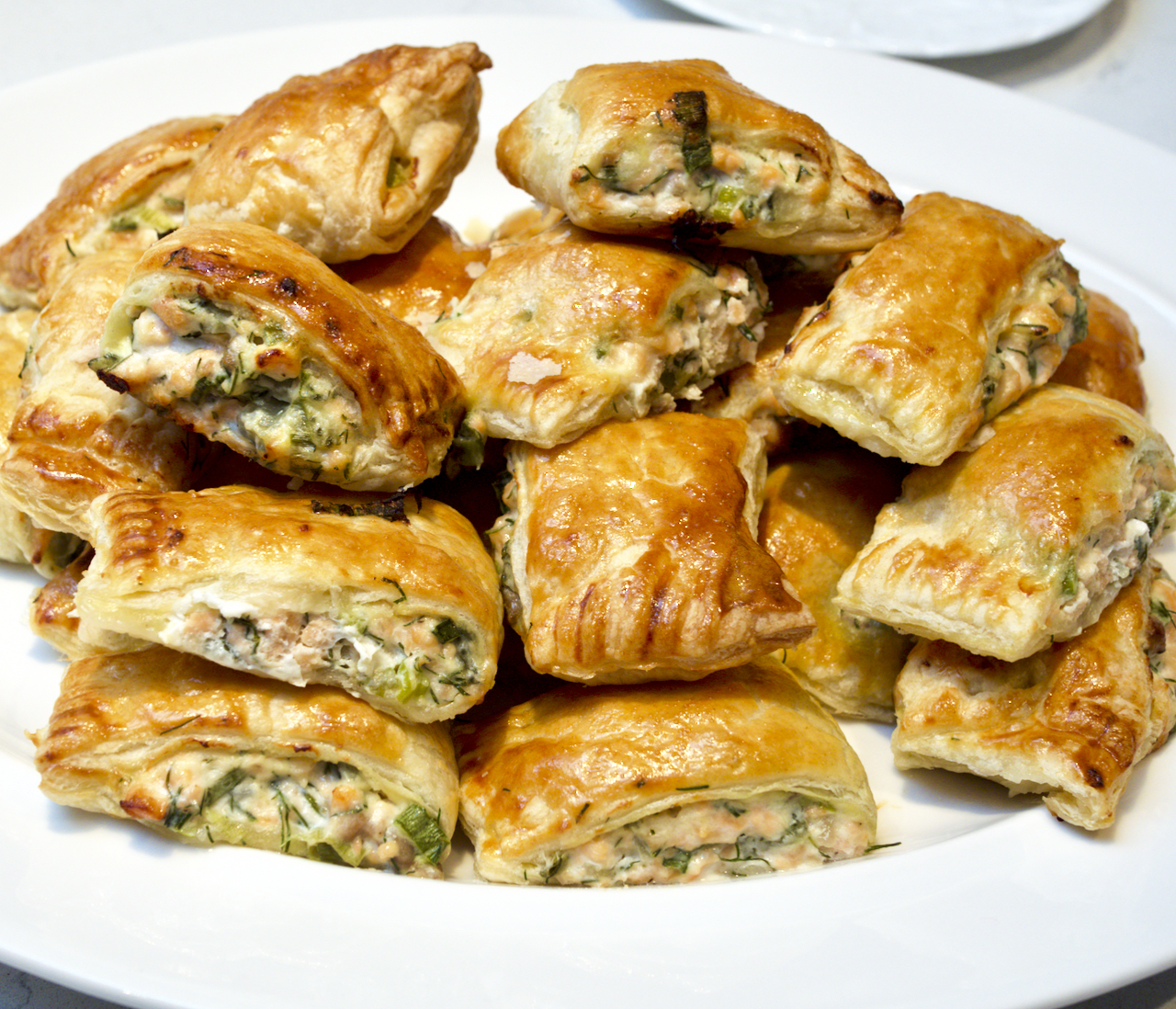
These are great with drinks and much lighter than actual sausage rolls. You can also freeze them uncooked and then cook from frozen for a handy standby.
Wine Suggestion: Bubbles of course … we’re particularly fond of the Domaine de la Taille aux Loups Triple Zero, so named as it uses no chaptilisation, no liquer de tirage and no dosage. As unfettered and refined a Pet Nat you can find anywhere and very special for it.
Little salmon sausage rolls – makes 24
1 x 320g sheet all-butter puff pastry
1 egg beaten
FOR THE FILLING:
200g skinless salmon fillet, finely chopped
115g smoked salmon, finely chopped
125g full-fat cream cheese
25g Parmesan, finely grated
small bunch of dill, finely chopped
6 scallions, finely chopped
juice of ½ lemon
75g dill pickle from a jar, finely chopped
Heat the oven to 200C/180C Fan/Gas 6.
Preheat a large baking tray.
Put all the filling ingredients into a large bowl, season with salt and pepper and mix well.
Roll the puff pastry sheet out on a lightly floured surface to make a rectangle 30 x 40 cm. Brush with the beaten egg, then divide vertically into 3 even-sized pieces.
Divide the filling into 3 and make a mound down each piece of pastry. Lift and fold the pastry over and seal by pressing down with the back of a fork.
Cut each section into 8 and brush the tops with the beaten egg.
Line the hot baking tray with non-stick baking paper and place the rolls on top. Bake for 18-20 minutes or until golden brown.
(Original recipe from Mary’s Foolproof Dinners by Mary Berry, BBC Books, 2024.)
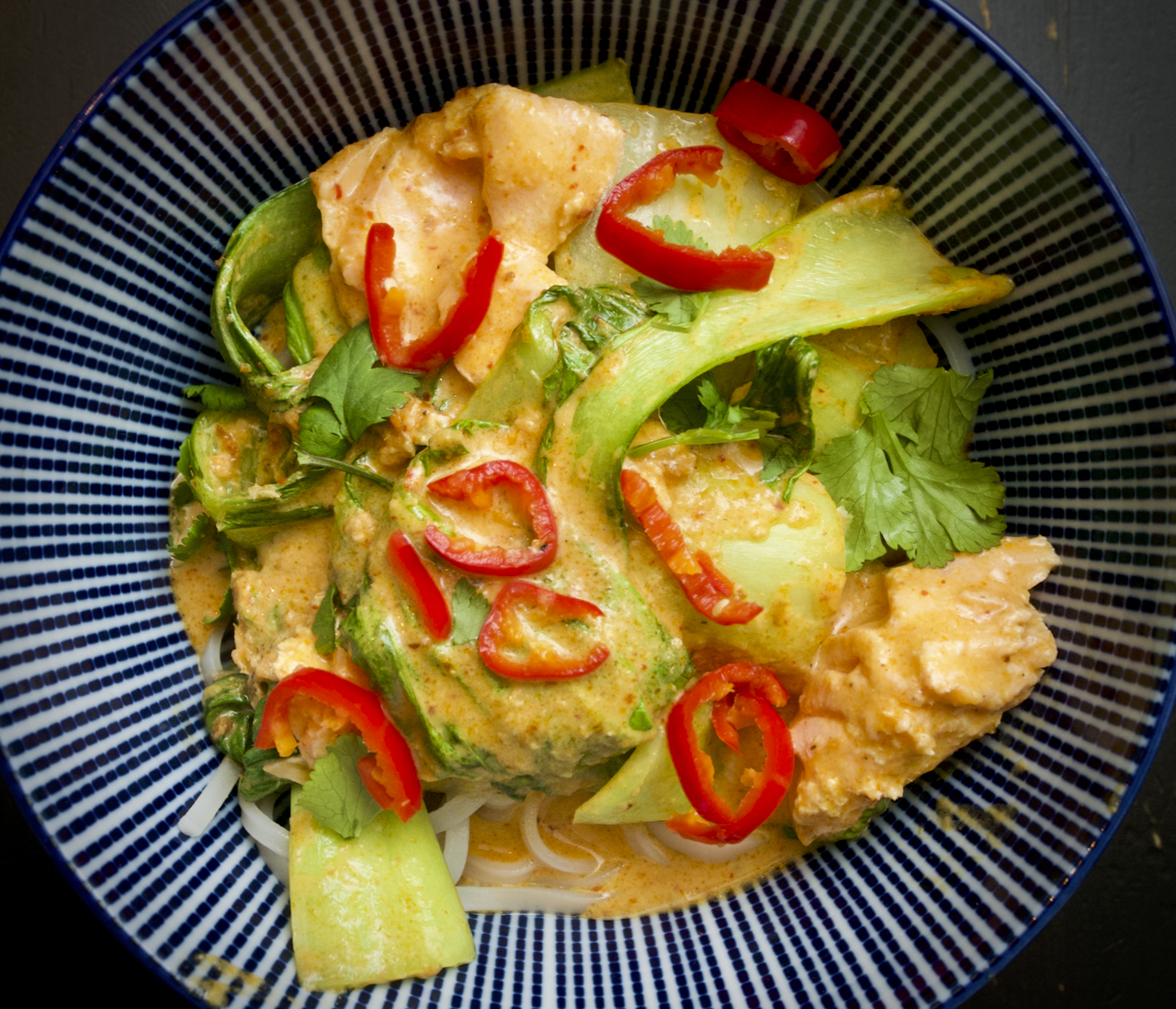
This is a quick curry but it still tastes delicious and simple enough to throw together after work.
Thai red salmon curry – serves 2
100g dried rice noodles
350g skinless salmon fillets, cut lengthways into 4 thin pieces
1½ tbsp vegetable oil
3 tbsp Thai red curry paste
1½ tsp finely grated garlic
1 tsp finely grated ginger
125ml chicken stock
400ml tin coconut milk
2 tsp fish sauce
1 tsp white sugar
4 baby bok choy, leaves separated
1-2 tbsp lime juice, plus wedges for serving
fresh coriander leaves, to serve
red bird’s eye chilli, finely sliced, to serve
Soak the noodles in boiling water according to the pack instructions, then drain and divide between two bowls.
Season the salmon, then heat the oil in a large non-stick frying pan over a high heat. Cook the salmon for a minute on each side, then transfer to a plate. It doesn’t need to be cooked through yet, just lightly golden on the surface.
Add the curry paste, garlic and ginger to the pan. Cook, stirring continuously, for a minute, then add the chicken stock and simmer rapidly for a minute, stirring to scrape any sticky bits from the bottom of the pan. Add the coconut milk, fish sauce and sugar, then simmer rapidly for 2 minutes.
Return the salmon to the pan and push the bok choy in around it. Simmer for 2 minutes, pushing the bok choy into the liquid as it wilts. Once the salmon flakes easily, remove the pan from the heat.
Pour the lime juice over the fish and serve over the noodles. Sprinkle with the coriander and fresh chilli before serving with extra lime wedges.
(Original recipe from Recipetin Eats Tonight by Nagi Maehashi, Pan Macmillan, 2024.)
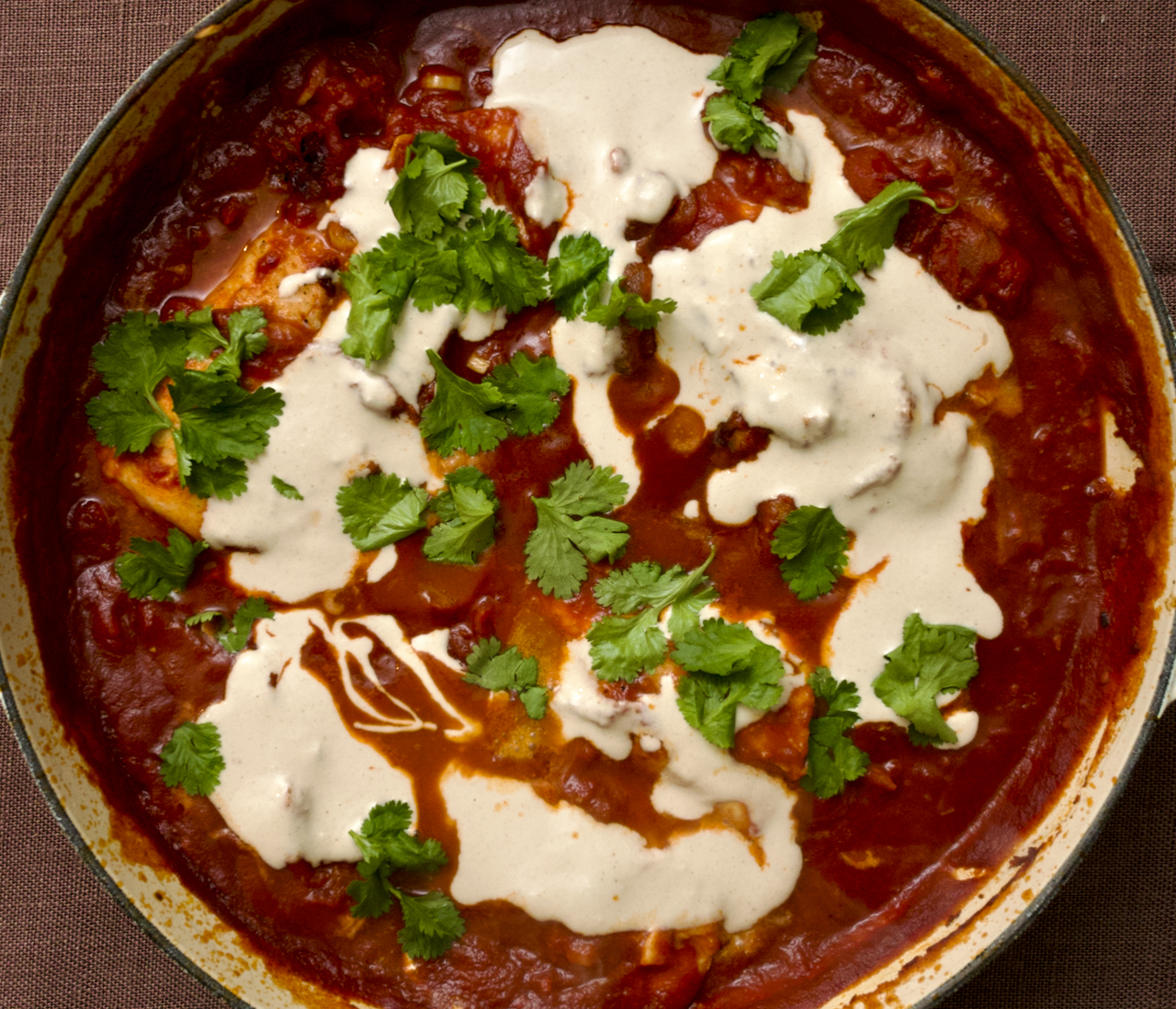
Two delicious sauces combine to really highlight the fish in this North African inspired dish. We used hake but you can of course use other white fish fillets. Serve with couscous and pitta breads.
Wine Suggestion: it is quite a complex challenge to balance the spices, tomatoes and creamy tahini, but we think this works great with Mediterranean inspired blends that include a bit of Tempranillo like Parker Estate Favourite Son Shiraz-Tempranillo. Despite this being a bigger red and this being a fish dish there’s a certain freshness from Coonawarra that comes through and very complimentary spices that make this work.
Fish cooked in tomato sauce with tahini – serves 4
4 tbsp olive oil
1 onion, finely sliced
5 cloves of garlic, finely sliced
2 tbsp smoked paprika
1 tsp ground cumin
a pinch of chilli flakes
2 tbsp tomato purée
2 x 400g tins plum tomatoes
1 preserved lemon
4 fillets of hake (or other white fish)
fresh coriander, to serve
FOR THE TAHINI SAUCE:
1 clove of garlic
half a lemon
80g tahini
5-6 tbsp ice-cold water
a pinch of ground cumin
Warm the olive oil in a large sauté pan, then cook the onion with a pinch of salt until soft. Add the garlic and spices and continue frying for another minute or two, then add the tomato purée and cook for another couple of minutes.
Add the tinned tomatoes, then rinse the tins with a little water and add that too. Break the tomatoes up with a wooden spoon and simmer for 10-15 minutes to thicken the sauce. Quarter and deseed the preserved lemon, then chop into small pieces and add to the sauce.
Meanwhile, make the tahini sauce. Grate the garlic into a bowl, then squeeze over the juice of the half lemon, mix together and set aside for 5 minutes. Add the tahini to the garlic and lemon and whisk together, then add 1 tbsp of the cold water at a time, whisking until you have a smooth, runny sauce. Season with a pinch of salt and a pinch of cumin.
Season the fish, then nestle it into the tomato sauce. Cook for 5-10 minutes, or until just cooked (a thermometer will help if you have one). Serve with the tahini sauce and coriander over the top and with some couscous and pitta breads.
(Original recipe from The Farm Table by Julius Roberts, Ebury Press, 2023.)
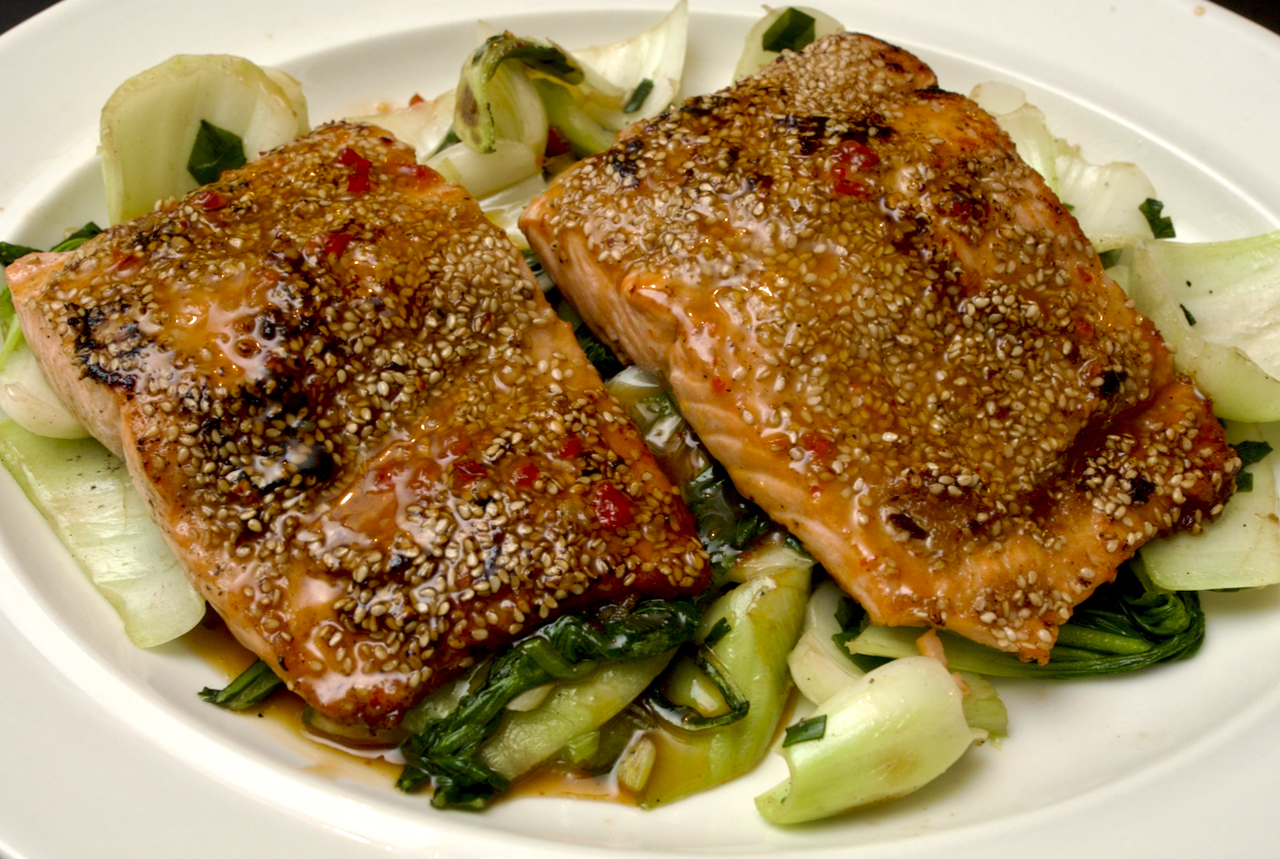
Everyone loves trout in our house and especially with miso – a master combination.
Wine Suggestion: You need a white with a touch of acidity and umami-savouriness here to both balance and compliment the flavours. Something like the Höpler Grüner Veltliner from Burgenland in Austria would work a treat.
Sesame miso trout – serves 4
4 fresh trout fillets, skin on
4 tsp white miso paste
3 tbsp toasted sesame seeds
2 tbsp olive oil, plus a bit extra for the veg
a knob of butter
4 pak choi, sliced into big pieces
6 scallions, finely sliced
FOR THE GLAZE:
4 tbsp sweet chilli sauce
1 tsp white miso paste
2 tsp sesame oil
Heat the oven to 200C/180C Fan/Gas 6.
Line a baking sheet with non-stick paper.
Whisk the ingredients for the glaze together in a bowl alongwith 6 tbsp of water, then set aside.
Season the fish fillets and spread the miso paste on the flesh side. Sprinkle the sesame seeds on top and press down so they stick to the paste.
Heat the oil in a frying pan over a medium heat. Add the fish fillets, sesame seed side down, and fry for 2-3 minutes, or until golden brown. Carefully turn them over and fry for another 2 minutes on the skin side. Add the knob of butter and when it foams, use a small spoon to baste the trout with it.
Transfer the fish to the lined baking sheet, skin-side down, and cook in the oven for 7-8 minutes or until just cooked through.
Meanwhile, wipe the frying pan clean, add a little oil and put over a high heat. Add the pak choi, scallions and seasoning and stir until just wilted.
Spoon the veg onto a serving dish and put the fish on top. Add the glaze ingredients to the pan and gently warm until just bubbling, spoon over the trout and serve.
(Original recipe from Mary’s Foolproof Dinners, BBC Books, 2024.)
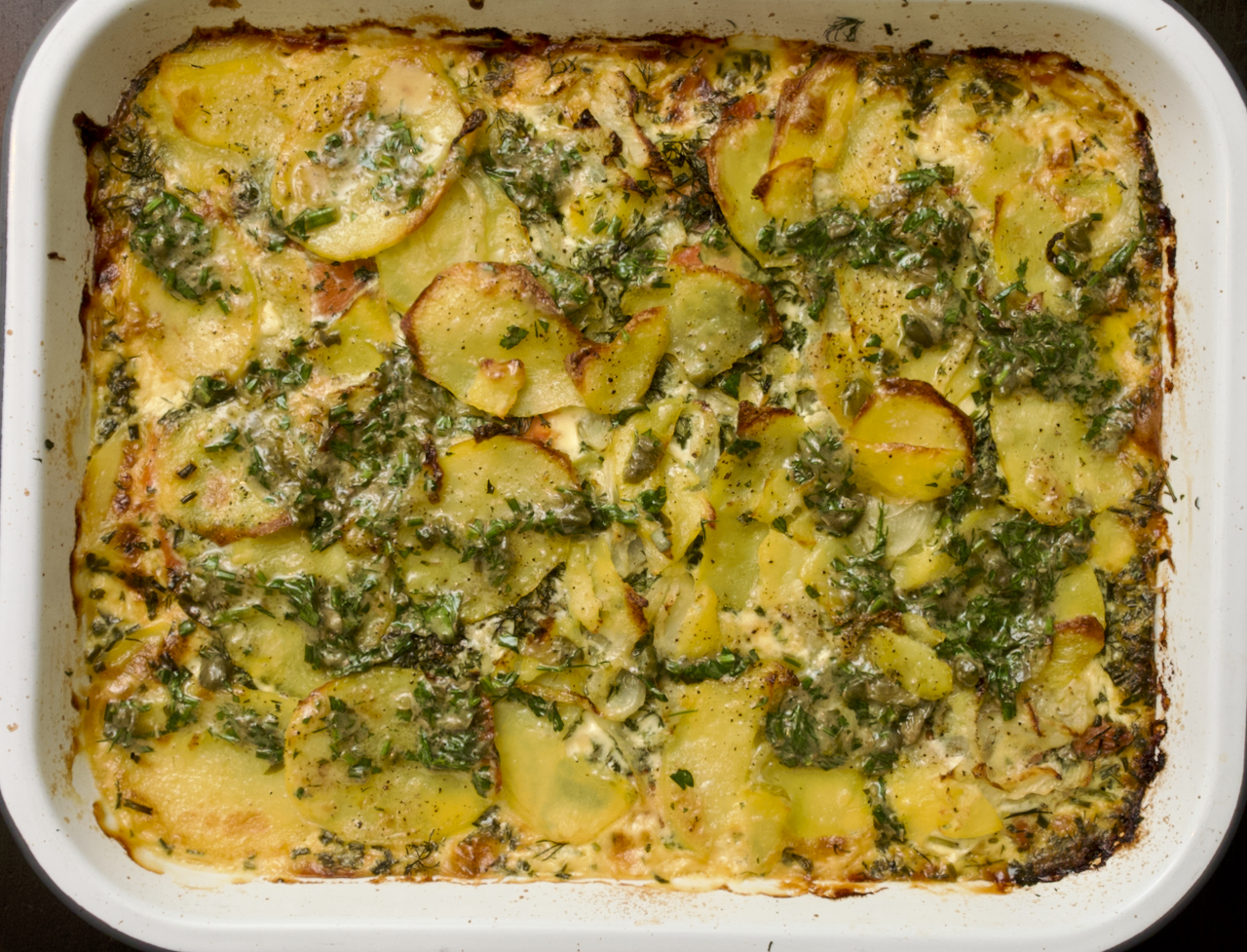
Such a lovely recipe, and you can of course use smoked salmon. We like smoked trout from Goatsbridge which is a local supplier. Recipe inspiration from the new Ottolenghi book – Comfort. You must have a green salad and a glass of white wine to serve. If you have a mandolin it will cut the potatoes and fennel just right.
Wine Suggestion: Weserved an oddity/one-off from Chateau Hureau from Saumur in the Loire. They grew a low quantity of Chenin Blanc grapes in 2022 due to frost so decided to make a Blanc de Noirs from Cabernet Franc for a bit of fun. Only available at cellar door it’s both crisp and fresh, but significantly has bags of texture which this dish needs. Look for whites with a touch of skin contact, or aged on lees as a substitute.
Potato, fennel & smoked trout bake – serves 4
200ml milk
425ml double cream
2 anchovies, finely chopped
3 cloves of garlic, lightly smashed with skin on
1 lemon, skin finely shaved into strips
2 tsp fennel seeds, finely ground
850g Yukon gold or red potatoes, peeled and sliced into ½ cm thick slices
1-2 large fennel bulbs, thinly sliced
4 egg yolks
10g dill fronds, roughly chopped
20g chives, finely chopped
20g parsley leaves, finely chopped
1½ tbsp unsalted butter, softened
200g smoked trout (or smoked salmon) slices, roughly torn
for the lemon butter sauce:
2 tbsp lemon juice
2 tsp capers, roughly chopped
40g unsalted butter, fridge cold and roughly chopped
Heat the oven to 170C fan.
Put the milk, cream, anchovies, garlic, lemon strips and ground fennel into a small saucepan. Place over a low heat and warm for 10 minutes, making sure it never comes to the boil. Give it a stir now and then and press on the solids to get plenty of flavour out of them. Remove from the heat.
Put the potato and fennel slices into a saucepan and cover with cold, salted water. Bring to the boil and cook for 6-7 minutes or until just tender. Drain and set aside.
Whisk the egg yolks with ¾ tsp of salt and a good grind of pepper in a large bowl. Strain the infused milk into the eggs, pressing on the solids against the sieve. Whisk to combine.
Combine all the herbs in bowl. Measure out 2 tbsp and reserve for the butter sauce.
Grease an ovenproof dish with ½ tbsp of the butter. Spoon a third of the potato and fennel over the base and grind over some pepper. Sprinkle over half the herbs and lay half the smoked trout over the top. Repeat with half the remaining potatoes and fennel, season with pepper, then add all the remanining trout and the rest of the herbs. Arrange a final layer of potato and fennel on top and carefully pour over the egg mixture. Grind over some more pepper and dot over the remaining butter. Bake for 45 minutes or until set and just golden. Remove from the oven and rest for 10 minutes.
Meanwhile make the lemon butter sauce. Put the lemon juice into a small saucepan on a medium-high heat and bring to a bubble. Allow to bubble for 1 minute, then add the capers and butter, a few pieces at a time. Whisk until smooth and creamy, then remove from the heat and stir in the reserved herbs and some more pepper. Spoon over the dish and serve warm with a green salad.
(Original recipe from Ottolenghi Comfort by Yotam Ottolenghi, Helen Goh, Verena Lochmuller & Tara Wigley, Ebury Press, 2024.)
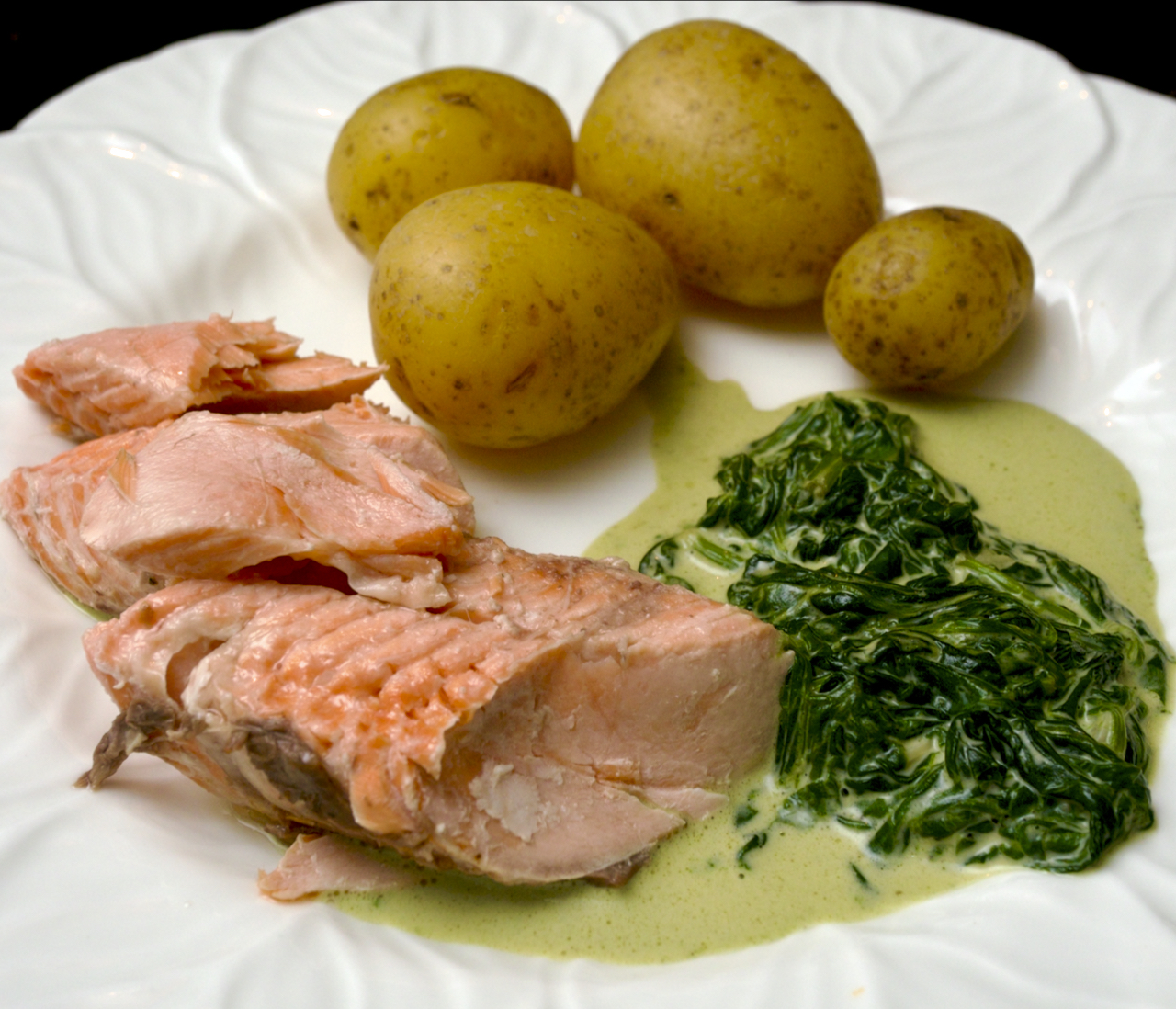
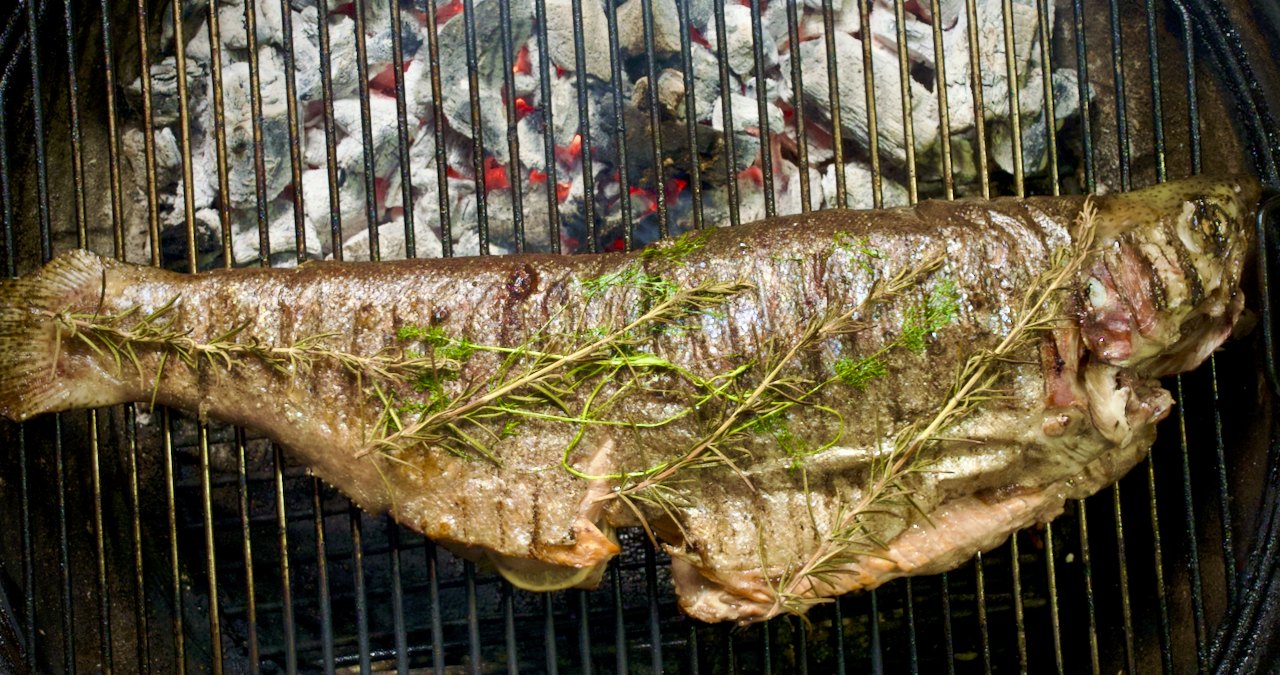
This recipe works well using fillets that have been grilled with fennel seeds and a bit of dill rubbed into the oiled sides before putting on the barbecue. However as we had a whole fish we adapted cooked it whole with some rosemary and lemon. Either way it’s handy to have a temperature probe to make sure the fish is up to 60C and therefore cooked. You can of course pop a pan on your hot barbecue and cook the spinach on there too, we usually cook the sauce indoors.
Serve with steamed, waxy (or baby) potatoes. And a big shout-out to Goatsbridge trout farm for the magnificent fish we bought online from them; superb!
Wine suggestion: Oaky Chardonnay all the way with this, so choose what ever is best in your local wine merchant.
BBQ trout with spinach & cream, serves 4 (depending on the size of the fish … our left-overs lasted all week)
1 large trout (1.5-2kg), scaled and gutted
2 tbsp extra virgin olive oil
6 bay leaves
2 garlic cloves, bashed
1 lemon, sliced into rounds
a few springs of rosemary, fennel or marjoram
For the spinach & cream:
a knob of butter
1 garlic clove, thinly sliced
250g spinach, washed and thick stalks discarded
150ml double cream
a small pinch of freshly grated nutmeg
Take the fish out of the fridge at least an hour before you want to cook it.
Light your barbecue, you will need a gentle heat to cook the fish through. Scrub the bars of the grill with a wire brush so it’s nice and clean, then lightly oil the bars. Let the grill get really hot before you put the fish onto it so the skin doesn’t skick and crisps up.
When the barbecue is ready to cook on, rub the olive oil all over the fish and season all over with salt and pepper. Put the bay leaves, garlic and lemom slices into the fish belly. Lay the fish onto the hot grill and cook for 2 to 3 minutes – then check the underside to ensure it’s not cooking too fast or burning – if it looks ok, continue to cook for 12-15 minutes on the first side, then use a couple of spatulas to turn the fish over, don’t worry too much if the skin tears a bit. Scatter over the herbs, then cook on the other side for the same amount of time. The fish is cooked when the the flesh flakes away easily from the bone – we find a temperature probe helpful too.
Gently lift the fish off the grill and serve with buttery new potatoes and the spinach with cream below.
FOR THE SPINACH & CREAM:
Put a large frying pan over a medium-high heat and add the butter. When the butter bubbles, add the garlic and allow it to sizzle for about a minute, without colouring.
Roughly chop the spinach if needed, then stir it into the garlicky butter until it wilts right down. Add the cream, nutmeg andn plenty of salt and pepper, then stir until thickened.
(Original recipes from Outside by Gill Meller, Hardie Grant Quadrille, 2022.)
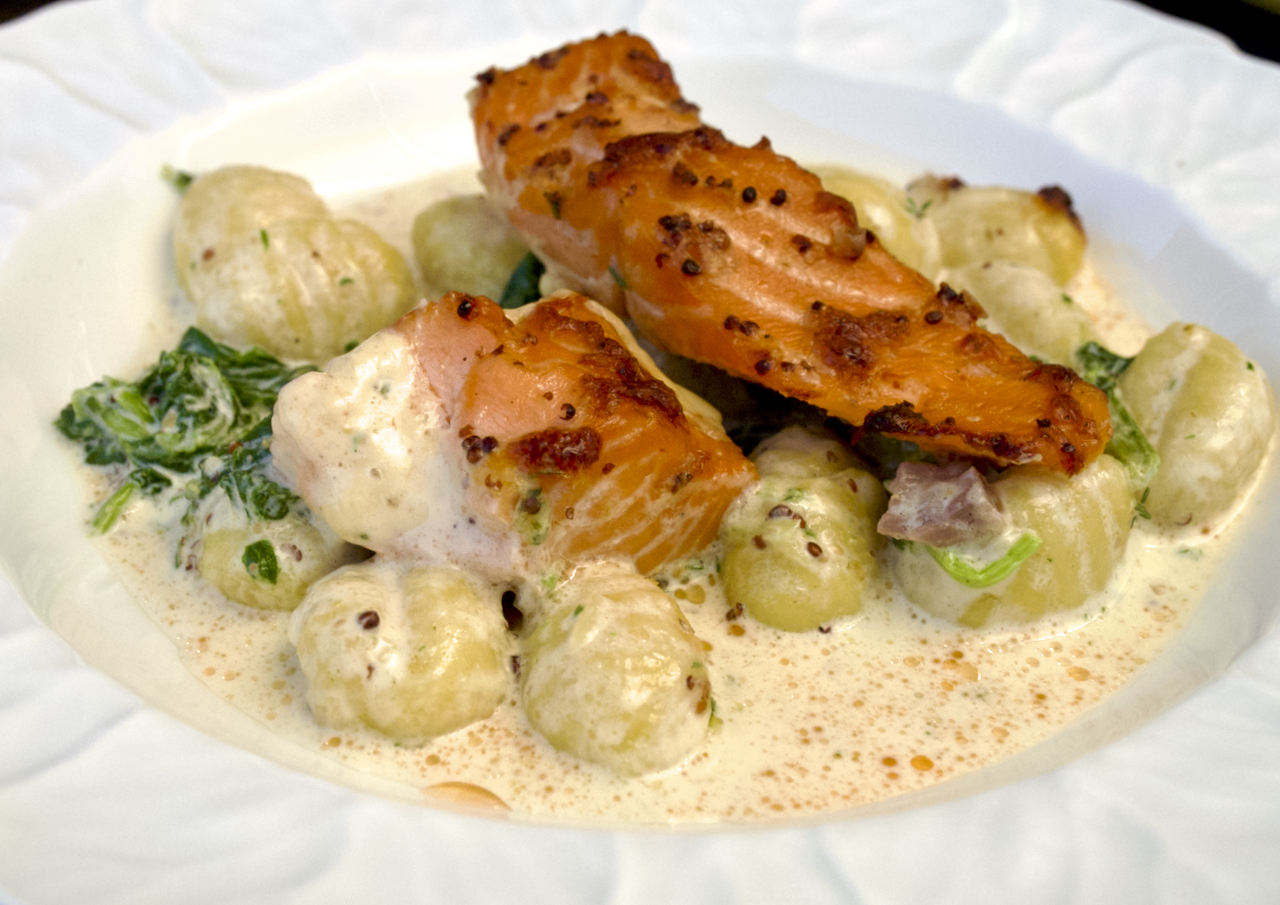
This is a dish we cook when we get home late and need something quick and tasty. You can easily pick up the ingredients in a supermarket on the way home.
Wine Suggestion: the more we taste them, the more we like how versatile Verdicchio is, even the entry level Villa Bianchi from Umani Ronchi in the Marche. There’s just the right level of texture and viscosity for the creamy richness, and zip, zing and minerality for the fish.
Hot-smoked salmon, gnocchi and spinach bake – serve 4
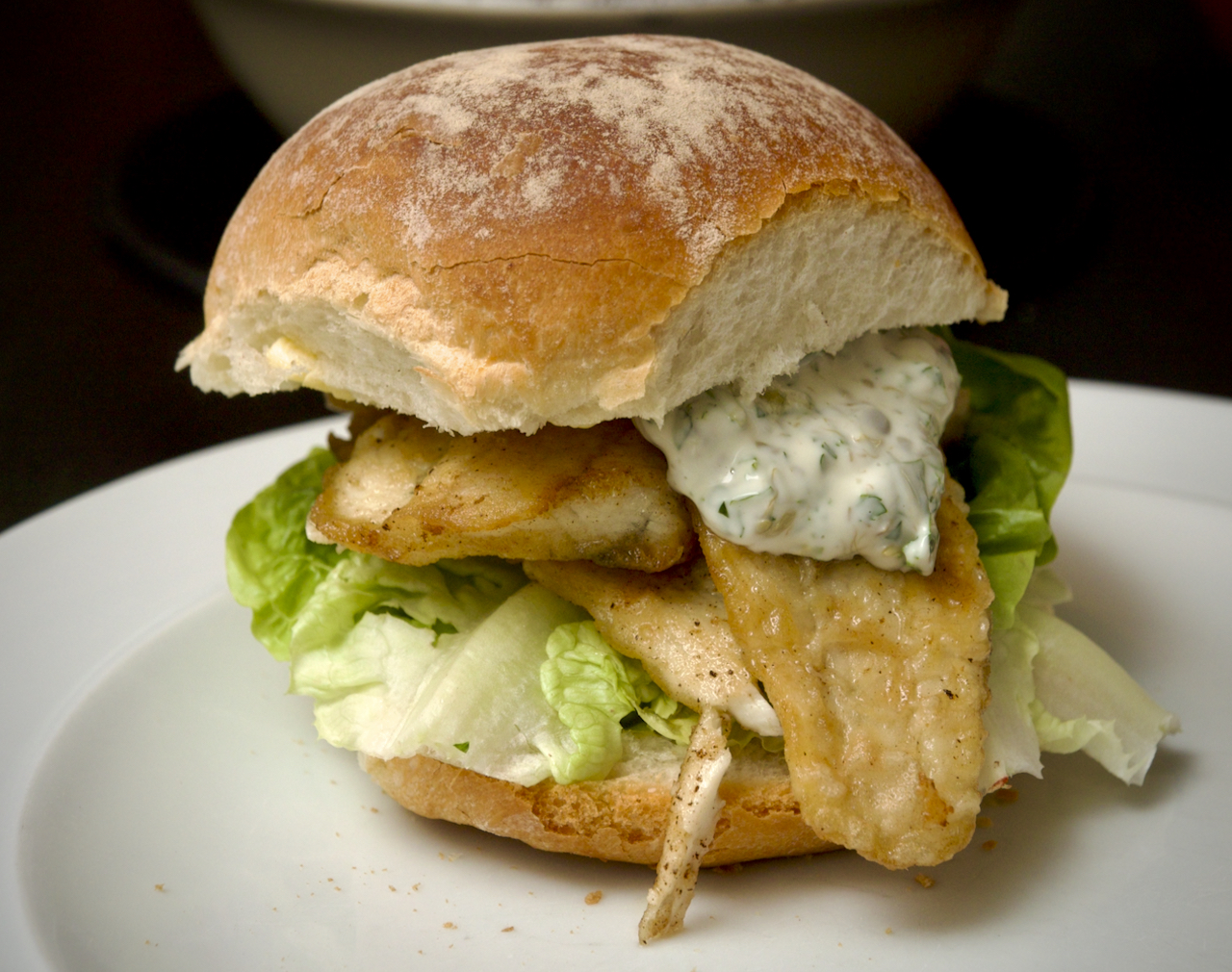
Fish in a bap with caper mayonnaise because most things taste good in a bap.
Wine Suggestion: We went Portuguese and chose an Arinto-Verdelho blend from near Lisbon: the Mar de Lisboa white, made by Quinta de Chocapalha. Lemon flavours with hints of passionfruit felt the perfect addition to this dish and the minerally, zip added a freshness that really matched the caper mayonnaise.
Fish in a bap – serves 1(easily multiplied)
2 skinless fillets of dab or other flat fish – we used plaice
butter
1 tbsp sunflower or groundnut oil
2 tbsp plain flour
a fresh white bap
a squeeze of lemon & a dash of tabasco, to serve
For the caper mayonnaise:
2 tbsp good mayo
2 tsp capers, drained and finely chopped
1 tbsp chopped parsley
lemon juice
Make the mayonnaise first by combining the mayonnaise, capers, parsley and a squeeze of lemon juice (to taste). Set aside.
Heat the the oil and a knob of butter in a non-stick frying pan over a medium heat. Spread the flour out on a plate and season it well. Dust the fish fillets with the flour, shaking off any excess, then fry for 2 minutes on each side.
Slice the bap in half and butter it generously. Add a few lettuce leaves and put the cooked fish on top, seasoning with lemon juice and tabasco. Add a good blob of the caper mayonnaise, the close the bap and eat it.
(Original recipe from River Cottage Everyday by Hugh Fearnley-Whittingstall, Bloomsbury, 2009.)
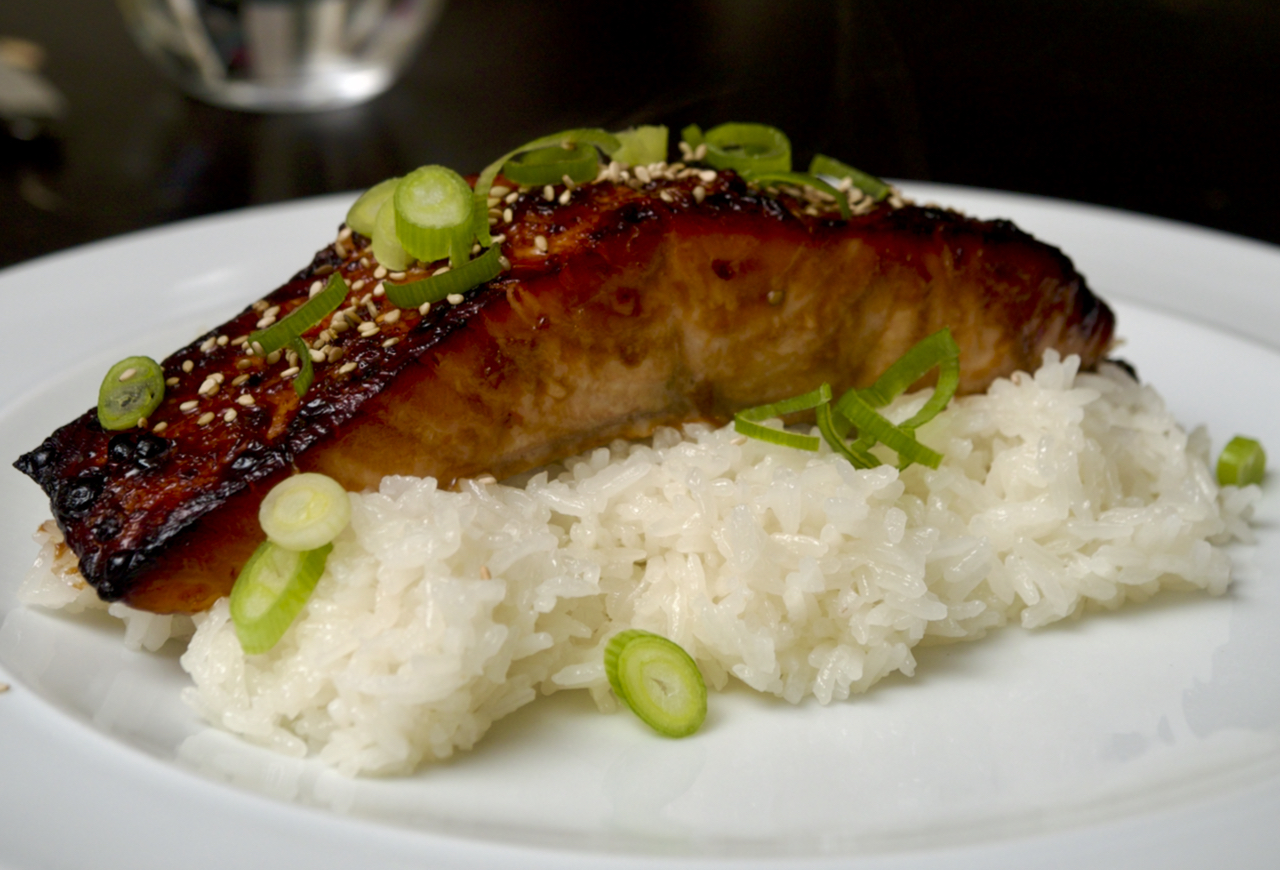
You need to marinade the salmon for 30 minutes or up to 24 hours ahead. After that, it’s dinner in 15 minutes. We served with with some sticky rice and dressed Asian greens.
Wine Suggestion: This works with a good Pinot Gris, like Neudorf’s Tiritiri. An underestimated grape, given the oceans of bland Pinot Grigio sold, but in the right hands … the riper, richer and more textural French styled Pinot Gris is a joy. Neudorf’s version is all about mouth feel: depth, viscosity, and richness while staying deliciously clean and deceptively moreish. And the back-bone is a fresh, salty-stoney texture keeping it all clean and vibrant.
Sticky glazed salmon – serves 2-3
2-3 salmon fillets
rapeseed oil spray
FOR THE MARINADE:
1 tsp finely grated ginger
1 garlic clove, finely grated
1 tbsp soy sauce
2 tbsp oyster sauce
2 tbsp sweet chilli sauce
TO SERVE
sesame seeds
1 scallion, finely sliced
Mix all of the marinade ingredients together in a shallow dish, then add the salmon and turn to coat.
When you are ready to cook, heat the grill to high. Line a grill tray with tin foil and place the salmon fillets on top, skin-side down. Brush with the marinade but don’t pour if over as any on the tin foil will burn, discard any extra.
Put the salmon under the grill, about 15-20 cm away from the heat. Cook for 7 minutes, then remove and spray with the rapeseed oil. Put back under the grill for another 1-3 minutes or until nicely caramelised.
Allow the salmon to rest for 5 minutes before serving with the scallions and sesame seeds scattered over.
(Original recipe from Recipetin Eats Dinner by Nagi Maehashi, Pan MacMillan, 2022.)
The sauce here is fairly spicy but well-tempered by the fishcakes and lots of white rice and some yoghurt if you like. The depth of flavour and balance is superb. You can cook the sauce and prep the kofta mixture in advance.
Wine Suggestion: this works with Grenache – Tempranillo blends, especially if they’re fruit forward and low/no oak like Jesus Romero’s Rubus from rural Aragon. We love this as it’s real hands-off winemaking at it’s best, capturing the essence and energy of the fruit in the vineyard.
Fish koftas in chilli and tomato sauce – serves 4
FOR THE KOFTAS:
500g firm white fish without skin and bones, we used hake
4 scallions, finely sliced
10g dill, roughly choped, plus extra picked fronds to serve
1 green chilli, deseeded and finely chopped
1½ tsp finely grated lemon zest
1 egg, beaten
30g panko breadcrumbs
3 tbsp olive oil
FOR THE TOMATO SAUCE:
15g dried ancho chillies, stems removed
2 tsp caraway seeds, toasted and roughly crushed
1 tbsp cumin seeds, toasted and roughly crushed
6 cloves of garlic, peeled
1 onion, roughly chopped
60m olive oil
1 green chilli, halved and seeds removed
1 tbsp tomato purée
3-4 plum tomatoes, roughly grated and skins discarded
300ml chicken stock or vegetable stock
2 tsp caster sugar
25g fresh coriander, roughly chopped
Make the sauce first. Put the dried chillies into a bowl and cover with lots of boiling water. Leave to soak for 20 minutes, then drain and discard the liquid and the seeds. Roughly chop the chillies and put them into a food processor with two-thirds of the caraway and cumin seeds, the garlic, the onion and 2 tbsp of the oil. Whizz until you have a coarse paste.
Heat 2 tbsp olive oil in a large sauté pan, then add the chilli paste, green chilli and tomato purée. Cook for 7 minutes, stirring frequently, until soft and fragrant. Add the tomatoes, stock, 200ml water, sugar, half the coriander, 1¼ tsp of salt and a good grind of pepper and bring to the boil. Lower the heat and simmer for 15 minutes, then keep warm until needed (or cool and re-heat later).
Meanwhile, make the koftas. Finely chop the fish into ½-1cm pieces. Put them into a large bowl with the scallions, dill, chilli, lemon zest, egg, panko, the rest of the coriander, the remaining caraway and cumin, 1 tsp of salt and plenty of black pepper and mix well to combine. Form into 12 round fish cakes, pressing to compact them so they don’t fall apart.
Heat 1½ tbsp of oil in a large frying pan over a medium-high heat. Add half the koftas and cook for 2½ minutes on each side, or until golden. Transfer to a plate, then repeat with the rest of the koftas.
Bring the sauce to a simmer. Add the koftas, then turn the heat to medium low and cook for 10 minutes. Leave to sit for 5 minutes, then serve with the extra dill.
(Original recipe from Ottolenghi Test Kitchen, Shelf Love by Noor Murad & Yotam Ottolenghi, Ebury Press, 2021.)
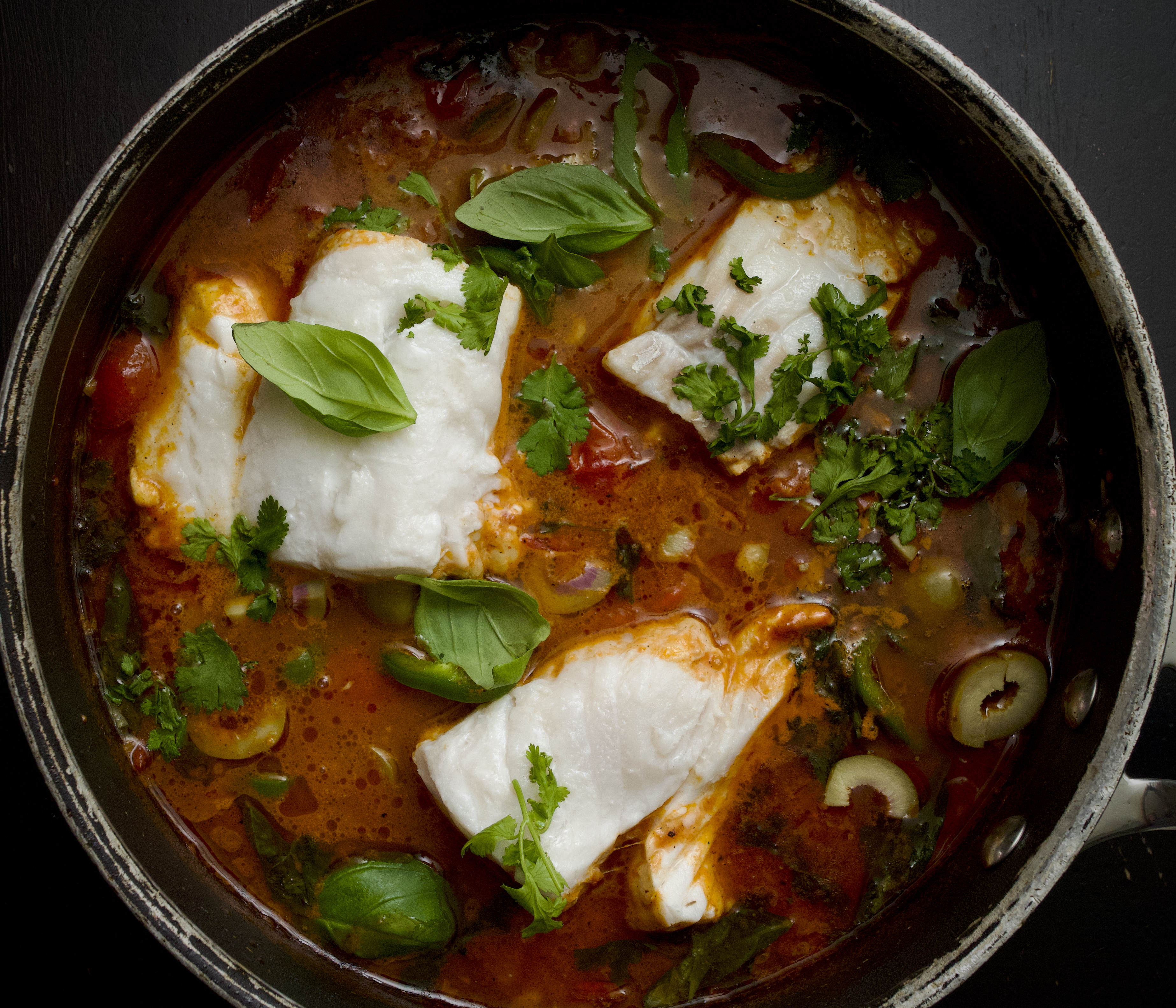
There is nothing difficult about this dish but despite the ease of cooking this tastes sophisticated and has bags of flavour. Inspiration from Mezcla by Ixta Belfrage, a book jam-packed with delicious things! Serve with some grilled sourdough.
Wine Suggestion: A good Sangiovese is our suggestion and we particularly enjoyed the Morisfarms Mandriolo from the Maremma on the Tuscan coast. With crushed raspberry flavours layered over a smooth dark berry core and aromas of violets this cut through any richness and gave it all a lift, adding an extra dimension to the meal. Just what we wanted with this complex and sophisticated meal.
Poached fish and charred tomatoes – serves 4
4 x 100g white fish fillets e.g. cod or hake, skin and bones removed
1 tbsp lime juice
1 tsp fine salt
FOR THE AÏOLI:
3 egg yolks
¼ tsp fine salt
½ a small clove of garlic, crushed
¼ tsp sweet paprika
pinch of saffron
50g light olive oil
FOR THE BROTH:
250g cherry tomatoes
1 Scotch bonnet chilli, whole
½ tsp fine salt
5 tbsp olive oil
3 cloves of garlic, very finely chopped
½ tsp paprika
1 tbsp tomato purée
5g fresh coriander
5g fresh basil
350g water
15g unsalted butter
1 jalapeño or green chilli, thinly sliced
70g pitted green olives, roughly chopped
1 lime, cut into wedges, to serve
grilled sourdough, to serve
Place the fish in a dish with the lime juice and fine salt. Mix to coat, then aside while you prep everything else.
Make the aïoli by putting the egg yolks, salt, garlic, paprika, some black pepper and saffron into a medium bowl and whisk until smooth. Add half the oil and whisk hard for 30 seconds or until the mixture starts to thicken. Add the rest of the oil and whisk hard again for about a minute, then stir in the vinegar. You should end up with loose mayonnasie consistency.
Heat a large sauté pan over a high heat until smoking hot. Add the tomatoes and Scotch bonnet and cook for about 6 minutes, give the pan a shake now and then to get a bit of char on the tomatoes.
Remove from the heat and add the salt, oil, garlic, paprika, tomato purée, half the coriander and half the basil. Mix well then return to the heat and stir-fry for a couple of minutes. Add the water and butter and bring to a simmer. Simmer gently for 5 minutes, squeezing most of the tomatoes into the broth.
Lay the fish fillets into the broth, then cover with a lid and cook for a few minutes, or until just cooked through. Remove from the heat and leave covered for 2 minutes.
Throw away the Scotch bonnet and top the dish with the green chilli, olives and remaining herbs. Serve with the aïoli spooned on top and with lime wedges and grilled bread on the side.
(Original recipe from Mezcla by Ixta Belfrage, Ebury Press, 2022.)
This is a long recipe but it’s not difficult and quite nice and methodical. You can make the fishcakes earlier in the day and cook when you’re ready if you like. You will get big fishcakes full of chunky pieces of fish. Serve with green salad.
Wine Suggestion: a top-notch Muscadet, like Jérémie Huchet’s, very special Clos des Montys. Finely toned and vibrant with citrus and grapefruit on the palate; both dry and salty, and creamy at the same time. It’s a little edgy, but we like that. Wines like this bring out the flavours of the sea and celebrate the three fish in this dish.
Fishcakes with parsley sauce – serves 6
600g Maris Piper potatoes, cut into chunks
250g thick unskinned cod fillet
250g thick unkinned salmon fillet
100g unskinned smoked haddock fillet
500ml full-fat milk
1 bay leaf
grated zest of ½ lemon
6 scallions, finely sliced
25g plain flour
2 eggs
100g fresh white breadcrumbs
75ml vegetable oil
lemon wedges, to serve
FOR THE PARSLEY SAUCE:
25g butter
25g plain flour
reserved milk from cooking the fish
25g curly parsley, finely chopped
Put the potatoes into cold salted water, bring to the boil, then simmer for 12 to 15 minutes or until tender, then drain and mash. Season with salt and white pepper, then spread the potatoes out over a plate to cool.
Put the fish pieces into a large saucepan with the milk and bay leaf. Season with a little salt and peppper. Cover with a lid and gently bring to a simmer, then remove from the heat and set aside for 10 minutes to finish cooking.
Remove the fish from the milk and set onto a plate. Pour the milk into a jug as you will need this for the parsley sauce later. Remove the skin from the fish and break it into chunky pieces, discarding any bones, then leave to cool completely.
When the potato has cooled, transfer it to a large bowl and stir in the lemon zest and scallions. Gently stir in the fish with a wooden spoon, trying not to break it up too much.
Divid the mixture into 6 balls. Flatten the balls into cakes, about 3cm thick, and place on a lined baking tray. Put the tray into the fridge for 45 minutes or into the freezer for 20 to firm up.
Sprinkle the flour over a plate. Beat the eggs together in a shallow bowl. Spread half the breadcrumbs over another plate. Now take each fishcake and coat in the flour, shaking off any excess, then into the egg, allowing excess to drip off and finally into the breadcrumnbs to coat. Place on a lined baking tray. When you have coated 3 fishcakes put the rest of the breadcrumbs onto the plate for the rest. The fishcakes will keep in the fridge for 24 hours at this stage.
Heat the oven to 200/C/180C fan.
Heat the oil in a large frying pan, then place 3 fishcakes into the pan and fry for about 3 minutes on each side. Put onto a baking tray while you fry the rest.
Put the fishcakes into the hot oven for 10 minutes to finish cooking. Test with a skewer to make sure they are hot right through to the middle.
To make the parsley sauce, melt the butter in a small pan, then stir in the flour. Cook for a minute, then gradually add the reserved milk, stirring continually until you have a smooth sauce. Allow to simmer, then cook gently for a few minutes until thickened, then season. Remove from the heat and stir in the chopped parsley.
Serve the fishcakes with the sauce and some lemon wedges. A green salad works well on the side.
(Original recipe from The Hairy Bikers’ British Classice by Si King and Dave Myers, Seven Dials, 2018.)
This fish dish feels a bit special but is very easy to make. Serve on buttered spinach and with steamed potatoes.
Wine Suggestion: from our recent trip to the Loire we opened the superlative Domaine de la Taille aux Loups Clos de la Bretonnière. Made by Jacky and J-P Blot from a monopole in Vouvray, it has to be “Vin de France” as their winery is not in the appellation. No matter, this is as fine as dry Vouvray gets. We really enjoyed the taut minerality that complimented the fish, and how it kept on giving more layers as it went along revealing hints of spring and summer fruits. Tension and poise, but with a real generosity too.
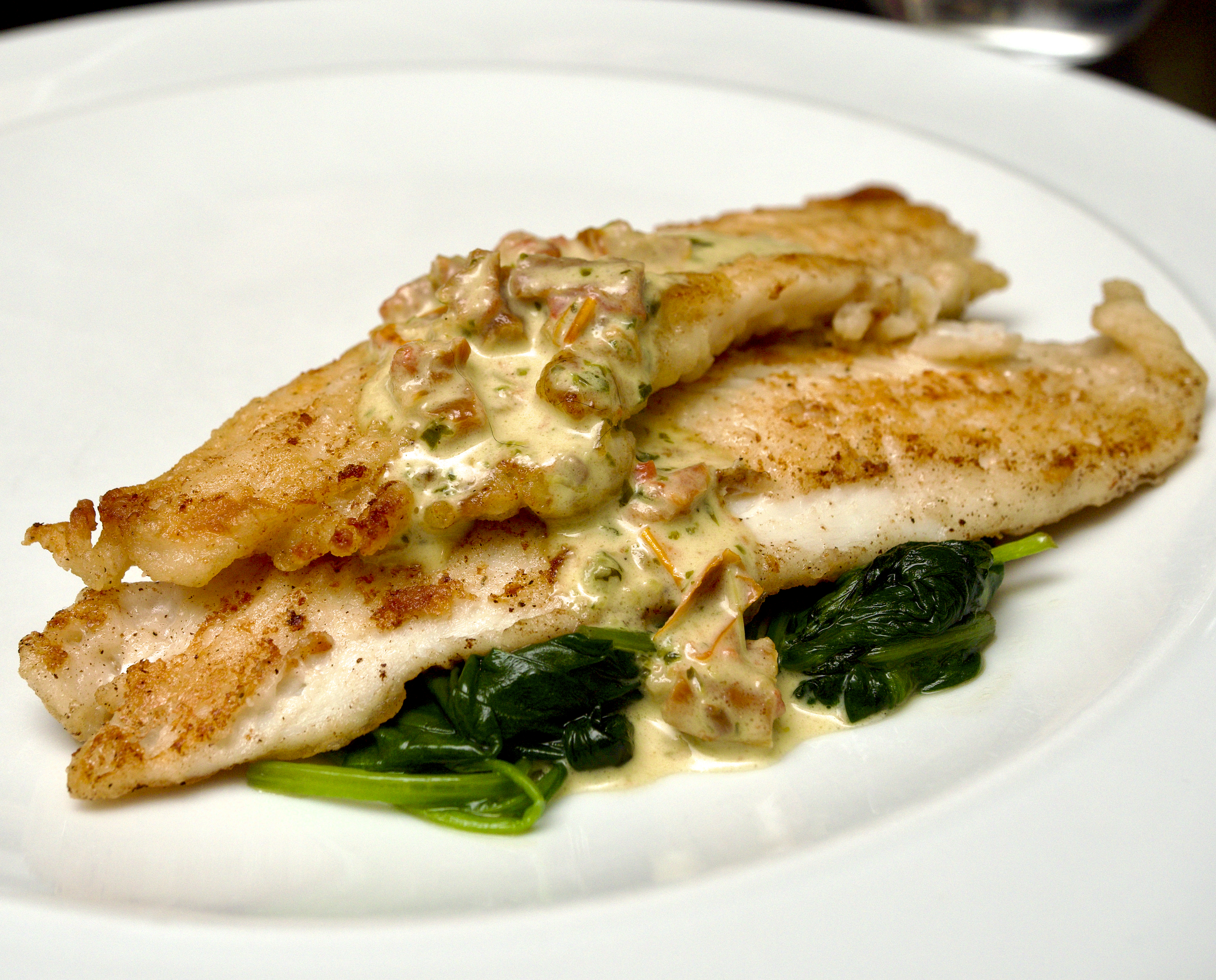
Lemon sole with basil & tomato sauce – serves 4
60g plain flour
2 small lemon sole, each cut into 4 fillets and skinned (your fish shop will do this for you)
30g butter
FOR THE SAUCE:
300ml double cream
juice of ½ lemon
3 tbsp fresh pesto
100g sun-blush tomatoes, finely chopped
2 tsp chopped basil, to serve
Sprinkle the flour over a large plate and season well with salt and pepper.
Dip the fish fillets into the seasoned flour and shake off any excess.
Melt the butter in a large frying pan. Wait until the butter foams, then add the fillets and cook for 2 minute on each side, or until opaque and easy to flake. Transfer to a warm plate and keep warm while you make the sauce.
Heat the cream, lemon juice, and pesto in a pan over a medium heat until hot, then add the sun-blush tomatoes and season with salt and black pepper. Serve the fish fillets on a bed of buttered spinach, dress with the sauce and sprinkle over some basil leaves.
(Original recipe from Mary Berry’s Cookery Course, DK, 2013.)
We’re loving all the simple and delicious recipes from Sabrina Ghayour’s new book, Persiana Everyday. This fish takes minutes to make and tastes amazing. We served with some sautéed potatoes and salad.
Wine Suggestion: A richer, rounder white like the Edetària “via Edetana” Blanc which combines old-vine Garnaxta Blanca with Viognier. Elegant and complex with honeysuckle, peach, tangerine and toasted nut aromas and flavours. The stonefruit flavours, in particular, seem to work with the earthy za’atar in a superb way.
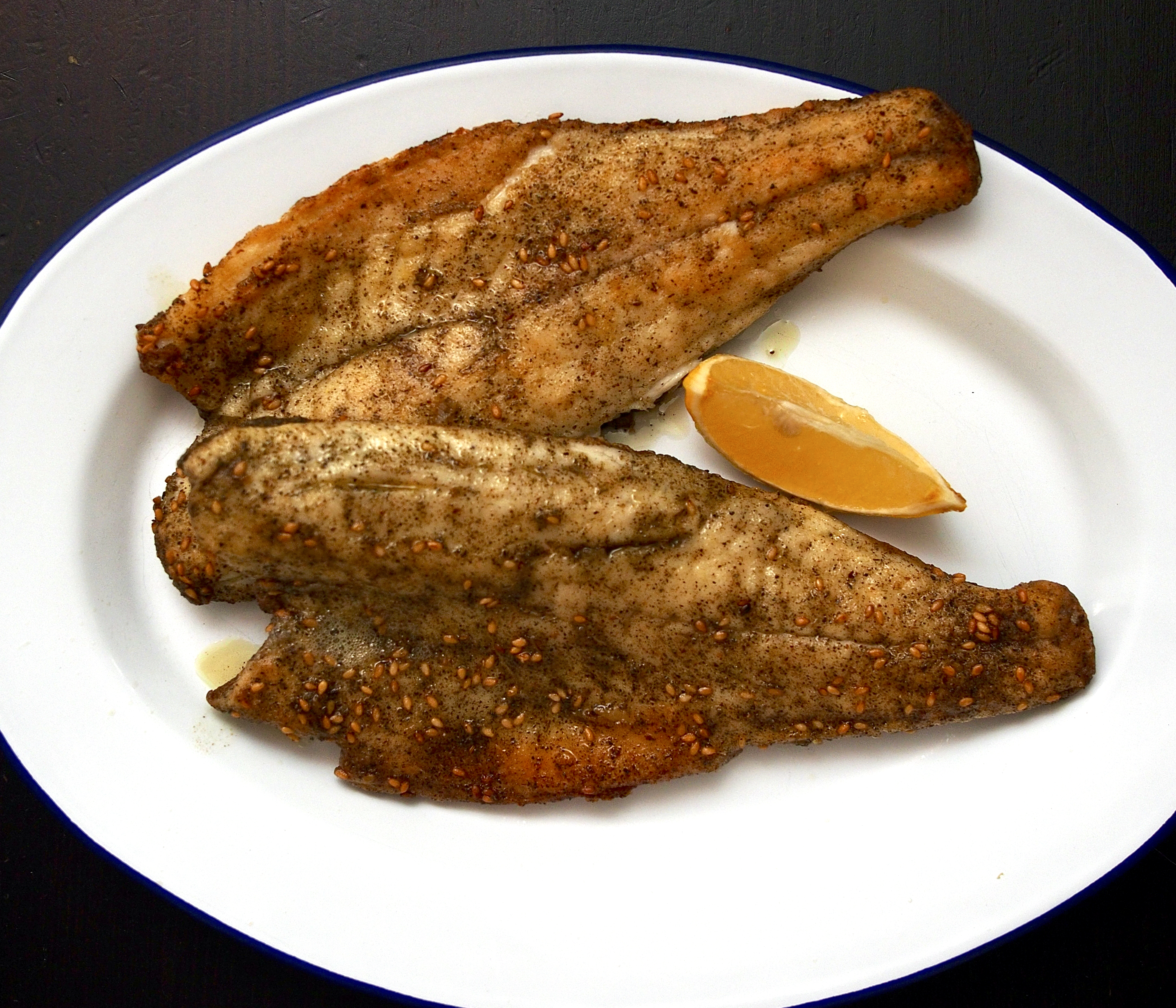
Za’atar Sea Bass – serves 2
1 heaped tbsp za’atar
1 tbsp plain flour
veg oil, for frying
2 skin-on sea bass fillets
lemon wedges, to serve
Mix the za’atar, flour and plenty of seasoning in a shallow dish.
Coat the fish fillets in the seasoned flour, turn them over a few times.
Put a frying pan over a medium-high heat and drizzle in enough oil to coat the base. When the oil is hot, put the sea bass fillets into the pan, skin-side down, and cook for 1-2 minutes until the skin is crispy. Turn the fish over and cook for another minute on the other side – they should be just cooked. Serve straight away with the lemon wedges to squeeze over.
(Original recipe from Persiana Everyday by Sabrina Ghayour, Aster, 2022.)
It’s the first night of our holidays and we felt like eating something to remind us of the beach!
Wine Suggestion: Dominio de Tares La Sonrisa Godello, or something similar with a chalky, Chablis-esk minerally finish; unoaked, vibrant and dry.
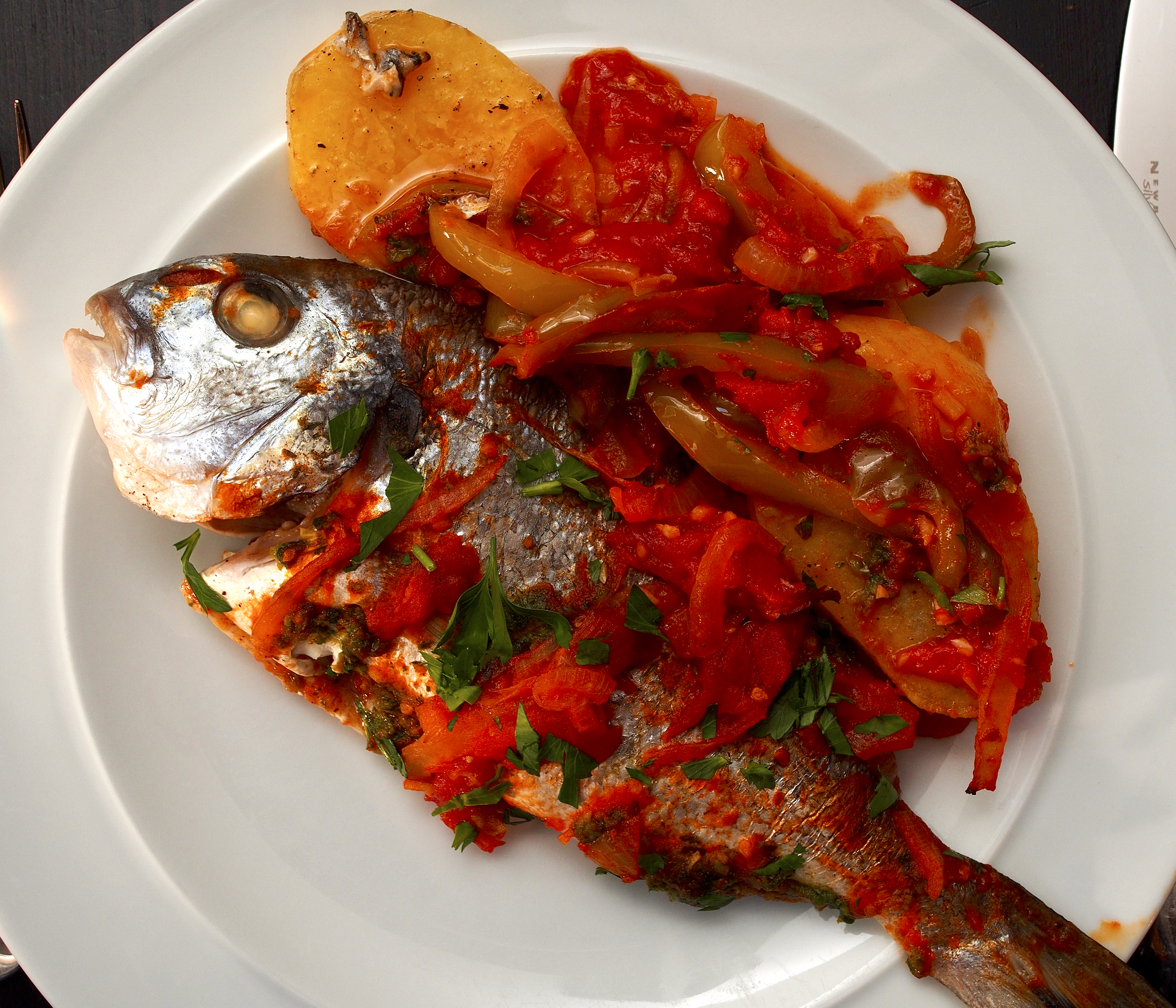
Baked sea bream – serves 2
5 tbsp olive oil
1 large onion, sliced
1 garlic clove, chopped
1 large green pepper, sliced
400g tin tomatoes
1 bay leaf
3 large waxy potatoes, peeled
2 x 400g whole sea bream, scaled and gutted
juice of ½ lemon
6 black peppercorns
60ml dry sherry
a small handful of flatleaf parsley leaves, chopped
FOR THE PICADA:
a small handful of flatleaf parsley leaves, chopped
2 large garlic cloves, roughly chopped
½ tsp sea salt
Warm 2 tbsp of olive oil in a large frying pan. Add the onions, garlic and pepper and cook for 10-15 minutes or until soft. Add the tomatoes, bay leaf and a splash of water, then cover and cook gently for 20 minutes.
Meanwhile, heat the oven to 180C/Fan 160C. Slice the potatoes, not too thin and not too thick so they hold together but cook through. Spread them over the base of a roasting dish that can easily accomodate the fish. Drizzle over 2 tbsp of olive oil and season with salt and pepper. Toss together then bake for 20 minutes.
To make the picada, put the parsley, garlic and salt into a pestle and mortar and grind to a paste, then set aside.
Season the fish with salt and pepper and put on top of the cooked potatoes. Spread the picada over the fish. Add the lemon juice and a couple of tbsp of water, then pour the tomato sauce over everything. Drizzle over the last tbsp of olive oil, add the peppercorns and sherry, then bake for 20-25 minutes. Scatter with the chopped parsley to serve.
(Original recipe from Rick Stein at Home, BBC Books, 2021.)



 Jono & Jules do food & wine
