Feeds:
Posts
Comments

Posts Tagged ‘Garlic’

Garlic sauce

This is a great sauce for a beef or lamb steak. Don’t be put off by the amount of garlic; the poaching process takes away any harshness from the garlic and results in a sweet and delicious sauce.

Wine Suggestion: While your choice of wine might be determined somewhat by the type of meat you have, with the garlic sauce the key is to choose something robust, not delicate. For this steak we had an old vine Carignan (with a touch of Grenache and Syrah in the blend) from Domaine Roc des Anges in Roussillon. Their “Reliefs” cuvée is one of the best we’ve tasted of this grape variety. It is smooth and sophisticated and yet down deep it seems informed by a rustic prehistoric core.  Supple, deep and fleshy with sheets of shimmering tannin, great driving depth, cherry and dark chocolate flavours and a full, juicy and balanced finish.

Poached Garlic Sauce – serves 4

  • 3 garlic bulbs
  • milk
  • 3 tsps extra virgin olive oil
  • ½-¾ tablespoon sherry vinegar

Break up the garlic bulbs and throw away the woody roots. Put the garlic cloves, skins on, into a small saucepan and cover with milk by at least 3cm. Bring the milk and garlic to a simmer and cook gently for about 20 minutes or until the garlic is soft. Reserve 6 tablespoons of the poaching milk and discard the rest. Either put the garlic through a mouli or squeeze the soft garlic out of each skin and mash to a puree. Add the reserved milk to thin it slightly , then stir in the olive oil and sherry vinegar. Season well with salt and black pepper.

(Original recipe from Moro: The Cookbook by Sam & Sam Clark, Ebury Press, 2001.)

Read Full Post »

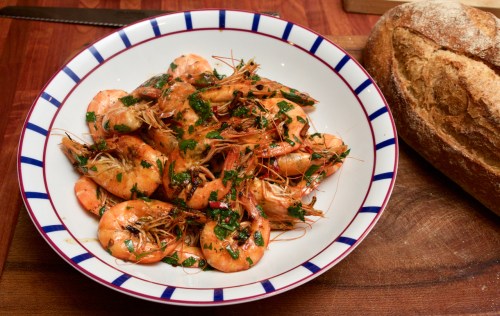
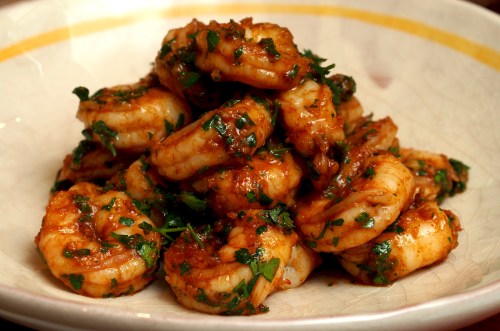
Spicy Prawns

These prawns, flavoured with lots of garlic and warm spices, make a simple but really tasty starter. Serve with plenty of bread for mopping up the juices.

Wine Suggestion: We really like unoaked, slightly lighter, Spanish reds with this dish especially with 30 minutes in the fridge to give a cool edge to them. A newish find has been the Jesus Romero “Rubus”, a delicious blend of Garnacha, Tempranillo and Syrah which has a purity and persistence of fruit that charms us every time.

Spicy Prawns – serves 4

  • 300g raw peeled king prawns
  • 4tbsp olive oil
  • 4 garlic cloves, crushed
  • 2 tsp paprika
  • 1½ tsp ground cumin
  • ¾ tsp ground ginger
  • a good pinch of cayenne pepper or chilli powder
  • 5 tbsp chopped coriander or parsley

Heat the oil with the garlic and spices in a large frying pan. Keep stirring until aromatic, then throw in the prawns and fry quickly over a medium heat until pink – about a minute. Stir in the coriander or parsley and serve.

(Original recipe from Foolproof Mediterranean Cookery by Claudia Roden, BBC Worldwide Ltd., 2003.)

Read Full Post »

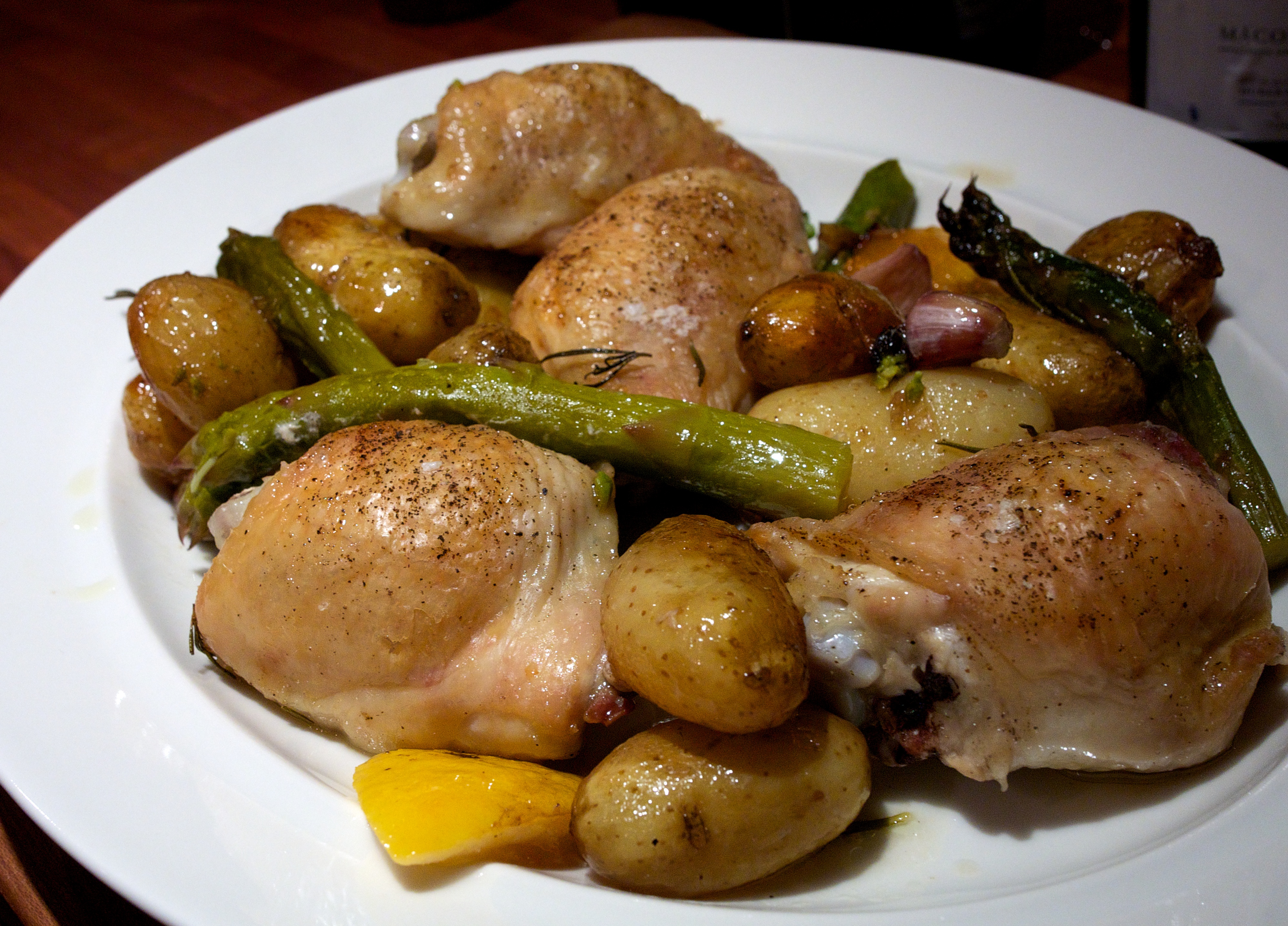
Rosemary roast chicken thighs, asparagus & new potatoes

A weeknight treat to celebrate the new season’s bounty.

Wine Suggestion: We had a glass of the Domaine St Denis Macon-Lugny, a superb chardonnay from the Mâconnais in Burgundy and from the only grower-winemaker in this village (the rest goes to the co-op). Excellent flavours and a nutty depth marry well with the fresh, new season flavours and roasted chicken; a good choice.

Rosemary Roast Chicken Thighs with Asparagus & New Potatoes – serves 4

  • 750g small new potatoes, halved
  • 2 large bunches of asparagus, discard the woody ends
  • 1 whole bulb of garlic, cloves separated
  • 1 tbsp olive oil
  • 1 lemon, halved
  • small handful of rosemary sprigs
  • 8 chicken thighs

Heat the oven to 200C/180C fan/gas 6.

Put the potatoes, asparagus, garlic cloves and olive oil into a large roasting tray and season well. Squeeze over the juice from the lemon halves, then cut into chunks and add to the tray. Toss together well, cover with foil and roast for about 15 minutes.

Remove the foil and stir through the rosemary.

Season the chicken thighs and arrange in the dish in a single layer.

Now roast for 30-50 minutes or until the potatoes are tender and the chicken is crisp and cooked through (this will depend on the size of your potatoes and chicken thighs).

(Original recipe from BBC Good Food)


Read Full Post »

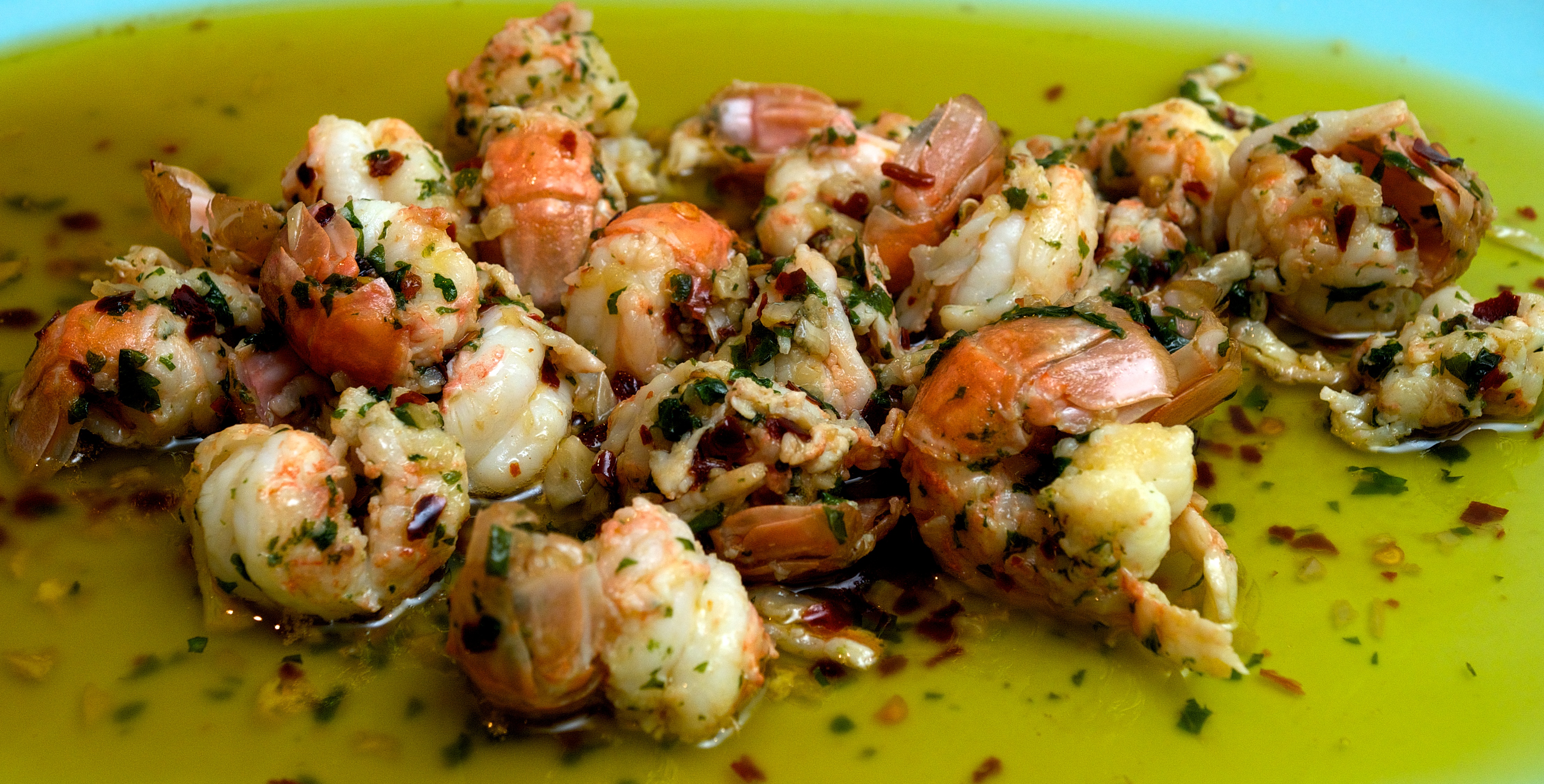
Gambas al ajillo

This is the same dish as Prawns Pil-Pil which you get in restaurants all over Spain. Ordinary food but absolutely delicious. Don’t forget some crusty bread to mop up the oil.

Wine Suggestion: This is great with a Manzanilla sherry, like the La Gitana by Hidalgo we had with it. The dry and savoury character of the wine makes every component sing and has a great ability to both entice hunger and also sate the palate.

Gambas al ajillo – to serve 4 as a starter 

  • 750g unpeeled prawns
  • 8 garlic cloves
  • 5g flat-leaf parsley leaves
  • 300ml olive oil
  • 2 tsp crushed dried chilli flakes

Peel the prawns but leave the last tail segment in place.

Sprinkle the garlic and parsley with ½ tsp of salt and chop together to form a course mixture.

Pour the oil into a large, deep frying pan over a low heat. When hot, at the chilli flakes and garlic and parsley mixture and cook gently for a few minute or until sizzling and smelling delicious.

Turn the heat up a touch before adding prawns and cooking for a few minutes or until just cooked through. Season with a bit more salt to taste.

(Original recipe from Rick Stein’s Spain, BBC Books, 2011.)

Read Full Post »

A really fabulous starter with some crusty bread; a classic Tapas or party starter.

Garlic prawns with parsley & lemon – to serve 6

  • 4 tbsp olive oil
  • 3 garlic cloves, finely chopped
  • pinch of red chilli flakes
  • 400g large, raw, peeled prawns
  • juice from half a lemon
  • small handful flat-leaf parsley, chopped
  • crusty bread to serve

Heat the olive oil in a large frying pan and gently fry the garlic with the chilli flakes.

Add the prawns and cook over a high heat for 2-3 minutes until pink.

Squeeze in the lemon juice, stir in the parsley and serve.

Wine Suggestion: This is a classic Spanish dish so we went for the classic Spanish white, Albariño, a great match for shellfish. It worked a treat.

Read Full Post »

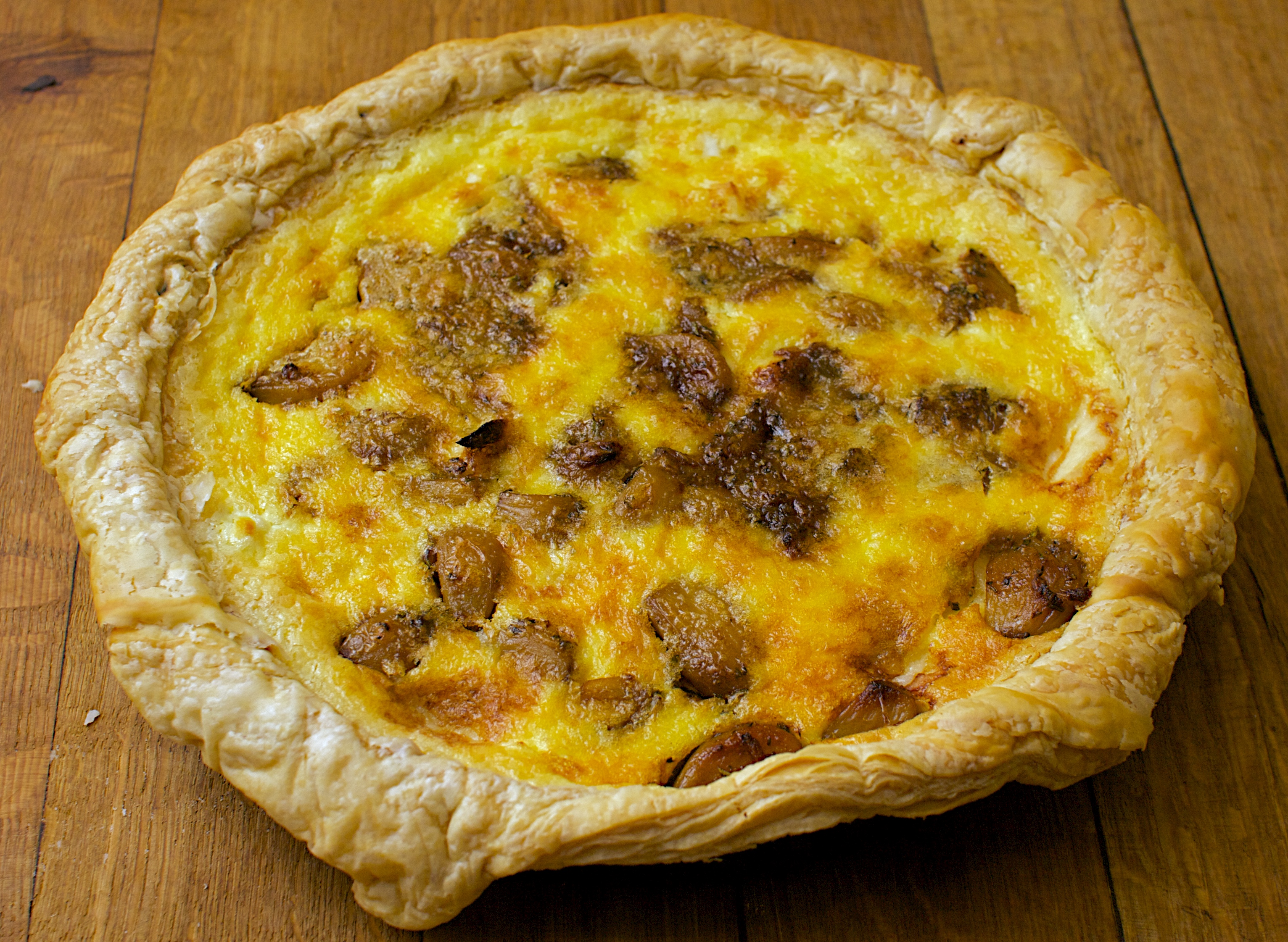
Don’t be put off by the copious amounts of garlic as they are mild and sweet by the time this delicious tart by Yotam Ottolenghi is cooked. It is perfect for a dinner party as you can have it cooked in advance and just reheat to serve.

Caramelized garlic tart – to serve 6

  • 375g all-butter puff pastry
  • 3 medium heads of garlic, cloves peeled
  • 1 tbsp olive oil
  • 1 tsp balsamic vinegar
  • 220ml water
  • ¾ tbsp caster sugar
  • 1 tsp chopped rosemary
  • 1 tsp chopped thyme
  • 120g soft creamy goat’s cheese
  • 120g hard mature goat’s cheese
  • 2 eggs
  • 100ml double cream
  • 100ml crème fraîche

You will need a shallow, loose-bottomed, 28cm fluted tart tin.

Roll out the pastry into a circle that will line the bottom and sides of the tin, plus a little extra. Line the tin with the pastry, place a large circle of greaseproof paper on the bottom and fill up with baking beans. Rest in the fridge for about 20 minutes.

Preheat the oven to 180ºC/Gas Mark 4. Put the tart in the oven and bake blind for 20 minutes. Take the beans and the paper out and bake for another 5-10 minutes or until the pastry is golden. Don’t panic if it puffs up in the middle it will deflate as it cools down. Set the tart case aside and leave the oven on.

While the tart case is baking, put the garlic cloves in a small saucepan and cover with plenty of water. Bring to a simmer and blanch the garlic for 3 minutes, then drain well. Dry the saucepan, put the cloves back in and add the olive oil. Fry the garlic on a high heat for a couple of minutes. Add the balsamic vinegar and water and bring to the boil, then simmer gently for 10 minutes. Add the sugar, rosemary, thyme and ¼ tsp salt. Simmer for another 10 minutes or so on a medium heat, or until the liquid has almost evaporated and the garlic is coated in a dark syrup. Set the garlic aside.

Break up the cheeses and scatter pieces into the pastry case. Spoon over the garlic and syrup. Whisk the eggs, creams, ½ tsp salt and some black pepper together in a jug. Pour this over the tart filling to fill the gaps, make sure you still have cheese and garlic poking up through.

Turn the oven down to 160ºC/Gas Mark 3 and put the tart in. Bake for 35-45 minutes or until the filling is set and the top is nicely browned. Remove from the oven and leave to cool a little before taking it out of the tin. You might need to trim the pastry edge. Serve warm with a green salad.

Wine Suggestion: This combination of dairy products and pastry demands a white with good body and moderate acidity. A Rhone white that uses one, or a combination of Roussanne, Marsanne and a little Viognier would work well, but avoid most 100% Viognier wines as the acidity won’t be great enough. We drank a Hermitage white which combined the first two of these grapes to good effect and provided an excellent complimentary texture.

(Original recipe from Yotam Ottolenghi’s Plenty, Ebury Press, 2010.)

Read Full Post »

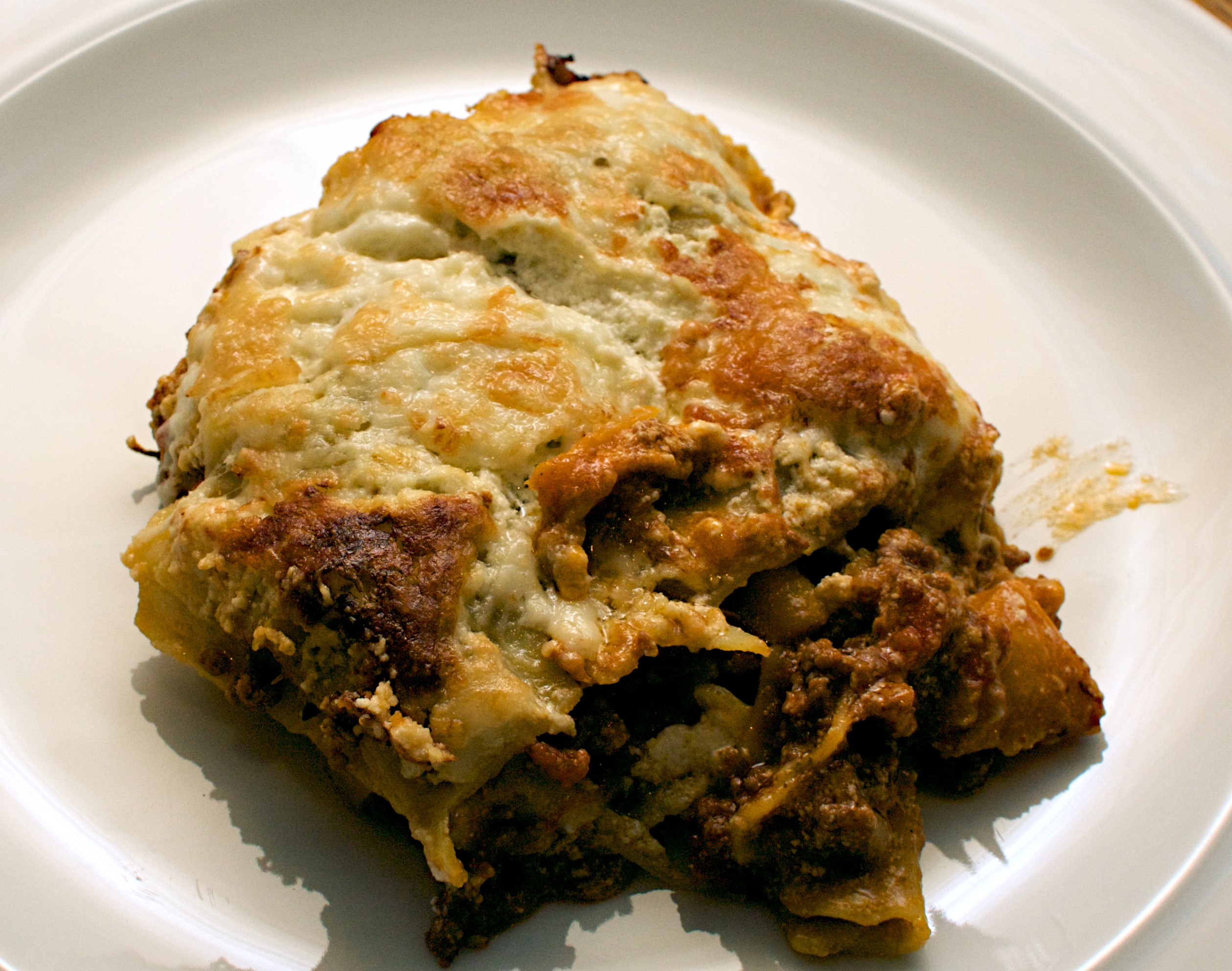
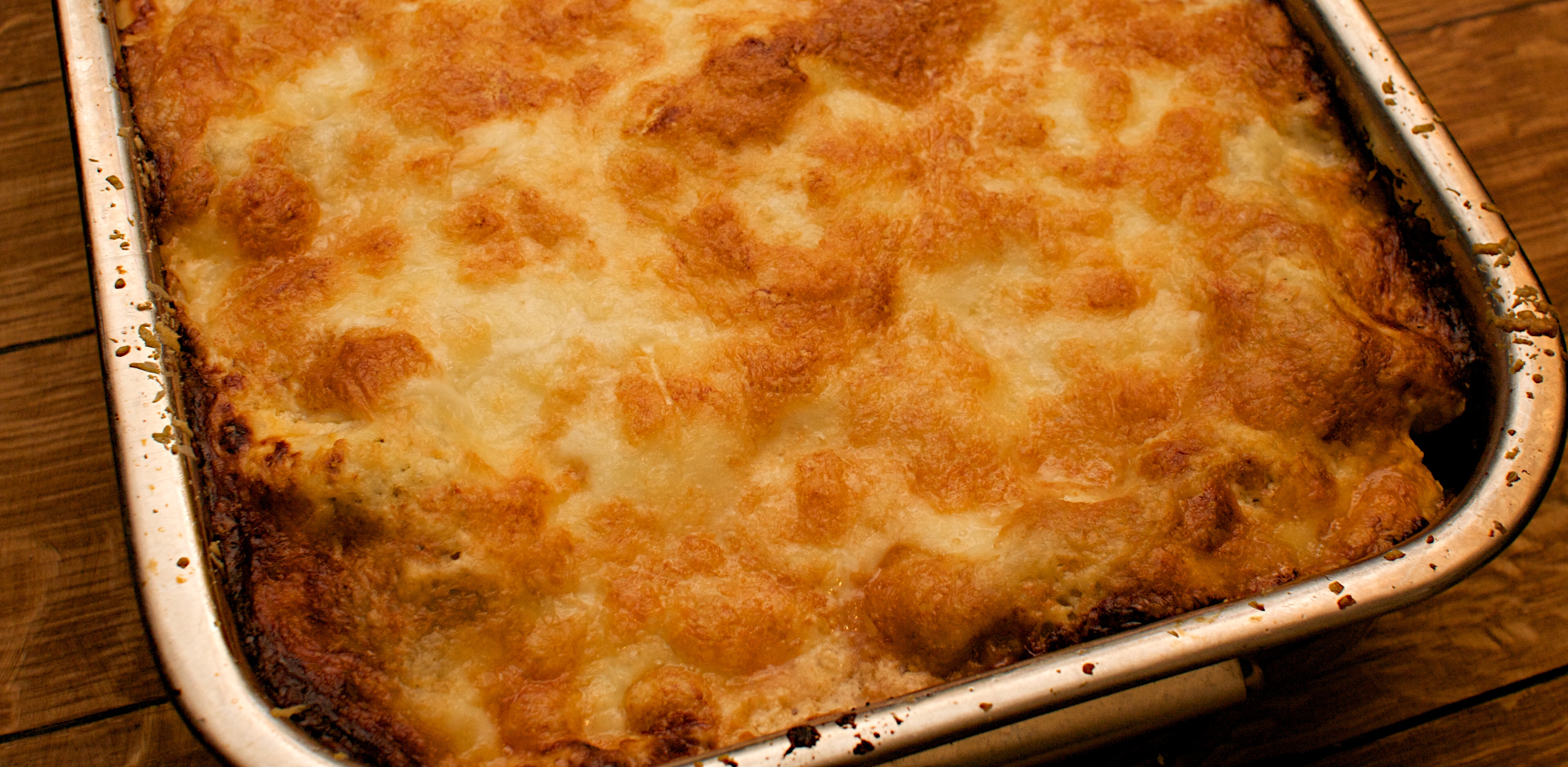
This is our classic party dish – so popular that we have to fight to get a taste when we serve it in a buffet! We’ve just made it this weekend for our friends Nicola and Dave’s housewarming. Just to make sure we got some ourselves we made a little extra for the next day. So for all our friends that have asked … here’s the recipe 🙂

Simple Baked Lasagne – serves 6 but easily doubled (which can easily serve 20 or more strangely enough …)

  • 4 rashers pancetta or smoked bacon, finely sliced
  • pinch cinnamon
  • 1 onion, finely chopped
  • 1 carrot, finely chopped
  • 2 cloves garlic, finely chopped
  • 2 generous handfuls of whole, fresh herbs (use your own mix of sage, oregano, rosemary and thyme)
  • 400g shin of beef, or skirt, coarsely minced
  • 200g pork belly, skin removed & coarsely minced
  • 2 x 400g tins good-quality plum tomatoes
  • 250ml red wine
  • 2 bay leaves
  • 1 butternut squash, halved, deseeded and roughly sliced
  • 1 tbsp coriander seeds, bashed in a mortar & pestle
  • 1 dried red chilli, also bashed
  • 400g dried, ready to cook lasagne sheets
  • 400g mozzarella

For the white sauce:

  • 1 x 250ml tubs of crème fraîche
  • 3 anchovies, finely chopped
  • 2 handfuls freshly grated parmesan
  • a little milk

Preheat oven to 180C / 350F / Gas 4

If you are making a double quantity you may want to cook the meat sauce in two quantities as it will be easier to manage unless you have a very large casserole pot. You can also make the meat sauce in advance which makes entertaining easy –  a simple assembly and cook on the night!

In a large casserole pan slowly fry the pancetta or bacon and the cinnamon until golden, add the onion, carrot, garlic and herbs and about 4 tablespoons of olive oil. Once mixed together add the beef and pork and brown for about 5 minutes. Add the tinned tomatoes, wine and bay leaves and then bring to the boil. Wet some grease-proof paper and place it on top of the pan and then place a lid on top of this as well to complete the seal. Cook in the preheated oven for 2 hours.

While this is cooking rub the butternut squash with olive oil and sprinkle with salt, pepper and the bashed coriander seeds and chilli. Place on a baking tray and roast in the oven for the last 45 minutes of cooking the sauce. When you remove the sauce check that the squash is cooked and slightly caramelising; if not leave in oven until done.

When sauce is done season and put to one side. Mix together crème fraîche, anchovies, a handful of parmesan and season with salt and pepper. Slowly add enough milk while mixing until the sauce becomes loose and smooth. Don’t make it too runny!

Turn oven up to 200C / 400F / Gas 6. To assemble lasagne rub a large dish, or deep tray with olive oil, lay some sheets of lasagne over the bottom (and drape over the sides too if you are using fresh lasagne). Add a layer of meat, a little white sauce, a sprinkle of parmesan and then top with another layer of lasagne sheets. Make a complete layer with the butternut, topping it again with lasagne sheets. Repeat the meat, white sauce and parmesan layers. Finish with a layer of pasta covered in white sauce. Tear over the mozzarella and sprinkle with parmesan.

Cook for 30-35 minutes and until golden. Watch the hordes descend.

[Inspired by Jamie Oliver: Jamie’s dinners, Penguin 2006]

Read Full Post »

Calamari with Butter and GarlicMade for Michael and Ben who don’t like squid …but both asked us to post this recipe, perhaps we have converted them! Chargrilled and smothered in lemony garlic butter and parsley – don’t forget to buy some bread as mopping up the sauce is the best bit!

Calamari with butter, lemon and garlic – to serve 6 as a starter

  • 1kg squid (baby squid is best)
  • 100g butter
  • juice of 1 1/2 lemons
  • 3 garlic cloves, finely chopped
  • 2 tbsp chopped parsley
  • lemon wedges, to serve
If you need to clean the squid yourself, pull the tentacles away from the body. Remove the clear bone from inside the body and rinse the body well under cold water. Hold the tenticles firmly in one hand and squeeze out the little beak and cut it away, leaving the tentacles whole. Rinse the tentacles. Cut the body into rings about 3cm thick, and leave the tentacles whole. Pat dry.

Heat the butter in a saucepan and when it sizzles, add the lemon juice. Season with salt and pepper. Add the garlic and sizzle for a minute or two to flavour the butter but don’t let it burn. Stir in the parsley and take it off the heat.

Heat a griddle to very hot (it should be just smoking). Scatter with some of the calamari in a single layer – you’ll have to cook in batches – and cook over the highest heat. When the squid has darkened in parts on the underside, turn it over with tongs and cook until the other side is darkened – careful it doesn’t burn or it will taste bitter. Move it around the pan and let it cook for another couple of minutes, then add to the warm butter while you cook the next batch. Season to taste and serve with lemon wedges and lots of bread.

(Original recipe from Falling Cloudberries by Tessa Kiros, published by Murdoch Books, 2004.)

Read Full Post »

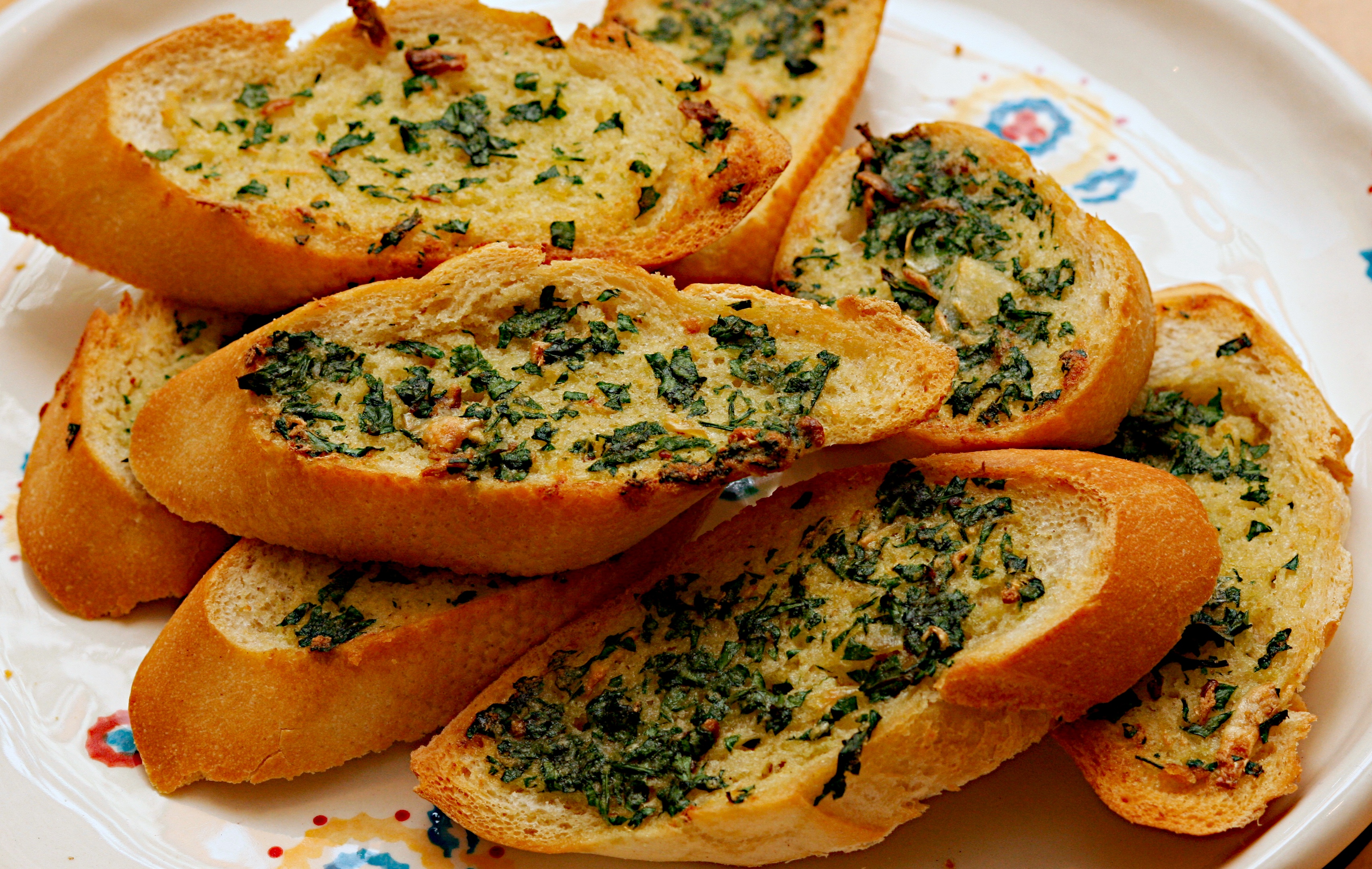
We love garlic bread but often the garlic is too raw and over-powering and it doesn’t love us back. For these toasts we roasted the garlic first before making the butter which gives a more subtle flavour.

You can make the garlic butter in advance.

Garlic Toasts (serves 4, easily multiplied for larger quantities)

  • 3 fat Garlic Cloves, peeled
  • 1 tablespoon Olive Oil
  • 1 tablespoon butter
  • 1/2 tablespoon Flat-leaf Parsley, chopped
  • 4 slices of Crostini, or a demi-baguette, sliced diagonally
Preheat oven to 180C/350F/Gas 4.
Put garlic and olive oil in a small roasting tin and season with salt and ground black pepper. Cover with foil and roast for 20 minutes.
When cooked and golden, remove from oven, cool slightly and then mash the garlic cloves in a small bowl with a fork. Add the butter and parsley and mix thoroughly.
Put bread on baking tray, spread with the garlic butter and bake until crisp (roughly 5-10 minutes).
We served this with Jamie Oliver’s Pasta Bake to great effect.
Original recipe: Bill Granger’s “Every Day”, Murdoch Books

Read Full Post »

Crab claws

When you have crab claws sitting in the freezer … yum!

Simply defrost the crab claws, melt some butter in a little olive oil, gently saute garlic and chilli until cooked. Add the crab claws and toss until warmed through. After this grill on high until coloured and then toss in a little fresh, chopped coriander. Enjoy!!!

Serve with a minerally white wine – we drank the delicious Casa de Mouraz, an organic white from the Dao in Portugal. Perfecto …

Jono

Read Full Post »

To serve 8 people as a side dish.

2 heads cauliflower, cut into bite-size pieces

1 garlic bulb, split into cloves, unpeeled

6 bay leaves, stalks removed, finely chopped

4 tbsp olive oil

zest and juice of 1 lemon

  • Heat oven to 180C (gas 6). Toss the cauliflower, garlic, bay leaves, lemon and olive oil together in a big bowl and season generously.
  • Spread between a couple of baking trays and roast for 20 minutes, turning halfway, until al dente and caramelised.

Click here for the original recipe on BBC Good Food.

Read Full Post »

I’ve had Georgio Locatelli’s Made in Italy for yonks now but had yet to try any of the recipes until tonight. We had some duck breasts and were looking for a tasty recipe without too many ingredients. This fitted the bill perfectly except one of the ingredients proved very difficult to find – if you live in Dublin you can get farro or spelt in Fallon & Byrne but we had to go twice to find it!

After all this faffing about looking for farro you can’t even see it in our picture. I promise that is there though (under the duck breast).

This was absolutely fabulous and quite straight forward though I recommend you get organised with all the pans and stuff before you start.

Duck breast with brocoli (for 4 people)

4 duck breasts

4 tablespoons farro (spelt)

145ml extra-virgin olive oil

2 heads of broccoli, separated into florets

2 tablespoons Worcestershire sauce

2 garlic cloves, sliced

1 red chilli, deseeded and sliced

salt and pepper

  • Take the duck breasts out of the fridge about an hour before you start.
  • Soak the farro in cold water for 20 minutes, then drain.
  • Preheat oven to 220C (gas 7).
  • Bring a pan of unsalted water to the boil and cook the farro for 15 minutes (salted water will make it go hard). Drain and tip onto a tray or big plate. Sprinkle 2 tablespoons of the olive oil over and toss to coat the grains and keep them separate. Give them a jiggle every few minutes so they don’t stick together.
  • Blanch the broccoli in boiling salted water for a minute or two to just soften it. Drain and set aside.
  • Score the skin and season the duck; this helps the fat to render. Heat an oven-proof saute pan to medium-hot, then put in the duck, skin-side down, and cook until it turns golden (about 6 minutes). Turn over and cook for 1 minute, then turn down the heat. Take the duck out and keep warm.
  • Drain the fat off the pan, add the Worcestershire sauce and 3 tablespoons of the remaining oil. Stir to emulsify and turn off the heat.
  • Heat a saute pan, add the remaining oil, followed by the garlic and chilli, and cook without colouring for a few minutes.Add the broccoli and saute without allowing to colour, until just soft. Season.
  • In a separate pan, fry the farro without any extra oil until slightly crisp (drain off excess oil as you go). Season.
  • Put the duck into a roasting tray and put in the oven for 2-3 minutes (or more if you like it more done).
  • Spoon the farro into the middle of the plates, and arrange the broccoli around it with the oil.
  • Slice the duck and put on top of the farro and finish with the sauce.

This was so tasty Jono wanted a second helping even though he was stuffed!

We served this with a glass of red 2005 Saint Joseph ‘Les Pierres Leches’ from Yves Cuilleron. Nice medium weight so it doesn’t overwhelm the food but a really tasty and flavoursome Syrah at the same time. Highly recommended.

Julie

Read Full Post »

« Newer Posts