Feeds:
Posts
Comments

Posts Tagged ‘Tamarind’

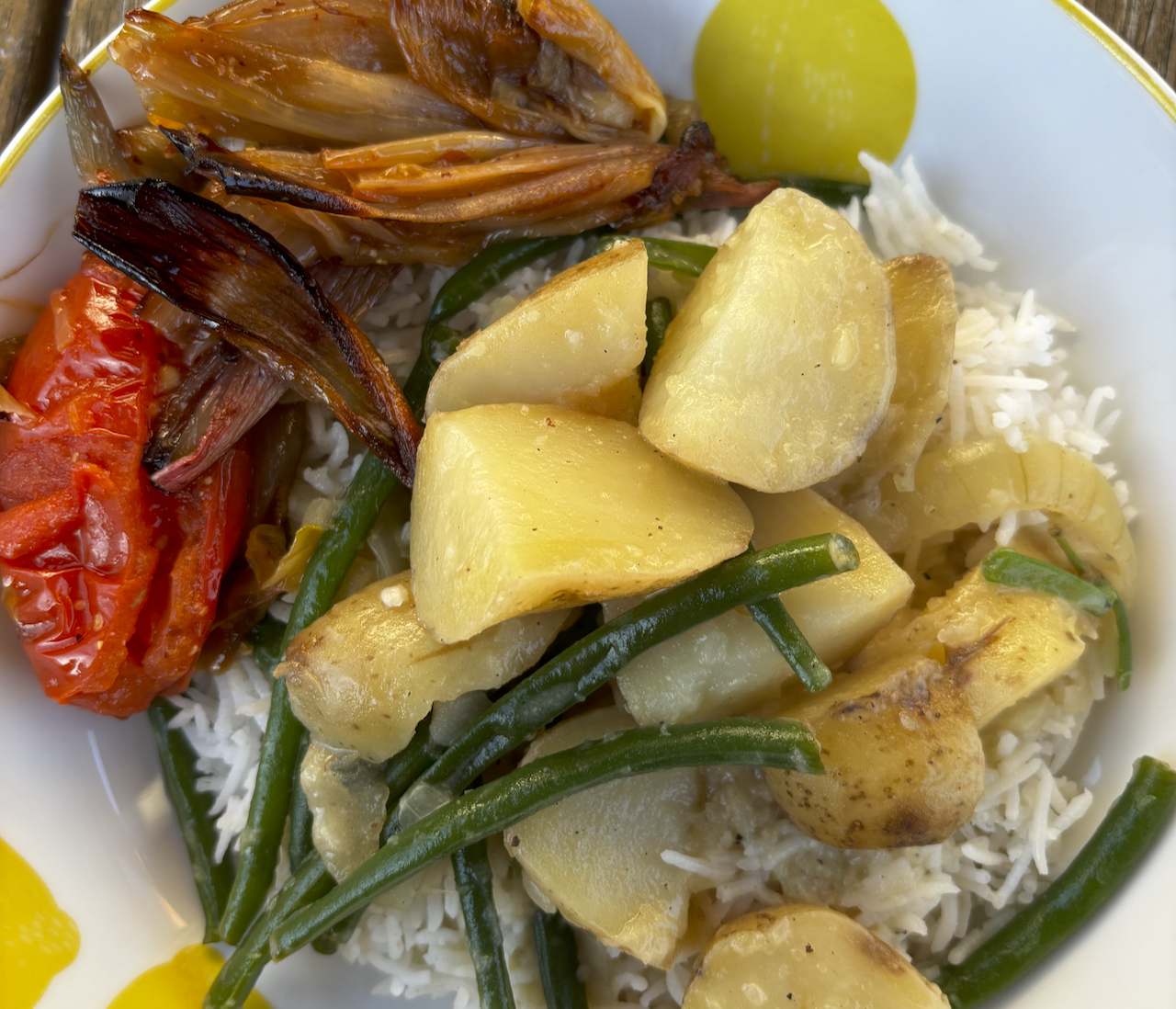
A gently spiced curry that reaches new heights when served with tamarind shallots. We’ll be making it again.

Wine Suggestion: We think this goes really well with a slightly honeyed, just off-dry Chenin Blanc like the Domaine Aubuisieres Vouvray Silex. With a touch of residual sugar this is rounded and smooth. And with the tart tamarind and sweet shallots it’s a joy.

New potato & green bean istoo with tamarind shallots – serves 4

  • 2 tbsp rapeseed oil
  • 10 fresh curry leaves (we buy them in the Asia market and freeze them)
  • 4cm cinnamon stick, broken in two
  • 1 medium onion, sliced
  • 2cm fresh ginger, peeled and finely grated
  • 4 cloves of garlic, crushed
  • 1 green finger chilli, slit
  • 650g baby new potatoes, quartered
  • 1 tsp each of salt and freshly ground black pepper
  • 1 x 400ml tin of coconut milk
  • 250g green beans, trimmed
  • cooked basmati rice, to serve

FORT THE TAMARIND SHALLOTS:

  • 800g banana shallots
  • 400g vine tomatoes
  • 1 tsp cumin seeds
  • ½ tsp black mustard seeds
  • 5 tbsp rapeseed oil
  • ¾ tsp salt
  • 2 tsp tamarind paste
  • 8 fresh curry leaves
  • 1 green finger chilli, slit

Heat the oil for the istoo over a medium heat in a large casserole dish. Once hot, add the curry leaves, cinnamon stick and onion. Cook for 8-10 mintues or until the onion is very soft but not coloured. Stir in the ginger, garlic and chilli and cook for another 2 minutes.

Add the potatoes, salt and pepper, then stir in the coconut milk. Fill the empty can with 100ml of water and add to the casserole. The potatoes need to be just covered so add a little more water if you need. Bring to the boil over a medium heat, then turn down and simmer for 10 minutes.

Add the green beans, then cover and simmer until the beans and potatoes are tender – about 5-6 minutes.

FOR THE TAMARIND SHALLOTS:

Preheat the oven to 180C fan/200C/gas 6 and line two large baking trays with foil.

Top and tail the shallots, then cut them in half lengthways and peel off the skin. Put the shallots onto one of the two lined trays, breaking them up a little as you go – they should be in a single layer. Halve the tomatoes and place these on the other tray.

Grind the cumin and mustard seeds together in a pestle and mortar to a coarse powder. Add the oil and salt, then pour over the shallots and tomatoes, mixing with your hands to coat the shallots.

Bake for 25 minutes, turning the trays halfway, then remove from the oven and tip the tomatoes onto the shallot tray and add the tamarind, curry leaves and chilli. Carefully mix with a wooden spoon, then bake for another 5-8 minutes, until they are starting to char here and there. Transfer to a bowl and serve with the istoo and cooked basmati rice.

(Original recipe from East by Meera Sodha, Penguin: Random House, 2019.)
Read Full Post »

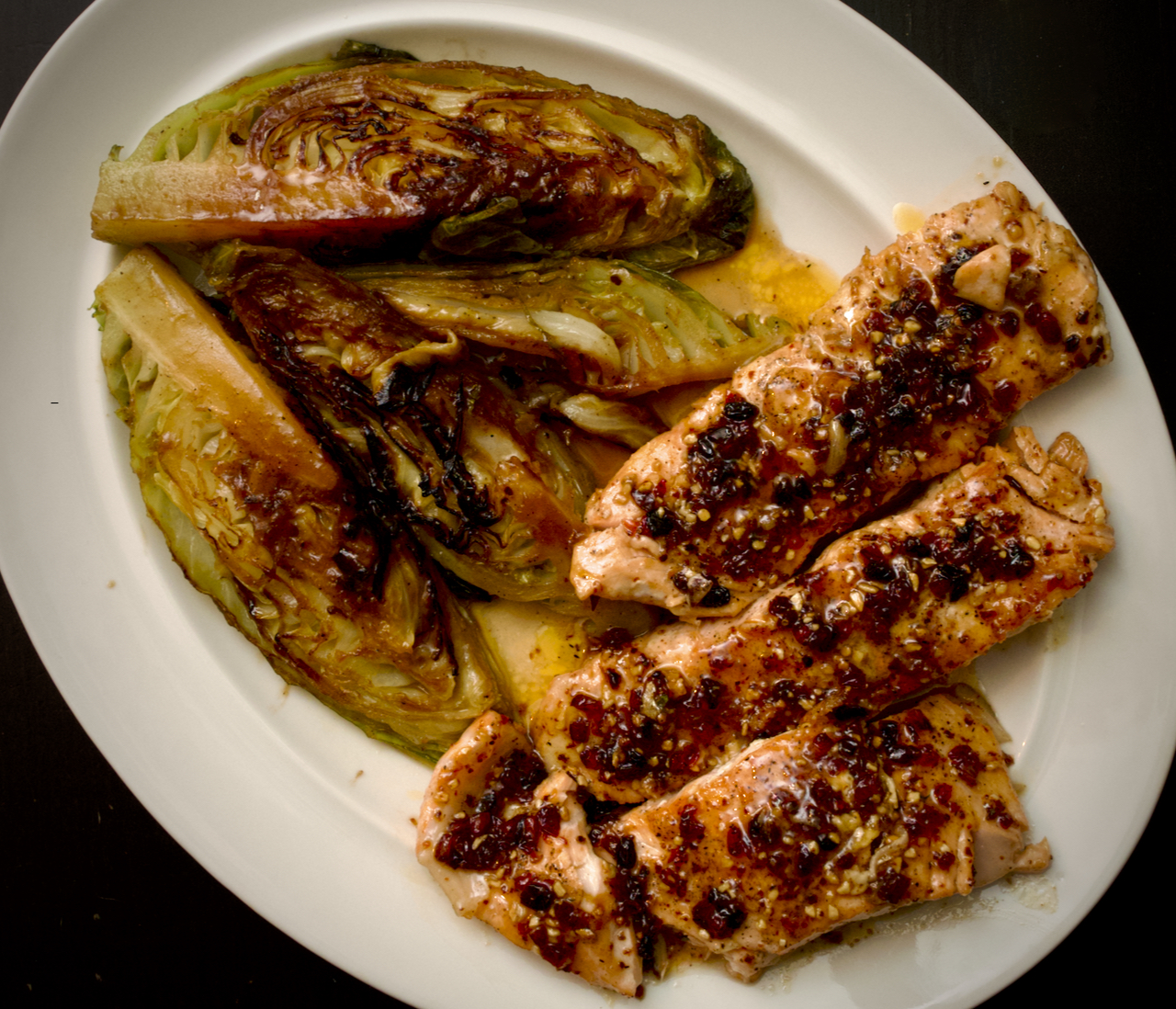
We have fallen in love with this buttery cabbage dish which we served tonight alongside some salmon with barberries. This is seriously pimped up cabbage and would be delicious with anything! Both recipes are from Flavour by Sabrina Ghayour.

Wine suggestion: we thought the tamarind would be a hard match, so opened a wine we didn’t know, the Lyrarakis Liatiko from Crete, and were delighted when this obscure wine was a total gem. A light, juicy cherry flavoured wine with wild berry and gentle herbs and a cedary spice. We’ll be looking out for this again.

Cabbage with tamarind, maple & black pepper butter – serves 2 to 4

  • olive oil
  • 1 large head of sweetheart cabbage, quartered
  • 100ml cold water
  • 50g butter
  • 1 heaped tbsp tamarind paste
  • 2 tbsp maple syrup
  • 1 tsp coarse freshly ground black pepper

Put a large frying pan over a medium heat and add some olive oil. Arrange the cabbage wedges in the pan, sitting on one cut side and the stalk ends in the centre of the pan, and fry for 5 minutes. Pour in the cold water, then increase the heat and cover the pan with a lid. Cook for 6-7 minutes or until the water has evaporated.

Take the lid off the pan and turn the cabbage wedges onto the other side for 3-4 minutes, uncovered. Add the butter, then mix the tamarind, maple syrup and pepper together and add to the pan with a good seasoning of salt. Stir to melt the butter – making sure it doesn’t burn. Baste the cabbage with the butter, then turnover onto the other side and continue basting for a few more minutes. Serve with any butter left in the pan drizzled over.

(Original recipe from Flavour by Sabrina Ghayour, Aster*, 2023.)

Read Full Post »

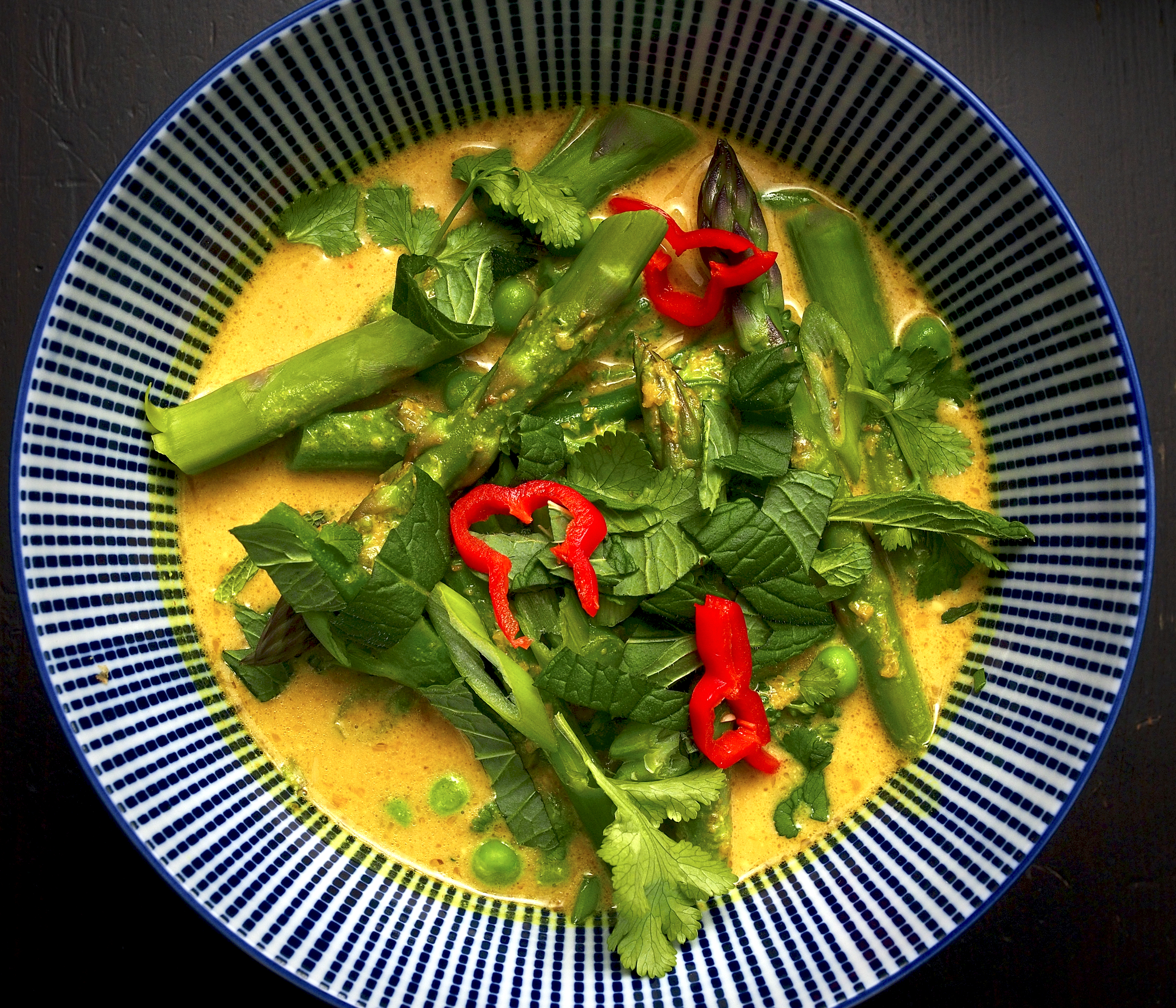
Don’t wear a white shirt when eating this as lots of slurping is needed. A dish full of herbs, spring veg and a fresh spicy sauce, perfect on a cool Spring evening.

Wine Suggestion: This dish demands a good, dry Riesling like the superlative ones made by Martin & Britta Korrell in the Nahe, Germany. For tonight the “Slice of Paradise” Riesling, a less philosophical, more playful baby brother of their signature Paradies vineyard wine, but none the less for this; a taste of Spring in the glass too.

Laksa with Spring Vegetables & Rice Noodles – serves 4

  • 30g tamarind paste with seeds (it comes in a block)
  • 1-2 red chillies, roughly chopped
  • 2 garlic cloves, roughly chopped
  • 1 tbsp grated ginger or galangal
  • ½ a bunch of scallions, sliced, keep the white parts and the green parts separate
  • a small bunch of coriander, leaves and stalks separated
  • 2 lemongrass stalks, roughly chopped
  • 2 tsp ground turmeric
  • 1 tsp ground cumin
  • 2 tbsp sunflower oil
  • 500ml chicken or vegetable stock
  • 1 x 400ml tin of coconut milk
  • 400g mixed spring vegetables e.g. PSB, peas, green beans, mangetout, asparagus, spinach, radishes or baby carrots
  • 200g dried rice noodles, cooked according to the instructions on the pack
  • 2 tbsp fish sauce, or more if you like
  • 1 tsp caster sugar
  • a small bunch of mint, leaves picked and roughly chopped, to serve

Bring a pan of salty water to the boil.

Meanwhile, put the tamarind into a small bowl and cover with boiling water from the kettle. Mash well with a fork to get a purée then push the tamarind through a sieve. Discard the seeds that are left behind.

Blend the chillies, garlic, ginger, white parts of the scallions, coriander stalks and lemongrass with the turmeric and cumin to make a thick paste. The small bowl of the food processor is good for this, you might need to add a little water to help it come together.

To make the broth, fry the spicy paste in the sunflower oil for 2 to 3 minutes over a medium heat, until it starts to stick to the pan. Add the tamarind purée, stock and coconut milk and bring to the boil.

Meanwhile, boil the vegetables in the pan of salty water until just tender – 3 minutes should do it, then drain and divide between 4 deep bowls along with the prepared noodles.

Add the fish sauce and sugar to the sauce, taste and add more if needed. Pour the hot broth over the noodles and veg and garnish with the mint, coriander leaves and green scallions. You can add a bit of sliced chilli too if you like.

(Original recipe from Home Cookery Year by Claire Thomson, Quadrille, 2020.)

Read Full Post »

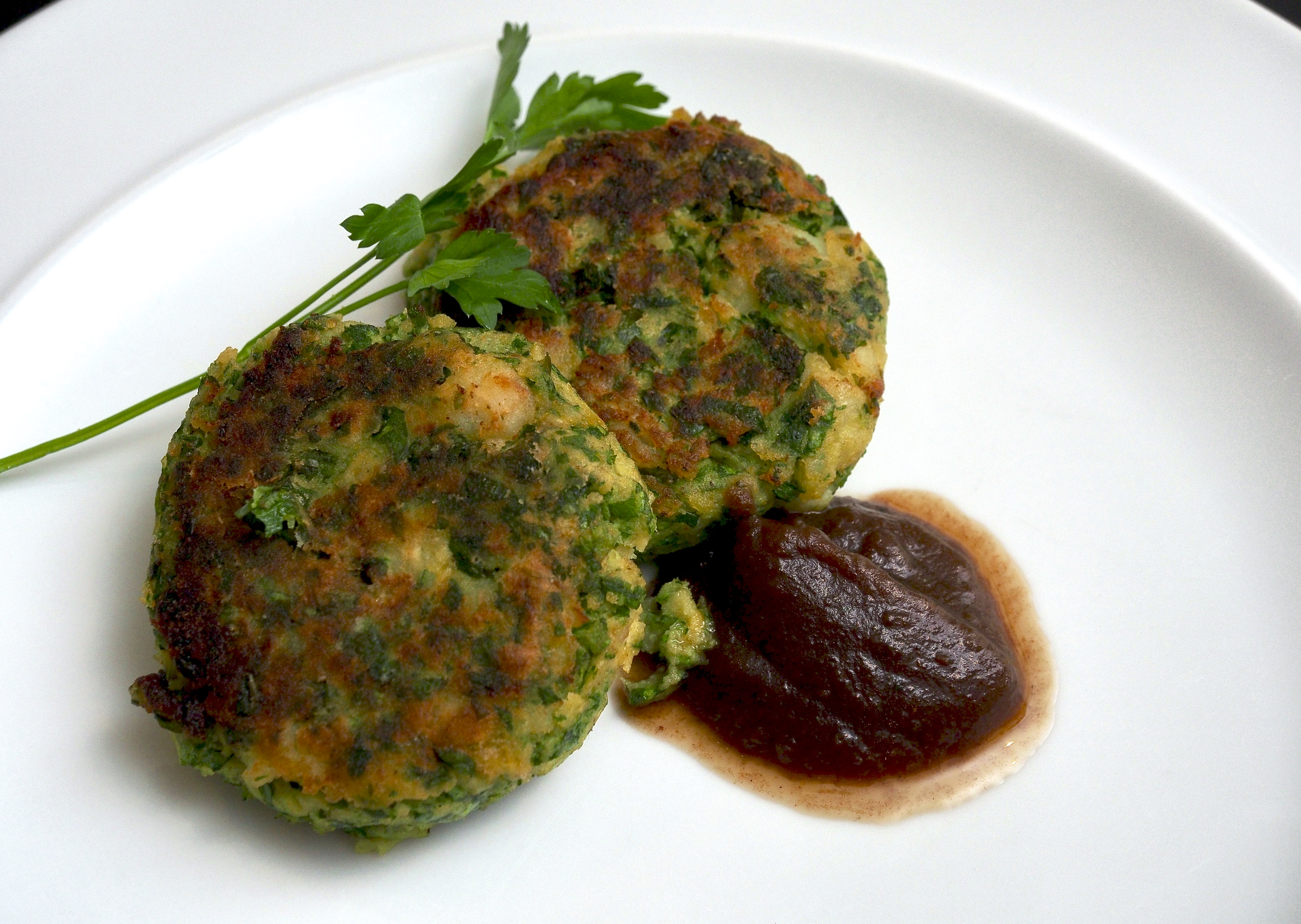
Bandari fishcakes

These Persian fishcakes are full of herbs and make a delicious starter or light lunch. They can be made up in advance and cooked when you need them.

Wine Suggestion: the only option here is a youthful, light, off-dry Riesling where the aromatics, herbs, date and tamarind all play with each other. Tonight we drank the Dr Loosen Estate Riesling, his entry level wine made with his own fruit in the Mosel and it was an excellent match. Along with the Mosel we’d recommend the fruity styles (Kabinett & Spätlese) from other German regions such as the Nahe and Rheingau. Further afield the Aussie Rieslings tend to be too dry for a dish like this but there are some excellent NZ examples, Forrest Estate and Felton Rd spring to mind.

Bandari fishcakes with a tamarind and date sauce (Kuku-ye mahi) – serves 4

  • 300g potatoes, peeled and roughly diced
  • 200g white fish fillets e.g. cod/haddock
  • ¼ tsp cumin seeds
  • 50g coriander, finely chopped
  • 25g parsley, finely chopped – plus extra to garnish
  • 1 tsp dried fenugreek leaf (menthi)
  • 2 garlic cloves, crushed
  • a pinch of cayenne pepper
  • ¼ tsp turmeric
  • zest of ½ lemon
  • 1 medium egg
  • plain flour, for dusting
  • 3 tbsp sunflower or olive oil

FOR THE TAMARIND & DATE SAUCE:

  • 50g tamarind pulp soaked in 100ml just boiled water for 10 minutes
  • 75g Iranian or Medjool dates, pitted and roughly chopped
  • 1 tbsp light brown sugar
  • a pinch of cayenne pepper
  • a pinch of cinnamon
  • 150ml hot water

Put the potatoes into a large pan and cover with cold water. Add a generous pinch of salt and bring to the boil, then simmer until tender. Drain, mash the potatoes, and put into a large mixing bowl.

Add the fish to the potatoes. Dry fry the cumin seeds in a small frying pan for a minute or until fragrant. Grind the seeds with a pestle and mortar, then add to the bowl along with the fresh herbs, fenugreek leaf, garlic, cayenne, turmeric, lemon zest, egg, 1¼ tsp of salt and ¼ tsp of pepper.

Mix well with your hands, then shape into eight round patties. Dust with a little flour and place on a plate, cover with cling film and chill.

To make the sauce, put the tamarind and its soaking liquid, the dates, brown sugar, cayenne, cinnamon and a pinch of salt in a small saucepan. Add the hot water and cook for 10 minutes over a low heat until the dates are very soft.

Take the sauce off the heat and sieve into a bowl, use the back of a spoon to rub as much through as possible.

To finish the fishcakes, heat the oil in a frying pan and cook the cakes on a medium-high heat for 6-8 minutes, turning every few minutes, until golden brown and crusted. Garnish with parsley and serve with the sauce.

(Original recipe from The Saffron Tales by Yasmin Khan, Bloomsbury, 2016.)

Read Full Post »