Feeds:
Posts
Comments

Posts Tagged ‘Vegetarian’

We’re always on the lookout for a vegetarian lasagne and this one worked well and tasted great. It’s rich so a salad on the side is all that’s needed. Make on the weekend when you’re in no hurry.

Mushroom lasagne – to serve 8

MUSHROOMS:

  • 35g dried porcini mushrooms
  • 400ml lukewarm water
  • 60g unsalted butter
  • 1 tbsp thyme leaves
  • 800g mixed fresh mushrooms, sliced if large
  • 2 tbsp chopped tarragon
  • 4 tbsp chopped parsley

LASAGNE

  • 60g unsalted butter
  • 1 small shallot, chopped
  • 60g plain flour
  • 550ml milk
  • 375g ricotta
  • 1 large free-range egg
  • 150g feta, crumbled
  • 170g Gruyère, grated
  • 400g lasagne verde
  • 150g fontina cheese (or mozzarella), granted
  • 50g Parmesan, grated
  • salt and white pepper

Preheat the oven to 180ºC/Gas Mark 4. Cover the porcini with the lukewarm water and leave to soak for 5 minutes. Drain and reserve the liquid.

Melt the butter in a large heavy-based saucepan. When foaming add the thyme, porcini and fresh mushrooms. Cook for 4 minutes, or until softened and have released their juice, stirring now and then. Take off the heat and stir in the tarragon, parsley and some salt and pepper. Tip into a bowl and set aside.

Use the same pan to make a béchamel. Put the butter and shallot in the pan and cook over a medium heat for about a minute. Add the flour and cook, stirring constantly, for about 2 minutes; the mix will turn into a paste but shouldn’t take on much colour. Gradually whisk in the milk and porcini soaking liquid, leaving any grit behind. Add ½ tsp salt and keep whisking until boiling. Simmer on a low heat, don’t stop stirring, for about 10 minutes, or until thickish. Take off the heat.

In a small bowl mix the ricotta with the egg, then fold in 3 tbsp of the béchamel and the feta. Add the Gruyère to the remaining béchamel in the pan and stir well to get your main sauce.

Pour boiling water over the lasagne leaves (a few at a time so they don’t stick together) and soak for 2 minutes; remove and dry on a tea towel.

To build the lasagne, pour one-fifth of the sauce over the bottom of an ovenproof dish (about 25 x 35 cm). Cover with lasagne leaves. Spread ¼ of the ricotta mix on top, scatter over ¼ of the mushrooms and sprinkle with ¼ of the fontina. Make three more layers like this, then finish with a layer of pasta covered with sauce.

Sprinkle the Parmesan on top and cover loosely with foil (so it’s not touching the sauce). Bake for 40 minutes, or until the sauce is bubbling up around the sides. Lift off the foil and bake for another 10 minutes, or until golden. Leave to rest for 10 minutes before serving.

Wine Suggestion: You’ve plenty of choices here. You could go for a Chardonnay to complement the rich mushroom sauce or if you prefer red go for something earthy like a Barbera.

(Original recipe from Yotam Ottolenghi’s Plenty, Ebury Press, 2010.)

Read Full Post »

Healthy burgers – so easy to make! Next time we’re going to try them in flatbreads with houmous and hot chilli sauce!

Falafel burgers – to feed 4

  • 400g can chickpeas, rinsed and drained
  • garlic clove, chopped
  • handful of flat-leaf parsley
  • 1 tsp ground cumin
  • 1 tsp ground coriander
  • ½ tsp harissa paste or chilli powder
  • 2 tbsp plain flour
  • 2 tbsp sunflower oil
  • toasted pitta bread
  • tomato salsa, to serve
  • green salad, to serve

Pat the chickpeas dry with some kitchen paper. Tip into a food processor with the onion, garlic, parsley, spices, flour and some salt. Blend until fairly smooth and shape into burgers with your hands.

Heat the oil in a non-stick frying pan, then fry the burgers for 3 minutes on each side or until golden. Serve with toasted pittas, salsa and salad.

Wine Suggestion: A simple juicy, fruity red is all that’s required here like a Grenache or Tempranillo.

(Original recipe from BBC Good Food.)

Read Full Post »

This takes time to make but with little effort and is well worth it. It supposedly keeps well too but ours didn’t last long enough to test this theory. If you’re not keen on fennel seeds you can leave them out or else substitute sesame or poppy seeds.

Pagnotta con finocchietto  – makes 1 oval loaf

  • 450g strong white flour
  • 1 tsp salt plus a bit extra for the top
  • 1 tbsp caster sugar
  • 10g fast-action dried yeast
  • 1 tbsp fennel seeds, crushed
  • 280ml water, warm
  • 30g salted butter, melted
  • 1 egg white
  • olive oil for brushing

Brush a baking tray and the inside of a large bowl with oil.

Sift the flour into another bowl with the salt, sugar and yeast and make a well in the centre. Sprinkle over ½ tsp of the fennel seeds and pour in the water and butter. Mix with the tips of your fingers until you have a soft dough.

Transfer the dough to a lightly floured surface and knead for 10 minutes or until smooth and elastic. Shape it into a ball and put it in the oiled bowl. Cover with clingfilm and leave to rise in a warm place without draughts for an hour (the hot press is good).

Turn out the dough onto a lightly floured surface and punch dozen. Shape into an oval and place on the oiled baking tray. Brush the top with a little oil and cover with clingfilm. Leave to rise in a the same warm and draught-free place for another 40 minutes.

Preheat the oven to 220ºC/gas mark 7.

In a small bowl, mix the egg white with a pinch of salt.

Brush the top of the loaf with the egg white and sprinkle over the remaining fennel seeds. Use a sharp knife to make a cut right down the length of the dough.

Bake in the middle of the oven for 20 minutes, then reduce the temperature to 180ºC/gas mark 4 and continue to bake for another 10 minutes.

Transfer to a wire rack to cool slightly before serving warm with some cured ham or salami.

Wine Suggestion: A light fruity red will be perfect here – try a Chianti perhaps from the Rufina district.

(Original recipe from Gino d’Acampo’s, Italian Home Baking, Kyle Books, 2011.)

Read Full Post »

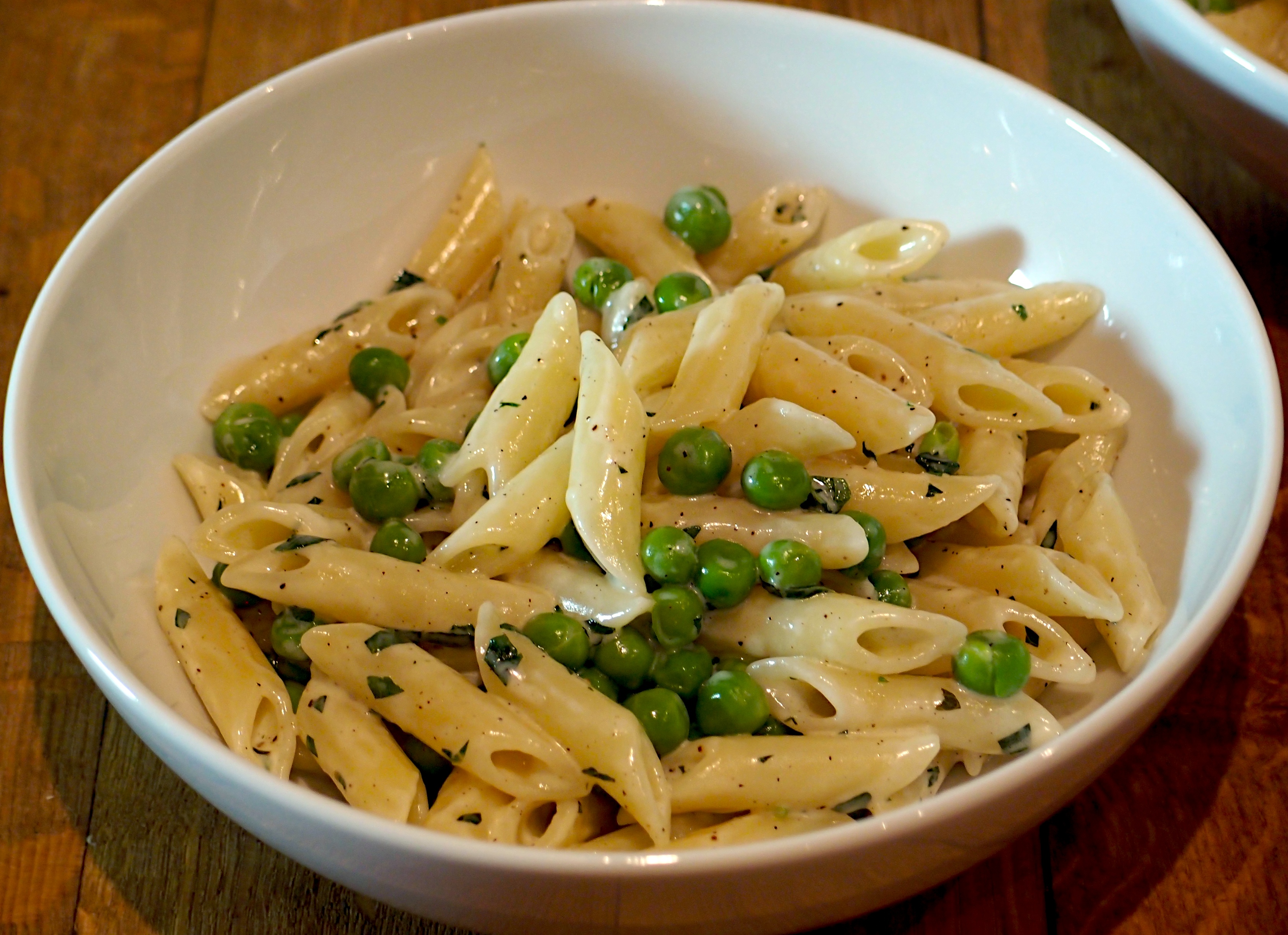
Mascarpone is a great ingredient but its one we use rarely as most recipes only require a few spoons and we inevitably end up throwing the rest out. Well not any more! This is not really a recipe but more of an idea which you can adapt depending on what else you have lying around to complement your mascarpone.

Pea, mint & mascarpone pasta – to serve 2

  • 200g pasta
  • 140g frozen peas
  • 100g mascarpone
  • handful of chopped mint

Cook the pasta according to the pack and add the peas for the last 3 minutes of cooking time. Scoop out and reserve a bit of the cooking water before you drain the pasta and peas. Return to the pan and add the mascarpone, mint, plenty of seasoning and a couple of spoons of the cooking liquid to make a nice saucy consistency.

Wine Suggestion: Something simple and food friendly is all that’s needed here. An easy Pinot Grigio (not a variety that we often recommend) went really well.

Read Full Post »

This is something we’ve bought loads, either in a deli or in a restaurant. Easy, tasty and fresh; don’t know why it has taken so long for us to make our own! Provided you keep it in the fridge with a thin film of olive oil covering the top it will last for ages. A really nice topping for bruschetta or slices of crusty bread.

Green olive paste  – makes enough to fill a jam jar

  • 40 stoned green olives
  • 1 tsp capers
  • 1 tbsp ground almonds
  • 1 garlic clove
  • 4 tbsp olive oil
  • ¼ tsp ground cumin
  • ¼ tsp ground paprika

Put all the ingredients in a food processor and blend to make a purée.

Wine Suggestion: The influence here is clearly Spanish and as you’re likely to serve this before a meal we suggest the ultimate Spanish aperitif – a glass of Sherry. We would choose either a Fino or Manzanilla where the salty-savoury freshness would really compliment the tangy olive flavours and add a texture that really works. It is super important that you pick a recently bottled version (ask your wine merchant to explain the lot numbers! … or me if you are in Mitchell’s) as these sherries really lose freshness and vitality if it has been bottled too long.

(Original recipe from Real Fast Vegetarian Food by Ursula Ferrigno, Metro Publishing Ltd., 2002.)

Read Full Post »

Not quite instant but this definitely won’ t take up too much of you time. We’re going to start serving cheesy, garlic ciabatta with lots of things!

Quick tomato soup with cheesy garlic dippers – to serve 2

  • 400g tin cherry tomatoes
  • 1 tbsp caster sugar
  • 100ml vegetable stock
  • dash of Tabasco
  • dash of Worcestershire sauce
  • 2 tbsp mascarpone
  • basil leave to serve

FOR THE DIPPERS

  • 1 medium ciabatta roll, halved
  • 1 garlic clove, halved
  • 125g ball mozzarella, shredded

Put the tomatoes, sugar, stock and sauces into a medium pot and season. Bring to a simmer and cook for 5-10 minutes. Stir in the mascarpone and blend until smooth, then keep warm while you make your cheesy garlic bread.

Heat the grill to high and toast the ciabatta until golden. Rub with the garlic, season, then top with the cheese and grill until melted and starting to brown. Sprinkle some basil over the soup and serve with the cheesy bread.

Wine Suggestion: Simple and fruity is best, but you will need to keep a little acidity in the wine to match the tomatoes. We suggest you enjoy a simple Chianti / Sangiovese-based wine. Make sure it is isn’t too complex, extracted or oaked as these layers will be lost on the simplicity of this dish. The real joy is in the simplicity!

Read Full Post »

Don’t be put off by the copious amounts of garlic as they are mild and sweet by the time this delicious tart by Yotam Ottolenghi is cooked. It is perfect for a dinner party as you can have it cooked in advance and just reheat to serve.

Caramelized garlic tart – to serve 6

  • 375g all-butter puff pastry
  • 3 medium heads of garlic, cloves peeled
  • 1 tbsp olive oil
  • 1 tsp balsamic vinegar
  • 220ml water
  • ¾ tbsp caster sugar
  • 1 tsp chopped rosemary
  • 1 tsp chopped thyme
  • 120g soft creamy goat’s cheese
  • 120g hard mature goat’s cheese
  • 2 eggs
  • 100ml double cream
  • 100ml crème fraîche

You will need a shallow, loose-bottomed, 28cm fluted tart tin.

Roll out the pastry into a circle that will line the bottom and sides of the tin, plus a little extra. Line the tin with the pastry, place a large circle of greaseproof paper on the bottom and fill up with baking beans. Rest in the fridge for about 20 minutes.

Preheat the oven to 180ºC/Gas Mark 4. Put the tart in the oven and bake blind for 20 minutes. Take the beans and the paper out and bake for another 5-10 minutes or until the pastry is golden. Don’t panic if it puffs up in the middle it will deflate as it cools down. Set the tart case aside and leave the oven on.

While the tart case is baking, put the garlic cloves in a small saucepan and cover with plenty of water. Bring to a simmer and blanch the garlic for 3 minutes, then drain well. Dry the saucepan, put the cloves back in and add the olive oil. Fry the garlic on a high heat for a couple of minutes. Add the balsamic vinegar and water and bring to the boil, then simmer gently for 10 minutes. Add the sugar, rosemary, thyme and ¼ tsp salt. Simmer for another 10 minutes or so on a medium heat, or until the liquid has almost evaporated and the garlic is coated in a dark syrup. Set the garlic aside.

Break up the cheeses and scatter pieces into the pastry case. Spoon over the garlic and syrup. Whisk the eggs, creams, ½ tsp salt and some black pepper together in a jug. Pour this over the tart filling to fill the gaps, make sure you still have cheese and garlic poking up through.

Turn the oven down to 160ºC/Gas Mark 3 and put the tart in. Bake for 35-45 minutes or until the filling is set and the top is nicely browned. Remove from the oven and leave to cool a little before taking it out of the tin. You might need to trim the pastry edge. Serve warm with a green salad.

Wine Suggestion: This combination of dairy products and pastry demands a white with good body and moderate acidity. A Rhone white that uses one, or a combination of Roussanne, Marsanne and a little Viognier would work well, but avoid most 100% Viognier wines as the acidity won’t be great enough. We drank a Hermitage white which combined the first two of these grapes to good effect and provided an excellent complimentary texture.

(Original recipe from Yotam Ottolenghi’s Plenty, Ebury Press, 2010.)

Read Full Post »

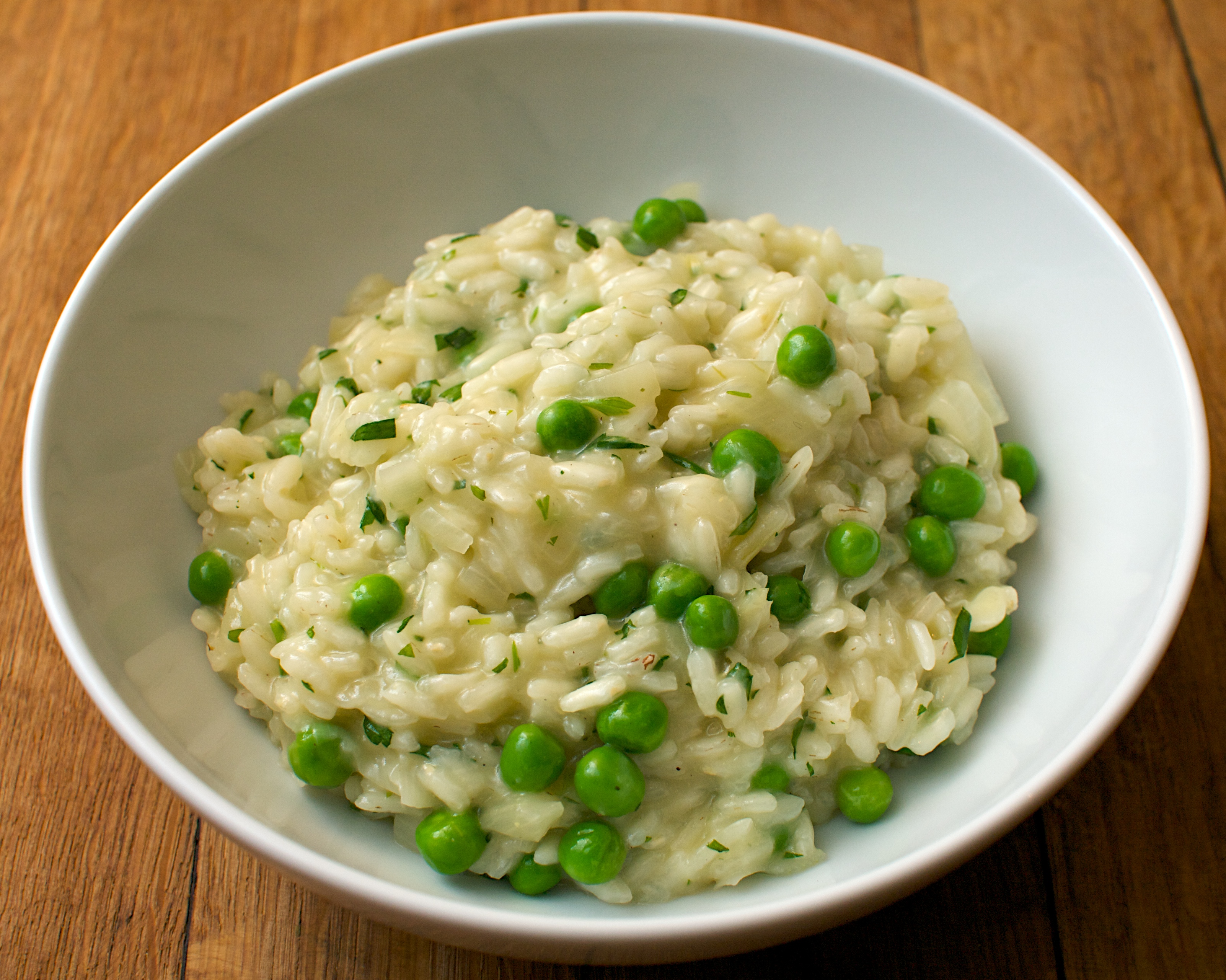
This is a great little risotto to help use up those half-used bags of fresh herbs. Tarragon, parsley and basil will all work well and you will probably have the rest of the ingredients in the cupboard already.

Pea & leftover herb risotto – to serve 2

  • 25g butter
  • 1 onions, finely chopped
  • 1 small garlic clove, crushed
  • 140g risotto rice
  • 600ml hot vegetable stock
  • 85g frozen peas
  • 2 tbsp chopped tarragon, basil or parsley
  • 1 tbsp grated Parmesan

Melt the butter in a saucepan, then add the onion and garlic. Cook for about 5 minutes or until softened, then stir in the rice.

Pour in a ladleful of stock and simmer until the liquid has been absorbed, stirring now and then. Keep adding the stock like this until it is all used and the rice is soft. Stir in the peas and tarragon and heat through for a couple of minutes. Check seasoning, then stir in the Parmesan and serve with some more Parmesan if you like.

Wine Suggestion: Sauvignon Blanc has characteristic herbal and green vegetal flavours which will complement the peas and herbs in this dish. We prefer the more subtle French versions, try one from the Loire Valley and don’t forget white Bordeaux.

 (Original recipe from BBC Good Food)

Read Full Post »

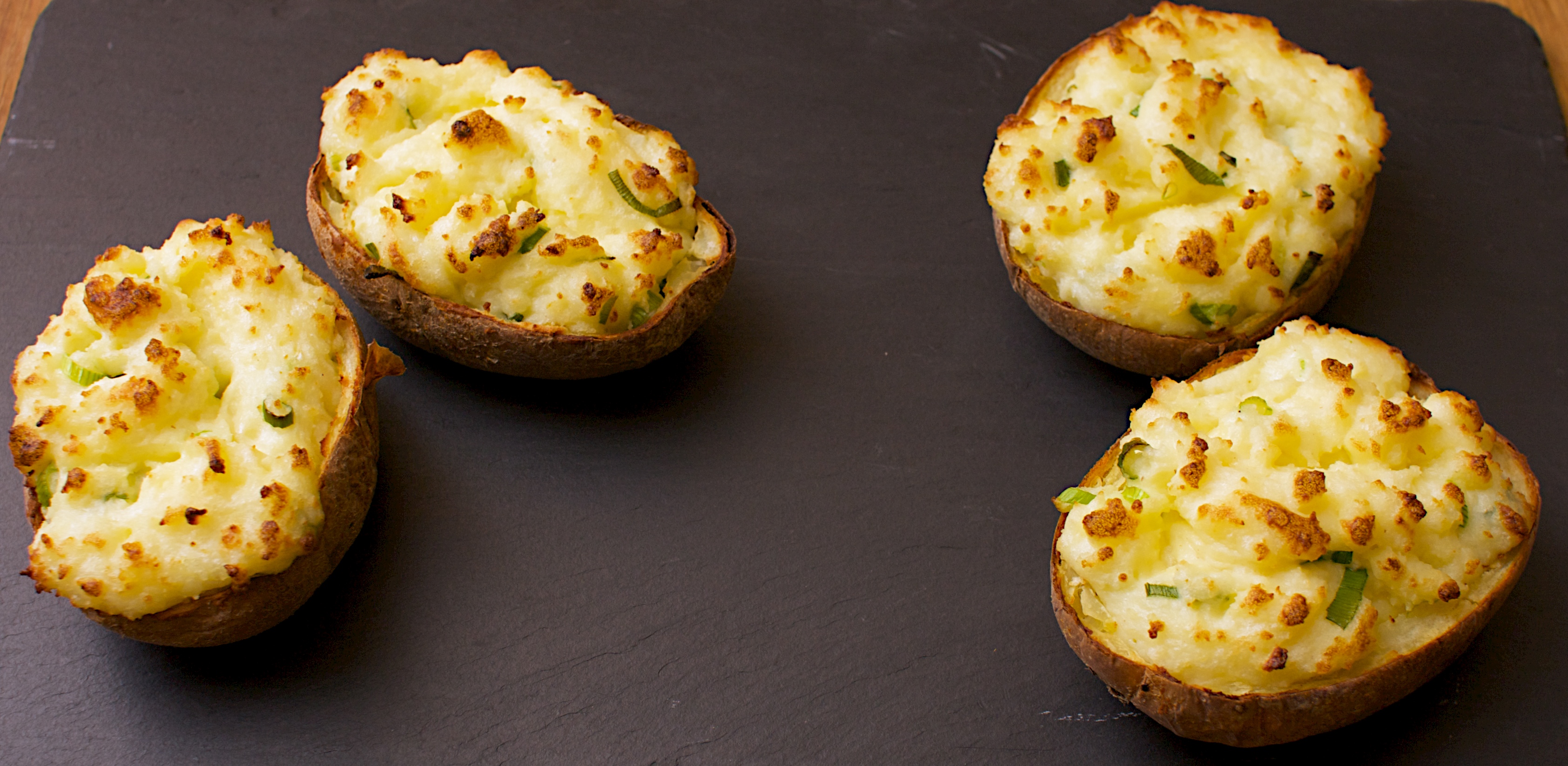
This is a delicious veggie dinner and no hassle at all to put together. We might twice bake a lot more of our baked potatoes from now on!

Twice baked potatoes – to serve 4

  • 4 large baking potatoes
  • 40g butter
  • 180ml soured cream or crème fraîche
  • 120g mature Cheddar, grated
  • 2-3 scallions, trimmed and thinly sliced

Heat the oven to 200ºC/Gas Mark 6. Put the potatoes on a baking tray and cook for about an hour or until they are tender. Take them out of the oven but leave the oven on.

When the potatoes are cool enough handle, slice them in half lengthways and scoop the insides out into a bowl, leave a shell about ½ a cm thick. Put the shells back in the oven to crisp up while you make the filling (but don’t leave them any longer than 10 minutes).

Mash the potato with the butter, then stir in the cream or crème fraîche, Cheddar and scallions. Season generously with salt and pepper (we like freshly ground white pepper for potatoes). Spoon the potato back into the shells and return to the oven for 10-15 minutes or until heated through and golden. Cool for a minute before you serve them. Some greens on the side go well.

Wine Suggestion: Our initial thought was a Chardonnay to complement the creamy textures and rich flavour of this dish. As there was no Chardonnay in the fridge we went for an Australian Riesling (Mount Horricks Watervale Riesling 09) and this also did the trick. We’d stick to a white for this one.

(Original recipe from River Cottage Veg Everyday by Hugh Fearnley-Whittingstall, Bloomsbury, 2011.)

Read Full Post »

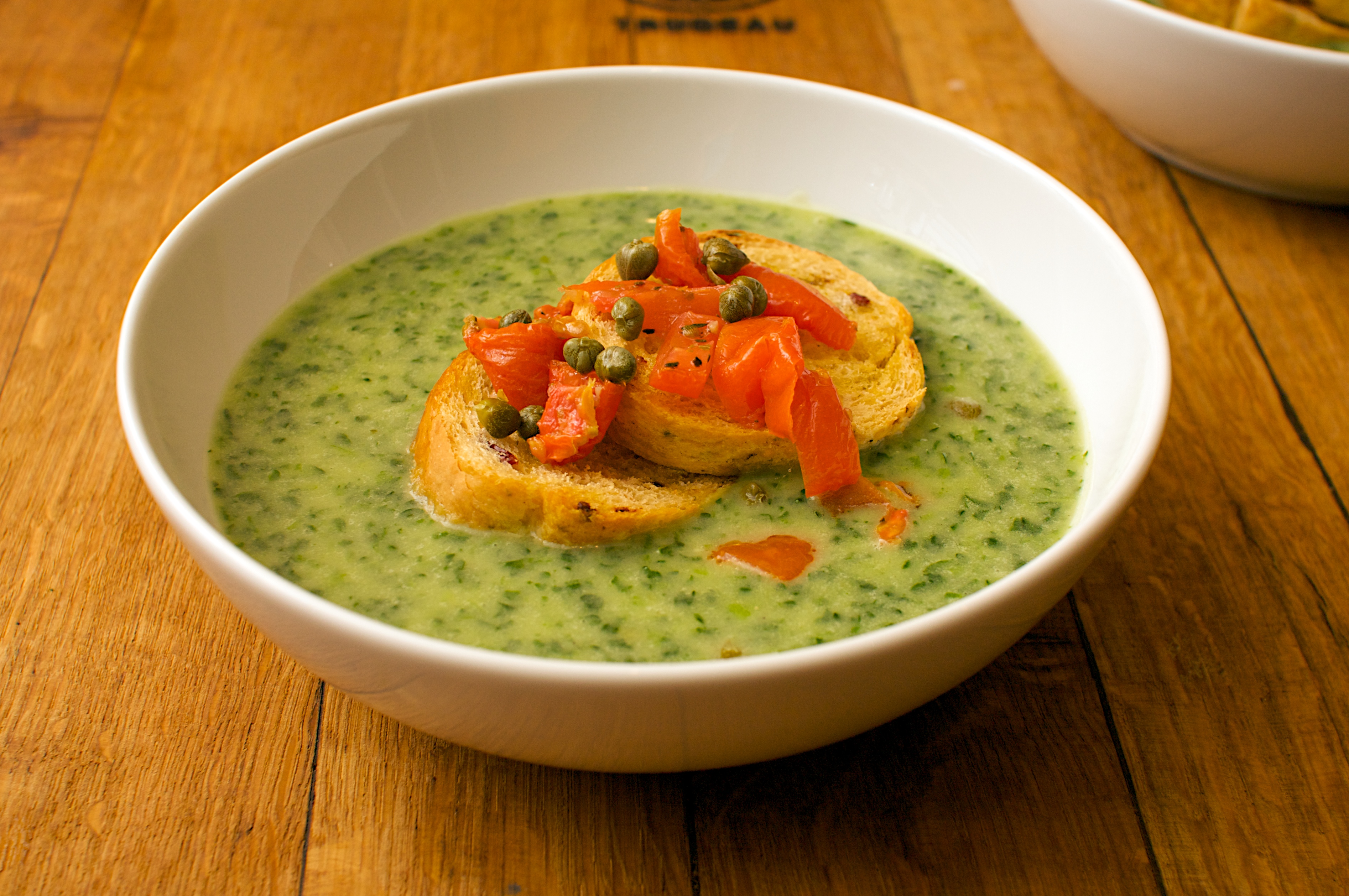
We often forget how delicious curly parsley is and tend to go for the trendier flat stuff. The curly version has a stronger flavour and is certainly the star of the show here. This makes a nice mid-week dinner and leftovers are good for lunch.

Parsley soup with caper and tomato salsa – to serve 4

First make some croutons by drizzling slices of French bread with olive oil and baking at 200°C, fan 180ºC, gas 6 for about 4 minutes, turning once, until golden.

  • a knob of butter
  • 2 shallots, chopped
  • 300g potato, peeled and chopped
  • 750ml vegetable or chicken stock
  • 200ml milk
  • a grating of fresh nutmeg
  • 1 tbsp Dijon mustard
  • 160g curly parsley, tough stalks removed, the rest chopped

To garnish

  • croutons (as above)
  • a few Sunblush tomatoes for each bowl, chopped
  • 1 tbsp small capers

Heat the butter in a large pan, add the potatoes and shallots and cook over a medium heat for 10 minutes. Add the stock, bring to the boil and cook for about 15 minutes or until the potato is tender.

Add the milk, a generous grating of nutmeg, the mustard and parsley, and bring to a simmer. Immediately take the pan off the heat and leave to cool a bit. Blend until smooth.

Season and reheat when you are ready to serve. Pour into bowls and top with the croutons, Sunblush tomatoes and capers.

Wine Suggestion: This is not a fussy dish so enjoy a glass of whatever you have open.

(Original recipe from Sainsbury’s Magazine, March 2011.)

Read Full Post »

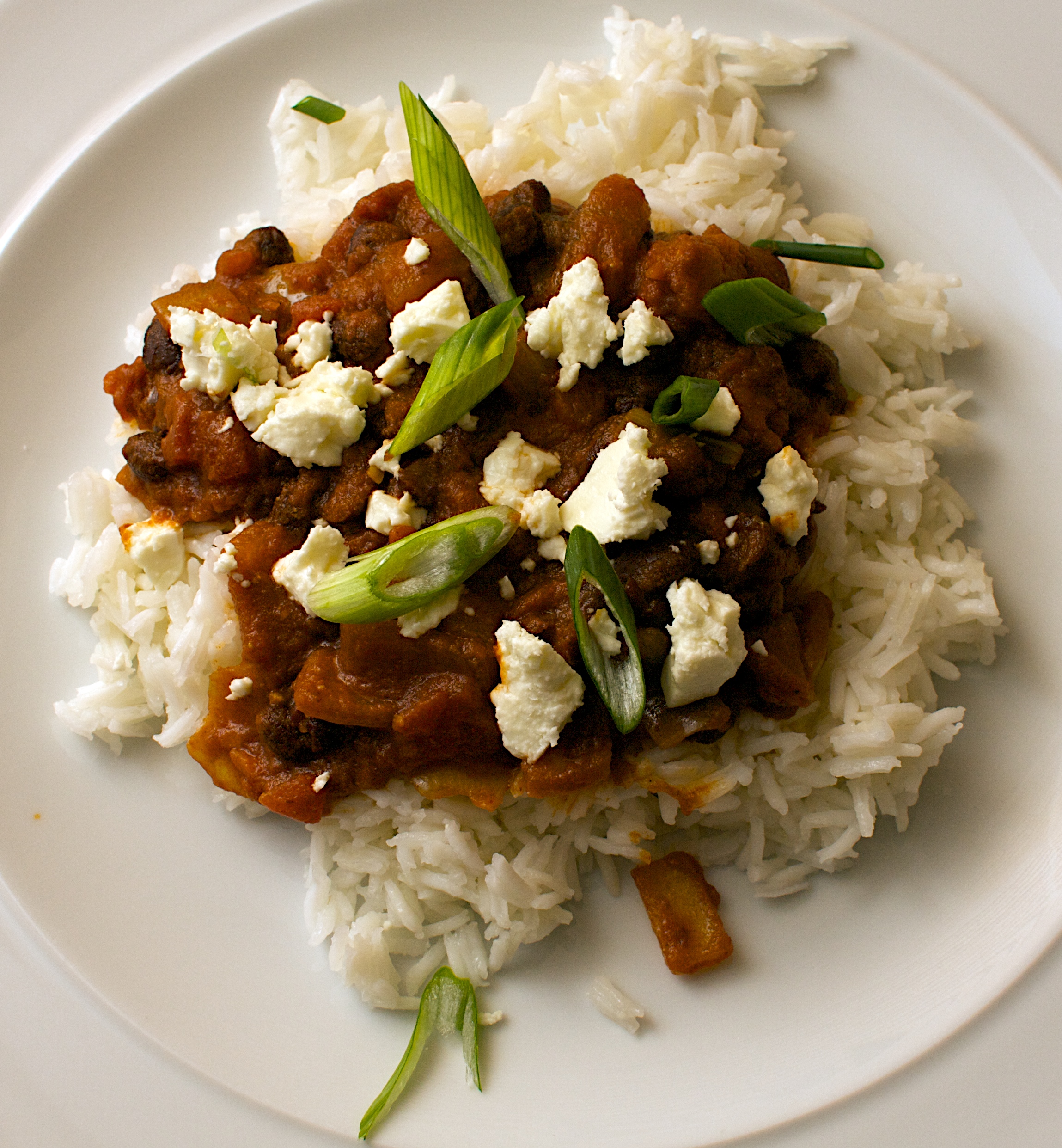
Tasty veggie chilli which is also healthy and low-fat. Really nice flavours.

Black bean chilli – serves 4-6

  • 2tbsp olive oil
  • 4 garlic cloves, finely chopped
  • 2 large onions, chopped
  • 3 tbsp sweet pimenton (Spanish paprika) or mild chilli powder
  • 3 tbsp ground cumin
  • 3 tbsp cider vinegar
  • 2 tbsp brown sugar
  • 2 x 400g cans chopped tomatoes
  • 2 x 400g cans black beans, rinsed and drained
  • serve with: crumbled feta, chopped scallions, avocado chunks or soured cream

Heat the oil in a large pot and fry the onions and garlic for about 5 minutes or until almost soft. Add the pimenton and cumin and continue cooking for another few minutes before adding the vinegar, sugar, tomatoes and some seasoning. Cook for 10 minutes. Add the beans and cook for another 10 minutes. Serve with rice and your choice of extras.

Wine Suggestion: As this is so healthy you might decide to have a glass of water. If you decide to treat yourself you could try a Zinfandel or a Grenache which which will complement the spicy flavours without being too tannic or heavy.

(Original recipe from BBC Good Food)

Read Full Post »

Veggie heaven

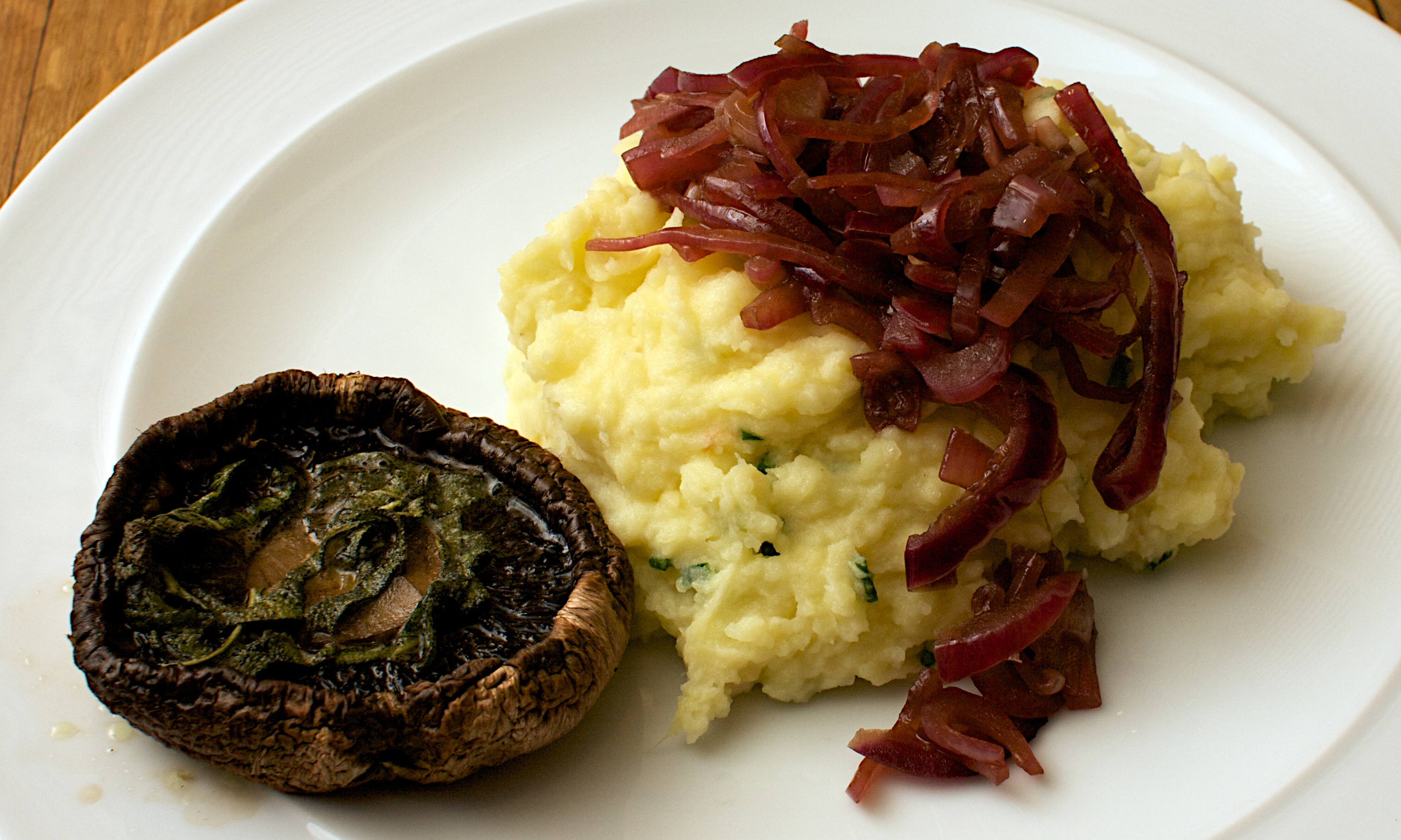
This Dennis Cotter mash is so delicious! It goes really well with the mushrooms and onions here and it was so good we made it two nights in a row, the second night with sausages (sorry Dennis).

Roast parsnip mash with sage-grilled portobello & caramelised red onion – to serve 4

  • 400g parsnip, peeled, cored and diced
  • vegetable oil, for tossing
  • 800g floury potatoes, peeled and chopped into large chunks
  • 150ml milk
  • 100g butter
  • 1 tbsp chopped fresh chives
  • salt and pepper

FOR THE CARAMELISED RED ONION

  • 1 tbsp olive oil
  • 2 red onions, halved and thinly sliced
  • 1 tbsp balsamic vinegar
  • 1 tsp soft brown sugar

FOR THE SAGE-GRILLED MUSHROOMS

  • 30g butter
  • 10 fresh sage leaves, thinly sliced
  • 4 large portobello mushrooms

Preheat the oven to 200°C/400ºF/gas mark 6.

Toss the parsnips in a little olive oil in an oven dish, cover loosely with baking parchment and roast for 15 minutes, or until soft. Blend to a purée in a food processor.

Steam the potatoes until soft and drain them. Put the milk and butter in the pan, warm gently until the butter melts, then add the potatoes and mash them. Stir in the parsnips and chives and season with salt and pepper (we like white pepper for potatoes).

Meanwhile, heat the olive oil a small pan and fry the onions over a medium heat for 5 minutes, stirring. Add the vinegar and sugar, cover loosely with baking parchment and lower the heat. Simmer for 10-15 minutes, or until soft and caramelised.

Meanwhile, soften the butter for the mushrooms and stir in the sage. Spread the butter on the mushrooms, season and place them on an oven tray. Roast in the oven for 8-10 minutes or until tender. Pour any mushroom juices into the onion pan.

Spoon some mash on each plate. Serve the mushrooms on the side and scatter the onions over the top. Pour on any pan juices.

Wine Suggestion: We tried a Portuguese red from the Douro which went really well but any earthy red would be nice.

(Original recipe from Denis Cotter: for the love of food, Collins, 2011.)

Read Full Post »

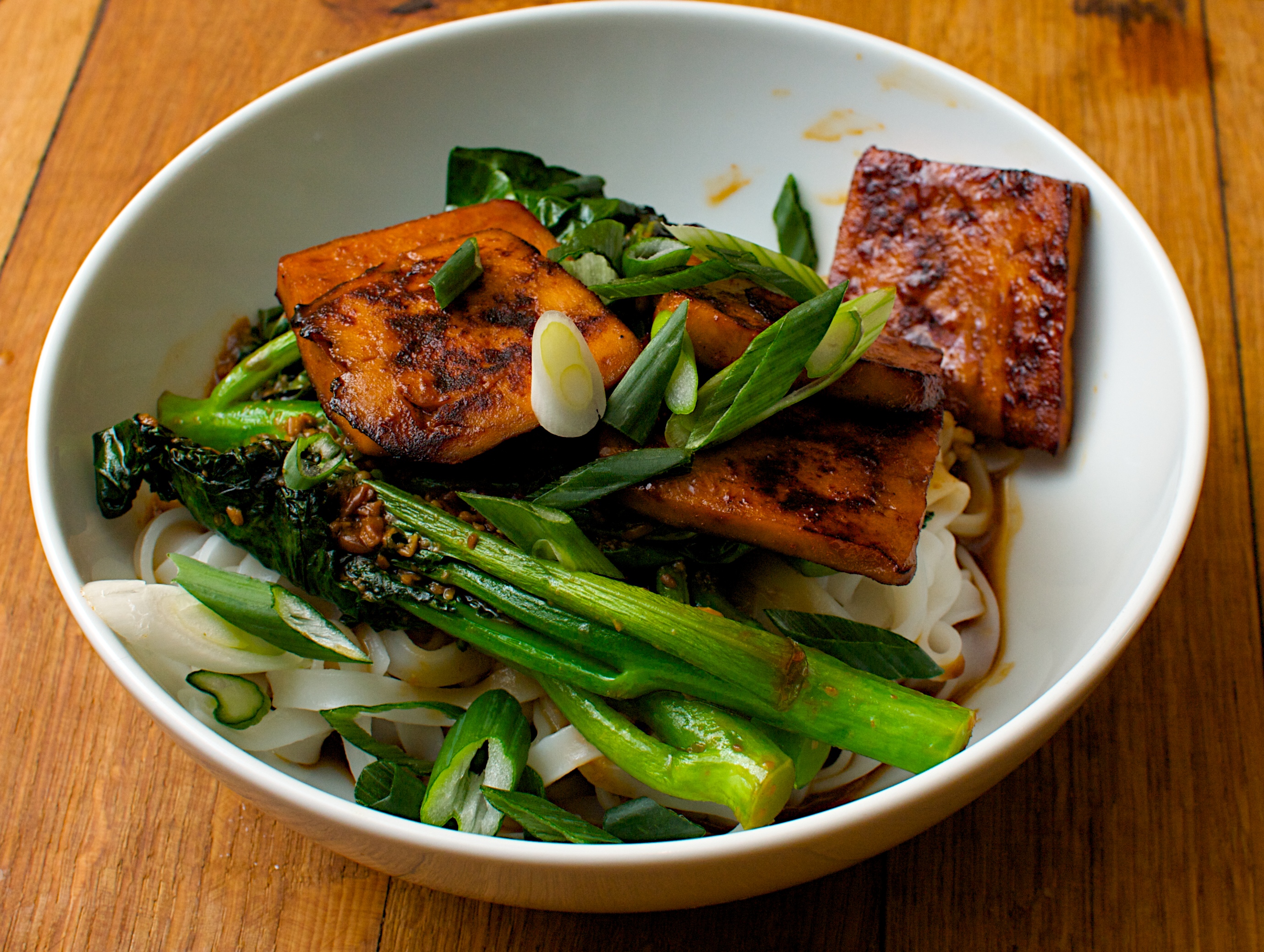
Another fantastic recipe from the master of vegetarian cooking, Denis Cotter, of Café Paradiso in Cork. I (Jules) went there last week and got all inspired by tofu, having never been particular excited by it before. To avoid any confusion, tofu is bean curd and not “a meat substitute that tastes and looks just like meat” as the bewildered person at the table beside  me thought! There is quite a lot to do at the end of the recipe but it’s well worth the effort.

Maple-glazed tofu with rice noodles & kai-lan in a miso broth – to serve 4

  • 200g flat rice noodles
  • 1 tbsp vegetable oil
  • 300g kai-lan (Chinese kale) or sprouting broccoli
  • 3 scallions, thinly sliced at an angle
FOR THE BROTH
  • 1 large onion, chopped
  • 2 carrots, peeled and chopped
  • 2 celery sticks, chopped
  • 60g fresh ginger, thinly sliced
  • 1 whole fresh red chilli
  • 4 garlic cloves, peeled
  • 1 bunch of fresh coriander, including stalks
  • 2 tbsp soy sauce
  • 3 tbsp red miso
FOR THE MAPLE-GLAZED TOFU
  • 3 tbsp maple syrup
  • 4 tbsp soy sauce
  • 2 tsp rice vinegar
  • 1 tbsp chillis sauce
  • 250g firm tofu
  • vegetable oil, for brushing
First make the broth: in a large saucepan, bring 1 litre of water to the boil. Add the onion, carrot, celery, ginger, chilli, garlic and coriander. Simmer gently, uncovered, for 30 minutes. Leave to stand for a further 30 minutes.

While the broth is standing, prepare the tofu; mix together the maple syrup, soy sauce, vinegar and chilli sauce.

Slice the tofu into 16 slices about 1cm thick. Place in the liquid and leave to marinade for 20 minutes.

Heat a heavy frying pan over medium heat brush the pan with vegetable oil. Add the tofu and fry for 2-3 minutes per side, until lightly coloured. Pour in most of the marinade and continue to fry, swirling to make sure the tofu is coated, the marinade will stick to the tofu as a glaze. Add more marinade if necessary.

At the same time, bring a saucepan of water to the boil and cook the noodles according to the pack. Drain in a colander.

Finish the broth: strain out the vegetables and return the broth to the pan. Add the soy sauce.

Put the miso in a bowl and stir in a few tablespoons of the broth to get a smooth pouring consistency. Bring the broth back to the boil, whisk in the miso and hold at a low simmer.

Heat 1 tbsp of vegetable oil in a wide pan over high heat. Add the kai-lan and sauté for 4-5 minutes, adding an occasional splash of broth.

To serve, put some noodles in warm bowls. Place the kai-lan on top of the noodles. Ladle over some broth, top with slices of tofu and sprinkle with scallions.

Wine Suggestion: This is a dish which has a lot of competing flavours and components so a wine match isn’t easy. A yeasty beer or ale would work a treat like a Hobgoblin or a Leffe Brun to compliment the yeasty flavours provided by the miso.

(Original recipe from Denis Cotter for the love of food, Collins, 2011.)

Read Full Post »

We’re not big fans of frozen vegetables (unless they are peas or broad beans) but we set our reservations aside to try this soup and we weren’t disappointed.

Sweetcorn & chilli soup – to serve 6

  • 25g butter
  • 2 tbsp olive oil
  • 2 onions, finely chopped
  • ½ red chilli, finely chopped
  • 800g frozen sweetcorn
  • 1 litre vegetable stock
  • 2 tbsp lemon juice
  • 5 tbsp chopped flat-leaf parsley

Heat the butter and oil in a large saucepan over a medium heat and fry the onions for about 10 minutes or until golden. Add the chilli and fry for about 5 minutes, stirring now and then. Add the corn, stock and some salt, bring to the boil and simmer for 10 minutes until the corn is tender but still crisp.

Transfer two-thirds of the soup to a food processor and whizz to a coarse purée. Add this back to the pan and stir in the lemon juice and parsley. Season.

(Original recipe from BBC Good Food magazine, February 2012.)

Read Full Post »

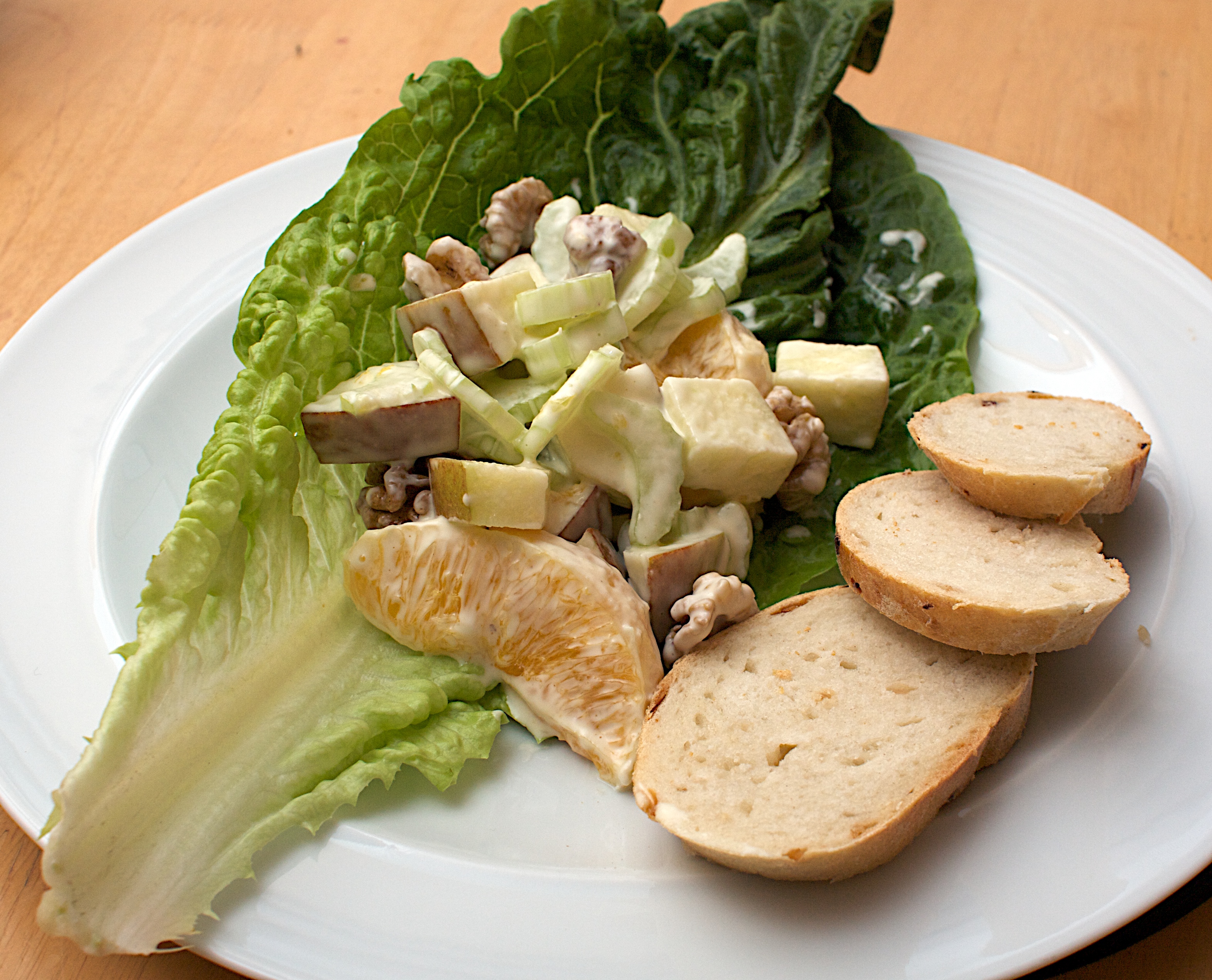
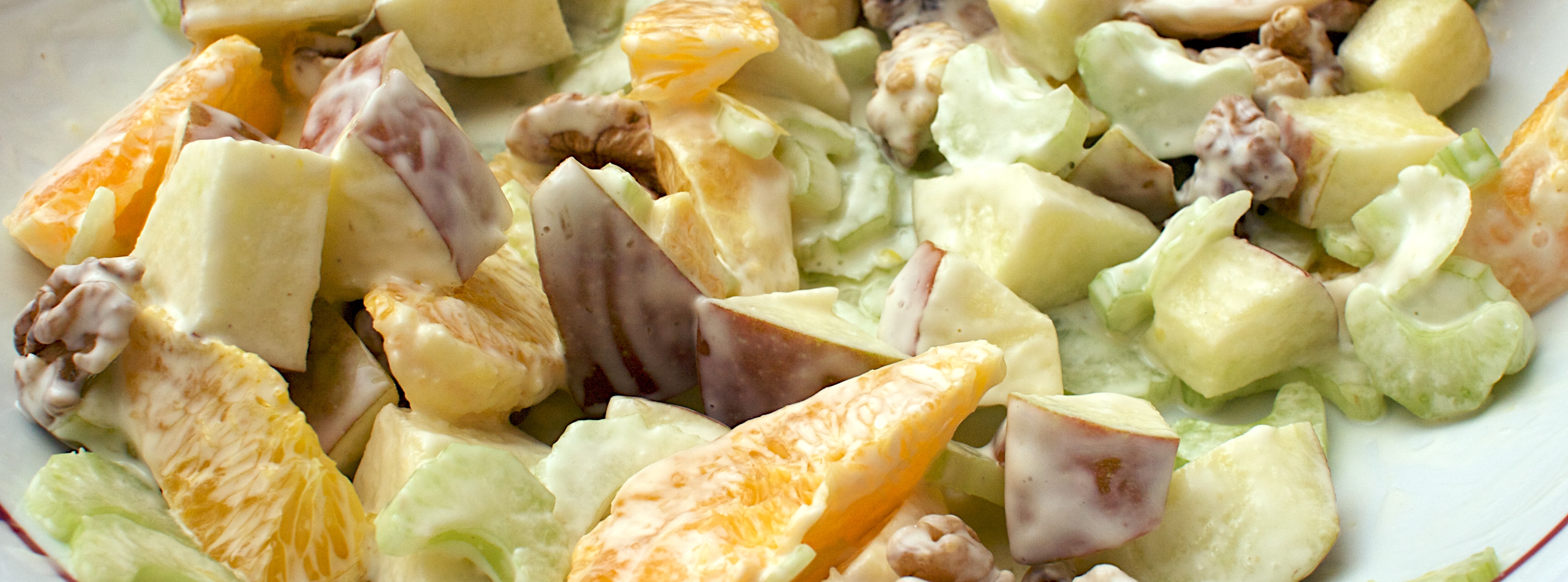
Remember this? It made a fab lunch with some bacon and onion bread and lettuce.

Waldorf Salad – a big bowl

  • 1 apple, cut into bite-size chunks
  • 1 large orange, cut into segments
  • 2 sticks celery, chopped
  • a handful of walnuts
  • mayonnaise

Throw all of the above into a big bowl and give it a stir! Serve in a cos lettuce leaf with some nice bread.

Read Full Post »

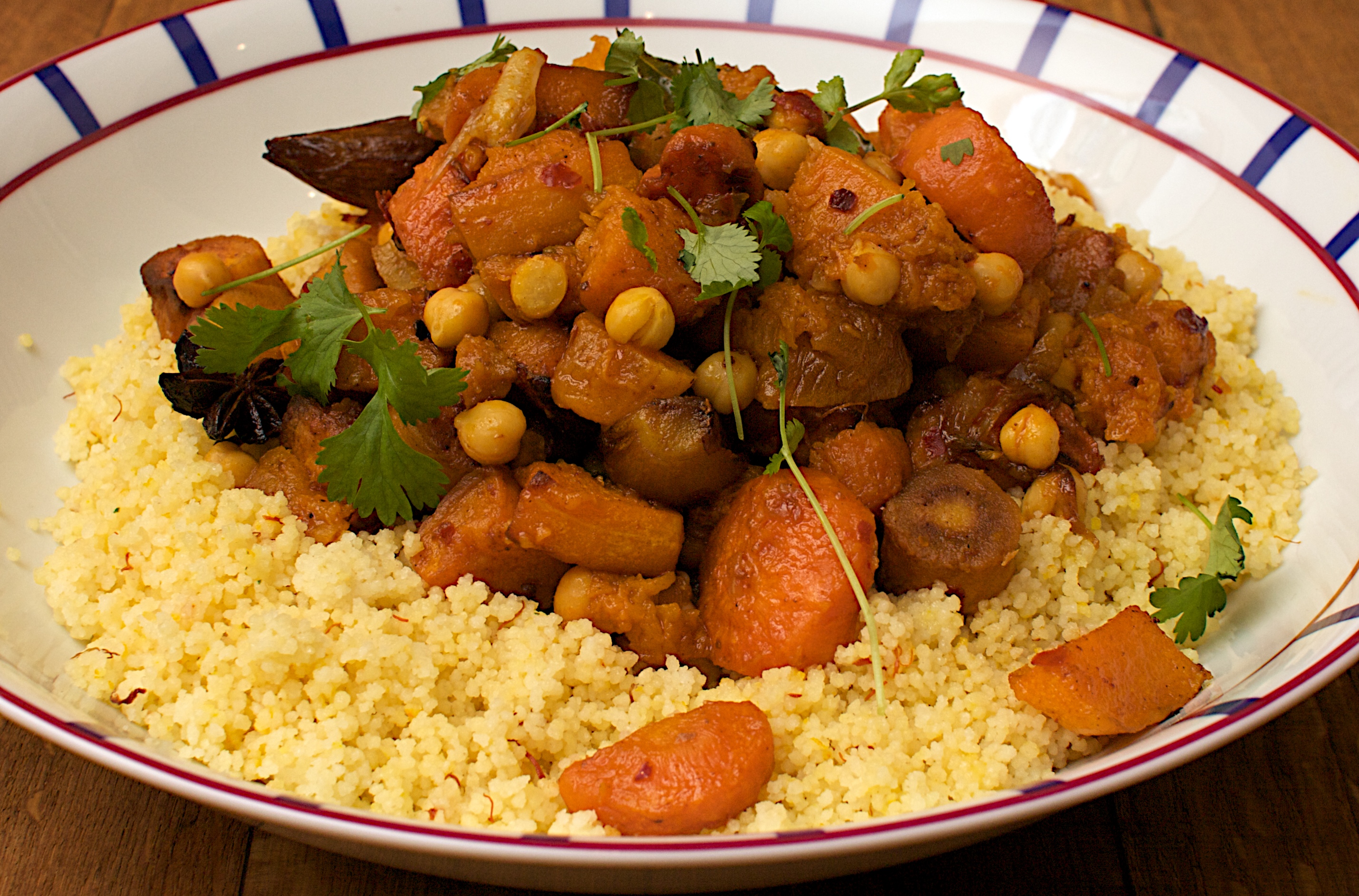
Another fantastic vegetarian recipe by Yotam Ottolenghi with fabulous flavours and interesting textures. This was so good we made it twice in one week.

The ultimate winter couscous – to serve 4

  • 2 medium carrots, peeled and cut into 2 cm chunks
  • 2 medium parsnips, peeled and cut into 2cm chunks
  • 8 shallots, peeled
  • 2 cinnamon sticks
  • 4 star anise
  • 3 bay leaves
  • 5 tbsp olive oil
  • 1/2 tsp ground ginger
  • 1/4 tsp ground turmeric
  • 1/4 tsp hot paprika
  • 1/4 tsp chilli flakes
  • 300g pumpkin or butternut squash, peeled and cut into 2 cm chunks
  • 75g dried apricots, roughly chopped
  • 200g chickpeas (tinned are fine)
  • 350ml water
  • 170g couscous
  • large pinch saffron threads
  • 260ml boiling vegetable stock
  • 20g butter, cut into pieces
  • 25g harissa paste
  • 25g preserved lemon skin, finely chopped
  • 30g coriander
  • salt

Preheat the oven to 190ºC/Gas Mark 5. Put the carrots, parsnips and shallots in a large ovenproof dish. Add the cinnamon sticks, star anise, bay leaves, 4 tbsp of the oil, 3/4 tsp salt and all the other spices and mix well. Put in the oven and cook for 15 minutes.

Add the pumpkin, stir and return to the oven. Cook for another 35 minutes or until the vegetables are soft but still have a bit of a bite. Add the apricots and the chickpeas and water. Put it back into the oven for another 10 minutes or until hot.

About 15 minutes before the vegetables are done, put the couscous in a large heatproof bowl with the last tablespoon of olive oil, the saffron and 1/2 tsp of salt. Pour the boiling stock over the couscous. Cover the bowl with cling film and leave for about 10 minutes. Then add the butter and fluff with a fork until it has melted in. Cover again and keep warm until the vegetables are ready.

To serve, spoon the couscous into a deep plate or bowl. Stir the harissa and preserved lemon into the vegetables; season with salt if necessary. Spoon the vegetables onto the centre of the couscous and finish with lots of coriander.

Wine Suggestion: While spices are usually hard to pair with wine, the aromatic quality of this dish would work well with a good, off-dry Pinot Gris from Alsace (the good producers put a handy sweetness scale on the side of their bottles). Alternately a juicy grenache with softer, ripe tannins and a velvety spice  would taste good too if you’d like a red. Try to find a grenache based Priorat from Spain if you want to push the boat out a bit!

(Original recipe from Yotam Ottolenghi’s Plenty, Ebury Press 2010.)

Read Full Post »

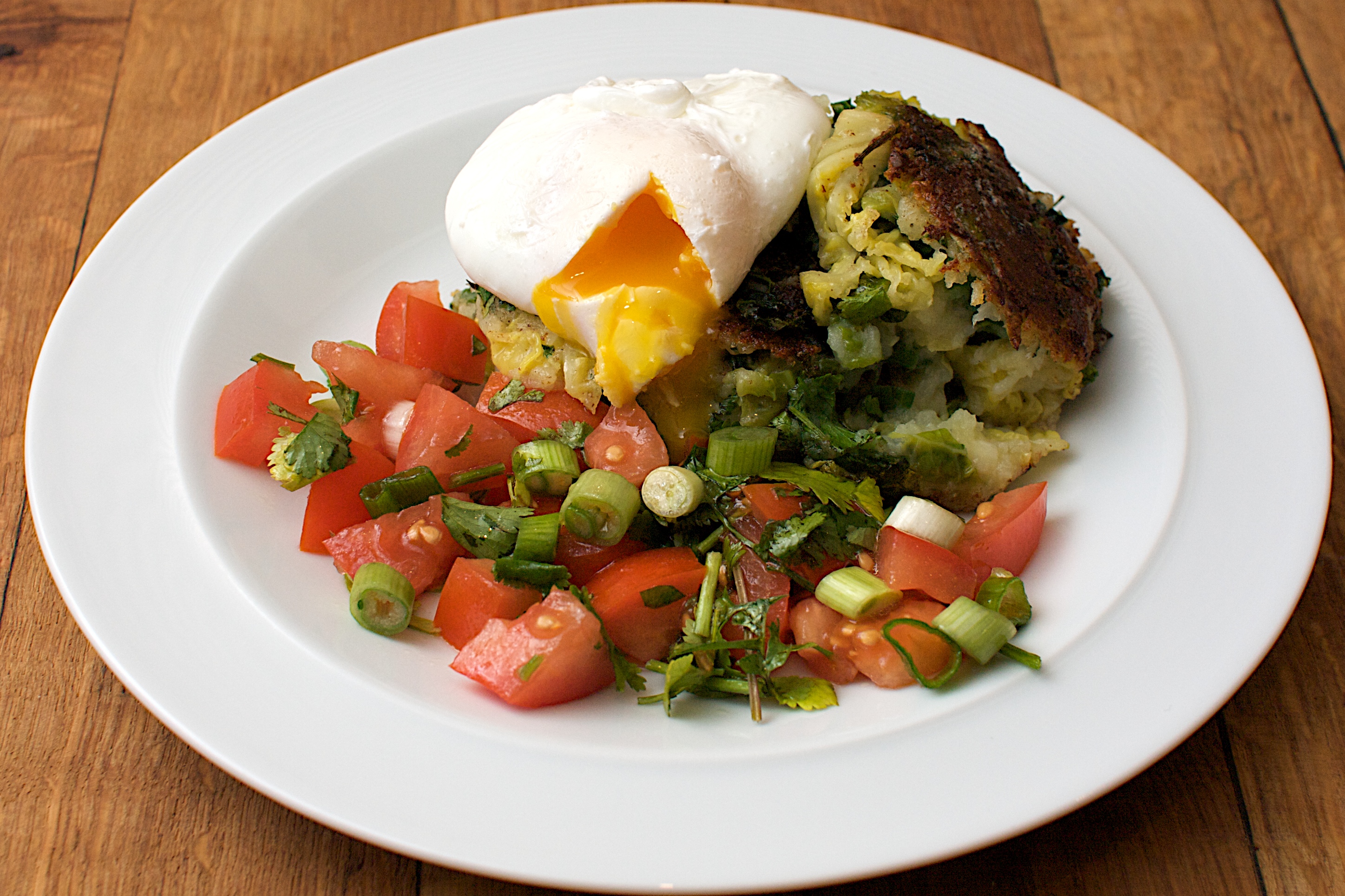
This is a doddle of a weeknight meal and handily uses up the sort of leftovers and bits and pieces we often have in the fridge i.e. leftover mash, half a cabbage, scallions, coriander…

Bubble & Squeak Cakes with Tomato Salsa – to serve 2

  • 1 bunch of scallions, sliced
  • butter
  • 200g potatoes, peeled, cooked and roughly mashed
  • 100g of shredded and cooked cabbage, greens or brussels sprouts
  • small bunch of coriander, chopped
  • 2 tomatoes, diced
  • olive oil
  • 1 tbsp red wine vinegar
  • 2 poached eggs

Cook half the scallions in a bit of butter until soft, then mix with the potatoes, cabbage and half the coriander. Season really well and form into 4 small cakes.

Make the salsa by mixing together the rest of the coriander and scallions and the tomatoes, with 1tbsp olive oil and the vinegar.

Fry the cakes in a bit more butter for about 5 minutes each side, on not too high a heat, until nice and crispy. Top with a poached egg and serve with the salsa on the side.

Wine Suggestion: Go for something light and fresh e.g. a Vermentino from Italy or a Gascogny white blend.

Read Full Post »

If you have access to an Asia market or Indian grocer then they will sell poppadoms (they look like packets of very fine wafers) that are much superior to the already puffed ones you get in ordinary supermarkets. You can fry them in oil or just cook them in a microwave for 60 seconds.

Cucumber & Mint Raita – to serve 4

This is really light and refreshing and would also work well with a barbecue or on baked potatoes. Measure the mint so it doesn’t overpower the dish.

  • 200g cucumber
  • 400g thick plain yogurt
  • 8g mint leaves, shredded
  • 3/4 tsp roasted cumin powder (You can make this by roasting cumin seeds in a small dry pan for about 40 seconds, stirring constantly, until they darken, then grind to a fine powder)

Grate the cucumber on coarse side of a grater. Squeeze out the excess water and put it in a large bowl.

Add the rest of the ingredients and season to taste with salt and black pepper. Stir well and serve cold.

(Original recipe from Anjum Anand’s I ♥ Curry, Quadrille, 2010.)

Bengali-style Tomato Chutney – makes about 350ml

This is great with poppadoms or served alongside a curry. It keeps for several months in the fridge and would also be nice with burgers, chicken, lamb or even in your sandwiches!

  • 2tbsp oil
  • 1/2 tsp whole cumin seeds
  • 1/2 tsp whole brown or yellow mustard seeds
  • 1/4 tsp whole fennel seeds
  • 475ml tomato passata
  • 1 1/2 tsp peeled and very finely grated ginger
  • 175ml cider vinegar
  • 200g caster sugar
  • 3/4 tsp red pepper flakes
  • 1 1/4 tsp salt
  • 2 tbsp sultanas

Pour the oil into a heavy-based, medium stainless-steel pan and put over a medium-high heat. When hot add the cumin and mustard seeds. As soon as they start to pop add the fennel seeds. A few seconds later, put in the tomato passata, ginger, vinegar, sugar, pepper flakes and salt. Stir and bring to a simmer, then lower the heat and simmer, uncovered, for about 50 minutes, stir now and again. Add the sultanas and cook for another 10 minute by which time it should be thick and look glazed.

Spoon into a steralised jar, leave to cool, screw on the lid and keep in the fridge.

(Original recipe from Madhur Jaffrey’s Curry Easy, Ebury Press, 2010.)
Read Full Post »

As this was our most viewed post over Christmas we thought we’d revisit this recipe. We really didn’t need much of an excuse as we’d enjoyed it so much the first time we’d cooked it, but it over-delivered. Yum! We’re also adding a great method for cooking brown rice as the two pair very well.

Plain brown rice – to serve 3-4

  • a 250ml measure of brown rice
  • 1/2 tsp salt

Put the rice, 475ml water and salt in a small, heavy-based pan with a tight-fitting lid (if the lid’s not tight just put a layer of tinfoil between the pot and the lid to keep the steam in) and bring to the boil. Cover tightly, turn the heat down to very, very low and cook for 45 minutes. This is easy to do if you have gas but harder with electric so we recommend using two rings so you can get the heat to low quickly.

Leave the pan off the heat, still covered with the lid, for 10 minutes before you serve it.

(Method by Madhur Jaffrey, Curry Easy, Ebury Press, 2010).

Wine suggestion: There’s a lot going on in this dish: cream, salty cheese, earthy Brussel Sprouts … you need some acidity to counter the richness and cream; a touch of sweetness, or round fruitiness to balance the salty Stilton; and an earthiness to compliment the lot. We drank a New Zealand Chardonnay which went well, but we think a Chardonnay from the Jura, a Sylvaner from Alsace or a very well made Aligote from Burgundy would work even better.

Read Full Post »

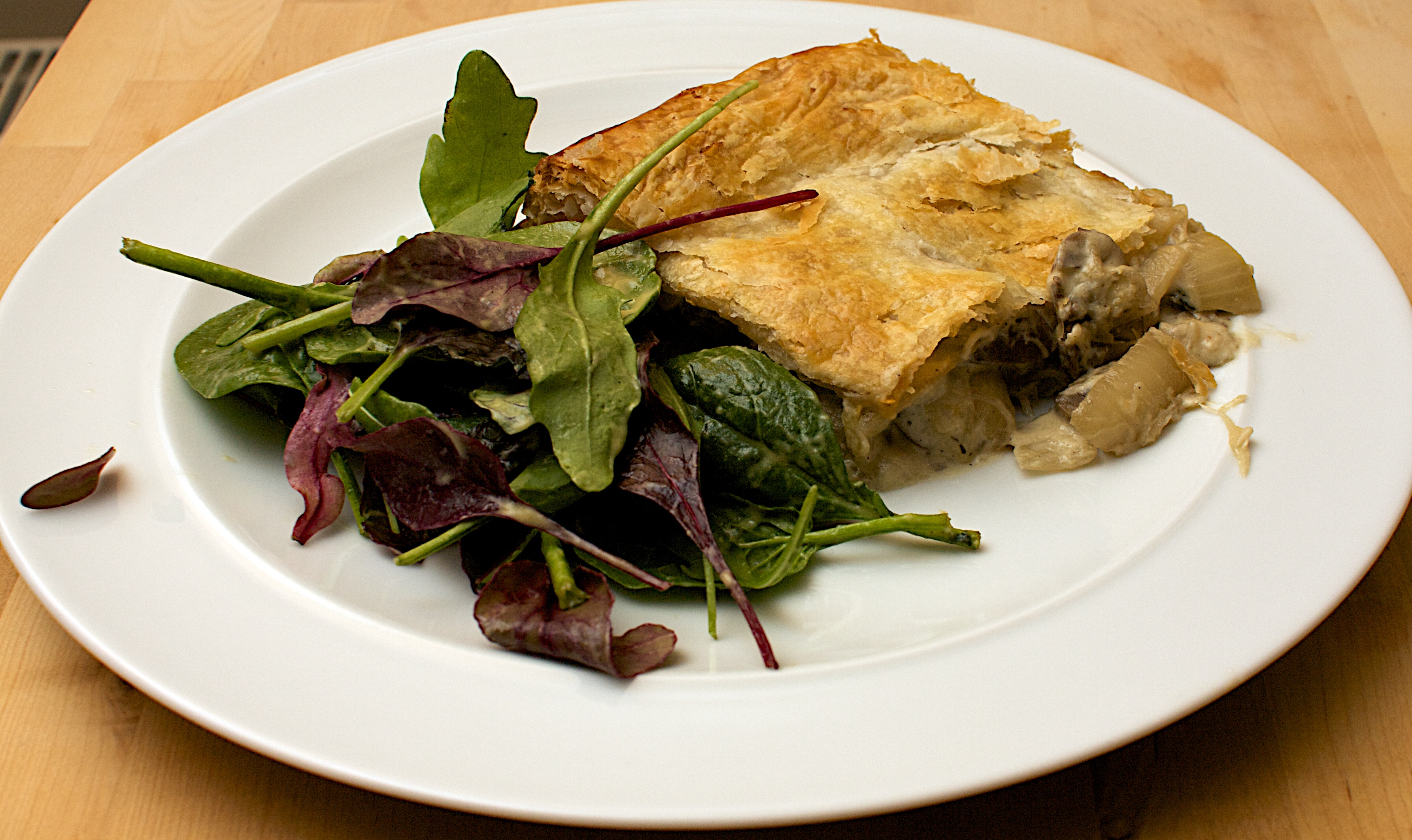
Fear not, for this is not a complicated pastry recipe. In fact it is an absolute doddle as it uses two ready-made puff pastry sheets which are exactly the right size. No rolling required!

No-fuss puff-pastry mushroom pie – to feed 4

  • 5 medium onions
  • butter or oil
  • 350g firm mushrooms
  • a small handful of chopped thyme or oregano
  • 200g crème fraîche
  • 425g puff pastry
  • a little beaten egg or milk to glaze

Roughly chop the onions and cook slowly with butter or oil over a low heat for about 20 minutes, until golden and soft. Slice the mushrooms and add to the onions, adding more butter or oil if needed. Leave them to turn golden and tender but stir now and then so they don’t stick. Season with the chopped herbs and stir in the crème fraîche with some salt and pepper. Make sure it is creamy rather than runny by bubbling it for a couple of minutes to thicken.

Heat the oven to 200ºC/Gas 6. Lay one puff-pastry rectangle on a lightly floured baking sheet and spread the mushrooms and onions over, leaving a rim around the edge. Brush a little egg or milk around the rim, lay the second sheet on top and squeeze the edges together well to seal. Brush with some more of the egg or milk, then cut a couple of small holes in the top.

Bake until puffed up like a cushion and nicely browned – about 25 minutes. Check the bottom to make sure it’s crispy underneath.

Serve with a green salad.

(Original recipe from Nigel Slater’s Appetite, Fourth Estate, 2000.)

Wine Suggestion: We would suggest a medium bodied but well structured white wine with minerality such as a good Chardonnay. We had the benefit of trying a 2004 Cullen Margaret River Chardonnay which was youthful, fresh and superb; full of personality and minerality while still being effortless and elegant.

Read Full Post »

« Newer Posts - Older Posts »